

This post may contain affiliate links. Please read my disclosure policy.
In This Article Show
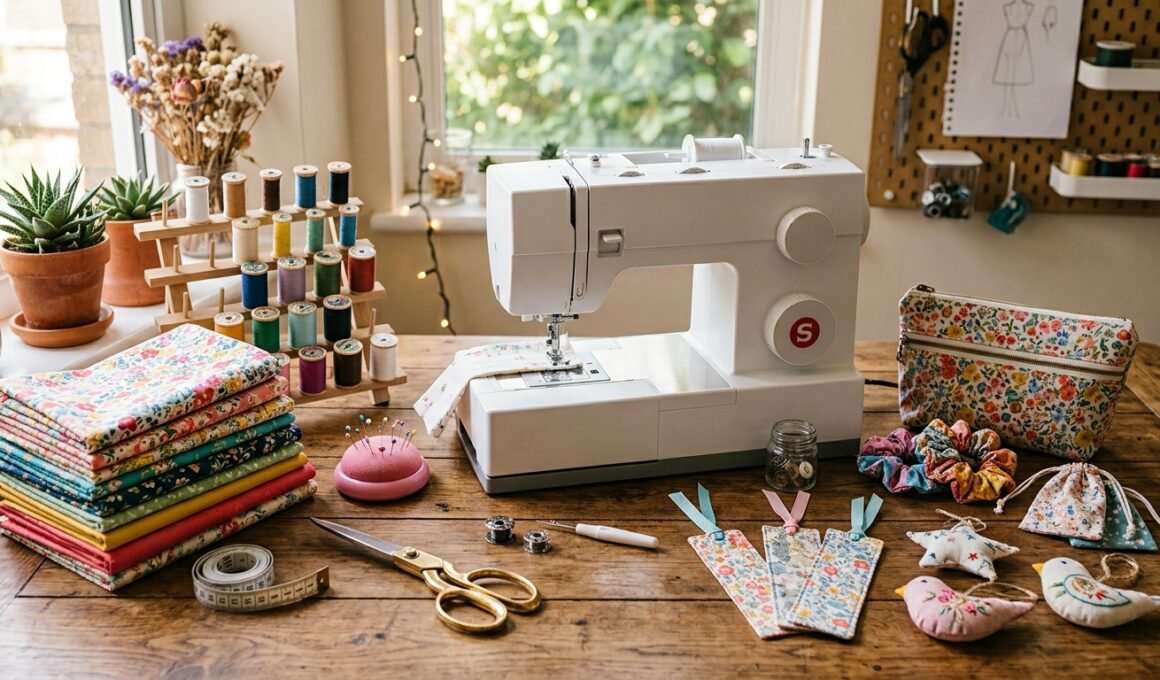
Have you ever looked at a beautiful piece of fabric and thought, “I wish I could turn this into something useful”? You do not need years of sewing experience to make that happen. Small sewing projects are a simple way to practice your skills, use leftover fabric, create thoughtful gifts, and even test handmade products before making larger items. Instead of starting with a complicated dress or large quilt, you can begin with a pouch, bookmark, scrunchie, coaster, or fabric ornament. USU Extension provides a wide collection of beginner-friendly sewing patterns and easy maker projects, including pouches, bags, covers, pillows, and other practical designs.
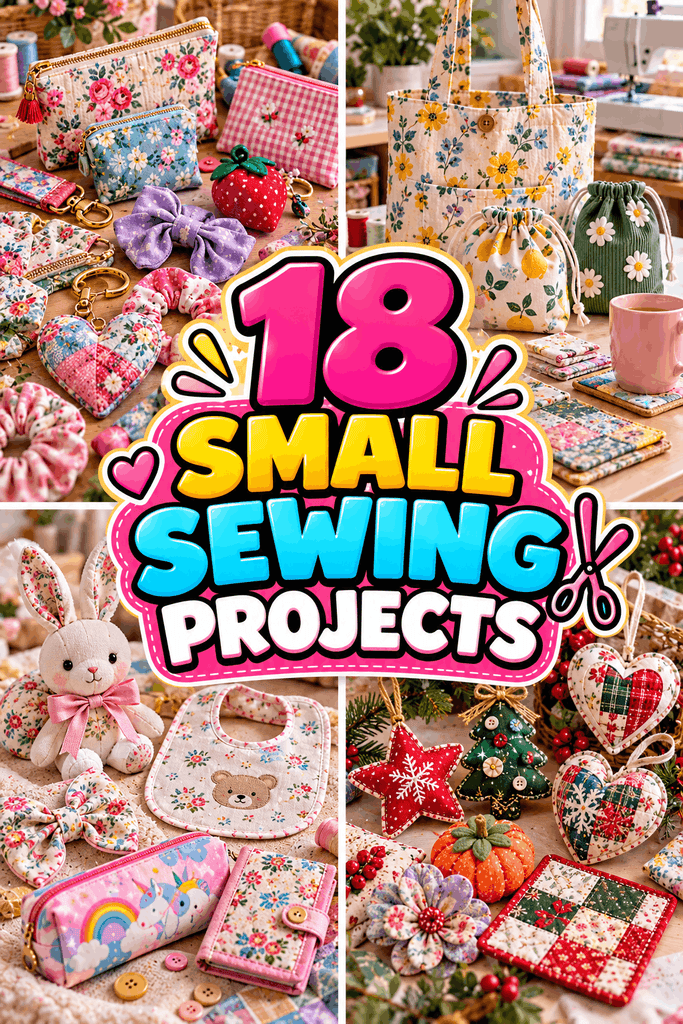
Why Small Sewing Projects Are Perfect for Beginners
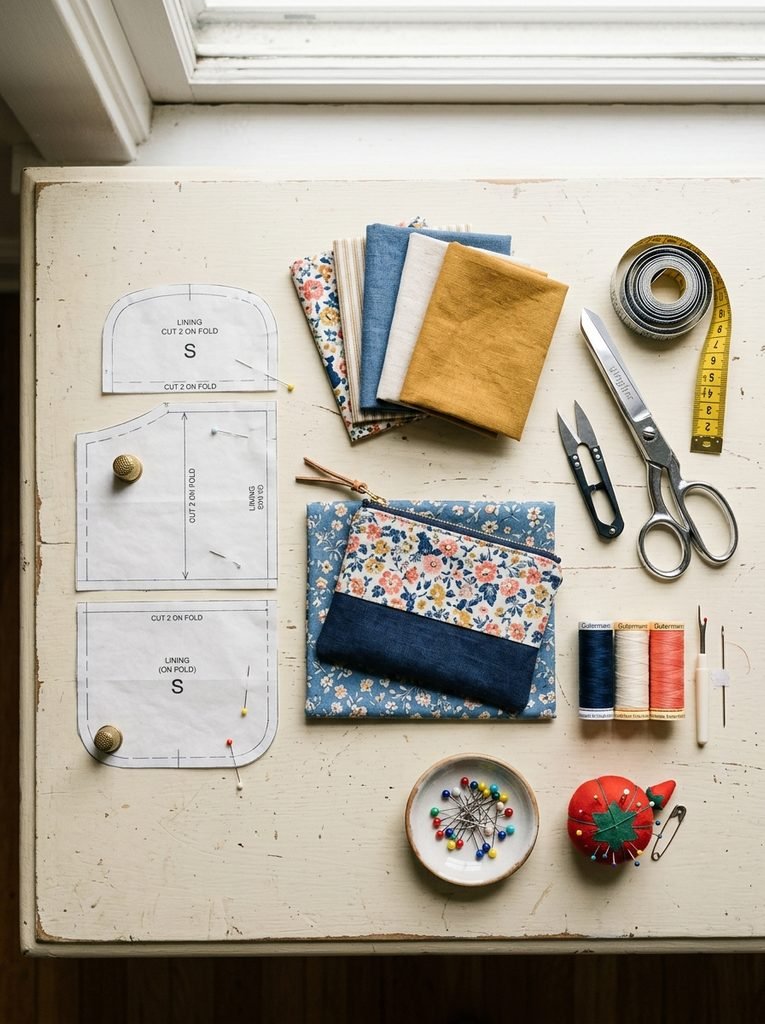
The best beginner projects do not need large amounts of fabric or complicated construction. They let you practice straight seams, measuring, pressing, turning corners, attaching simple closures, and finishing raw edges without feeling overwhelmed. They are also perfect for scrap fabric because many designs need only small pieces. USU Extension recommends basic tools such as sharp shears, straight pins, a pincushion, tape measure, seam ripper, and sewing needles for beginning sewing work. From tiny accessories to useful household items, these ideas give you plenty of ways to practice. Start with one that matches your current skill level instead of trying to make everything at once.
1. Mini Zipper Pouch
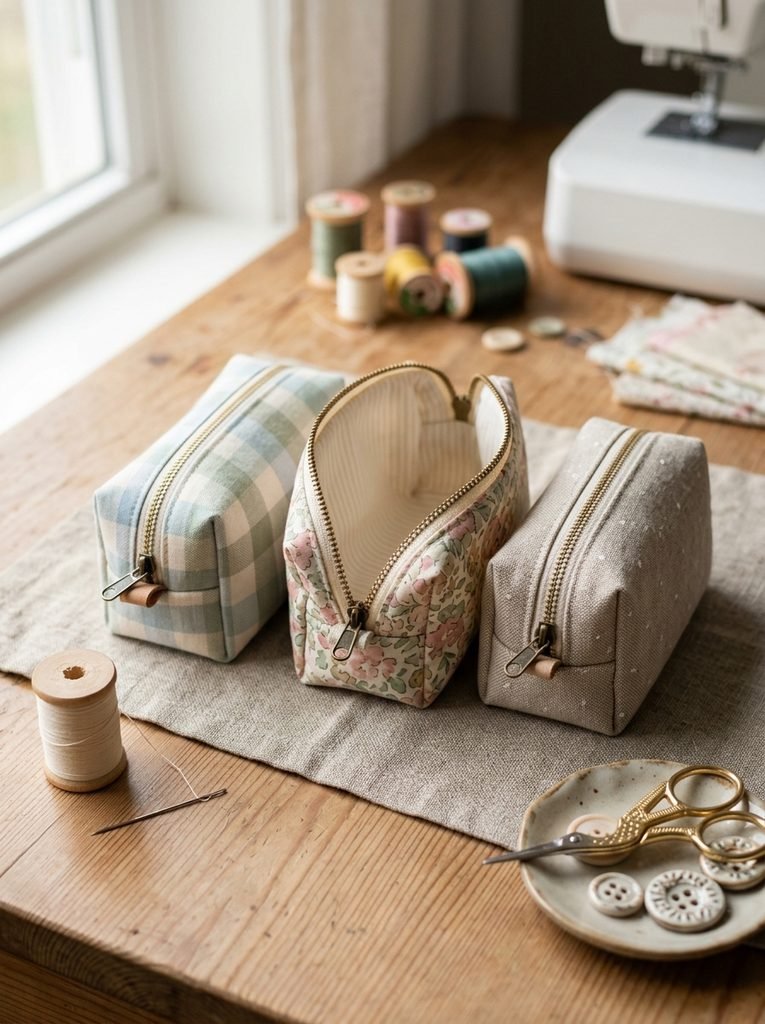
A mini zipper pouch is one of the most useful first projects because it teaches several important skills at once. You learn accurate cutting, zipper placement, lining, turning fabric, and neat topstitching. Use cheerful cotton for a cute look or a neutral print for an everyday aesthetic pouch. Make different sizes for coins, earbuds, hair accessories, sewing supplies, or tiny gifts. For your first attempt, medium-weight woven cotton is easier to control than slippery or stretchy fabric.
2. Fabric Keychain or Wristlet
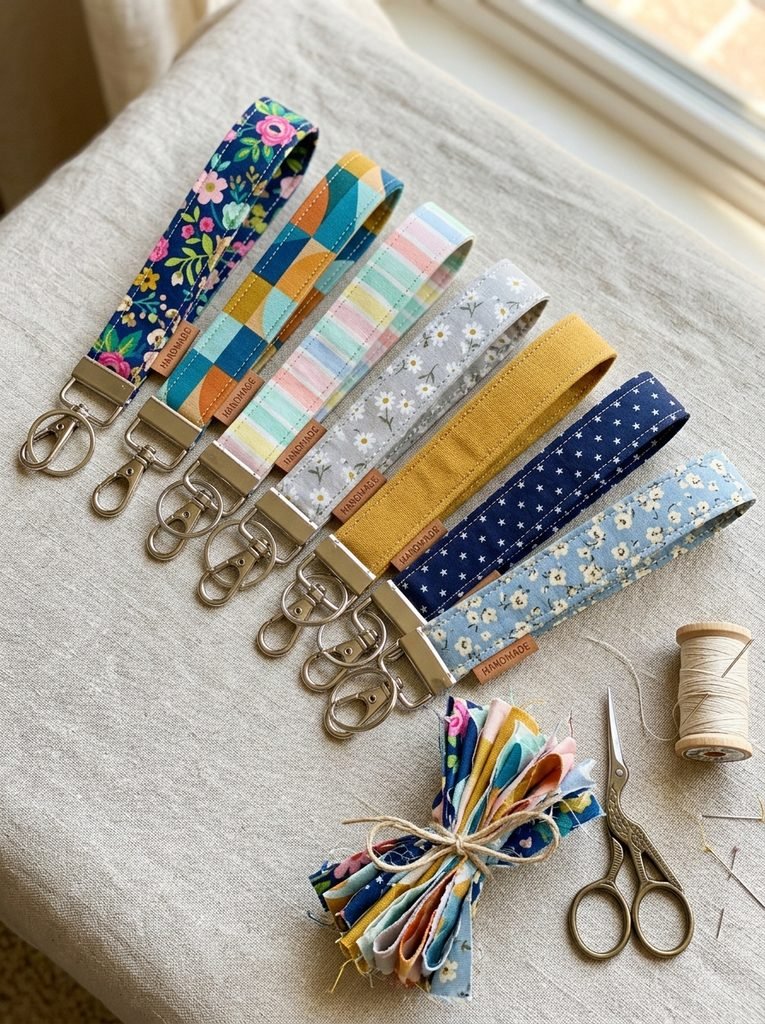
A fabric keychain uses very little material, making it perfect when you have narrow leftover strips. You can create a simple wristlet by folding, pressing, stitching, and attaching suitable key-fob hardware. Add lightweight interfacing if your fabric feels too soft. USU Extension includes fabric cuff keychains and keychain chapstick holders in its beginner grab-and-sew materials, showing how small fabric pieces can become useful handmade gifts.
3. Easy Fabric Scrunchie
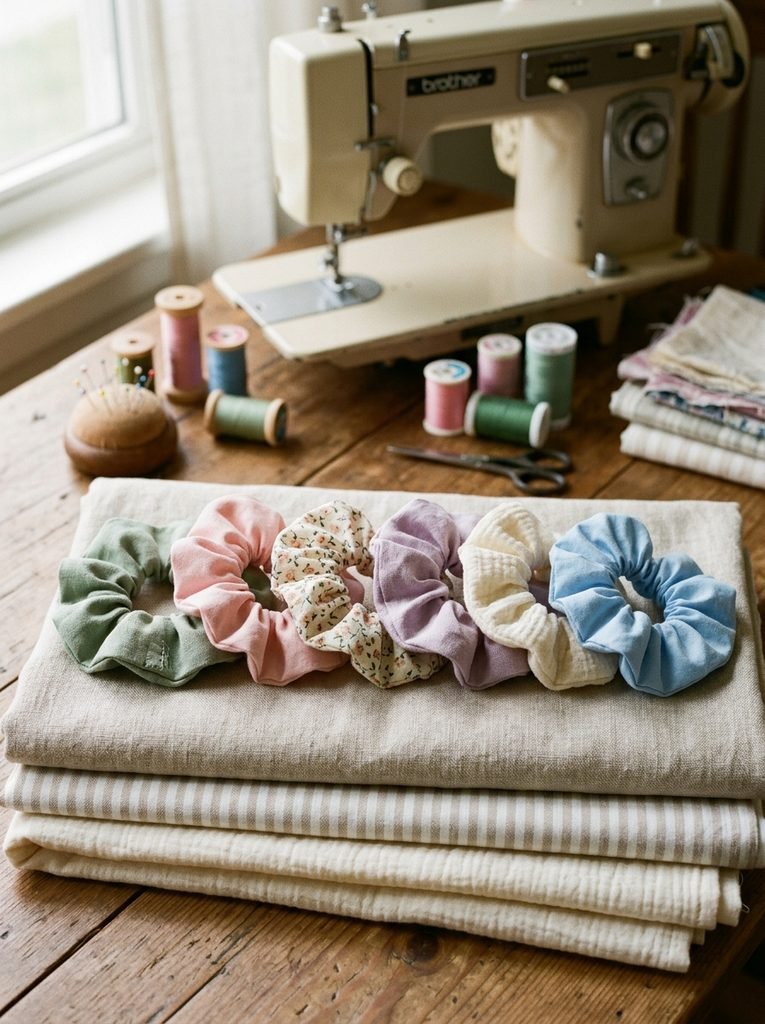
Scrunchies are quick, cute, and easy to personalize. Choose floral cotton for a soft feminine style, playful prints for kids, or satin for a dressier accessory. They are also useful for practicing long straight seams and turning a fabric tube. Make a small collection from coordinated fabrics and package them as simple birthday gifts, friendship gifts, or handmade accessories.
4. Simple Tote Bag
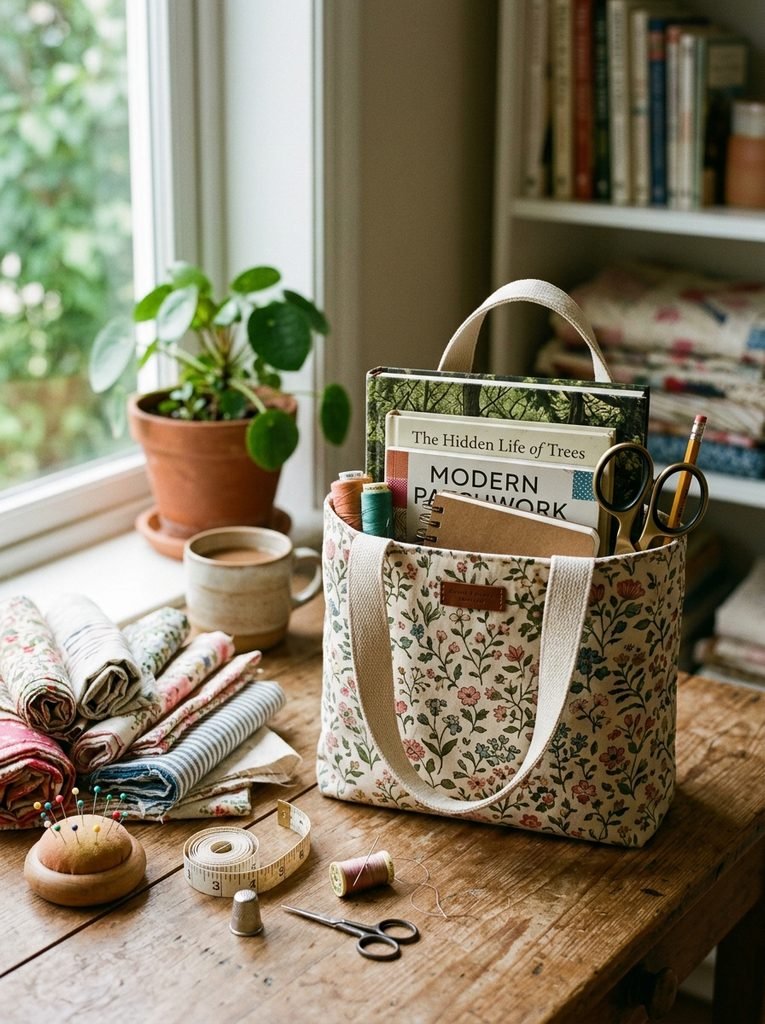
A small tote bag gives you more sewing practice while remaining approachable. Use sturdy cotton or canvas, add two simple fabric handles, and keep the shape clean. A small tote can carry books, craft supplies, groceries, or everyday essentials. Once you understand the construction, try different prints, pockets, or lining options. A repeatable design can also become useful when testing handmade products for sale.
5. Fabric Bookmark
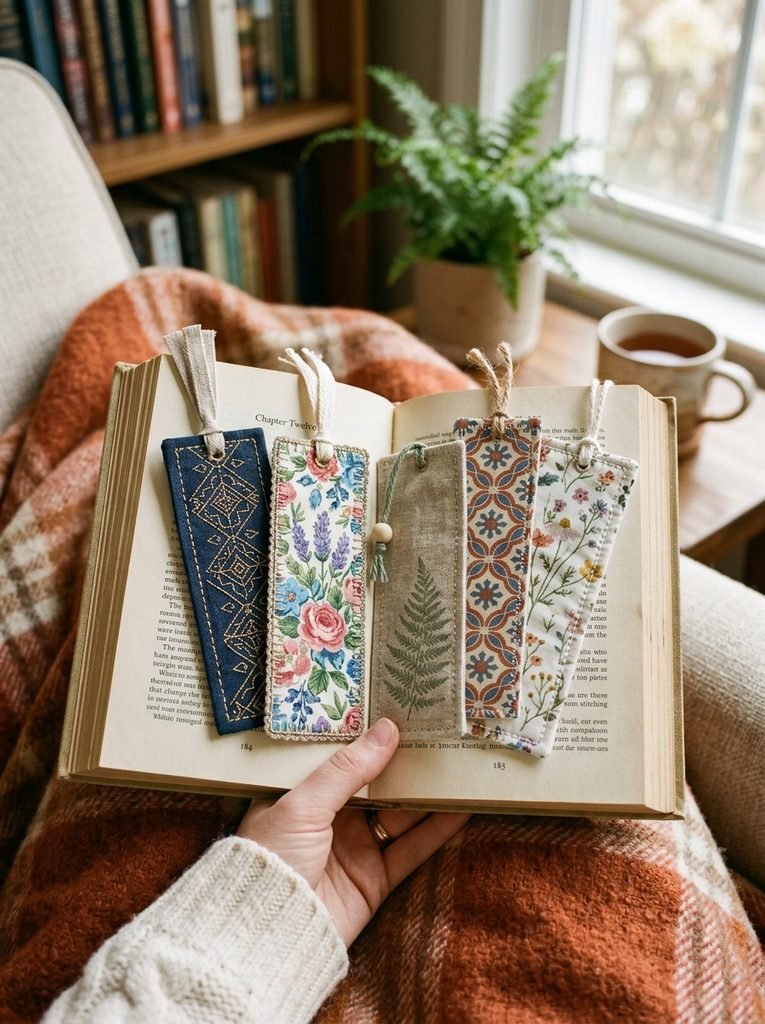
A fabric bookmark may be tiny, but it can look surprisingly polished. Layer two coordinating fabrics, add lightweight interfacing for structure, stitch around the edges, and finish the shape neatly. Personalize one with a favorite color or print and give it to a friend who loves reading. You can also include it inside a birthday or holiday gift box.
6. Reusable Snack or Pencil Pouch
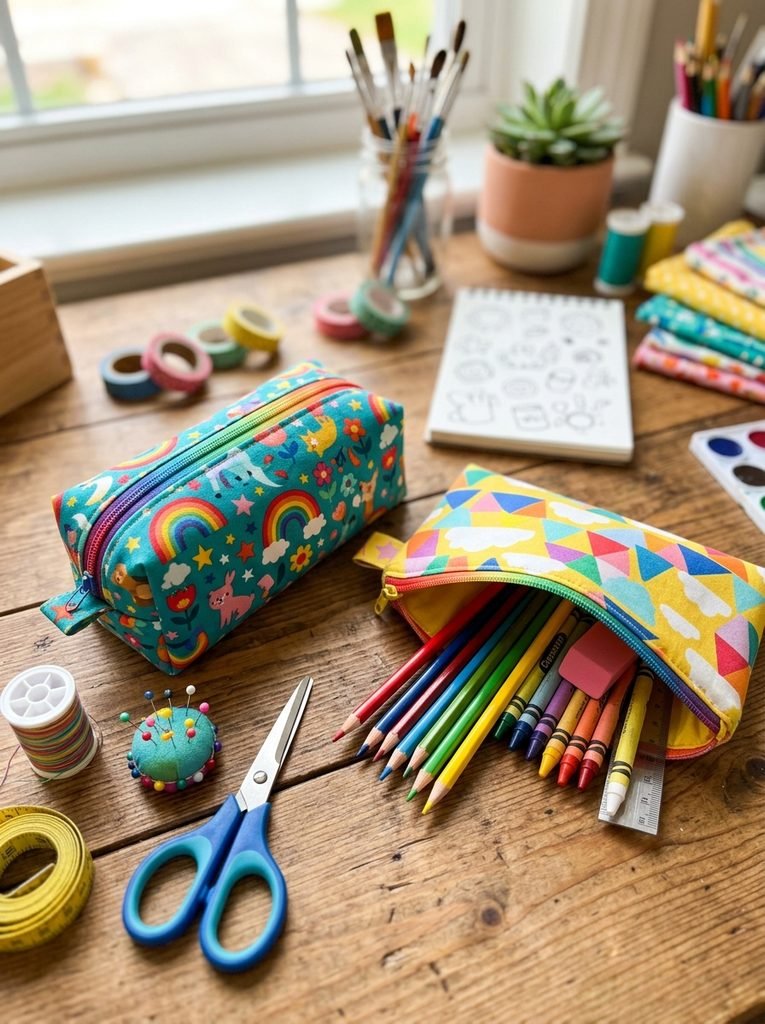
A compact pouch can hold pencils, crayons, small craft tools, or other everyday supplies. If you want to make one for food use, choose appropriate washable materials and follow the care instructions for those materials. For a beginner, a pencil pouch is often the simpler option because it keeps the focus on sewing technique. USU Extension includes a beginner pencil pouch project with a zipper and lining.
7. Mini Needle Book
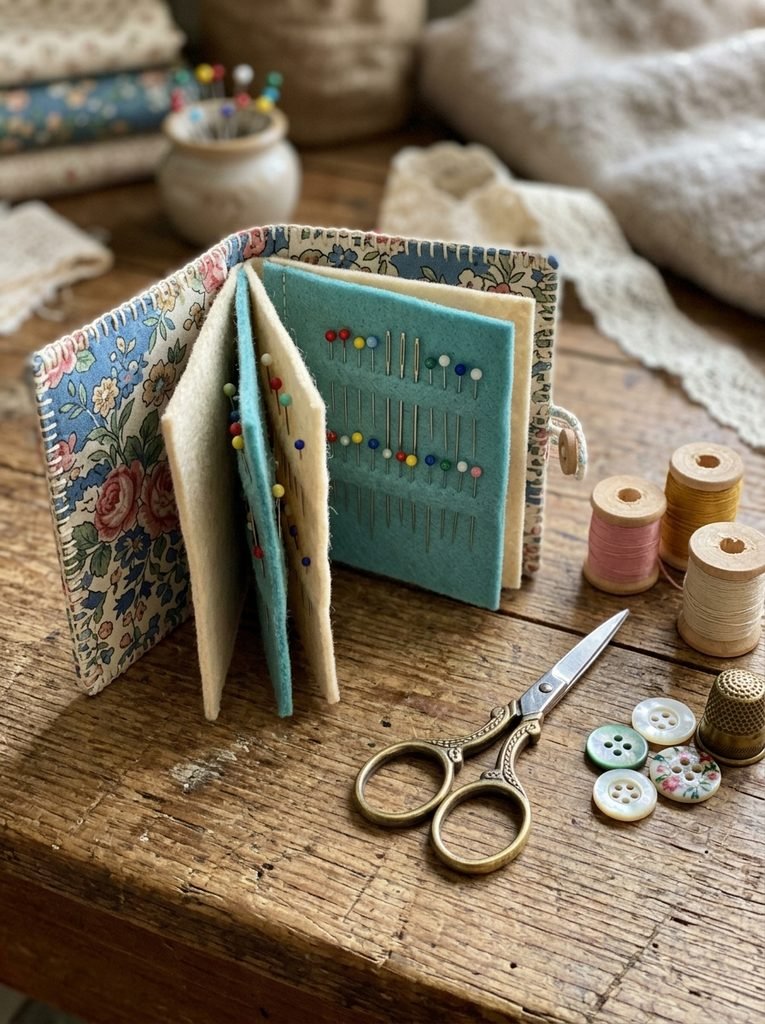
A needle book is both useful and satisfying to make. Use felt or cotton for the inside pages and decorative fabric for the cover. Add a button, snap, or simple tie to keep it closed. This tiny project teaches layering, careful measuring, hand stitching, and edge finishing while giving you something practical for your own sewing kit.
8. Small Drawstring Gift Bag
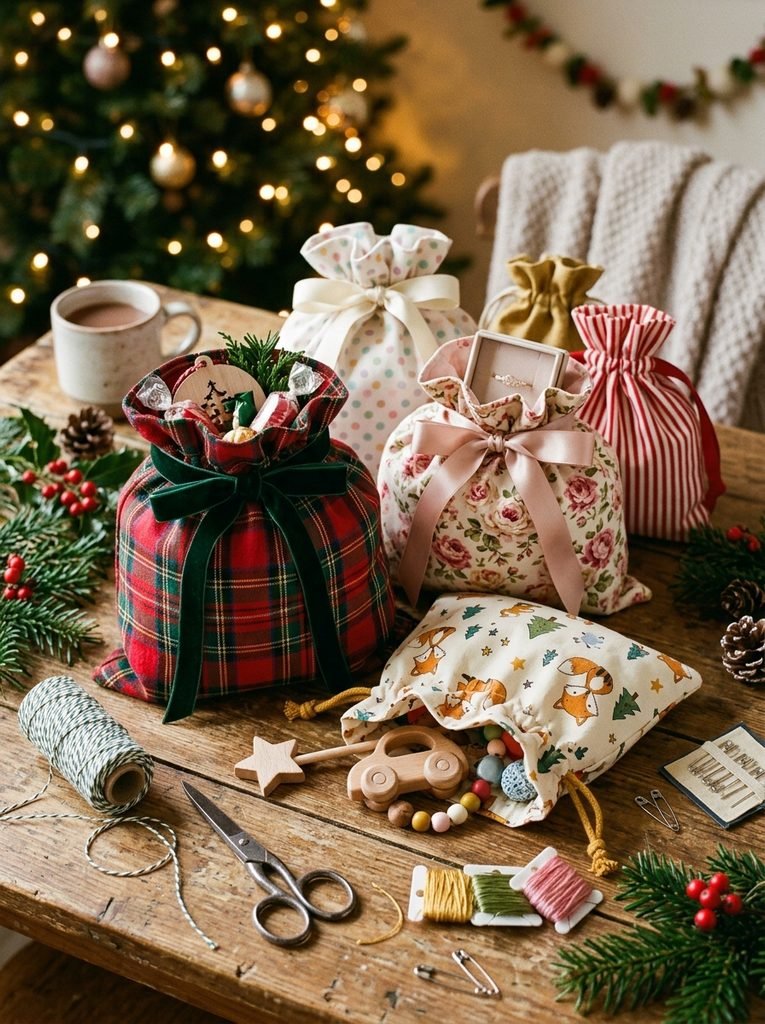
A reusable drawstring bag is a lovely alternative to disposable wrapping for selected gifts. Choose festive fabric for Christmas, soft florals for birthdays, or playful prints for children. Make several sizes for jewelry, treats, toys, accessories, or handmade gifts. Once you understand the basic construction, you can repeat the design quickly with different fabrics.
9. Cute Fabric Bow
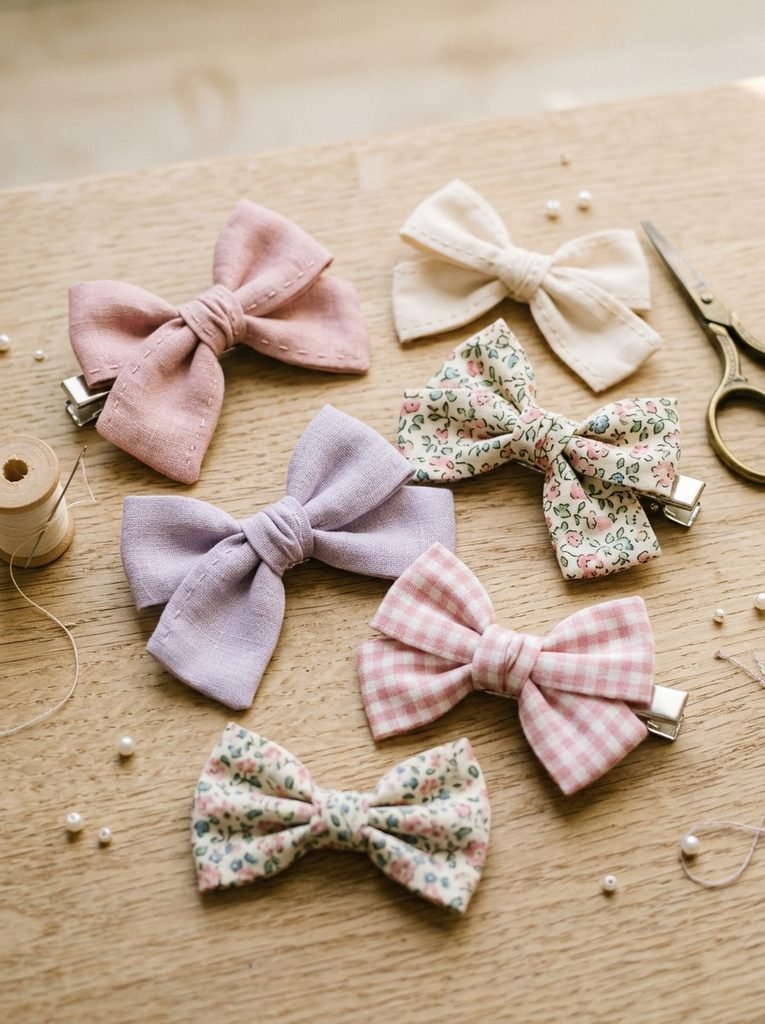
Fabric bows are perfect for hair accessories, gift wrapping, bags, and decorative projects. Choose two coordinating fabrics and create one bow in a solid color and another in a print. Small bows are especially useful for using scraps that are too small for larger projects. If making accessories for children, attach clips or elastics securely and choose materials appropriate for their intended use.
10. Mug Rug or Mini Table Mat
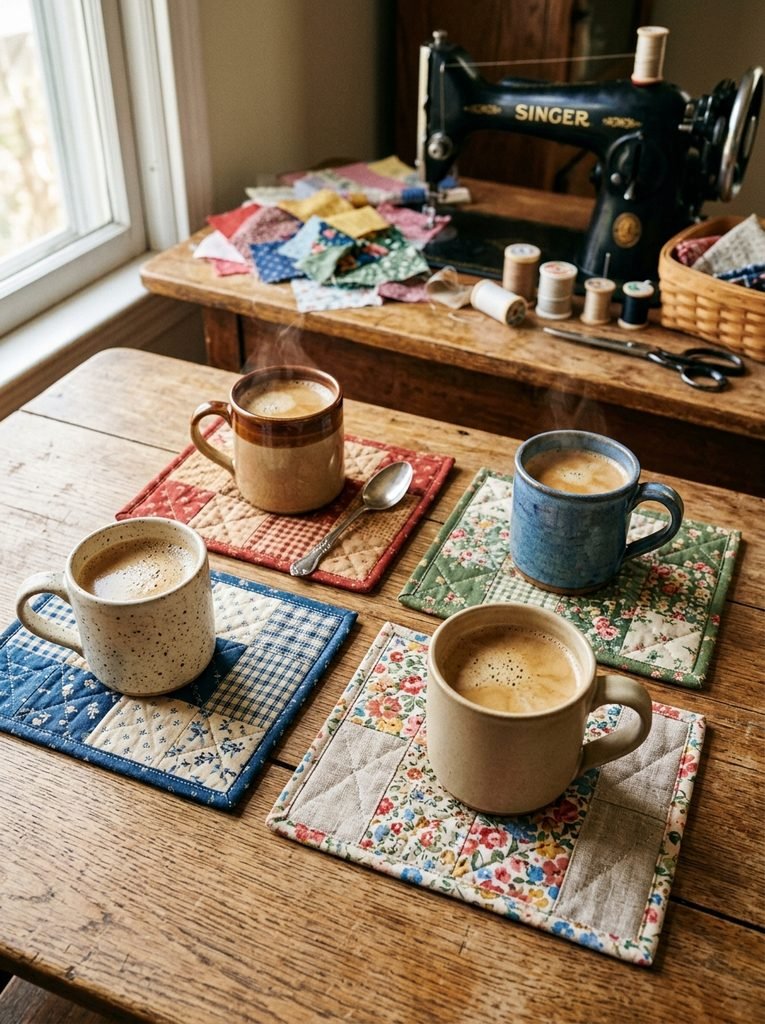
A mug rug sits somewhere between a coaster and a tiny placemat. It is a fun way to practice layering, straight quilting lines, topstitching, or simple binding. Use two or three coordinated fabrics for a stylish patchwork effect. You can create matching sets for a kitchen, coffee corner, home office, or handmade gift box.
11. Simple Baby Bib
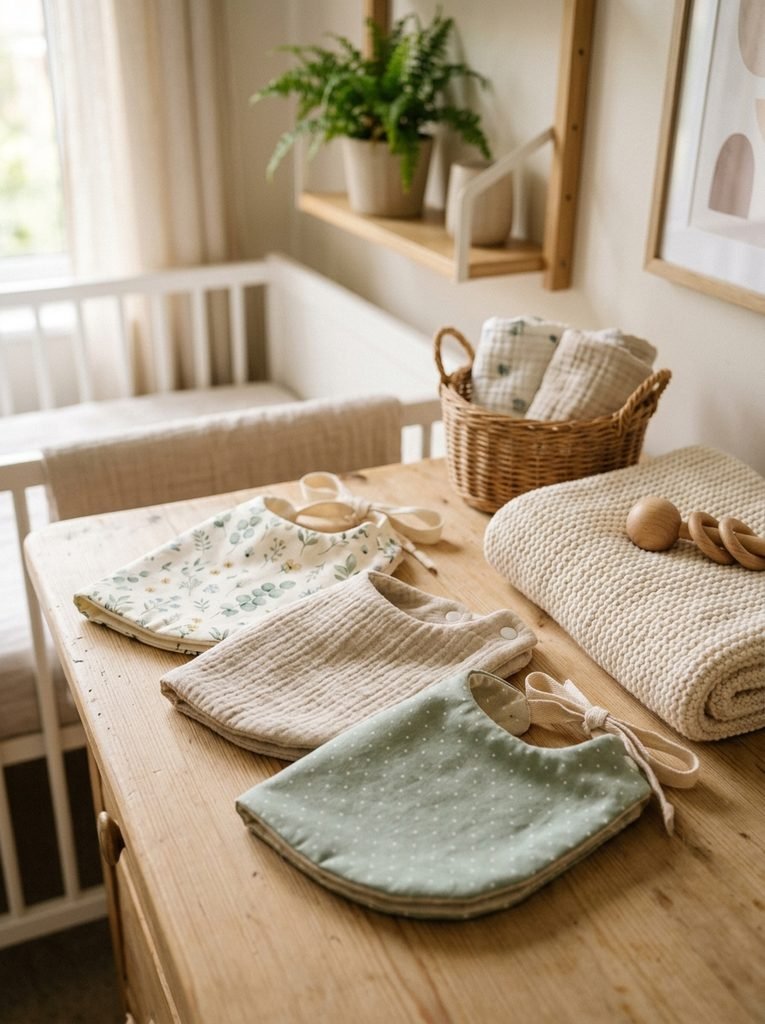
A basic baby bib can make a thoughtful handmade gift when constructed from suitable washable fabric and a secure closure. Choose a beginner-friendly shape with smooth curves and keep decorative details simple. Start with one plain design, then experiment with contrasting edges or a small pocket. When sewing for babies, pay close attention to secure construction and age-appropriate materials.
12. Easy Pillow Cover
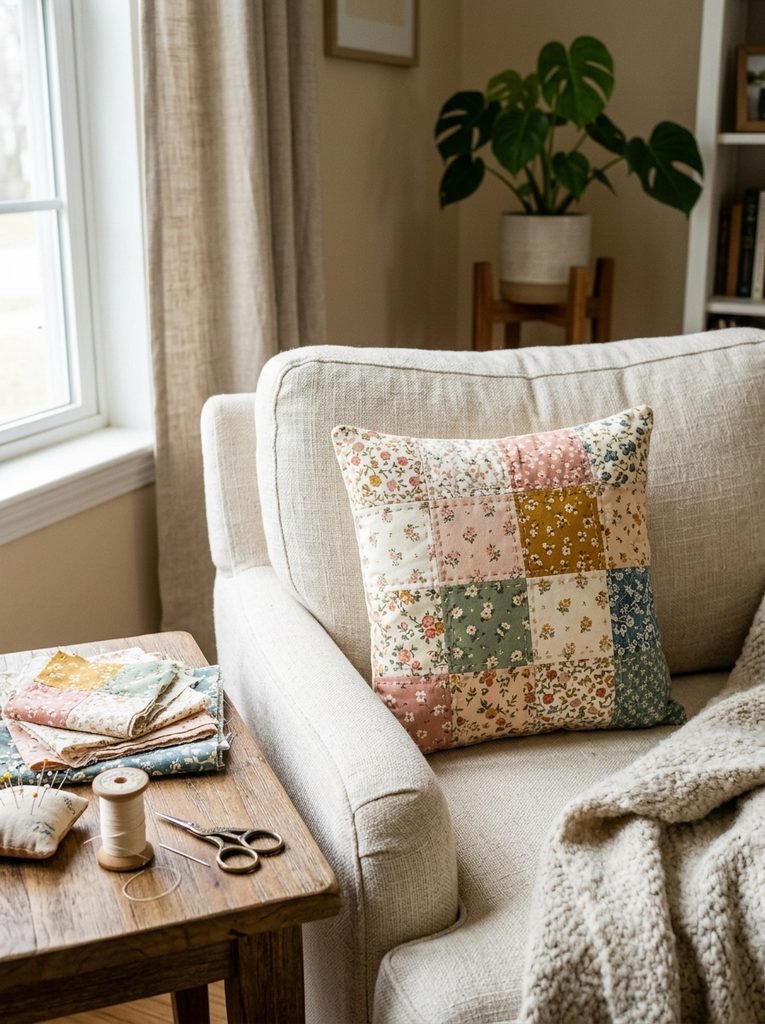
A small pillow cover introduces useful sewing skills without requiring you to make an entire pillow. Measure the insert carefully, cut your fabric, finish the edges, and create a simple envelope-style opening or another beginner-friendly closure. USU Extension offers several pillow patterns, including four-square and reversible tied pillow designs, giving beginners useful examples for exploring different construction methods.
13. Fabric Flower
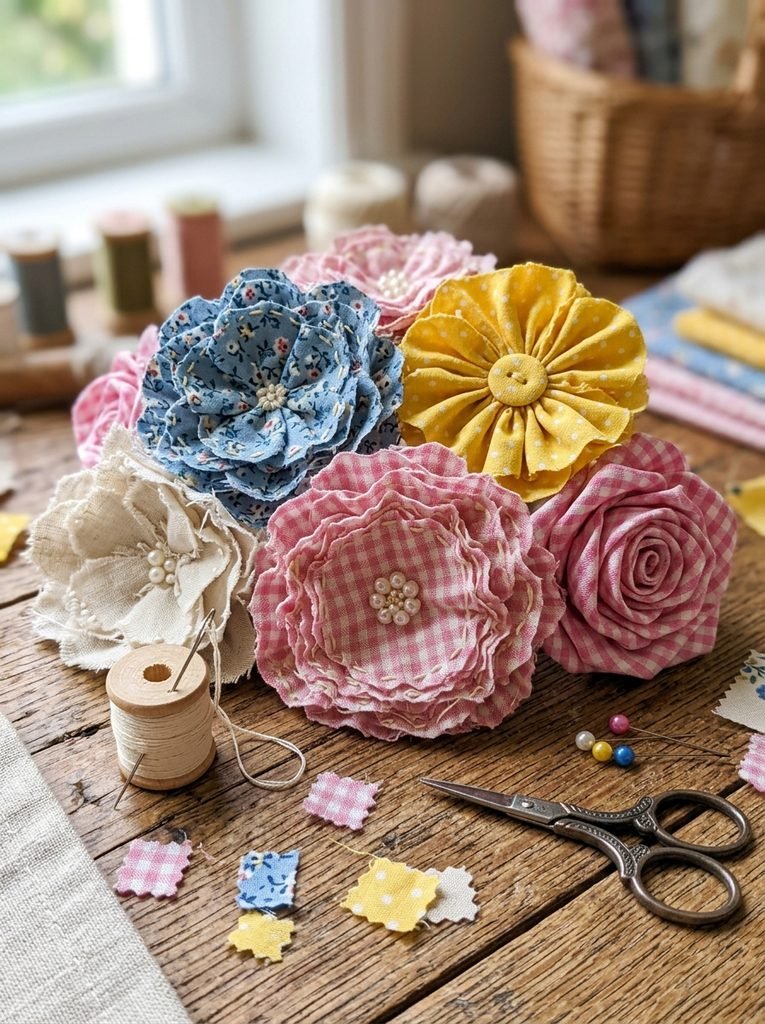
Fabric flowers are a creative way to use tiny scraps. Turn them into brooches, bag decorations, hair accessories, gift toppers, or small home accents. Try layered petals for a fuller flower or a gathered strip for a softer shape. Mix small prints with solid fabrics to create contrast and give each flower its own personality.
14. Scrap Fabric Christmas Ornament
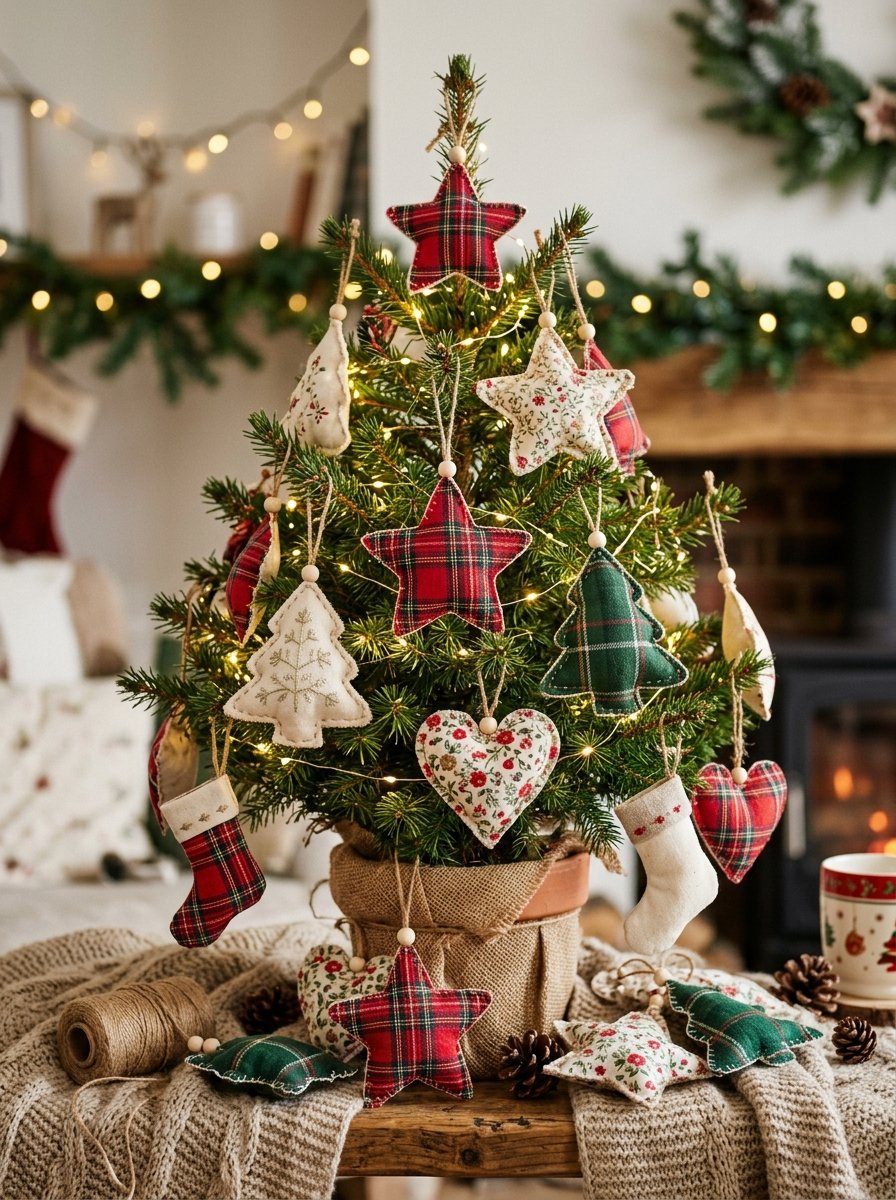
Christmas ornaments are an excellent way to give tiny fabric scraps a second life. Cut simple stars, trees, stockings, hearts, or round shapes, sew the layers, add suitable stuffing if needed, and finish with a hanging loop. Use red, green, cream, plaid, or winter-inspired fabrics for a classic holiday collection. Several matching ornaments can become beautiful handmade Christmas gifts.
15. Easy Quilted Coaster
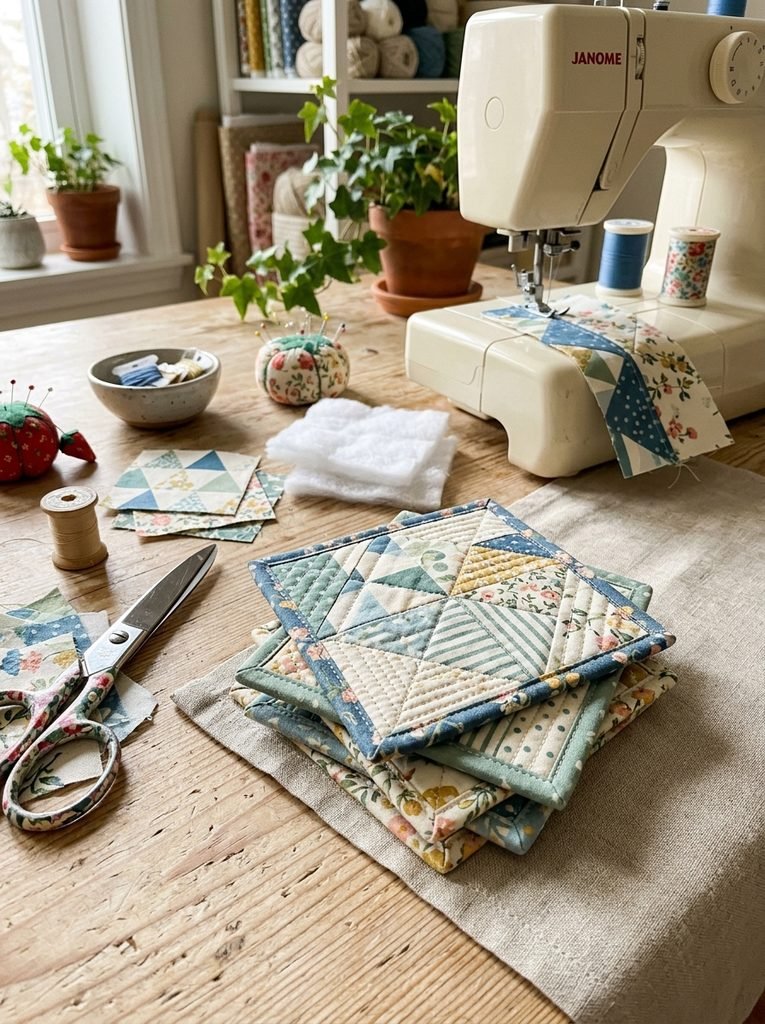
A quilted coaster gives you practice with fabric layers, batting, straight stitching, trimming, and edge finishing. Start with simple squares because they are easy to measure and cut. Try a two-color design first, then move toward basic patchwork when you feel more confident. USU Extension also provides easy hot-pad and related beginner patterns, making small quilted household items a useful progression for new sewists.
16. Pencil Pouch for Kids
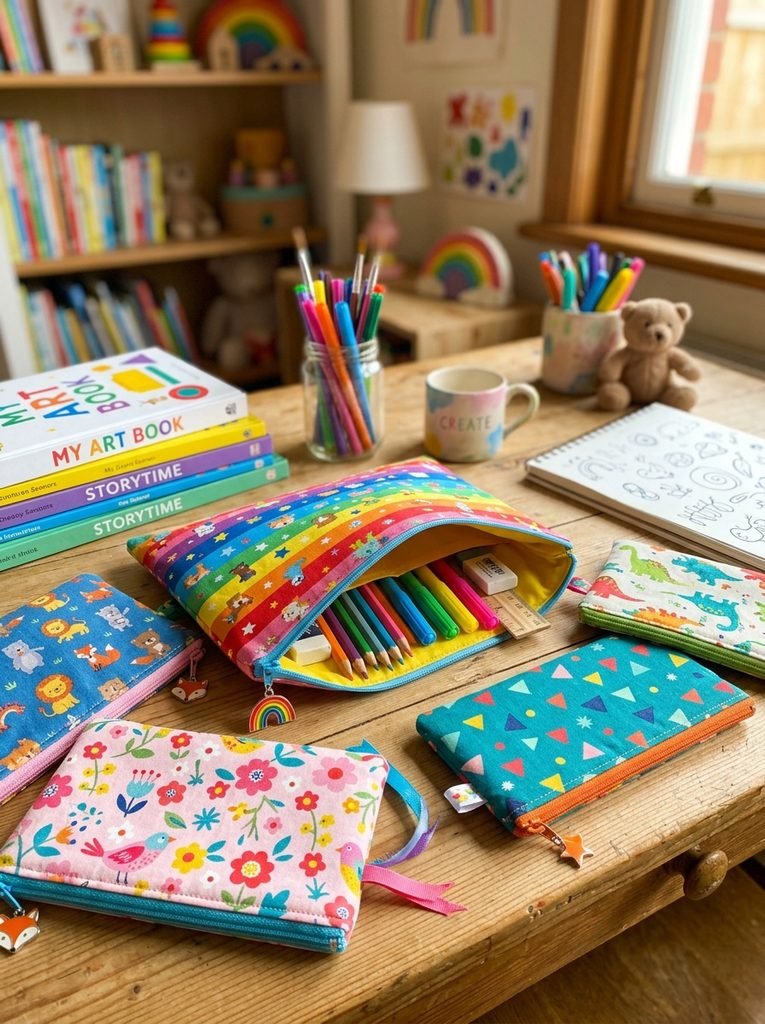
A pencil pouch makes a practical handmade gift for school-age children. Use bright prints, simple color blocks, or fun themed fabrics. Add a zipper and lining once you feel comfortable with basic seams. You can make separate versions for pencils, crayons, markers, or small craft supplies. A neat lining is a great way to practice making your finished work look polished inside as well as outside.
17. Friendship Gift Pouch
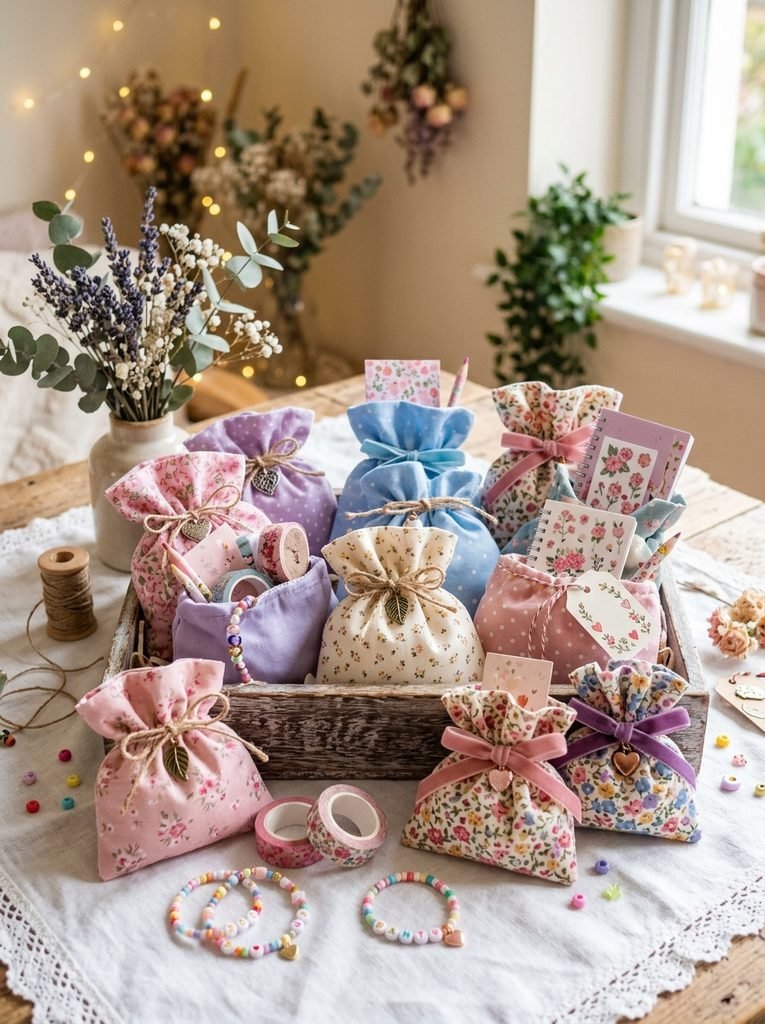
A tiny drawstring or flap pouch can become a meaningful birthday gift for a friend. Use their favorite colors, a small fabric label, or a simple decorative stitch to personalize it. Fill the finished pouch with hair ties, stationery, handmade bracelets, or other small items. The sewing itself stays simple, while the personalization makes the final gift feel much more special.
18. Small Handmade Items to Sell

If you want to turn your sewing practice into a small side business, start with products that are quick to repeat and easy to photograph. Scrunchies, zipper pouches, keychains, bookmarks, bows, coasters, and small gift bags are worth testing because you can create different versions without changing the entire construction process. Do not assume handmade products automatically create easy money. First calculate fabric, thread, zippers, hardware, packaging, machine time, mistakes, and your own labor. Then compare your cost with the price customers are willing to pay. Start with a small batch, photograph each item clearly, and see which designs receive genuine interest before buying large quantities of supplies.
Final Thoughts
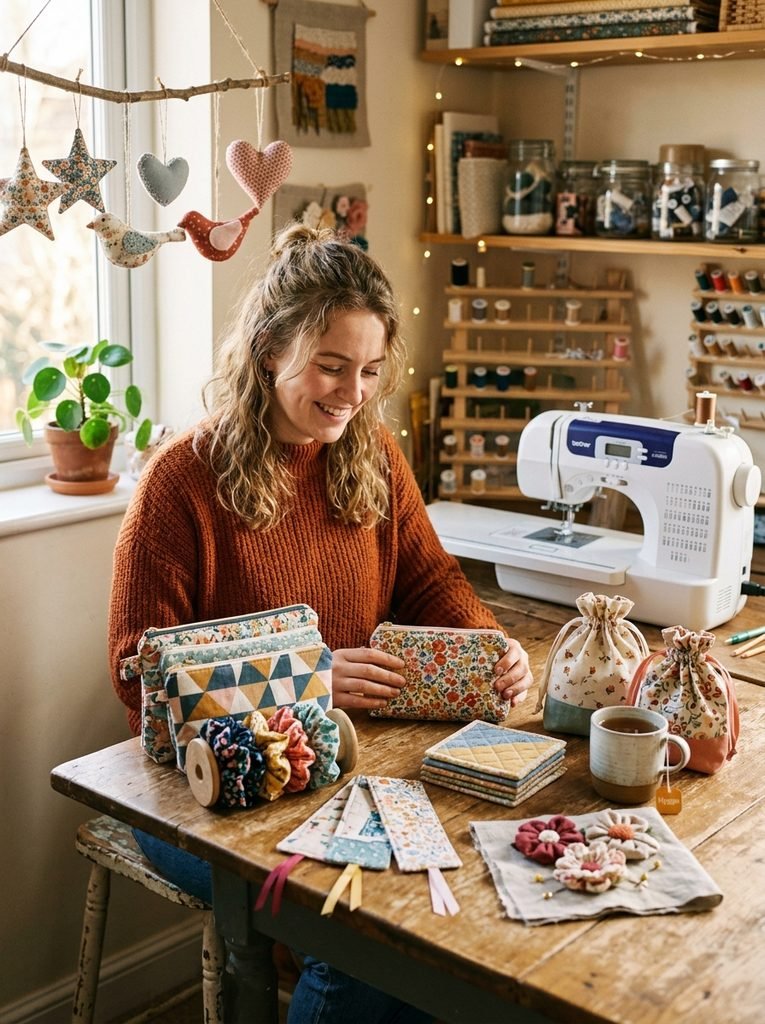
The beauty of small sewing projects is that they give you a quick path from a piece of fabric to something useful. You can begin with scraps, practice one skill at a time, and slowly build confidence. Some pieces can become gifts, some can brighten your home, and others may eventually become products for a small handmade shop. You do not need to make the most complicated design to create something worth keeping. Start with one simple idea. Sew it carefully. Learn from the mistakes. Then make the next one a little better. That is how a few pieces of fabric can slowly turn into a real creative skill.
