



This post may contain affiliate links. Please read my disclosure policy.
In This Article Show
Halloween has a special kind of magic. A quiet room can become a spooky corner with a few dark fabrics, orange accents, tiny bats, and handmade decorations. If you enjoy sewing, this season gives you a perfect reason to turn leftover fabric into something creative and useful. The best halloween sewing projects do not need complicated patterns or expensive supplies. A beginner can start with simple fabric shapes, straight seams, and basic decorations. More experienced sewists can move toward costumes, throw pillows, table decor, and detailed patchwork. You can even use fabric you already have at home. Black cotton can become a bat garland. Orange fabric can become a pumpkin decoration. An old shirt can turn into part of a costume. The possibilities grow once you start looking at scraps as materials rather than leftovers. For beginners, Utah State University Extension recommends basic sewing tools such as sharp fabric shears, straight pins, a pincushion, measuring tape, and a seam ripper. These simple tools cover many small sewing projects without requiring a large craft setup.
1. Sew a Simple Halloween Table Runner
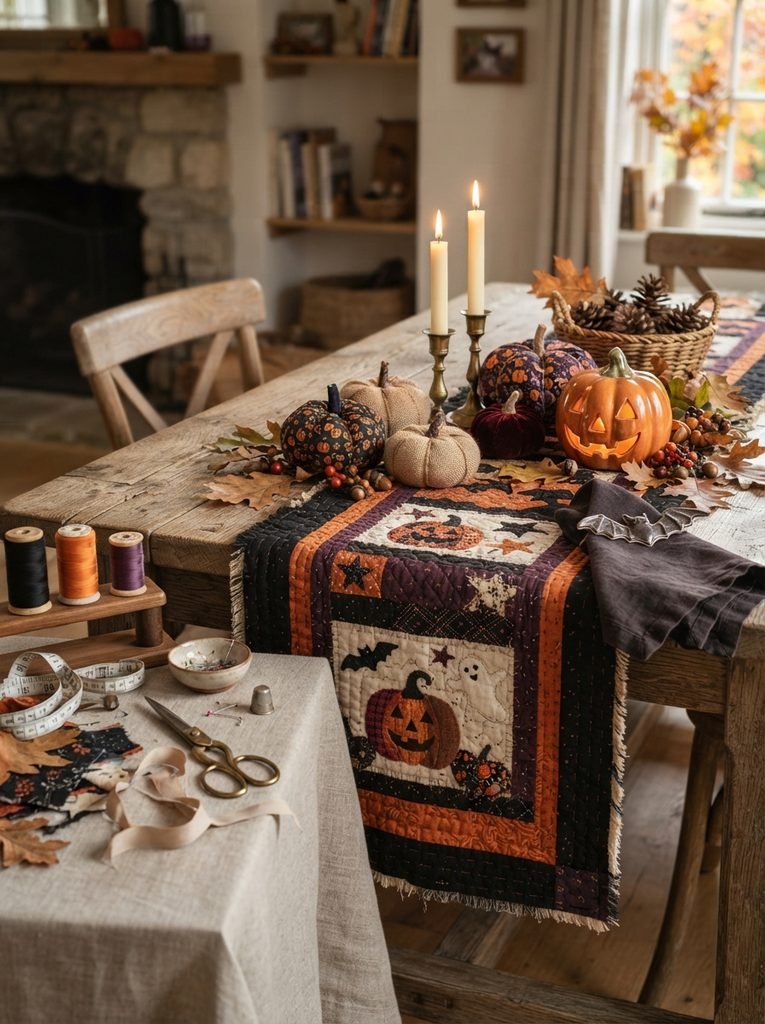
A Halloween table runner is a great first project because the shape stays simple. You mainly work with straight edges, seams, and hems. Choose black, orange, purple, cream, or patterned Halloween fabric. For a classic look, place a dark center panel between two contrasting borders. You can add small pumpkin or bat appliqués if you want more detail. The finished runner can decorate a dining table, console, or craft table during October. If you want a quick and easy project, skip complicated patchwork and focus on clean edges. A neat finish often looks better than too many decorations.
2. Make Fabric Bat Garland
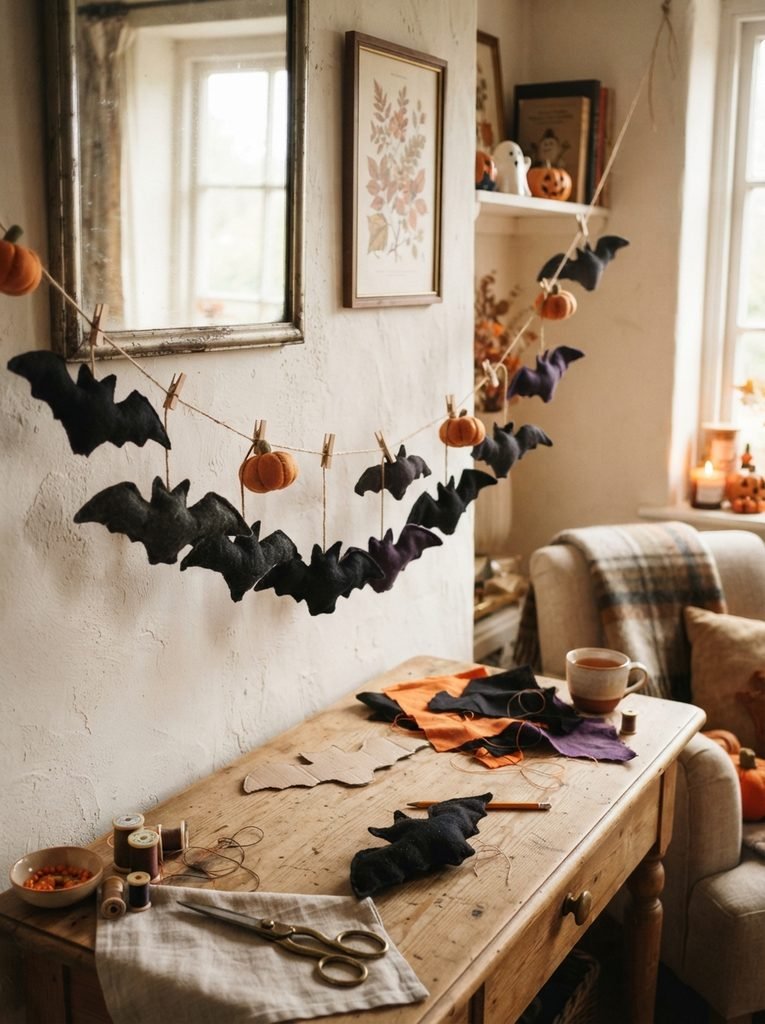
A bat garland can instantly change a plain wall into a Halloween display. Draw one simple bat shape on cardboard and use it as your template. Cut several fabric bats, then stitch around the edges or leave them as simple fabric shapes. Use different shades of black and gray for a layered look. You can also mix tiny orange pumpkins between the bats. Hang the finished garland across a wall, window, fireplace, or sewing-room shelf. This project works especially well for kids because they can help choose fabrics and arrange the shapes while an adult handles the sewing machine.
3. Create Halloween Throw Pillows
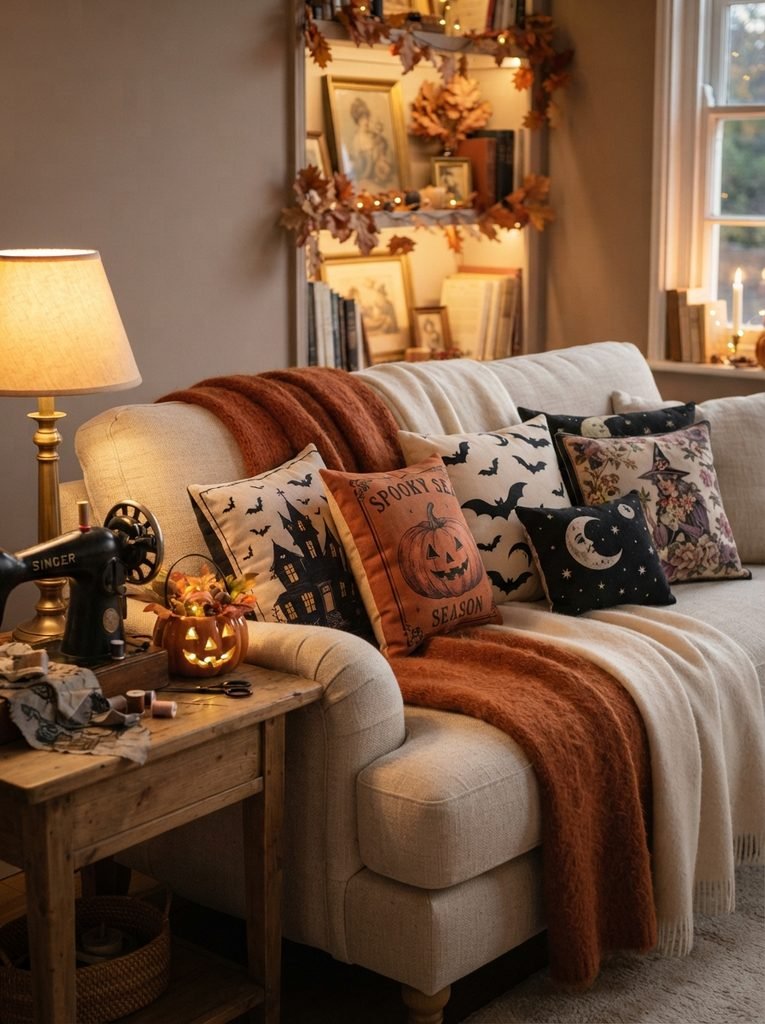
A plain sofa can become part of your Halloween decor with handmade throw pillows. Use seasonal fabric for the front and a simple cotton fabric for the back. Try designs with pumpkins, ghosts, bats, moons, or vintage Halloween prints. An envelope-style pillow cover makes a useful beginner project because you can remove it later and store it with your seasonal decorations. USU Extension offers beginner-friendly pillow projects that use basic sewing supplies and complementary fabrics, making pillows a practical place to practice simple construction and fabric coordination.
4. Sew a Pumpkin Fabric Decoration
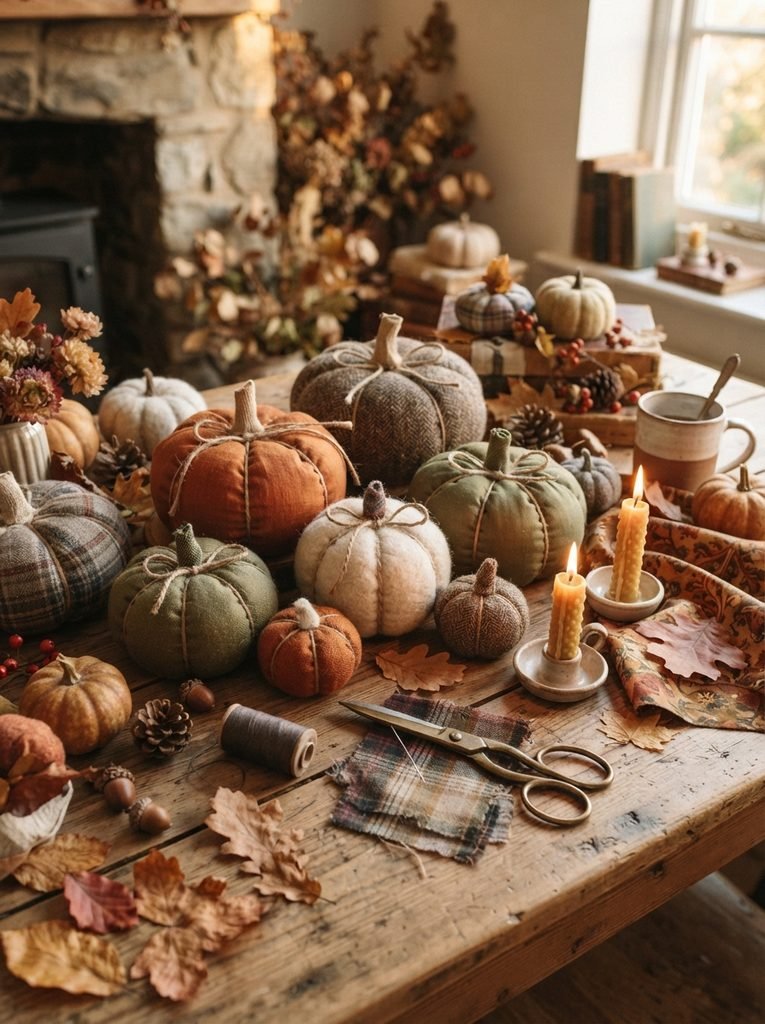
Fabric pumpkins are one of the easiest seasonal decorations to make. Choose orange cotton, velvet, corduroy, or even leftover fabric from another project. Cut a few simple pieces, stitch them together, add soft filling, and finish the center with a small fabric stem. You can make pumpkins in different sizes and place them in baskets, on shelves, or around your sewing table. For a more vintage look, use muted orange, brown, cream, and olive instead of bright Halloween colors.
5. Make a Halloween Trick-or-Treat Bag
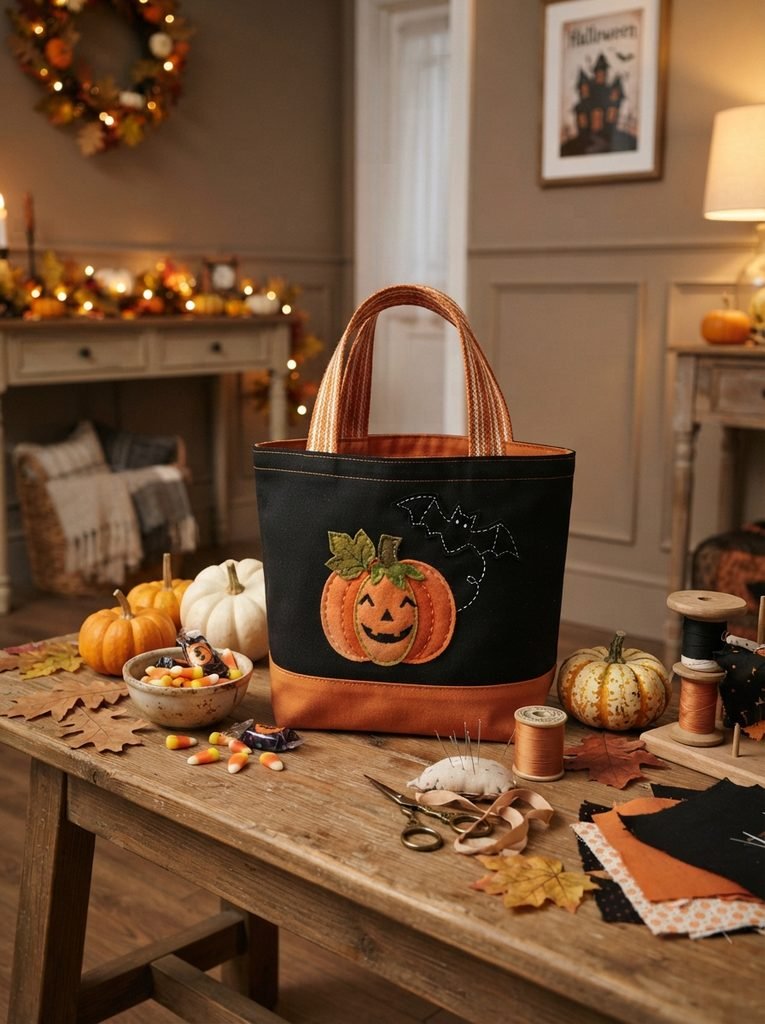
A reusable fabric trick-or-treat bag gives children something special to carry on Halloween night. Use sturdy cotton or canvas and add two comfortable handles. You can decorate the front with a pumpkin, ghost, moon, or bats. Keep the construction simple if you are making one for a beginner sewing project. A larger version can also work as a reusable seasonal storage bag after Halloween.
6. Create a Halloween Costume Cape
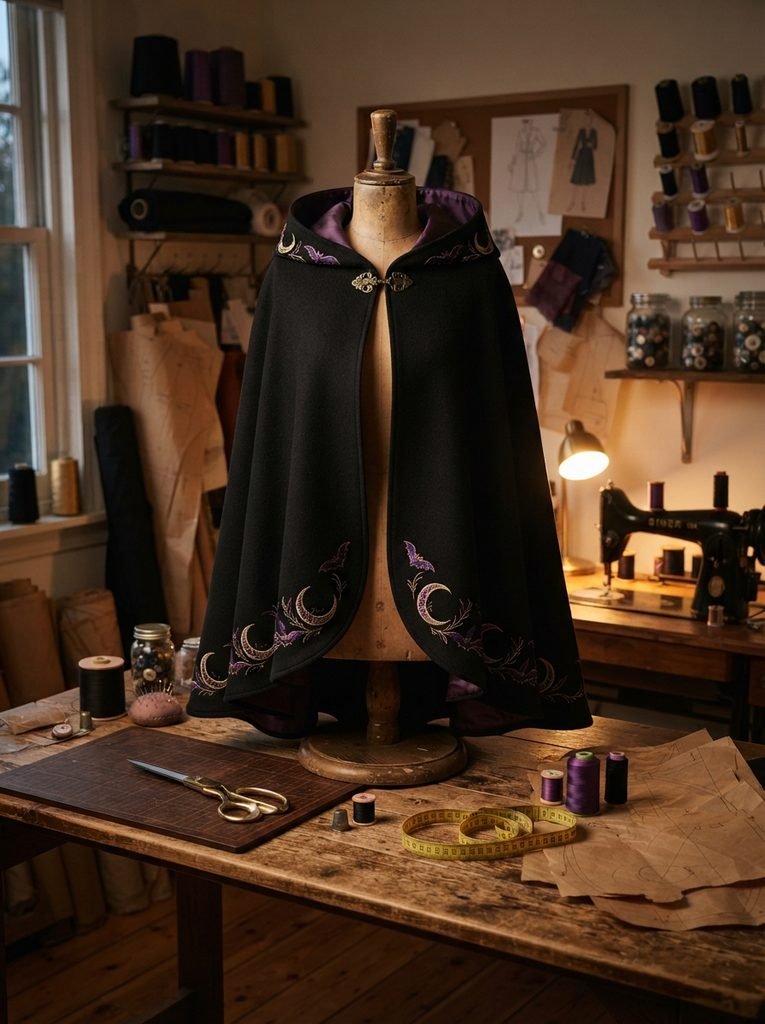
A simple fabric cape can become the base of many Halloween costumes. Black fabric works for a classic spooky look, while purple, red, or dark green can create a more dramatic style. You do not need a complex pattern. A basic cape shape with a finished neckline and hem can work for several ages. Add stars, moons, bats, or a simple contrasting border to make it unique. When making clothes for children, check the fit carefully and avoid loose accessories that could create a safety problem. Keep the finished costume comfortable enough for walking and playing.
7. Sew a Halloween Apron
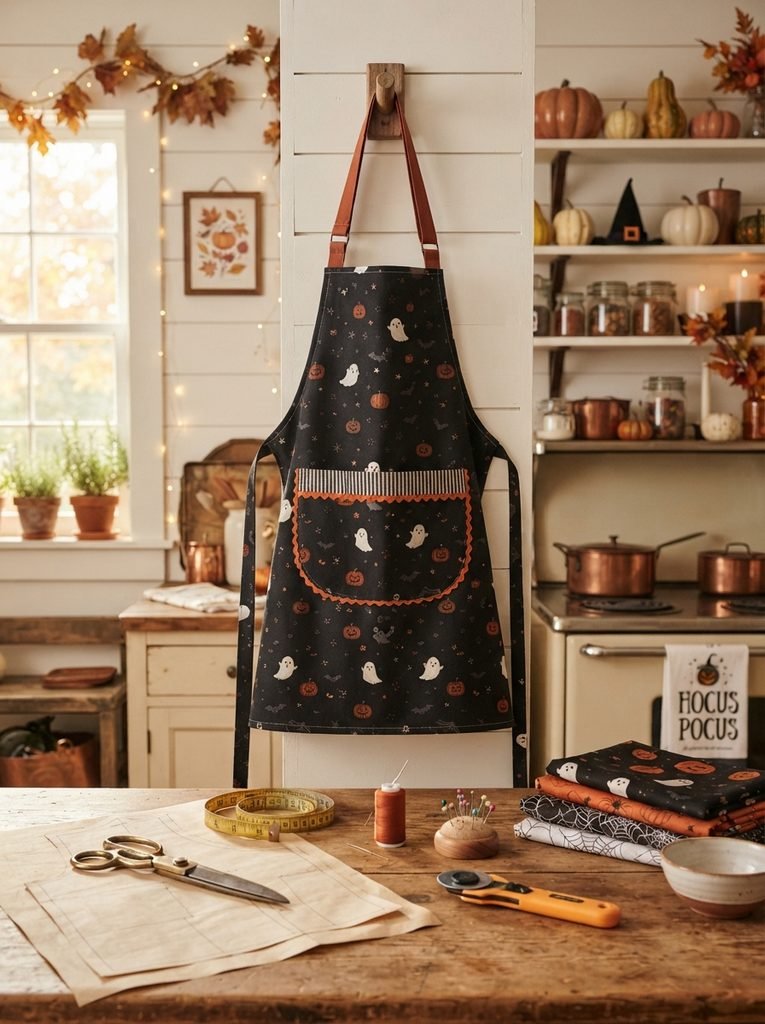
A Halloween apron can protect clothes during baking, crafting, or decorating. Choose cotton fabric with pumpkins, ghosts, spiders, or autumn patterns. This is also a useful way to practice long straight seams, hems, straps, and simple pockets. If you already have an apron pattern, you can adjust the fabric and decoration without changing the basic construction. For a Diy version, use an old apron as a rough template. Measure its main sections and create a paper guide before cutting your new fabric.
8. Make a Halloween Wall Hanging
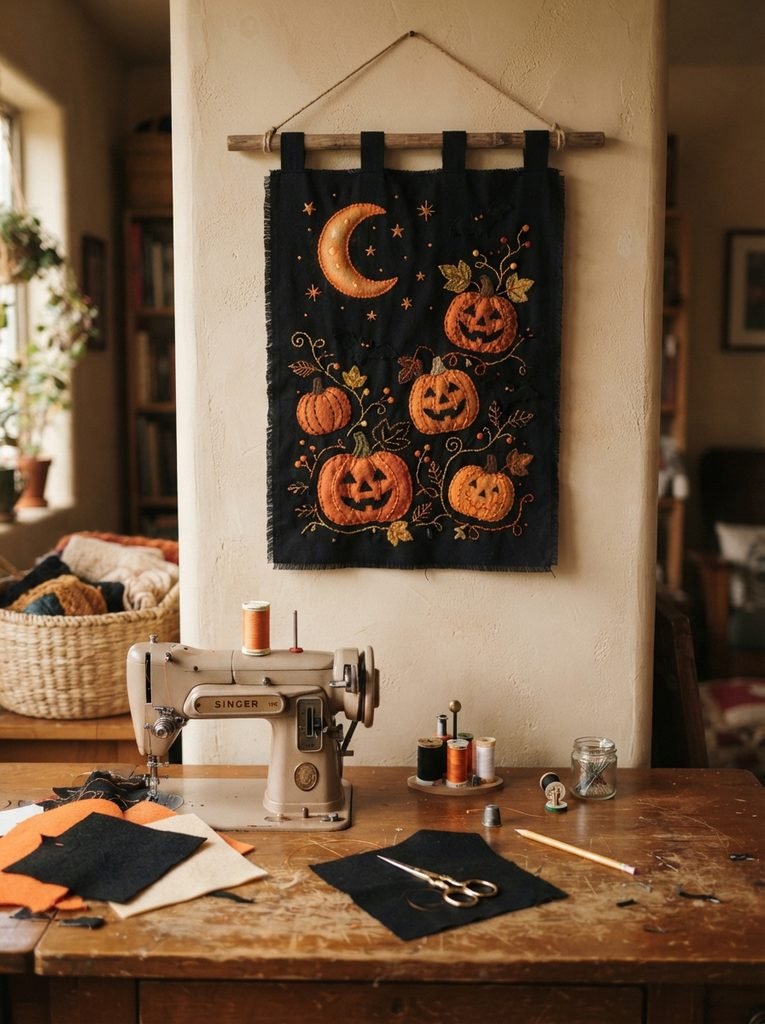
A fabric wall hanging gives you more room for creativity. Start with a rectangular fabric panel and decorate it with appliqué pumpkins, moons, ghosts, or bats. You can use felt for small details because it cuts easily and does not require complicated edge finishing. Add a wooden dowel and fabric loops at the top when you are ready to hang the finished piece. This idea also works as a seasonal gift or handmade item you could sell.
9. Sew a Spooky Table Mat Set
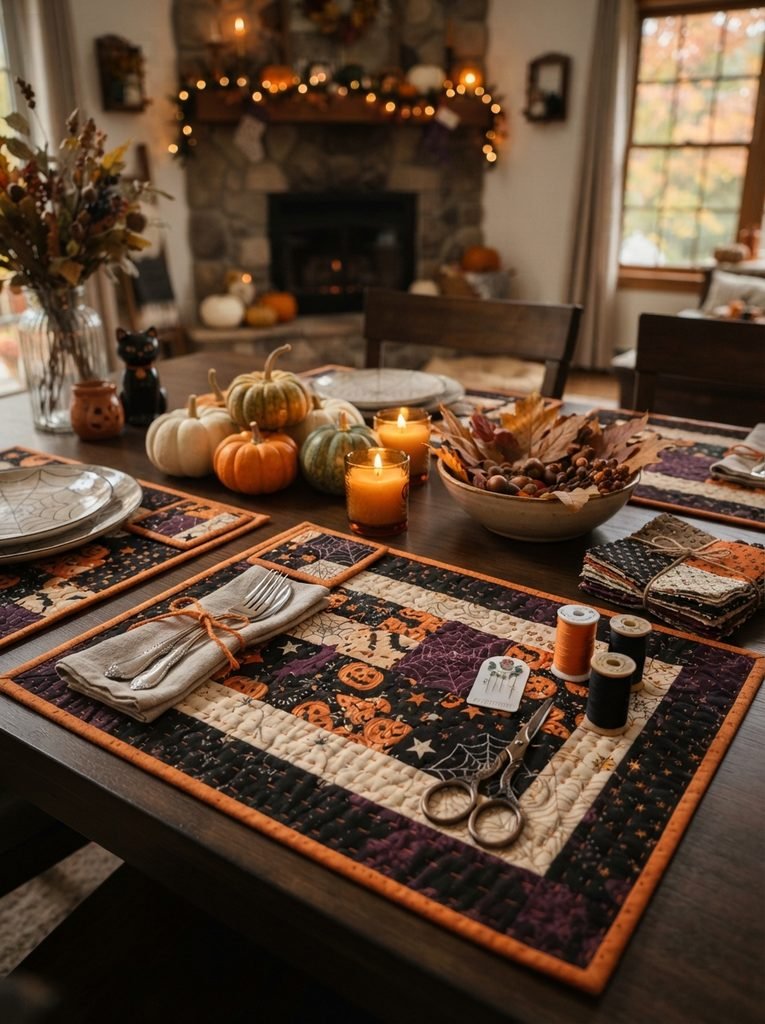
Small fabric mats are a smart choice when you want a quick seasonal project. Make square or rectangular mats using cotton fabric, batting, and a backing layer. Choose matching Halloween prints and stitch simple lines across the surface. A set of four or six mats can make a dining table feel festive without covering it with too many decorations. You can also make matching coasters from the leftover fabric.
10. Create a Halloween Fabric Wreath
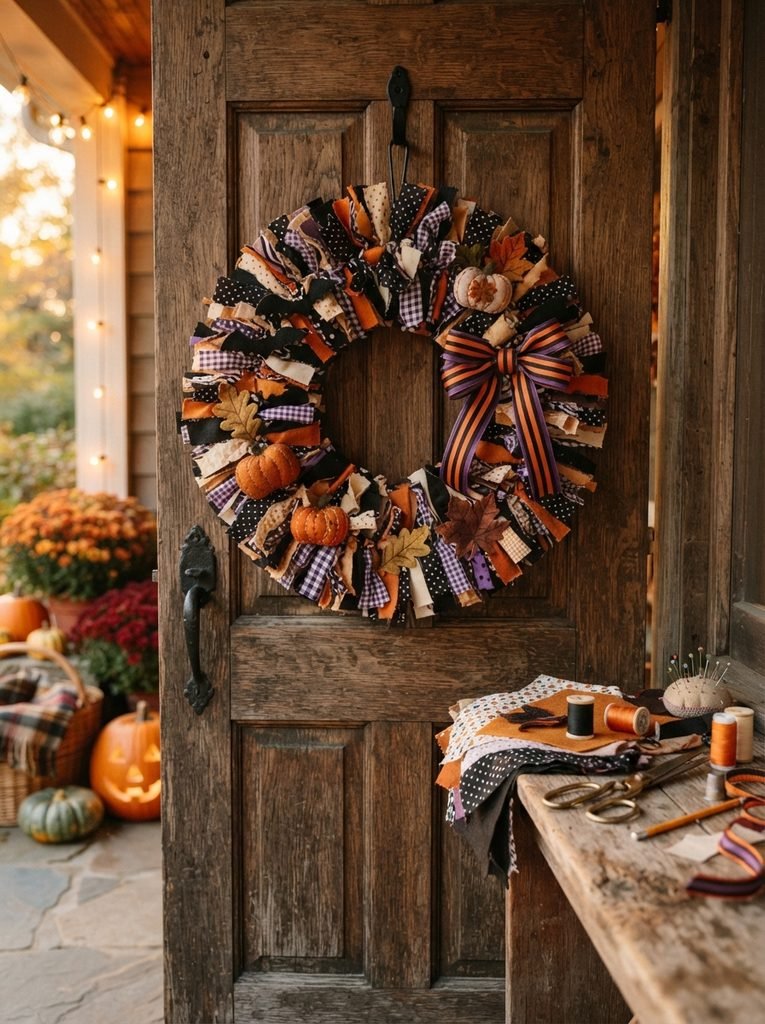
A fabric wreath gives you a chance to use many small scraps. Wrap strips of orange, black, cream, and purple fabric around a simple wreath base, then add stitched pumpkins, leaves, or small bats. This project does not need perfect measurements. That makes it a fun option when you want to experiment with texture and color rather than focus on precise construction.
11. Make a Halloween Mug Rug
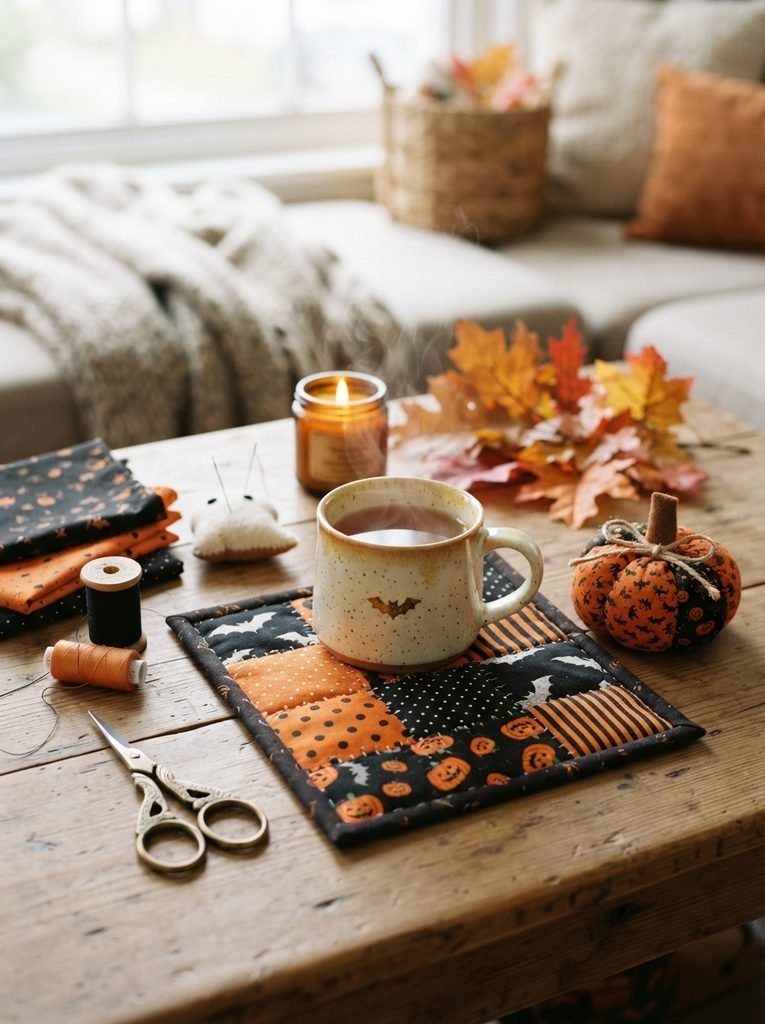
A mug rug sits between a coaster and a small table mat. It makes a great beginner project because you can keep the shape small and practice accurate edges. Use a Halloween print on top and a plain fabric underneath. Add a thin batting layer for extra structure. Simple straight-line quilting can give the finished piece a handmade look without requiring advanced techniques.
12. Sew a Simple Ghost Garland
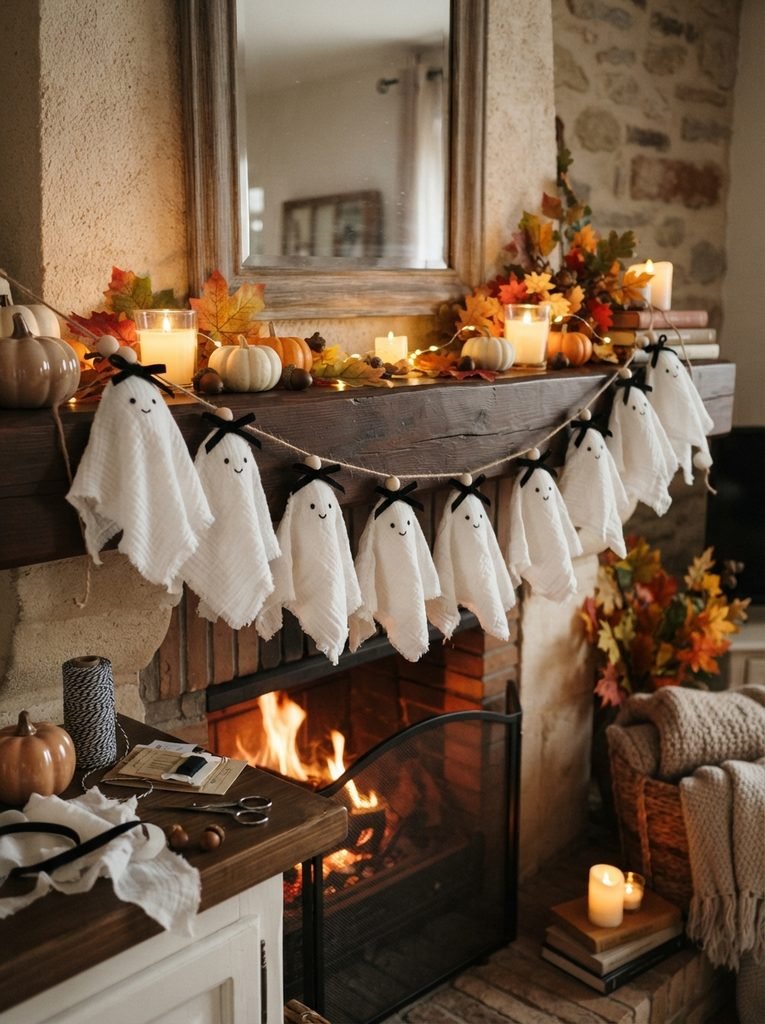
A ghost garland can create a playful Halloween display without needing a complicated pattern. Draw one rounded ghost shape on paper, transfer it onto white fabric, and cut several pieces. Add tiny stitched eyes or use fabric appliqué for the details. Connect the ghosts with ribbon or a fabric strip and hang them across a wall, doorway, or shelf. This is one of those free pattern ideas where a simple hand-drawn template works perfectly.
13. Create a Halloween Pillow With Appliqué
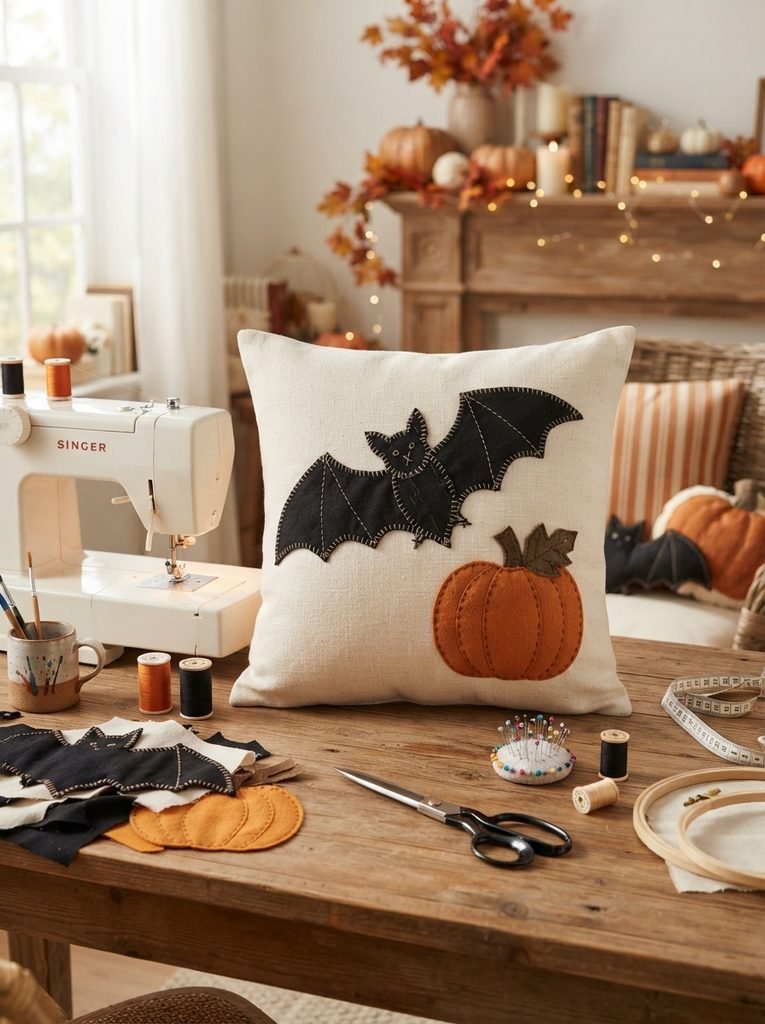
If you enjoyed making the earlier throw pillows, try a more detailed version. Start with a plain pillow cover and add a fabric pumpkin, moon, cat, ghost, or bat using appliqué. Secure the appliqué carefully before adding decorative stitching around the edges. This method lets you create a custom design without buying a printed Halloween fabric.
14. Sew a Vintage Halloween Banner
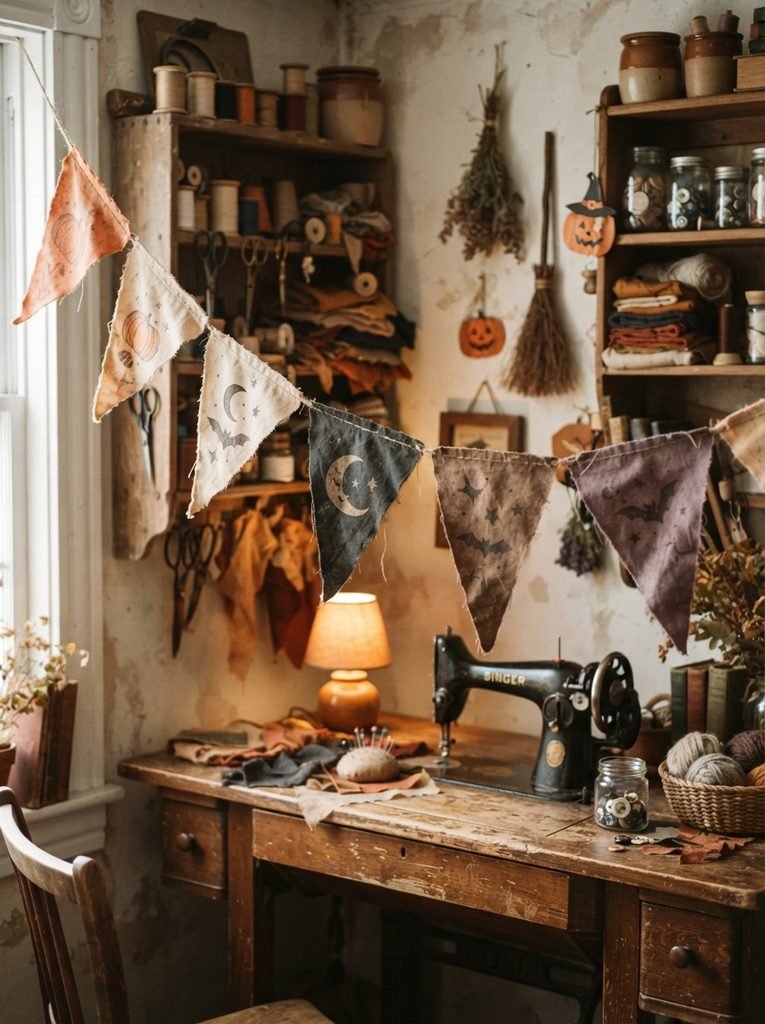
For a nostalgic Halloween room, create a fabric banner using muted colors and old-fashioned patterns. Try cream, faded orange, charcoal, brown, and dusty purple. Cut triangles from fabric, finish the edges, and attach them to a long ribbon or fabric strip. Add small appliqué details if you want more character. The result can work in a living room, craft room, entryway, or children’s party space.
15. Make a Simple Halloween Costume Accessory
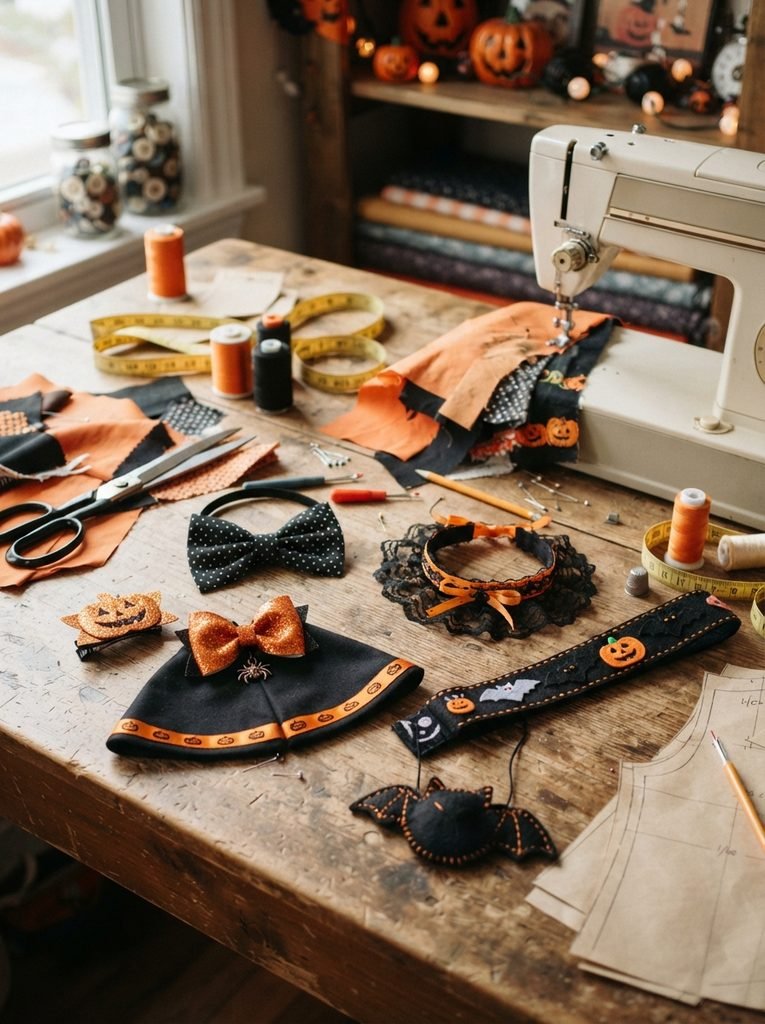
You do not always need to sew an entire costume. A collar, bow tie, capelet, fabric belt, headband, or small decorative pouch can change a basic outfit into a Halloween look. This is especially useful when you need something quick and easy. Choose one simple accessory, use fabric that matches the outfit, and add a small seasonal detail. A handmade accessory can also complement costumes for kids without requiring a full sewing pattern.
Final Thoughts
The most enjoyable halloween sewing projects often begin with something simple. A few pieces of fabric can become a pillow, a garland, a costume accessory, or a decoration that returns to your home every October. Do not worry about making everything perfect on your first attempt. Start with a simple shape. Choose fabric you love. Take your time with cutting and pressing. Then add one creative detail that makes the project yours. Whether you prefer Diy decor, costume sewing, children’s crafts, vintage decorations, or practical home pieces, Halloween gives you plenty of room to experiment. And when the finished project appears in your home, it carries something a store-bought decoration cannot: the story of how you made it.