



This post may contain affiliate links. Please read my disclosure policy.
In This Article Show
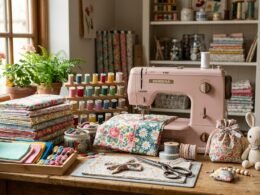
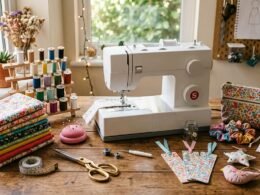
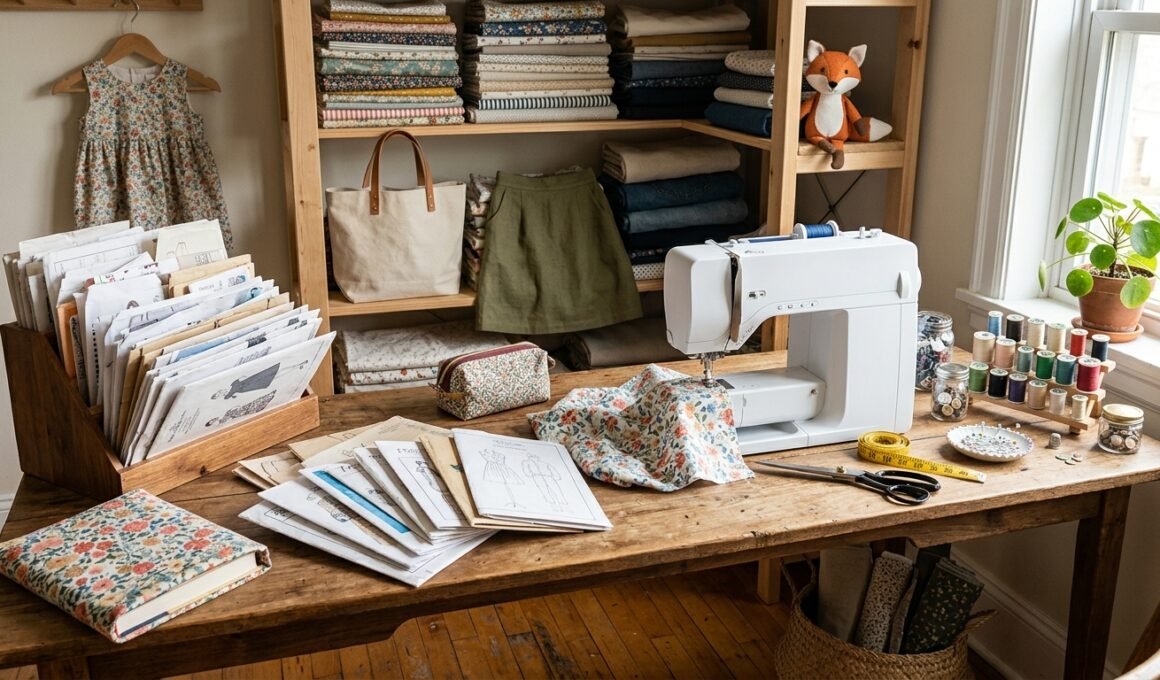
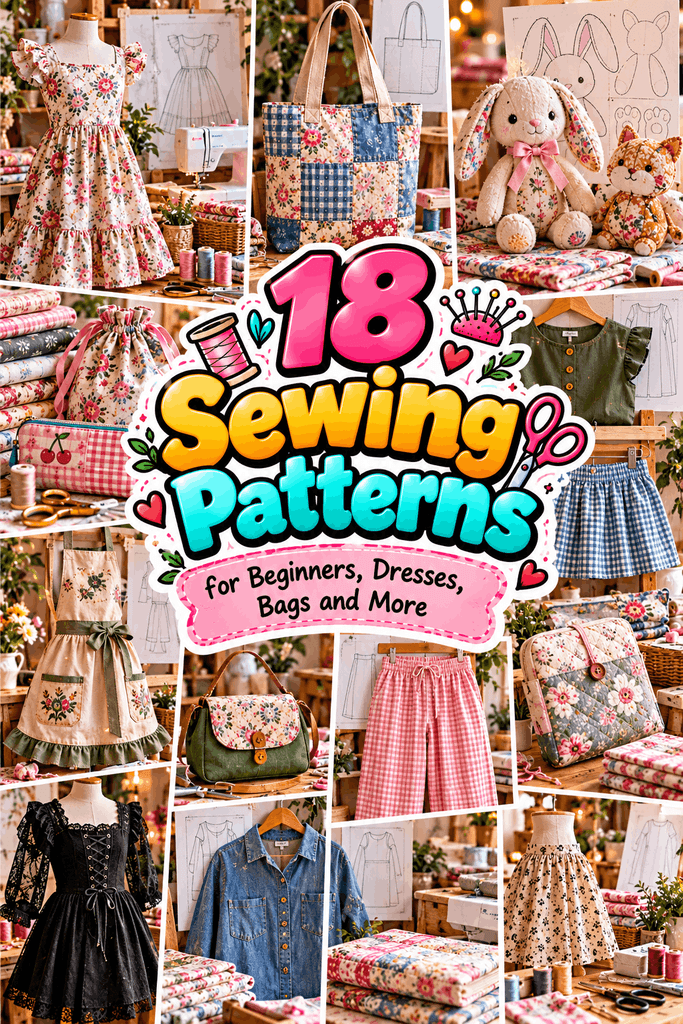
There is a special moment when you find a fabric you love and suddenly imagine what it could become. A soft floral print might turn into a dress. A sturdy canvas could become a tote bag. A small piece of colorful fabric might become a book sleeve or a little purse. That is where sewing patterns make the process easier. Instead of guessing every measurement, you start with a planned shape, cutting lines, construction steps, and useful markings. A good pattern gives you a clear path while still leaving room for your own style. Today, you can find patterns for almost every skill level. There are free options for beginners, printable free PDF downloads, vintage-inspired designs, modern clothing patterns, bags, home projects, and even patterns for plushies and dolls. USU Extension currently provides a wide range of free sewing projects, including skirts, mini purses, patchwork pouches, pillows, aprons, belt bags, blankets, reading pillows, and other beginner-friendly projects.
1. Easy Beginner Skirt Pattern
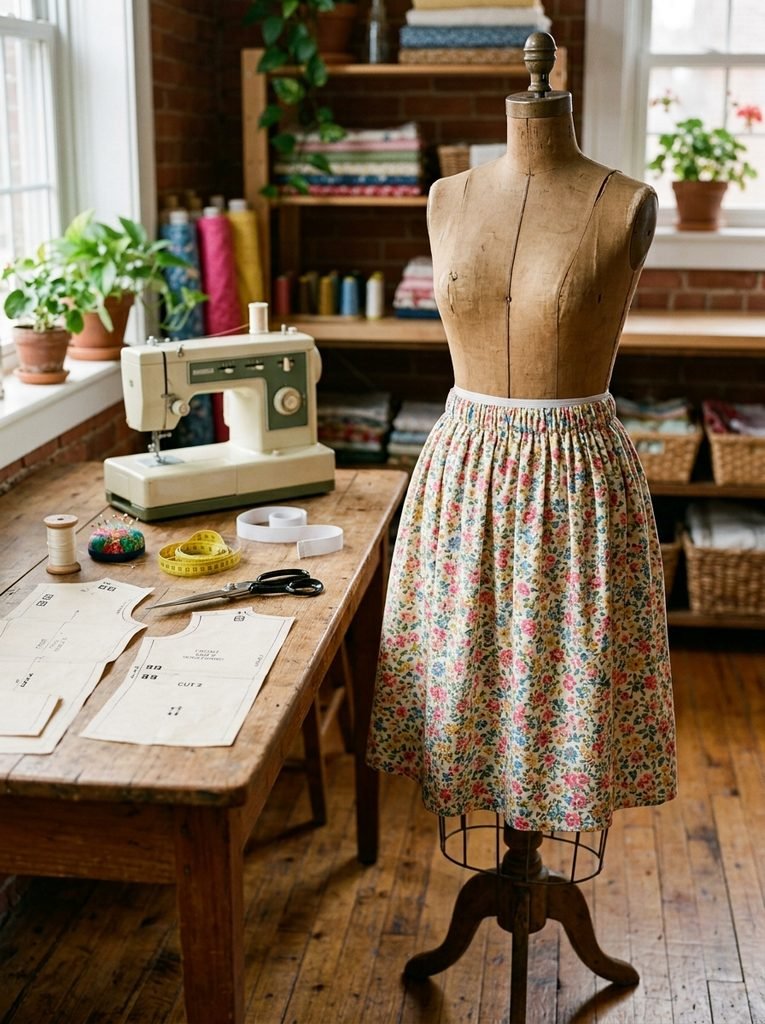
A simple elastic-waist skirt is an excellent first clothing project. It introduces you to measuring, cutting, seams, pressing, and creating a waistband without requiring a complicated zipper. Choose a lightweight woven fabric with a print you enjoy. Floral cotton creates a soft everyday look, while a darker fabric can create a more stylish outfit. USU Extension includes a youth elastic-waist skirt and a dropped-waist skirt with ruffles among its free sewing resources, showing how skirt construction can be adapted to different skill levels.
2. Simple Tote Bag Pattern
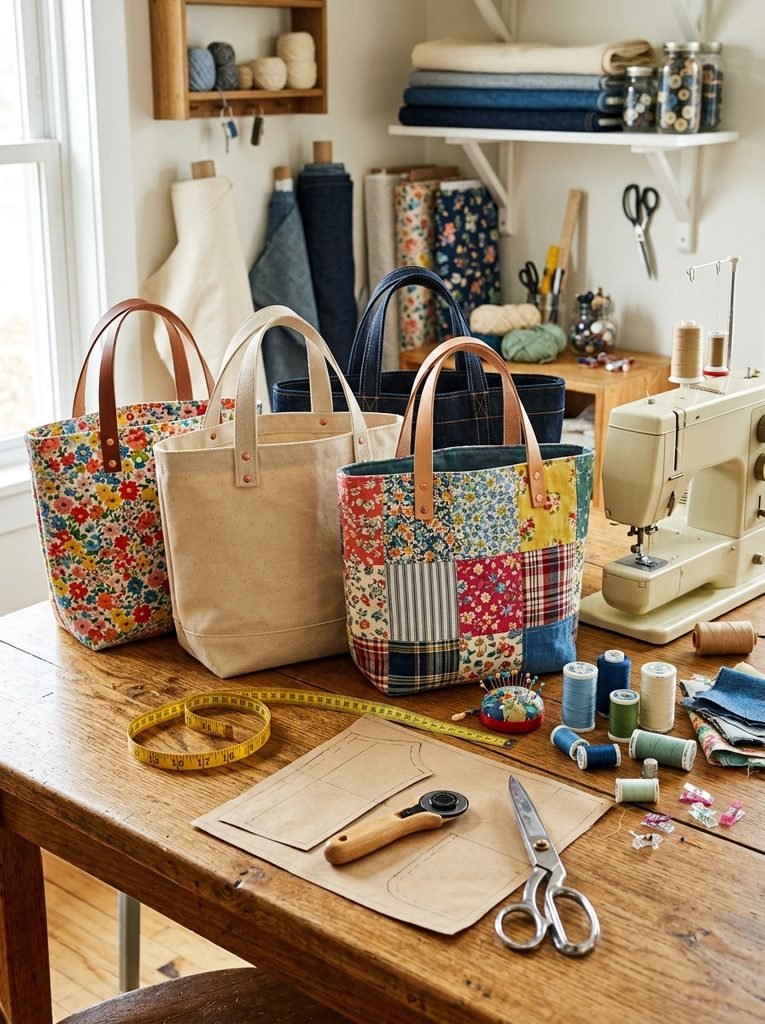
A tote bag gives beginners useful practice with straight seams, handles, fabric layers, and neat finishing. It also gives you plenty of room to experiment with fabric. Use canvas for a stronger everyday bag or cotton for a lightweight version. You can add an inside pocket, contrasting handles, or a small appliqué to make your design personal. Once you understand the basic construction, you can adjust the dimensions to create shopping bags, library bags, craft bags, or smaller gift bags.
3. Beginner Top Pattern
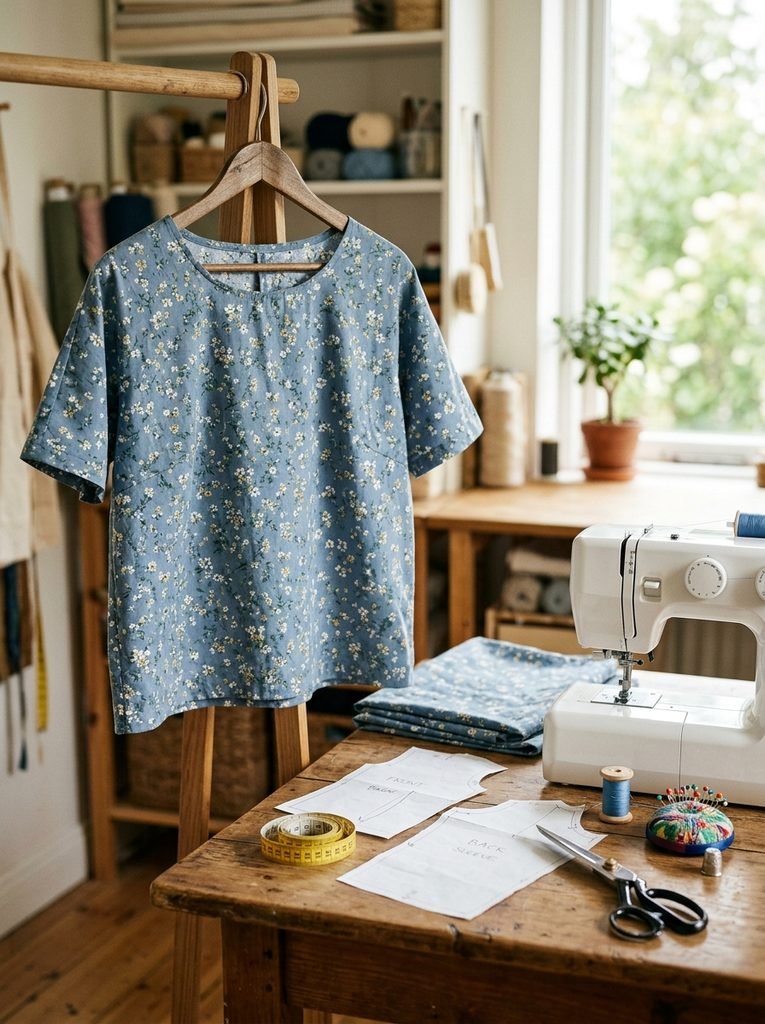
A loose top can be a comfortable next step after making simpler projects. Look for a design with minimal shaping, straightforward sleeves, and clear instructions. Before cutting your favorite fabric, compare the pattern’s finished measurements with a garment you already own. This can help you understand how the final piece may fit. The USU 4-H clothing curriculum includes beginner clothing skills such as selecting fabric and thread, sewing straight seams, pressing, hemming, skirts, shorts, pants, and basic tops.
4. Free PDF Dress Pattern
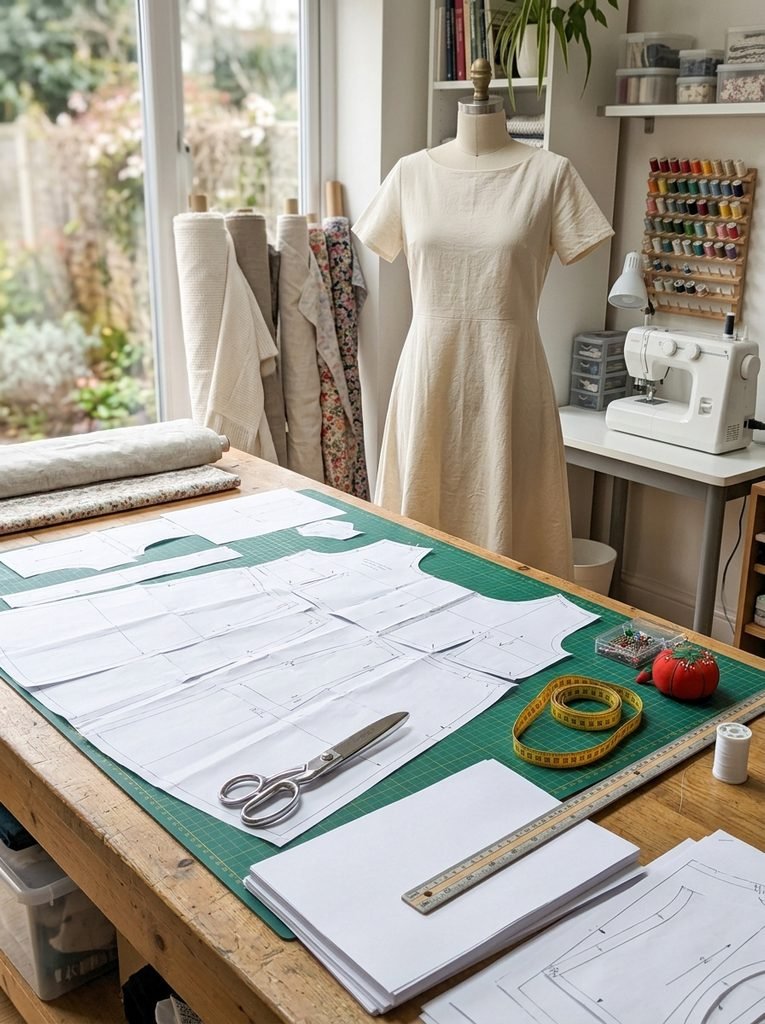
A printable free PDF pattern can be a convenient option when you want to start immediately. A simple easy dress with a relaxed shape can help beginners understand how several fabric pieces come together. Always check the printing instructions before cutting. Make sure the printer uses the correct scale, then compare the test square or measurement included with the pattern. If the printed size does not match, stop before cutting your fabric. Choose inexpensive fabric for your first version. Once you understand the fit, you can make the same design in a fabric you really love.
5. Japanese-Inspired Rice Bag Pattern
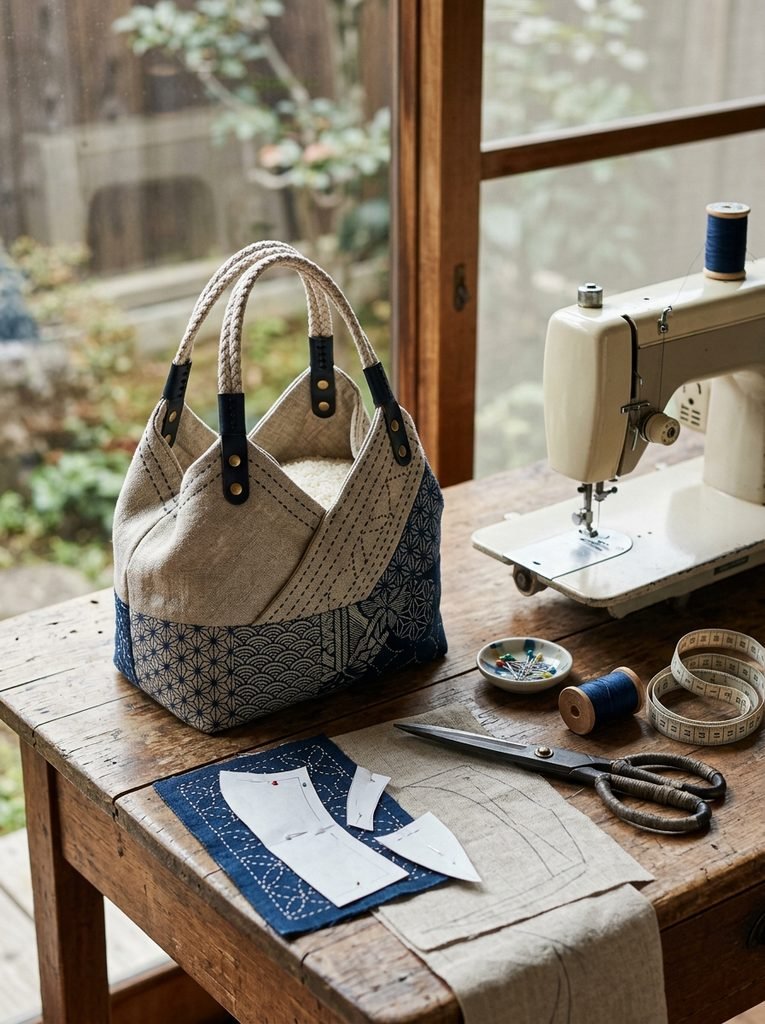
Small Japanese-inspired fabric bags offer a different shape from the usual tote or purse. A simple rice bag style can become a useful pouch for small items, travel accessories, or gifts. USU Extension includes a Japanese rice bag among its free sewing projects, making this style an interesting option for sewists who want to explore a different construction approach. Choose a lightweight woven fabric and pay attention to the grainline and measurements. A calm neutral print can give the finished bag a clean, minimalist look.
6. Handbag Pattern for Beginners
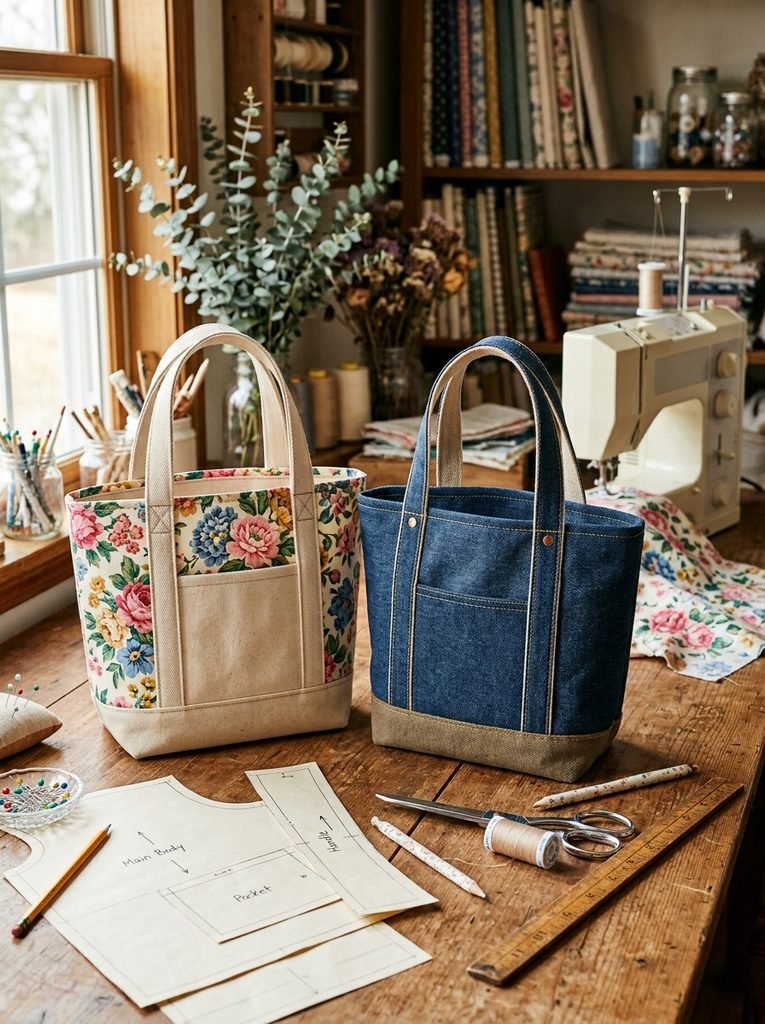
Once a tote feels comfortable, try a small handbag. Choose a pattern with a simple body and basic handles before moving toward zippers, structured bases, or multiple compartments. A handbag also gives you more freedom with fabric. Try denim for a casual look, canvas for structure, or cotton with interfacing for a softer everyday bag. Keep the first version simple. One outside pocket is enough. You can add more features when you understand how the basic shape comes together.
7. Book Sleeve Pattern
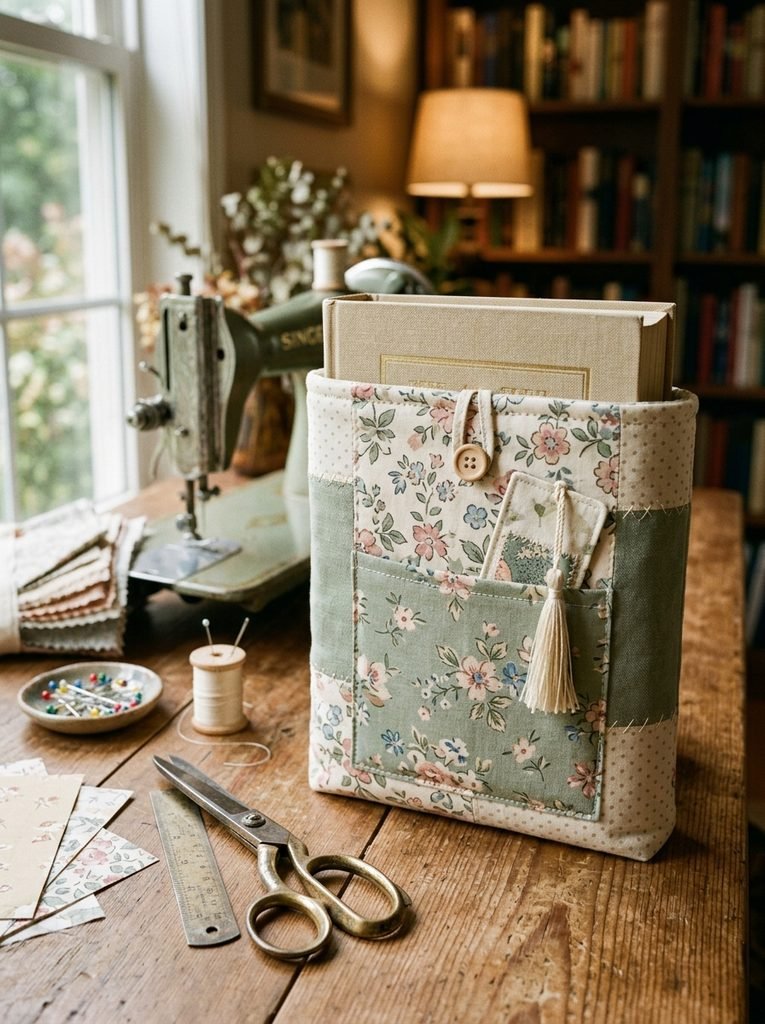
A fabric book sleeve is both practical and attractive. It protects a favorite book while giving you practice with straight seams, lining, and simple padding. You can add a small outside pocket for bookmarks or a pen. Use soft cotton for a lightweight version or add batting when you want extra protection. This project also makes a thoughtful handmade gift for someone who enjoys reading. USU Extension’s reading pillow project demonstrates how sewing can combine fabric construction with useful storage features, including a built-in pocket for a book and small items.
8. Animal Plush Pattern
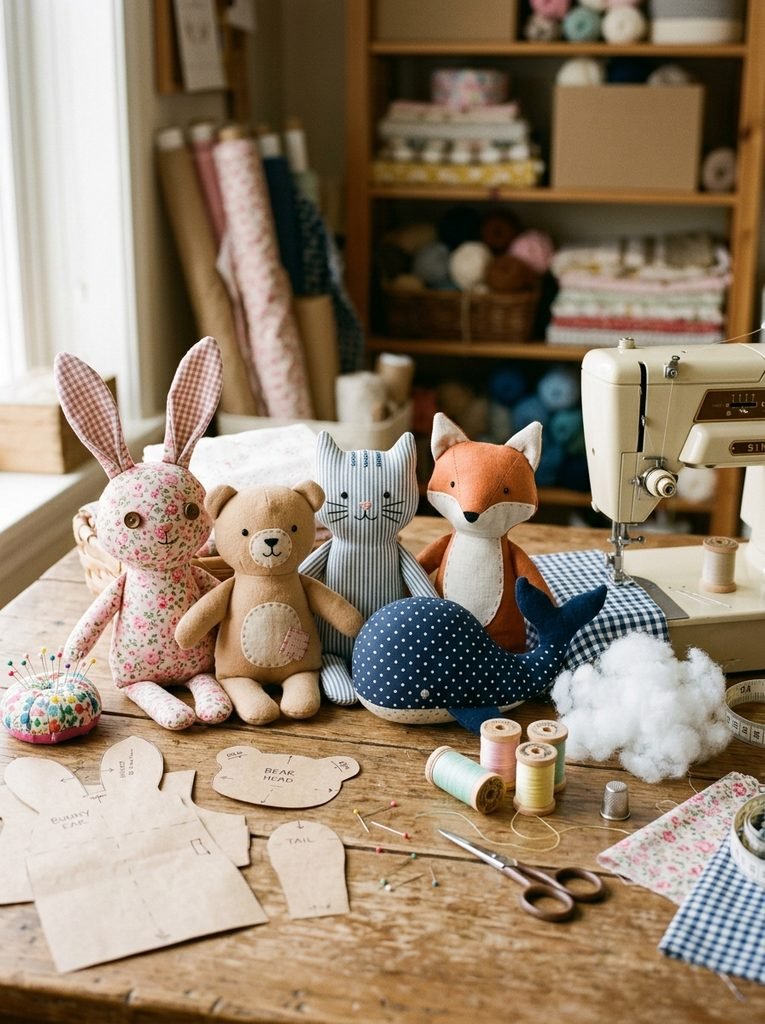
If you enjoy cute projects, try an animal plush pattern. A simple bunny, bear, cat, whale, or fox can help you practice curved seams and turning small pieces. Start with a design that uses only a few main pieces. Tiny details can become difficult to sew, especially when you are still learning. You can create a matching collection by using different fabrics while keeping the same basic pattern. This approach makes each plush feel different without requiring a completely new design.
9. Vintage Apron Pattern
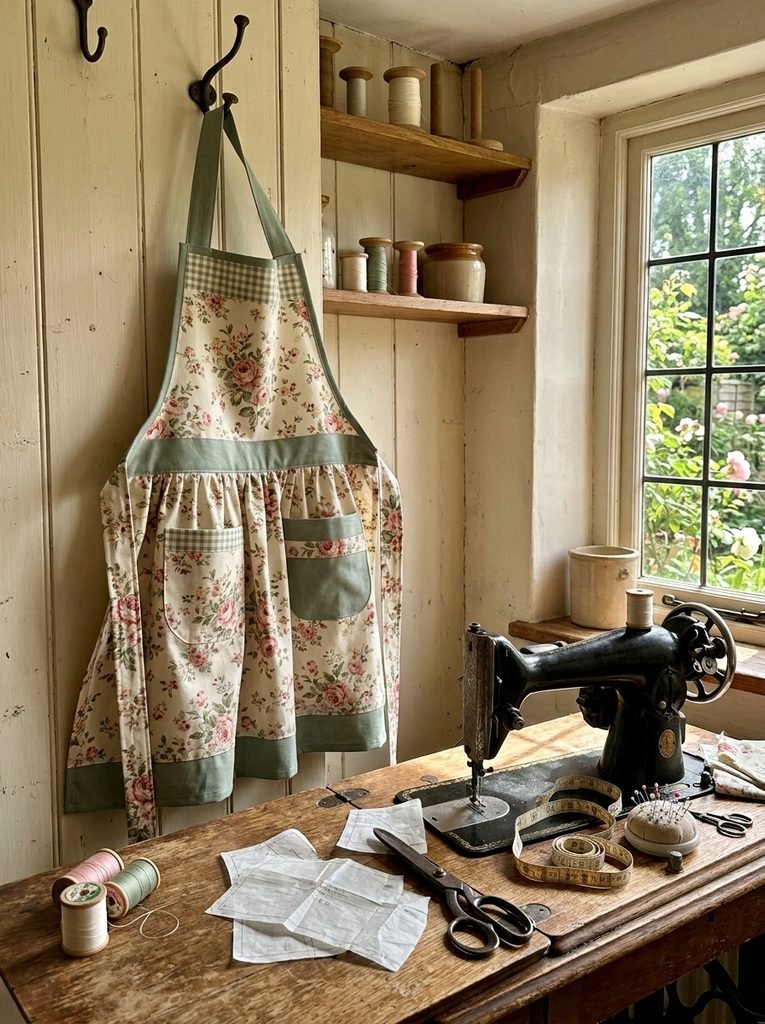
A vintage apron can bring old-fashioned charm into a modern kitchen. Look for patterns with simple ties, a bib, and one or two useful pockets. Choose gingham, floral cotton, ticking stripe, or small prints for a classic look. You can also create a modern version by using neutral linen and contrasting straps. An apron teaches useful skills such as hemming, creating ties, attaching pockets, and working with long straight seams. USU Extension includes apron projects within its sewing resources and clothing-construction curriculum.
10. Simple Purse Pattern
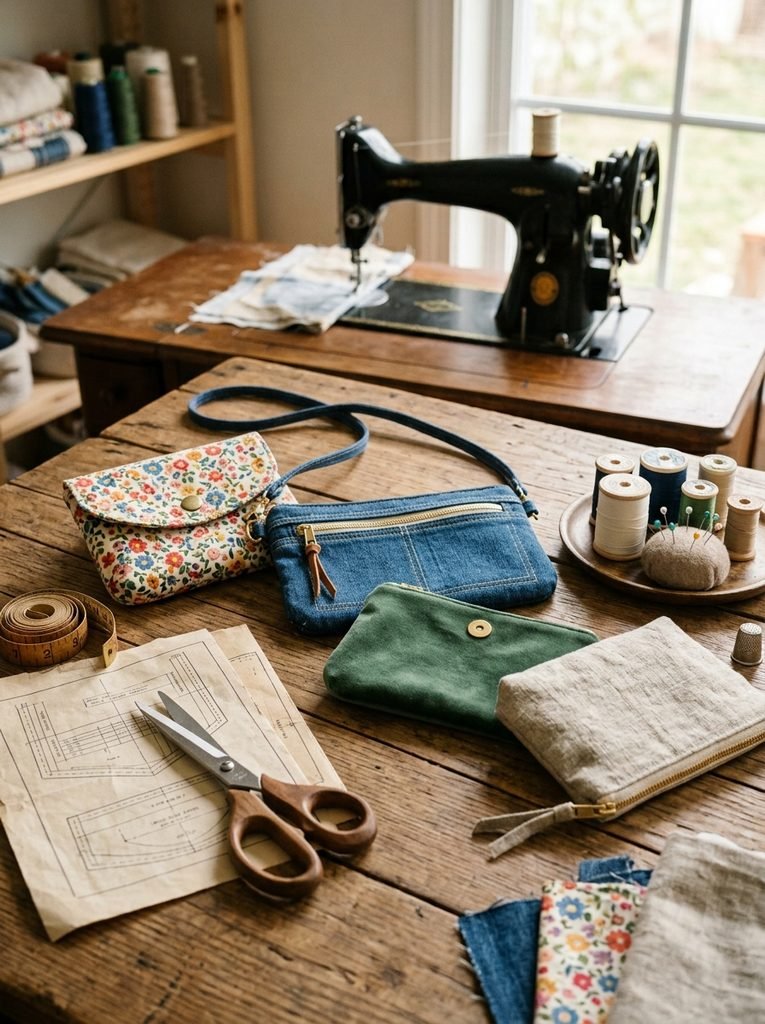
A small purse is a good project when you want something compact but still useful. Start with a basic shape before attempting complicated hardware or multiple compartments. You can use one fabric for a clean look or combine two coordinating fabrics. A small magnetic snap can provide a simple closure, while a zipper can become your next skill challenge.
11. Pants Pattern for Beginners
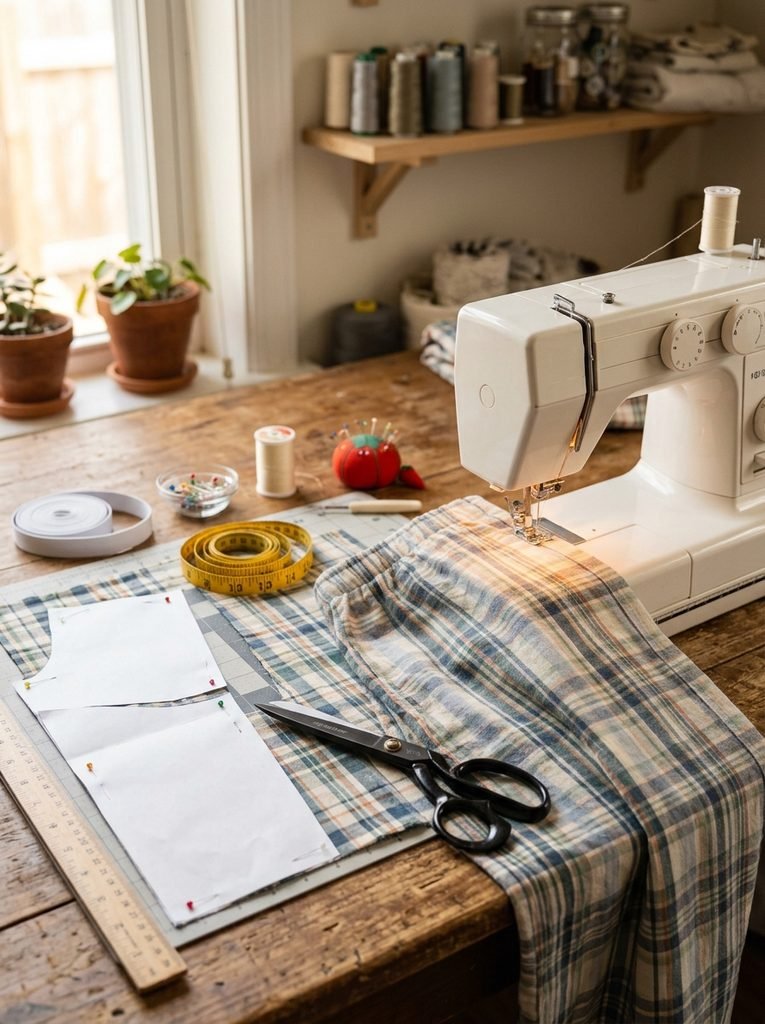
Simple pants can look intimidating, but a relaxed pajama or elastic-waist style can provide a manageable introduction to garment sewing. Focus on accurate measurements and fabric grain. Read the complete instructions before cutting. Pay special attention to the waistband and leg length. The USU clothing-construction curriculum lists pajama pants among projects that build skills such as pattern selection, grainline, fabric marking, cutting, seam finishing, and casing construction.
12. Christmas Stocking Pattern
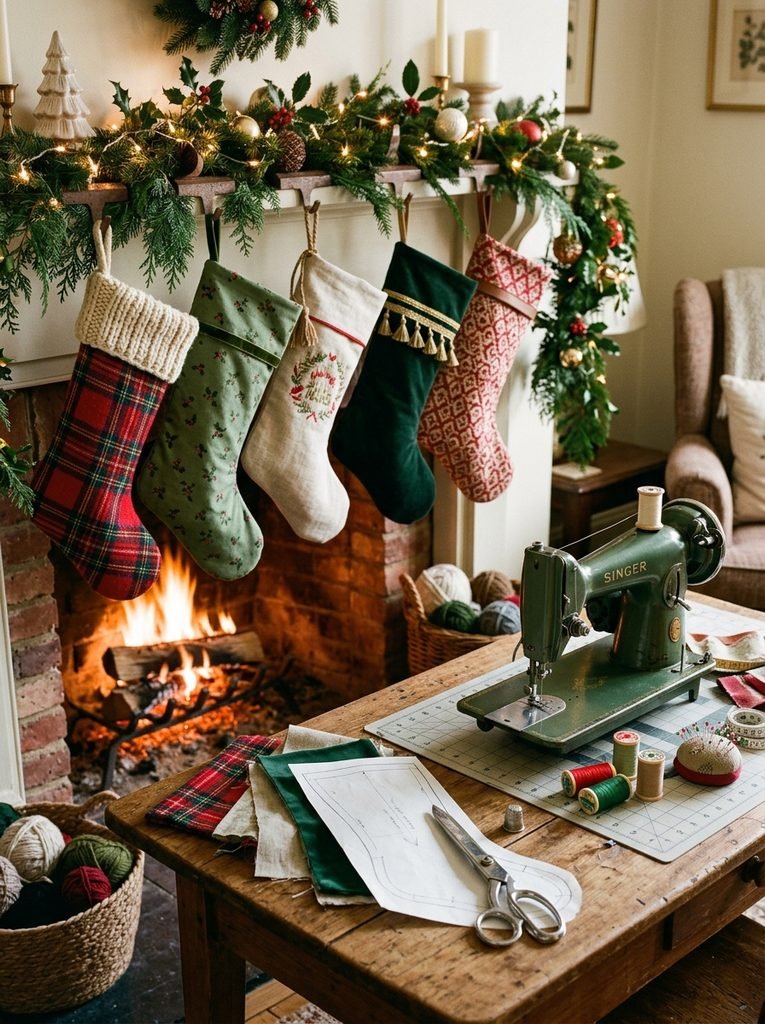
A Christmas stocking gives you a chance to practice curves, lining, hanging loops, and decorative fabric choices. It also works well as a seasonal handmade gift. Choose traditional red and cream fabrics or create something more modern with plaid, velvet, neutral linen, or Scandinavian-inspired prints. If you make several stockings, use one basic template and change the fabric combinations. This creates a coordinated collection without starting the design from scratch each time.
13. Free Plush Pattern
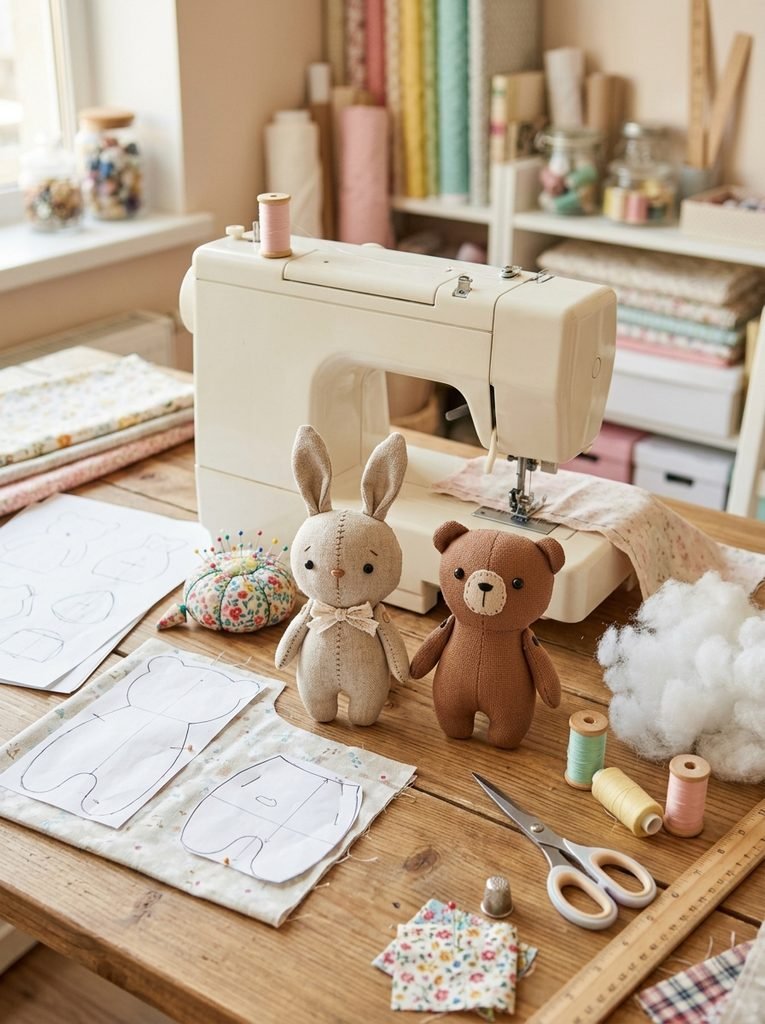
A free plush pattern can be a great way to practice sewing small curves without spending money on a commercial design. Search for a simple shape with clear construction steps and a manageable number of pieces. Read the instructions first. Check whether the designer expects hand sewing, machine sewing, or both. Also review the recommended fabric and finished size before beginning. Start with an inexpensive test fabric. Once the shape works, create your final version in a fabric you love.
14. Doll Clothing Pattern
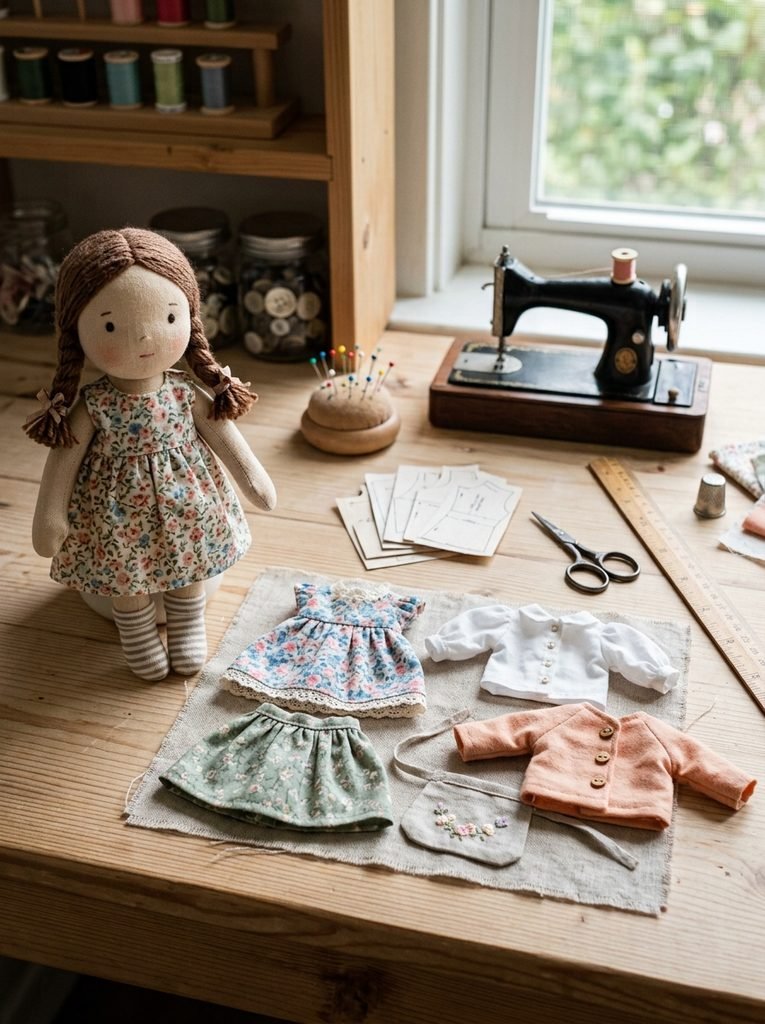
Small doll clothes let you practice garment construction on a tiny scale. You can make a miniature skirt, shirt, dress, apron, or jacket. The pieces require accuracy, so take your time when cutting. Use lightweight fabric and keep the design simple for your first attempt. Once you have one successful pattern, you can create several outfits from the same basic shape.
15. Goth-Inspired Sewing Pattern
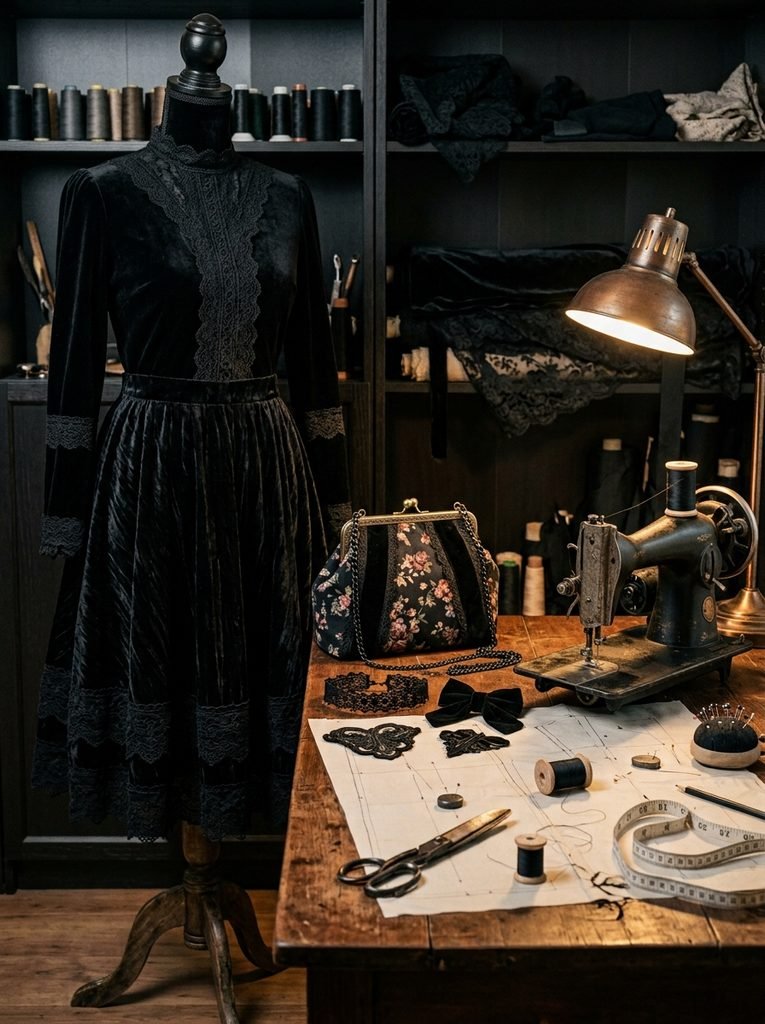
If your style leans toward goth, choose a pattern with a simple silhouette and let the fabric and details create the mood. Black cotton, lace, velvet, dark florals, and subtle trims can completely change a basic design. You could apply this style to a skirt, top, purse, cape, or tote. Keep the first version structurally simple, then experiment with decorative details.
16. Patchwork Bag Pattern
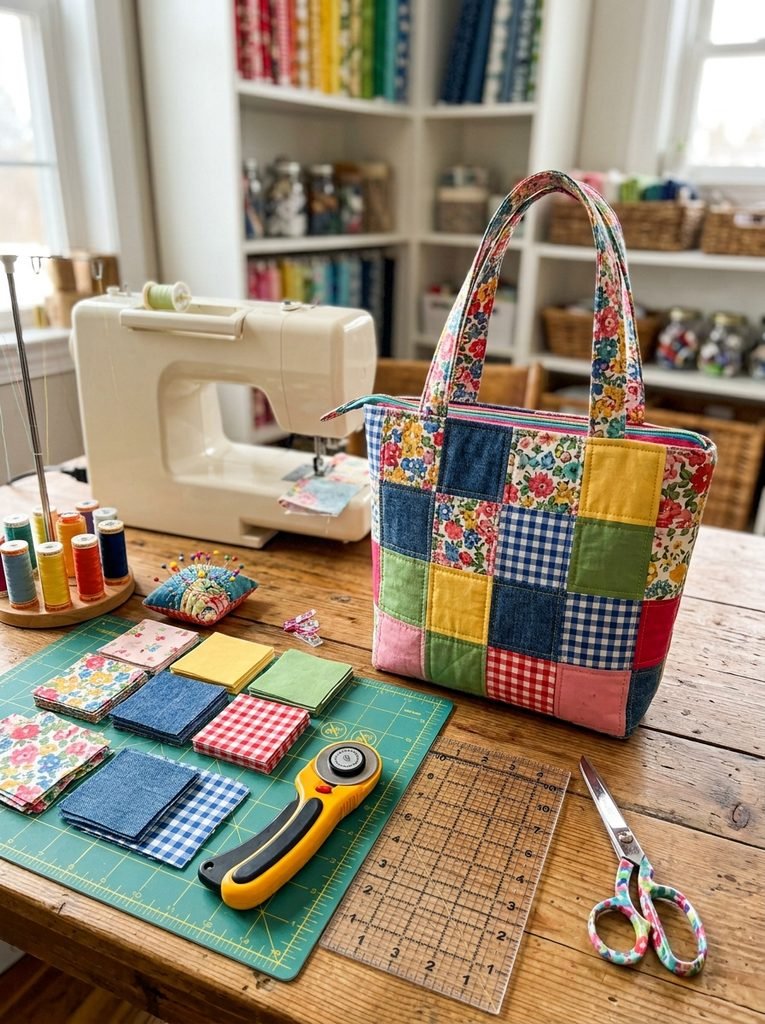
A patchwork bag lets you turn small fabric pieces into something useful. Arrange squares or rectangles before sewing them together so you can test the color balance. Use floral, gingham, denim, or solid cotton scraps. Keep the pieces similar in size if you want a neat beginner-friendly layout. USU Extension includes patchwork pouches among its free sewing resources, showing how smaller fabric pieces can become functional projects.
17. Simple Shirt Pattern
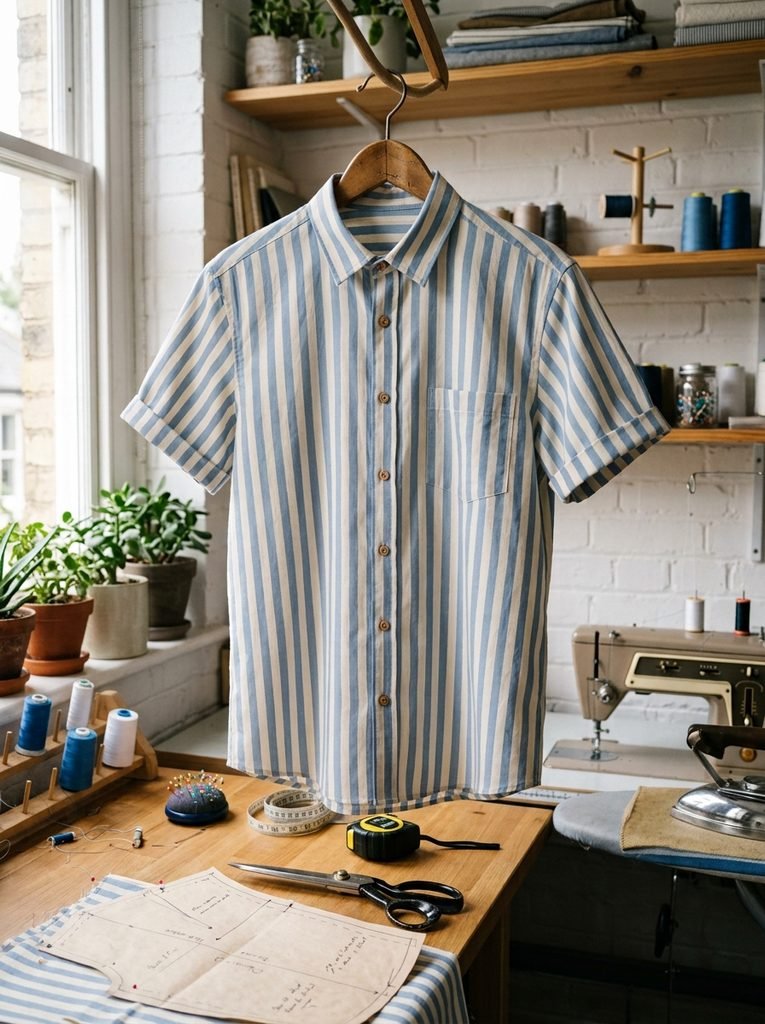
A basic shirt can become a useful step between beginner projects and more advanced clothing. Choose a relaxed pattern with straightforward construction before attempting collars, fitted sleeves, or complex closures. Pay attention to the pattern’s size chart and finished measurements. Small differences can change the fit, so avoid choosing a size based only on your usual store-bought clothing size.
18. Book and Gift Pattern Set
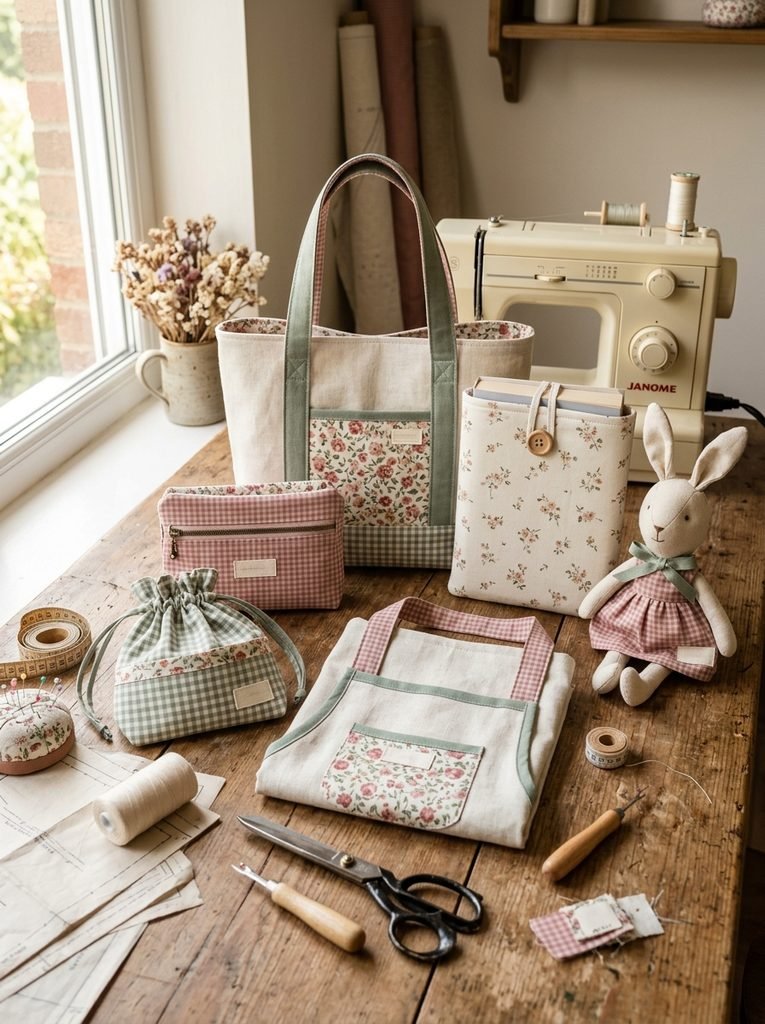
Once you become comfortable with individual projects, combine them into a small handmade collection. A book sleeve, purse, tote bag, or fabric pouch can become part of a coordinated gift set. Choose one color palette and repeat it across the projects. This simple design trick makes separate items look like they belong together. You can create sets for birthdays, Christmas, readers, teachers, or craft lovers. A coordinated collection also gives you a useful starting point if you plan to sell handmade items.
Final Thoughts
Choosing the right pattern can make sewing feel much easier and more enjoyable. Whether you are making your first skirt, a simple tote bag, a stylish dress, a handmade purse, or a cute plushie, the right design gives you a clear path from fabric to finished project. Beginners can start with simple shapes, while experienced makers can explore vintage styles, Japanese-inspired projects, clothing patterns, bags, and detailed handmade designs. Before cutting your fabric, always check the size, fabric requirements, seam allowance, grainline, and pattern instructions. A little preparation can save a lot of time and fabric. Most importantly, enjoy the process. Your first project does not need to be perfect. Every stitch teaches you something new, and every finished project builds your confidence for the next one.