

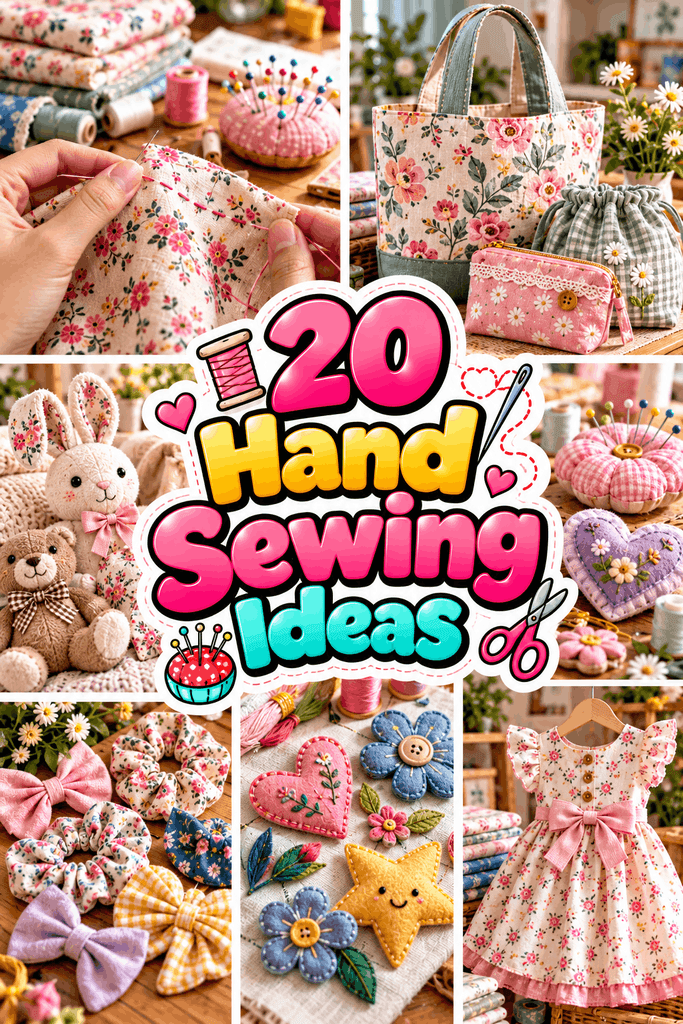
This post may contain affiliate links. Please read my disclosure policy.
In This Article Show
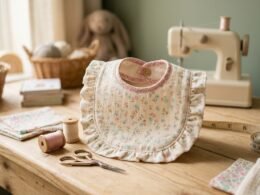
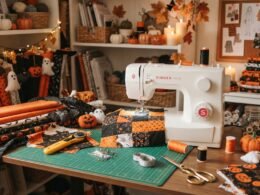
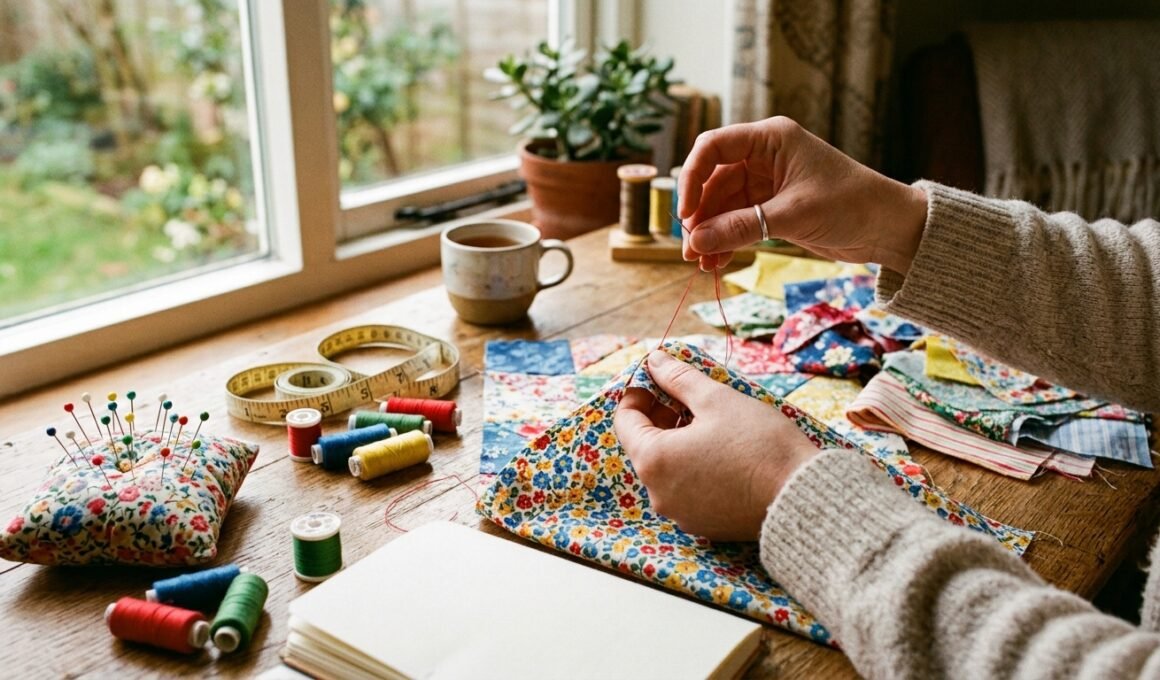
There is something satisfying about creating something with your own hands. A small piece of fabric, a needle, and some thread can become a useful pouch, a repaired shirt, a cute plushie, or a beautiful home craft. hand sewing gives beginners a simple way to learn without buying a machine or setting up a large sewing space. You can start at the kitchen table. Choose a quiet evening, gather a few basic supplies, and make one small project. Each stitch teaches you something. Soon, simple stitches become useful techniques, and easy projects become skills you can use for clothes, crafts, repairs, and creative gifts. Starting small makes learning easier. You do not need to master every technique before making something. Pick one project, learn the stitch it requires, and practice as you work. Basic sewing resources from Utah State University Extension recommend a small collection of essential tools, including sharp fabric shears, pins, a tape measure, a seam ripper, and suitable needles.
1. Learn the Running Stitch With Hand Sewing
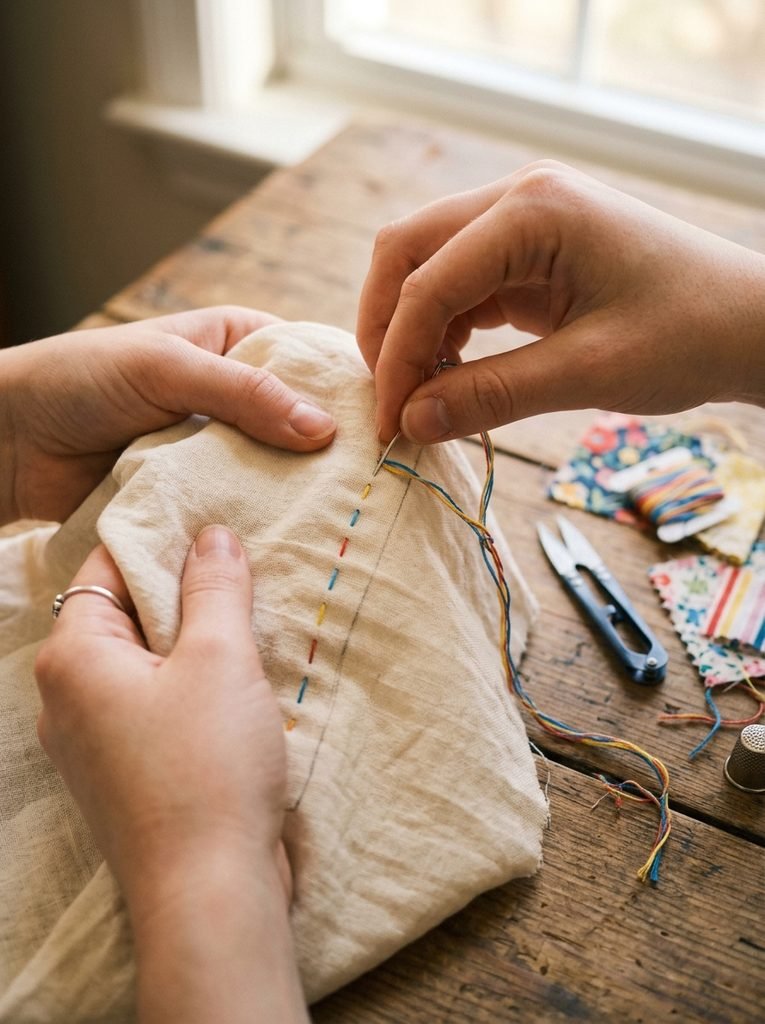
The running stitch is a perfect first lesson. Move the needle up and down through the fabric while keeping the stitches roughly even. Practice on cotton scraps before starting a real project. This stitch can help with simple seams, gathering, temporary stitching, and basic repairs. Sewing resources identify the running stitch as one of the simplest hand stitches to learn.
2. Practice a Strong Backstitch
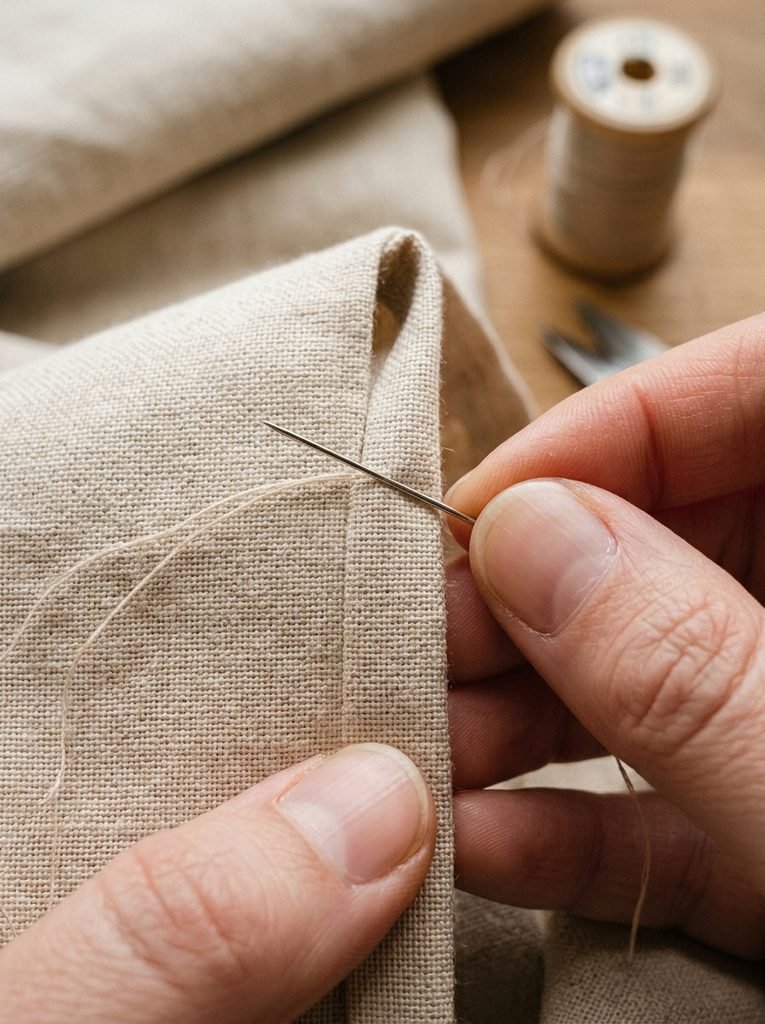
The backstitch creates a stronger line than a basic running stitch. It works well when you need extra strength along a seam or repair. Start with two small fabric pieces and draw a straight guideline. Stitch slowly and focus on keeping each stitch similar in length. Once your hands find the rhythm, the technique becomes much easier.
3. Try a Hidden Stitch
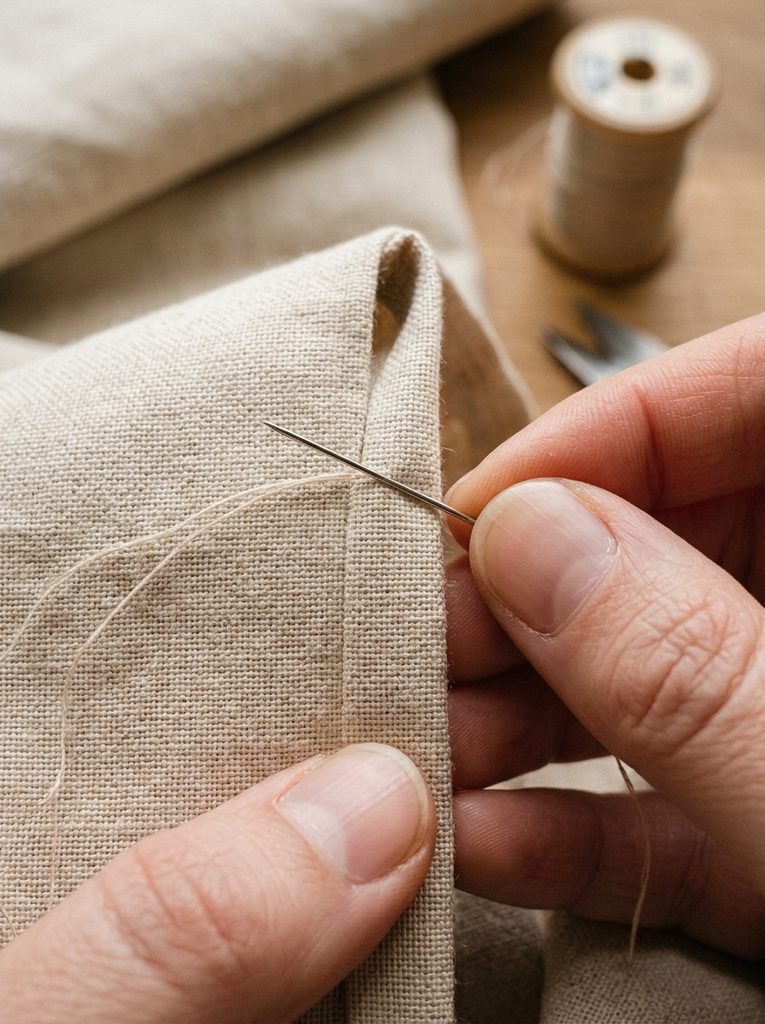
A hidden stitch can make the outside of a project look clean and polished. It works especially well for closing small openings, finishing folded edges, repairing linings, and completing stuffed projects. Take tiny stitches and avoid pulling the thread too tightly. A relaxed thread creates a smoother finish.
4. Make a Simple Fabric Bookmark
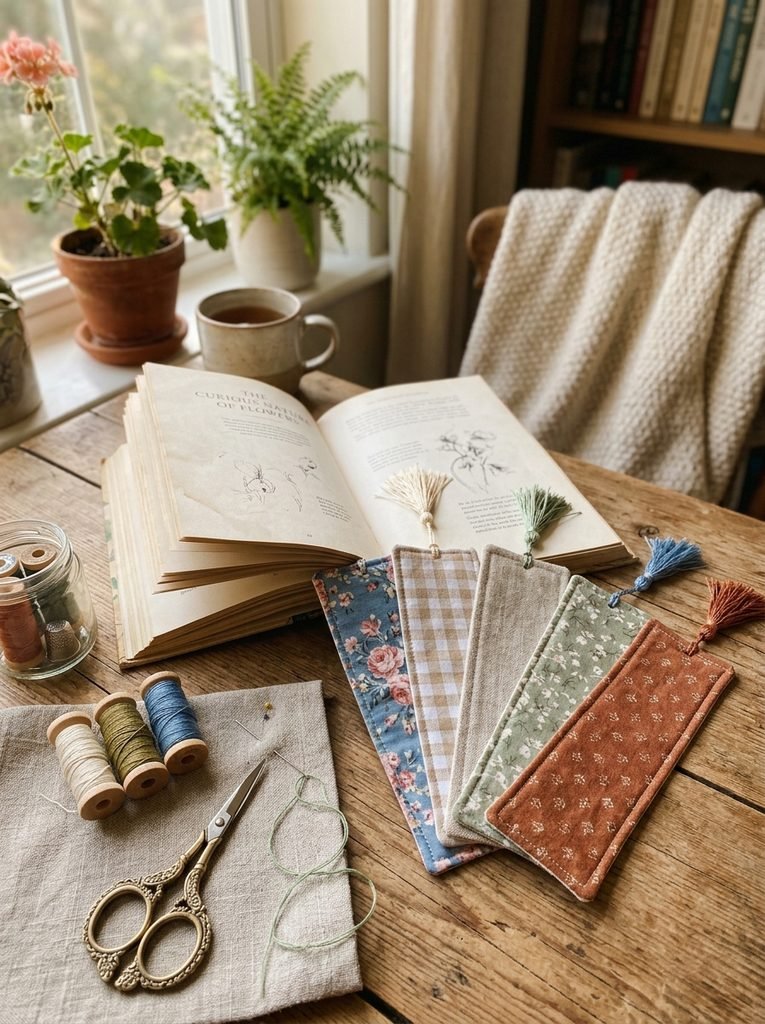
A fabric bookmark is one of those easy things you can finish quickly. Cut two narrow fabric strips, place them together, stitch around the edges, and turn or fold the layers neatly. Add a small ribbon if you like. This project helps you practice straight lines, corners, pressing, and finishing without using much fabric.
5. Create a Small Pin Cushion
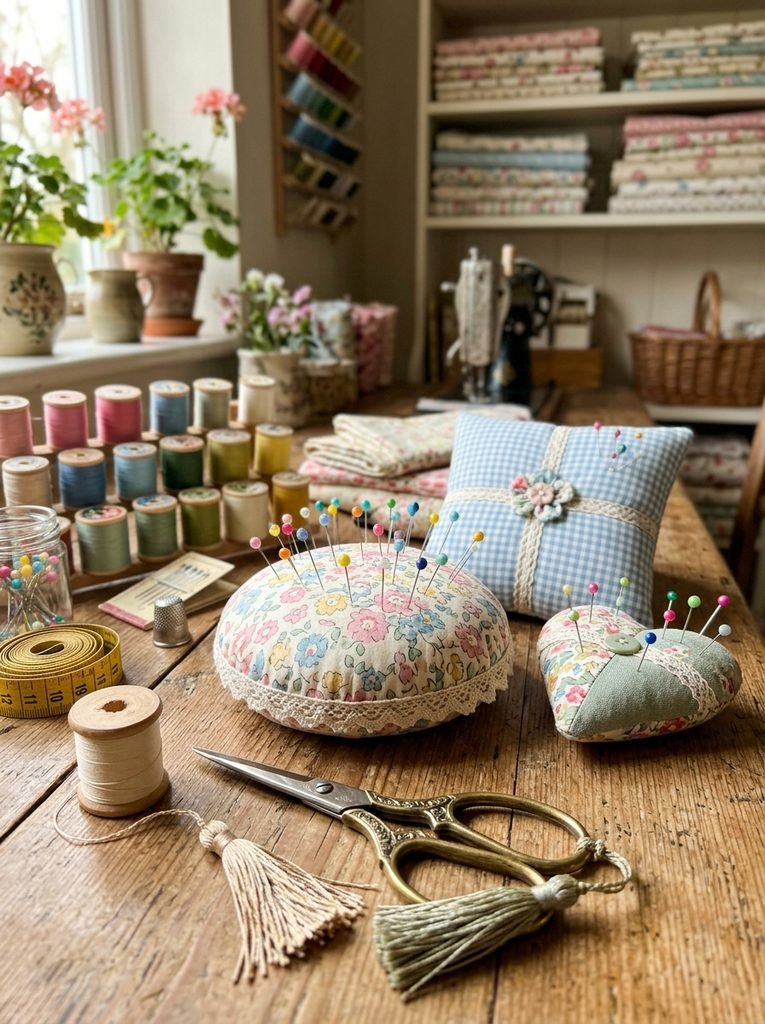
A pin cushion is both useful and beginner-friendly. Choose a small square, circle, or flower shape and fill it with suitable stuffing. Sew the opening securely and add a button or decorative detail if desired. It becomes a practical part of your sewing kit while giving you experience with curves and small pieces.
6. Make a Mini Fabric Pouch
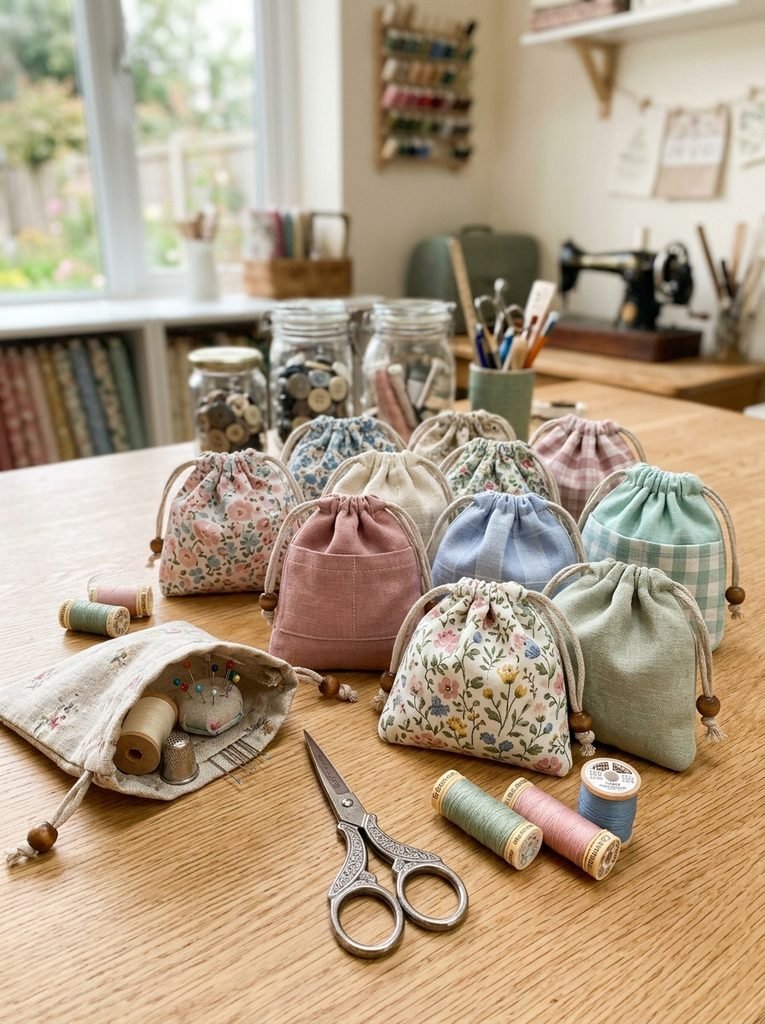
A small pouch is a useful project for beginners because it combines simple construction with a practical result. Use it for coins, clips, earbuds, craft supplies, or small beauty items. Start with a simple rectangular shape. As your skills improve, experiment with lining, buttons, snaps, or a zipper.
7. Make a Hand Sewing Tote Bag
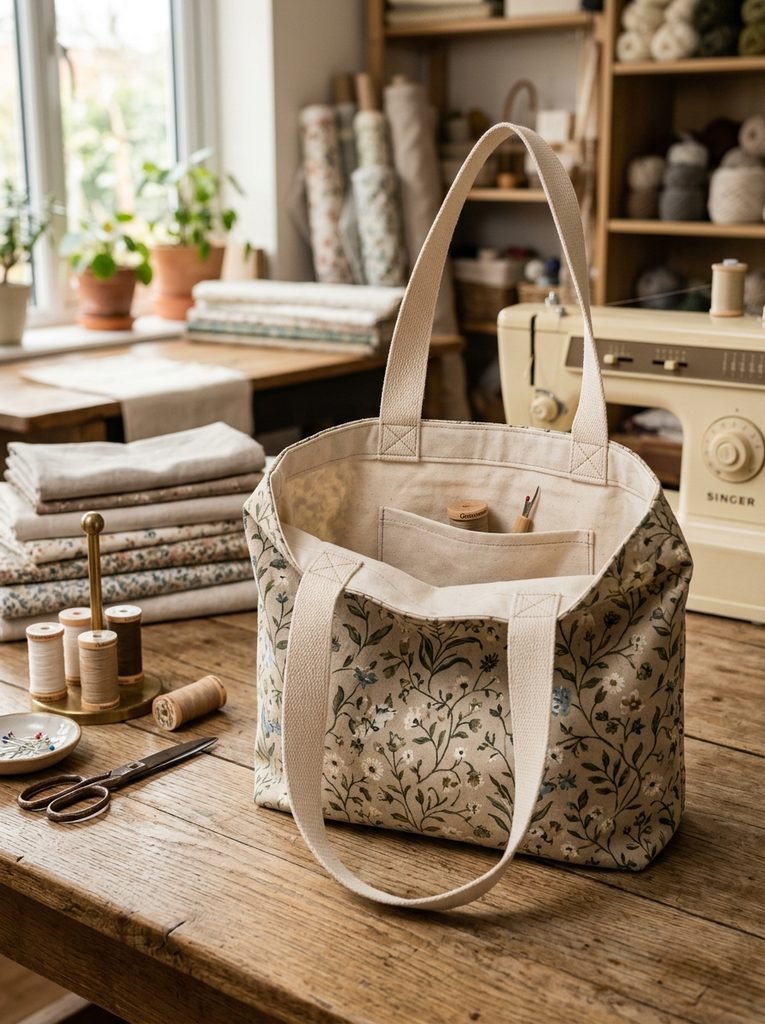
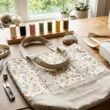
A fabric tote gives you more room to practice long straight seams and strong handles. Choose sturdy cotton or canvas and keep the design simple. Add one inside pocket once you feel confident. A handmade tote also makes a practical gift and gives you a reason to practice neat topstitching.
8. Try a Fabric Table Runner
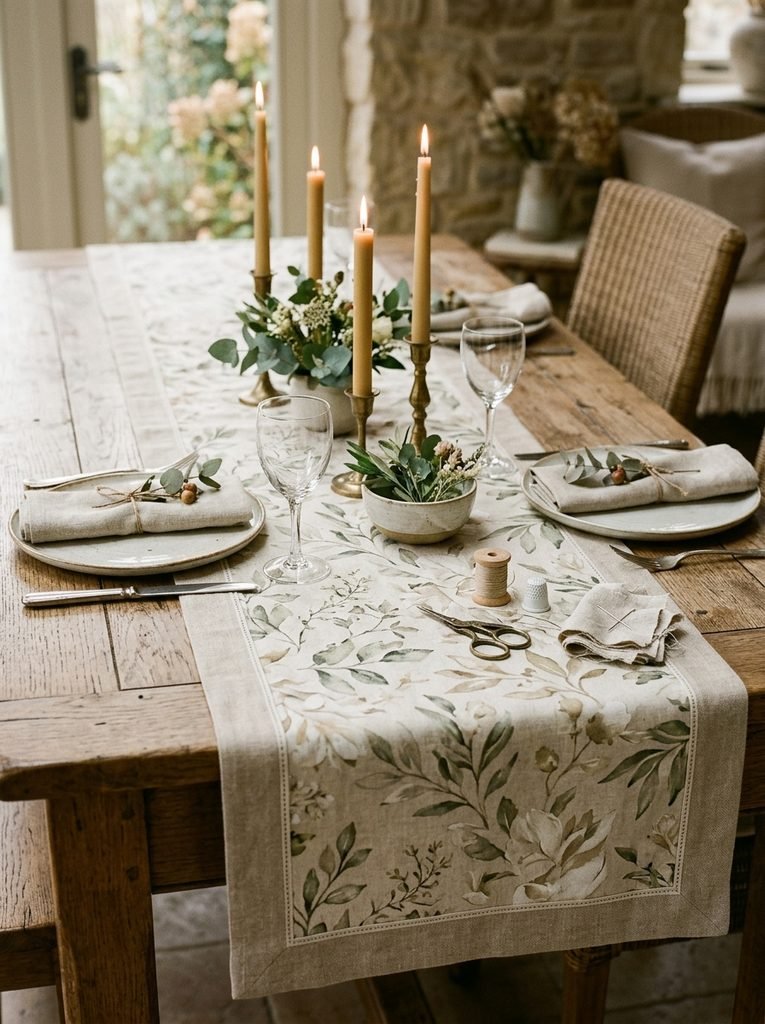
A table runner can transform leftover fabric into simple home décor. Choose two coordinating fabrics and focus on straight edges, accurate measuring, and pressing. USU Extension’s table runner instructions emphasize preparing and pressing fabric before cutting and paying attention to grain and pattern markings.
9. Create a Decorative Pillow Cover
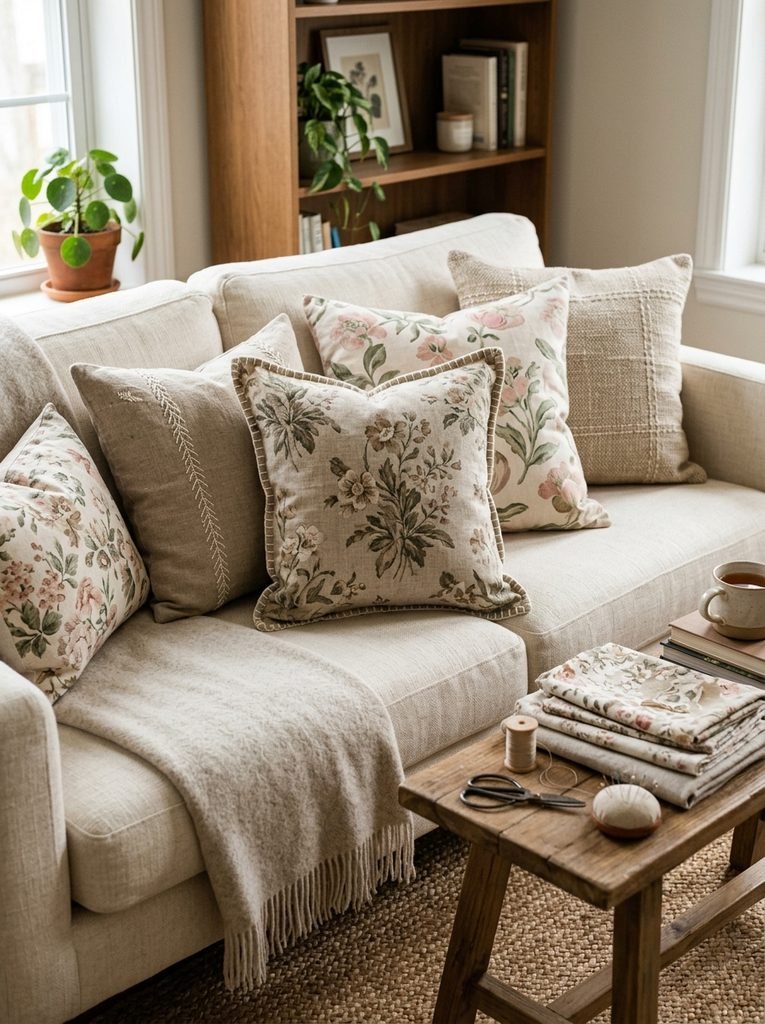
A pillow cover gives beginners practice with larger fabric pieces without requiring complicated shaping. Use cotton, linen, or another suitable woven fabric. Try an envelope-style closure first. Later, you can explore buttons, ties, piping, or contrasting panels.
10. Sew a Simple Fabric Bag
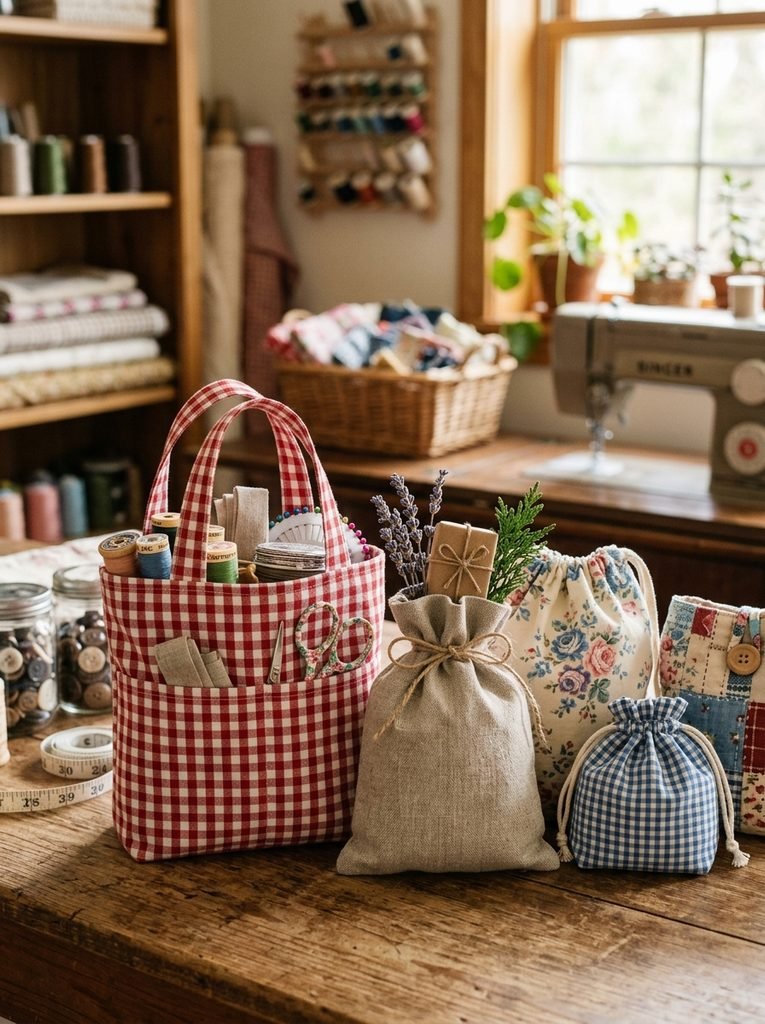
A small fabric bag can become a lunch pouch, gift bag, craft holder, or travel organizer. Keep the first design uncomplicated. Focus on measuring both pieces accurately and matching the edges before stitching. This type of project is also useful for learning how lining changes the shape and feel of a finished item.
11. Make a Simple Repair Kit
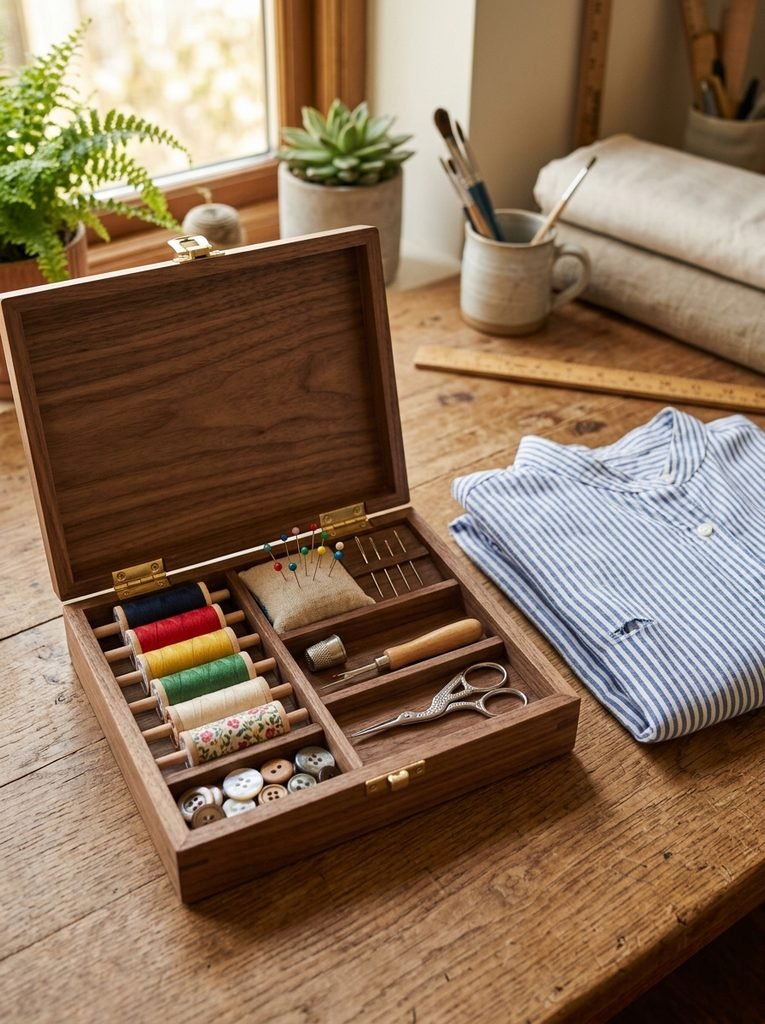
Not every sewing project needs to become a new item. Build a small repair kit with matching thread, needles, scissors, spare buttons, and a seam ripper. Then practice repairing a loose button, small tear, or open seam on an old garment. These small repairs can become some of the most useful sewing skills you learn.
12. Learn Hand Sewing for Clothes
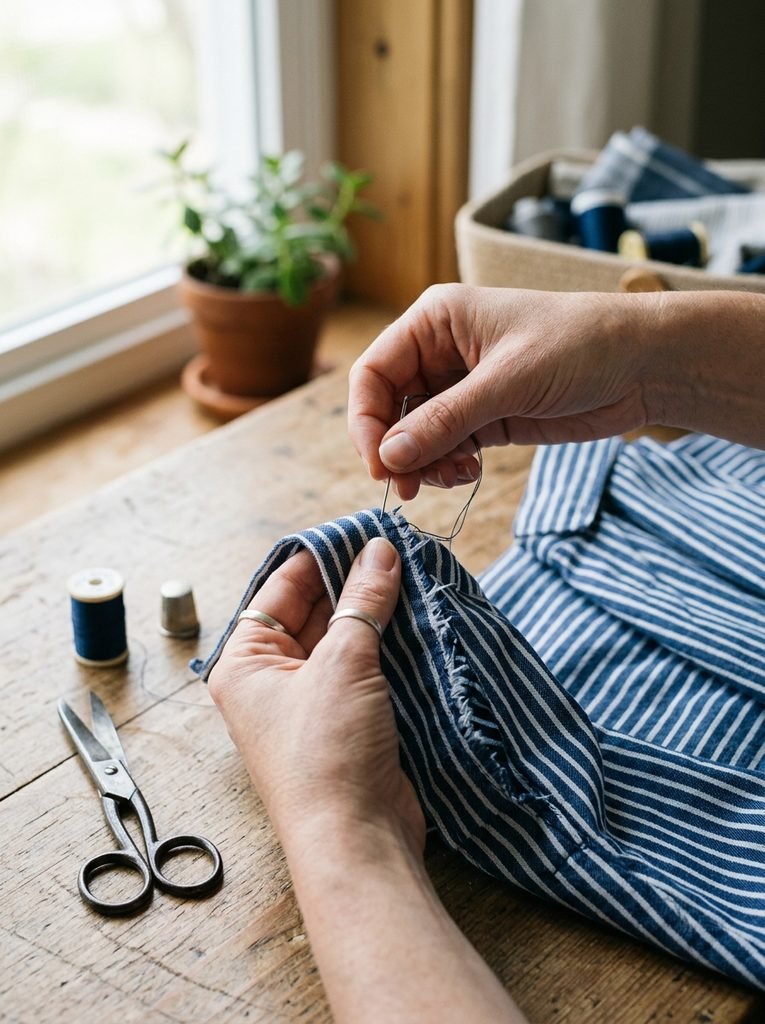
Clothing repairs are a practical way to build confidence. Start with easy fixes such as replacing buttons, closing small openings, securing loose hems, or repairing a seam. Work slowly and choose thread that blends with the fabric. With practice, you can handle more detailed clothes projects and finishing work.
13. Make a Simple Skirt
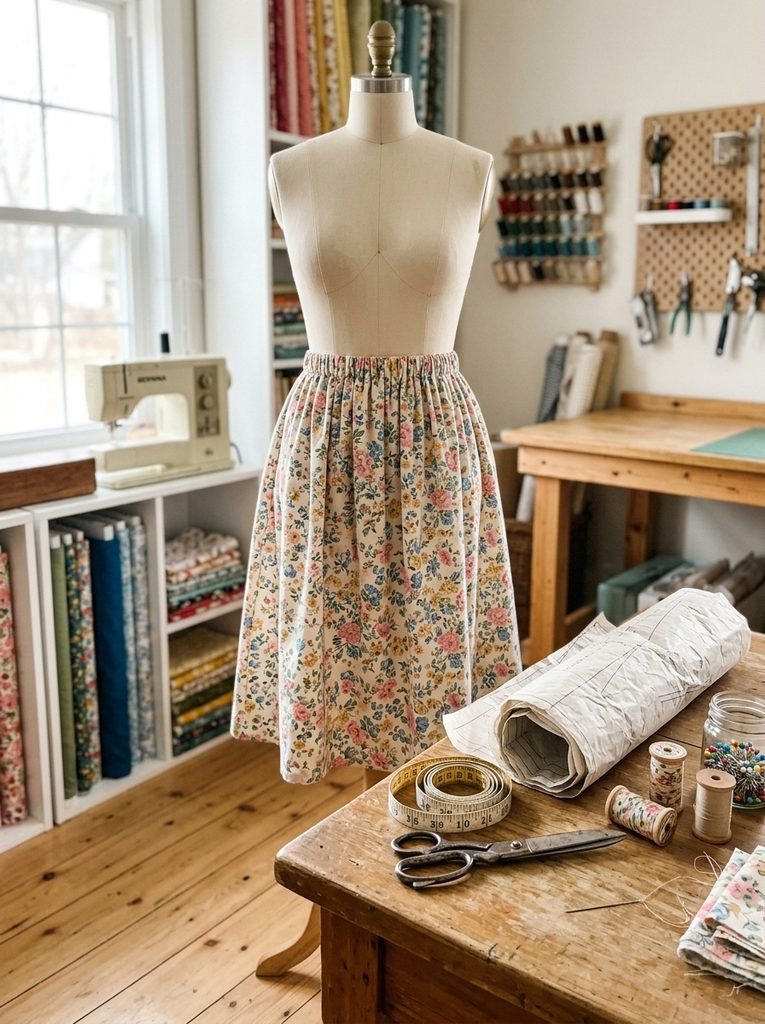
A simple elastic-waist skirt can introduce you to clothing construction without complicated fitting. Measure the wearer carefully, prepare the fabric, and pay attention to the grainline. An elastic waist also makes fitting more forgiving for beginners. USU Extension provides skirt projects as part of its sewing resources.
14. Create a Small Stuffed Animal
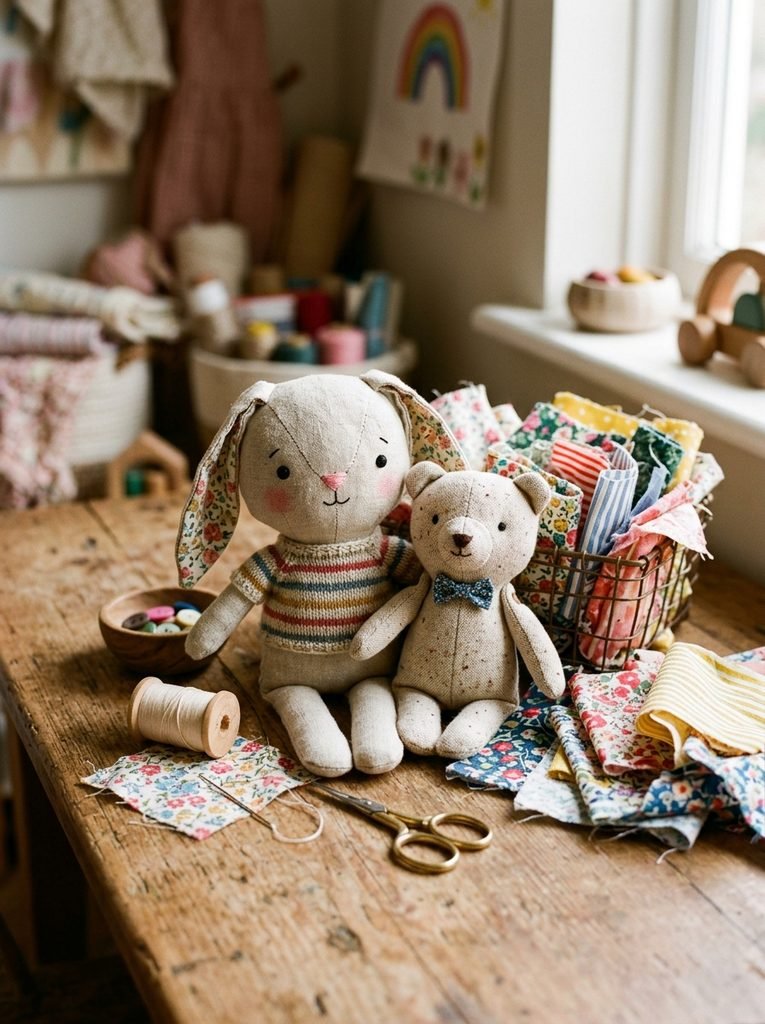
Plushies make wonderful beginner projects because they turn simple fabric shapes into something with personality. Start with a basic bunny, bear, cat, or star. Sew the pieces carefully, turn them right side out, add suitable stuffing, and close the opening neatly. For young children, make sure all small parts remain securely attached.
15. Sew a Fabric Hair Bow
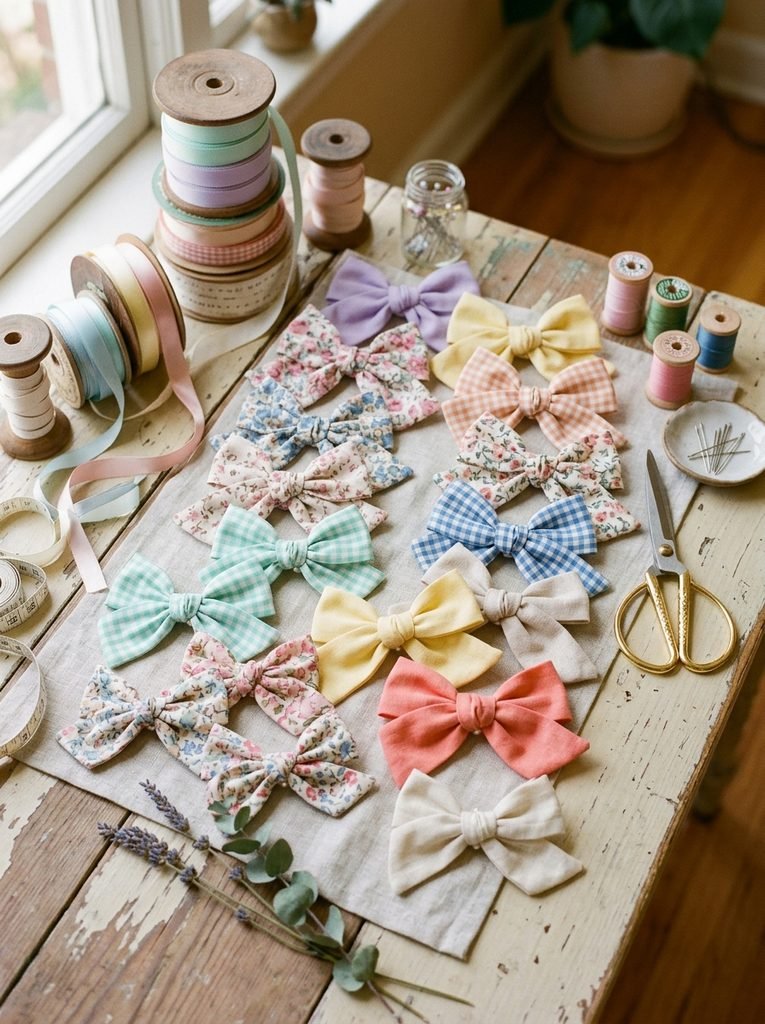
Fabric hair bows are small, attractive, and perfect for using leftover scraps. Choose two coordinating prints or one bold fabric. Fold the pieces carefully, stitch the shape, turn it neatly, and gather the center. Add an appropriate hair clip or band securely. This project works well as a quick handmade gift.
16. Make a Kids’ Fabric Crown
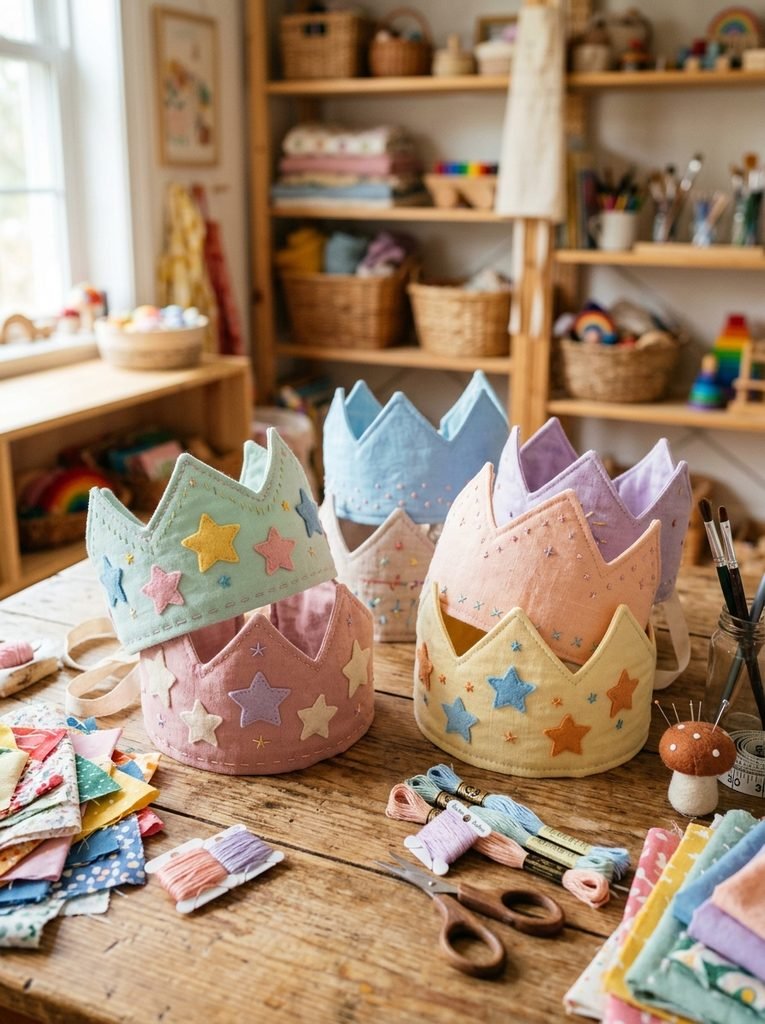
A soft fabric crown can become a fun birthday accessory or imaginative-play craft. Use felt or another suitable fabric and keep the shape simple. Decorate it with fabric shapes, stitching, or safe embellishments. Avoid loose small pieces when making items for very young children.
17. Try Hand Sewing With Felt Crafts
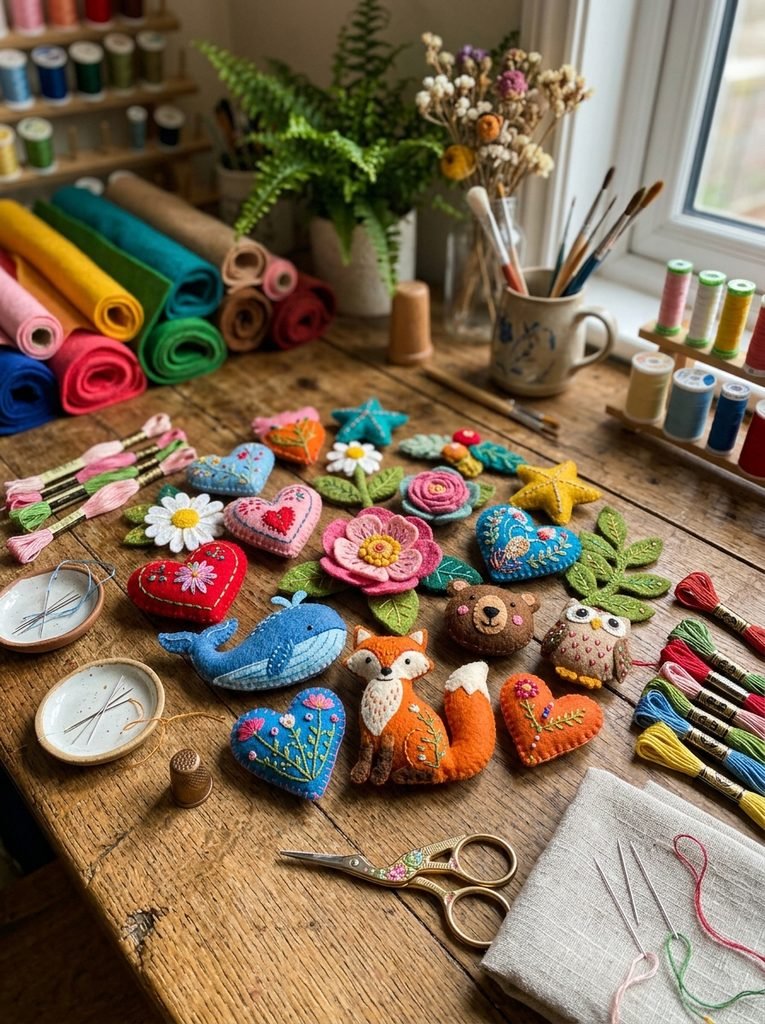
Felt makes a friendly material for beginners because it does not fray like many woven fabrics. You can cut simple shapes and join them with visible decorative stitches. Try hearts, flowers, leaves, stars, ornaments, or tiny animals. Felt crafts can also become colorful decorations, gift tags, or learning projects for older kids.
18. Make a Simple Fabric Bookmark for Kids
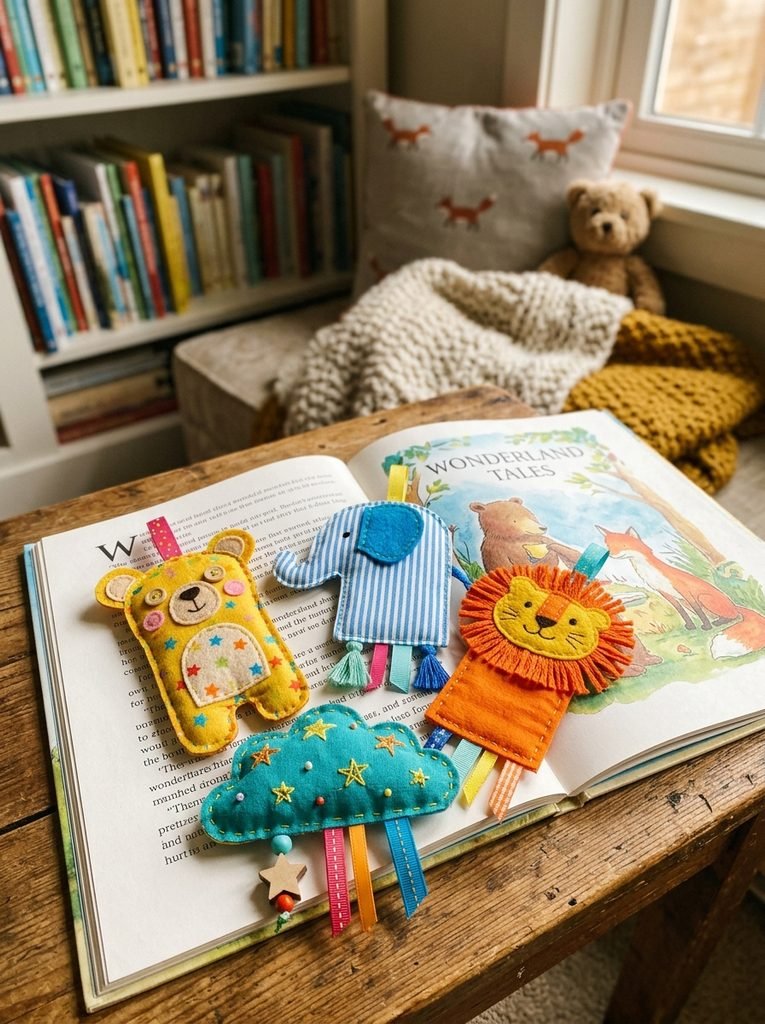
Kids can personalize fabric bookmarks with colors and simple shapes. Let them choose the fabric and decoration while an adult handles sharp tools and needles when needed. A small project like this introduces measuring, cutting, stitching, and design without making the activity too long.
19. Create a Decorative Patch
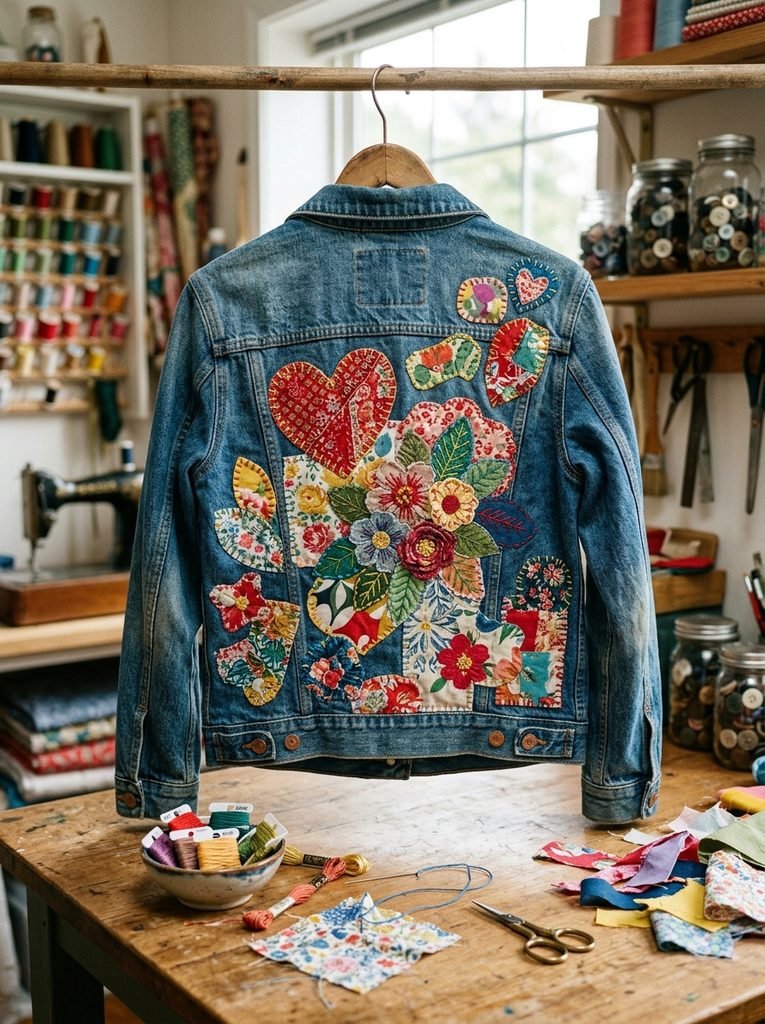
A fabric patch can cover a small worn area or simply add personality to clothing and bags. Cut a simple shape such as a heart, flower, lightning bolt, or initial. Secure the edges with neat stitches. You can use contrasting thread when you want the stitching to become part of the design.
20. Make a Small Fabric Organizer
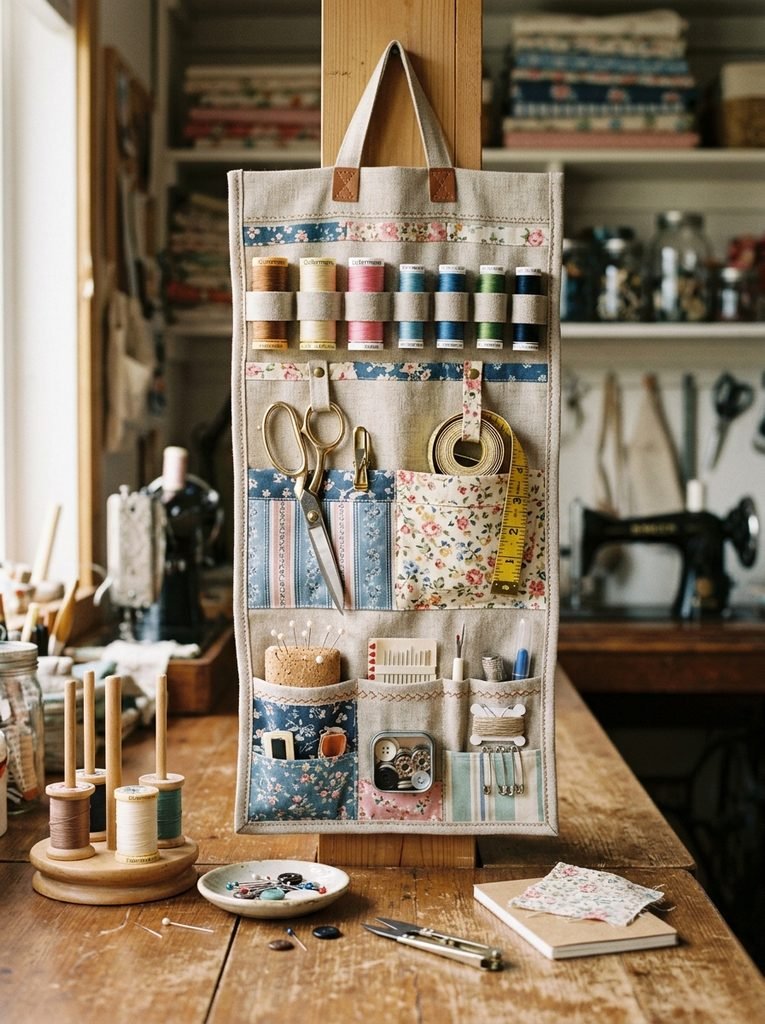
Finish your beginner journey with a simple organizer for sewing supplies, makeup, stationery, or craft tools. Add two or three compartments if you feel ready. Projects like this combine several skills you have already practiced: measuring, cutting, straight seams, turning, pressing, and finishing.
Final Thoughts
Learning to sew by hand can start with something as small as a needle, thread, and fabric scrap. From there, you can explore stitches, repairs, clothes, crafts, plushies, accessories, and useful home projects. The process feels easier when you focus on one technique at a time. The most important lesson is simple: start small and keep practicing. A straight stitch today can become a beautiful handmade project tomorrow. With patience and careful work, even beginners can create items that look personal, useful, and beautifully made.