


This post may contain affiliate links. Please read my disclosure policy.
In This Article Show
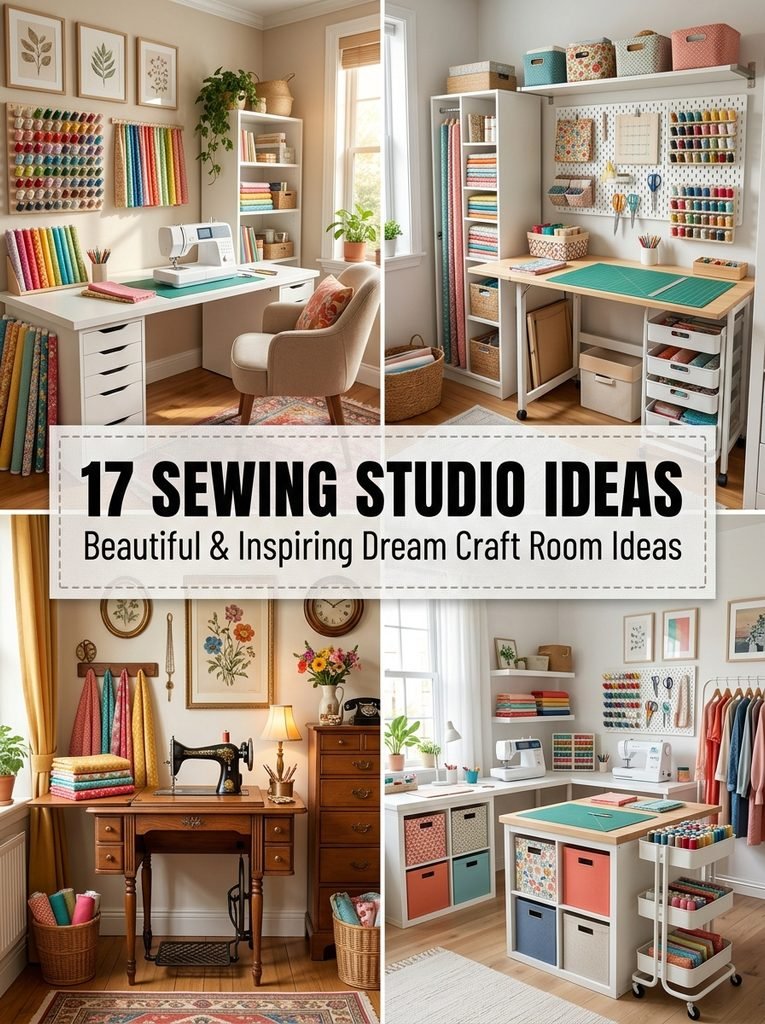
Creating a creative workspace can change the way you sew. A good room does more than hold a machine, fabric, and thread. It helps you think clearly, find your tools quickly, and enjoy every project. Whether you have a large spare room, a small corner, or part of a garage, the right sewing studio can feel personal and inspiring. The best spaces balance beauty with function. Smart storage keeps supplies visible without creating clutter. A thoughtful layout gives you room to cut, sew, press, and organize. Even a home office can become a comfortable craft area with a few practical changes. The ideas below can help you create a space that feels like your own dream craft room.
1. Create a Dedicated Sewing Studio
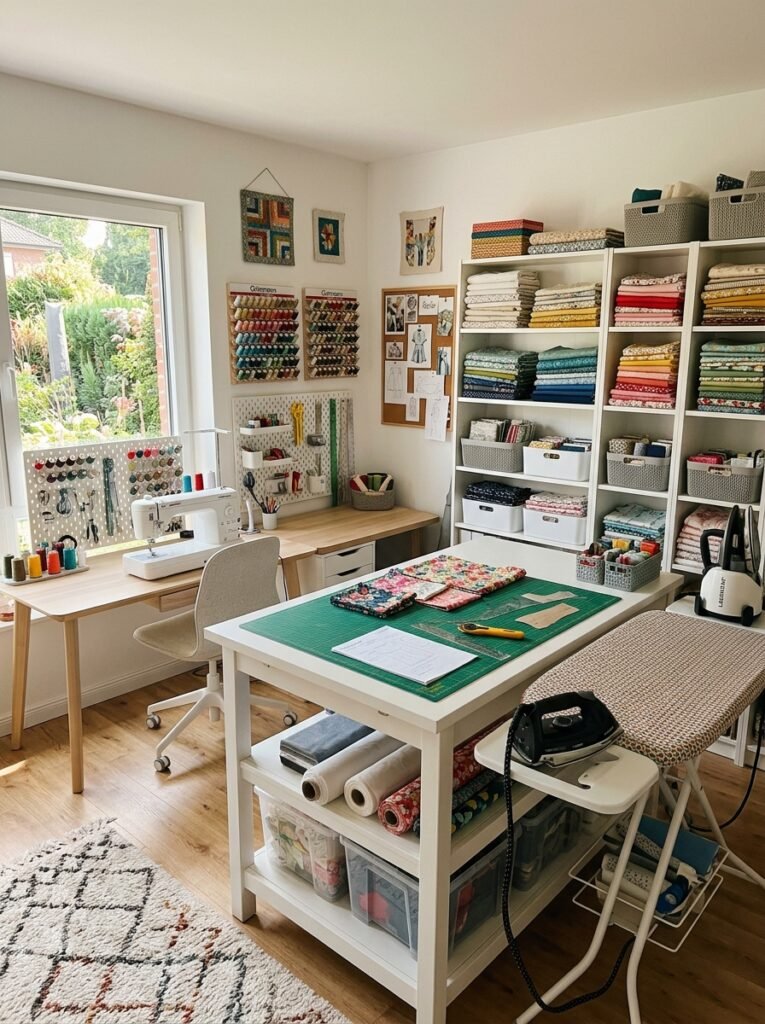
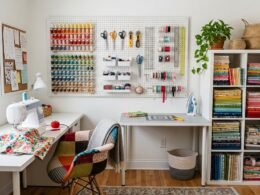
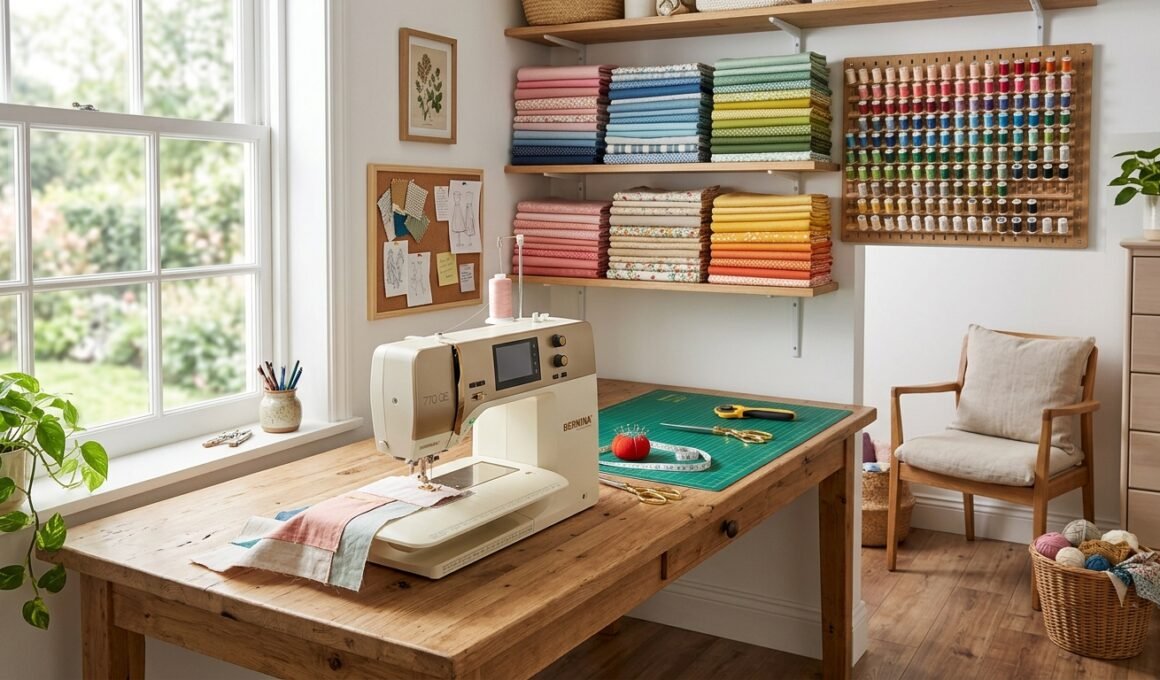
If you have an entire room available, give sewing its own home. Place the main machine station where natural light can reach the work surface. Keep frequently used tools within arm’s reach and move less-used supplies into cabinets or labeled boxes. Think about your workflow before choosing furniture. You may need one area for sewing, another for cutting, and a third for pressing. This simple zoning approach makes the room easier to use and prevents one crowded table from doing every job.
2. Try a Small-Space Sewing Studio
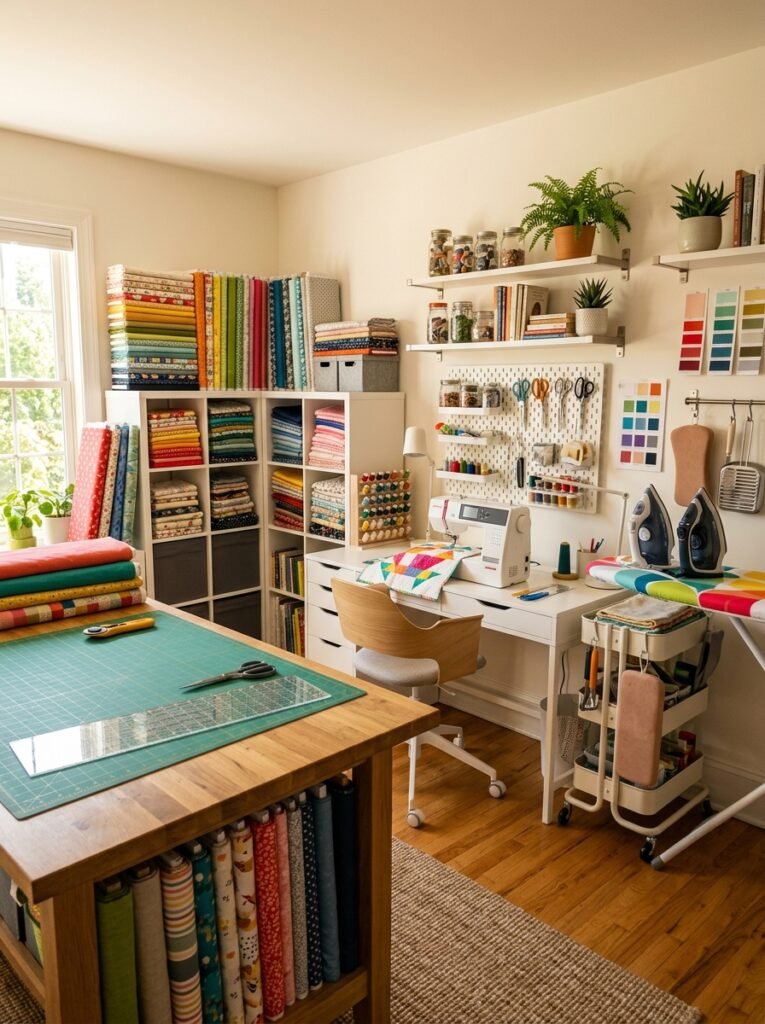
You do not need a huge room to sew comfortably. A narrow bedroom corner, dining area, or unused hallway wall can become a useful workstation. Choose furniture that matches the available space. A compact table with drawers can hold your machine and essential tools. Vertical shelving can take advantage of wall height without taking up much floor space. Current compact sewing furniture also shows how folding panels, adjustable machine platforms, and storage sections can combine several functions in one footprint.
3. Build an IKEA-Inspired Sewing Station
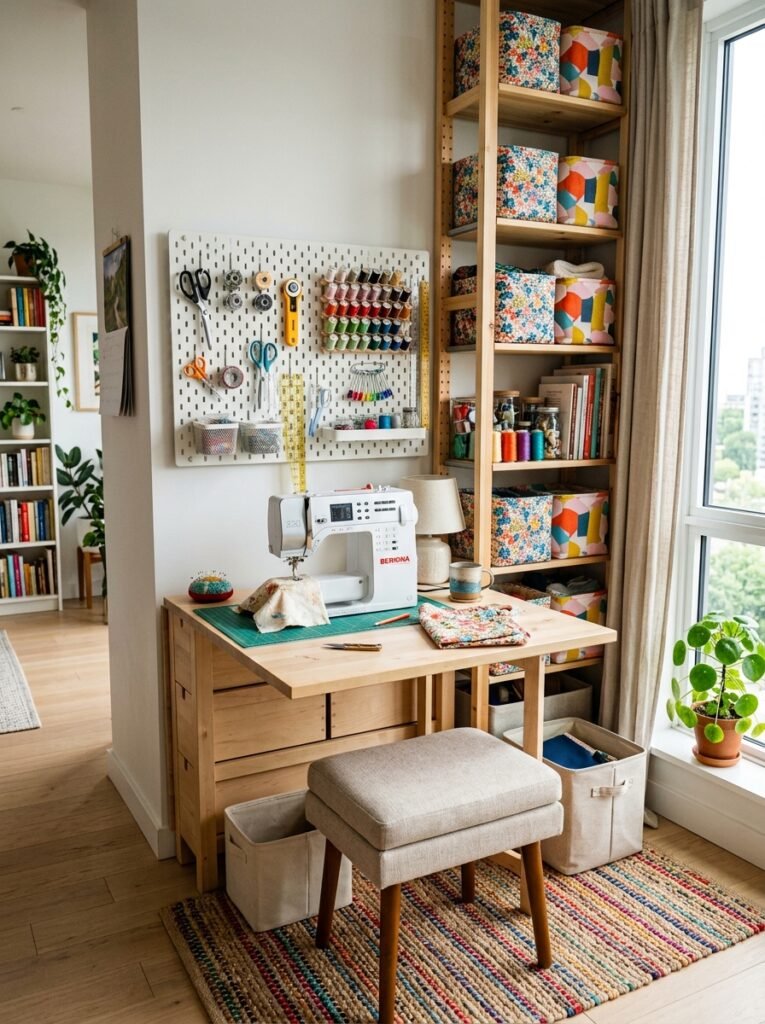
An IKEA-inspired setup can work well when you want simple furniture with flexible storage. Combine a sturdy tabletop with drawer units or cube-style shelving underneath. Use baskets for fabric scraps, containers for buttons, and small boxes for sewing notions. Keep the colors consistent so the storage looks intentional rather than crowded.
4. Design a Vintage Sewing Studio
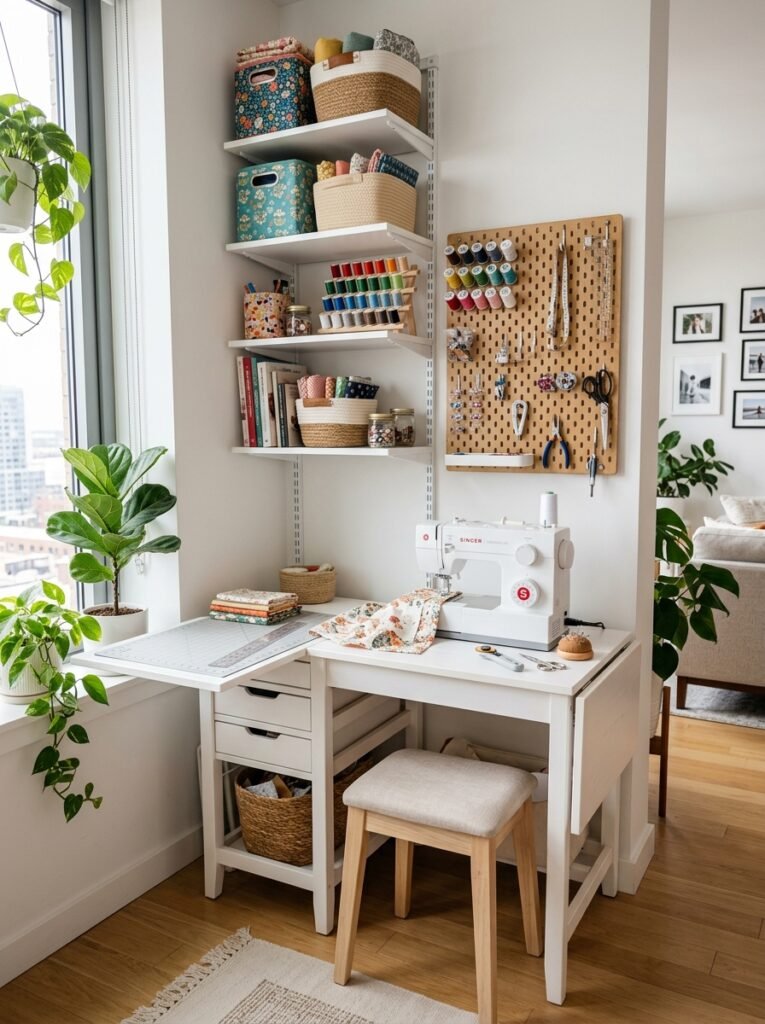
Vintage furniture can give your room character. An old wooden sewing cabinet, antique machine table, or restored desk can become the visual centerpiece. Mix vintage pieces with modern lighting and practical storage. This creates an interior that feels warm without making the workspace difficult to use.
5. Add Smart Storage
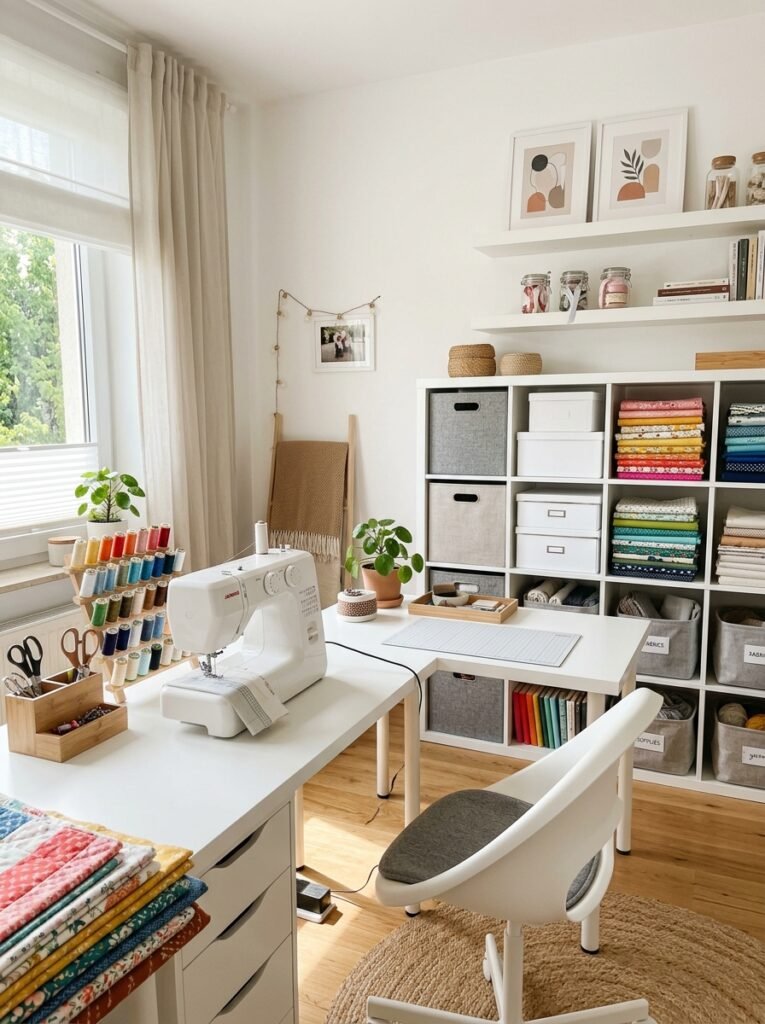
Good organization saves time. Instead of putting everything into one large box, create storage categories. Keep threads together, separate sewing tools, fold fabric by type, and give patterns their own section. Clear containers work well for small supplies because you can see what you have. Drawers are useful for items you want to keep protected from dust. Some current sewing cabinets combine machine storage, drawers, folding work surfaces, and mobility in one unit.
6. Create a Quilting Room
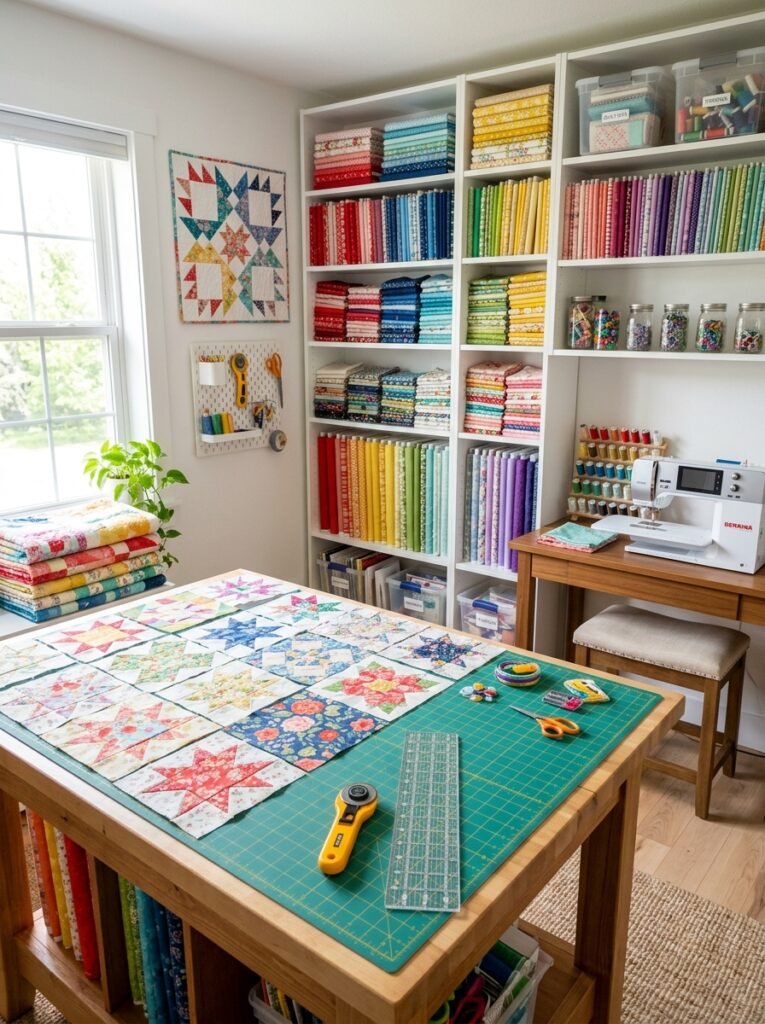
Quilting needs generous work surfaces because fabric can quickly spread across the room. A large cutting table can make measuring and trimming easier. If space allows, keep your cutting area separate from your machine. A folding cutting table can also help when the room needs to serve multiple purposes. Some current craft tables use folding leaves, wheels, drawers, and lower shelves to provide flexible cutting and storage space.
7. Make a Home Office Sewing Studio
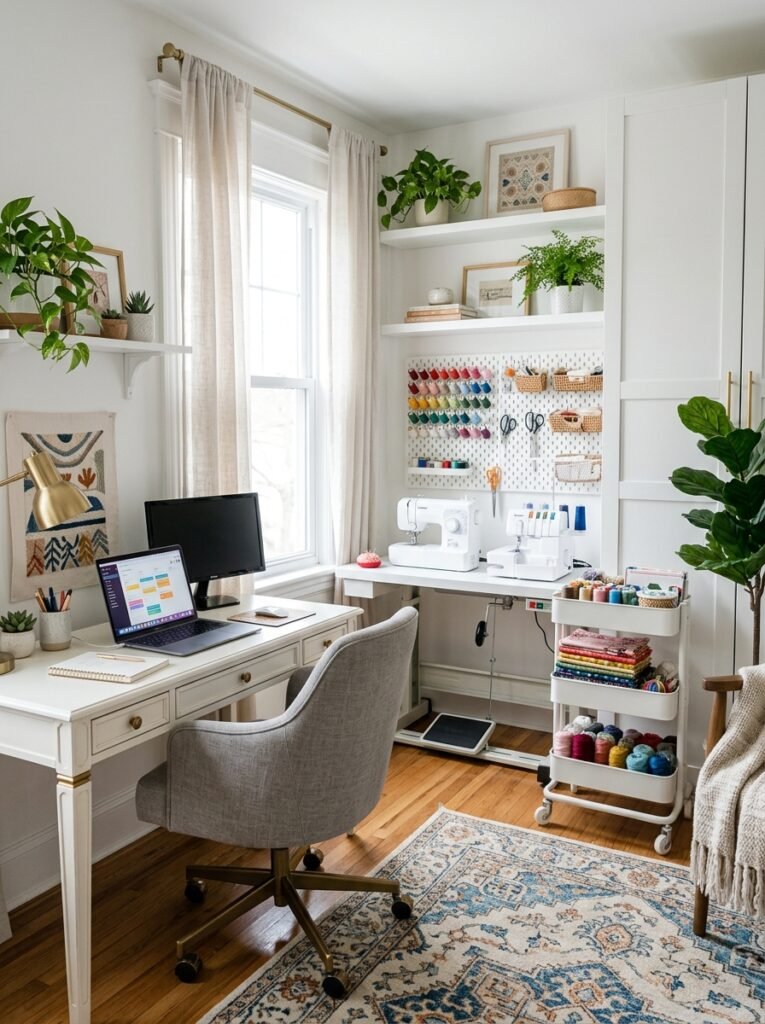
A spare home office can serve two purposes. During work hours, it stays a productive office. Later, it becomes a creative sewing area. Choose furniture that can perform both jobs. A folding machine table, rolling cart, and closed storage cabinet can keep sewing supplies hidden when you need a clean office.
8. Use a Garage for a Larger Setup
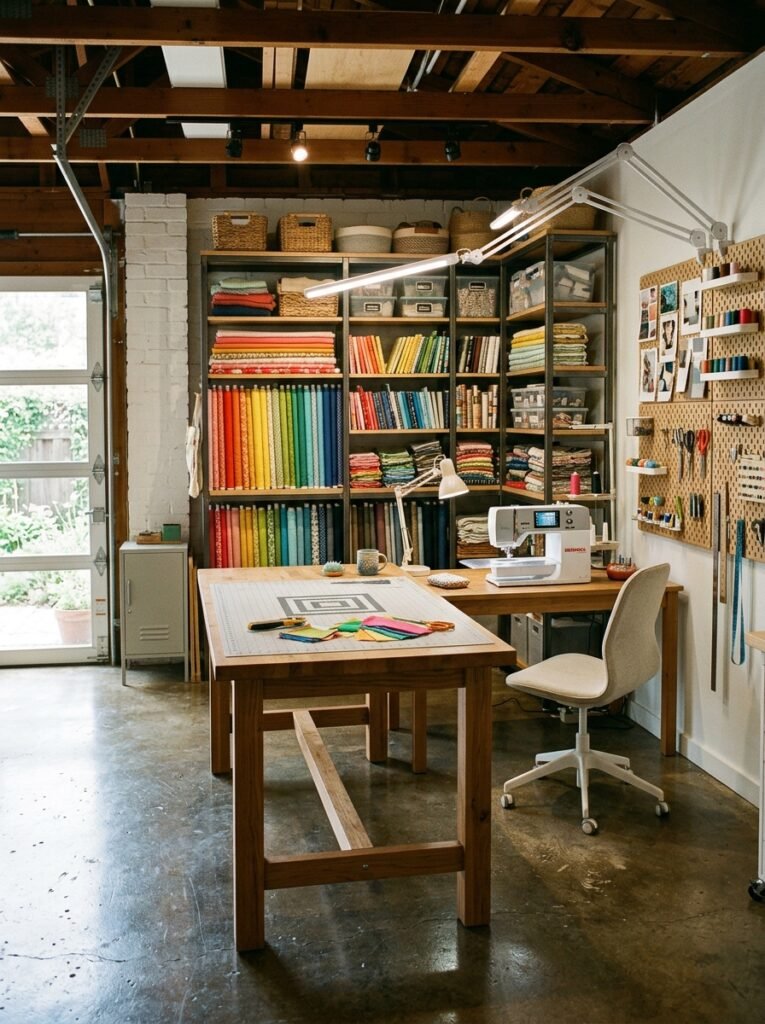
A garage can become an excellent creative workspace when you need more room. Start with lighting, comfortable flooring, safe electrical access, and practical storage. Use tall shelving along the walls and keep the center open for cutting tables or larger projects. This approach can create a flexible room without filling every corner with furniture.
9. Add an Aesthetic Color Scheme
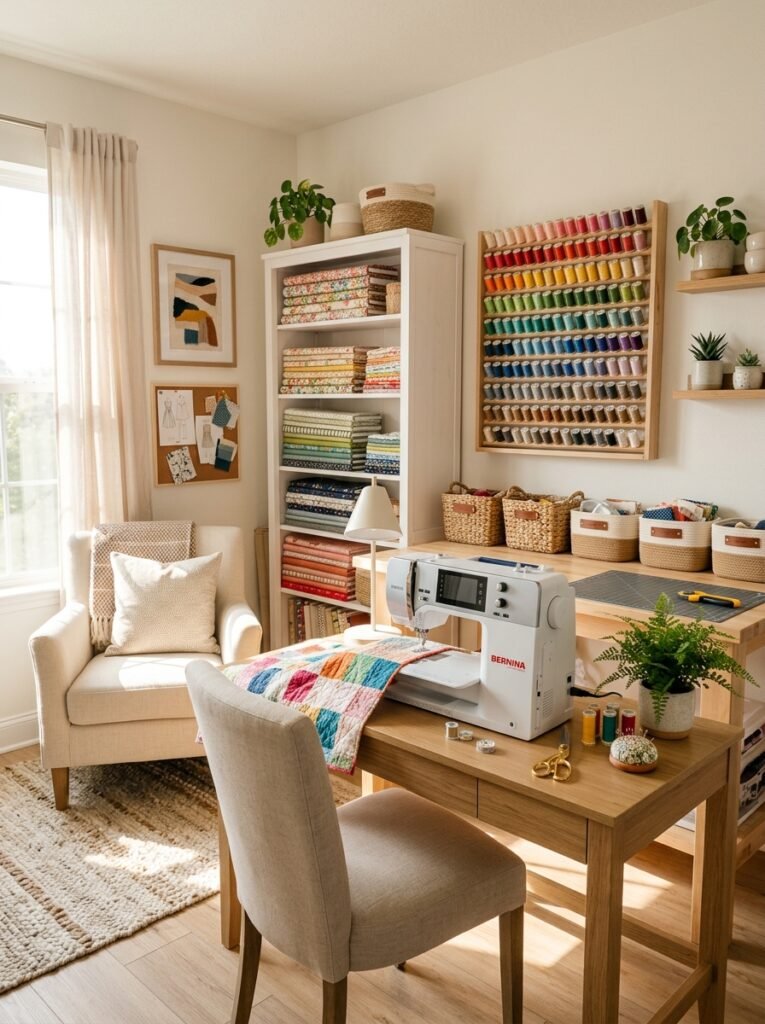
A beautiful room can make you want to spend more time creating. Pick two or three main colors and repeat them through storage boxes, fabric baskets, curtains, rugs, or wall decor. Neutral furniture works especially well with colorful textiles. Your fabric collection can then become part of the room’s visual design.
10. Plan the Layout Around Your Workflow
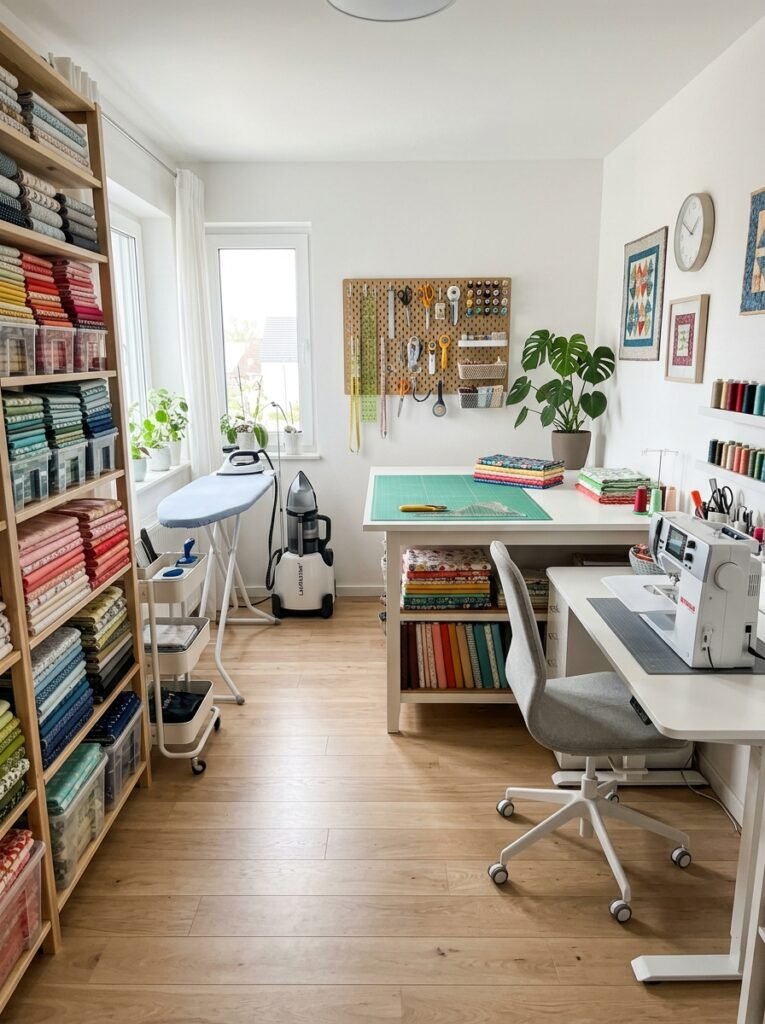
Before buying furniture, imagine your normal sewing day. Where will you cut? Where will you press? Where will you store unfinished projects? Keep the most-used stations close together. A good layout reduces unnecessary movement and leaves enough open space for fabric. The machine should also sit securely on a suitable surface. Modern sewing cabinets often include adjustable machine lifts, expandable leaves, and rolling casters to support different working setups.
11. Add a Dream Craft Room Display Wall
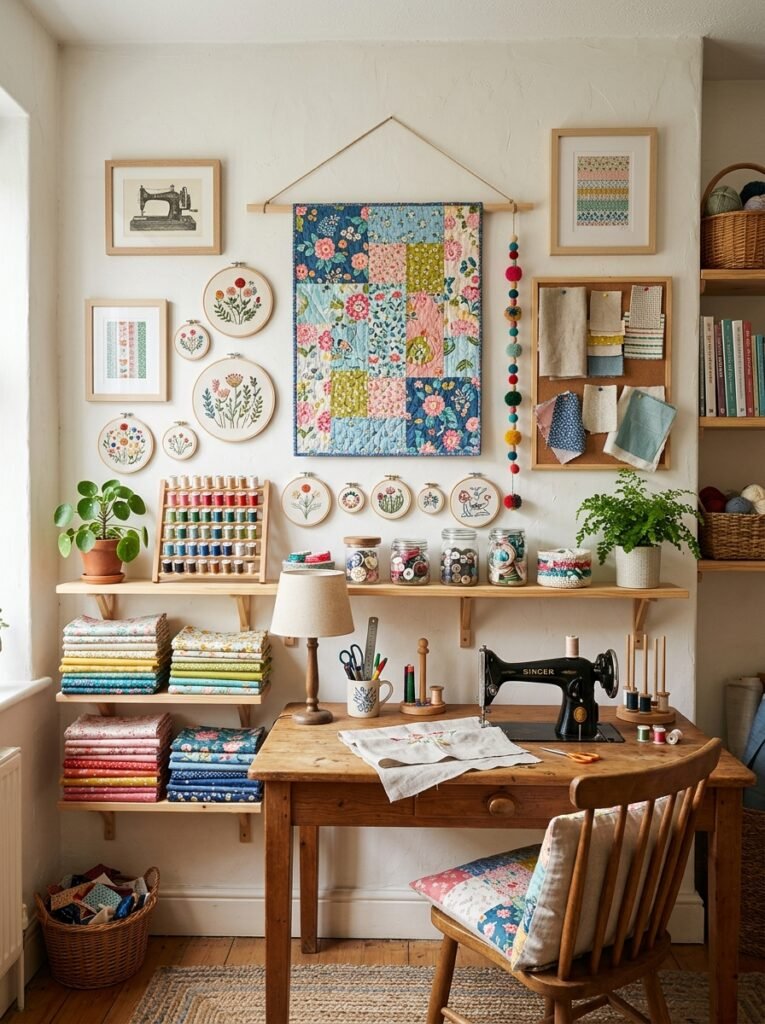
A display wall can make the room feel personal. Hang favorite fabric samples, finished projects, embroidery hoops, mood boards, or handmade decorations. Keep the display selective. A few meaningful pieces usually create more visual impact than covering every inch of the wall.
12. Create a Fashion Sewing Zone
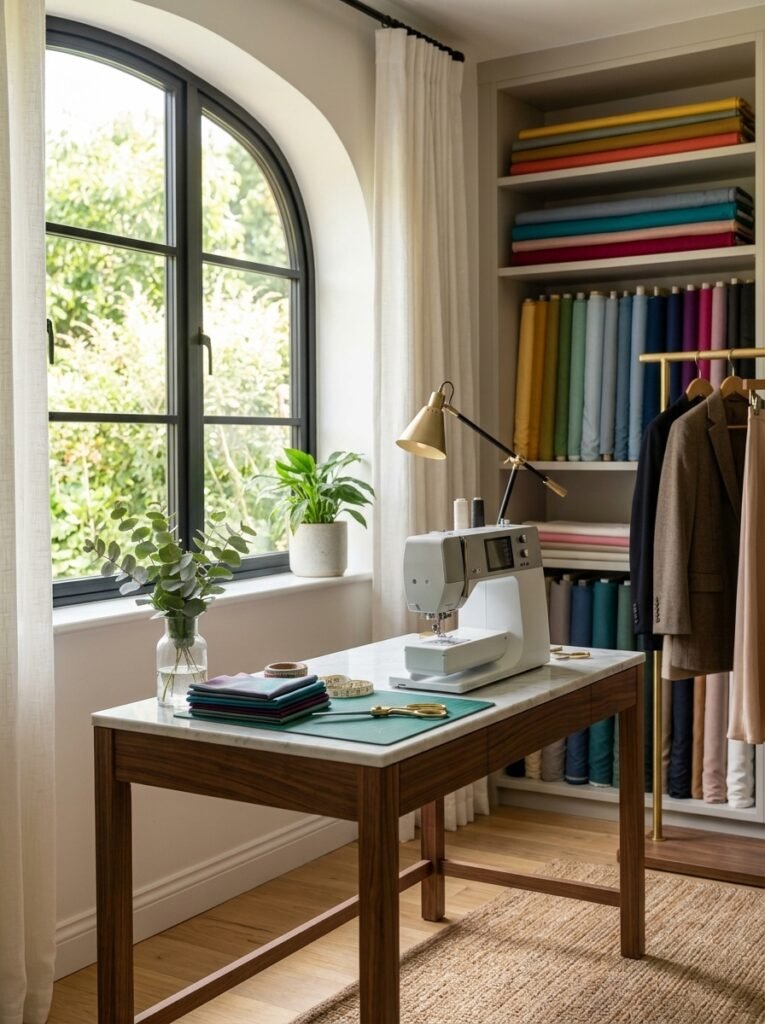
If you sew clothing, give garments their own area. Add a dress form, full-length mirror, garment rack, and storage for patterns and fabric. This setup makes it easier to move from designing to fitting and finishing. It also gives your room a small fashion-studio feeling.
13. Use Outdoor Light Wisely
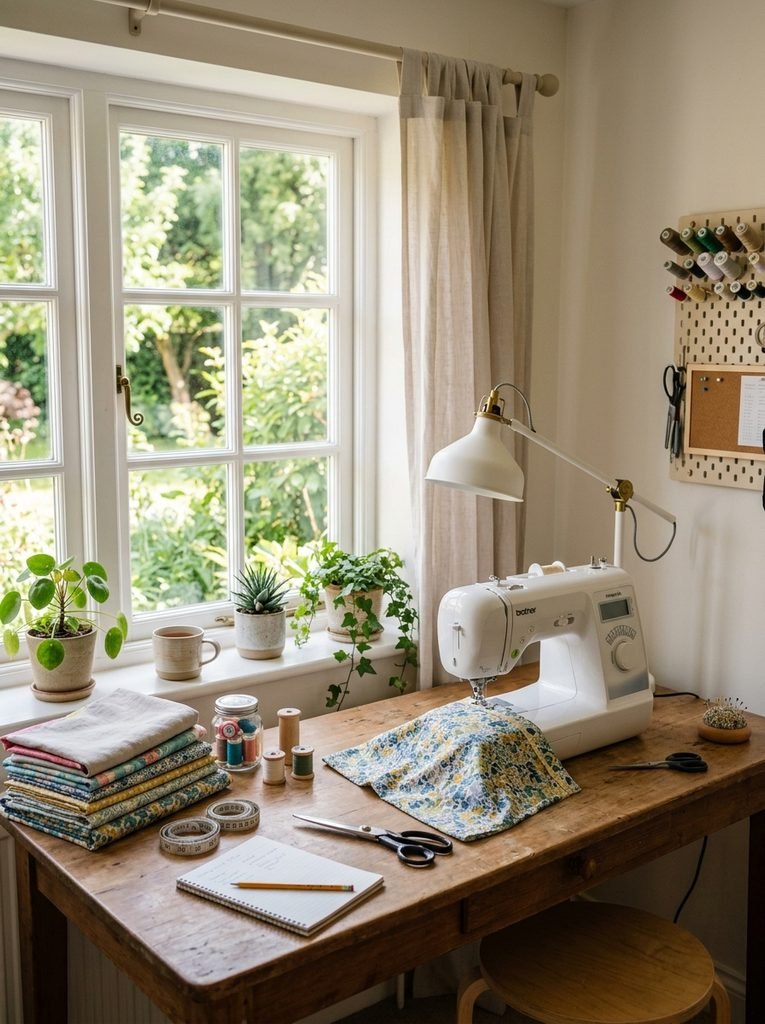
Natural light can make fabric colors easier to see during daytime projects. Place your main workstation near a window when possible, but avoid creating glare directly on your machine or computer screen. Add a reliable task light for evenings and detailed work. SINGER’s current sewing furniture range also includes compact workstations designed for flexible home use and smaller rooms.
14. Organize Your Fabric Like a Collection
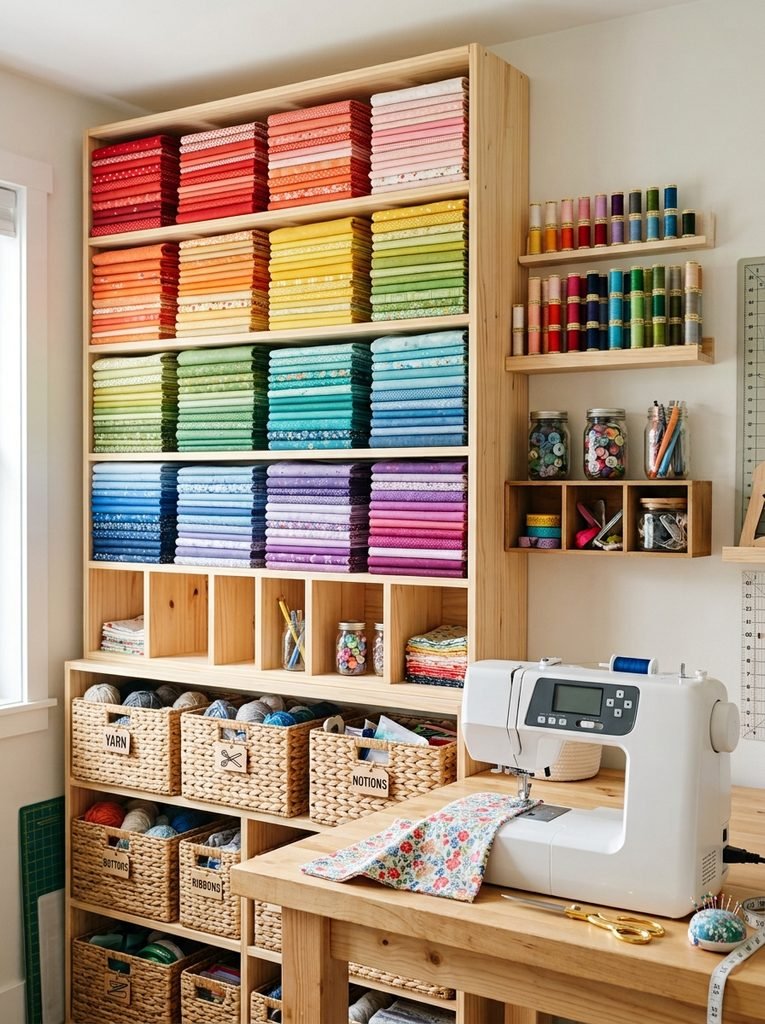
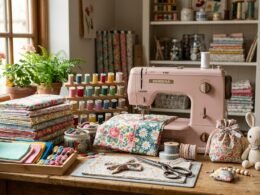
Fabric becomes much easier to manage when you can see it. Fold pieces into similar sizes and arrange them by color, fabric type, or project. For smaller scraps, use separate baskets. Keep special fabrics away from everyday materials so they remain easy to find when inspiration strikes.
15. Add Mobile Storage
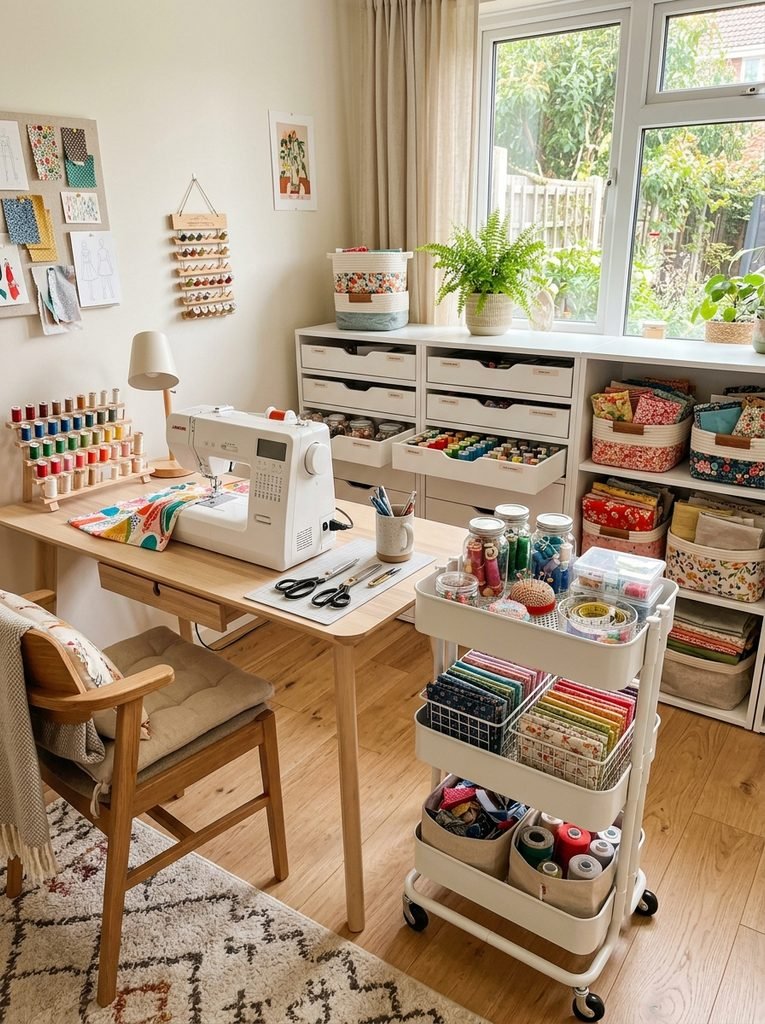
A rolling cart can become one of the most useful pieces in the room. Fill it with the tools you use for your current project and move it wherever you work. Mobile storage also helps when you change your room layout. Several current sewing furniture designs use casters to make workstations easier to move while keeping them stable during use.
16. Keep the Setup Comfortable
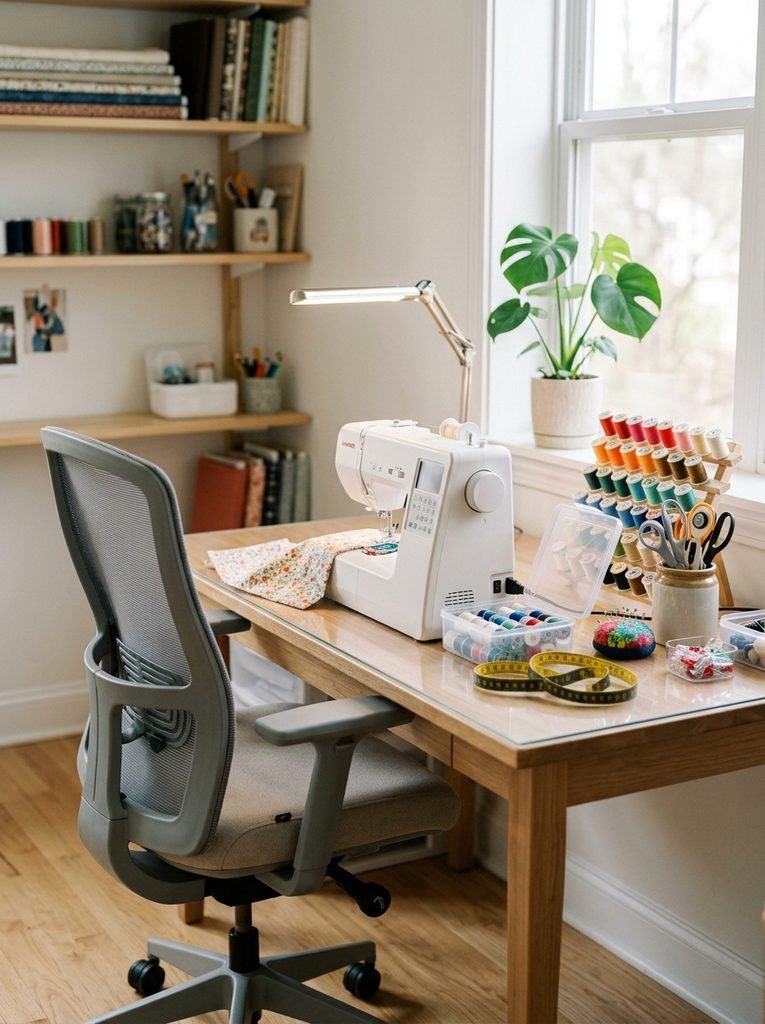
Comfort matters when you sew for long periods. Choose a chair that supports your working position and place the machine at a comfortable height. Also give yourself enough room to move. A beautiful room loses its value if you constantly bump into furniture or reach awkwardly for supplies. Basic sewing guidance from SINGER includes practical tools such as needles, thread, bobbins, scissors, measuring tape, rulers, and storage boxes, so planning a dedicated place for these essentials can keep your setup efficient.
17. Make the Room Truly Yours
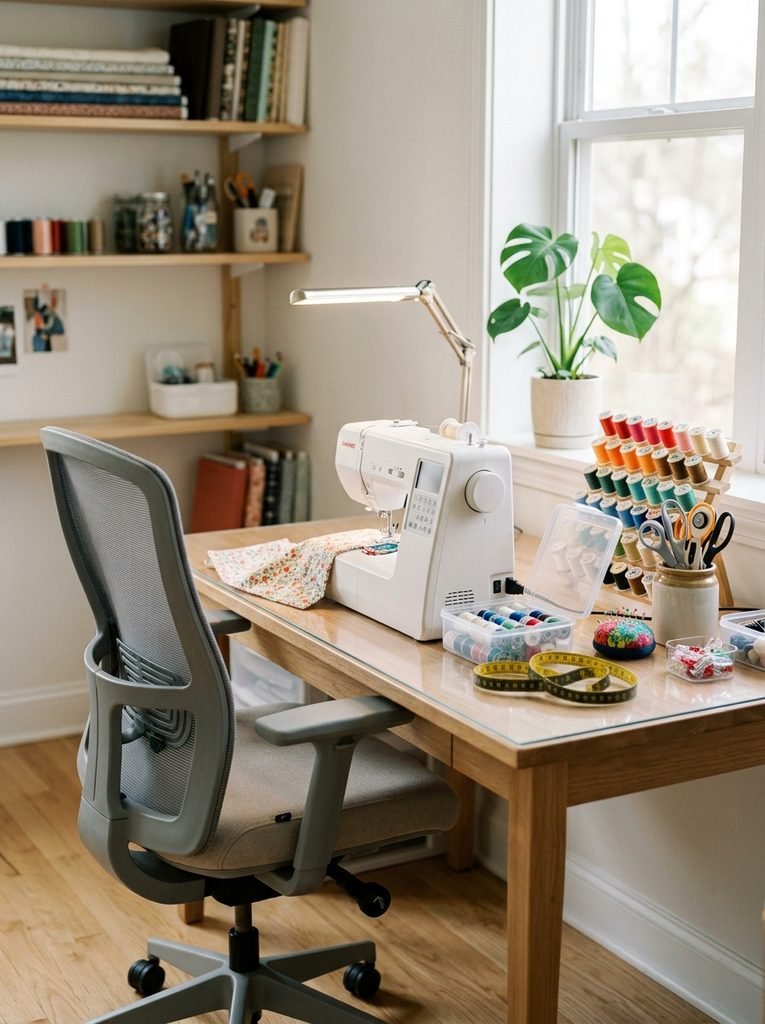
The final step is personal style. Add the things that make you happy: a favorite fabric display, handmade decor, vintage accessories, family photos, plants, or a small inspiration board. Your sewing studio does not need to look like a showroom. It should feel like a place where ideas become real projects. Start with a useful layout, improve the storage, add beautiful details, and let the room grow with your skills. A thoughtful sewing studio can be simple or elaborate. The important thing is that it supports the way you actually create.
How to Plan Your Dream Sewing Room
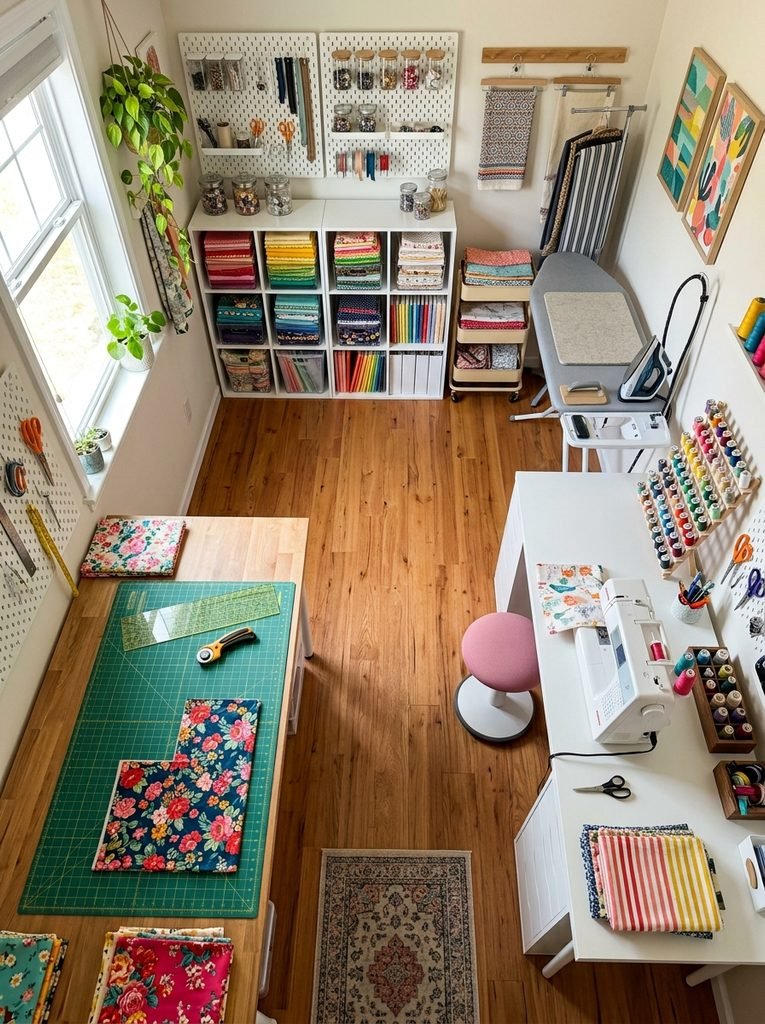
Start with the room you already have. Measure the available space before buying anything. Mark doors, windows, electrical outlets, and walking paths. Then decide which activities matter most: sewing, quilting, garment making, crafting, or storage. A practical sewing studio should support those activities instead of forcing you to work around furniture. Think about storage early, especially if you own large fabric collections. Keep frequently used items close and store seasonal or rarely used materials farther away. Finally, leave some empty space. You need room to spread fabric, move a chair, carry projects, and work comfortably. Current compact and expandable sewing furniture shows how folding surfaces, adjustable platforms, storage drawers, and rolling components can make one room serve several purposes.
Final Thoughts
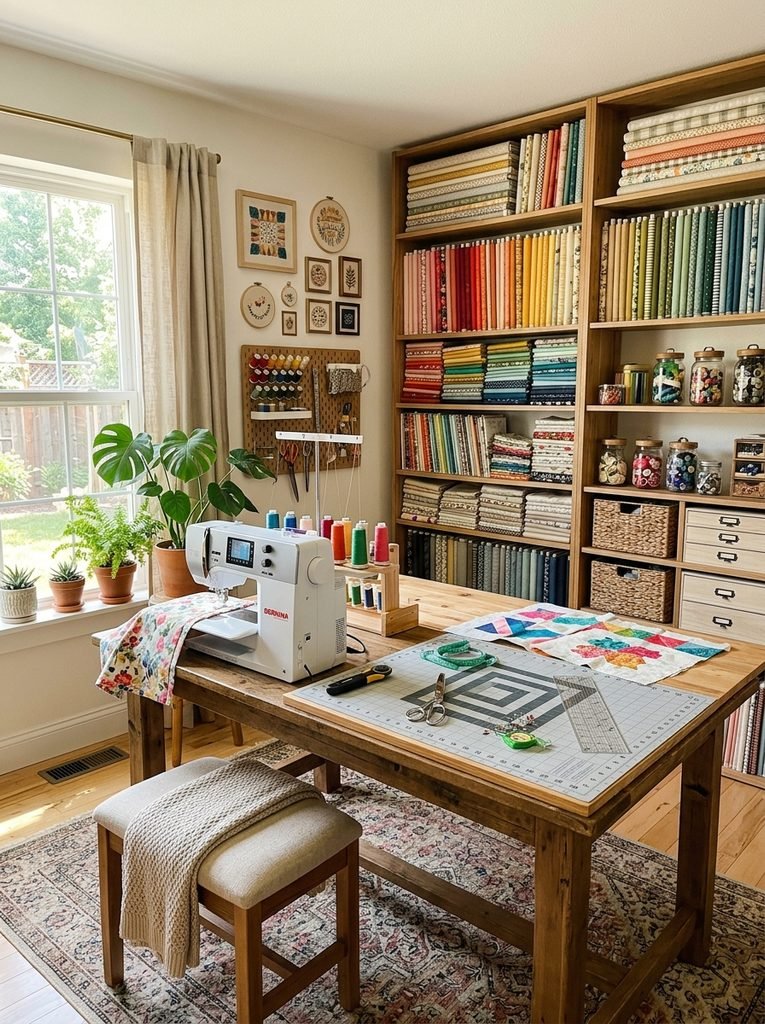
The best sewing studio is not necessarily the biggest one. It is the space that makes your work easier and your creative time more enjoyable. Use smart organization. Choose furniture that fits your space. Create clear zones. Add your favorite colors and personal decor. Whether your inspiration comes from a vintage room, modern interior, home office, garage, or compact apartment corner, you can build a workspace that feels beautiful and works hard for you. Start small. Improve one area at a time. Before long, your everyday sewing space can become the creative room you always imagined.