


This post may contain affiliate links. Please read my disclosure policy.
In This Article Show
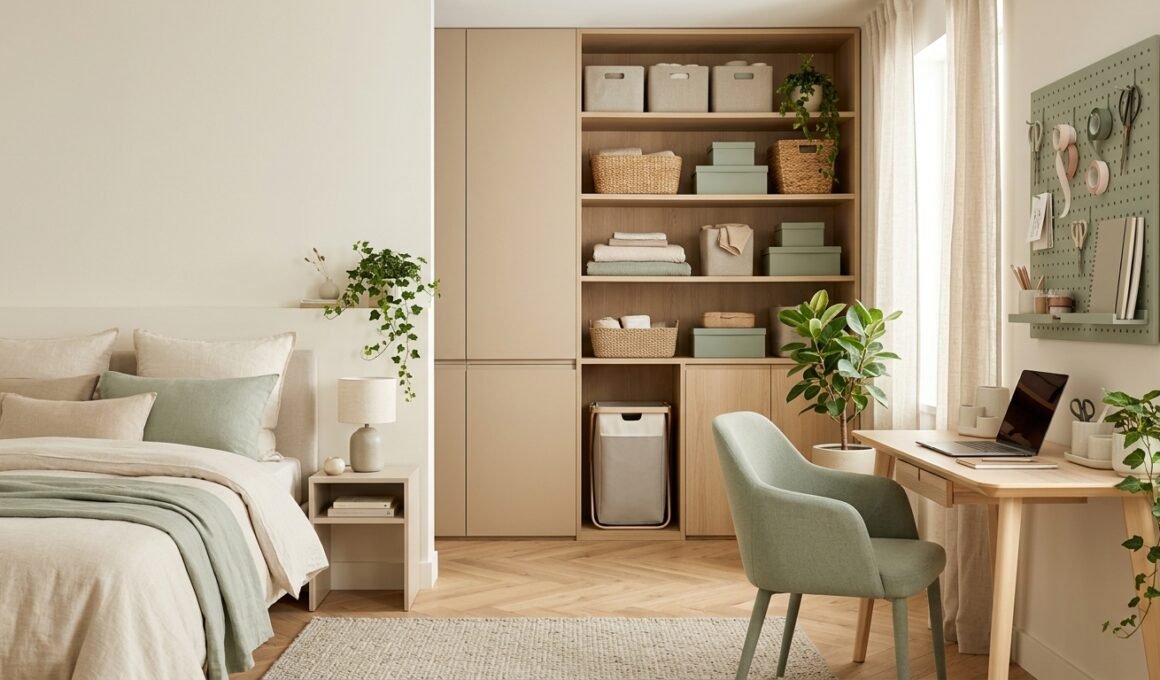
A room can become cluttered even when you have plenty of storage. Clothes collect on chairs, craft supplies spread across tables, toys take over the floor, and everyday items end up wherever there is an empty spot. The best room organization system gives everything a clear home while making the space comfortable, attractive, and easy to use. Whether you are organizing a bedroom, a small laundry room, a creative studio, a dorm, or a shared family space, thoughtful storage can help you make better use of every corner without making the room feel crowded. Before purchasing storage bins or rearranging furniture, identify the main purpose of the room and the items you use most often. Separate belongings into categories, remove things that no longer belong in the space, and decide which items need to stay within easy reach. A laundry room needs a different layout from a sewing studio, while a child’s room needs storage that is simple to use and maintain. Measure available space before adding shelves or cabinets, and leave enough room to move comfortably. A successful organization system should support your daily routine rather than create extra work.
1. Create a Calm and Organized Bedroom
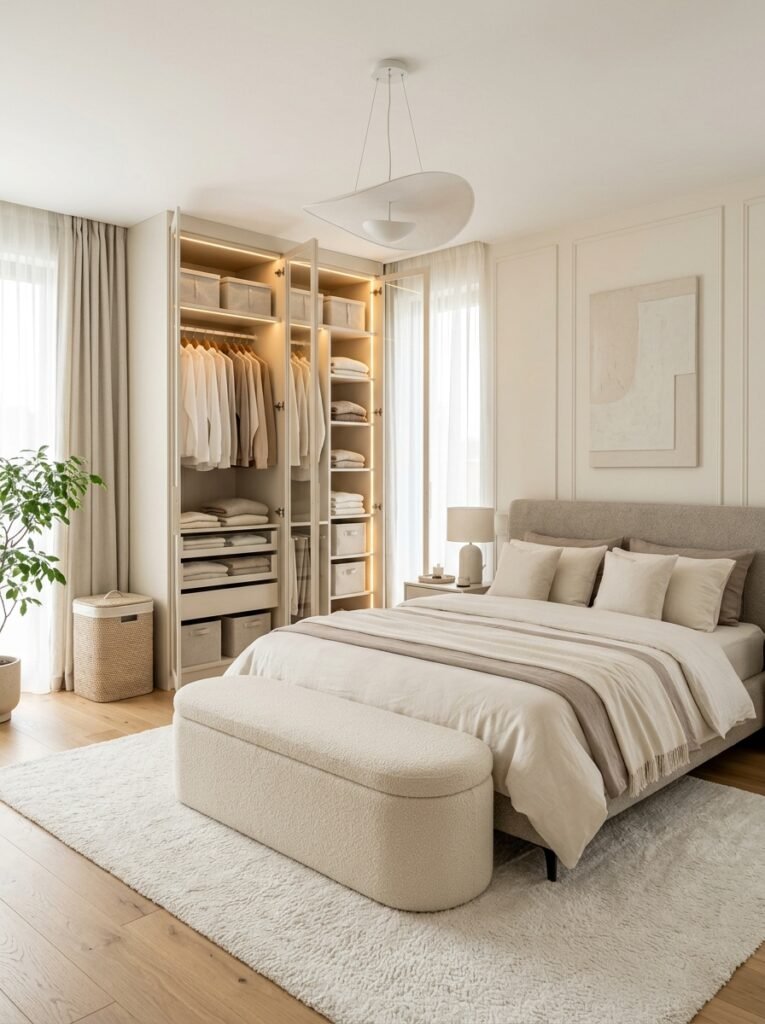
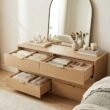
A bedroom should feel restful, so begin by giving clothes, accessories, books, and personal belongings their own designated places. Use bedside drawers for everyday essentials, closet shelves for folded clothing, and a laundry basket for worn garments instead of allowing them to collect on chairs or the floor. Keep the nightstand relatively clear, with only the items you genuinely use before sleeping or after waking up. If your bedroom is small, choose furniture that provides hidden storage without making the room feel crowded. This creates a cleaner environment while preserving the relaxing atmosphere a bedroom needs.
2. Organize a Small Laundry Room
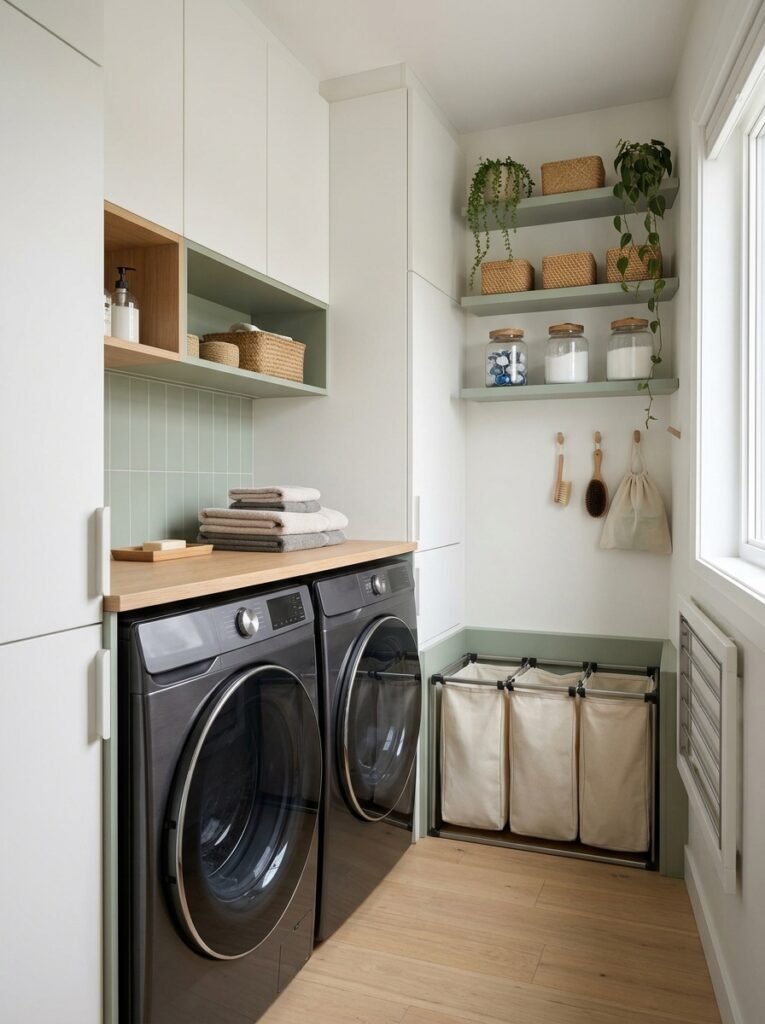
A small laundry room works best when washing, drying, folding, and storage have clearly defined areas. Use wall-mounted shelves for detergent and cleaning supplies, compact baskets for sorting clothes, and a narrow surface for folding laundry when space allows. Keep frequently used products within easy reach, while backup supplies can go on higher shelves or inside closed cabinets. Avoid placing too many containers around the machines because they can interfere with access and make cleaning difficult. A thoughtful layout helps a compact laundry area feel more efficient without requiring a larger room or expensive renovation.
3. Build an Organized Craft Room
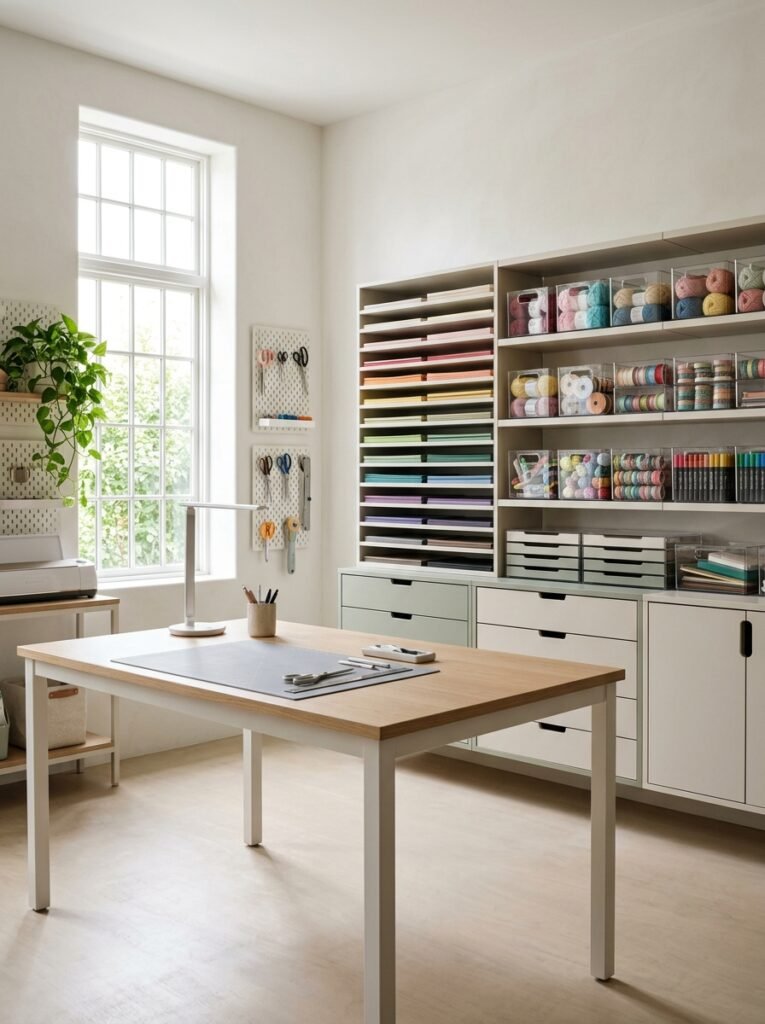
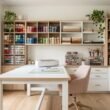
Craft supplies come in many shapes and sizes, so a dedicated category system can make a creative room much easier to use. Store paper, glue, scissors, beads, ribbons, paints, and other materials in separate containers rather than mixing everything into one large box. Place frequently used supplies near the main worktable and move occasional-use materials to labeled shelves or cabinets. Transparent containers are helpful when you need to identify small items quickly, while closed storage can hide supplies that create visual clutter. This setup makes creative projects easier to start and simplifies cleanup when you finish.
4. Create a Practical Sewing Room
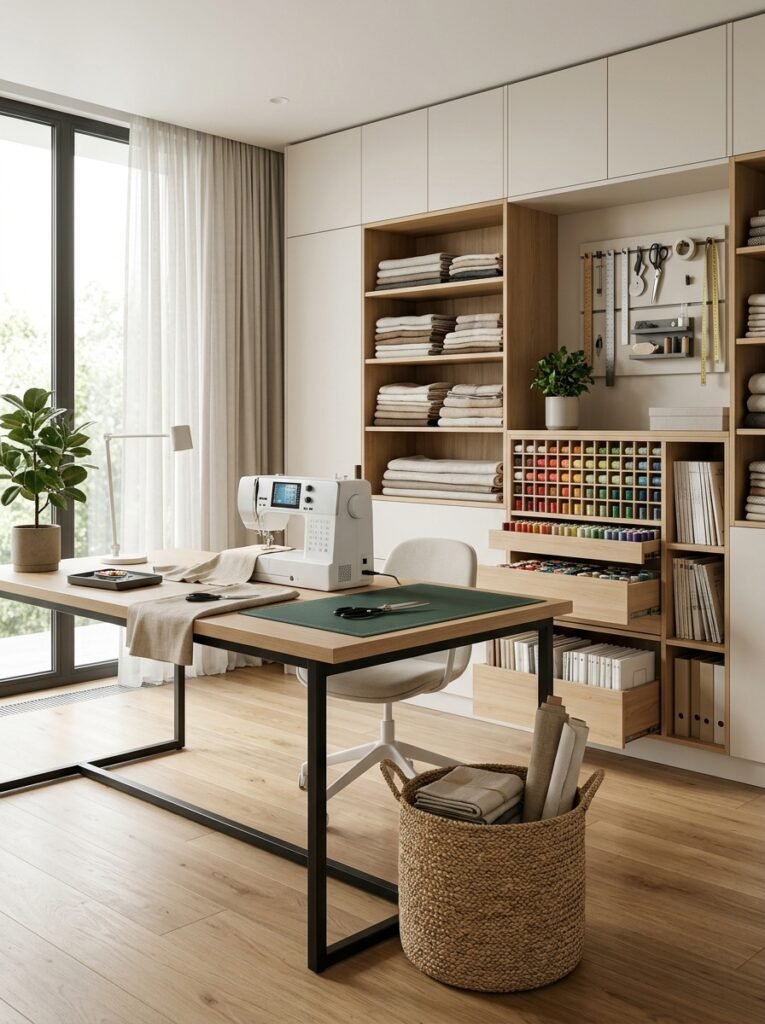
A sewing room needs organized storage for fabric, thread, patterns, cutting tools, and unfinished projects. Keep your sewing machine on a stable work surface with enough surrounding room to handle fabric comfortably. Store thread and small accessories in divided drawers, and arrange fabric by type, color, or project so you can find the right material without opening every container. Use a separate basket for works in progress to prevent partially completed projects from becoming mixed with unused supplies. Keep sharp tools securely stored, especially if children share the home. A well-planned sewing area helps you work more efficiently and protect your materials.
5. Use Smart Storage for Children’s Toys
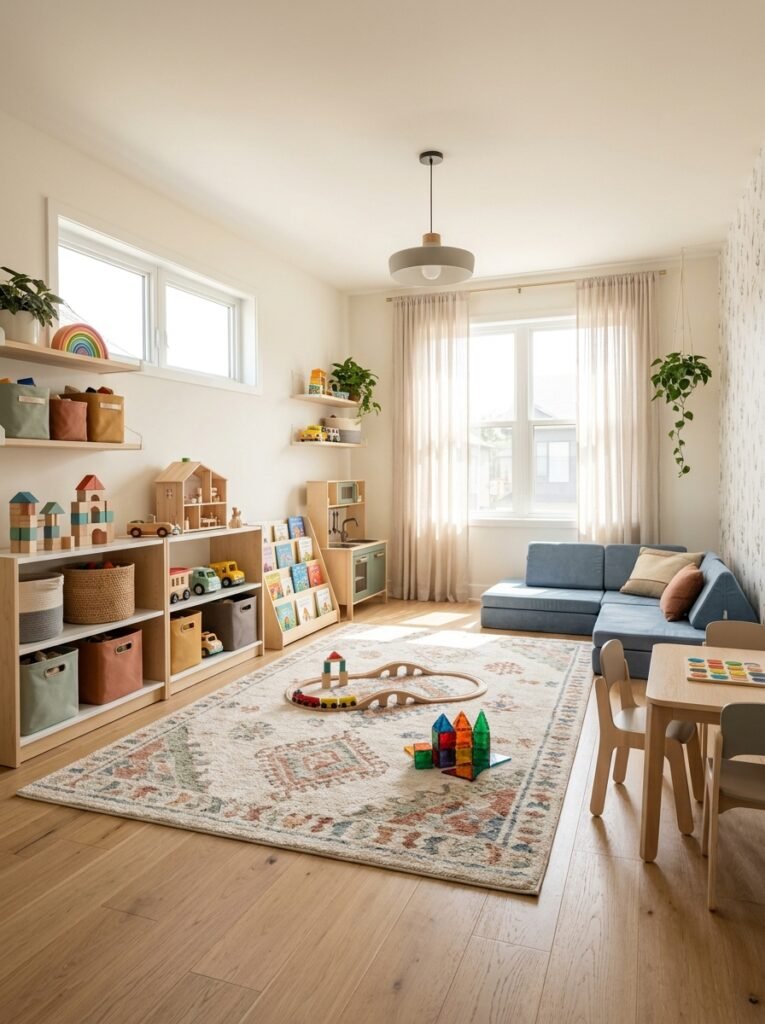
Toy storage should make it easy for children to find what they want and return it after playtime. Divide toys into broad categories such as building blocks, dolls, vehicles, puzzles, and pretend-play accessories. Low shelves and lightweight bins allow children to access appropriate toys independently without pulling everything onto the floor. Keep small pieces in secure containers when they are not in use, following age-appropriate safety guidance. Avoid filling every shelf completely because children need room to put items away. A simple, consistent arrangement supports tidier play areas and makes cleanup feel more manageable for the whole family.
6. Set Up an Art Supply Station
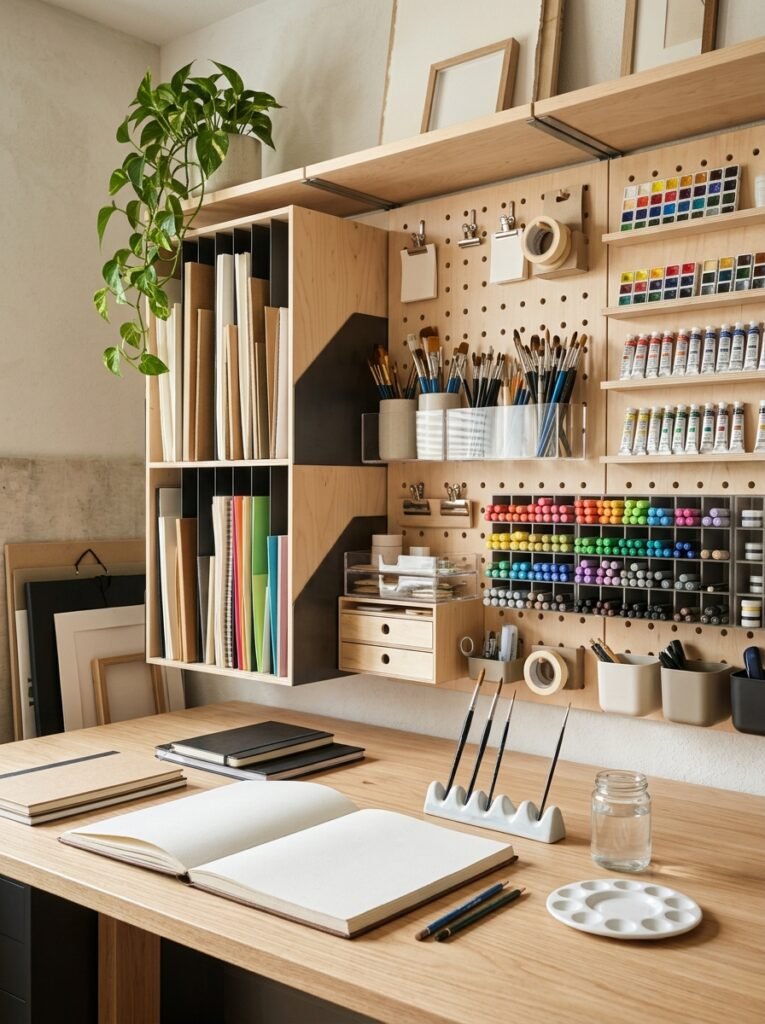
An art station works best when paints, brushes, markers, paper, sketchbooks, and other tools are organized according to how they are used. Use divided containers for small supplies and vertical holders for paper or sketchbooks that need to remain accessible. Place frequently used materials near the work surface, while less common supplies can be stored in drawers or closed cabinets. Protect the worktop with a suitable easy-to-clean surface, especially when working with paints or adhesives. This arrangement supports creativity without allowing art materials to spread throughout the rest of the room.
7. Make a Dorm Room Feel More Spacious
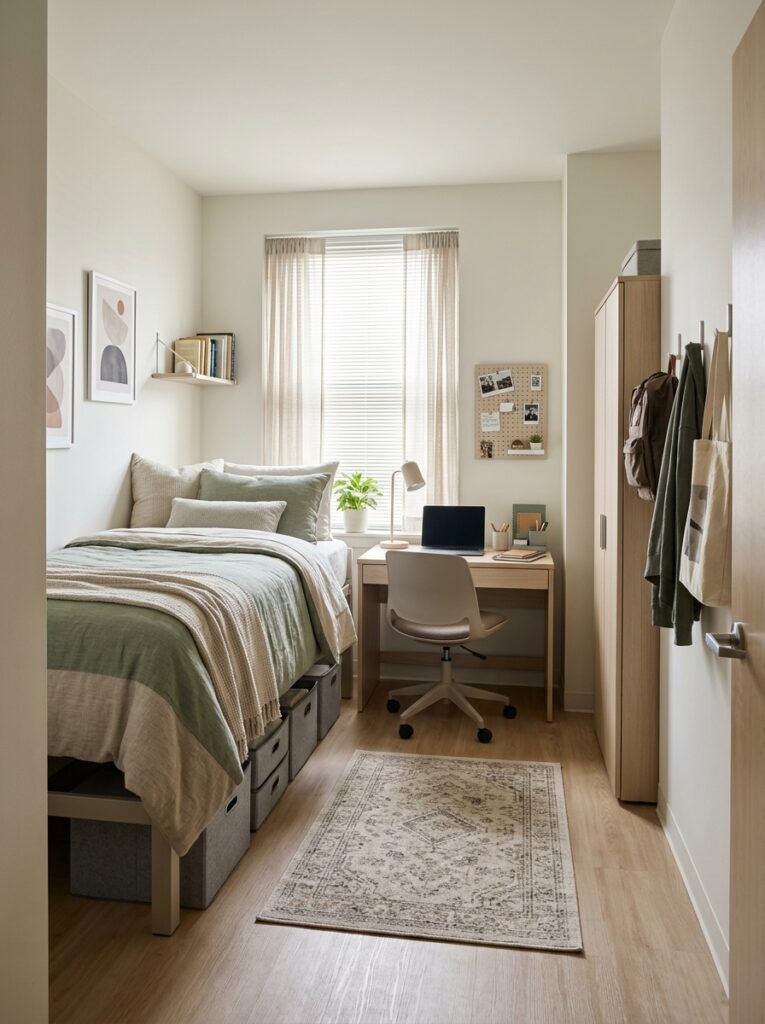
Dorm rooms often combine sleeping, studying, dressing, and relaxing in a limited area. Give each activity a defined zone so clothes do not spill into the study space and books do not take over the bed. Use under-bed containers for seasonal clothing, a desk organizer for stationery, and hooks for lightweight bags or accessories where permitted. Keep daily essentials within reach and store less-used belongings in compact containers. Choose furniture and storage that can be moved or adjusted easily if the room layout changes. The result is a more comfortable living space that feels organized without needing extra square footage.
8. Organize a Utility Room Efficiently
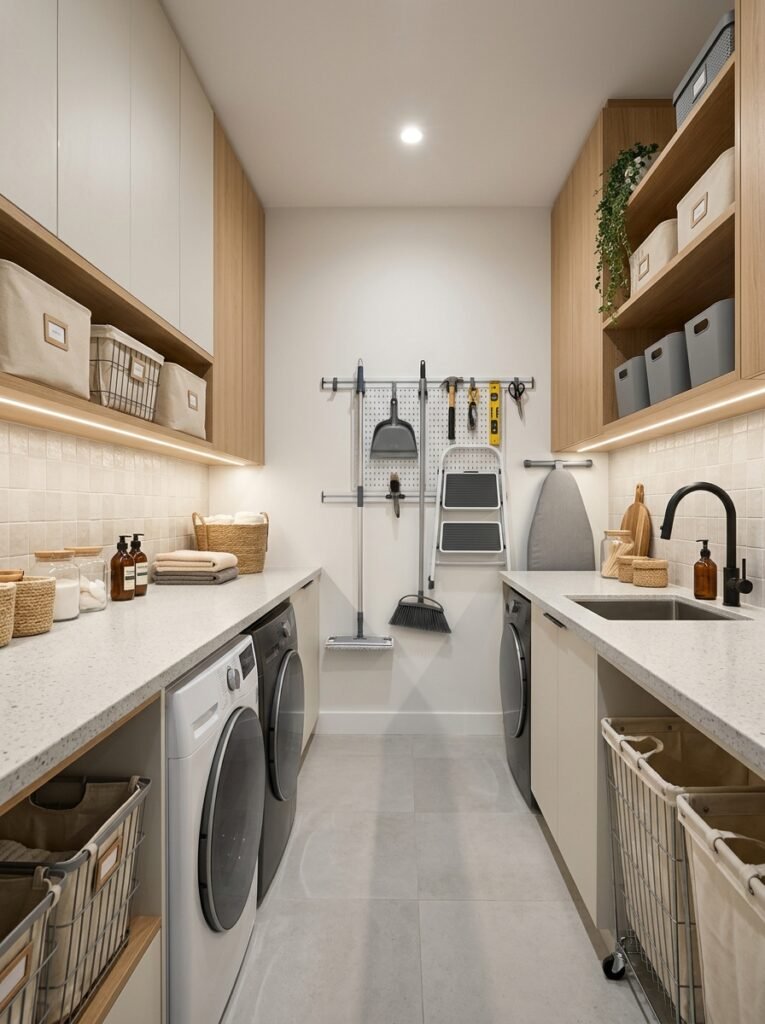
A utility room often stores cleaning supplies, household tools, spare light bulbs, batteries, and other practical items that are easy to misplace. Create separate shelves or containers for each category and keep frequently used products at a convenient height. Store potentially hazardous cleaning products securely and away from children or pets. A small cabinet can hide visual clutter, while wall-mounted holders can keep suitable tools off the floor. Review the room occasionally so empty packaging and unused items do not take up valuable space. A clear utility-room layout makes everyday household tasks quicker and reduces unnecessary searching.
9. Design a Functional Homeschool Room
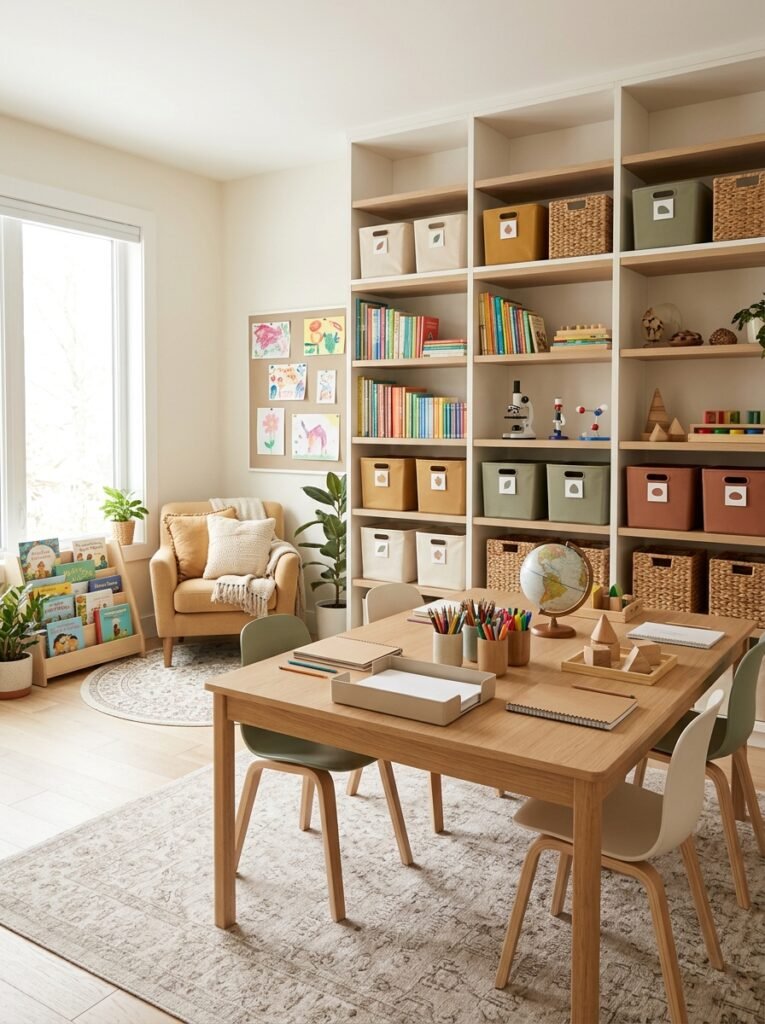
A homeschool room needs to support lessons, reading, writing, creative activities, and independent work. Organize books by subject or reading level, keep stationery in accessible containers, and create separate spaces for completed assignments and materials that still need attention. A shared table can work well for multiple activities if the supplies are easy to put away afterward. Use shelves that children can reach safely and keep frequently used learning materials close to the study area. This structure reduces distractions and helps children understand where to find their resources and return them after each lesson.
10. Create a Dedicated Hobby Room
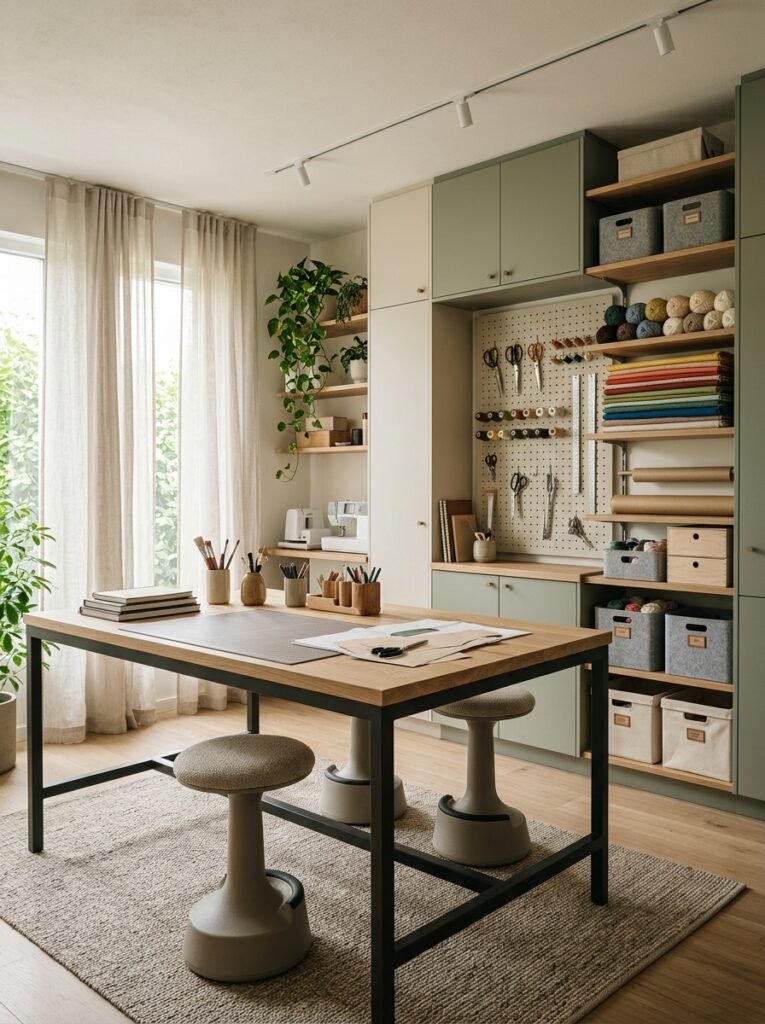
A hobby room can support several interests, but without a clear storage plan, different projects may compete for the same surface. Group supplies according to each hobby and assign a shelf, drawer, or container to every major category. Keep active projects near the main work area and store backup materials farther away. If your interests require different tools, use removable trays or portable boxes so you can bring one activity to the table and put it away afterward. This makes the room flexible without allowing it to become a permanent collection of unfinished projects.
11. Organize a Quilt and Fabric Storage Area
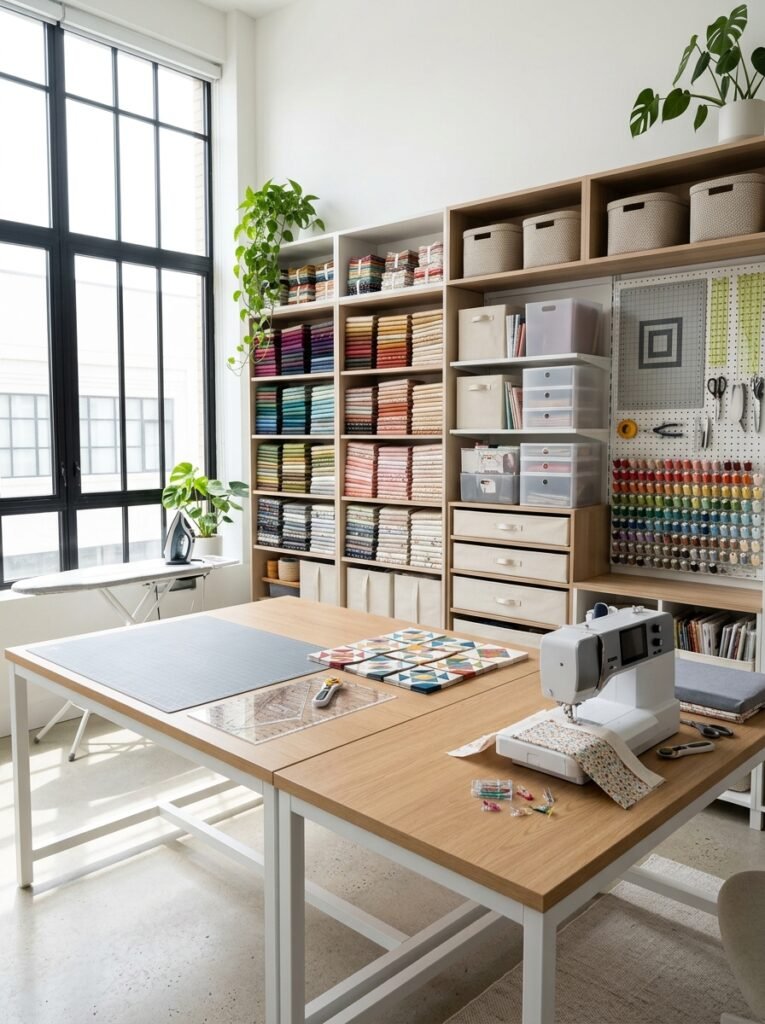
Quilting and fabric projects can require many materials, including fabric cuts, batting, rulers, thread, and unfinished quilt blocks. Store fabric in manageable stacks or suitable containers so the pieces remain easy to identify and do not become crushed beneath heavy supplies. Group materials by color, project, or fabric type, depending on how you plan your work. Keep rulers and cutting tools in a separate, secure section and create a dedicated container for the quilt currently in progress. This approach protects materials, reduces time spent searching, and makes it easier to return to a project after a break.
12. Build a Dressing Area With Better Storage
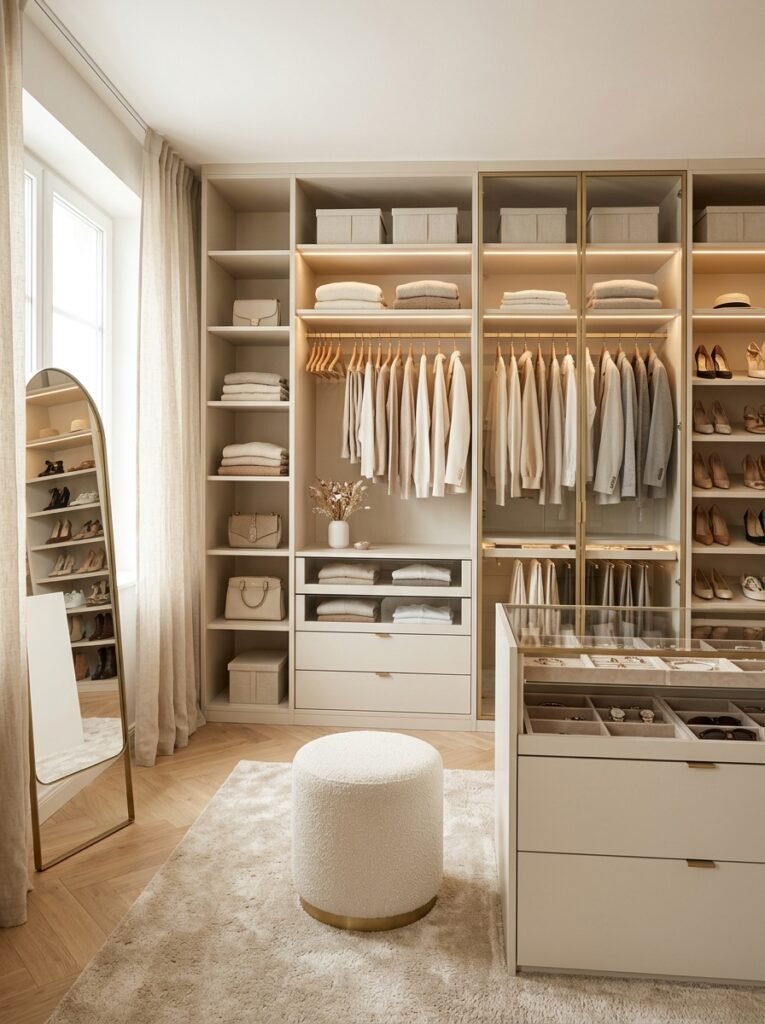
A dressing area becomes more useful when clothing, shoes, jewelry, and everyday accessories each have a defined place. Use wardrobe sections for hanging garments, drawers for folded clothing, and small organizers for jewelry and accessories. A full-length mirror and a clear area for getting dressed can make the room feel more functional without adding unnecessary furniture. Keep laundry separate from clean clothing and reserve a small area for outfits you plan to wear soon. This setup reduces last-minute searching and helps the dressing space remain attractive even when it is used every day.
13. Make Small Laundry Storage More Efficient
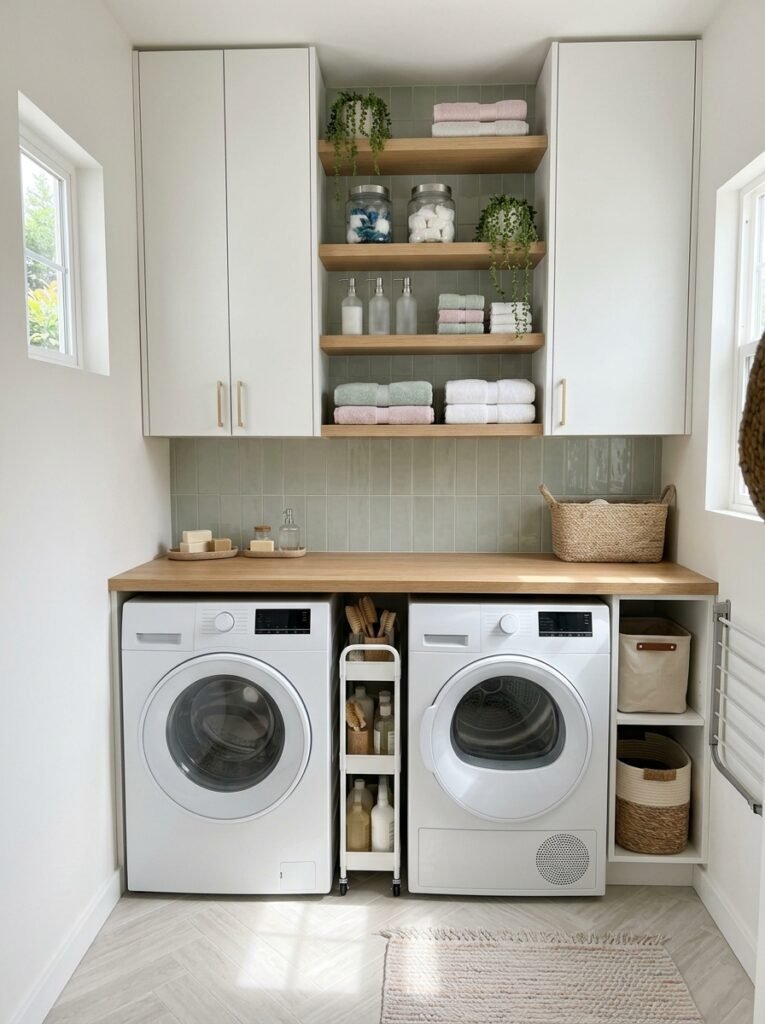
When the laundry room is especially small, storage needs to use vertical space without blocking appliances or movement. Slim shelves, wall-mounted dispensers, stackable baskets, and a narrow folding surface can help create an efficient arrangement. Keep laundry products grouped by purpose and place the items you use most often where they are easy to reach. If the washer or dryer doors open into the room, make sure baskets and storage carts do not interfere with them. A compact, carefully planned setup can reduce clutter and make laundry tasks feel less demanding.
14. Create a Horse Tack Storage Area
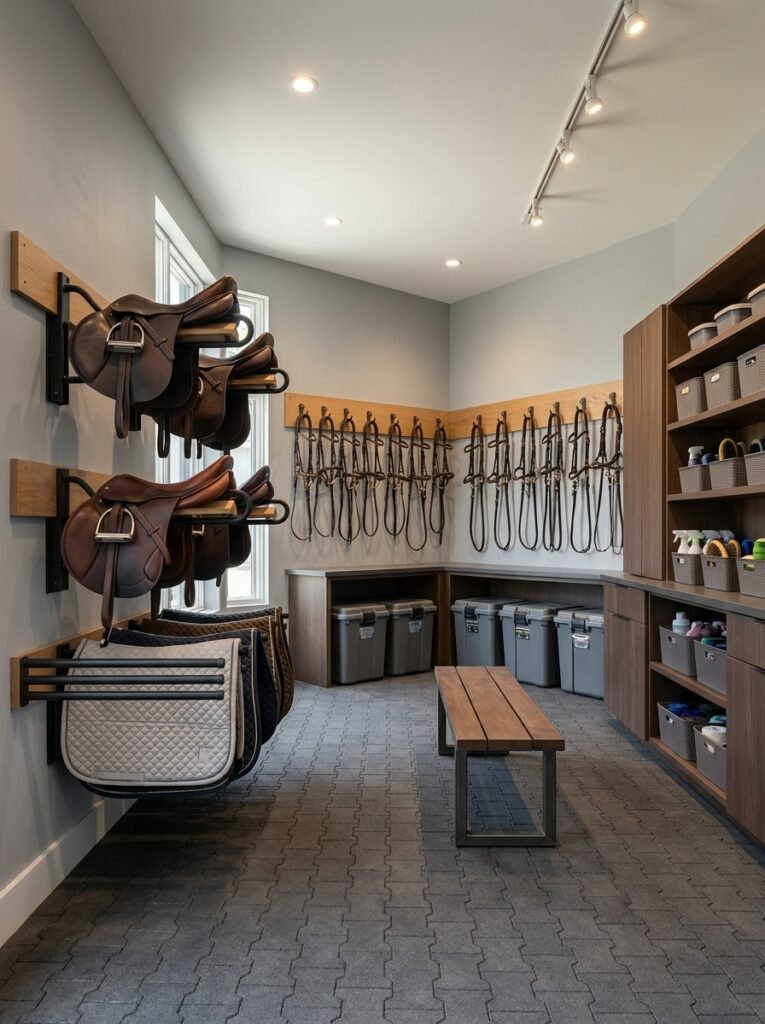
A horse tack room needs a layout that keeps riding equipment organized, accessible, and protected from unsuitable storage conditions. Use suitable racks for saddles, designated bridle hooks, and separate containers for grooming supplies and smaller accessories. Keep equipment clean and dry according to its material-care requirements, and avoid piling heavy items on delicate leather goods. Store feed separately from tack and cleaning products, using appropriate containers and following feed-storage guidance to prevent contamination and pest access. A well-planned tack room makes preparation easier and helps you notice when equipment needs cleaning or maintenance.
15. Organize a Small Tack Room Vertically
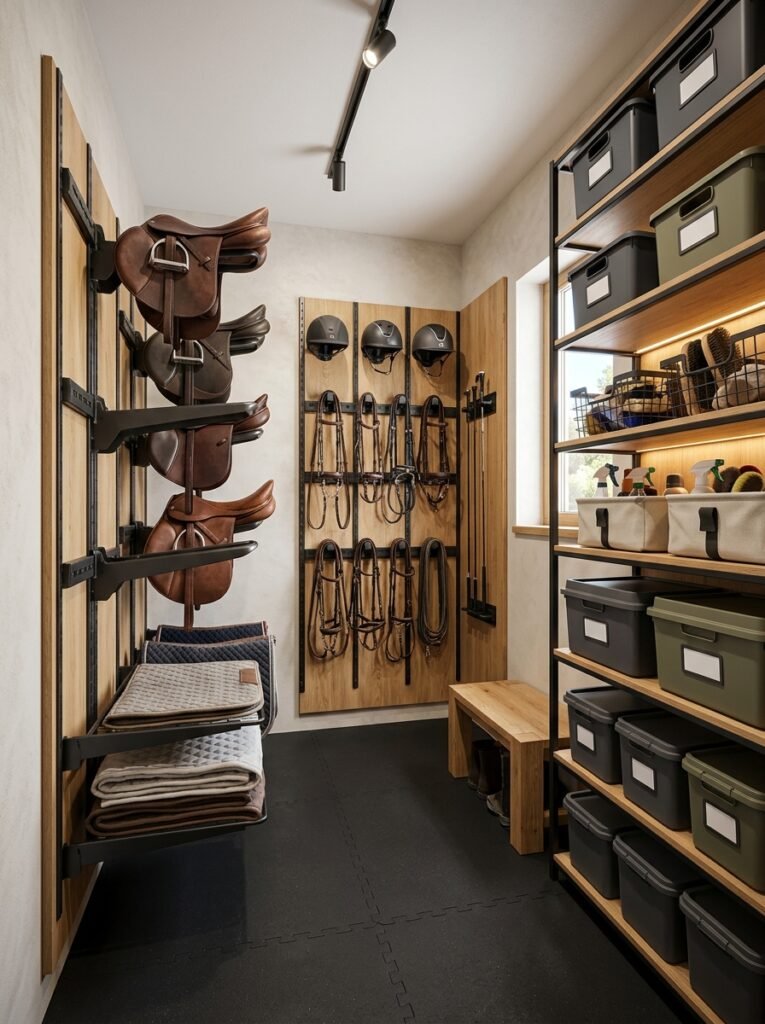
A small tack room may not have enough floor space for large cabinets, so vertical storage becomes especially valuable. Use secure wall-mounted racks for appropriate equipment, shelves for lightweight supplies, and clearly separated containers for grooming tools and accessories. Keep heavier equipment on suitable supports and avoid placing items where they can fall or obstruct access. Feed, chemicals, and cleaning supplies should remain in their own appropriate storage areas. A vertical layout helps you use limited wall space effectively while keeping the floor clearer and allowing equipment to be retrieved without moving several other items first.
16. Use DIY Storage for Flexible Room Organization
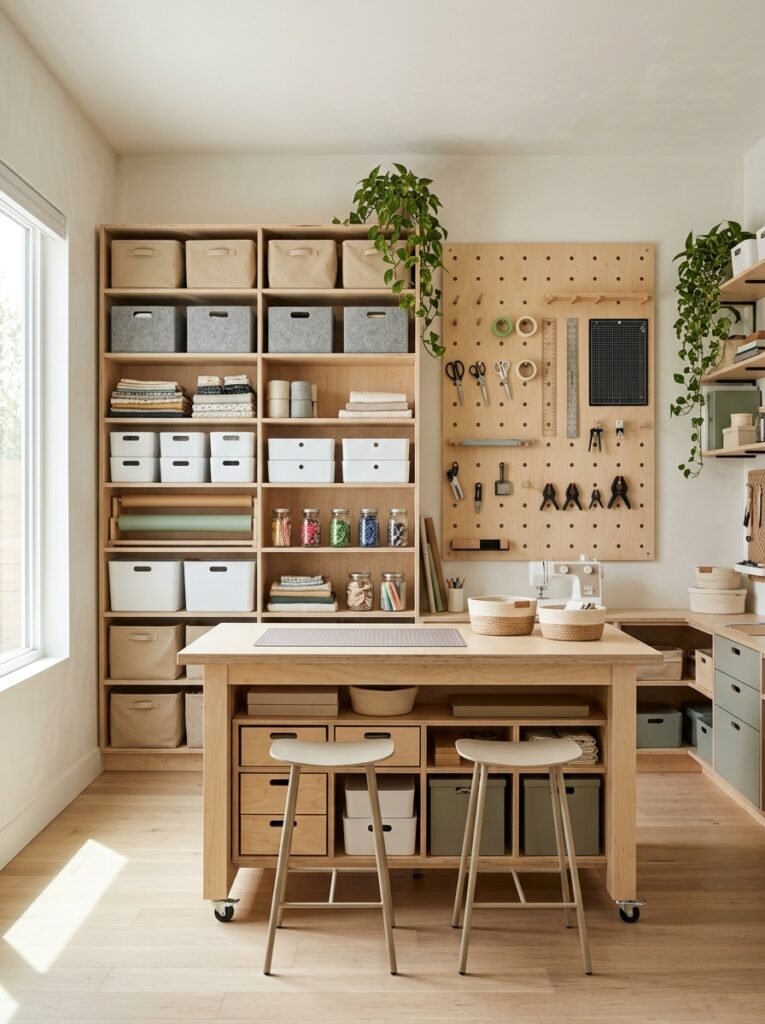
DIY storage is useful when a room has unusual dimensions or when standard organizers do not fit your needs. You might add simple shelf dividers, adapt sturdy containers, create a pegboard for suitable lightweight tools, or build a compact storage unit for a specific category of belongings. Measure carefully before starting and choose materials that can safely support the items being stored. Secure shelves and wall-mounted systems appropriately, especially in homes with children. The advantage of a DIY approach is that you can create a layout around your routine rather than buying a complete storage system that may not solve the actual problem.
17. Organize a Living Room Without Losing Its Style
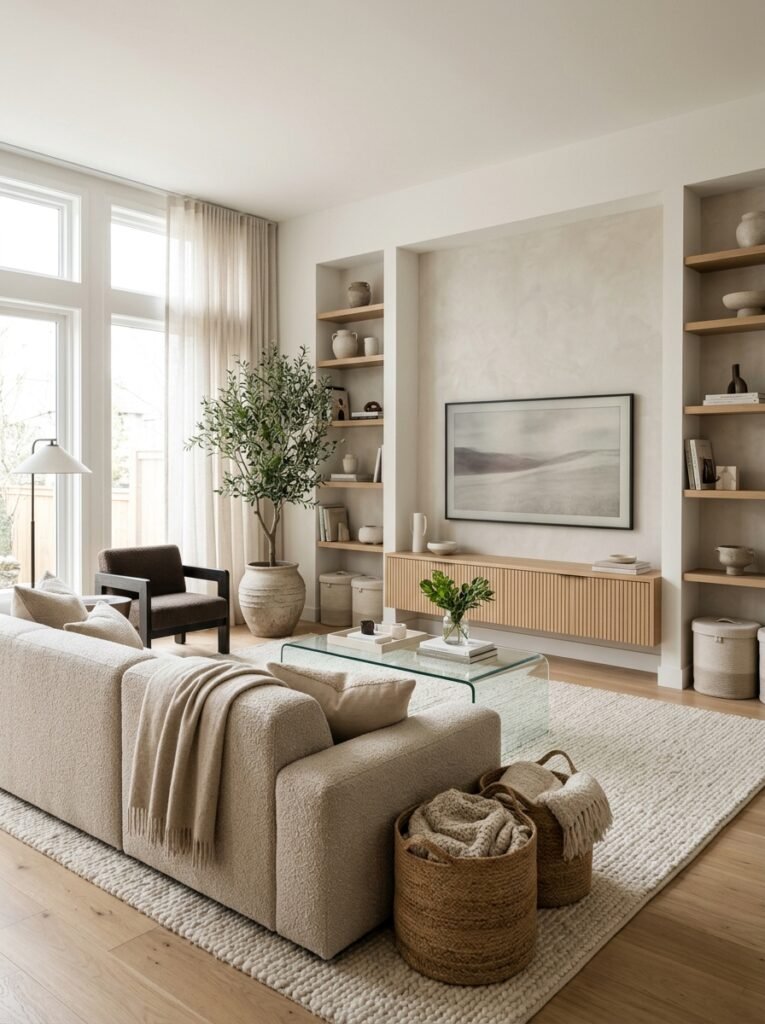
Living rooms often contain remote controls, books, blankets, toys, chargers, and other everyday belongings that can make the space look untidy. Use closed cabinets for items you do not need to display and attractive baskets for blankets or frequently used accessories. Give remotes and small electronics a consistent home instead of leaving them scattered across the coffee table. If children use the room, include an easy-to-reach toy basket that can be emptied and reset quickly. A balanced storage plan keeps the living room comfortable and welcoming without making it feel like a storage area.
18. Make Small Kids’ Rooms Easier to Maintain
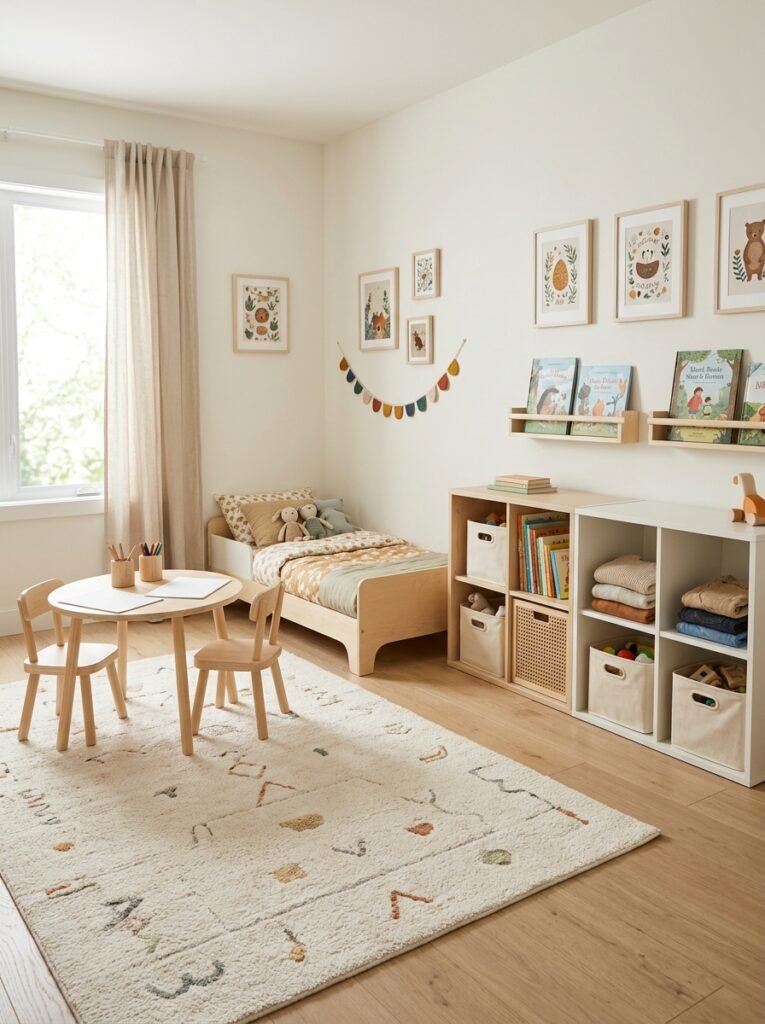
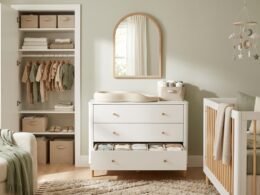
A child’s room needs storage that is accessible, simple, and flexible enough to change as interests develop. Use low shelves for books and frequently played-with toys, bins for building sets, and drawers for clothes or art materials. Keep heavier objects low and secure tall furniture to the wall according to the manufacturer’s safety instructions. Avoid creating too many tiny categories because children may find the system difficult to follow. A few clear storage zones make cleanup easier and allow children to participate in keeping their room tidy without needing a complicated routine.
19. Create a Feed and Supply Storage Zone
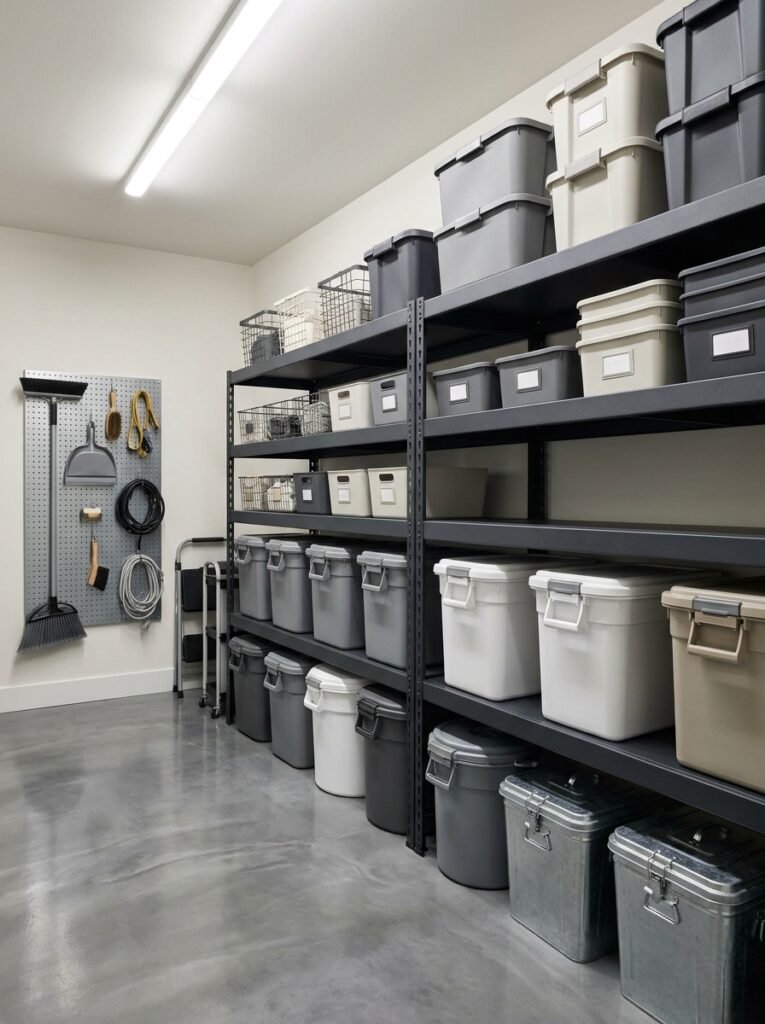
If your home or hobby area requires animal feed or similar bulk supplies, give those materials a dedicated storage zone instead of mixing them with craft products, laundry supplies, or general household items. Use suitable sealed containers, follow product-specific storage instructions, and keep supplies protected from moisture, pests, and contamination. Store cleaning chemicals separately and make sure containers are clearly identifiable to prevent accidental misuse. Place frequently needed supplies in a convenient location without blocking walkways or equipment. A dedicated zone makes restocking easier and helps the room remain safer and more organized.
20. Maintain Your Room Organization System
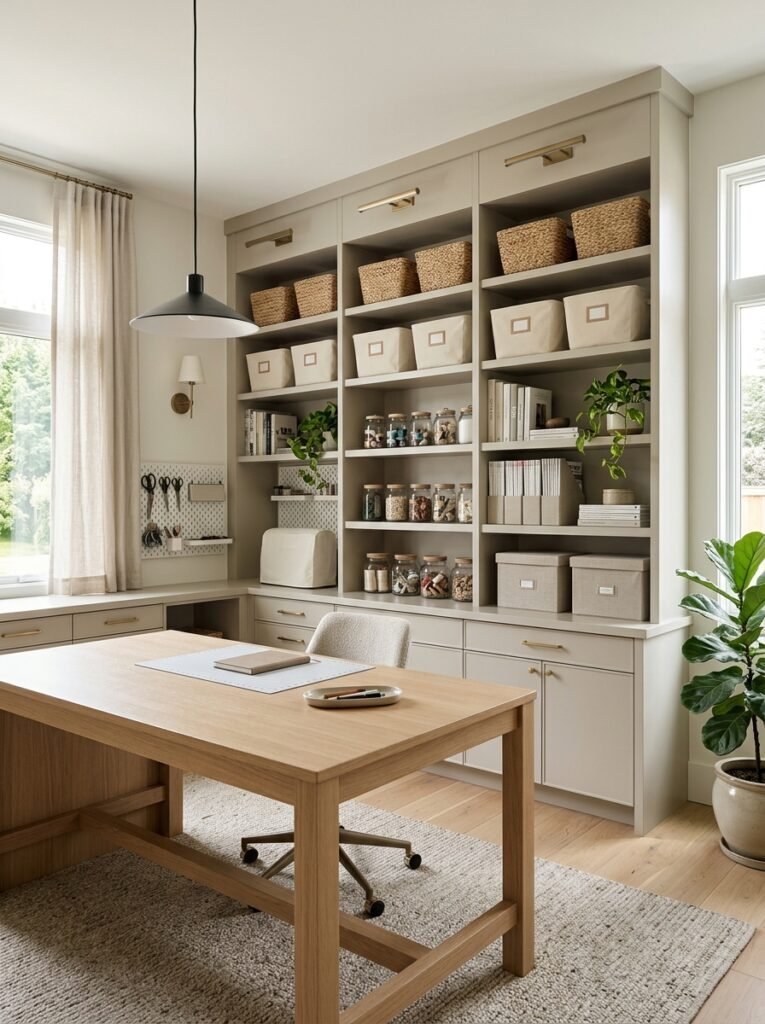
Even a well-designed room will become cluttered again if there is no simple maintenance routine. Spend a few minutes returning items to their designated places, clearing the main work surface, and checking whether any category has outgrown its storage area. In a laundry room, reset baskets and supplies; in a craft room, put tools away after each project; and in a bedroom, return clothes and accessories to their proper locations. Review the system occasionally and adjust it when your needs change. Small, regular resets are easier than waiting until the entire room needs to be reorganized.
Final Thoughts
The best room organization ideas begin with understanding how each space is used. A bedroom needs calm and convenient storage, a laundry room needs an efficient workflow, and a craft or sewing room needs supplies that are easy to identify and reach. Children’s rooms benefit from simple accessible categories, while hobby and tack rooms require storage suited to their equipment and materials. You do not need to organize every room in one day or buy expensive furniture to see a difference. Start with one area, give each category a clear home, and choose storage that suits the available space. With a practical layout and a simple maintenance routine, your rooms can become easier to use, more attractive, and less stressful to maintain.