

This post may contain affiliate links. Please read my disclosure policy.
In This Article Show
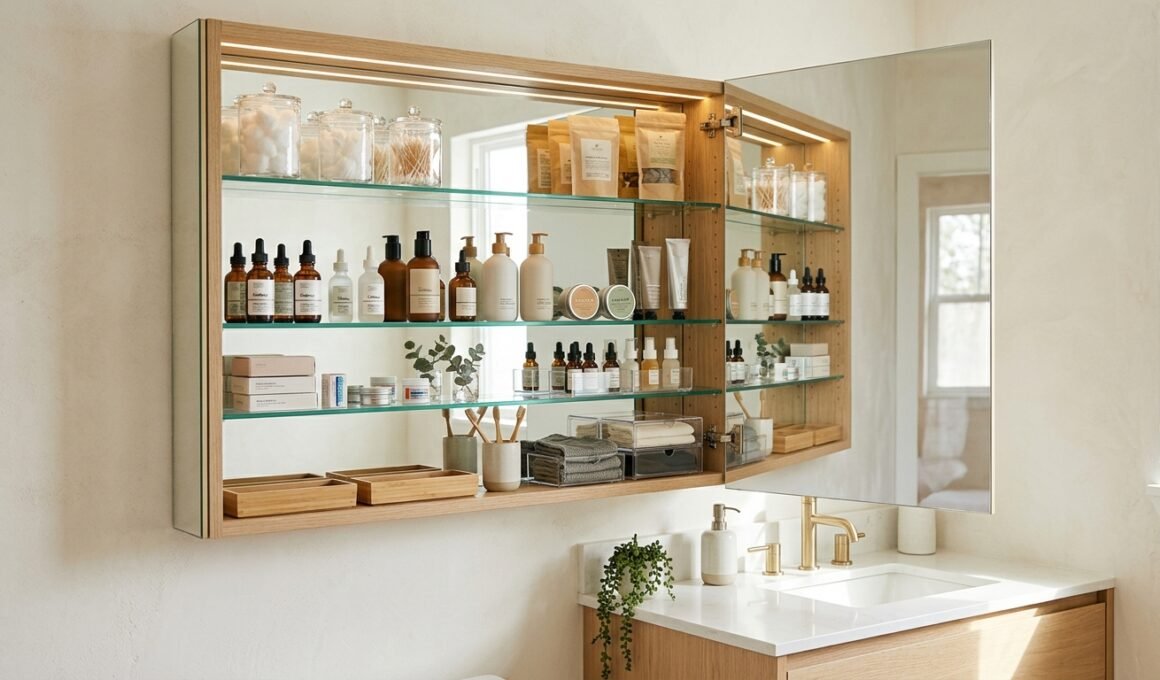
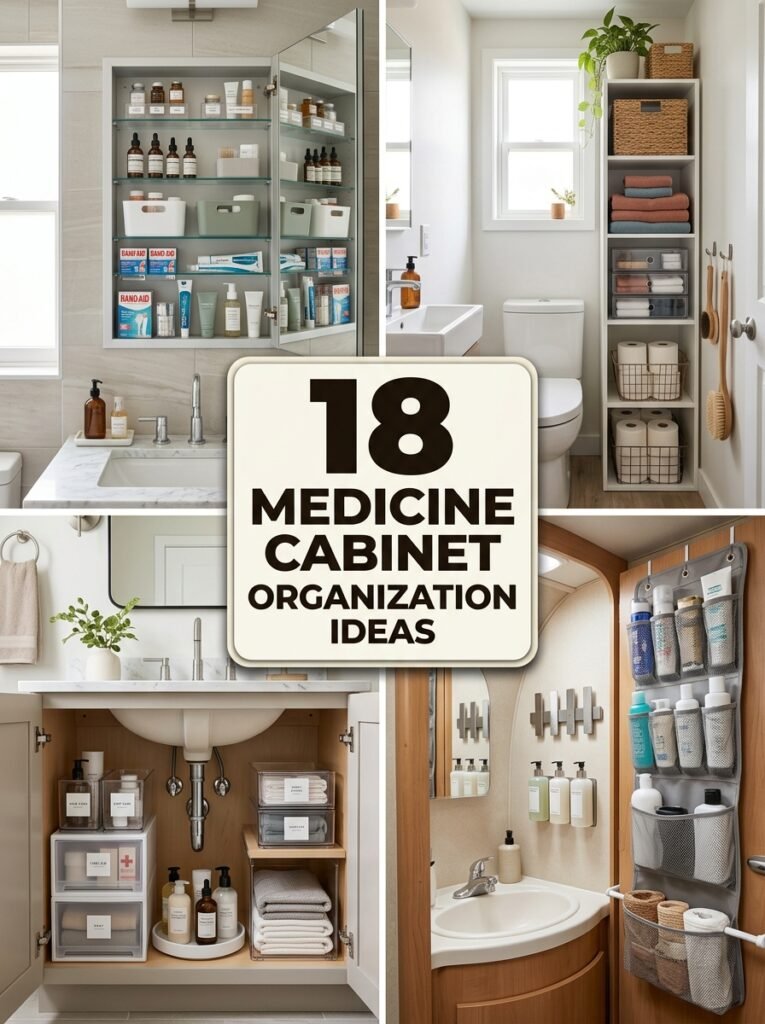
A medicine cabinet can become messy surprisingly fast. Small bottles, skincare products, first-aid supplies, vitamins, makeup, and everyday essentials often end up mixed together, making it difficult to find what you need. Good medicine cabinet organization is not only about making the cabinet look beautiful; it is about creating simple categories, using the available space wisely, and keeping frequently used items easy to reach. Whether you have a spacious bathroom, a tiny apartment, an RV, or a narrow wall cabinet, the right system can make your daily routine much easier. Before buying containers or labels, take everything out and look at what you actually use. Group similar items together, remove expired or damaged products according to local disposal guidance, and decide which things truly belong in the cabinet. A good system should match your daily habits rather than simply look attractive in a photograph. For families, categories can also prevent everyone’s products from becoming mixed together. In a small bathroom, vertical storage, shallow containers, and door space can make a much bigger difference than adding more furniture.
1. Group Everything by Category
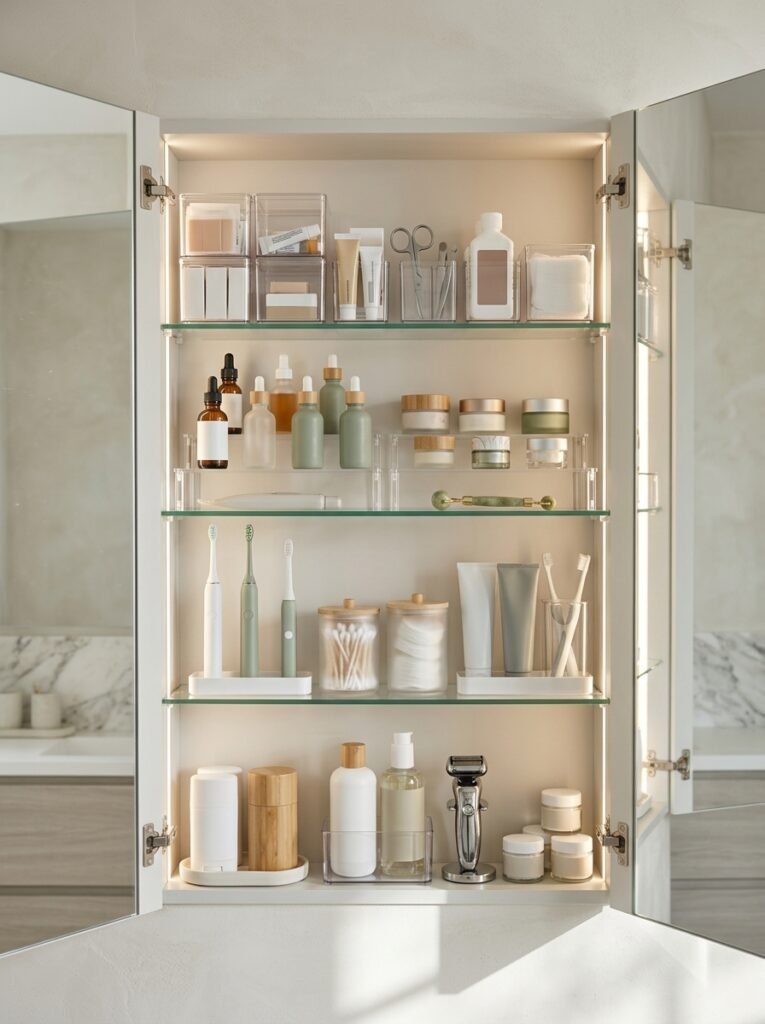
One of the easiest ways to create effective medicine cabinet organization is to divide products into clear categories before putting anything back. Keep first-aid supplies together, daily medications in their own section, skincare in another area, and personal-care products somewhere separate. If several family members use the cabinet, you can create small zones for each person as well. This approach reduces searching time because you immediately know where a product should go. It also makes restocking easier because you can quickly see which category is running low.
2. Use Small Clear Containers
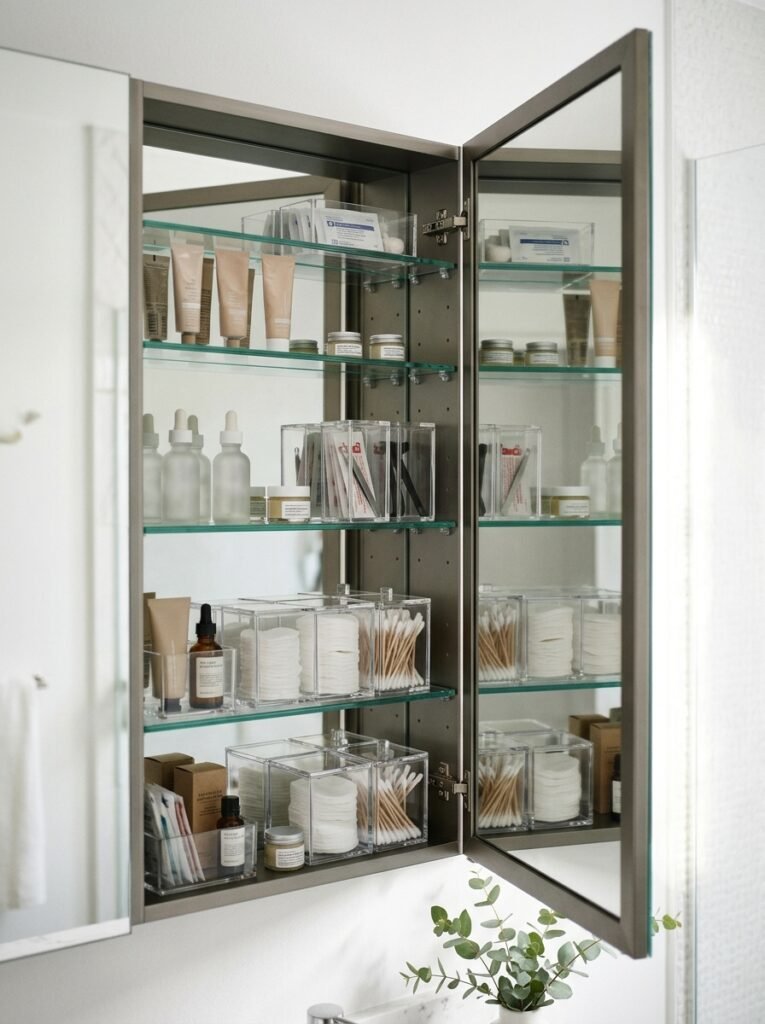
Small clear containers are especially useful when several tiny products need to share one shelf. Instead of allowing tubes, packets, cotton products, and small bottles to spread across the cabinet, place similar items inside compact transparent bins. Because the contents remain visible, you do not have to open every container to find what you need. Choose containers that fit the shelf depth rather than buying large bins that waste valuable space. Rounded or softly rectangular designs can also give the cabinet a cleaner, more polished appearance without making it feel overly styled.
3. Make a Daily Essentials Zone
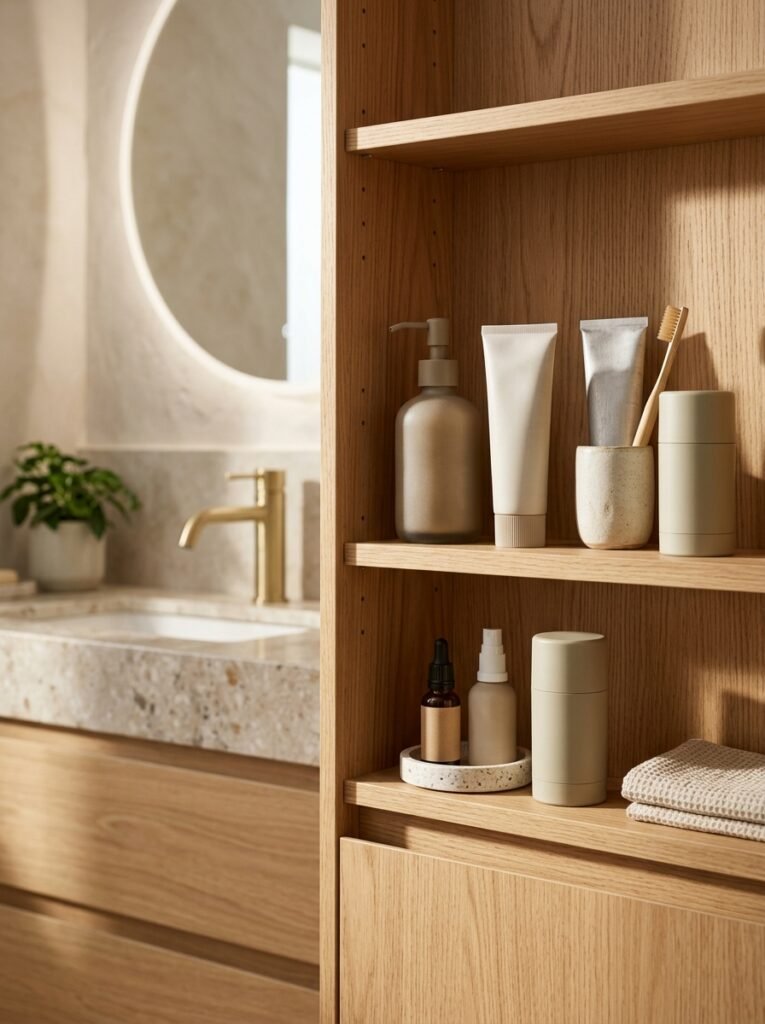
Products you use every morning and evening should not be buried behind occasional-use items. Create one easy-to-reach section for daily essentials such as moisturizer, face wash, toothpaste, deodorant, or other frequently used personal-care products. Keeping this group together makes the cabinet faster to use and easier to reset after a busy morning. It also prevents the habit of leaving products on the bathroom counter because they are inconvenient to put away. The best location is usually at eye level or on the most accessible shelf.
4. Try a Shallow Storage System
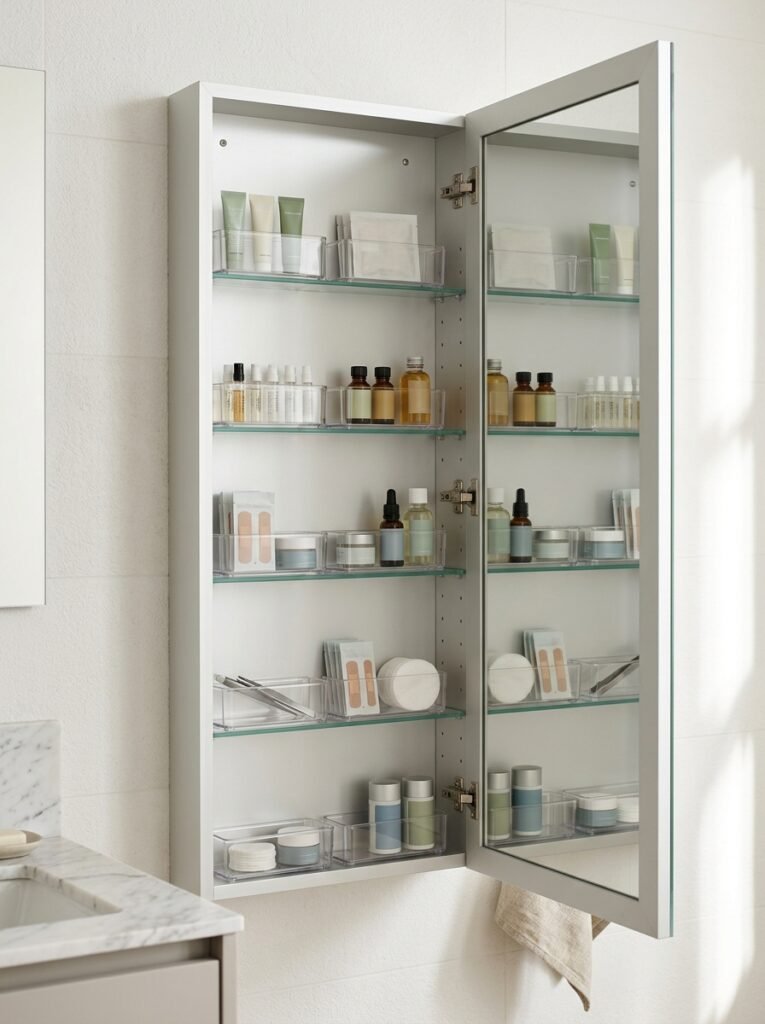
Deep containers can create a hidden pile where smaller products disappear behind larger ones. A shallow storage system works particularly well in cabinets with limited depth because every item remains visible and easy to reach. Use slim trays or low-sided organizers for items such as bandages, skincare samples, small tubes, or everyday accessories. This is especially helpful when working with narrow cabinets or older bathroom layouts where every inch matters. The goal is not to fill every available space but to create a system where nothing gets lost behind something else.
5. Add Simple Labels
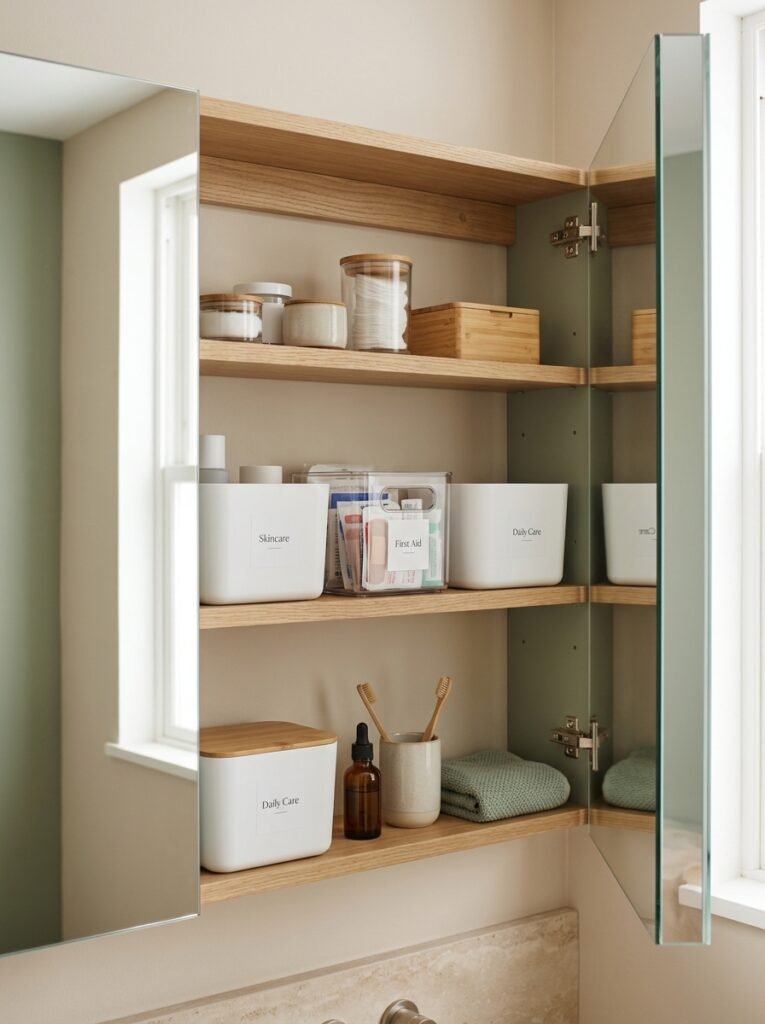
Labels can make a cabinet much easier to maintain, particularly when multiple containers look almost identical. Use short labels such as First Aid, Daily Care, Skincare, Travel, or Family rather than long descriptions. For a more aesthetic appearance, choose a consistent label style and place labels in the same position on each container. Labels are especially helpful for children, older family members, or guests who may not know where everything belongs. Keep the wording simple so the system remains useful rather than becoming decorative clutter.
6. Create a Family-Friendly System
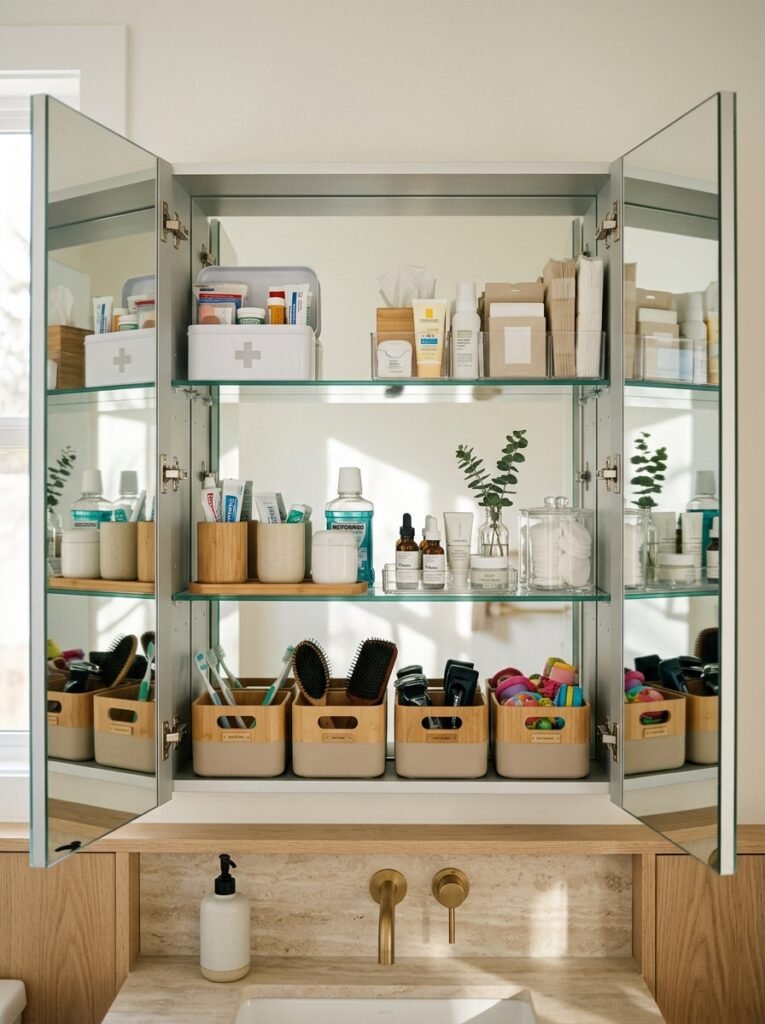
For a busy household, medicine cabinet organization should make it obvious which products are shared and which belong to individual family members. Create a central area for common first-aid supplies and everyday essentials, while personal products can be grouped into separate small bins. If children are present, keep any medication or potentially harmful products securely out of their reach and follow the product’s storage instructions. A family system works best when every person understands where items belong, making it much easier to return products after use.
7. Use the Cabinet Door for Extra Space
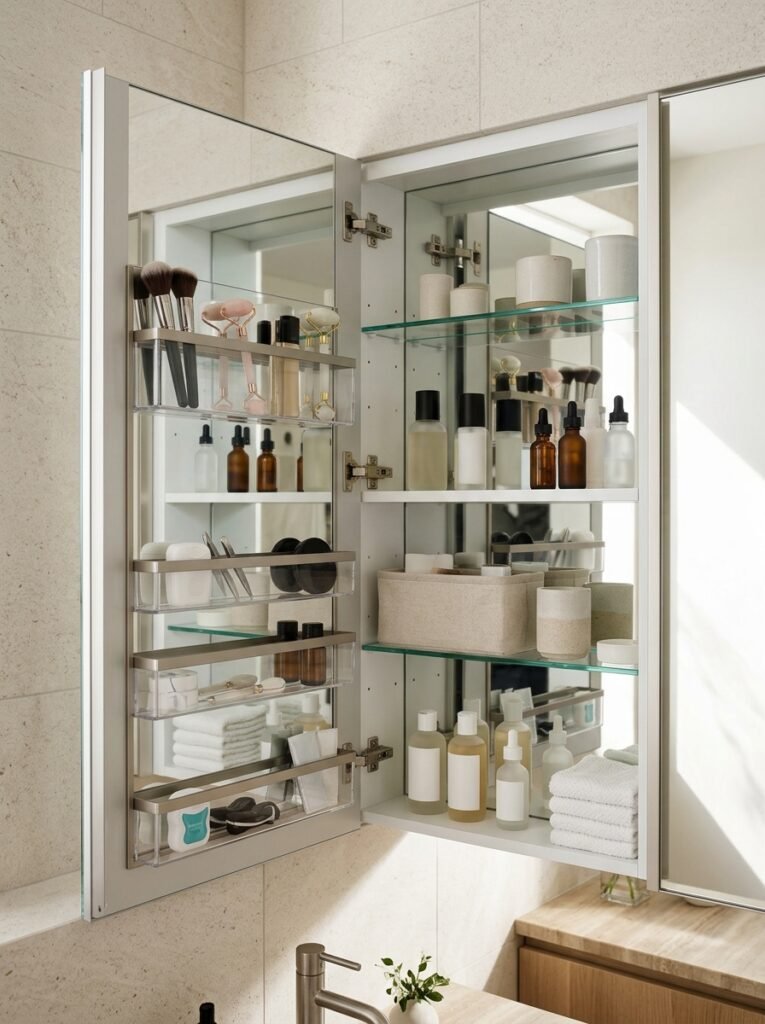
The inside of a medicine cabinet door is often overlooked, even though it can provide valuable additional storage. Slim adhesive organizers or purpose-built door racks can hold lightweight items such as small brushes, floss, skincare tools, or compact accessories. The important detail is to choose organizers that do not interfere with the door closing properly. This idea is particularly useful for tiny bathrooms because it adds storage without taking up additional floor or counter space. Keep the door section reserved for small, lightweight products rather than heavy bottles.
8. Build a Narrow Cabinet Around Vertical Space
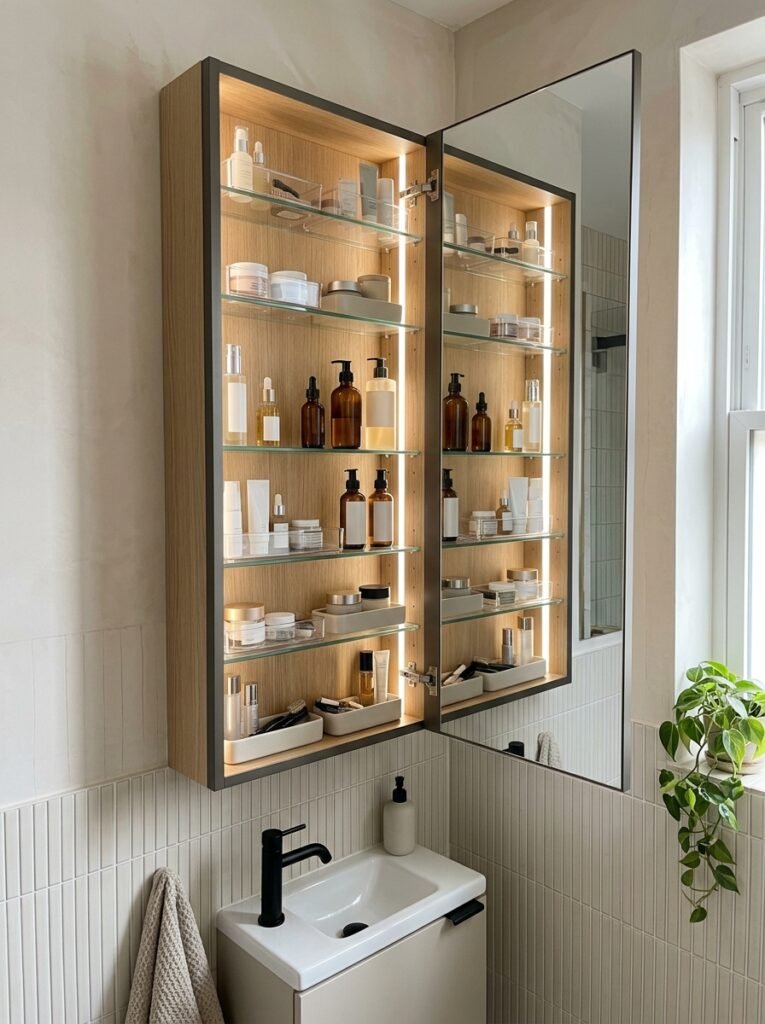
A narrow wall cabinet can still provide excellent storage if its height is used intelligently. Instead of trying to place wide baskets inside a small cabinet, choose slim vertical containers and organize shelves according to product height. Tall bottles can occupy the lower or taller section, while small items can go into compact trays above them. This approach is especially useful for apartment bathrooms where wall space may be available even when floor space is limited. Vertical thinking turns an awkward cabinet into a practical storage feature.
9. Create a Dedicated Makeup Section
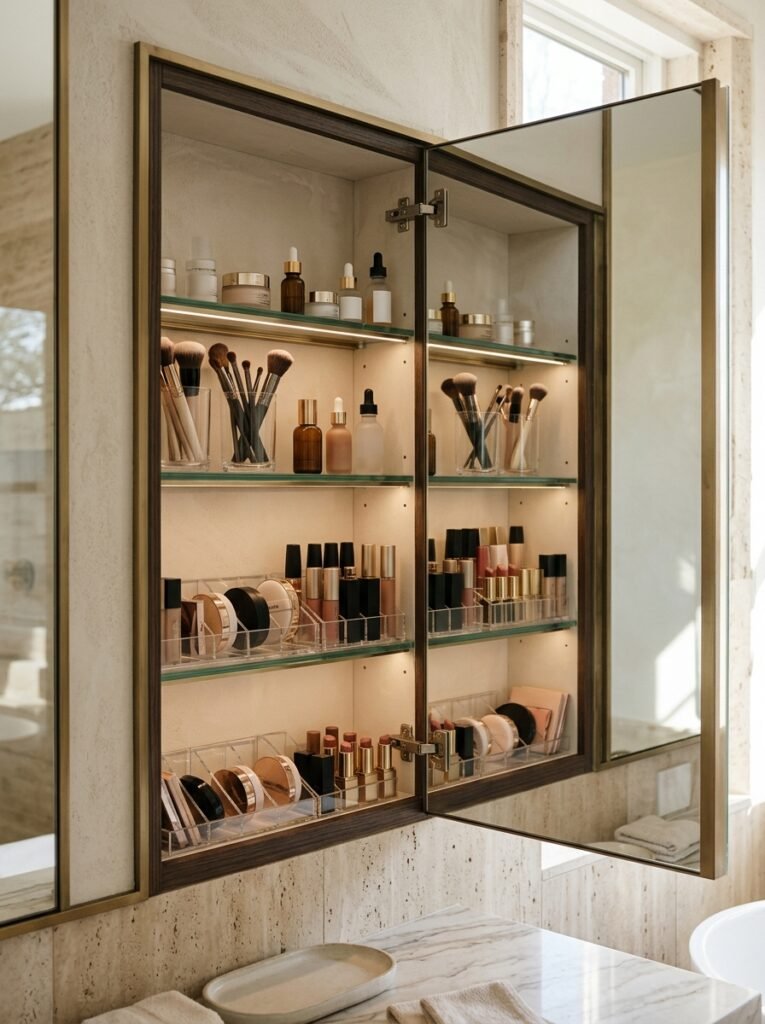
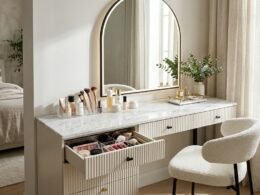
Makeup products can quickly take over a bathroom cabinet because many items are small and come in different shapes. Give makeup its own compact section using shallow trays or small transparent dividers. Keep frequently used products toward the front and occasional-use items farther back. This separation prevents makeup from becoming mixed with first-aid supplies or everyday bathroom products. It also makes cleaning easier because you can remove one tray at a time instead of emptying the entire cabinet whenever you need to wipe the shelves.
10. Separate Herbal and Natural Products
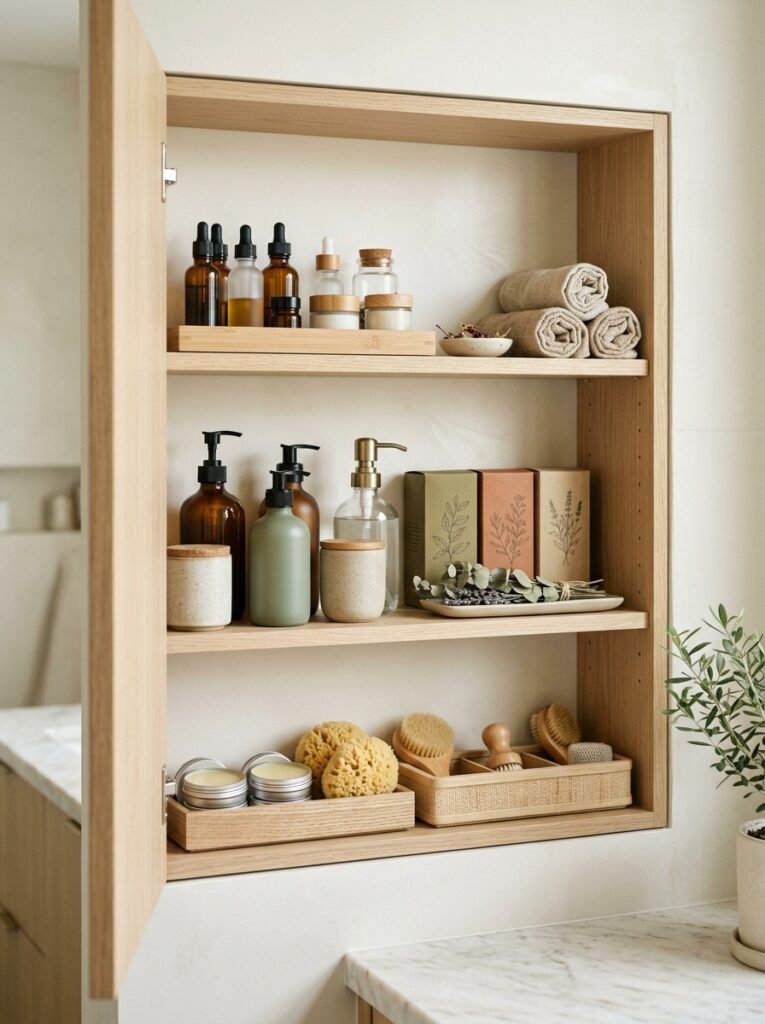
If your household uses herbal, natural, or wellness products, create a dedicated section instead of mixing everything together. Medicine cabinet organization becomes much easier when products are grouped by their actual use and clearly separated from unrelated toiletries. Keep original packaging and follow the manufacturer’s storage instructions, especially for products affected by heat, humidity, or light. A small labeled bin can hold suitable wellness products together while keeping the main cabinet visually calm. This system is useful for households that prefer a mix of conventional personal care and natural products.
11. Use a Corner Cabinet Efficiently
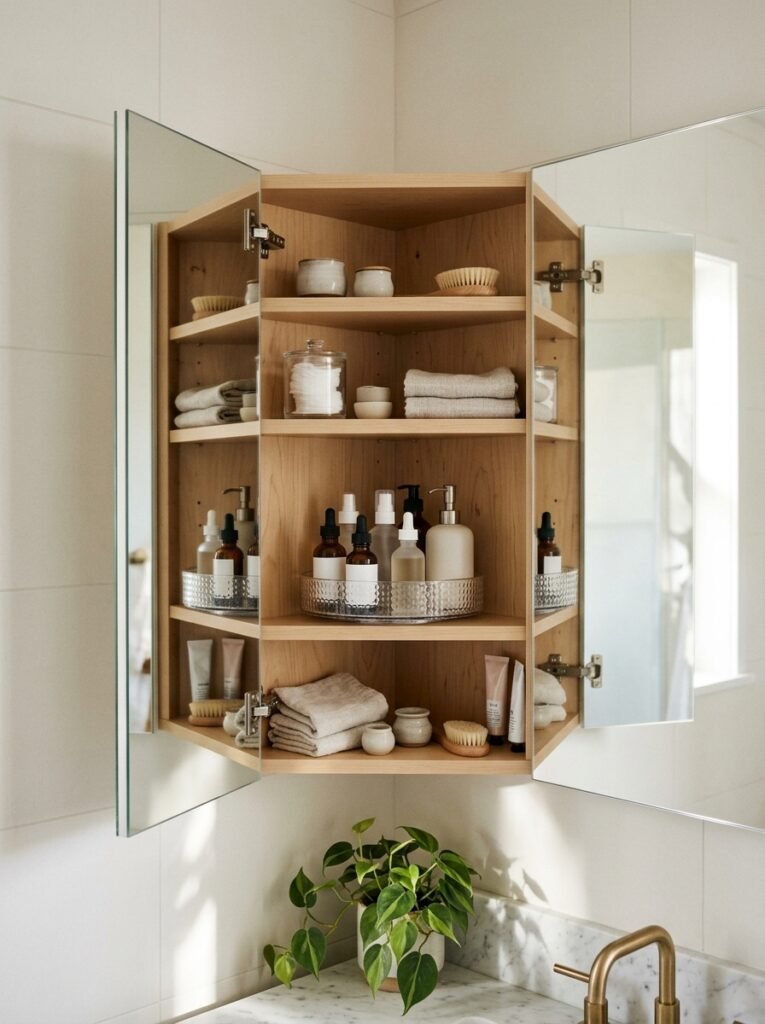
Corner storage can feel awkward because items are harder to reach and shelves may have unusual shapes. Instead of pushing random products into the back corner, use a small rotating organizer or compact tray that allows the contents to move toward you. Reserve the hardest-to-reach section for items you use less often, while keeping daily products in the front. This simple change makes an inconvenient cabinet layout much more practical. It also prevents the common problem of forgetting about products simply because they disappear into a dark corner.
12. Try Budget-Friendly Dollar Store Containers
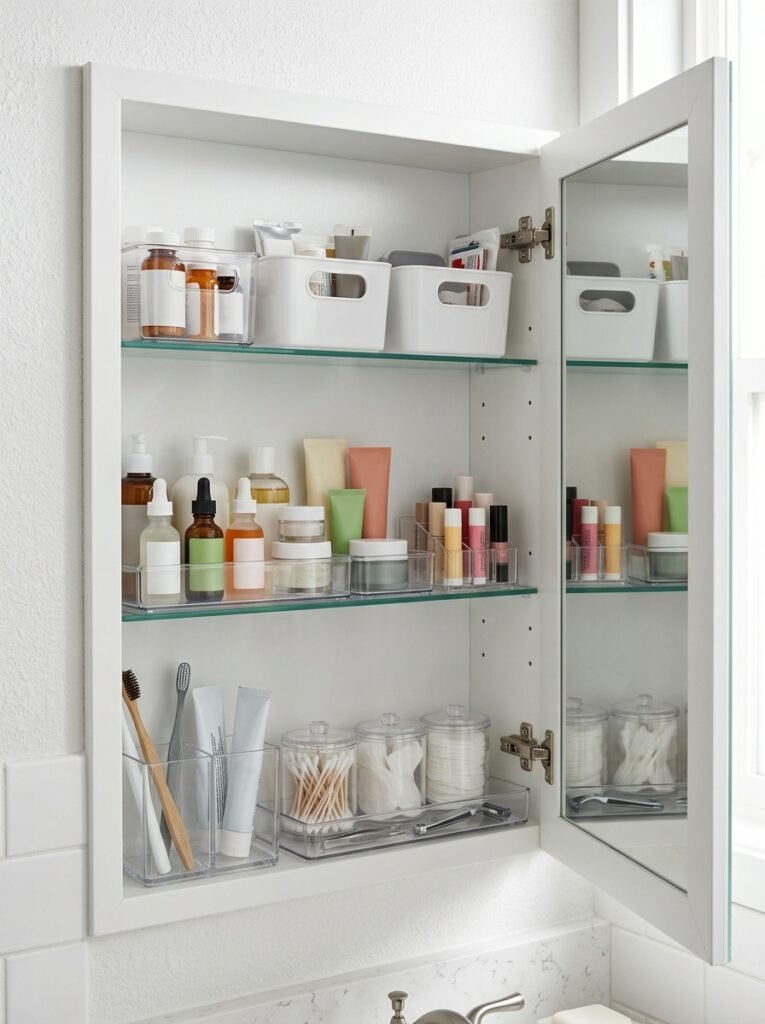
You do not need expensive organizers to create a cleaner cabinet. Budget-friendly containers from a dollar store or similar discount retailer can work well when you choose pieces that match the cabinet dimensions. Look for small clear bins, slim trays, divided boxes, and simple baskets that are easy to clean. The key is to measure the available space before buying anything and avoid collecting containers simply because they look attractive. A few well-chosen inexpensive organizers can often create a much better system than a cabinet filled with mismatched storage products.
13. Design a DIY Recessed Cabinet System
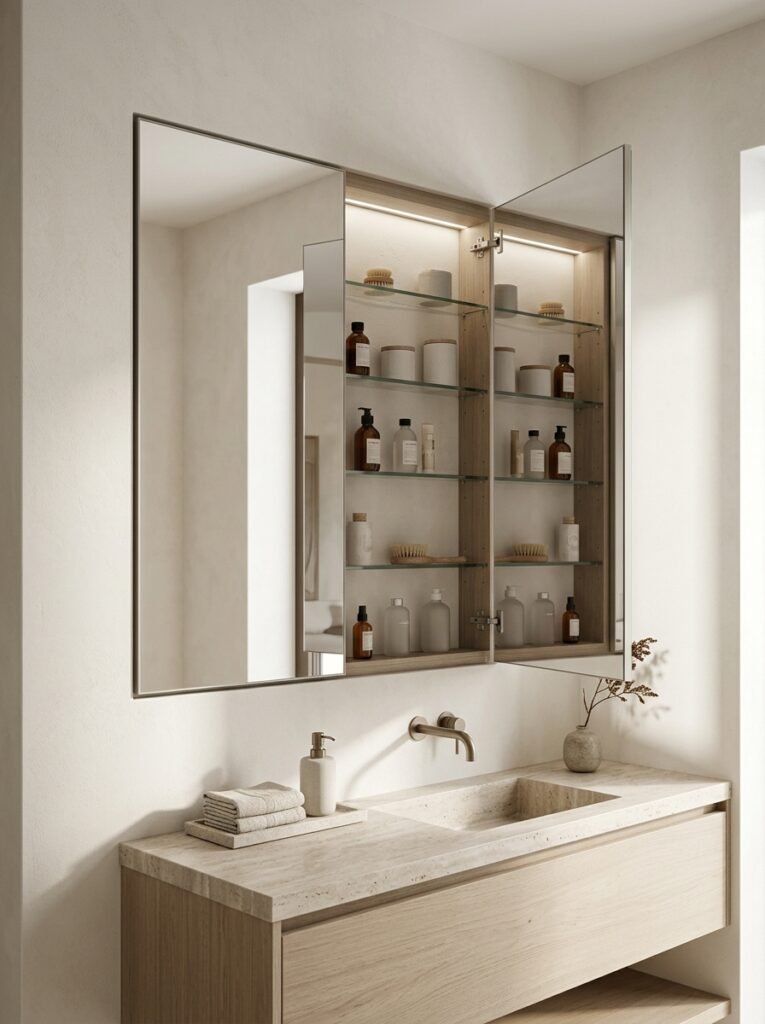
A recessed wall cabinet can create a clean built-in appearance because the storage sits within the wall rather than projecting into the room. If planning a DIY-style upgrade, focus on shelf spacing, door clearance, moisture-resistant materials, and safe installation rather than simply adding more compartments. Existing walls should not be cut without checking for plumbing, wiring, and structural limitations. For renters or anyone who cannot modify the wall, the same visual idea can be recreated with a slim surface-mounted cabinet that uses vertical space efficiently.
14. Make RV and Camper Storage More Secure
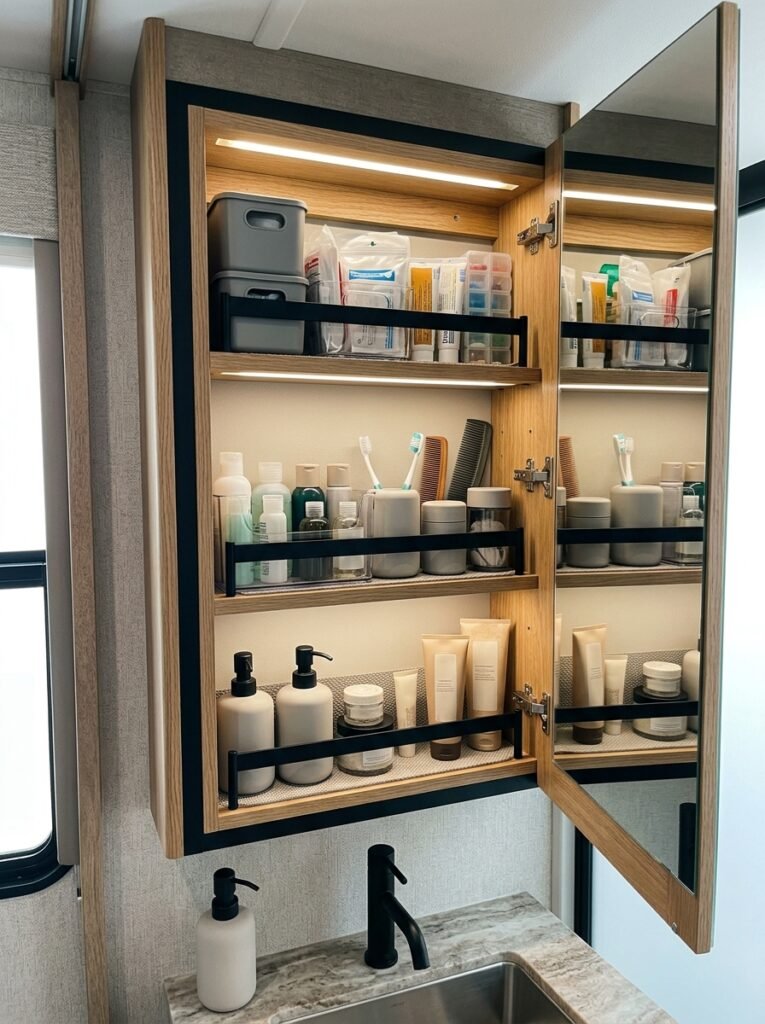
For an RV or camper bathroom, medicine cabinet organization needs to consider movement as well as appearance. Lightweight containers with secure sides can help prevent small products from shifting when the vehicle is traveling. Keep heavier items low and avoid overcrowding shelves, while frequently used products should remain easy to access when parked. Choose organizers that fit tightly enough to reduce movement without making them difficult to remove. A compact vertical layout is usually more useful than large open bins because RV cabinets often have limited depth and width.
15. Use Wall Storage Beside the Cabinet
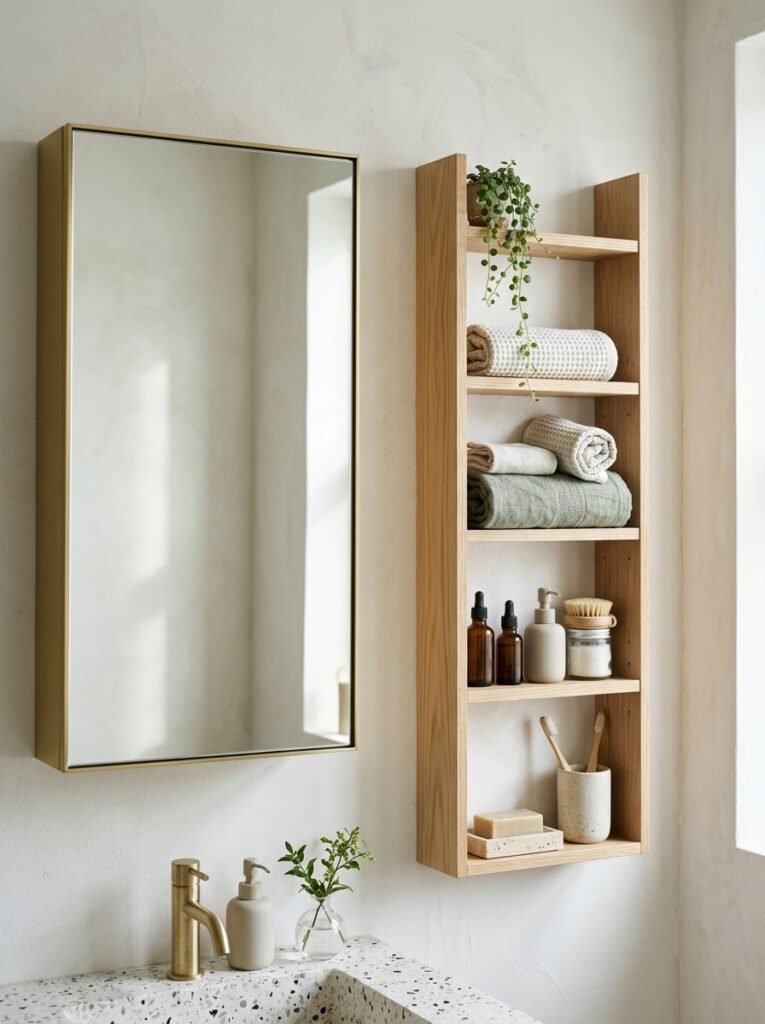
When the cabinet itself is too small, look at the surrounding wall instead of forcing everything inside. A slim wall-mounted organizer can hold lightweight everyday products, while the main cabinet remains reserved for smaller or more private essentials. This approach works especially well in tiny bathrooms where every surface has to perform a useful job. Choose a wall unit that complements the cabinet rather than competing with it, and keep the visible storage simple so the bathroom still feels calm and uncluttered.
16. Use Shallow Bins for First-Aid Supplies
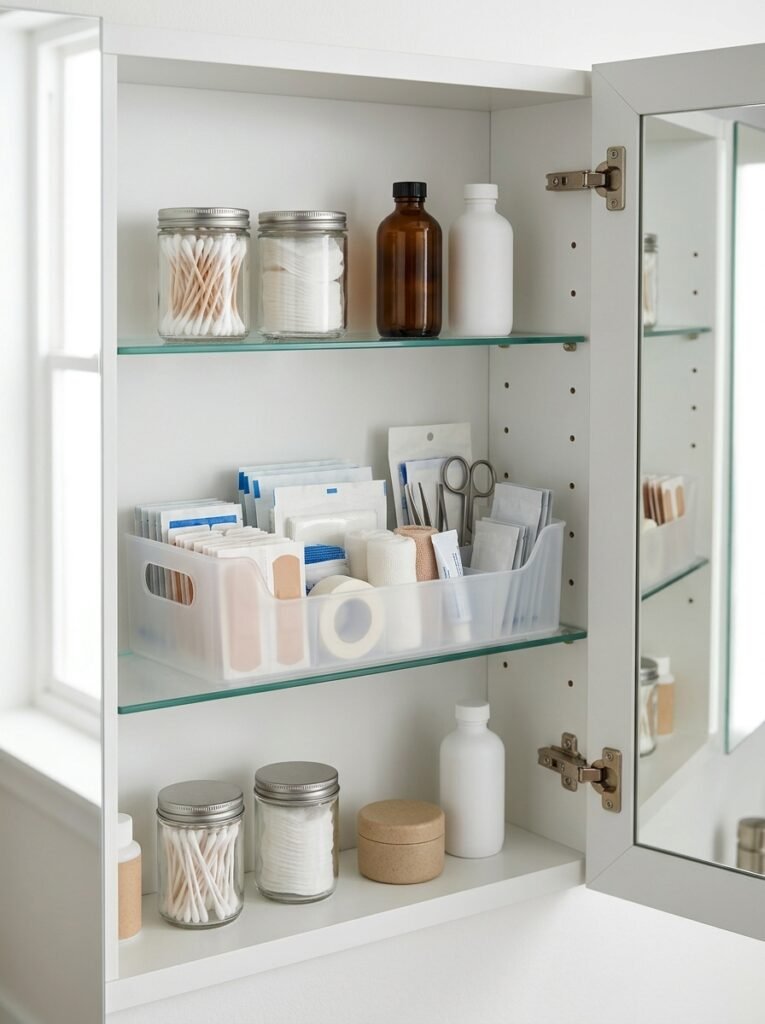
First-aid products are easier to manage when they are kept together in one clearly defined area. A shallow bin can hold bandages, gauze, antiseptic supplies, and other suitable first-aid essentials without allowing them to spread across the cabinet. Choose a container that can be lifted out as one unit when needed, but avoid overfilling it. Keep medications and first-aid products stored according to their individual instructions, since bathrooms can experience heat and humidity that may not be appropriate for every product.
17. Create a Tiny Bathroom Storage Plan
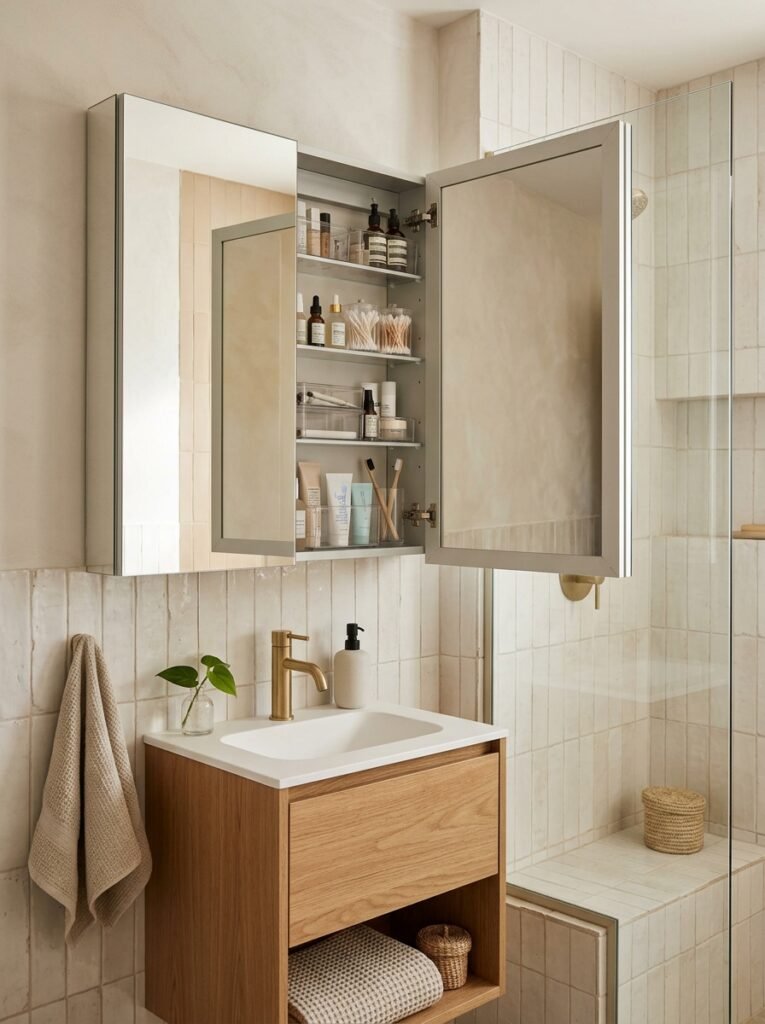
In a tiny bathroom, every product needs a logical home. Instead of trying to fit large containers into a small cabinet, prioritize slim trays, vertical sections, door organizers, and small bins that use otherwise wasted space. Keep only suitable frequently used items inside the cabinet and move bulky backup supplies to another appropriate storage location. This keeps the main cabinet easy to use while preventing visual clutter. A small bathroom does not necessarily need more storage; it often needs better decisions about what belongs in the storage it already has.
18. Keep a Simple Weekly Reset
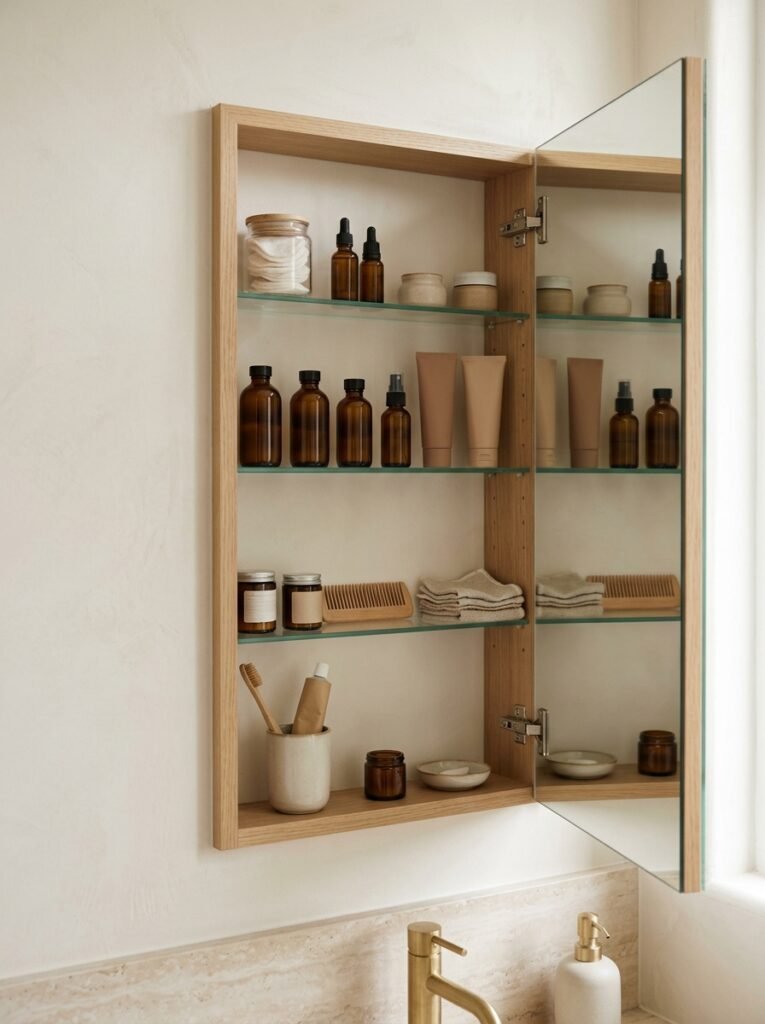
The most beautiful cabinet will become messy if there is no simple maintenance habit. Once a week, spend a few minutes returning products to their categories, wiping suitable surfaces, checking for empty packaging, and noticing anything that has been moved to the wrong section. You do not need to completely reorganize the cabinet every time. A small reset is enough to keep the system working. This is especially valuable for families because regular maintenance prevents small amounts of clutter from turning into a complete cabinet overhaul.
Final Thoughts
Good medicine cabinet organization should make your bathroom easier to use, not simply make it look perfect for a photograph. Start with categories, remove unnecessary clutter, choose storage that matches the cabinet’s actual dimensions, and keep everyday products within easy reach. Whether you are organizing a family bathroom, a tiny apartment, an RV, or a recessed wall cabinet, the most effective system is the one that feels natural enough to maintain. The best medicine cabinet organization systems also leave a little room for change. Your household’s products, routines, and storage needs will evolve, so avoid filling every shelf completely. A little breathing room makes it easier to add something new without immediately creating another mess.