


This post may contain affiliate links. Please read my disclosure policy.
In This Article Show
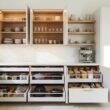
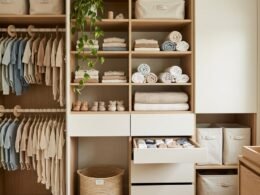
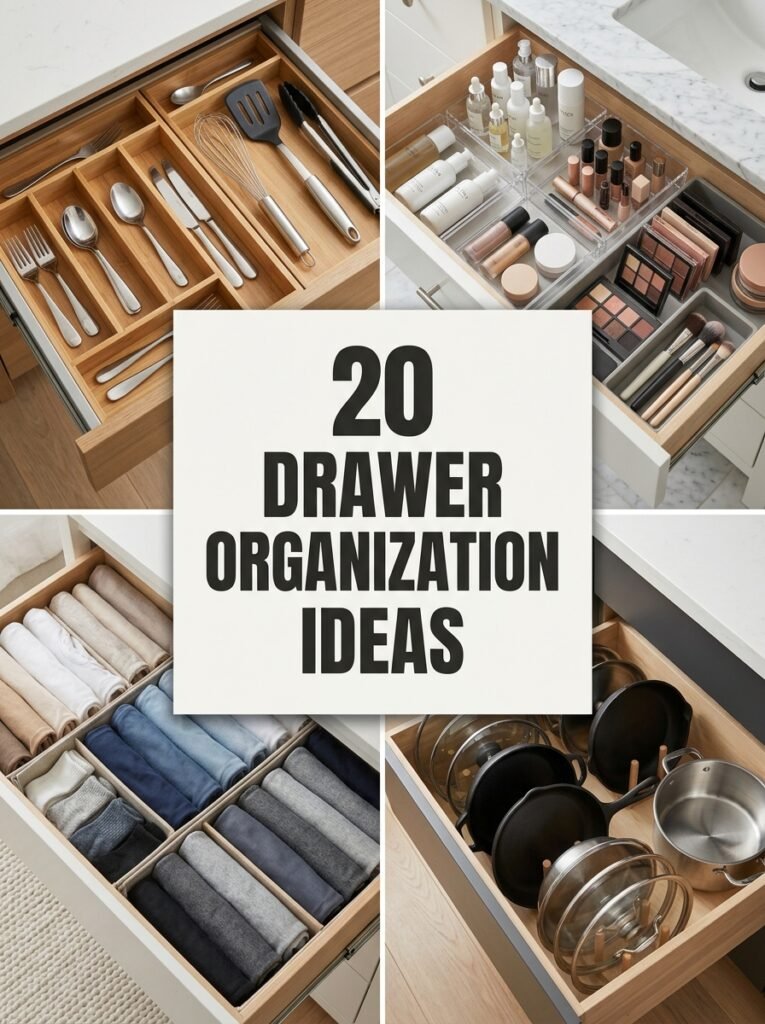
Drawers are supposed to make storage easier, but without a simple system they can quickly become one of the messiest parts of a home. Small items get mixed together, useful things disappear underneath other objects, and a drawer that once felt convenient becomes difficult to use. Good drawer organization is about creating small, clear zones inside the storage you already have. A kitchen drawer can be divided for cutlery and utensils, a bathroom drawer can separate makeup and skincare, and a dresser drawer can keep clothes and socks easy to find. Even a deep drawer can become practical when its contents are arranged by size, frequency, and purpose. You do not need expensive organizers for every drawer. Sometimes a few adjustable dividers, shallow bins, or small containers are enough to completely change how a drawer works. The best system is one that lets you see what you own and return each item to its proper place without effort.
1. Divide Kitchen Cutlery Into Clear Sections
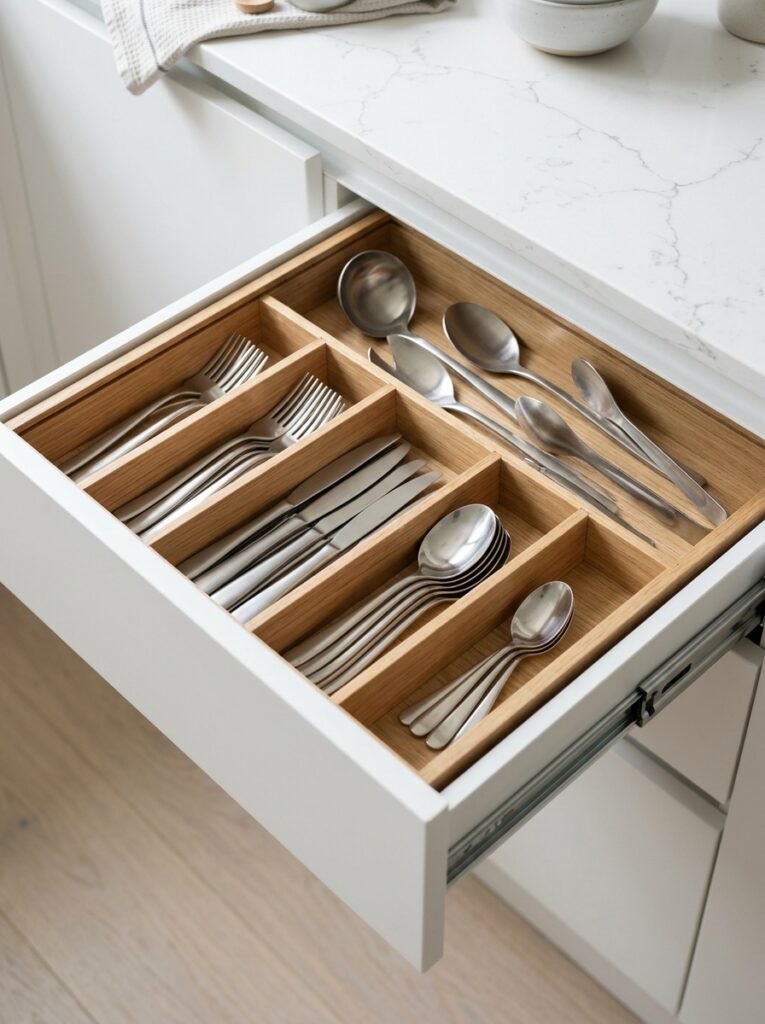
A cutlery drawer becomes much easier to use when knives, forks, spoons, and serving pieces each have a dedicated section. Instead of allowing everything to mix together, use an adjustable tray that fits the drawer dimensions. Keep everyday cutlery toward the front and less frequently used serving pieces in a separate section. This prevents larger utensils from taking over the drawer and makes it much easier to grab exactly what you need while cooking or setting the table.
2. Create a Dedicated Utensil Drawer
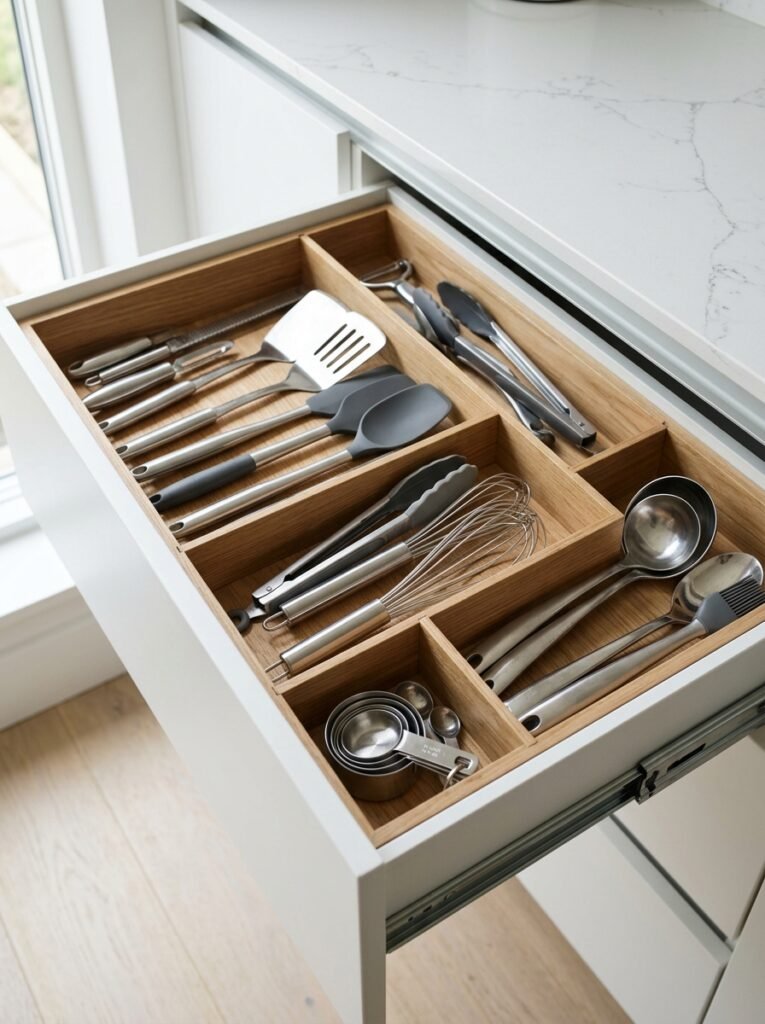
Cooking utensils such as spatulas, tongs, ladles, whisks, and measuring tools can quickly create a messy drawer because they come in different shapes and sizes. Give them a dedicated drawer instead of mixing them with cutlery. Arrange longer utensils along one side and smaller tools in separate sections. If the drawer is deep, consider using a removable organizer with several compartments so you can lift out one category when necessary.
3. Organize a Junk Drawer by Category
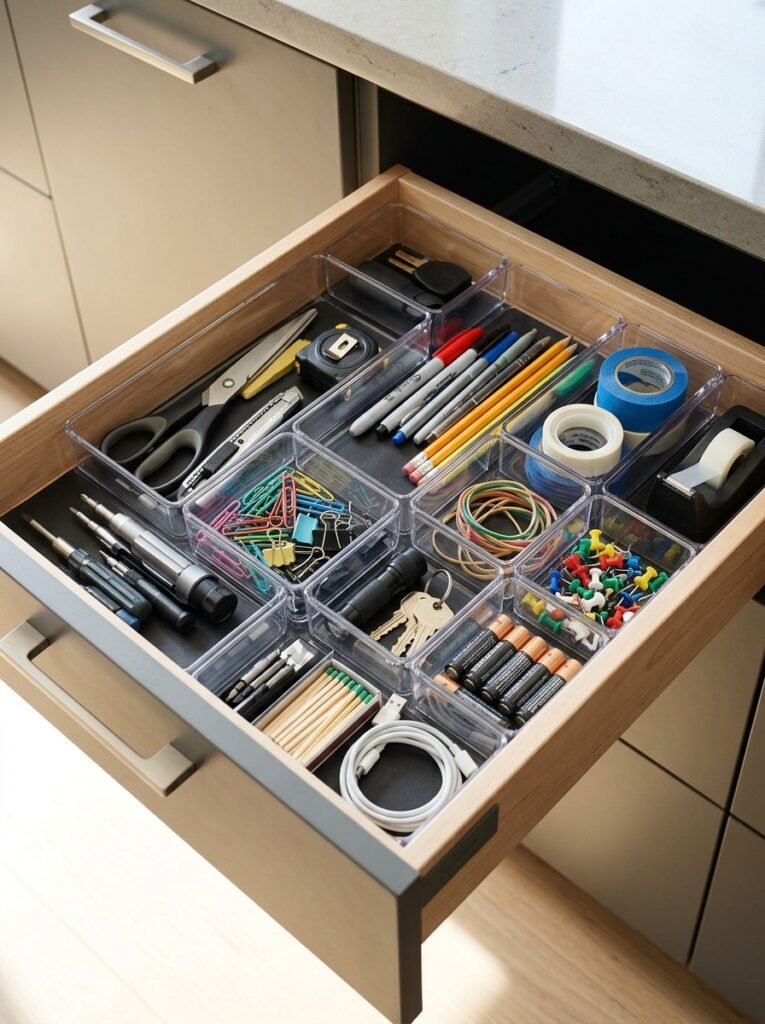
A junk drawer can be useful when it is organized intentionally. Instead of allowing batteries, scissors, tape, pens, clips, small tools, and random objects to become one pile, create small compartments for each category. Do not try to give every tiny object its own section. Group similar items together and leave a little empty space so new items can be added without immediately creating another mess. Review the drawer occasionally and remove objects that do not belong there.
4. Create a Bathroom Skincare Drawer
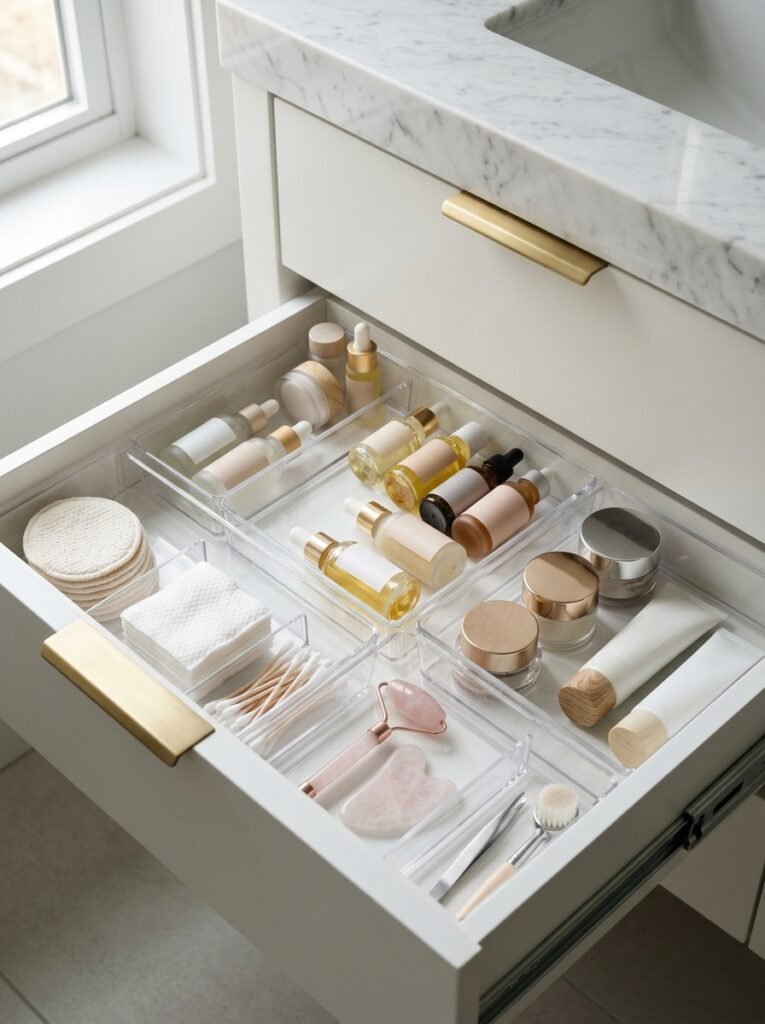
Bathroom drawers can become crowded with skincare bottles, creams, cleansers, cotton products, and small beauty tools. Separate everyday skincare from backup products so the items you use each morning and evening remain easy to reach. Shallow acrylic bins or small removable trays work well because you can lift out a whole category when cleaning. Keep bottles upright and avoid overcrowding the drawer, especially around products that could leak.
5. Make a Makeup Drawer That Is Easy to See
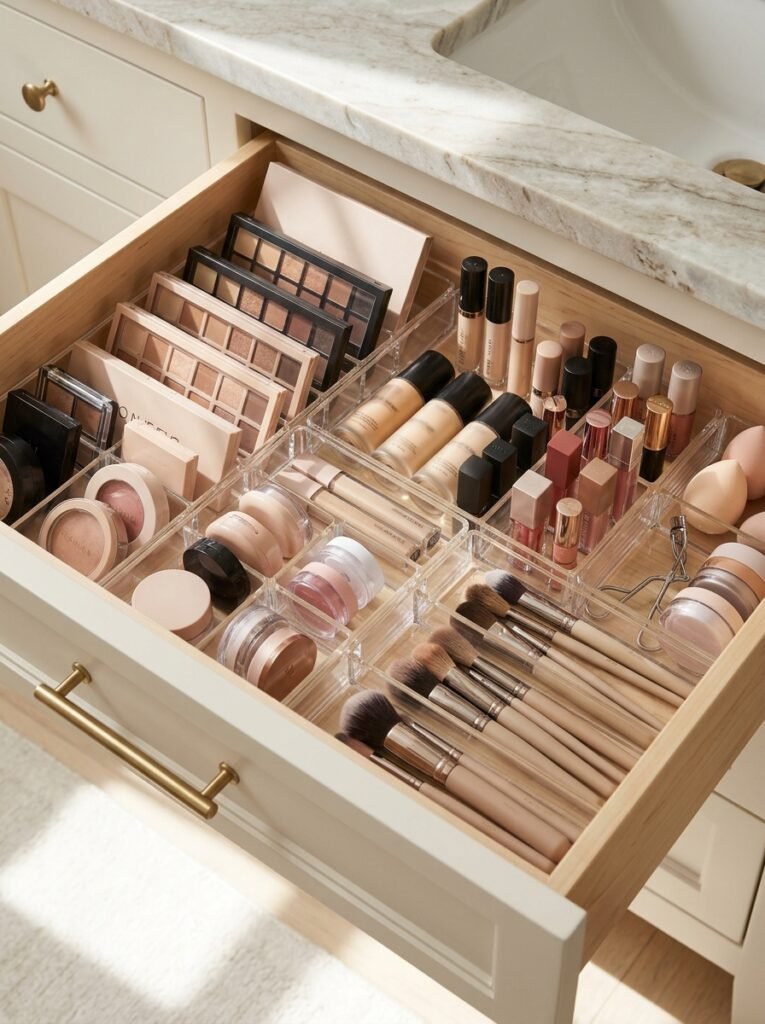
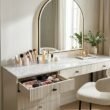
Makeup is often difficult to organize because products vary greatly in shape and size. Use shallow compartments so palettes, lip products, brushes, and small cosmetics do not become buried underneath one another. Keep the products you use every day toward the front and occasional makeup toward the back. Clear organizers are particularly useful because they let you see several products at once instead of opening multiple containers.
6. Organize a Dresser Drawer by Clothing Type
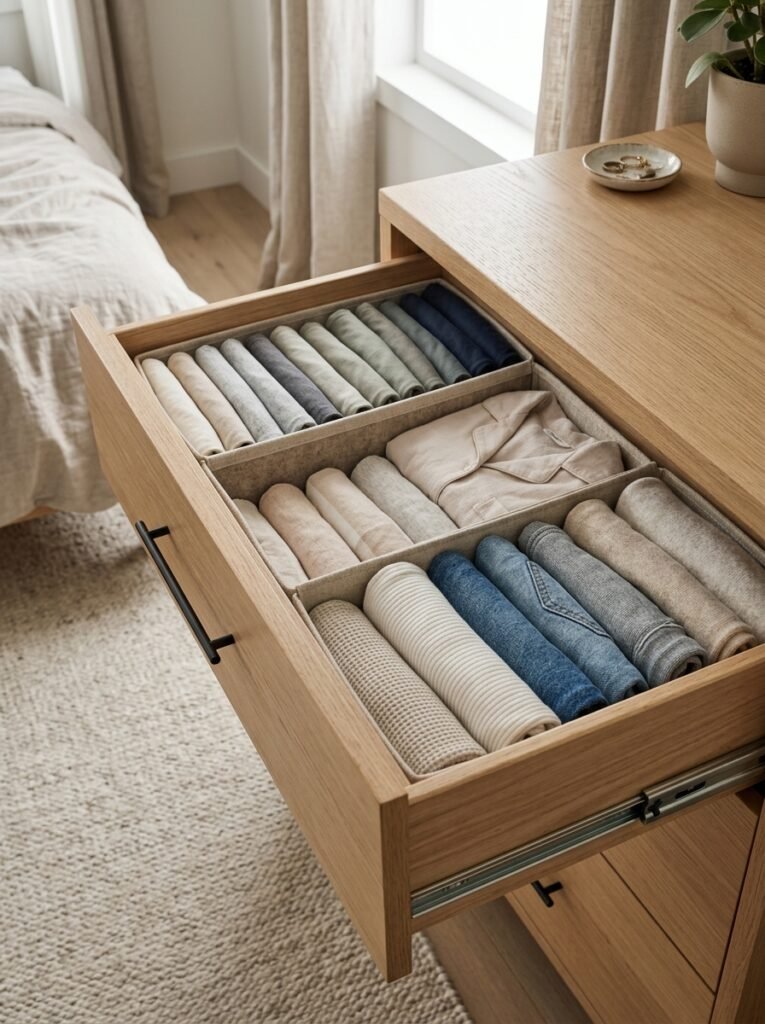
Dresser drawers become much easier to maintain when clothes are grouped by type rather than simply folded and stacked together. Keep T-shirts, sleepwear, underwear, or workout clothing in separate drawers or sections. For smaller garments, use vertical folding so you can see each item without lifting an entire stack. This is especially helpful when several similar pieces are stored together because you can choose what you need without disturbing the rest.
7. Use a Dedicated Sock Drawer
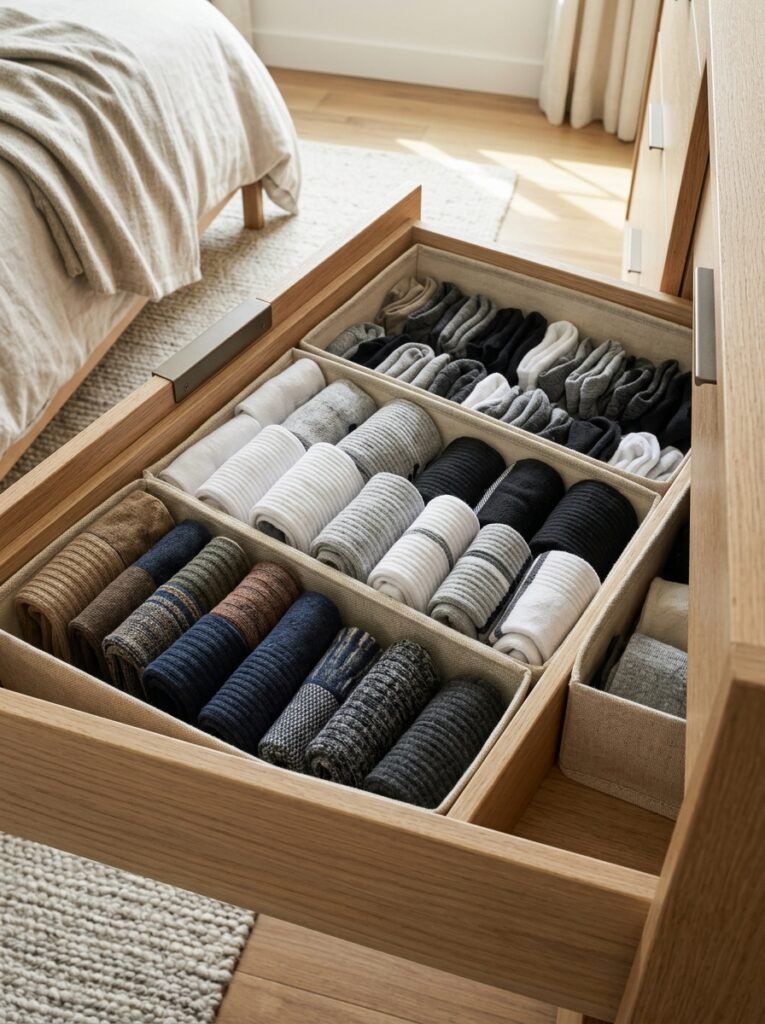
Socks are small enough to become disorganized very quickly. Keep them together in a dedicated drawer and separate everyday socks, athletic socks, and specialty pairs if needed. Avoid stuffing socks into one large pile because it makes individual pairs difficult to find. Small compartments can keep categories separate, while a simple folding or rolling method can make better use of the available drawer space.
8. Create a Jewelry Drawer
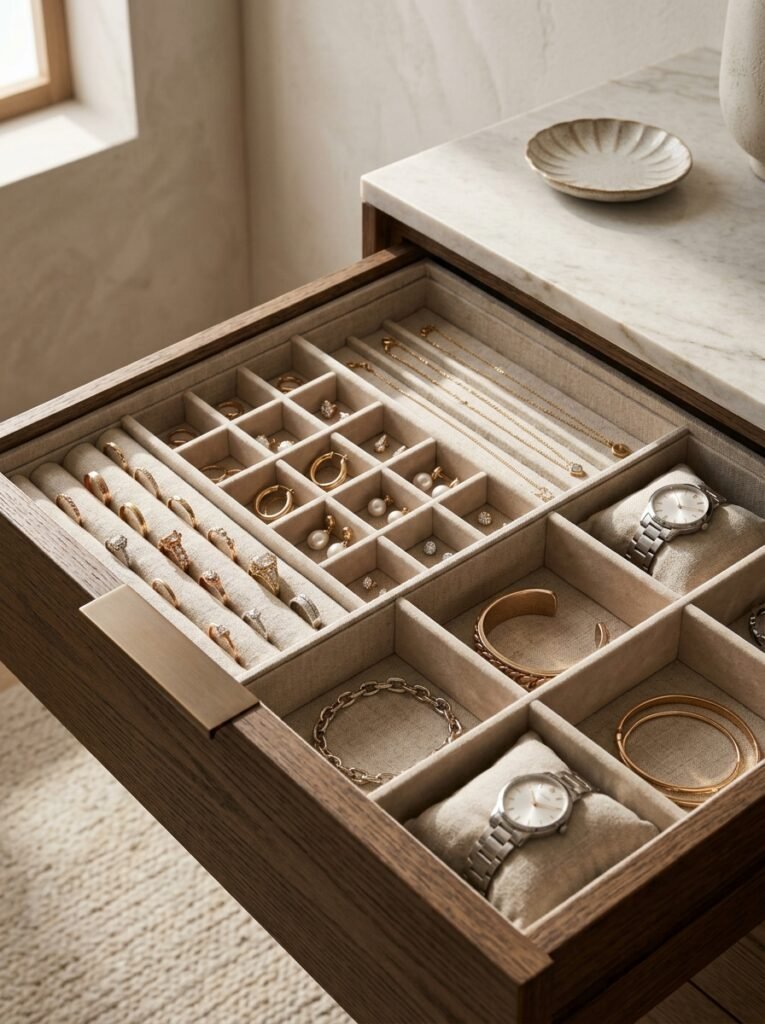
Jewelry needs small compartments because chains, earrings, rings, and bracelets can easily become tangled when stored together. Use a drawer insert designed with separate shallow sections, or combine small trays to create your own system. Keep frequently worn pieces in the easiest-to-reach sections and special pieces in protected compartments. A soft-lined organizer can also help keep delicate items separated and easier to identify.
9. Organize a Nightstand Drawer
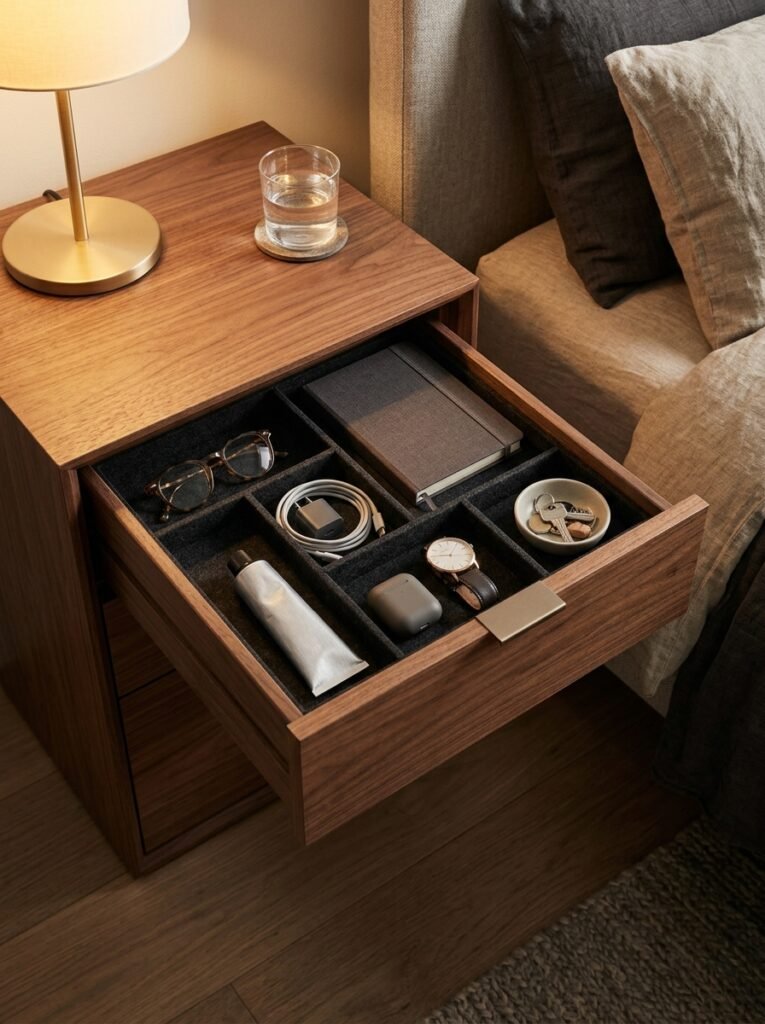
A nightstand drawer often becomes a catch-all for everything you might need before bed. Keep only useful nighttime items there, such as reading glasses, a journal, charging accessories, hand cream, tissues, or a small personal item. Use a few small compartments instead of filling the entire drawer with random objects. This keeps the nightstand calm and makes it easier to find something when the room is dark.
10. Use Deep Kitchen Drawers for Pots and Pans
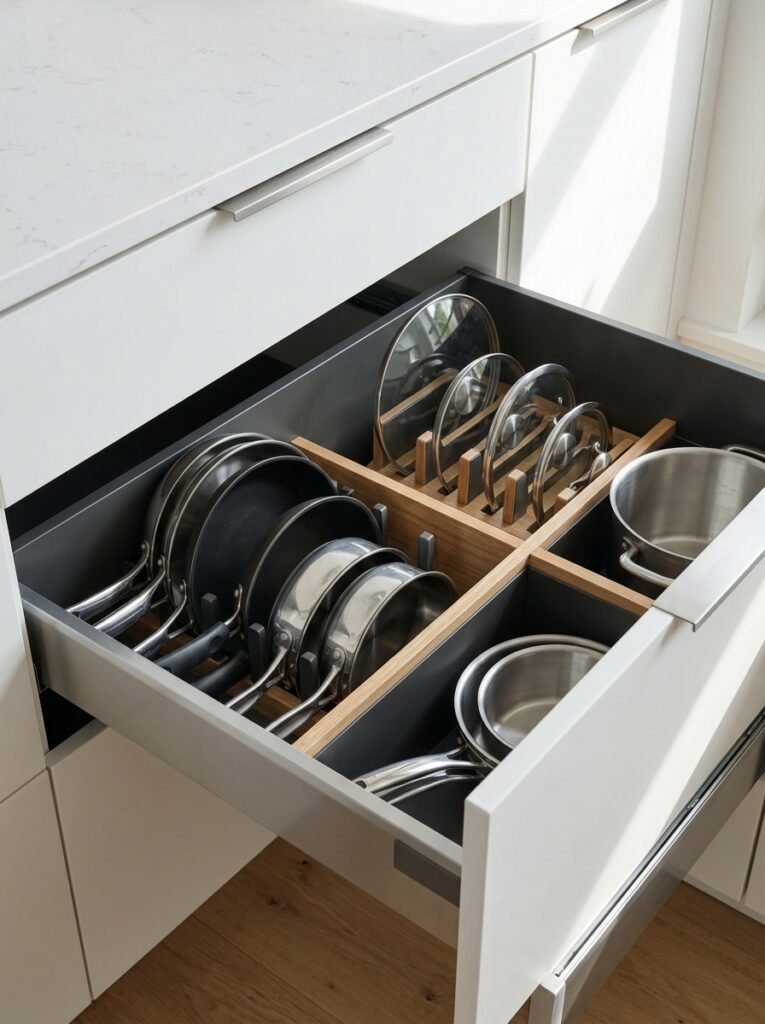
Deep kitchen drawers are excellent for cookware because they allow you to pull the entire storage area forward. Instead of creating a tall unstable pile, place pans vertically where possible or use dividers to separate different sizes. Keep the cookware you use most frequently toward the front. Larger pots can go toward the back or into a separate section, while lids should have their own area so they do not slide around underneath the cookware.
11. Create a Coffee Drawer
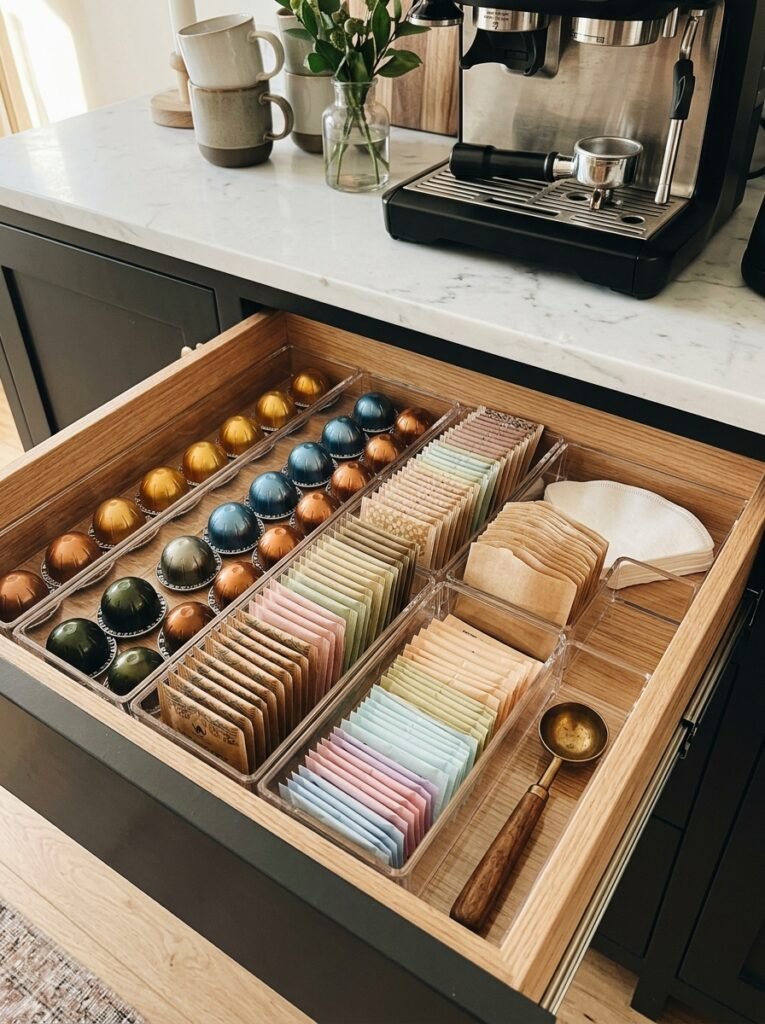
If you have a daily coffee routine, a dedicated drawer can keep coffee supplies together without taking over the countertop. Organize coffee pods, filters, measuring spoons, tea bags, sweeteners, and small accessories into separate sections. Keep the drawer close to the coffee machine so the entire routine flows naturally. You can also create a combined coffee-and-tea drawer if your household uses both regularly.
12. Organize a Tea Drawer
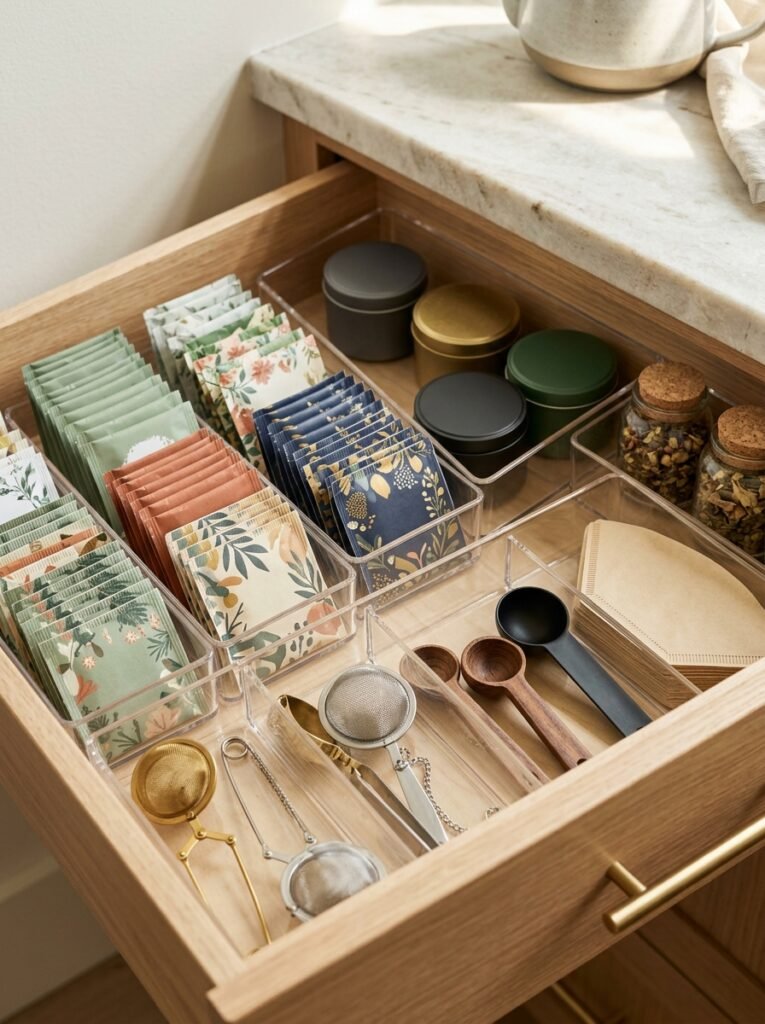
Tea bags can easily become scattered across a cabinet or drawer. A dedicated tea drawer with shallow compartments makes it easier to see different flavors and quickly choose what you want. Keep the drawer away from moisture and excessive heat, and use removable dividers so categories can change as your collection changes. A tea drawer can also include small accessories such as tea infusers or measuring spoons.
13. Make a Snack Drawer for Easy Access
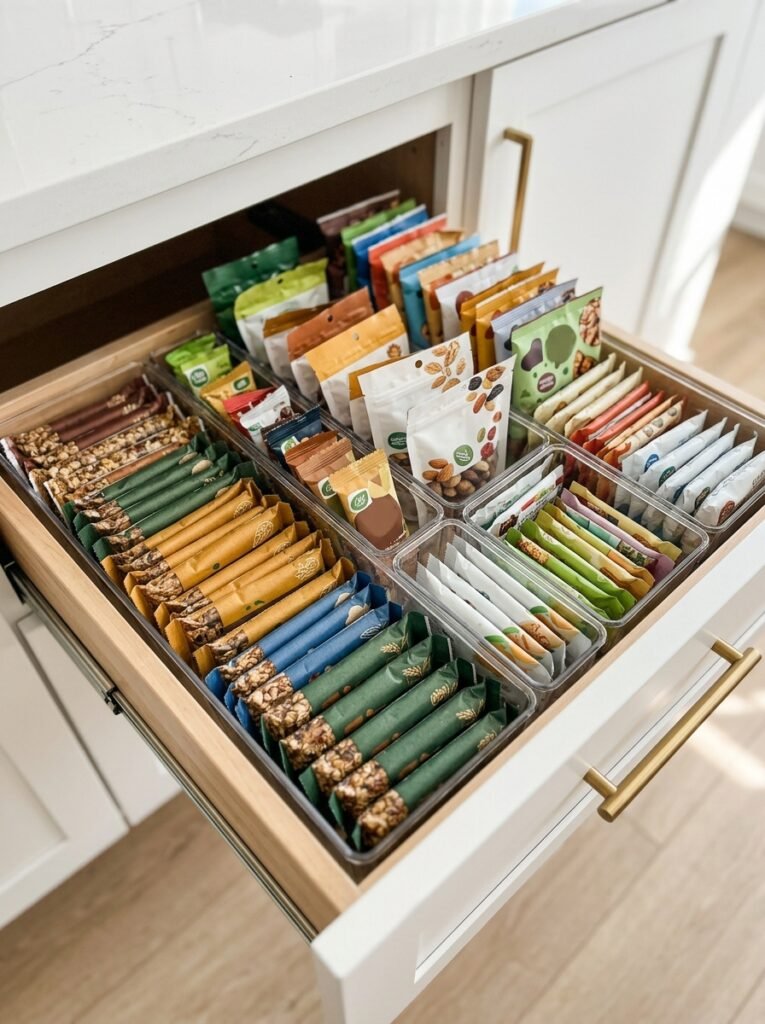
A snack drawer can be especially useful for busy families. Instead of keeping small snack packets scattered throughout cabinets, place suitable everyday snacks into one easy-to-reach drawer. Use small bins to separate categories and avoid filling the drawer too tightly. Keeping snacks visible makes it easier to notice what needs replacing and prevents unopened packages from disappearing behind larger foods.
14. Create a Hair Care Drawer
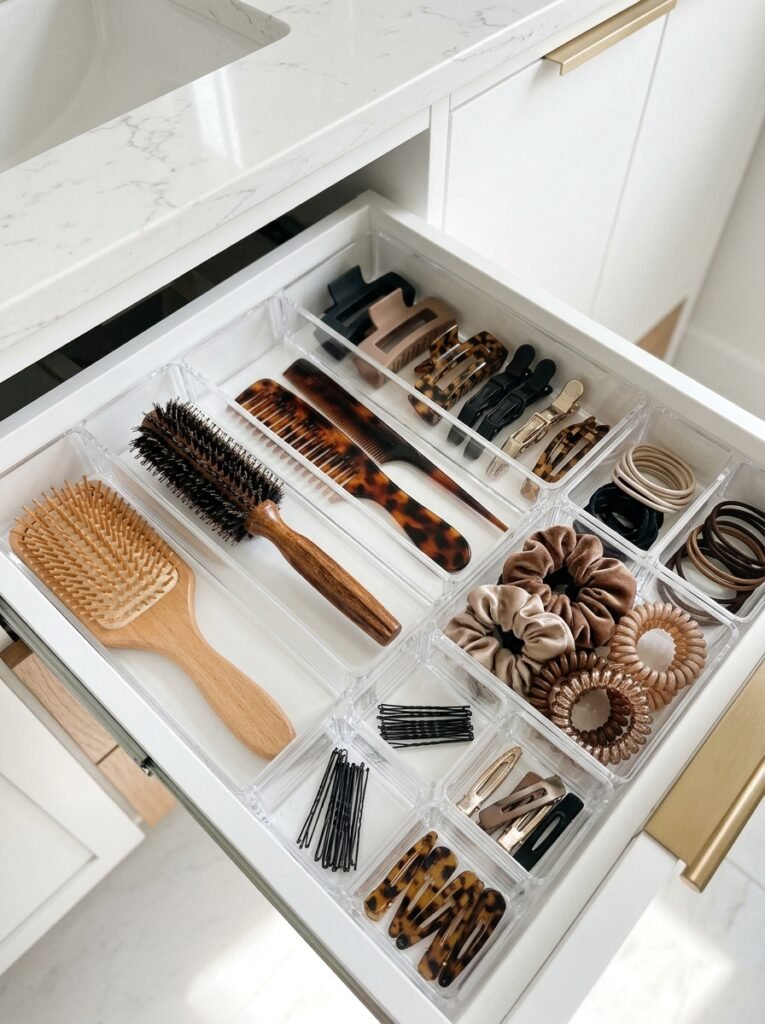
Hair accessories can quickly become tangled when brushes, clips, hair ties, combs, and styling tools are stored together. Divide the drawer into sections based on the type of item. Keep everyday hair ties and clips in small compartments, while larger brushes and combs can have a longer section. If you store heated styling tools, make sure they are fully cool before putting them away and keep them in a suitable storage area.
15. Use a Medicine Drawer Carefully
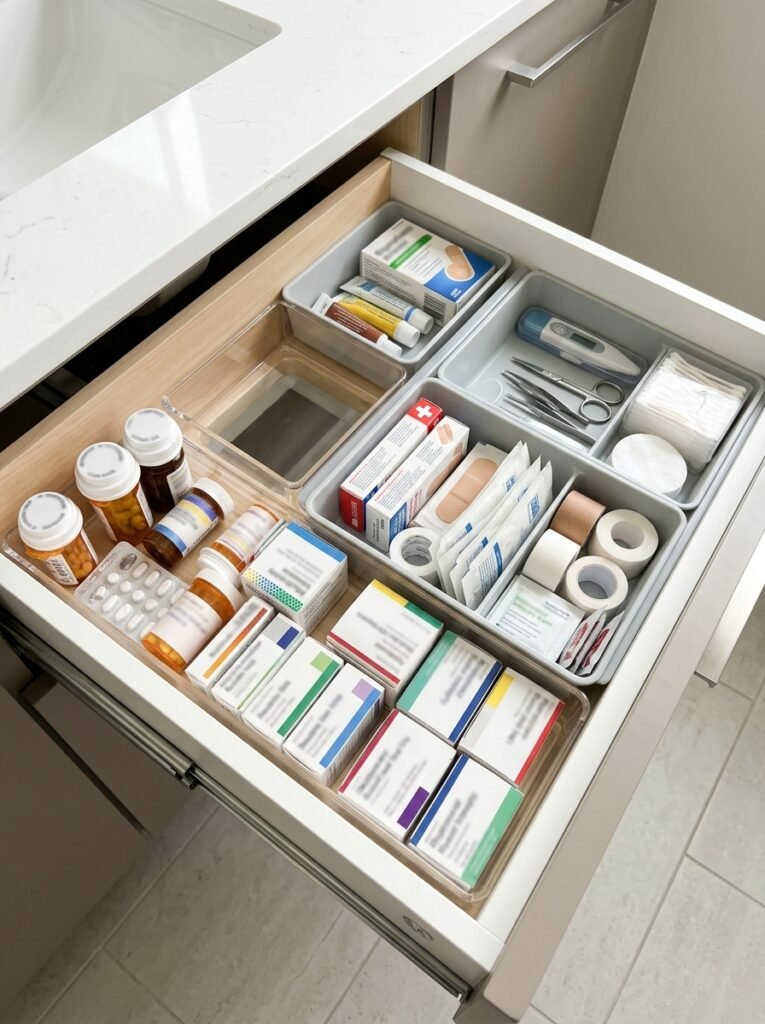
A dedicated medicine drawer can keep everyday health supplies together, but safety should come first. Keep medicines in their original packaging where practical, follow storage instructions on the labels, and place the drawer somewhere inaccessible to children. Separate basic categories so you can quickly locate what you need without mixing everything together. Regularly check expiration dates and dispose of expired medicines according to local guidance rather than keeping them indefinitely.
16. Organize a Craft Drawer
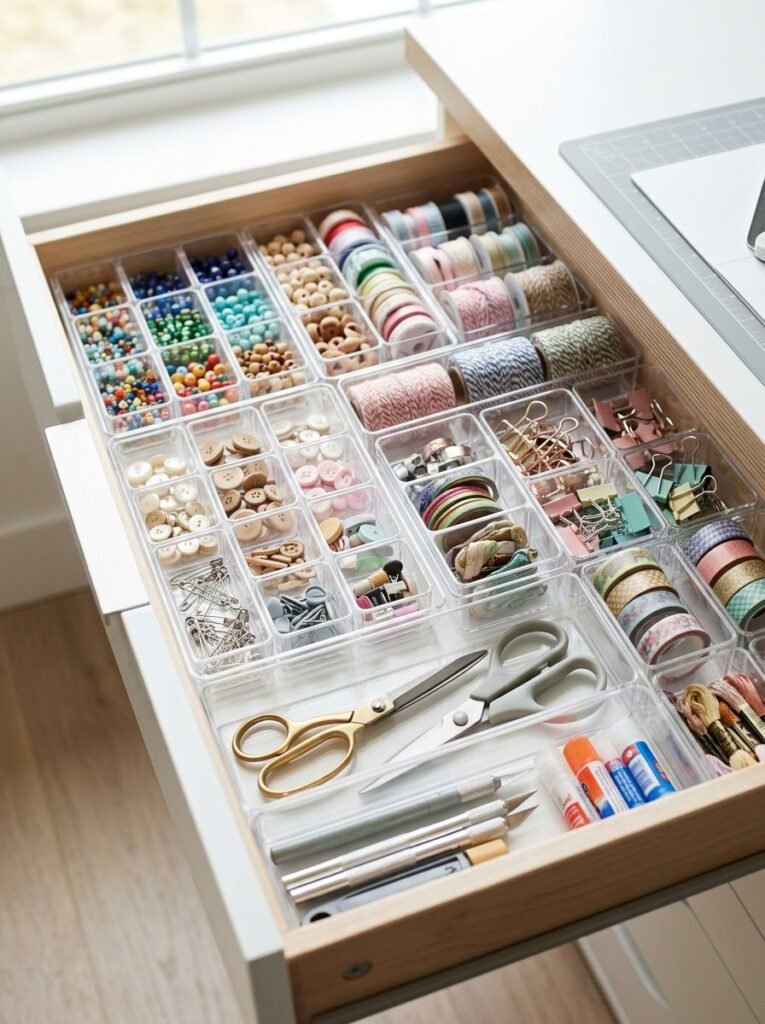
Craft supplies can be difficult to organize because they include many tiny objects. Use small removable containers for beads, clips, ribbons, buttons, adhesives, and other loose supplies. Instead of creating dozens of tiny compartments, group supplies by project type or frequency of use. Clear containers are helpful because you can identify the contents without opening every box.
17. Create a Baking Tool Drawer
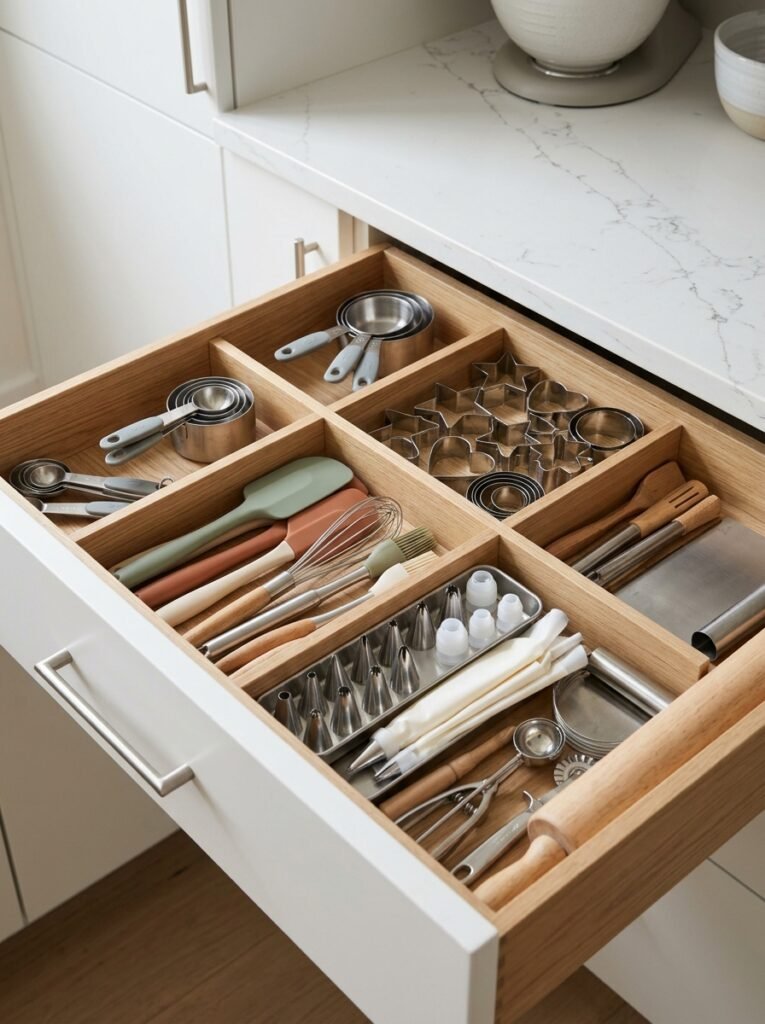
A baking drawer can hold measuring cups, measuring spoons, piping tools, cookie cutters, spatulas, and other small baking accessories. Keeping these tools together means you do not have to search through several kitchen cabinets whenever you bake. Use longer compartments for rolling pins or larger tools if the drawer is deep enough, while small dividers can keep measuring tools grouped by type. Leave enough room to remove items without having to unpack the entire drawer.
18. Organize a Freezer Drawer by Food Category
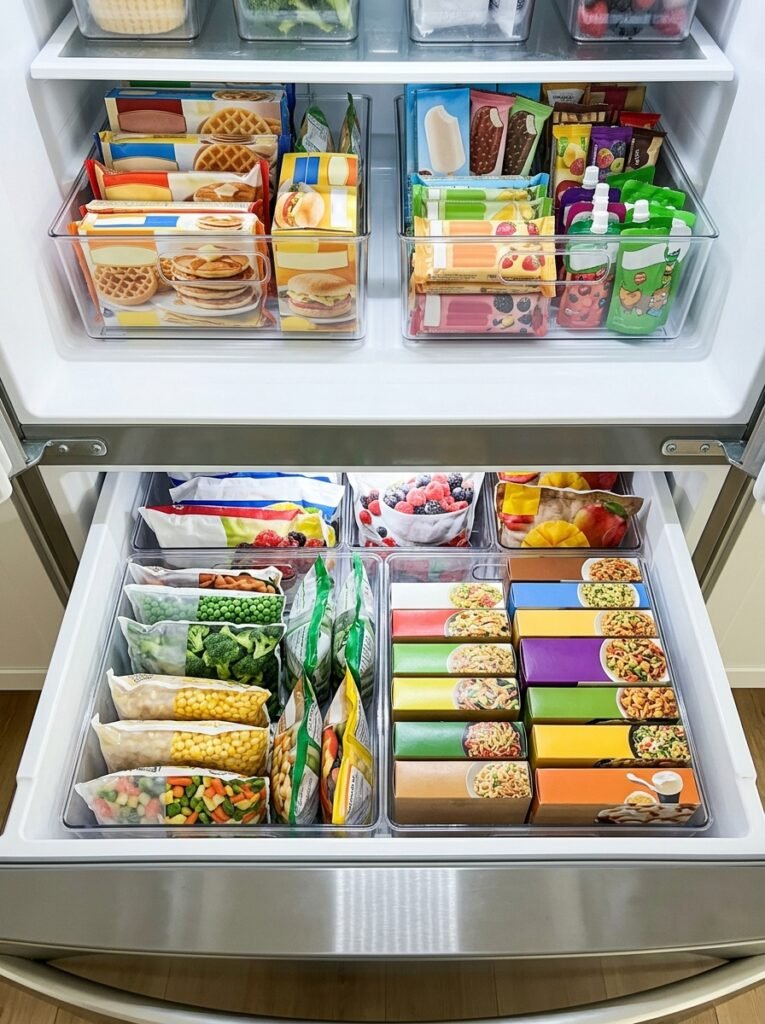
Freezer drawers can become difficult to manage because frozen foods are often stacked on top of one another. Use freezer-safe bins to create broad categories such as vegetables, frozen meals, breakfast foods, meats, or snacks. Keep newer products behind older ones when practical so older food is easier to use first. Avoid overfilling the drawer because air circulation and visibility can become a problem when everything is tightly packed.
19. Use IKEA ALEX-Style Drawer Storage
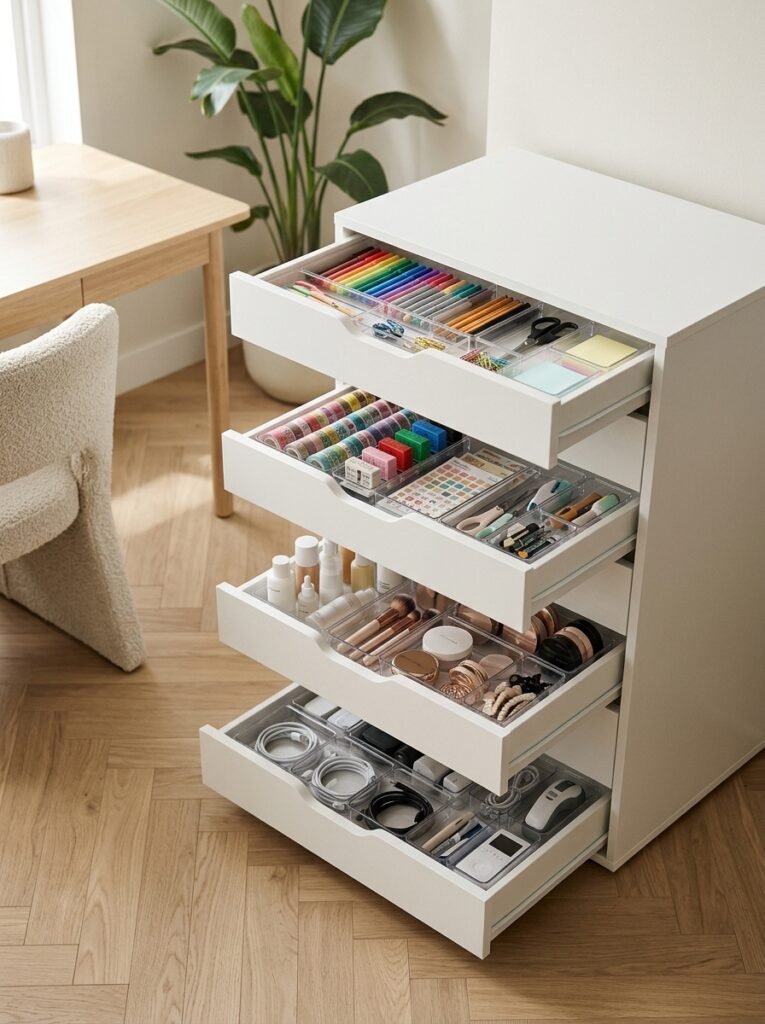
ALEX-style drawer units can be useful for home offices, craft rooms, beauty storage, and bedrooms because their shallow drawers are well suited to small items. The important part is adapting each drawer to a specific category rather than using the unit as one large catch-all. For example, one drawer can hold stationery, another craft supplies, another beauty products, and another accessories. Small removable trays make it easier to clean and reorganize the contents later.
20. Give Every Drawer a Simple Purpose
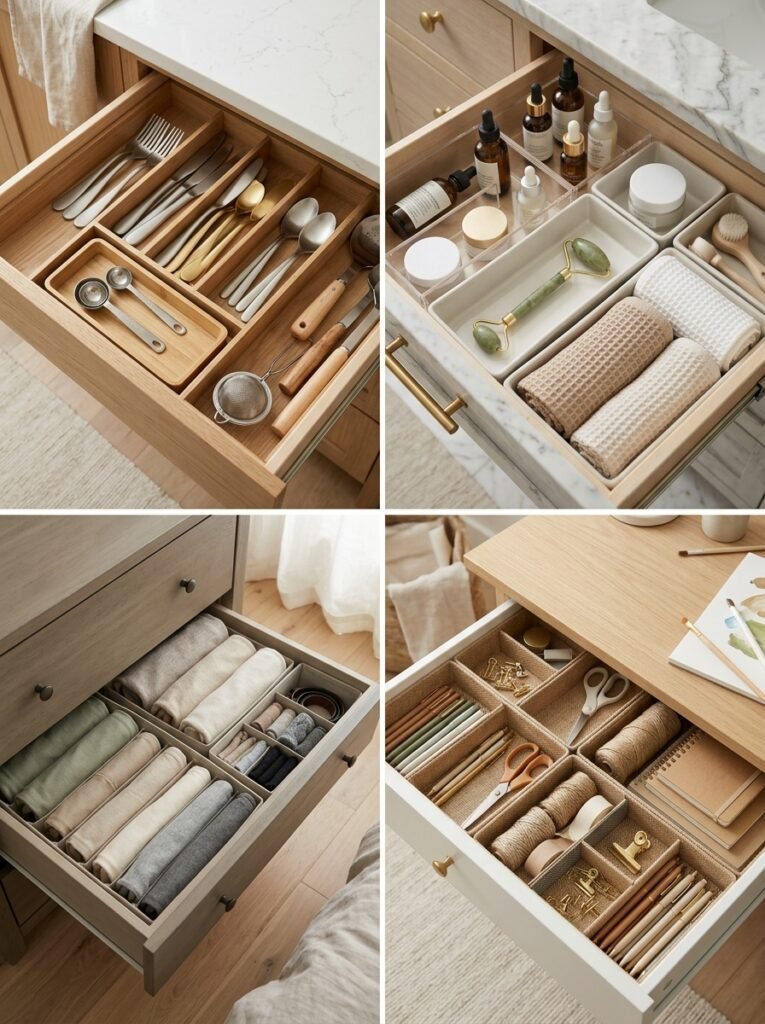
The most effective drawer organization system is not necessarily the one with the most dividers. It is the one where you immediately know what belongs in each drawer. Try assigning one main purpose to every drawer and avoid mixing unrelated categories. If a drawer repeatedly becomes messy, pay attention to why. Perhaps it is too small, contains too many categories, or is located too far from where the items are used. Fixing the system is better than repeatedly cleaning the same drawer.
Final Thoughts
Good drawer organization is really about making small storage spaces work harder. When every category has a clear home, you spend less time searching and less time cleaning up after yourself. Start with the drawers that cause the most frustration. A messy kitchen utensil drawer, crowded bathroom vanity, overflowing dresser, or chaotic junk drawer can usually be improved without replacing the entire piece of furniture. Empty it, remove unnecessary items, group what remains, and then choose dividers or containers based on the actual contents. Most importantly, do not make the system more complicated than it needs to be. A few useful sections are usually better than dozens of tiny compartments. Leave a little breathing room, keep frequently used items accessible, and give yourself an easy way to put things back. When a drawer works with your daily routine instead of against it, even the smallest storage space can make a noticeable difference.