

This post may contain affiliate links. Please read my disclosure policy.
In This Article Show
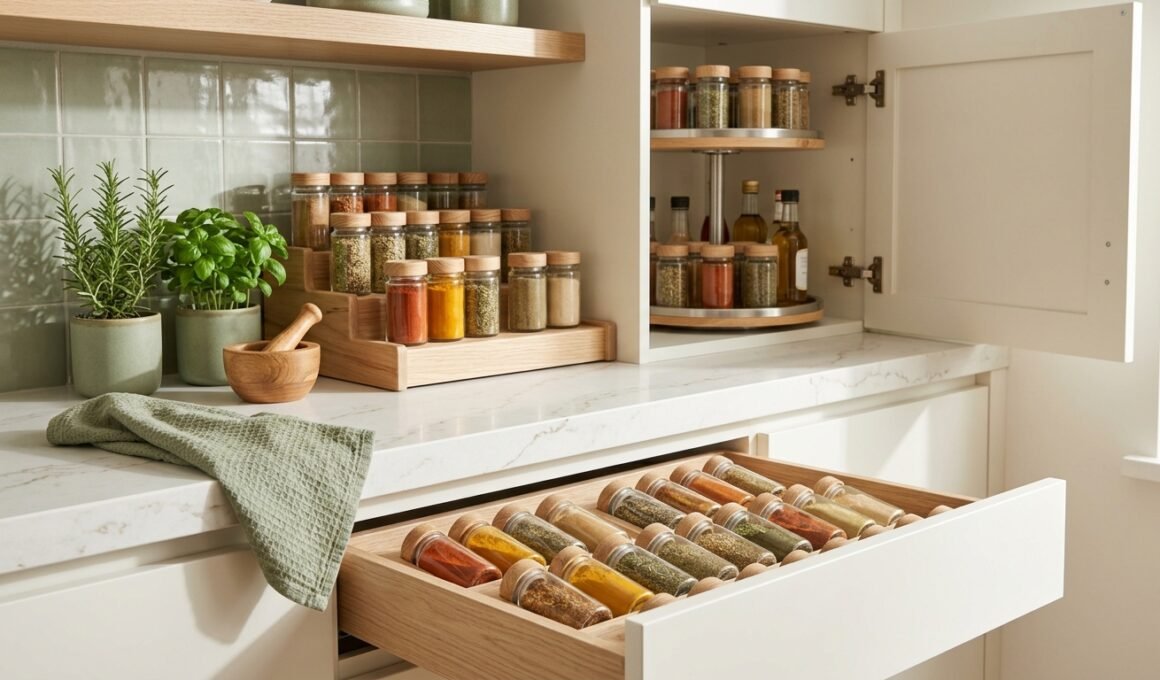
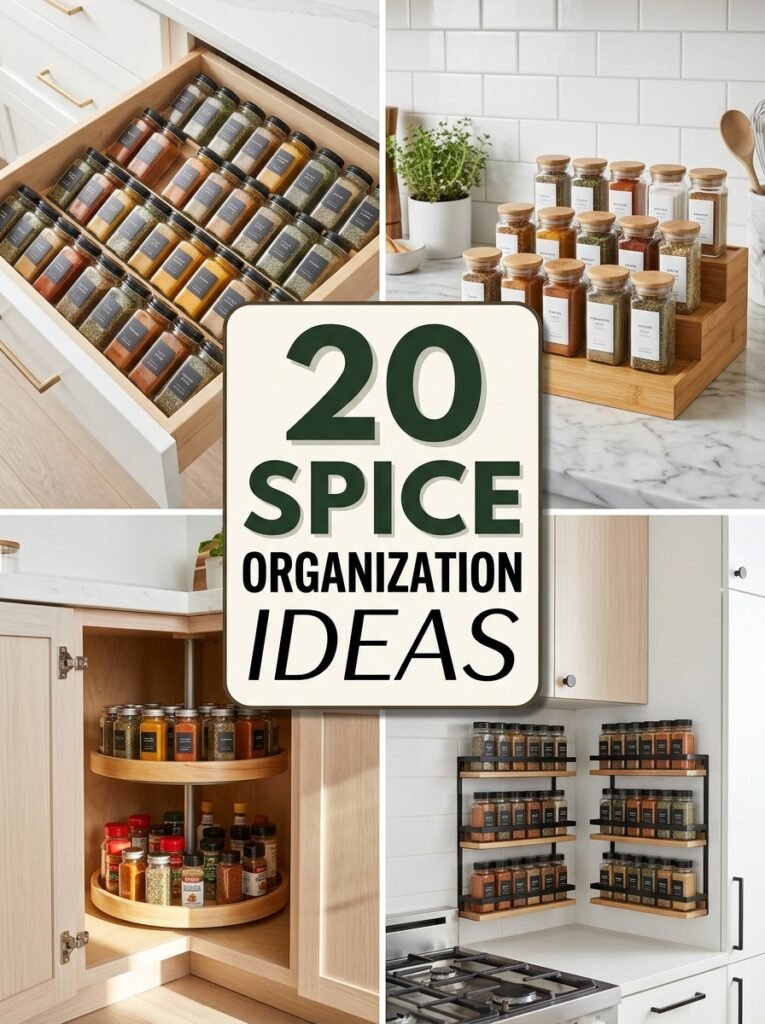
A well-organized spice collection can make everyday cooking faster, easier, and more enjoyable. When jars are scattered across the countertop or hidden at the back of a cupboard, finding the right seasoning becomes an unnecessary struggle. These spice organization ideas cover everything from deep drawers and small kitchen cabinets to countertop displays, DIY organizers, Lazy Susans, Mason jars, and budget-friendly Dollar Tree solutions. Whether you cook Indian meals with a wide variety of masalas or prefer a simple collection of everyday herbs and spices, you can create a system that looks beautiful and works for your kitchen.
1. Arrange Spices in a Dedicated Kitchen Drawer
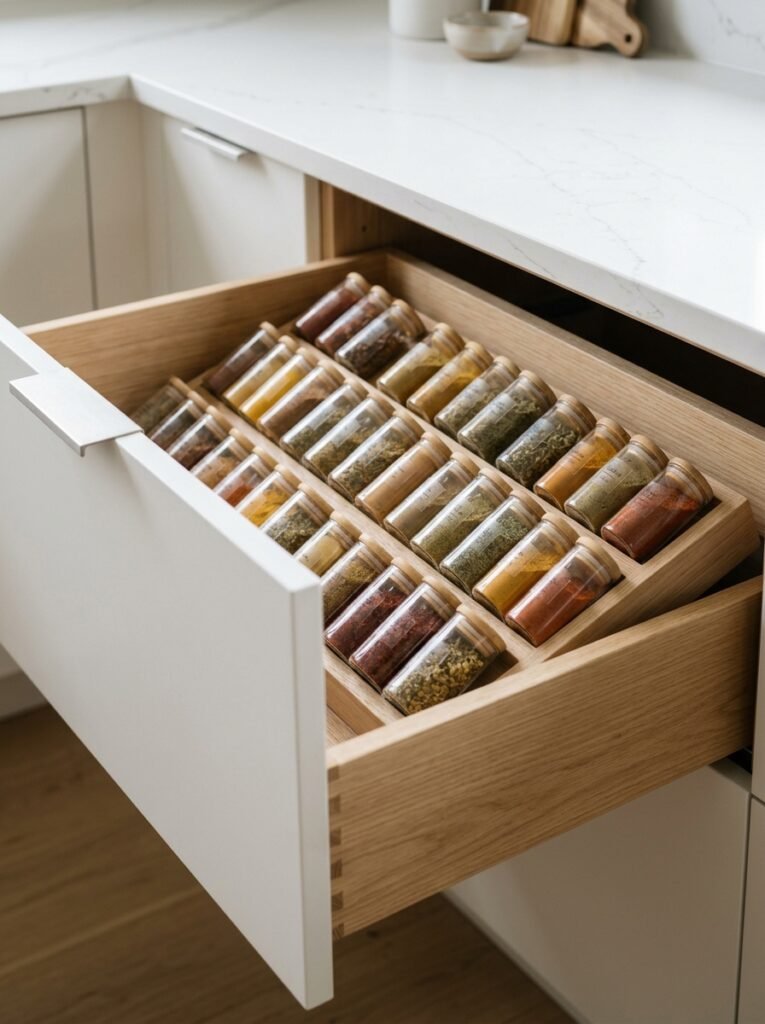
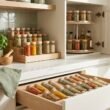
A dedicated spice drawer makes cooking easier because you can see several seasonings at once instead of reaching behind bottles on a shelf. Start by removing every jar, checking its condition and freshness, and grouping seasonings by how often you use them. Add angled inserts or adjustable drawer organizers so labels face upward and jars stay in place when the drawer opens. Keep everyday seasonings near the front and less frequently used spices toward the back. Measure the drawer carefully before purchasing an insert, and choose a layout that accommodates your largest jars without wasting space.
2. Use a Lazy Susan for Easy Cabinet Access
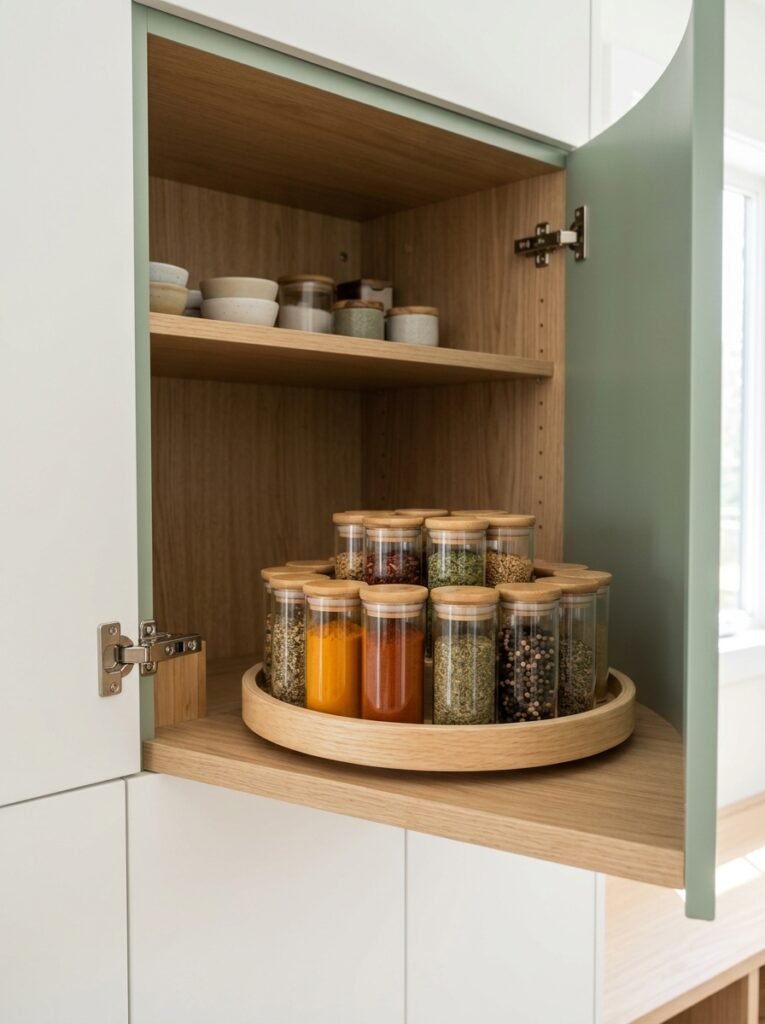
A Lazy Susan is especially helpful when spices are stored inside a deep cupboard or corner cabinet. Instead of reaching around several bottles, you can rotate the tray to bring the seasoning you need toward the front. Choose a size that fits comfortably inside the cabinet and group similar spices together, such as baking spices, everyday seasonings, or specialty blends. A tray with a raised edge can help prevent jars from sliding off. Avoid overloading it, and keep the most frequently used containers in the easiest-to-reach section.
3. Create an Aesthetic Spice Countertop Display
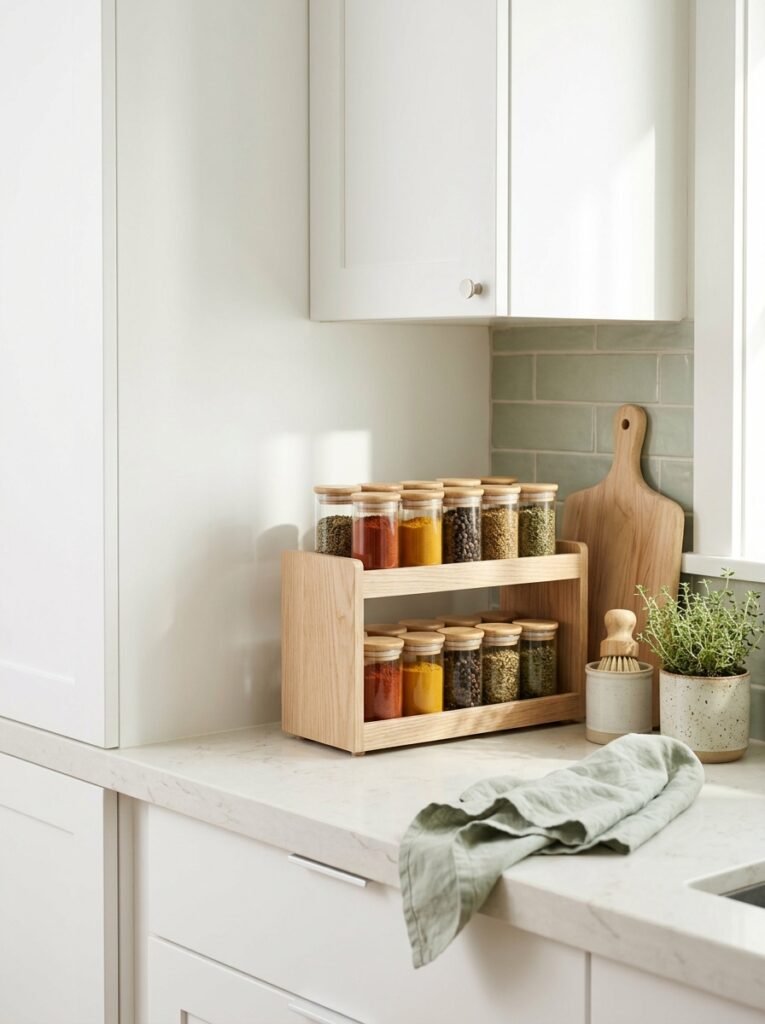
A countertop spice display can make frequently used seasonings easy to reach while adding a decorative touch to your kitchen. Arrange a small collection of matching jars on a compact riser or tiered stand, keeping the selection limited to spices you use regularly. Choose containers that complement your kitchen’s colors and make the contents easy to identify. Avoid placing the display directly beside the stove, where heat, steam, and cooking splashes can affect spice quality. Keep backup jars in a closed cabinet so the countertop stays attractive rather than crowded.
4. Organize Spices Inside Kitchen Cabinets
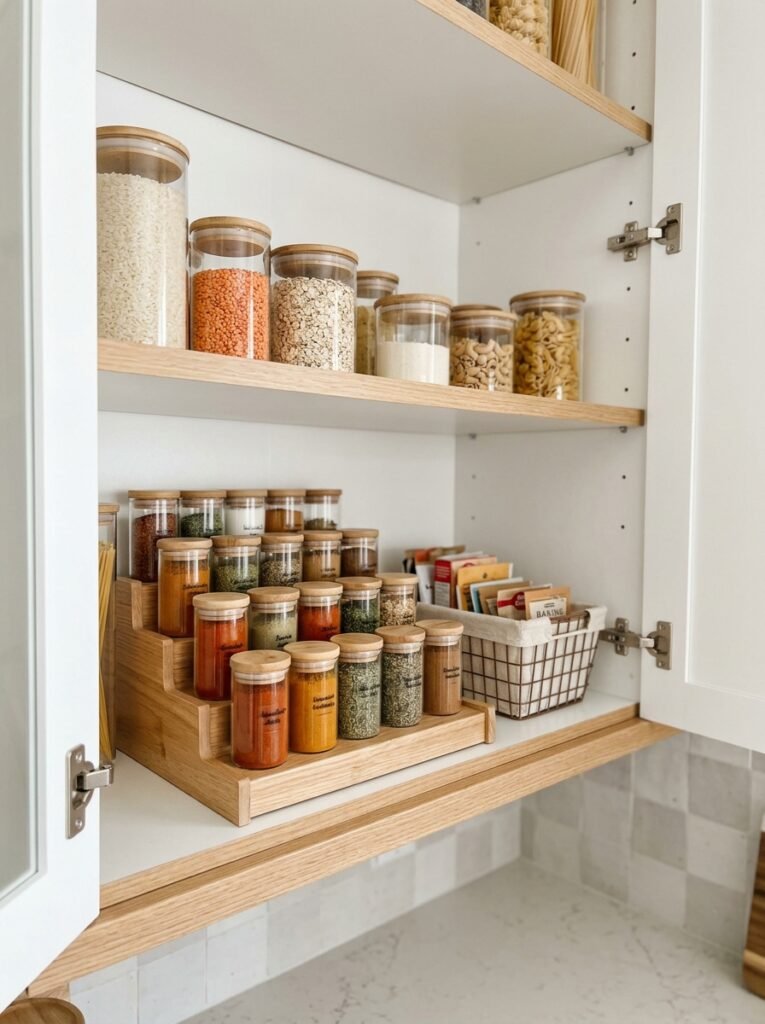
Kitchen cabinets provide useful storage for spices when you arrange the shelves according to container size and cooking habits. A stepped shelf insert helps raise the jars at the back so their contents are easier to see, while a small basket can group baking spices or less frequently used seasonings. Keep heavy containers on sturdy lower shelves and avoid stacking jars in unstable piles. If the cabinet is shared with other cooking ingredients, give spices their own defined section. This simple layout keeps the cupboard tidy and makes it easier to return every jar to its proper place.
5. Make the Most of a Small Kitchen
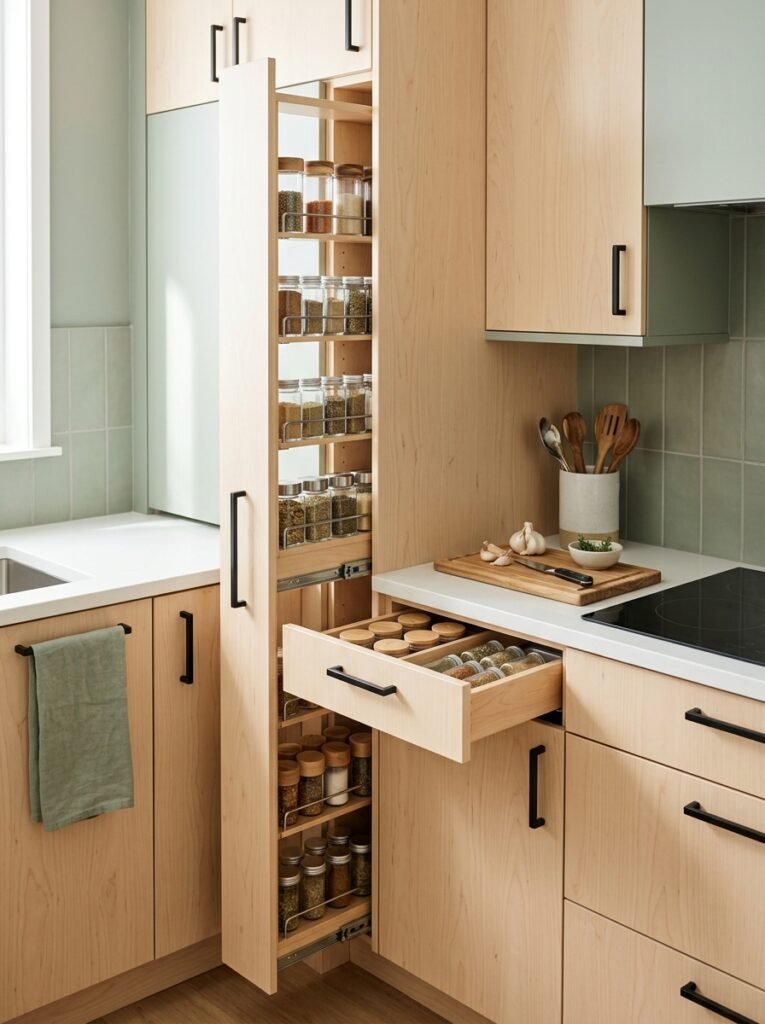
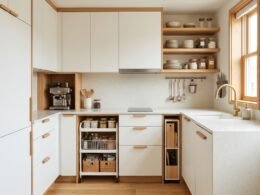
A small kitchen needs spice storage that uses available space without reducing valuable preparation room. Consider a narrow drawer organizer, a slim cabinet riser, or a compact wall-mounted rack in a suitable location. Keep only your regular cooking spices near the main work area and store duplicates or occasional-use seasonings elsewhere. If counter space is limited, choose a drawer or cupboard solution rather than adding another container to the worktop. Measure the available width and depth first so your organizer fits properly and does not interfere with doors, drawers, or cooking equipment.
6. Try a DIY Spice Rack
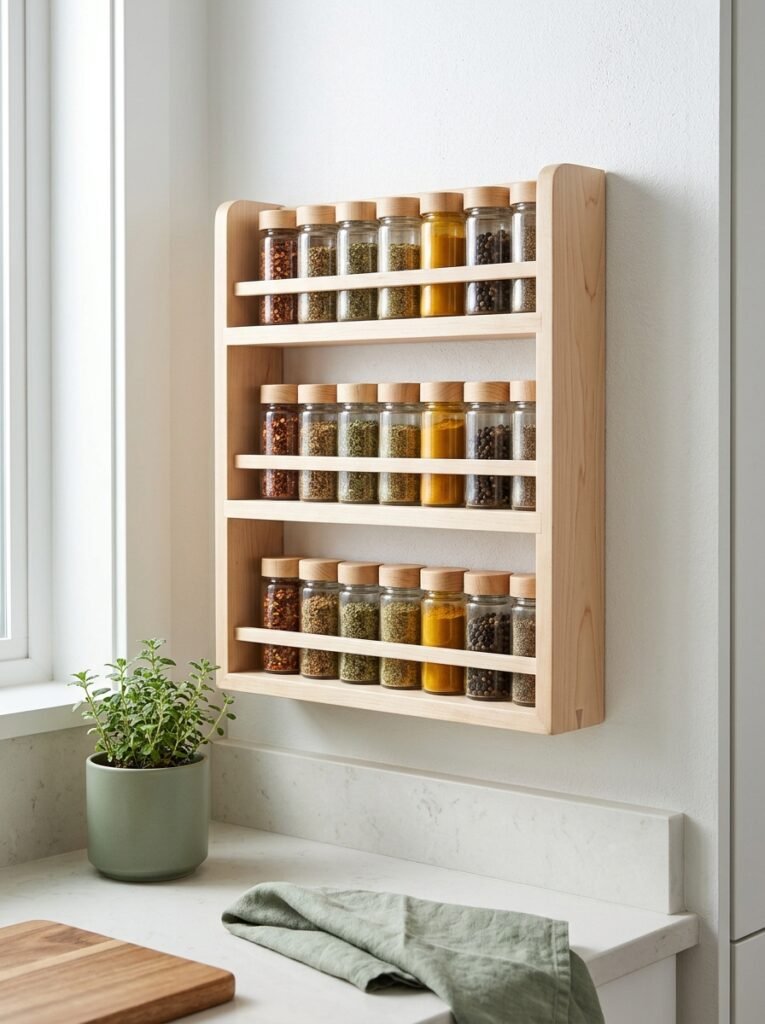
A DIY spice rack lets you customize storage to fit an awkward cupboard, narrow wall, or collection of unusually sized jars. You can adapt a small wooden shelf, build a simple tiered stand, or repurpose a suitable existing organizer with a fresh modern finish. Measure your jars before deciding the height and spacing of each level, and ensure the structure is stable enough for its intended load. Keep the rack away from heat and steam, and use secure mounting hardware if it will be attached to a wall. A well-planned DIY project can be both affordable and attractive.
7. Use Dollar Tree Containers for Budget Organization
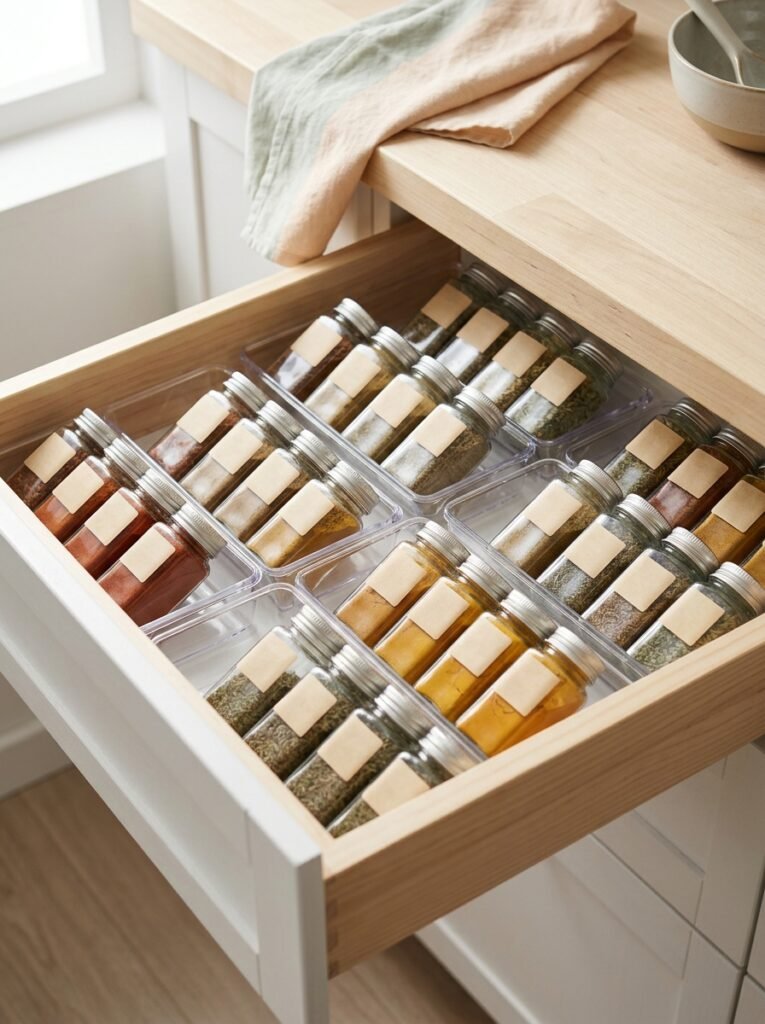
Affordable storage containers from Dollar Tree or another dollar store can help organize spices without a large investment. Small trays, clear bins, and simple shelf organizers are useful for grouping jars by category or keeping containers from moving around inside a drawer. Before shopping, measure the space and check that the containers are suitable for your intended use. If you transfer spices into new jars, make sure the containers are clean, completely dry, and appropriate for food storage. Spending a little time planning the layout will help you avoid buying organizers that do not fit.
8. Store Indian Masalas in a Dedicated Spice Box
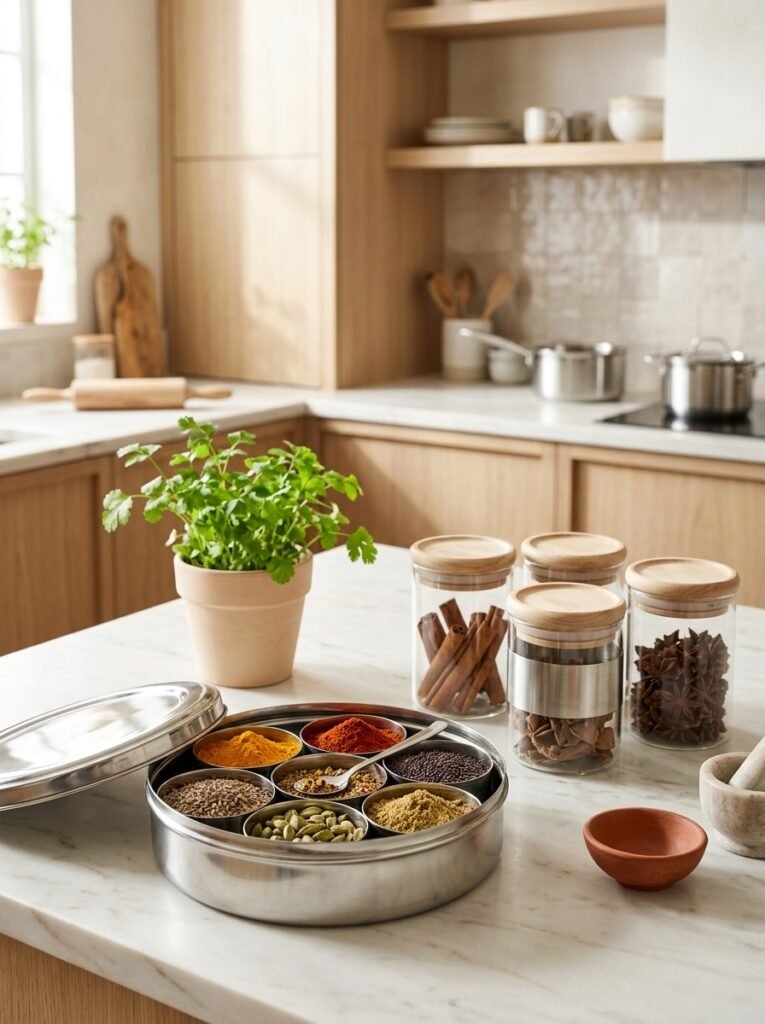
Indian cooking often involves several individual spices and seasoning blends, so a dedicated masala storage system can make meal preparation more convenient. You can use a traditional compartmented spice box for frequently used ingredients such as cumin, coriander, turmeric, chilli powder, and other seasonings suited to your cooking. Keep the compartments clean and dry, and refill them in manageable quantities rather than exposing your entire supply to moisture. Reserve separate airtight containers for larger quantities and less frequently used spices. This arrangement keeps essential masalas accessible while making it easier to prepare familiar dishes.
9. Label Mason Jars for a Coordinated Look
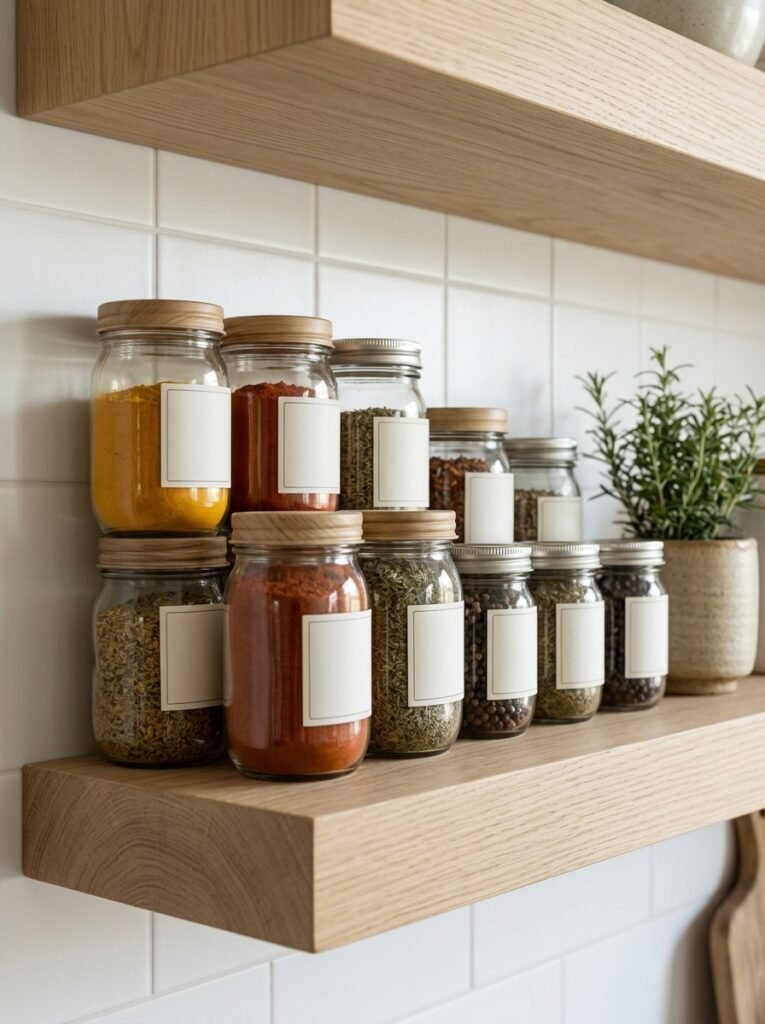
Mason jars can create a coordinated spice display when they are suitable for the quantities you use and are kept completely dry. Choose jars of similar sizes, fill them with manageable amounts, and add clear labels or removable stickers to identify each seasoning. Include the spice name and, when useful, the date it was filled or opened. Keep the jars tightly closed and away from direct sunlight, moisture, and heat. Although Mason jars can look beautiful on open shelves, storing backup supplies in a cool, dry cupboard can help protect them from unnecessary exposure.
10. Add a Spice Organizer to a Deep Drawer
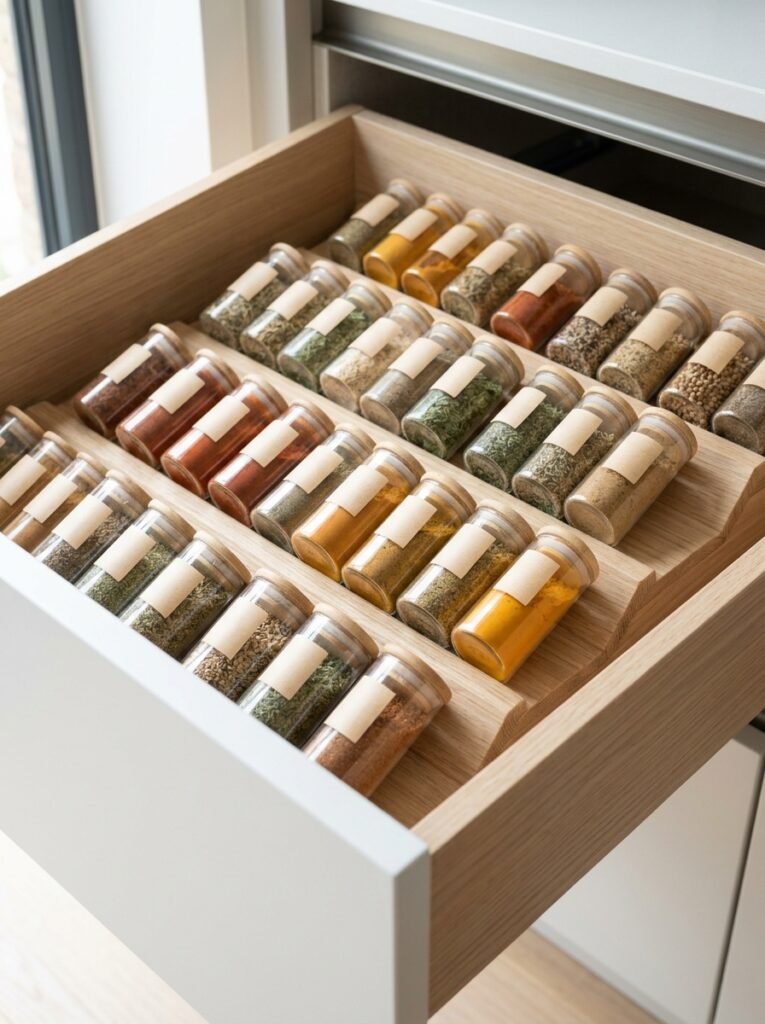
Deep drawers can hold a large number of spice jars, but a flat, crowded arrangement makes it difficult to identify containers at the back. Use a stepped insert or adjustable angled organizer so each row remains visible. Position taller jars where they do not block shorter ones, and leave enough room to lift containers out comfortably. If the drawer also holds cooking utensils, consider separating the two categories rather than mixing them together. A dedicated spice section makes the drawer easier to maintain and prevents you from moving several jars every time you cook.
11. Use the Inside of a Cabinet Door
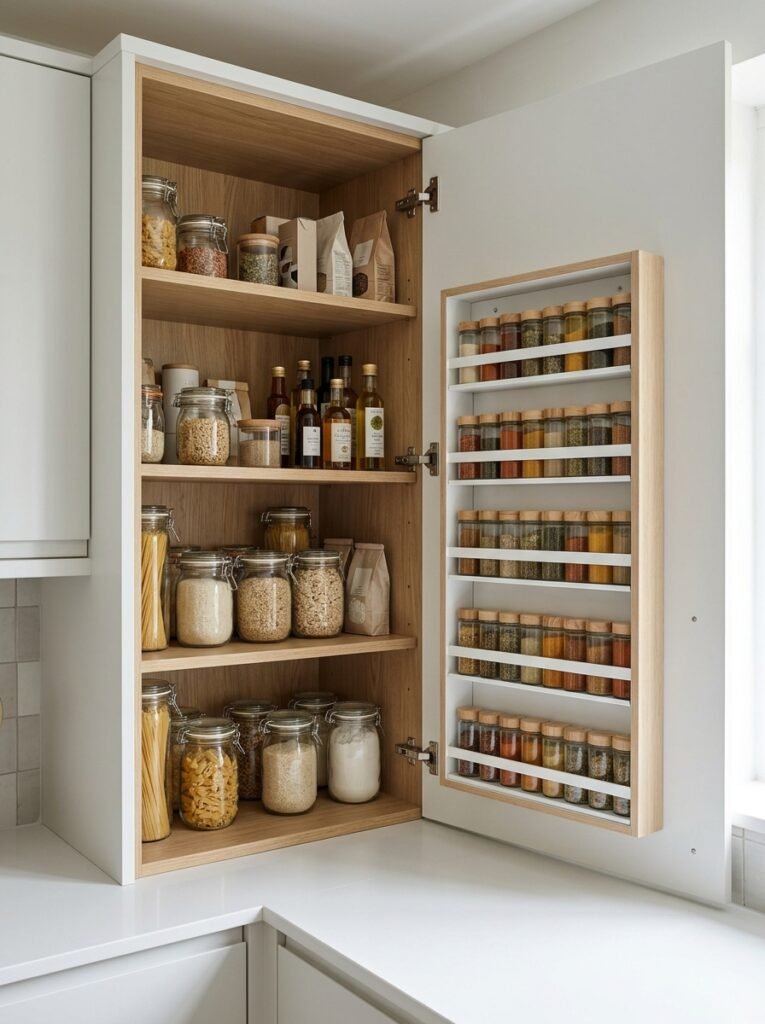
The inside of a cabinet door can offer extra storage when the door and organizer are suitable for the intended weight. A shallow rack can hold lightweight spice jars, packets, or small seasoning containers, freeing shelf space for larger kitchen items. Measure the door clearance before installing anything to ensure the rack does not hit shelves or prevent the door from closing. Use secure mounting hardware and avoid overloading the door. This solution works particularly well in a small kitchen where every shelf is already occupied, provided the containers remain stable and protected from heat.
12. Organize Spices Near the Stove Without Exposing Them to Heat
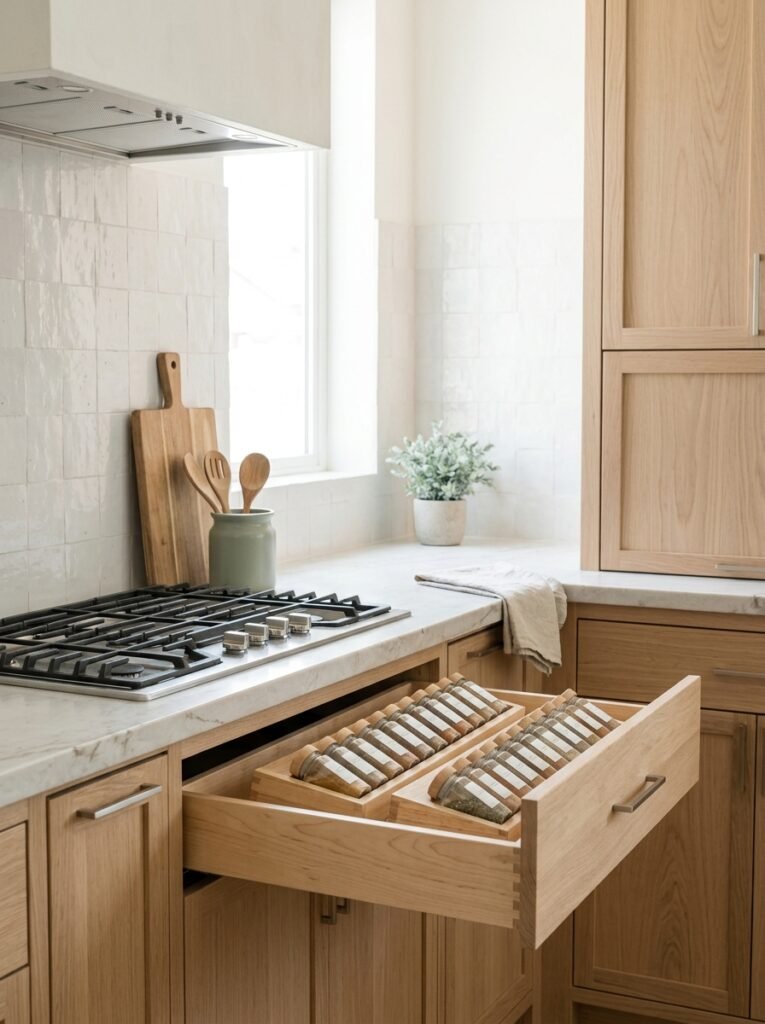
Keeping frequently used spices near the cooking area can save time, but placing them directly beside or above the stove may expose them to heat, steam, grease, and temperature changes. Instead, designate a nearby drawer or cupboard for everyday seasonings and keep the countertop around the stove clear for food preparation. Arrange the most-used jars at the front and store specialty spices farther back. This creates a convenient cooking zone without compromising storage conditions. The goal is to keep ingredients within easy reach while protecting their flavor and quality.
13. Create a Corner Cabinet Spice System
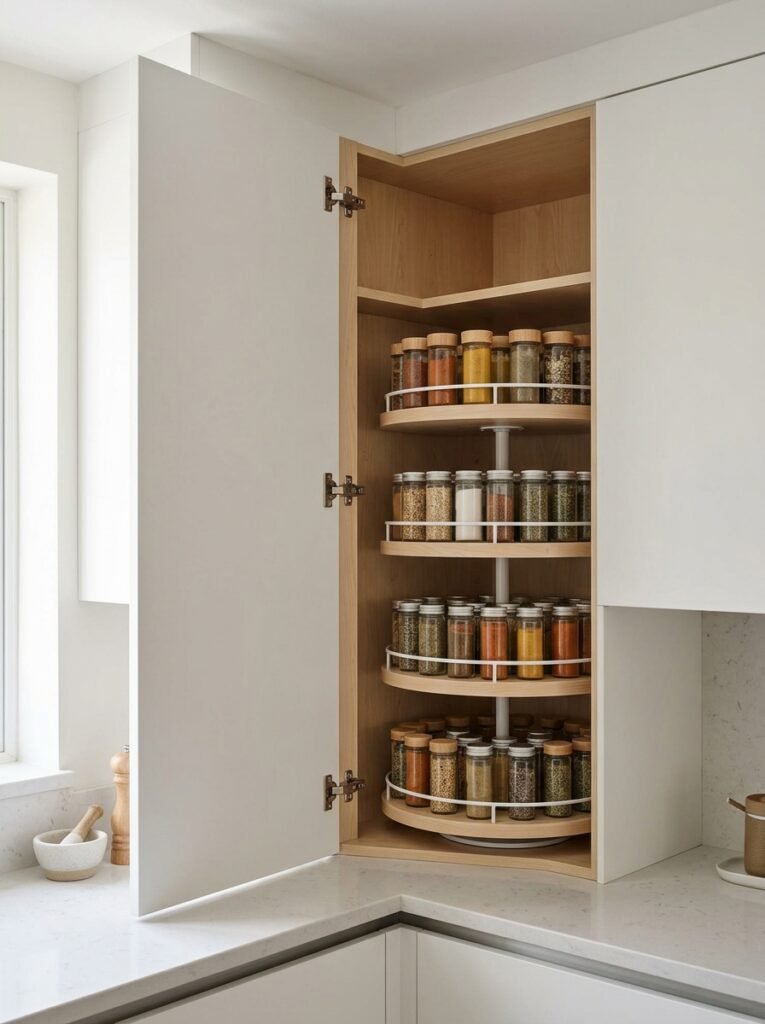
Corner cabinets can be difficult to organize because their depth makes smaller items easy to lose behind larger containers. A suitable rotating tray, tiered insert, or pull-out organizer can help bring spices into view without requiring you to remove everything at the front. Group spices by use and keep the containers within the organizer’s recommended weight and size limits. If the cabinet is particularly deep, store backup seasonings in a separate container rather than placing every jar inside the rotating unit. This makes the space easier to access and keeps the collection from becoming overcrowded.
14. Make an IKEA-Inspired Spice Drawer
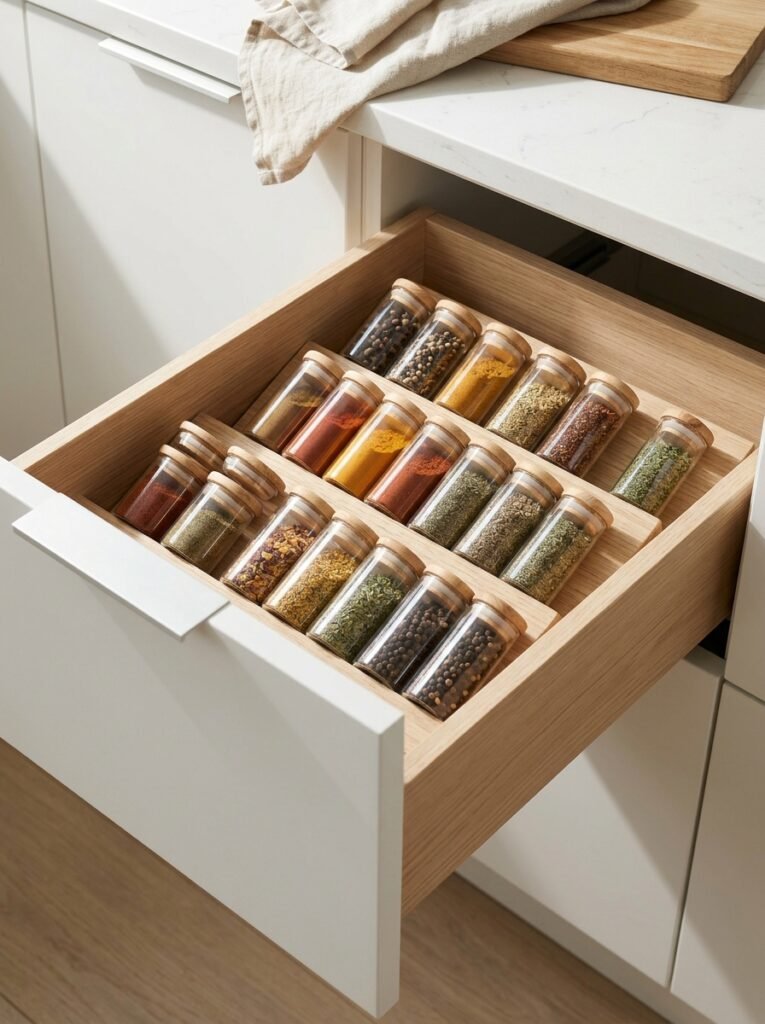
An IKEA-inspired kitchen drawer can combine simple dividers, adjustable inserts, and clean-lined storage to create an orderly spice collection. Use a layout that matches your jar dimensions instead of choosing organizers based on appearance alone. Keep everyday spices grouped at the front, specialty seasonings in a separate row, and duplicate supplies in a different cupboard. Matching jars can make the drawer look cohesive, but consistency in placement matters more than buying an entirely new set of containers. The result is a practical, modern storage solution that can adapt as your cooking habits change.
15. Use a Cupboard Riser for Better Visibility
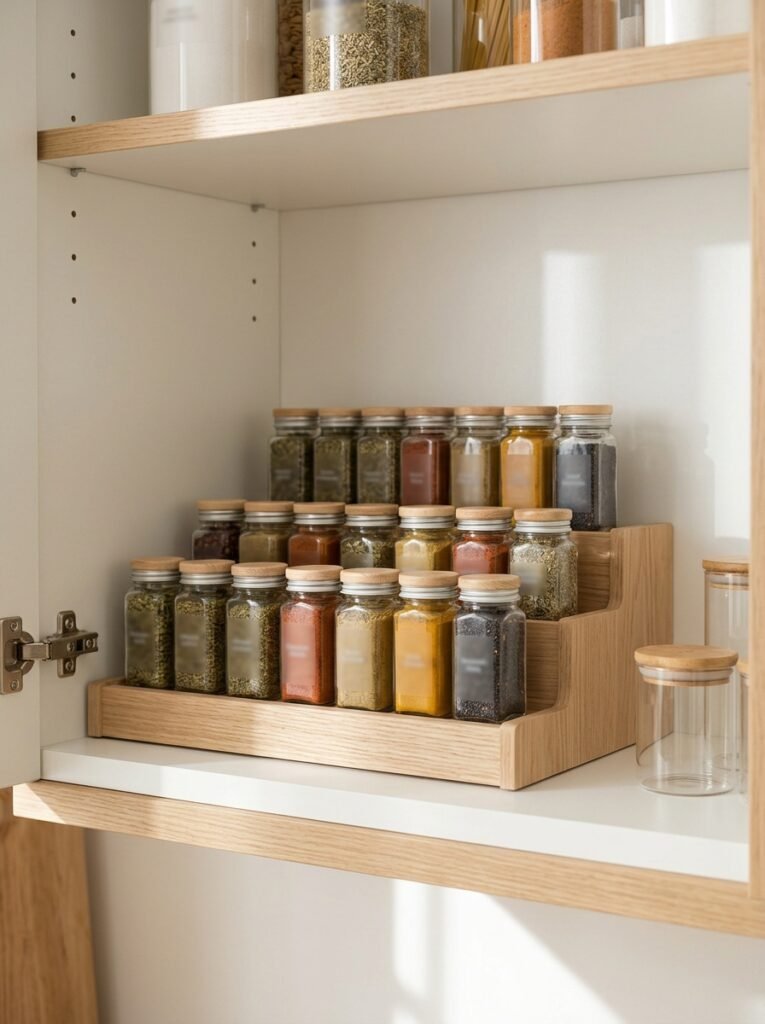
A cupboard riser creates additional levels inside a shelf so small spice jars are not hidden behind taller containers. Place frequently used seasonings on the easiest-to-reach level and reserve the back row for less frequently used ingredients. Choose a stable riser that fits the cupboard width and leaves sufficient clearance for the door to close. This method works well for herbs and spices, baking seasonings, and small jars of specialty ingredients. It is particularly useful when you want better visibility without changing the existing cabinets or installing permanent fixtures.
16. Separate Everyday Spices From Specialty Seasonings
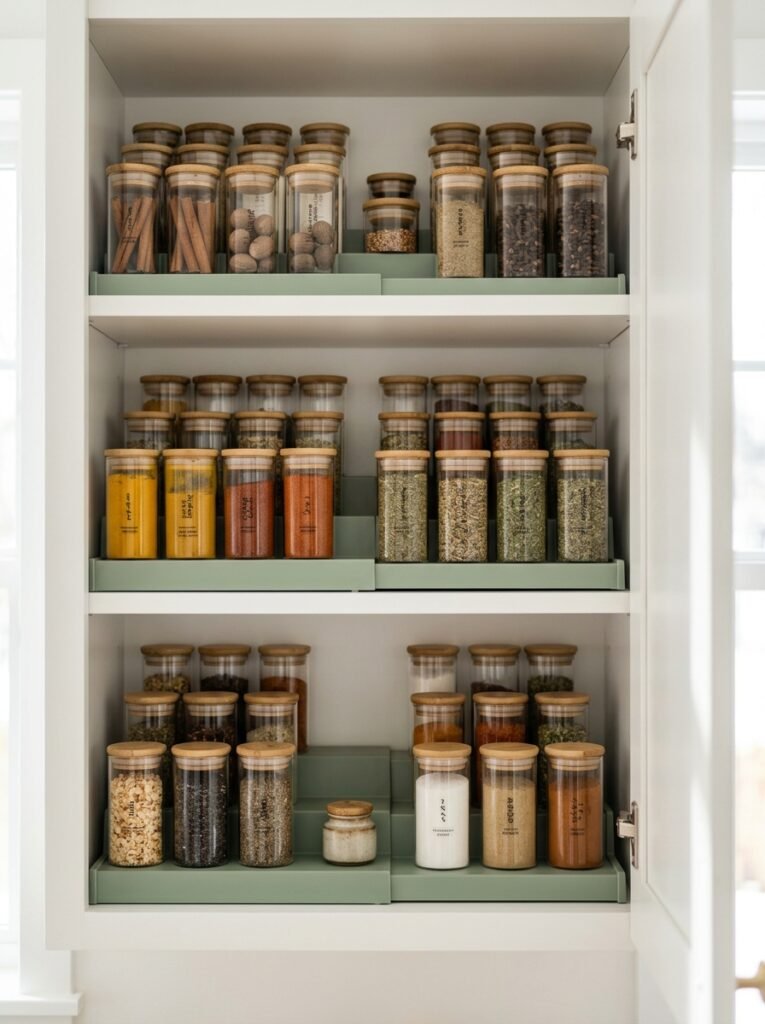
Not every spice needs to occupy the same amount of accessible space. Keep everyday seasonings, such as the ones you reach for most frequently, in a convenient drawer or cabinet section, and group specialty blends, baking spices, and occasional-use ingredients separately. If you cook several types of cuisine, you can create small categories for different recipes without duplicating the same spice in multiple places. Store backup containers elsewhere and refill the everyday collection when needed. This system reduces clutter and helps you locate ingredients quickly without buying unnecessary duplicates.
17. Use Tupperware Containers for Bulk Spices
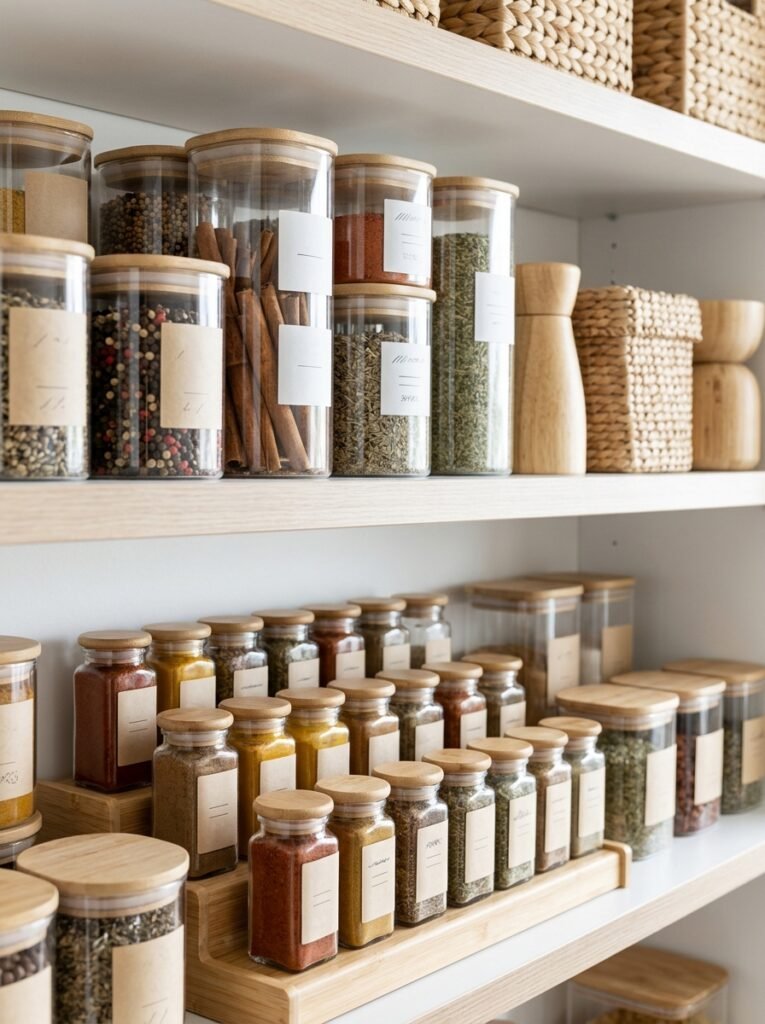
If you buy spices in larger quantities, suitable airtight food-storage containers can help keep backup supplies organized. Choose containers that seal securely, are completely dry before filling, and fit neatly inside a cupboard or pantry shelf. Keep the original product information or transfer the spice name and relevant date to a clear label so you can identify the contents later. Use smaller jars for daily cooking and refill them from the bulk containers when necessary. This reduces countertop clutter and keeps larger quantities together without crowding the main spice drawer.
18. Organize Herbs and Spices by Type
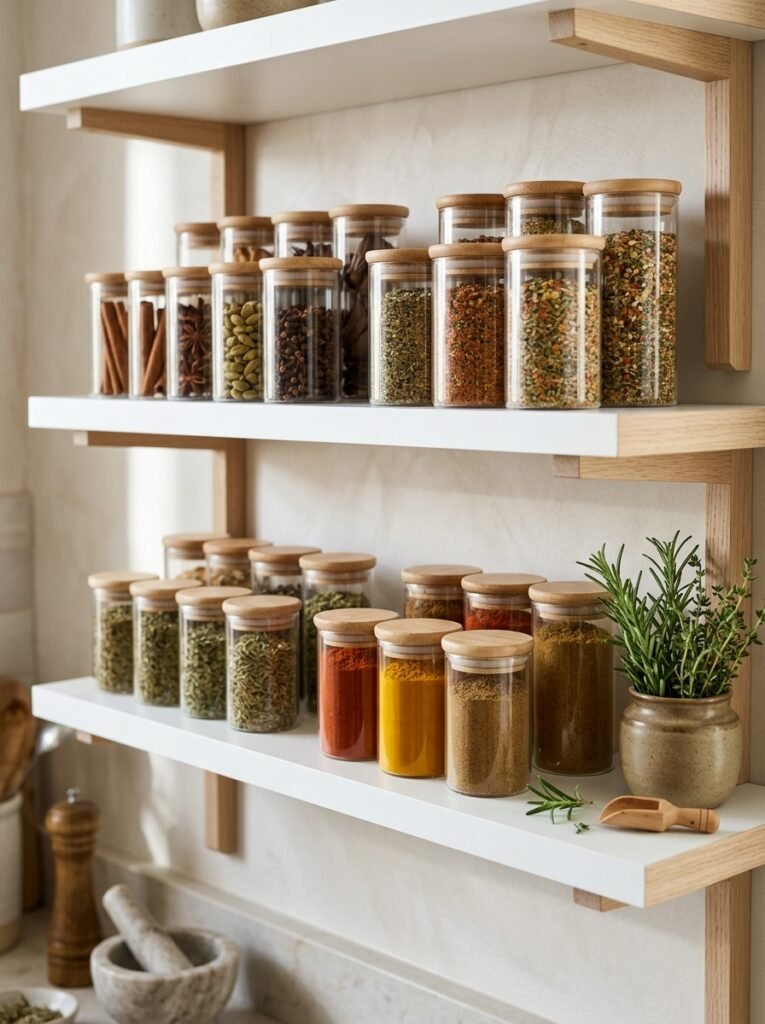
Grouping herbs and spices by type can make your collection easier to navigate and help you notice what needs replacing. Keep dried herbs together, ground spices in another section, and whole spices in a separate row if that arrangement suits your cooking routine. You can also create a dedicated group for baking spices or seasoning blends. Make sure every jar is clearly identifiable and stored with its lid tightly closed. Keep the collection away from direct sunlight, moisture, and heat, and check freshness periodically rather than assuming a spice is still at its best simply because it looks fine.
19. Create a Slim Spice Station for a Small Counter
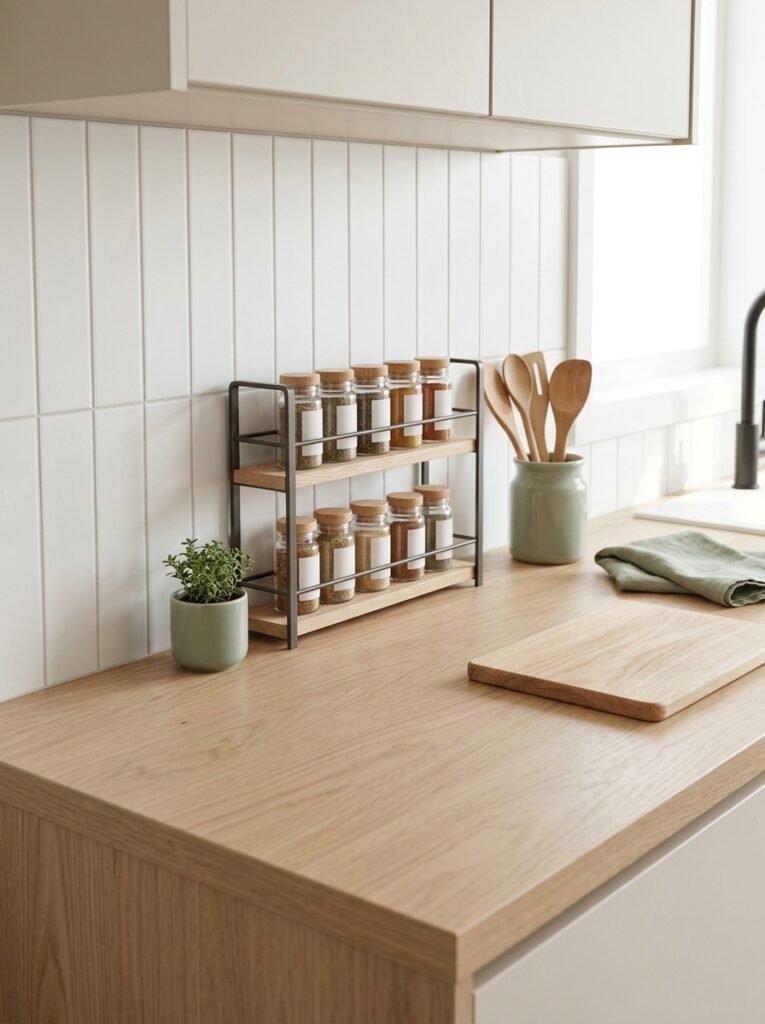
If your kitchen counter is narrow, a slim spice station can keep daily seasonings accessible without taking over your preparation area. Choose a narrow tiered stand or a compact tray with enough room for your most-used jars, and avoid displaying the entire collection. Place it away from the stove, sink splashes, and direct sunlight. Keep the rest of your spices in a drawer or cabinet so the countertop remains open for chopping and cooking. A small, carefully selected display can look attractive while remaining genuinely useful in a compact kitchen.
20. Maintain Your Spice Organization System
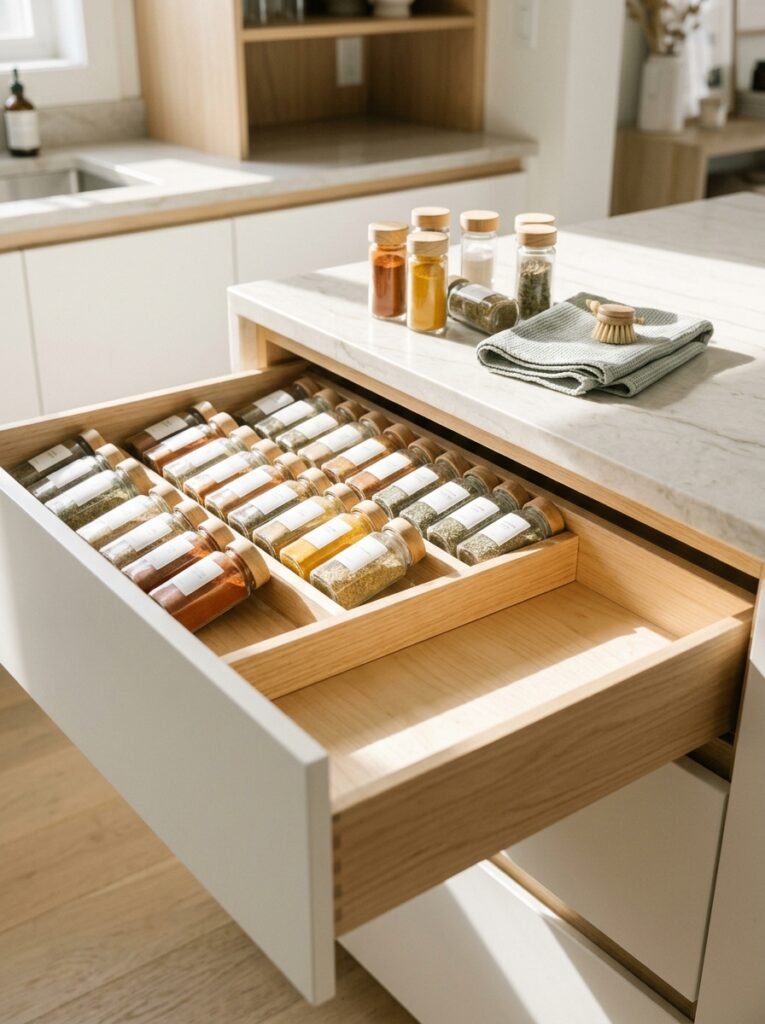
Even the most attractive spice storage system needs occasional maintenance. Every few weeks, check for empty jars, damaged lids, stale seasonings, and containers that have been placed in the wrong section. Wipe the organizer when needed, make sure jars are completely dry before returning them, and refill everyday containers from suitable backup storage. Keep labels accurate and avoid purchasing duplicates simply because an existing jar is difficult to find. A quick reset helps your spice organization system remain practical and ensures that your cooking ingredients are easier to identify and use.
How to Organize Spices Step by Step
The easiest way to organize spices is to start with the storage space you already have. Remove the jars, group them by type or frequency of use, and check their condition before returning them to the cupboard or drawer. Measure the space carefully before buying organizers, and choose a layout that makes labels easy to see. Store backup supplies separately, keep jars tightly closed, and place the collection away from heat, steam, and direct sunlight. Finally, return each jar to the same location after cooking so the system stays easy to maintain.
Simple Tips for Better Spice Storage
- Measure before shopping: Check drawer and cabinet dimensions before buying racks, risers, or bins.
- Group similar seasonings: Separate everyday spices, herbs, baking seasonings, and specialty blends.
- Use clear labels: Identify every container and add dates when useful.
- Protect spice quality: Store jars tightly closed in a cool, dry place away from direct heat and moisture.
- Keep counters clear: Display only the seasonings you use regularly.
- Avoid unnecessary duplicates: Check your existing collection before purchasing more spices.
- Reset regularly: Clean organizers and check the condition of your seasonings periodically.
Final Thoughts
The best spice organization system combines easy access, sensible storage, and a layout that fits your cooking habits. Whether you prefer a deep drawer, a Lazy Susan, an IKEA-inspired cabinet, a traditional Indian masala box, or an affordable DIY organizer, you can make your kitchen more efficient without spending a fortune. Start with the space you have, choose containers that fit properly, and keep your most-used seasonings within convenient reach. A little planning can turn a cluttered collection into a tidy, attractive, and practical part of your kitchen.