


This post may contain affiliate links. Please read my disclosure policy.
In This Article Show
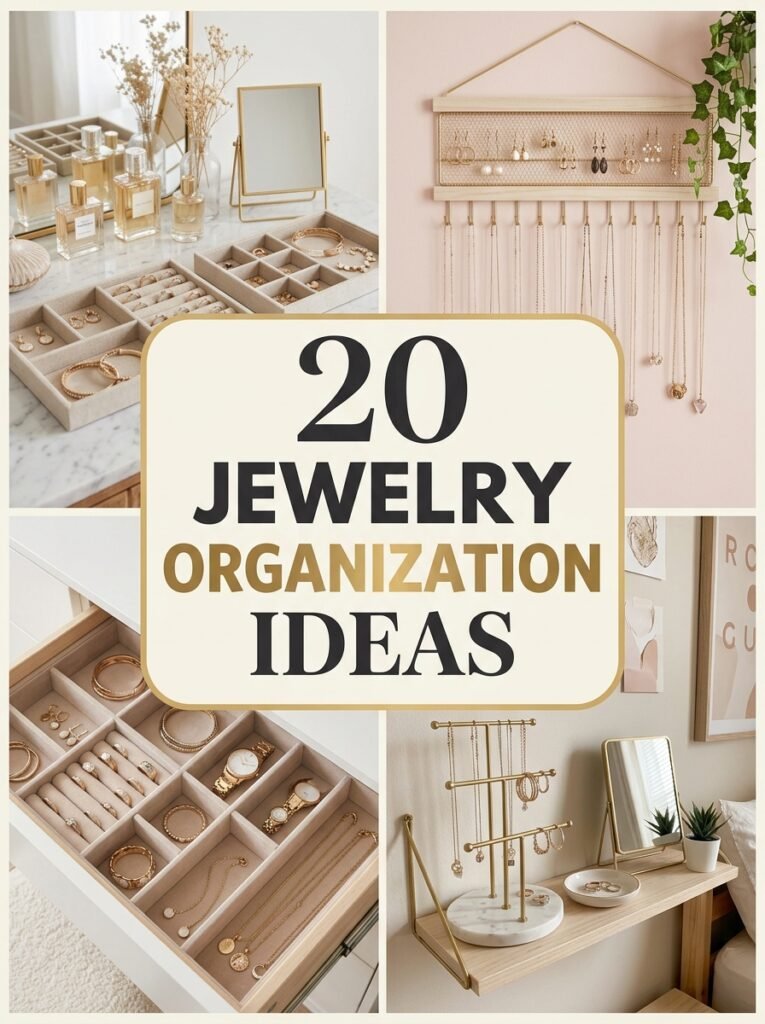
Jewelry can add the perfect finishing touch to an outfit, but tangled necklaces, missing earrings, and overflowing drawers can make getting ready frustrating. A thoughtful jewelry organization system keeps your favorite pieces easy to find while turning your collection into a beautiful part of your bedroom or vanity. From DIY earring hangers and closet displays to minimalist trays, Indian jewelry storage, and compact dorm-room solutions, these ideas work for different collections, budgets, and spaces. Whether you own a few everyday pieces or a growing collection of necklaces, bracelets, rings, and statement accessories, you can create a setup that is both practical and stylish.
1. Create an Aesthetic Jewelry Tray Display
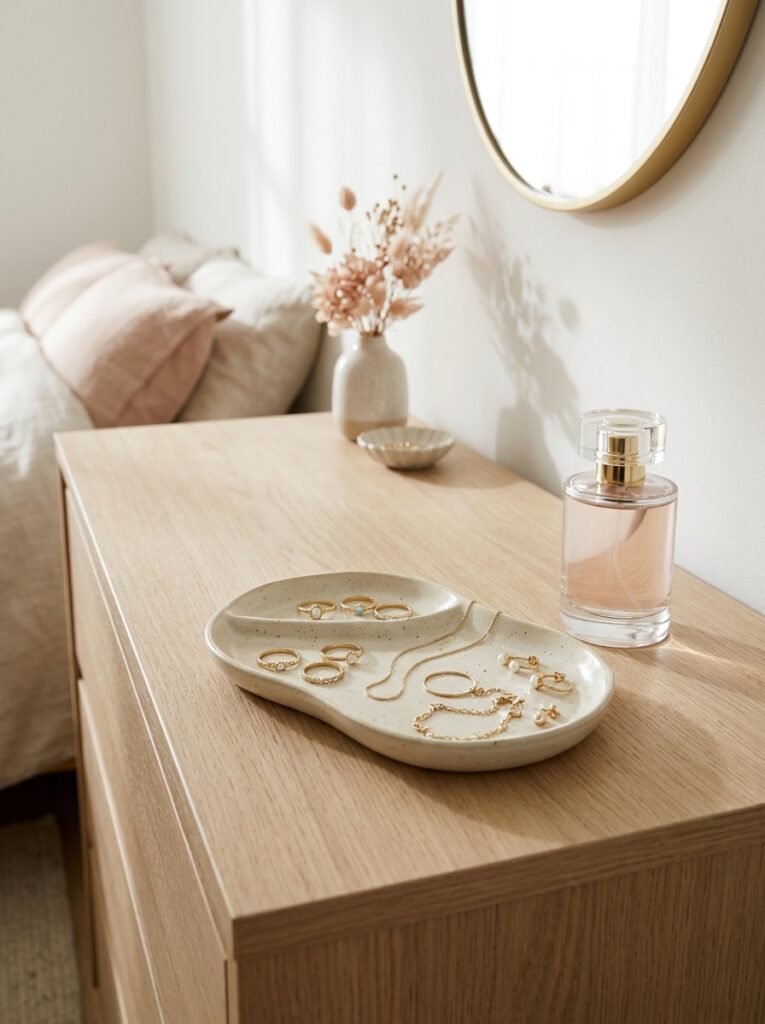
A jewelry tray is one of the easiest ways to organize the pieces you wear most often while keeping your dresser or vanity looking beautiful. Choose a tray with a finish that complements your room, such as cream ceramic, clear acrylic, or a refined metallic design. Arrange a small selection of rings, bracelets, and everyday earrings in separate sections rather than piling everything together. Keep delicate chains fastened and separated to prevent tangling, and store valuable or rarely worn pieces in a closed jewelry box. This creates an attractive display without making your surface feel crowded.
2. Organize Jewelry Inside Vanity Drawers
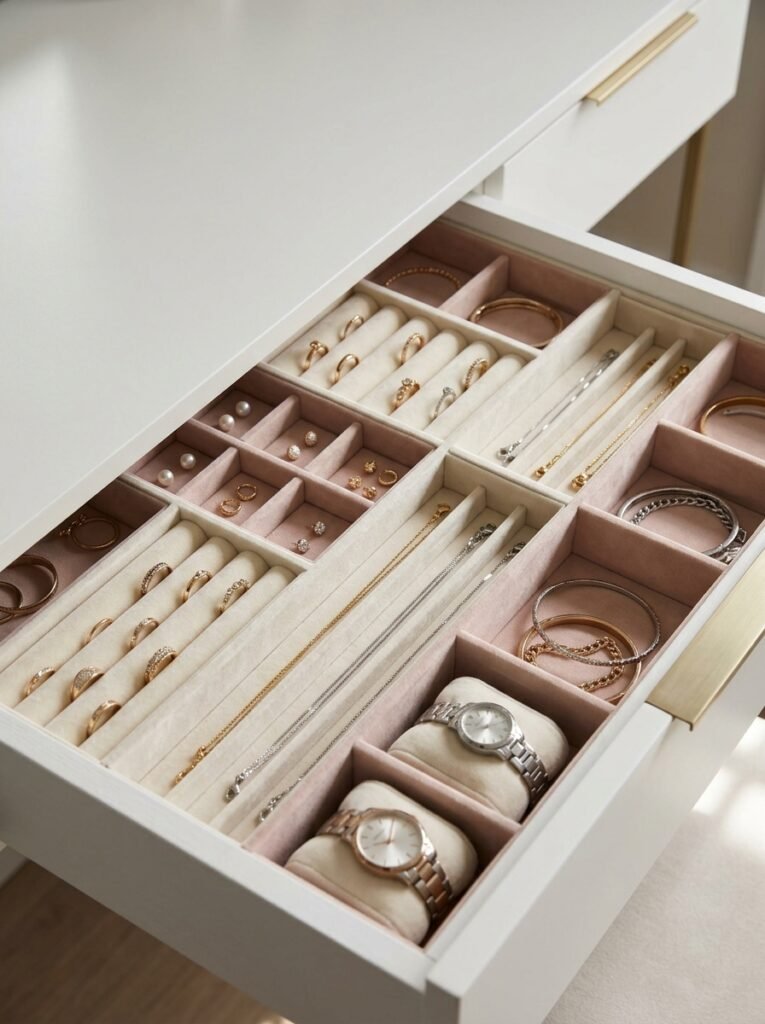
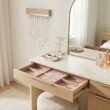
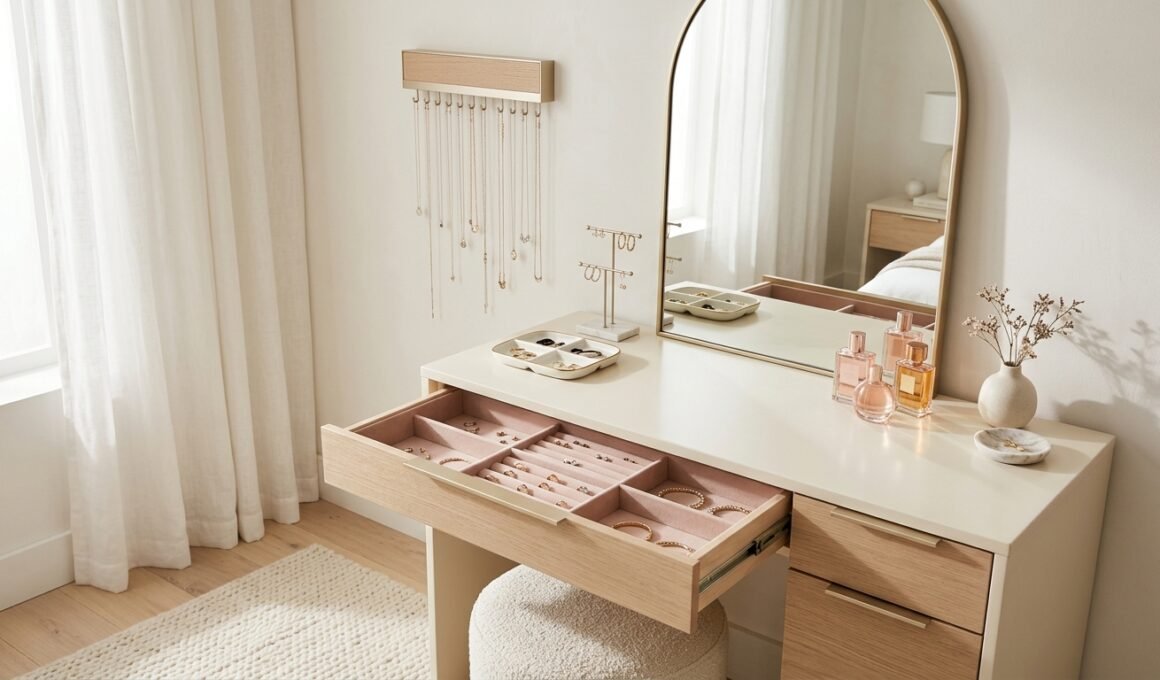
Vanity drawers can hold a surprisingly large collection when you use divided inserts instead of placing everything in one compartment. Create separate sections for rings, earrings, bracelets, necklaces, and watches, choosing compartments that fit the size and quantity of your pieces. Velvet-lined inserts can help protect delicate jewelry from scratches, while adjustable dividers make it easier to reorganize the drawer as your collection grows. Keep frequently worn accessories near the front and occasional pieces farther back. A drawer system is particularly useful if you prefer a clean countertop without jewelry permanently on display.
3. Make a DIY Earring Hanger
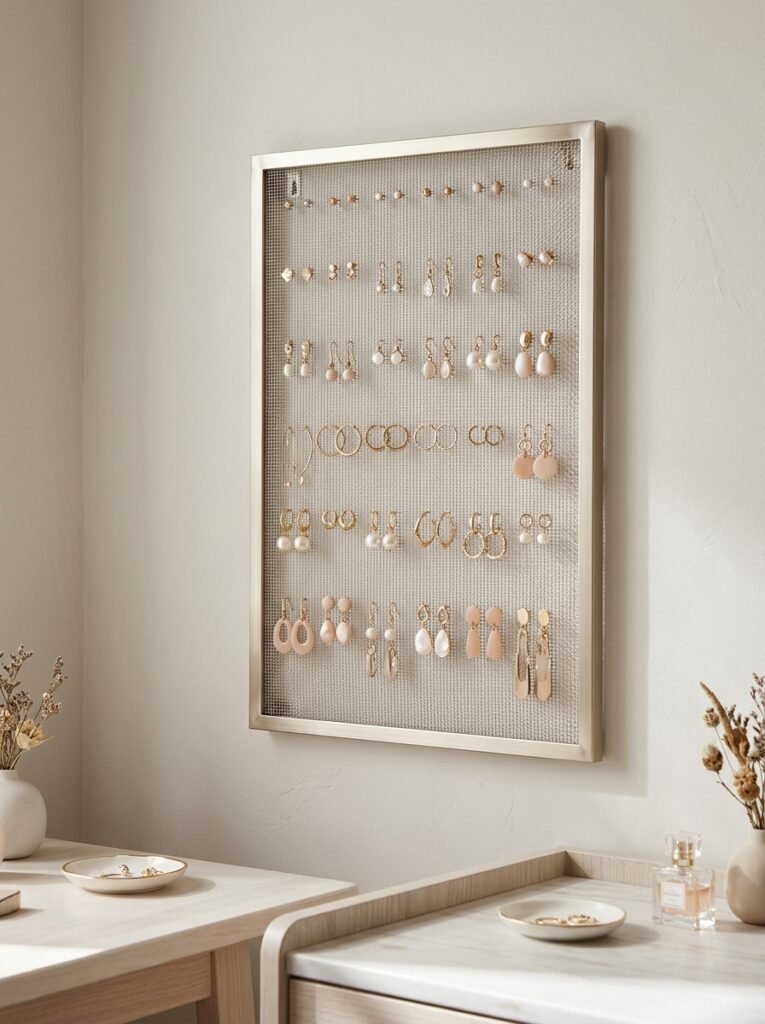
A DIY earring hanger is useful when you own several pairs of earrings and want to see them without opening multiple boxes. Use a suitable framed mesh panel, a purpose-built earring stand, or a securely mounted organizer designed for your earring types. Arrange pairs together and leave enough space between them so hooks do not become tangled. Small studs may need a different holder from dangling earrings, so choose a design that accommodates your collection. Place the hanger near your vanity or inside a closet where it is easy to access but protected from dust and accidental knocks.
4. Use Wall Storage for Necklaces
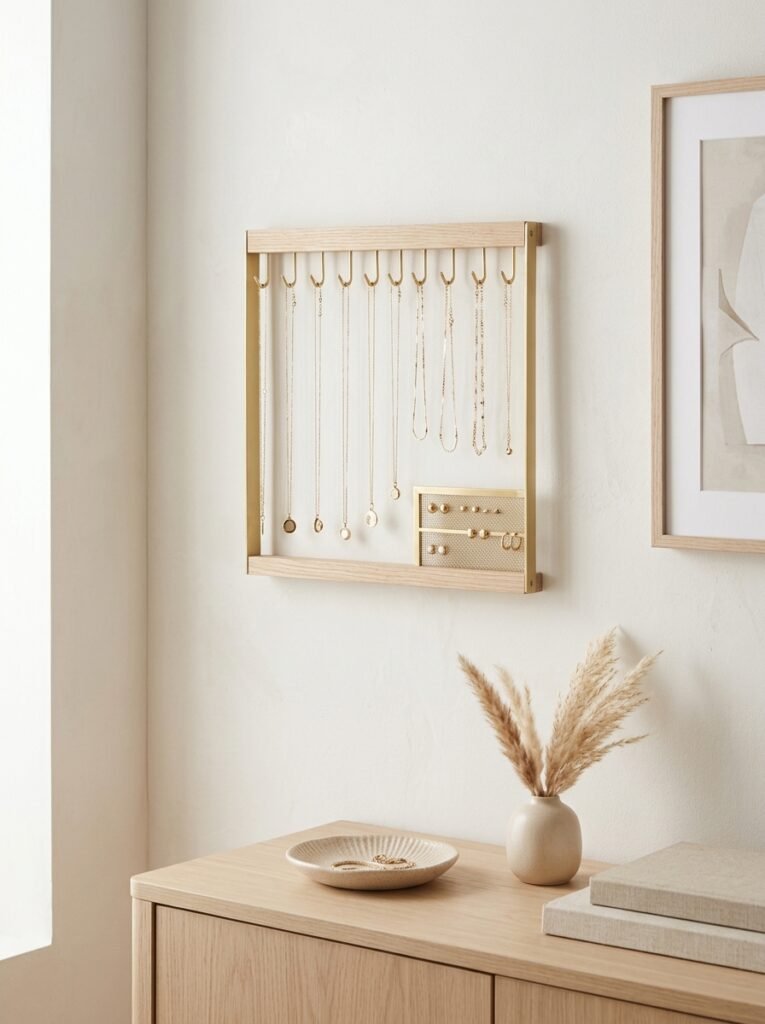
Wall-mounted necklace storage helps keep long chains visible and separated, especially when drawer space is limited. Choose a decorative rail with suitable hooks, a slim wall organizer, or a purpose-built jewelry panel that complements your room. Space the hooks far enough apart so pendants and chains do not overlap, and keep heavier pieces on hardware designed to support their weight. Place the organizer away from direct sunlight, damp areas, and places where clothing might catch on it. This approach works well in bedrooms, dressing areas, and closets where you want quick access to frequently worn necklaces.
5. Organize Jewelry in a Small Bedroom
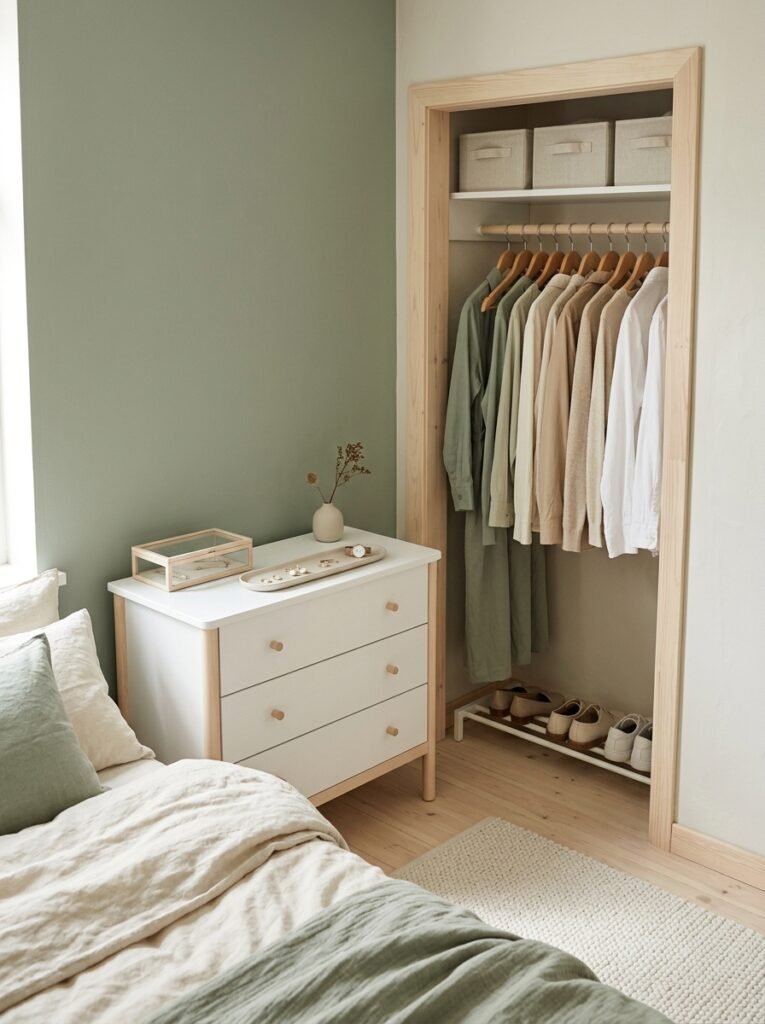
A small bedroom does not need a large jewelry cabinet to stay organized. Use a compact jewelry box inside a dresser drawer, a narrow tray on the bedside table, or a slim hanging organizer inside a wardrobe door. Keep your everyday pieces together and store special-occasion accessories separately so the collection does not spread across multiple surfaces. If you share a room, choose a storage method that can be closed when not in use. The best small-space system makes jewelry easy to reach without sacrificing valuable space for clothing, books, or other daily essentials.
6. Create a Jewelry and Perfume Vanity Station
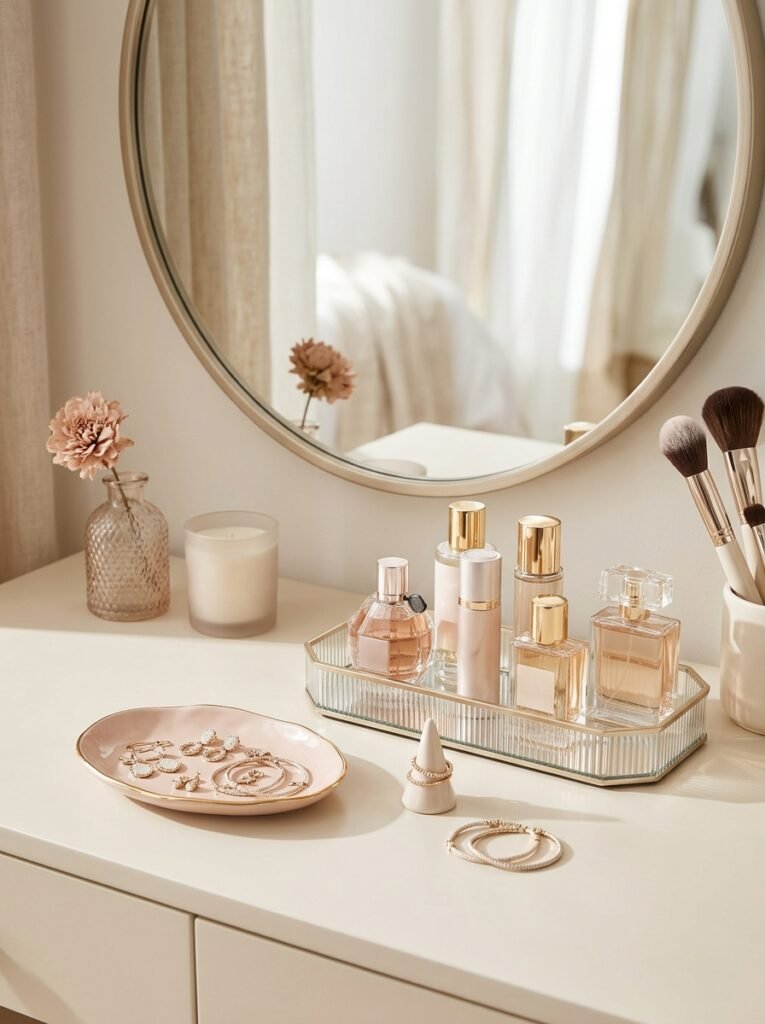
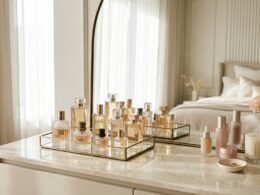
Combining jewelry and perfume storage can create a polished getting-ready area, provided both collections have enough space and remain organized. Place perfume bottles on a stable tray and keep rings, bracelets, and earrings in a separate jewelry organizer nearby. This prevents jewelry from becoming mixed with cosmetic accessories and gives every item a clear home. Keep perfumes away from direct sunlight, heat, and excessive humidity, and avoid storing delicate jewelry where it could be exposed to spilled liquids. A coordinated color palette and a few carefully selected accessories can make the entire vanity feel intentional without overcrowding it.
7. Use Closet Storage for Jewelry and Accessories
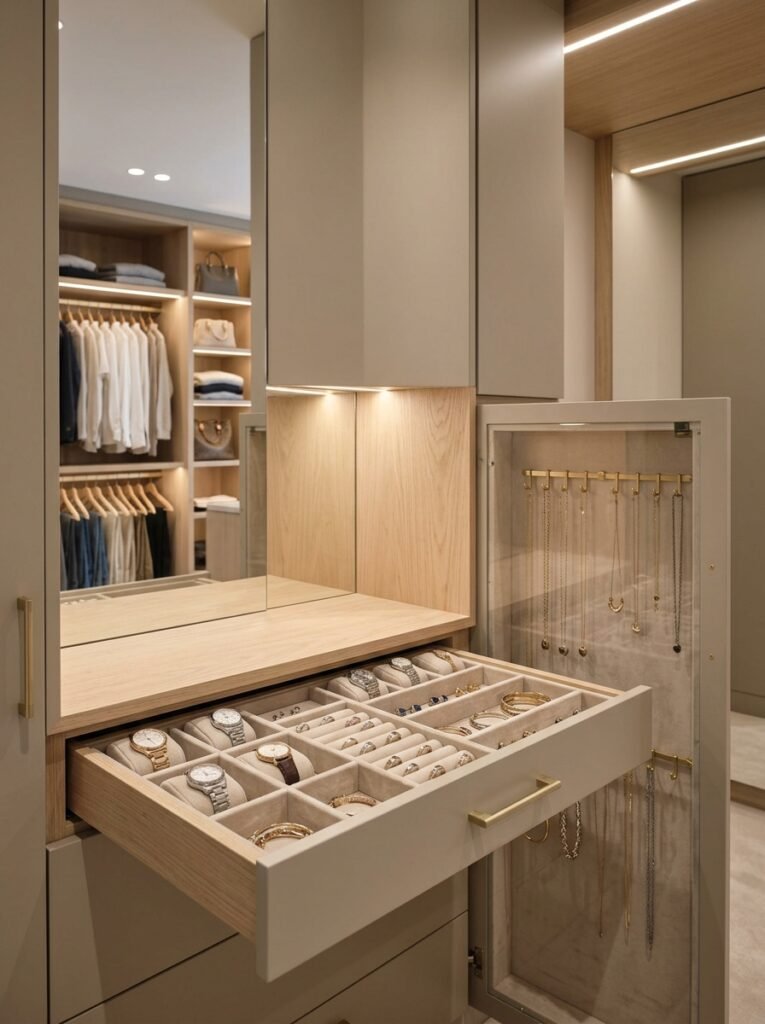
Your closet can provide a convenient place for jewelry, particularly when you get dressed in the same area every day. Use a dedicated jewelry drawer, a hanging organizer with secure pockets, or a slim compartment box placed on a closet shelf. Keep necklaces separated, earrings paired, and watches stored in suitable compartments to prevent scratches. Position the accessories you wear most frequently near your everyday clothing, while special-occasion pieces can remain in a more protected section. This makes choosing jewelry part of your dressing routine rather than a separate task that requires searching around the bedroom.
8. Create a Minimalist Jewelry Collection Display
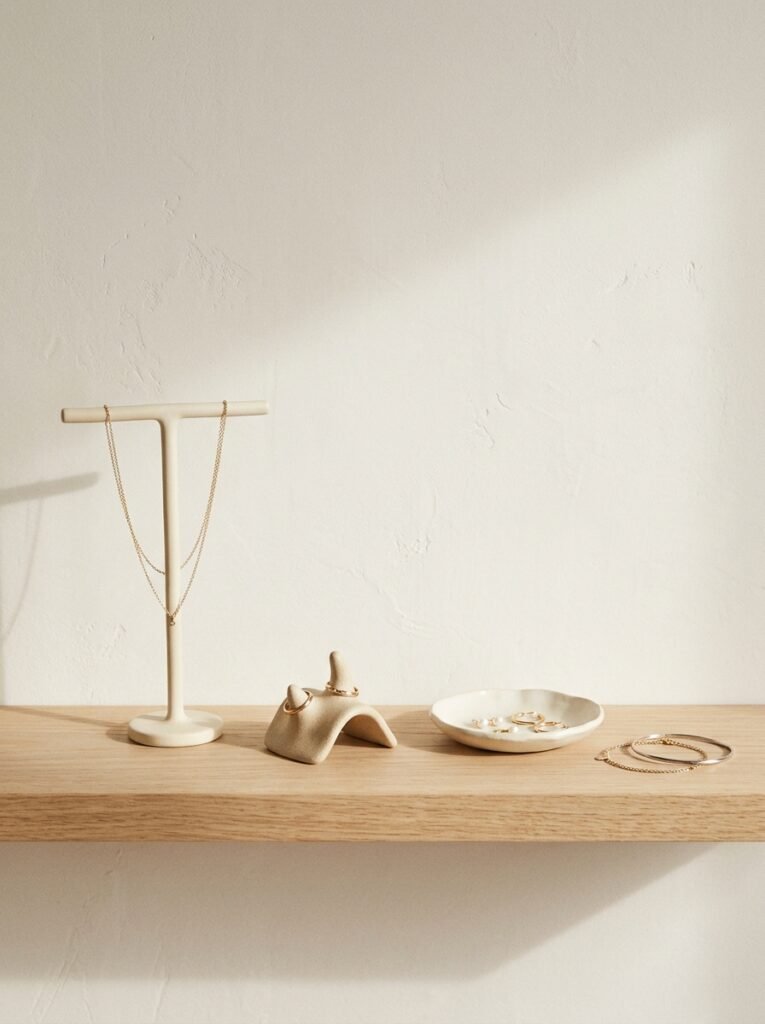
A minimalist jewelry display focuses on a small number of pieces and gives each one room to stand out. Select a few favorite necklaces, rings, or earrings and arrange them on simple stands or in individual trays, while storing the rest in closed compartments. Neutral materials such as ceramic, glass, pale wood, and soft fabric create a calm appearance without competing with the jewelry itself. This approach works especially well in modern bedrooms and small apartments where too many decorative objects can make the room feel cluttered. You can rotate the displayed pieces as your outfits and preferences change.
9. Organize Indian Jewelry With Separate Compartments
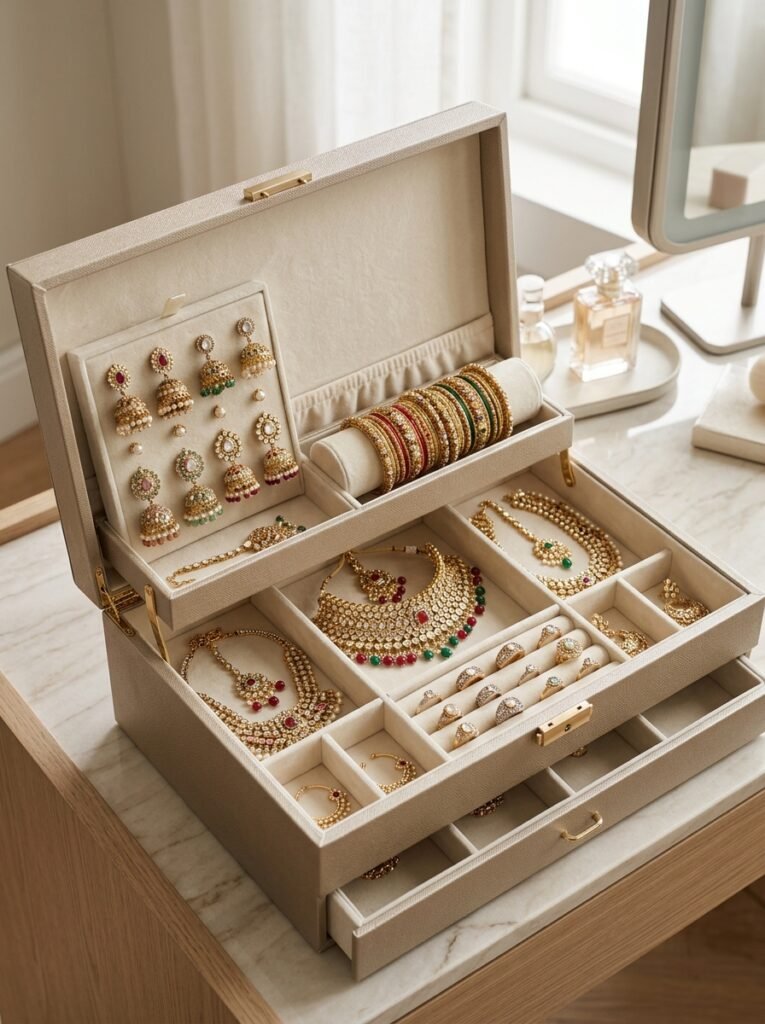
Indian jewelry collections may include jhumkas, bangles, necklaces, maang tikka sets, rings, and elaborate pieces worn for weddings or festivals. These items often vary greatly in size, so compartmentalized boxes are particularly helpful. Keep matching sets together, use wider sections for bangles and statement necklaces, and provide smaller padded compartments for earrings and delicate pieces. Store heavily embellished jewelry carefully to reduce scratching and snagging, and keep special-occasion items separate from everyday accessories. This system makes it easier to prepare a complete set for a celebration without searching through several containers.
10. Arrange Western Everyday Jewelry for Quick Access
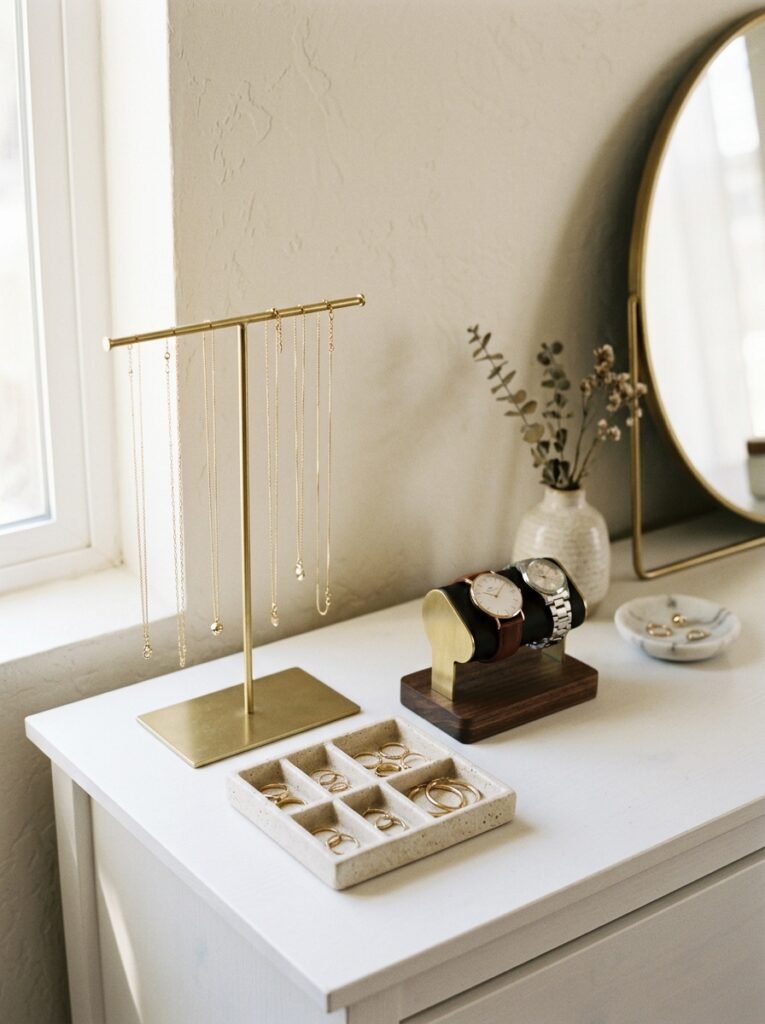
Everyday Western-style accessories such as delicate chains, small hoops, minimalist rings, watches, and layered bracelets benefit from a simple system that keeps frequently worn pieces together. Use a small compartment tray for rings and earrings, a necklace stand for longer chains, and a separate watch cushion or holder if needed. Store delicate chains individually instead of stacking them in a bowl, where they can easily tangle. Keeping daily essentials in one predictable location makes it easier to get ready quickly while allowing statement pieces and special-occasion jewelry to remain safely stored elsewhere.
11. Add a Jewelry Organizer to Your Dresser
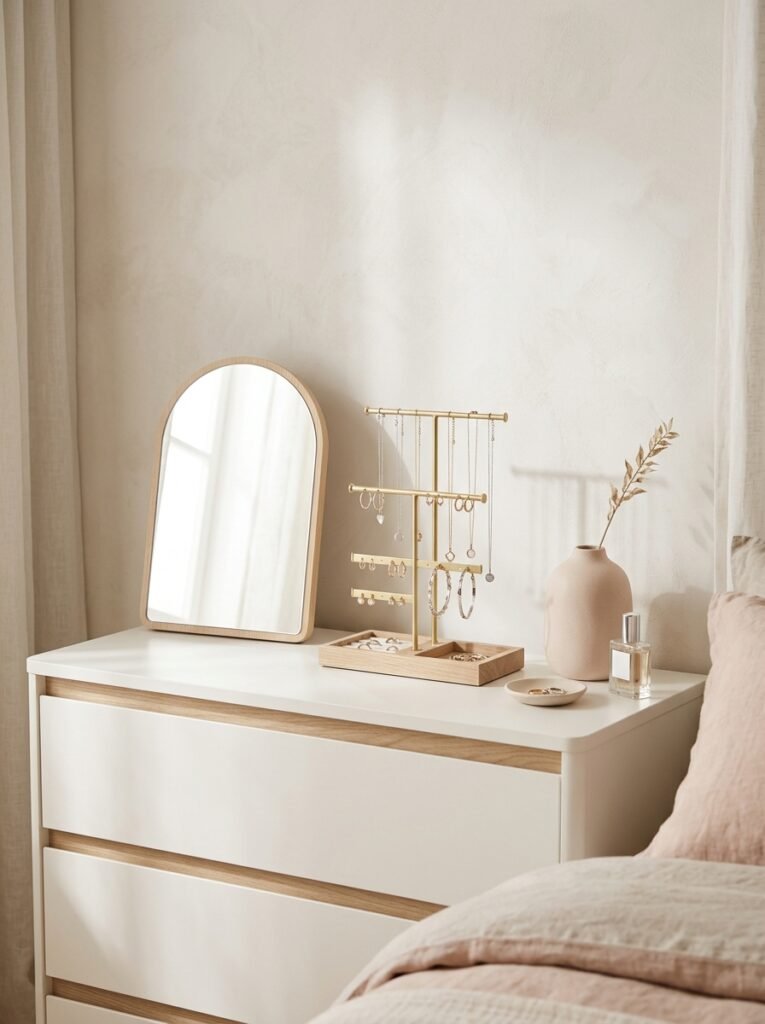
A dresser top can accommodate a jewelry organizer when you choose a compact design and keep the rest of the surface clear. A small multi-tier stand, divided box, or combination organizer can hold rings, earrings, and bracelets without spreading them across the furniture. Position it beside your mirror or near the items you use while getting dressed, but leave enough room for everyday activities. If the dresser is already crowded with skincare, books, or decorative objects, move the jewelry into a drawer instead. The aim is to make accessories accessible while preserving a tidy, attractive bedroom.
12. Organize Jewelry in a Dorm Room
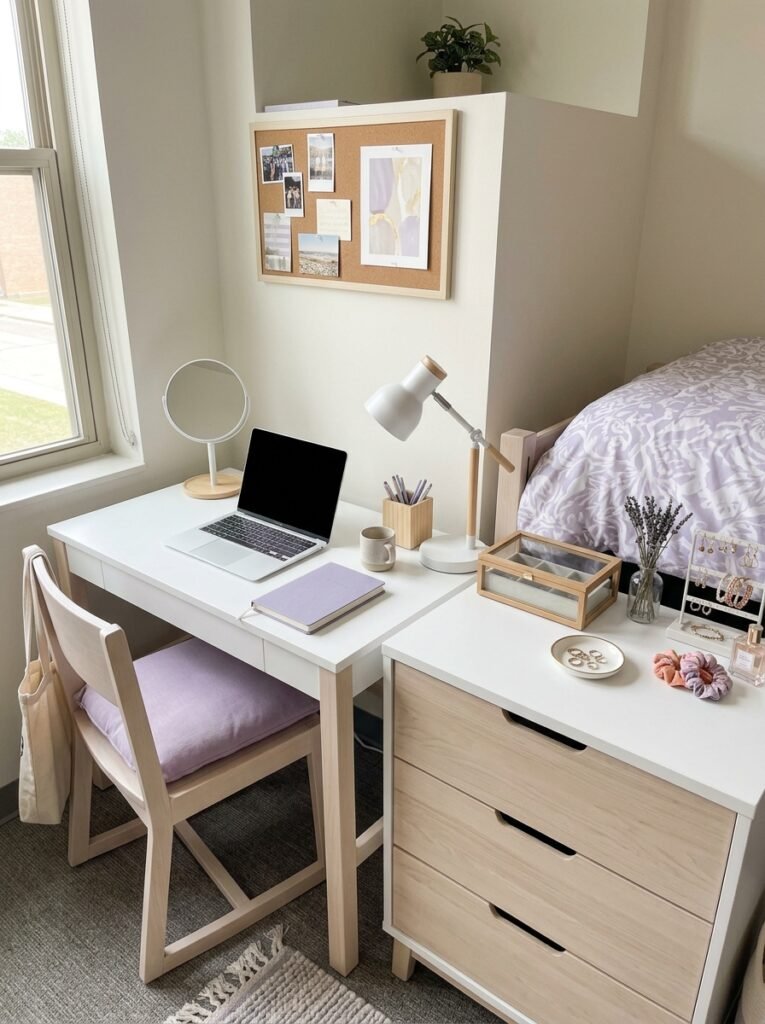
Dorm rooms usually have limited storage and shared surfaces, so compact jewelry solutions are often more useful than large display stands. Choose a small jewelry box with divided compartments, a travel case that fits inside a drawer, or a lightweight hanging organizer that can be stored away when not needed. Keep valuable pieces secured when you leave the room and avoid displaying your entire collection in a shared space. Separate everyday jewelry from special-occasion items so the pieces you use most are easy to find without taking over your desk or bedside table.
13. Make a Bathroom Jewelry Storage Plan
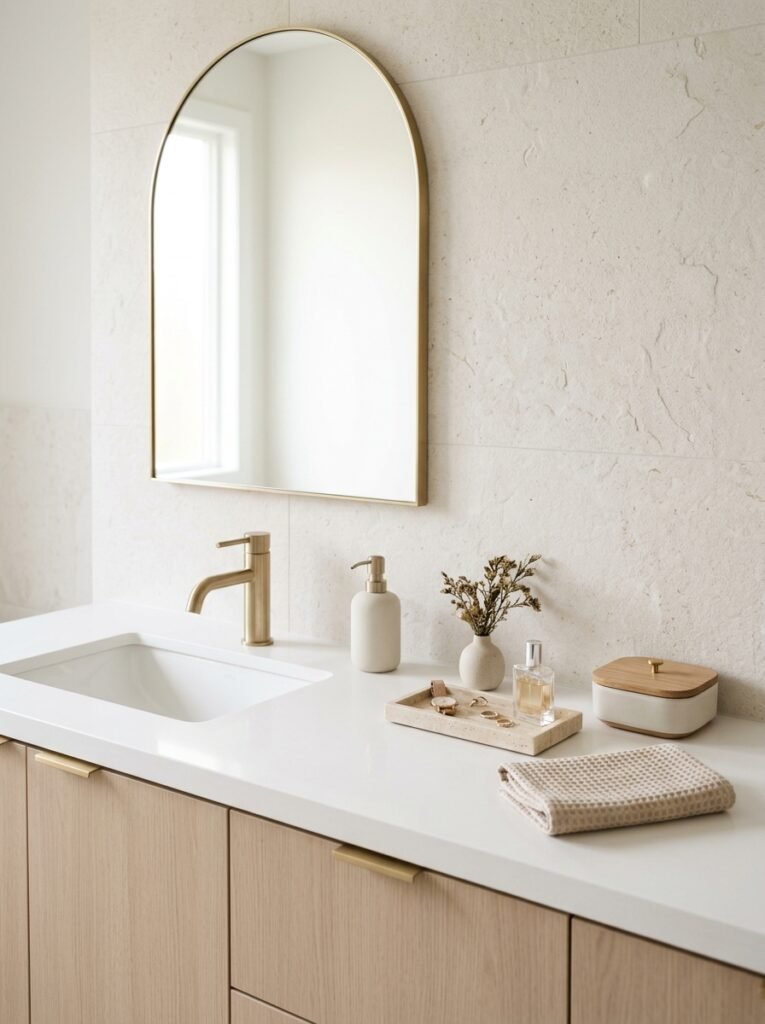
If you prefer getting ready in the bathroom, keep only a small selection of everyday jewelry in a dry, protected organizer away from the sink and shower. Humidity, steam, splashes, and cleaning products can damage or tarnish some materials, so the bathroom is generally not the best place for long-term jewelry storage. Use a lidded box or a dry drawer section for the pieces you wear frequently, and keep valuable, delicate, or sentimental items in a bedroom or closet organizer instead. This gives you convenience during your routine without exposing your entire collection to unnecessary moisture.
14. Use a Jewelry Drawer for Watches and Bracelets
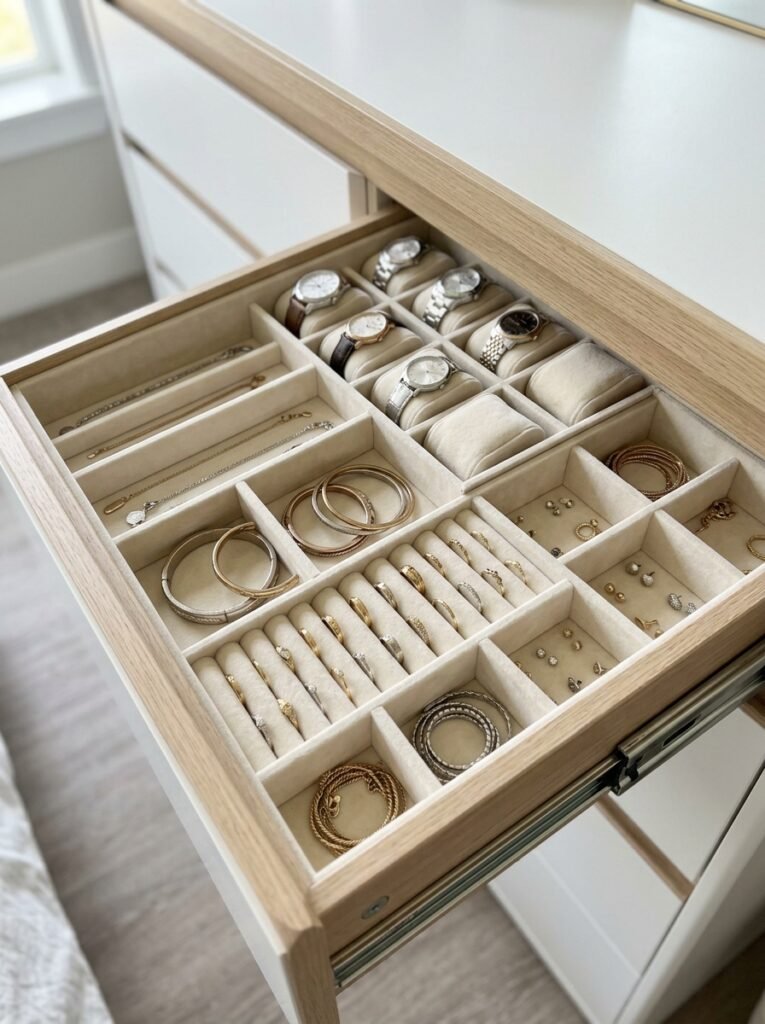
Watches and bracelets can scratch one another when they are stored loosely together, so a divided drawer helps protect them and keeps the collection easy to browse. Use individual compartments or suitable watch cushions to separate pieces, and reserve wider sections for bangles and chunky bracelets. Keep delicate chains and small rings in their own sections rather than allowing them to collect beneath larger accessories. A lined drawer organizer also creates a refined appearance when opened. Choose a design that fits the drawer depth and leaves enough space to close it without pressing against the contents.
15. Create a DIY Jewelry Organizer From Existing Materials
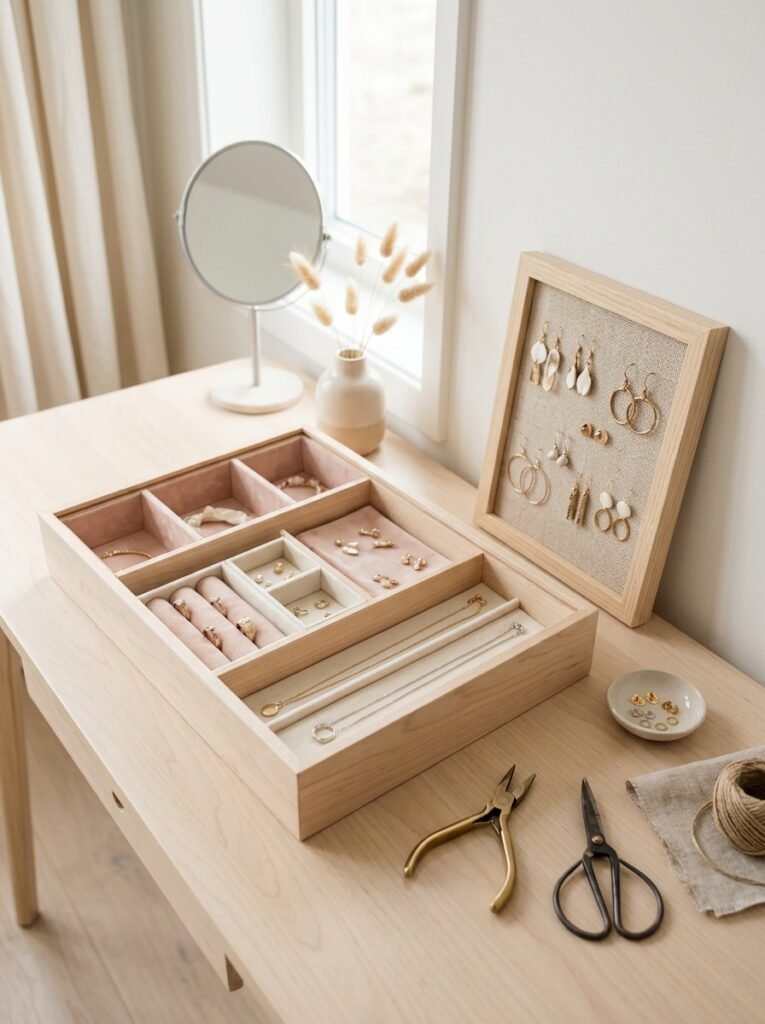
A DIY organizer can be an affordable way to adapt storage to your exact collection. Repurpose a suitable divided box for earrings and rings, add removable compartments to a drawer, or transform a simple frame into a display for lightweight earrings. Choose materials that will not snag chains or scratch delicate finishes, and ensure any hooks or wall fittings are secure. Before starting, sort your jewelry so you know how many sections you actually need. A customized organizer is most successful when it solves a specific problem rather than creating another decorative project that occupies valuable space.
16. Use a Small-Space Hanging Jewelry Organizer
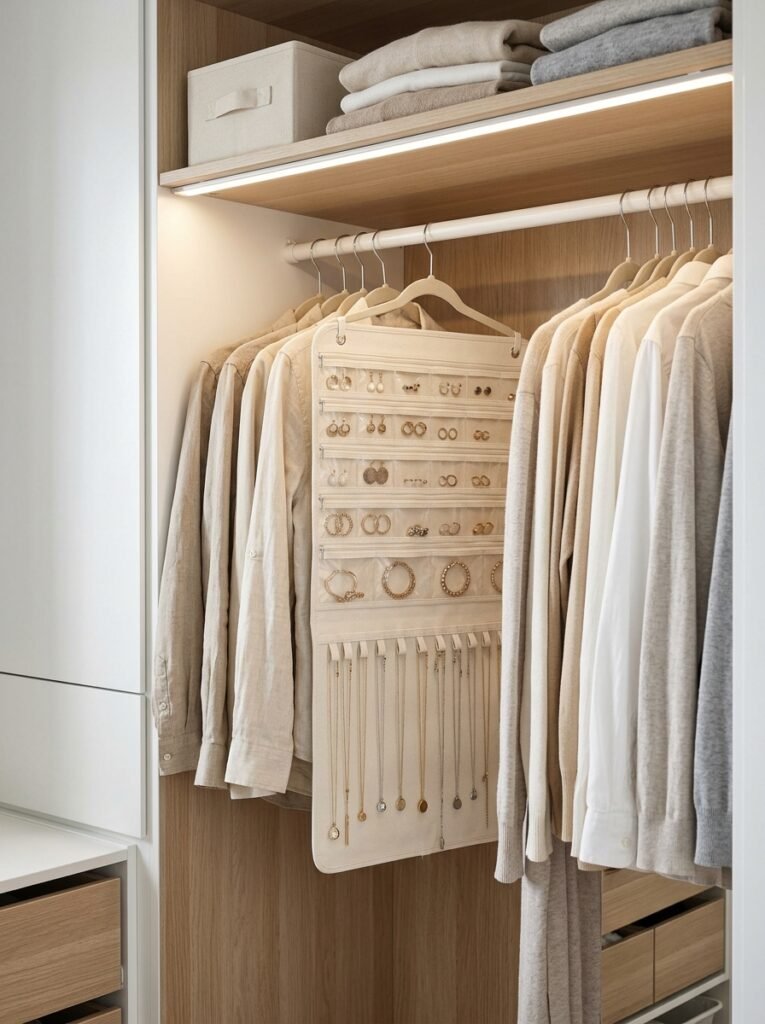
A hanging jewelry organizer is useful when you have little drawer space but enough room inside a wardrobe or on a suitable wall. Choose one with separate sections for necklaces, earrings, rings, and bracelets so items remain visible without mixing together. A fabric organizer with protective pockets can be convenient for small accessories, while a purpose-built hanging rack may work better for necklaces that tangle easily. Make sure the hanging point is secure and the organizer does not interfere with clothing or closet doors. This is a practical option for rental homes, compact bedrooms, and shared spaces.
17. Keep Makeup and Jewelry in Separate Zones
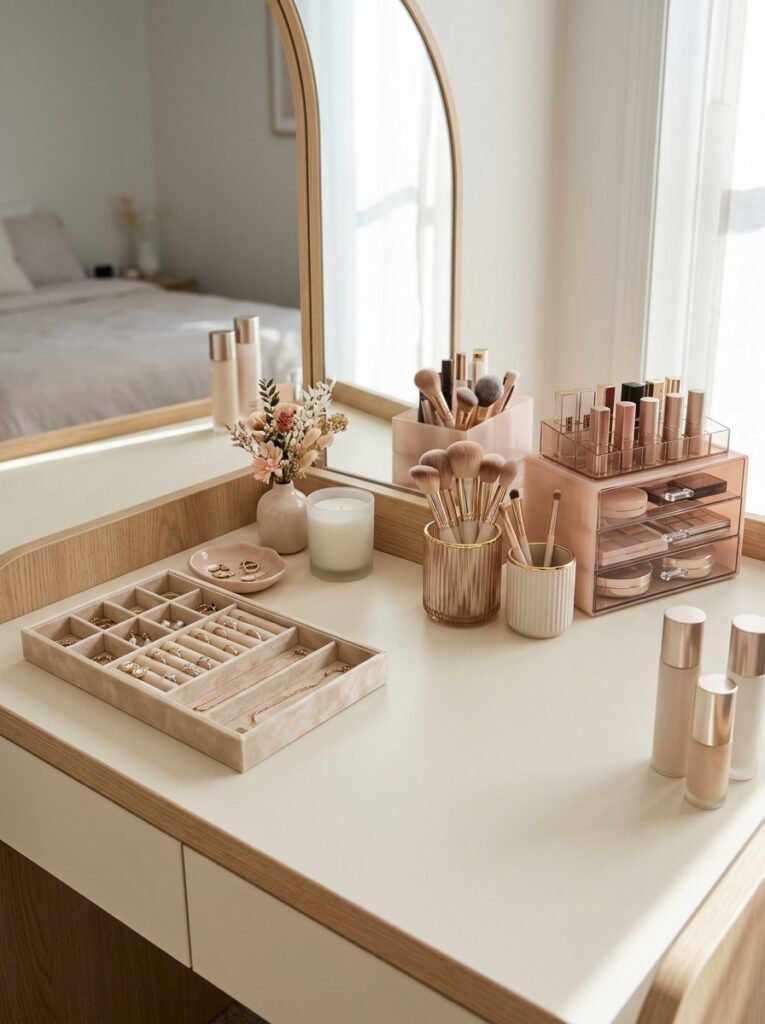
Makeup and jewelry often share the same vanity, but keeping them in separate zones prevents powder, creams, and accidental spills from reaching delicate accessories. Use one divided organizer for jewelry and another for makeup brushes, cosmetics, and skincare. Place frequently used products in easy-to-reach positions, while backup cosmetics and less-used jewelry can remain inside drawers. Leave a clear central area for getting ready and clean the surfaces regularly. This arrangement gives you the convenience of one beauty station without allowing small accessories to disappear among makeup products.
18. Organize Jewelry in a Master Closet
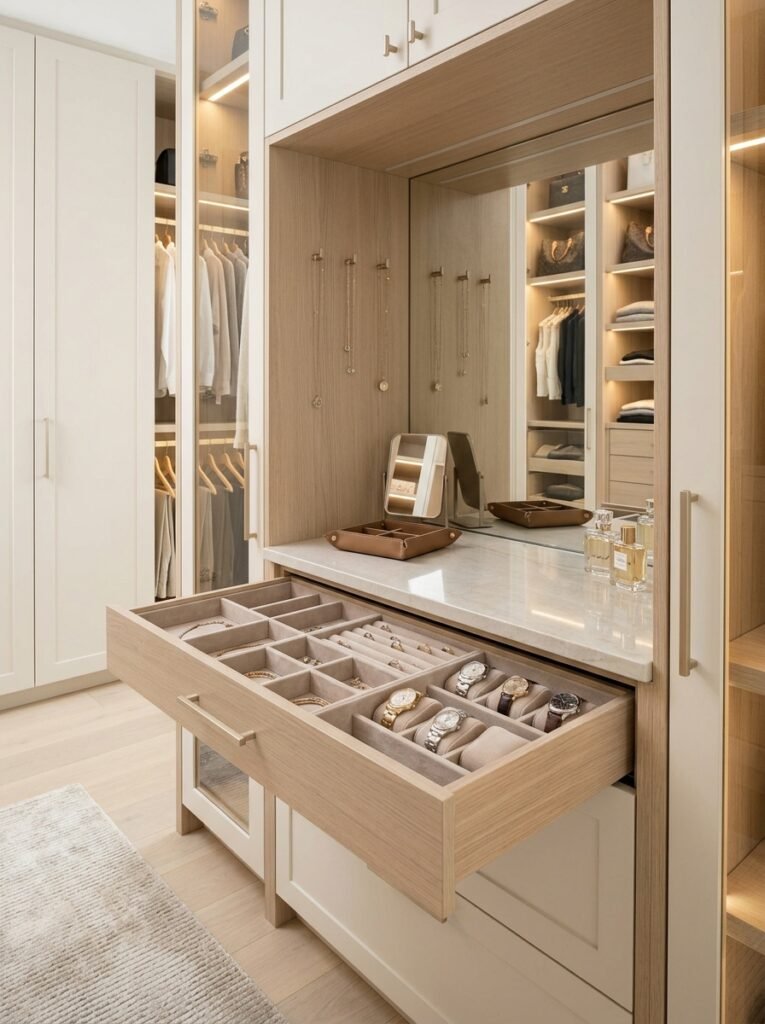
A master closet can include a dedicated accessory section that brings jewelry, watches, belts, handbags, and clothing together in one convenient dressing area. Use shallow drawers with divided inserts for small pieces, a secure hanging organizer for necklaces, and a compact display tray for the accessories you wear most often. Keep valuable jewelry in a protected location rather than leaving it exposed on open shelving. Position the organizer near your clothing and mirror so choosing accessories becomes part of your normal dressing routine. This setup is especially useful for larger collections that need more than a single jewelry box.
19. Create a Permanent Jewelry Display That Still Feels Tidy
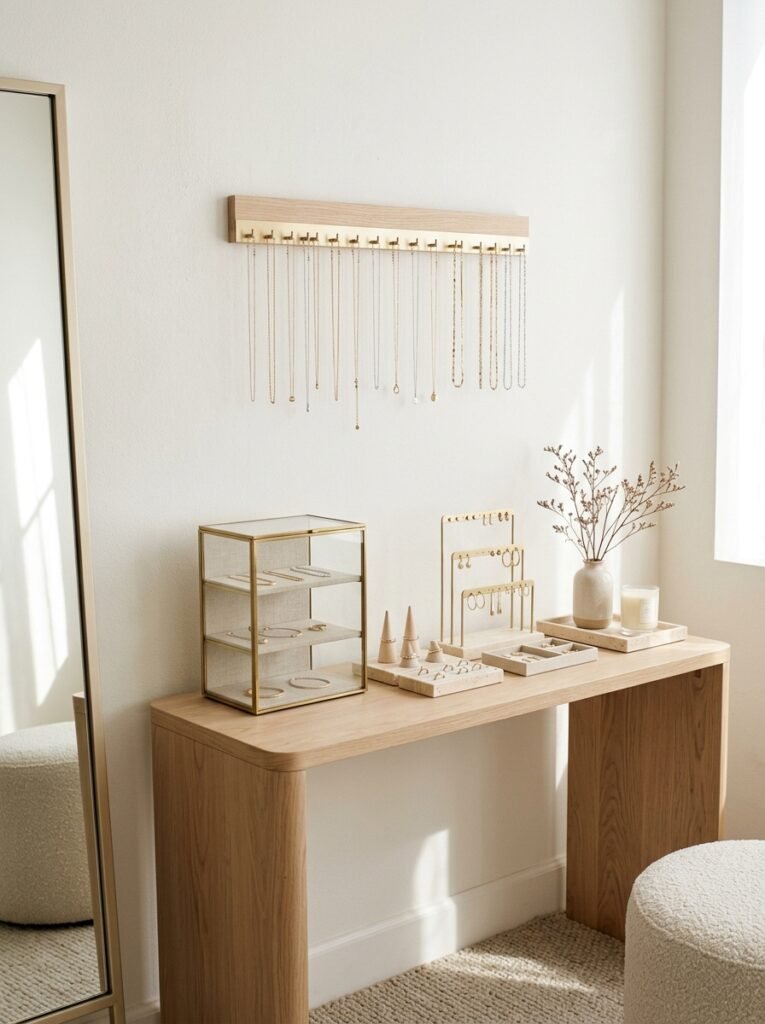
A permanent jewelry display can make a bedroom or dressing room feel personal, especially if you enjoy seeing your favorite accessories every day. Choose a designated shelf, wall panel, or enclosed display cabinet and arrange only a selected portion of your collection. Use hooks or stands that suit the weight and shape of each item, and leave space between pieces to prevent tangling. Valuable or delicate jewelry should remain protected when appropriate, rather than being exposed for decoration alone. A carefully curated display adds personality while keeping the room from feeling like a crowded accessories shop.
20. Create a Minimal Jewelry Reset Routine
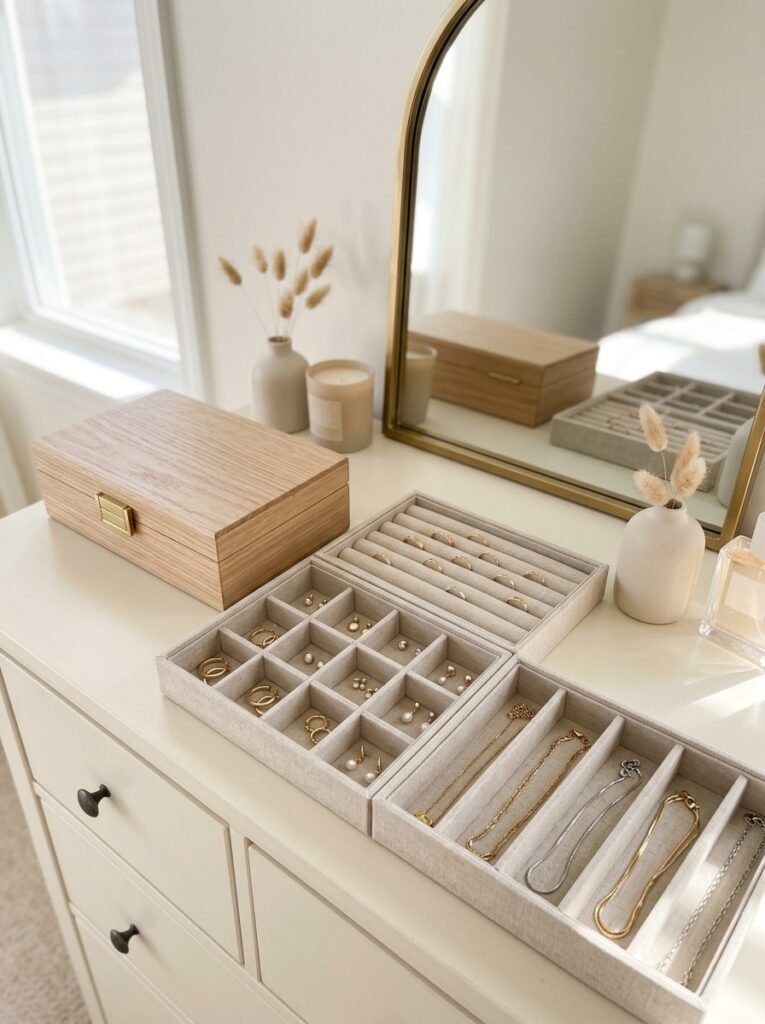
Even a well-organized collection can become messy when accessories are returned to random places after use. Make a simple habit of fastening necklaces before storing them, returning earrings to their paired compartments, placing rings in the same tray, and checking that lids and drawers are closed. Remove pieces that need repair and keep them in a separate container so they do not become mixed with jewelry ready to wear. A quick weekly review helps you notice missing pairs, tangled chains, and items you no longer use. Consistent habits keep your jewelry organization system practical over time.
How to Organize Jewelry Step by Step
Start by gathering your jewelry in one place so you can see the full collection. Separate earrings, necklaces, rings, bracelets, watches, and special-occasion pieces, then identify items that need repair or more protective storage. Measure your available drawer, dresser, closet, or wall space before choosing organizers. Keep everyday pieces accessible and valuable or delicate items protected. Once everything has a designated place, return accessories to that location after wearing them. This simple process makes it easier to maintain a tidy collection without constantly rearranging your storage.
Simple Tips for Better Jewelry Storage
- Separate delicate chains: Store necklaces individually to reduce tangling.
- Pair your earrings: Keep matching earrings together in divided compartments.
- Protect valuable pieces: Use suitable lined boxes or secure storage for delicate and sentimental jewelry.
- Keep moisture away: Avoid storing jewelry in humid bathrooms or near sinks.
- Use trays for everyday items: Display only the pieces you wear regularly.
- Avoid overcrowding: Leave enough room to remove accessories without disturbing others.
- Review your collection: Set aside broken or unworn items instead of allowing them to fill your best storage space.
Final Thoughts
The best jewelry organization system makes your favorite accessories easy to find, protects delicate pieces, and complements the way you get ready each day. Whether you prefer a DIY earring hanger, a minimalist vanity tray, a divided dresser drawer, or a dedicated master-closet display, choose storage that fits your collection and available space. You do not need an expensive jewelry cabinet to create a beautiful result. Start with a few practical organizers, keep similar items together, and build a simple routine that keeps everything in its place.