




This post may contain affiliate links. Please read my disclosure policy.
In This Article Show
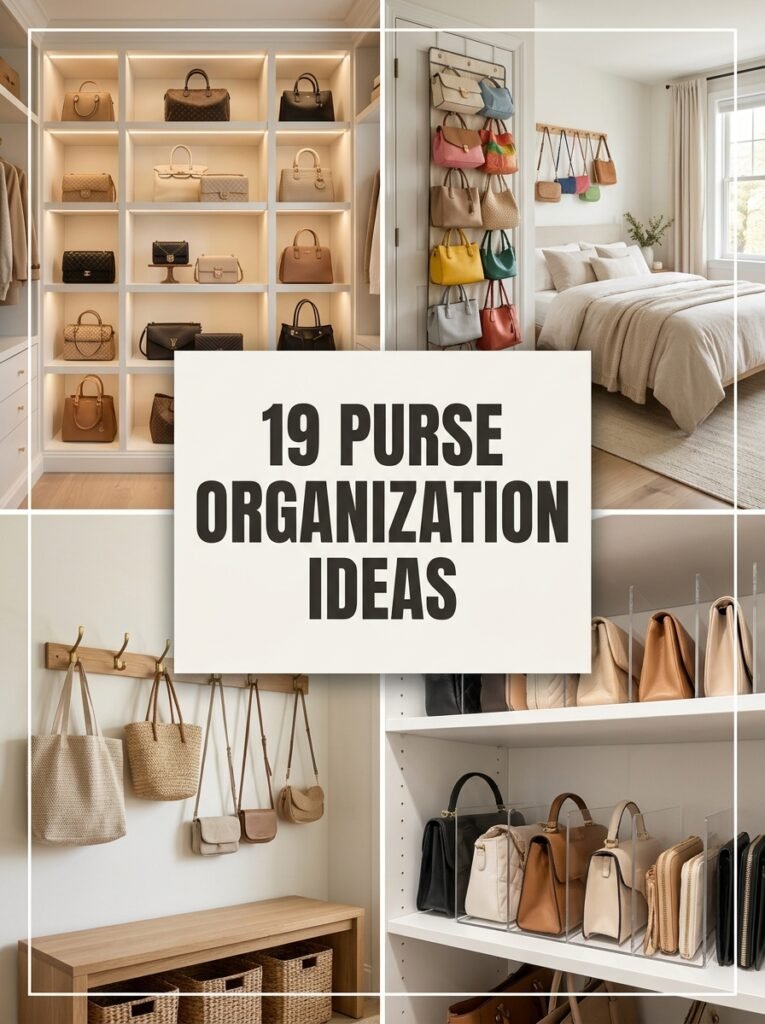
Handbags are more than everyday accessories. They can complete an outfit, express personal style, and make getting ready feel more enjoyable. However, when purses end up on chairs, inside crowded closets, or piled on bedroom shelves, even a beautiful collection can become difficult to manage. The right purse organization system helps you protect your bags, use your available space wisely, and find the perfect bag without searching through a pile. Whether you own a few everyday totes or a growing designer handbag collection, these ideas can help you create storage that is both practical and attractive. Before buying storage products, gather your bags in one place and group them by size, purpose, or frequency of use. Everyday handbags, work totes, school bags, special-occasion purses, and seasonal accessories may all need different storage solutions. Check which bags need more support to maintain their shape, and avoid squeezing delicate materials into tight spaces. Measure your closet, shelves, doors, or available wall area before choosing organizers. A good system should make every bag easy to reach while protecting its shape and keeping the room visually calm.
1. Arrange Purses on Dedicated Closet Shelves
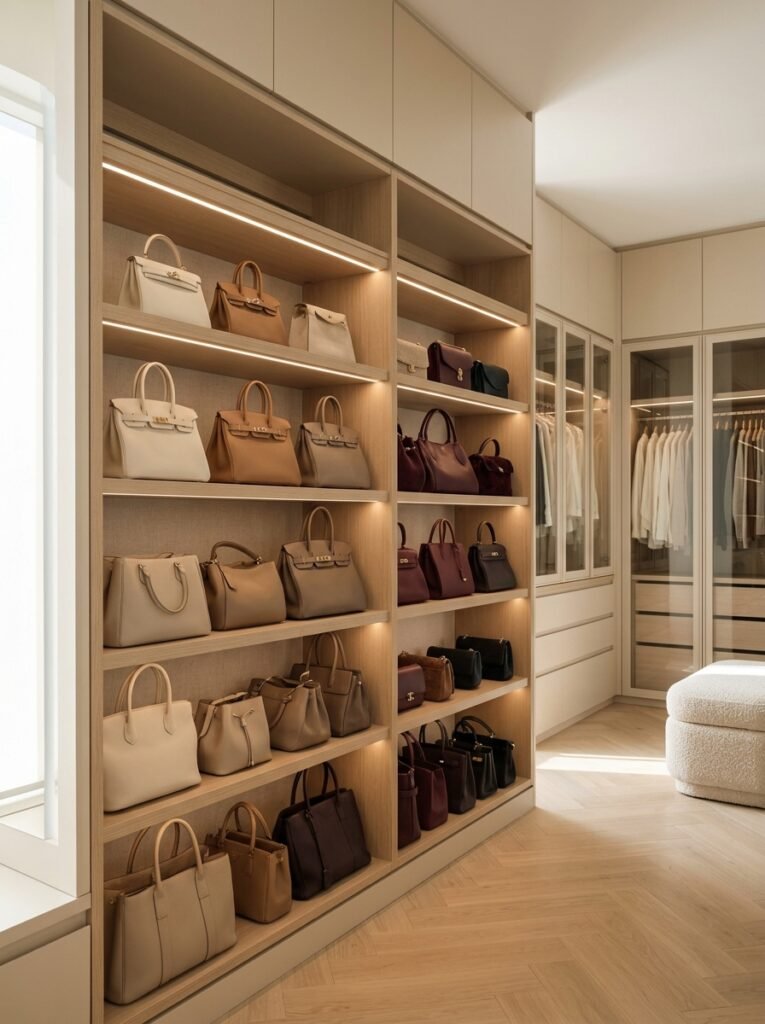
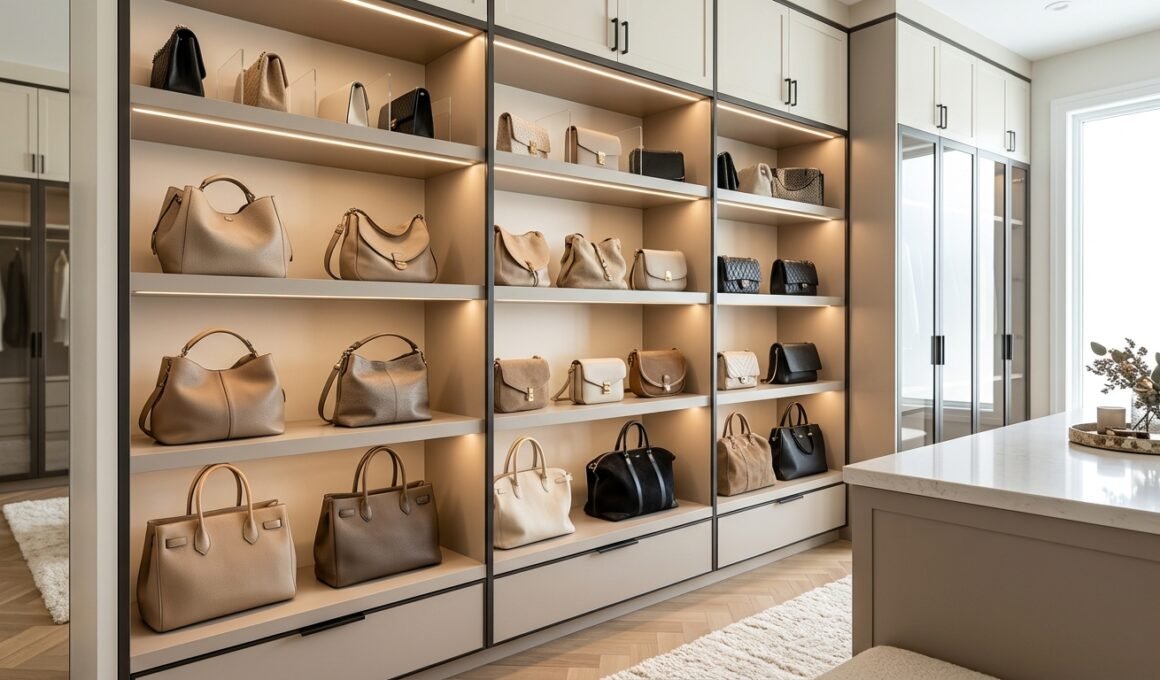
Dedicated closet shelves are one of the most practical ways to store a handbag collection because they keep bags visible and easy to access. Arrange handbags in a single row when possible, leaving enough room to remove each one without pulling on neighboring bags. Place larger bags toward the sides or on deeper shelves, while smaller purses can occupy narrower sections. You can organize the collection by color, size, or frequency of use, depending on your preferences. This method works especially well for walk-in closets because it creates a boutique-style display while keeping your collection protected from unnecessary handling.
2. Use Clear Dividers for Small Purses
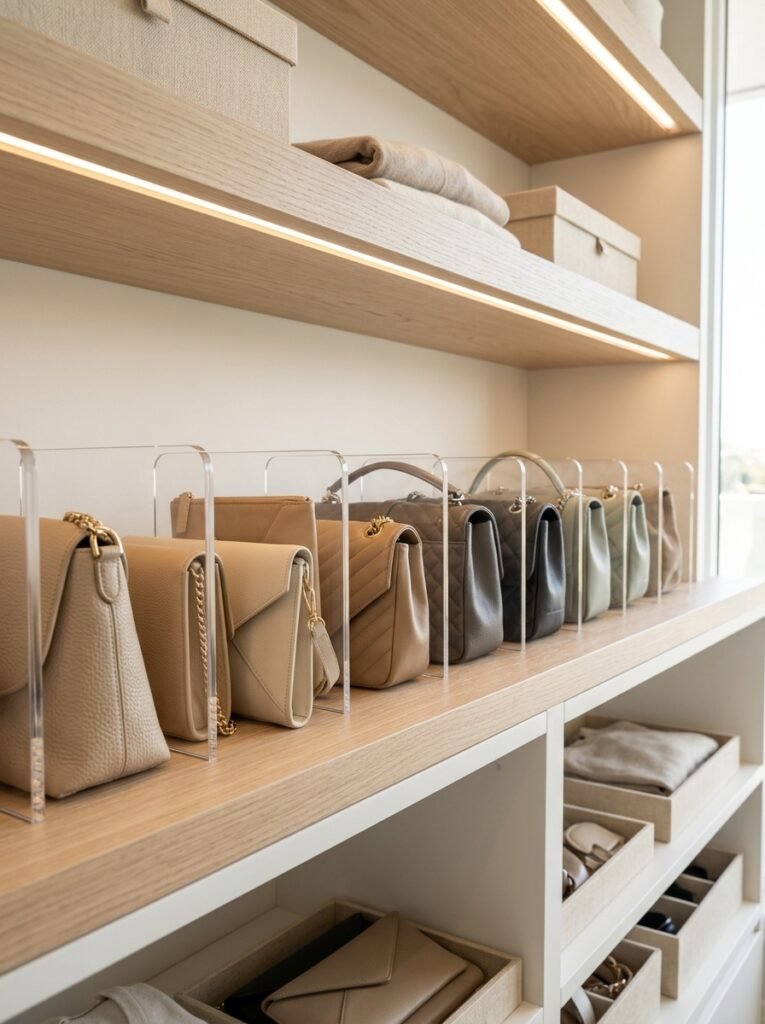
Small purses, clutches, and compact shoulder bags can easily become mixed together when stored on one shelf. Clear shelf dividers create separate spaces so each bag stays upright instead of leaning against the others. This is particularly useful for soft handbags that lose their shape when pressed together. Choose dividers that fit your shelf depth and leave enough space for handles and straps. Because transparent dividers do not visually overwhelm the storage area, they are an excellent choice for anyone who wants organized shelves without making the closet look crowded.
3. Create an Aesthetic Handbag Display
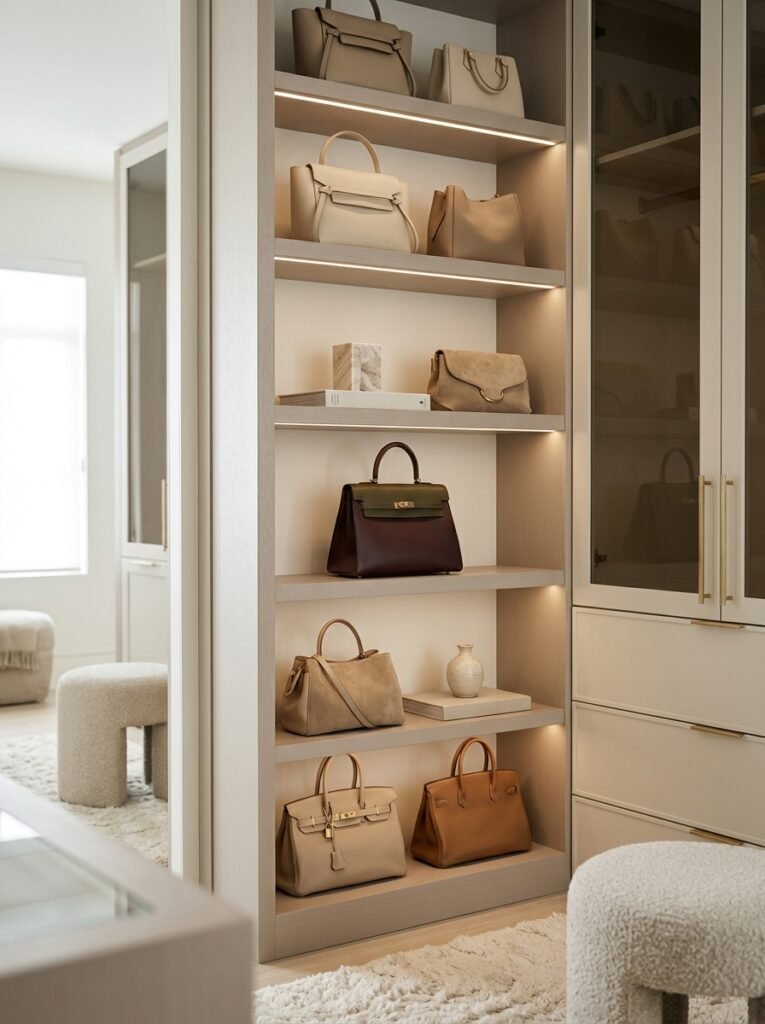
If your bags have beautiful colors, shapes, or details, turn a section of your closet or bedroom into an intentional display. Arrange a few favorite handbags on open shelves with enough space around each one to make the collection feel curated rather than crowded. You might group neutral bags together, create a gentle color gradient, or place one statement bag at the center. Keep decorative objects to a minimum so the handbags remain the main attraction. This approach combines storage with decor and works particularly well in dressing rooms, beauty rooms, and stylish bedrooms.
4. Make a Small Closet Work Harder
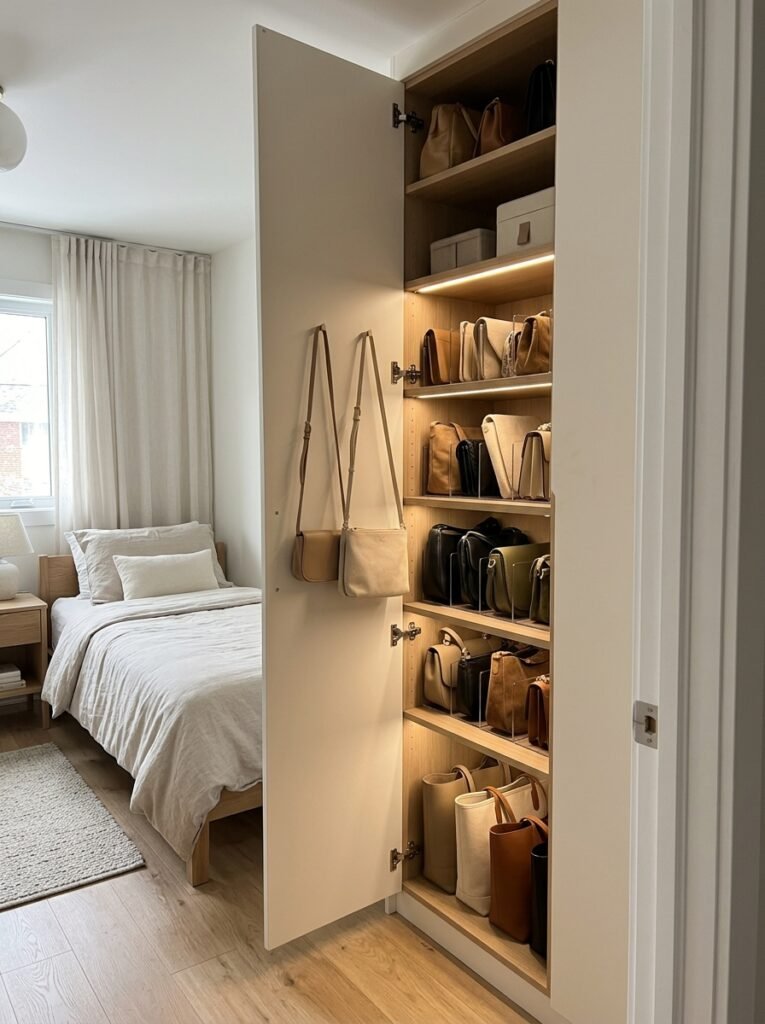
A small closet can still hold a useful purse collection if you make better use of vertical space and choose storage that matches your bags. Instead of stacking everything on one shelf, use compact shelf dividers, narrow upper shelves, or a suitable hanging organizer for lightweight bags. Keep frequently used handbags in the easiest-to-reach area and move occasional-use bags to higher shelves. Avoid overfilling the closet because compressed bags can lose their shape and become difficult to remove. A carefully planned layout can make even a narrow closet feel more organized without requiring a major renovation.
5. Store Designer Bags With Extra Care
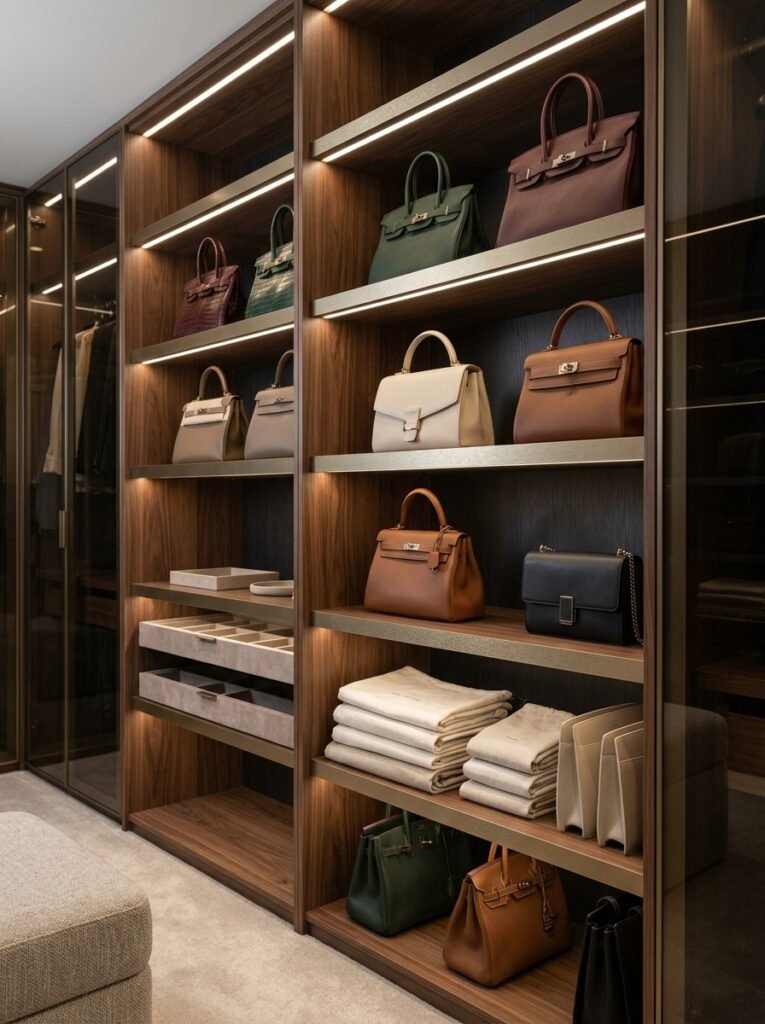
Designer handbags often need more careful storage because delicate leather, structured shapes, decorative hardware, and special finishes can be damaged by pressure or friction. Give each valuable bag enough space to stand naturally, and use suitable clean dust bags when recommended for the material. Gently support structured bags with appropriate stuffing so they retain their shape, without stretching them. Avoid placing heavy bags on top of delicate ones, and keep the collection away from direct sunlight and excessive humidity. This approach protects the bags while allowing you to enjoy a neat, high-end closet display.
6. Organize Everyday Bags Near the Closet Entrance
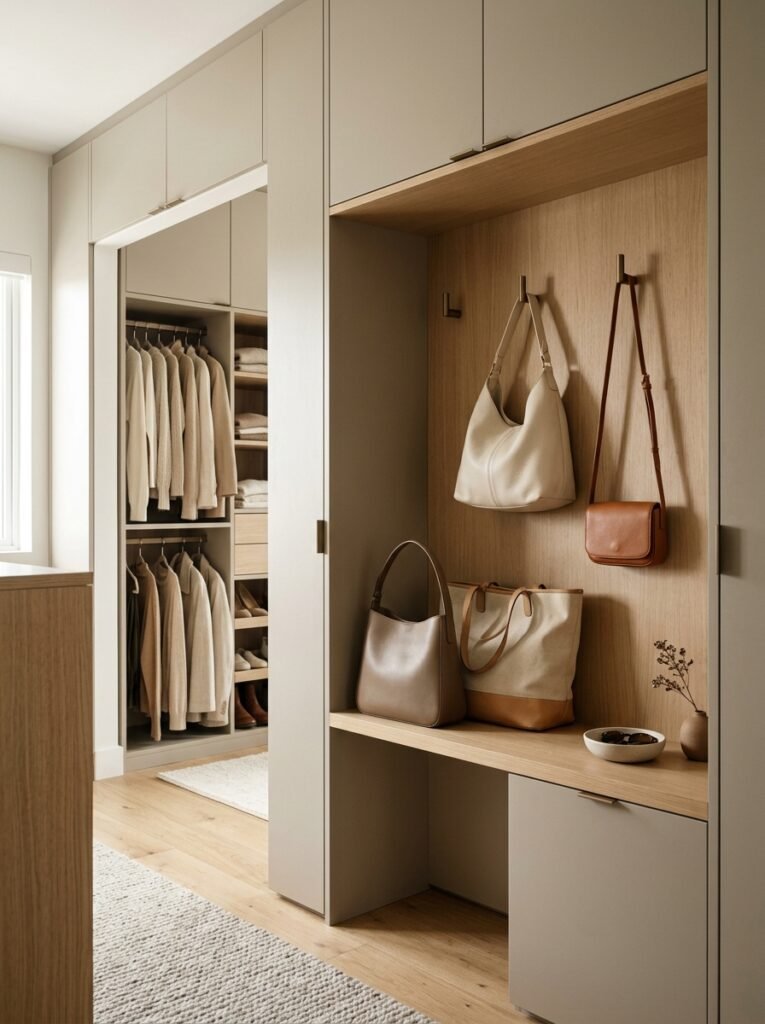
The bags you use most often should be easy to grab when leaving home. Create a dedicated section near the closet entrance or dressing area for your everyday handbag, work tote, and frequently used crossbody bag. Keep the arrangement simple so you can identify the right bag quickly without moving the rest of your collection. If you change bags regularly, a small shelf or a few well-spaced hooks can make switching between styles much easier. This system is especially helpful during busy mornings because it reduces the time spent searching for accessories.
7. Use Wall Hooks for Lightweight Bags
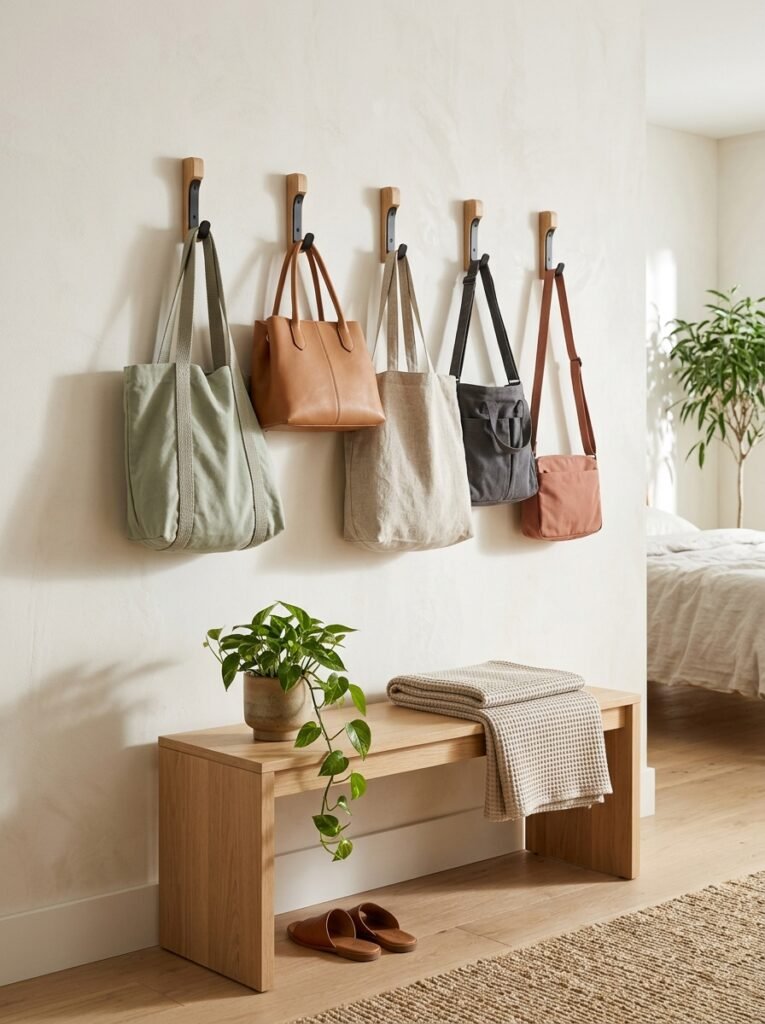
Wall hooks can free up valuable closet and shelf space, especially in a small bedroom or apartment. Install a neat row of sturdy hooks on a suitable wall or inside a closet, and use them for lightweight totes, fabric bags, and everyday purses that can comfortably hang by their straps. Check the manufacturer’s weight guidance and choose hooks that will not damage the bag handles. Avoid hanging heavy handbags for long periods if doing so could stretch their straps or distort their shape. Keeping the hooks evenly spaced makes this practical storage solution look deliberate and attractive.
8. Try an Over-the-Door Purse Organizer
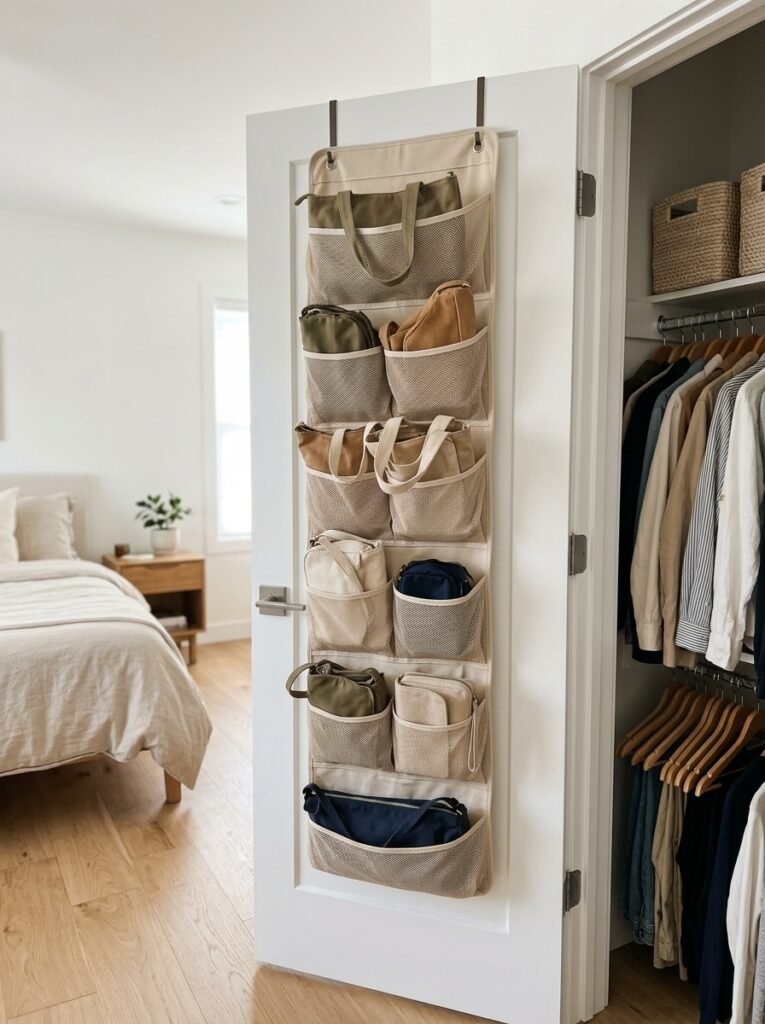
An over-the-door organizer is useful when a closet has limited shelving and there is unused space behind the door. Choose a sturdy organizer with appropriately sized compartments or hooks, depending on the type of bags you want to store. It works best for lightweight purses, small totes, and fabric bags rather than heavy or delicate designer handbags. Make sure the door can close without pressing against the bags, and check that the organizer does not scratch the door or interfere with its hinges. This simple solution adds storage without taking up valuable floor space.
9. Organize Tote Bags Vertically
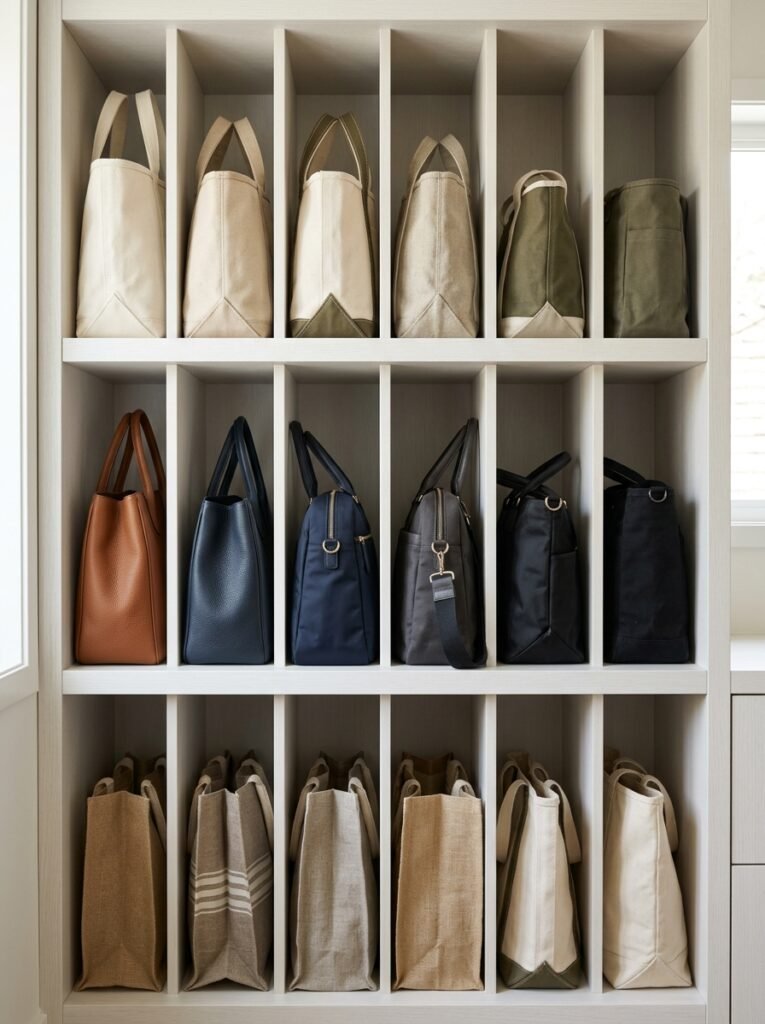
Tote bags often become a bulky pile because they are flexible, vary in size, and may have long handles. Fold only the bags that can be safely folded without damaging their material or construction, and place them vertically in a suitable bin or compartment. Structured totes should be stored upright with enough room to maintain their shape. If you use different totes for shopping, work, travel, or errands, separate them into categories so the right bag is easy to find. This method works well in closets, bedroom cupboards, and utility storage areas.
10. Add a Purse Shelf to Your Bedroom
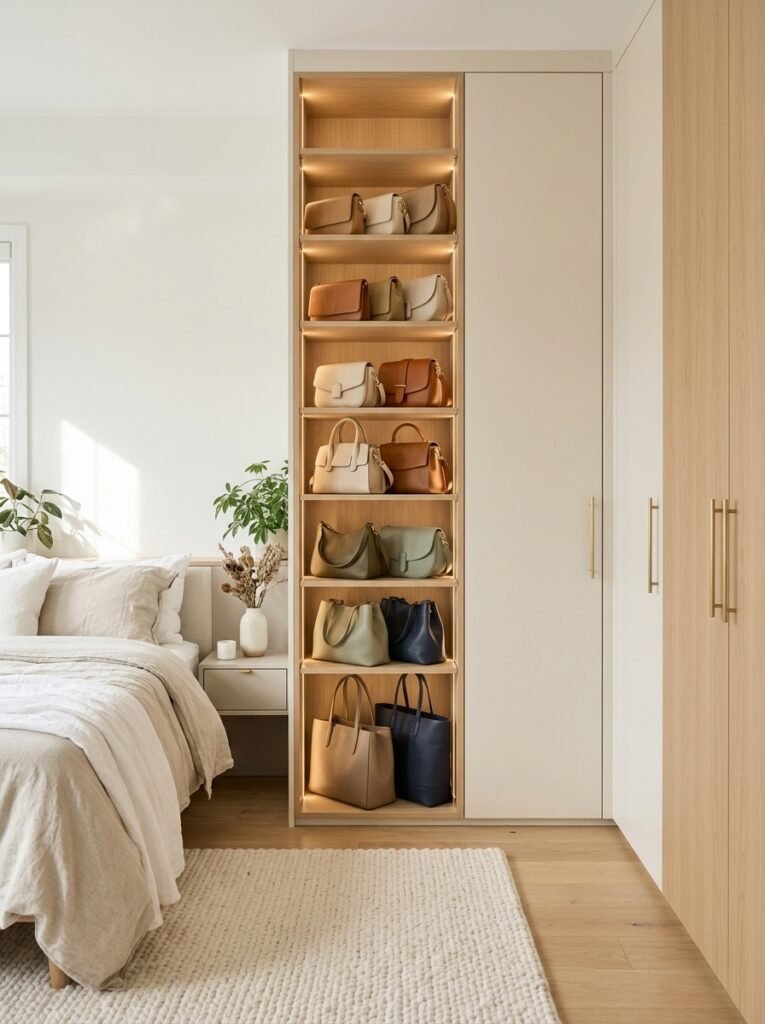
If your bedroom closet is already full, a dedicated shelf can create additional storage without requiring a completely new wardrobe. Choose a sturdy shelf or a compact storage unit that complements your bedroom furniture, then arrange only the bags you want to keep accessible. Use a shelf height that allows the bags to stand naturally, and avoid placing the unit in a spot exposed to strong direct sunlight. This is especially helpful in shared bedrooms where closet space is limited. A thoughtfully styled shelf can serve as both functional storage and a decorative feature.
11. Use Bins for Seasonal and Occasional Bags
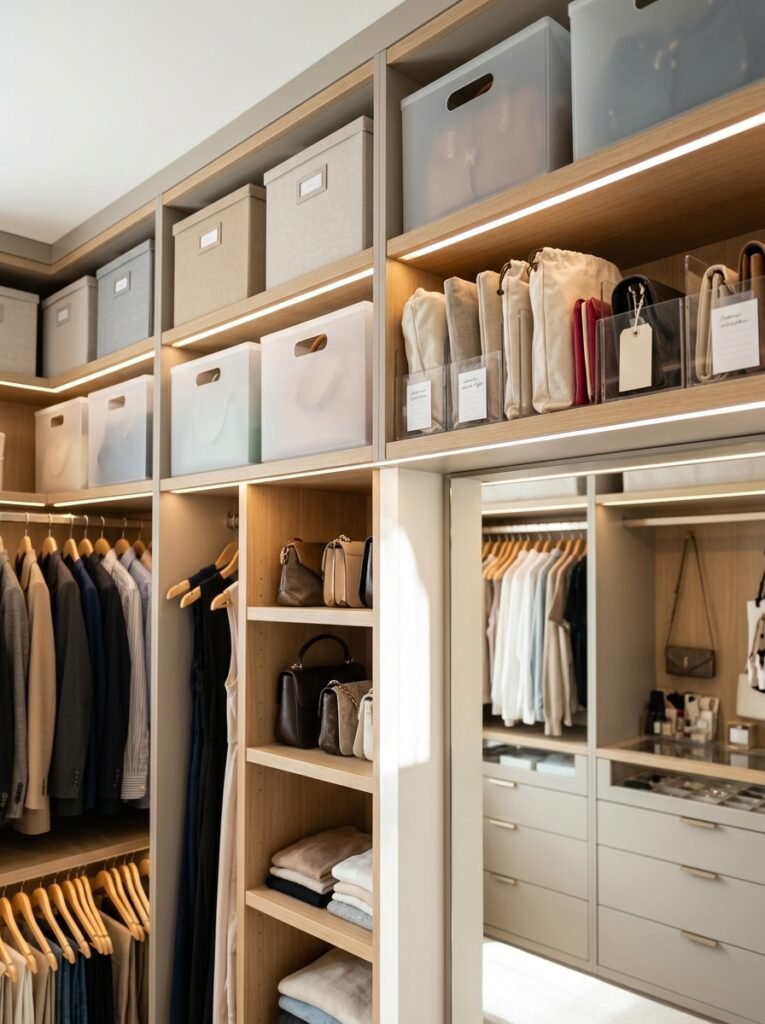
Not every handbag needs to stay on display all year. Special-occasion clutches, seasonal colors, and bags you rarely use can be stored in clean, suitable containers on a high closet shelf. Choose bins that protect the contents from dust without squeezing the bags together, and label the containers so you can find what you need later. Keep delicate bags in appropriate dust bags and avoid storing materials in conditions that could trap moisture. This approach leaves the most accessible shelves available for everyday handbags while keeping the full collection organized.
12. Create a DIY Purse Organizer
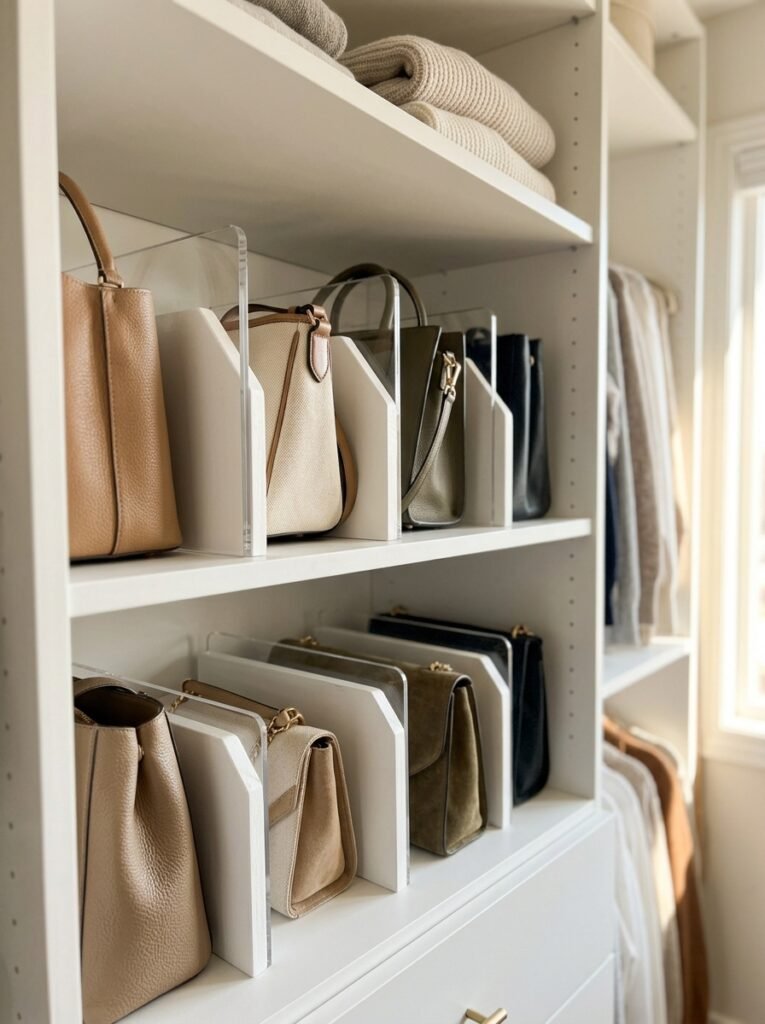
A DIY purse organizer can be a useful solution when your collection includes unusual bag sizes or your closet does not fit standard organizers. You can adapt a sturdy shelf insert, compartmentalized storage box, or simple divider system to create spaces that match your bags. Before assembling anything, measure the available width and depth, and make sure the finished organizer can support the weight of your collection. Smooth edges and stable construction are important to prevent scratches and tipping. A well-planned DIY project lets you customize the layout without buying a complete closet system.
13. Organize School Bags and Backpacks Separately
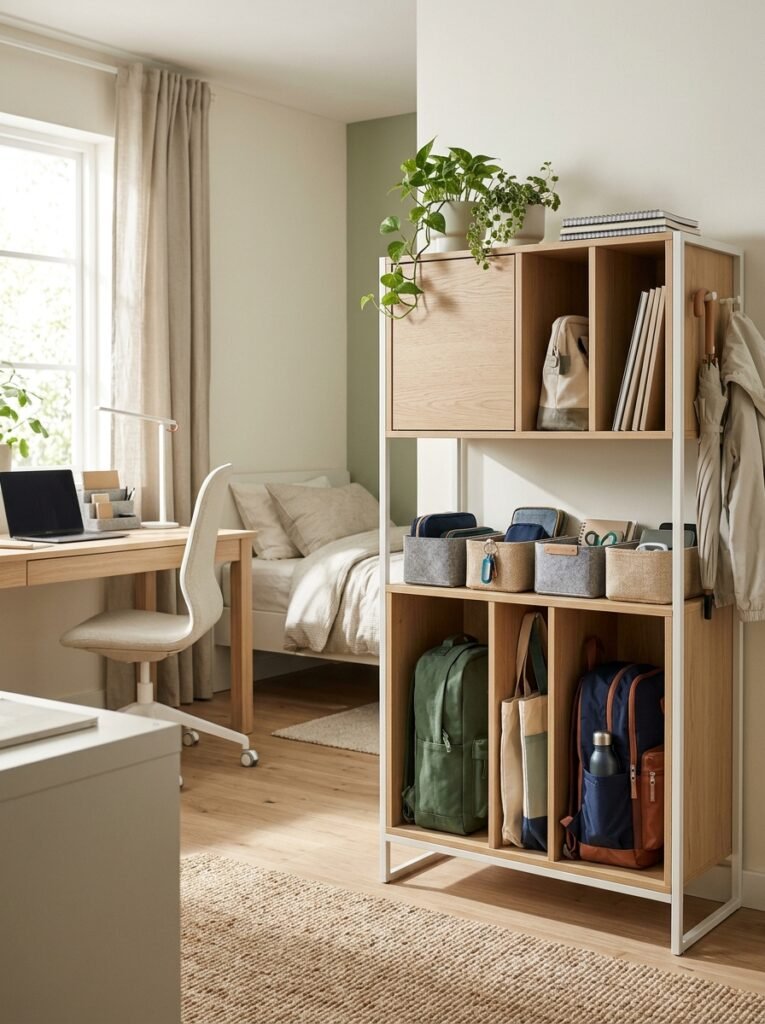
School bags and backpacks often need more practical storage than fashion purses because they may be larger, heavier, and used daily. Create a separate zone near the entryway, bedroom closet, or study area so school bags do not crowd delicate handbags. A sturdy shelf or appropriately rated hooks can keep backpacks off the floor, while smaller school accessories can be stored in nearby bins. Empty bags regularly and avoid storing damp items inside them. Separating school bags from fashion accessories keeps the whole collection easier to manage and makes weekday mornings less stressful.
14. Make a Small Room Feel Less Cluttered
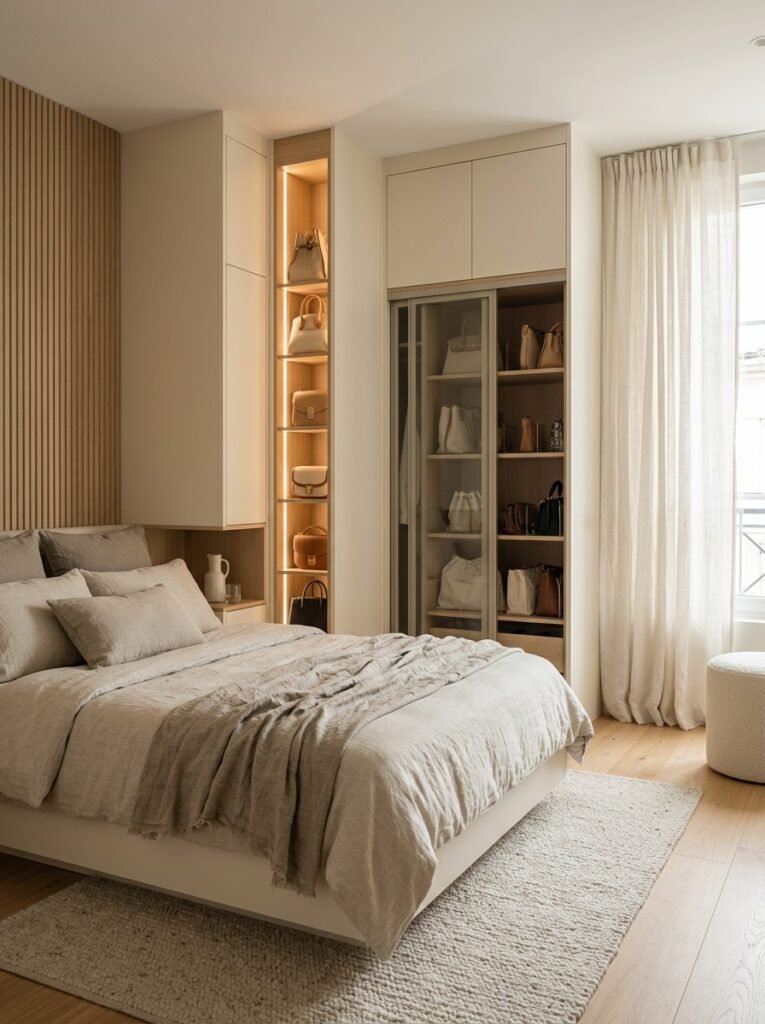
When a bedroom is small, visible piles of handbags can make the entire room feel crowded. Instead of displaying every bag, choose a compact selection for a shelf and store the remaining collection in the closet. Matching storage containers and consistent spacing can help the area look calmer without requiring you to own fewer bags. Keep walkways clear and avoid placing storage units where they interfere with drawers or doors. The goal is to make your handbag collection accessible while allowing the room itself to feel open, comfortable, and easy to move around in.
15. Arrange Bags by Color for a Boutique Look
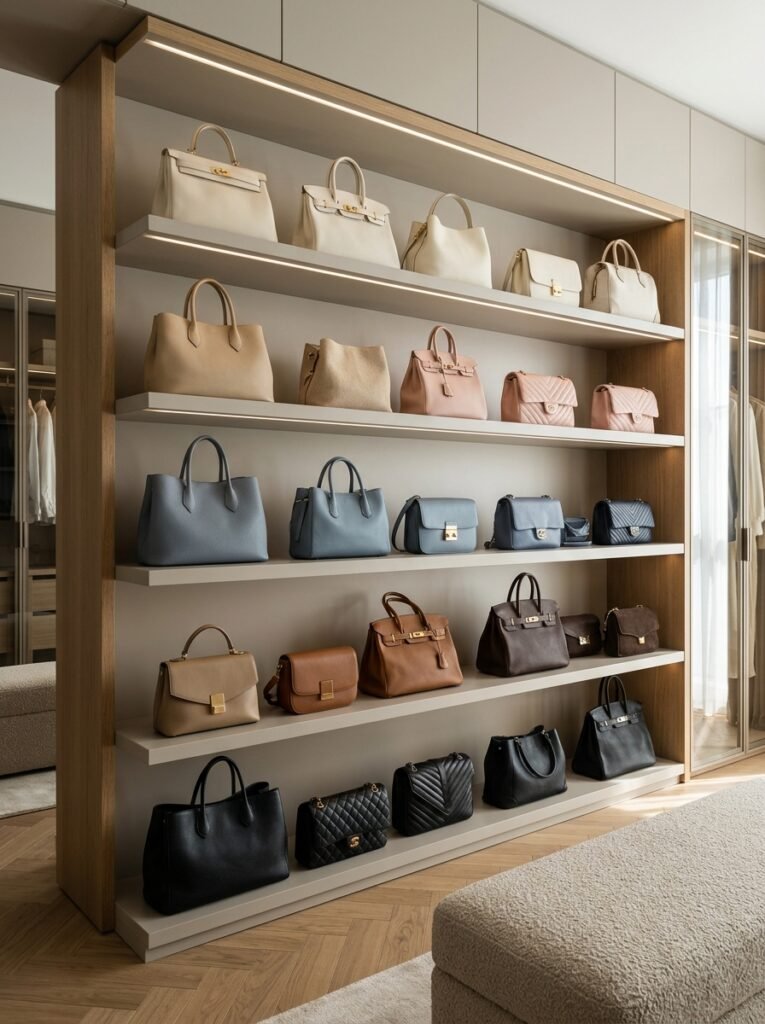
Color-based organization is a simple way to make open handbag storage look polished. Arrange bags in a gentle progression from light neutrals to darker shades, or group similar colors together if that suits your collection better. This method is especially attractive when bags are stored on visible closet shelves because the overall display feels balanced even when the styles differ. Keep size and material in mind as well, since a very large bag can visually overwhelm a shelf of small purses. You can always adjust the color arrangement as your collection changes.
16. Create a Mom Bag and Everyday Essentials Station
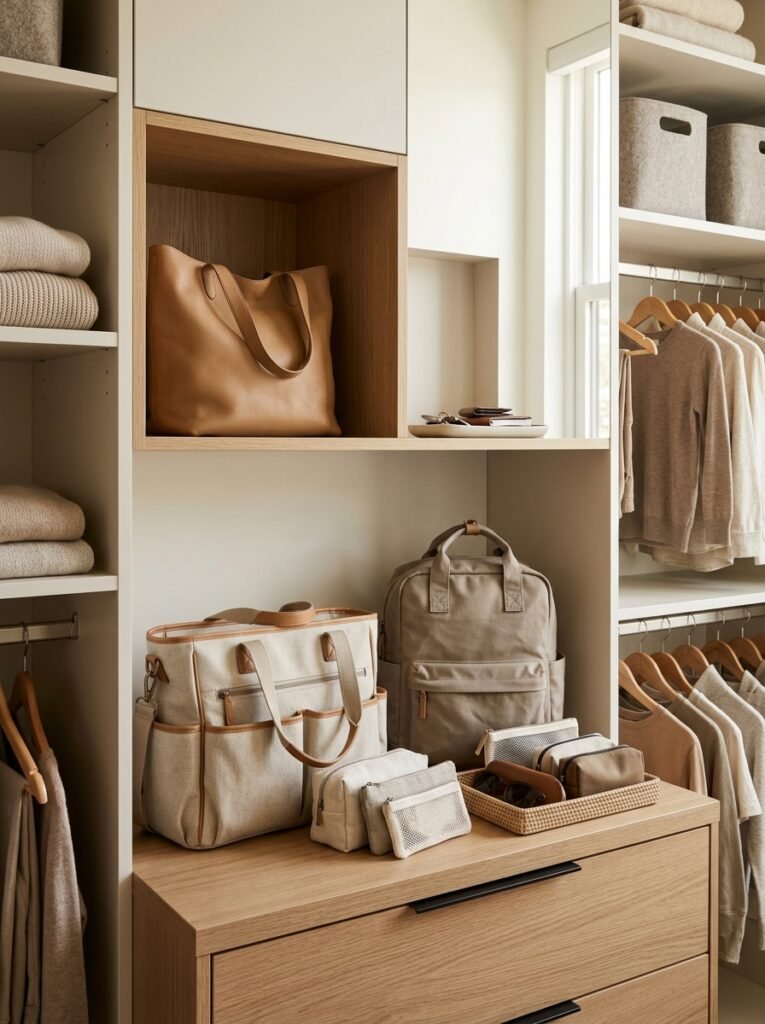
Parents often need a practical place for a larger everyday bag that carries family essentials. Create a dedicated station for a mom bag, diaper tote, or family backpack near the closet or bedroom entrance. A sturdy lower shelf can make the bag easier to reach, while a nearby small bin can hold accessories such as reusable pouches or spare organizers. Keep the bag’s contents in separate internal pouches so small items do not disappear at the bottom. This setup makes daily outings easier while keeping the rest of your handbag collection separate and tidy.
17. Use Clear Storage for Clutches and Small Bags
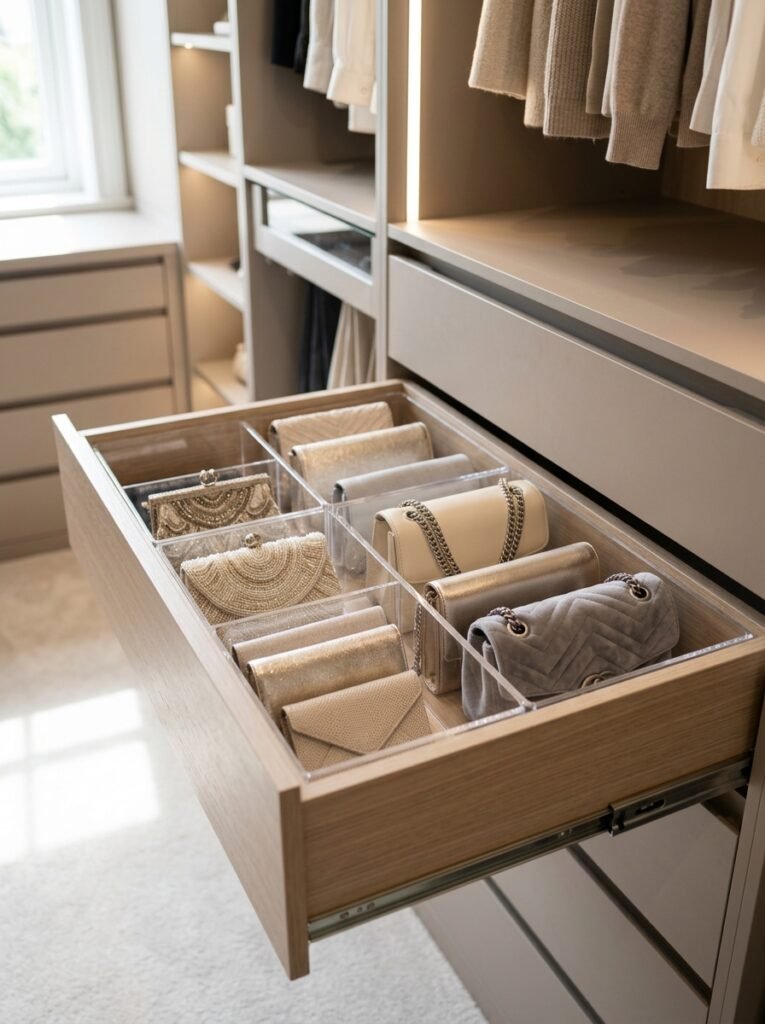
Clutches and mini bags can be difficult to organize because they are small, often have delicate closures, and may slide behind larger handbags. Transparent storage boxes or shallow compartments allow you to see each piece without opening several containers. Place bags individually so decorative details and hardware do not rub against neighboring items. If a clutch has a chain strap, tuck it in carefully using a soft protective layer where appropriate. This is an excellent option for people who want to preserve special-occasion bags while keeping them easy to find.
18. Keep the Inside of Your Closet Organized
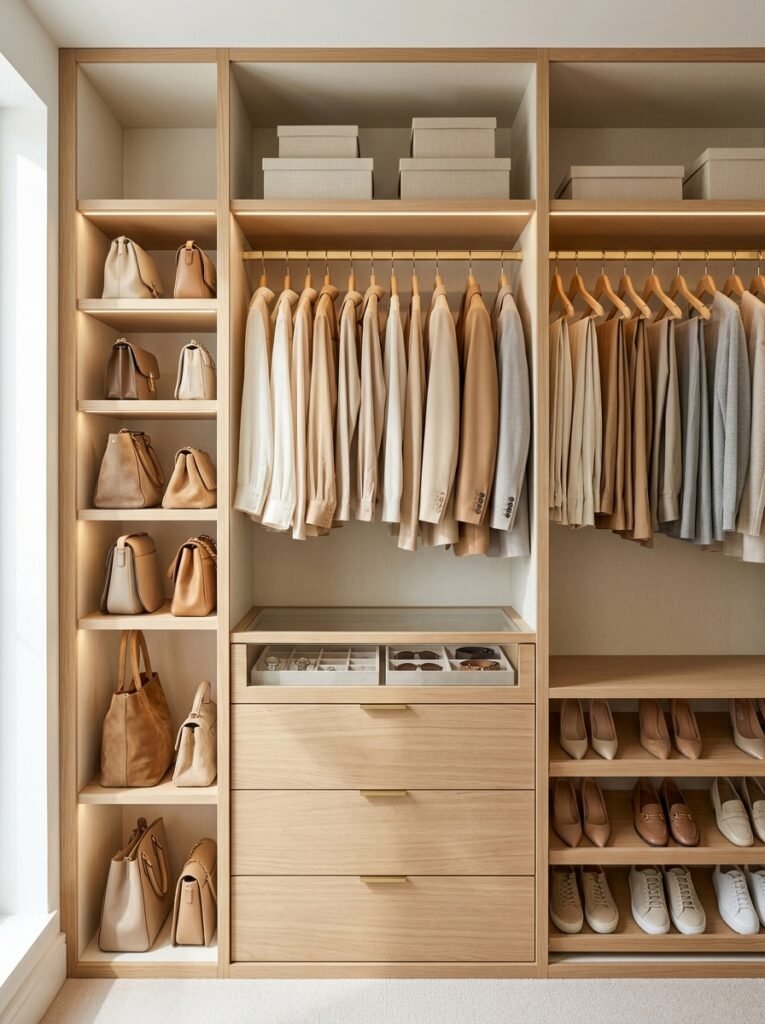
The inside of a closet can become crowded even when the outside looks neat. Create clear zones for handbags, clothing, shoes, and accessories so one category does not spill into another. Place purses on shelves or in suitable compartments instead of squeezing them between hanging clothes. If space is limited, move occasional-use bags to a higher shelf and keep everyday styles near the front. Regularly check whether bags are being compressed by nearby items. A well-organized closet interior makes it easier to maintain the whole bedroom and prevents handbags from becoming an afterthought.
19. Maintain Your Purse Organization System
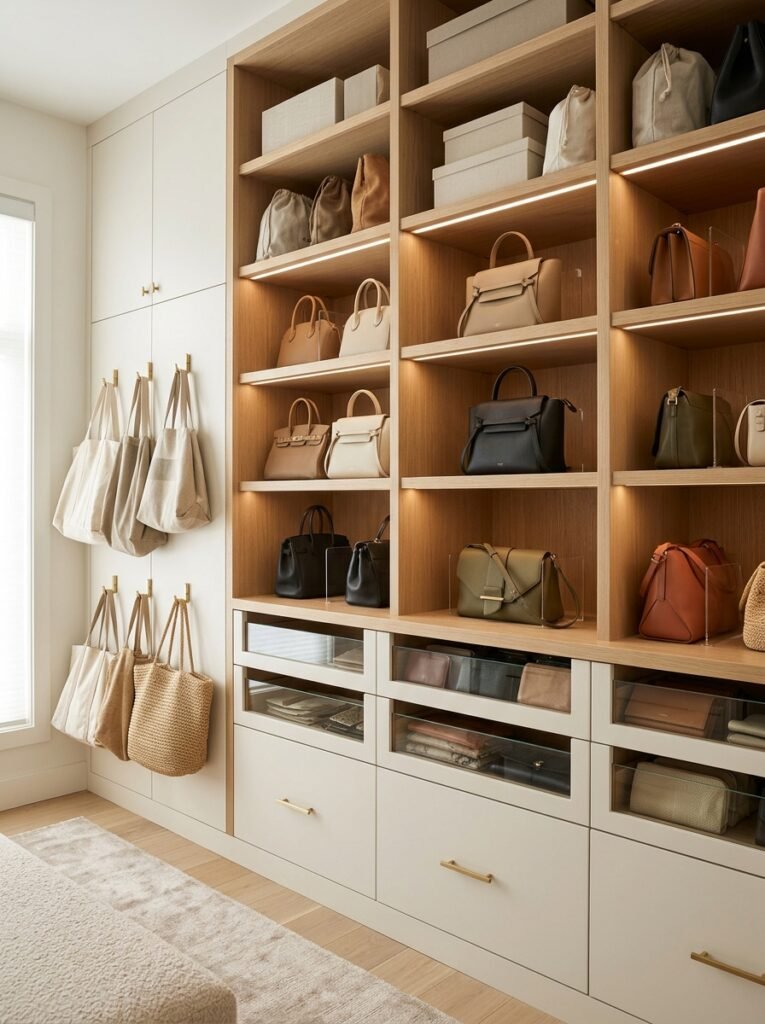
The best storage system is one you can maintain without constantly rearranging everything. After using a bag, return it to its designated shelf or hook, remove unnecessary receipts and wrappers, and check that its contents are stored properly. Every few weeks, review the collection and move frequently used bags to more accessible positions. If you buy a new handbag, decide where it belongs before adding it to the closet. These small habits keep purse organization practical over time and prevent a neat display from gradually turning into another cluttered storage area.
Final Thoughts
The best purse organization ideas combine easy access, protection, and a layout that suits your home. Closet shelves work well for larger collections, clear dividers help smaller bags stay upright, and wall or door storage can make use of otherwise wasted space. If you have designer handbags, give them room to maintain their shape, while totes and school bags can have their own practical zones. You do not need a large walk-in closet to keep handbags organized. Start with the space you already have, choose storage that fits your collection, and keep the bags you use most often within easy reach. With a little planning and a simple maintenance routine, your handbag collection can become an attractive and functional part of your bedroom.