




This post may contain affiliate links. Please read my disclosure policy.
In This Article Show
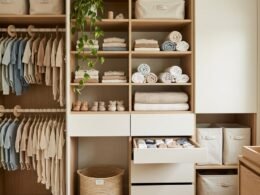
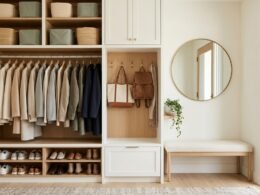
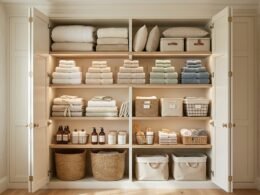
A closet does not need to be huge to hold more. With the right shelves, hanging zones, drawers, and hidden spaces, even a small closet can become surprisingly useful. The best closet storage ideas focus on how you actually use your belongings and make every part of the available space work harder. Whether you live in a large home, a small apartment, an RV, or a camper, smart storage can reduce clutter and make daily routines easier. From using the top of a closet to creating storage under the stairs, these ideas can help you turn overlooked areas into practical organization zones.

1. Double Your Hanging Space
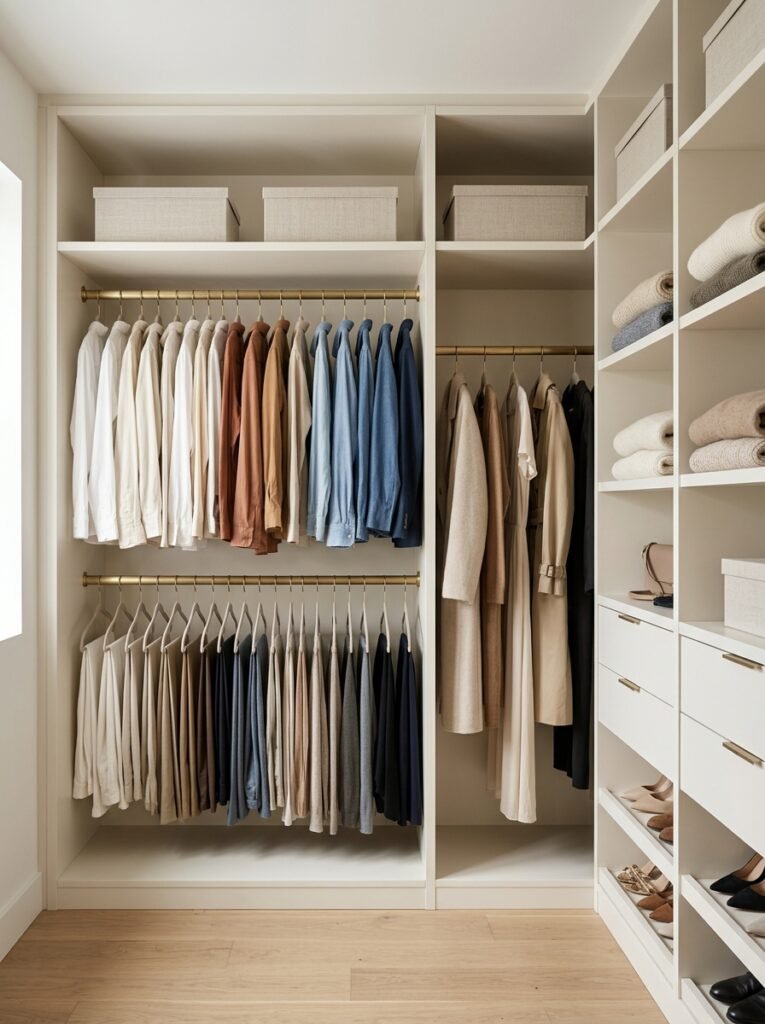
One of the easiest ways to increase closet capacity is to divide hanging space vertically. Instead of using one tall rod for shirts and dresses, install a second rod below the first for shorter clothing. This works especially well for shirts, jackets, skirts, and folded-hanging pieces. Keep long garments such as coats and dresses in a separate taller section so they have enough clearance.
2. Use the Top of the Closet
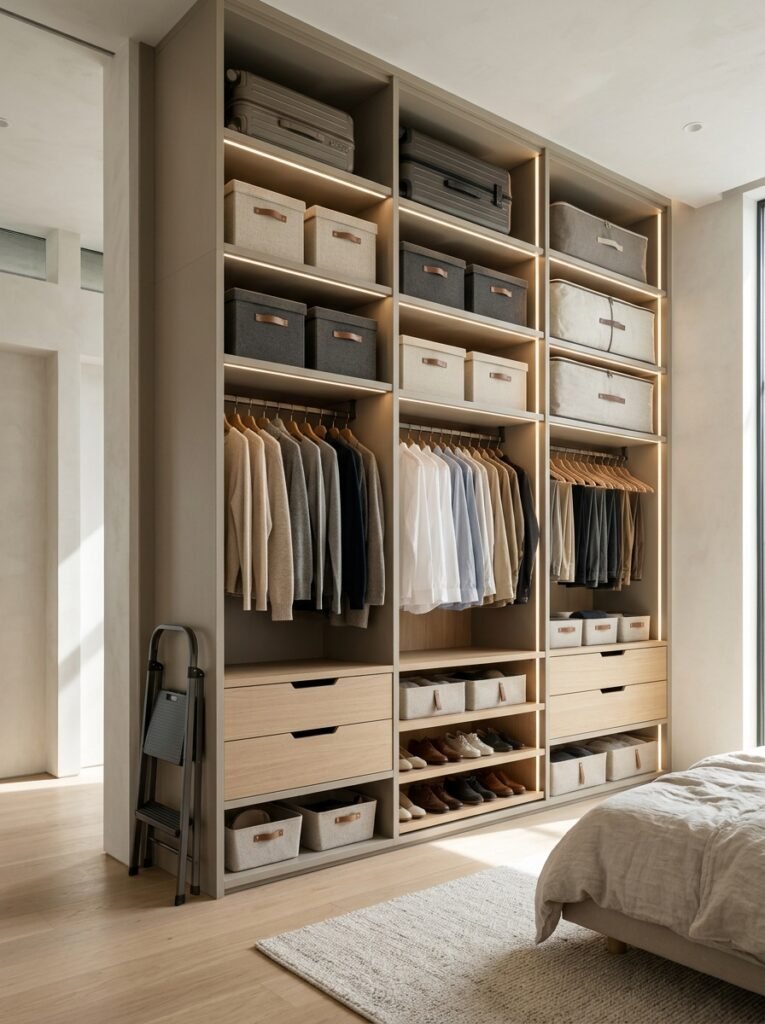
The top of a closet is often wasted space, especially in rooms with tall ceilings. Add sturdy upper shelves for luggage, seasonal clothing, bedding, storage boxes, or items you rarely need. Use matching containers or attractive closed bins so the upper area remains visually neat. A small folding step stool can make occasional access easier.
3. Floor-to-Ceiling Shelving
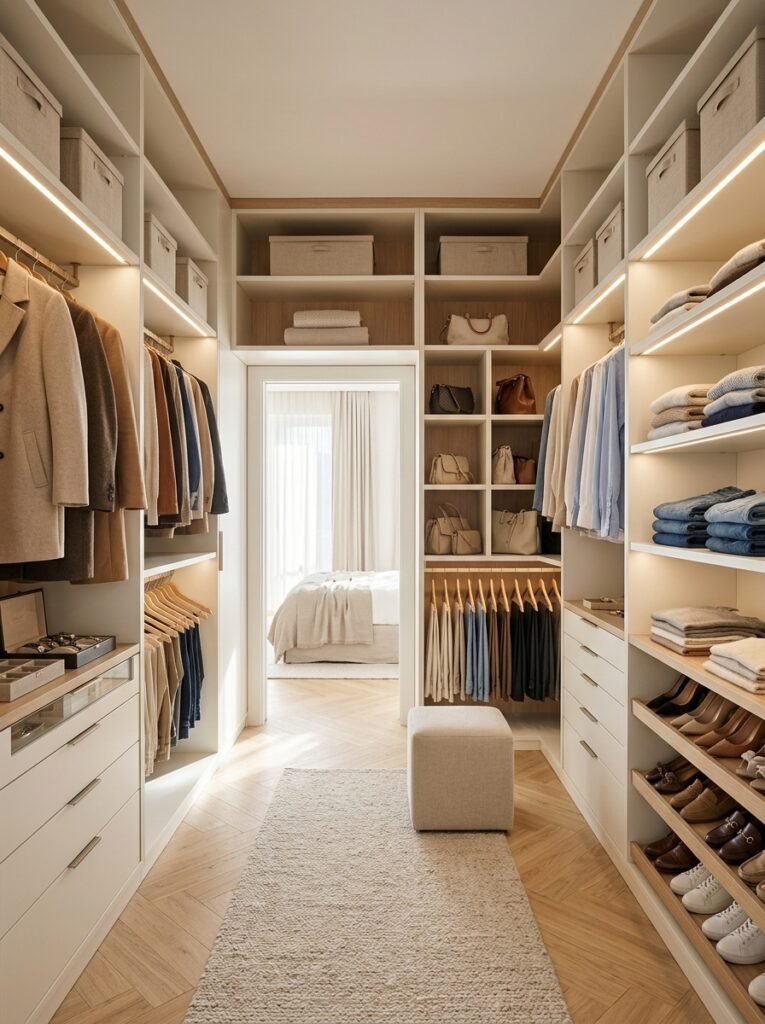
When floor area is limited, use the wall height. Floor-to-ceiling shelving creates space for folded clothing, handbags, shoes, baskets, and accessories without making the closet wider. Adjustable shelves are especially useful because storage needs change over time. Keep frequently used items between waist and eye level and reserve the highest shelves for less-used belongings.
4. Add Pull-Out Shoe Shelves
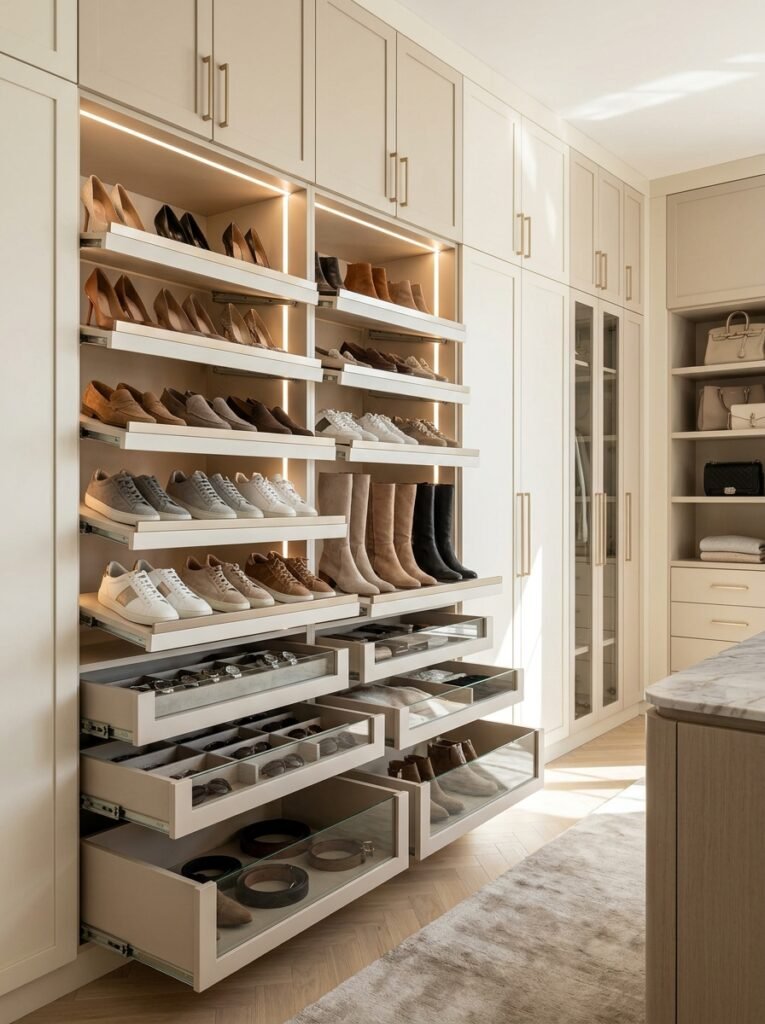
Shoes can quickly consume valuable floor space when they are simply placed in piles. Pull-out shelves allow footwear to stay organized while making every pair easy to see. Arrange everyday shoes at comfortable reach height and reserve higher or lower sections for seasonal pairs. A narrow vertical pull-out system can work particularly well in a tight closet.
5. Create a Linen Closet Zone
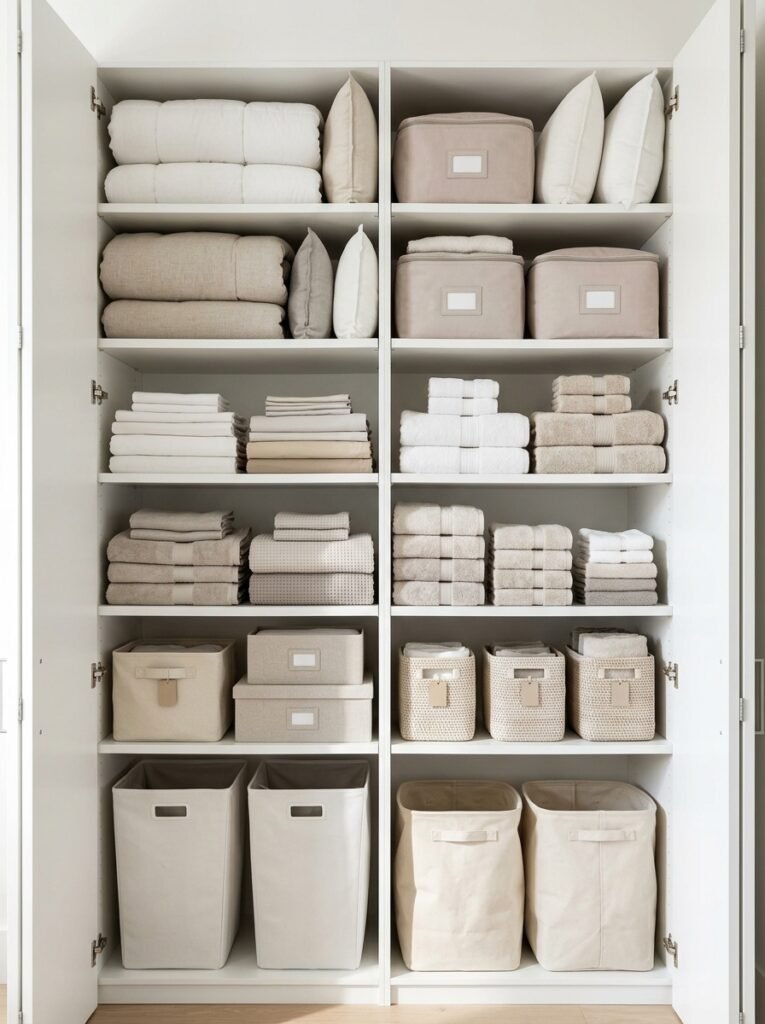
Linen storage becomes much easier when towels, sheets, blankets, and pillowcases have dedicated sections. Use deeper shelves for bulky blankets and narrower shelves for towels and folded sheets. Labeling is optional, but consistent folding and clearly defined shelf categories make it easier for everyone in the household to put things away.
6. Smart Storage for Small Spaces
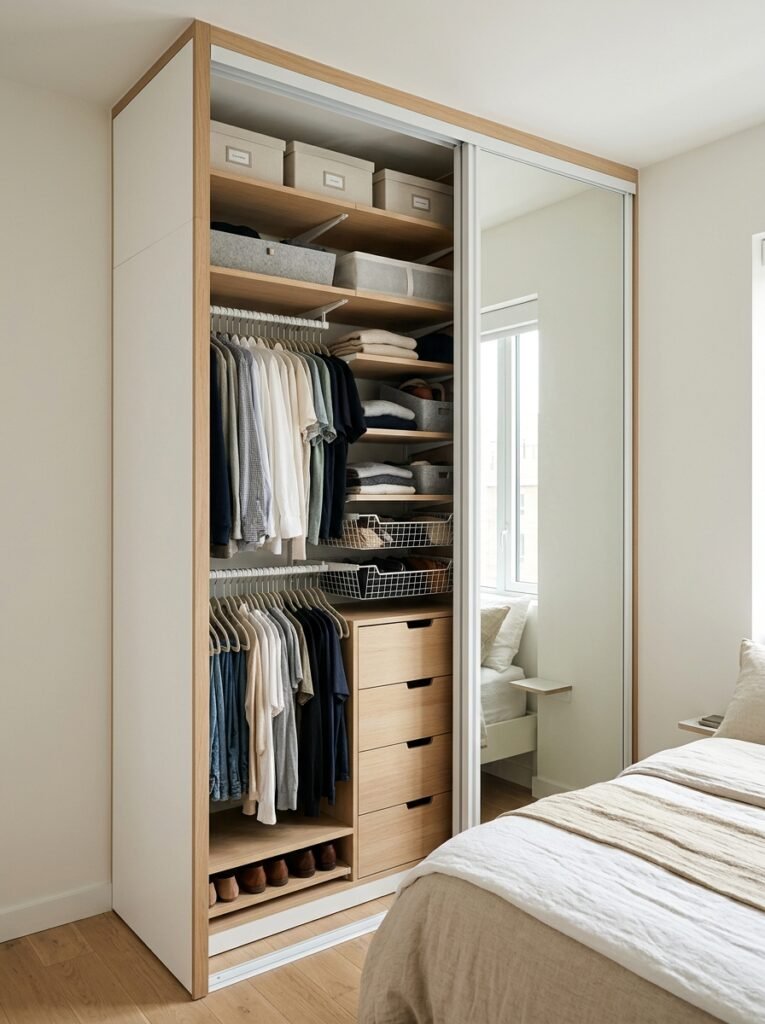
In a compact bedroom or apartment, every inch matters. Use shallow shelves, vertical organizers, under-shelf baskets, slim drawers, and double hanging rods instead of bulky furniture. Sliding doors can also save floor space because they do not need a large swing area. These closet storage ideas are especially useful when the closet is small but needs to hold a full wardrobe.
7. Under-Stairs Closet Storage
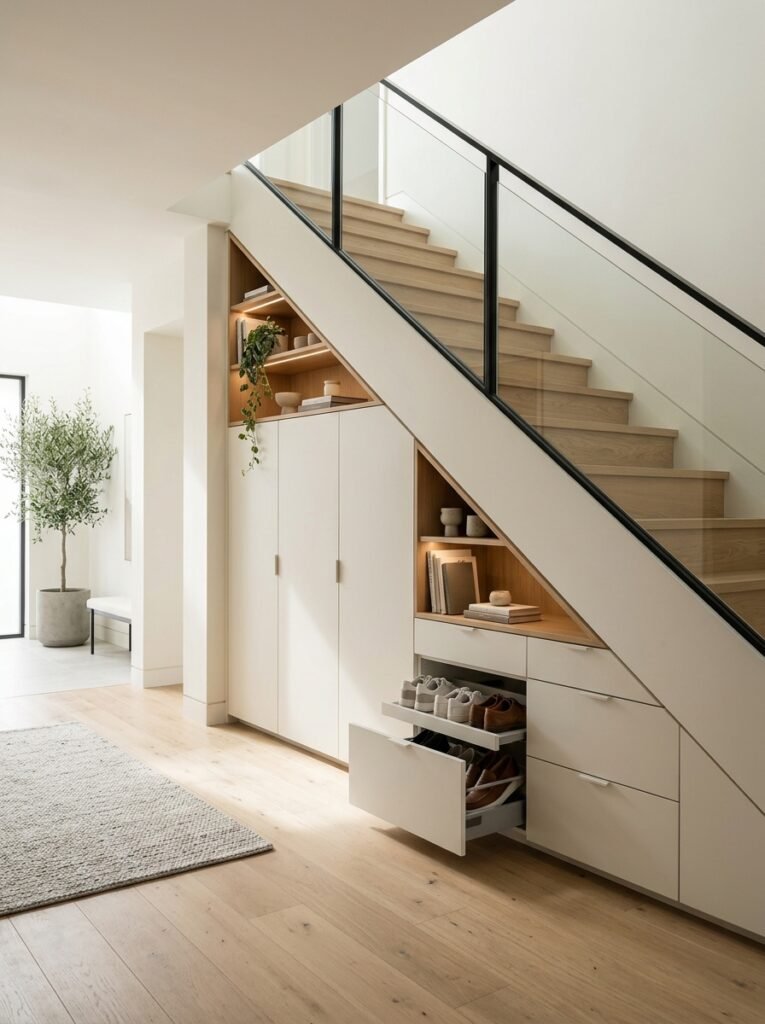
The space beneath a staircase is often awkward, but it can become valuable hidden storage. Depending on the shape, use a combination of drawers, small doors, open shelves, and deeper compartments. Understairs storage can hold shoes, coats, cleaning supplies, seasonal items, or household equipment. Matching the doors to the surrounding wall helps the storage blend naturally into the architecture.
8. Turn a Stairs Coat Closet Into a Drop Zone
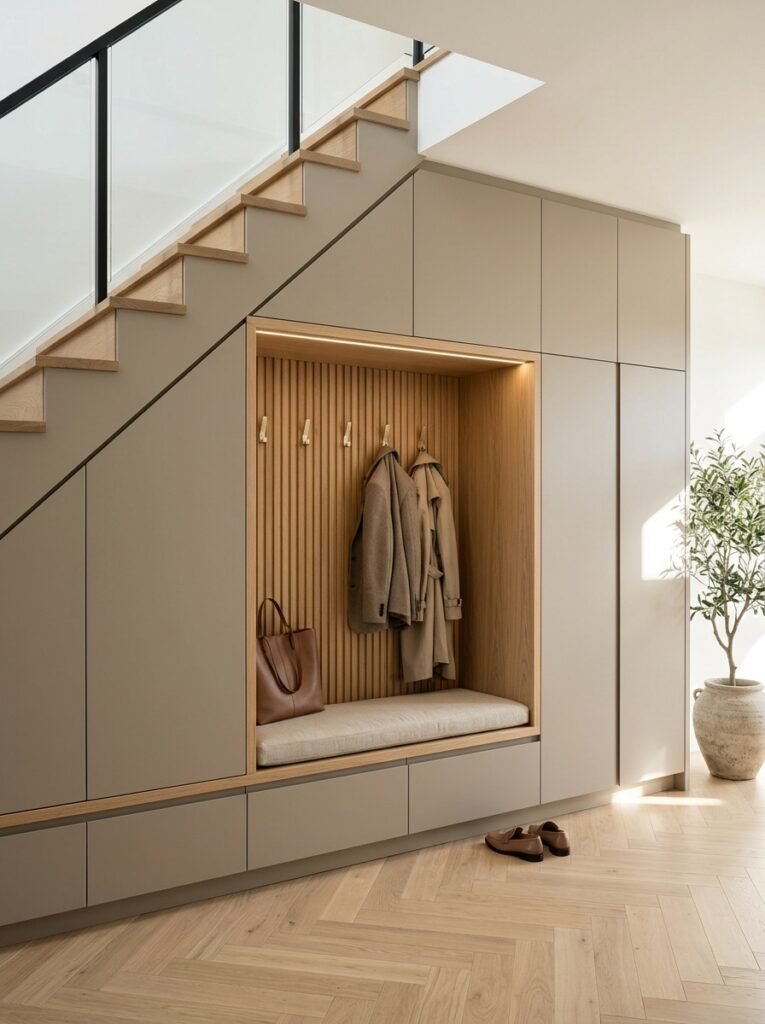
A stairs coat closet can work even harder when combined with an entryway drop zone. Add hooks for coats, a bench for shoes, shallow drawers for small items, and upper storage for seasonal accessories. This arrangement keeps bags, jackets, and shoes from spreading throughout the home. It is particularly useful for busy families who need a quick place to put things when they arrive.
9. Bathroom Closet Organization
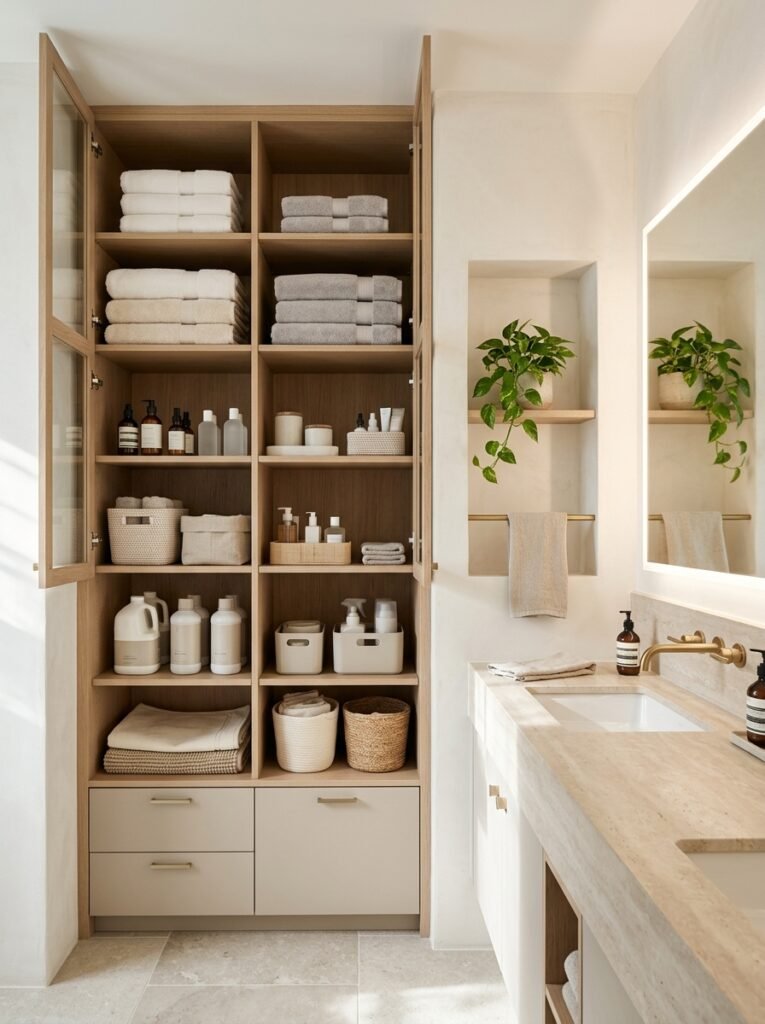
A bathroom closet needs storage that can handle towels, toiletries, cleaning supplies, and extra paper products without becoming chaotic. Adjustable shelves make it easier to change the layout as needs evolve. Keep everyday products at comfortable height and use closed bins for less attractive supplies. If the closet is exposed to moisture, choose finishes and storage materials that are appropriate for the environment.
10. Create a Laundry Storage Wall
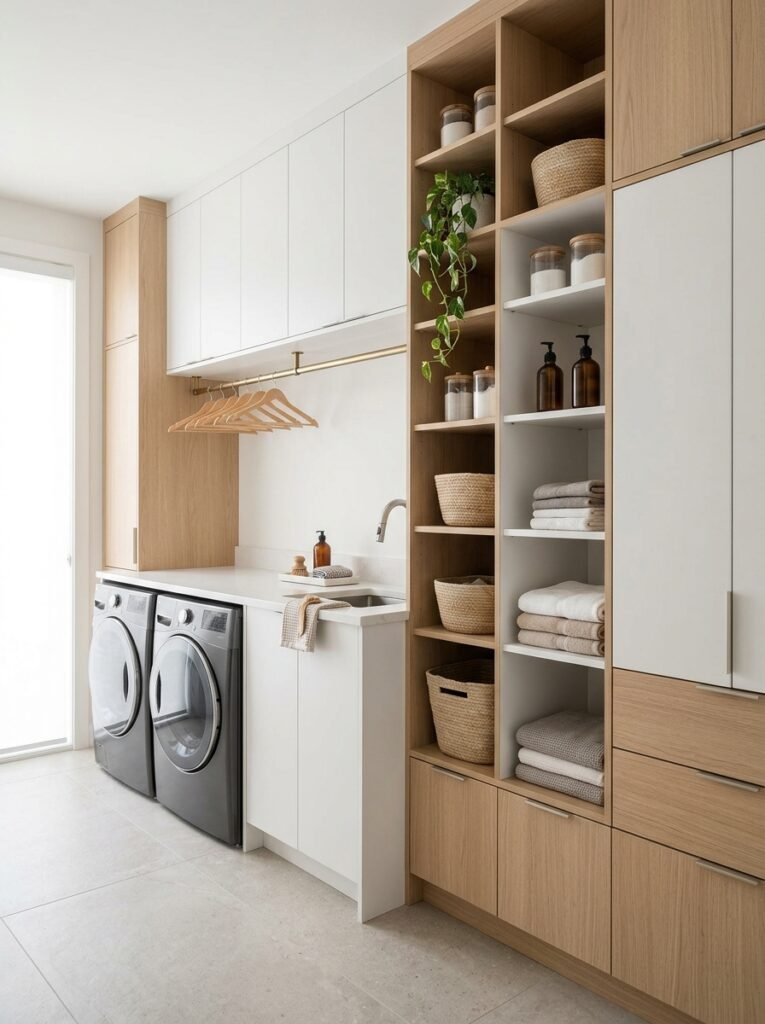
A laundry room becomes much more functional when vertical wall space is used for storage. Install cabinets above appliances, open shelves for detergents and towels, and narrow drawers for small laundry tools. A dedicated hanging rod can provide a convenient place for clothes that need to air-dry. These closet storage ideas can turn an ordinary laundry area into a well-organized work zone.
11. High-Ceiling Storage
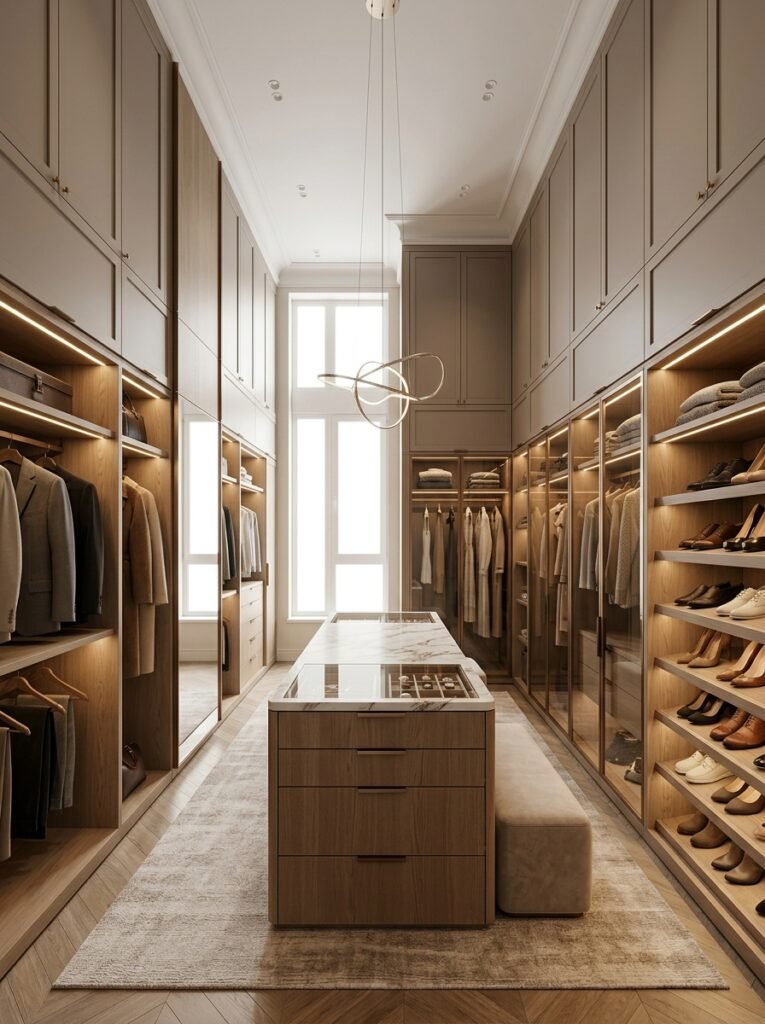
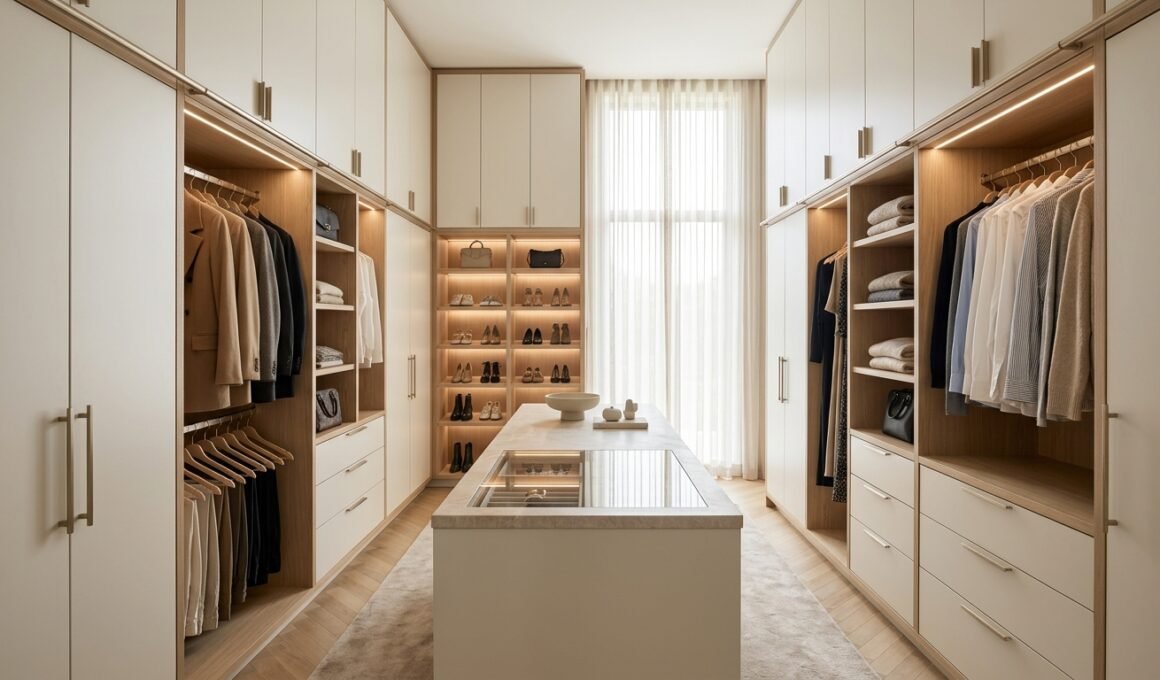
A high ceiling gives you an opportunity to create a second storage level. In a walk-in closet, upper cabinets can hold luggage, seasonal clothing, bedding, or rarely used accessories. Keep these compartments closed if you want a cleaner appearance. Integrated lighting beneath the upper cabinets can also make the lower storage areas easier to use.
12. RV Closet Storage
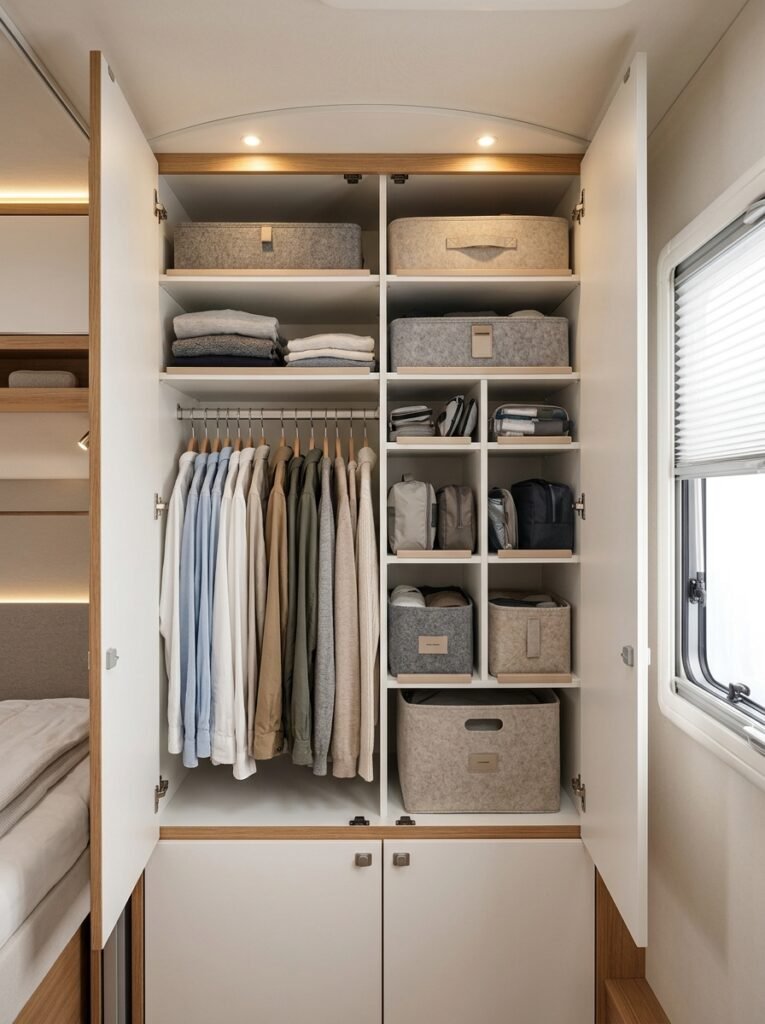
RV closets require a different approach because space is limited and storage needs to remain secure while traveling. Use lightweight organizers, adjustable shelves, slim hanging solutions, and containers that fit tightly into the available space. Avoid creating deep areas where belongings can become difficult to reach. The goal is to use vertical space without adding unnecessary weight or bulk.
13. Camper Closet With Adjustable Shelves
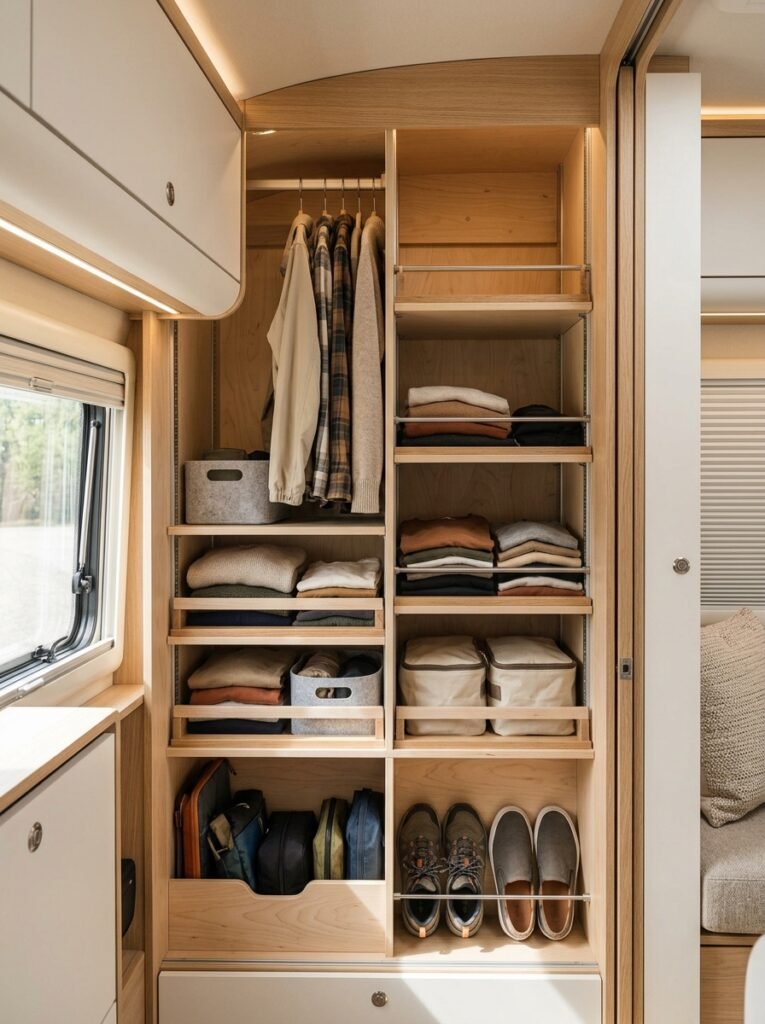
A camper closet can become much more useful when shelves can be moved as your needs change. Use one section for folded clothing, another for shoes or travel gear, and a narrow hanging zone for jackets. Secure containers and dividers can prevent items from shifting while the camper is moving. Light finishes also help a small camper interior feel more open.
14. Craft Closet With Clear Zones
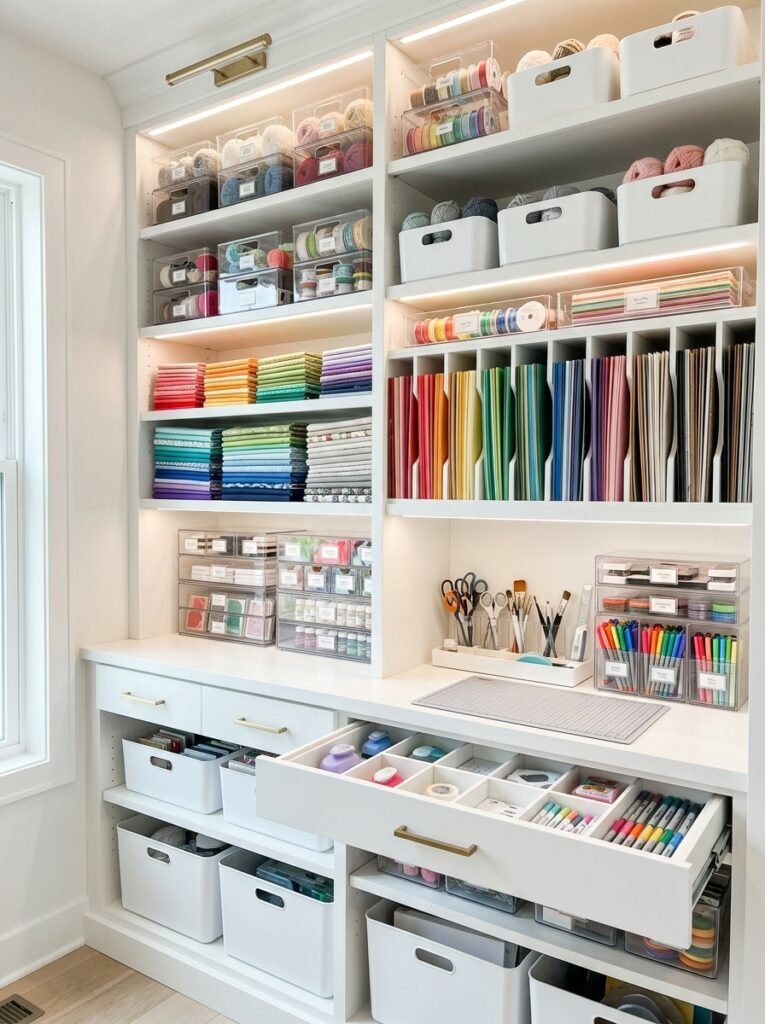
A craft closet needs a different type of organization because it often holds many small items. Divide the space into categories such as paper, fabric, tools, paints, beads, ribbons, and finished projects. Clear containers can make supplies easier to find, while drawers work well for smaller pieces. Keep the most frequently used supplies at eye level and store seasonal or backup materials higher up.
15. Mudroom Closet With Everyday Storage
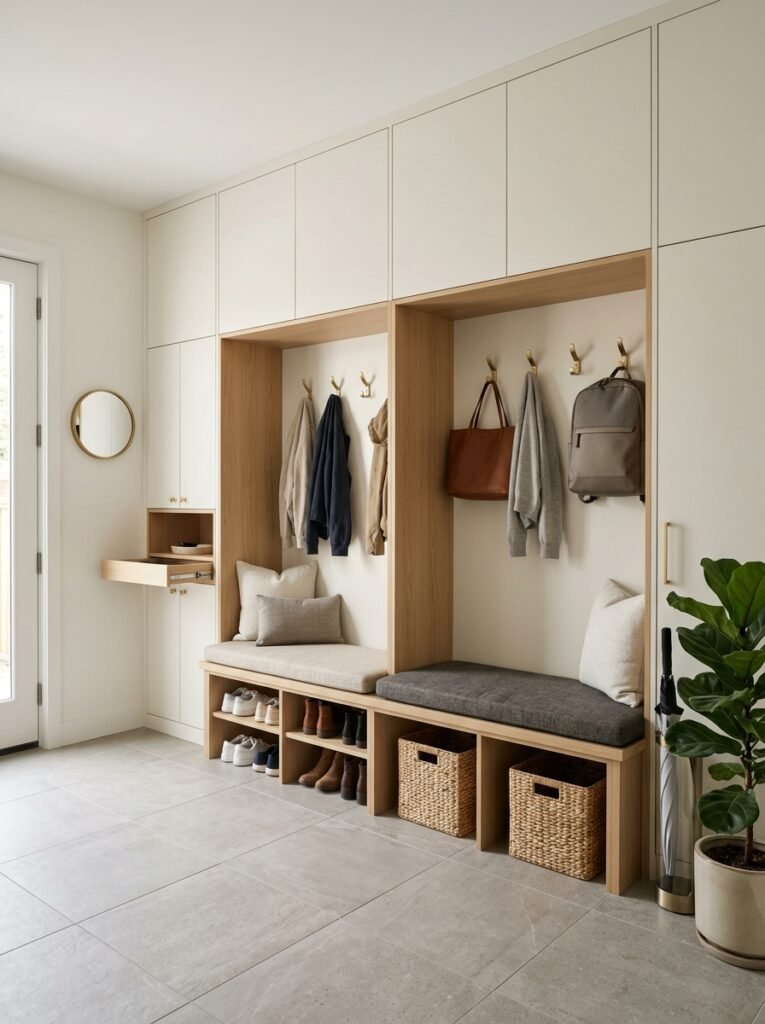
A mudroom closet should make coming and going easier. Combine coat hanging space with shoe shelves, bags, upper cabinets, and a small bench if the room allows. Keep everyday items within easy reach while using closed upper storage for seasonal gear. Durable surfaces are important because mudrooms often receive more daily wear than bedrooms.
16. Hall Closet With Hidden Storage
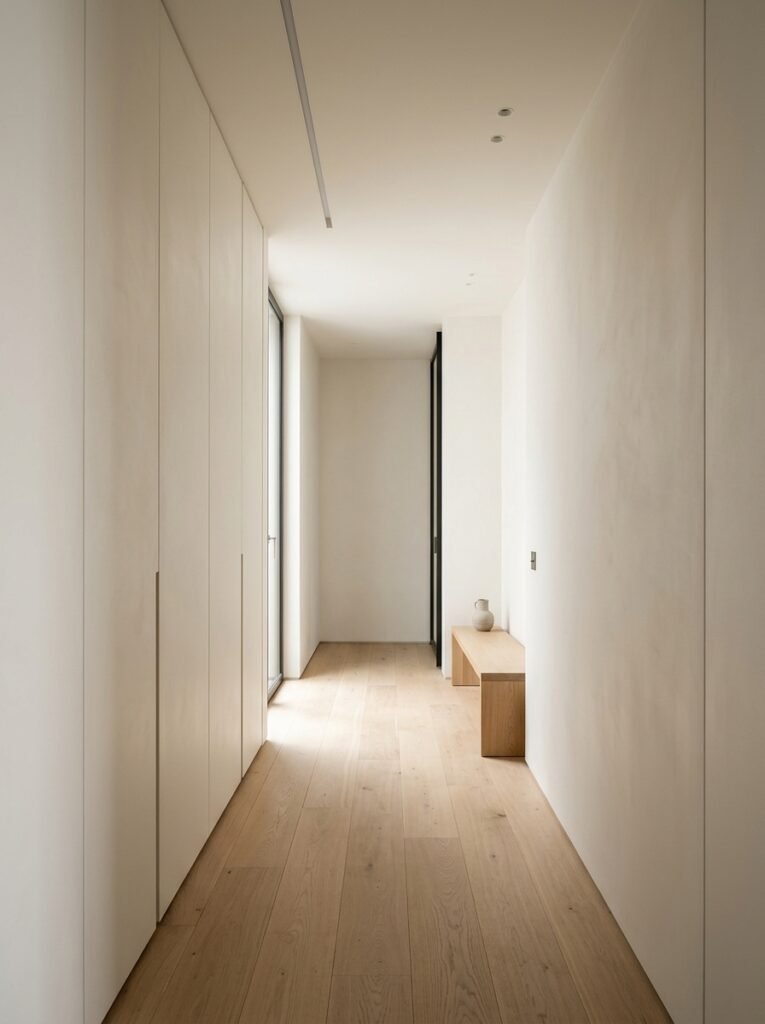
A hall closet does not need to dominate a narrow passage. Use flush doors, built-in shelving, or cabinetry that matches the wall color so the storage becomes visually quiet. Inside, create separate zones for coats, cleaning products, shoes, umbrellas, and household extras. This keeps the hallway looking open while still providing useful storage.
17. Master Closet With an Island
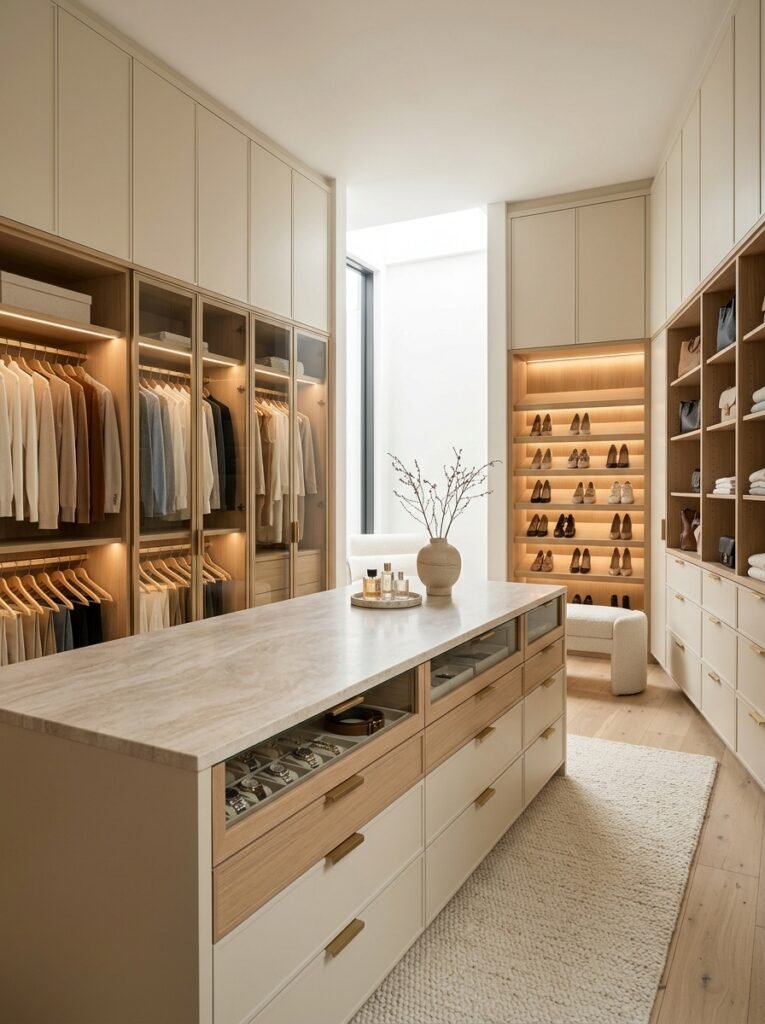
A master closet with enough floor space can benefit from a central island that combines storage and preparation space. Use shallow drawers for watches, jewelry, belts, sunglasses, and other accessories. The countertop can provide a temporary folding surface or a place to prepare an outfit. Leave enough clearance around the island so opening drawers and moving between storage zones remains comfortable.
18. DIY Modular Storage System
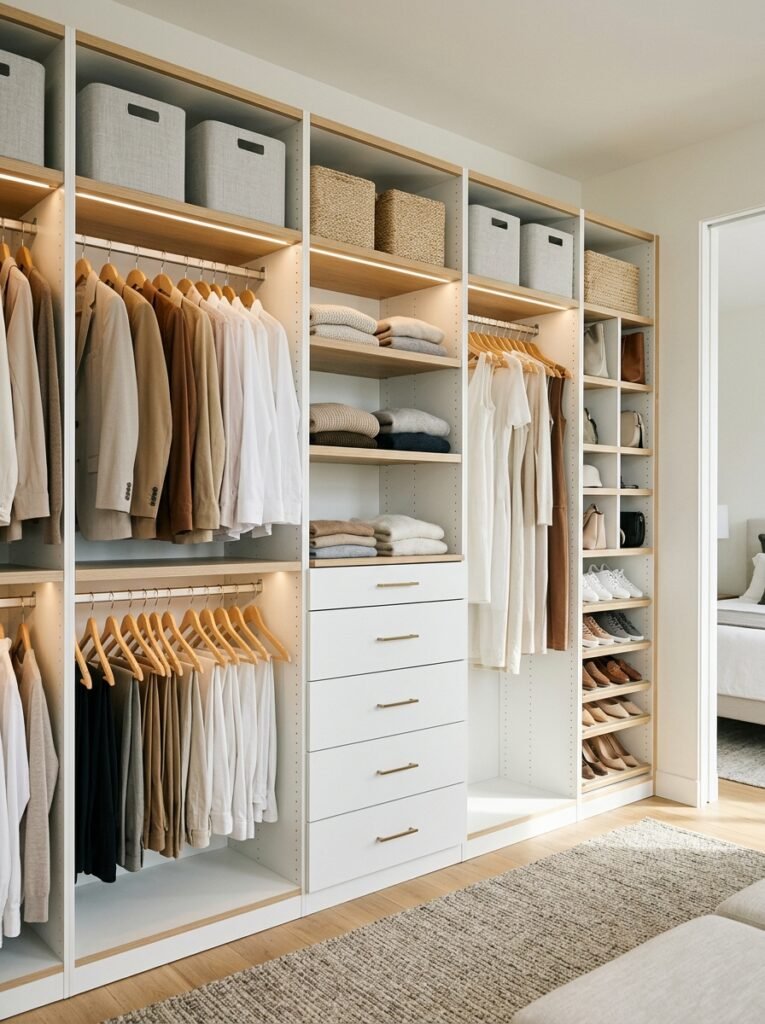
A DIY storage system can be a practical way to improve an existing closet without a complete renovation. Start by measuring the walls and identifying what you actually need: hanging space, shelves, drawers, shoes, or accessory storage. Modular components can then be arranged around those priorities. Add matching bins, hooks, dividers, and simple lighting to create a more finished appearance without making the project unnecessarily complicated.
How to Organize a Closet by Frequency
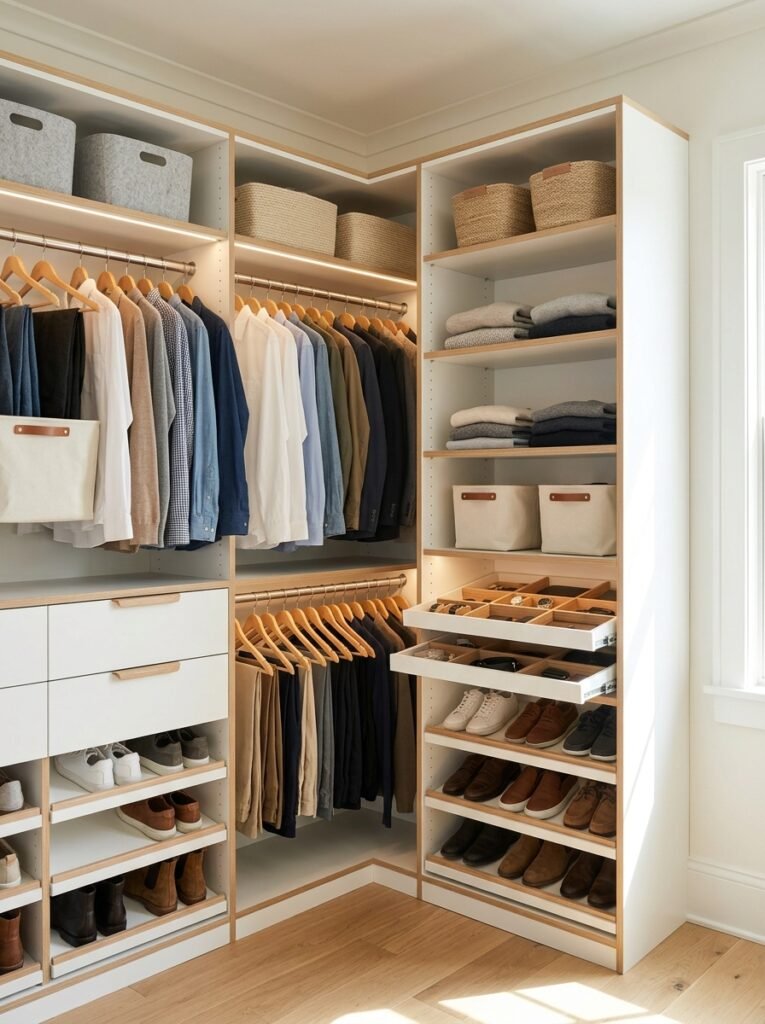
The easiest way to maintain an organized closet is to store things according to how often you use them. Everyday clothing should stay between comfortable waist and eye level. Shoes and accessories that you use regularly should also be easy to reach. Less-used items can move upward. Seasonal clothing, luggage, spare bedding, and occasional accessories are ideal for upper shelves or closed cabinets. This simple system reduces unnecessary searching and keeps the most useful areas from becoming overcrowded.
How to Make Small Closet Storage Work Better
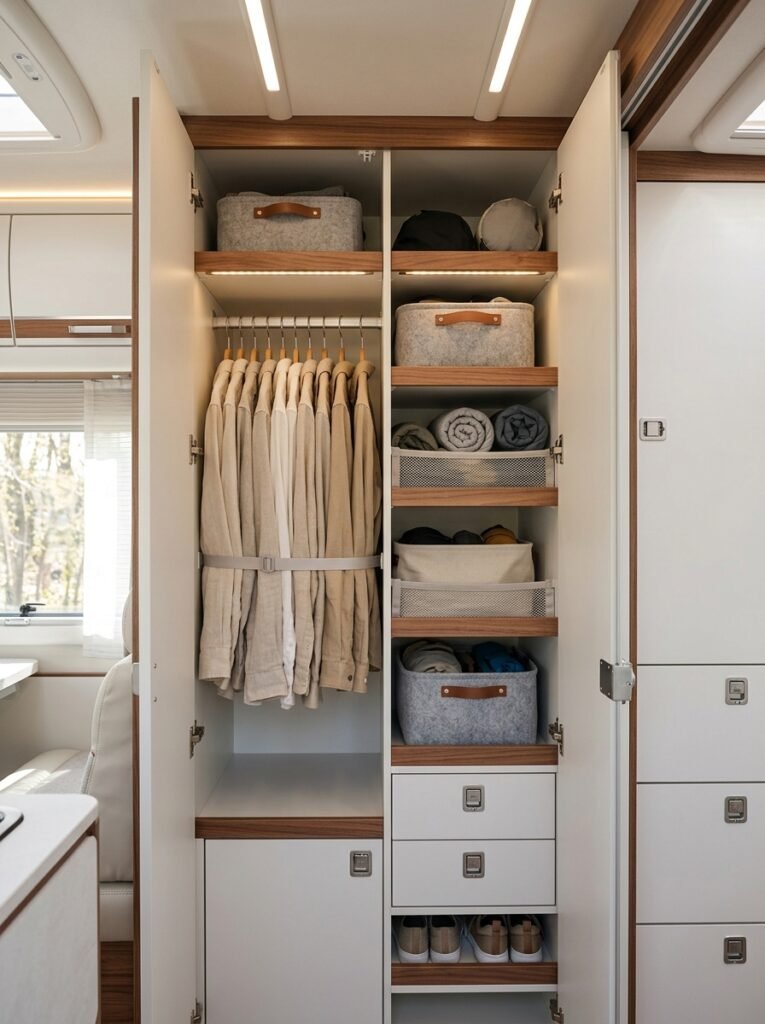
Small spaces need fewer wasted zones rather than simply more containers. Use vertical walls, the backs of doors, shallow shelves, double hanging rods, and corners that would otherwise remain empty. Before buying organizers, measure the actual closet. An attractive basket or shelf is not useful if it wastes valuable width or prevents doors and drawers from opening properly.
Final Thoughts
The smartest closet storage ideas are not necessarily the most expensive ones. A second hanging rod, a few well-placed shelves, an upper cabinet, or an organized understairs zone can make a noticeable difference without a major renovation. Think about your space first, then your belongings. A bedroom closet may need clothing and shoe storage, while a hall closet may need coats and household supplies. An RV or camper requires lightweight, secure solutions, while a master closet may have room for an island or dedicated vanity. The goal is simple: give every category a logical home and make the things you use most easy to reach. With thoughtful planning, even awkward corners, high ceilings, stairs, laundry areas, and compact apartments can become valuable storage opportunities.