



This post may contain affiliate links. Please read my disclosure policy.
In This Article Show
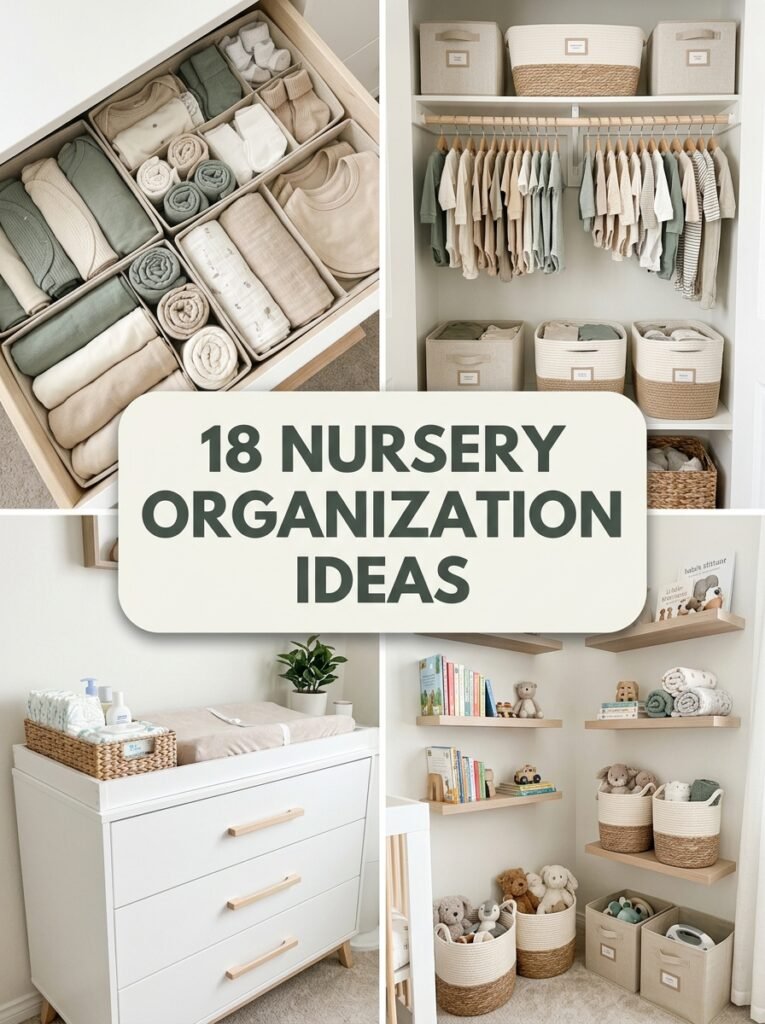
Preparing a nursery is exciting, but finding space for tiny clothes, diapers, blankets, feeding supplies, and everyday baby essentials can quickly become overwhelming. A thoughtful nursery organization system helps you keep everything accessible while creating a calm, comfortable room for your growing family. From dresser drawers and small closets to IKEA HEMNES-inspired storage, newborn clothing systems, and budget-friendly Dollar Tree hacks, these ideas make it easier to use your available space wisely. Whether you are preparing for one newborn or welcoming twins, you can create a practical nursery without filling every corner with furniture.
1. Organize Newborn Clothes by Size
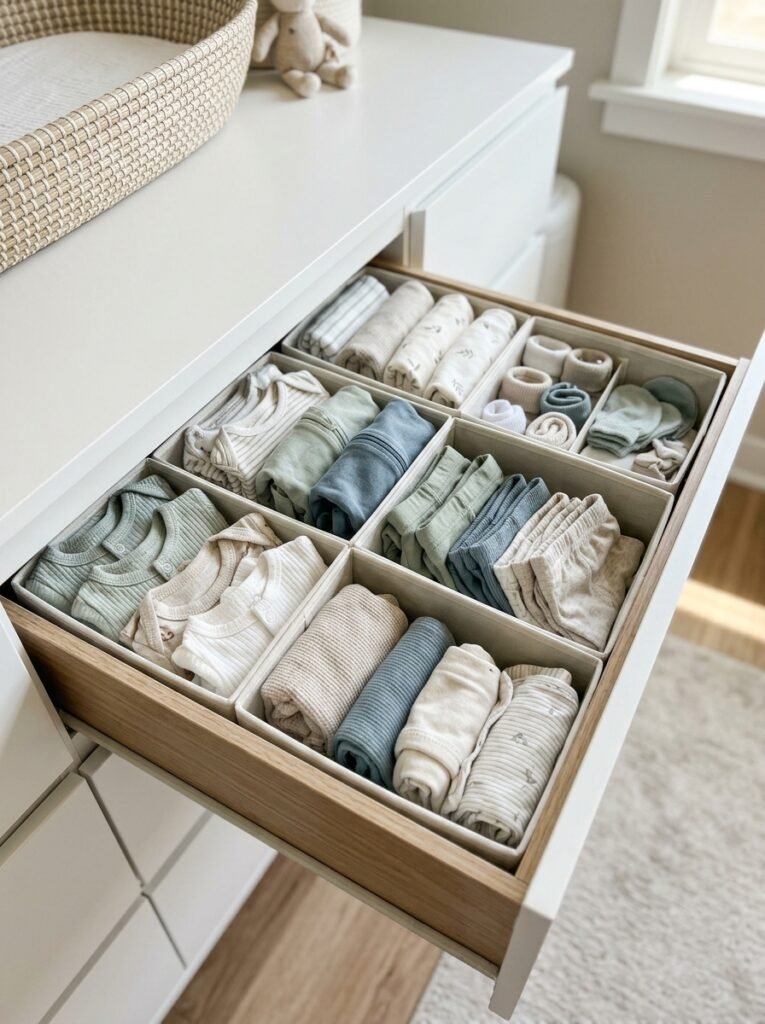
Newborn clothing can be surprisingly difficult to manage because babies may move between sizes quickly, and different brands can fit differently. Separate bodysuits, sleepers, pants, and outfits into categories, then group them by the size indicated on the label. Keep the clothes your baby currently wears in the easiest-to-reach drawer, while storing larger sizes in clearly distinguished bins or closet sections. This prevents you from searching through several piles during a busy morning. Recheck the sizes periodically and move outgrown items into a separate container for storage, donation, or future use.
2. Create a Practical Top Drawer for Daily Essentials
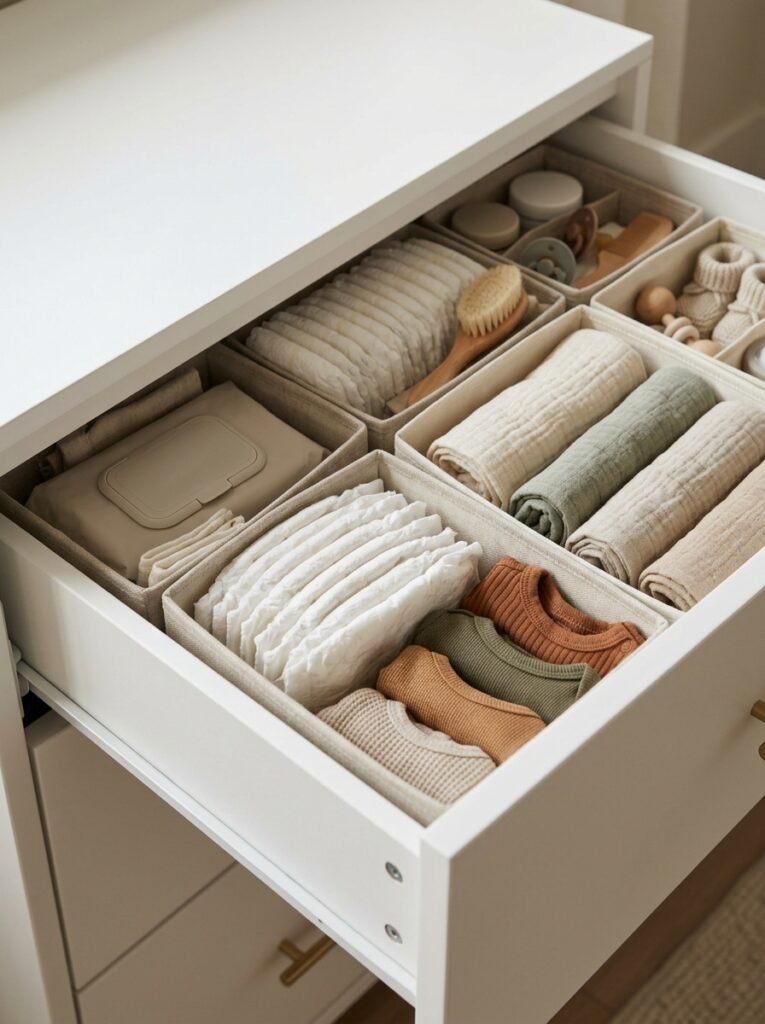
The top drawer should hold the items you reach for most often, such as diapers, wipes, burp cloths, spare bodysuits, and basic changing supplies. Use adjustable dividers or small containers to prevent these essentials from becoming mixed together. Keep frequently used items near the front and less frequently needed supplies toward the back. If the dresser also serves as a changing station, prepare the drawer before placing your baby on the changing surface. Always keep one hand on your baby during changes, use a secure changing setup, and never leave a baby unattended on an elevated surface.
3. Make a Three-Drawer Dresser Work Harder
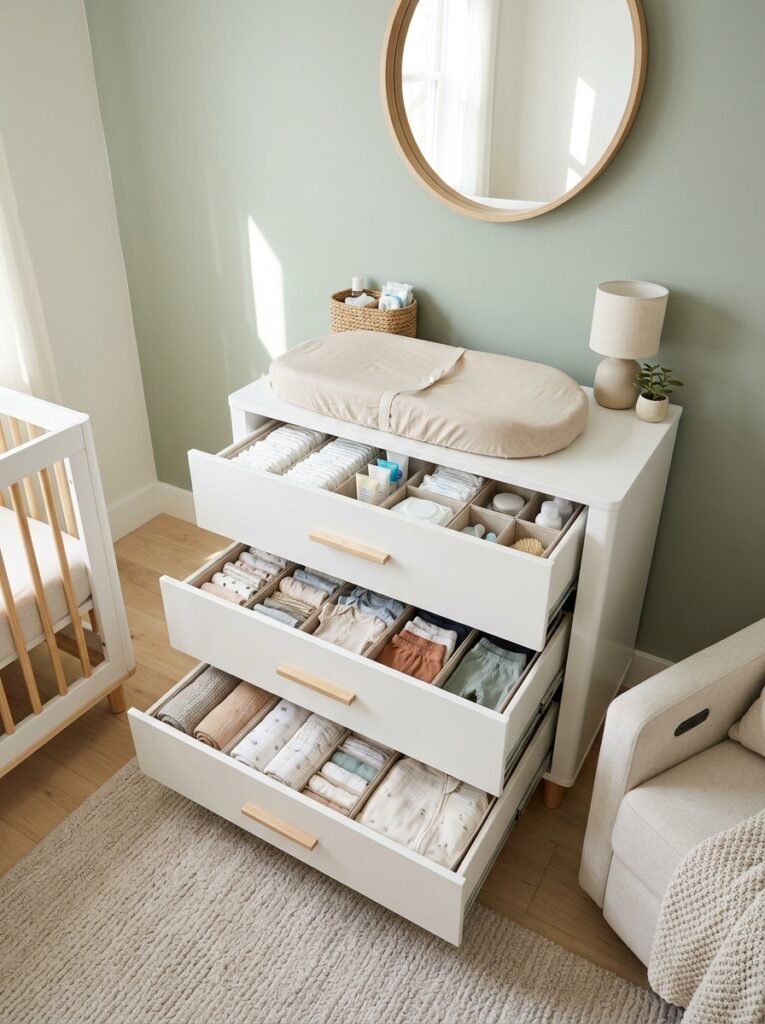
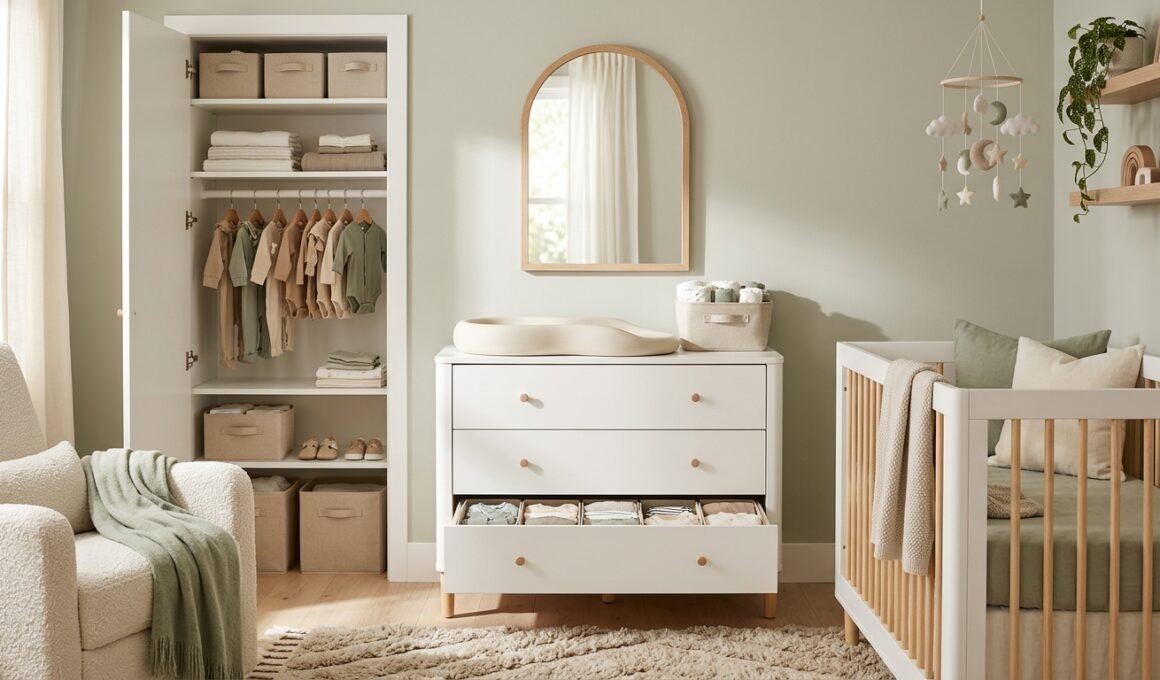
A 3 drawer dresser can be enough for a small nursery if each drawer has a clear purpose. Use the top drawer for daily essentials, the middle drawer for current-size clothing, and the bottom drawer for blankets, sleepwear, or extra supplies. Adjustable dividers make smaller items easier to find, while vertical folding can help you see more clothing at once. Avoid overfilling the drawers, since crowded storage makes it harder to remove items without disturbing everything else. This simple arrangement gives you a useful storage system without requiring a large chest of drawers.
4. Use an IKEA HEMNES-Inspired Dresser System
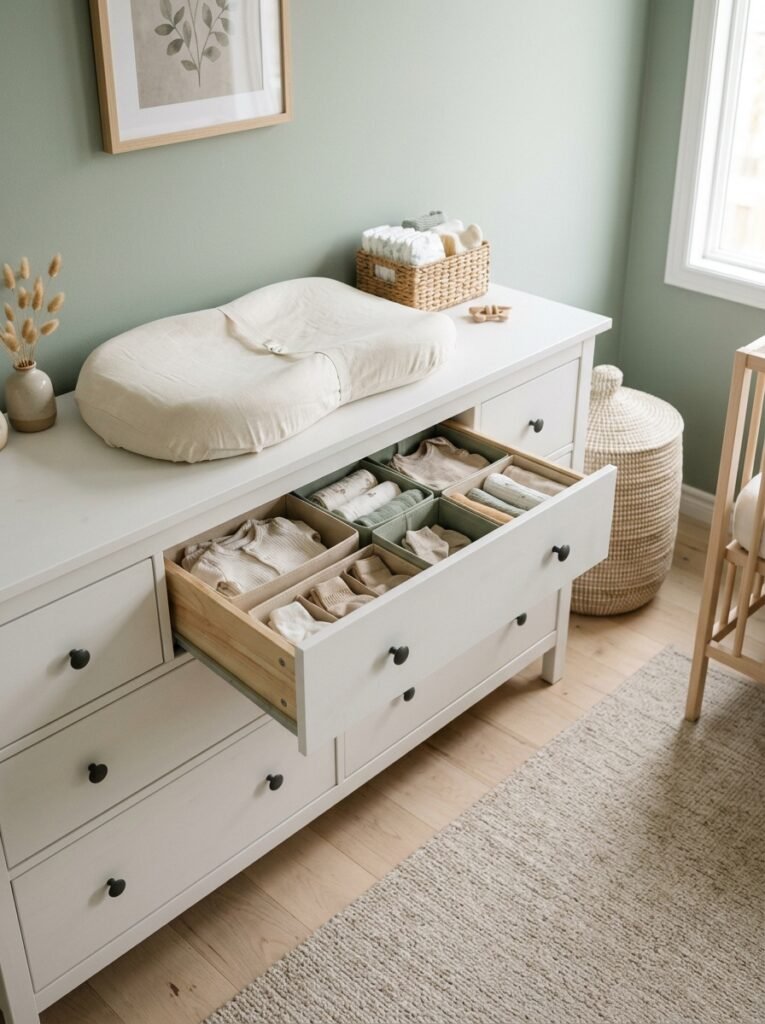
An IKEA HEMNES dresser-inspired setup can provide substantial storage while keeping the nursery looking coordinated and uncluttered. Assign different drawers to clothing, swaddles, burp cloths, diapers, and spare bedding rather than mixing everything together. Use matching internal organizers to divide each drawer into manageable sections, and keep the dresser top relatively clear. Before using any dresser in a nursery, follow the manufacturer’s assembly and anchoring instructions, secure it against tipping, and check the furniture’s safety guidance. A well-planned dresser system can remain useful as your baby grows and storage needs change.
5. Maximize a Small Nursery Closet
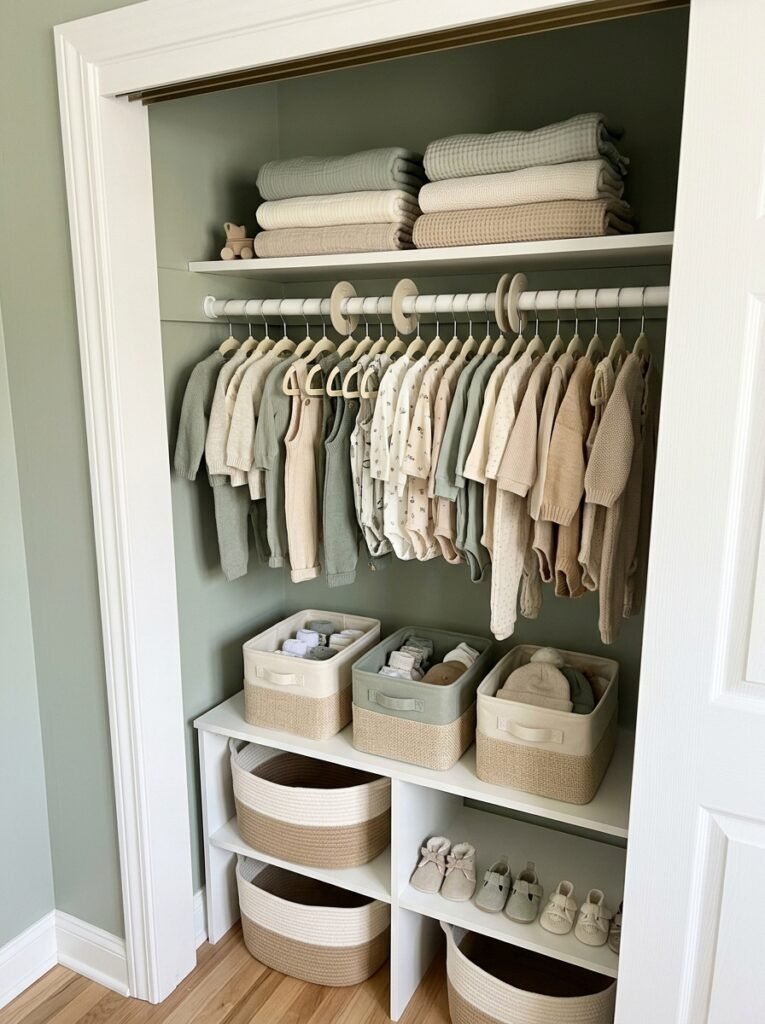
A small closet can hold a surprising amount when its space is divided thoughtfully. Use a hanging rail for current-size outfits, a shelf for folded blankets, and compact bins for socks, hats, bibs, and accessories. If the closet has a high shelf, reserve it for lightweight items or clothing in future sizes stored in suitable containers. Keep frequently used outfits easy to reach and avoid packing the rail so tightly that clothes become difficult to remove. Measuring the closet before buying organizers helps prevent wasted space and ensures bins fit properly.
6. Use Vertical Storage in Small Spaces
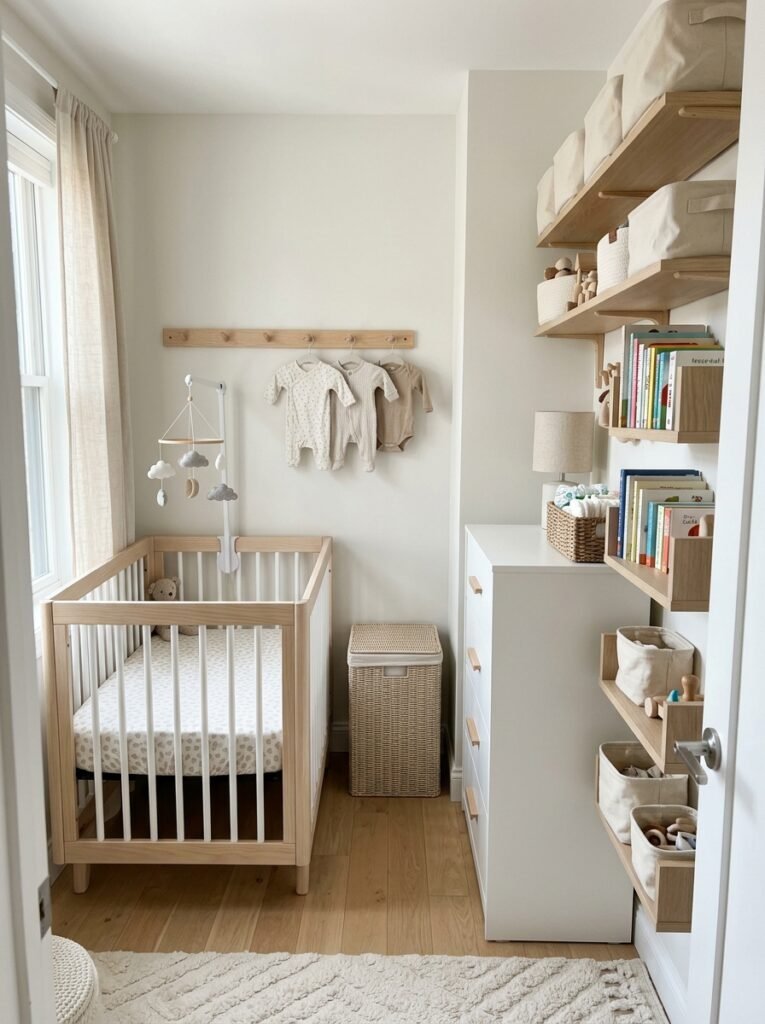
When a nursery has limited floor space, make the most of the walls and the height of existing furniture. A securely installed shelf can hold lightweight baskets, books, or decor, while narrow drawer units can provide extra storage without taking up much floor area. Keep heavy objects low and ensure shelves are properly mounted away from places where items could fall onto a crib or changing area. Vertical storage works best when the most frequently used supplies remain within comfortable adult reach and the floor stays clear for safe movement around the room.
7. Organize Baby Clothes With Drawer Dividers
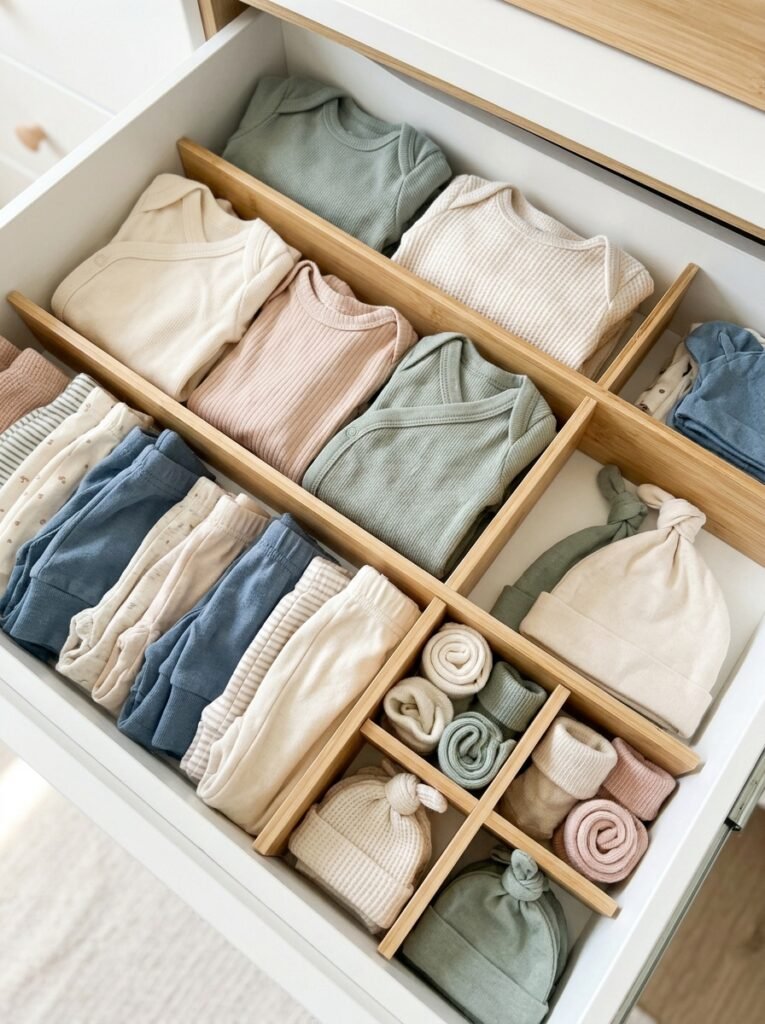
Drawer dividers help keep small baby clothes from turning into mixed piles, especially when you store bodysuits, socks, leggings, hats, and pajamas together. Choose adjustable dividers that fit your drawer dimensions and create sections based on the way you dress your baby. You can group clothing by type, size, or season, depending on what makes the most sense for your routine. Fold clothes consistently and place them upright when practical, so you can see several options at a glance. This small improvement can make getting dressed faster and keep the dresser tidy for longer.
8. Create a Budget-Friendly Dollar Tree Storage System
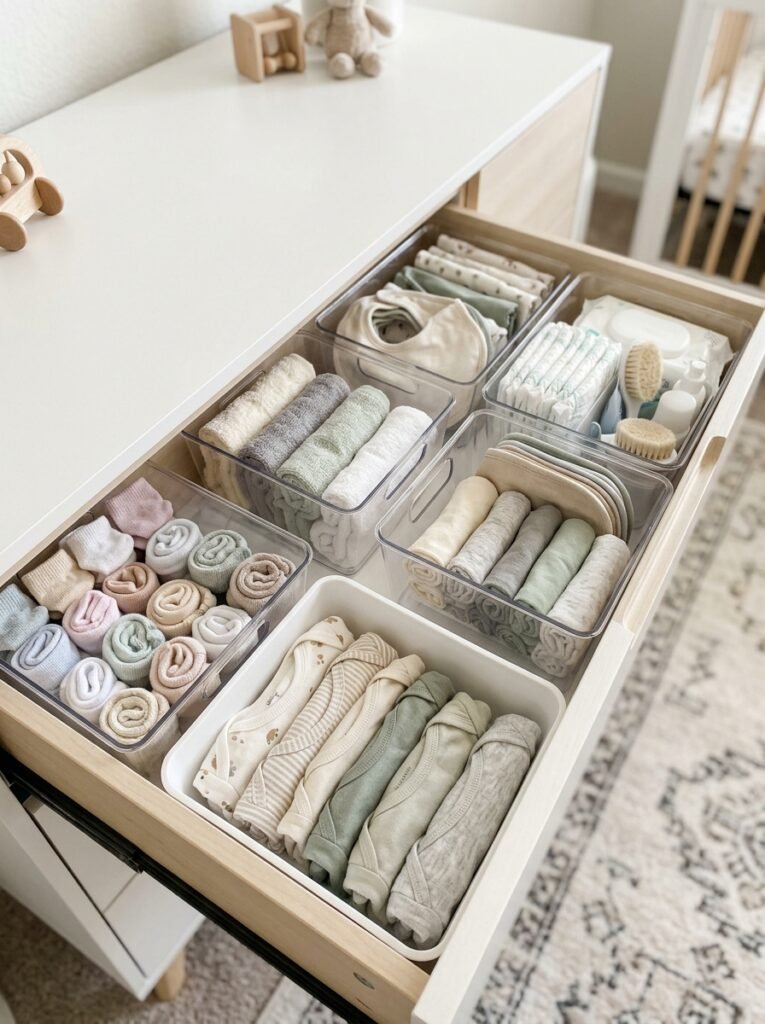
Affordable containers from discount stores, including Dollar Tree, can help organize small nursery essentials without investing in expensive drawer inserts. Use appropriately sized bins for socks, bibs, washcloths, pacifiers, and other small items, while larger containers can hold spare clothing or changing supplies. Measure your drawers and shelves before shopping, and choose a consistent selection of colors or transparent styles for a neat appearance. Use storage products suitable for the items they contain, and keep small objects that could pose choking hazards securely out of reach of babies and young children.
9. Set Up a Dedicated Diaper and Changing Station
A well-organized changing station keeps essential supplies together and reduces the need to search for items during a diaper change. Arrange diapers, wipes, clean clothing, and a suitable diaper disposal solution in dedicated storage close to the changing area. A shallow basket or drawer organizer can keep small supplies from spreading across the surface. Choose a changing pad and setup designed for your furniture, follow all safety instructions, and keep the area free from unnecessary decor. Most importantly, gather everything before starting and never leave your baby unattended, even briefly, on an elevated changing surface.
10. Store Baby Blankets and Swaddles Separately
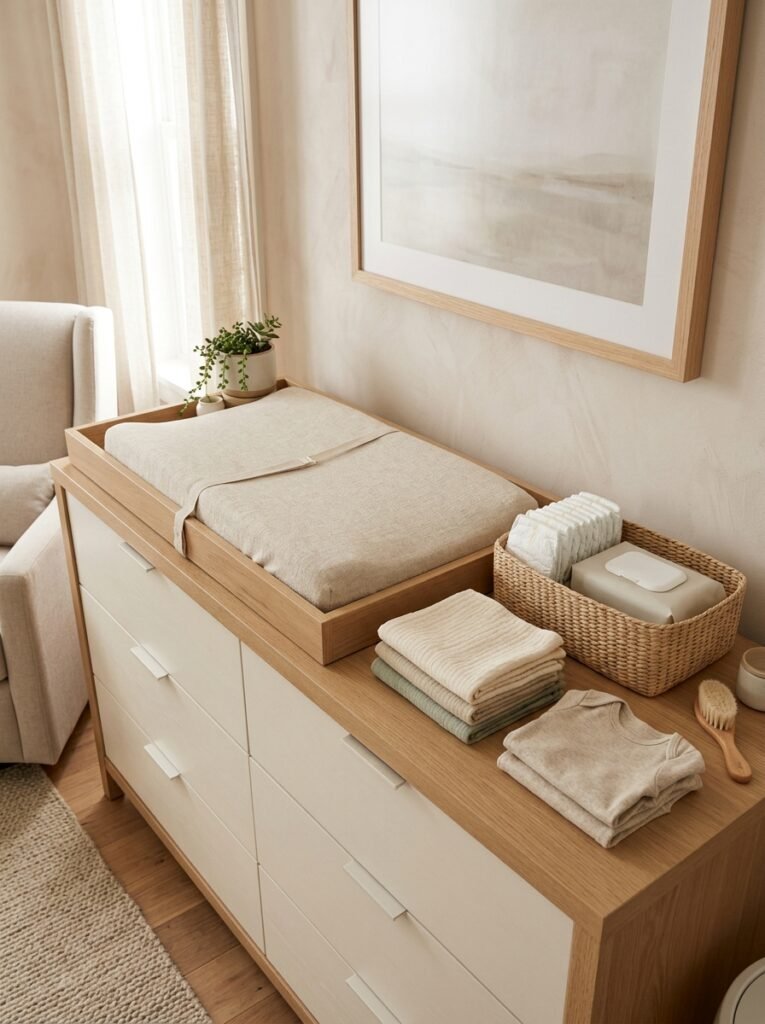
Blankets, swaddles, burp cloths, and crib sheets are all soft items, but keeping them together in one large pile can make it difficult to find what you need. Give each category its own drawer section or fabric bin, and fold items consistently so you can see what is available. Store spare bedding in a separate location from everyday changing supplies to avoid overcrowding the top drawer. Keep sleep products appropriate for your baby’s age and follow current safe-sleep guidance; loose blankets should not be placed in an infant’s sleep space.
11. Organize a Twin Nursery With Separate Zones
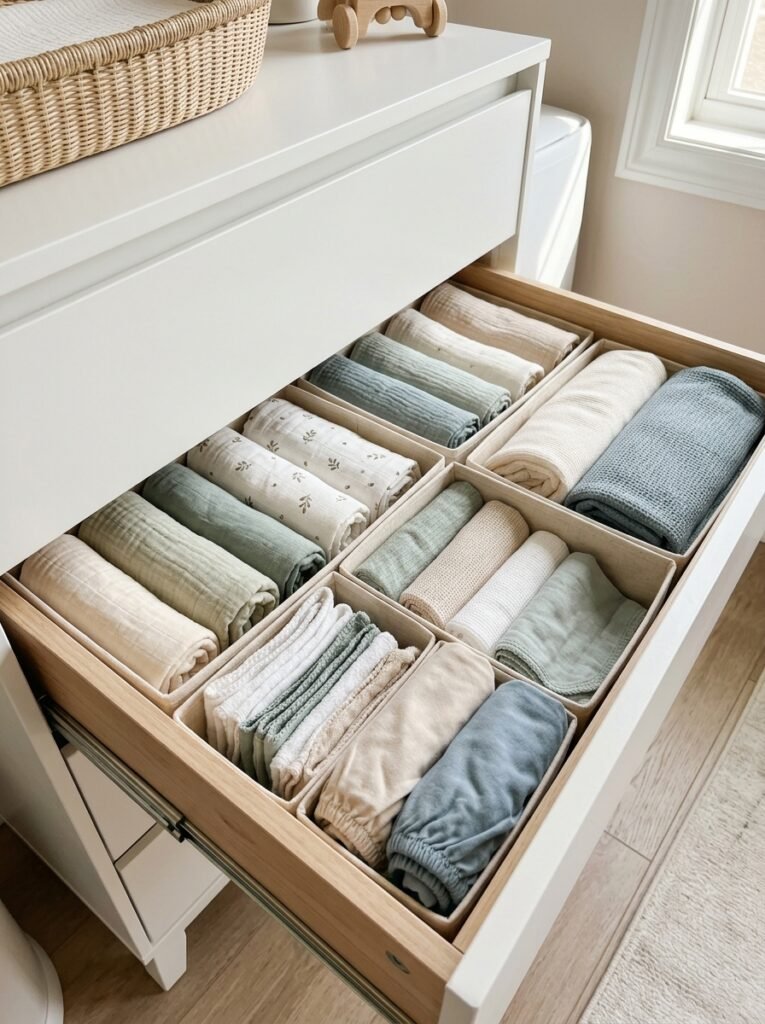
A twin nursery benefits from a storage system that makes each baby’s essentials easy to identify without duplicating every item unnecessarily. Use separate labeled-looking, text-free baskets or distinct color accents for each baby’s clothing, while keeping shared supplies such as wipes and spare bedding in a common section. Divide dresser drawers by child or clothing category according to what fits your furniture and daily routine. Keep each baby’s sleep space separate and safe, and avoid overcrowding the room with unnecessary duplicates. The goal is to make caring for both babies more organized while preserving comfortable movement through the nursery.
12. Use Closet Bins for Outgrown and Future-Size Clothes
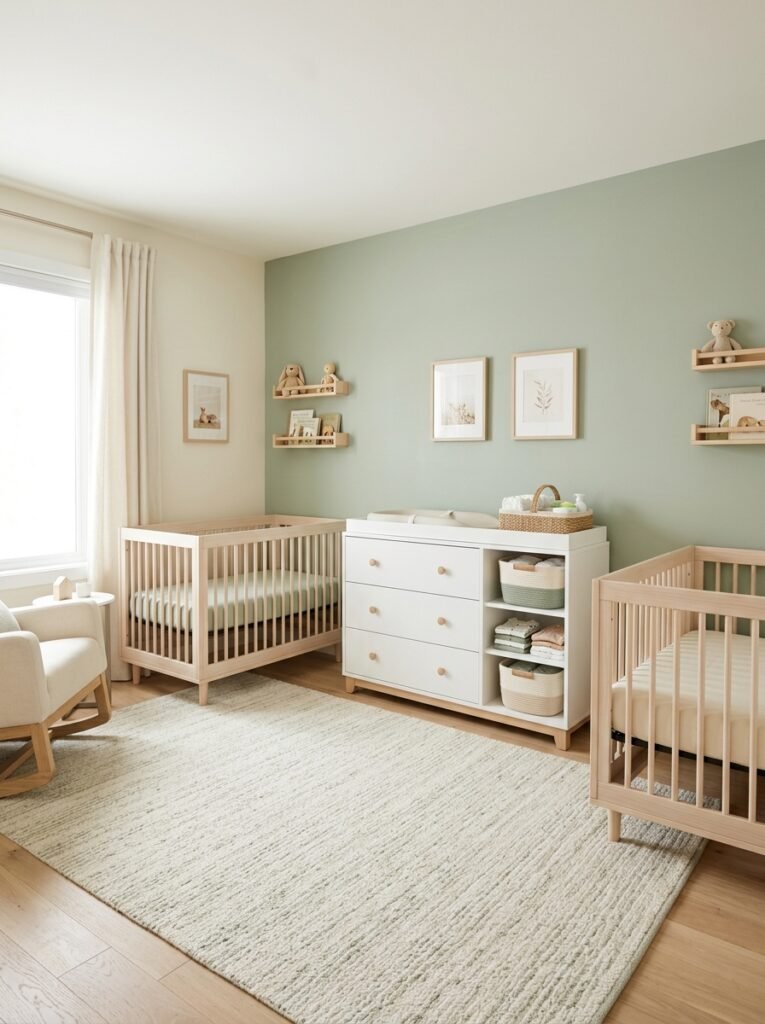
Babies can outgrow clothing quickly, so it helps to create a system for items that no longer fit and clothes they will wear later. Use separate, clean storage bins for outgrown clothing, future sizes, and seasonal items. Keep bins dry and store them on an appropriate closet shelf or another designated location rather than mixing their contents with the clothes used every day. If you plan to reuse clothing, check it before storing and keep items in good condition. This system reduces clutter in the dresser and makes it easier to find the next size when needed.
13. Use Drawer Labels to Make Supplies Easy to Find
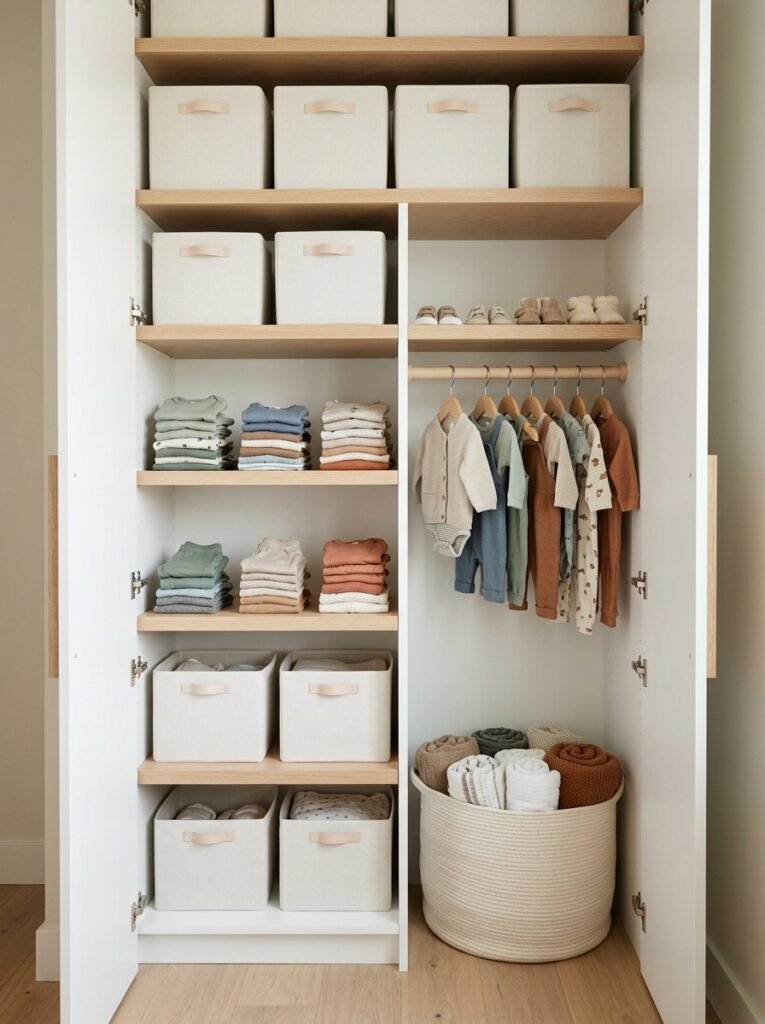
Labels can make nursery storage much easier to maintain, especially when several family members help with dressing, diaper changes, or laundry. Mark drawers or bins according to simple categories such as daily clothes, sleepwear, socks, diapers, and spare bedding. For a nursery used by adults with different language preferences, picture symbols can be useful alongside words. Keep the system simple so it does not require constant updating as the baby grows. Labels are most effective when the items inside consistently match the category, making it easy to put things back in the right place.
14. Add a Slim Storage Unit Beside the Dresser
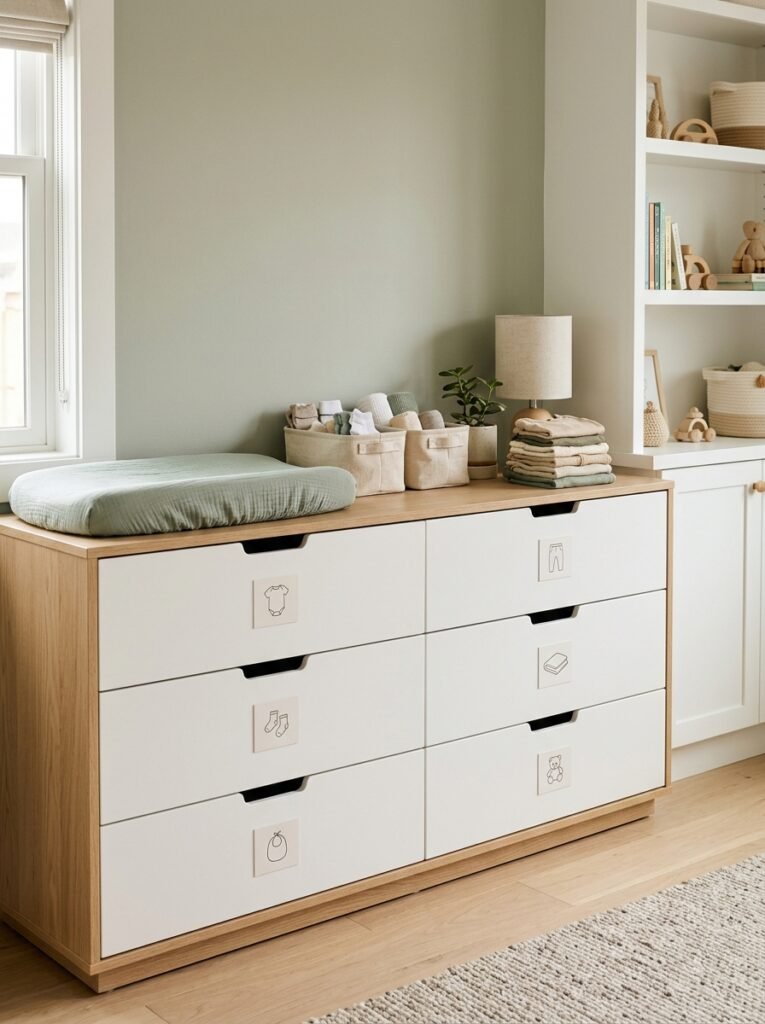
A narrow storage unit can provide extra room for baby essentials when the main dresser is too small. Choose a unit that fits comfortably beside the dresser without blocking doors, walking paths, or access to the crib. Use its drawers for items such as bibs, washcloths, spare diapers, and small accessories, keeping heavier items in lower drawers where practical. A slim unit is especially helpful in an apartment nursery, where every piece of furniture needs to serve a clear purpose. Measure the available width and depth first to ensure the extra storage does not make the room feel cramped.
15. Organize a Church Nursery for Shared Use
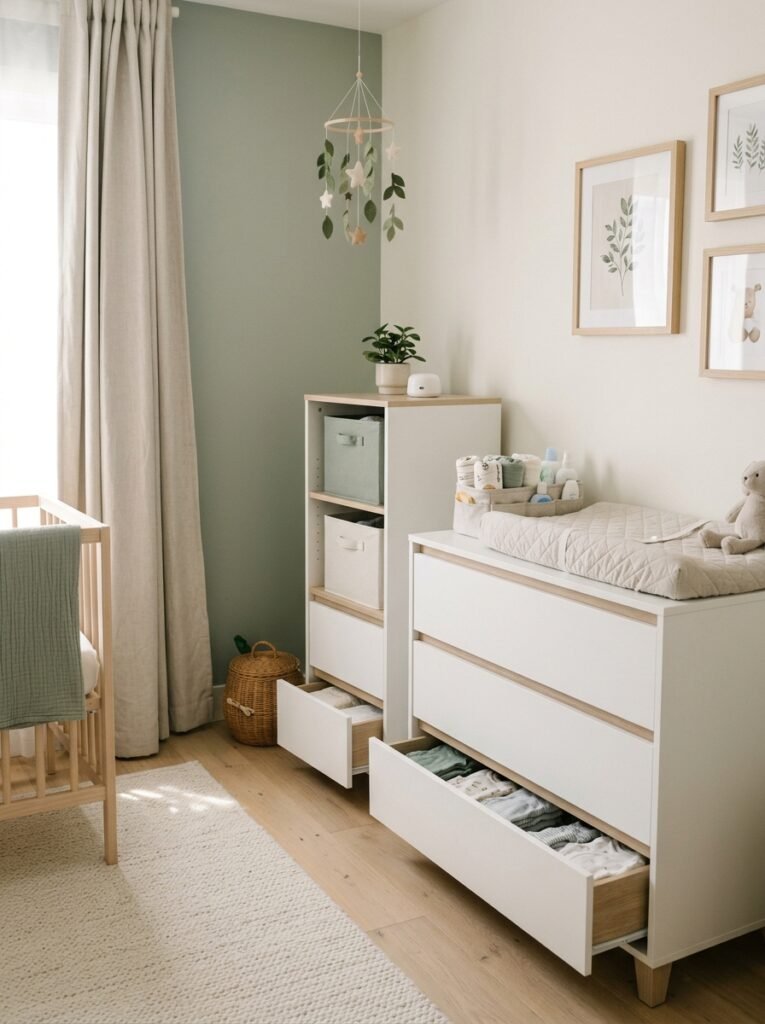
A church nursery has different storage needs from a private baby room because supplies may be used by multiple caregivers and families. Create clearly separated areas for age-appropriate toys, clean spare clothing, diapers, wipes, books, and other approved supplies. Use easy-to-clean containers, keep frequently needed items accessible to authorized caregivers, and store personal belongings separately. Check the church’s policies for sanitation, allergies, safe-sleep practices, supervision, and emergency supplies, and keep exits and walkways unobstructed. A consistent storage layout helps volunteers find essentials quickly and return items to their proper locations after each session.
16. Use Closet Door Storage Carefully
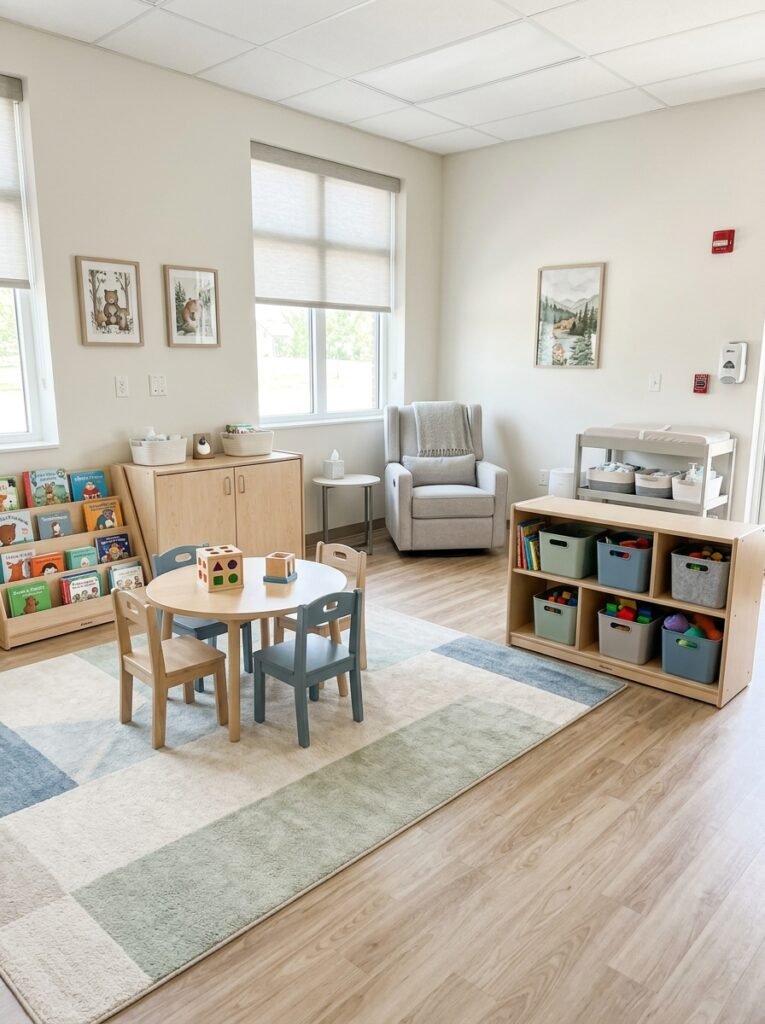
The inside of a closet door can provide extra space for lightweight accessories when the door and storage product are suitable for that purpose. Small organizers may hold hats, socks, bibs, or other soft items, helping free up shelf space for clothing and blankets. Check that the organizer does not prevent the door from closing or interfere with nearby furniture. Avoid hanging heavy objects or placing items where they could fall into a crib or onto a changing area. Door storage works best for small, lightweight items rather than bulky supplies or products needed several times a day.
17. Keep Baby Toiletries and Health Essentials Separate
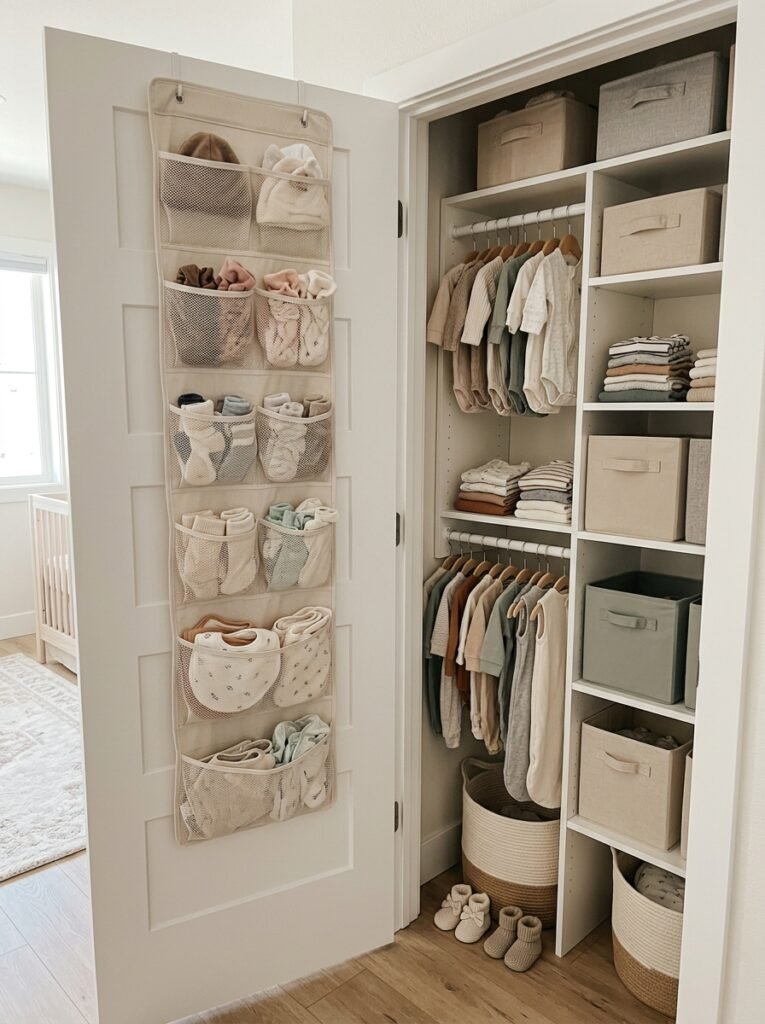
Baby skincare products, grooming tools, and health-related supplies are easier to manage when they have their own storage area away from clothing and everyday linens. Use a dedicated container for appropriate items such as a baby brush, nail-care tools, and approved skincare products, following each product’s storage directions. Keep medications, vitamins, small tools, and any potentially harmful substances secured and inaccessible to children. Separate clean items from used ones, and regularly check product condition and expiry dates where applicable. A dedicated category prevents small essentials from becoming scattered throughout the nursery.
18. Create a Nursery Reset Routine
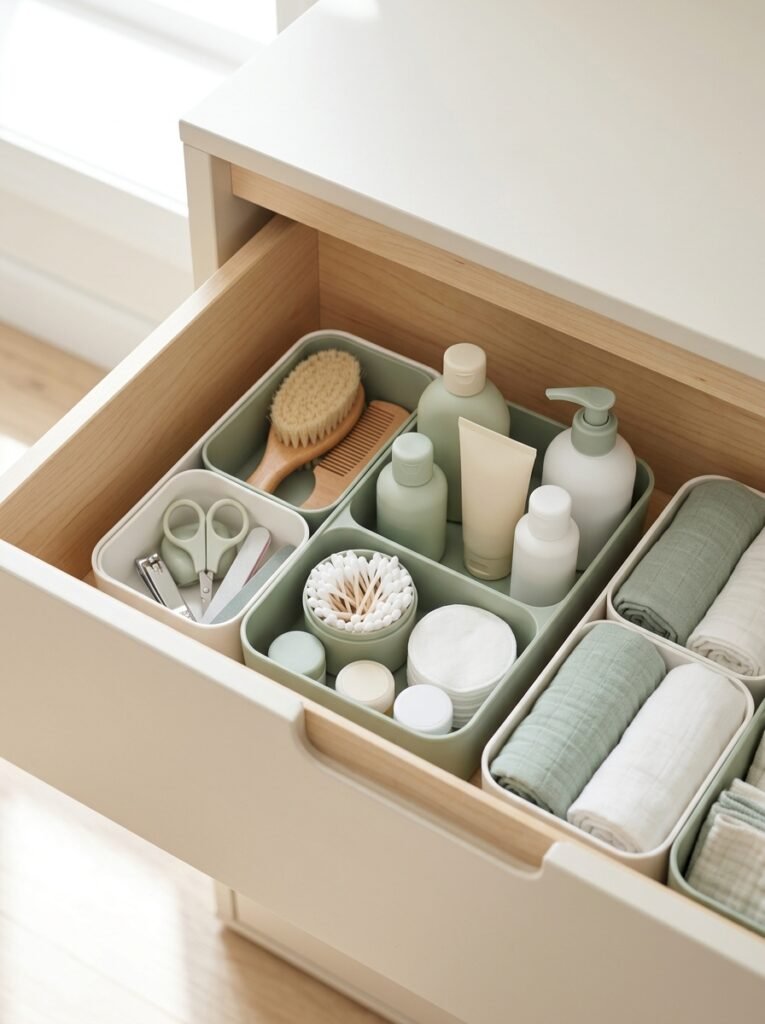
Even the most carefully arranged nursery will need regular maintenance as clothing sizes change, laundry accumulates, and new supplies arrive. Spend a few minutes returning items to their assigned drawers, restocking everyday essentials, and moving outgrown clothes into the appropriate storage bin. Check that the dresser top remains uncluttered and that the crib and walkways stay clear. Review the organization system every few weeks during the newborn stage, adjusting it as your daily routine becomes clearer. Small, consistent resets prevent clutter from building up and make the nursery easier to use.
How to Organize a Nursery in a Small Space
The best way to organize a small nursery is to decide where the most frequently used items belong before buying extra furniture. Start by measuring the dresser, closet, and available wall space. Give everyday essentials a convenient location, use drawer dividers for small clothing items, and store future-size clothes separately. Choose narrow or modular storage when it genuinely improves access, rather than adding furniture that blocks the room. Keep the crib area, doorways, and walking paths clear, and follow all furniture installation and safe-sleep guidance.
Simple Nursery Organization Tips for Everyday Use
- Group similar items together: Keep clothing, diapers, blankets, and toiletries in separate categories.
- Use the top drawer wisely: Reserve it for the essentials you reach for most often.
- Plan before buying: Measure drawers and closets so organizers fit properly.
- Separate clothing sizes: Keep current outfits accessible and future sizes stored separately.
- Use affordable containers: Small bins can organize socks, bibs, washcloths, and other accessories.
- Review supplies regularly: Move outgrown clothing and remove damaged or unnecessary items.
- Prioritize safety: Secure furniture, keep small hazards out of reach, and never leave a baby unattended on an elevated changing surface.
Final Thoughts
A thoughtful nursery organization system can make daily baby care feel more manageable, especially when you are short on space or preparing for twins. You do not need an expensive dresser or a large closet to create an effective setup. Start with the drawers and storage you already have, assign each category a clear place, and make small adjustments as your baby grows. From a simple three-drawer dresser to an IKEA HEMNES-inspired setup or budget-friendly bins, the best system is one that stays practical, accessible, and safe for your family.