


This post may contain affiliate links. Please read my disclosure policy.
In This Article Show
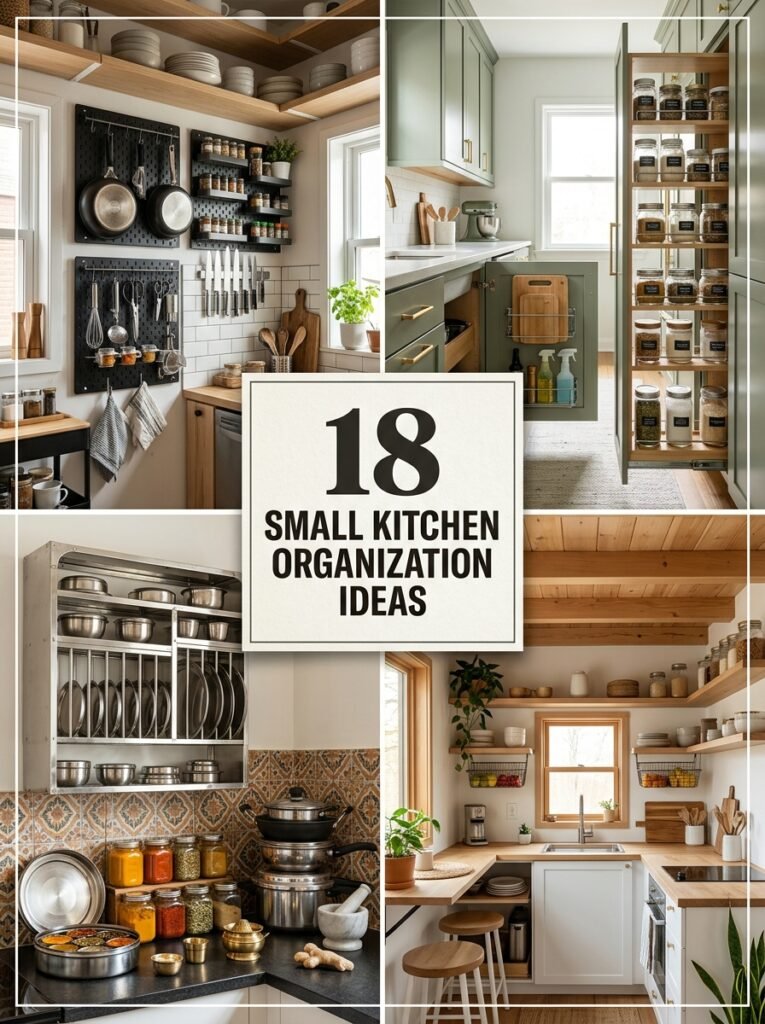
A small kitchen does not have to feel crowded, difficult, or permanently messy. The real challenge is usually not the amount of space you have, but how effectively that space is being used. When countertops become storage areas, cabinets are difficult to reach, and appliances have nowhere to go, even simple cooking can feel frustrating. Smart small kitchen organization is about creating a clear home for everything while protecting the space you actually need to cook. A narrow wall can become useful storage, the inside of a cabinet door can hold small supplies, and an empty corner can become a practical appliance station. With the right approach, even a very small kitchen can feel more open and comfortable. You do not need to renovate the entire room. Start with the areas that create the most daily frustration, then make small improvements one at a time. The ideas below focus on practical storage, space-saving solutions, cleaner countertops, and simple systems that are realistic to maintain.
1. Keep the Main Countertop as a Work Zone
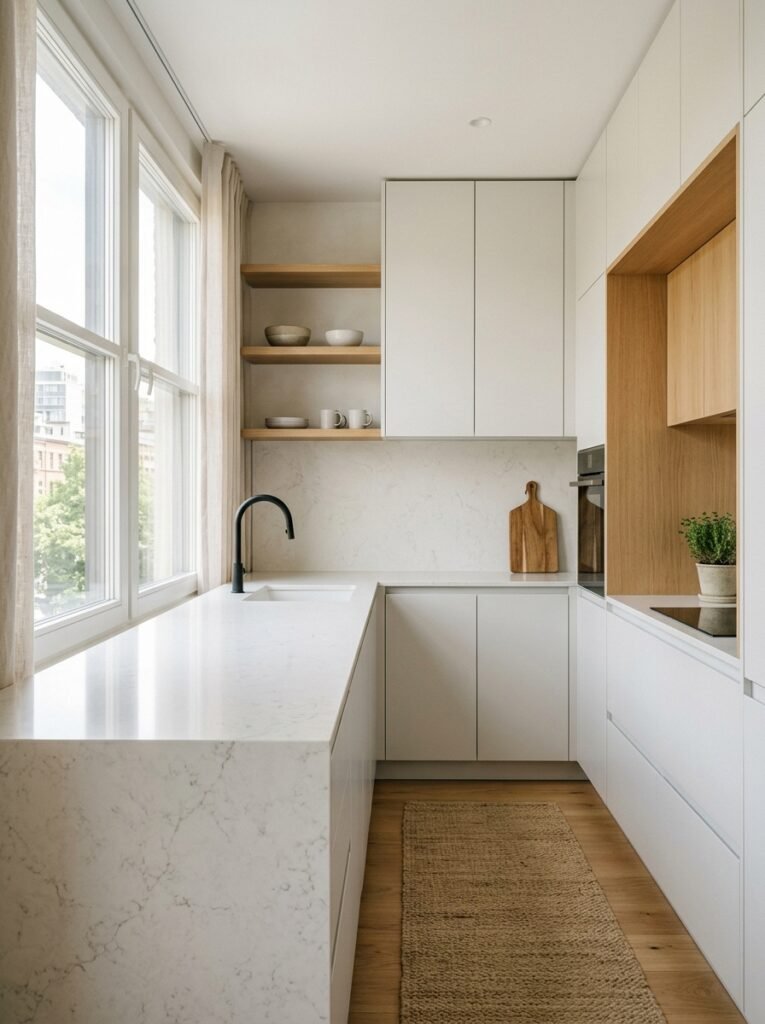
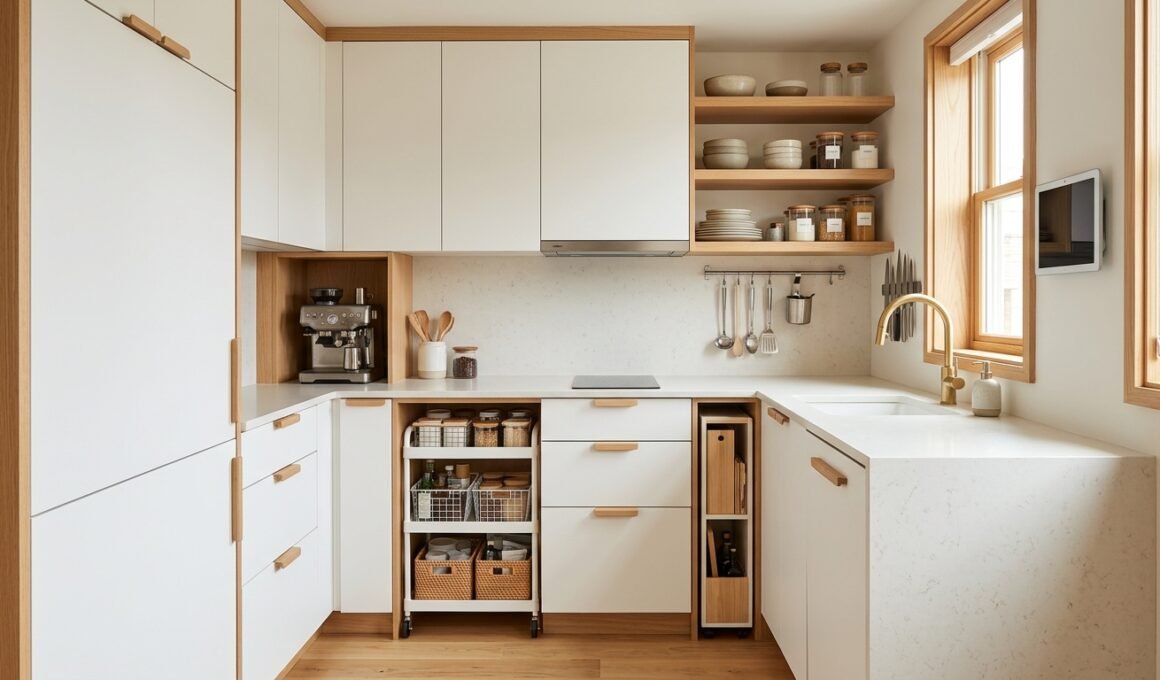
One of the biggest mistakes in a small kitchen is allowing the countertop to become permanent storage. When every available surface is covered with appliances, jars, utensils, and food, there is nowhere left to prepare meals comfortably. Choose one main section of the countertop and protect it as your primary work area. Move rarely used appliances into cabinets and keep only the items you genuinely use every day within reach. This simple change can make the kitchen feel much larger without adding any physical storage. It also makes cleaning faster because you have fewer objects to move whenever you wipe the counter.
2. Use the Walls for Extra Storage
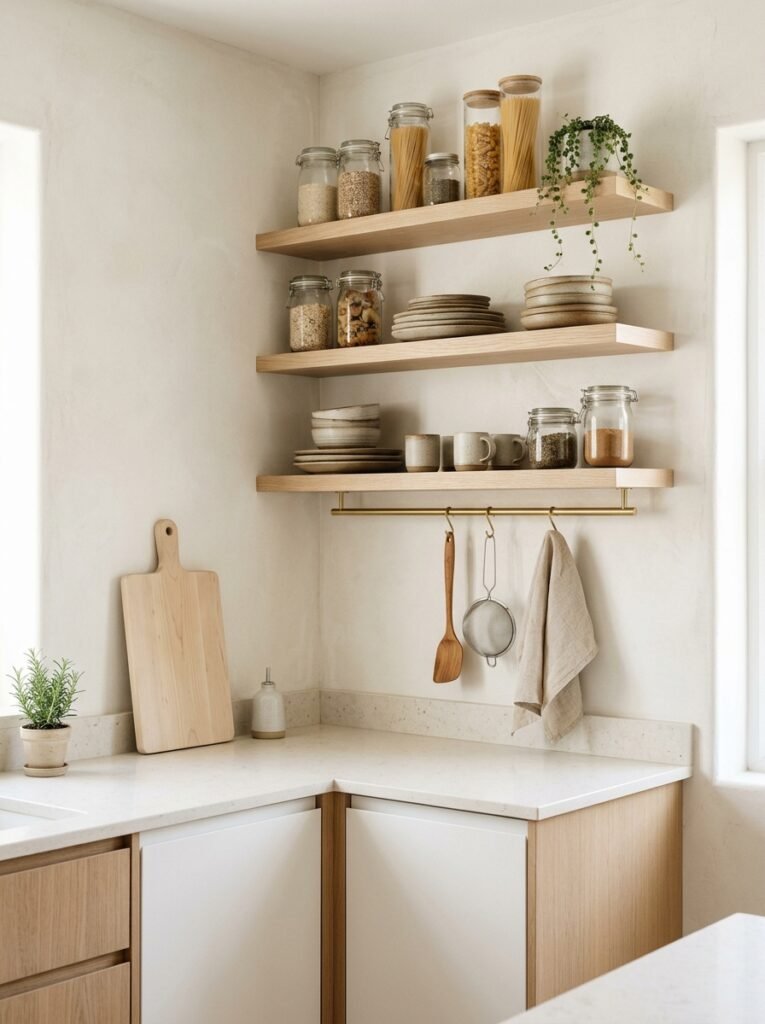
When floor and cabinet space are limited, look at the walls. A narrow floating shelf, slim rail, pegboard, or wall-mounted organizer can provide valuable storage without taking away much working space. Use these areas for lightweight and frequently used items such as measuring cups, cooking utensils, small jars, or a few everyday dishes. The important thing is not to cover every inch of the wall. Too many objects can make a tiny kitchen feel visually busy. Choose one or two well-planned storage areas and keep the arrangement intentional.
3. Add Storage Inside Cabinet Doors
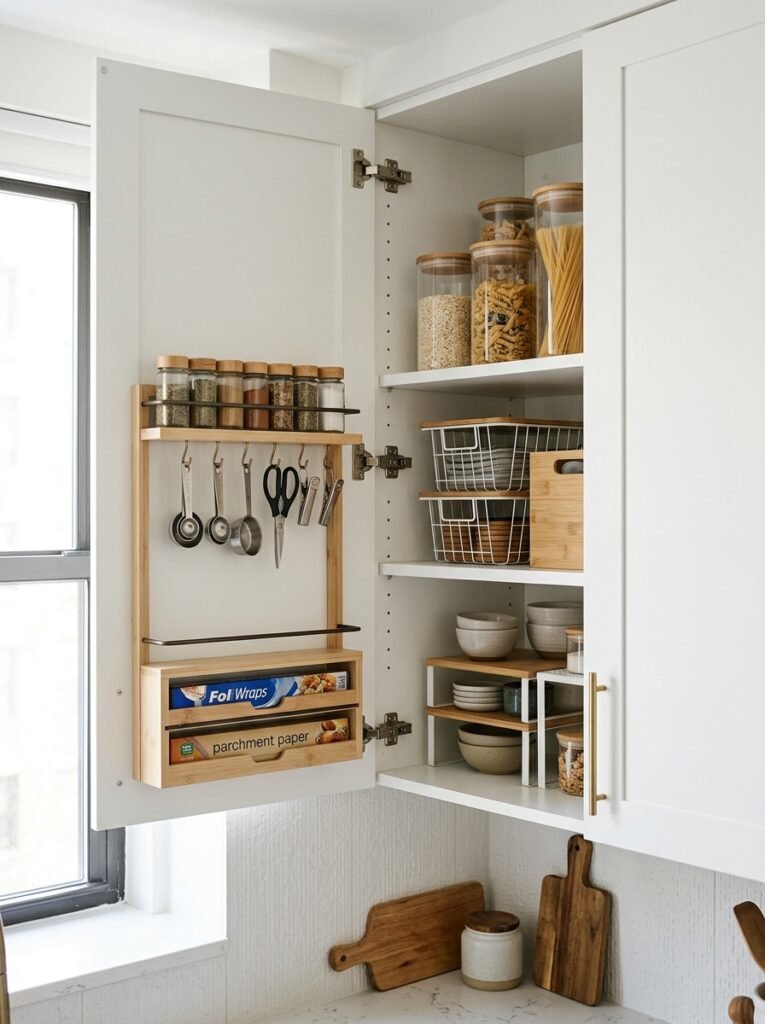
The inside of a cabinet door is an easy-to-forget storage surface. Slim racks or organizers can hold spices, measuring tools, wraps, cleaning accessories, small packets, or other lightweight kitchen supplies. This is particularly useful when your cabinets are shallow and every bit of extra storage matters. Before installing anything, make sure the organizer is not too deep and that the cabinet can still close properly. A good door-storage solution should improve access rather than create another crowded layer.
4. Use Vertical Shelves From Counter to Ceiling
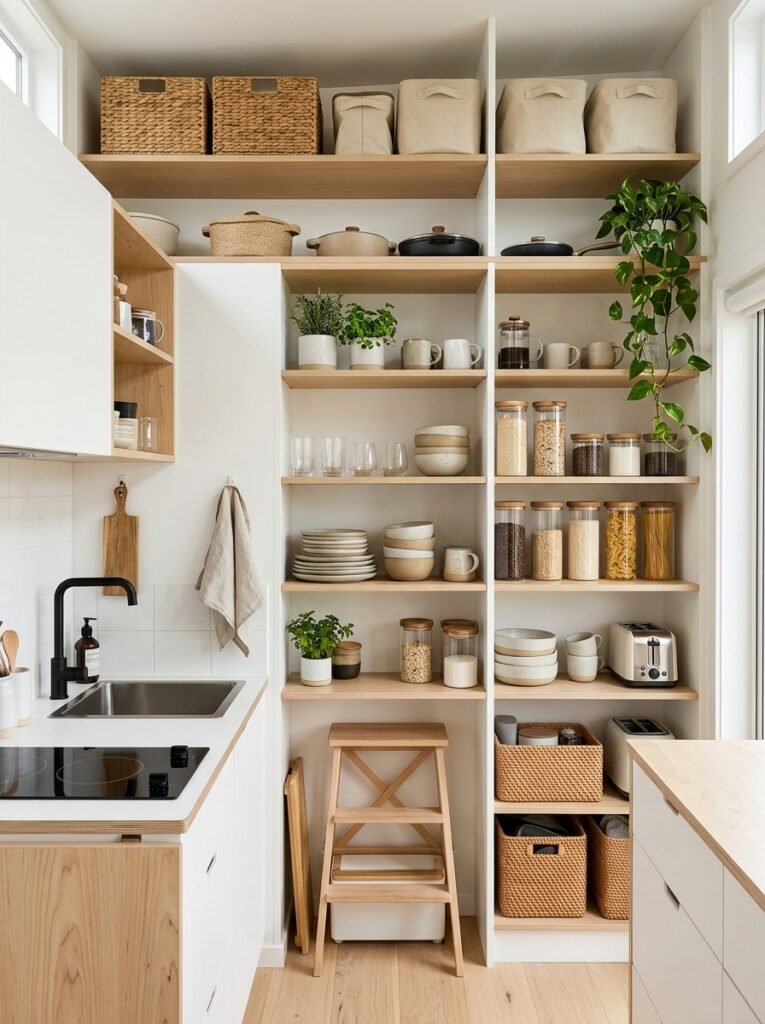
Small kitchens often have unused vertical space above cabinets and along narrow walls. Tall shelving can turn that empty height into useful storage. Keep everyday items around eye level and reserve the highest shelves for backup food, serving pieces, or appliances that you only use occasionally. This works especially well in tiny-house kitchens where floor space is extremely limited. A simple step stool can be kept nearby for safe access to higher shelves.
5. Create an Appliance Storage Zone
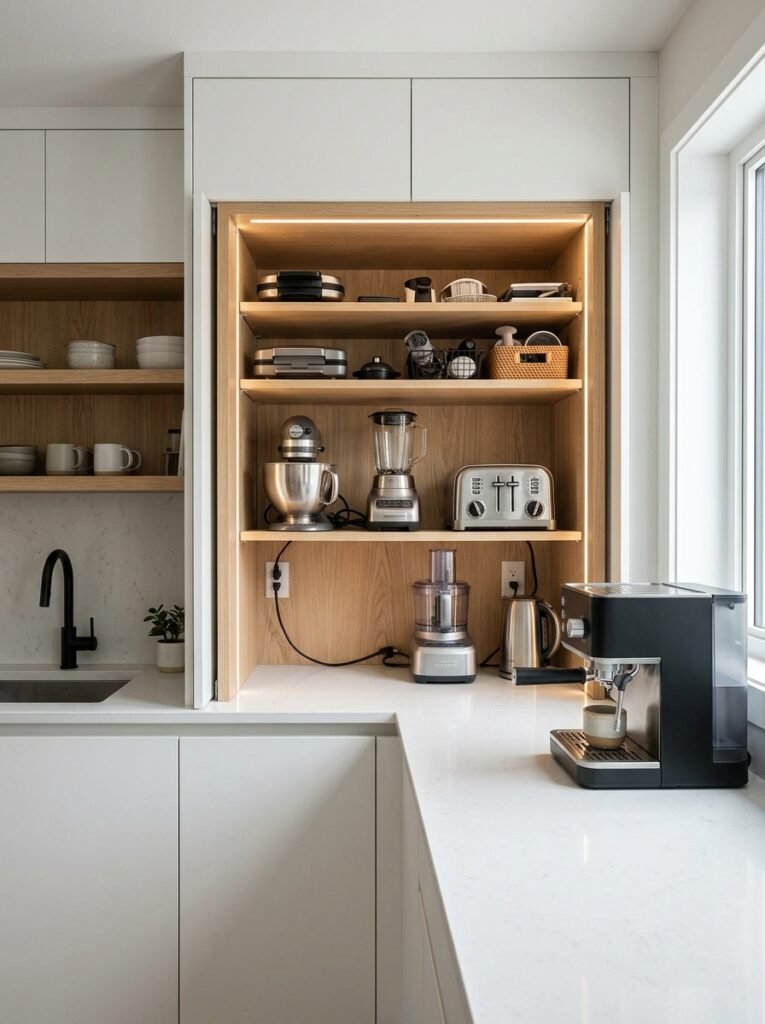
Small appliances can quickly overwhelm a tiny kitchen. Instead of keeping every appliance on the countertop, create one dedicated storage zone for them. A lower cabinet can hold heavier machines, while a deeper shelf can store less frequently used equipment. Think about frequency when deciding where things belong. Your coffee maker may deserve countertop space if you use it every morning, while a rarely used mixer or specialty appliance can stay behind a cabinet door. This keeps the kitchen practical rather than forcing you to constantly move heavy appliances around.
6. Use Pull-Out Storage in Narrow Gaps
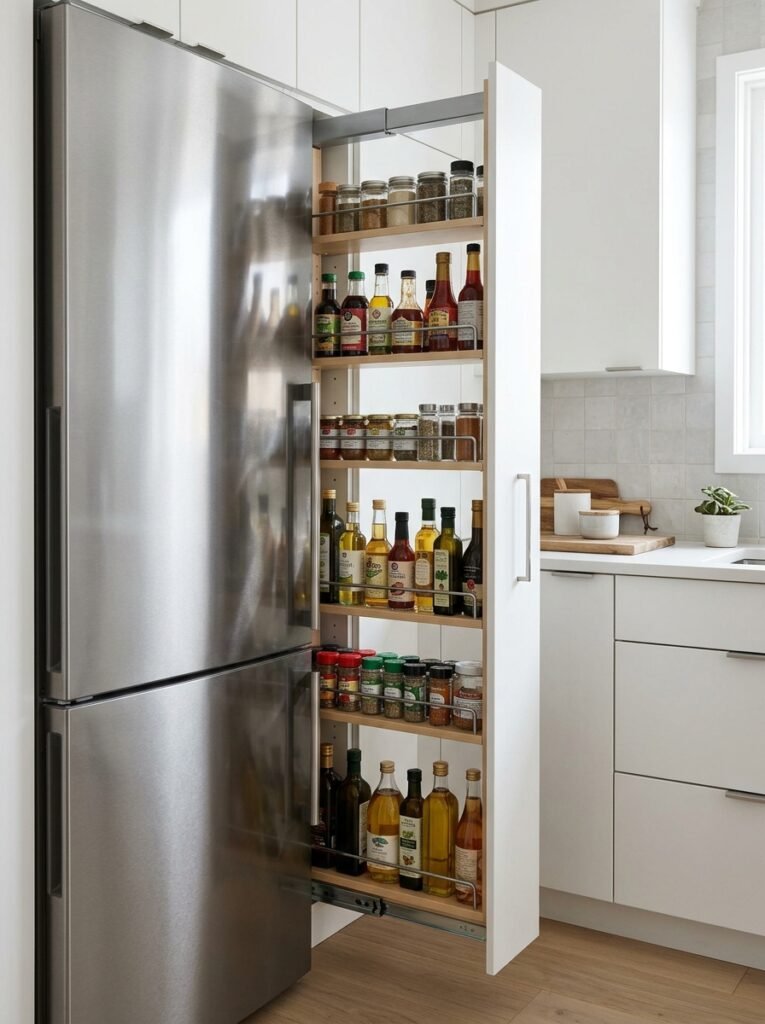
A narrow gap beside a refrigerator, cabinet, or wall can become surprisingly useful storage. A slim pull-out unit can hold bottles, spices, oils, sauces, or other narrow items. Because the entire unit slides forward, you can access the back without having to reach awkwardly into a deep space. Measure the gap carefully before choosing a storage solution. Even a very narrow opening can be useful, but only if the organizer fits comfortably and does not interfere with doors or walkways.
7. Organize Cabinets by Kitchen Workflow
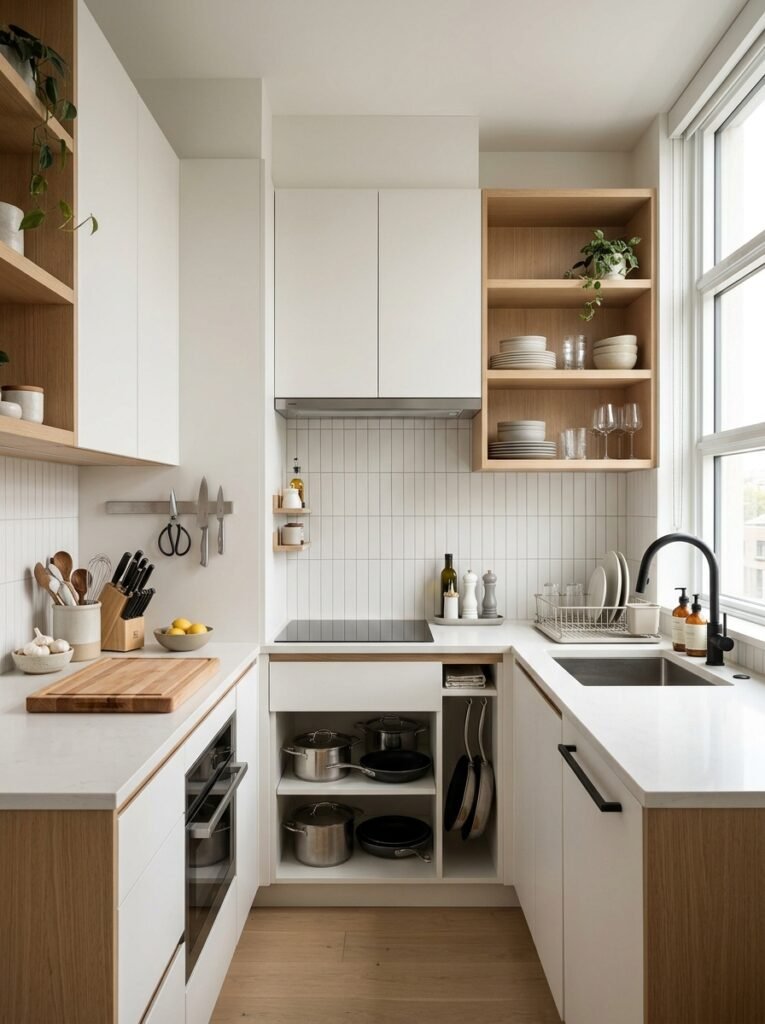
Instead of deciding where things go based only on available space, think about the order in which you use them. Store cutting boards, knives, and mixing bowls near your main preparation area. Keep pots and pans close to the cooktop, while plates and glasses can stay near the dishwasher or sink. This creates a natural workflow and reduces unnecessary movement. In a small kitchen, efficient movement matters because there is less room to work around other people or open multiple cabinets at once.
8. Install Drawer Dividers
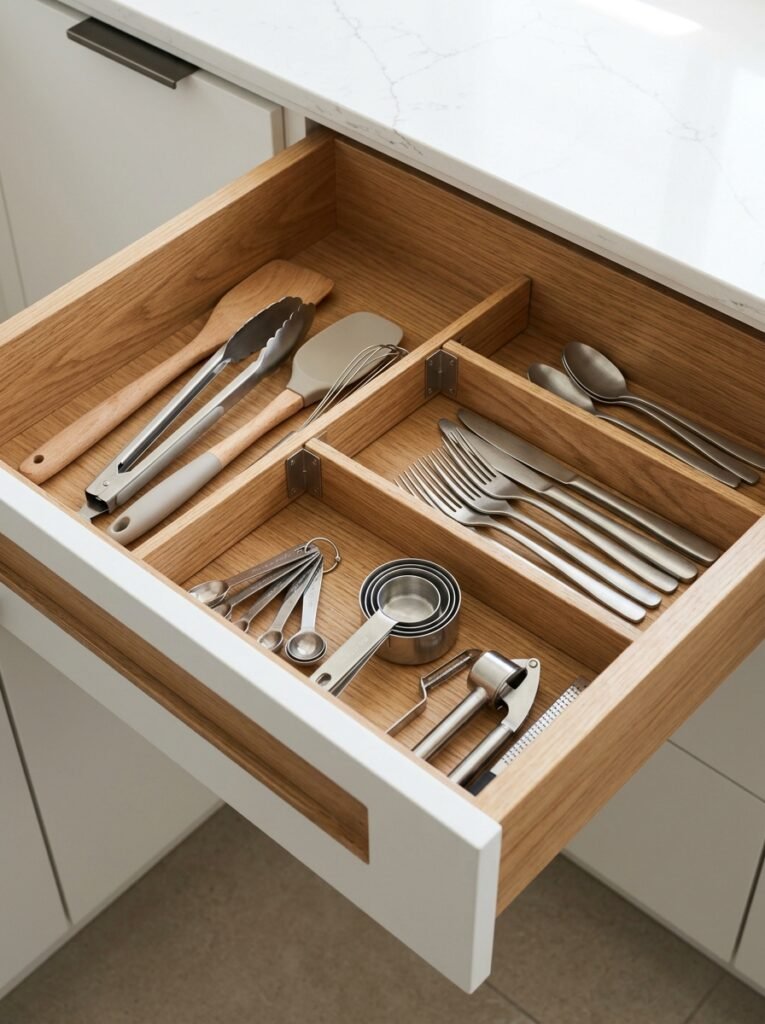
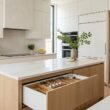
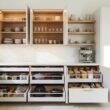
Deep kitchen drawers can become messy very quickly when utensils are simply thrown inside. Drawer dividers create separate sections for cooking tools, cutlery, measuring spoons, and other small items. This makes everything easier to find and prevents different categories from becoming mixed together. For a small kitchen, choose adjustable dividers so the drawer can change as your needs change. You can also reserve one shallow drawer for the tools you use most often, keeping everyday items close to the main preparation area.
9. Use the Space Above the Refrigerator Carefully
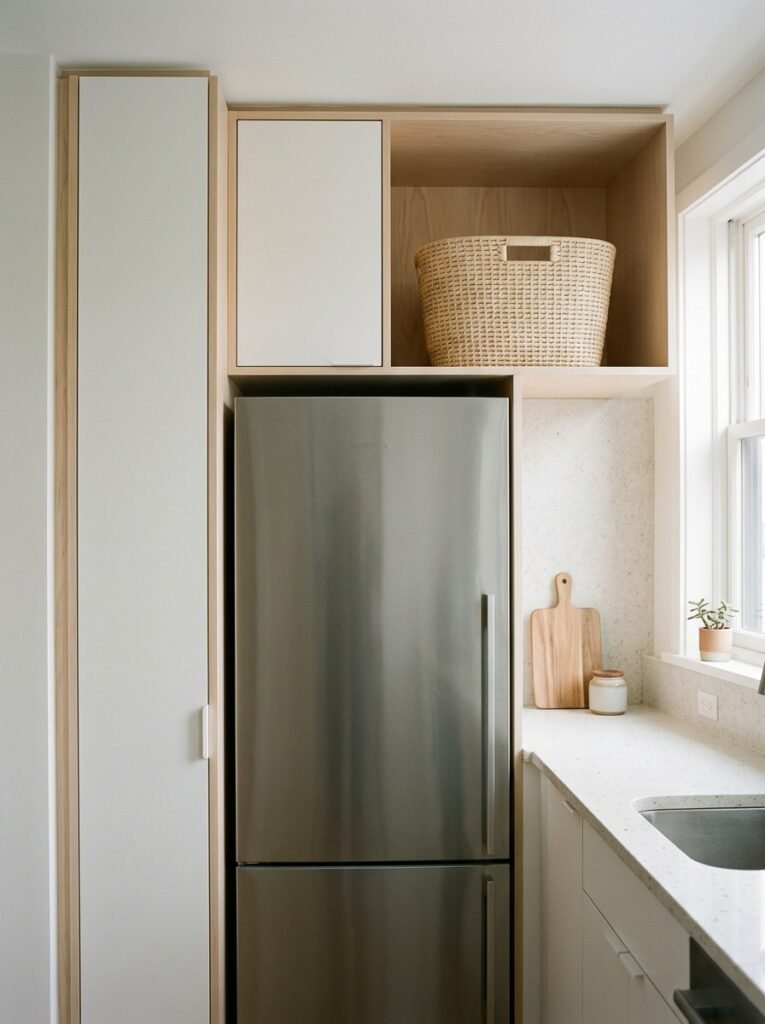
The area above a refrigerator is often wasted, especially in apartments and compact kitchens. If the space is safe and accessible, a cabinet or properly designed shelf can store lightweight items that are not needed every day. Think serving trays, extra paper products, backup supplies, or occasional kitchen equipment. Avoid turning this area into an uncontrolled pile. Use one attractive basket or a closed cabinet so the storage looks intentional and the kitchen does not feel cluttered from across the room.
10. Choose Multi-Functional Storage Pieces
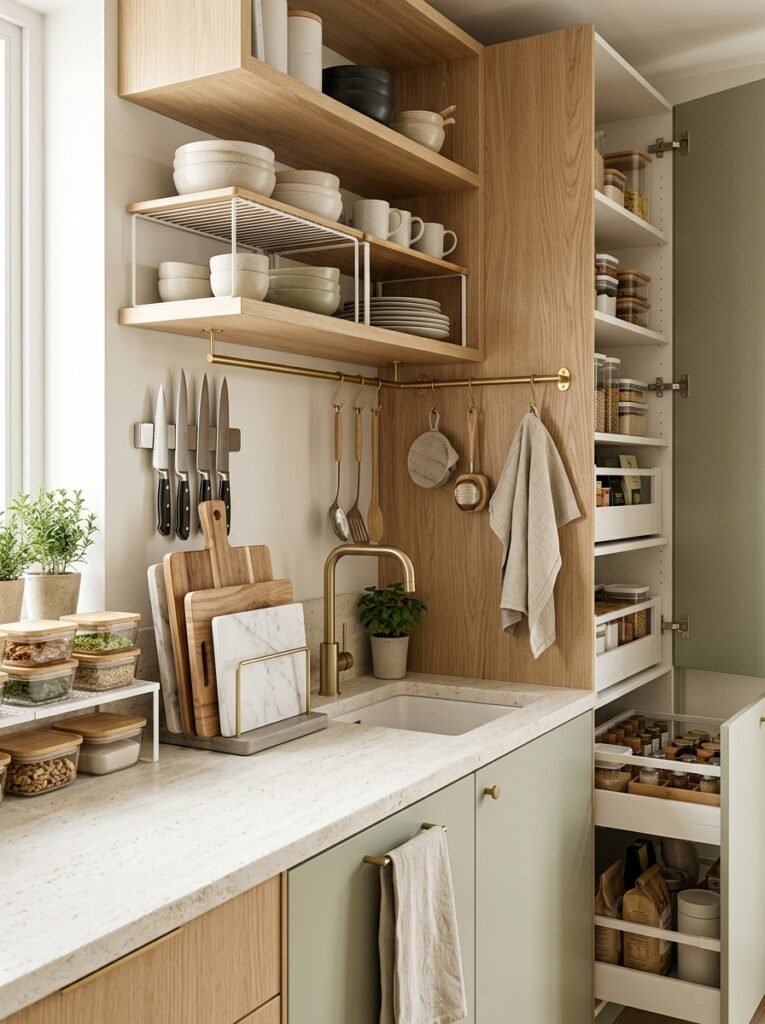
In a small kitchen, every storage product should earn its place. Look for items that perform more than one function, such as a cutting board that stores vertically, a shelf riser that creates a second level, or a container that stacks securely. Avoid buying organizers simply because they look attractive online. Measure your cabinets and think about what problem each item is supposed to solve. A simple storage piece that improves daily access is more valuable than a large collection of products that adds visual clutter.
11. Make a Dedicated Pantry Zone
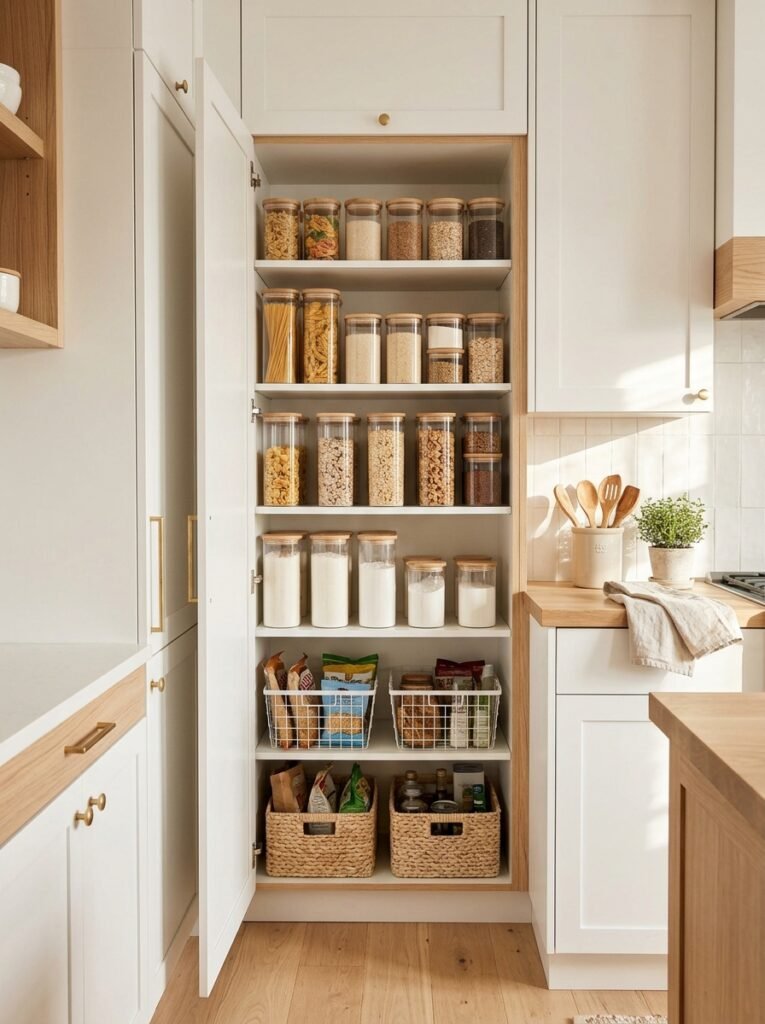
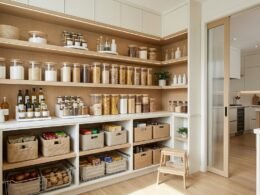
Even if you do not have a traditional pantry, you can create a pantry zone inside a cabinet or narrow shelving unit. Group dry foods such as pasta, rice, cereal, snacks, and baking ingredients together instead of spreading them throughout the kitchen. Use baskets for categories that contain many small packages and clear containers for frequently used dry goods. The goal is to make food visible enough that you can quickly see what you have before buying more.
12. Use a Rolling Cart for Flexible Storage
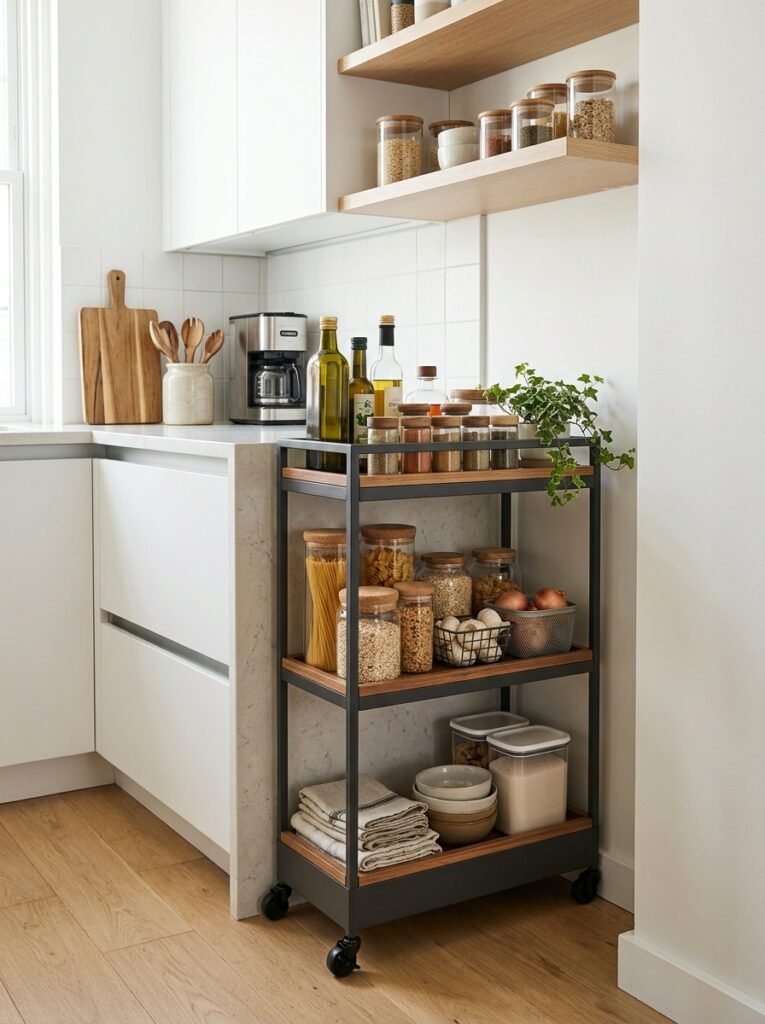
A slim rolling cart can provide extra storage without requiring permanent installation. It can hold pantry supplies, coffee items, baking ingredients, or everyday cooking tools. When you need additional workspace, the cart can move closer to the counter, and when you need more floor clearance, it can be pushed against a wall. This is particularly useful in rental apartments because it adds function without requiring major changes to the kitchen.
13. Create a Coffee or Breakfast Station
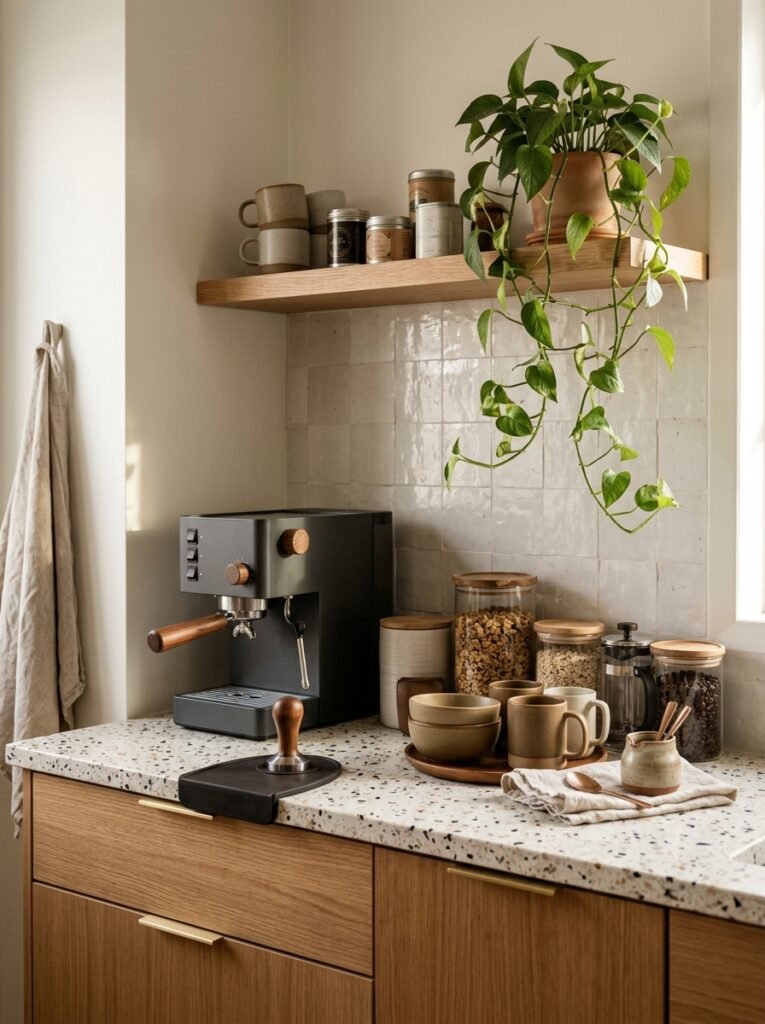
A small dedicated station can reduce morning clutter. Keep coffee supplies, mugs, tea, cereal, or breakfast items in one compact area rather than spreading them across several cabinets. If countertop space is limited, use a narrow shelf above the station or store backup supplies in the cabinet below. This approach works especially well in small apartments because it groups one daily routine into a single area, making mornings faster and easier.
14. Try Space-Saving Indian Kitchen Storage Ideas
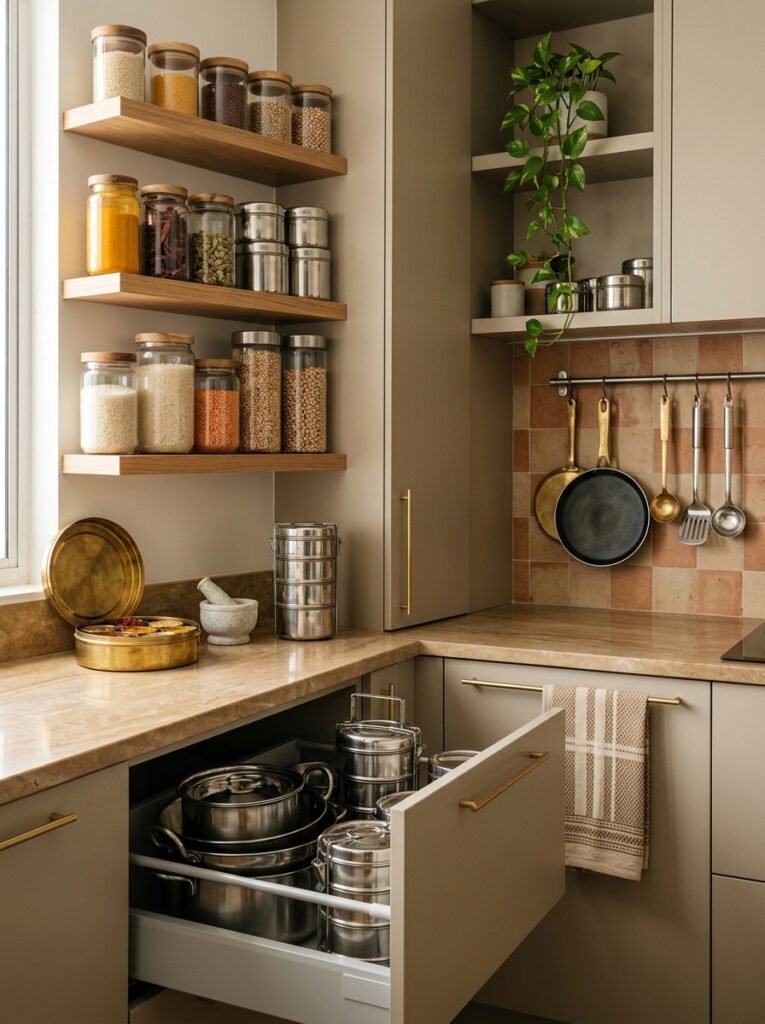
Many Indian kitchens need to store a wide range of spices, grains, cooking vessels, containers, and frequently used ingredients in relatively compact spaces. A practical approach is to group spices together, use vertical storage for flat cookware, and keep everyday ingredients close to the cooking area. You can also use deep drawers for pots and pans and dedicated shelves for jars and dry ingredients. The goal is not to copy a specific kitchen style, but to adapt storage to the foods, utensils, and cooking routines used in your home.
15. Keep Countertop Appliances Together
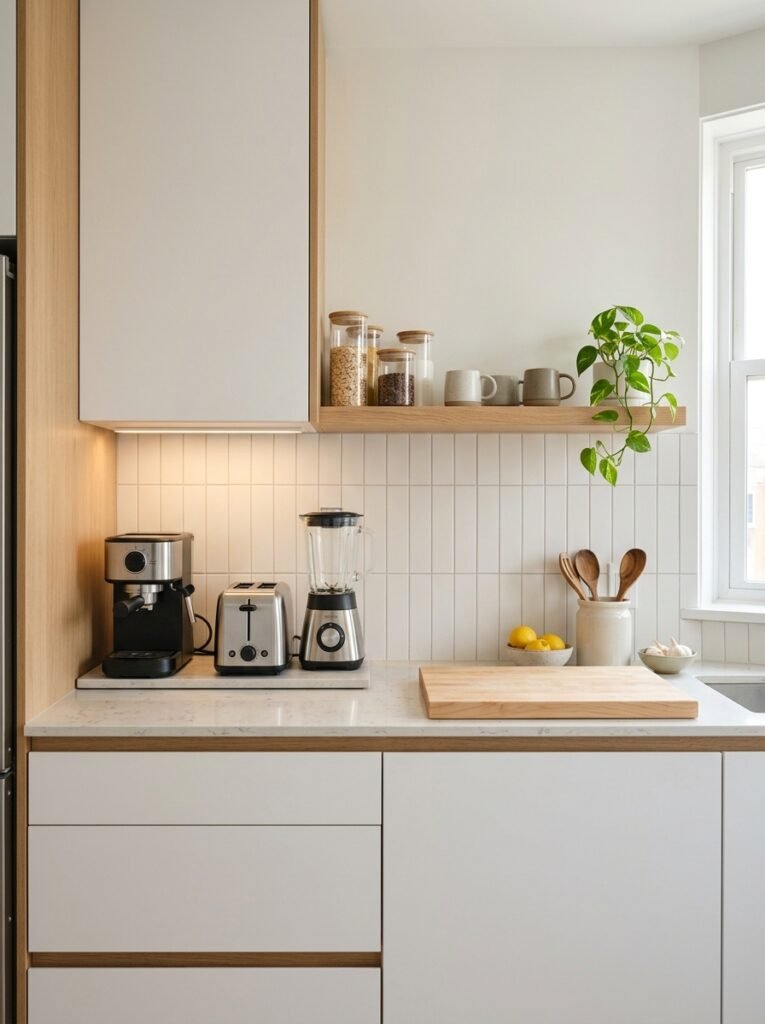
If you need to keep several appliances outside the cabinets, create one controlled appliance area rather than spreading them across every countertop. Group similar equipment together and leave a clear section for food preparation. You can also place smaller appliances on a shelf that is easy to access and reserve the countertop for the machines used most often. This makes the kitchen look calmer while keeping the appliances practical.
16. Use Affordable Bins and Simple Hacks
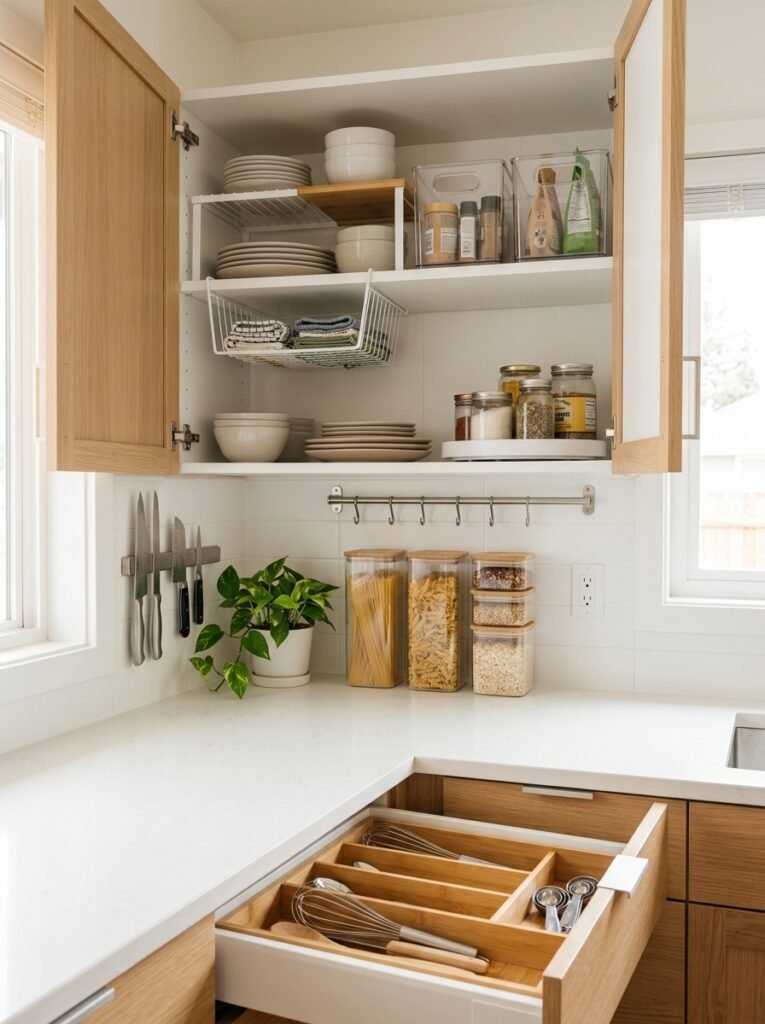
You do not have to buy an expensive complete organizing system. Basic bins, shelf risers, drawer dividers, tension organizers, and stackable containers can solve many common storage problems. Start with the problem rather than the product. If small packets keep falling over, use a bin. If cabinet shelves have too much empty vertical space, add a riser. If lids are difficult to find, create a dedicated divider. This problem-solving approach usually produces a more useful system and prevents unnecessary purchases.
17. Use Shelves Instead of Bulky Cabinets Where Appropriate
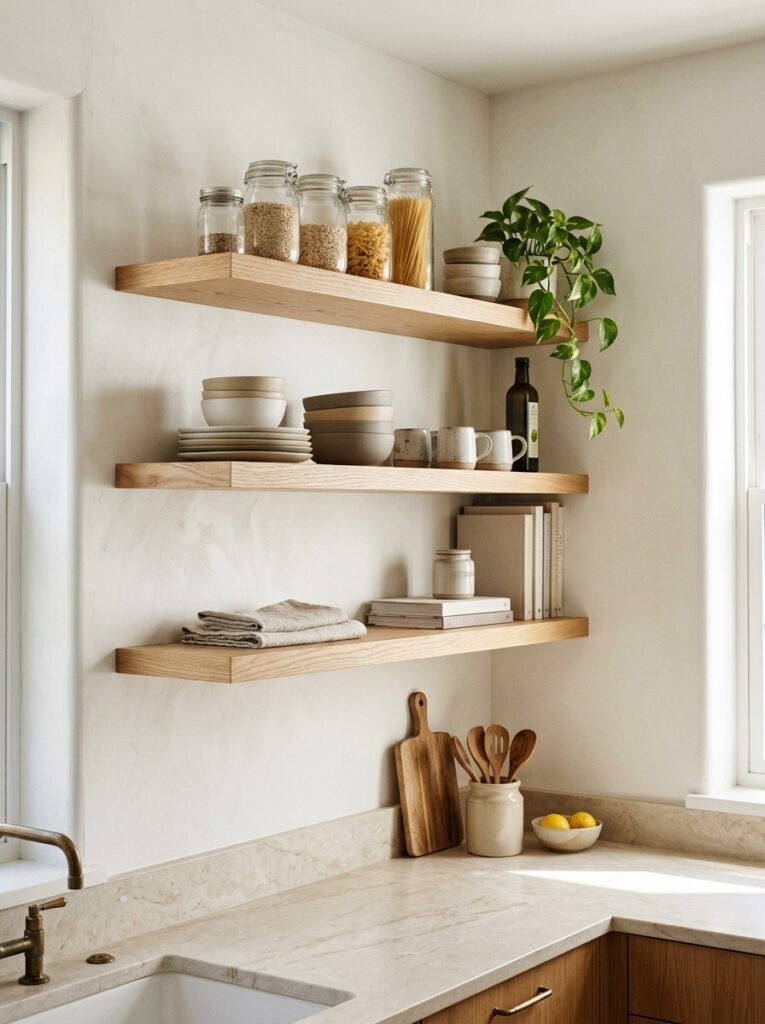
Open shelving can make a small kitchen feel visually lighter because you are not looking at a continuous wall of cabinet doors. Use it selectively for attractive everyday dishes, mugs, jars, or a few cooking ingredients. However, open shelves work best when you can keep them reasonably tidy. If the shelves become overloaded with mismatched items, they may create more visual clutter than closed cabinets. Use a limited number of items and leave some breathing room between groups.
18. Keep a Simple Weekly Reset
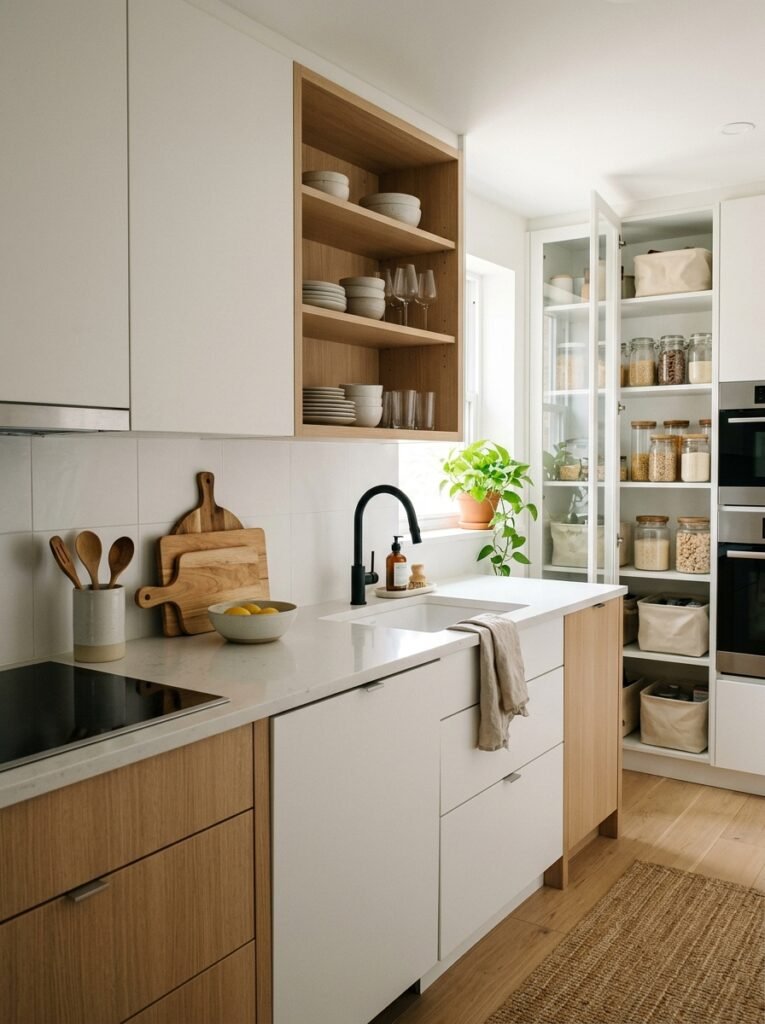
No storage system stays organized automatically. A small weekly reset can keep the kitchen from slowly returning to its old habits. Check the countertop, return misplaced items, reorganize one drawer or cabinet, and remove food or supplies you no longer need. You do not need to spend hours doing this. The purpose is simply to catch small problems before they become a major mess. A system that takes a few minutes to maintain is much more realistic than one that requires a complete reorganization every month.
Final Thoughts
The best small kitchen organization ideas are not necessarily the most expensive or complicated ones. Often, the biggest improvement comes from making better use of space that is already there. A cabinet door can become storage, a narrow wall can hold shelves, a rolling cart can add flexibility, and a clear countertop can make the entire room feel more spacious. Start with one problem area instead of trying to reorganize everything at once. Clear the countertop, fix one difficult cabinet, organize one drawer, or create one pantry zone. Once that area works well, move to the next. The goal is not to make a tiny kitchen look perfect all the time. The goal is to make it very easy to use. When everyday items are accessible, appliances have a home, storage follows your cooking habits, and surfaces stay clear, even a small kitchen can feel comfortable, efficient, and surprisingly spacious.