


This post may contain affiliate links. Please read my disclosure policy.
In This Article Show
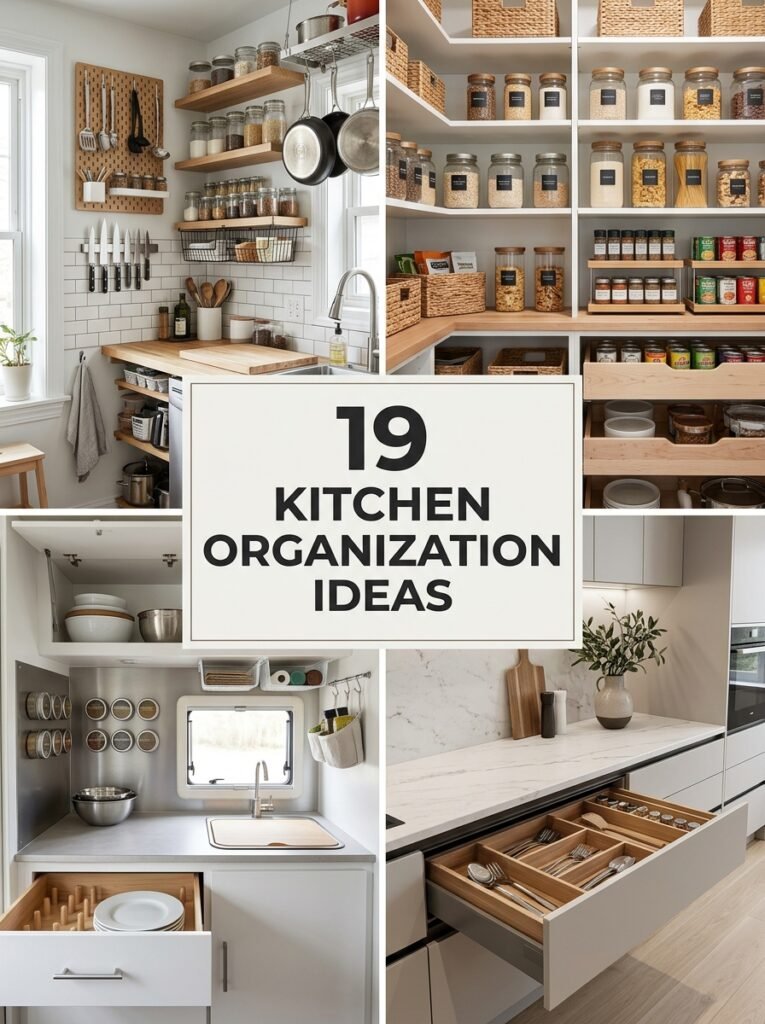
A kitchen can look beautiful and still be difficult to use. Crowded countertops, overfilled cabinets, random drawers, and pantry items that disappear behind one another can make everyday cooking feel harder than it needs to be. Good kitchen organization solves these problems by giving each item a practical home while keeping the room comfortable and easy to move around. You do not need a huge kitchen or an expensive renovation to create a better system. Tiny kitchens, small apartments, RVs, campers, and even large family kitchens can all benefit from thoughtful storage. The key is to understand how you actually use the room and then build your storage around those habits.
1. Create a Dedicated Home for Everyday Items
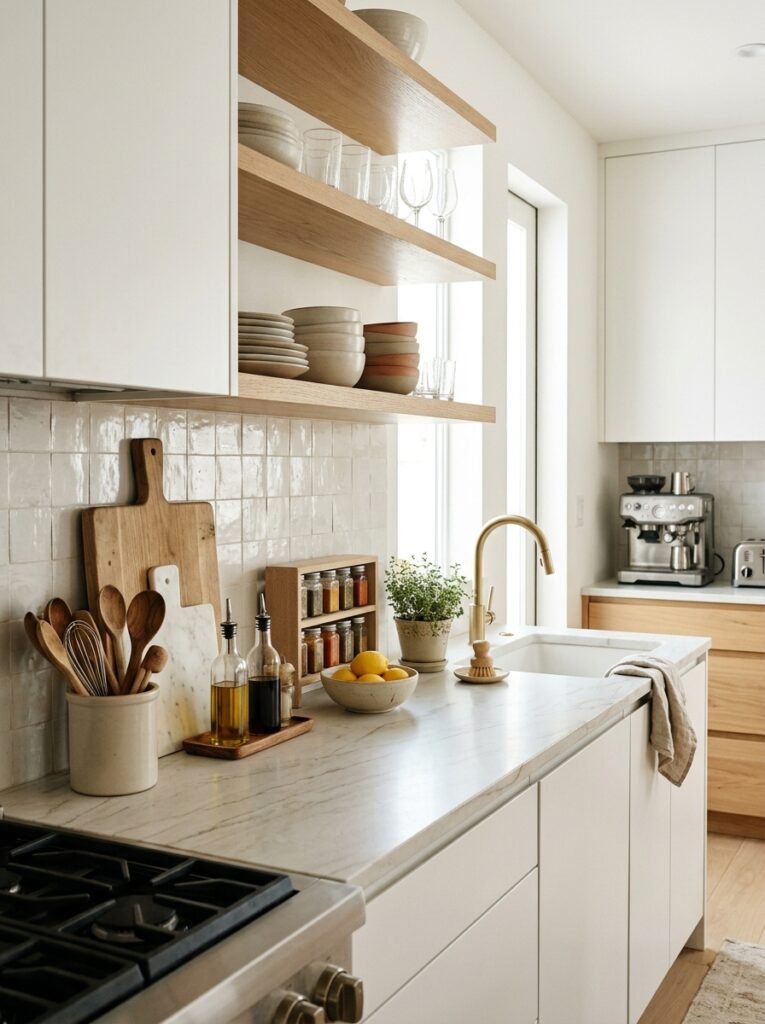
The easiest way to keep a kitchen organized is to give frequently used items a predictable location. Plates, glasses, cooking utensils, cutting boards, spices, and everyday appliances should each have a logical home close to where they are used. For example, keep cooking tools near the main preparation area instead of storing them across the room. When every item has a home, cleaning up becomes much faster because you do not have to decide where something belongs every time.
2. Make Tiny Kitchens Work Vertically
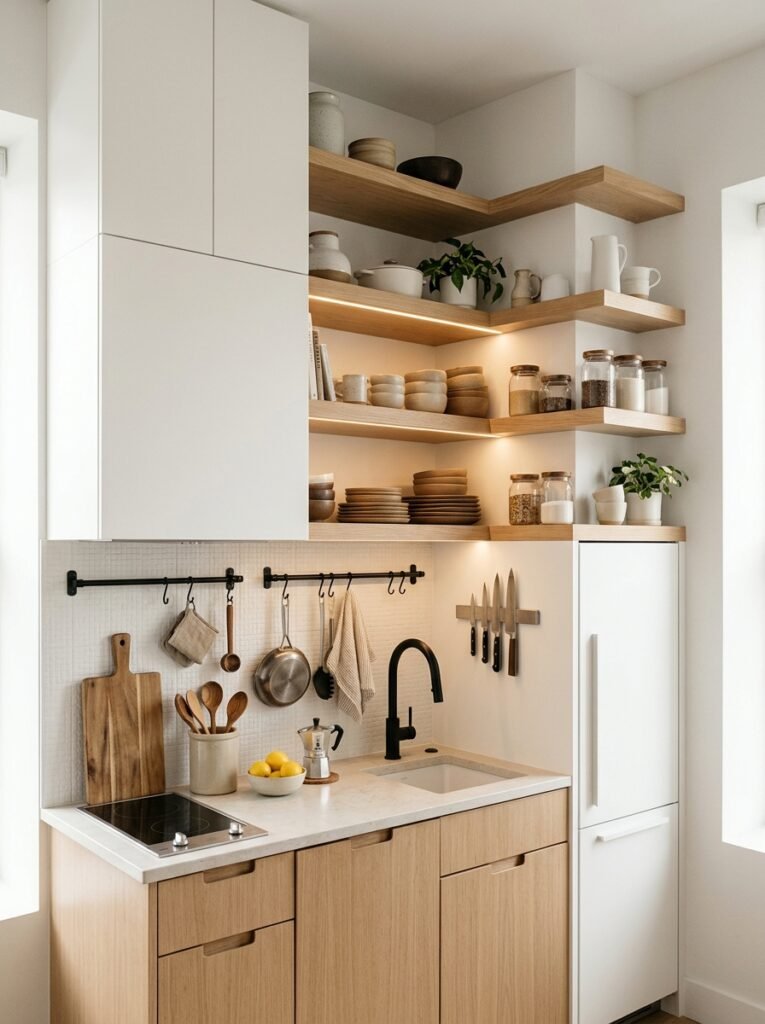
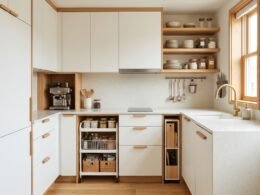
A tiny kitchen often runs out of counter and cabinet space before it runs out of wall space. Use vertical shelves, wall-mounted rails, narrow shelving, or tall cabinets to take advantage of unused height. Store less frequently used items higher up and keep everyday tools within easy reach. This approach adds storage without making the floor area smaller, which is especially valuable in compact apartments.
3. Organize the Pantry by Food Category
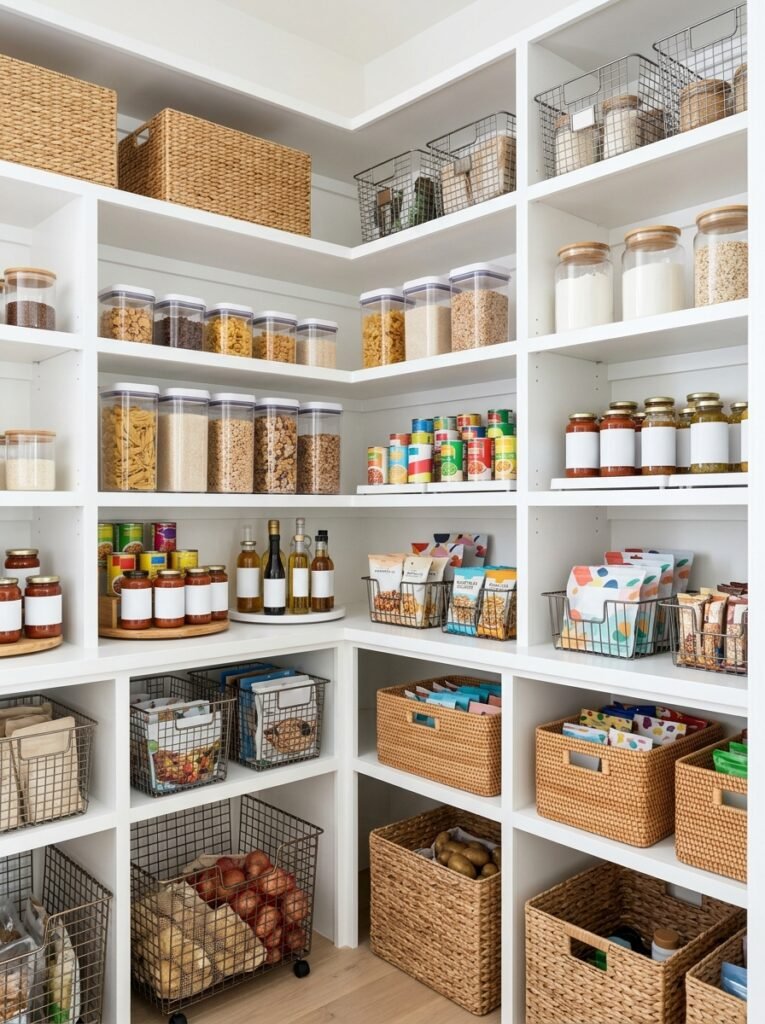
A pantry becomes much easier to manage when similar foods stay together. Create simple zones for breakfast items, snacks, canned goods, pasta, baking supplies, sauces, and cooking ingredients. Use baskets or clear containers where they genuinely improve visibility, but do not transfer every product unnecessarily. A practical pantry should let you quickly see what you have and notice what needs replacing.
4. Use Drawer Storage for Difficult-to-Reach Items
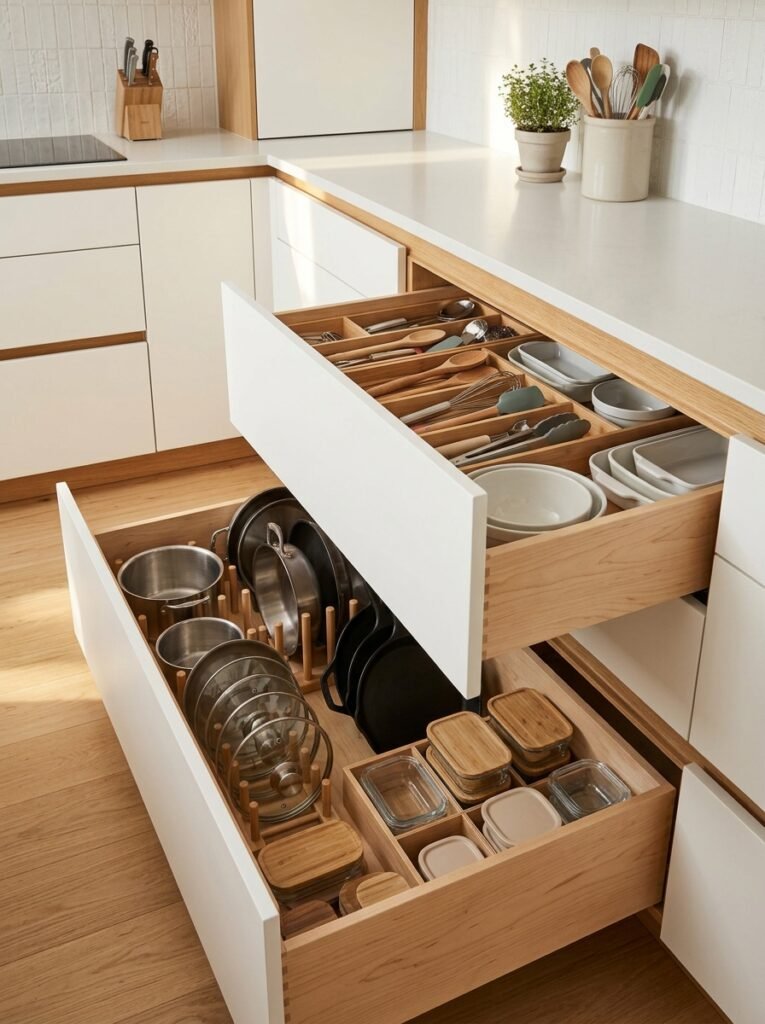
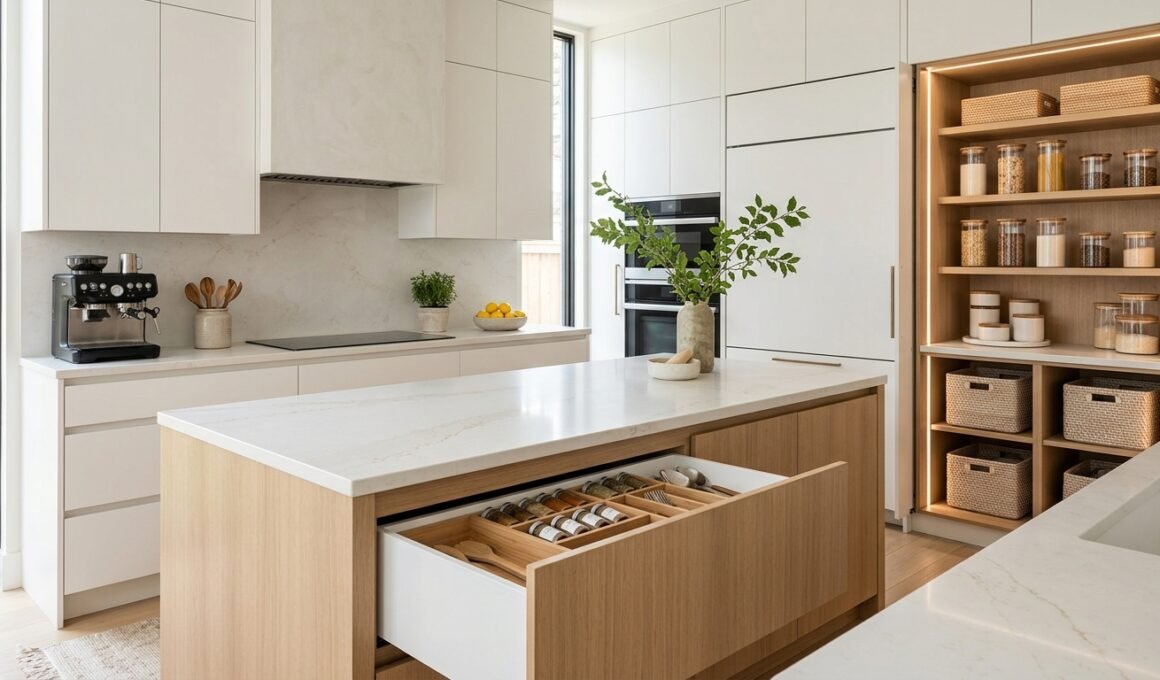
Deep drawers can be much more practical than deep cabinets for pots, pans, food containers, and everyday kitchen tools. Instead of stacking everything into one large pile, use dividers to create separate sections. This lets you pull the entire drawer open and see everything at once. Keep heavier cookware in lower drawers and frequently used utensils in shallower drawers closer to the main preparation area.
5. Keep Countertops Clear
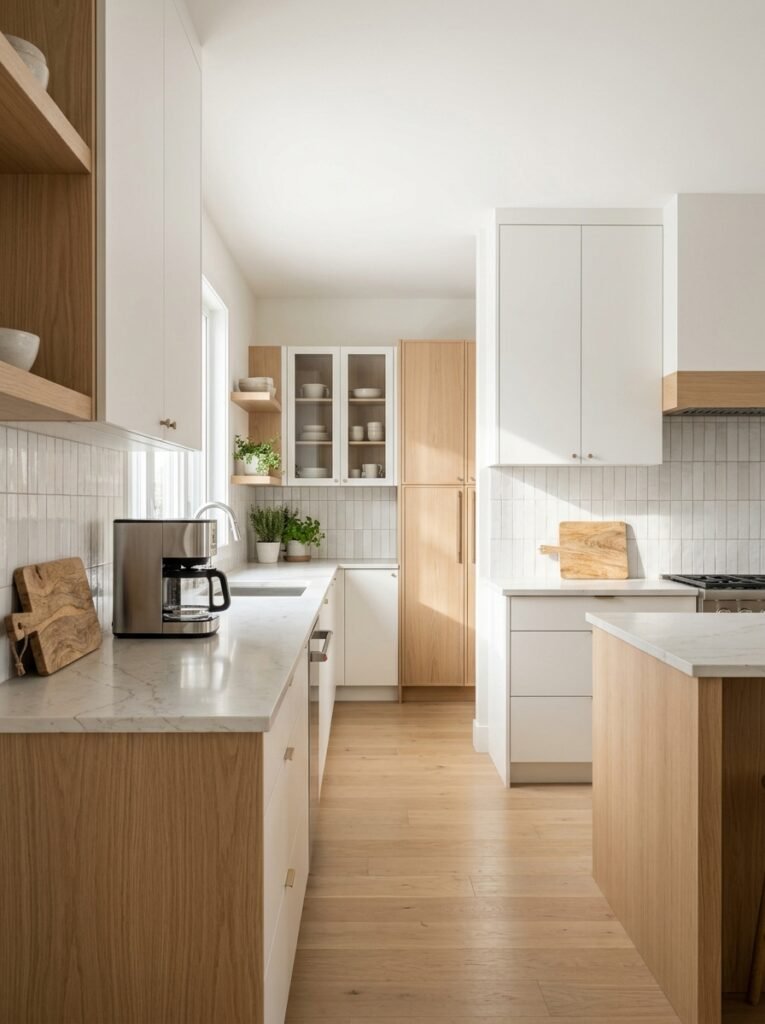
Clear countertops can make even a small kitchen feel significantly larger. Keep only the appliances and tools you use frequently on the counter, while storing occasional items inside cabinets or a pantry. Create one practical preparation area rather than spreading appliances across the entire workspace. This also makes cleaning easier because fewer objects need to be moved before wiping the surface.
6. Create a Functional Cabinet System
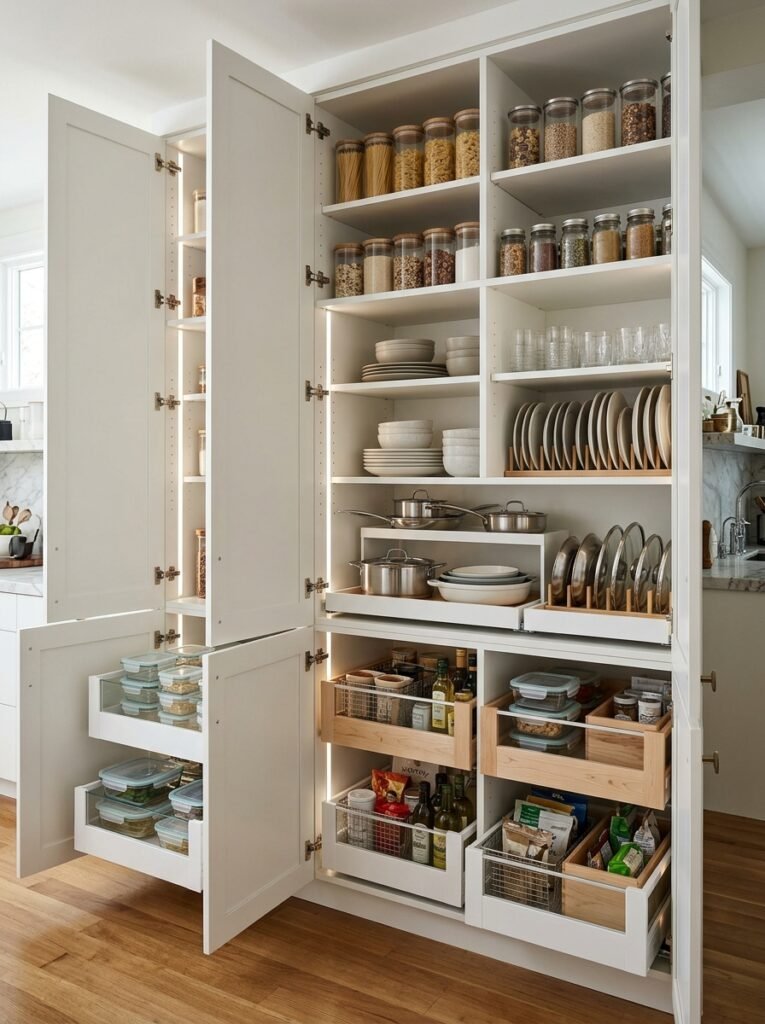
Kitchen cabinets become easier to use when each cabinet has a clear purpose. One can hold dishes, another cookware, another food storage containers, and another everyday ingredients. Avoid mixing unrelated categories unless the cabinet is very small. Adjustable shelf heights can also help you use vertical space more effectively instead of leaving large empty gaps above short items.
7. Use IKEA-Style Modular Storage
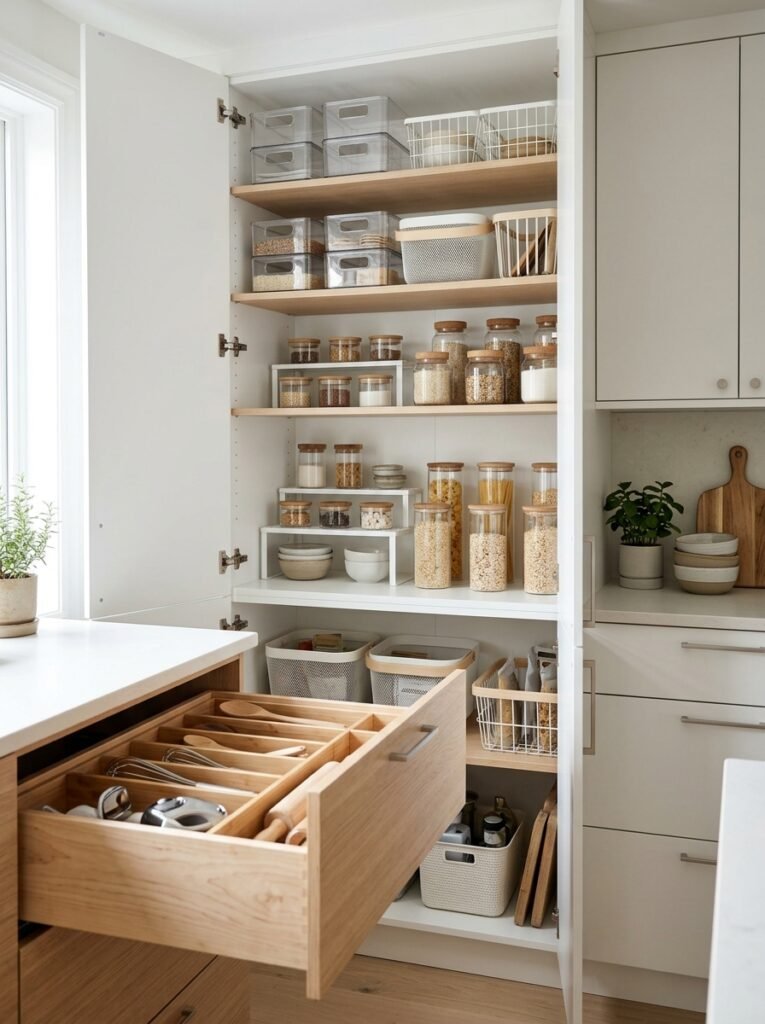
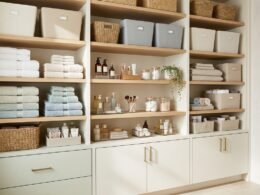
Modular storage is useful because your system can change as your needs change. Stackable bins, adjustable shelves, narrow organizers, and simple drawer inserts can be combined according to the available space. This is especially helpful for renters and small apartments because you can improve storage without making major permanent changes. Focus on pieces that fit your actual cabinets rather than buying an entire matching set.
8. Turn an Awkward Corner Into Useful Storage
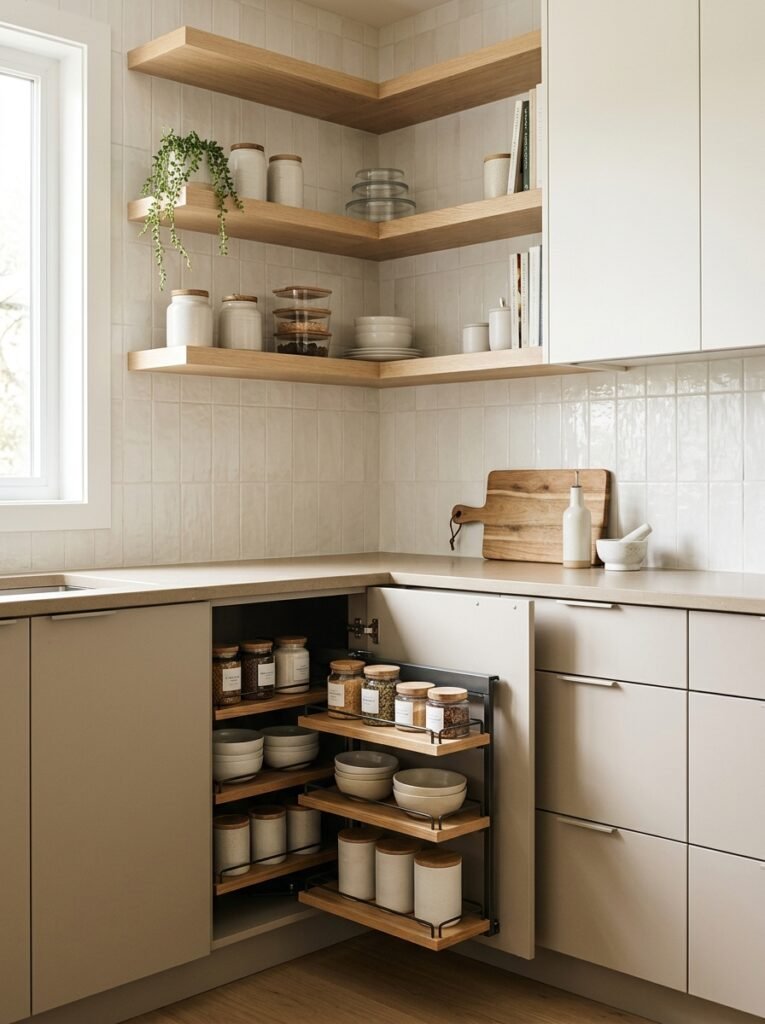
Corners are often difficult to use because items placed there can become hard to reach. Instead of leaving the space empty, consider corner shelves, rotating organizers, narrow pull-out storage, or a dedicated appliance area. The best solution depends on the cabinet shape, so measure first and choose storage that improves access rather than simply filling the empty corner.
9. Build a Small-Apartment Kitchen Around Zones
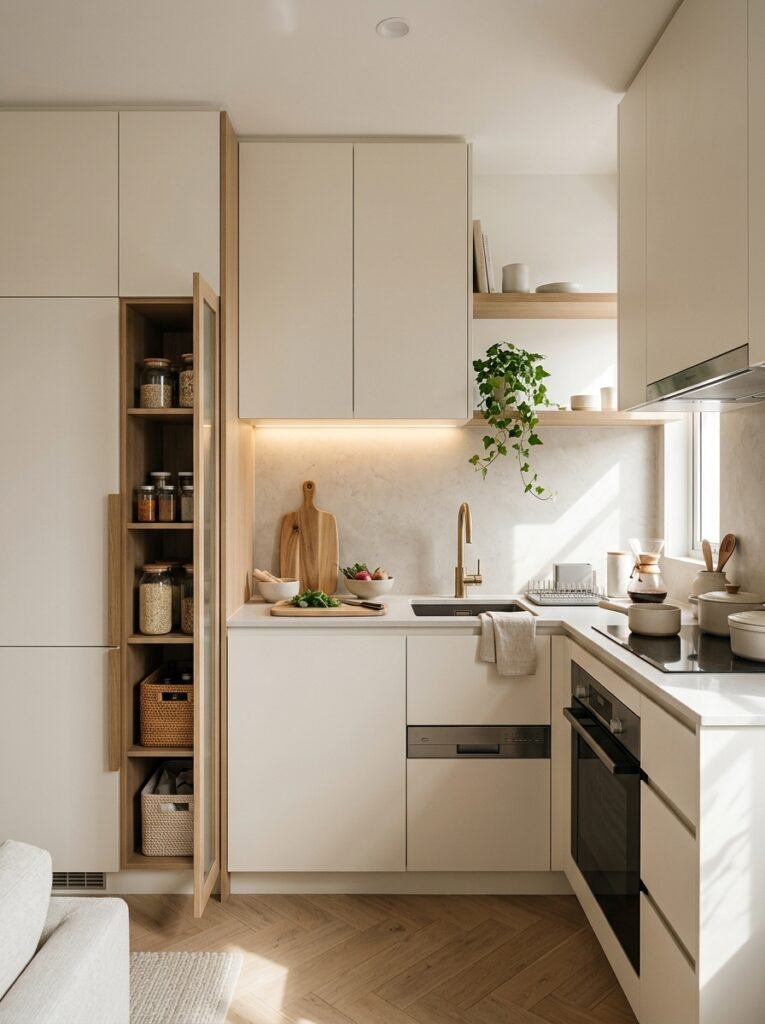
In a small apartment, every area needs to perform a clear function. Keep food preparation tools together near the main counter, dishes close to the dishwasher or sink, and pantry items near the cooking area. This creates a smoother workflow even when the kitchen is compact. Instead of trying to store everything wherever there is room, organize according to the order in which you use things.
10. Add a Dedicated Coffee or Drink Station
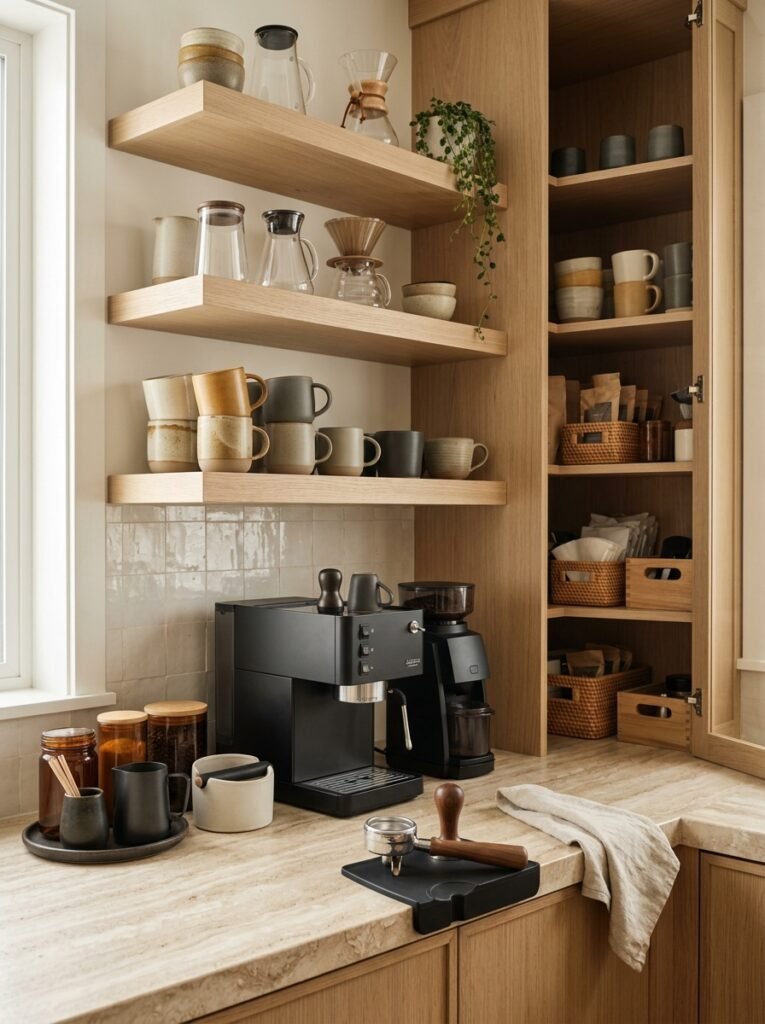
If you make coffee or other drinks every day, grouping everything together can make your morning routine much easier. Keep the machine, cups, filters, sweeteners, and frequently used supplies in one area. A narrow cabinet or shelf underneath can hold backup supplies. This prevents drink-related items from spreading across several cabinets and countertops.
11. Use Simple Storage Hacks Before Buying More
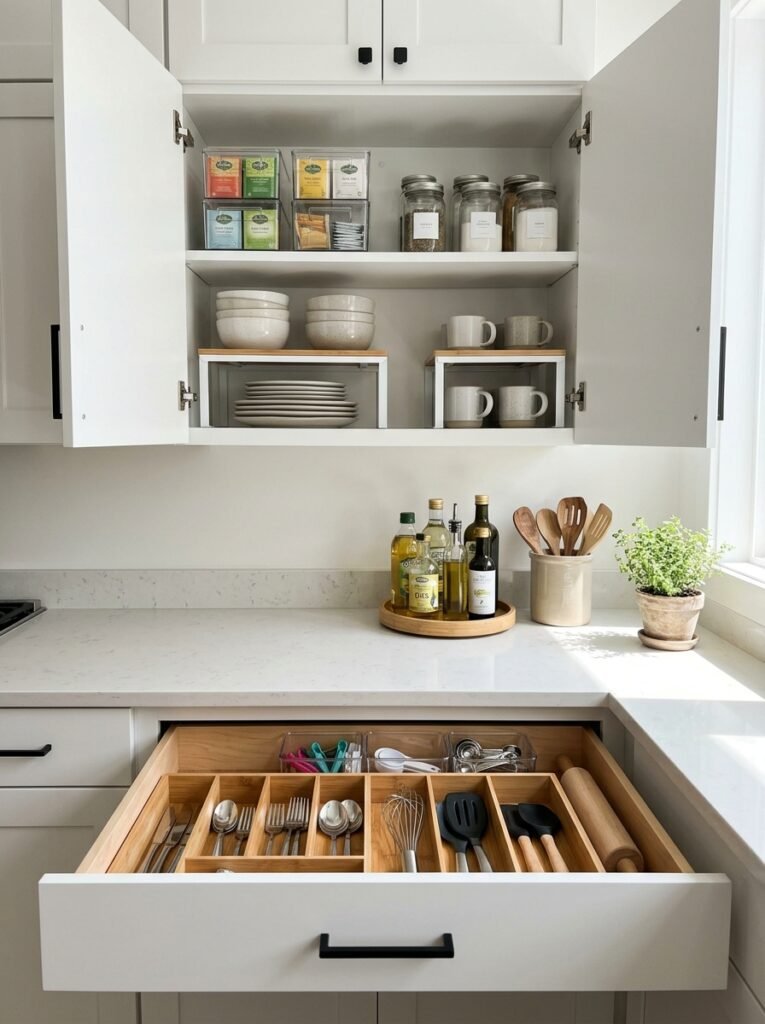
Sometimes the kitchen does not need more storage; it needs better use of the storage already available. Shelf risers can create another level inside cabinets, drawer dividers can separate utensils, and small bins can collect loose items. Try inexpensive changes first and see whether they solve the problem before investing in larger organizers or remodeling.
12. Create a Kid-Friendly Snack or Play Zone
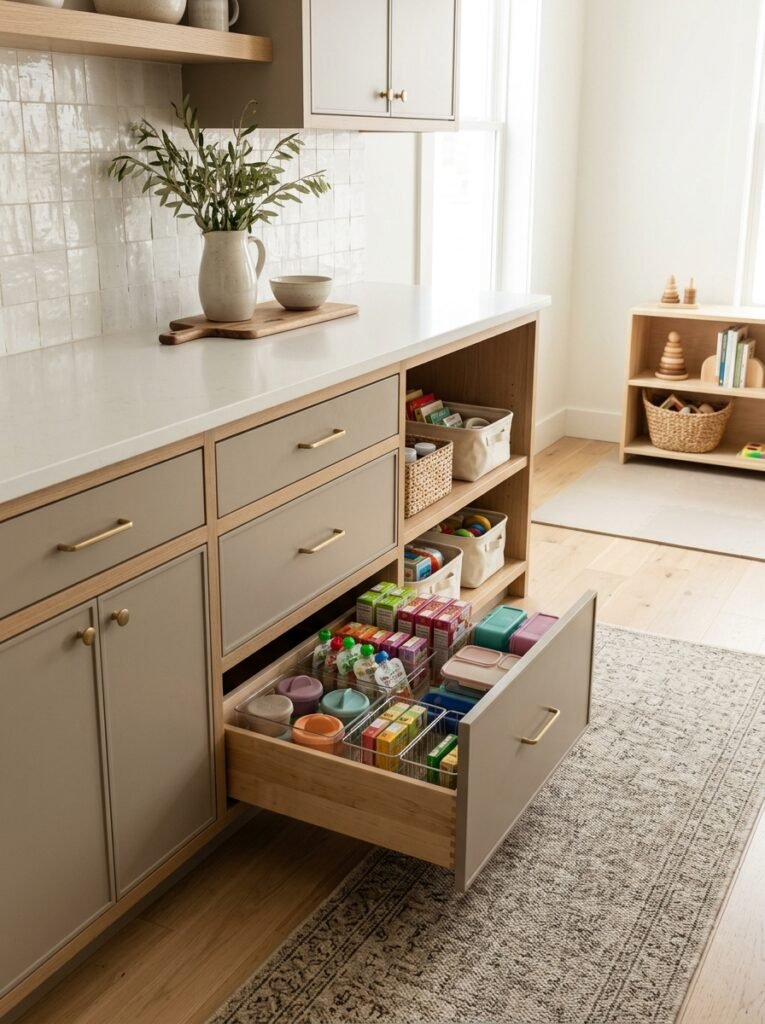
If children regularly use the kitchen, a small low-access area can make snacks easier to reach while keeping the rest of the kitchen organized. Use a dedicated drawer or basket for suitable snacks and simple items. In homes where the kitchen connects to a play area, keeping a few child-related items in one clearly defined location can prevent toys and kitchen supplies from becoming mixed together.
13. Organize an RV or Camper Kitchen Vertically
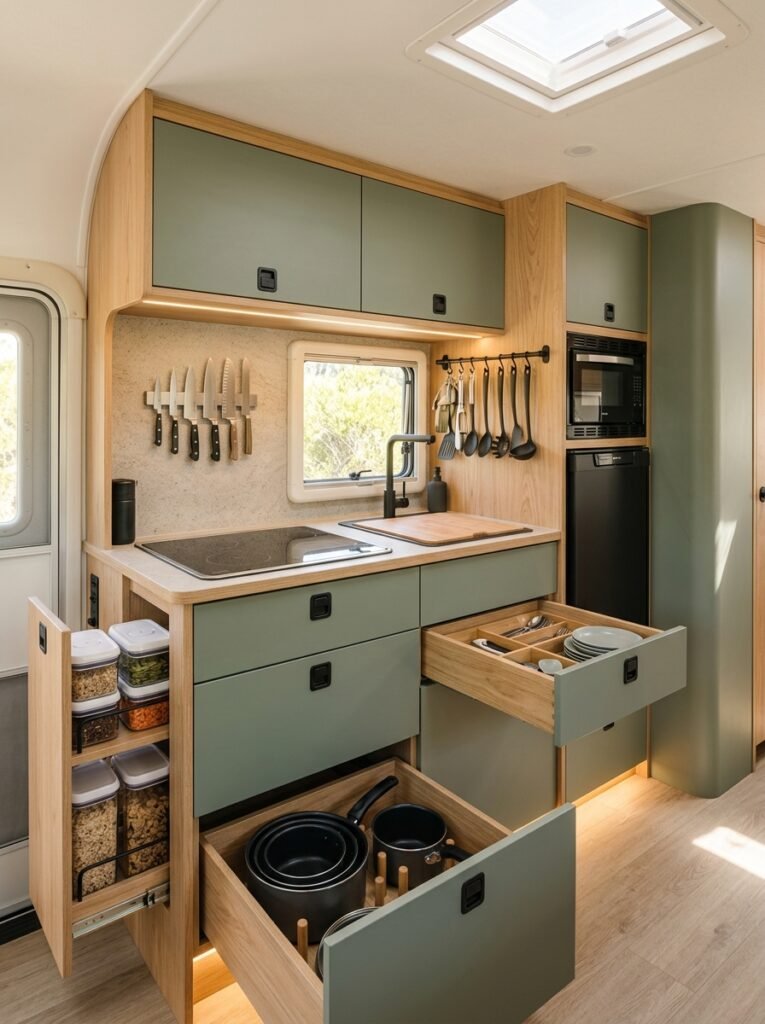
RV and camper kitchens require especially efficient storage because cabinets and countertops are limited. Use compact containers, stackable cookware, narrow drawers, and secure storage solutions that keep items from moving unnecessarily. Store the things you use during travel where they are easiest to reach, while less frequently used equipment can go into deeper cabinets.
14. Use a Japanese-Inspired Minimalist Layout
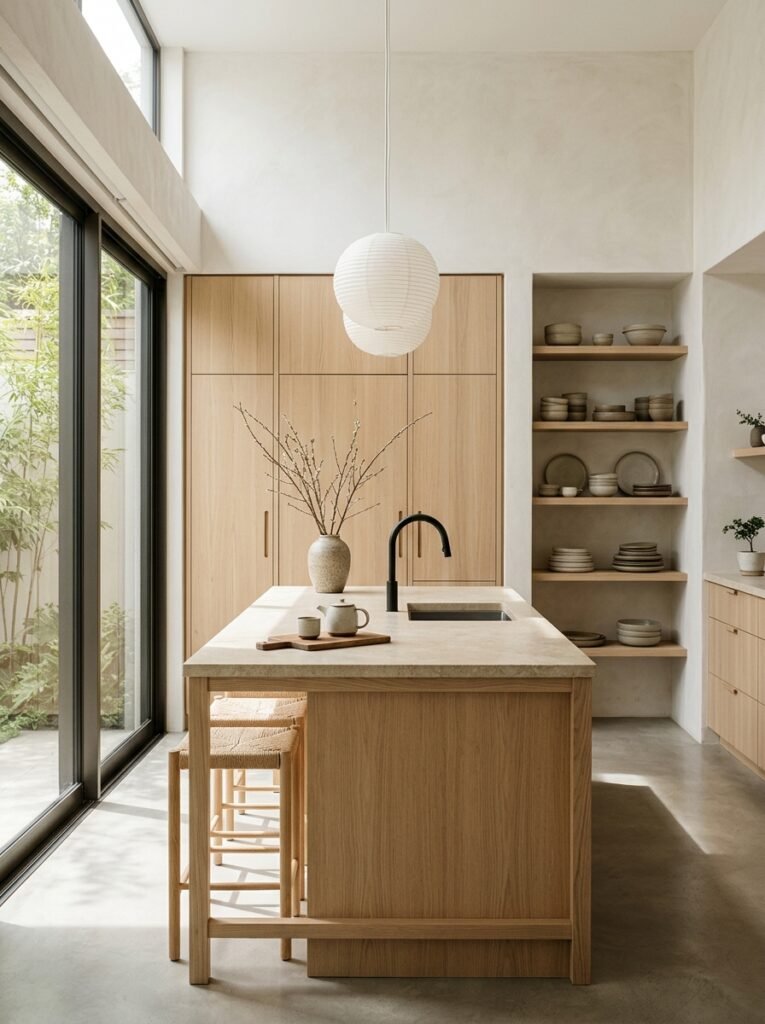
Japanese-inspired kitchen design often emphasizes simplicity, efficient use of space, clean lines, and keeping only useful objects visible. You can apply these principles without copying a specific traditional style. Choose a restrained palette, store most items behind clean cabinetry, and keep the preparation area open. The result can feel calm while still being highly practical.
15. Create a Commercial-Style Prep Area
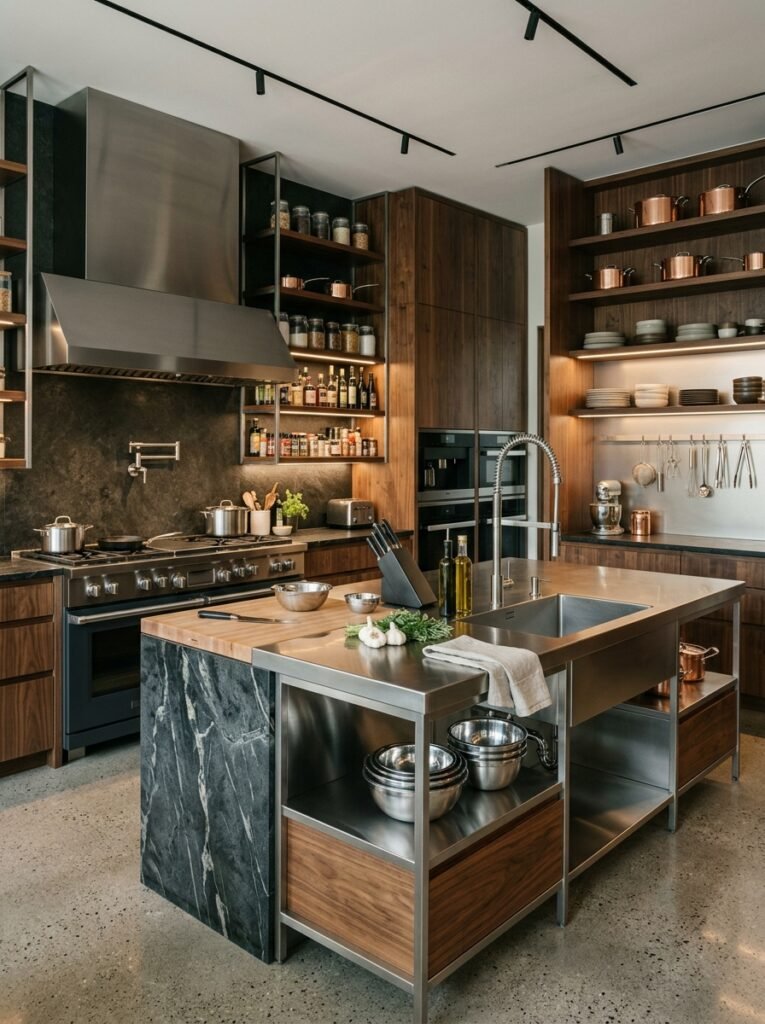
A commercial-inspired setup can be useful for people who cook frequently. The basic idea is to keep preparation tools close to the main work surface and arrange ingredients according to workflow. You can borrow this principle without making the kitchen look industrial. A few open shelves, practical containers, and an efficient prep zone can make everyday cooking faster.
16. Organize a Restaurant-Style Kitchen Workflow
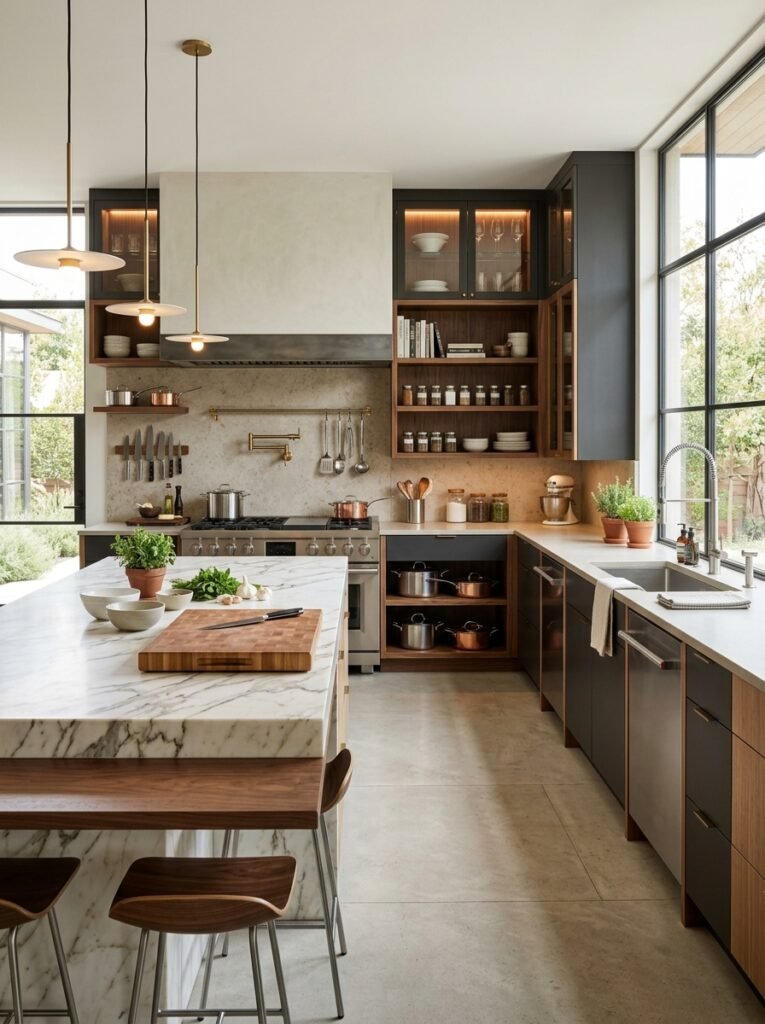
Professional kitchens are designed around movement and efficiency, and homeowners can borrow the same idea. Keep preparation tools near the prep counter, cookware near the cooking surface, and cleaning supplies close to the sink. The goal is to reduce unnecessary movement between different parts of the room. This can be particularly helpful if you cook large meals or prepare food for several people.
17. Create a Dedicated Baking Cabinet
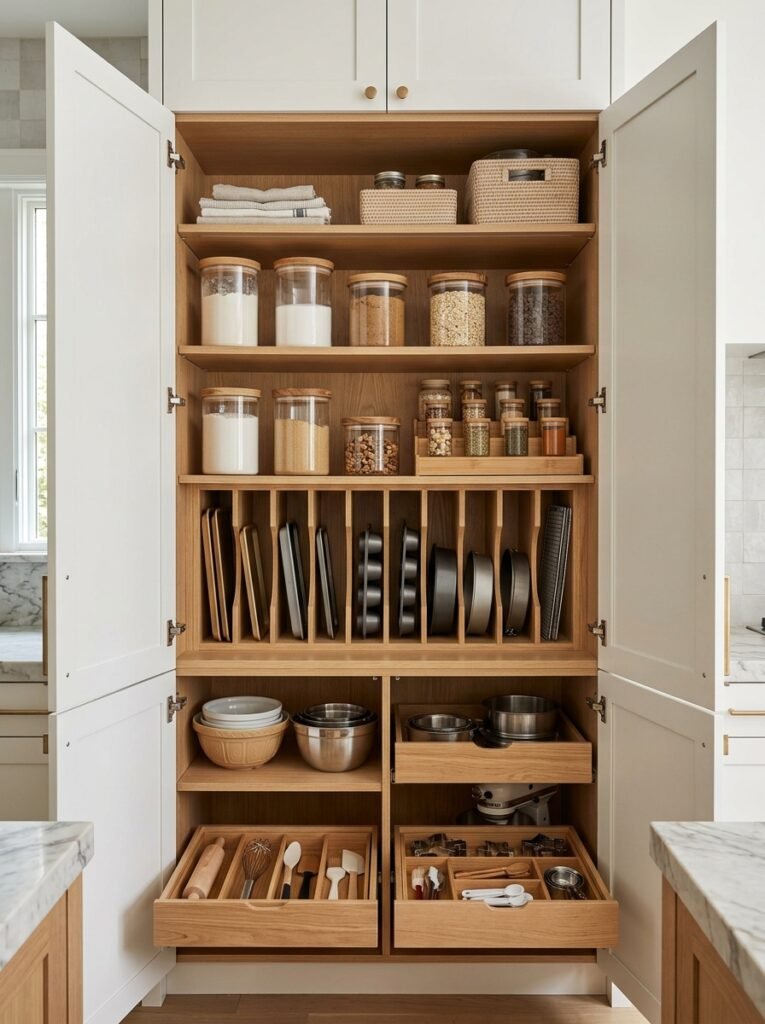
Baking ingredients and tools can quickly take over several cabinets if they are not grouped together. Create one baking zone for flour, sugar, decorating supplies, measuring tools, baking trays, and mixing equipment. Use adjustable shelves or vertical dividers for flat trays and boards. Keeping everything together makes it much easier to start a baking project without searching through the entire kitchen.
18. Use the Pantry Door and Cabinet Doors
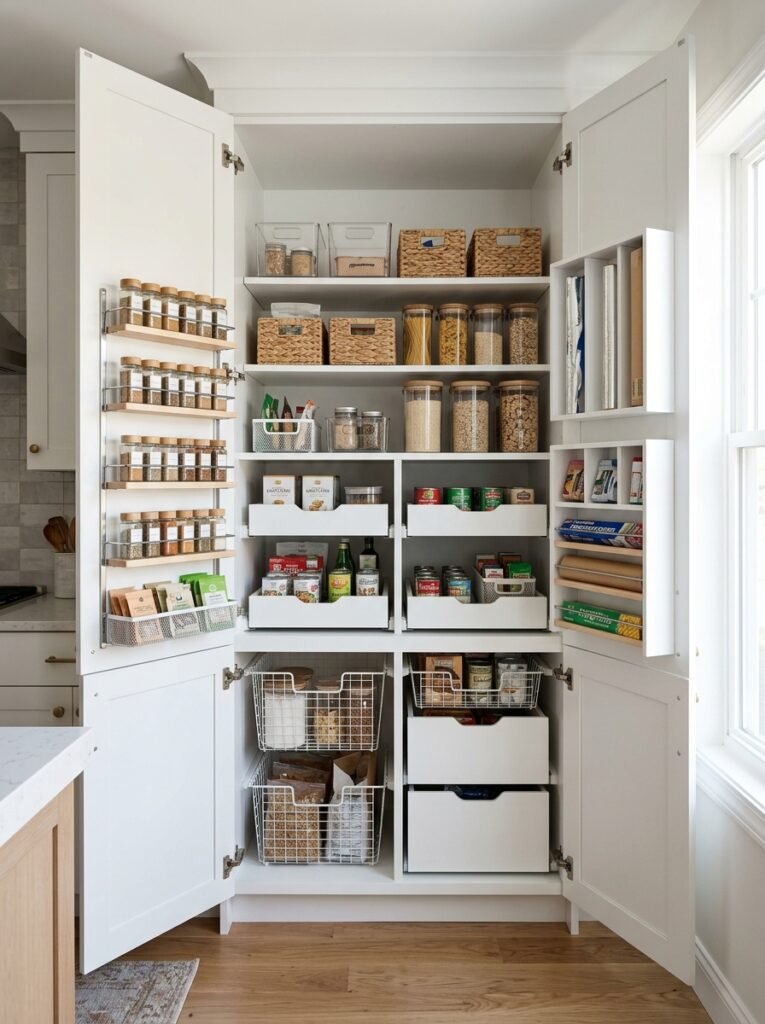
The inside of a cabinet or pantry door can provide valuable extra storage. Slim racks can hold spices, wraps, small packets, cleaning accessories, or other lightweight items. This works particularly well in narrow kitchens where every available surface matters. Keep door storage shallow enough that the cabinet can still close properly and items remain easy to access.
19. Keep a Small Reset Routine
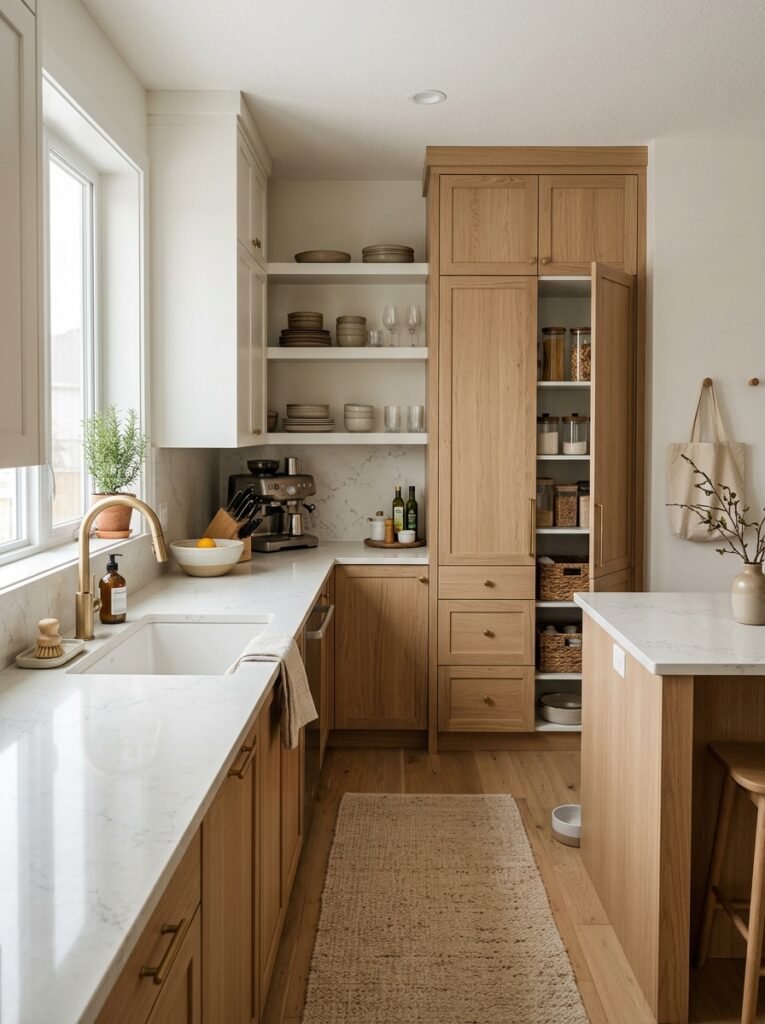
The most effective kitchen organization system is one that stays manageable after the initial cleanup. At the end of the day, return frequently used items to their homes, clear the main preparation area, and put stray products back into their categories. Once a week, check one cabinet or drawer rather than waiting for the entire kitchen to become messy. Small resets prevent organization from becoming another large project.
Final Thoughts
Good kitchen organization does not mean every container has to match or every shelf has to look like a showroom. A truly useful kitchen is one where you can find what you need, prepare food comfortably, clean up quickly, and put things away without creating another mess. Start with the biggest problem areas first. If countertops are crowded, clear them. If cabinets are difficult to reach, add dividers or pull-out solutions. If a small apartment kitchen lacks storage, use vertical space. For an RV or camper, focus on compact and secure storage. And if you simply want a calmer-looking kitchen, reduce visual clutter and keep the most important areas open. The best system is the one that fits your lifestyle. Once storage follows your daily habits instead of fighting against them, even a tiny kitchen can feel surprisingly spacious, functional, and enjoyable.