


This post may contain affiliate links. Please read my disclosure policy.
In This Article Show
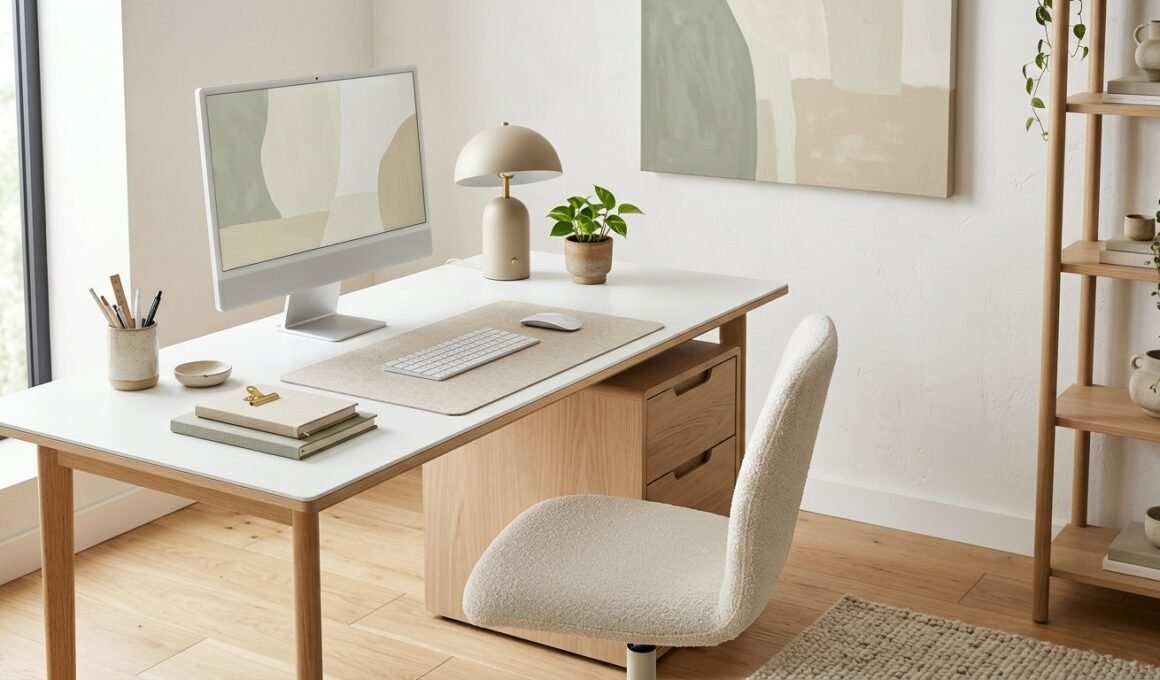
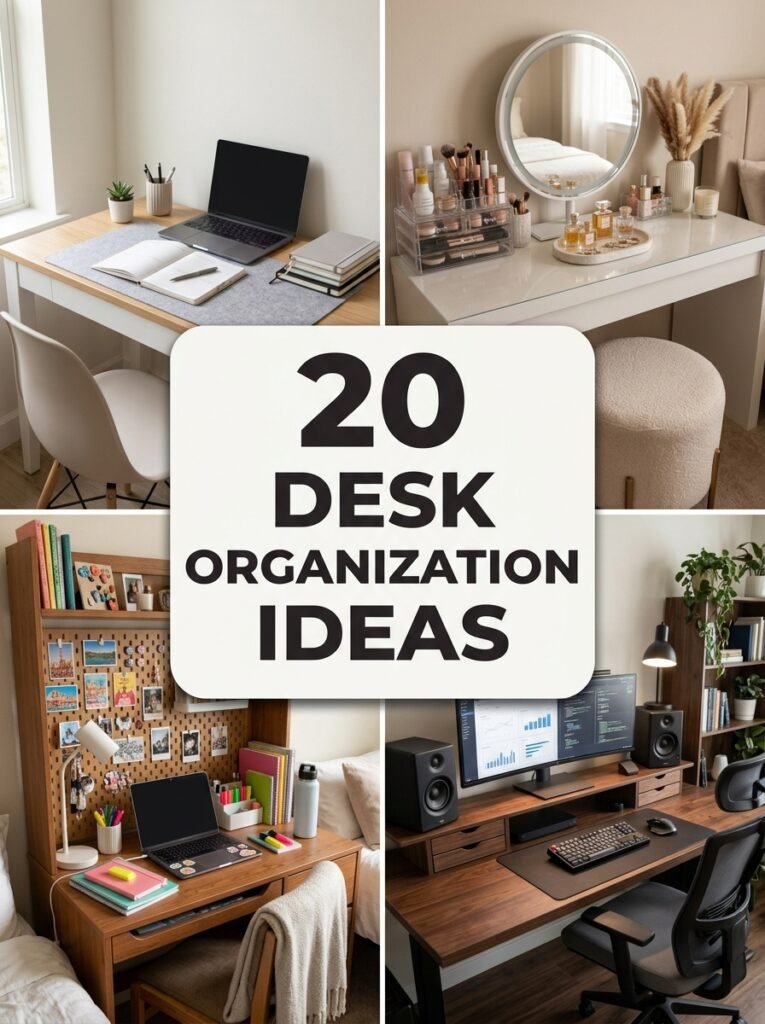
A cluttered desk can make studying, working, and creative projects feel more stressful than they need to be. The right storage solutions help you keep essential items within reach while creating a workspace that looks beautiful and feels comfortable to use. These desk organization ideas cover everything from small student desks and teacher workstations to makeup tables, craft corners, and modern home offices. Whether you prefer a minimalist setup or a colorful aesthetic, you can create a practical space that fits your routine, budget, and personal style.
1. Create a Minimalist Desk Setup
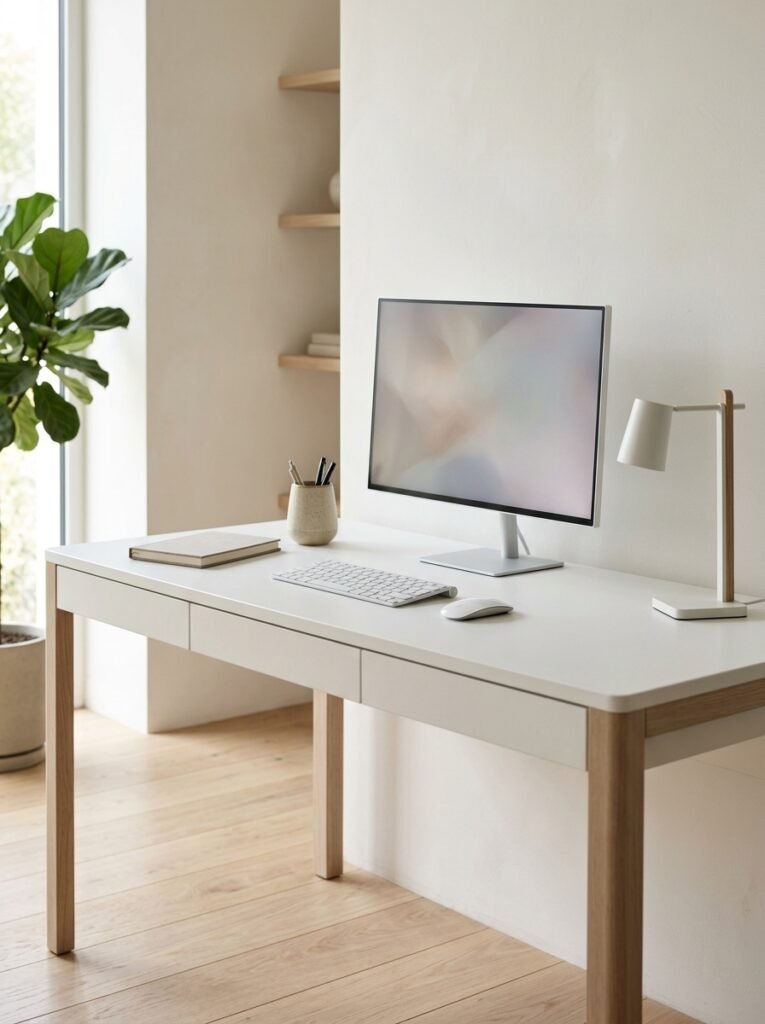
A minimalist workspace is ideal if you want your desk to feel calm, open, and easy to maintain. Keep only the items you use daily, such as your computer, notebook, pen holder, and desk lamp, while moving extra supplies into drawers or nearby storage. Choose accessories in two or three complementary colors to create a coordinated look. This simple approach works particularly well for home offices and students who need a distraction-free area for concentration.
2. Organize a Small Study Desk
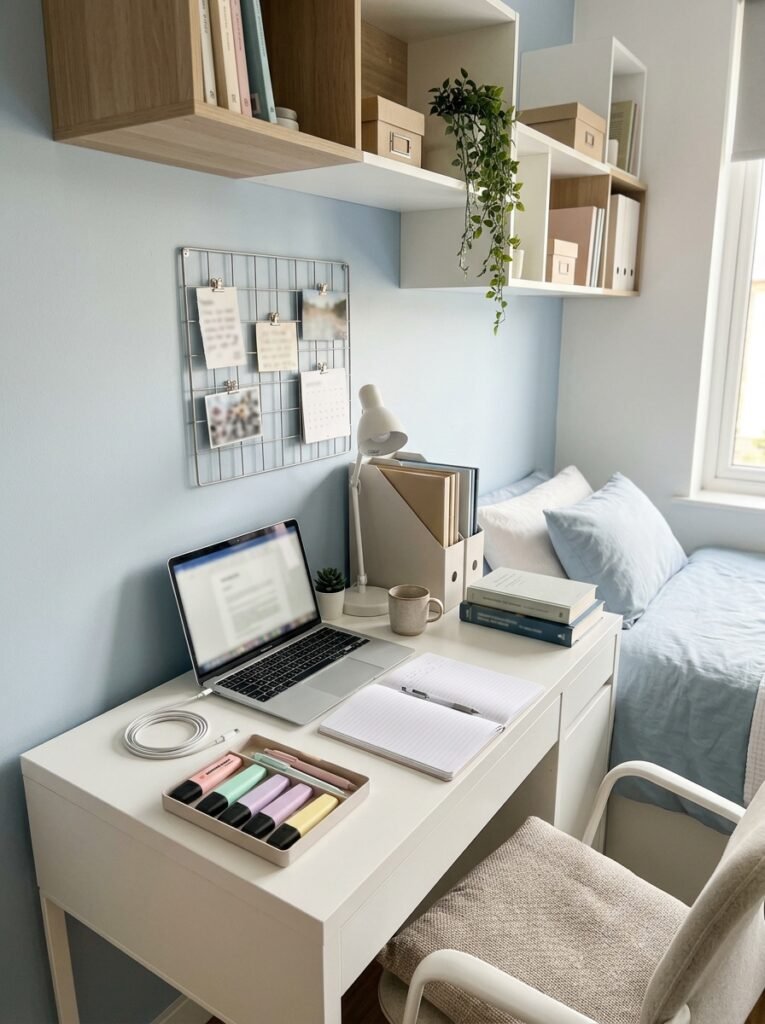
A compact study desk can still accommodate everything you need when each item has a designated place. Use a vertical file holder for textbooks, a narrow stationery organizer for pens and highlighters, and a small tray for sticky notes and other frequently used supplies. Keep the main surface open for writing or using a laptop. These practical desk organization techniques are especially useful for school students and college learners who need to switch between reading, note-taking, and online classes.
3. Design an Aesthetic Desk With Coordinated Accessories
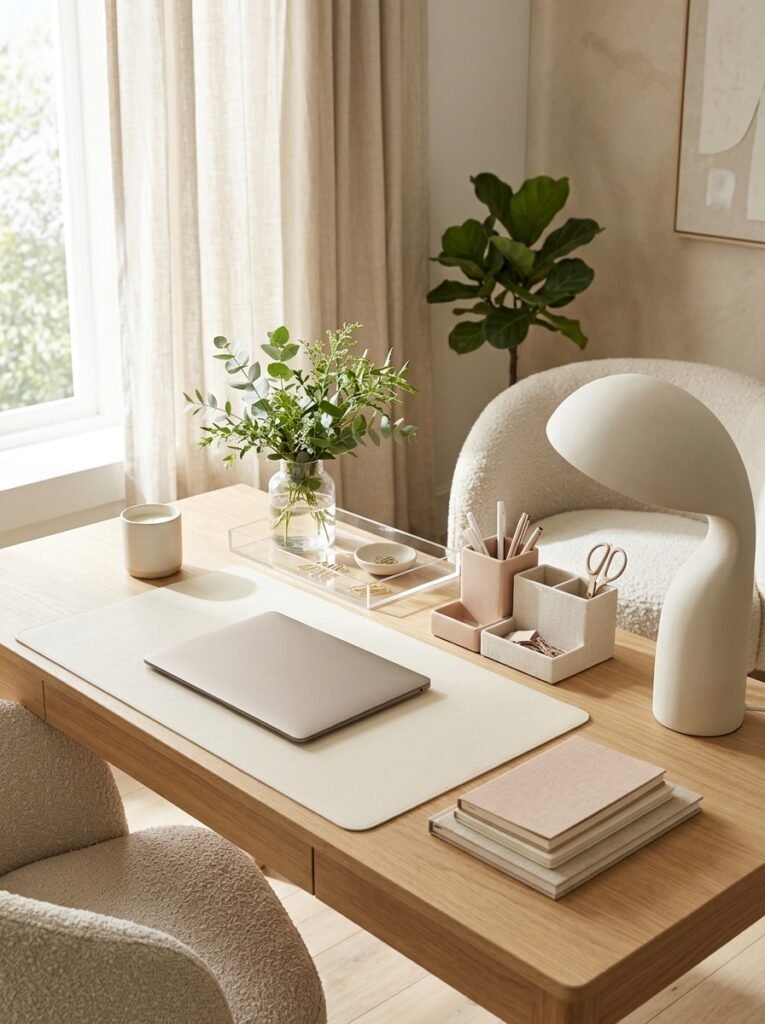
An aesthetic workspace does not have to sacrifice practicality for appearance. Start with a consistent color palette, such as cream and blush, white and sage, or charcoal and soft gray. Match your pen holder, notebook covers, desk mat, storage trays, and lamp to create a visually connected setup. Add one or two decorative accents without crowding the surface. The result is a workspace that looks polished in photographs while still supporting everyday studying, planning, and computer work.
4. Use Drawer Dividers for Hidden Storage
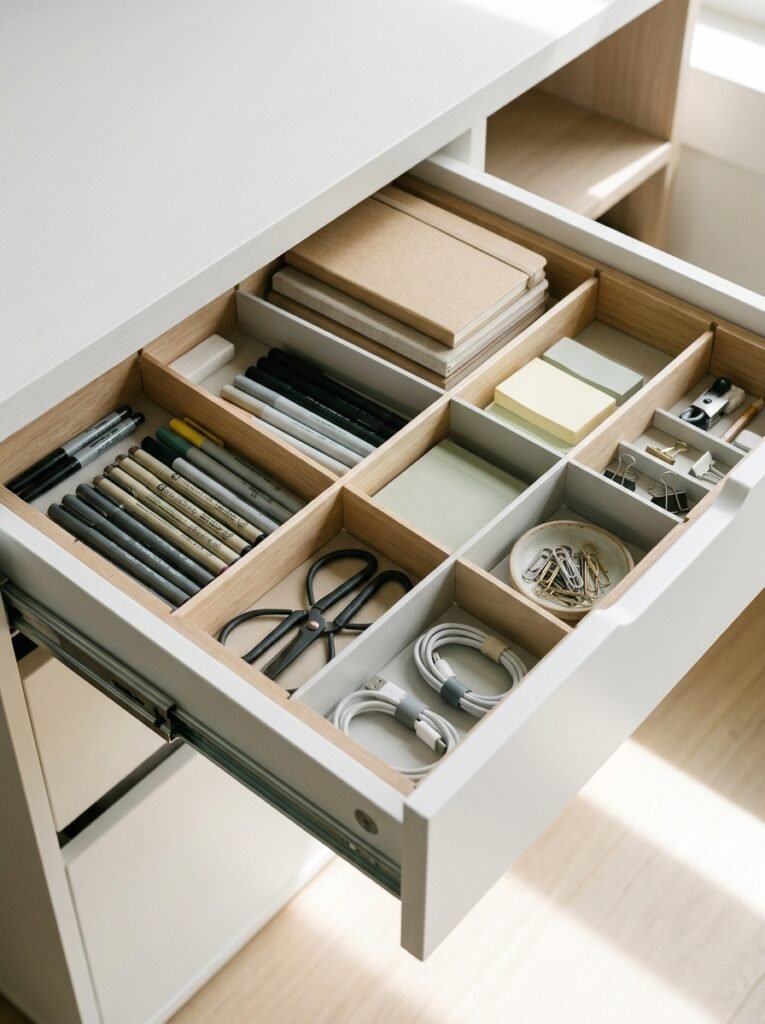
Desk drawers can quickly become cluttered when pens, cables, sticky notes, scissors, and miscellaneous supplies are mixed together. Adjustable drawer dividers create separate compartments for different categories, making it easier to find what you need without emptying the entire drawer. Place frequently used items in the top drawer and reserve lower drawers for spare supplies, documents, or equipment. Clear, white, or neutral dividers work well because they make the drawer feel organized without adding visual distraction.
5. Build a DIY Desk Organizer
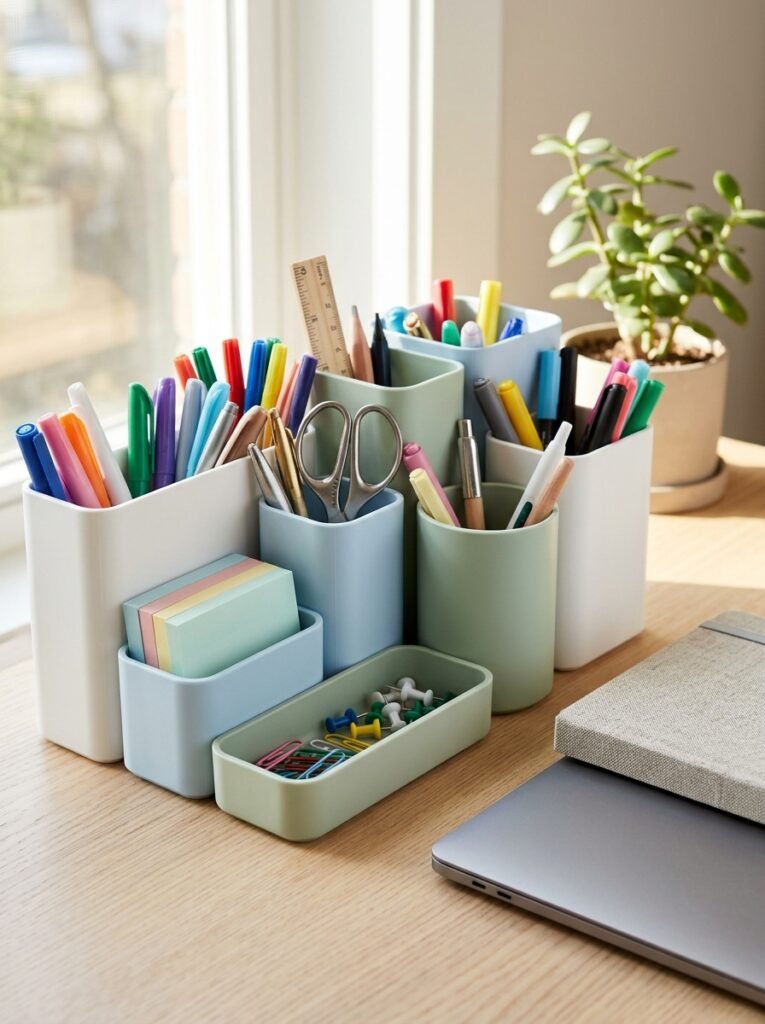
A DIY organizer is a flexible solution when you need storage that fits a specific desk size or collection of supplies. Repurpose sturdy small containers, matching boxes, or clean modular compartments to separate stationery, craft tools, and personal accessories. Cover plain containers with modern adhesive finishes or paint them in coordinated colors for a more polished result. Measure your available desk space before building the organizer so it provides useful storage without taking over the surface.
6. Create a Teacher Desk Organization System
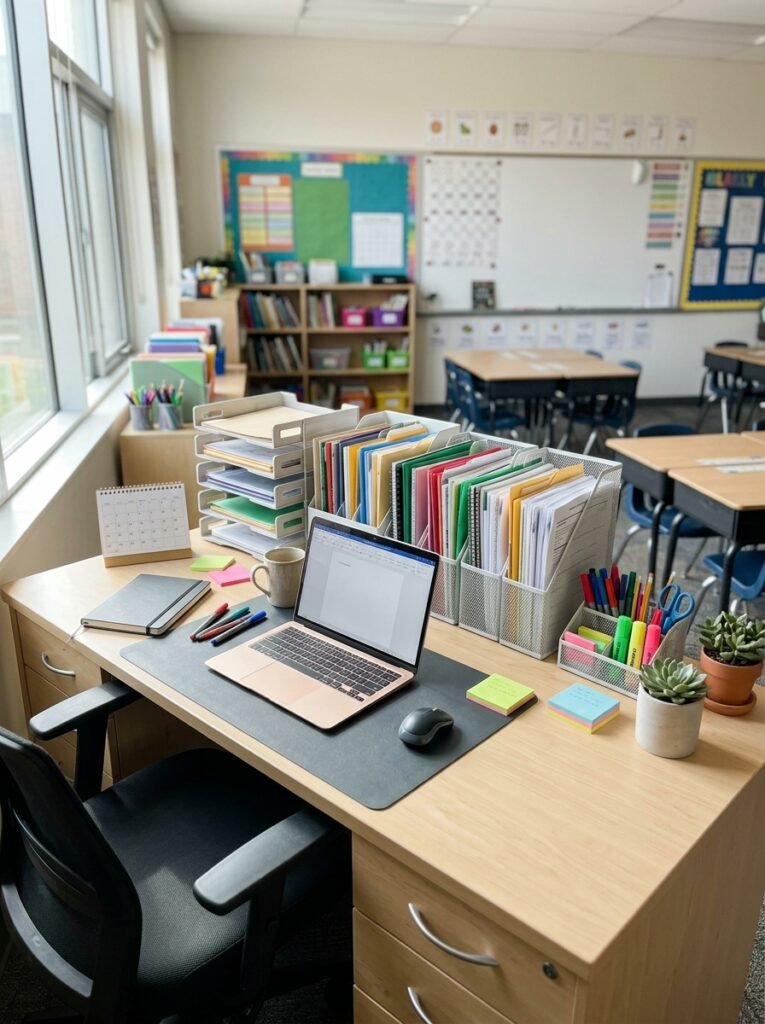
Teachers often need quick access to lesson plans, worksheets, grading supplies, sticky notes, and classroom materials. Divide the desk into clear zones for current teaching tasks, papers that need grading, frequently used stationery, and personal essentials. Use labeled vertical file holders for documents and a small desktop tray for items that need immediate attention. A consistent system reduces searching during a busy school day and makes it easier to reset the desk before the next class.
7. Set Up a Compact College Dorm Desk
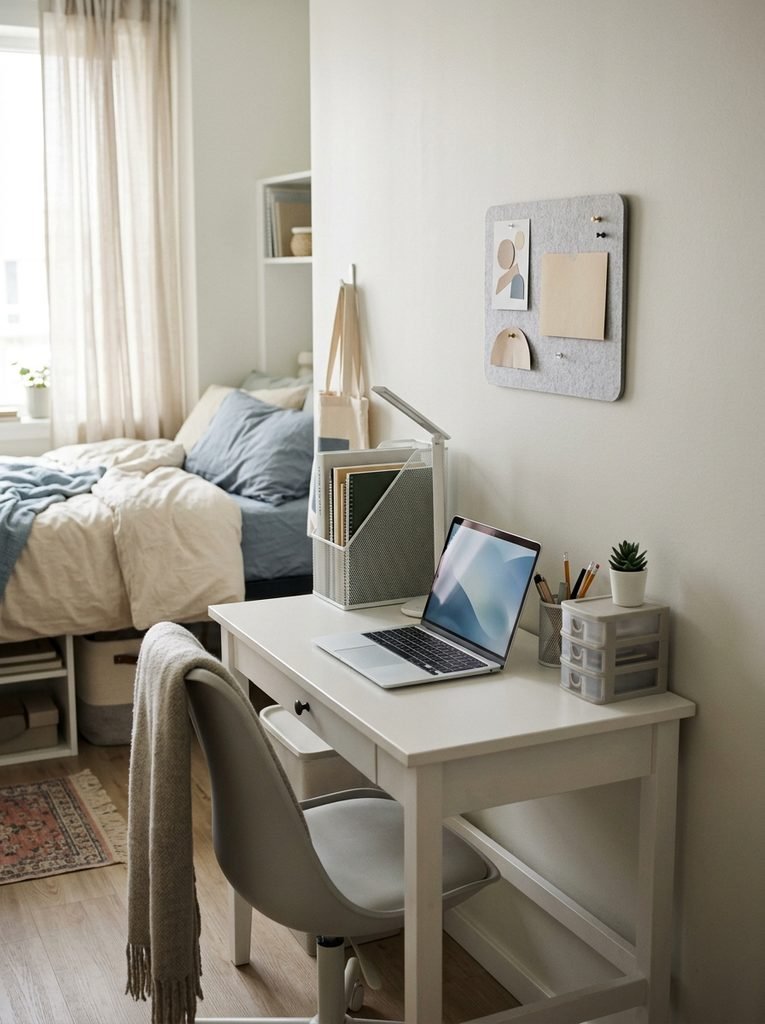
Dorm rooms often combine studying, sleeping, relaxing, and storage in one small space, so every part of the desk needs to work efficiently. Choose a compact desk lamp, a vertical shelf or monitor riser, a narrow stationery holder, and stackable organizers for books and supplies. Store rarely used items in a drawer or under the desk instead of leaving them on the surface. A coordinated setup in neutral colors can make even a basic dorm desk feel more personal and comfortable.
8. Organize Computer Accessories and Cables
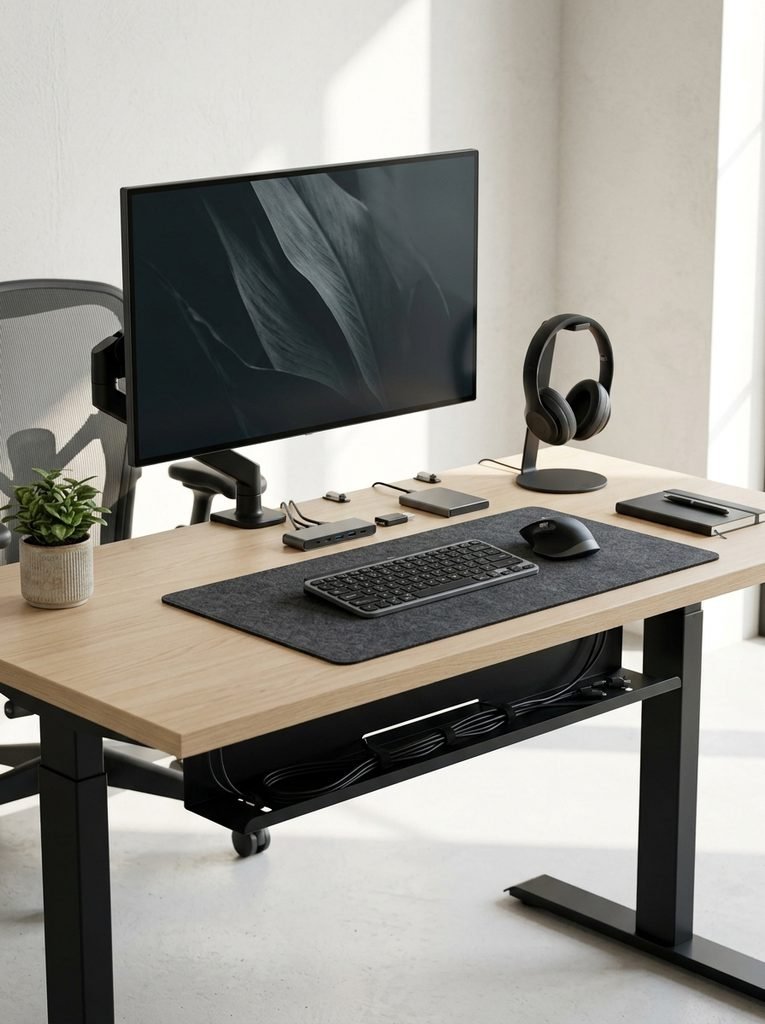
A computer desk can look messy when charging cables, adapters, headphones, and accessories spread across the surface. Use cable clips along the rear edge, a concealed cable tray underneath, and a small box for spare adapters. Keep your keyboard and mouse aligned with the monitor and place headphones on a dedicated stand instead of leaving them beside the computer. A clean setup looks more professional and makes the desk easier to wipe down and maintain.
9. Add Vertical Storage Above the Desk
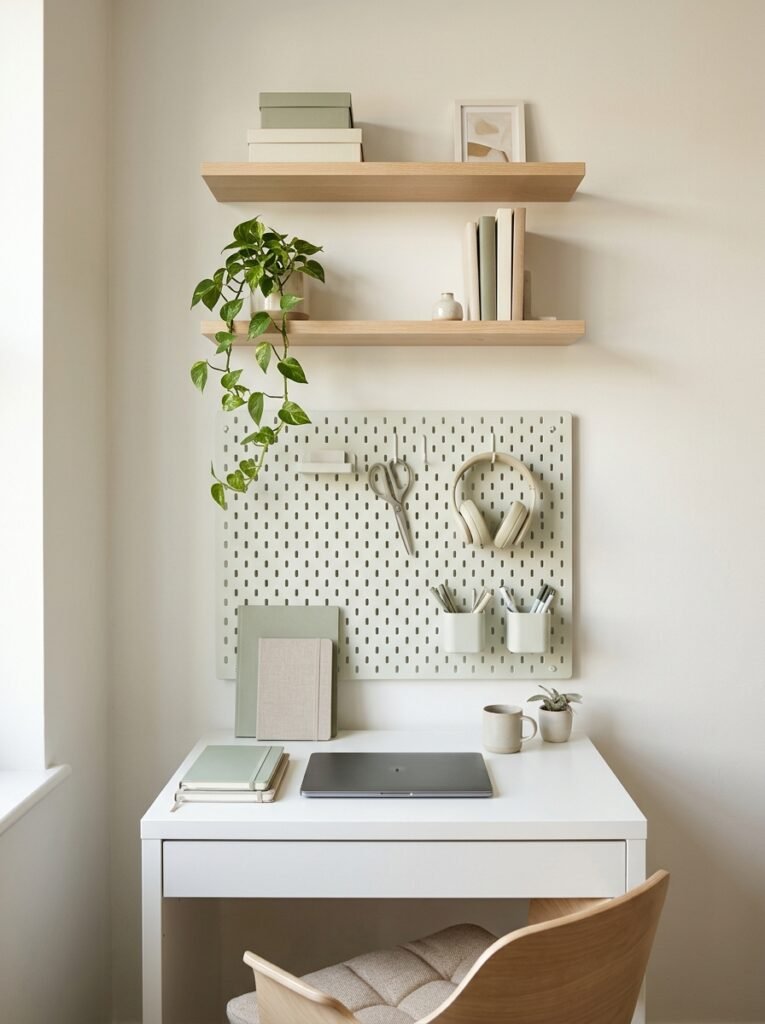
When the desktop is small, the wall above it can provide valuable extra storage. Install a slim shelf, a compact pegboard, or a combination of both to hold lightweight stationery, headphones, small containers, and frequently used accessories. Keep heavier objects on sturdy shelves and arrange supplies according to how often you use them. Vertical storage is particularly useful in apartments, dorms, and shared bedrooms because it increases usable space without requiring a larger desk.
10. Arrange Makeup on a Vanity Desk
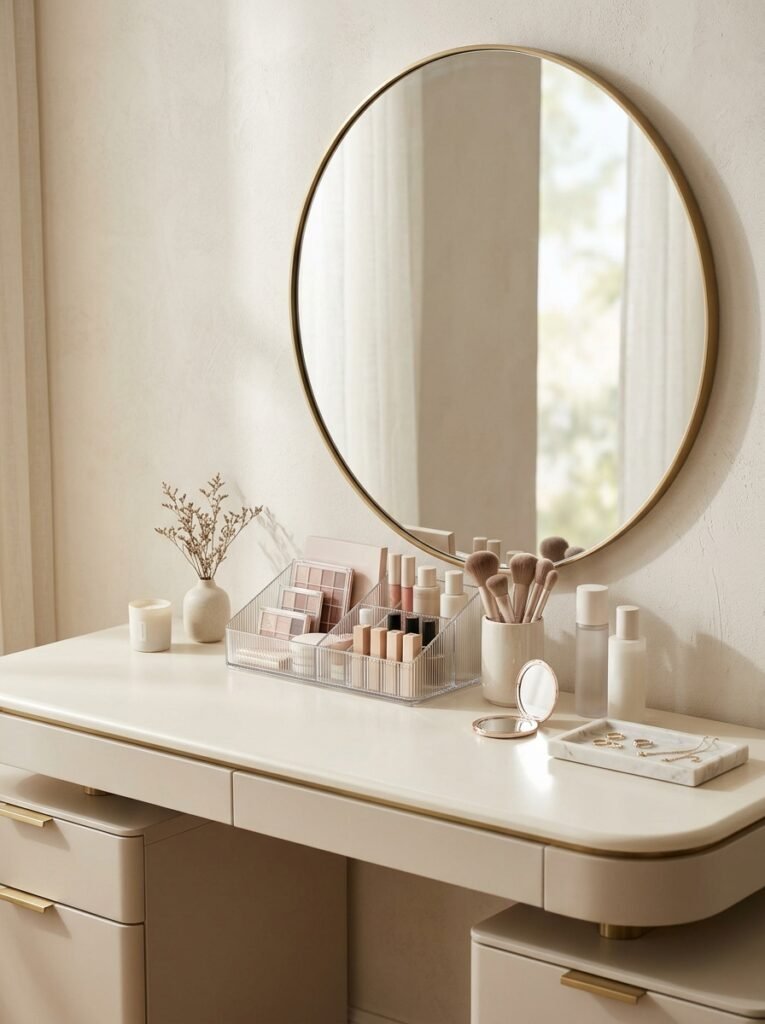
A vanity desk becomes easier to use when makeup, brushes, skincare products, and everyday accessories have separate storage areas. Use a divided acrylic organizer for smaller products, a washable holder for makeup brushes, and a shallow tray for items you reach for every morning. Keep backup products in a drawer so the tabletop stays clear. This setup is useful for shared bedrooms and small dressing areas where the same desk may serve as both a beauty station and a practical workspace.
11. Organize Art Supplies for Creative Projects
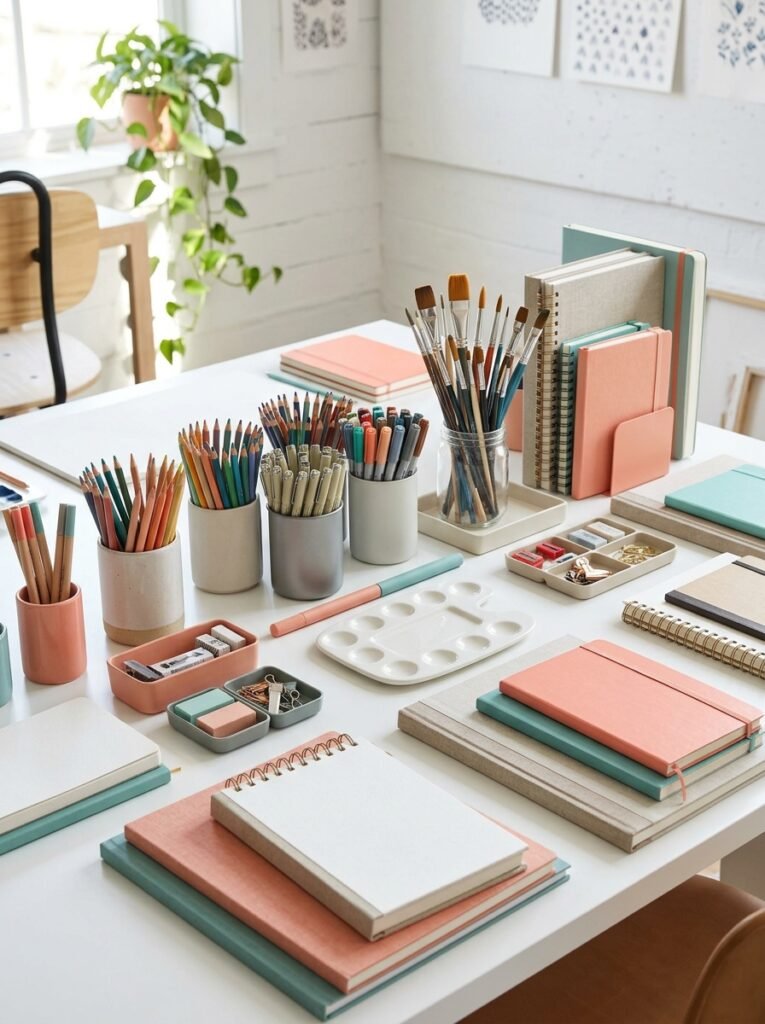
Artists need easy access to pencils, markers, sketchbooks, paintbrushes, and other materials without letting everything spread across the desk. Separate supplies by type and place the tools used most often in open containers or shallow drawers. Use a vertical holder for sketchbooks and paper pads, while keeping delicate materials protected in suitable closed storage. This arrangement makes it easier to begin a project quickly and restore the workspace when drawing or painting is finished.
12. Create a Craft and Sewing Desk
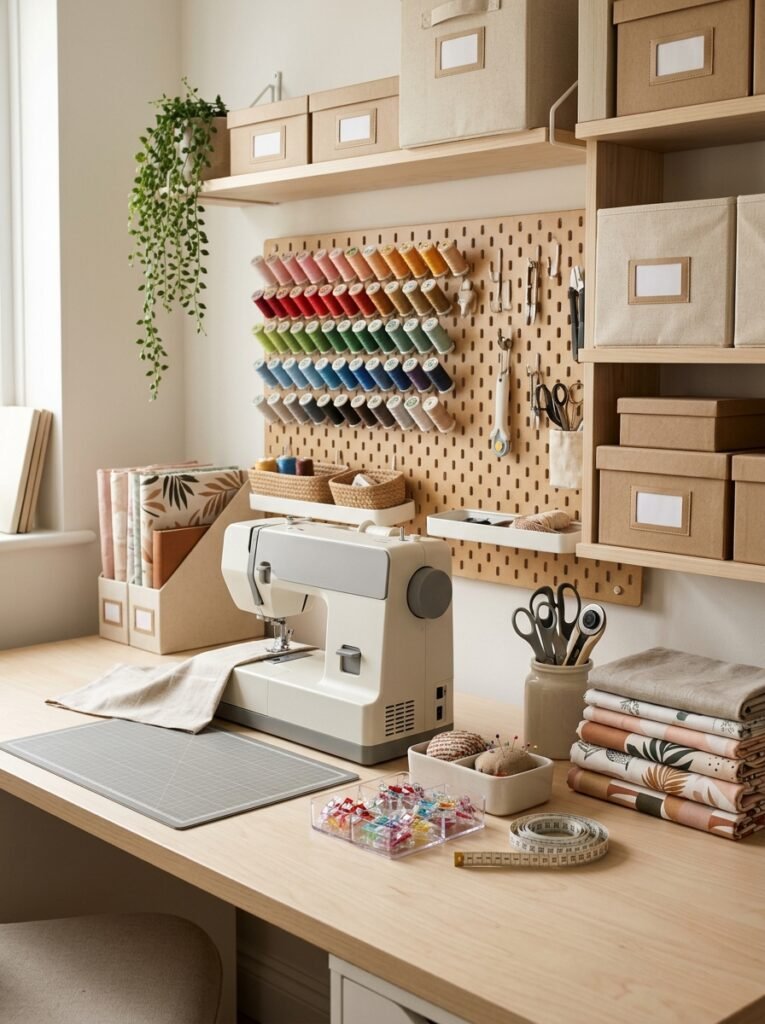
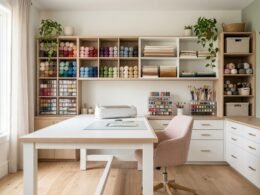
Crafting and sewing require different tools, so a clear storage system prevents small items from becoming mixed together. Keep scissors, measuring tape, thread, needles, fabric clips, and cutting tools in separate compartments, with a dedicated container for each project. Store fabric and larger materials in nearby drawers or labeled boxes rather than stacking them on the working surface. Leave enough clear space for cutting, assembling, or sewing so your desk remains useful for both creative work and cleanup.
13. Use a Standing Desk Organization Layout
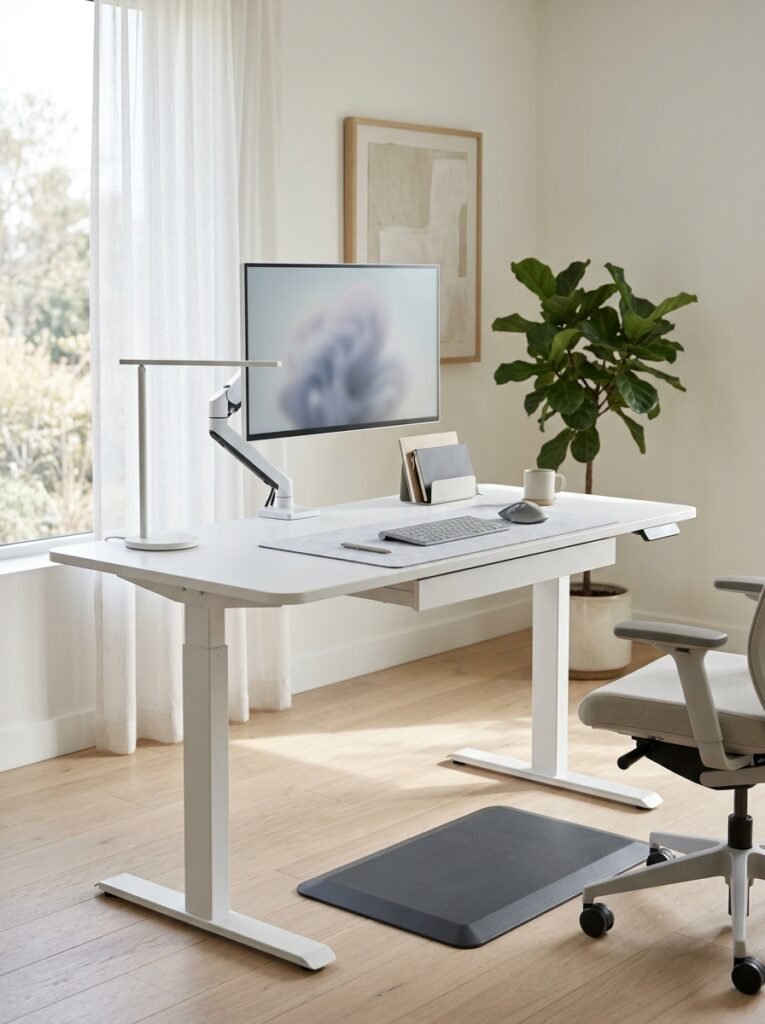
A standing desk should remain organized whether you are sitting or standing, with accessories positioned for comfortable access at different heights. Keep the monitor centered, place the keyboard and mouse in a natural working position, and use a compact riser or monitor arm to reduce clutter. Store notebooks and smaller accessories in a side drawer or nearby organizer so the adjustable surface can move freely. Secure cables carefully and avoid placing loose objects where they could fall during height adjustments.
14. Try an IKEA-Inspired Modular Desk Setup
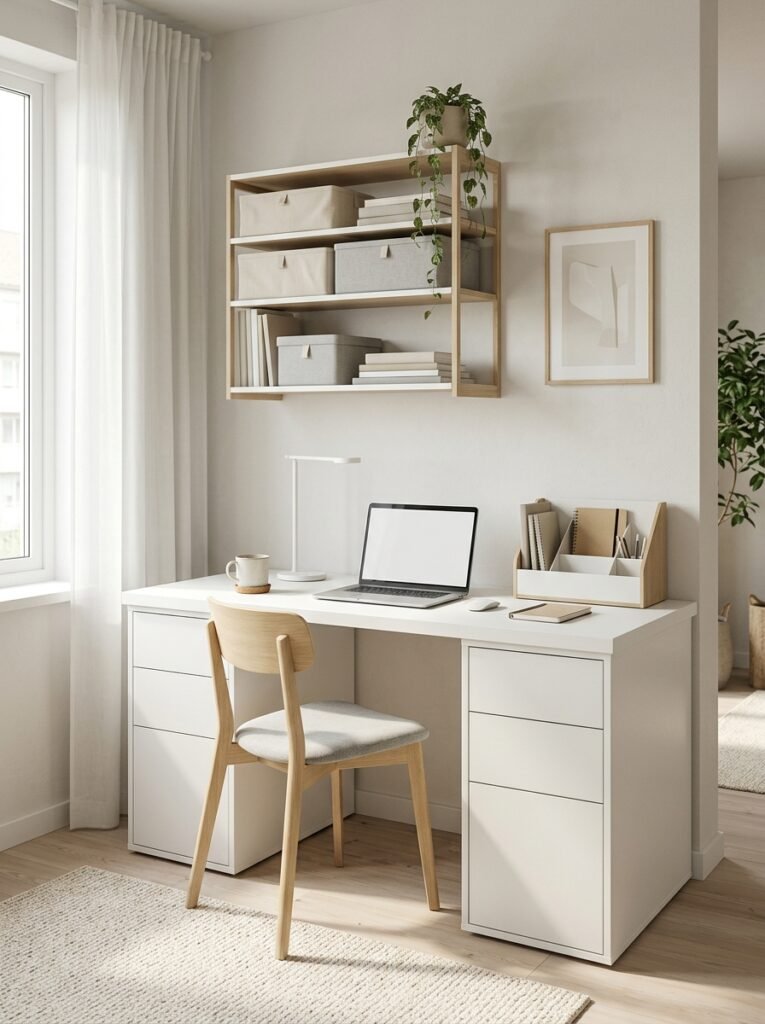
A modular desk setup makes it easier to combine a work surface with storage that matches your room and budget. Pair a simple tabletop with drawer units, compact shelves, and small desktop organizers that can be rearranged as your needs change. Use one drawer for stationery, another for documents, and a separate container for electronics or craft supplies. This flexible approach is particularly useful for renters, students, and people who want a clean, contemporary look without commissioning custom furniture.
15. Organize a Nail Art Desk
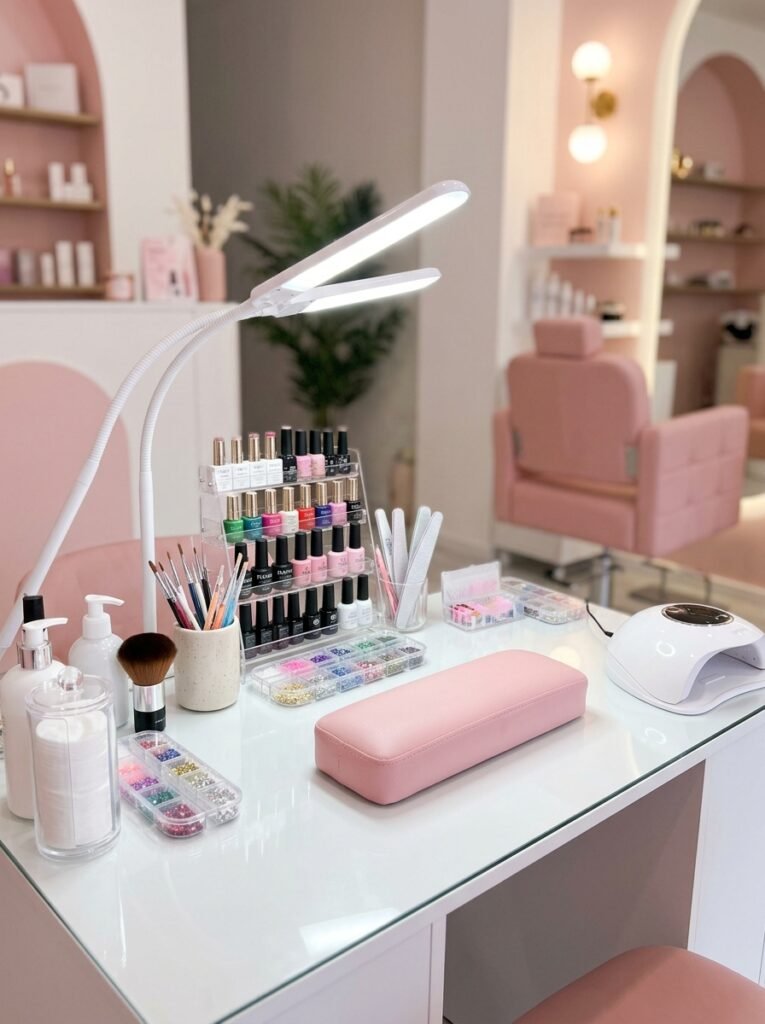
A nail art desk needs organized storage for polish bottles, brushes, files, cotton pads, nail tips, and small decorative pieces. Use stable racks for polish bottles and compartmentalized drawers for tiny tools so everything stays visible and easy to retrieve. Keep frequently used products close to the working area while storing backups separately. Choose wipeable organizers and leave enough room for a hand rest and task lighting. The result is a neat beauty workspace that supports detailed work without unnecessary clutter.
16. Make a Student Stationery Organizer
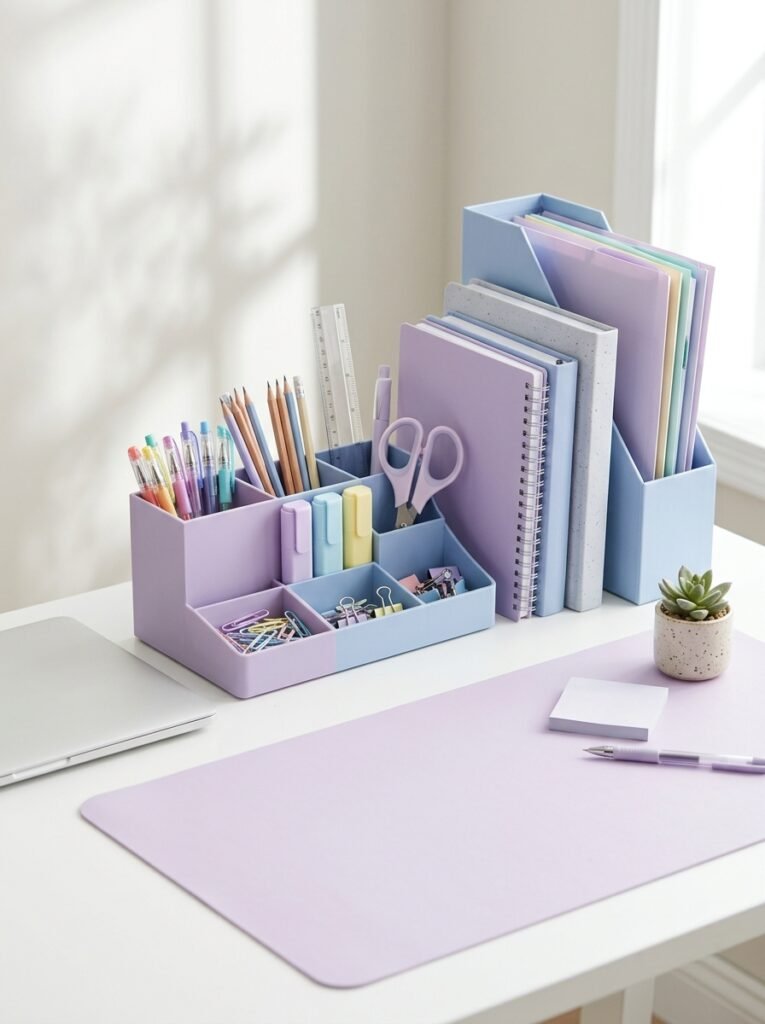
Students often collect pens, pencils, highlighters, rulers, sticky notes, correction supplies, and paper clips that quickly fill a small desk. A dedicated stationery organizer keeps these essentials together and makes study sessions smoother. Choose compartments with different heights so longer tools stand upright while smaller accessories remain contained. Pair the organizer with a vertical document holder and a notebook tray, leaving the central work area open for writing and reading. This is a practical solution for school and college desks alike.
17. Keep a Classroom Desk Ready for Lessons
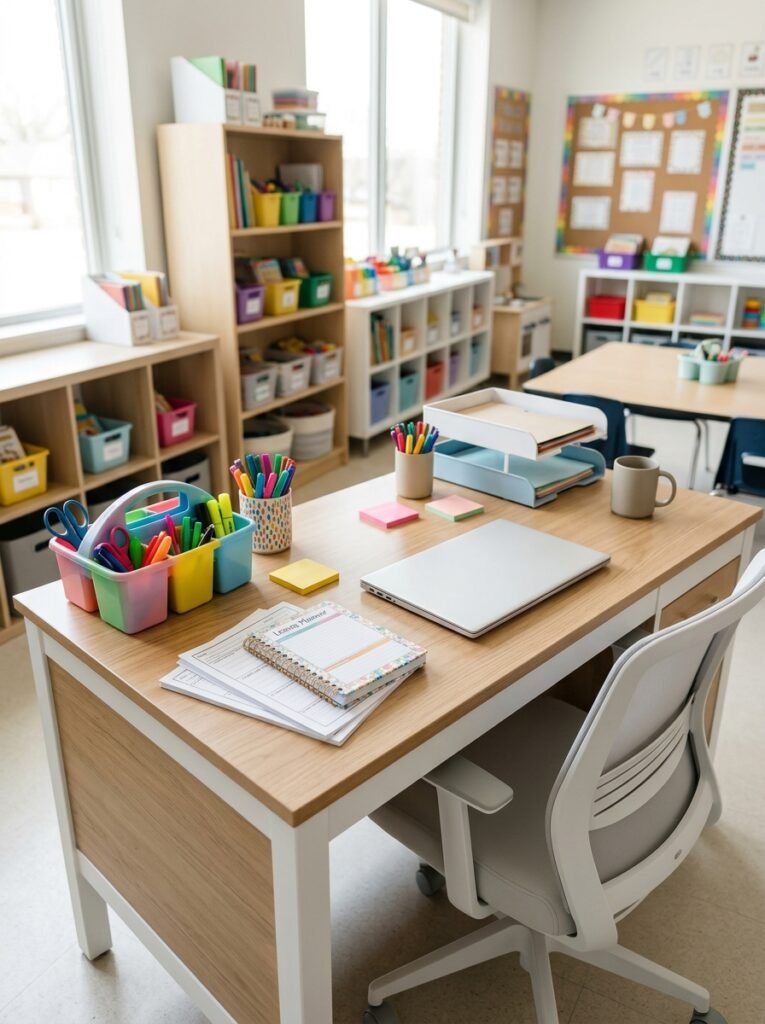
Classroom desks often need to accommodate teaching materials, attendance sheets, classroom activities, and personal stationery throughout the day. Create a small active-work zone for the current lesson, a separate tray for papers awaiting review, and a drawer for spare supplies. If the desk is shared, use portable caddies that can be moved when needed. A simple daily reset—returning materials to their containers and clearing completed paperwork—helps the classroom remain orderly without requiring a major reorganization every week.
18. Set Up a Small Office Desk
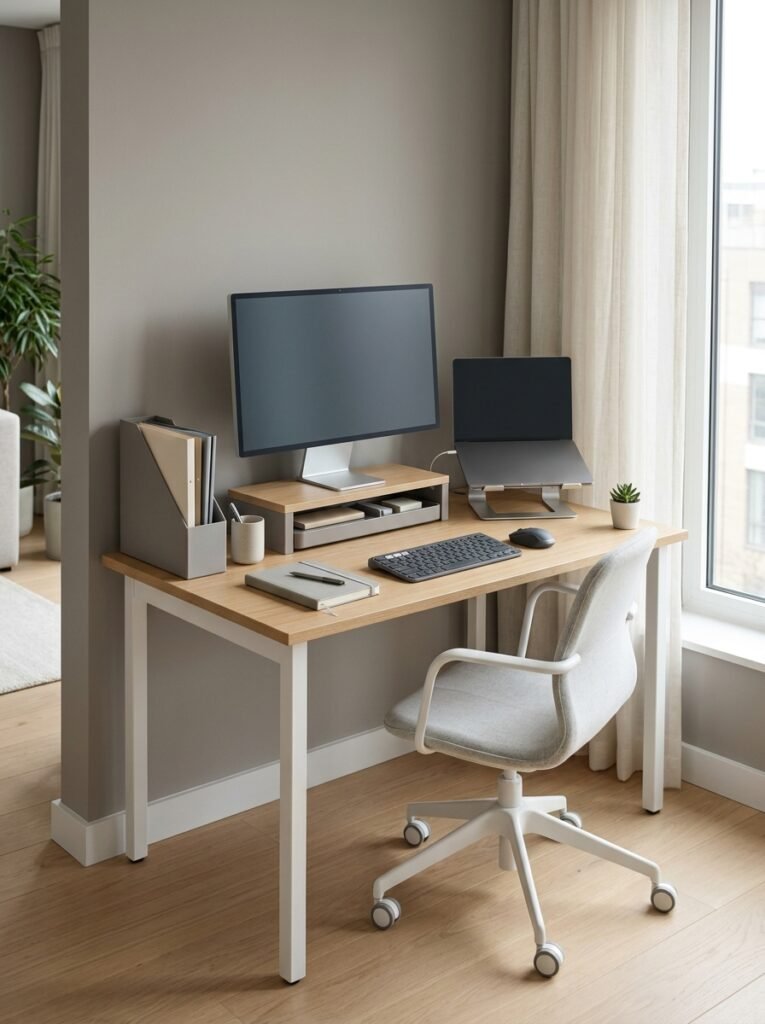
A small office desk works best when storage is compact and the most important work tools stay within easy reach. Use a vertical document holder instead of wide horizontal stacks, a slim drawer organizer for office supplies, and a monitor stand with space underneath for a notebook or keyboard. Keep decorative objects limited so they do not compete with your working area. This layout is suitable for apartment offices, shared rooms, and anyone who needs a professional setup without dedicating an entire room to work.
19. Create a Shared Desk With Separate Zones
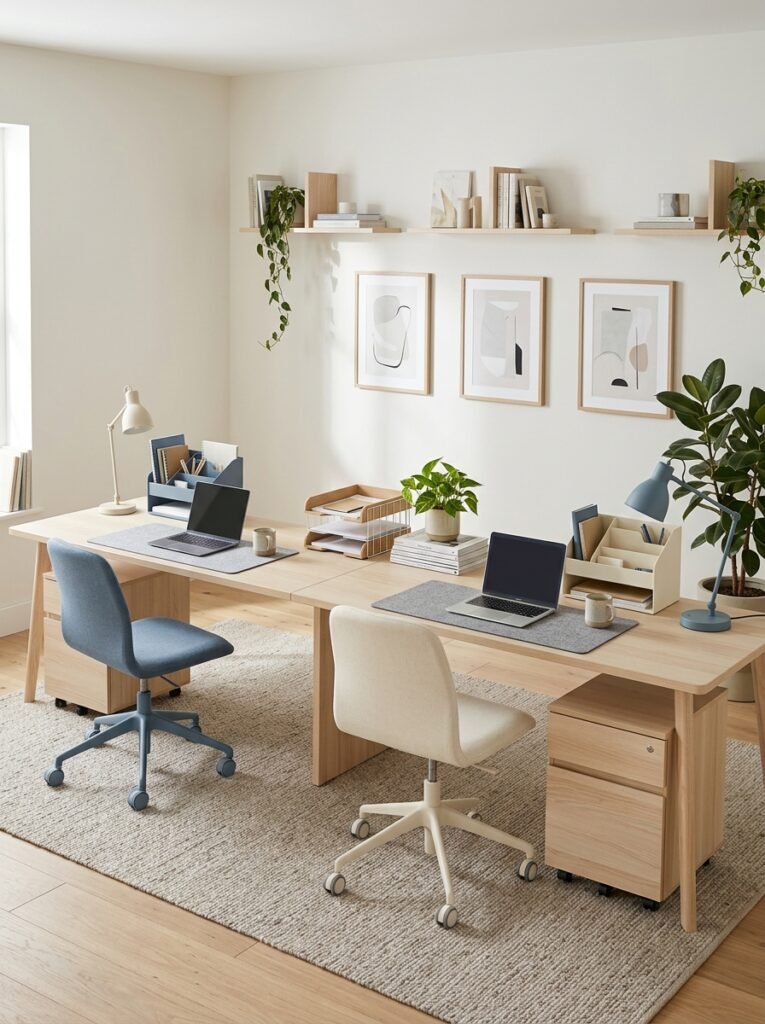
When two people share a desk, clutter can develop because each person has different supplies and working habits. Divide the surface into clearly defined zones, with separate stationery cups, individual drawers or containers, and a shared central area for equipment both people use. Use matching storage to keep the arrangement visually consistent without mixing personal belongings. This idea works well for siblings, couples, shared study areas, and multipurpose rooms where a large desk must support more than one routine.
20. Maintain Your Desk With a Five-Minute Reset
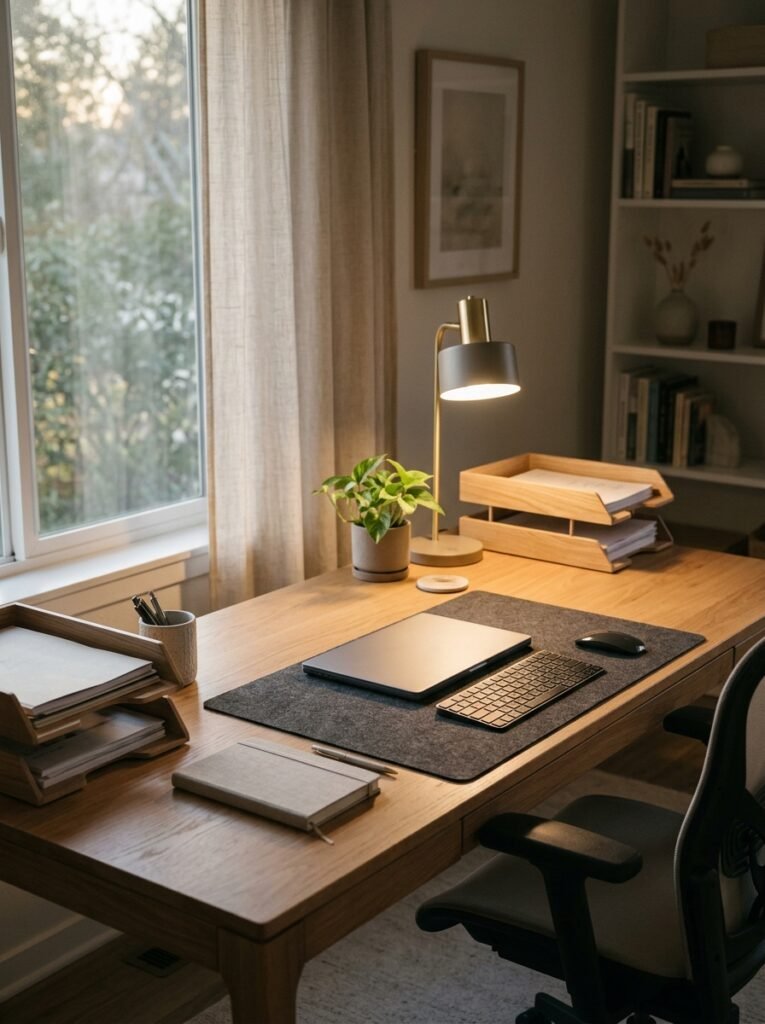
Even the best organization system needs a little maintenance to remain useful. At the end of each work or study session, return pens and accessories to their holders, file loose papers, put cups or personal items away, and reconnect any cables that have shifted. Remove items that do not belong on the desk and prepare the essentials for your next task. A short daily reset prevents clutter from building up and helps your workspace stay welcoming, functional, and ready to use.
How to Choose the Best Desk Organization System
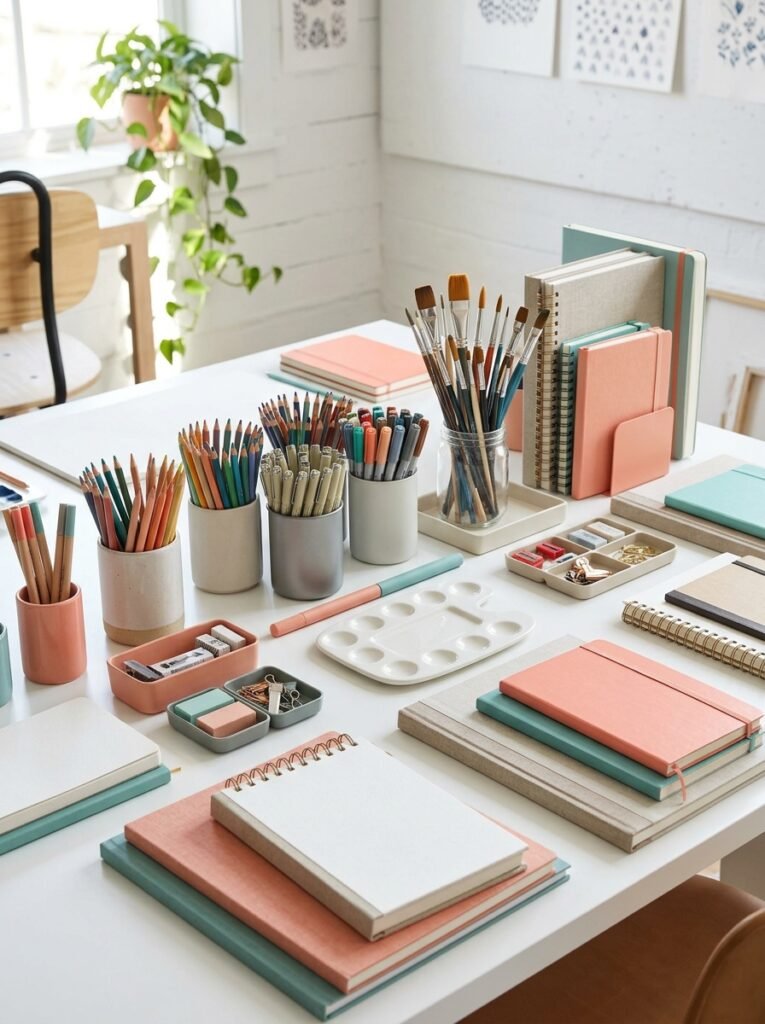
The best system depends on what you do at your desk and how much space you have. Students may need stationery holders and vertical book storage, while office workers benefit from document trays and cable management. Makeup and nail art stations need divided compartments for smaller products, whereas sewing and craft desks require flexible storage for tools and materials. Before buying organizers, measure your available space and identify the items you use most frequently.
Simple Habits for Keeping Your Desk Organized
- Remove unnecessary items: Keep only the essentials on the desktop.
- Group similar supplies: Store stationery, electronics, beauty products, and craft tools separately.
- Use vertical space: Add shelves or wall organizers when the desktop is small.
- Label storage when helpful: Make shared supplies and documents easier to locate.
- Reset the desk daily: Spend a few minutes putting everything back in its proper place.
- Review supplies regularly: Remove empty containers, broken accessories, and items you no longer use.
Final Thoughts
A well-planned desk organization system can make studying, working, and creative activities feel more manageable while giving your room a cleaner appearance. You do not need expensive furniture or a large workspace to get started. Choose a few practical storage solutions, give frequently used items a permanent home, and adapt the setup to your daily routine. With consistent habits and thoughtful styling, even a small desk can become an attractive, comfortable, and productive part of your home.