


This post may contain affiliate links. Please read my disclosure policy.
In This Article Show
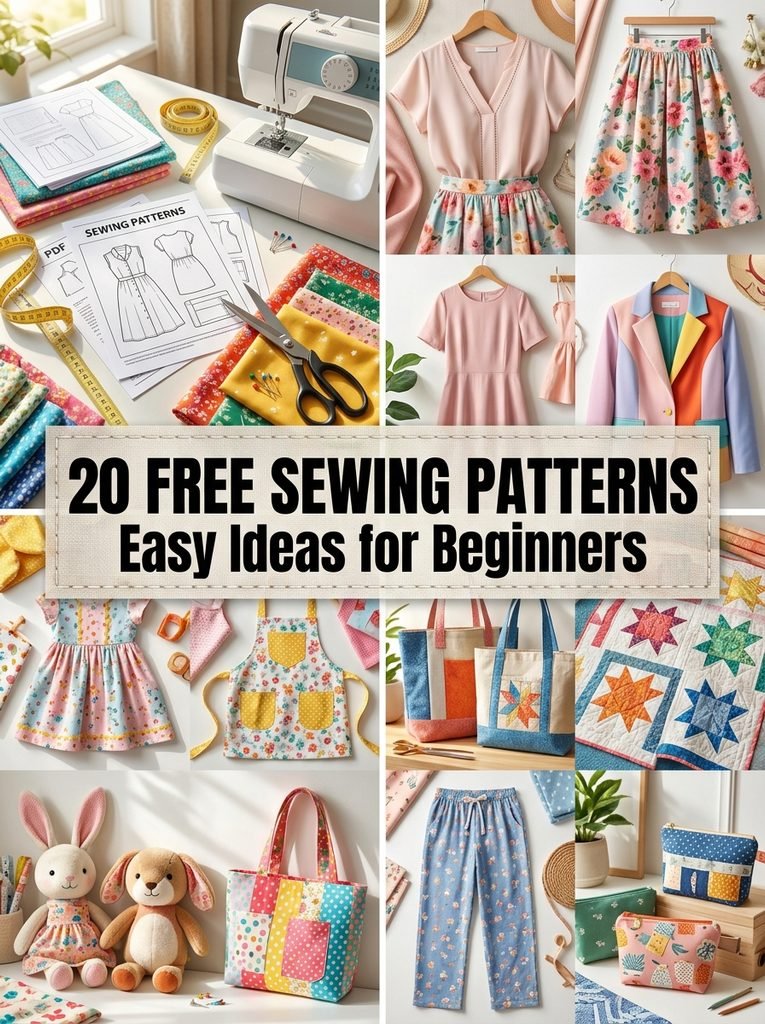
There is a quiet excitement in finding a pattern that costs nothing and turning it into something you can actually wear or use. You choose the fabric, print the pieces, cut carefully, and watch a flat sheet of paper become a real garment or handmade item. That is the charm of free sewing patterns. For a beginner, the biggest challenge often is not sewing itself. It is knowing where to start. A good pattern gives you a plan. It shows the pieces, measurements, construction order, and details you need before the first stitch. The Sewing & Craft Alliance maintains free sewing resources covering fashion, quilting, children’s projects, toys, home accessories, and other crafts. Its fashion collection includes projects such as tops, skirts, jackets, dresses, scarves, and pajamas, while its children’s section includes bags, aprons, pillows, hats, and other beginner-friendly ideas.
What Makes Free Sewing Patterns Useful?
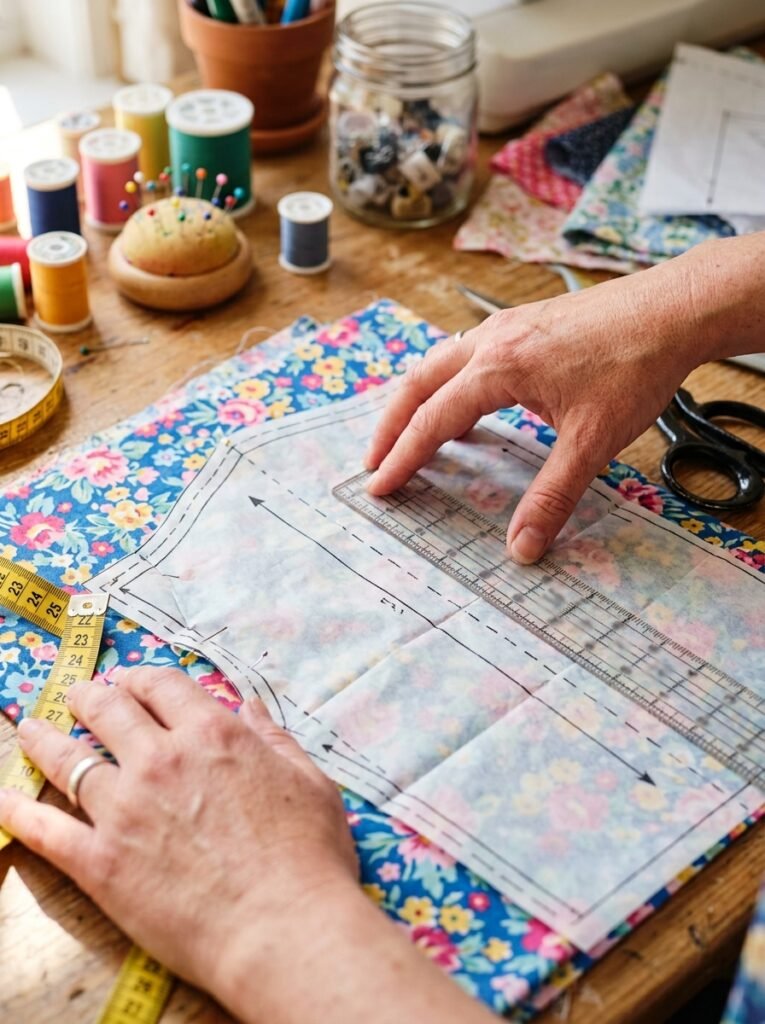
A pattern removes much of the guesswork. Instead of wondering how wide a skirt should be or where to place a sleeve, you can follow a planned shape and construction order. This makes beginners simple easy projects much less intimidating. Not every pattern suits every sewer, though. Check the skill level, finished measurements, fabric suggestions, seam allowance information, and printing instructions before cutting your best fabric. Multi-size patterns can also make fitting easier. The Sewing & Craft Alliance explains that some patterns use nested cutting lines so different sizes appear within the same pattern piece. It also notes that more fitted garments often require more careful size selection and adjustment. The following ideas cover easy beginner projects, women’s clothing, kids’ items, bags, plushies, skirts, tops, pants, and useful home crafts. Choose one that matches your current skill instead of jumping straight into a complicated garment.
1. Simple Tote Bag Pattern
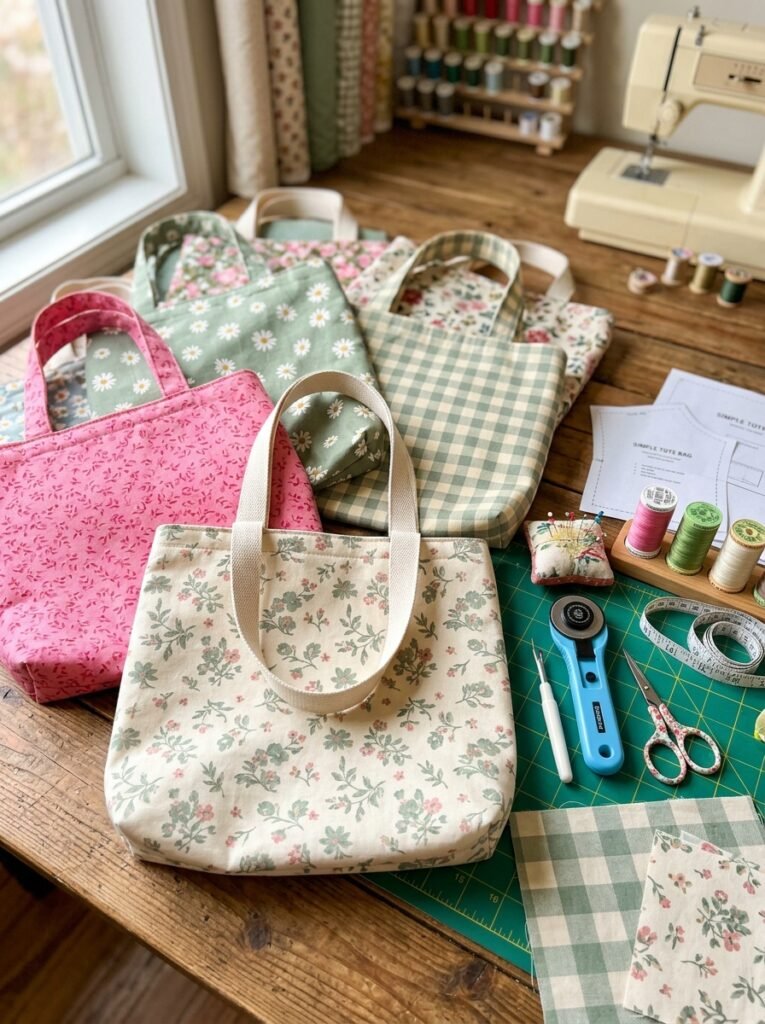
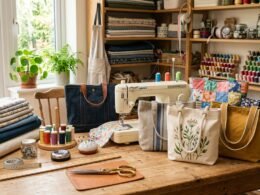
A tote bag makes a great first project because the shape stays simple. You usually work with rectangles, straight seams, and handles. Cotton canvas or medium-weight cotton can work well for a basic version. Once you understand the construction, you can add an inside pocket, lining, contrasting handles, or a simple patch. A useful bag also gives you a project you can carry and use after finishing it.
2. Women’s Easy Top
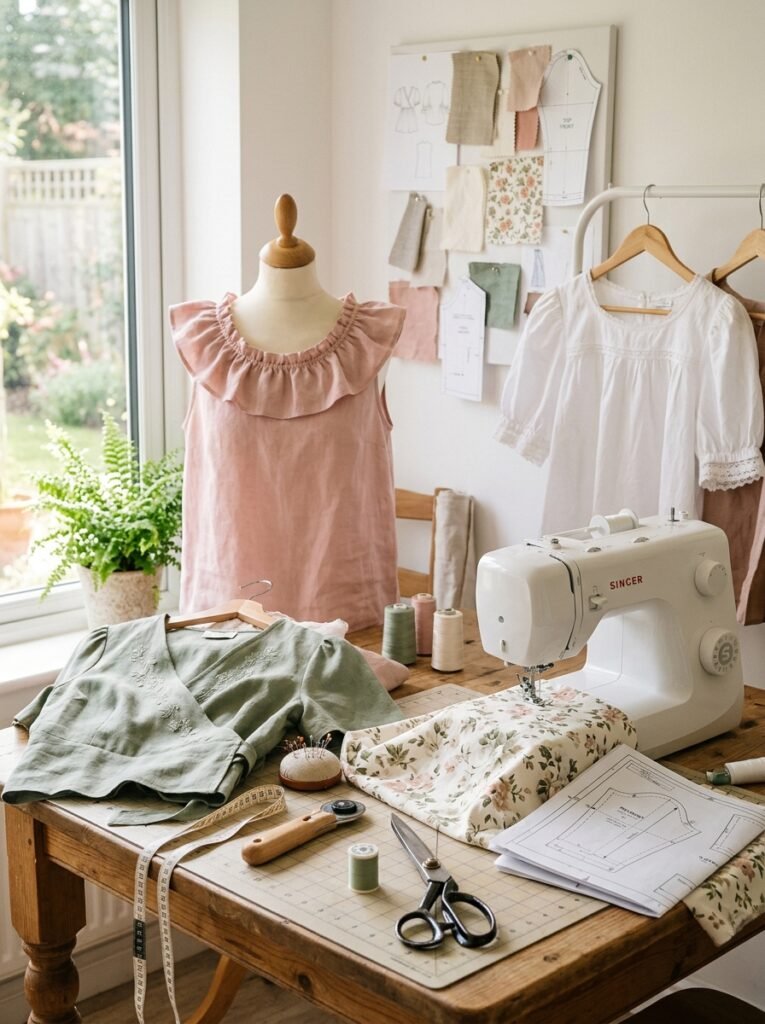
A simple women’s top can teach you several important skills without requiring a complicated design. Look for a loose silhouette with fewer pattern pieces, simple sleeves, or a basic neckline. Lightweight cotton, linen, or similar woven fabrics can create comfortable everyday tops. The Sewing & Craft Alliance’s fashion collection includes beginner-friendly garments alongside more advanced designs, making it a useful reference when exploring clothing construction.
3. Printable Skirt Pattern
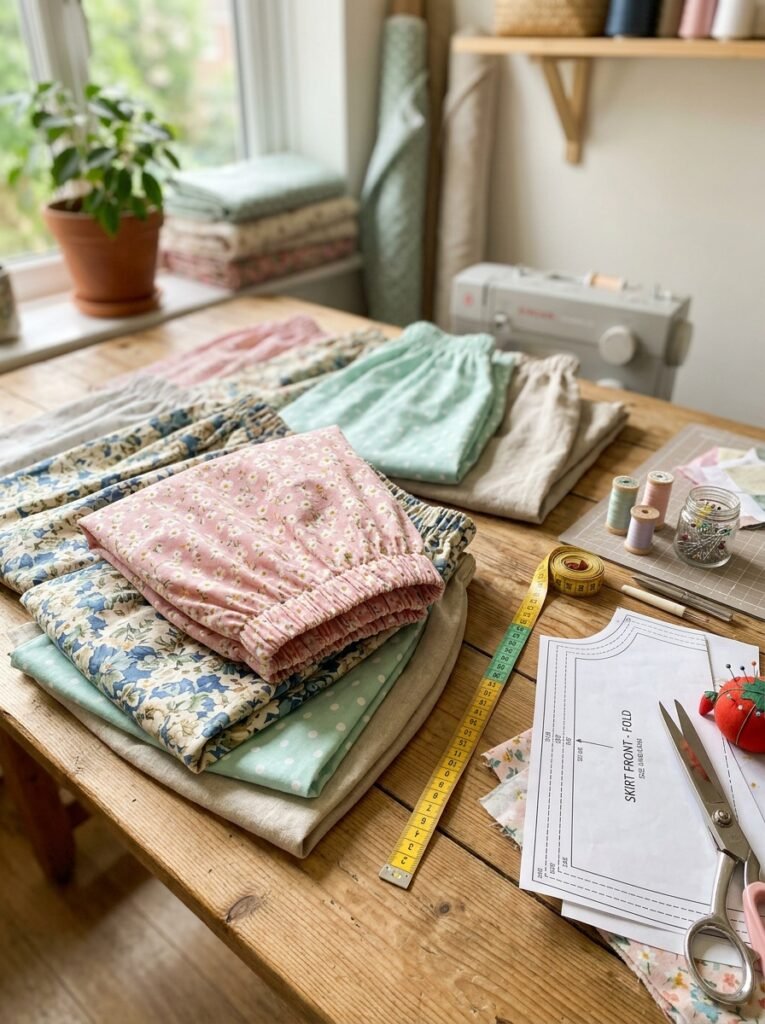
A simple skirt is another good starting point. An elastic-waist design can reduce the need for complicated closures while helping you practice measuring, cutting, gathering, and hemming. Before cutting, compare your body measurements with the pattern’s finished measurements. Do not choose a size only because the number matches your usual store size.
4. Kids’ Apron
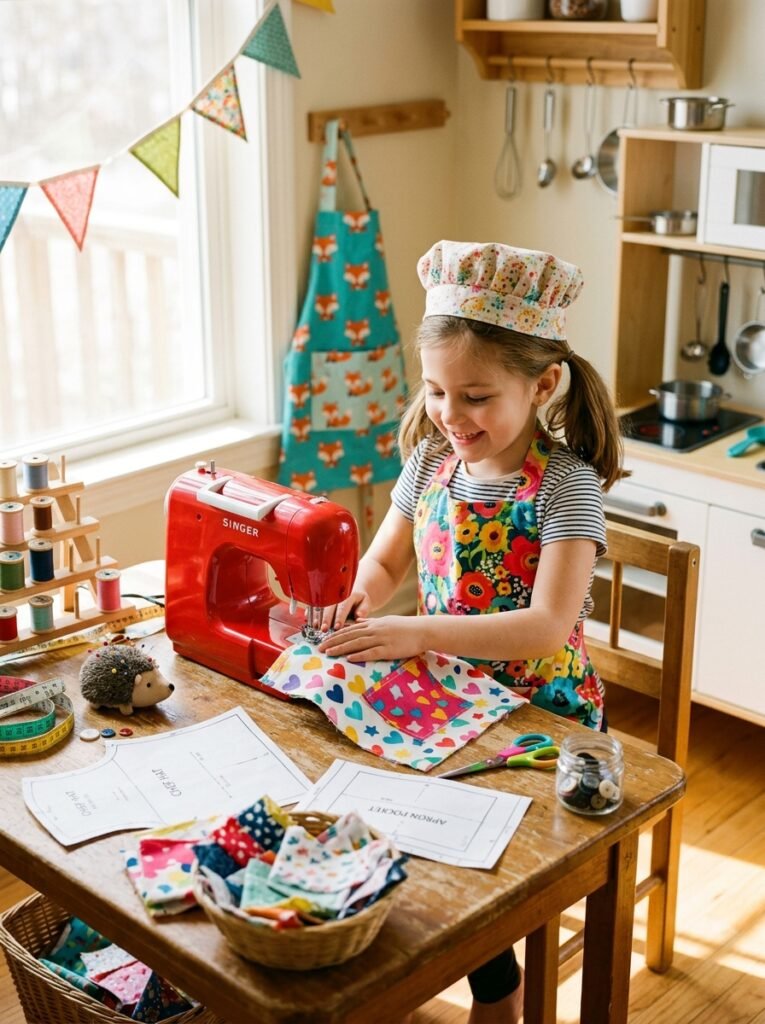
Kids’ projects can be especially rewarding because the finished item has an immediate purpose. A simple apron works for baking, painting, gardening, or pretend play. The Sewing & Craft Alliance provides free children’s patterns including aprons, chef hats, lunch bags, backpacks, pillows, hats, scarves, and other creative items.
5. Printable Pajama Pants
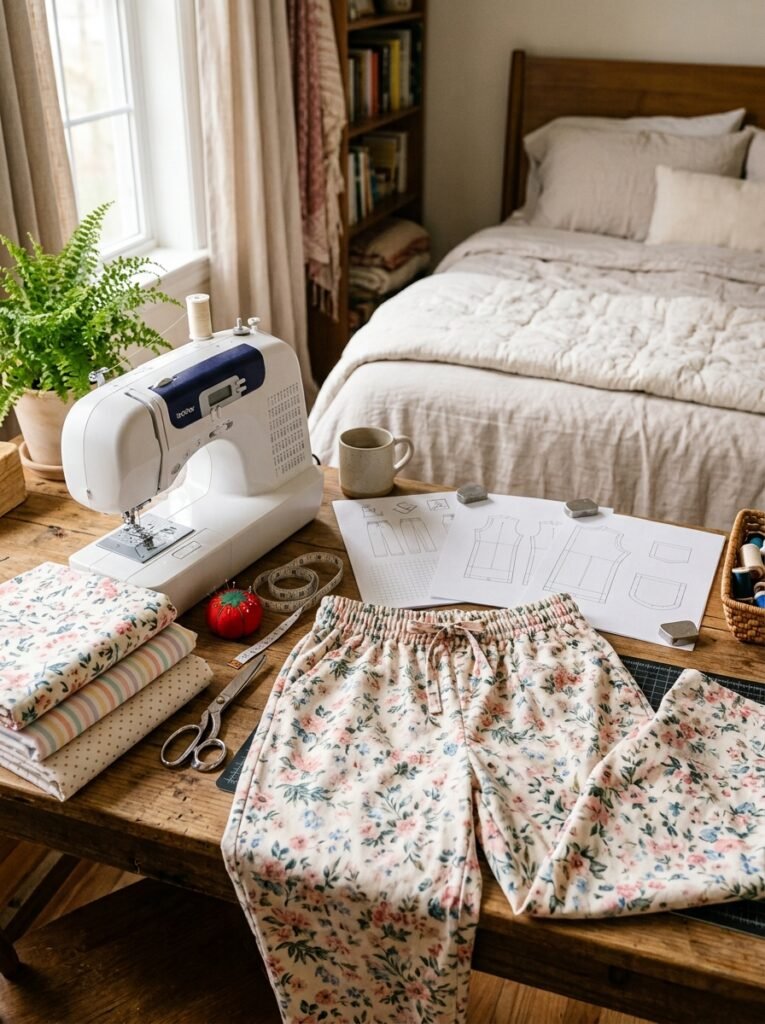
Pajama pants offer a relaxed fit, making them a practical clothing project. An elastic waistband keeps the construction fairly simple, while straight leg seams provide good sewing practice. Choose a soft fabric and check whether the pattern includes a clear PDF printing layout. Print at the required scale and test the measurement box before assembling the full pattern.
6. Easy Fabric Pouch
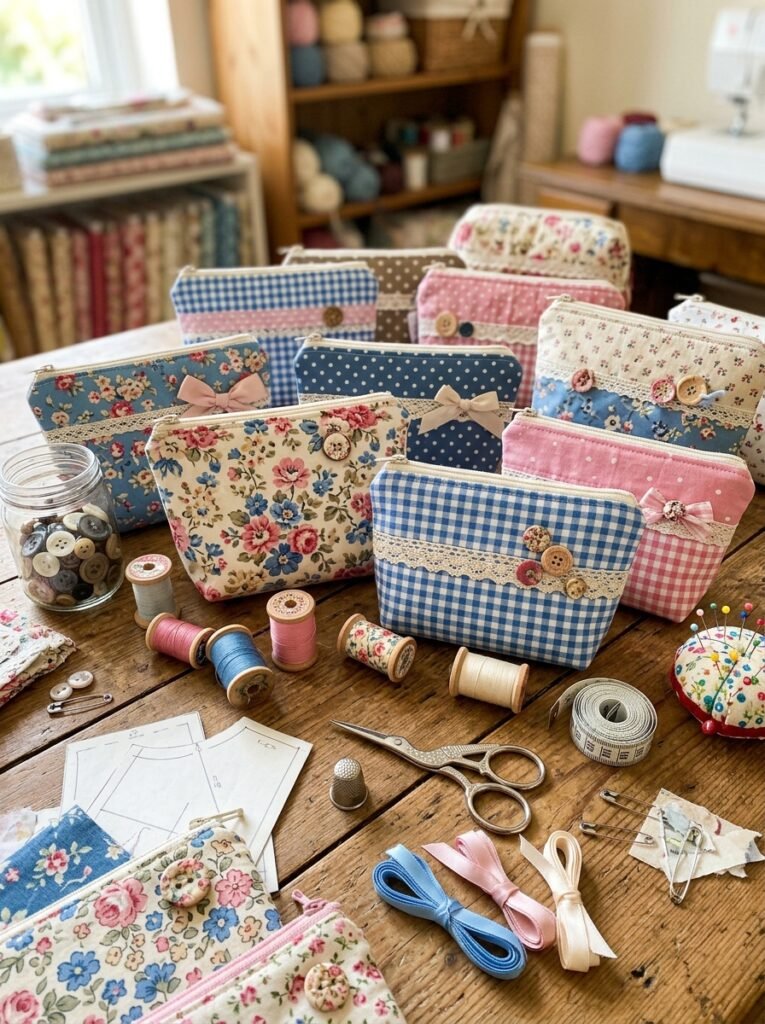
A pouch needs very little fabric and can become a useful everyday item. Make one for makeup, stationery, sewing tools, coins, or small gifts. A flap-and-button version works well for beginners. Once you understand the construction, move to a zipper pattern.
7. Simple Women’s Nightgown
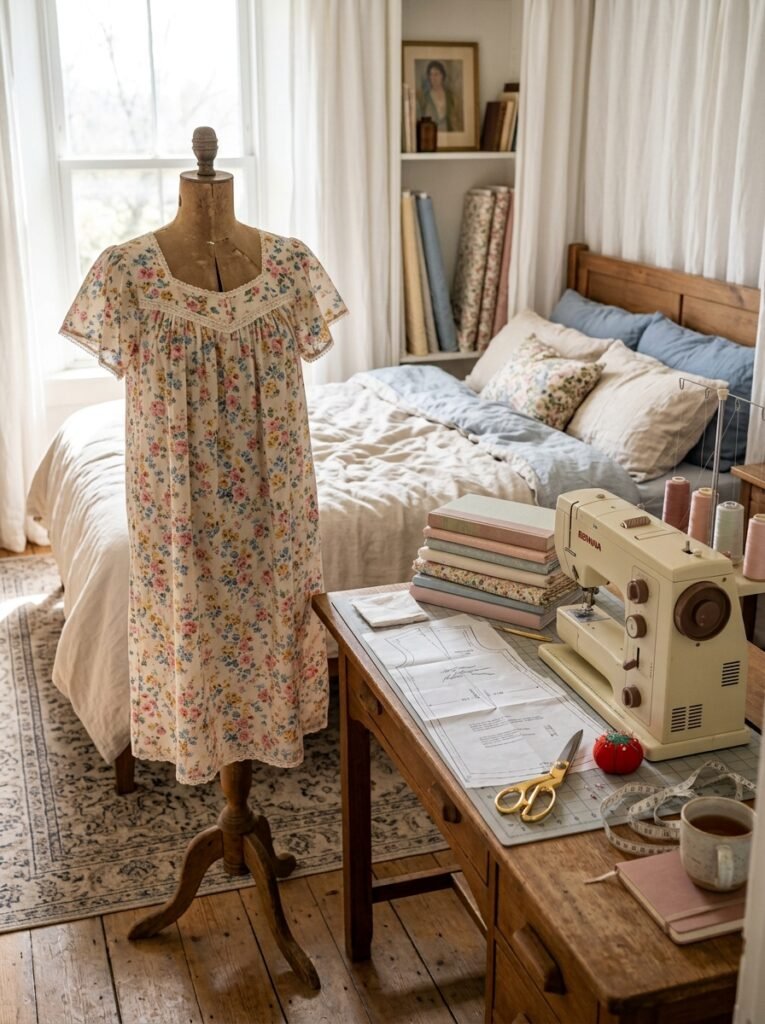
A loose nightgown can be a comfortable introduction to garment sewing. Choose a pattern with a relaxed shape and straightforward neckline. Soft cotton or similar comfortable fabric can work well. Pay attention to the pattern’s finished length and bust or chest measurements before cutting. Small adjustments become much easier when you check the measurements first.
8. Stuffed Animal Pattern
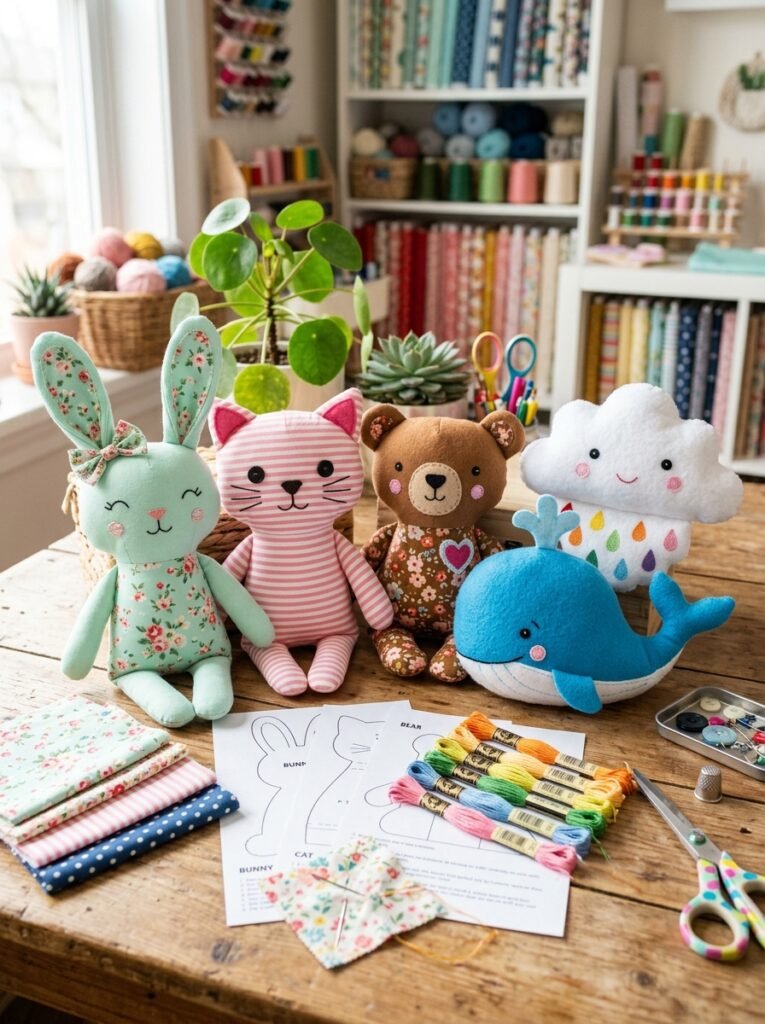
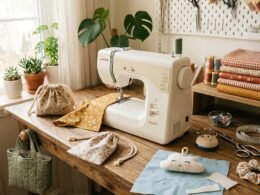
If clothing feels too serious, make something playful. A simple stuffed animal can introduce curves, turning, stuffing, and hand finishing. Start with an uncomplicated shape such as a bunny, bear, cat, cloud, or whale. The Sewing & Craft Alliance also provides free patterns for dolls, toys, games, and cuddly plush animals.
9. Felt Plushie Pattern
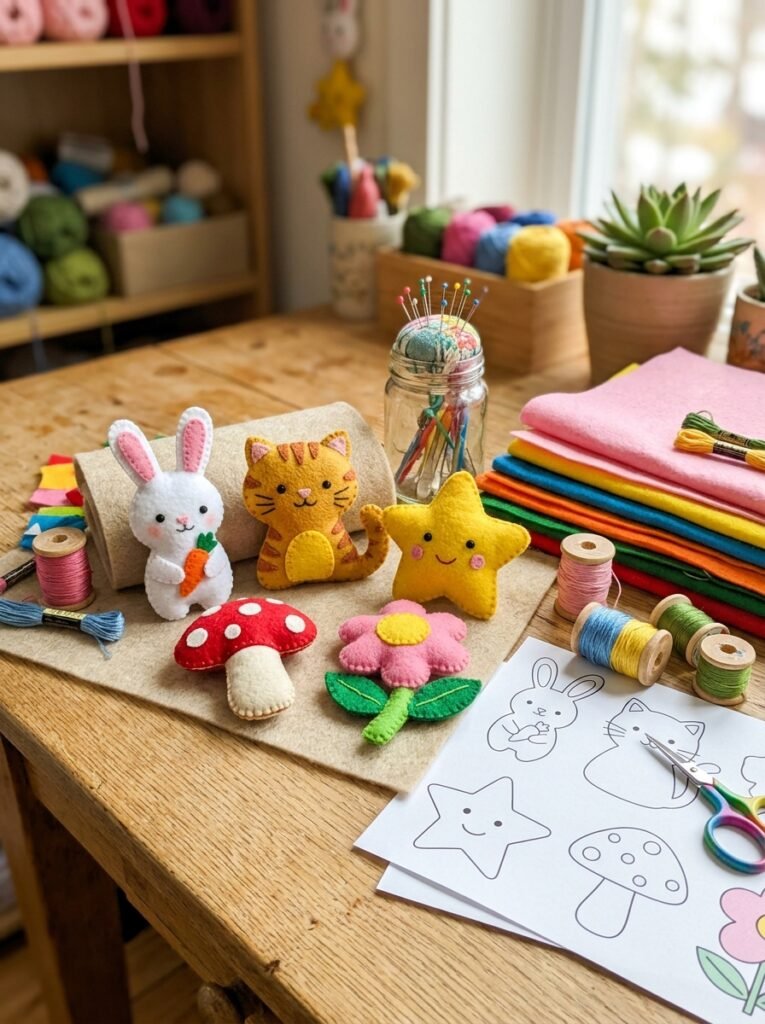
Felt can simplify small plushies because you can cut shapes cleanly without dealing with woven fabric edges. Make a tiny animal, flower, star, mushroom, or character-inspired shape. For children, choose age-appropriate materials and supervise projects involving needles, stuffing, buttons, or other small components.
10. Beginner Dress Pattern
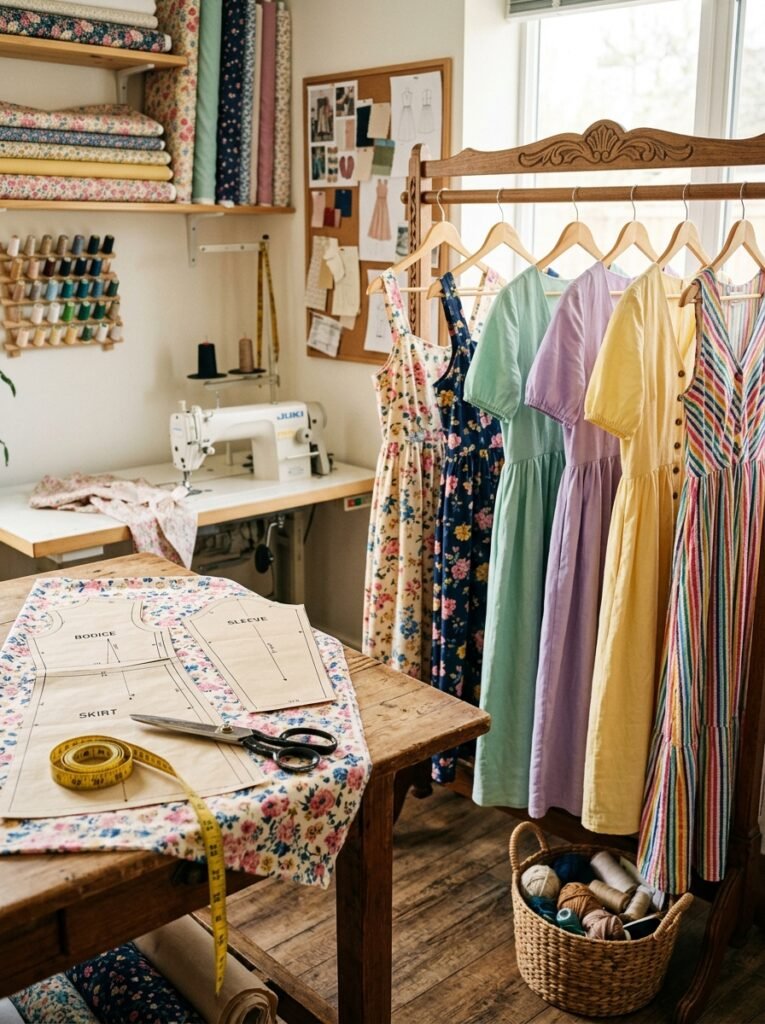
A beginner dress should have a manageable number of pieces and a forgiving fit. A simple sundress, shift dress, or loose gathered design can help you practice longer seams and hems. Before cutting expensive fabric, make a test version if the fit or pattern seems uncertain. This can reveal problems before they become expensive mistakes.
11. Women’s Jacket Pattern
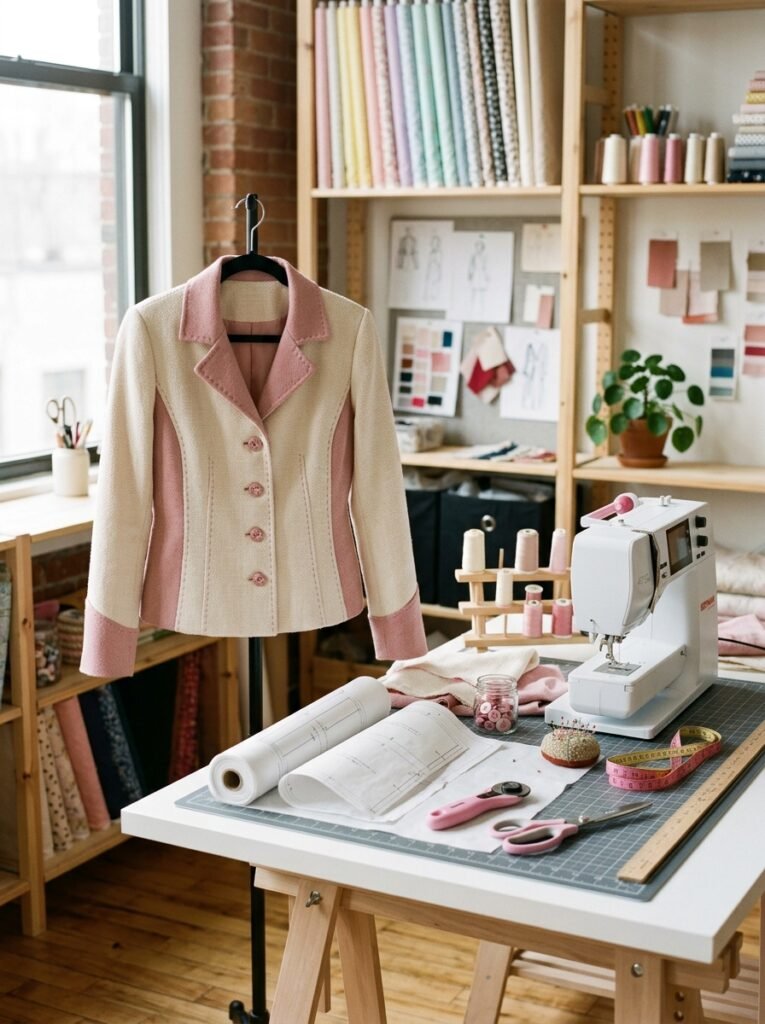
A jacket requires more planning than a simple top, but it can become an exciting next step. Look for a relaxed jacket with simple construction before trying fitted tailoring. Pay close attention to fabric weight, interfacing, closures, pockets, and the order of construction. A well-organized workspace helps when several pieces need to stay together. The Sewing & Craft Alliance’s fashion resources include jackets, vests, capes, coats, and other garments, offering examples of how sewing skills can grow into more advanced clothing.
12. Beginner Pants
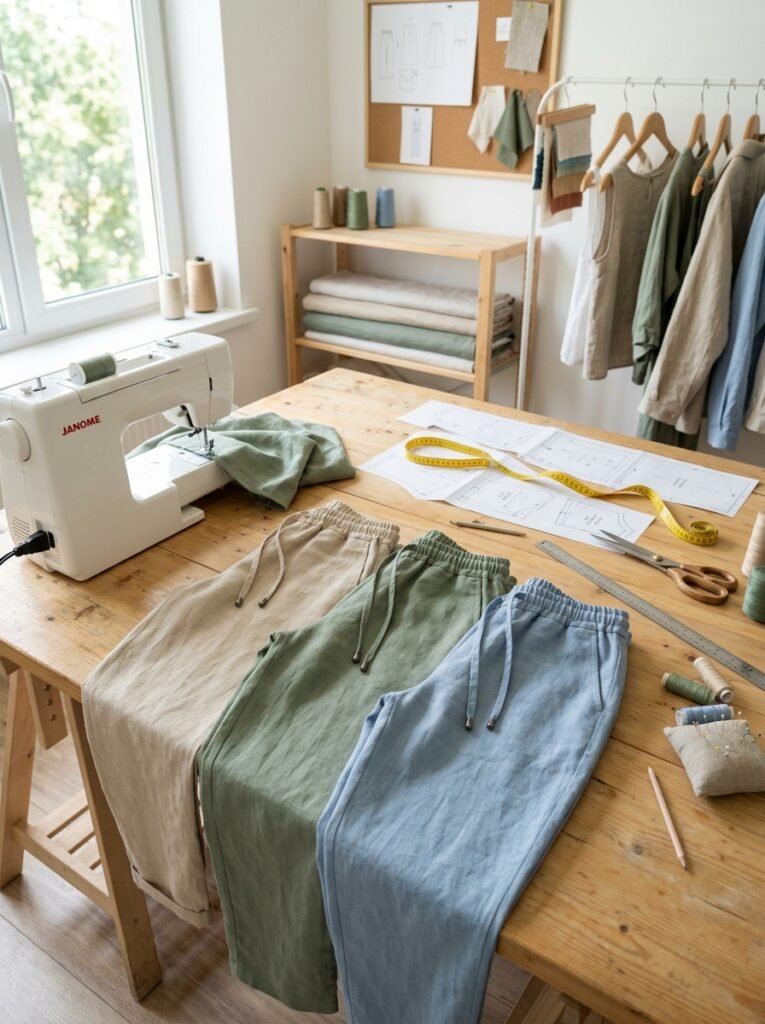
Pants can seem difficult, but a relaxed elastic-waist pattern makes a useful starting point. Focus on accurate cutting and matching the front and back pieces correctly. Choose a comfortable woven fabric for your first pair. Once the basic shape makes sense, you can explore pockets, waistbands, different leg shapes, and more detailed patterns.
13. Simple Kids’ Clothes
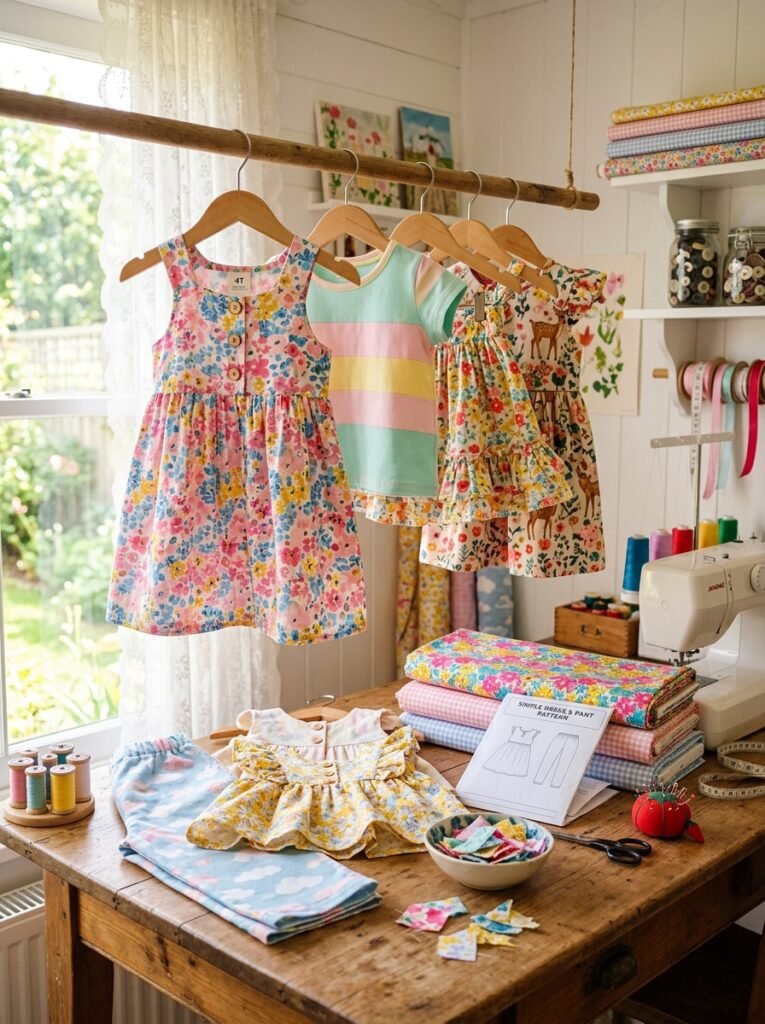
Children’s clothing gives you a chance to practice garments on a smaller scale. Try a simple skirt, loose top, pajama pants, apron, or basic dress. Check the pattern’s size range carefully and compare it with the child’s current measurements. Kids grow quickly, so finished measurements matter more than relying only on age labels.
14. Printable Bag Pattern
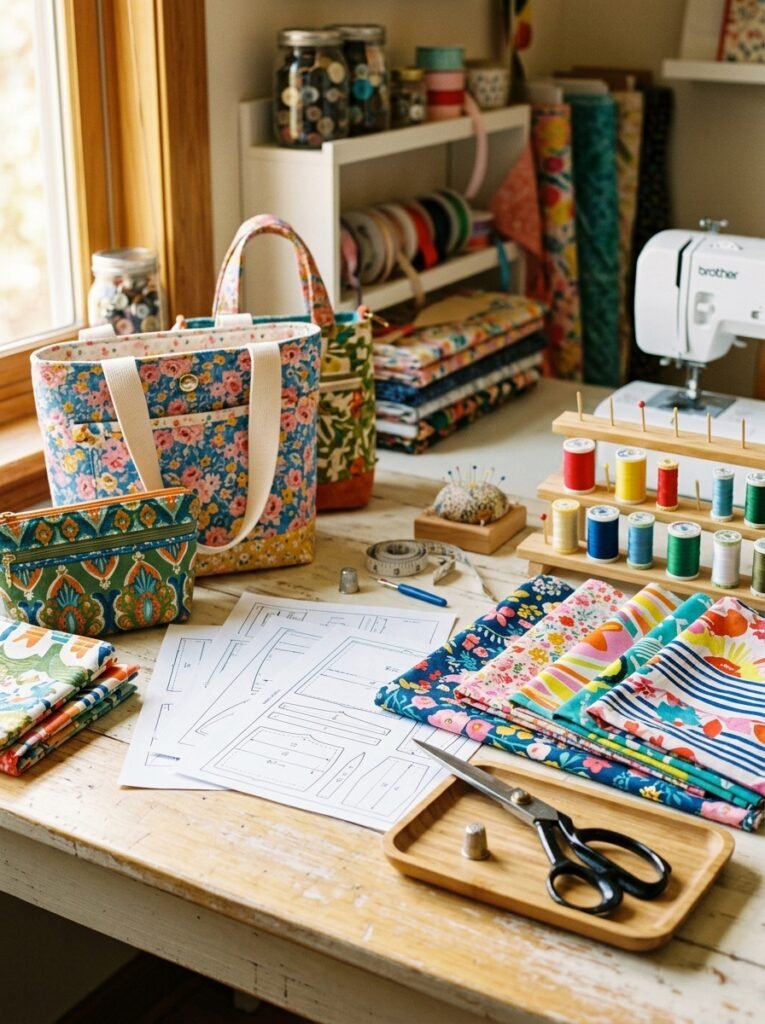
A printable bag pattern can help you move beyond basic rectangles. Try a shoulder bag, drawstring bag, small crossbody, or lined tote. When using printable templates, print one test page first. Check the pattern’s scale box or measurement guide before printing every page. This small step can prevent an entire project from coming out the wrong size.
15. Simple Quilt Block
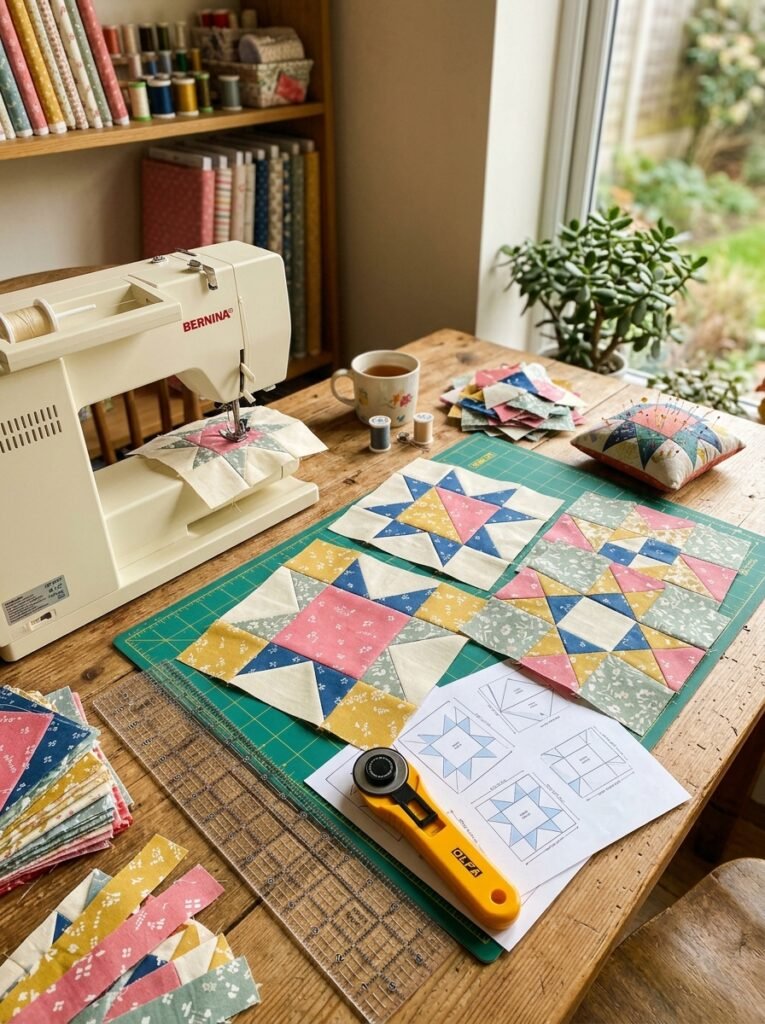
You do not need to sew a whole quilt on your first attempt. Begin with one block. Try squares, strips, triangles, or a simple geometric arrangement. The Sewing & Craft Alliance offers free quilting resources that include beginner quilts, quilt blocks, baby quilts, wall hangings, and artistic designs.
16. Simple Home Decor Pattern
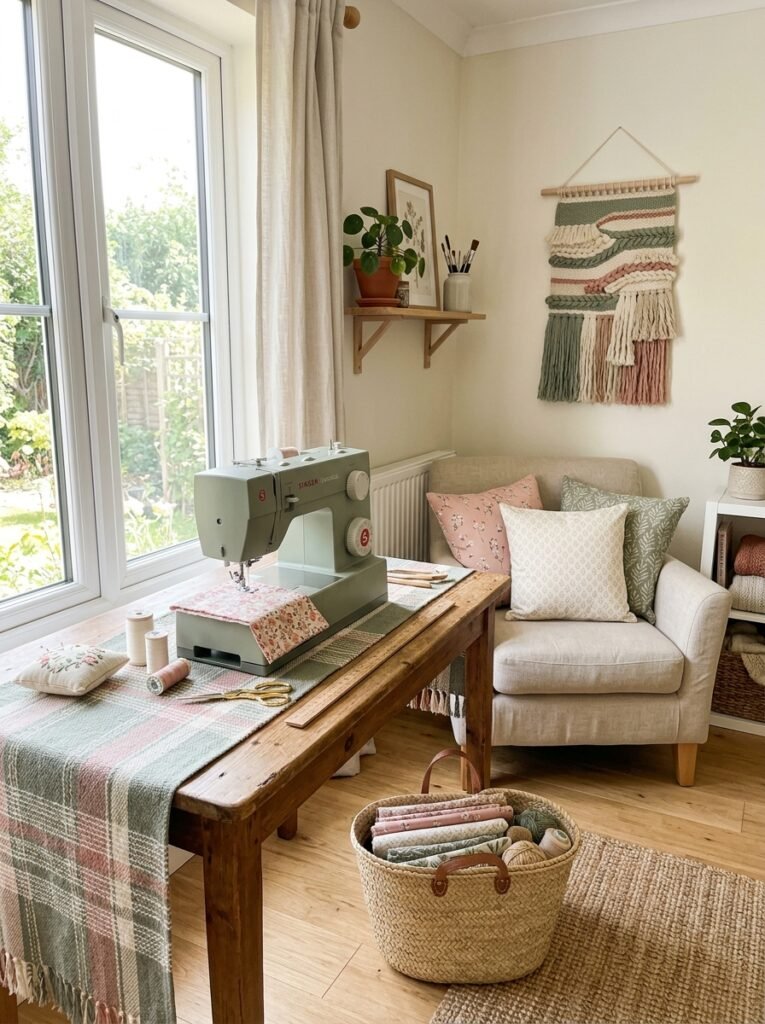
Sewing does not have to mean clothing. Cushion covers, table runners, wall hangings, storage baskets, and small fabric organizers can refresh a room. Table projects also teach useful measuring skills. The Sewing & Craft Alliance recommends measuring the tabletop and calculating the desired drop and hem allowance when creating tablecloths.
17. Easy Hand-Sewing Pattern
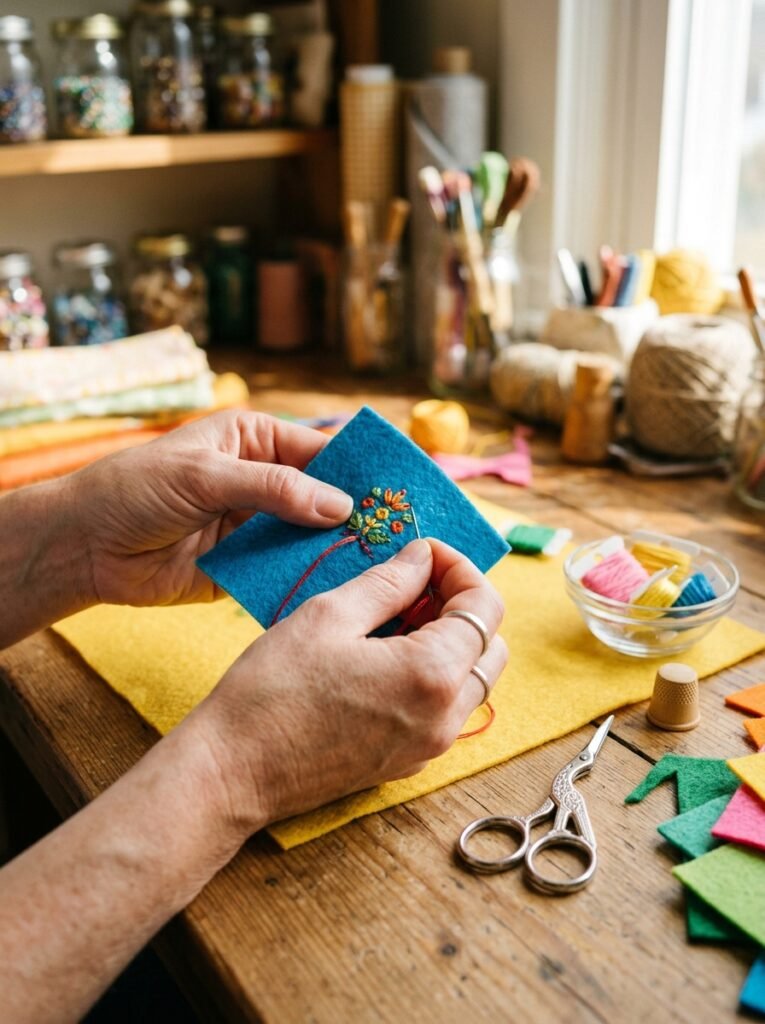
You do not always need a machine. Some small patterns work beautifully with hand sewing, especially felt ornaments, small repairs, decorative appliqué, and tiny accessories. Use the correct needle for the fabric and thread. The Sewing & Craft Alliance notes that hand-sewing needle types vary by task, fabric, thread, and technique, so needle selection matters.
18. Prosperity Hen Fabric Ornament
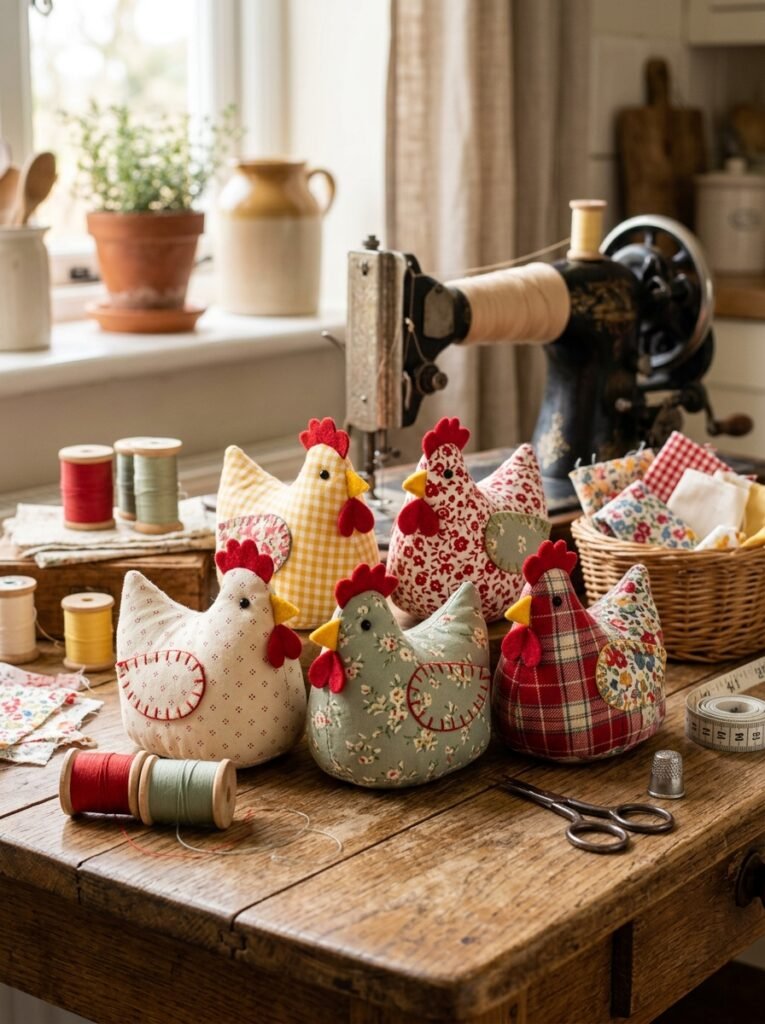
A small hen ornament can make a charming kitchen or seasonal decoration. Use cotton scraps, felt, simple stitching, and a small amount of stuffing. You can make the hen in several colors and turn the collection into a decorative display or handmade gift. This type of project works especially well when you want something decorative without committing to a large garment.
19. Aesthetic Scrap-Fabric Project
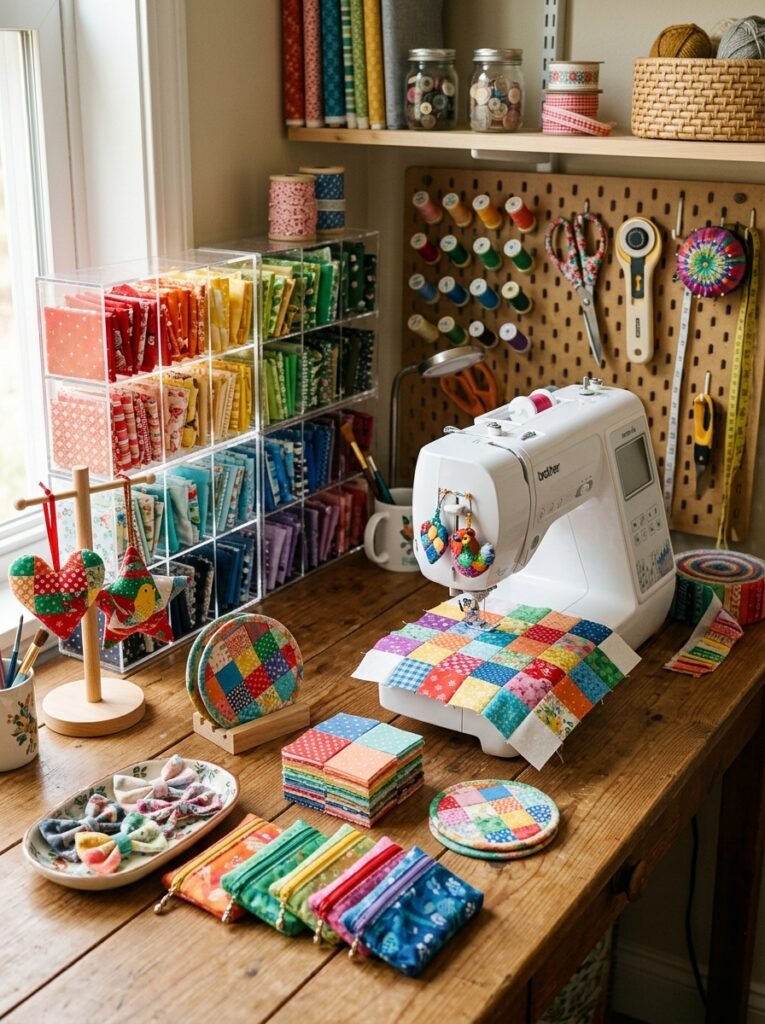
Do not throw away every small fabric piece. Scraps can become patchwork coasters, hair bows, appliqué, small pouches, ornaments, or quilt blocks. Sort scraps by color and size. When a project calls for small pieces, you already have a useful collection waiting for you.
20. Beginner-Friendly Gift Project
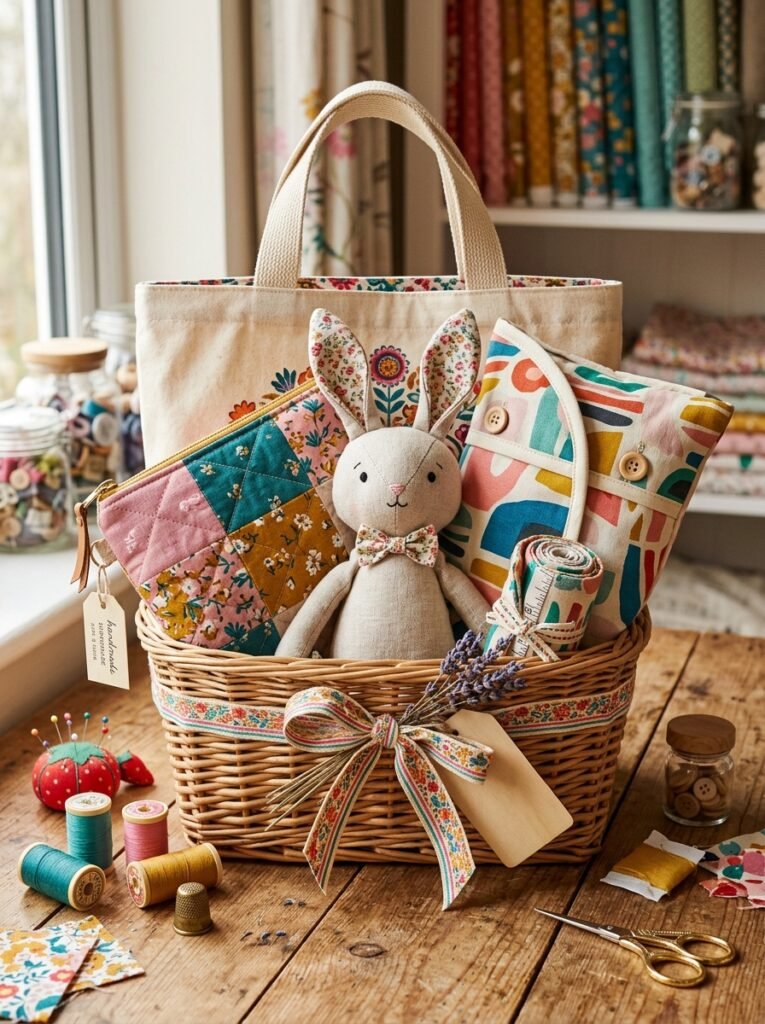
A handmade gift does not need complicated construction. A tote, pouch, pillow cover, nightgown, stuffed animal, or small accessory can become meaningful when you choose fabric that matches the person receiving it. For a first gift, pick a pattern you have already tested. This gives you more time to focus on neat finishing, presentation, and personal details.
How to Choose Free Sewing Patterns
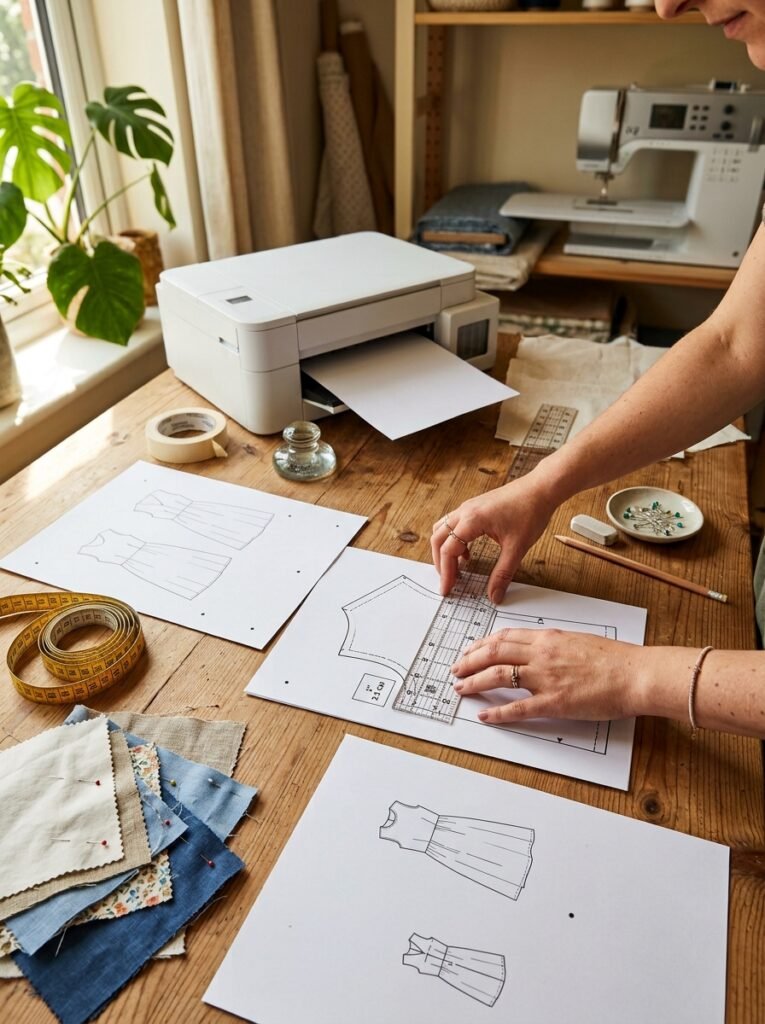
Before downloading or printing a pattern, read the instructions from beginning to end. Check the skill level, size range, finished measurements, required fabric, notions, seam allowance, and printing instructions. A PDF pattern can save time, but printing errors can change the finished size. Always look for the test square or scale indicator. If the first printed page does not match the stated measurement, stop and check your printer settings before printing the rest. For garments, compare your actual measurements with the pattern chart rather than choosing a size based only on your usual ready-to-wear size. Multi-size patterns often provide nested cutting lines, which can make adjustments between areas easier.
Tips for Better Results
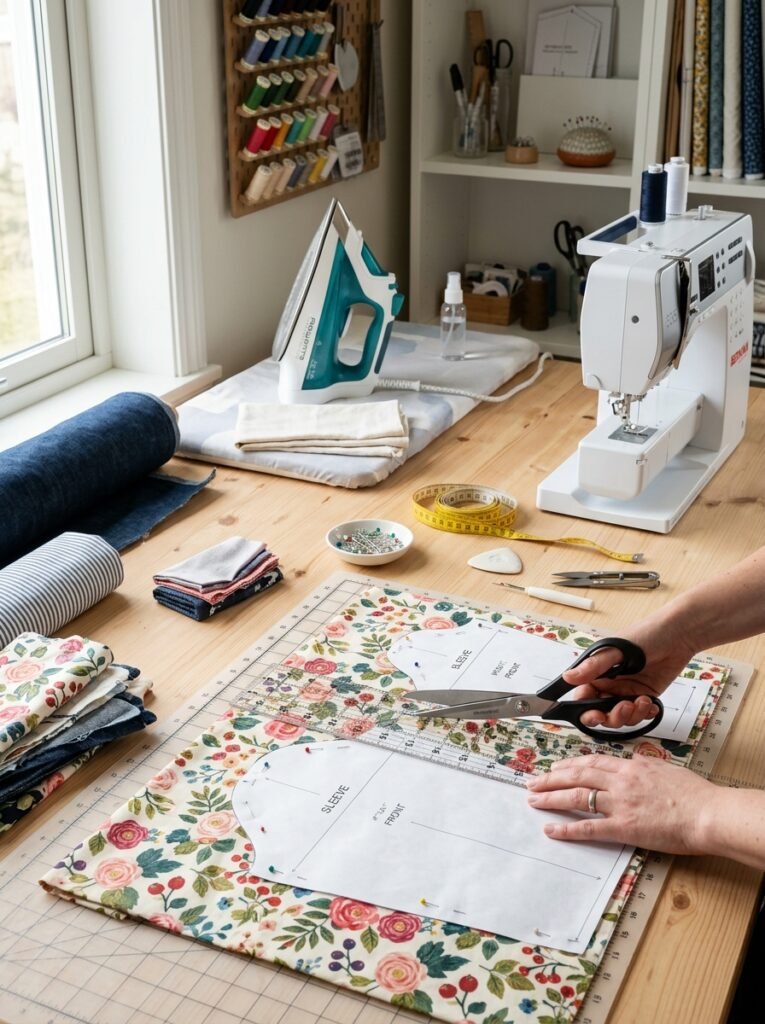
Start with inexpensive fabric when testing an unfamiliar pattern. This lets you learn the construction without worrying about wasting your favorite material. Press seams as you sew. Keep your cutting area flat. Mark notches and important points clearly. If the pattern includes several sizes, trace the size you need instead of cutting through every line. For denim, fabric choice matters even more. The Sewing & Craft Alliance notes that denim weight affects which garments and accessories suit the fabric, and recommends prewashing denim because it can shrink, fade, stretch, and release dye.
Can You Sell Items Made From Free Sewing Patterns?
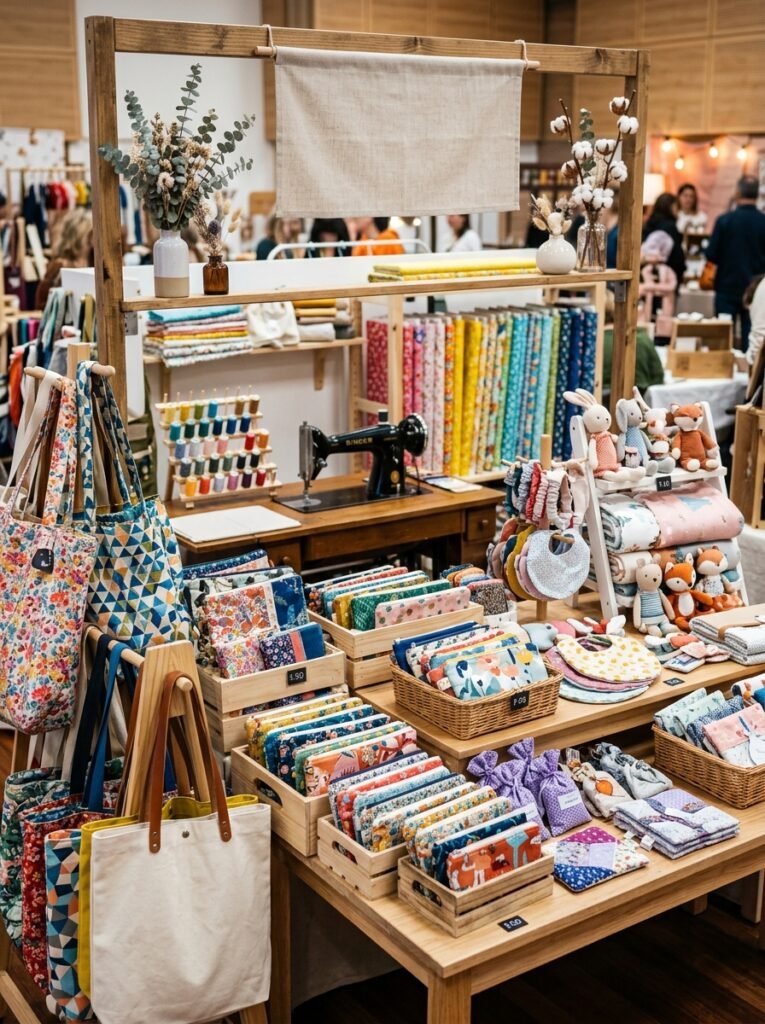
This question needs careful attention. A pattern being free does not automatically mean every use is unrestricted. Check the pattern creator’s license or terms before making items for commercial sale. If commercial use is allowed, calculate fabric, thread, notions, packaging, machine time, labor, and other costs before setting a price. Make several samples so you know how consistently you can reproduce the item. The goal is simple: choose designs that fit your skills, materials, customers, and production time rather than making something complicated simply because it looks impressive.
Final Thoughts on Free Sewing Patterns
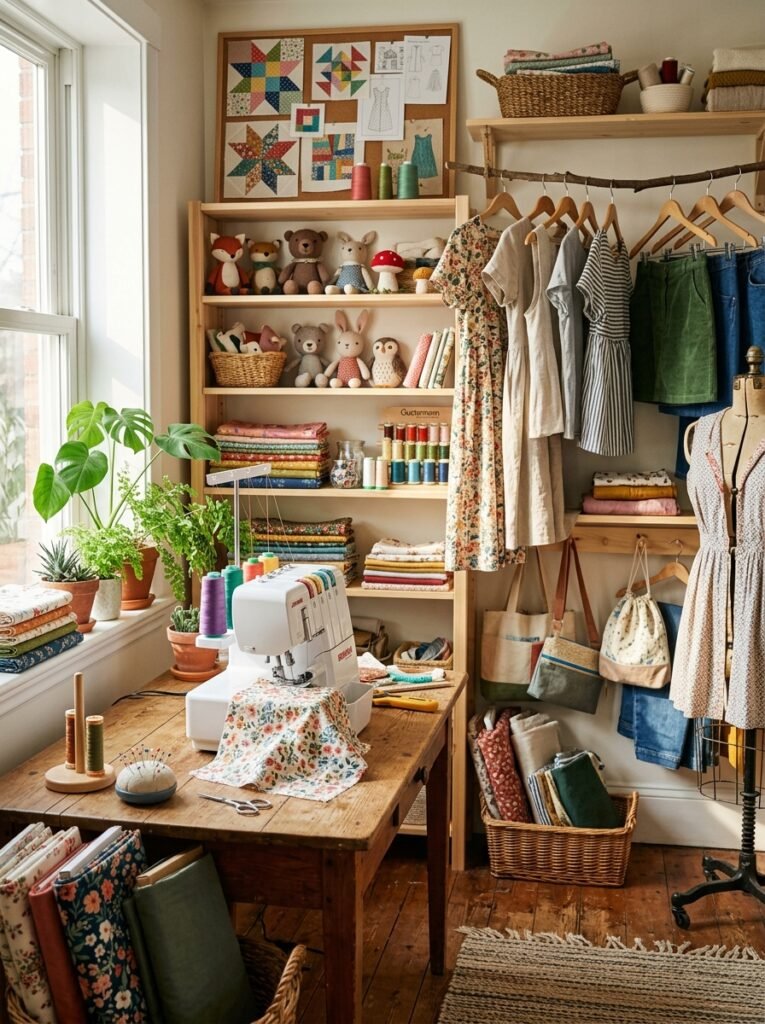
The best free sewing patterns are not simply the ones that cost nothing. They are the ones that match your skill, fit your project, explain the steps clearly, and help you create something you genuinely want to use. Start with one easy design. Print it carefully. Measure twice. Cut once. Sew slowly. Then save what you learned for the next project. Soon, a simple printed template can become a dress, a bag, a child’s outfit, a stuffed animal, or a useful gift. That is the real joy of sewing: a small idea on paper can become something real in your hands.