



This post may contain affiliate links. Please read my disclosure policy.
In This Article Show
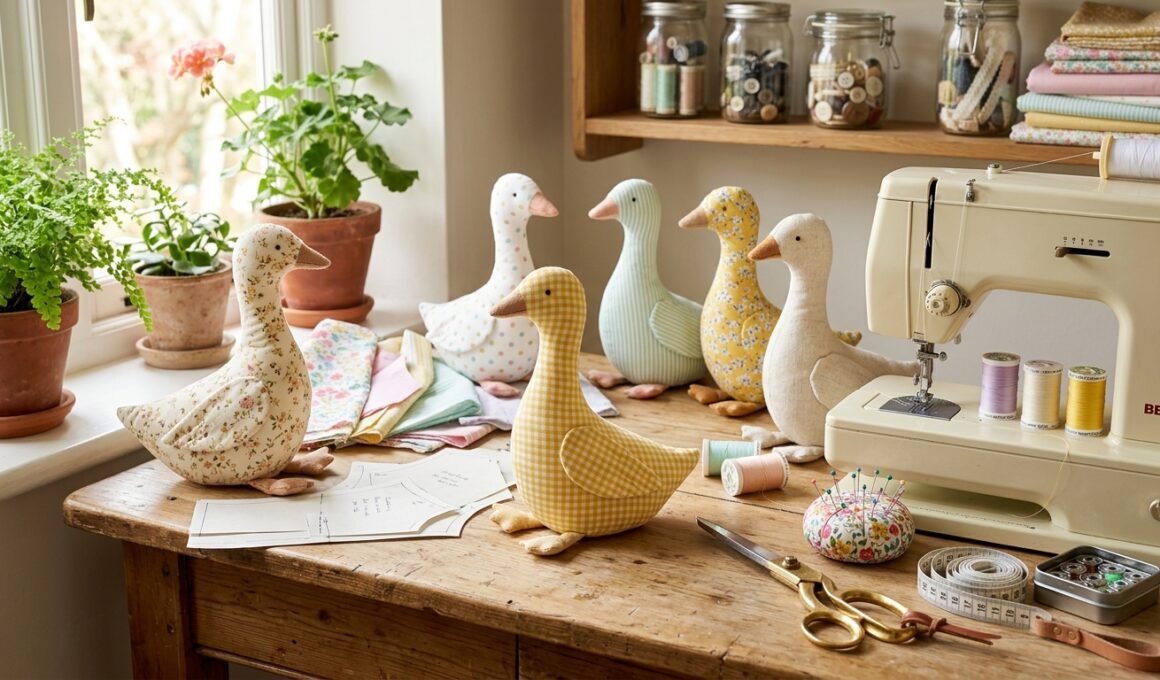
There is something wonderfully cheerful about a handmade goose. Its round body, little wings, long neck, and funny expression can turn a simple sewing project into a charming decoration or cuddly friend. A goose sewing pattern free project also gives beginners a relaxed way to practice cutting, curved seams, stuffing, hand stitching, and fabric selection. You can make a goose for a porch, a child’s room, a desk, or even a garden-inspired display. Some designs look realistic, while others are deliberately silly and playful. With the right fabric and a simple pattern, the project becomes much less intimidating than it first appears. Before cutting your favorite fabric, decide what you want the finished goose to do. A small stuffed goose can decorate a shelf or desk, while a larger version can become a soft snuggle companion. Outdoor decorations need more durable materials, while indoor toys can focus more on softness and appearance. The Sewing & Craft Alliance maintains free sewing projects for children, toys, dolls, and other creative projects, showing how simple fabric construction can lead to playful handmade pieces
1. Simple Stuffed Goose
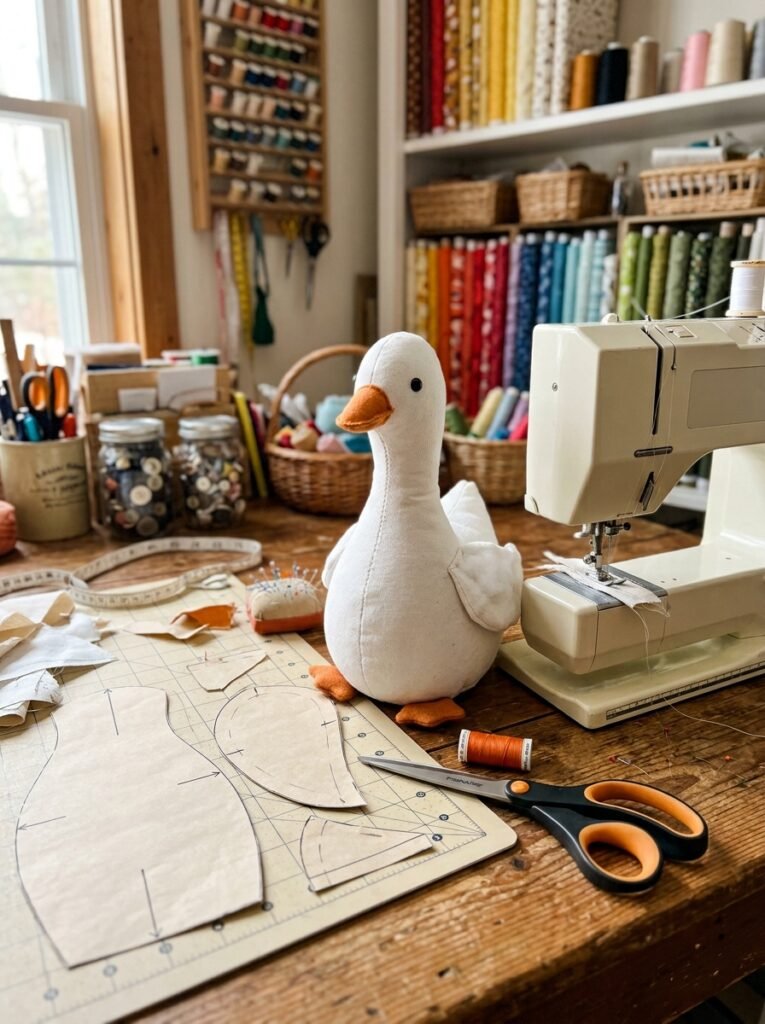
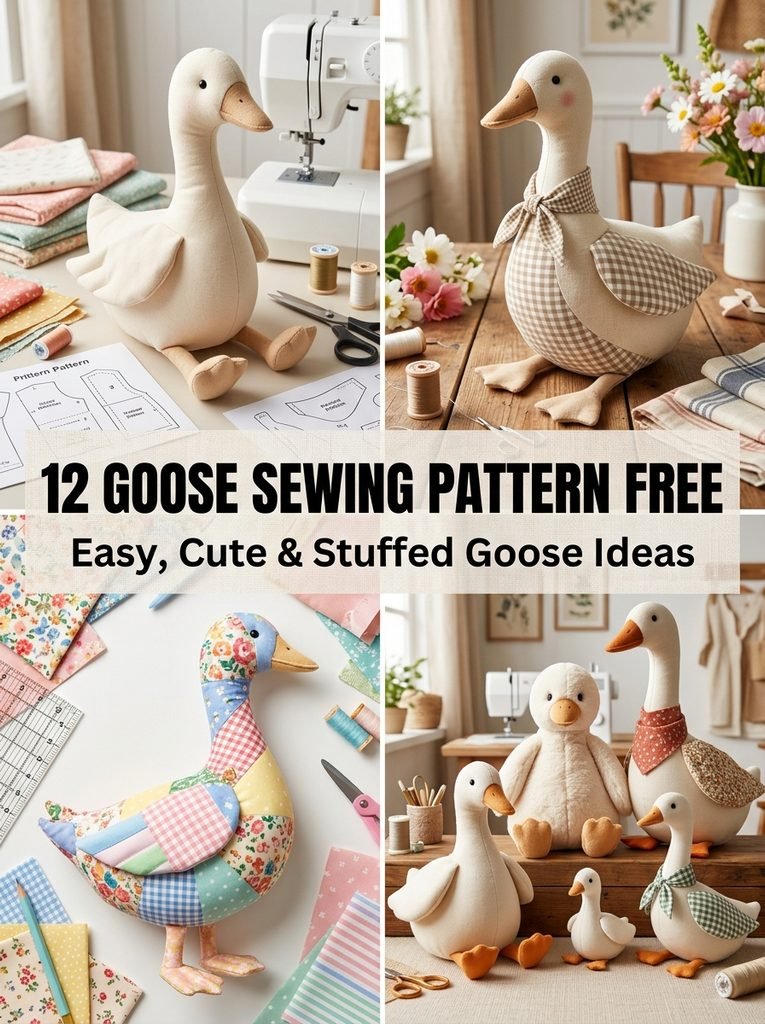
A simple stuffed goose makes an excellent first project. Choose cotton or another easy-to-handle woven fabric, cut two body shapes, sew around the edges, leave an opening, turn the piece right side out, and add stuffing. Keep the shape flat enough for easy sewing around curves. Once you understand the basic construction, you can make the neck longer, the body wider, or the wings larger.
2. Silly Farmhouse Goose
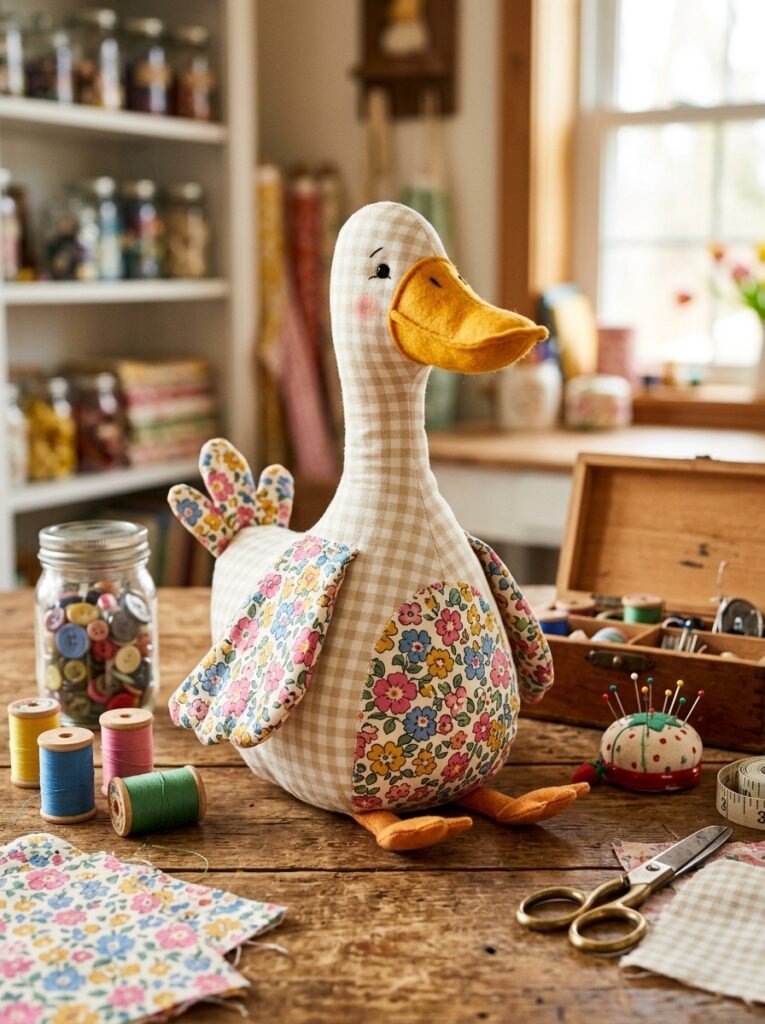
Want something with personality? Create a silly goose with an oversized beak, funny eyes, floppy wings, or an extra-long neck. Use checked fabric, tiny floral prints, or rustic cotton for a farmhouse feel. This type of project does not need perfect symmetry. In fact, small differences can make the character more charming. Give it a little personality and let the fabric do some of the storytelling.
3. Goose for the Porc
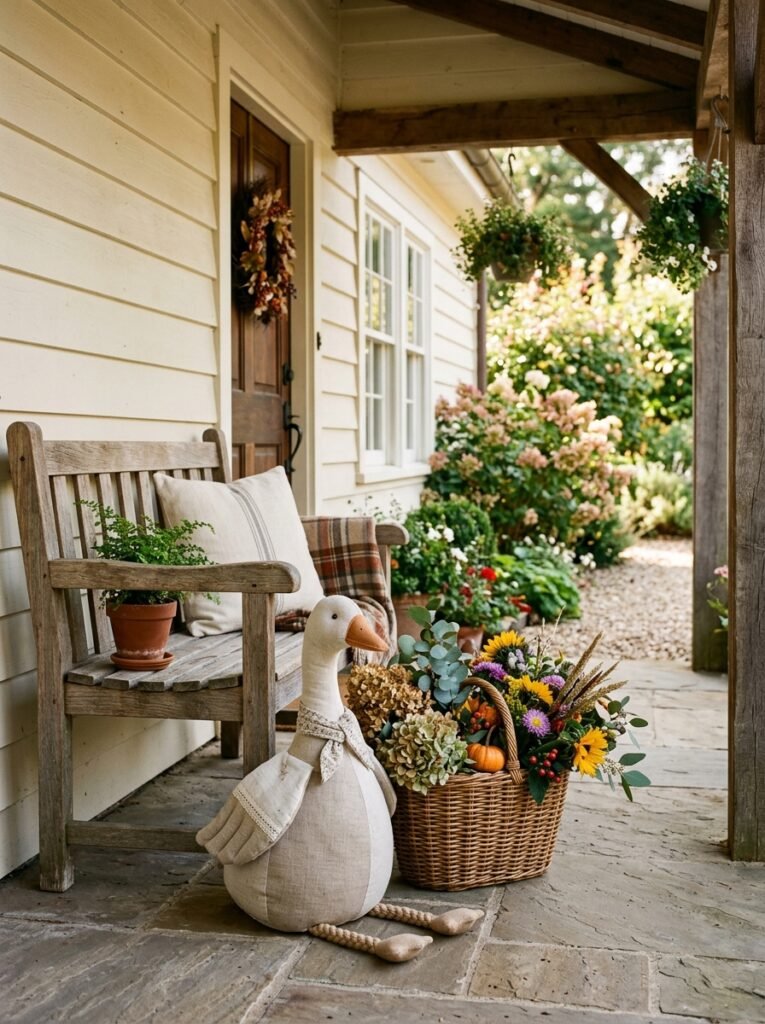
A larger fabric goose can become a welcoming porch decoration. Use heavier fabric and keep the body firm enough to stand or sit securely. For outdoor display, remember that ordinary cotton and stuffing can absorb moisture. Place the finished piece somewhere protected from rain and direct weather exposure, or use suitable outdoor materials when the project calls for it.
4. Tiny Desk Goose
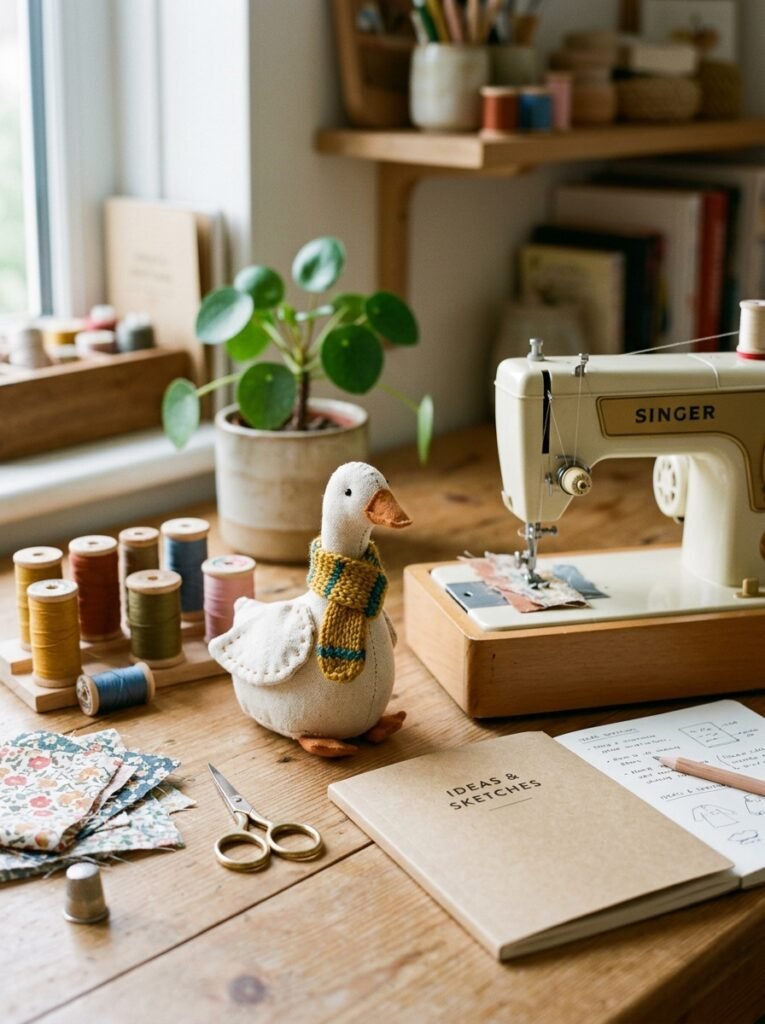
A tiny goose can make an adorable desk decoration. Reduce the pattern pieces and use small fabric scraps instead of buying new material. This project works especially well with leftover cotton from other sewing projects. Add a tiny bow, scarf, or fabric flower if you want a little extra character without making the construction complicated.
5. Soft Snuggle Goose
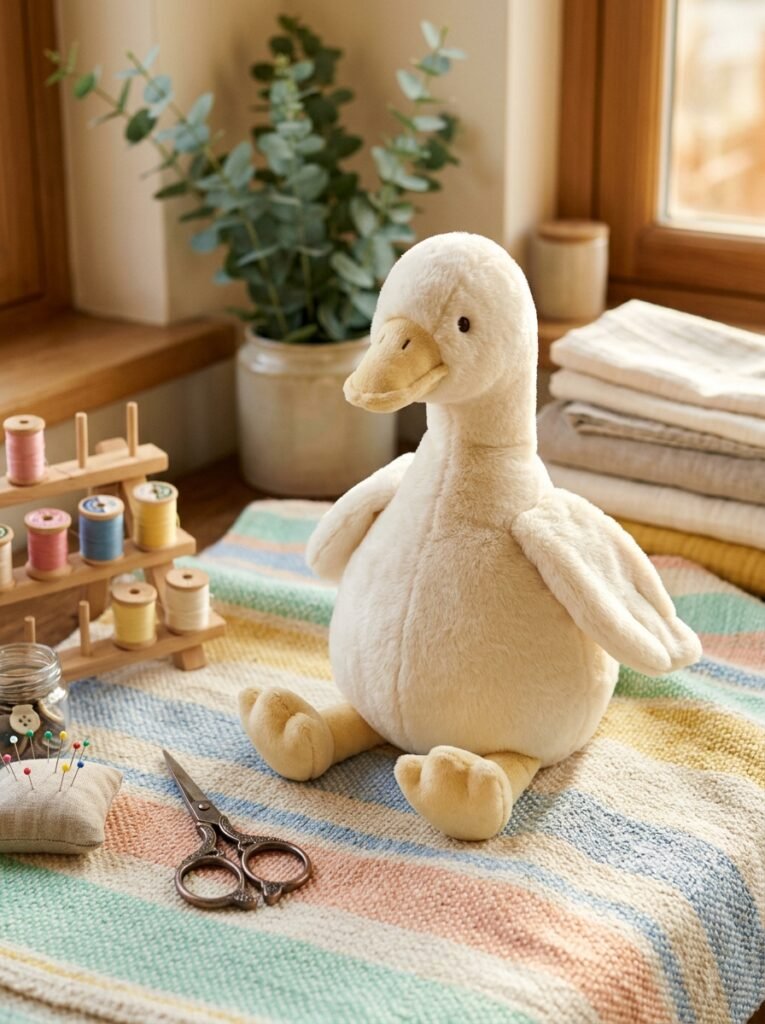
For a cuddly version, choose a soft fabric such as fleece or microfiber plush. The Sewing & Craft Alliance notes that plush fabrics work well for children’s toys and other soft projects, but they can stretch and shift while sewing. It recommends securing pieces carefully and keeping the machine clean because plush fibers can shed. A soft snuggle goose should have a comfortable shape without hard decorative parts that could become loose. Keep the finish neat and secure, especially when making toys for young children.
6. Flat Goose Wall Decoration
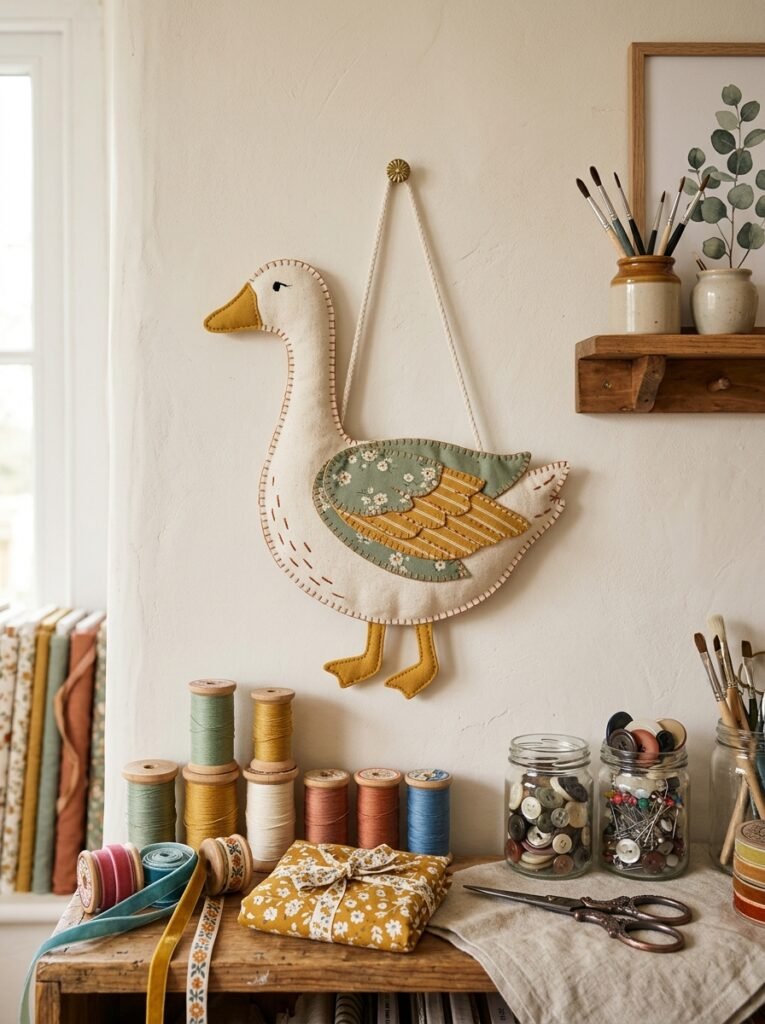
Not every goose needs stuffing. A flat fabric goose can work as wall art, a hanging decoration, or a seasonal accent. Create the body from two layers of fabric, add simple appliqué details, and finish the edge with a neat stitch. You can make several geese in different colors and hang them together as a small wall display.
7. Patchwork Goose
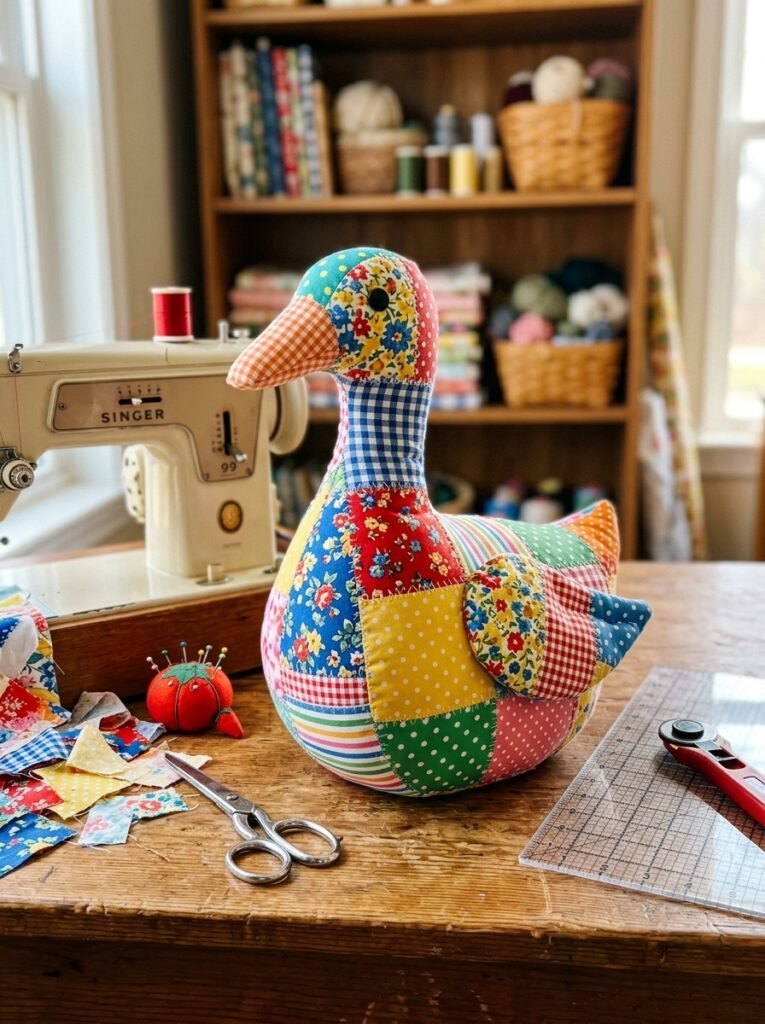
A patchwork goose gives small fabric scraps a new purpose. Combine floral prints, gingham, stripes, dots, and solid colors into a balanced arrangement. Keep the patches reasonably similar in size so the body does not become difficult to assemble. If you enjoy quilting, this idea can also become a bridge between quilting and stuffed-toy sewing.
8. Sitting Goose With a Wide Body
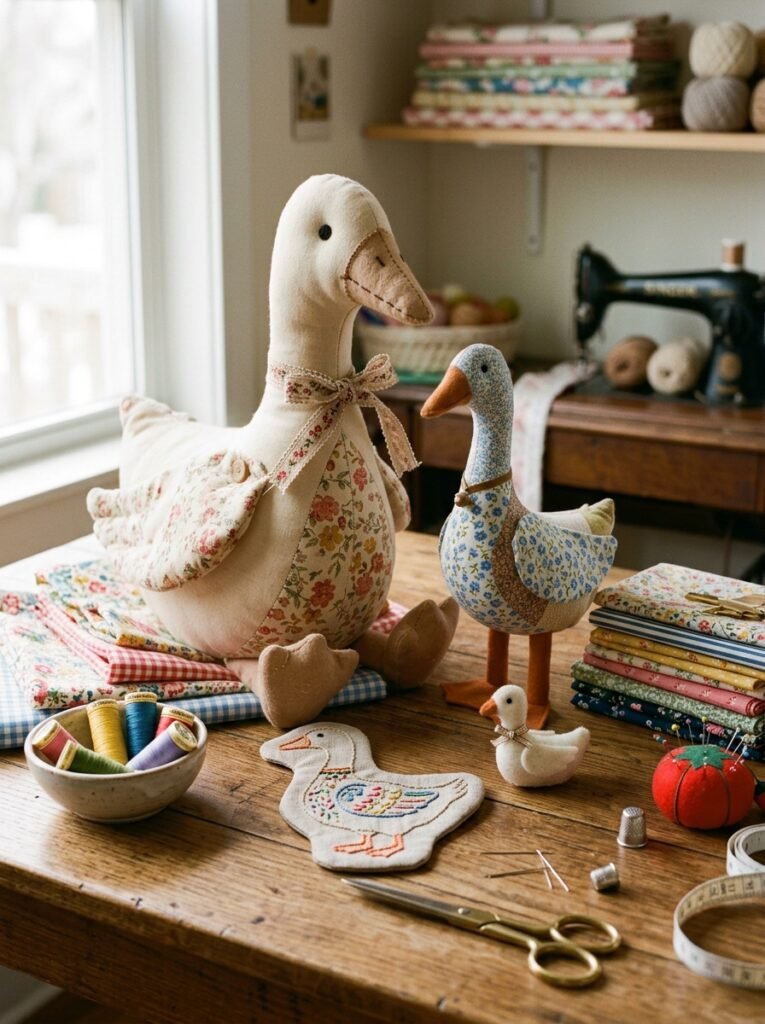
A sitting goose looks especially cute when you give it a wide base and slightly rounded body. This shape works well on shelves, tables, beds, or a reading corner. The key is balance. Make the bottom broad enough to support the body, then place the stuffing evenly so one side does not become heavier than the other.
9. Printable Goose Sewing Project
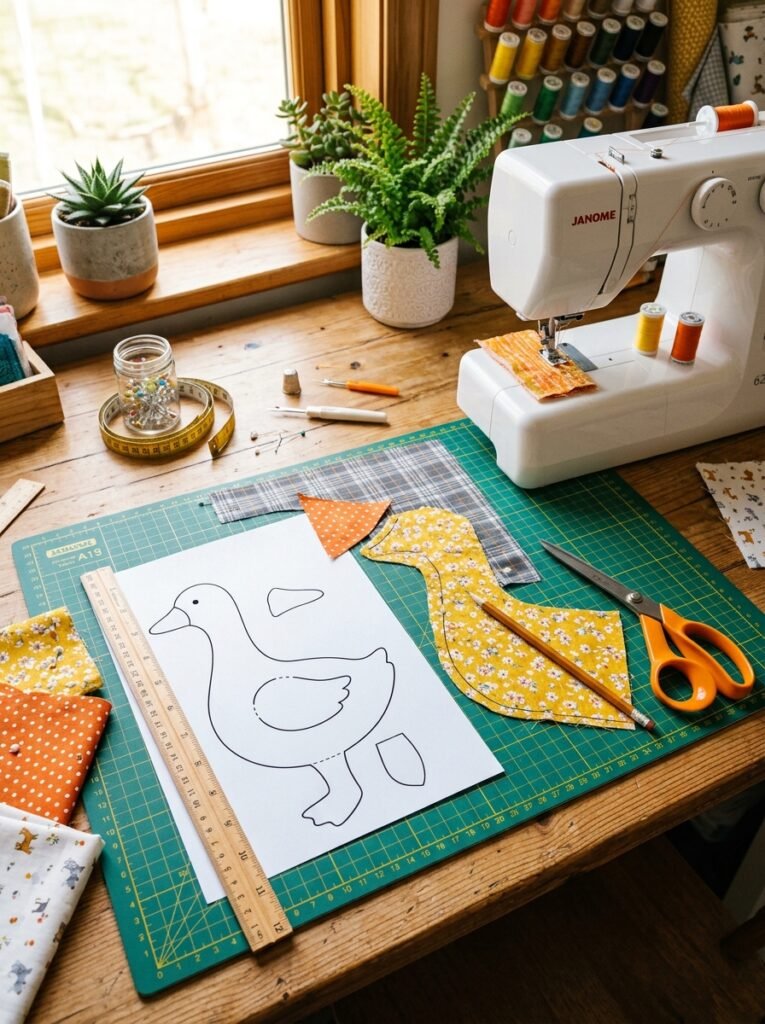
A printable pattern can make cutting easier because you can print the shapes, check the size, and transfer them to fabric. Before printing, confirm the document’s scale settings so the pattern does not accidentally shrink or enlarge. Pattern markings matter. Sewing & Craft Alliance explains that pattern pieces can include information about piece numbers, cutting instructions, grainlines, and other construction details. Understanding these markings helps you cut and assemble more accurately.
10. Farmhouse Goose With a Scarf
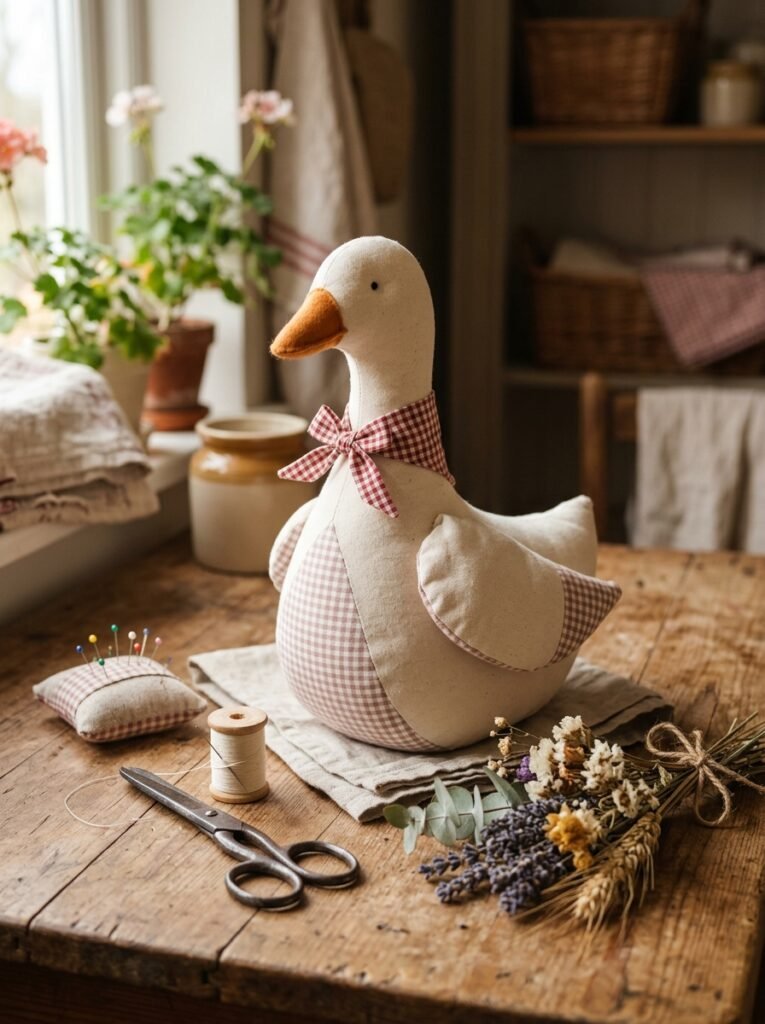
A small fabric scarf can give your goose a completely different look. Use checked, striped, or floral material and coordinate it with the body fabric. For a seasonal display, choose warm autumn colors. For spring, try soft green, yellow, pink, or blue. The basic goose stays the same while the accessories change throughout the year.
11. Large Decorative Goose
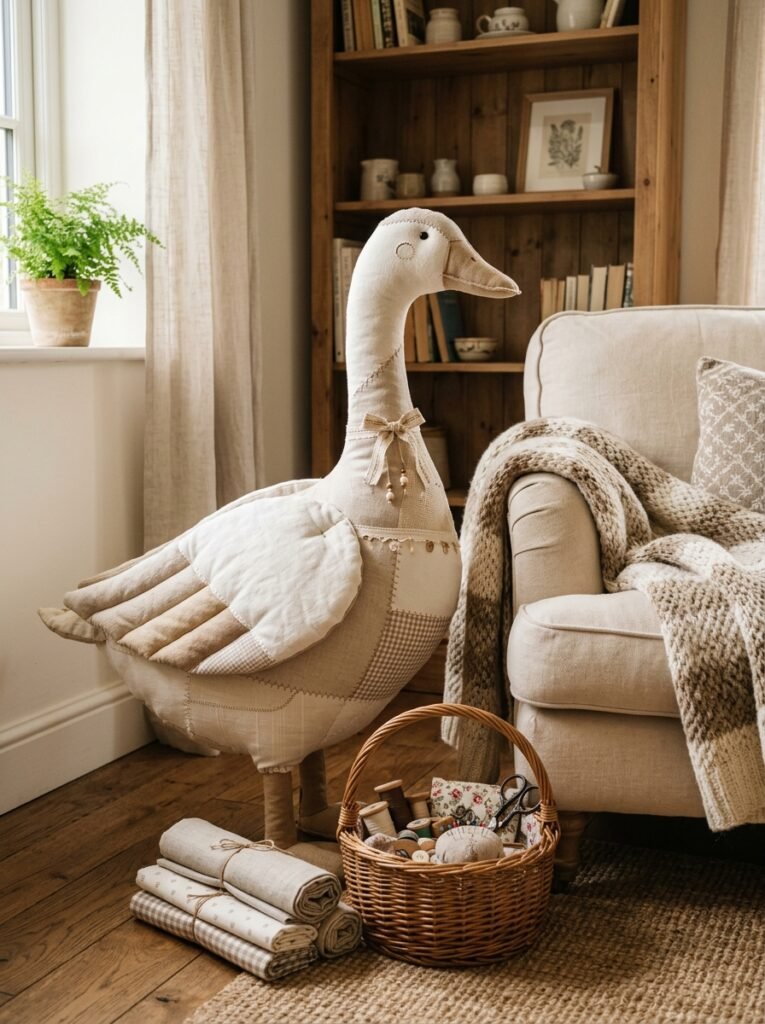
A large goose can become a statement piece for a bedroom, nursery, craft room, or covered porch. Increase the pattern carefully rather than stretching it unevenly. Larger pieces also need more stuffing support. Fill the body gradually and distribute the stuffing with your fingers so the shape remains smooth instead of developing hard lumps.
12. Goose Family Collection
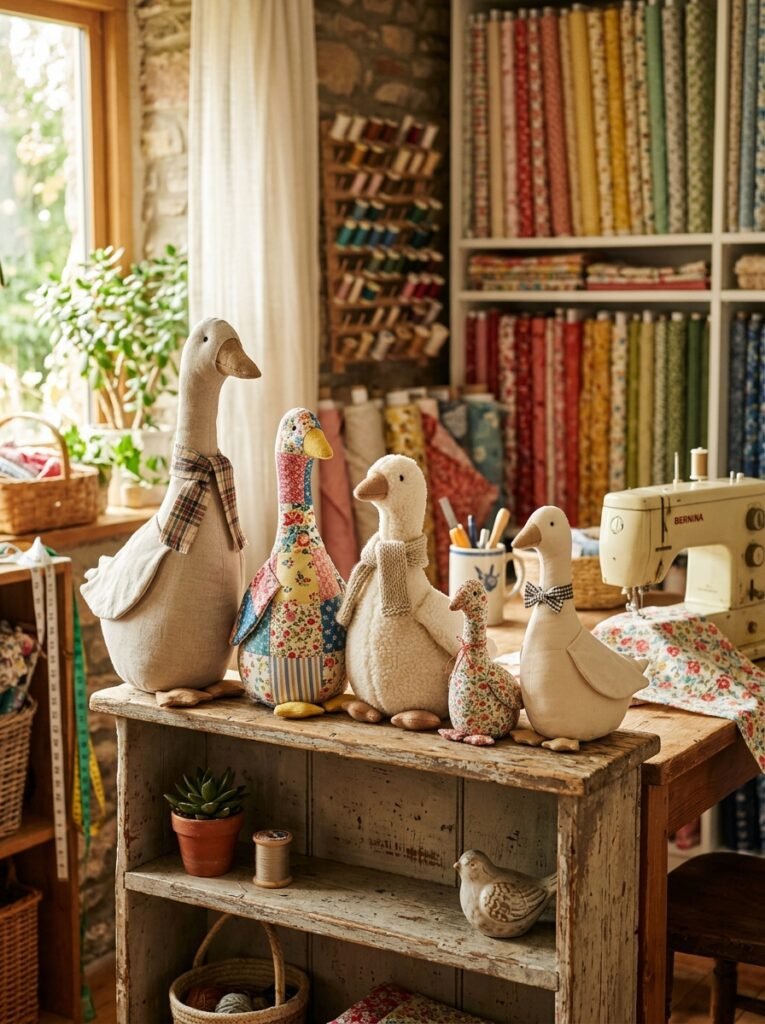
Once you finish one goose, making a small family becomes fun. Create different sizes and change their fabrics, accessories, and expressions. You might make one tiny goose for a shelf, one medium version for a table, and one large piece for a covered porch. The Sewing & Craft Alliance offers free toy and plush projects, along with quilting and children’s sewing resources, which can provide useful inspiration for expanding a handmade collection.
Choosing Fabric for a Goose Sewing Pattern Free Project
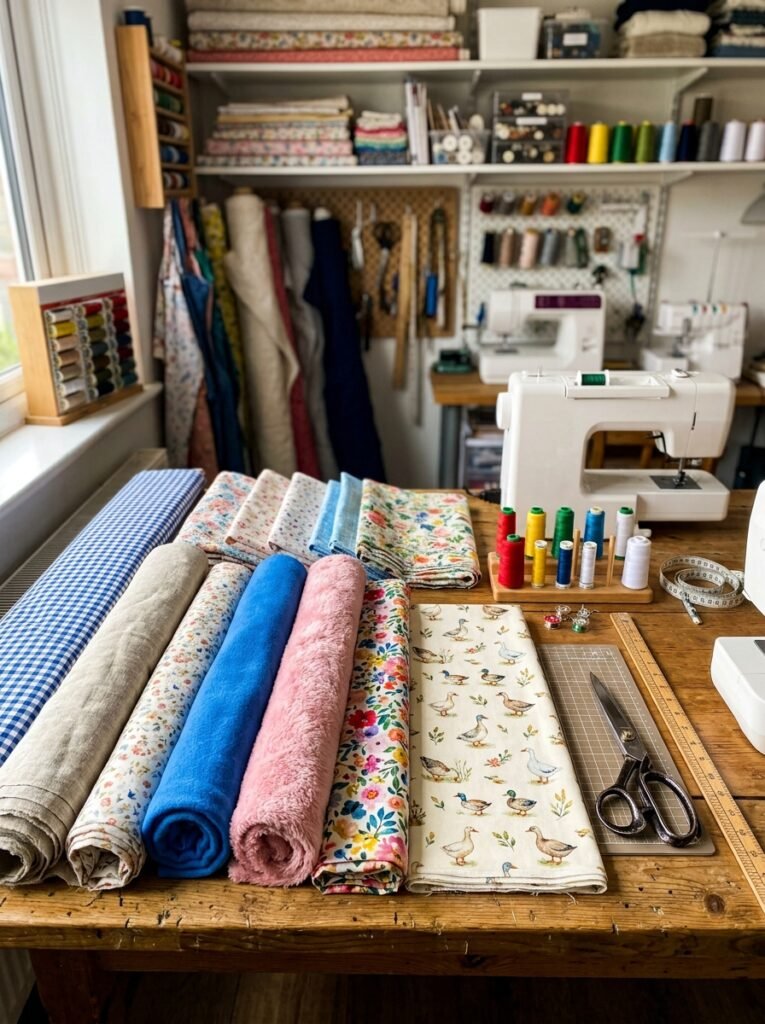
Fabric controls the final personality of your goose. Cotton gives you crisp shapes and easy handling. Flannel creates a softer appearance, while fleece and microfiber plush create a cuddly result. If you choose plush fabric, pay attention to its nap and stretch. Sewing & Craft Alliance recommends keeping the nap direction consistent across pattern pieces because different directions can change the appearance of the fabric. It also recommends securing plush layers well because they can shift during sewing. For your first project, avoid very slippery or highly stretchy fabric. A stable woven fabric makes it easier to learn accurate cutting and stitching.
Sewing and Stuffing Tips
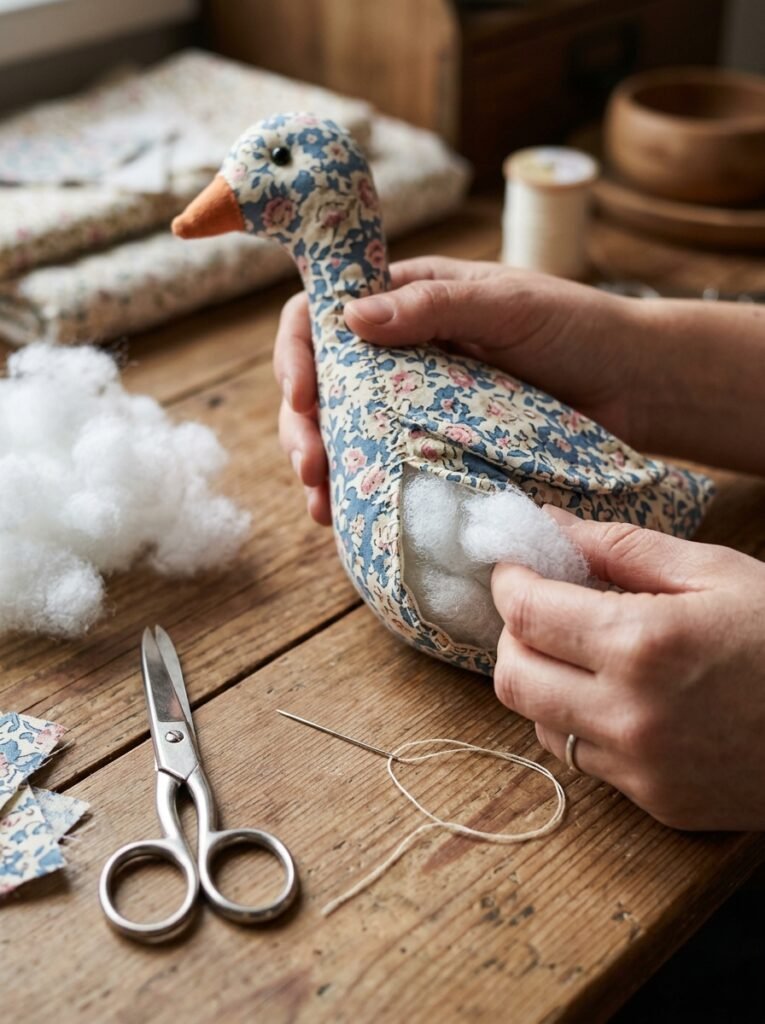
Before starting the final project, sew a small test seam. Check your stitch length, thread tension, seam allowance, and fabric behavior. This simple step can prevent frustrating problems later. When stuffing the goose, add small amounts at a time. Push the filling into the neck, wings, and corners before adding more to the body. For closing the opening, a slip stitch works well for stuffed projects; Sewing & Craft Alliance lists the slip stitch as a suitable method for closing seams on stuffed animals and pillows.
Making Your Goose Look Professional
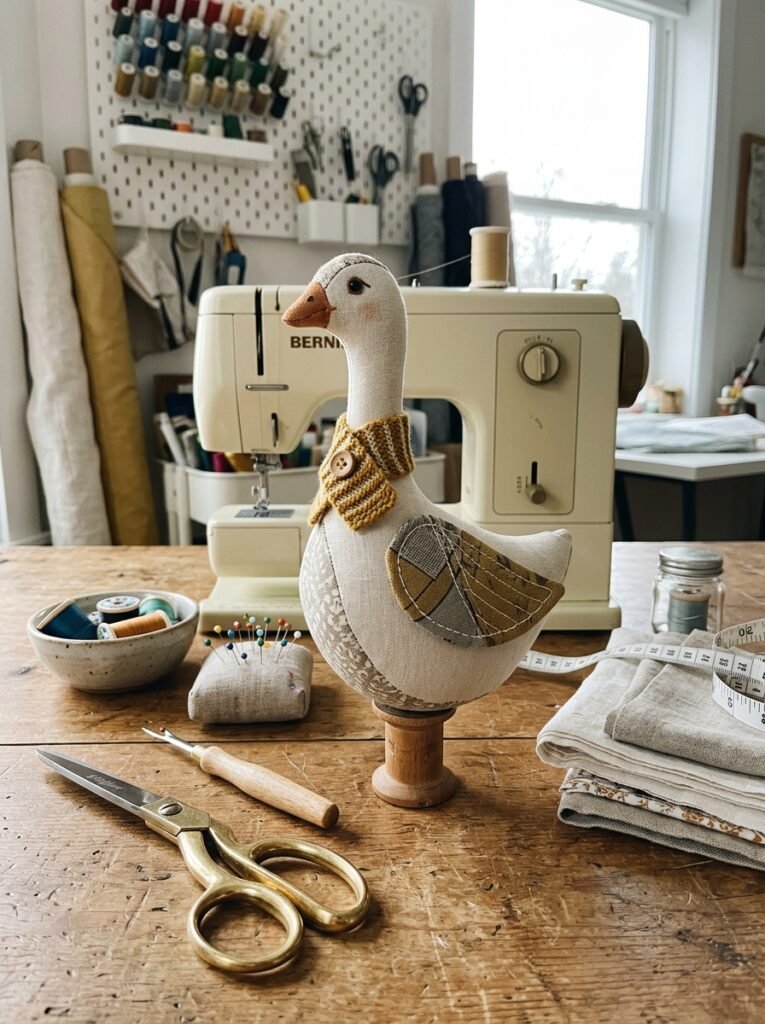
Small finishing details can transform the result. Press fabric before cutting. Mark important points clearly. Keep seam allowances consistent. Trim bulky seams carefully around curves, but avoid cutting through the stitching. You can also personalize the project with embroidered eyes, fabric wings, a small bow, a scarf, or contrasting feet. If you make the goose for a young child, keep decorative elements securely attached and choose construction methods suitable for the intended age.
Final Thoughts on a Goose Sewing Pattern Free Project
A goose sewing pattern free project can start with something as simple as two fabric shapes and a handful of stuffing. Then the idea grows. You might add a scarf, change the fabric, create a patchwork body, make the goose larger, or build an entire family of characters. The important part is to choose a design that matches your current sewing skills. Beginners can start with a simple stuffed shape. More experienced sewists can experiment with plush fabric, appliqué, patchwork, or detailed accessories. Most importantly, enjoy the process. A handmade goose does not need to look factory-perfect. Its charm comes from the fact that you made it yourself.