



This post may contain affiliate links. Please read my disclosure policy.
In This Article Show
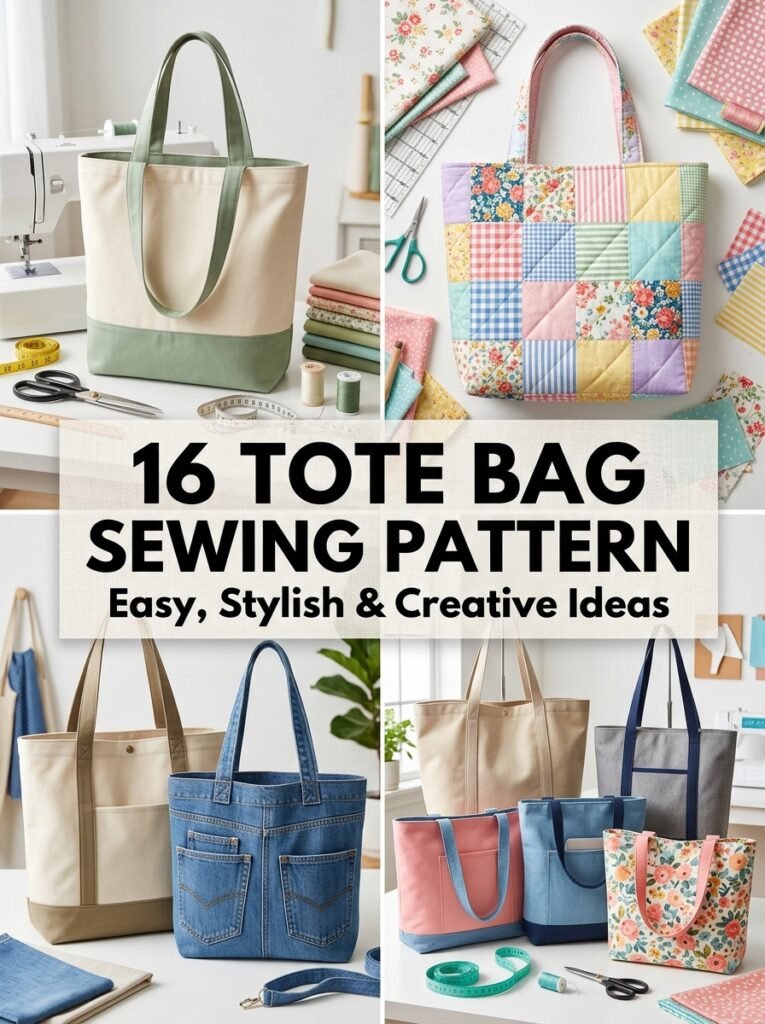
There is something special about making a bag with your own hands. You choose the fabric, decide the size, add pockets where you need them, and finish it in a style that feels personal. A well-made tote bag sewing pattern can turn a simple piece of fabric into an everyday bag for shopping, school, work, travel, or gifts. The best part? You do not need advanced sewing skills to begin. A simple cotton or canvas bag gives beginners a chance to practice straight seams, hems, straps, corners, and topstitching. Sewing & Craft Alliance notes that straight stitching forms the foundation of many sewing projects, while testing seams on fabric scraps helps create balanced stitches.
1. Simple Everyday Tote
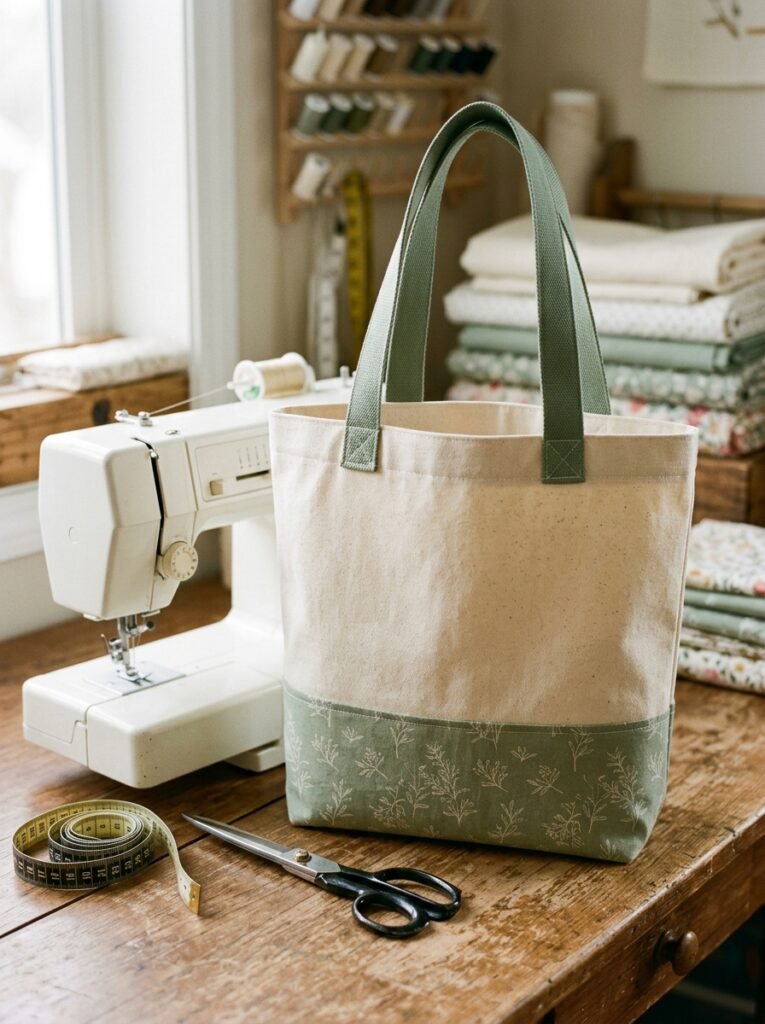
Start with a basic rectangular body and two sturdy handles. Cotton fabric works especially well for a beginner project because it cuts and sews easily. Sewing & Craft Alliance describes cotton as easy to handle and sew, while also noting that cotton fabrics can shrink, so prewashing helps before cutting. Keep the shape simple, add a clean top hem, and use medium-weight fabric. This project teaches the core skills you will use in more detailed bags later.
2. Quilted Tote Bag
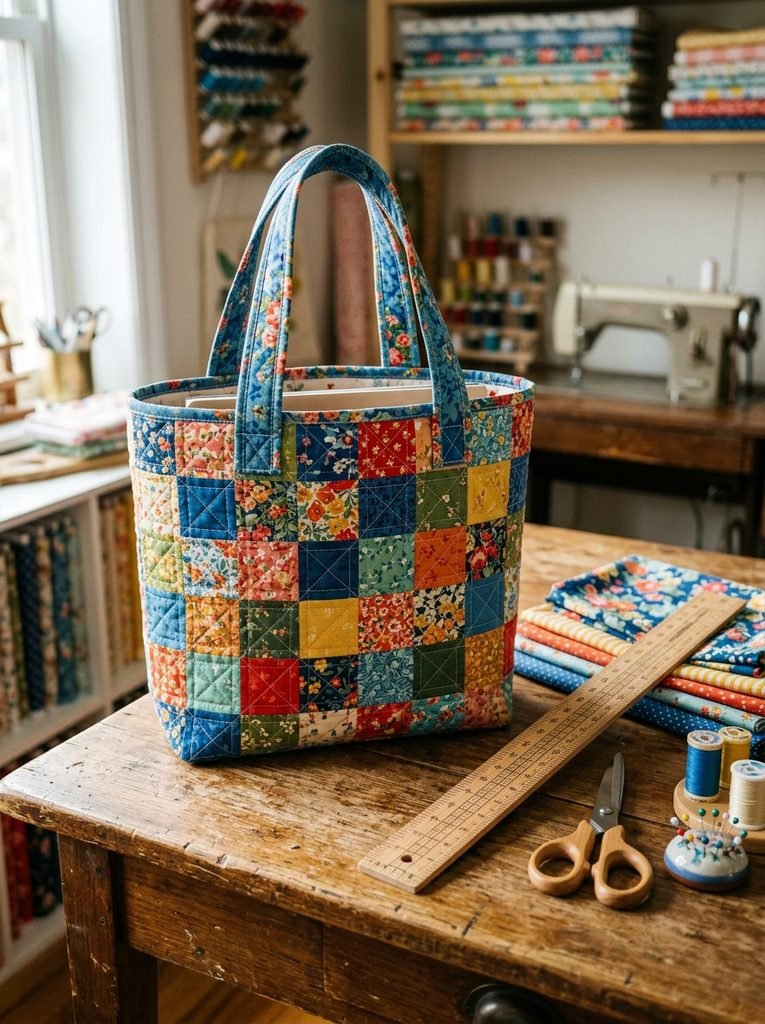
A quilted design instantly gives a basic tote more texture. Use fabric scraps to create squares, stripes, or simple geometric blocks before assembling the bag. You can also add lightweight batting between the outer fabric and lining for a softer structure. A quilted tote makes a thoughtful handmade gift because every fabric combination can create a different look.
3. Canvas Market Tote
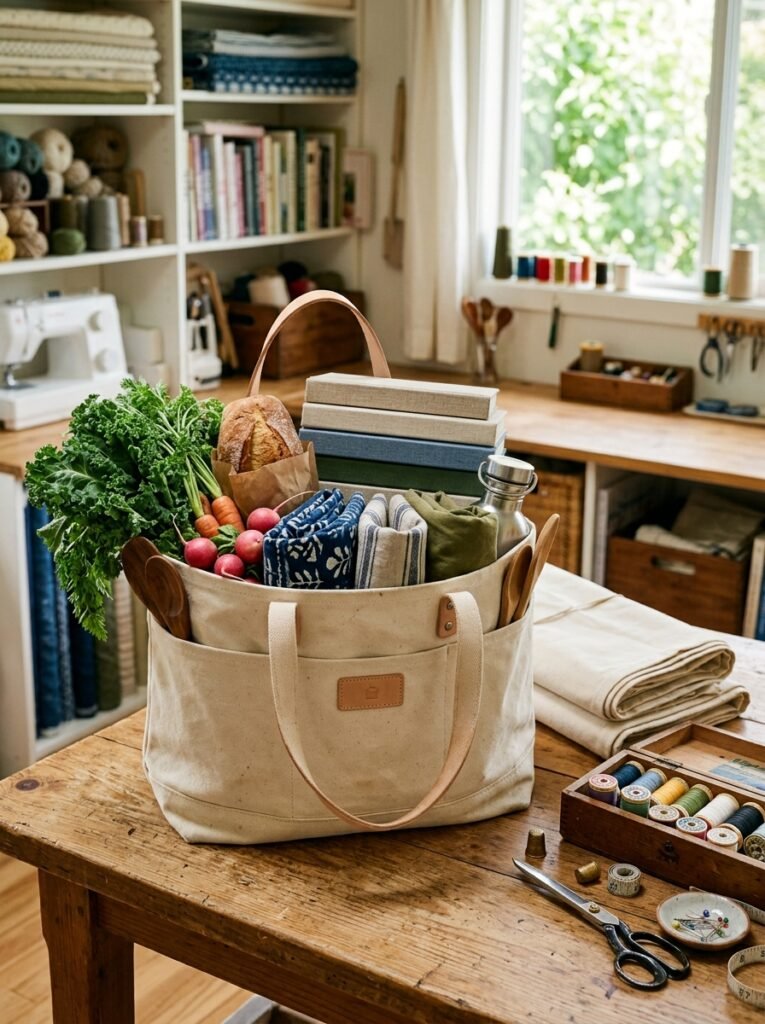
Canvas creates a sturdy bag for groceries, books, craft supplies, or everyday errands. A canvas tote does not need complicated decoration. Let the fabric provide the structure. Choose strong handles and reinforce the points where the straps meet the bag. For thick materials, test your machine settings first rather than sewing directly on the finished project.
4. Tote With Large Pockets
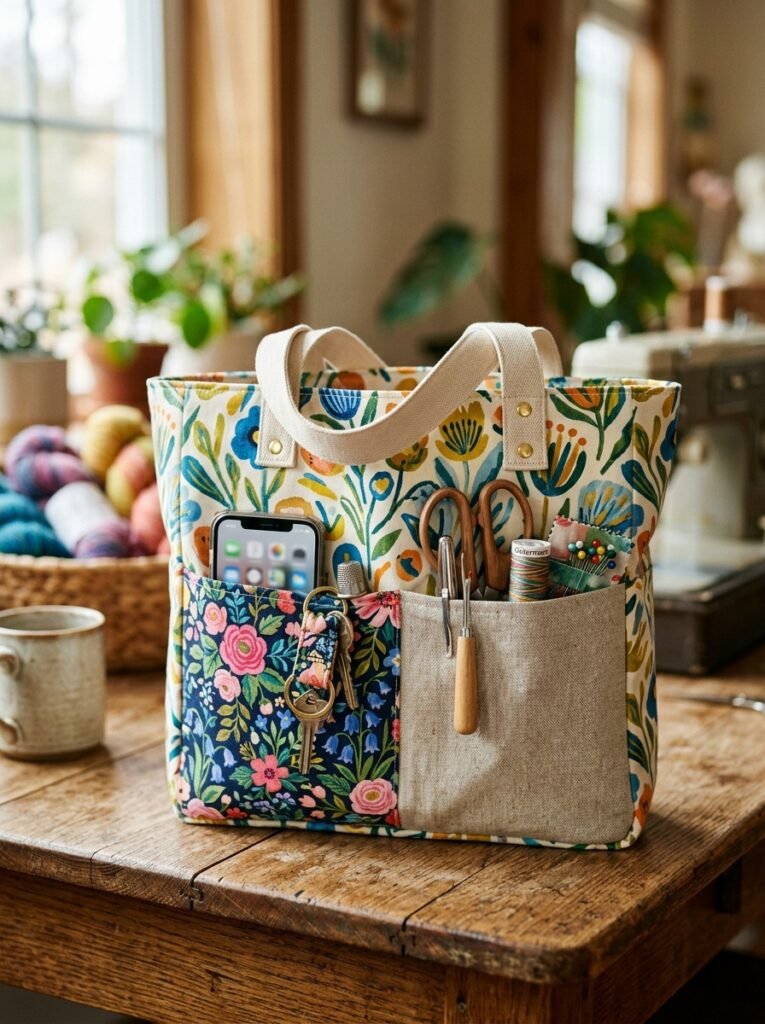
A bag becomes much more useful when you can quickly find your phone, keys, wallet, or measuring tape. Add one large outside pocket or divide it into smaller sections. Pockets also give you an opportunity to use contrasting fabric. A plain tote can become much more stylish with a floral pocket, denim accent, or colorful lining.
5. Boxy Tote With a Flat Bottom
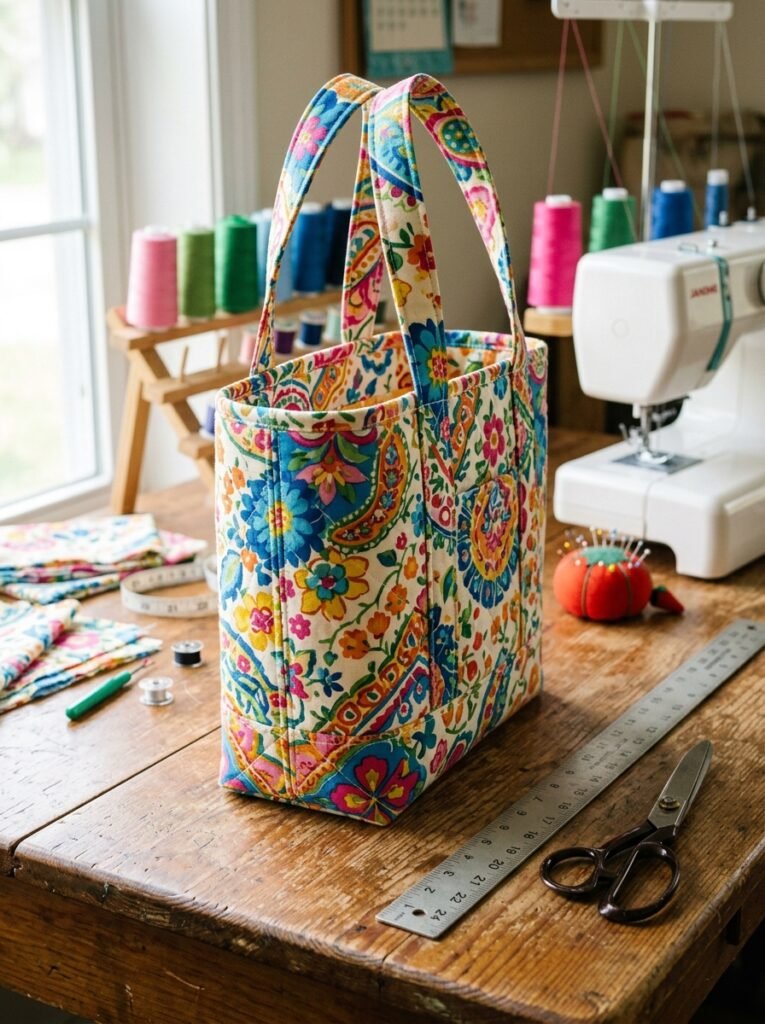
A flat base helps the bag stand upright instead of collapsing when you put it down. This makes a boxy design useful for lunch, craft supplies, groceries, or larger everyday items. The construction may involve extra corner seams, but the result feels more structured. Take your time at each corner and keep the seam allowance consistent.
6. Patchwork Fabric Tote
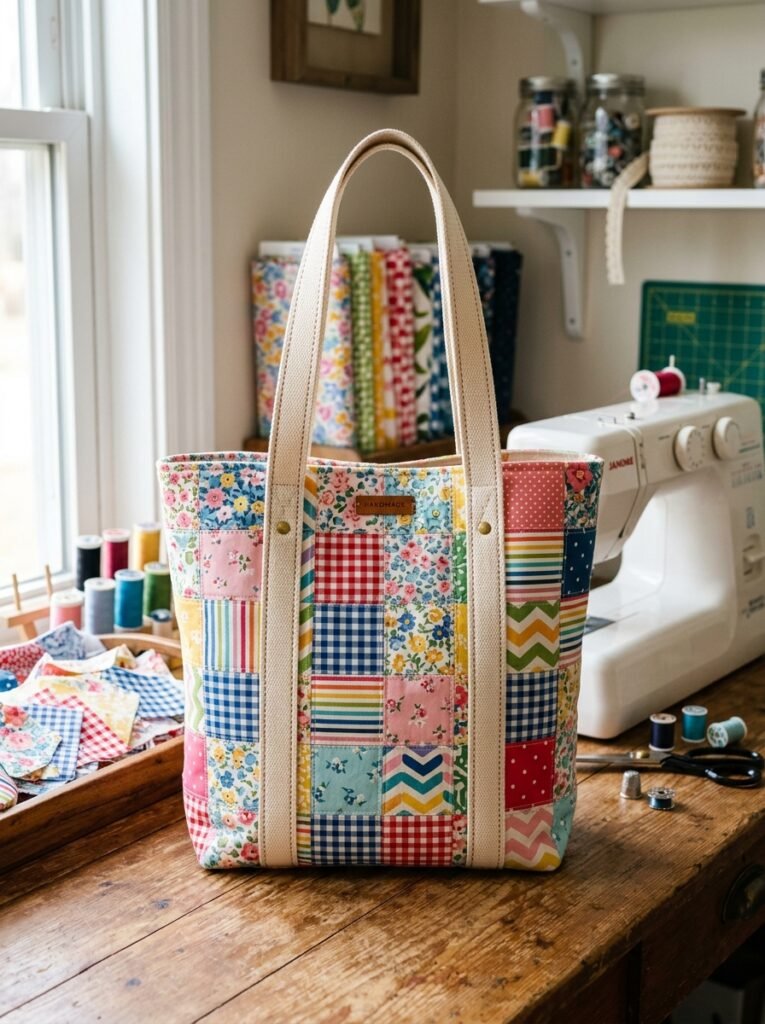
Do not throw away your favorite fabric leftovers. Combine them into a patchwork tote. You can arrange small squares, rectangles, strips, or mismatched prints into a balanced design. This style works particularly well when you have ideas for fabric and patterns but cannot decide which one to use. Let the different fabrics become part of the design.
7. Reversible Tote
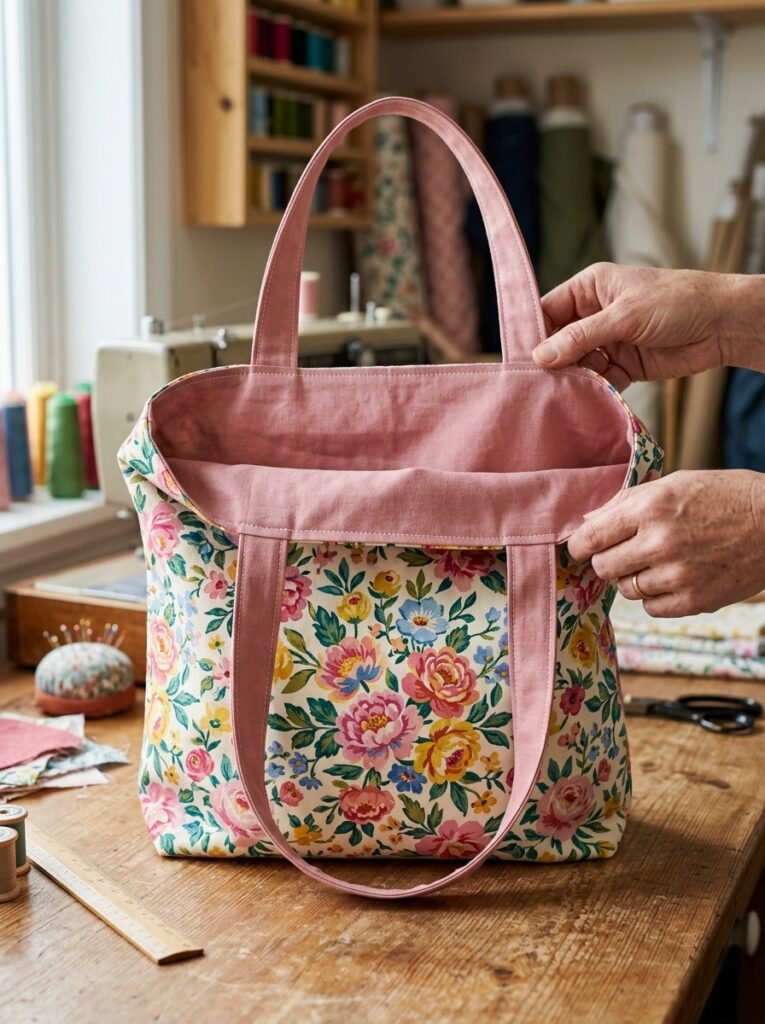
Why make one look when you can make two? A reversible tote uses two coordinated fabrics and gives you a different side to show whenever you want. Choose one patterned side and one solid side for an easy combination. Pay attention to the order of construction so the seams remain hidden and the bag turns neatly.
8. Slouchy Everyday Bag
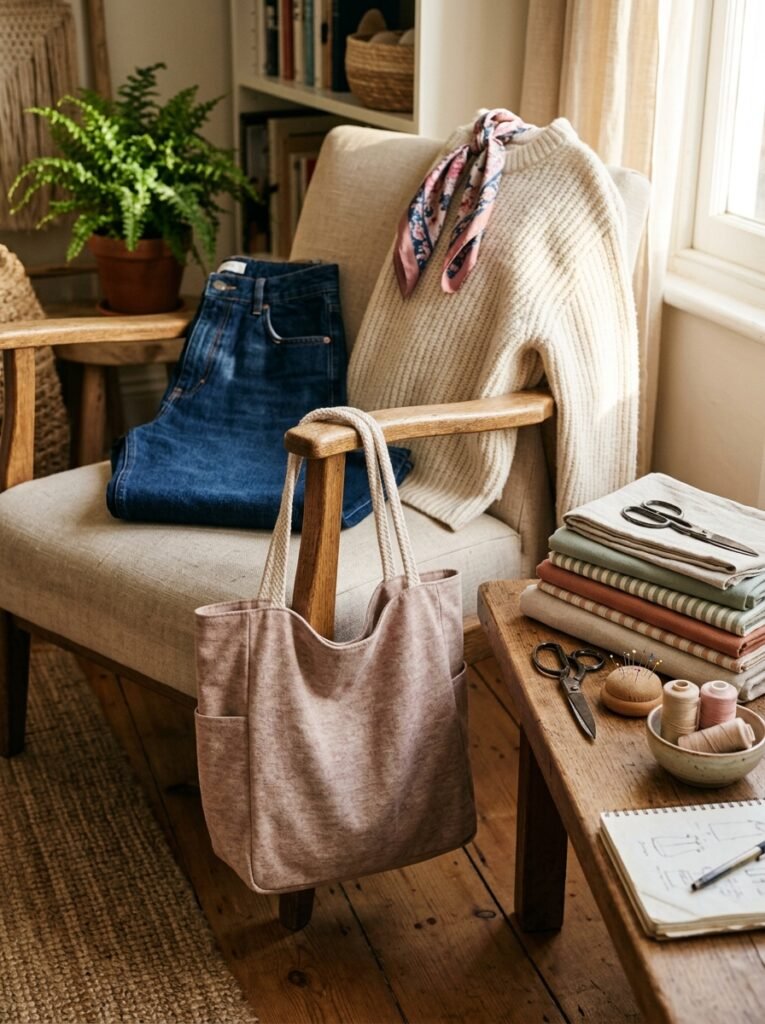
A slouchy tote creates a softer, relaxed look. Use fabric with enough body to hold its shape while still allowing the bag to fold naturally. This style works well with casual outfits. Add longer handles so the bag can sit comfortably over your shoulder.
9. Foldable Shopping Tote
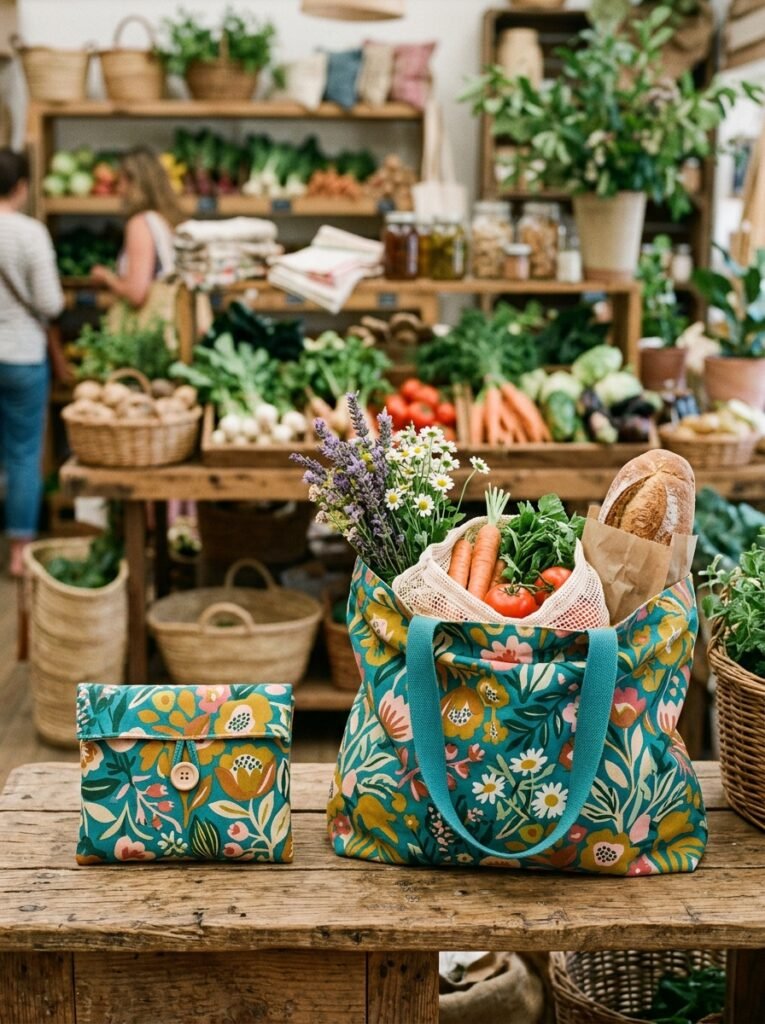
A foldable tote is practical because you can keep it inside another bag until you need it. Choose lightweight cotton and avoid bulky details. Add a small attached strap, button, or fabric tie so the folded bag stays compact. It is also an excellent project for using fabric you already have.
10. Ruffle Tote
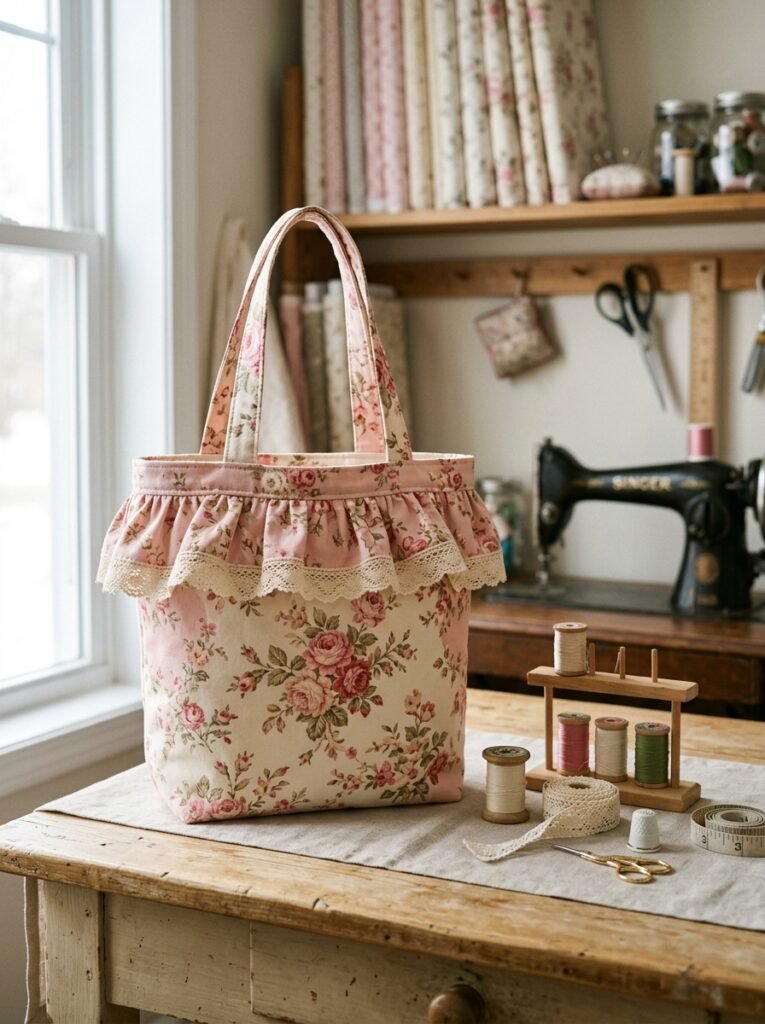
A ruffle detail can completely change the personality of a plain bag. Add one narrow gathered strip around the upper section, pocket, or handle area. Keep the rest of the design clean. The ruffle should become the feature rather than competing with several other decorations.
11. Denim Tote From Old Jeans
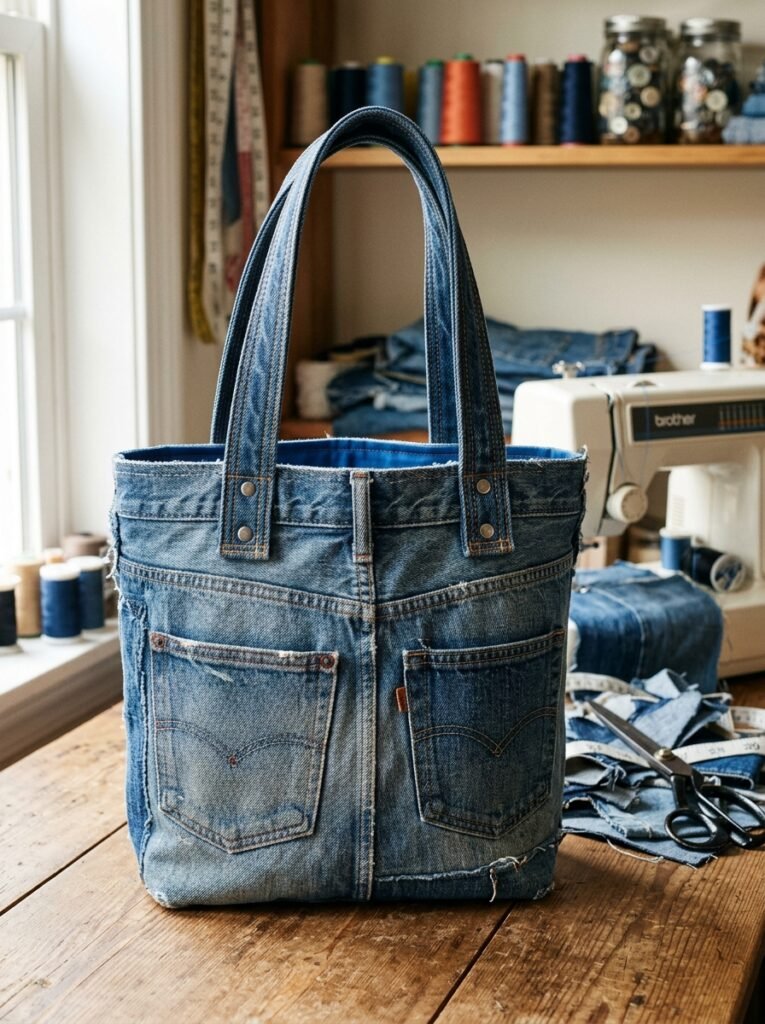
Old jeans can become a surprisingly useful bag. Reuse the denim panels, pockets, waistband, or belt loops to create something new. A denim tote looks casual and strong, while existing jean pockets can become functional exterior storage. Sewing & Craft Alliance also provides denim-focused sewing guidance and projects, showing how denim can become useful handmade items.
12. Laptop Tote
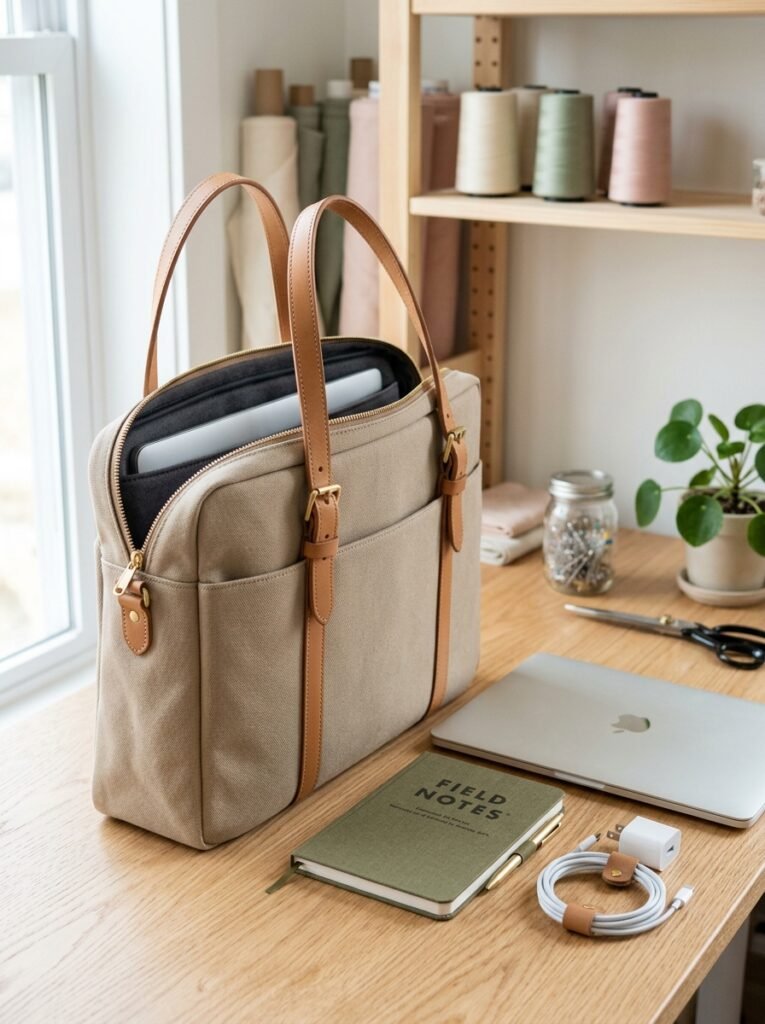
A larger tote can become a practical laptop carrier. Add a padded inner compartment and enough width for the computer plus a notebook, charger, and small accessories. Choose a strong outer fabric and reinforce the handles. Test the bag with similar weight before relying on it for daily carrying.
13. Heart-Themed Tote
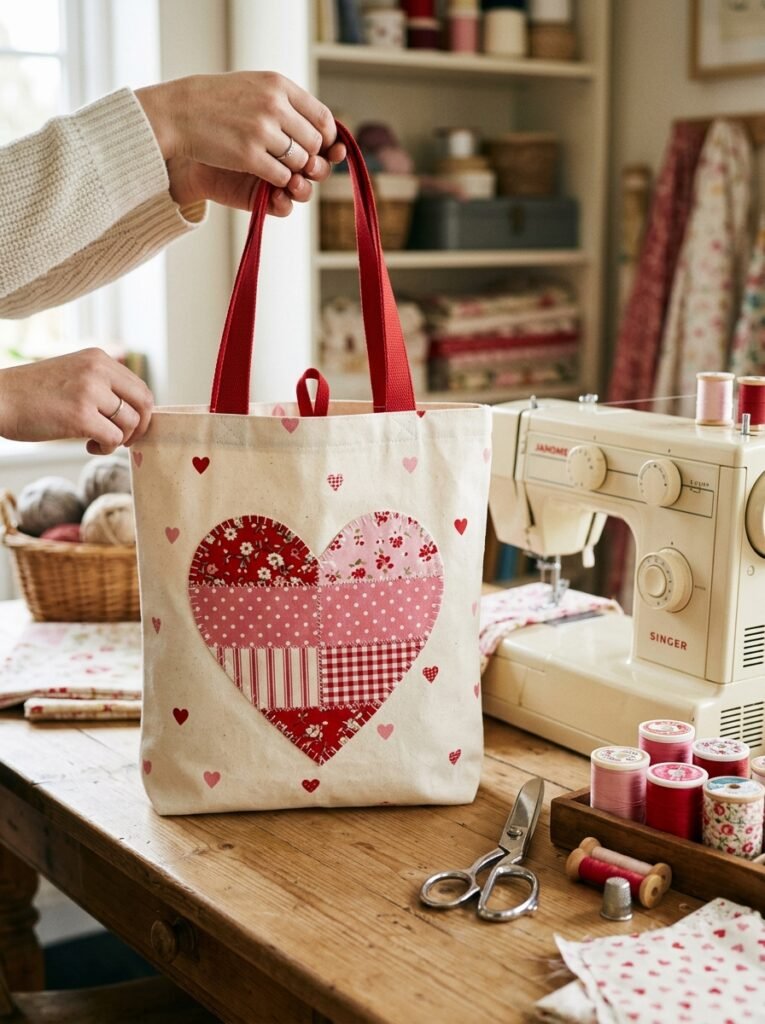
A heart design works beautifully for gifts, Valentine’s projects, or simply a cheerful everyday bag. You can appliqué one large heart onto the front or create several small hearts from contrasting fabric. Keep the background neutral so the heart remains the main visual detail.
14. Crossbody Tote-Style Bag
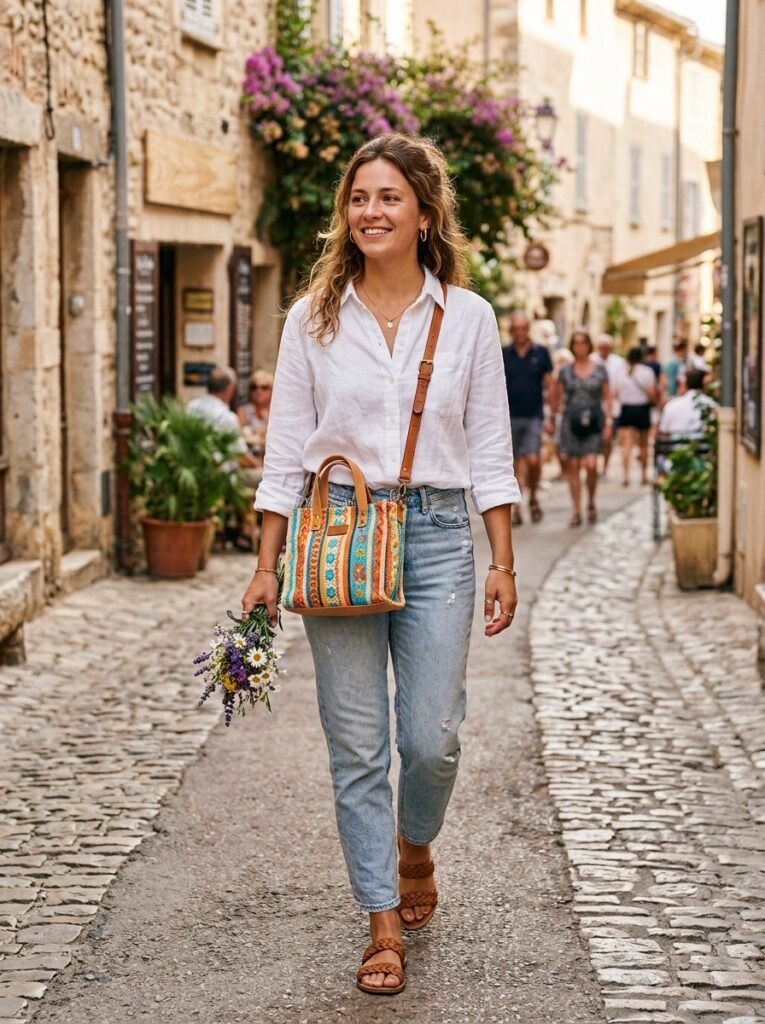
If you want something smaller, adapt the tote concept into a crossbody design. Reduce the width, add a long adjustable strap, and include a secure top closure. This design sits between a tote and a small shoulder bag. It works well for quick trips when you only need your phone, wallet, keys, and a few essentials.
15. Oversized Beach or Travel Tote
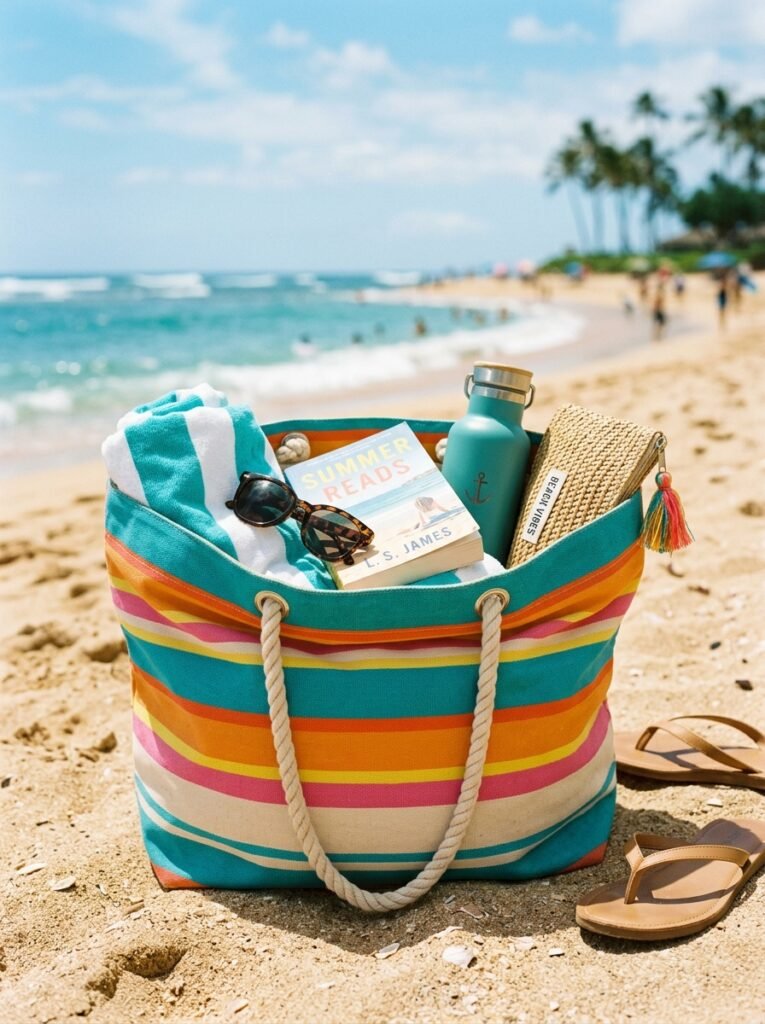
Sometimes bigger really is more useful. An oversized tote can carry towels, clothing, books, a water bottle, or sewing projects. Choose a durable fabric and make the handles wide enough to feel comfortable. Add an inner pocket for small items so the large interior does not become a black hole.
16. Cute Floral or Patterned Tote
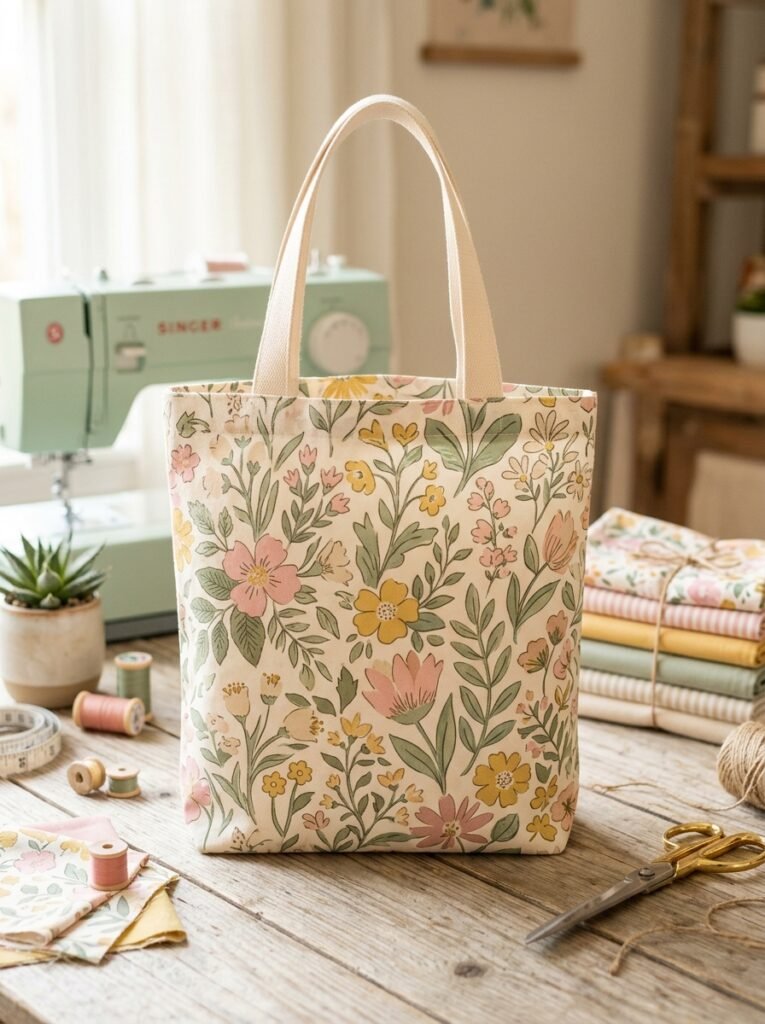
Finish your collection with a cute printed tote. Floral cotton, small animals, gingham, fruit prints, or soft geometric patterns can give a simple shape plenty of personality. This is also a good choice when searching for free ideas online because you can keep the construction basic while changing only the fabric and finishing details.
Choosing Fabric for a Tote Bag Sewing Pattern
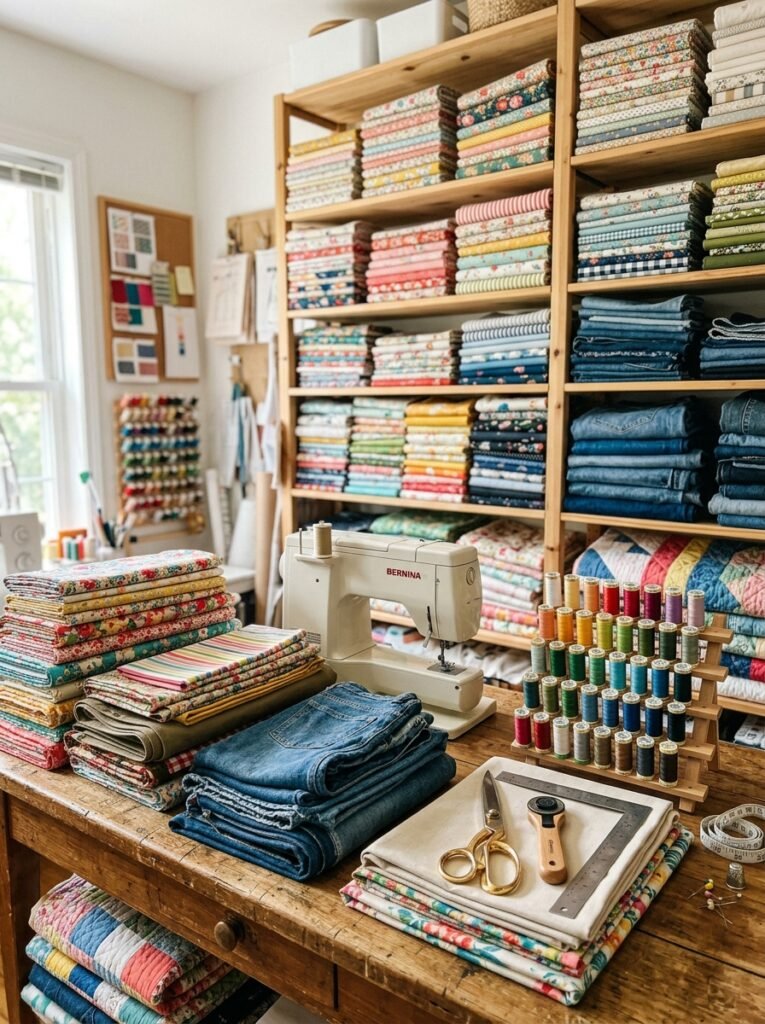
Fabric choice changes the finished bag more than many beginners expect. Lightweight cotton creates a soft casual tote, while canvas gives more structure. Denim adds strength and character, while quilted fabric creates a padded handmade appearance. If you use cotton, prewash it before cutting because cotton can shrink. Sewing & Craft Alliance specifically recommends prewashing cotton before sewing to reduce problems caused by shrinkage.
Sewing Tips for a Clean Finish
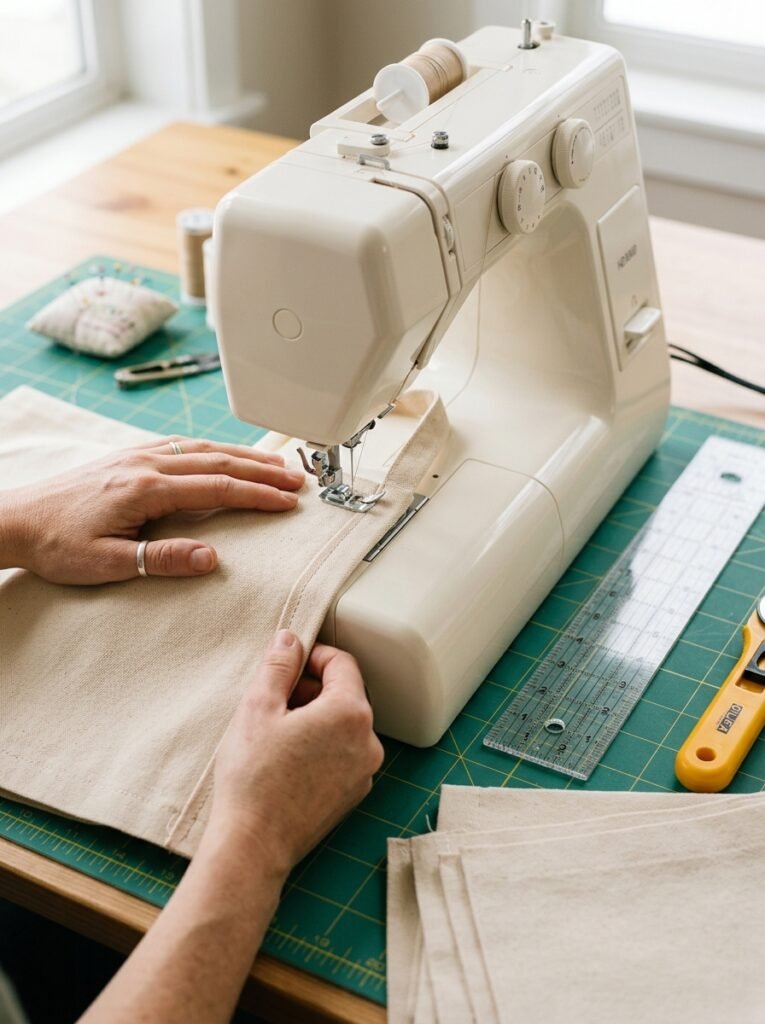
Before sewing the final bag, make a small test seam using the same fabric layers. Sewing & Craft Alliance recommends testing seams and checking both sides of the stitching so you can adjust thread tension when needed. Use the correct needle for your fabric, keep your seam allowance consistent, and backstitch at the beginning and end of important seams. A good press after each major construction step can also make the final bag look much cleaner. If you plan to work with quilting cotton, rotary cutters and clear rulers can speed up accurate cutting. Sewing & Craft Alliance notes that rotary cutters work especially well with cutting mats and clear rulers for precise fabric work.
How to Make Your Tote Look More Professional
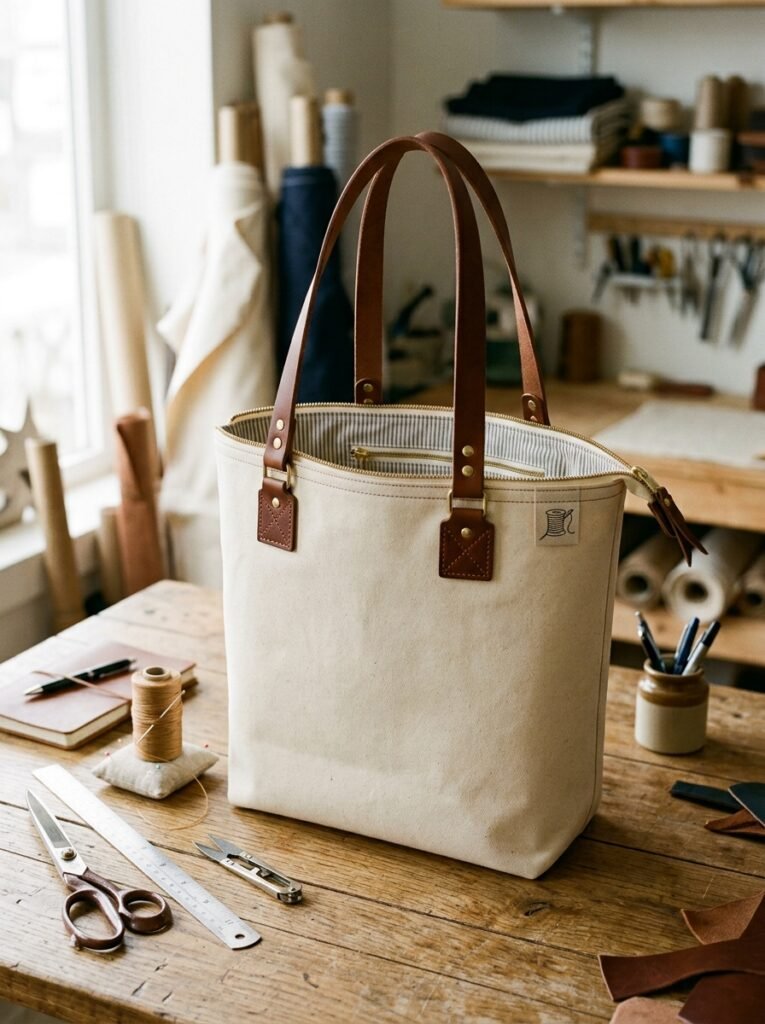
Small details make a big difference. Press the fabric as you sew. Trim loose threads. Reinforce strap attachment points. Keep topstitching straight and match your thread to the fabric unless you want the stitching to stand out. You can also add a lining, inner pocket, magnetic snap, zipper, key clip, or personalized label. Start with the basic construction first, then add details as your skills improve.
Final Thoughts on Making a Tote
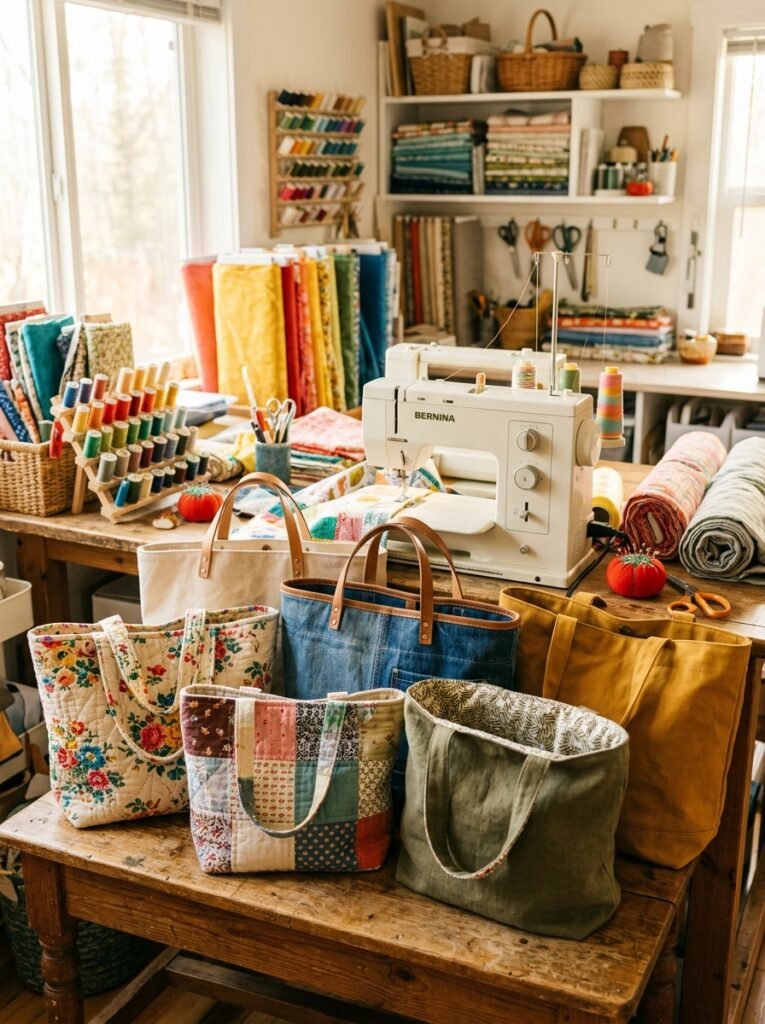
A good tote bag sewing pattern should make you feel confident rather than confused. Begin with a simple shape. Practice your seams. Then experiment with pockets, quilting, patchwork, denim, reversible construction, or a more structured base. Once you finish your first bag, you may notice something interesting. The second one becomes easier because you already understand the order of construction. Soon, you can change the size, fabric, handles, pockets, and details to create bags that fit your own needs. That is the real beauty of sewing. You are not simply following instructions. You are learning how to turn an idea into something useful.