




This post may contain affiliate links. Please read my disclosure policy.
In This Article Show
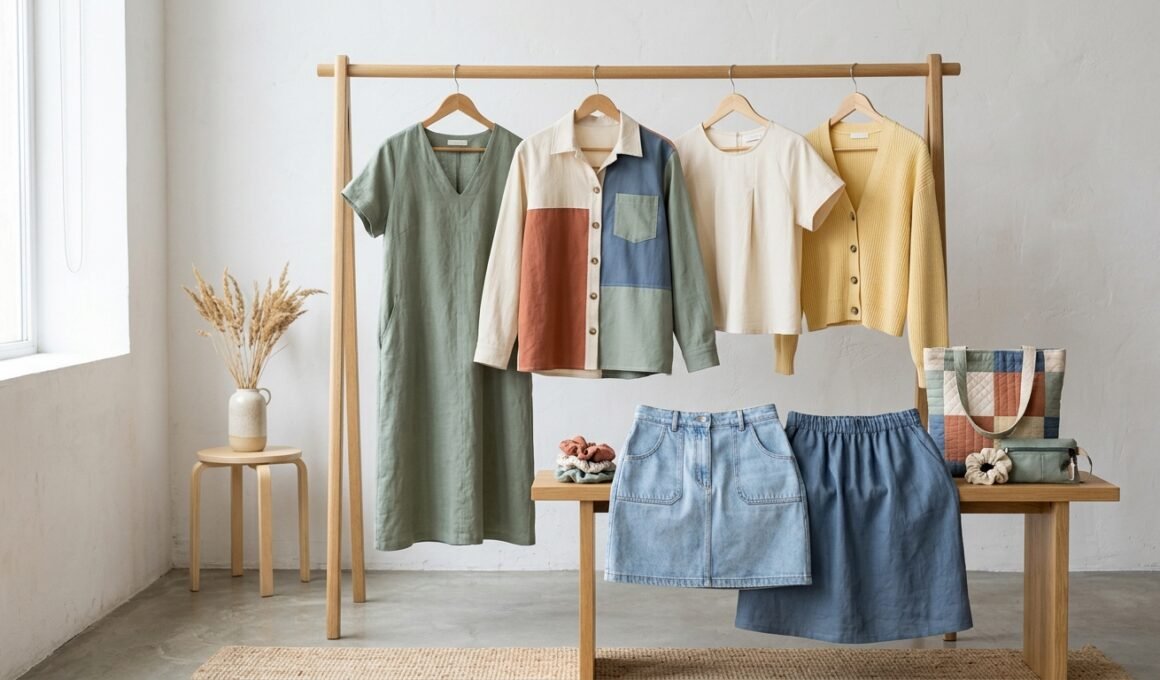
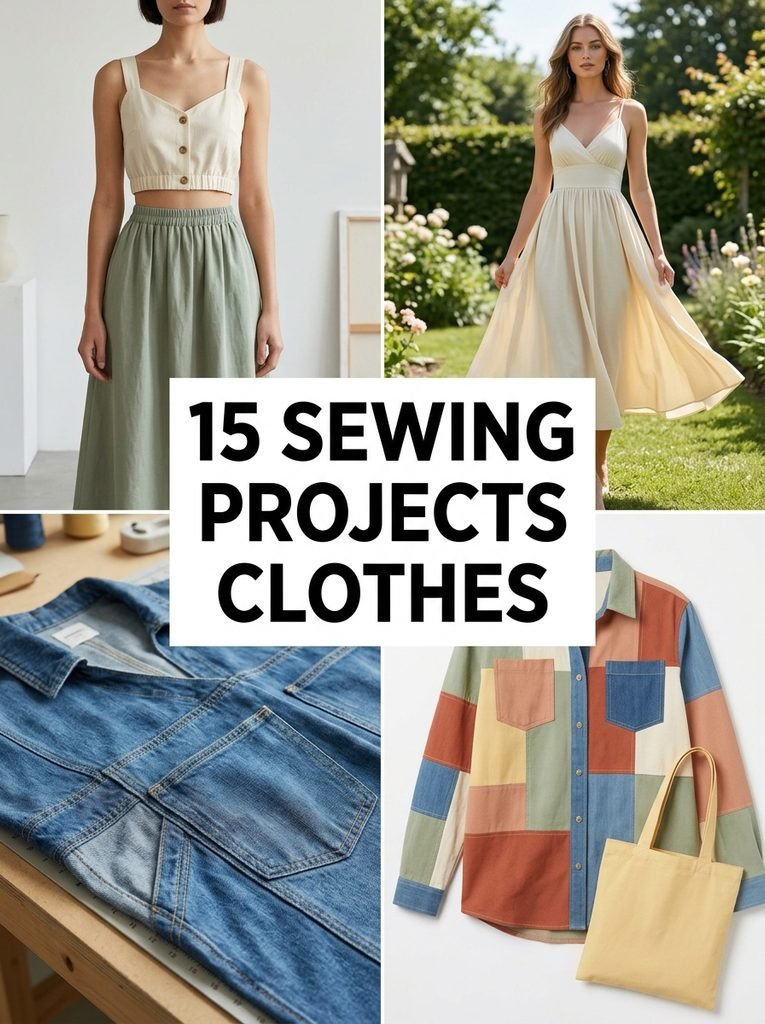
Making your own clothes can be much more rewarding than simply buying something new. You choose the fabric, shape, color, details, and fit, then turn a piece of material into something that feels completely yours. Whether you sew by machine or prefer hand sewing, there are plenty of projects that do not require advanced skills. If you are looking for sewing projects clothes, the best place to start is with simple designs that teach useful techniques while still giving you something beautiful to wear. From one-yard tops and easy skirts to denim upcycling and seasonal layers, these ideas offer a practical mix of beginner-friendly and creative projects.
1. Simple One-Yard Top
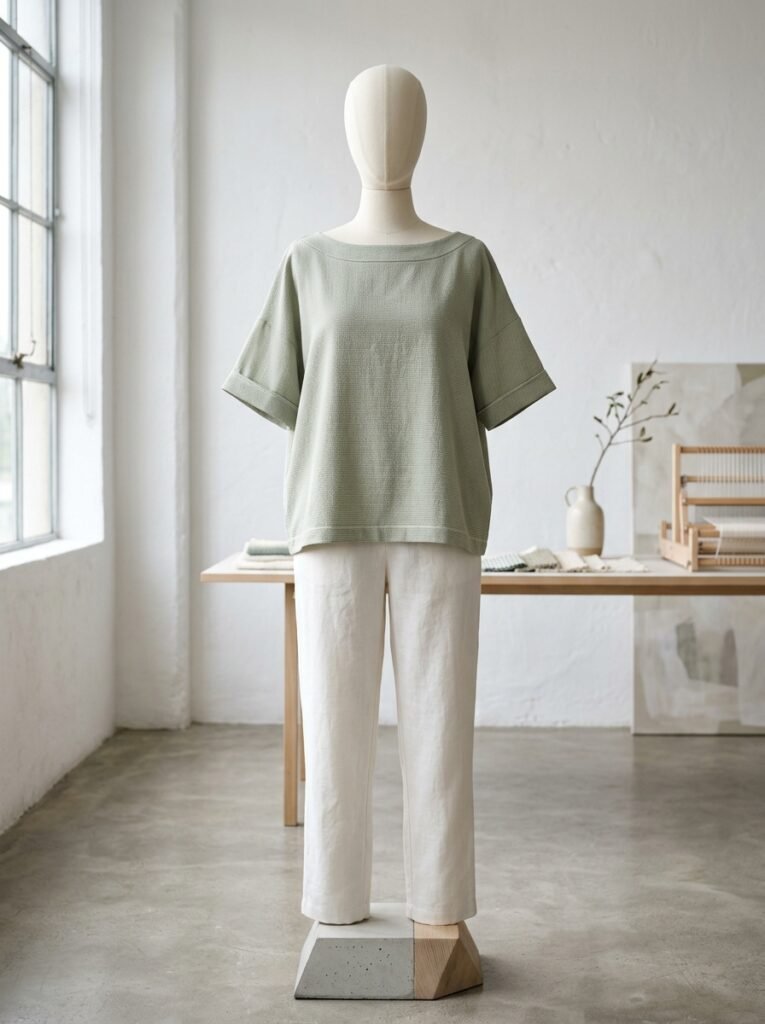
A one-yard top is an excellent starting point when you want a useful garment without dealing with a complicated pattern. Choose lightweight cotton, linen, or a soft woven fabric and create a relaxed boxy silhouette, cropped top, or simple sleeveless style. Keep the neckline and finishing clean so the fabric remains the focus. This project is especially useful for beginners because it introduces basic cutting, seam sewing, hems, and simple garment construction without requiring a large amount of fabric.
2. Easy Elastic-Waist Skirt
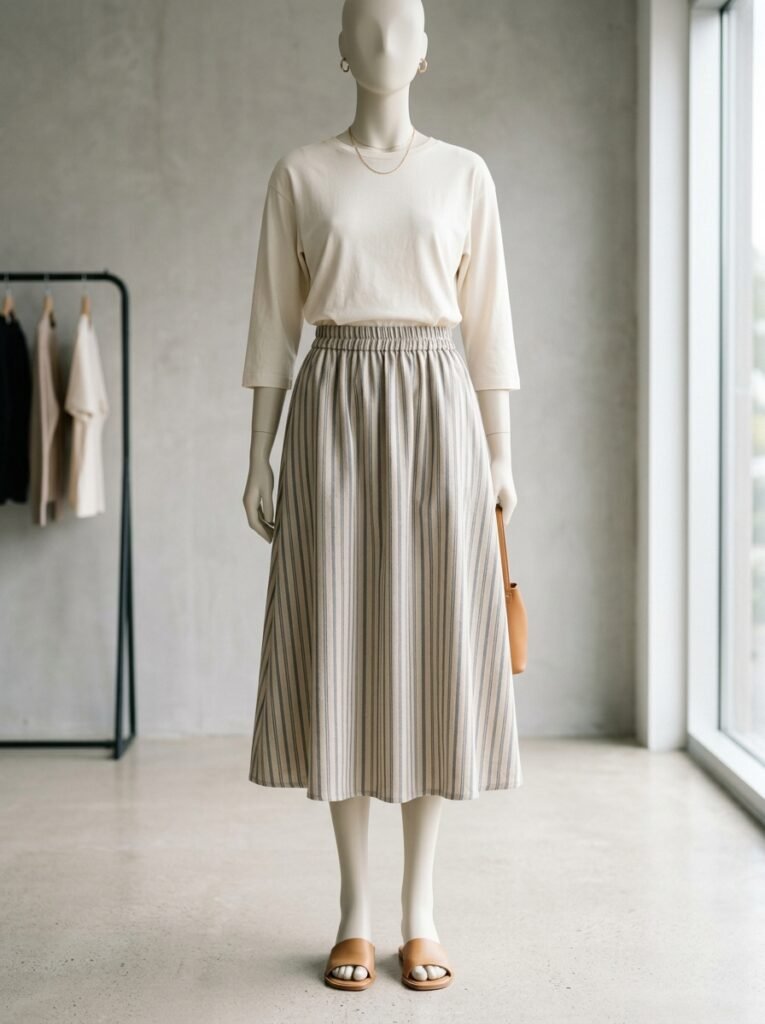
An elastic-waist skirt combines comfort with a very simple construction. You can make one in cotton, linen, rayon, or another fabric with a comfortable drape. Choose a midi length for everyday wear or a shorter version for summer outfits. The elastic waistband removes the need for a complicated zipper, making this one of the most approachable projects for a beginner. Add pockets if you want more function without changing the overall design.
3. Relaxed Summer Dress
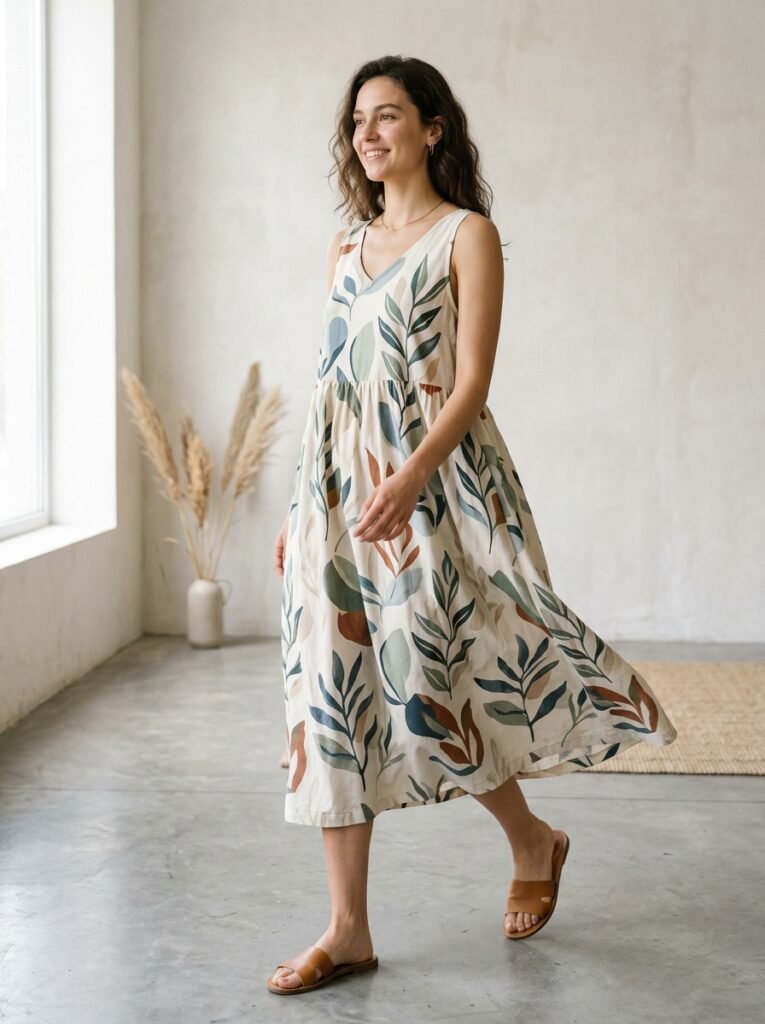
A loose summer dress is one of those garments that can quickly become a wardrobe favorite. Look for breathable cotton or linen and choose a straightforward shape with a comfortable neckline and enough room to move. A sleeveless dress is easier to construct, while short sleeves can provide more coverage. Keep the design simple and let a beautiful print or fresh solid color create the visual interest. This is also a great way to practice hems and finishing around curved edges.
4. Beginner Hand-Sewn Wrap Skirt
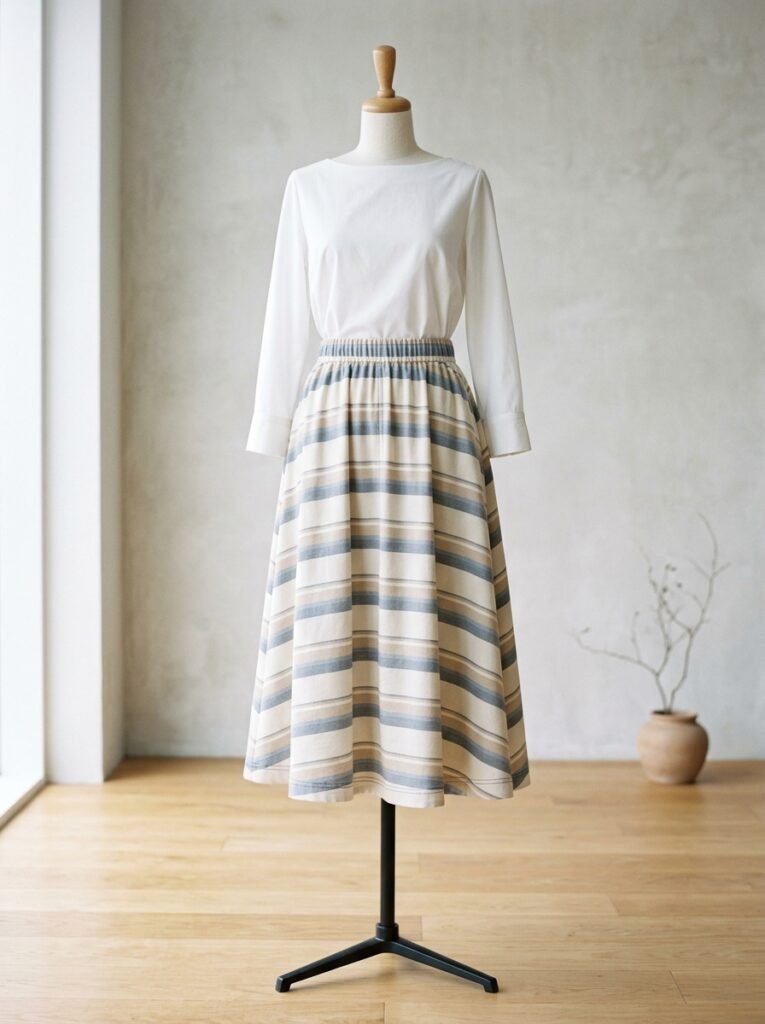
If you prefer sewing by hand, a wrap skirt can be a rewarding project because its construction is relatively straightforward and does not require a traditional fitted waistband. Use a medium-weight cotton or linen and add simple ties that allow the fit to adjust comfortably. A wrap design also gives you freedom to experiment with prints, contrast edging, or a clean monochrome finish. It is a practical project for learning accurate hand stitching while creating a useful everyday garment.
5. Oversized Cotton Shirt
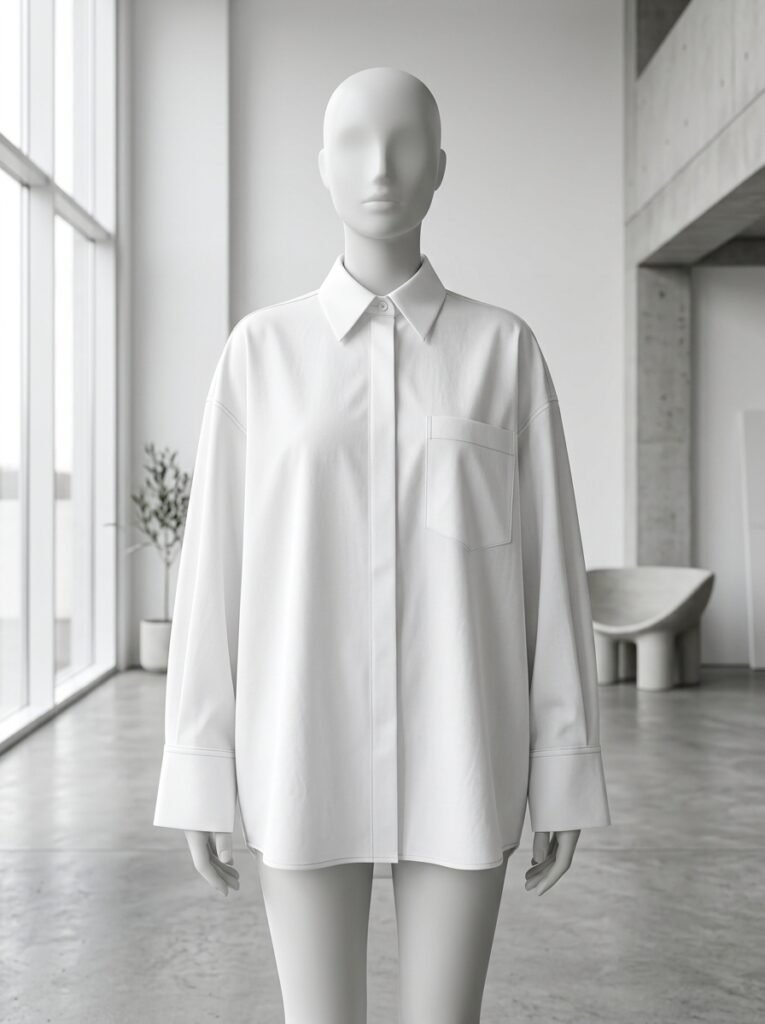
An oversized cotton shirt can look polished while remaining comfortable and versatile. Choose crisp cotton for a structured result or softer fabric for a relaxed appearance. Beginners can start with a simplified shirt design featuring a straight body and basic sleeves before attempting collars, cuffs, and button plackets. Once comfortable, you can personalize the piece with contrast buttons, a curved hem, or a small chest pocket. It works equally well with jeans, skirts, or wide-leg trousers.
6. Denim Skirt from Old Jeans
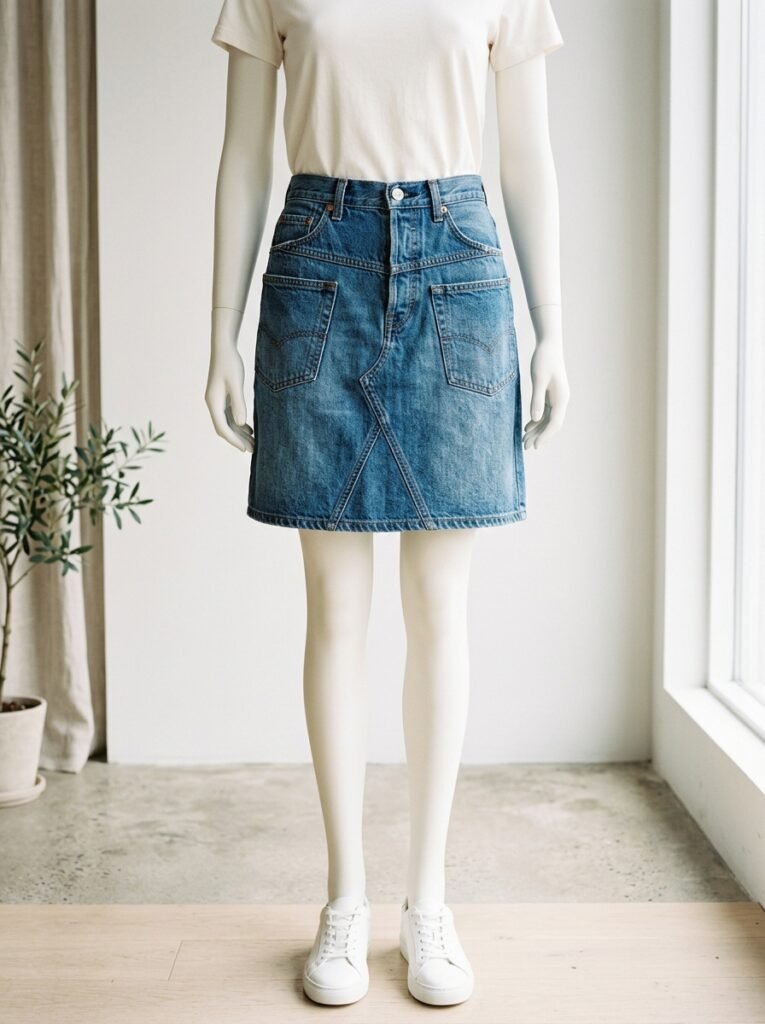
Upcycling old denim is a smart way to create a new garment while giving unwanted clothing another purpose. A pair of jeans can become a straight or slightly flared skirt, depending on the original shape and the amount of fabric available. Keep the existing waistband and pockets when possible to reduce construction work. You can leave the hem clean for a polished look or create a controlled raw edge for a more casual finish.
7. Patchwork Overshirt
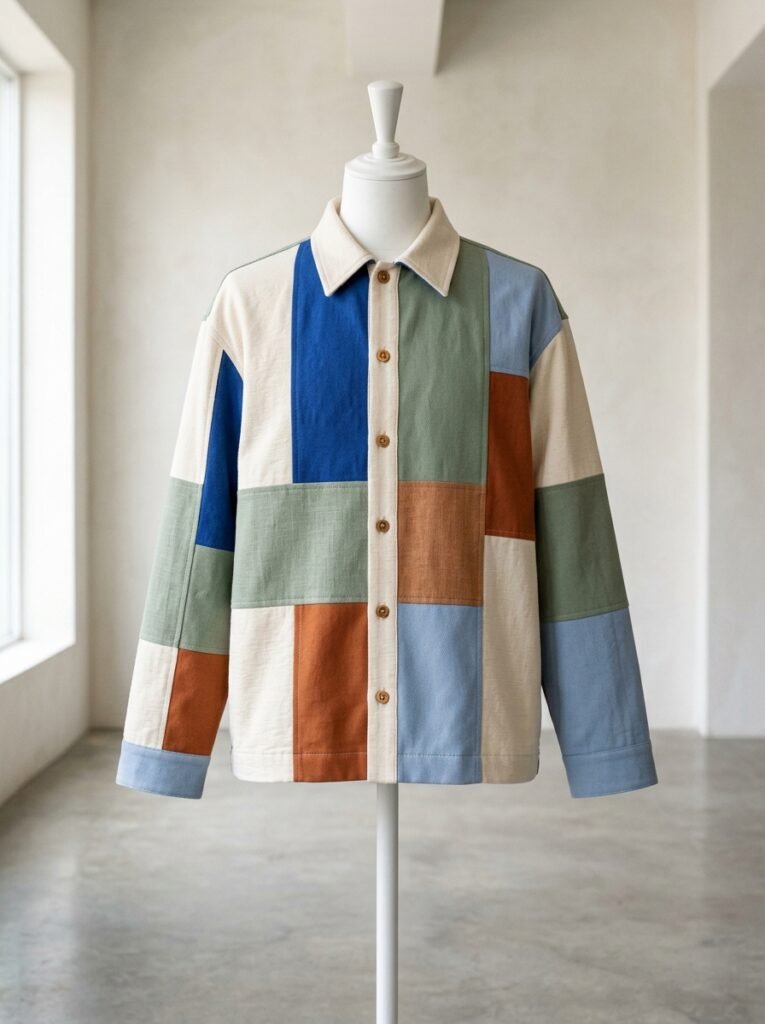
A patchwork overshirt gives you a creative way to use fabric scraps while making a statement piece. Combine coordinated cotton pieces rather than choosing completely random prints so the finished garment feels intentional. You can use geometric blocks, subtle stripes, or a mixture of solids and small patterns. Keep the base shape simple because the fabric arrangement becomes the main design feature. This project is particularly enjoyable for confident beginners who want to explore color and fabric combinations.
8. Cute Pinafore Dress
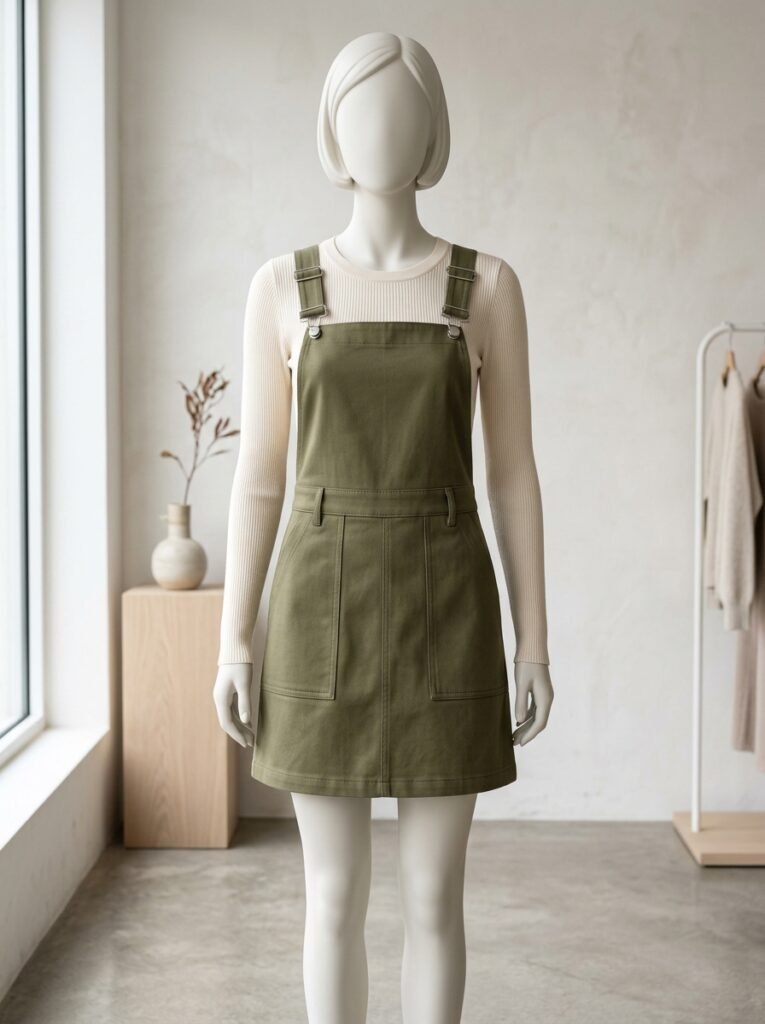
A pinafore dress can be layered over T-shirts, fitted tops, or lightweight sweaters, making it useful across several seasons. Choose denim, cotton twill, corduroy, or another fabric with enough structure to hold the shape. Keep the neckline and straps simple for an easier construction, then personalize the dress with large pockets or contrast topstitching. A neutral version works year-round, while brighter fabric makes it especially fun for spring and summer outfits.
9. Easy Kimono-Style Cover-Up
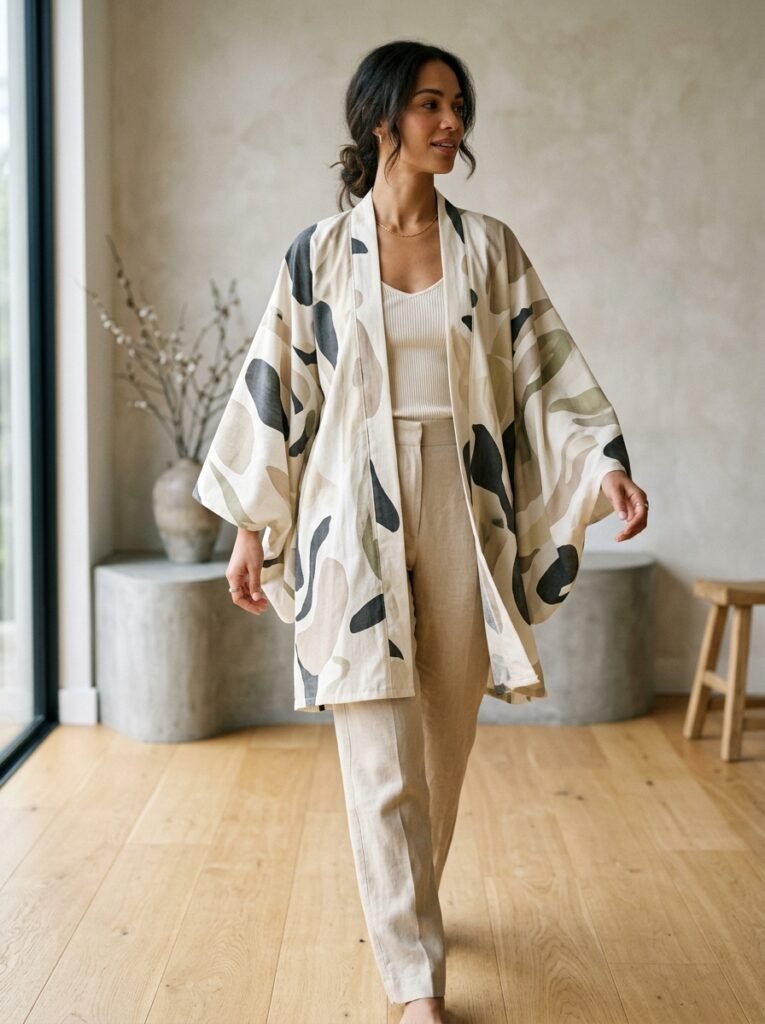
A loose kimono-style cover-up is ideal when you want a garment with minimal fitting requirements. Lightweight cotton or linen works beautifully for warm weather, while a slightly heavier fabric can turn the same concept into an autumn layer. The open front keeps construction simple, and wide sleeves add visual movement. Pair it with jeans and a basic top or use it as a beach cover-up for a practical summer wardrobe piece.
10. Cozy Winter Vest
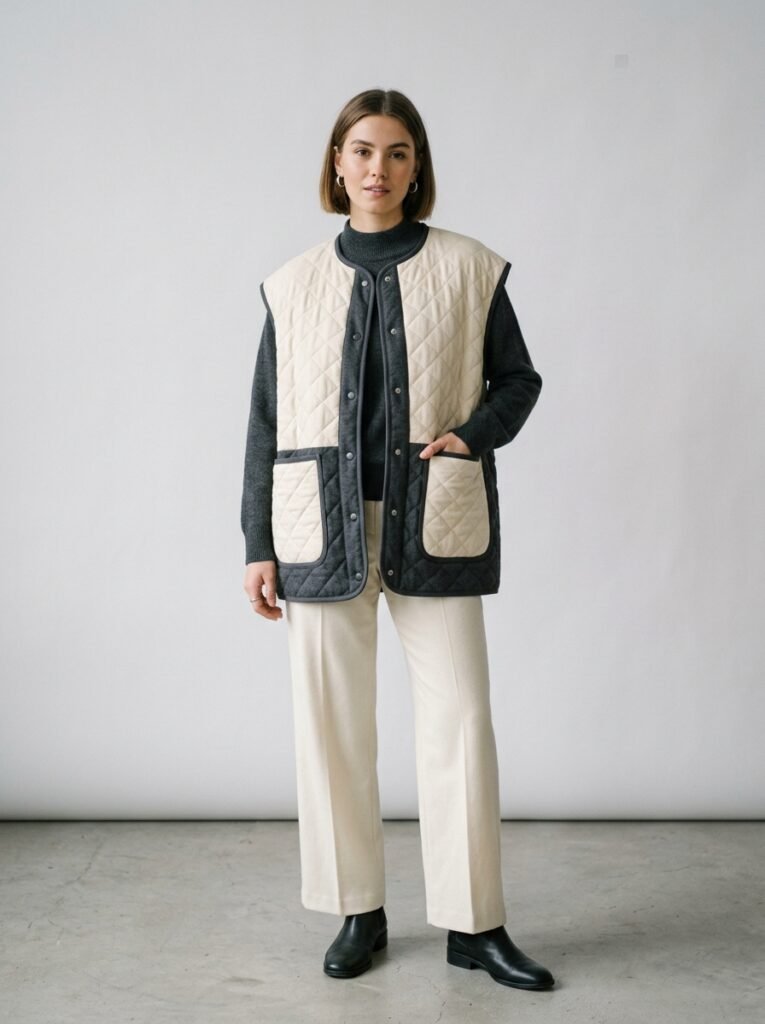
A simple vest is a useful cold-weather sewing project because it adds warmth without requiring the complexity of a full jacket. Use fleece, quilted fabric, wool-blend material, or another suitable medium-weight textile. A sleeveless design also makes fitting easier than a coat. Keep the shape slightly relaxed so it can be worn over a sweater. Add large pockets for practicality and choose a modern neutral color if you want maximum versatility.
11. Relaxed Lounge Pants
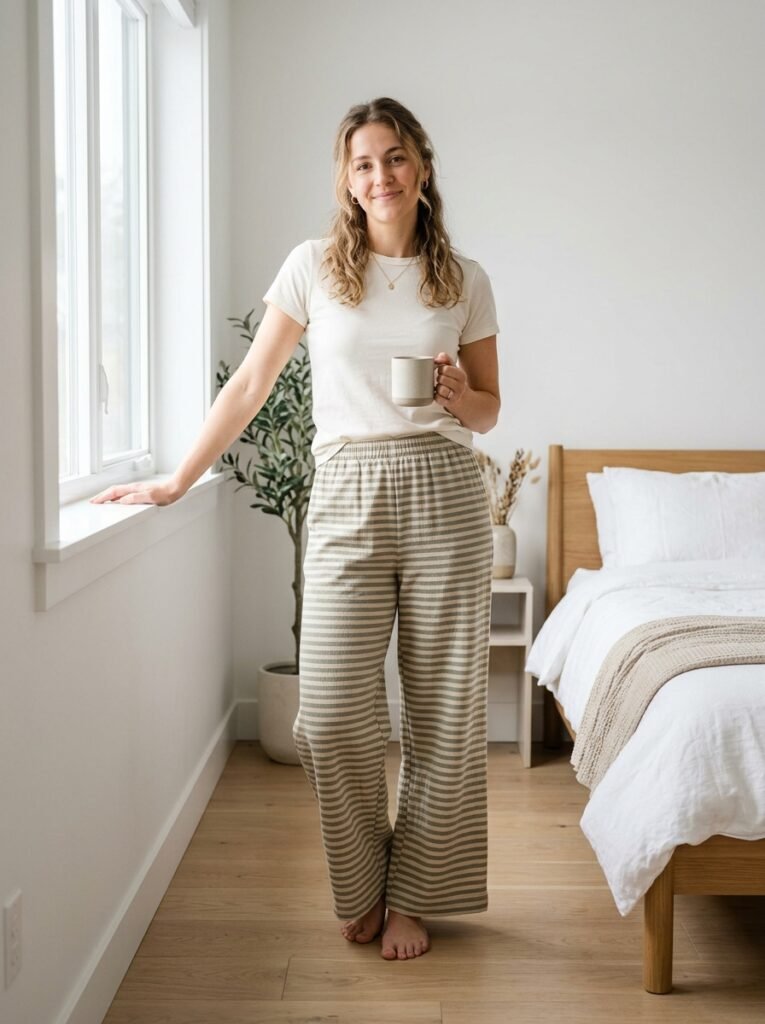
Comfortable lounge pants are among the most useful beginner garments because the fit can remain relaxed and forgiving. Choose soft cotton jersey, lightweight woven fabric, or another comfortable textile. An elastic or drawstring waist keeps the construction manageable. You can create a full-length pair for cooler months or a cropped version for summer. Once you understand the basic shape, adjusting the length and leg width becomes much easier.
12. Simple Men’s Camp Shirt
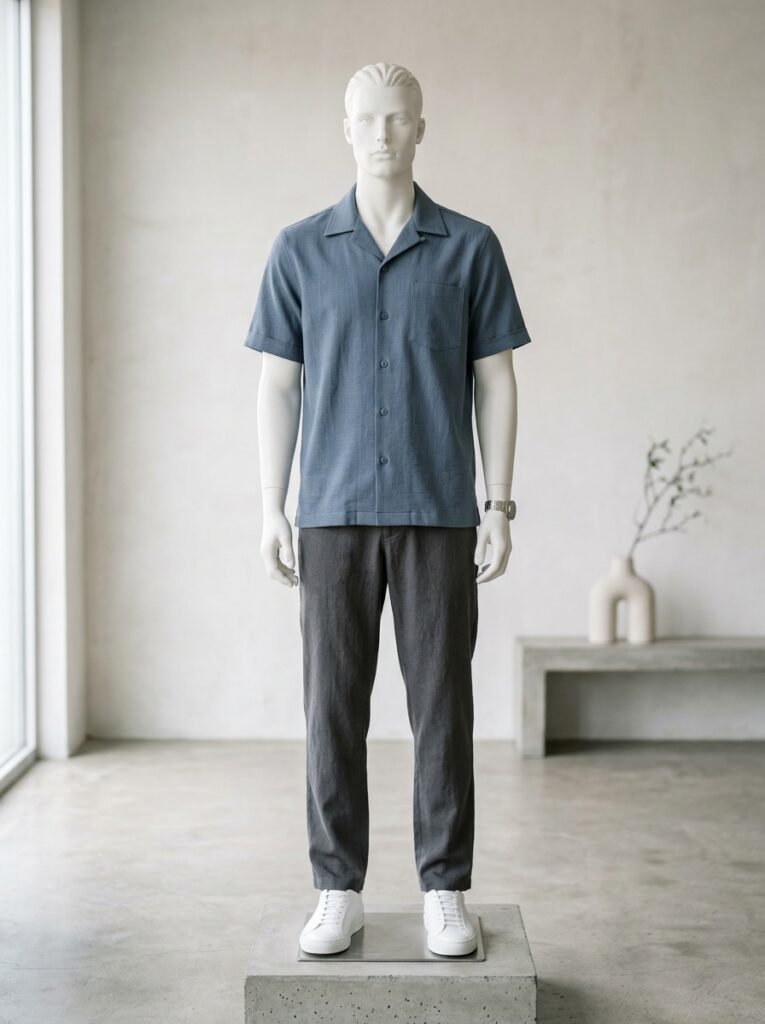
Sewing does not have to focus only on women’s clothing. A relaxed men’s camp shirt is a practical project with a clean, modern shape. Lightweight cotton or linen works especially well for summer, while darker solid colors create a more versatile wardrobe piece. Beginners can choose a simple short-sleeve design and focus on accurate seams, hems, and a neat front opening before attempting more advanced shirt details.
13. Simple Spring Blouse
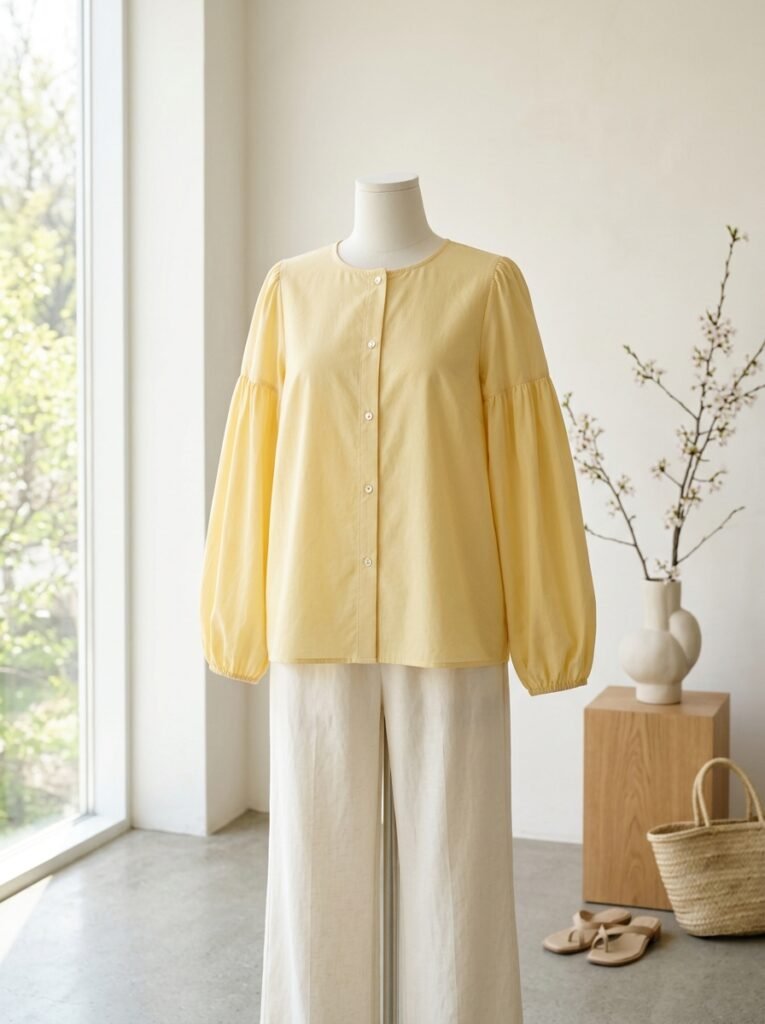
A simple blouse can introduce you to more delicate garment details without becoming overwhelming. Choose cotton lawn, lightweight linen, or another breathable woven fabric and keep the silhouette relaxed. A small gathered sleeve, simple neckline, or subtle tie can provide visual interest without requiring a complicated pattern. Soft spring shades such as pale blue, butter yellow, blush, or fresh green can make the finished piece feel light and modern.
14. Easy Autumn Tunic
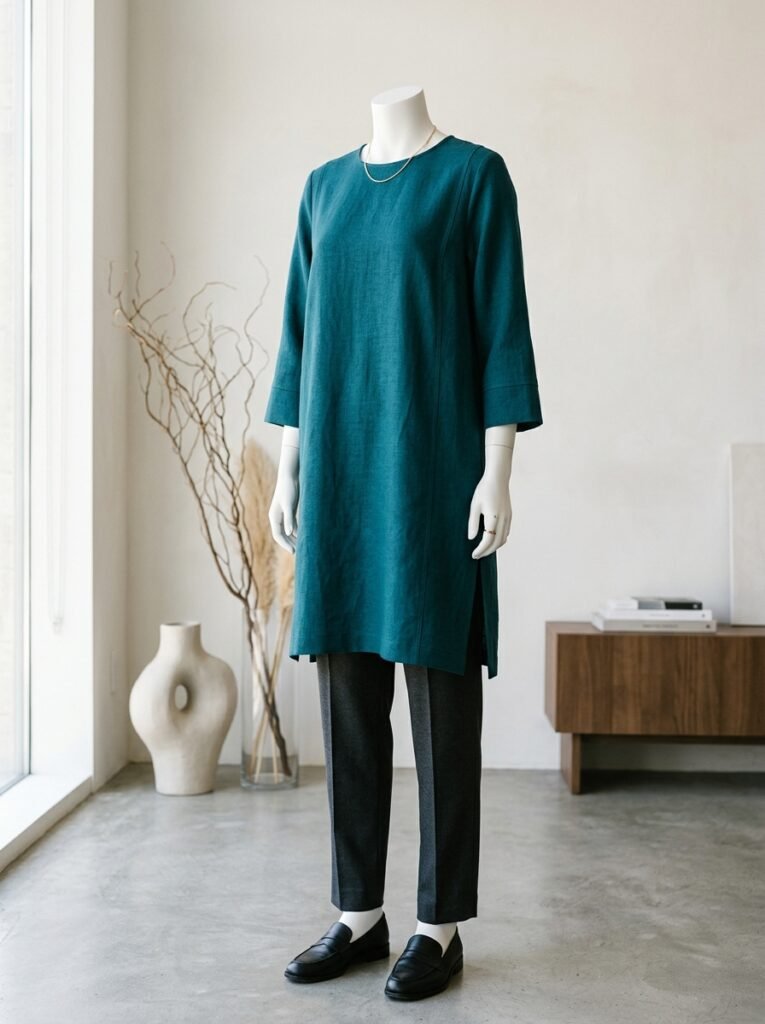
An autumn tunic is a great bridge between a top and a dress. It gives you more coverage while remaining easier to construct than a fitted garment. Medium-weight cotton, linen blends, or other comfortable woven fabrics can work well depending on the design. Add side slits or a slightly longer back hem for movement. Wear it with leggings, straight trousers, or jeans for a simple seasonal outfit.
15. Reversible Everyday Tote-to-Wear Set
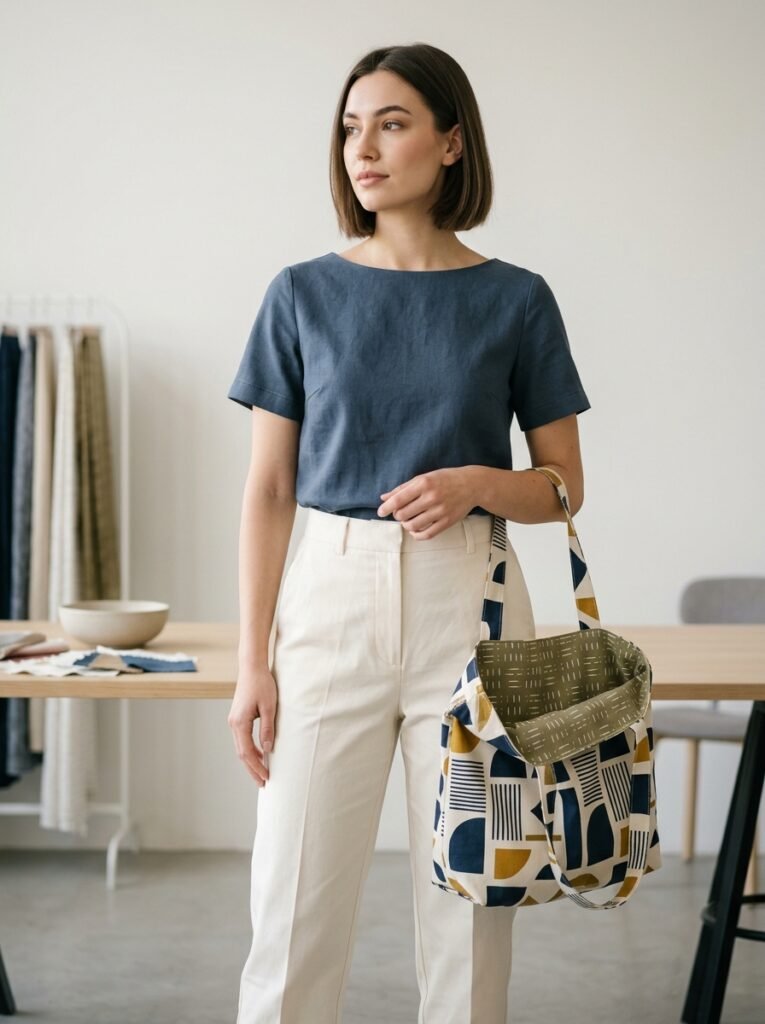
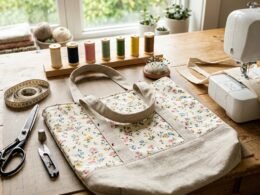
For a creative final project, combine clothing and accessories by making a simple reversible fabric tote that coordinates with a handmade top, skirt, or overshirt. Choose two complementary cotton fabrics so the bag works on either side. This is a practical way to use leftover material while creating a matching outfit detail. It also encourages thoughtful fabric planning, which is useful when working with small quantities or leftover one-yard cuts.
Choosing Fabric for Beginner Sewing
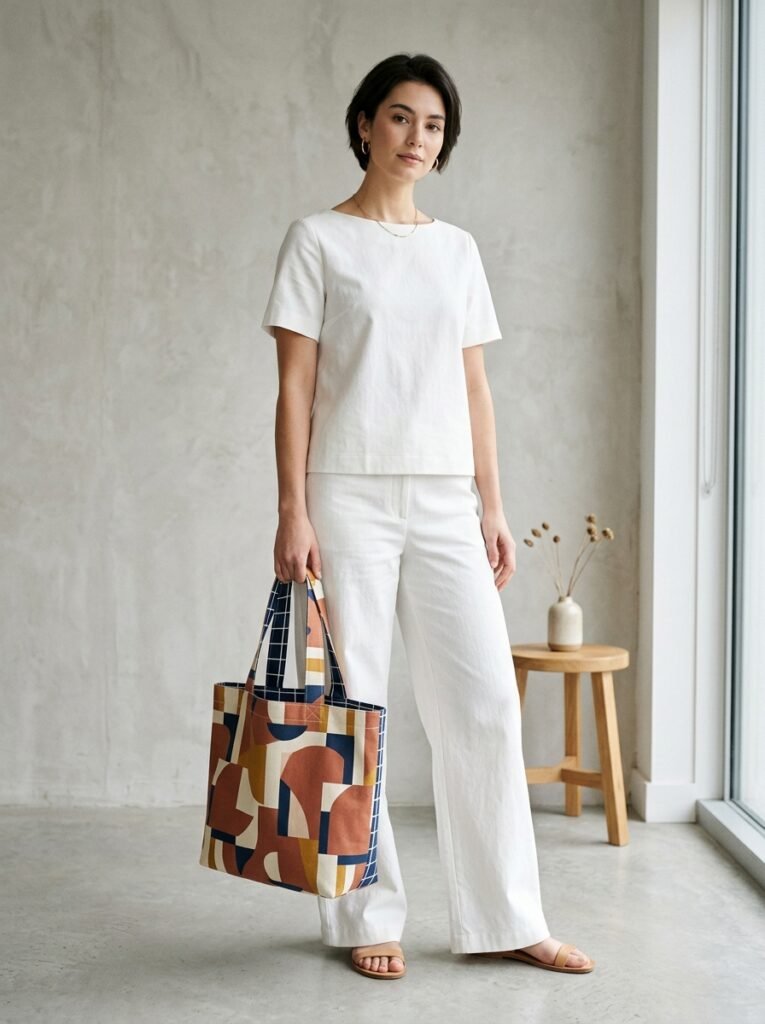
The fabric you choose can make a beginner project much easier or much harder. Medium-weight cotton is often a comfortable starting point because it is stable, easy to handle, and available in many colors and prints. Lightweight cotton works nicely for summer tops and blouses, while denim and twill are better suited to structured pieces. Before cutting, wash and dry fabric according to its care instructions when appropriate. This helps reduce surprises from later shrinkage. Always check the grainline and pay attention to the direction of prints, stripes, or one-way designs. For sewing projects clothes, it is also helpful to buy a little extra fabric when your budget allows, especially if you are still learning to cut accurately.
Beginner Sewing Tips That Save Time
Start with a project that matches your current skill level instead of choosing the most complicated garment you can find. Simple construction builds confidence quickly. If you are sewing by hand, use consistent stitches and avoid pulling the thread too tightly. If you use a sewing machine, practice on fabric scraps before starting the actual garment. Pressing seams as you work can also make the final result look much cleaner. When working on sewing projects clothes, remember that neat finishing often matters more than complicated design. Clean hems, accurate seams, properly pressed fabric, and secure closures can make a simple garment look professionally made.
Final Thoughts
The best handmade clothes are not always the most complicated ones. A well-finished top, comfortable skirt, relaxed shirt, or thoughtfully upcycled denim piece can become something you wear again and again. Whether you want quick beginner projects, hand-sewn pieces, seasonal clothing, or creative upcycling ideas, sewing projects clothes can give you a flexible starting point. Choose one design, work carefully, and let each project teach you a new skill. With time, those small improvements add up. Soon, you will not just be sewing clothes—you will be developing your own style.