


This post may contain affiliate links. Please read my disclosure policy.
In This Article Show
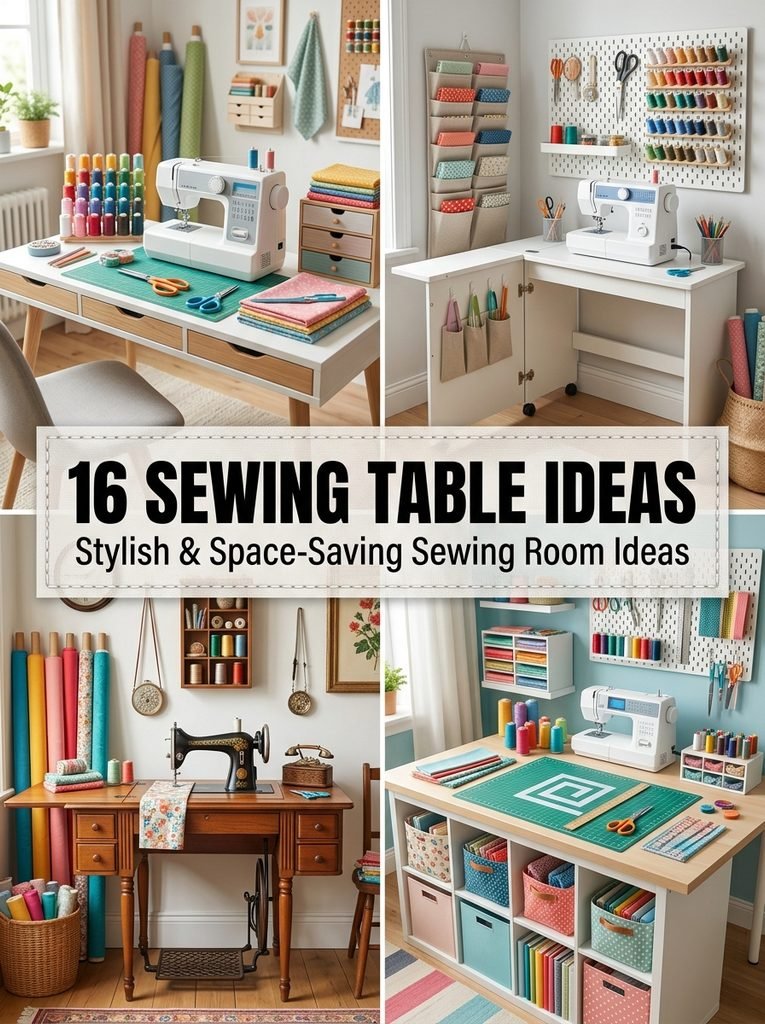
A sewing room can change completely when the right table arrives. Suddenly, the machine has a proper home. Fabric stops sliding onto the floor. Patterns have somewhere to spread out. Even a tiny corner can feel like a real creative studio. The right sewing table does not have to be expensive or oversized. A simple desk, folding surface, IKEA setup, vintage table, or repurposed piece of furniture can work beautifully when you match it to your sewing habits. The goal is simple: create a comfortable place where your machine, fabric, tools, and projects can work together.
1. Simple Desk Sewing Station
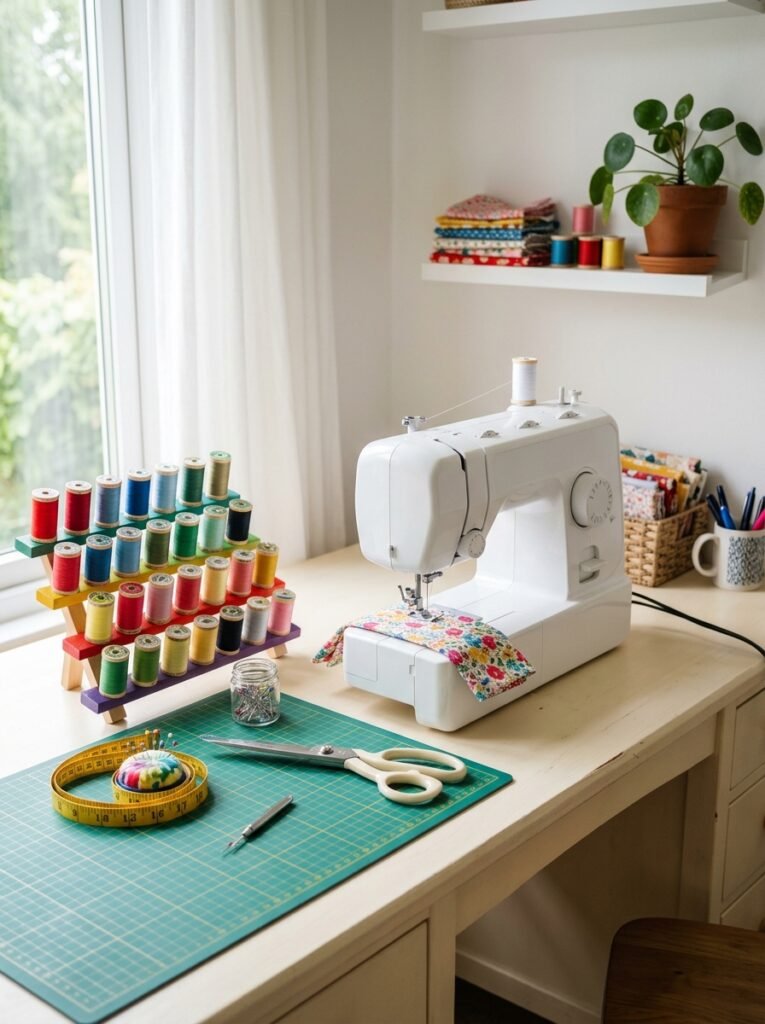
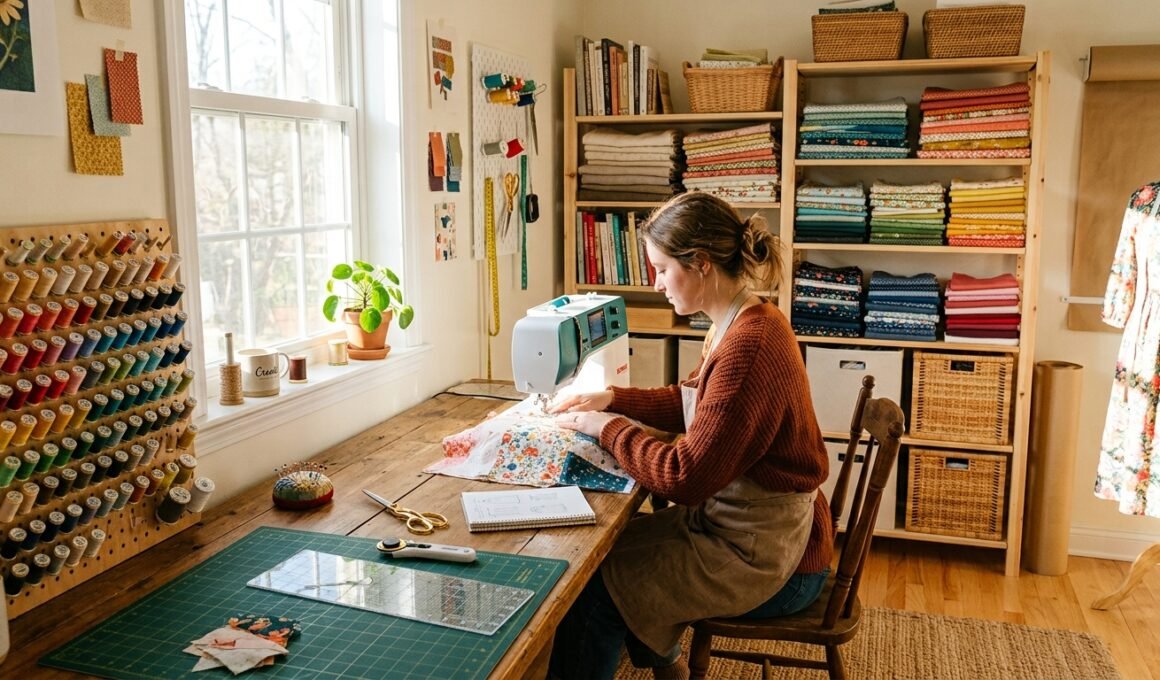
You do not need a dedicated sewing cabinet to get started. A sturdy desk can provide enough room for a sewing machine, thread, scissors, measuring tape, and a small storage tray. Choose a desk with a stable top and enough depth to keep fabric from falling over the edge. Add a mat under the machine if you want extra stability and surface protection.
2. IKEA Sewing Station
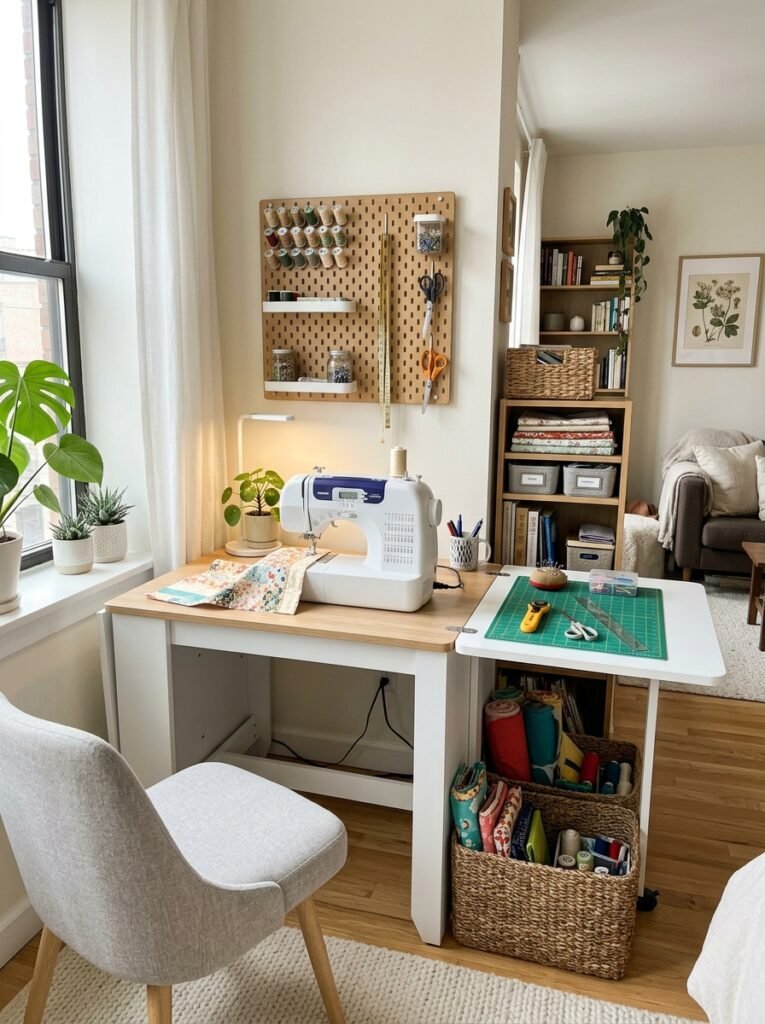
IKEA furniture can give you plenty of flexibility. A tabletop combined with drawer units or KALLAX-style cube storage can create a workstation with storage underneath. This approach works particularly well when you need both a work surface and organized storage. Keep fabric in larger cubes and smaller notions in labeled boxes.
3. Folding Sewing Table for Small Spaces
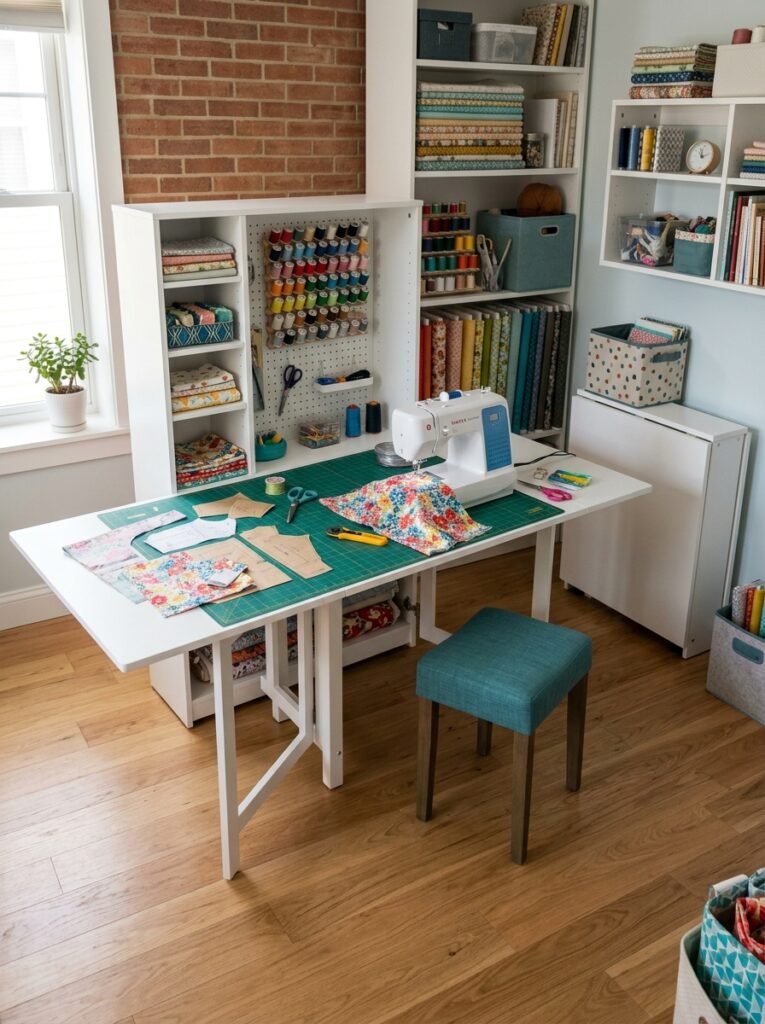
A folding table can solve a major problem in a small home. Keep it open while sewing, then fold the sides down when you need more walking space. Modern sewing tables also use adjustable machine platforms and folding surfaces. SINGER’s current compact models include folding designs, adjustable sewing platforms, and storage features intended for smaller work areas.
4. Vintage Sewing Table
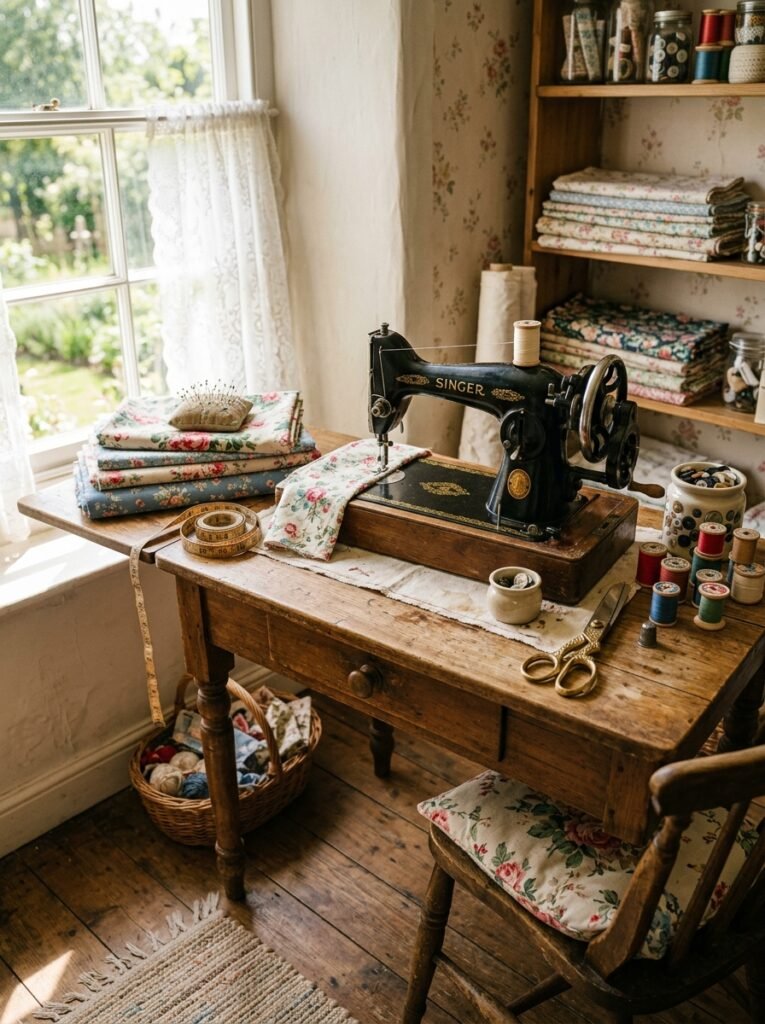
A vintage table can add warmth and personality to a sewing room. Look for an old wooden desk, sewing cabinet, or sturdy side table with a solid surface. You can keep its original character while updating the workspace with modern storage, a fresh chair, and good lighting. The contrast between antique wood and colorful fabric can look beautiful.
5. Repurposed Dining Table
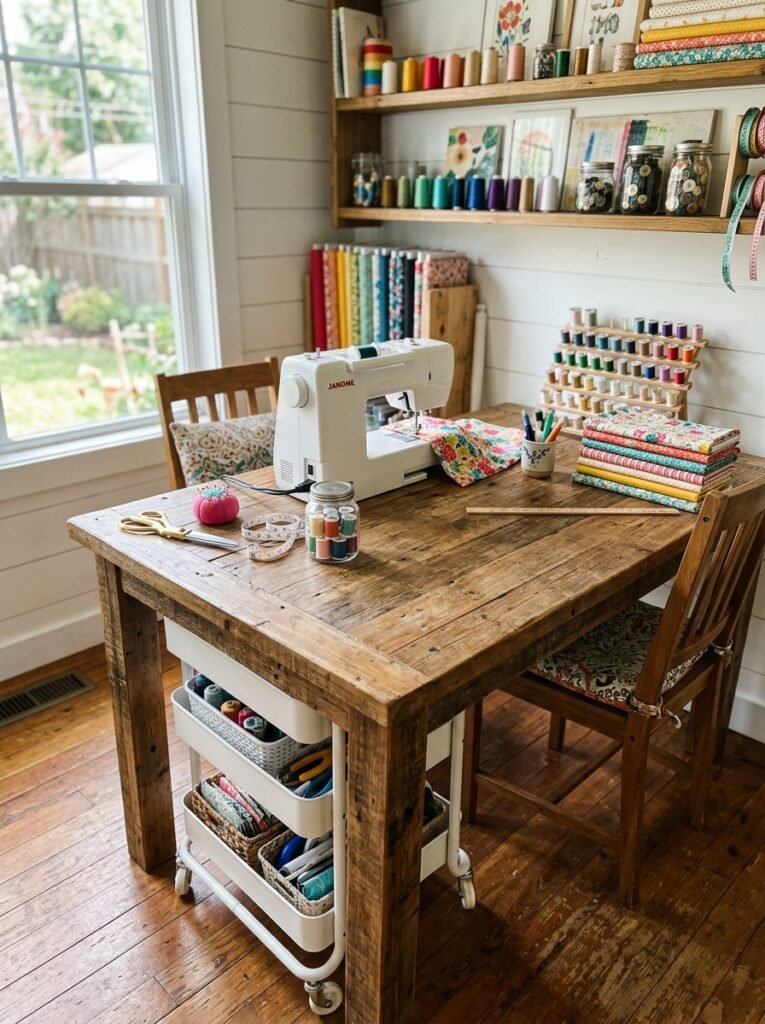
An old dining table can become an excellent sewing workstation. It already offers a large surface, strong construction, and plenty of room for fabric. If the legs are sturdy and the height feels comfortable, there may be little work to do. Add drawers or a rolling cart underneath for storage.
6. Sewing Table With Storage
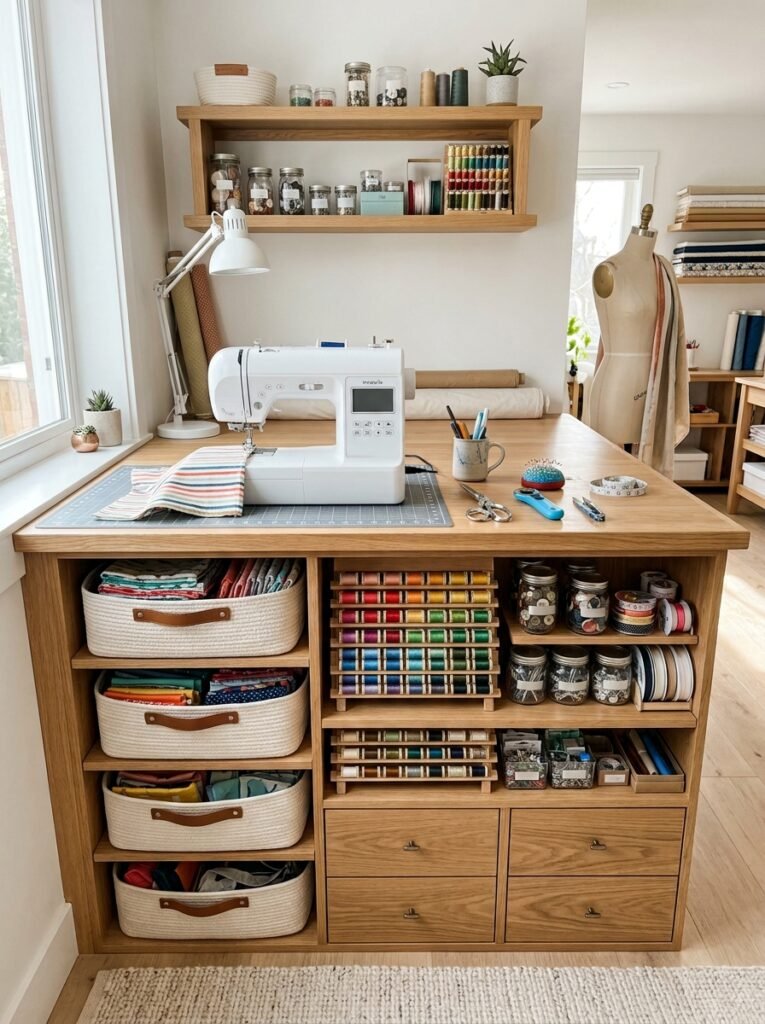
Storage under your table keeps frequently used items close without covering the work surface. Use drawers for bobbins, needles, clips, zippers, and other small supplies. Open shelves can hold fabric baskets, while a narrow drawer unit can keep tools sorted. Good organization makes it easier to clean up after every project.
7. KALLAX Sewing Workstation
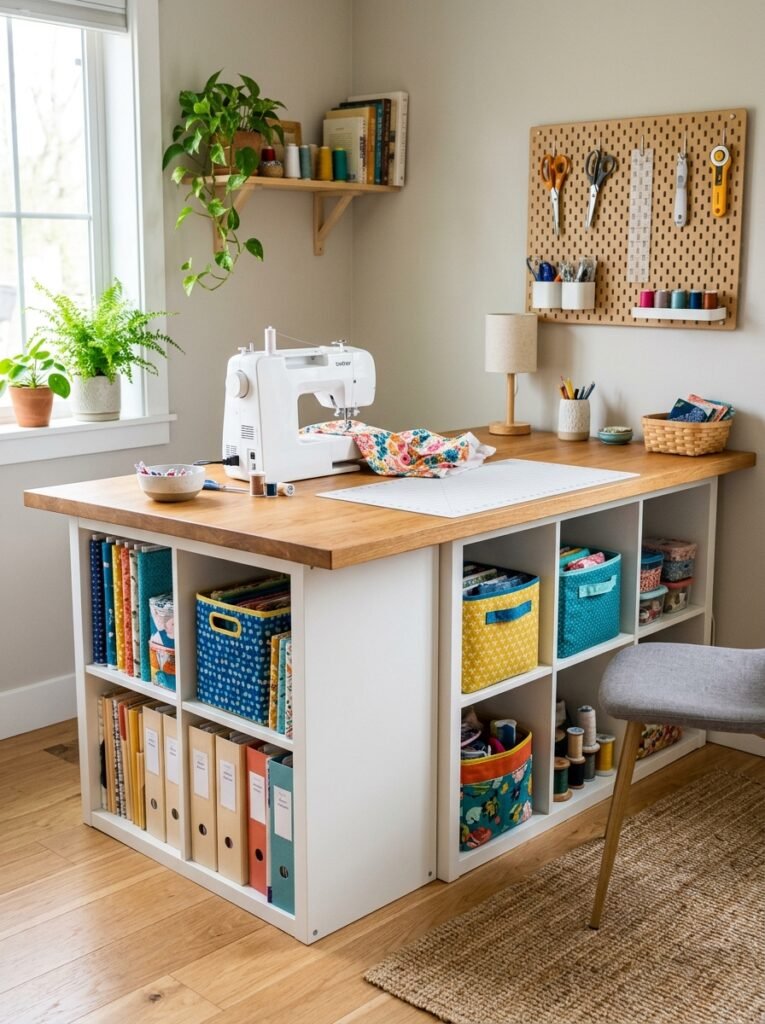
A KALLAX-style cube system can act as both table support and storage. Place a sturdy tabletop across the units and use the cubes below for fabric, patterns, baskets, and project boxes. This creates a smart solution when you want a custom-looking workstation without building every component from scratch.
8. DIY Sewing Table
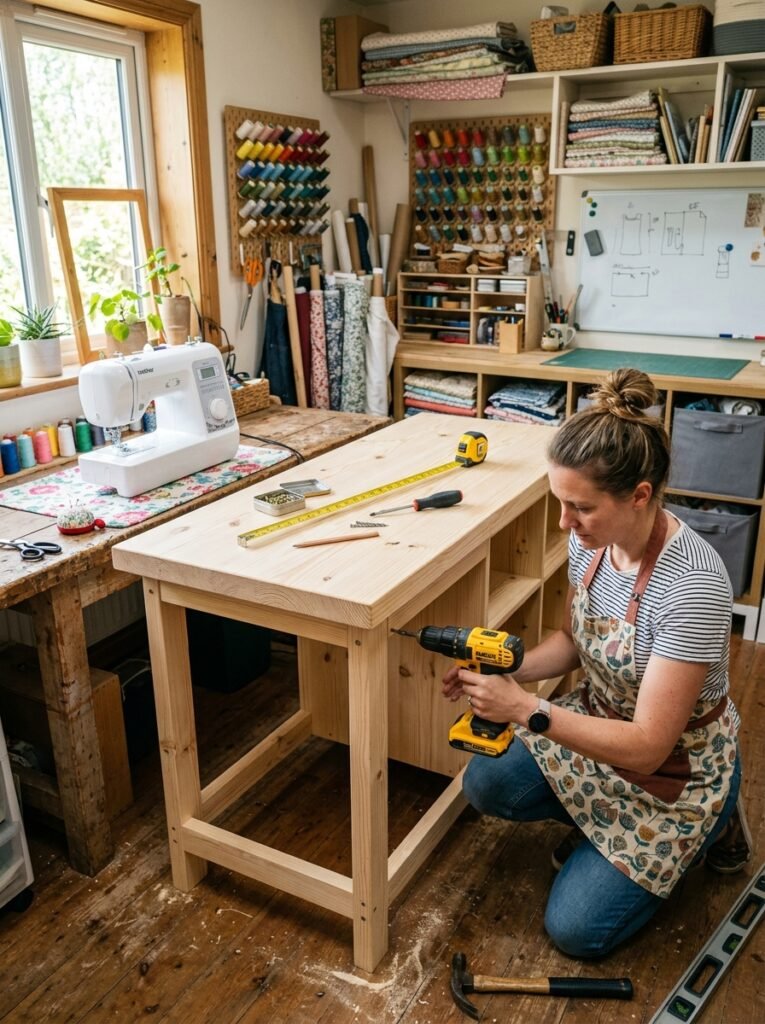
If you enjoy building furniture, make your own workstation from a tabletop and sturdy legs or storage units. This lets you choose the exact width, depth, color, and storage arrangement. A DIY design also works well when commercial tables do not fit your room. Measure the available space first, then design around your machine and chair.
9. Aesthetic Sewing Table
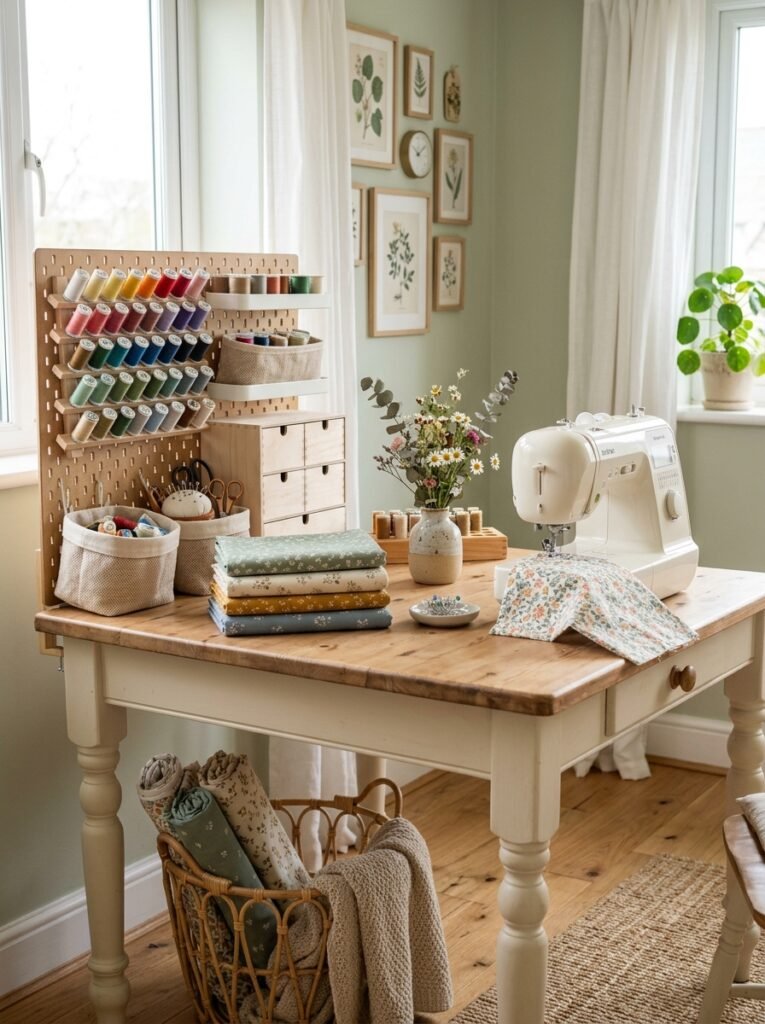
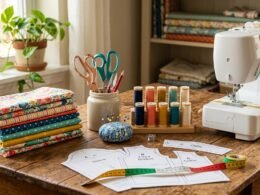
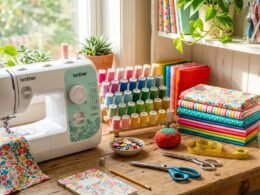
Your workstation can be practical and beautiful at the same time. Choose a simple color palette such as white and wood, cream and sage, or black and natural oak. Add only useful decorations. A small vase, fabric basket, thread display, pin cushion, and framed sewing print can make the area feel personal without taking away valuable workspace.
10. Sewing Table With Runner
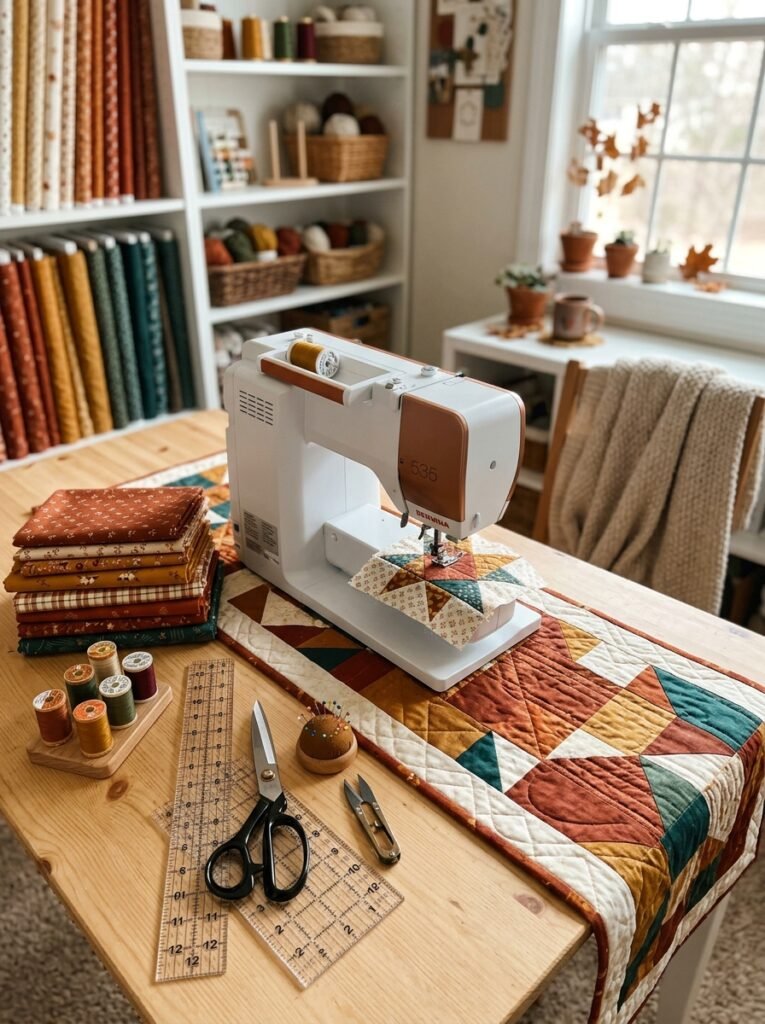
A fabric runner can protect part of the surface while adding color. Choose a washable material that matches your room. You can sew your own runner from leftover fabric. A simple rectangle with pressed hems makes an easy project, while patchwork or quilted versions create more visual interest.
11. Foldable Cutting and Sewing Station
If you switch between sewing and cutting, consider a table with expandable leaves. SINGER’s current craft tables include folding panels that create a larger surface for spreading fabric and patterns, then reduce the footprint when the extra space is no longer needed. This setup works especially well in rooms where every inch matters.
12. Sewing Vanity Setup
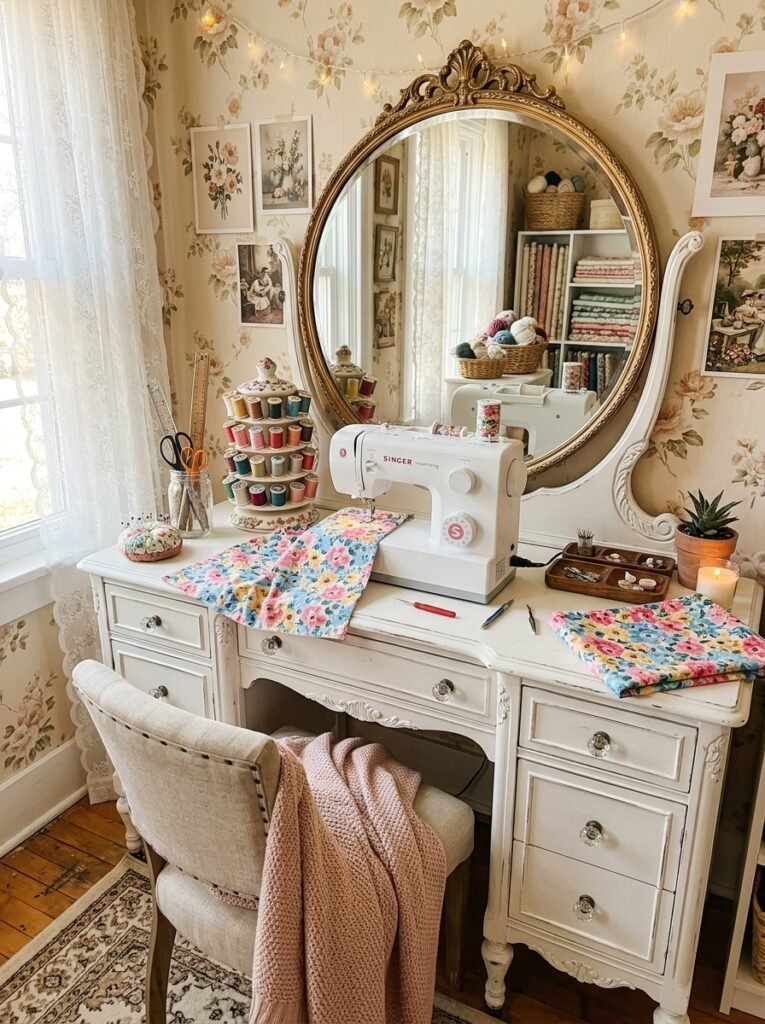
A small vanity can become a charming sewing workstation. Many vanities already include drawers, making them useful for threads, needles, buttons, and other small supplies. Choose one with enough legroom for your chair and enough tabletop depth for your machine. Keep heavy supplies low so the drawers remain easy to use.
13. Antique Sewing Cabinet
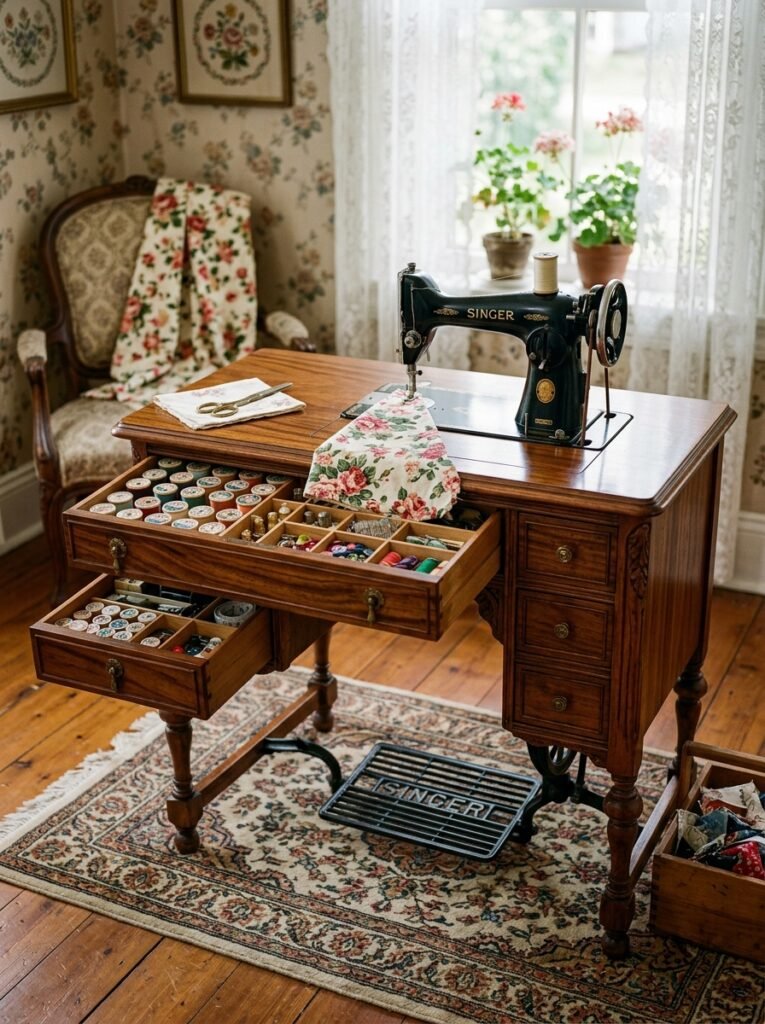
An antique sewing cabinet can become the focal point of a traditional sewing room. Many old cabinets have hidden compartments that can store tools and accessories. Before using an older piece, inspect the hinges, surface, drawers, and structure. Repair weak areas before placing a heavy machine on top.
14. Sewing Workstation for Small Spaces
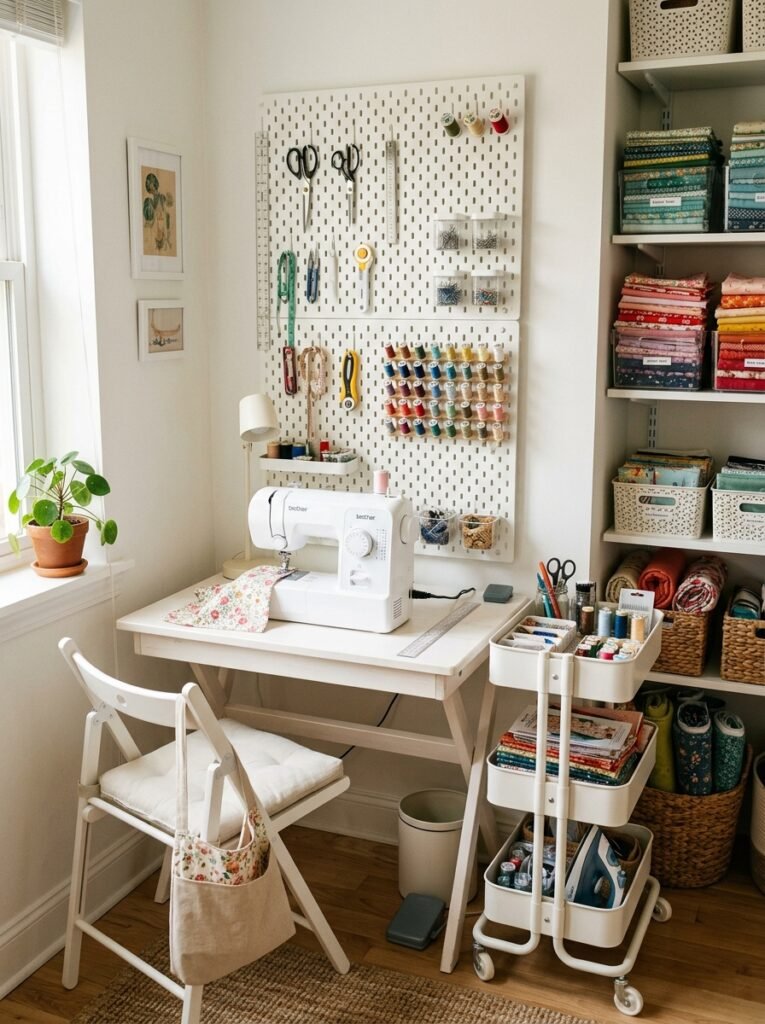
A compact room needs smart ideas for small spaces. Place the table against a wall and use vertical storage above it. A narrow rolling cart can hold extra supplies without taking permanent floor space. SINGER also offers compact tables with folding sections, storage shelves, adjustable platforms, and casters, showing how flexible furniture can combine several functions in a limited footprint.
15. Sewing Table With Extension Space
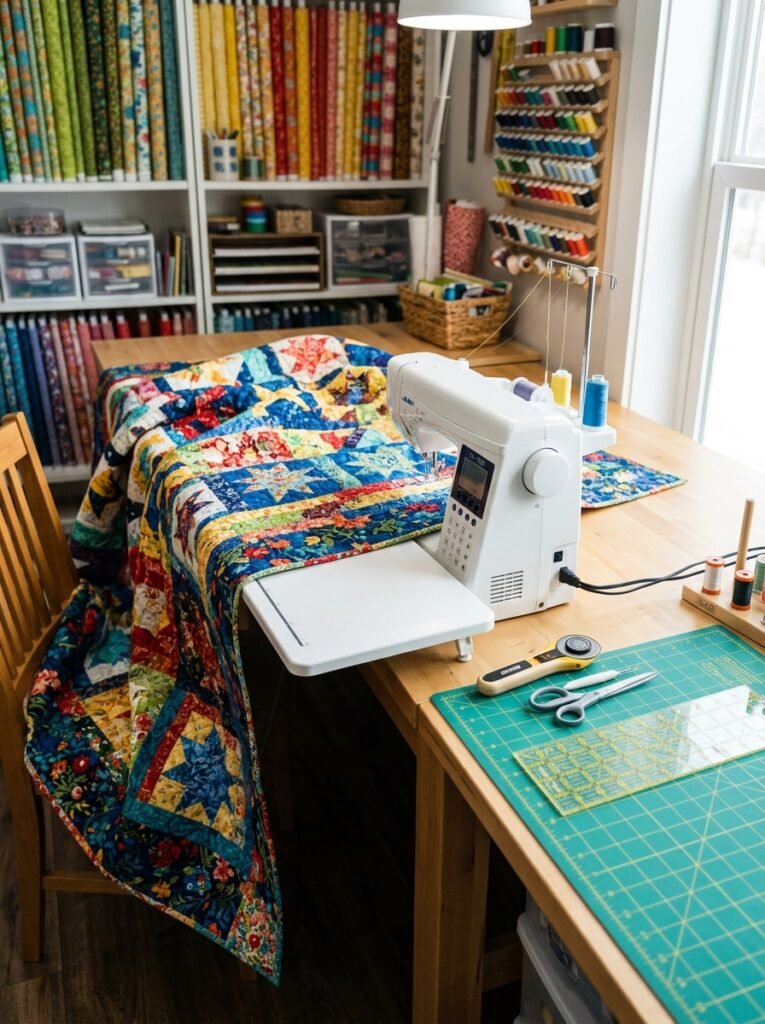
Large projects can quickly become difficult when fabric has nowhere to rest. An extension surface gives quilts, curtains, garments, and other large pieces more support. SINGER notes that extension tables provide additional fabric support and help reduce dragging when working with large or layered projects. This simple addition can make a compact machine setup feel much more spacious.
16. Repurposed Cabinet Sewing Station
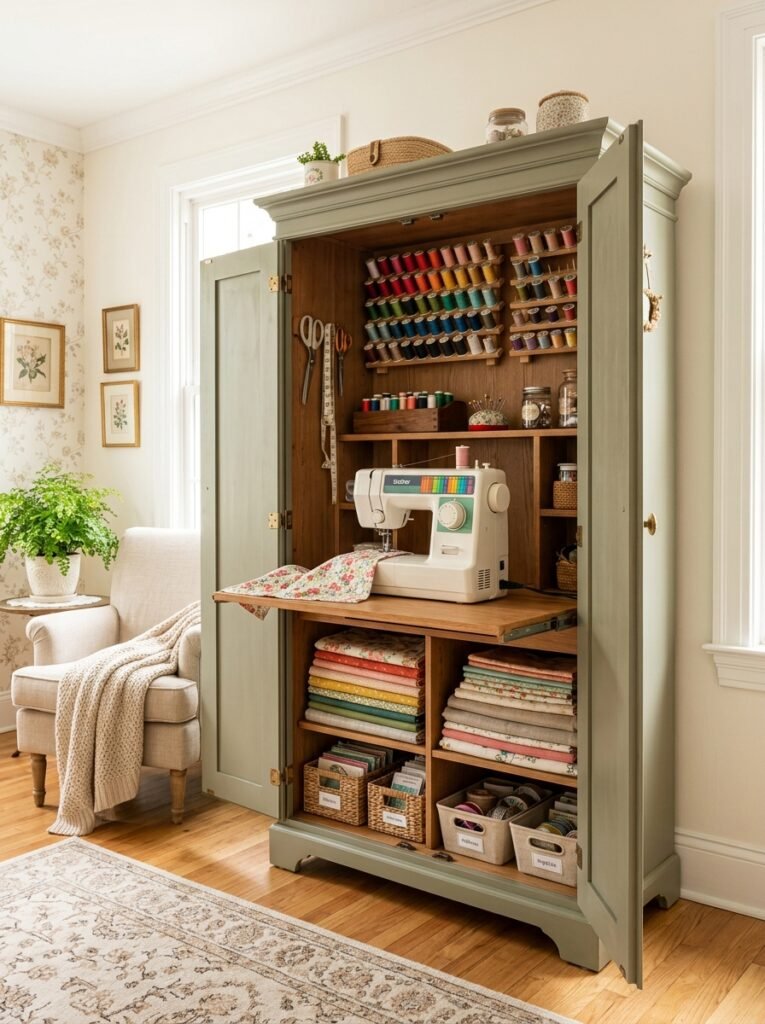
A cabinet can hide your machine and supplies when you finish sewing. Look for an old desk, cabinet, or sturdy console that has enough depth for the machine. This repurpose idea works beautifully for shared rooms. Close the doors or fold the surface when the project ends, and the room quickly returns to its everyday purpose.
How to Choose the Right Sewing Table Height
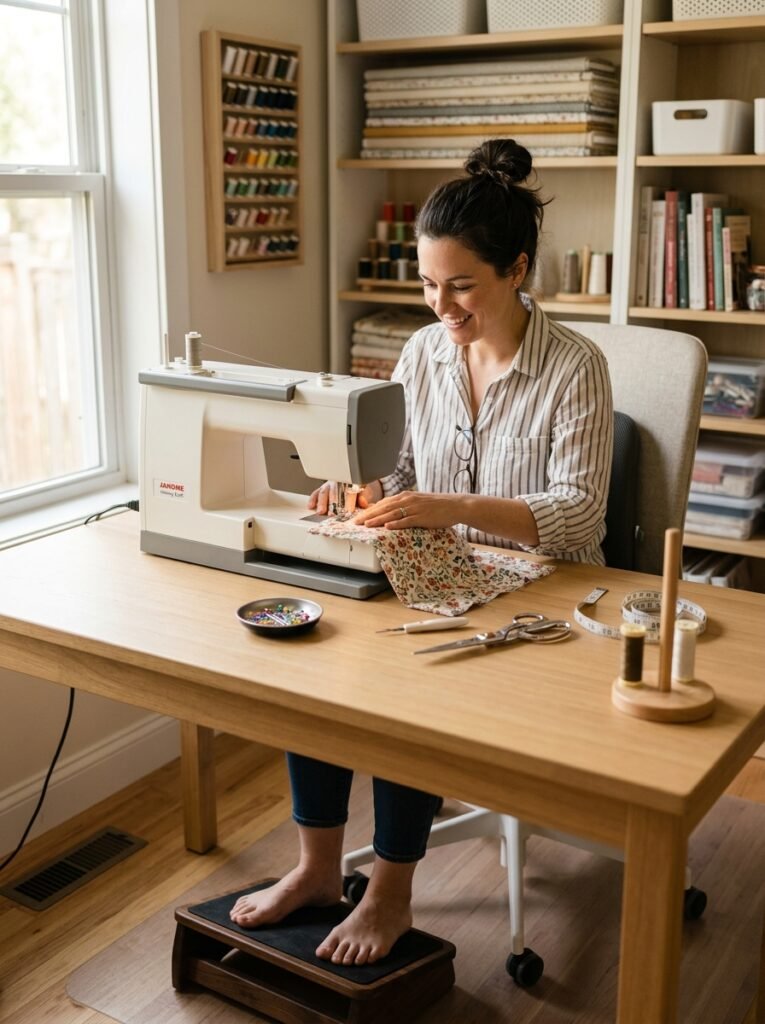
Height matters more than appearance. If your machine sits too high, your shoulders and wrists may feel uncomfortable. If it sits too low, you may bend forward for long periods. Sewing & Craft Alliance’s healthy sewing guidance recommends finding the correct sewing-surface height based on your seated position, with hands and forearms kept in a comfortable straight line while sewing. It also recommends adjusting the chair and table rather than forcing your body to fit a fixed setup.
How to Create a Better Sewing Table Setup
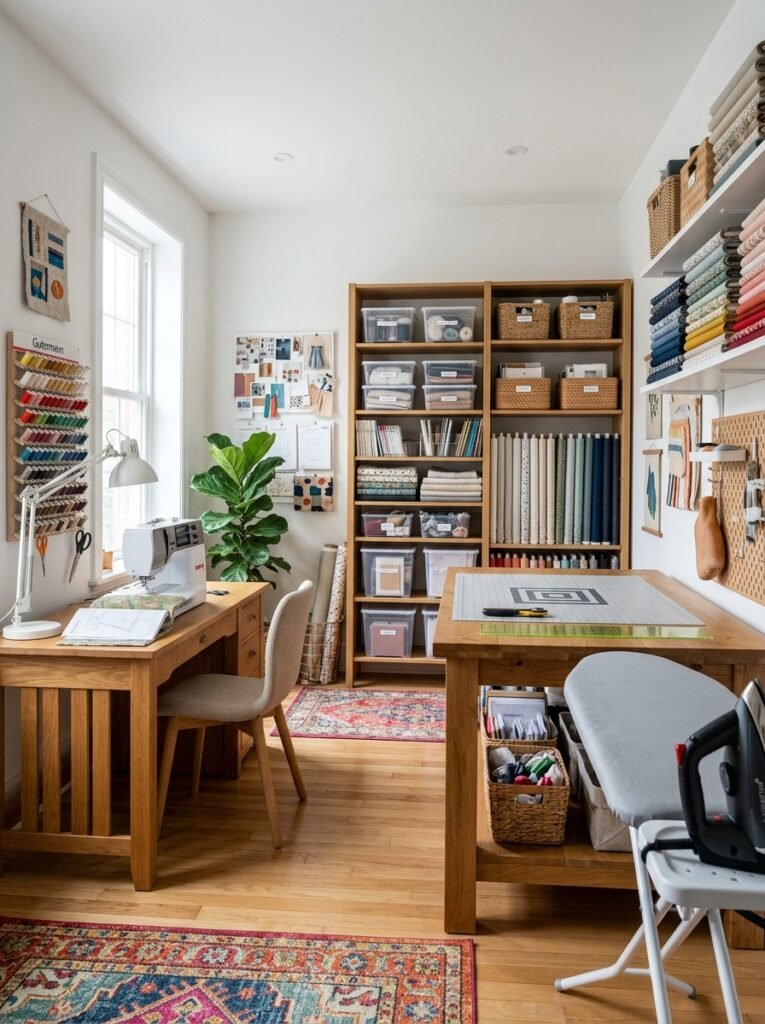
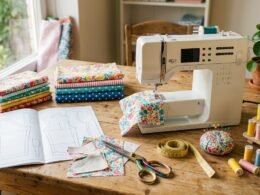
Think in zones. Keep the machine in the center. Place scissors, thread, seam ripper, and measuring tape within easy reach. Put fabric storage nearby but outside your main sewing area. If you also cut and press fabric in the same room, create separate work stations. Sewing & Craft Alliance recommends keeping the pressing station near the sewing area so you can press as you work.
Small Sewing Table Ideas on a Budget
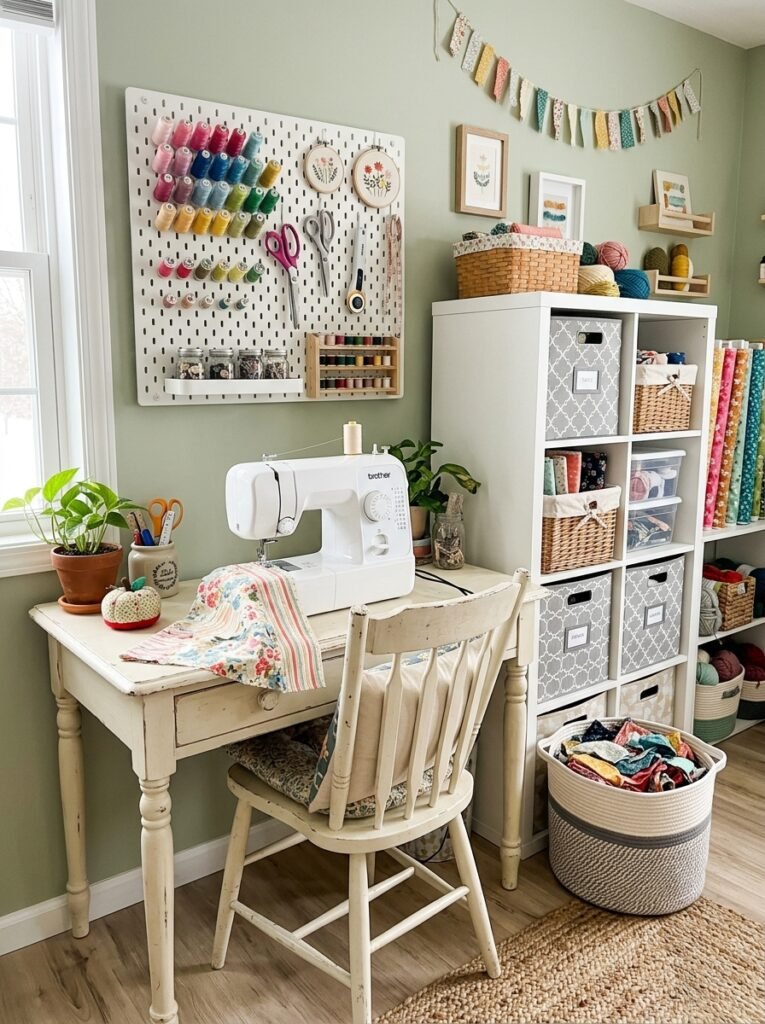
You do not have to buy a specialty table. A sturdy desk, dining table, old cabinet, IKEA tabletop, or repurposed vanity can work if the height and stability suit your machine. Spend your budget where it improves your workflow. A stable surface, comfortable chair, good lighting, and useful storage often matter more than decorative furniture. If you quilt or handle bulky projects, an extension surface may provide more practical value than replacing the entire desk.
Making Your Sewing Table Beautiful and Functional
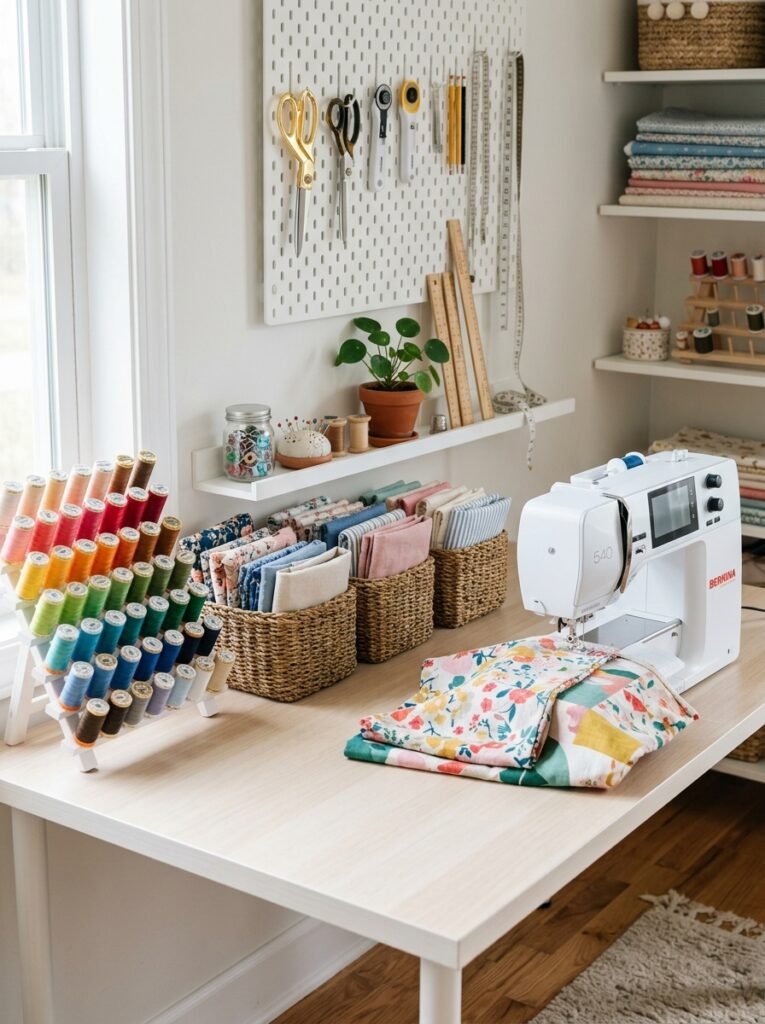
A beautiful workspace should still leave room for actual sewing. Avoid covering the tabletop with decorations. Instead, use the walls and storage underneath to create visual interest. A thread display, small plant, fabric basket, wooden ruler, and neatly folded cloth can add personality without blocking your machine. The result should feel aesthetic, but it should also make your next project easier to start.
Final Thoughts on Sewing Table Ideas
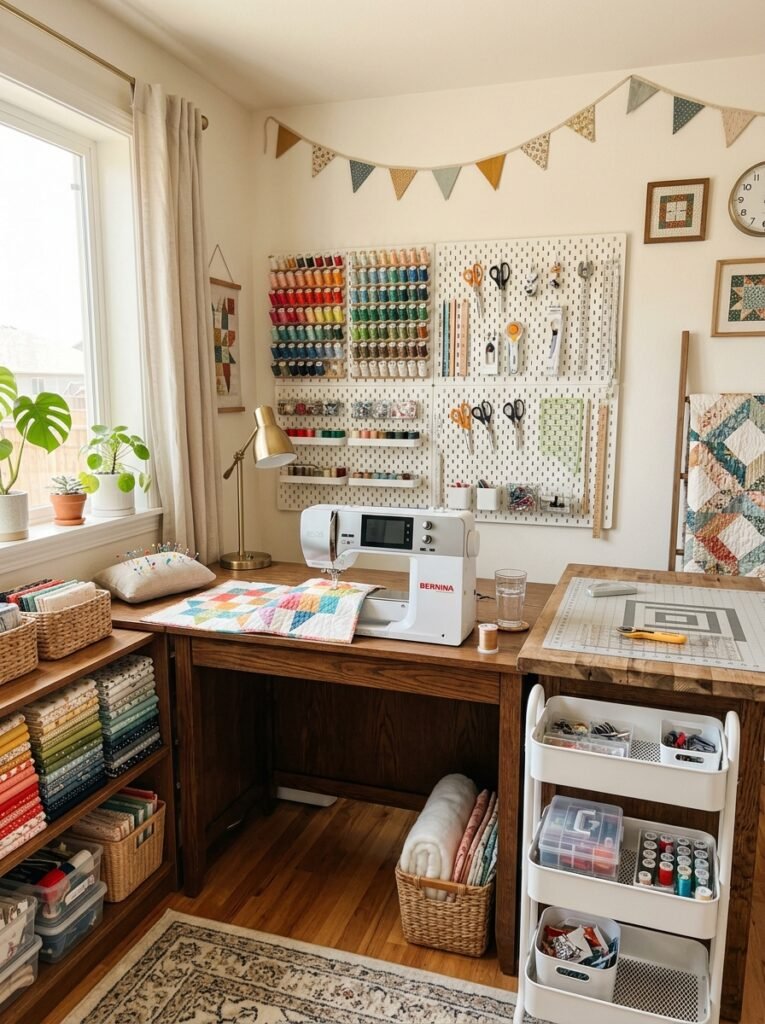
The best sewing table is the one that fits the way you actually work. A large quilting table may suit one sewist, while a foldable desk may suit someone working in a bedroom. A vintage cabinet can add character, while an IKEA or DIY setup can provide flexible storage. Start with the basics: stable surface, comfortable height, enough room for your fabric, and easy access to your most-used tools. Then build from there. Once the table supports your workflow, something interesting happens. Sewing feels less like fighting with your space and more like sitting down to create. That small change can make every project more enjoyable.