


This post may contain affiliate links. Please read my disclosure policy.
In This Article Show
A sewing room should feel like a place where ideas come to life. You walk in, see your favorite fabrics, reach for your thread, and know exactly where to begin. The best sewing room ideas do not depend on having a large house or expensive furniture. A tiny corner, spare bedroom, attic, or closet can become a beautiful creative workspace with thoughtful planning. The goal is simple: make your room comfortable, organized, practical, and inspiring.
1. Plan Your Sewing Room Layout First
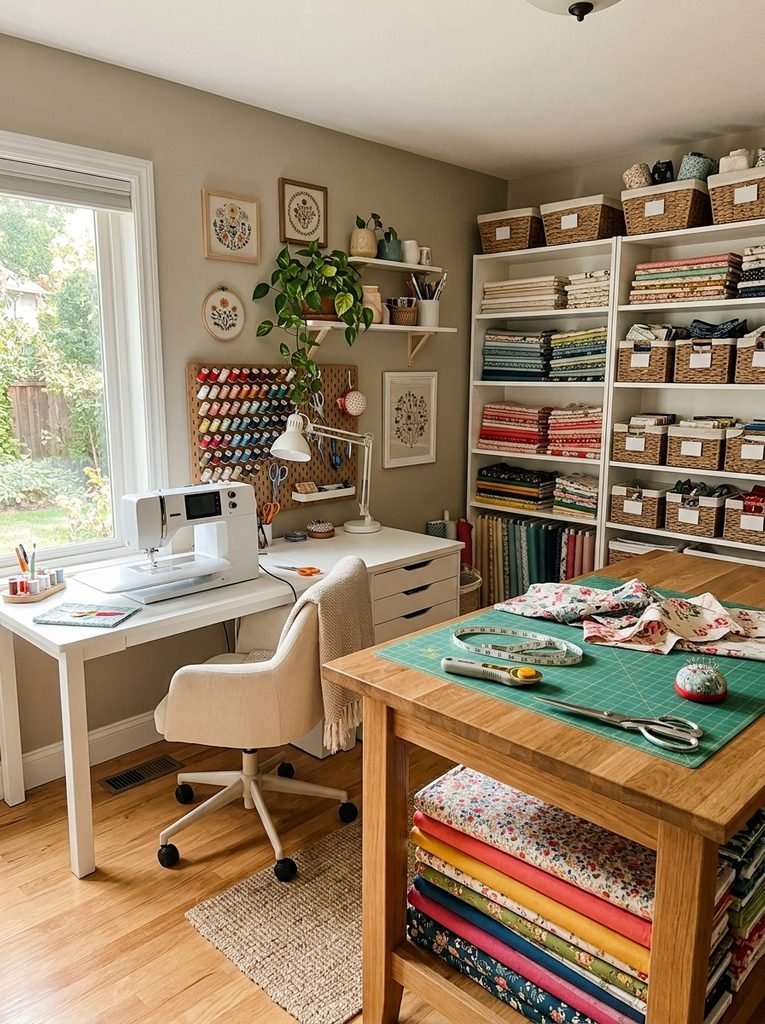
Before buying furniture, sketch your ideal layout. Decide where you will sew, cut, press, store fabric, and keep your tools. Keep frequently used supplies close to your sewing machine and place the cutting table where you have enough room to move fabric freely. This simple approach creates better sewing room ideas because every station has a clear purpose instead of making the room feel crowded. OSHA’s sewing workstation guidance recommends paying attention to table height, chair position, legroom, and wrist and arm posture. A comfortable workstation can make long sewing sessions easier on your body.
2. Turn a Tiny Corner Into a Sewing Station
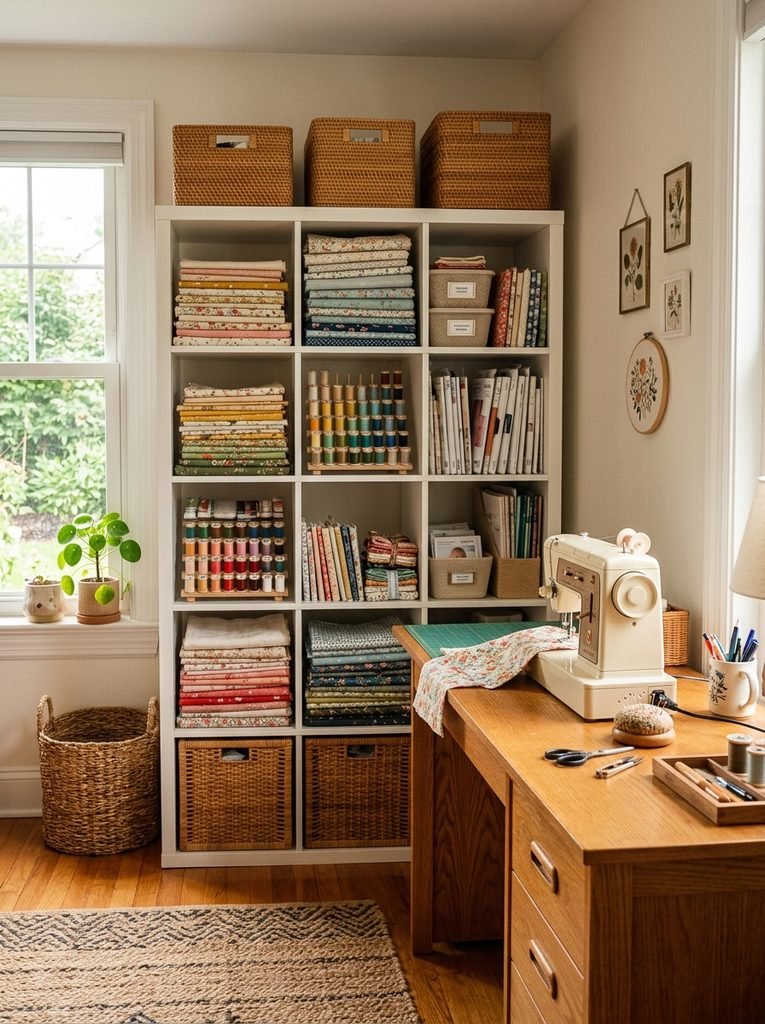
You do not need an entire room. A small corner can hold a compact desk, sewing machine, narrow storage cart, and a few wall shelves. Choose furniture that fits the wall rather than trying to squeeze large pieces into the area. A foldable table works especially well because you can close it when the project is finished. Vertical storage also keeps the floor open.
3. Use Ikea Kallax for Fabric Storage
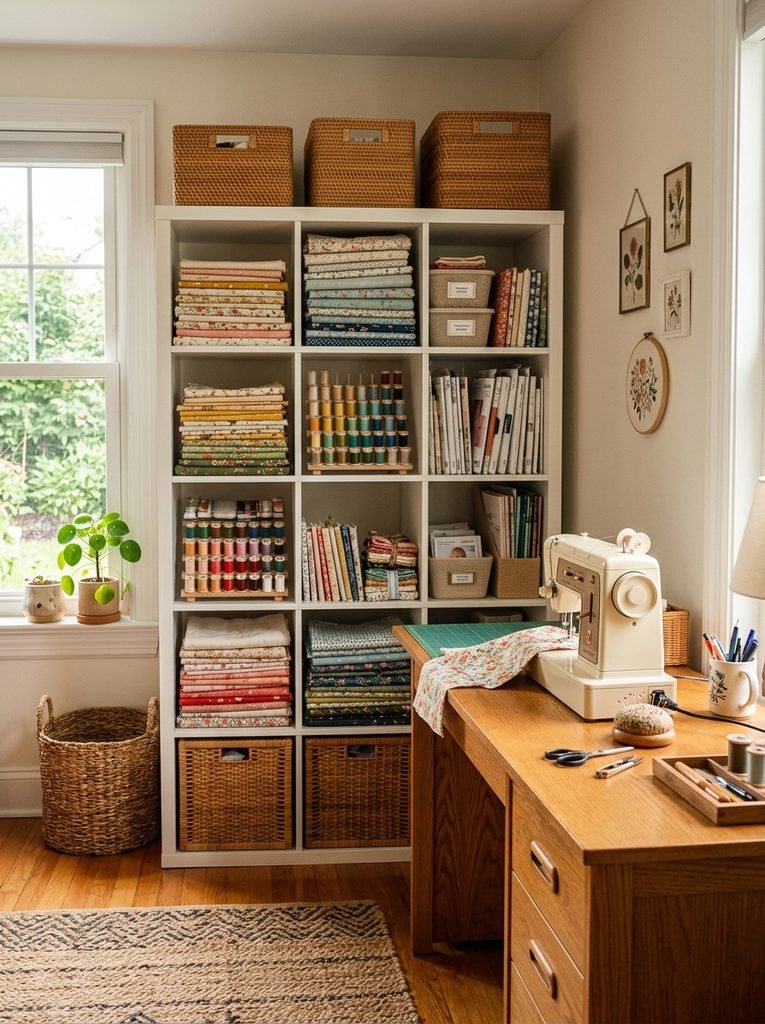
An Ikea Kallax-style cube shelf can become a flexible storage solution for fabric, patterns, baskets, and craft supplies. Fold fabric into similar sizes and place it inside open cubes so you can see your collection quickly. Add fabric bins to hide smaller items. This setup works well for both modern and rustic rooms because you can change the baskets, labels, and decor around it.
4. Create a Large Cutting Station
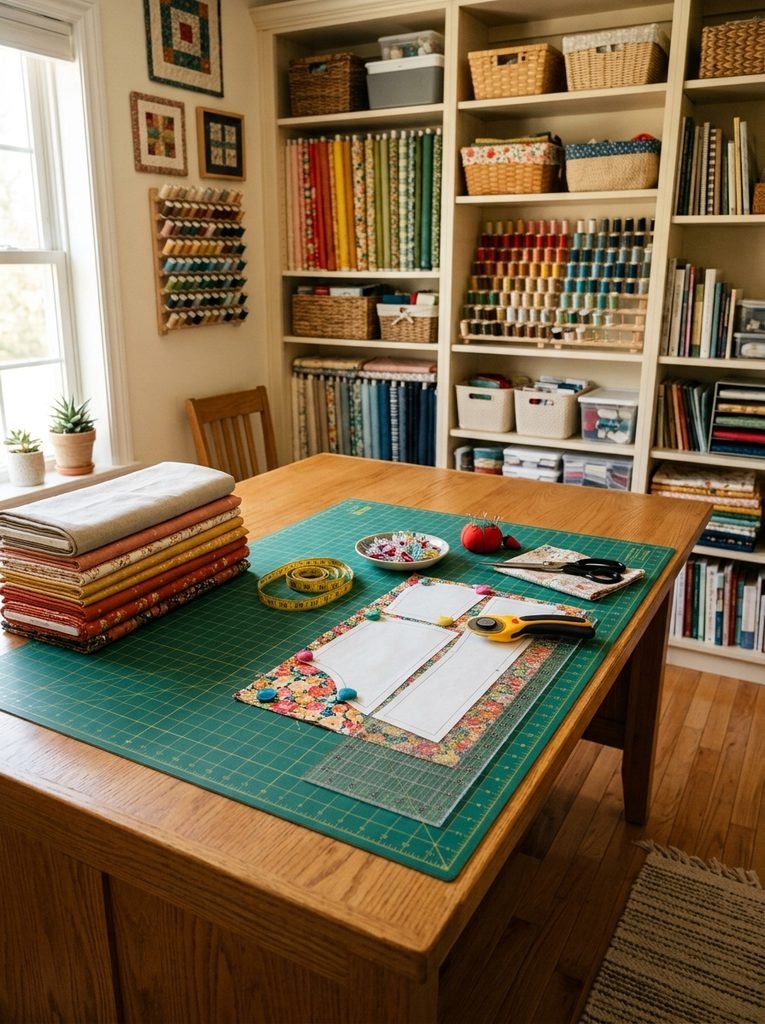
If you regularly make clothes, quilts, curtains, or other large projects, give yourself a proper cutting area. A large table lets fabric spread flat and reduces the need to work on the floor. Choose a surface that is easy to clean and place your rotary cutter, ruler, measuring tape, and cutting mat nearby. If space is limited, consider a folding or drop-leaf table.
5. Build Cozy Sewing Room Ideas Around Warm Lighting
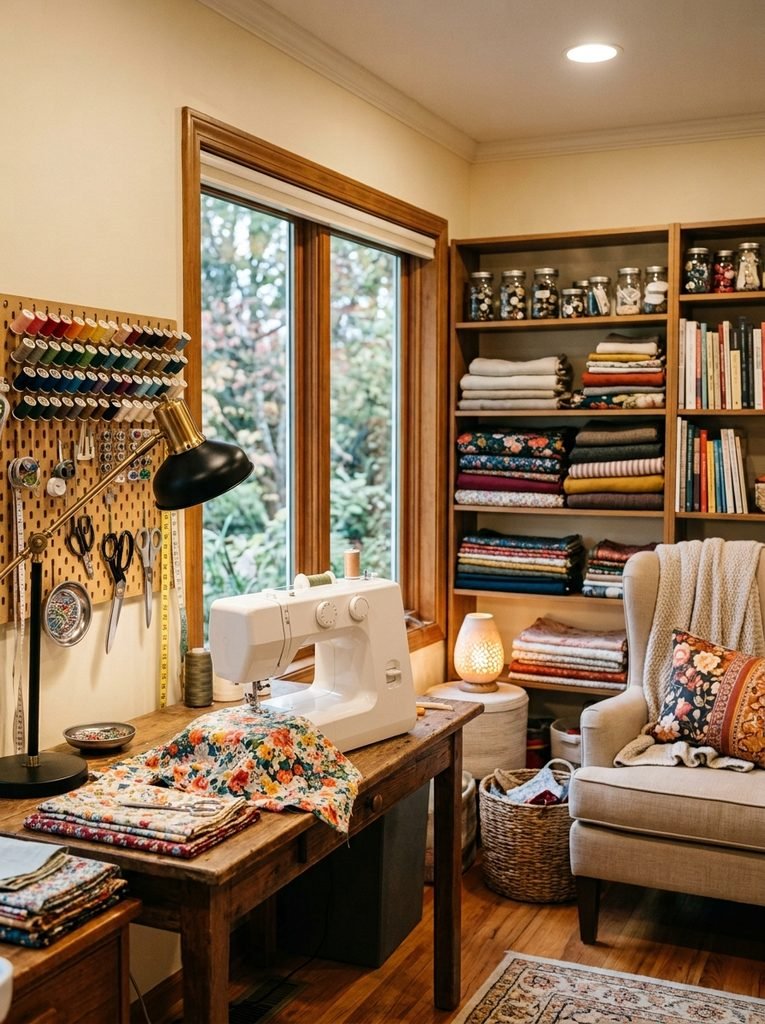
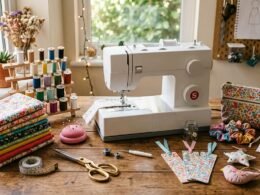
Good lighting changes the entire sewing experience. Place your machine near natural daylight when possible, then add a bright task lamp for detailed work. Martha Stewart’s craft-room guidance also recommends using desk lamps, floor lamps, or overhead lighting when natural light is limited. Warm ambient lighting can make the room cozy, while focused task lighting helps you see stitches, seams, and small details clearly.
6. Try a Vintage Sewing Room Style
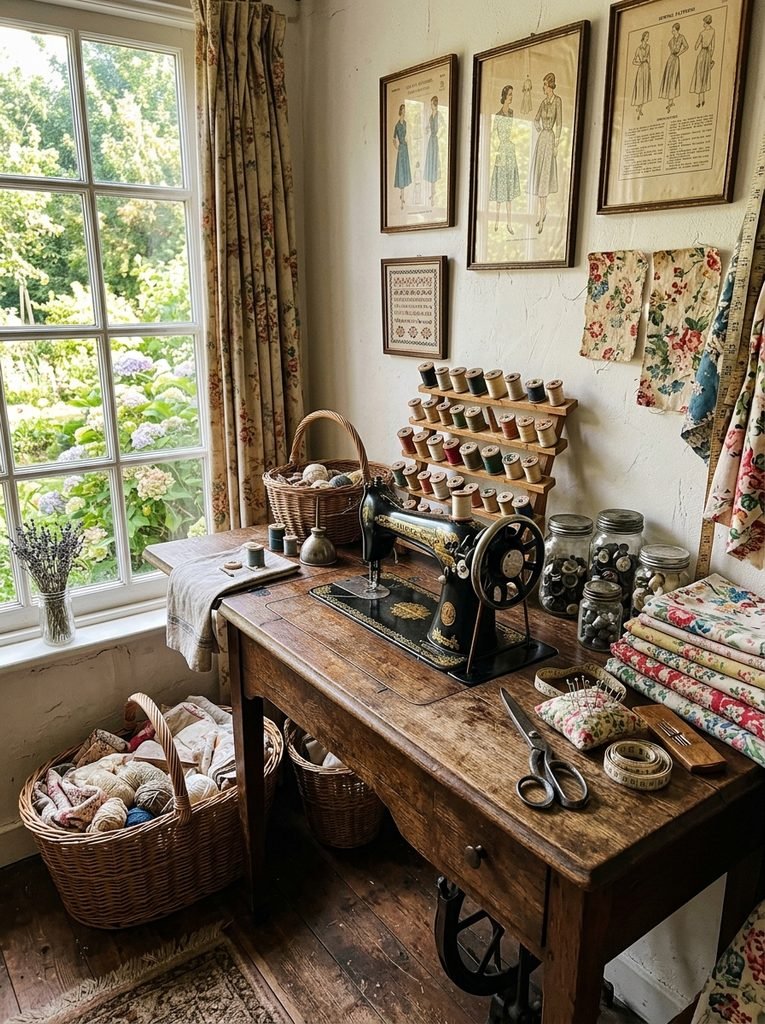
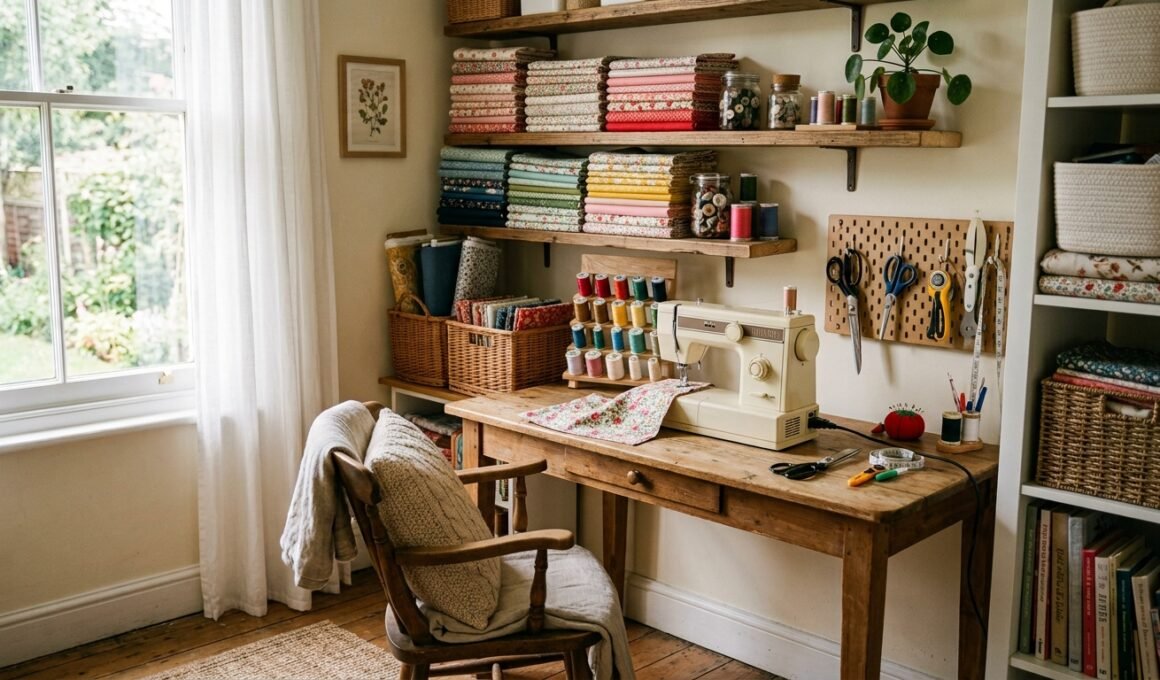
A vintage sewing room can feel personal and timeless. Look for an old wooden table, antique sewing accessories, glass jars, wooden thread spools, framed patterns, and floral fabric. You do not need everything to match. Mixing older pieces with modern storage creates character while keeping the room practical. Choose a limited color palette so the vintage details feel intentional rather than cluttered.
7. Add Rustic Wood and Natural Textures
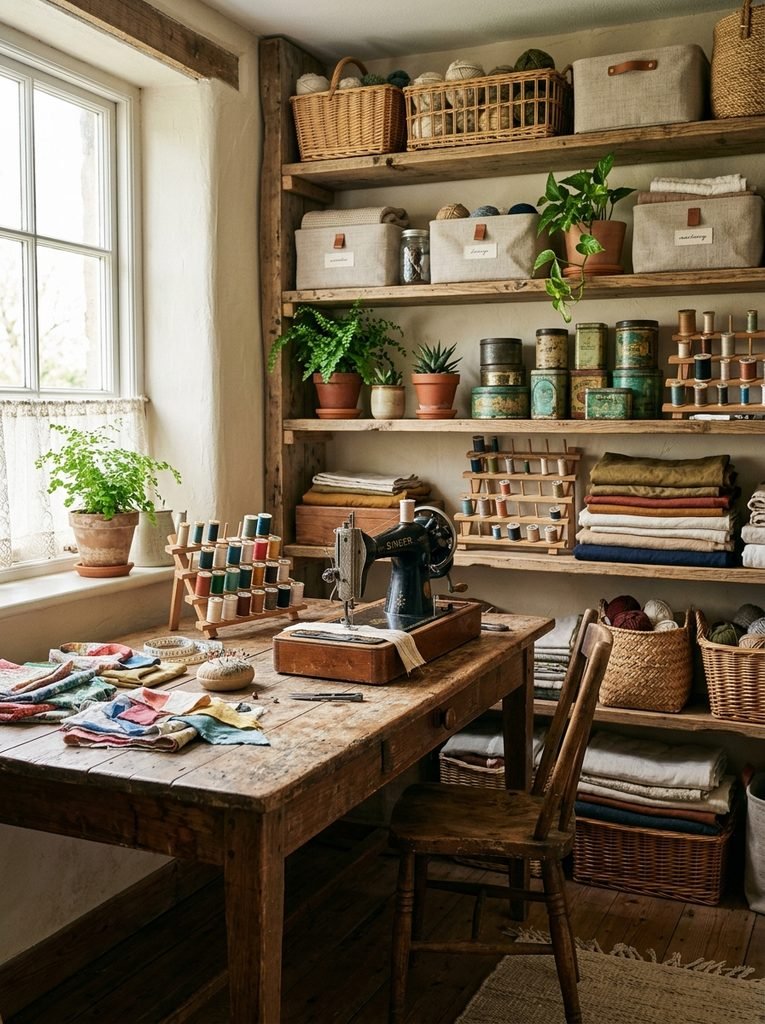
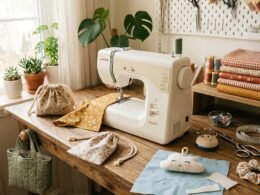
For a rustic sewing room, use wood, woven baskets, linen, cotton, and simple metal details. A wooden desk paired with open shelves can create a relaxed craft environment without looking overly decorated. Keep fabric colors visible and use baskets for smaller supplies. A few plants can soften the room and add a natural touch without taking valuable workspace.
8. Design a Pink and Cute Sewing Nook
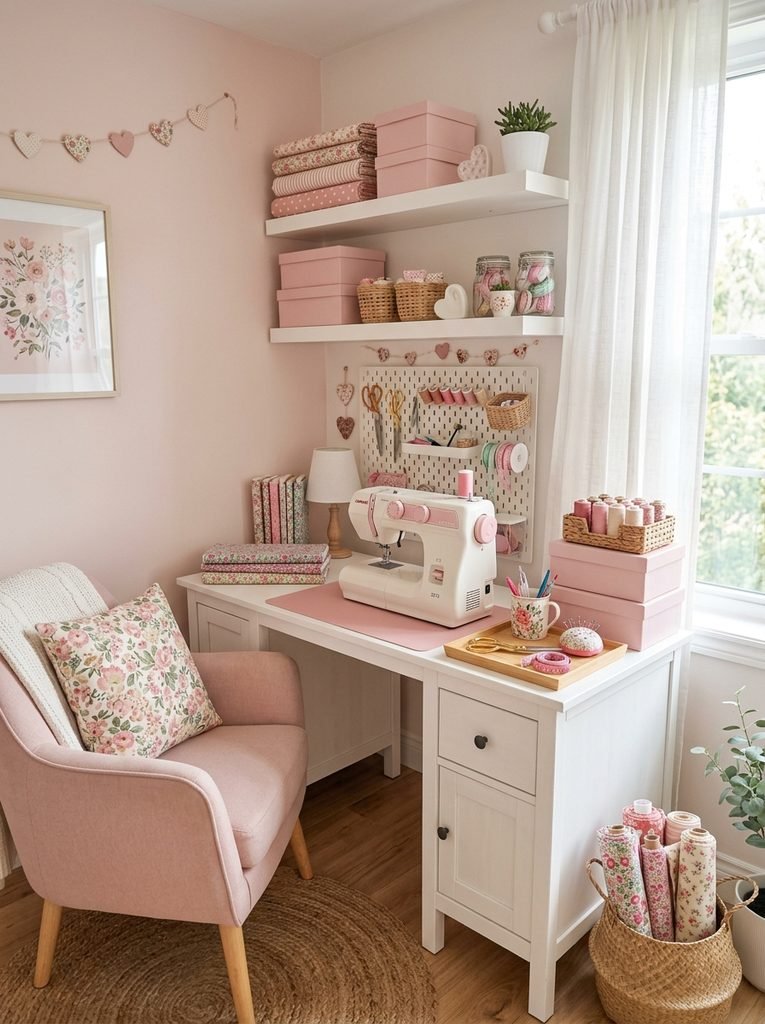
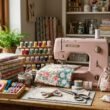
If you enjoy a cute aesthetic, let color become part of the design. Soft pink storage boxes, floral fabric, pastel thread, small baskets, and decorative sewing accessories can make the room cheerful without making it childish. Keep larger furniture neutral and use pink in smaller pieces. This makes it easier to update the room when your taste changes.
9. Use Smart Sewing Room Ideas for Small Spaces
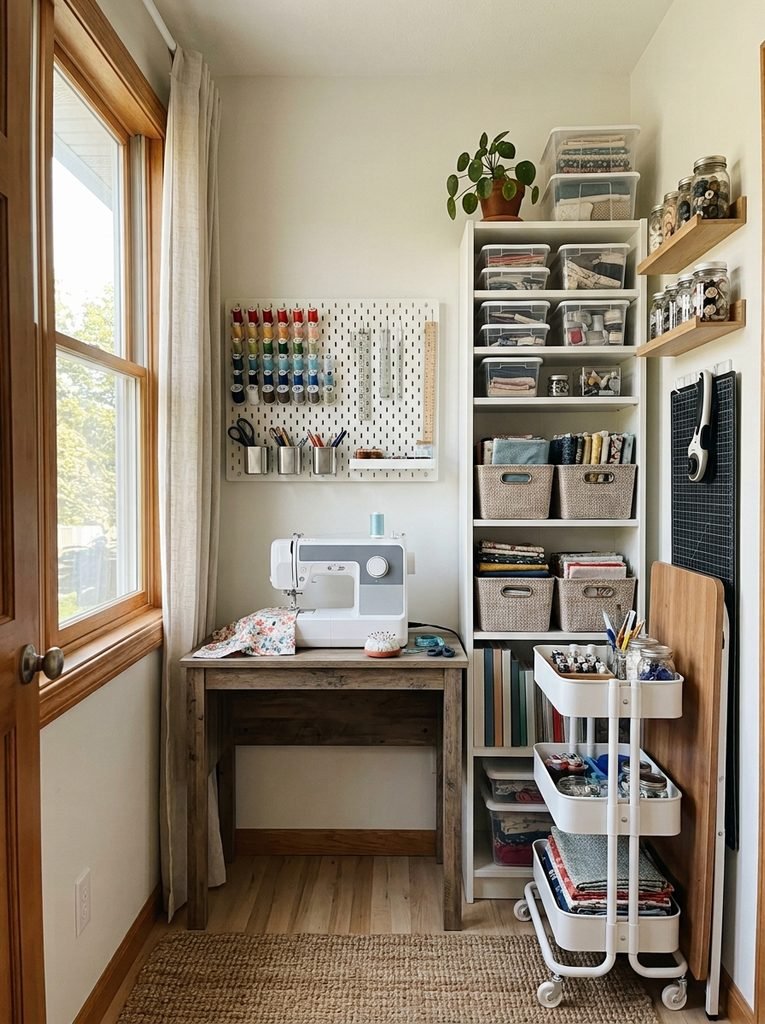
Small rooms need flexible furniture. A narrow desk, wall-mounted shelves, pegboard, rolling cart, and foldable cutting table can provide plenty of function without filling the floor. Martha Stewart also recommends corner desks, convertible tables, clear containers, labels, and vertical storage for compact craft rooms. Think upward instead of outward when floor space is limited.
10. Make an Attic Sewing Studio
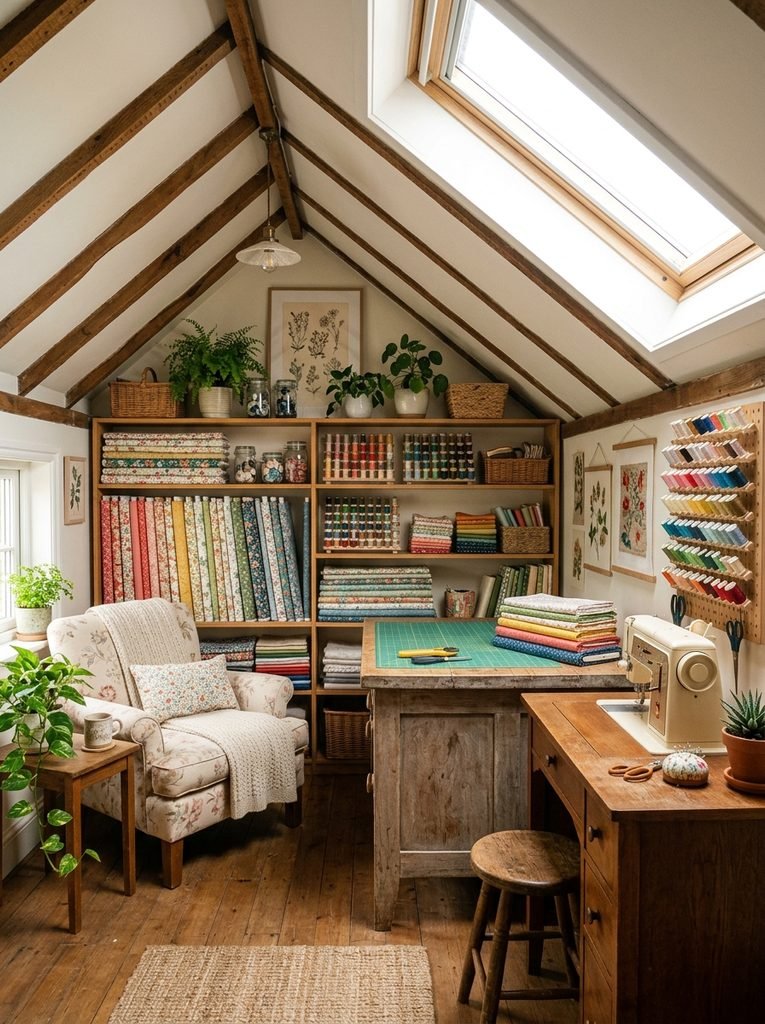
An attic can become a charming sewing studio because its unusual shape creates character. Place the sewing machine beneath the lowest wall and use taller areas for shelves or fabric storage. Skylights can provide beautiful daylight. Keep the center of the room open for cutting and moving fabric. A light color scheme can also help the attic feel more spacious.
11. Create a Closet Sewing Station
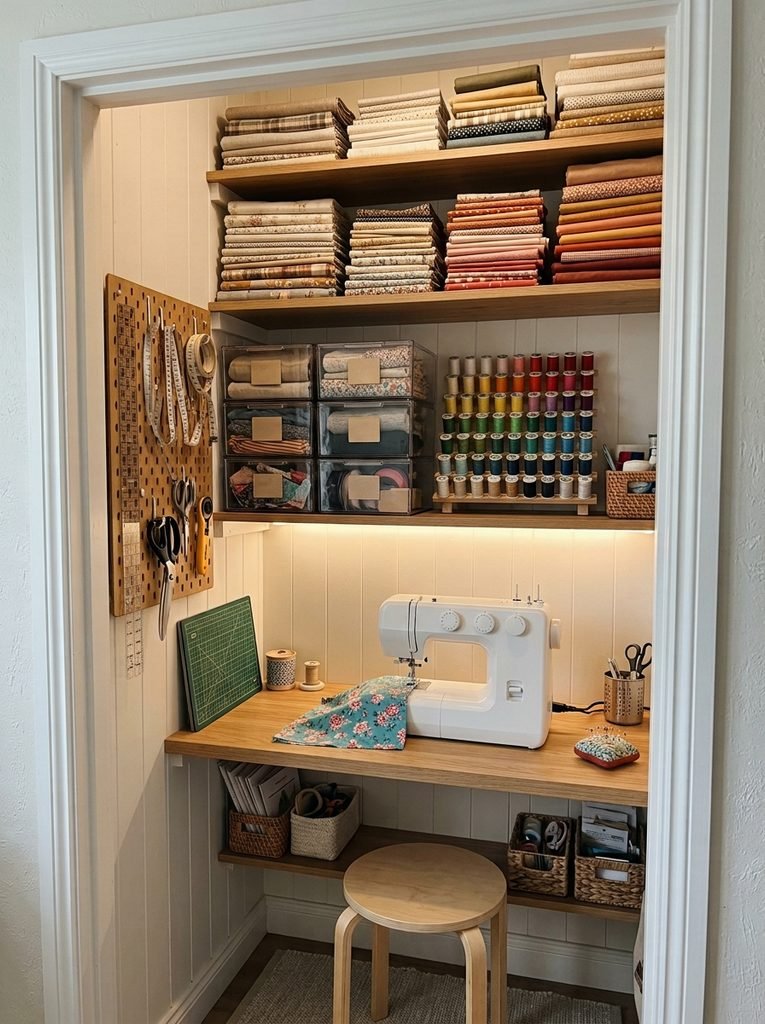
A closet can become a surprisingly useful sewing area. Remove unnecessary items, add a narrow work surface, and install shelves above it. Keep small tools in labeled boxes and use the closet doors for hanging rulers, measuring tapes, or lightweight organizers. When your sewing session ends, simply close the doors and hide the workspace. This works especially well in shared homes.
12. Organize Fabric by Color
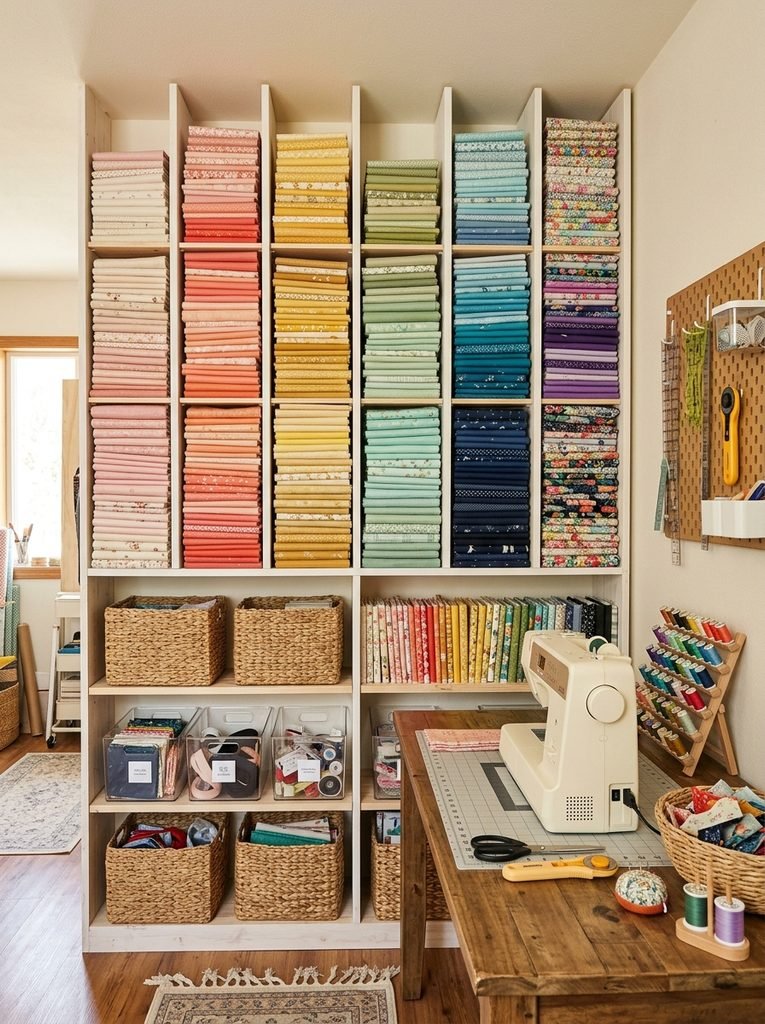
Color organization makes fabric easier to find and turns storage into decoration. Fold similar fabrics into neat stacks and group them by color, pattern, or fabric type. Keep everyday materials within reach and place seasonal or rarely used fabric higher up. USU Extension recommends using containers to keep basic sewing supplies easy to find, which supports this simple organization approach.
13. Add Practical Sewing Room Ideas With a Budget
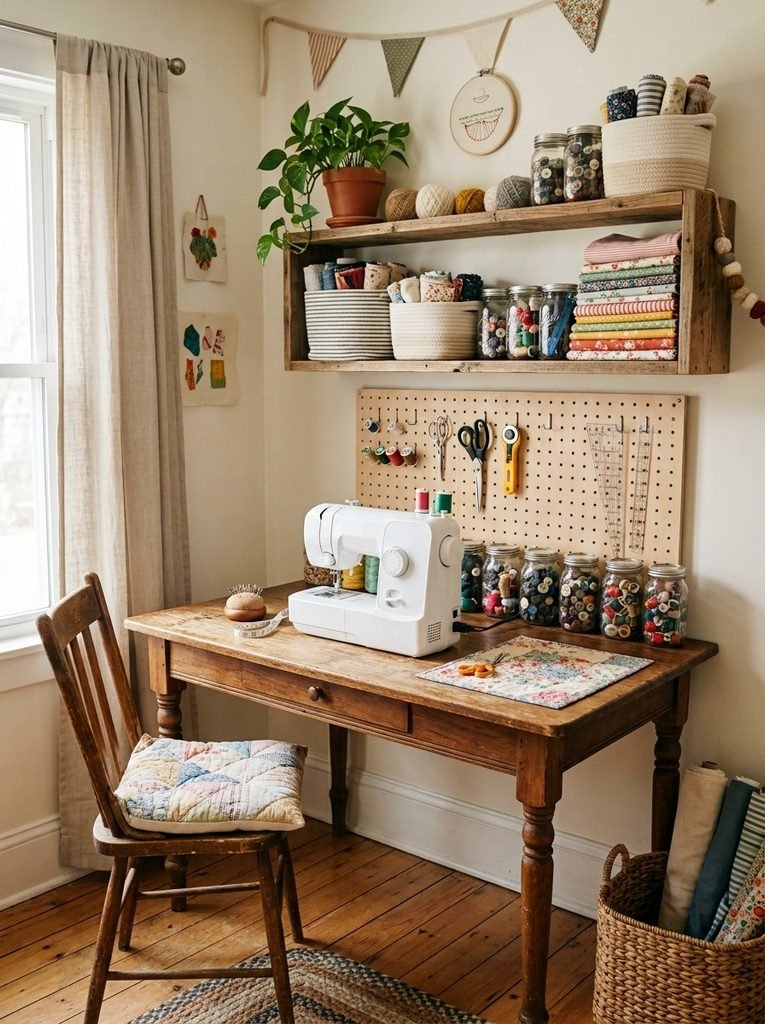
You can create a beautiful sewing room without buying a complete furniture set. Start with what you already own. Reuse a sturdy dining table as a cutting station, add inexpensive baskets for storage, and use jars for buttons, clips, and small supplies. A secondhand wooden shelf can become fabric storage after a simple clean-up or coat of paint. Spend money where it improves daily use.
14. Create a Bohemian Craft Room
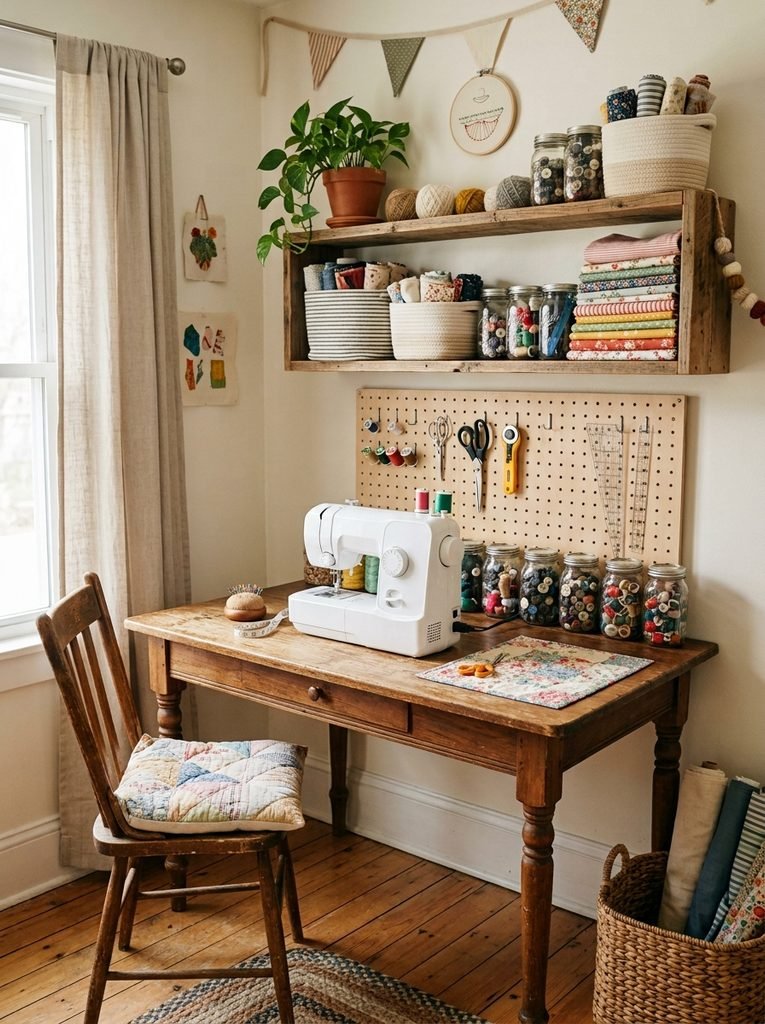
A bohemian sewing room can mix colorful textiles, woven baskets, plants, wooden furniture, patterned rugs, and handmade decorations. Keep the sewing workstation simple so the room still works efficiently. Let your fabrics provide most of the color. A few carefully chosen decorative pieces can make the space feel creative without taking over your work surfaces.
15. Make a Dedicated Longarm Quilting Area
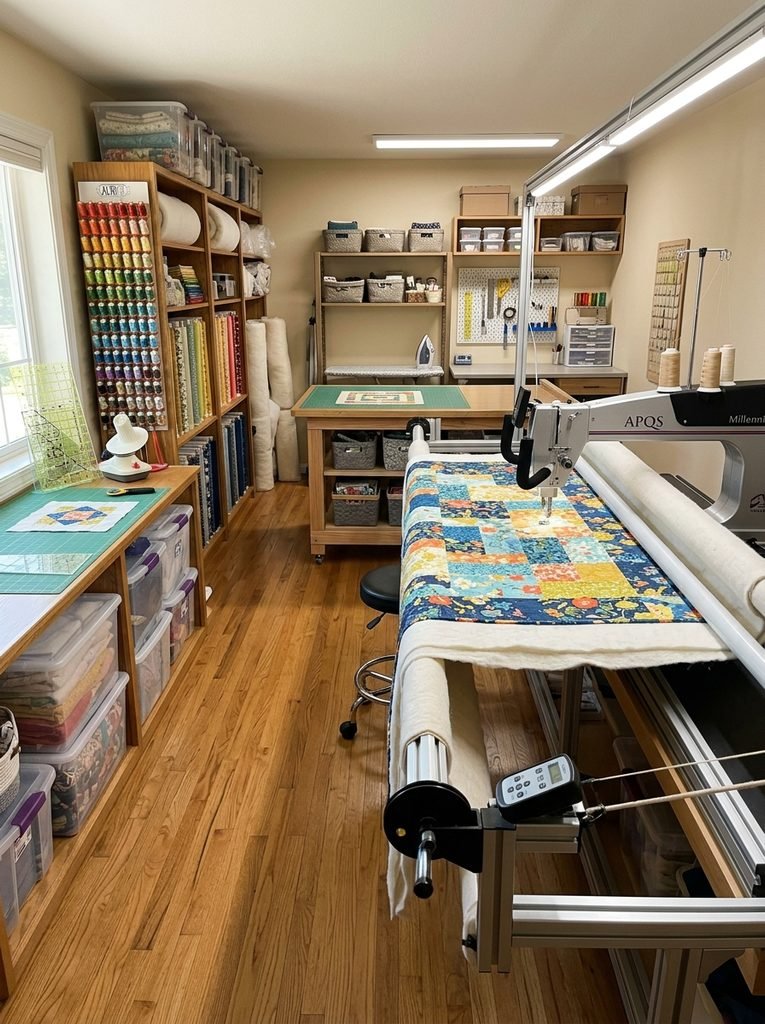
If you use a longarm quilting machine, plan the room around its size and movement. Leave enough open space around the machine so fabric can move without hitting furniture. Keep rulers, quilting rulers, thread, batting, and cutting tools close to the quilting station. Store bulky materials vertically or on strong shelving instead of allowing them to pile around the machine.
16. Keep the Room Organized After Every Project
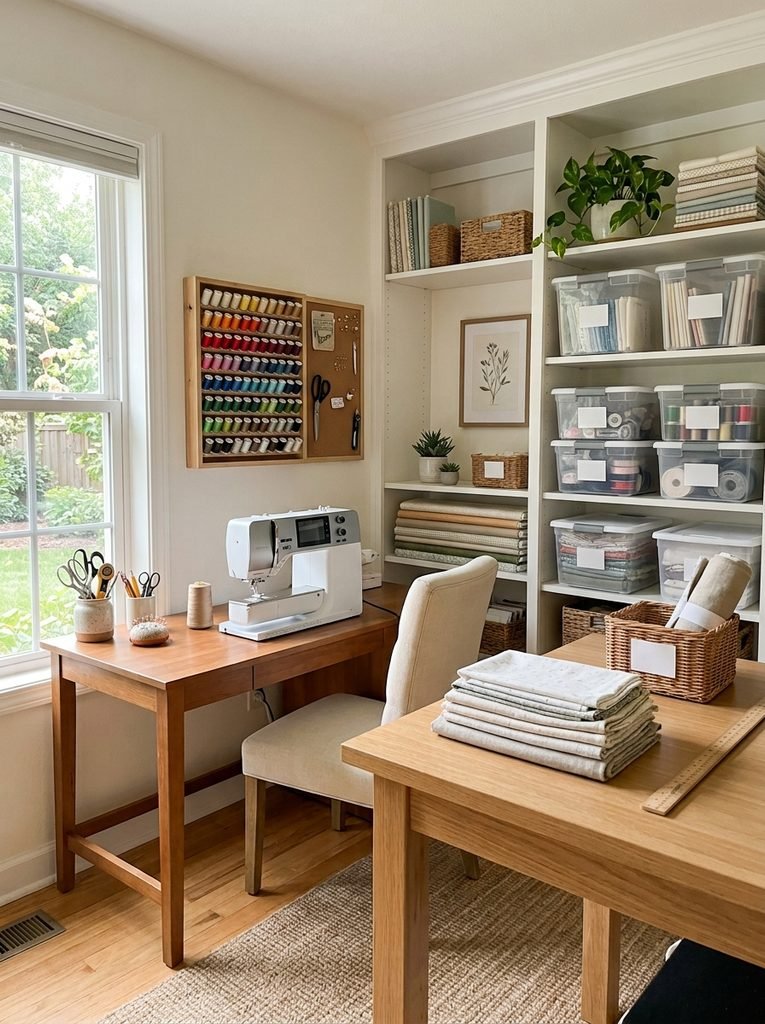
The final idea is less about furniture and more about habit. After finishing a project, return tools to their places, fold leftover fabric, clear the cutting table, and place unfinished work in one labeled container. Use clear boxes when you need to see what is inside and labels when several containers look similar. Martha Stewart also recommends clear storage and labeling because they make supplies easier to identify. A clean reset means you can start the next project without spending twenty minutes searching for scissors or matching thread. That small habit keeps your sewing room useful every day.
Final Thoughts
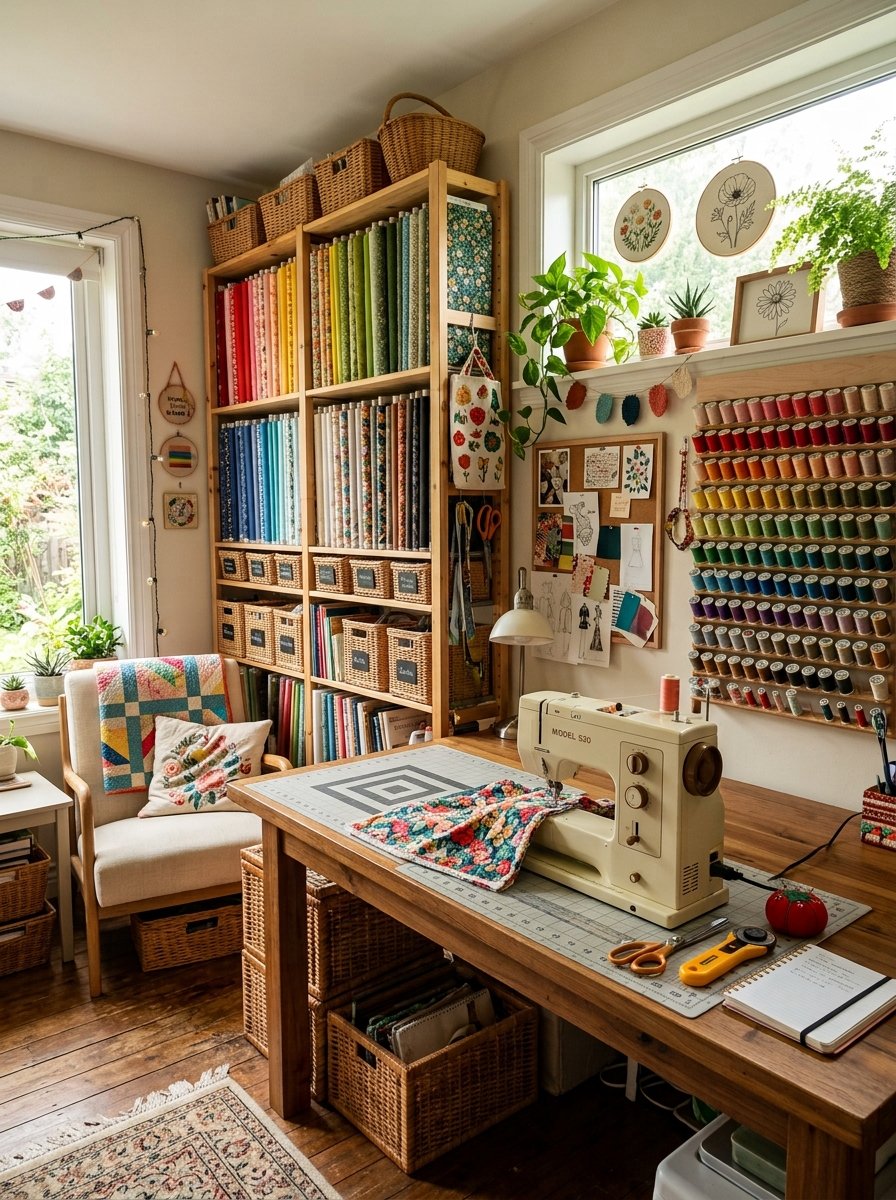
The best sewing room ideas are the ones that match your real sewing habits. You may prefer an Ikea-inspired modern room, a rustic studio filled with wood, a cute pink corner, a vintage workspace, or a tiny closet setup. What matters most is creating a clear workflow where fabric, tools, machines, and storage work together. Start with the space you have, improve one area at a time, and let the room grow with your creativity. A well-planned sewing room does more than store supplies. It makes starting easier. It keeps projects moving. And most importantly, it gives you a place where making something by hand feels enjoyable again.