



This post may contain affiliate links. Please read my disclosure policy.
In This Article Show
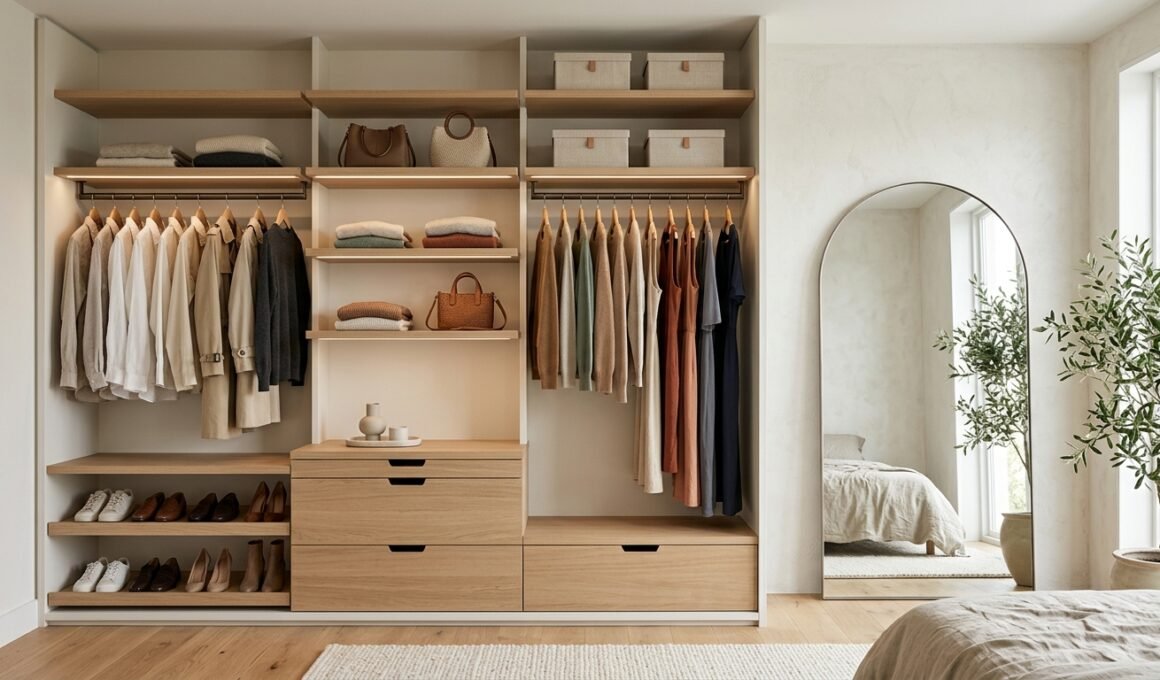
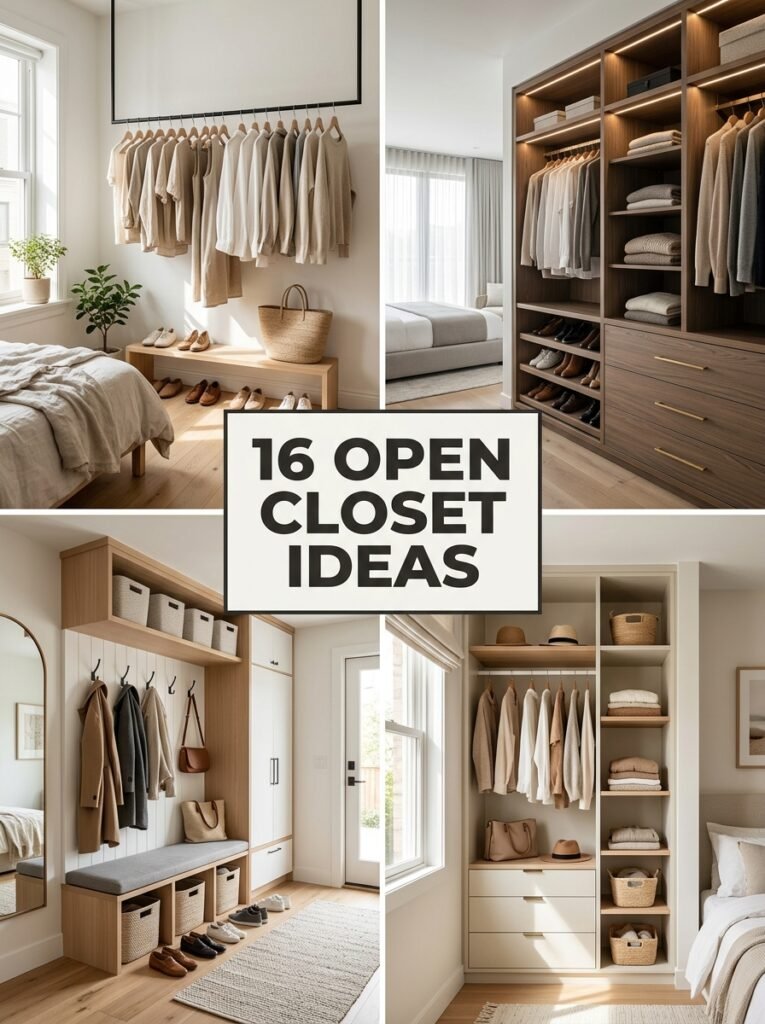
An open closet can make a room feel lighter, more accessible, and surprisingly spacious. Instead of hiding clothing behind doors, open shelving and hanging rails turn everyday storage into part of the room’s design. The best open closet ideas balance easy access with a clean visual appearance, so the space feels intentional rather than messy. This style works especially well in small bedrooms, apartments, entryways, hallways, and rooms where traditional closet doors take up too much space. With the right shelves, hanging zones, baskets, and lighting, an open wardrobe can look modern while still giving you practical everyday storage.
1. Minimalist Wall-Mounted Clothing Rail
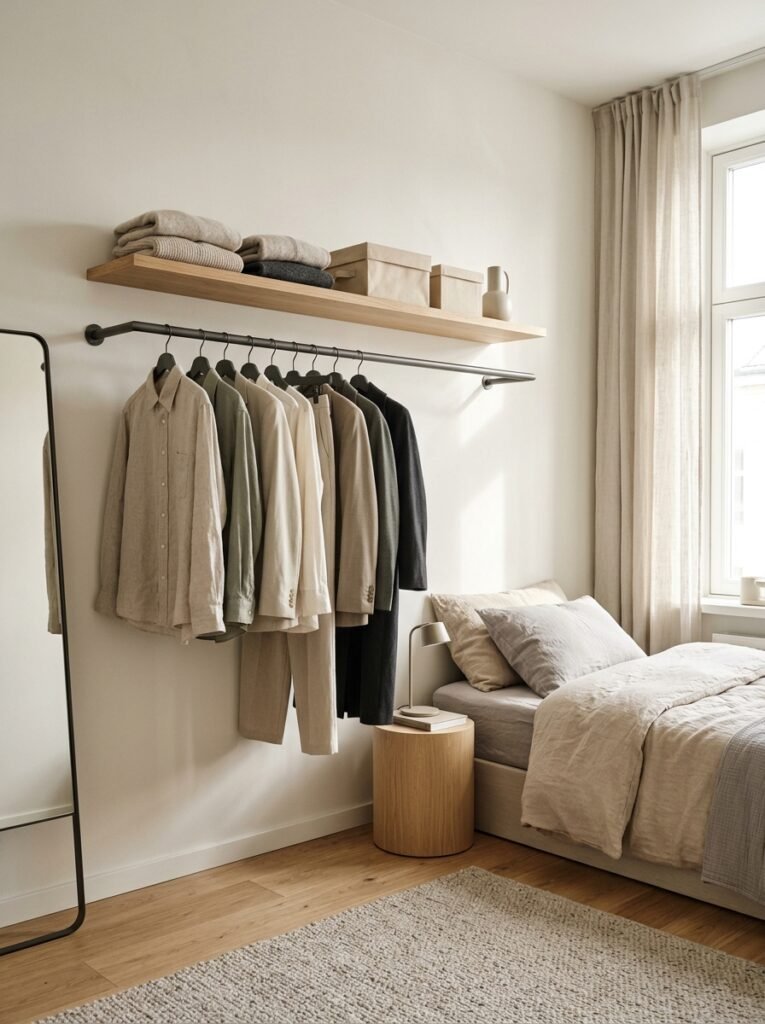
A simple wall-mounted rail can create an open wardrobe without taking up much floor space. Pair it with one or two shelves above or below for folded clothing and accessories. Keep the color palette restrained and use matching hangers so the clothes become part of the room’s visual design. This setup is especially useful in a small bedroom where a full wardrobe would feel too bulky.
2. Open Closet With Floor-to-Ceiling Shelves
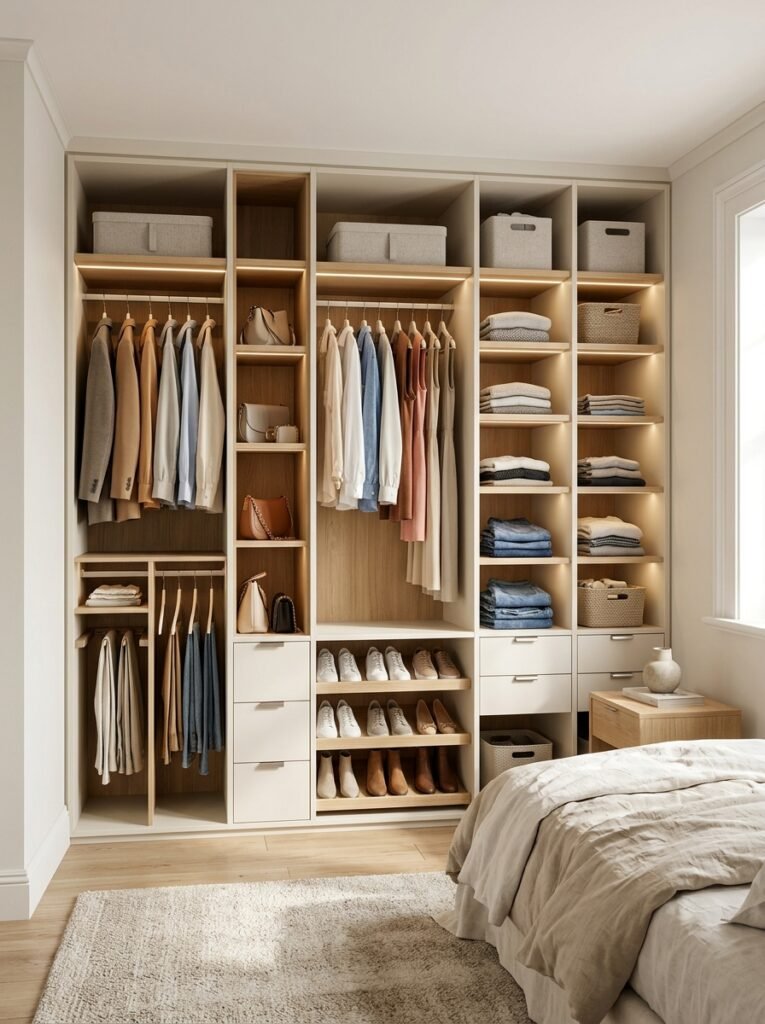
When floor space is limited, use the full height of the wall. Floor-to-ceiling shelving provides room for hanging clothes, folded items, shoes, bags, and accessories without requiring a wide wardrobe. Keep everyday items in the middle sections and reserve the highest shelves for seasonal belongings. Integrated lighting can make the entire storage wall feel more polished.
3. Open Closet in a Small Bedroom Corner
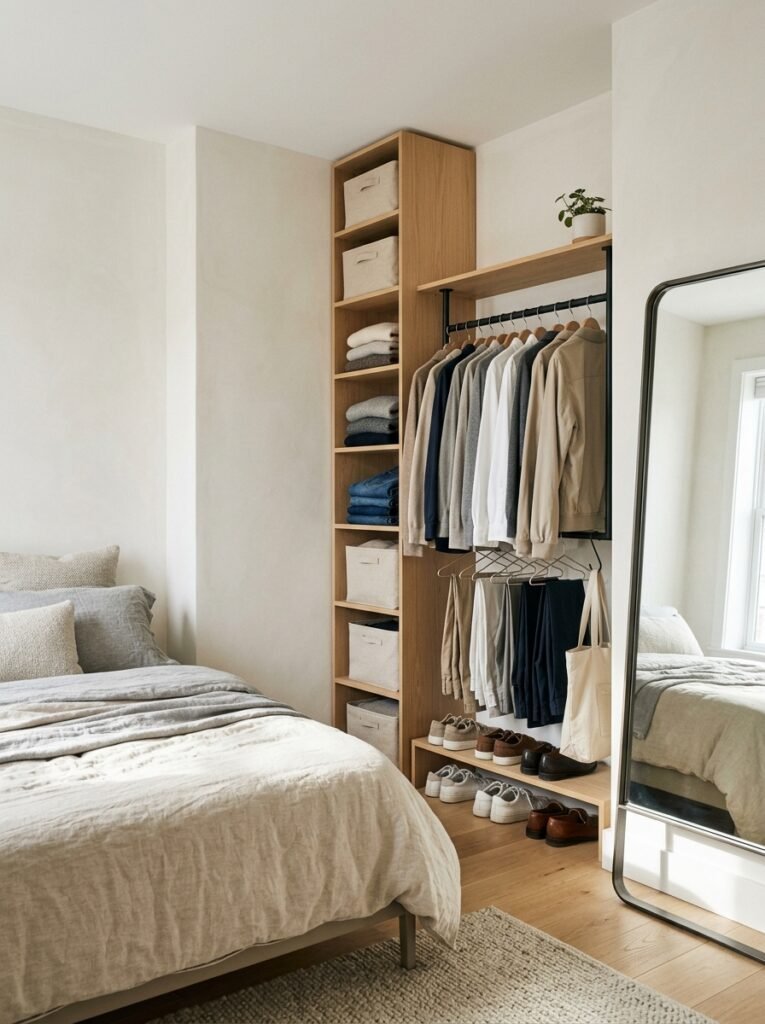
An unused bedroom corner can become a practical wardrobe area with a narrow rail and compact shelving. This is particularly useful when the room does not have a built-in closet. Place the hanging section against the longest available wall and use vertical shelves nearby. A large mirror beside the clothing area can also make the room feel more open while creating a convenient dressing zone.
4. Entryway Open Closet
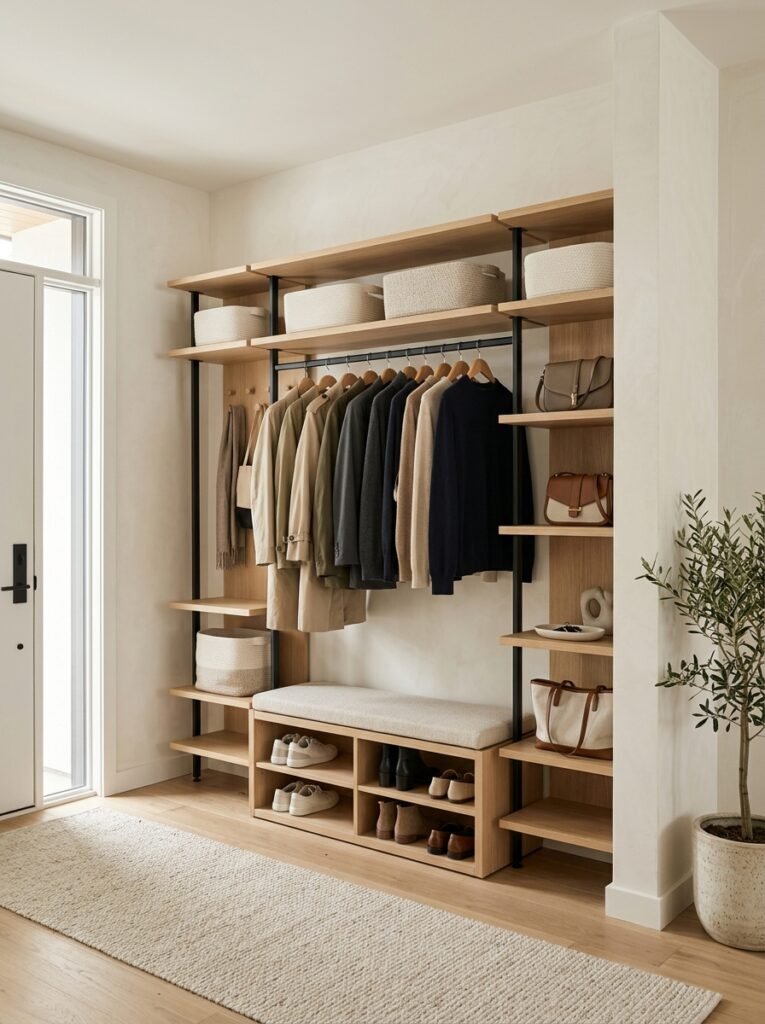
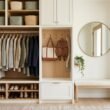
An open closet can be a useful entryway drop zone for coats, bags, shoes, and everyday accessories. Add a hanging rail, a narrow bench, shoe shelves, and a few hooks. The key is to keep the number of visible items controlled. Store seasonal or less attractive belongings in closed baskets or drawers while keeping frequently used pieces easy to grab.
5. Open Hallway Wardrobe
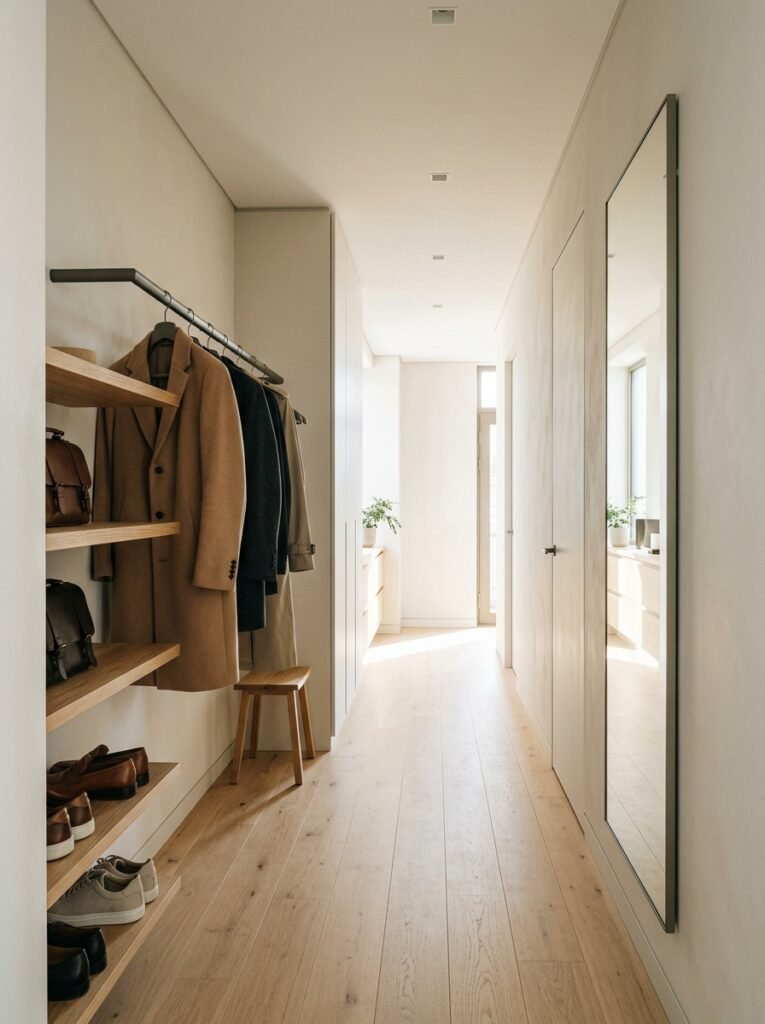
A narrow hallway can benefit from shallow open storage when there is no room for a traditional swinging closet door. Use a slim hanging rail for coats and a few shelves for shoes or bags. Keep the depth limited so the passage remains comfortable. Matching storage containers can help prevent the hallway from becoming visually crowded.
6. Bedroom Built-In Open Storage
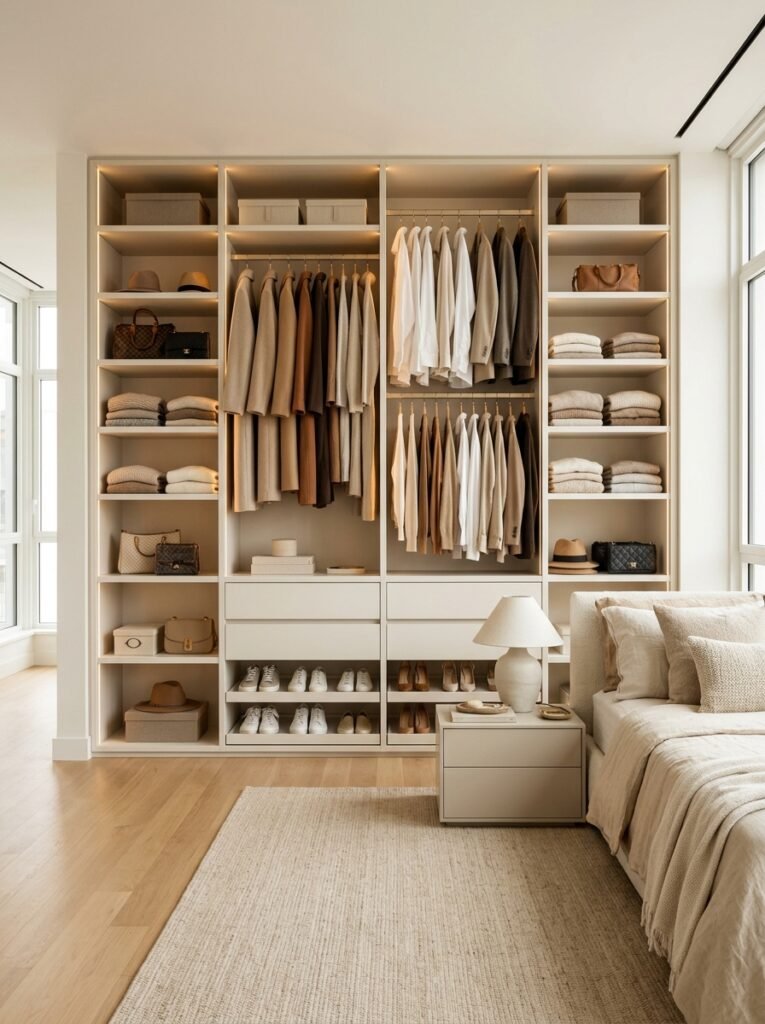
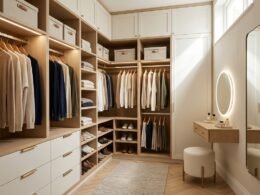
Built-ins can make an open closet feel intentional and architectural. Create a wall of shelves around a central hanging section, then add drawers at the bottom for smaller items. Matching the built-in to the wall color gives the storage a seamless appearance. This approach works particularly well in modern bedrooms where clean lines are important.
7. IKEA-Style Open Wardrobe
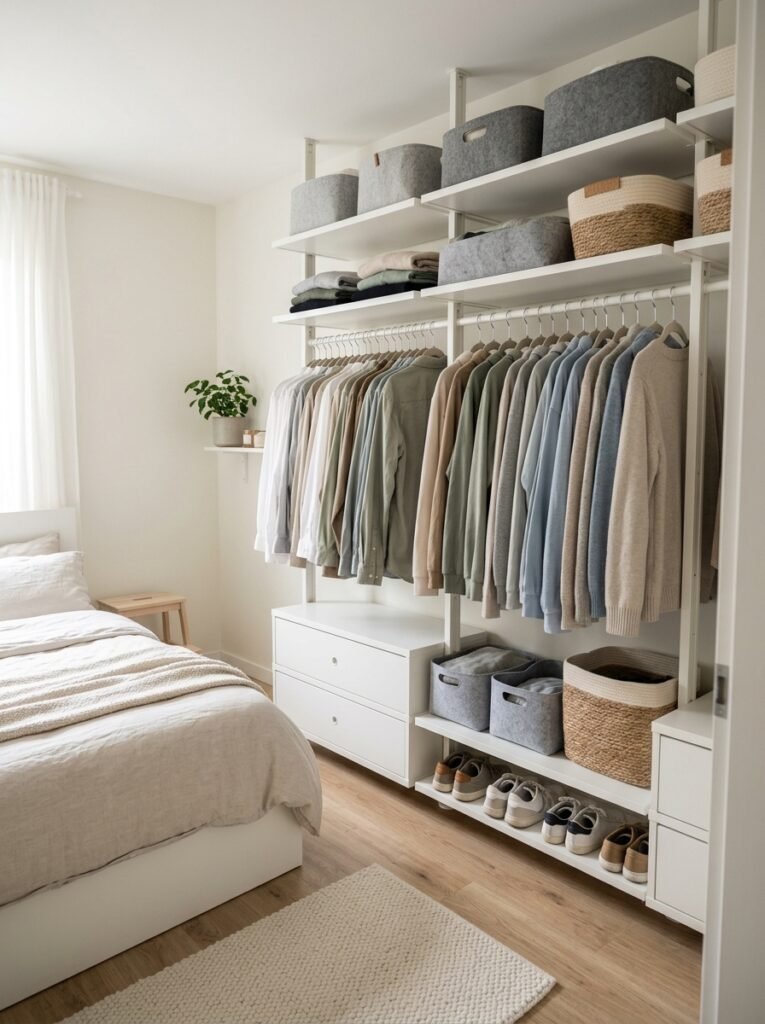
An IKEA-style modular wardrobe can provide the structure of a built-in closet without the same level of custom construction. Use a combination of rails, shelves, drawers, and baskets based on your storage needs. Keep the arrangement visually balanced rather than filling every shelf. Adding a simple curtain or sliding panel later can provide flexibility if you eventually want to conceal part of the storage.
8. Open Closet With a Curtain
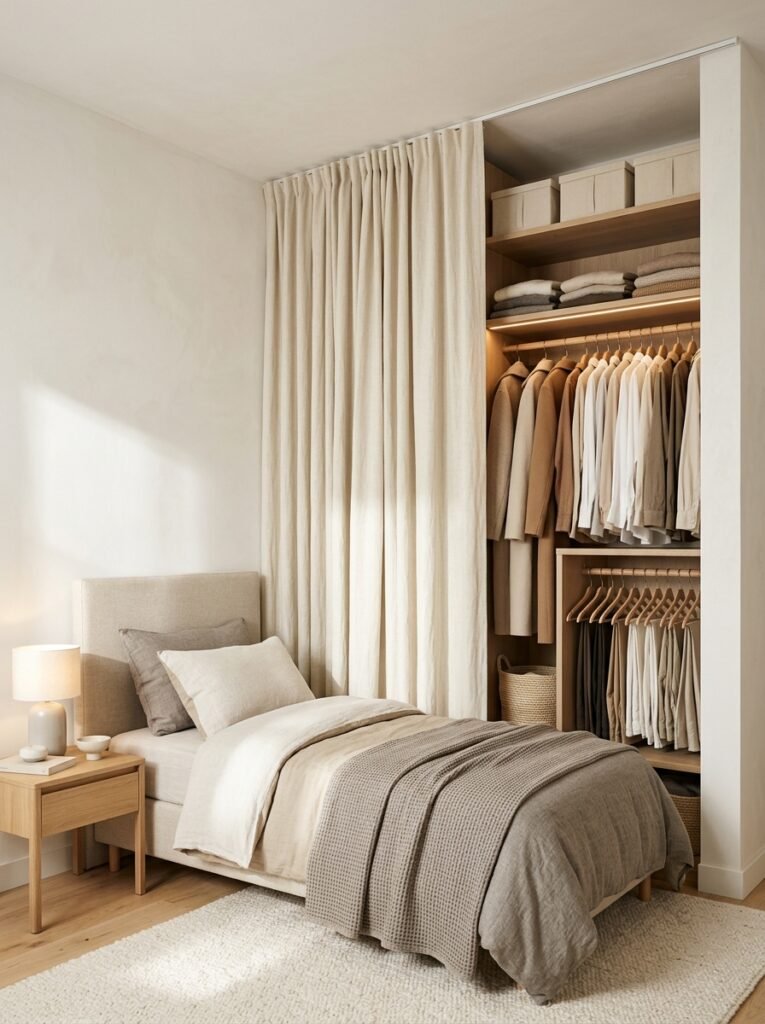
If you like the accessibility of an open closet but sometimes want to hide the clothing, add a ceiling-mounted curtain. A full-height contemporary fabric curtain can slide across the storage area when the room needs a cleaner appearance. This is especially useful for renters or small bedrooms where installing permanent doors is not practical.
9. Open Closet With a Dresser Base
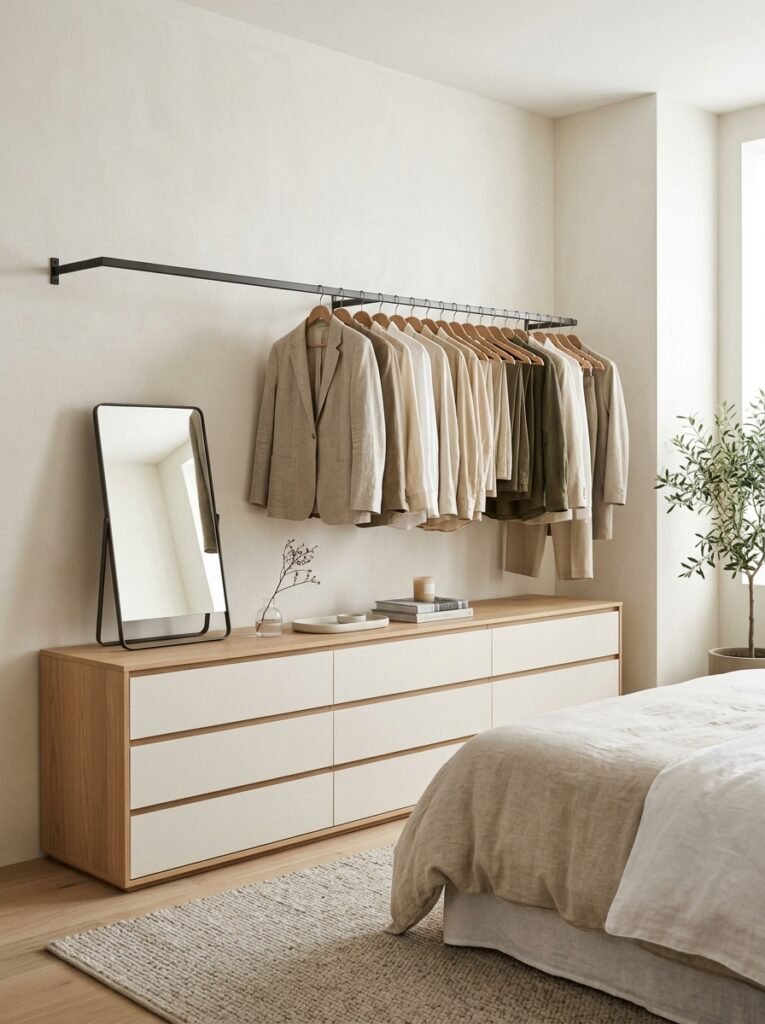
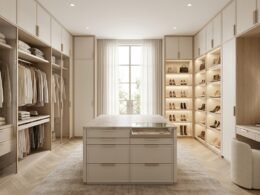
Combining a hanging rail with a low dresser creates two useful storage levels. The rail handles clothing that needs to remain visible, while the dresser hides underwear, accessories, and folded pieces. This setup is practical for a bedroom because the dresser can also provide a surface for a mirror, jewelry tray, or a few carefully selected decorative pieces.
10. Open Closet for Small-Space Hanging Clothes
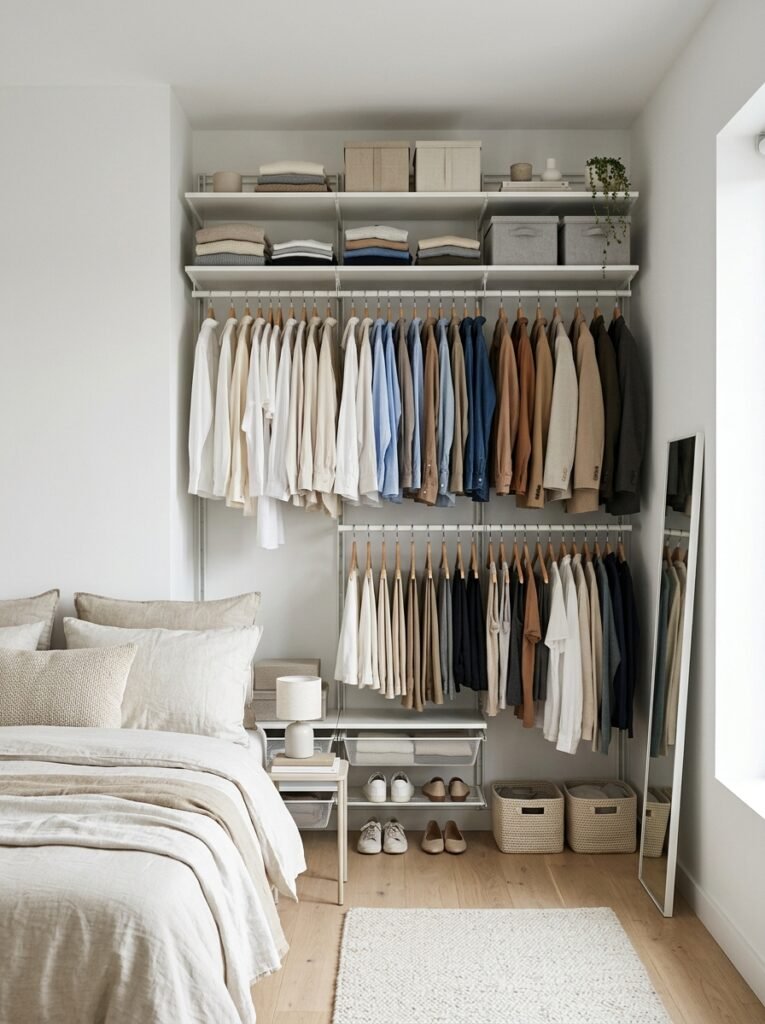
When hanging clothes are your main storage need, prioritize a long rail rather than using valuable wall space for deep cabinets. Install shelves above the rail for folded clothing and accessories. A second lower rail can provide extra capacity for shorter garments. This simple approach can make small-space bedrooms work much harder without overwhelming the room.
11. Open Closet With Shoe Display
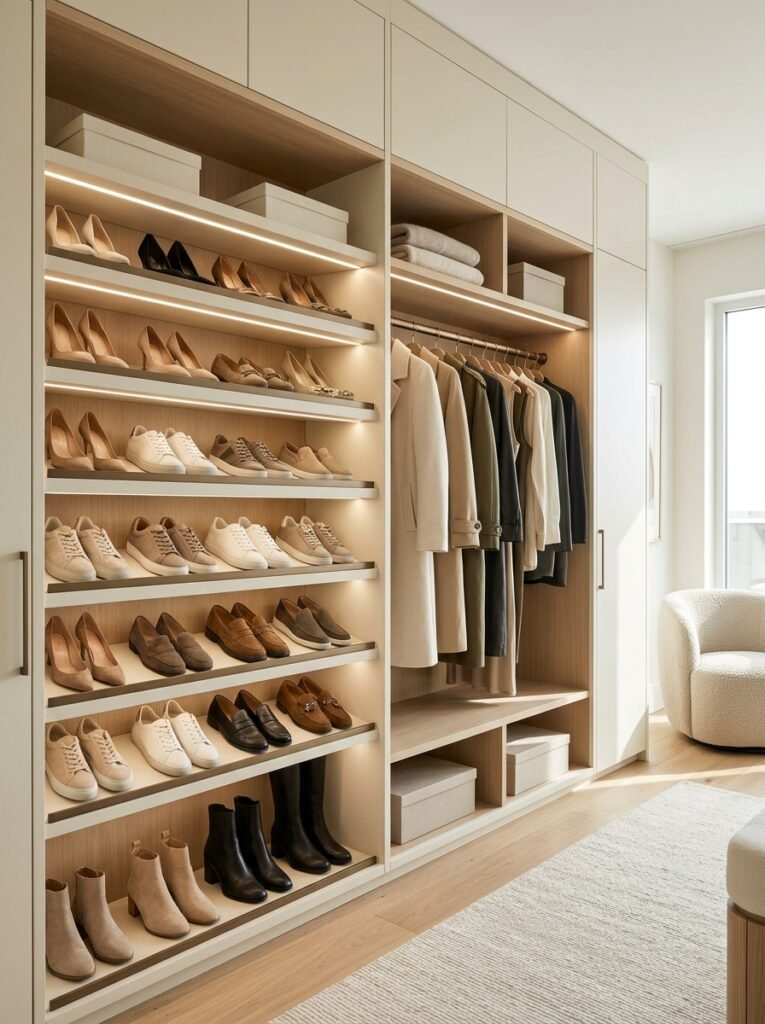
An open closet makes it easy to turn shoes into an organized display. Use several narrow shelves or cubbies rather than placing pairs directly on the floor. Keep the most-used shoes within easy reach and reserve higher shelves for special or seasonal footwear. Consistent spacing creates a boutique-like effect without requiring a large room.
12. Open Bathroom Closet
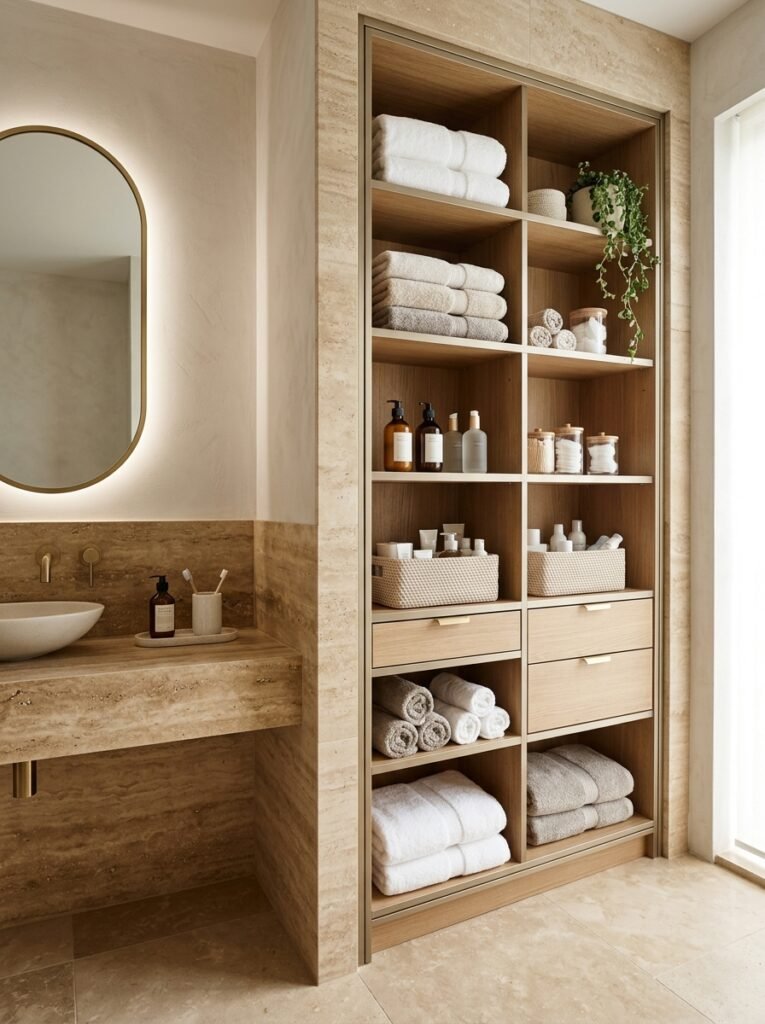
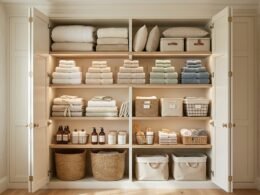
Open storage can work in a bathroom when the contents are attractive and neatly arranged. Use moisture-appropriate shelving for folded towels, toiletries, and everyday essentials. Keep the arrangement simple and avoid overcrowding. A combination of open shelves and a few closed drawers can give you accessibility without exposing every small item.
13. Minimalist Open Wardrobe Wall
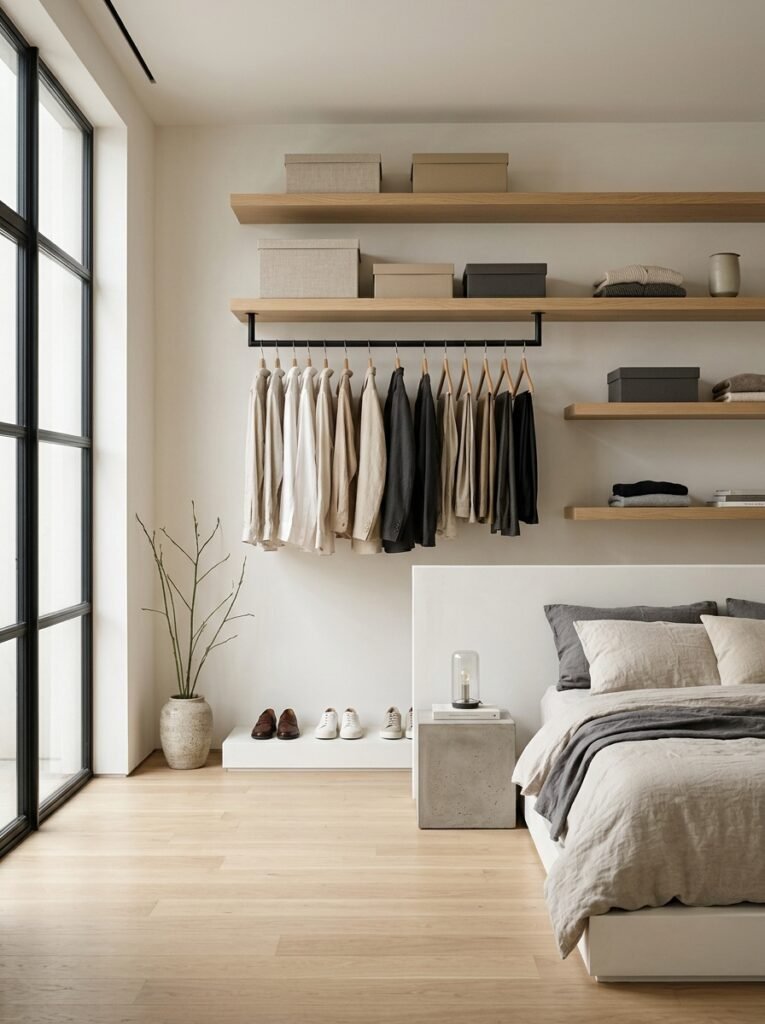
For a truly minimalist look, reduce the closet to its essential elements: one hanging rail, a few shelves, and carefully selected storage boxes. Keep the number of visible items limited and use a consistent color palette. This works particularly well in modern small bedrooms where too much furniture can make the space feel crowded.
14. Open Closet Between Bedroom Zones
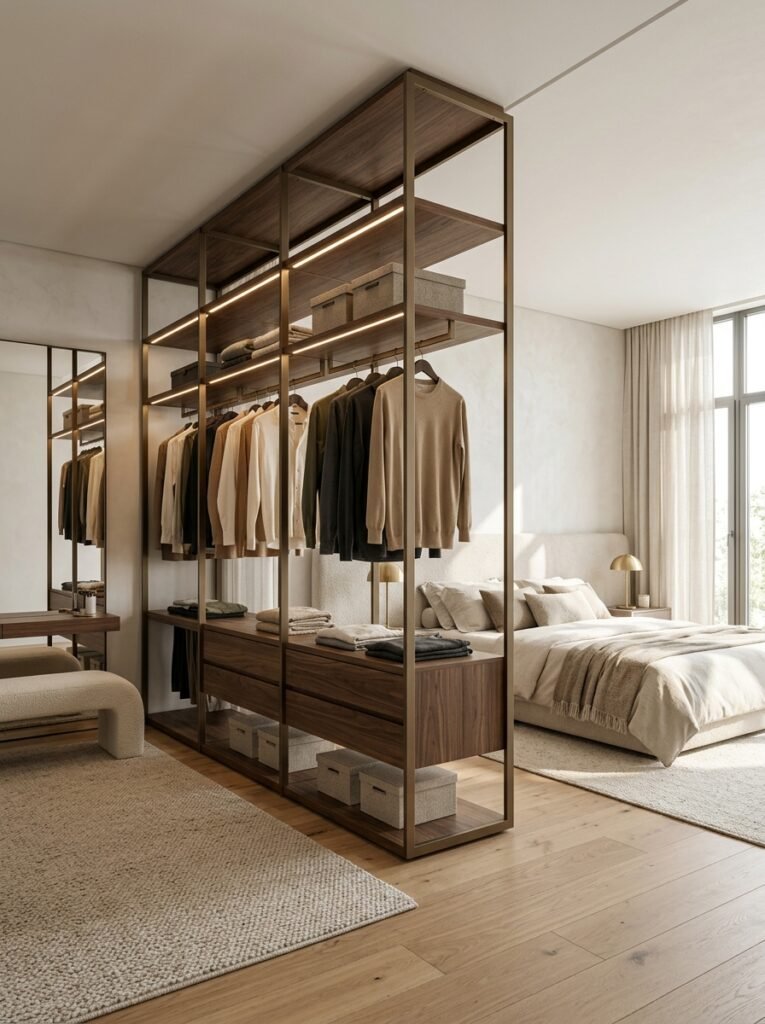
In a larger bedroom, an open wardrobe can help visually separate sleeping and dressing areas. Position the storage along a wall or use a carefully designed open shelving unit as a partial divider. This can create a dedicated dressing zone without building a full partition. Keep the design open enough to preserve light and visual flow.
15. Open Closet With Upper Cabinets
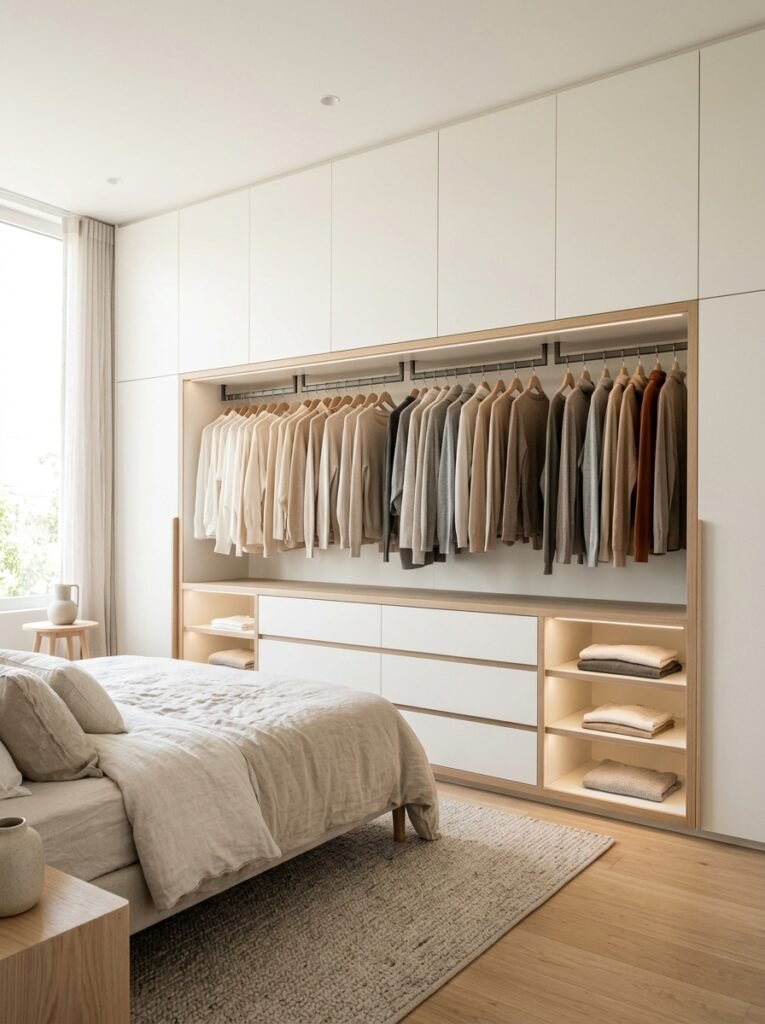
If you like the accessibility of open hanging storage but need more hidden capacity, combine an open lower wardrobe with upper cabinets. Keep everyday clothing on the visible rails and place luggage, seasonal clothing, or less attractive storage items behind the upper doors. This creates a cleaner appearance while still keeping the main wardrobe easy to access.
16. Small Bedroom Open Closet Nook
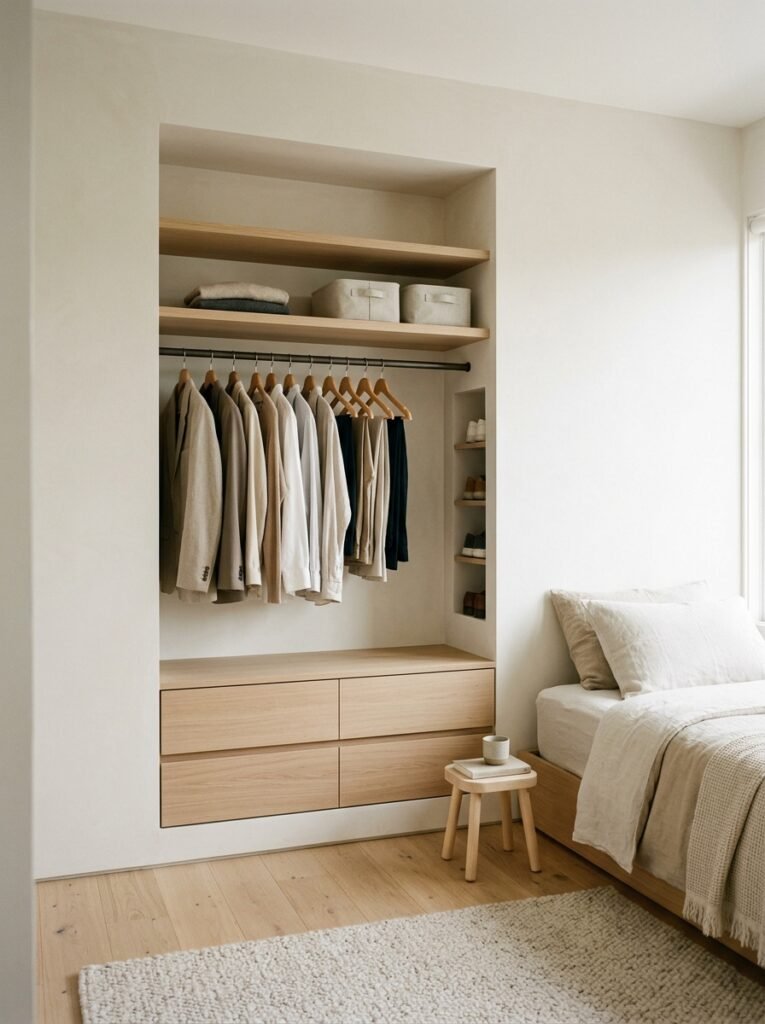
A narrow recessed nook can become a surprisingly effective wardrobe area. Add a rail across the width, shelves above, and a few drawers below. If the nook is deep enough, use side shelves for shoes and accessories. Keep the surrounding wall light and the storage visually simple so the bedroom still feels spacious.
How to Make an Open Closet Look Organized
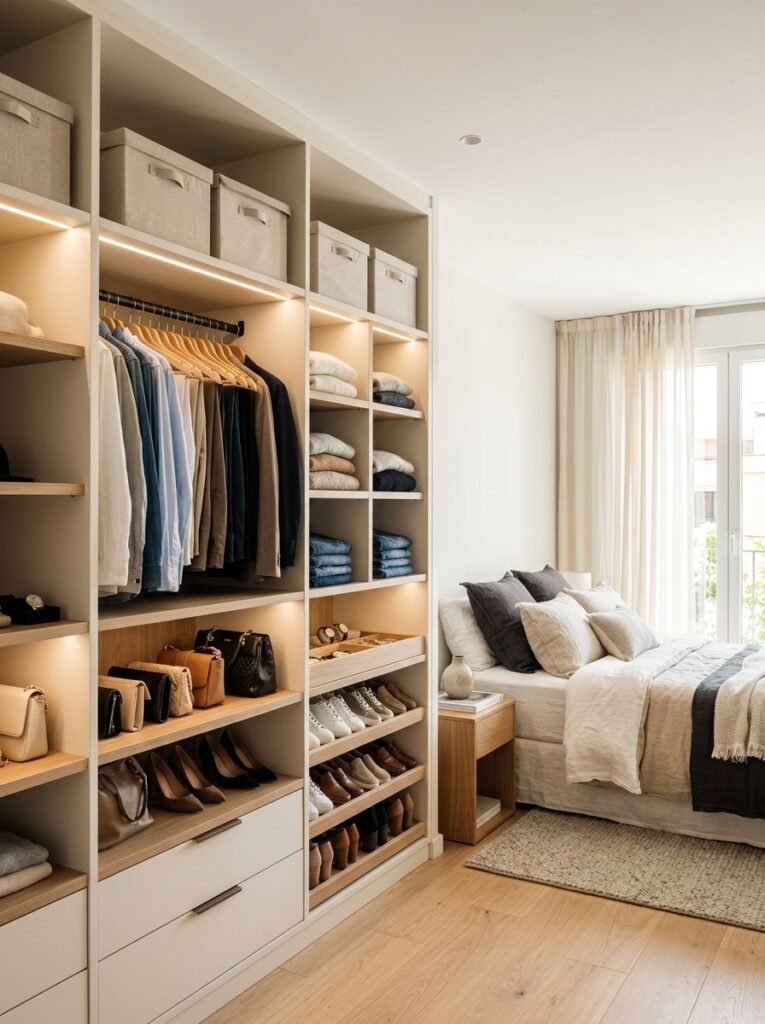
The biggest challenge with an open wardrobe is visual clutter. Because everything is visible, organization becomes part of the design. Start by limiting what stays on display and move seasonal or rarely used items into closed storage. Matching hangers are one of the easiest improvements. They create consistent spacing and make the clothing area look more intentional. You can also group clothing by type or color, depending on what makes your routine easier. Use baskets and boxes selectively. They are helpful for small accessories and less attractive items, but too many containers can make an open system look crowded.
Open Closets for Small Spaces
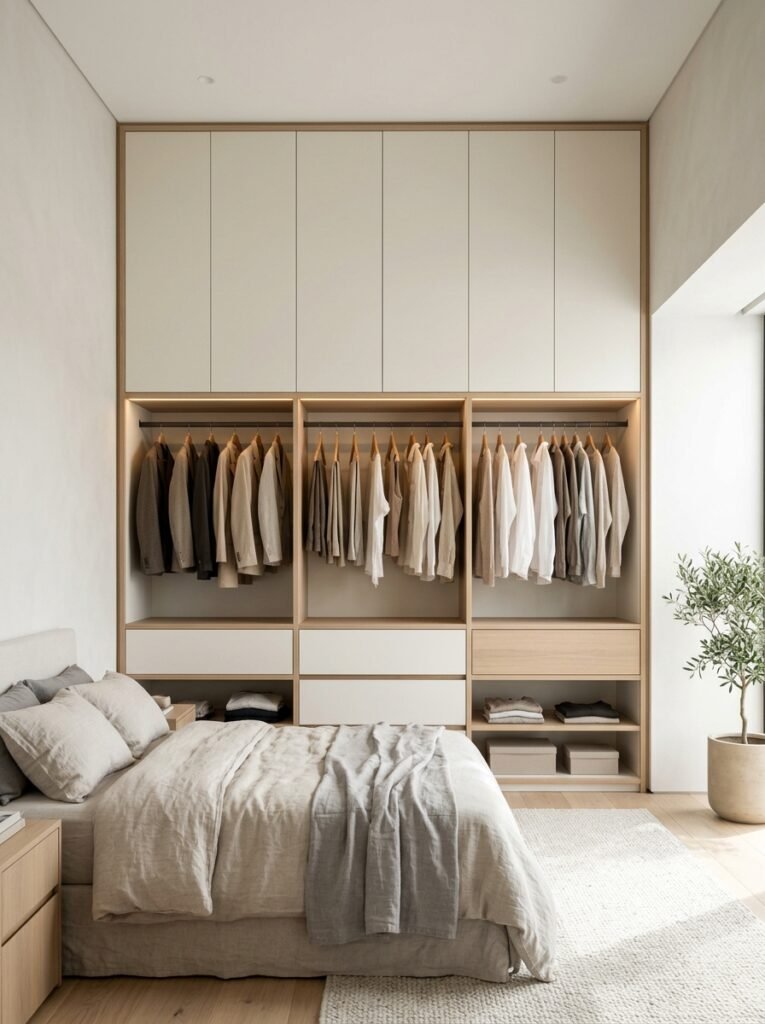
Small rooms benefit from shallow storage and vertical planning. Instead of using a deep wardrobe that extends far into the bedroom, consider a wall-mounted rail, floating shelves, or a narrow built-in system. Mirrors can also help reflect light and create more visual depth. If the room is extremely compact, a curtain can provide privacy without taking up the swing space required by traditional doors.
Final Thoughts
The best open closet ideas make storage feel like part of the room instead of an obstacle. A simple rail can work beautifully in a tiny bedroom, while a full built-in wardrobe can create a sophisticated dressing wall in a larger space. For small spaces, focus on vertical storage, shallow shelves, and carefully selected hanging zones. For entryways and hallways, prioritize coats, shoes, and everyday bags. In bathrooms, choose moisture-appropriate materials and keep exposed items neatly arranged. An open closet does not have to look messy or unfinished. With consistent hangers, thoughtful shelving, good lighting, and a simple color palette, it can become one of the most attractive and useful features in a modern home.