




This post may contain affiliate links. Please read my disclosure policy.
In This Article Show
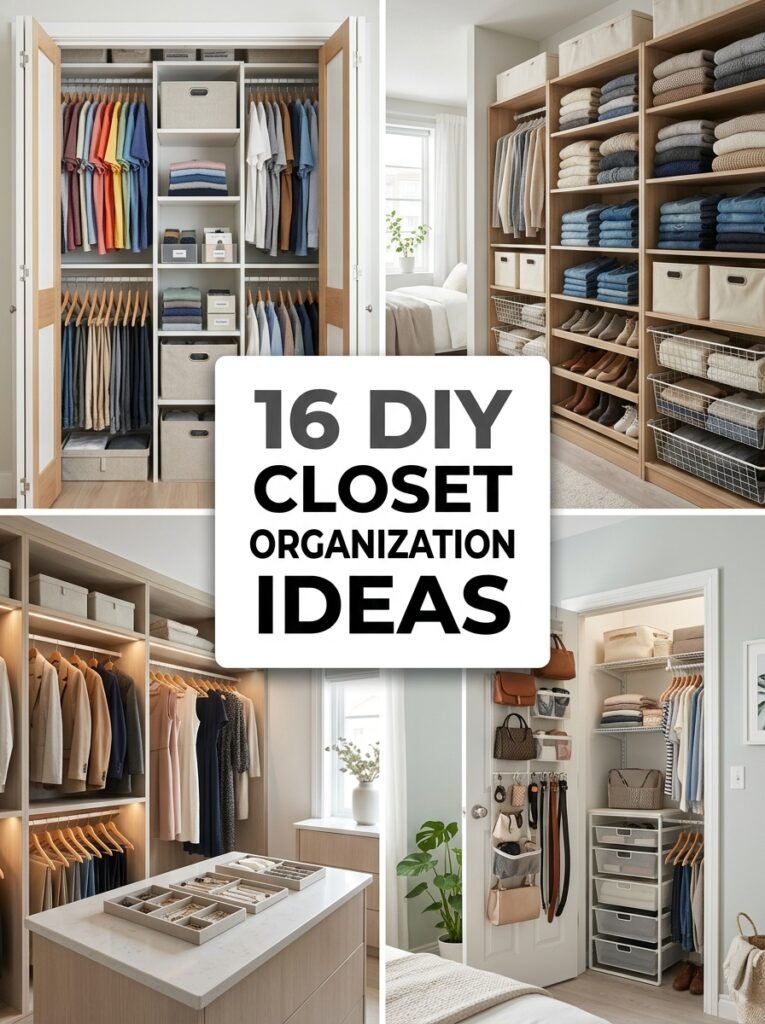
A messy closet can make a small bedroom feel even smaller, but you do not always need an expensive custom system to fix it. With a few smart changes, basic shelves, affordable organizers, and a little creativity, you can turn an ordinary closet into a space that feels easier to use every day. The best diy closet organization projects focus on practical storage rather than expensive upgrades. Whether you have a tiny reach-in closet, a walk-in, or a bedroom wardrobe, simple changes can create more hanging space, improve visibility, and give every item a clear home. These ideas also work well for renters and anyone searching for easy, cheap, or budget-friendly ways to organize clothing.
1. Add a Second Hanging Rod
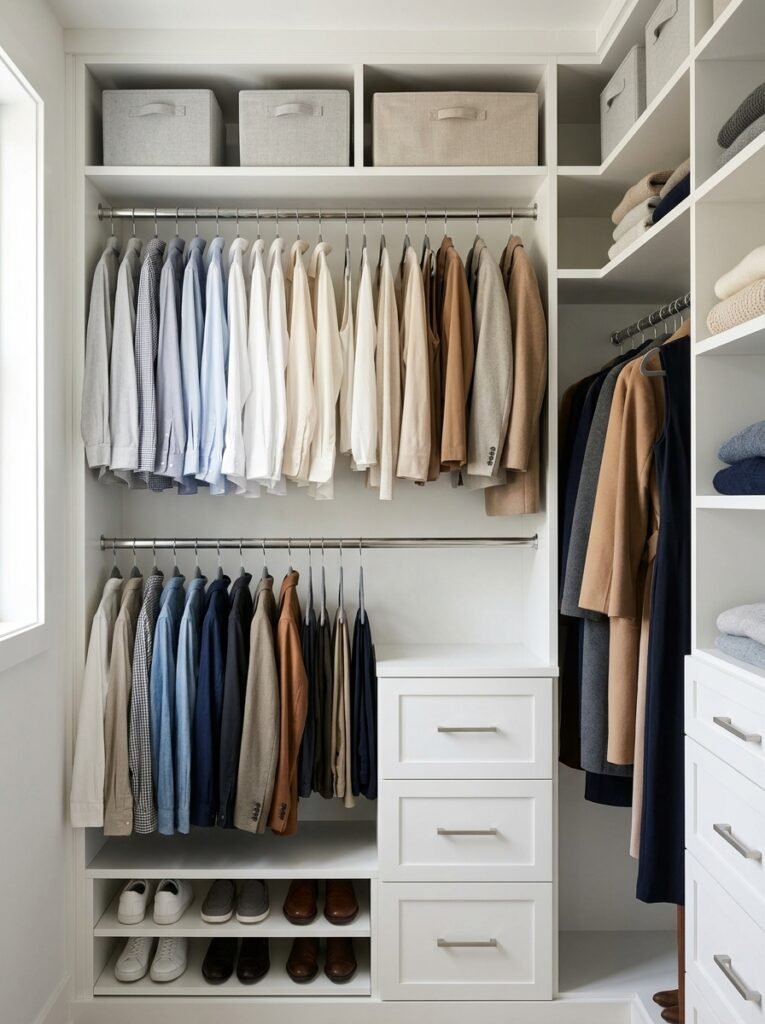
One of the easiest ways to create more closet space is to use the empty area beneath your existing hanging rod. Add a second rod for shirts, skirts, jackets, or other shorter pieces. Keep longer clothes such as dresses and coats on a separate section so they have enough room. This simple upgrade can almost double the useful hanging area without changing the entire closet.
2. Use IKEA Billy Bookcases as Closet Shelving
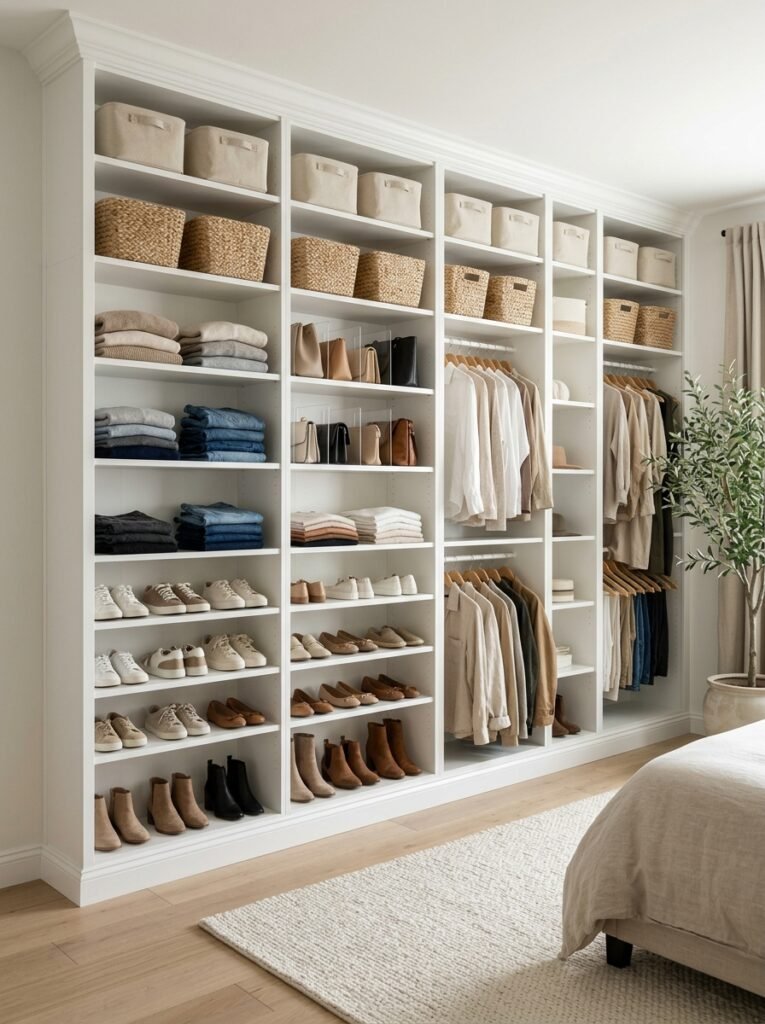
IKEA Billy bookcases can become a useful foundation for a budget closet system when their dimensions fit your available space. Use them to create vertical storage for folded clothes, handbags, shoes, and accessories. Add baskets, drawers, or simple doors where needed. The key is to measure your closet first and plan the arrangement around your actual storage needs rather than forcing too many units into the room.
3. Turn Bookshelves Into a Budget Closet System
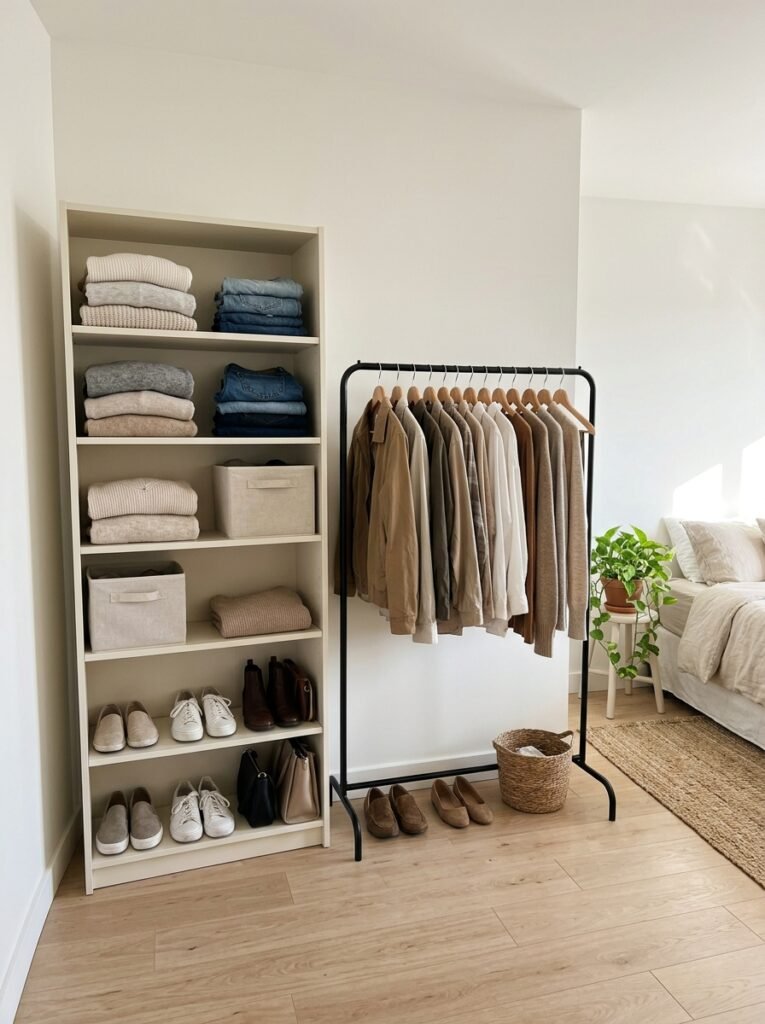
A standard bookshelf can do much more than hold books. Place a sturdy shelving unit inside a closet to create vertical storage for folded clothes, shoes, bags, and boxes. Add a hanging rod beside it if the closet has enough width. This approach is especially useful when you want a simple bedroom organization system without investing in custom cabinetry.
4. Add Drawers for Small Items
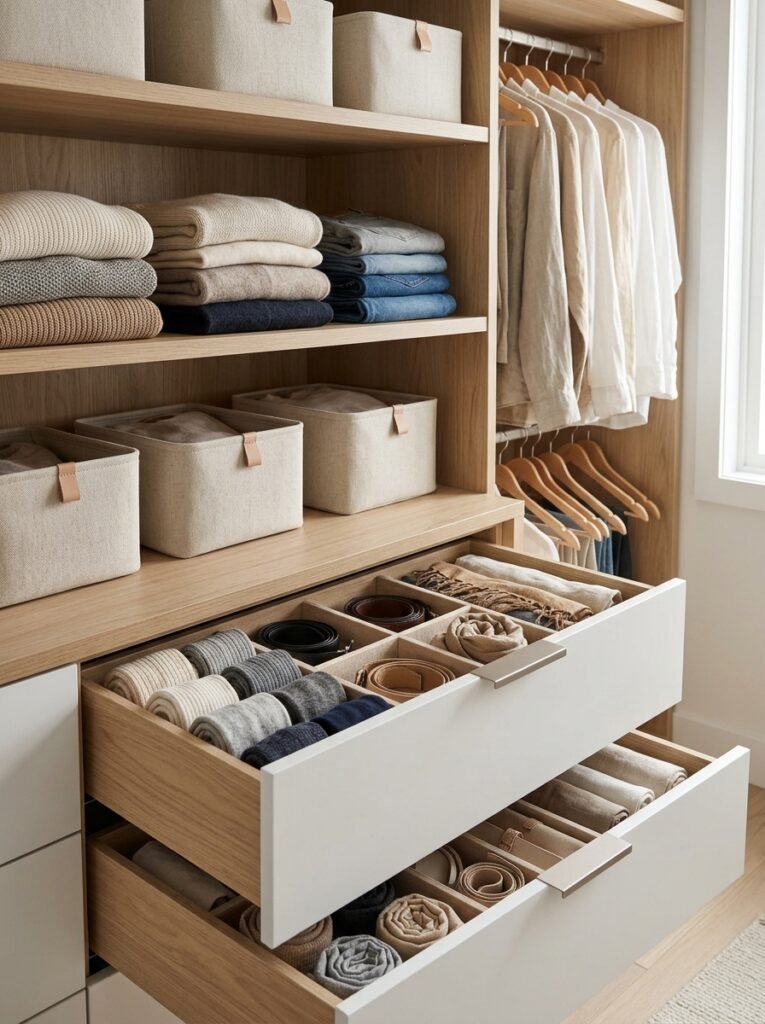
Open shelves are useful, but small clothing and accessories can quickly make them look messy. Adding drawers gives socks, underwear, belts, scarves, and other small items a contained home. If built-in drawers are too expensive, look for modular drawer units that fit beneath existing shelves. Clear categories make the system easier to maintain.
5. Create a Clothes Hanger Storage Zone
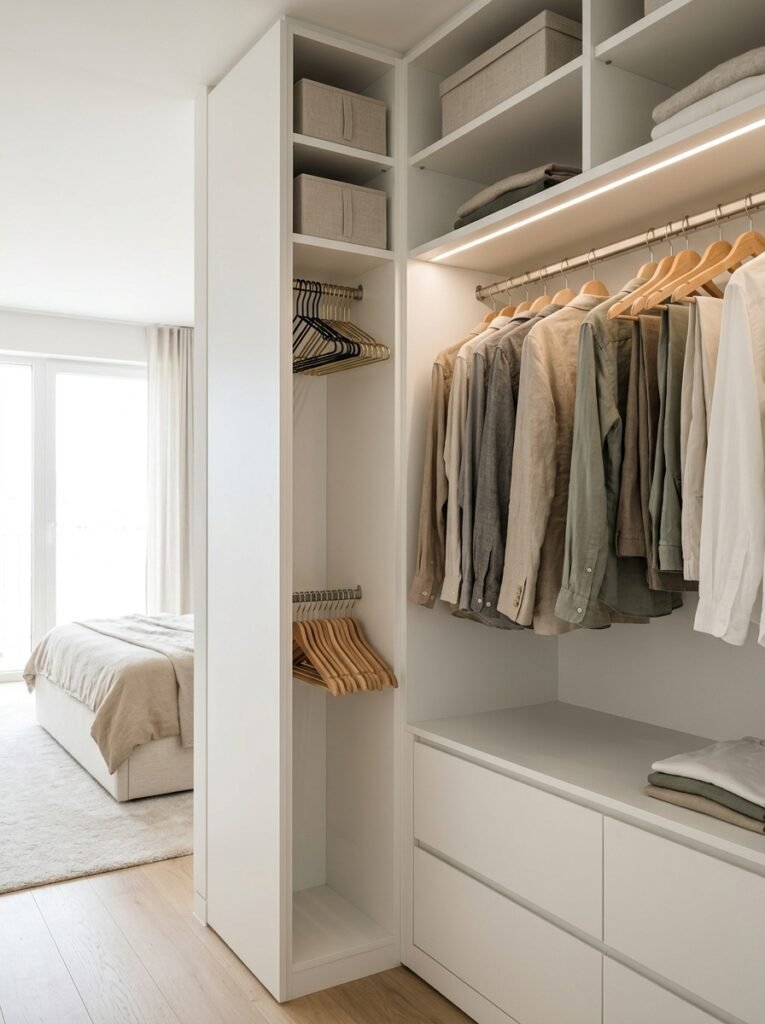
Hangers can become surprisingly difficult to manage when they are scattered across a closet. Create a dedicated hanger zone using a narrow vertical section, wall-mounted rail, or compact storage basket for spare hangers. Keep the most frequently used hangers near your main hanging area. This small change makes laundry days and outfit changes much faster.
6. Make the Most of a Small Closet
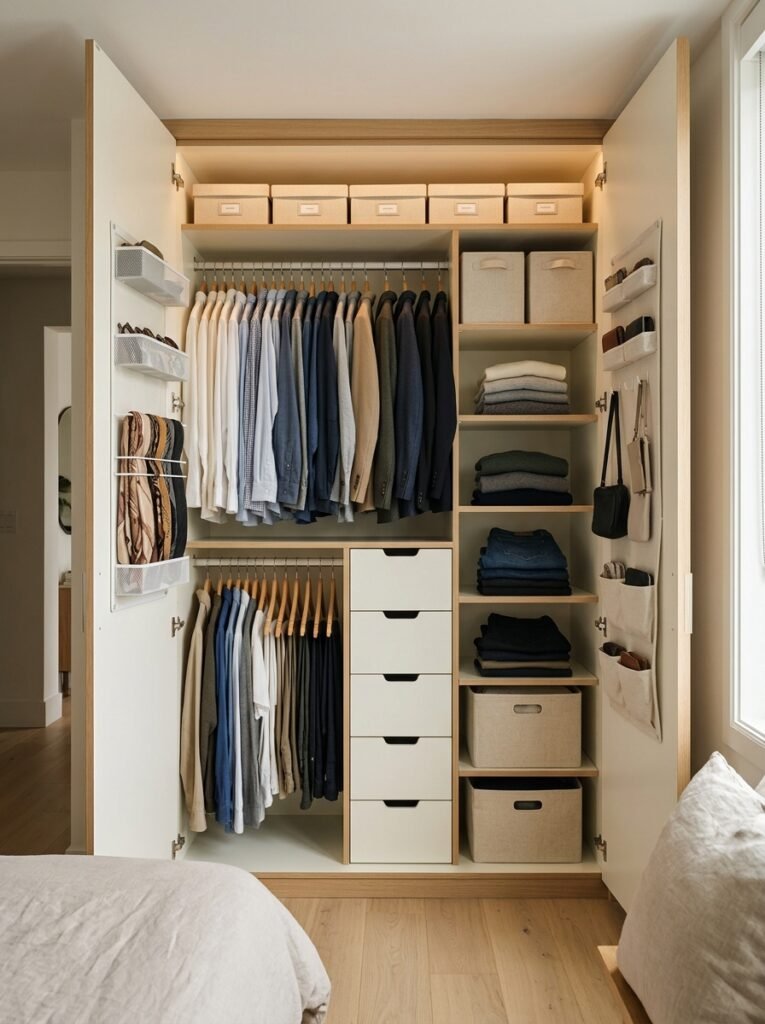
A small closet needs a combination of vertical and horizontal storage. Use double hanging rods, narrow shelves, slim drawers, hooks, and the back of the door. Avoid filling the floor with bulky boxes because they can make the closet difficult to access. Light finishes and consistent storage containers can also make the space feel cleaner and more open.
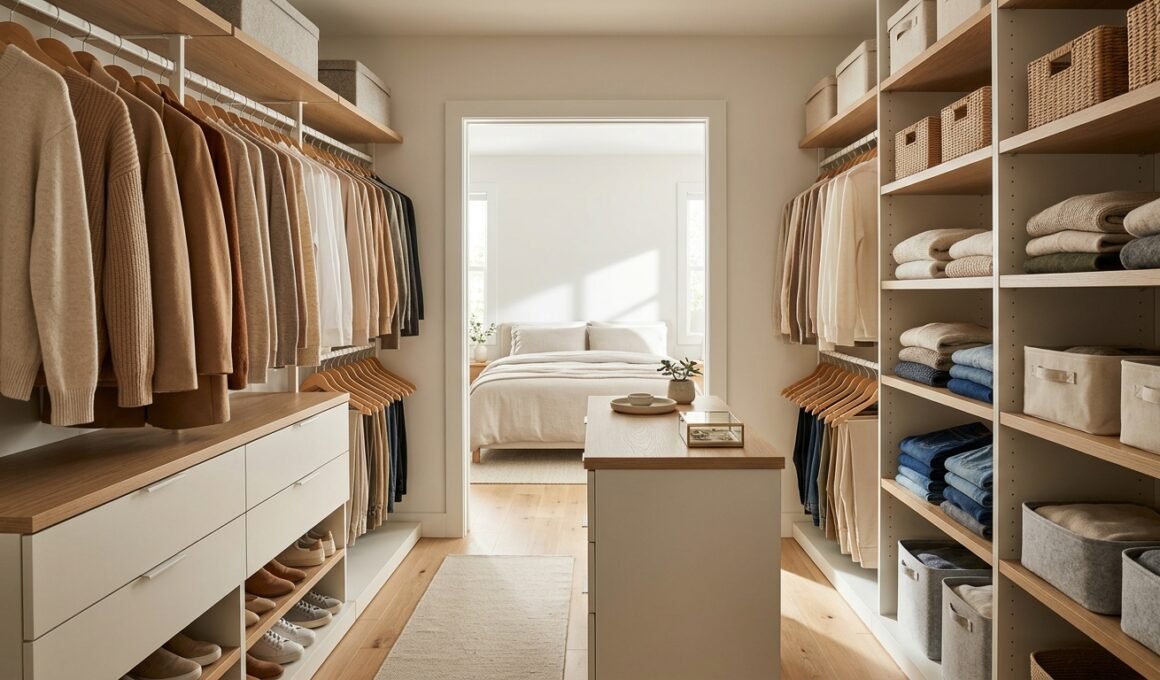
7. Use a Dresser Inside a Walk-In Closet
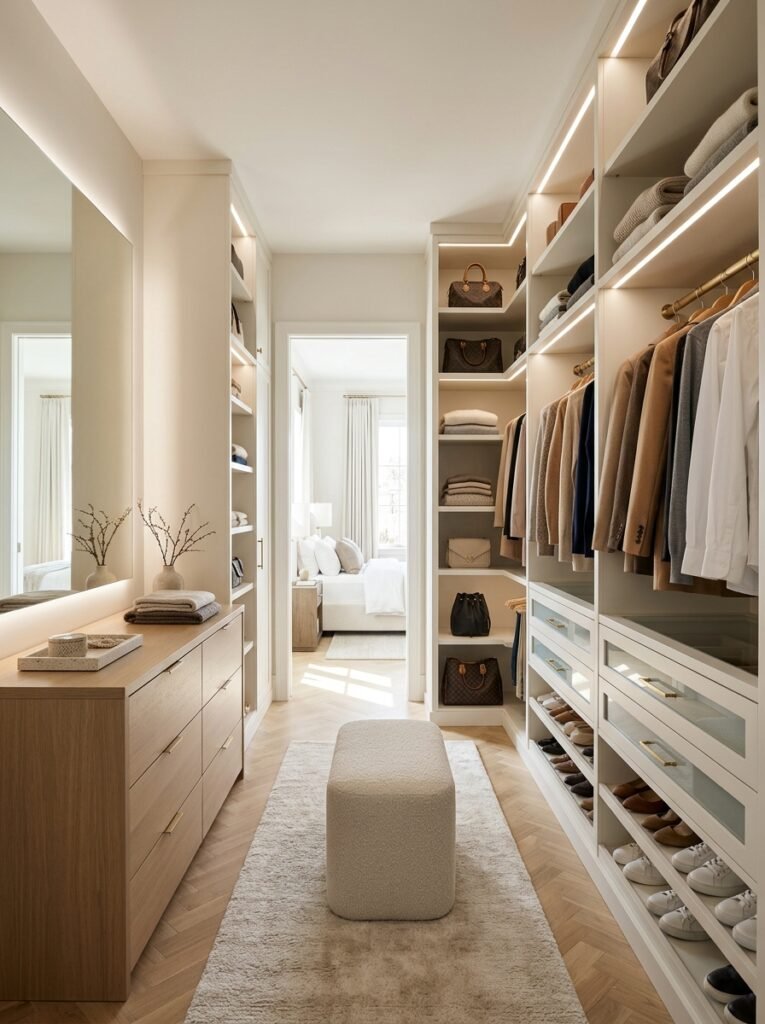
If your walk-in closet has enough floor space, a compact dresser can provide excellent drawer storage. Use it for folded clothing, accessories, or everyday essentials while keeping hanging items on the surrounding walls. A dresser can also create a natural center point in a larger room. Choose a narrow modern design so it does not interfere with movement.
8. Install Shelf Dividers
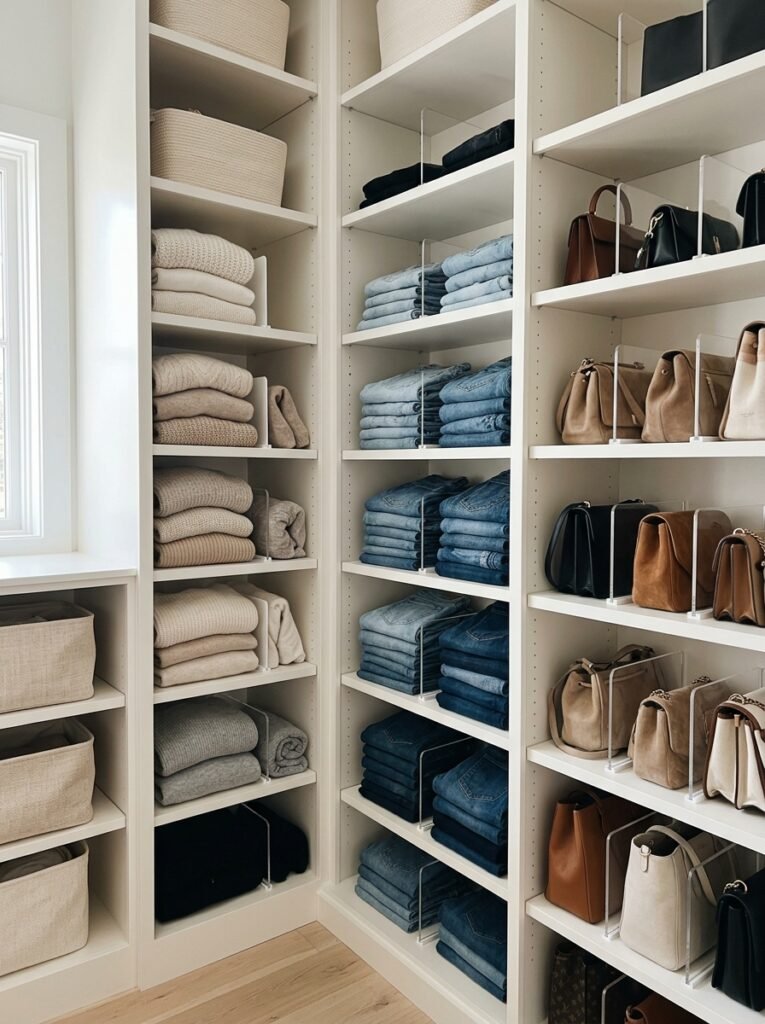
Tall shelves often waste space because folded clothes lean or collapse into messy piles. Simple shelf dividers can separate sweaters, jeans, handbags, towels, or accessories into defined sections. They are inexpensive, easy to add, and especially helpful when several people share one closet. Keep each category visually consistent so putting things away becomes almost automatic.
9. Add Baskets Above the Main Storage
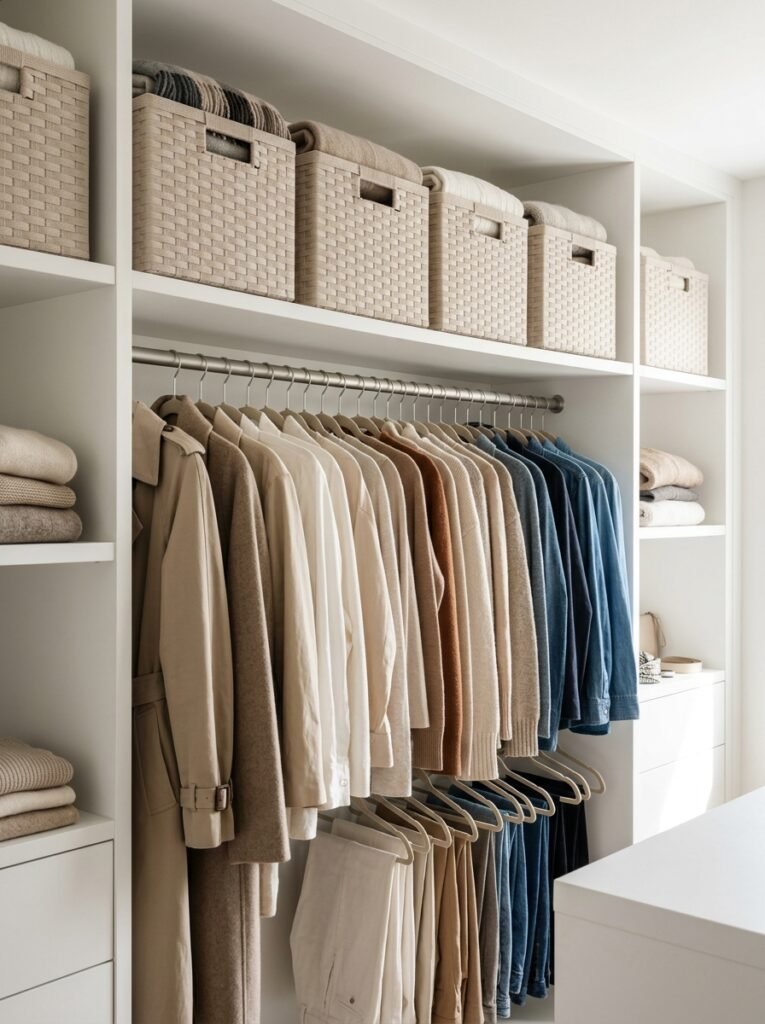
The space above your everyday clothes can hold seasonal or less frequently used items. Place attractive modern baskets or matching containers on upper shelves for scarves, winter accessories, extra bedding, or occasional clothing. Choose containers that are easy to remove and avoid stacking too high. This keeps useful floor and drawer space available for things you use regularly.
10. Use the Back of the Closet Door
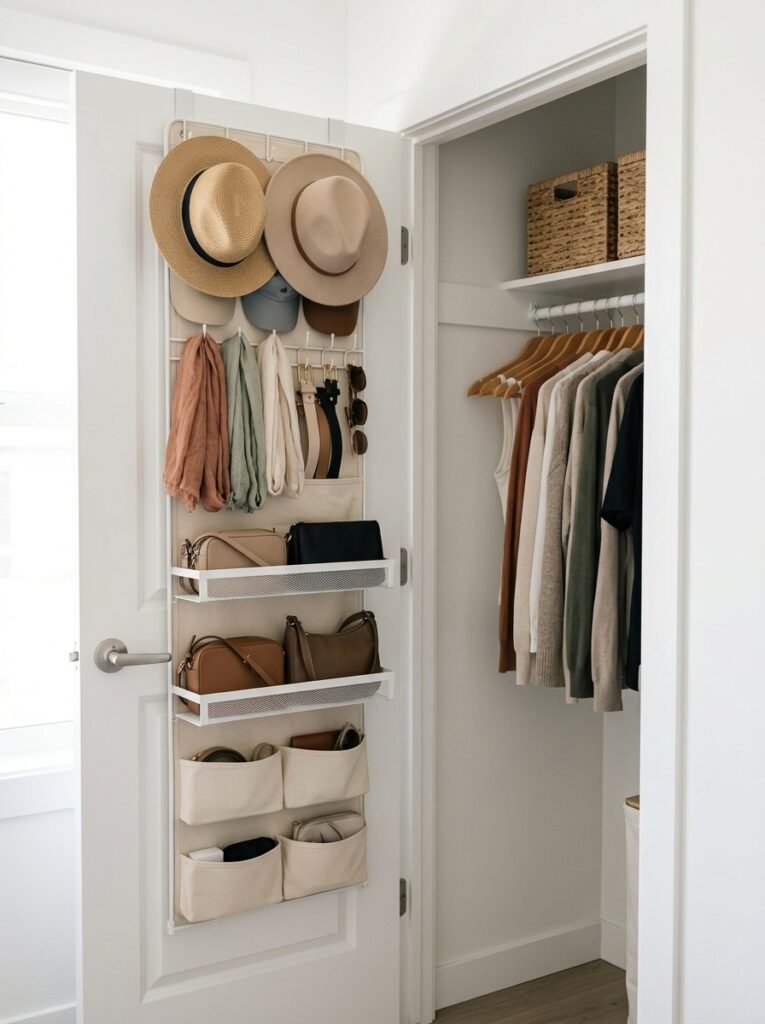
The back of a closet door can provide valuable storage without taking away much floor space. Add a slim organizer for accessories, scarves, handbags, hats, or small beauty items. Keep the organizer shallow so the door can still close properly. This is one of the most useful hacks for small closets because it turns an overlooked surface into active storage.
11. Build a Simple Shoe Wall
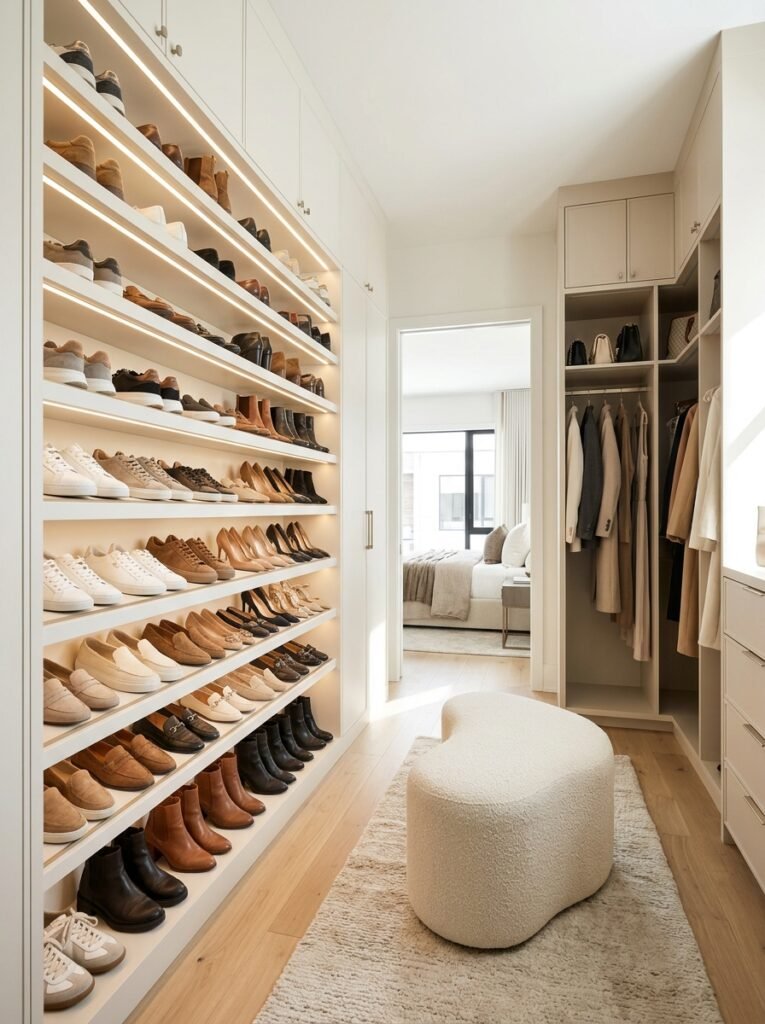
Shoes can consume a surprising amount of closet floor space. A narrow vertical shoe shelf or wall-mounted rack keeps pairs visible while freeing the floor for other storage. Arrange everyday shoes at comfortable height and place occasional footwear higher or lower. A dedicated shoe wall also makes choosing an outfit much easier.
12. Create a Hanging Zone for a Walk-In Closet
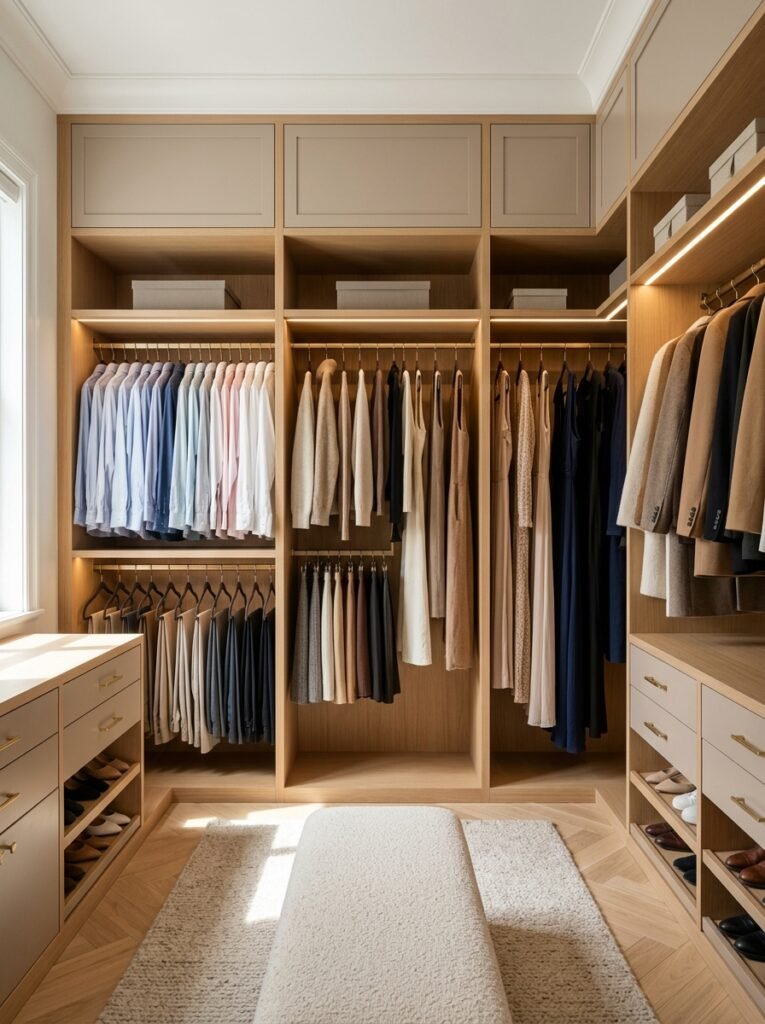
A walk-in closet feels more organized when hanging clothes are divided into clear zones. Keep shirts and shorter pieces together, create another section for trousers and skirts, and reserve a taller area for dresses and coats. Matching hangers can make even an inexpensive closet system look more polished while keeping clothes evenly spaced.
13. Combine Open Shelves With Closed Storage
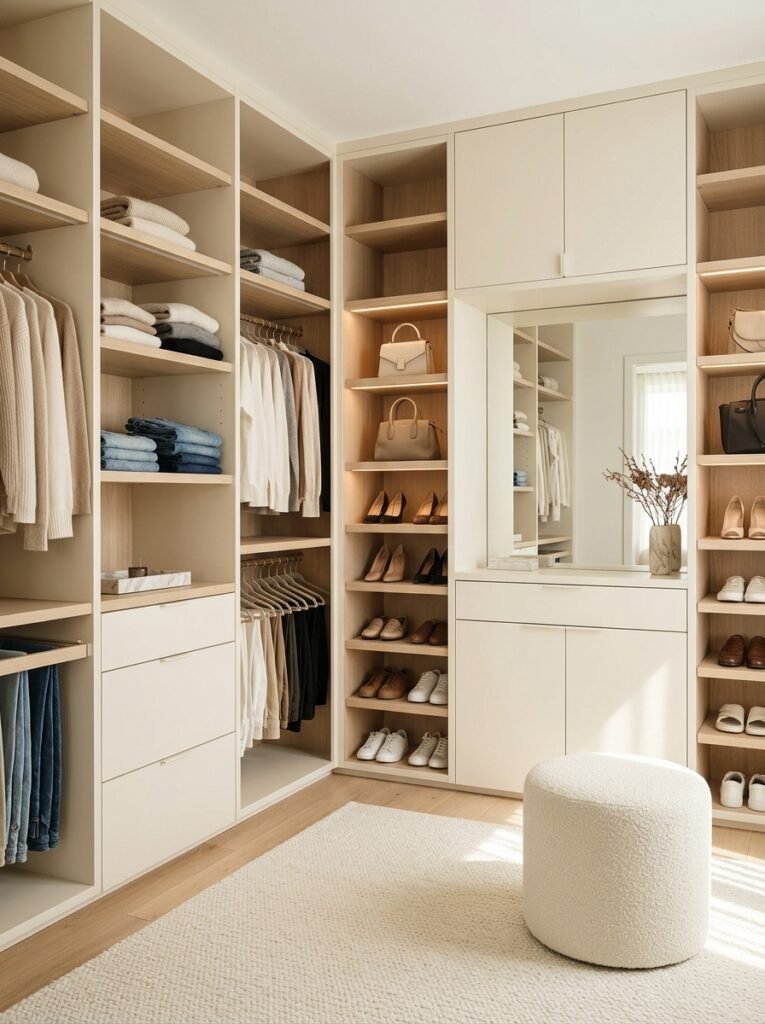
The most practical closet systems often use both open and closed storage. Open shelves make everyday items easy to see, while closed drawers and cabinets hide less attractive belongings. Use open sections for shoes, bags, and neatly folded clothing, and reserve drawers for smaller pieces. This combination creates a balanced look without sacrificing function.
14. Use a Budget-Friendly Closet Island
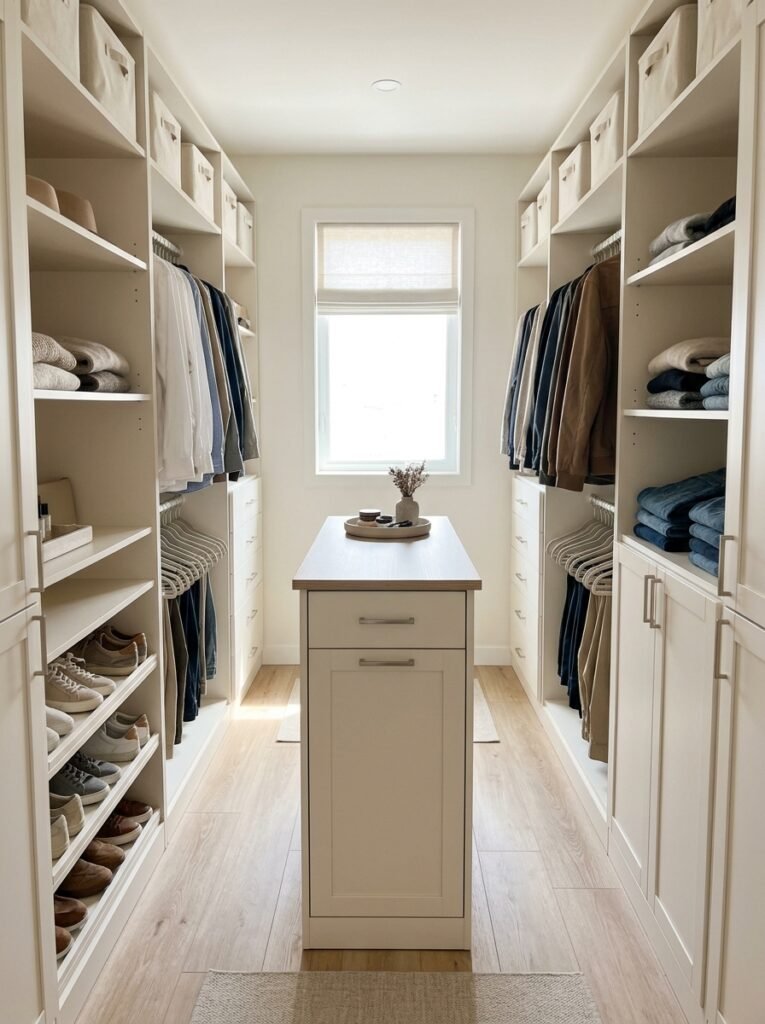
A full custom island can be expensive, but a simple freestanding storage unit can create a similar effect for less. Choose a narrow dresser, modular cabinet, or drawer unit that fits comfortably in the center of a walk-in closet. Use the top for folding clothes or preparing outfits while the drawers hold accessories. Always leave enough walking space around it.
15. Organize a Reach-In Closet by Zones
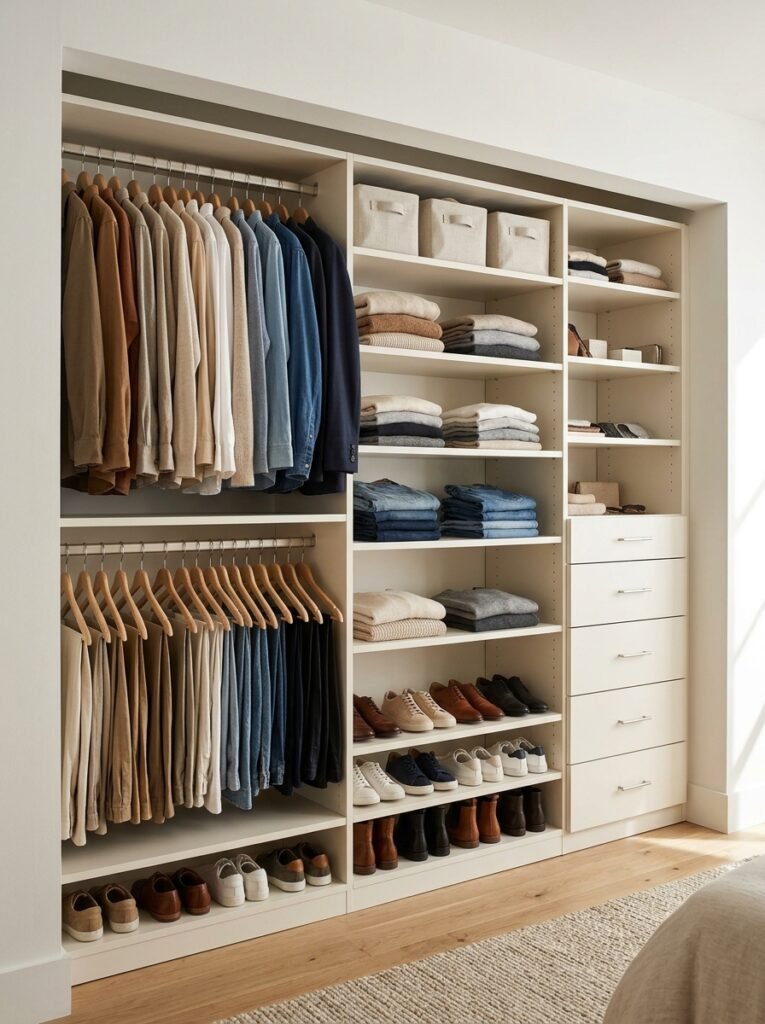
A reach-in closet becomes easier to manage when each section has a specific purpose. Use one side for hanging clothes, another for shelves and folded items, and the lower area for shoes. If the closet is wide enough, add a slim drawer unit or narrow bookcase. These diy closet organization methods are especially helpful when custom built-ins are not practical.
16. Use Simple Labels and Matching Containers
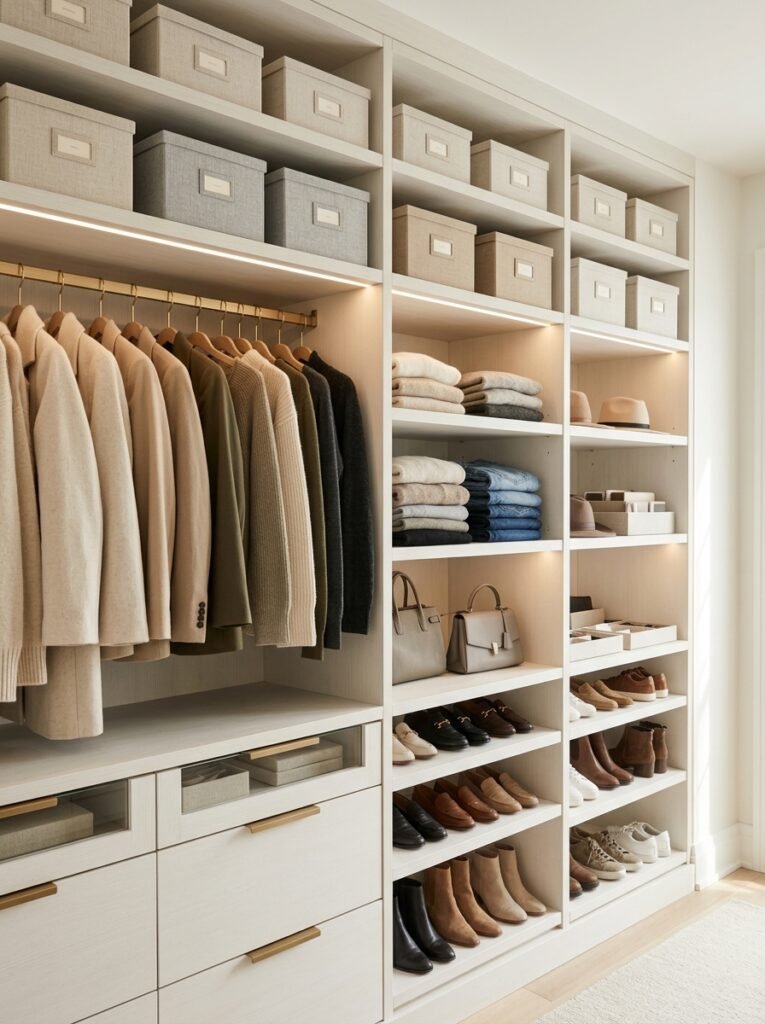
The final step is making your organization system easy to maintain. Matching containers can create visual consistency, while simple labels help everyone know where items belong. Use them for seasonal clothing, accessories, extra bedding, craft supplies, or rarely used belongings. Avoid labeling every tiny category; focus on areas where a clear system genuinely saves time.
How to Build a DIY Closet System
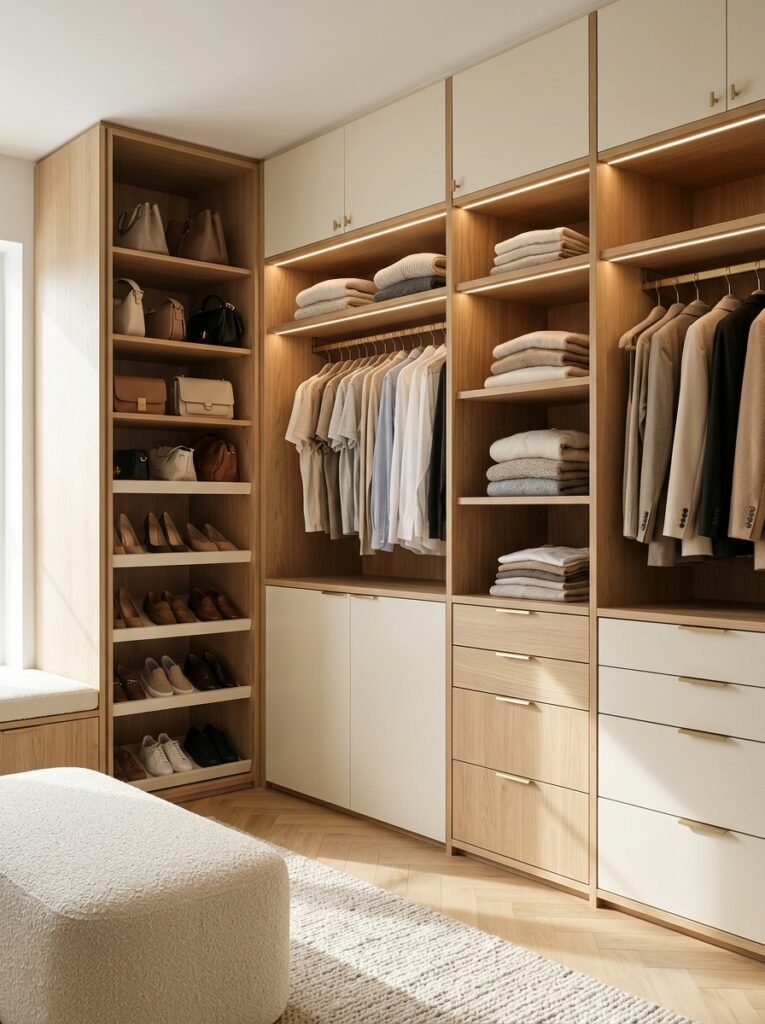
Before buying shelves or organizers, measure the closet carefully. Record the width, height, depth, door clearance, and location of any existing rods or shelves. Then make a simple list of what you actually need to store. For example, a wardrobe with many shirts may need more hanging space, while someone with lots of folded clothing may benefit more from drawers and shelves. A small closet may need vertical storage, while a walk-in can support a dresser or compact island. Start with the largest storage problems first. Once hanging clothes, folded clothing, and shoes have dedicated areas, smaller accessories become much easier to organize.
Easy Budget Tips
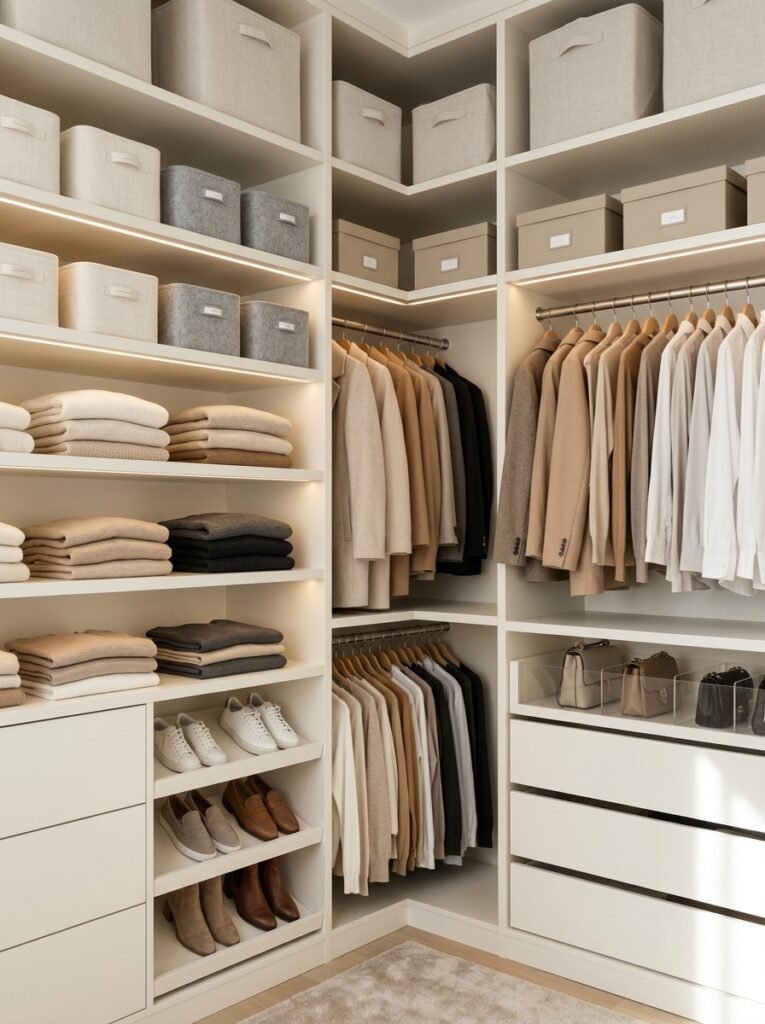
You do not have to buy a complete custom system at once. Start with affordable changes such as a second hanging rod, shelf dividers, drawer units, hooks, or simple bookcases. IKEA-style shelving, Billy bookcases, modular drawers, and other ready-made pieces can sometimes provide the structure you need at a lower cost. The important thing is to measure first and choose pieces that fit the closet rather than buying organizers simply because they look attractive.
Ideas for Small Reach-In Closets
Small reach-in closets benefit most from vertical thinking. Use the top area for seasonal items, the door for accessories, and the lower section for shoes. Double hanging rods can create more capacity without making the closet deeper. If your bedroom is also small, avoid bringing bulky freestanding furniture into the room unless it solves a specific storage problem. A well-organized closet can reduce the need for extra furniture and help the entire bedroom feel more spacious.
Final Thoughts
The best diy closet organization projects are simple enough to complete without a major renovation but thoughtful enough to make everyday life easier. You can start with one problem area, such as overflowing hanging clothes or messy shelves, and build the system gradually. Whether you are organizing a small closet, upgrading a walk-in, using IKEA Billy bookcases, adding a dresser, or creating a budget-friendly reach-in system, the goal remains the same: give everything a logical place. Start with measurements, focus on the storage you actually need, and use vertical space whenever possible. A few smart changes can turn an ordinary closet into a clean, efficient system that stays easier to maintain.