


This post may contain affiliate links. Please read my disclosure policy.
In This Article Show
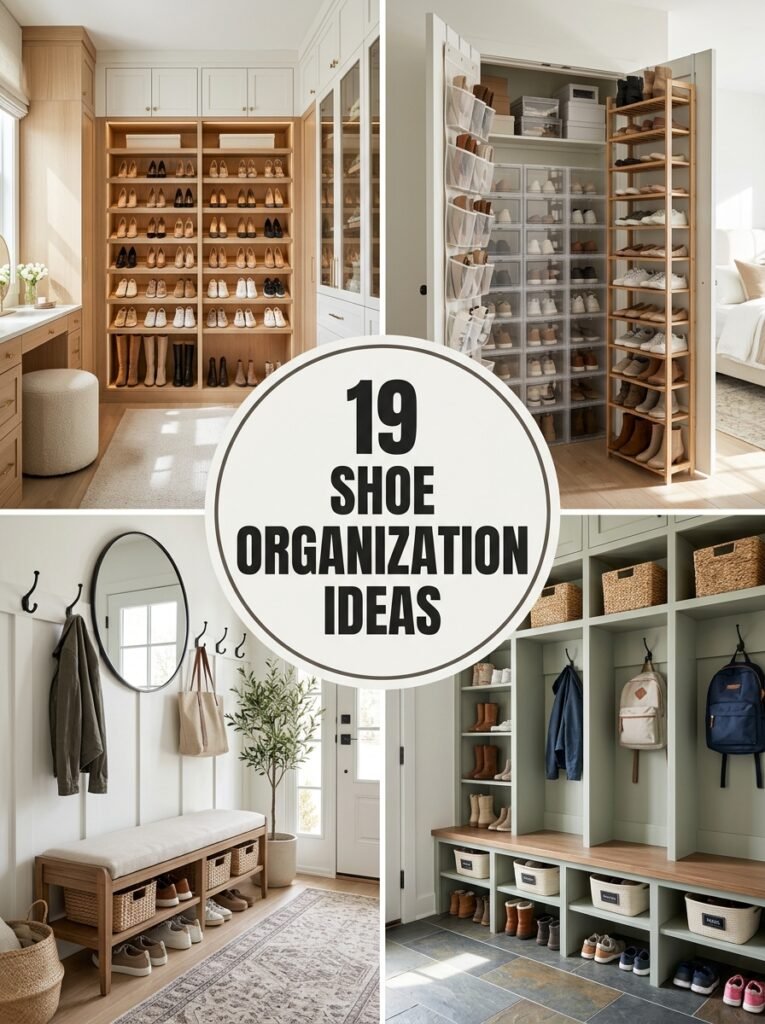
Shoes are among the easiest things to accumulate and one of the hardest things to keep organized. Sneakers, everyday flats, boots, sandals, heels, and family footwear can quickly fill a closet or cover the floor near the front door. The right shoe organization system helps you find the pair you need, protect your footwear, and make your home feel cleaner without sacrificing style. Whether you have a spacious master closet, a tiny entryway, a shared family hallway, or a dorm room with limited storage, a few thoughtful changes can make every inch work harder. Before purchasing shelves or organizers, gather your shoes in one place and group them by type, season, and frequency of use. Everyday footwear should be easy to reach, while special-occasion shoes and seasonal boots can be stored in less accessible areas. Measure your available closet, entryway, or wall space before choosing a storage system. Consider ventilation, cleaning, and the height of each pair, too. A good layout should accommodate your real collection rather than forcing every shoe into a system that looks attractive but is difficult to maintain.
1. Add Dedicated Shoe Shelves to Your Closet
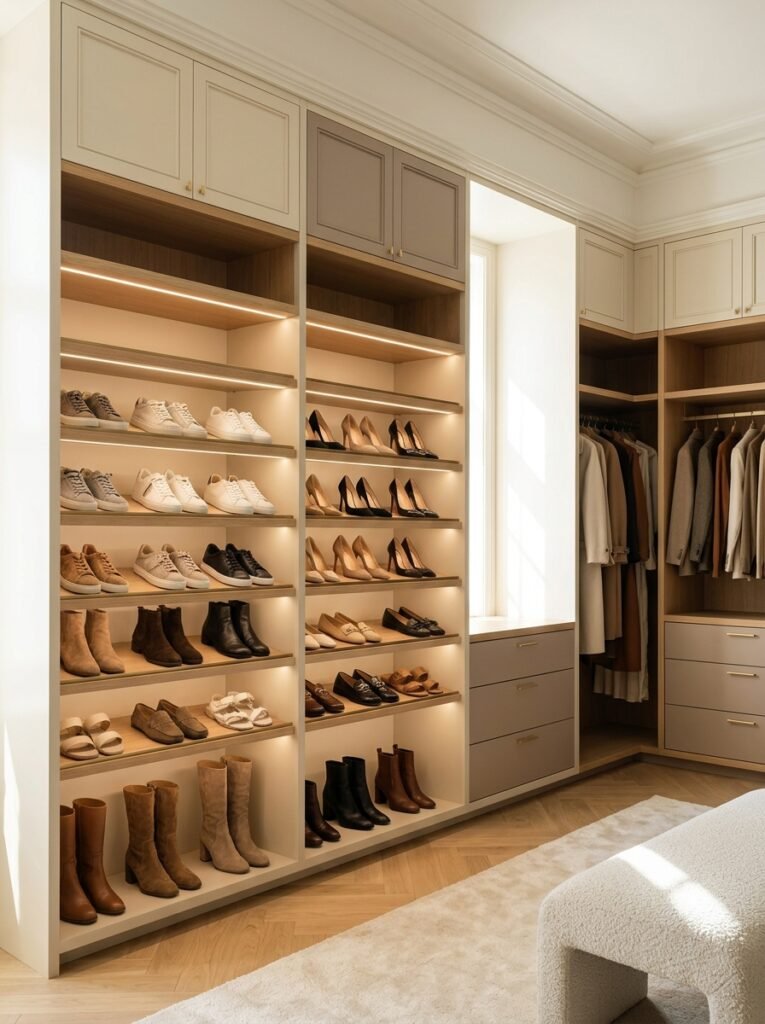
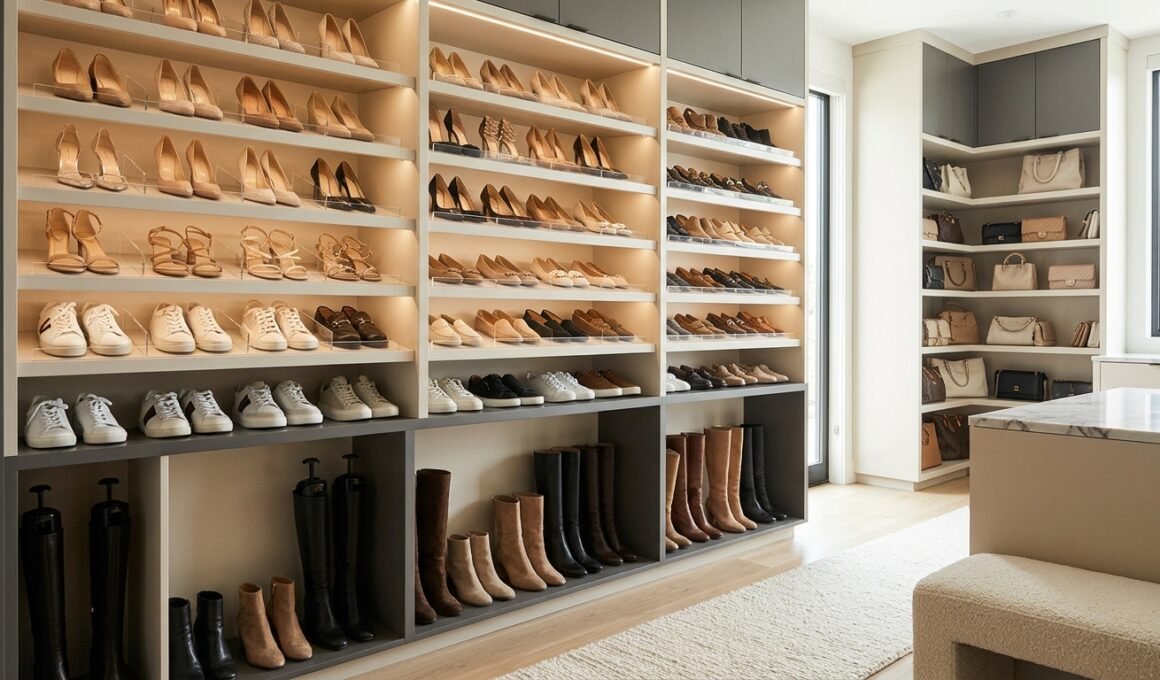
Dedicated shelves make a closet easier to use because each pair has a clear place instead of being piled together on the floor. Arrange everyday sneakers and flats on the most accessible shelves, then place less frequently worn shoes higher or farther back. Leave enough room between pairs to remove them without knocking over neighboring footwear. If your collection includes heels, boots, and chunky sneakers, vary the shelf spacing to suit their different heights. This approach works especially well in a master closet, where an organized shoe section can make getting dressed feel more convenient and enjoyable.
2. Make a Small Closet Work Vertically
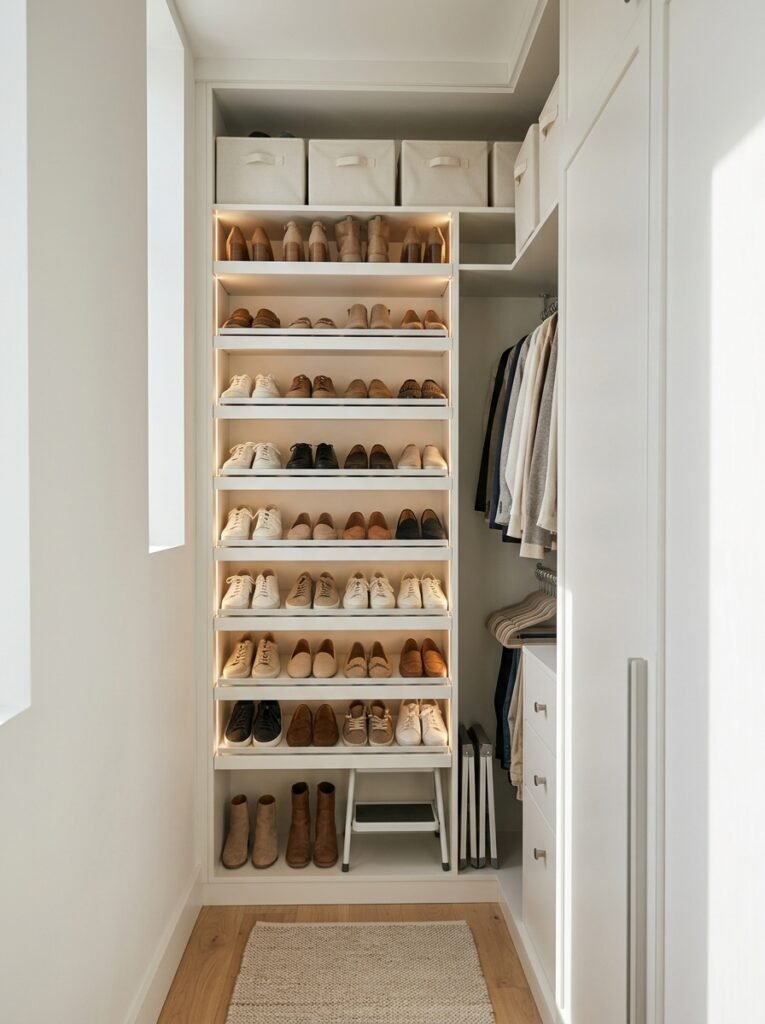
A small closet may not have room for wide shoe cabinets, but its vertical space can still be useful. Add narrow shelves, stackable shoe organizers, or a suitable vertical rack to make better use of the height available. Keep frequently worn pairs around eye or waist level, and reserve higher shelves for seasonal footwear that you do not need every day. Avoid stacking shoes in unstable piles, especially when they have delicate uppers or decorative details. A carefully planned vertical layout can hold more footwear while keeping each pair visible and easy to retrieve.
3. Use Clear Shoe Boxes for a Clean Look
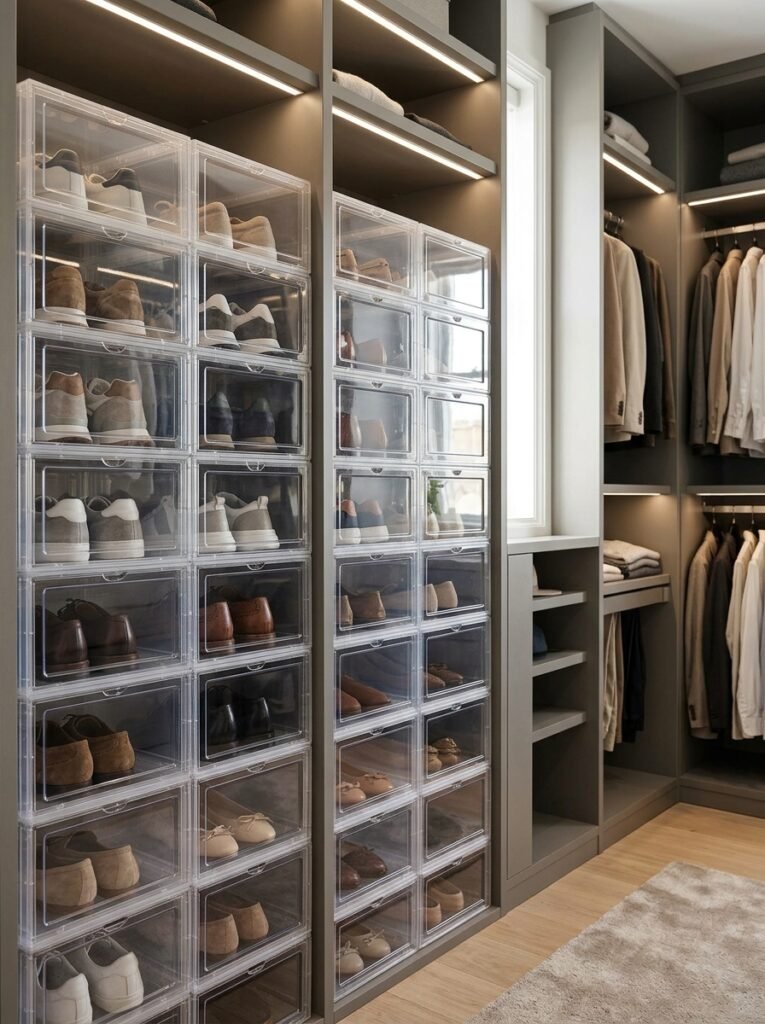
Clear shoe boxes are helpful when you want footwear protected from dust but still easy to identify. Choose boxes that fit the shoes comfortably without crushing their shape, and make sure they provide suitable ventilation for the materials being stored. Stack compatible boxes securely rather than creating tall, unstable towers. You can arrange the boxes by shoe type, color, or season to make the collection easier to navigate. This solution works particularly well for small closets because it creates consistent storage units and prevents loose pairs from spreading across the floor.
4. Create an Organized Front Door Entryway
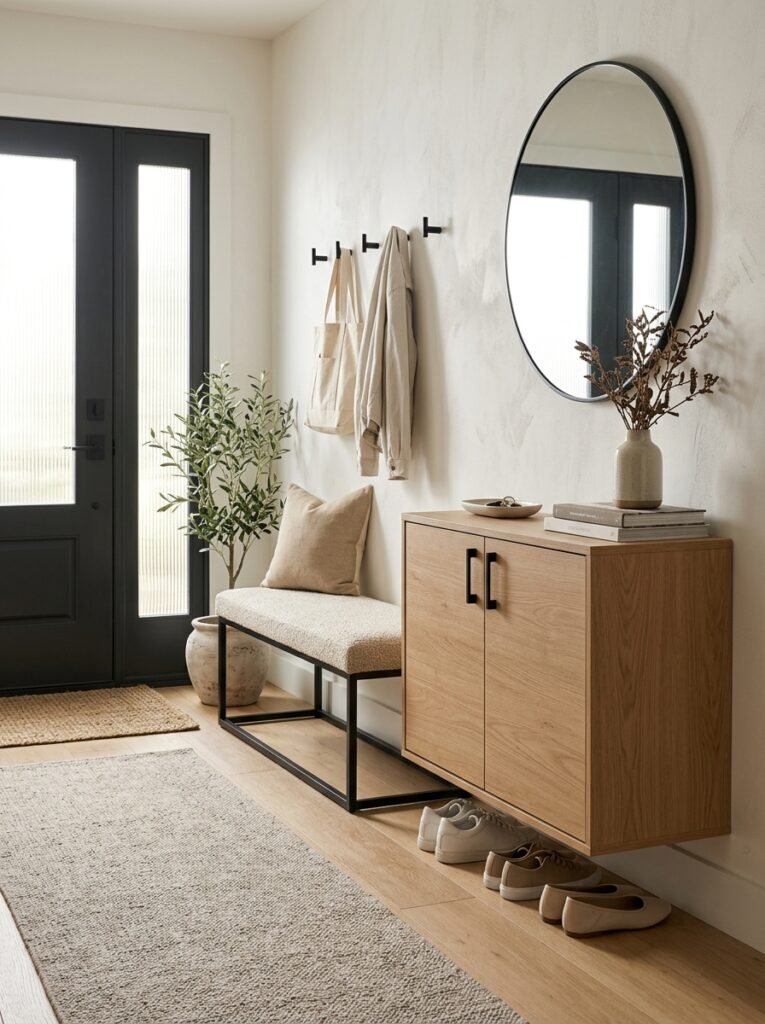
The area near the front door often becomes a landing spot for shoes worn throughout the day. Create a dedicated entryway zone with a compact shoe rack, a small bench, or a closed cabinet that keeps footwear from spreading into the hallway. Give each family member a designated section if several people use the entrance. Keep only frequently worn shoes near the door and move occasional footwear to the main closet. This arrangement makes leaving home easier, helps reduce visual clutter, and gives guests a more welcoming first impression when they enter.
5. Build a Shoe Storage Bench
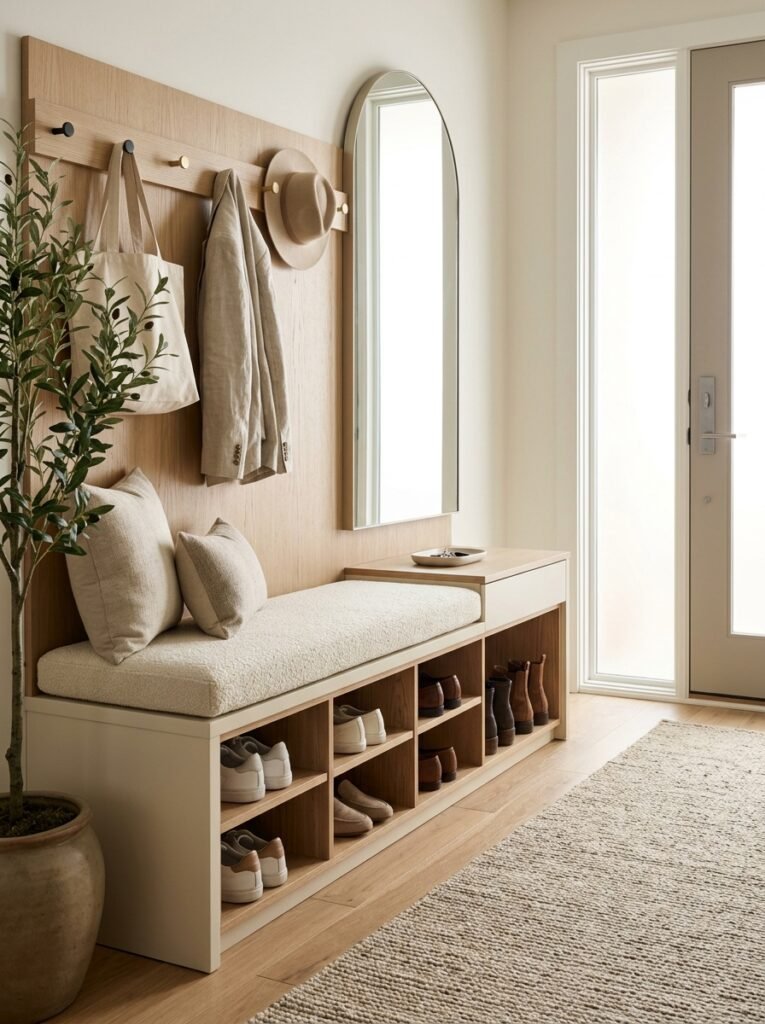
A shoe storage bench combines a place to sit with practical footwear organization, making it especially useful near the front door or inside a mudroom. Choose a design with open compartments, pull-out drawers, or concealed storage based on your needs. Open cubbies make frequently used shoes easy to grab, while closed compartments create a cleaner appearance. Leave enough space for taller footwear if you plan to store boots. A bench also makes putting on shoes more comfortable for children, older family members, and anyone who prefers to sit while getting ready.
6. Organize Shoes in a Mudroom
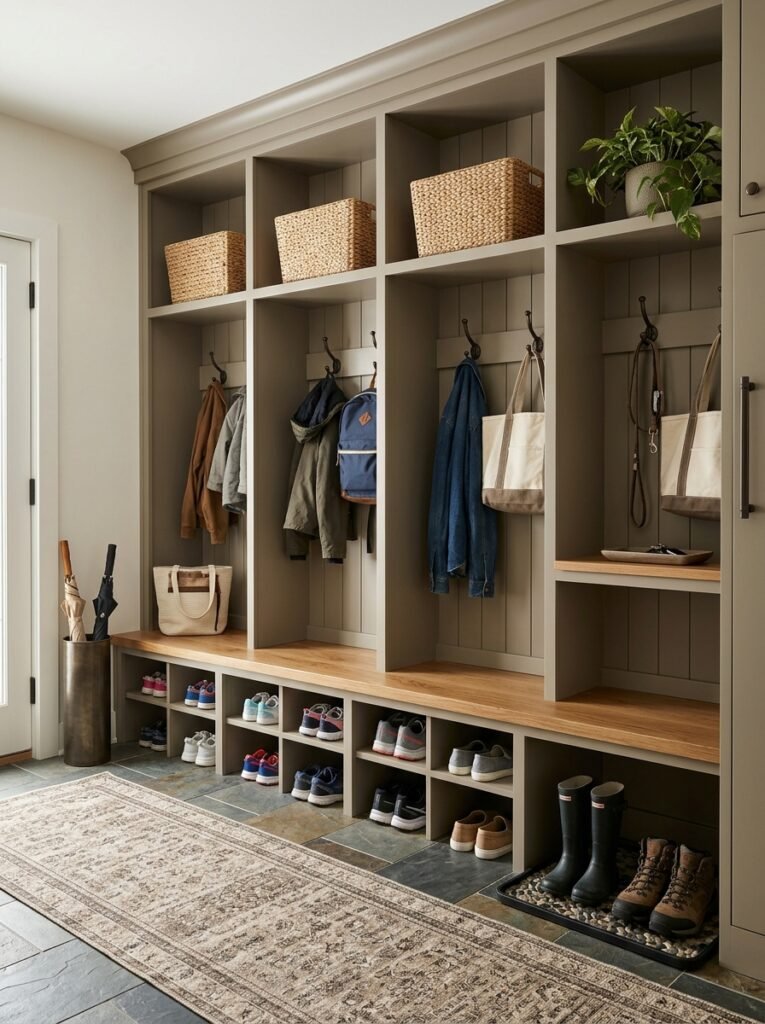
A mudroom needs footwear storage that can handle everyday traffic, outdoor shoes, and the changing needs of a family. Divide the area into practical zones for clean indoor footwear, frequently worn outdoor shoes, and wet or dirty pairs that need attention before being put away. Use easy-to-clean surfaces and allow damp footwear to dry appropriately before placing it inside enclosed storage. A bench, individual cubbies, and a designated mat can help keep the surrounding floor cleaner. The best mudroom layout is durable, easy to reset, and simple enough for every family member to follow.
7. Combine Purse and Shoe Storage
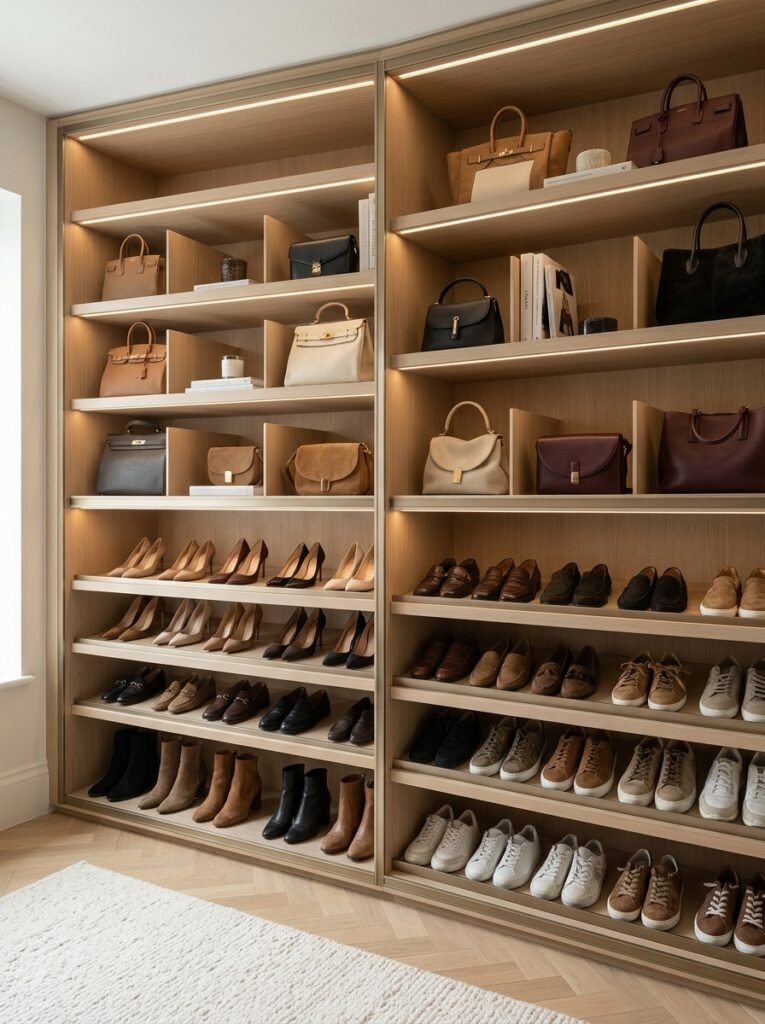
If you store handbags and shoes in the same closet, create separate zones so the two collections do not compete for space. Use lower shelves or dedicated cubbies for shoes and upper shelves for handbags, adjusting the layout to suit your closet’s height. Keep delicate purses away from dirty soles, and avoid placing shoes where they can rub against leather bags or fabric accessories. A consistent arrangement of shelves and dividers helps the entire closet feel like one coordinated storage system. This approach is particularly useful for smaller wardrobes where every section needs to serve a clear purpose.
8. Try a DIY Shoe Shelf
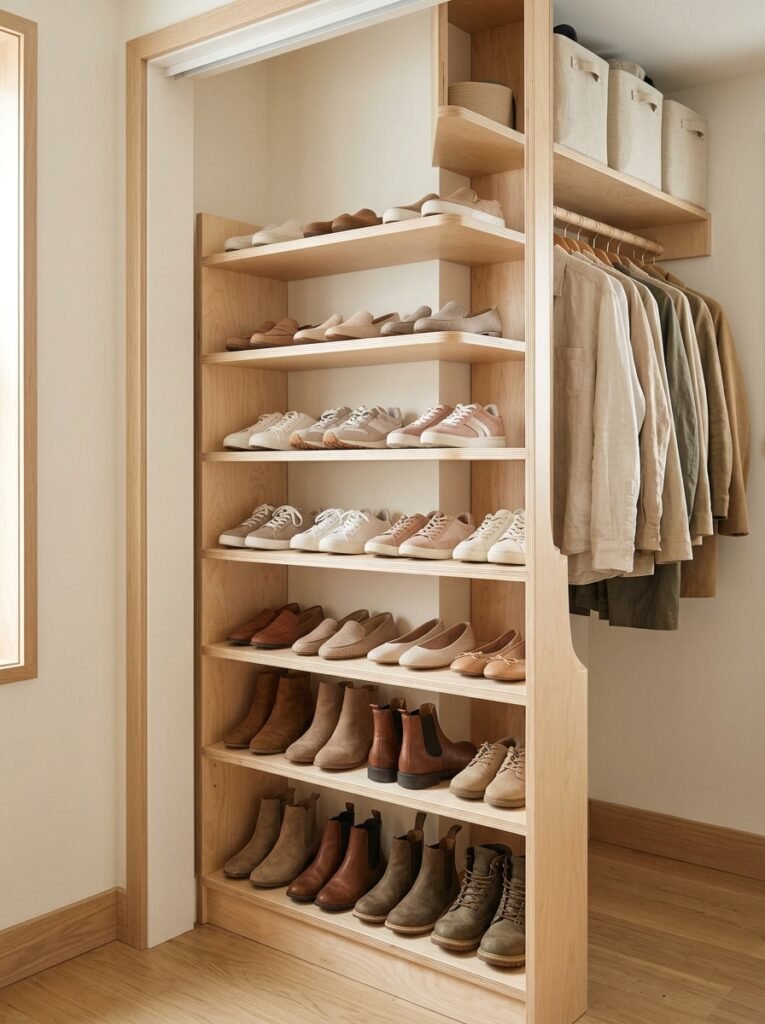
A DIY shoe shelf can be a practical solution when ready-made organizers do not fit your available space. Start by measuring the area and considering the height of your tallest shoes, then choose a stable design with suitable support for the weight of your collection. A simple multi-level shelf can work in a closet, hallway, or utility area without requiring a complicated construction project. Make sure the finished unit is secure and does not obstruct doors or walkways. Customizing the width and spacing lets you create storage that suits your home rather than adapting your collection to standard furniture.
9. Use the Back of a Closet Door
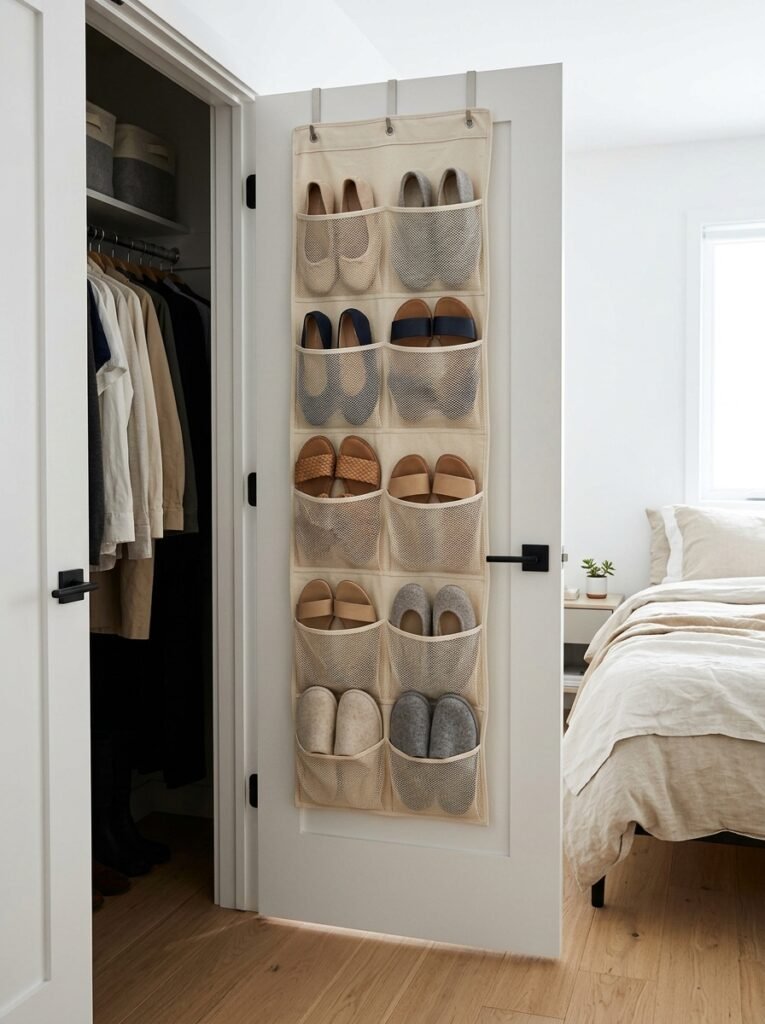
The back of a closet door can provide extra storage when floor space is limited. A suitable over-the-door organizer may hold lightweight flats, sandals, slippers, or other footwear that fits securely in its compartments. Check the organizer’s weight limits and make sure the door closes without pressing against the shoes. This option is generally better for lightweight pairs than heavy boots or delicate designer footwear. It is particularly useful in dorm rooms, apartment closets, and other small spaces where installing additional shelves may not be practical.
10. Create a Family Shoe Organization System
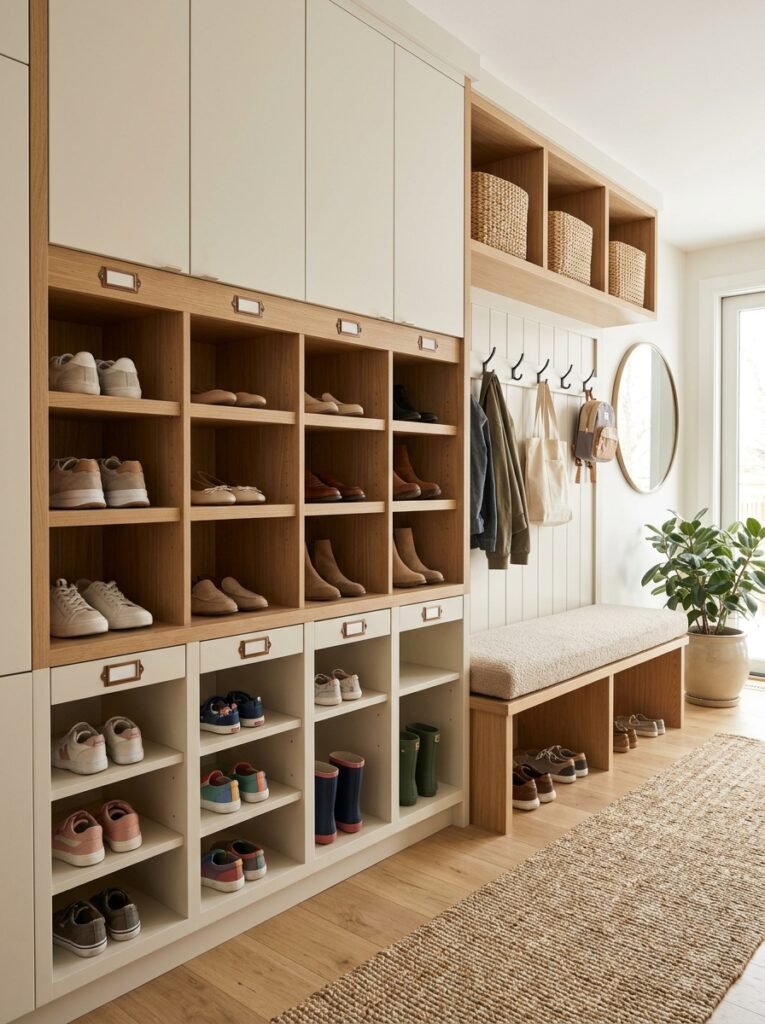
When several people share a home, shoes can quickly become mixed together near the entrance or inside the main closet. Assign each family member a shelf, cubby, basket, or clearly defined section according to the space available. Children can use lower compartments that are easy to reach, while adults can keep their work and everyday footwear in separate areas. Keep spare and seasonal shoes away from the main daily-use section so the storage does not become overcrowded. A simple family system works best when everyone can understand it at a glance and return shoes without needing reminders.
11. Make a Dorm Room Shoe Storage Plan
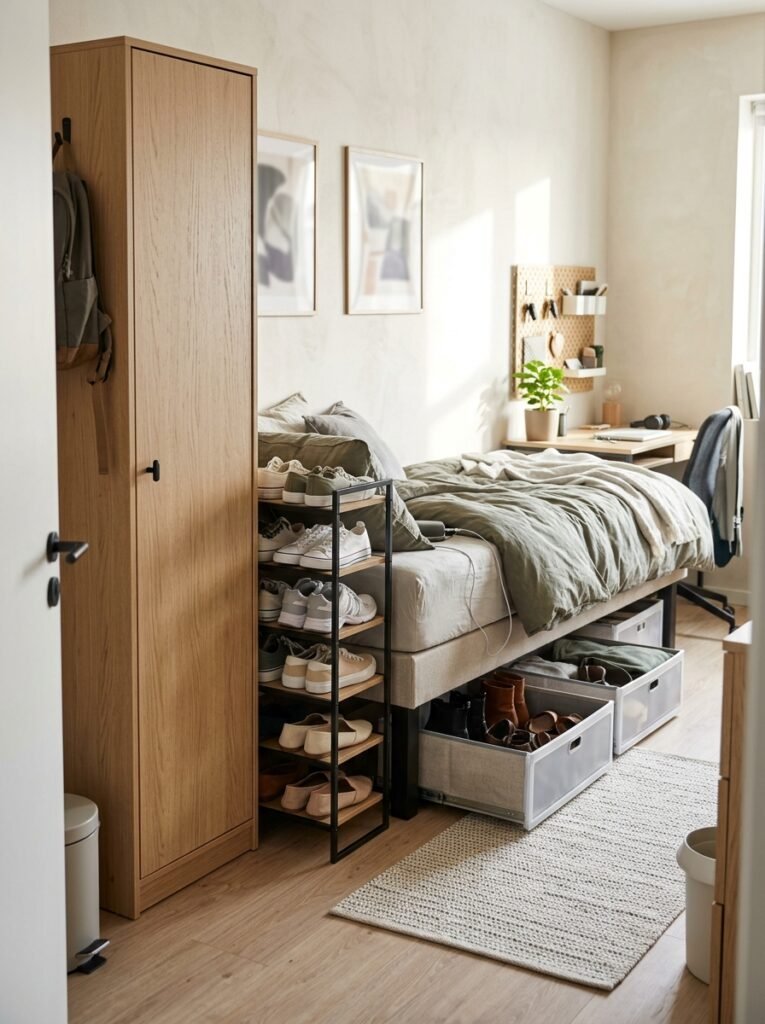
Dorm rooms often have limited closet space and little room for additional furniture, so compact storage is essential. Use a slim shoe rack, stackable organizers, or a small under-bed container for shoes you do not wear every day. Keep the most frequently used pairs near the closet entrance or at the front of the rack, and store seasonal footwear separately. Avoid blocking shared walkways or placing shoes where they can create a tripping hazard. A simple, portable system is ideal because it can be adjusted when you move rooms or return home for a break.
12. Try Budget-Friendly Dollar Tree Storage
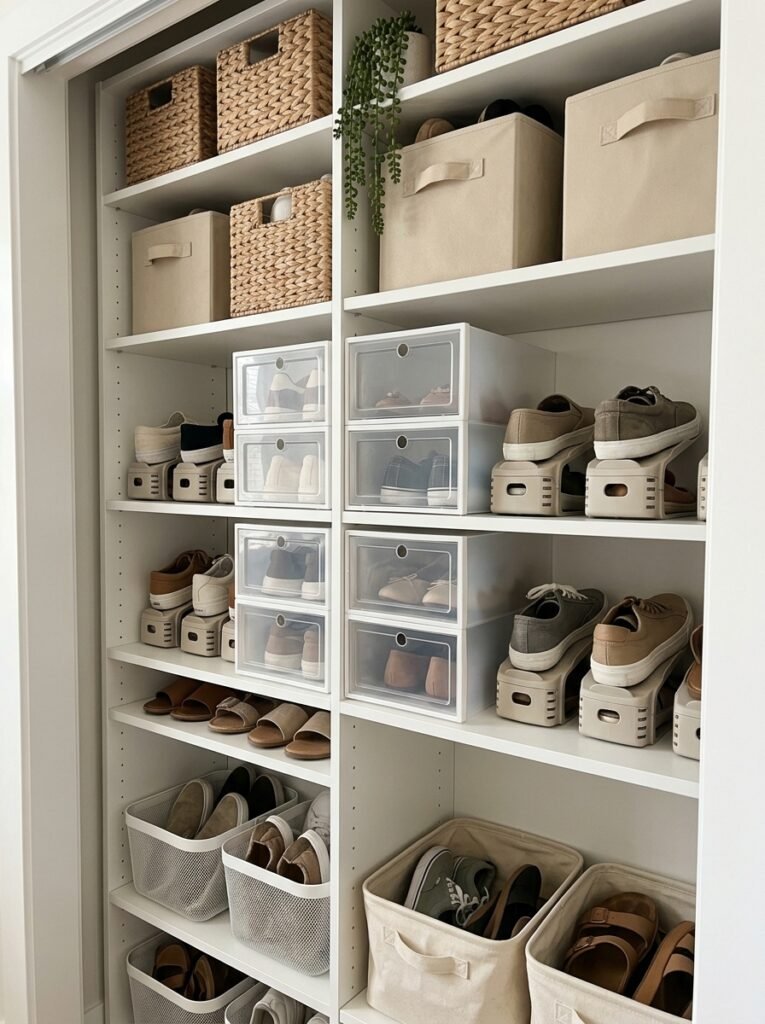
You do not need expensive furniture to create useful shoe storage. Affordable bins, simple baskets, small trays, and compact organizers from discount stores can help group footwear and keep the floor clear. Before purchasing anything, measure the shelf or closet space and think about the size and weight of the shoes you want to store. Lightweight baskets may work well for slippers and sandals, while sturdier shelves are more appropriate for heavier footwear. Choose only the pieces that solve a real storage problem instead of collecting organizers that take up even more room.
13. Install a Slim Shoe Cabinet for a Narrow Hallway
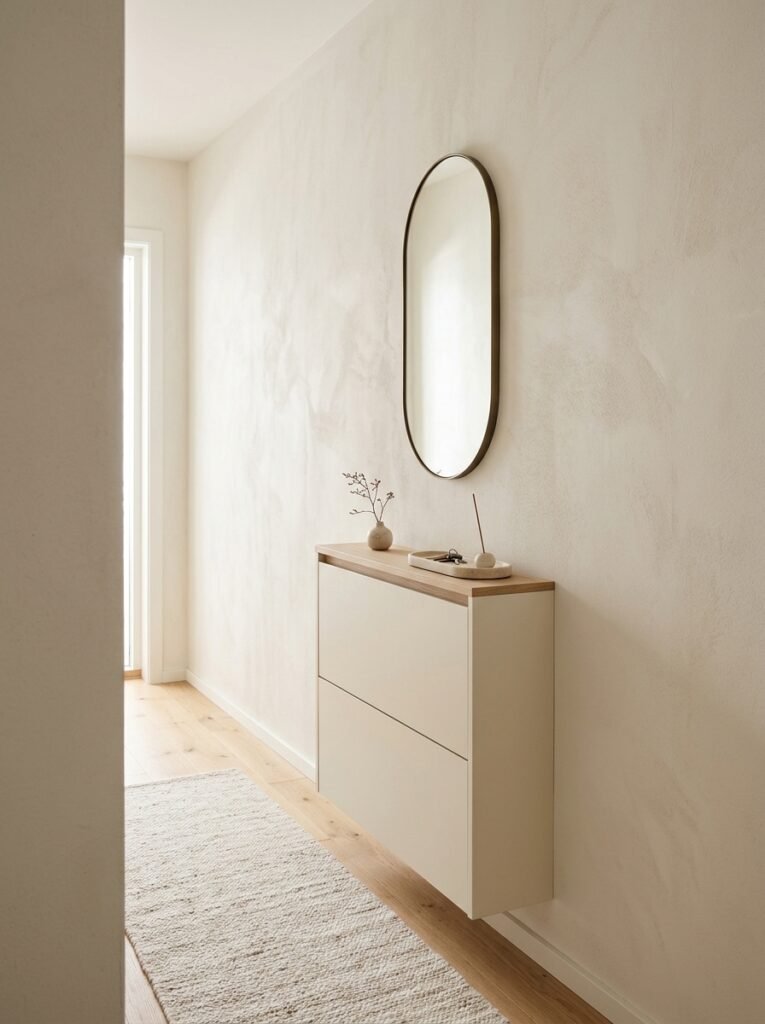
A narrow hallway may not have enough space for a deep shoe rack, but a slim cabinet can provide useful storage without taking over the walkway. Look for a design with a compact depth, suitable internal compartments, and doors that can open without obstructing movement. Store frequently worn shoes in the easiest-to-access sections and keep bulkier boots elsewhere. A closed cabinet also helps hide visual clutter, making the hallway feel calmer. Before installation, check the available wall width, door swing, and walking clearance to ensure the cabinet is practical for everyday use.
14. Organize a Master Closet With Adjustable Shelving
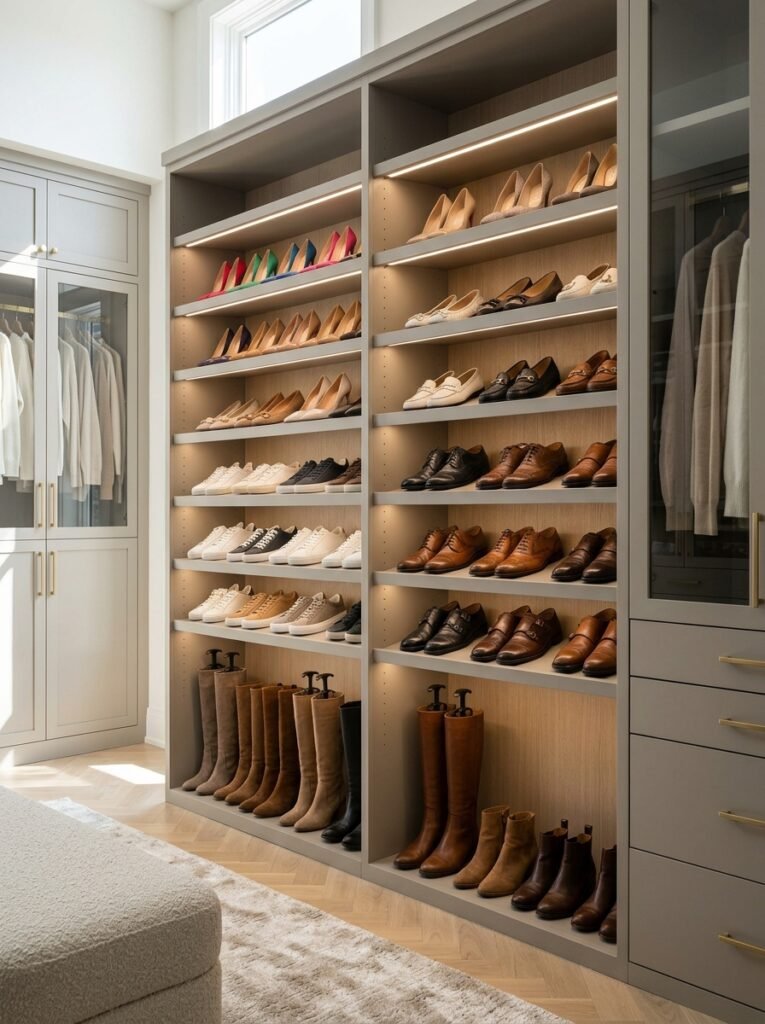
A master closet often needs to store many different types of footwear, from everyday sneakers to formal shoes and seasonal boots. Adjustable shelving makes it easier to adapt the layout as your collection changes. Use closer shelf spacing for flats and low-profile shoes, then create taller sections for boots and larger sneakers. Keep pairs together and avoid placing shoes where they can be crushed by clothing or storage bins. A thoughtfully arranged master closet can feel like a personal dressing room, allowing you to see your options clearly and choose footwear that matches your outfit without unnecessary searching.
15. Build an IKEA PAX-Inspired Shoe Section
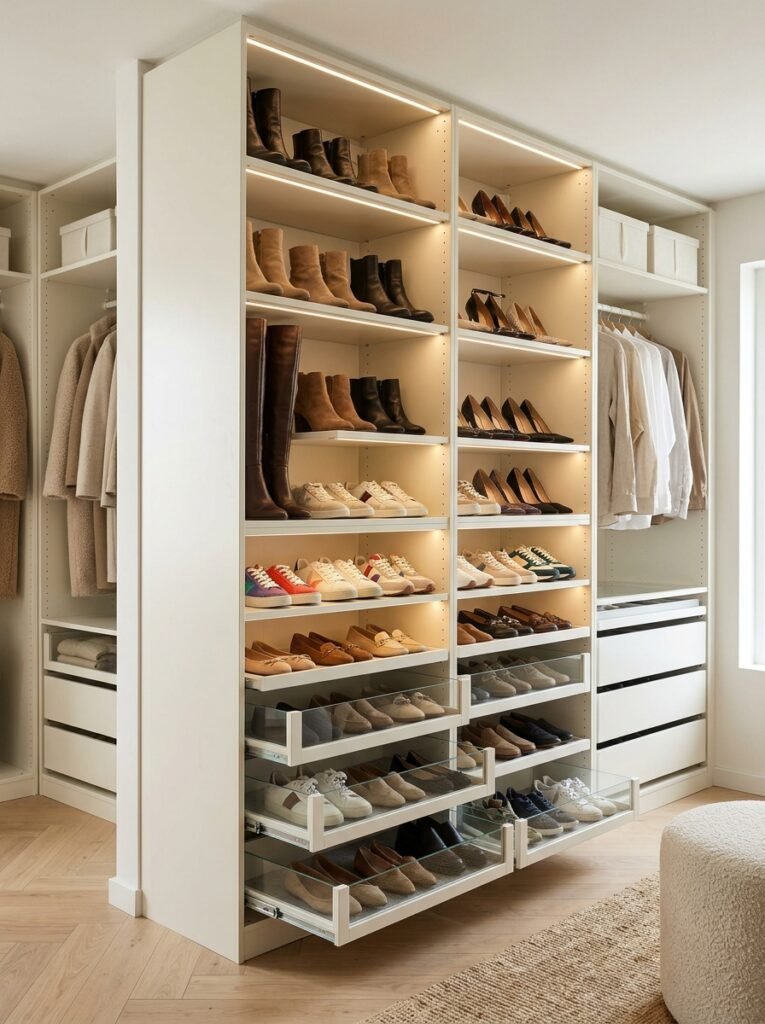
A modular wardrobe system inspired by IKEA PAX can help you create a shoe section that fits your collection and available wall space. Use a combination of adjustable shelves, pull-out trays, and suitable compartments rather than assuming one layout will work for every type of shoe. Reserve taller spaces for boots and wider sections for chunky sneakers, while keeping everyday pairs at a comfortable height. The advantage of a modular setup is that it can evolve as your storage needs change. Measure carefully and follow the manufacturer’s installation and load guidance to ensure the finished system is stable and safe.
16. Store Seasonal Shoes Separately
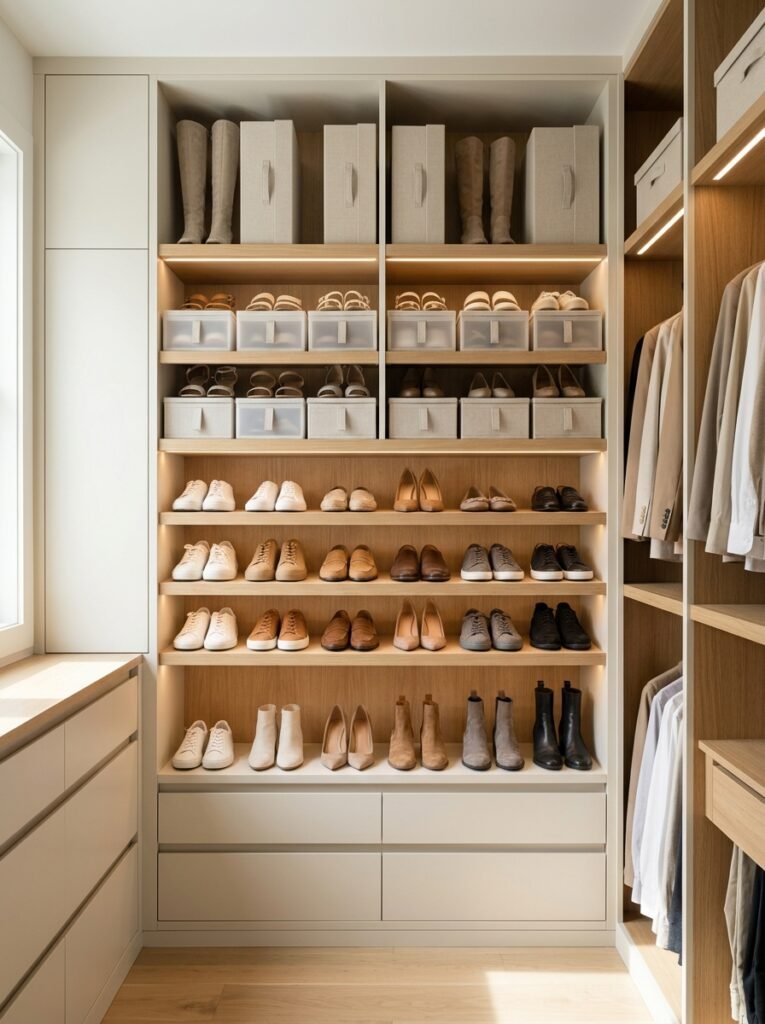
Shoes that are only used during certain seasons do not need to occupy the easiest-to-reach storage areas all year. Keep winter boots, special-occasion footwear, or seasonal sandals in clean containers or on higher shelves when they are not needed. Make sure shoes are clean and fully dry before storing them, and use storage that protects their shape without trapping unwanted moisture. Keep everyday footwear in the main accessible section so the closet remains convenient. Rotating seasonal shoes also provides an opportunity to check which pairs still fit your needs before the next season begins.
17. Create a Small Entry Closet for Shoes and Coats
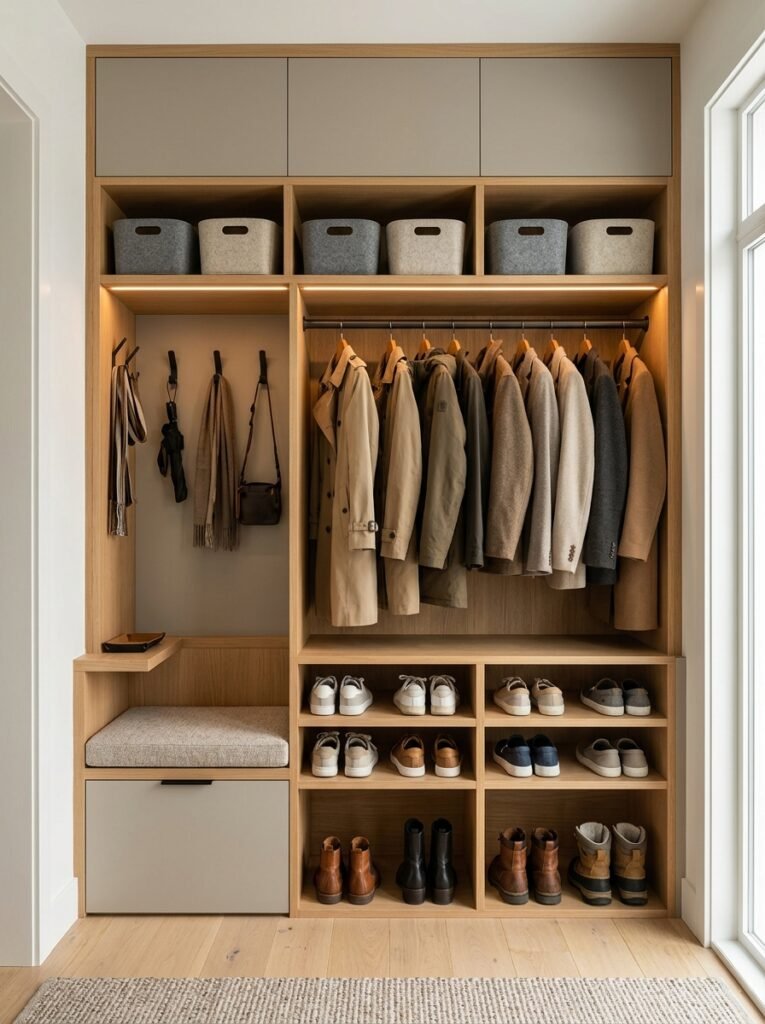
An entry closet can become much more useful when shoes and coats have separate zones. Keep footwear on the lower shelves or in floor-level cubbies, while jackets and coats hang above with enough clearance to avoid touching the shoes. A small basket can hold slippers or accessories, but avoid filling every available corner with extra items. If the closet is narrow, use shallow shoe storage and keep the floor area clear enough for easy access. This arrangement creates a practical landing spot for everyday belongings and helps stop shoes and outerwear from spreading throughout the home.
18. Use Under-Bed Storage for Extra Shoes
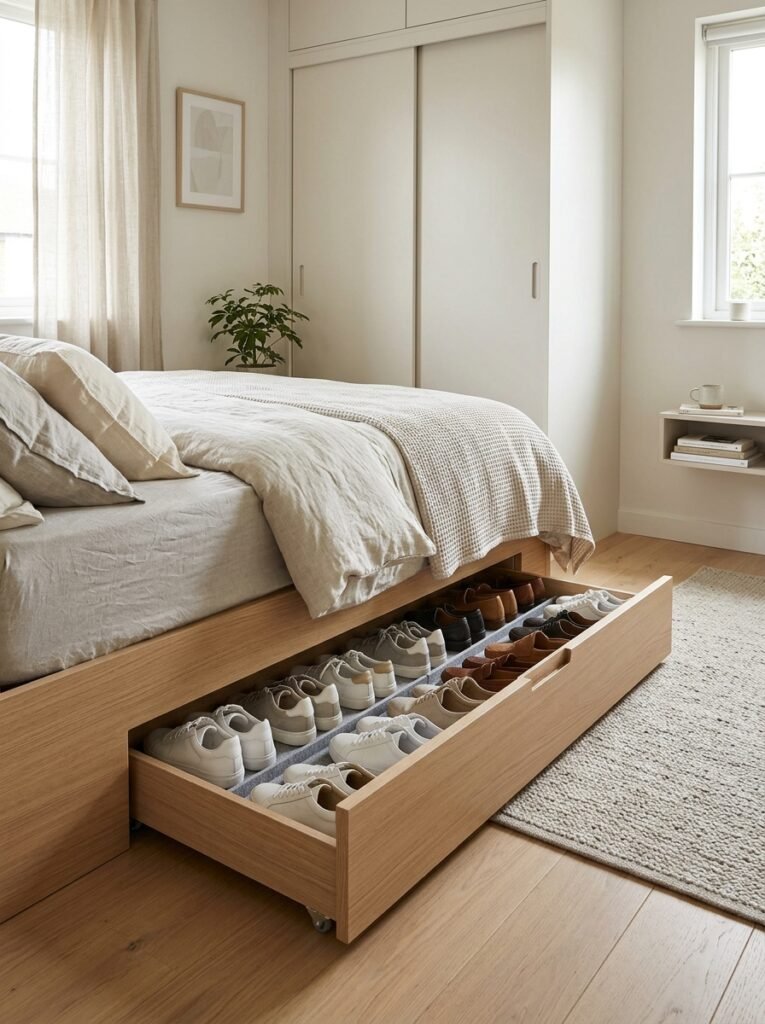
Under-bed storage can be valuable when your closet is full and your bedroom has limited space for additional furniture. Use shallow containers or purpose-built under-bed organizers for shoes you do not wear every day, making sure the containers can slide in and out easily. This is particularly useful for dorm rooms, small apartments, and bedrooms without a large wardrobe. Store only clean, dry footwear, and avoid compressing delicate shoes under heavy objects. Keeping occasional-use pairs under the bed frees up closet shelves for the shoes you reach for most often.
19. Maintain Your Shoe Organization Routine
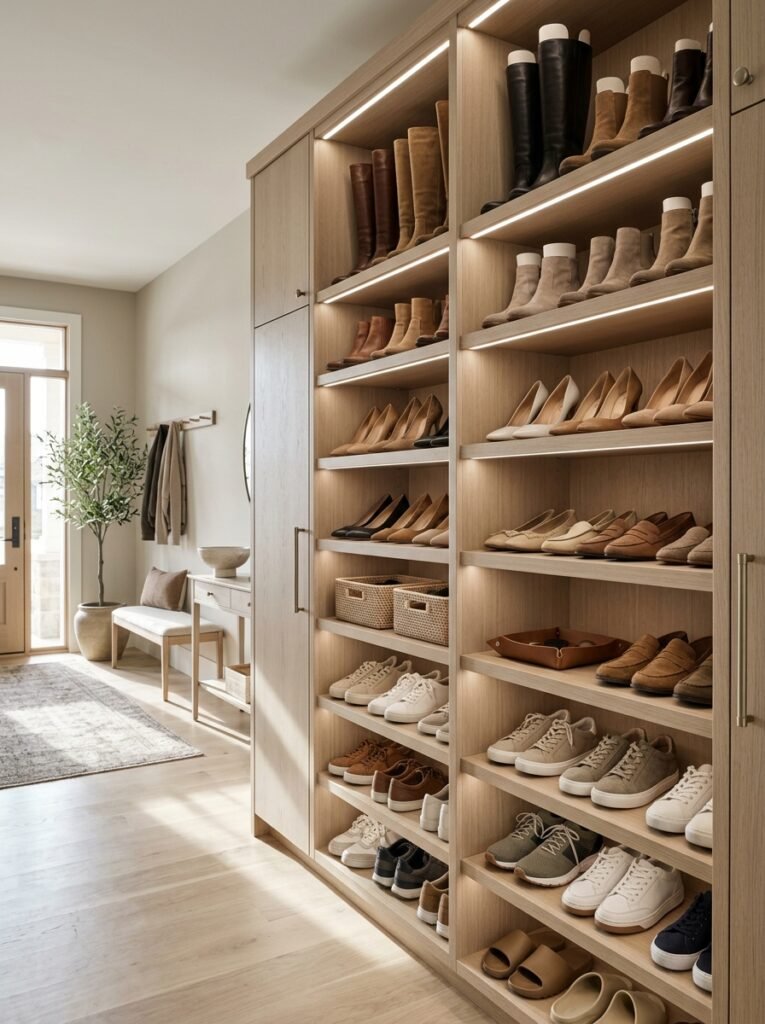
Even the best storage system will become messy if shoes are never returned to their places. Create a simple habit of putting footwear back after use, allowing damp shoes to dry before storing them, and checking the entryway or closet once a week. If a shelf becomes overcrowded, move seasonal or rarely worn pairs to a secondary storage area rather than forcing more shoes into the same space. This small routine keeps shoe organization manageable over time and helps you notice when a storage layout needs adjusting. The goal is not a perfect display every minute; it is a system that remains useful in real life.
Final Thoughts
The best shoe organization ideas are the ones that match your home, your collection, and your daily routine. A master closet may benefit from adjustable shelves, while a small entryway may need a slim cabinet or a compact bench. Families can use separate cubbies, and dorm rooms can make the most of under-bed storage or stackable organizers. Start with the shoes you wear most often, give every pair a sensible place, and keep the storage system easy to maintain. You do not need a huge closet or expensive products to create a cleaner space. With the right layout, even a crowded entryway or small bedroom can become more organized, functional, and welcoming.