




This post may contain affiliate links. Please read my disclosure policy.
In This Article Show
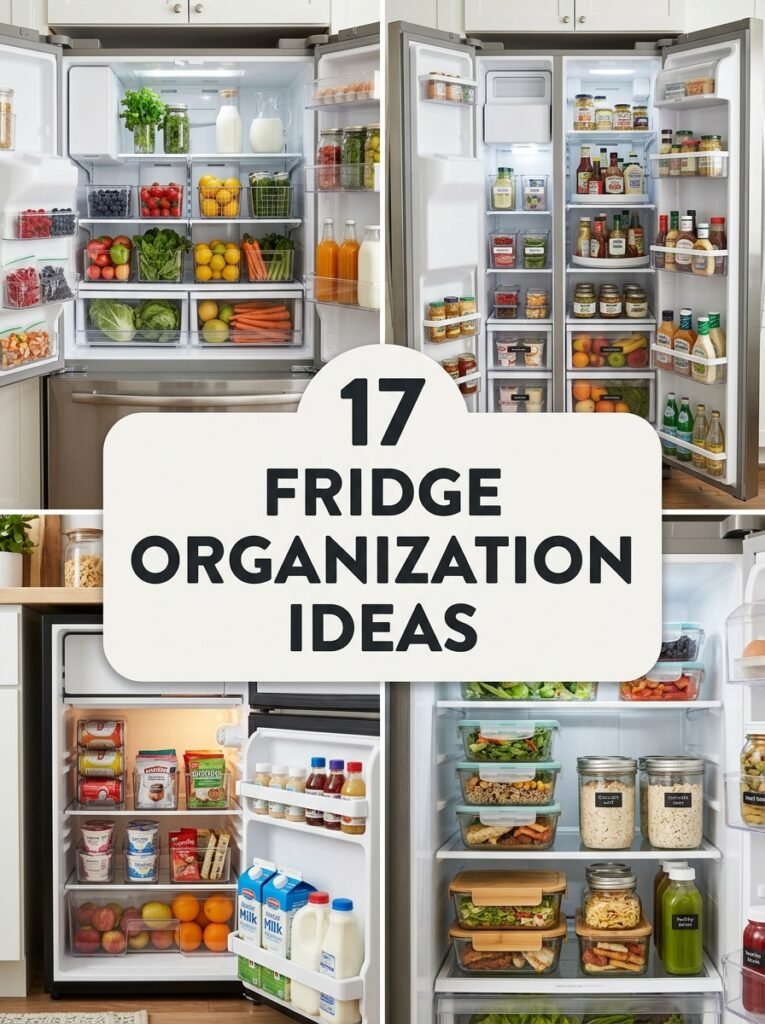
A refrigerator can become messy surprisingly quickly. Fresh produce, drinks, leftovers, sauces, meal-prep containers, and everyday groceries often end up wherever there is an empty spot. The result is a fridge where food gets hidden, shelves become crowded, and ingredients are easily forgotten. Good fridge organization changes that by giving every type of food a logical place. Whether you have a French-door refrigerator, side-by-side model, double-door design, single-door fridge, or a compact dorm or RV refrigerator, a few smart changes can make the inside easier to use. The goal is not simply to make your refrigerator look aesthetic for a photo. It should also help you see what you have, reach food quickly, reduce unnecessary clutter, and make everyday meal preparation easier.
1. Create Dedicated Zones Inside the Fridge
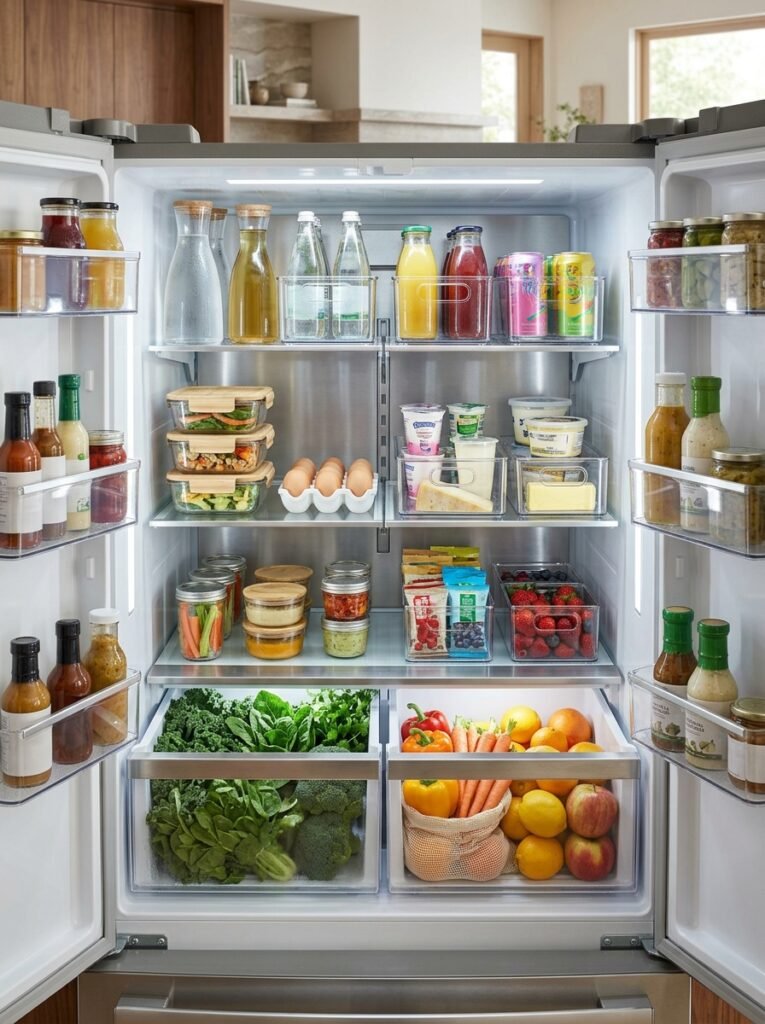
The easiest way to maintain an organized refrigerator is to divide it into simple zones. Keep drinks together, dairy products together, prepared meals in another area, and fresh produce in the appropriate drawers. You can also create a breakfast or snack section if those foods are used frequently. Zoning prevents random items from spreading across every shelf and makes grocery restocking much faster because you know exactly where each category belongs.
2. Organize a French Door Refrigerator by Frequency
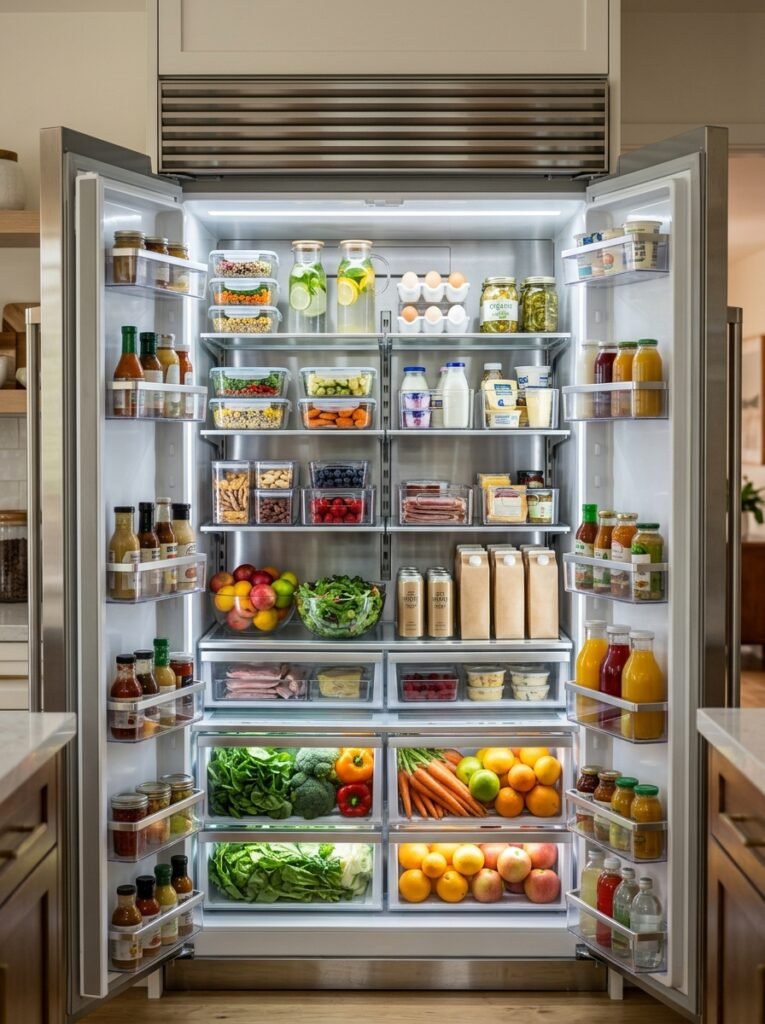
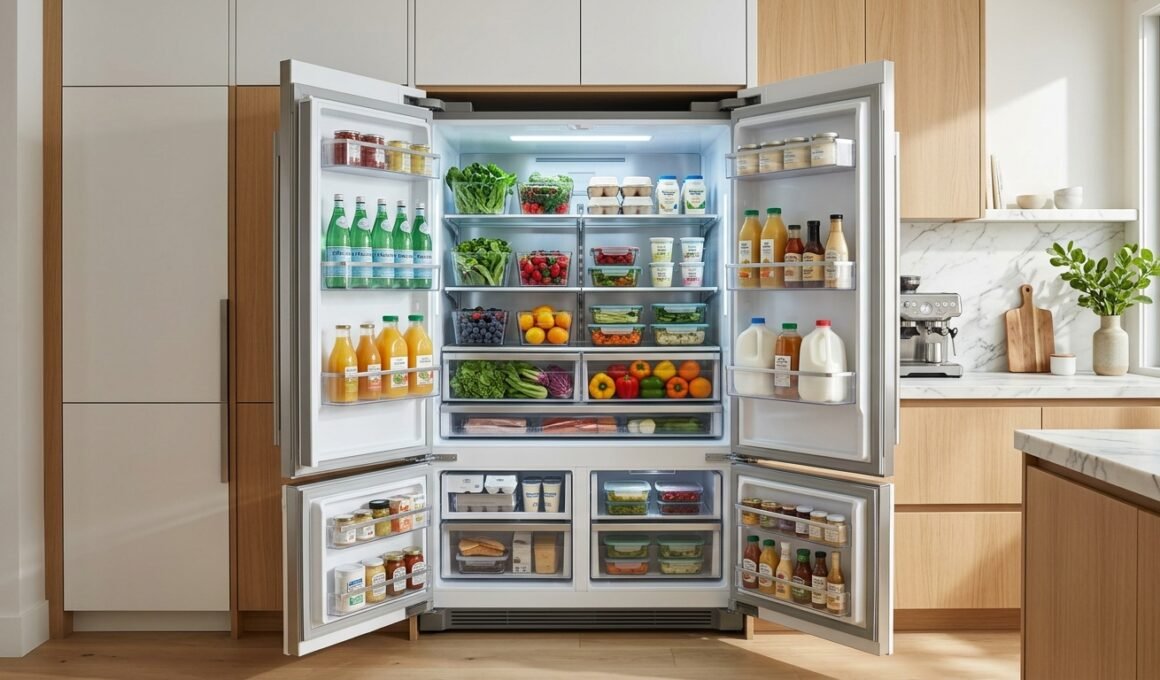
French-door refrigerators offer wide shelves and multiple drawers, but their generous space can also encourage clutter. Place the foods you reach for every day toward the front and center. Use the doors for suitable condiments and drinks, while keeping delicate foods and frequently used fresh ingredients easy to see. Wider shelves are ideal for meal-prep containers, larger dishes, and family-sized foods.
3. Make the Inside Look Aesthetic With Matching Containers
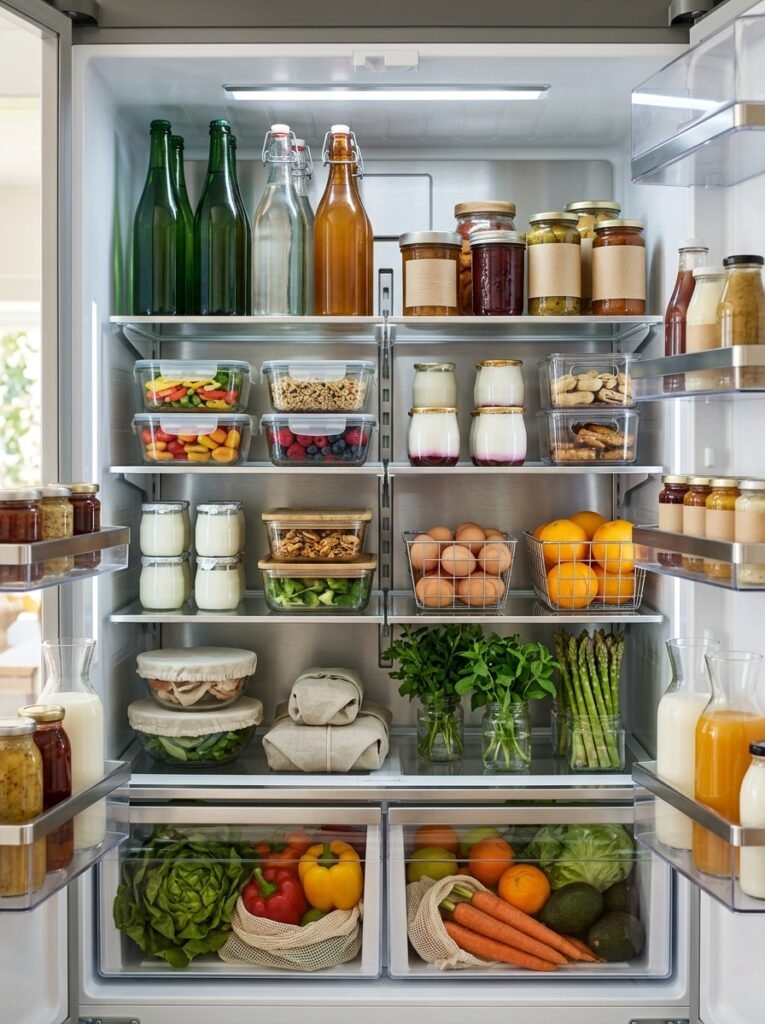
A coordinated container system can make a refrigerator look instantly cleaner. Clear bins allow you to see the contents while creating visual boundaries between categories. You do not need to transfer every single food item into matching containers; focus on loose produce, snacks, small packages, and frequently used ingredients. Keeping the system simple makes it easier to maintain instead of turning organization into extra work.
4. Give Drinks Their Own Area
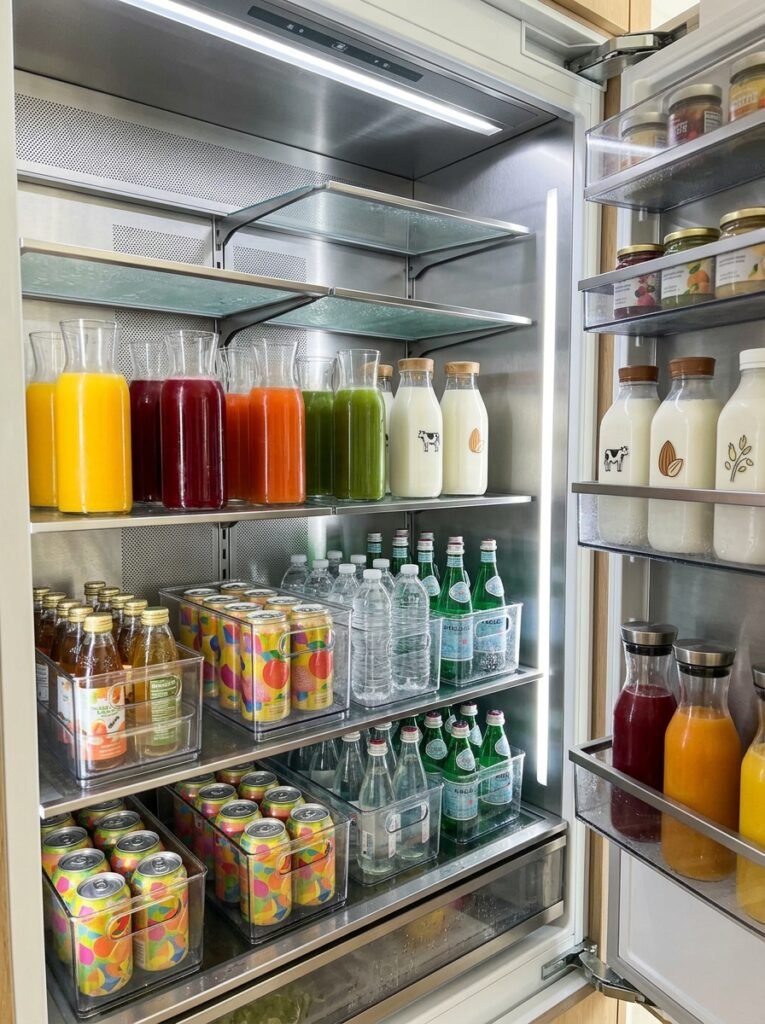
If your household drinks a lot of water, juice, milk, sparkling drinks, or other beverages, giving them a dedicated section can prevent bottles from taking over the refrigerator. Use a lower shelf or a suitable door section for drinks that are stored there safely. Line bottles up so labels are visible and keep taller containers toward the back only when they are still easy to reach.
5. Build a Healthy Food Zone
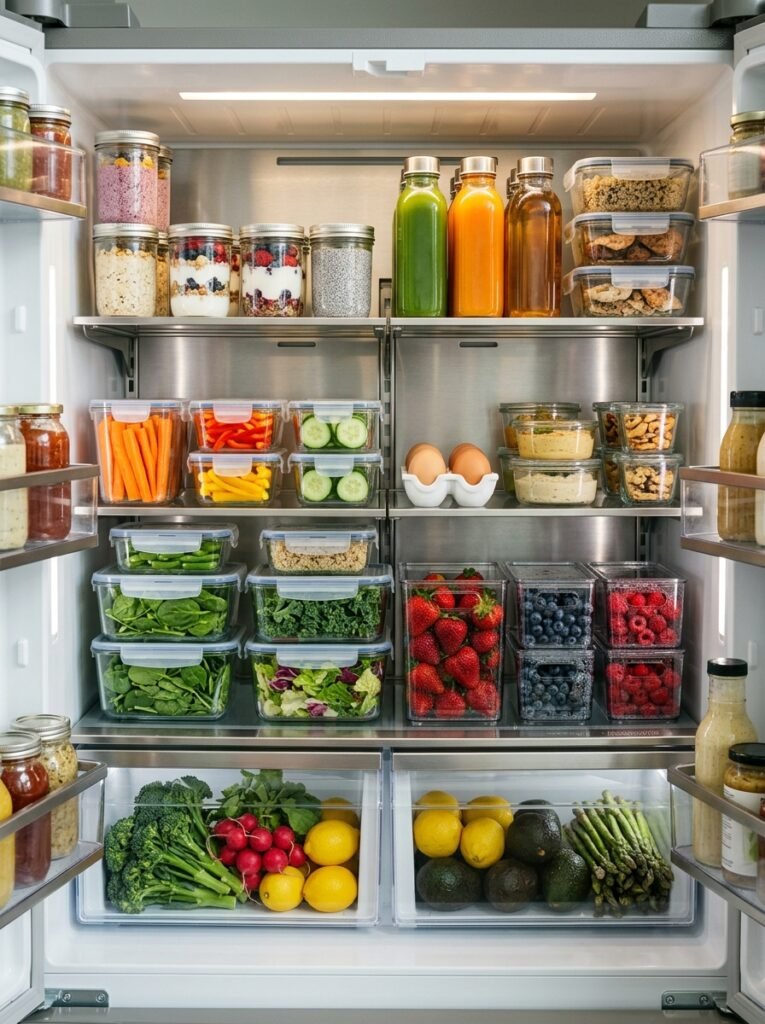
Creating a visible healthy-food section can make better choices easier during busy days. Keep washed and ready-to-eat produce, yogurt, fresh ingredients, and prepared healthy snacks together where they are easy to see. Avoid hiding these foods behind large containers. When nutritious options are visible at eye level, you are more likely to remember to use them before they lose freshness.
6. Organize a Side-by-Side Refrigerator Vertically
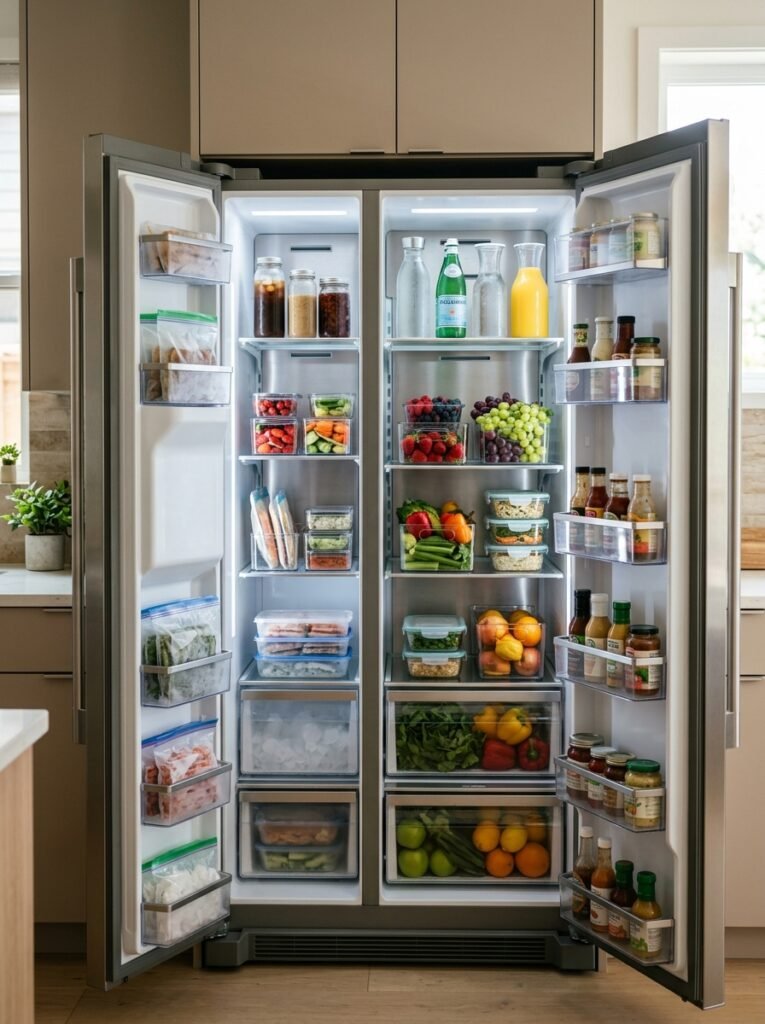
Side-by-side refrigerators have narrow vertical compartments, so horizontal stacking can quickly make the shelves difficult to use. Place taller bottles together and use slim bins for smaller products. Keep frequently used items at comfortable eye level and reserve the lowest areas for heavier products. The goal is to avoid creating several layers of food that require you to remove everything in front to reach one item.
7. Use Drawers for Meal Prep
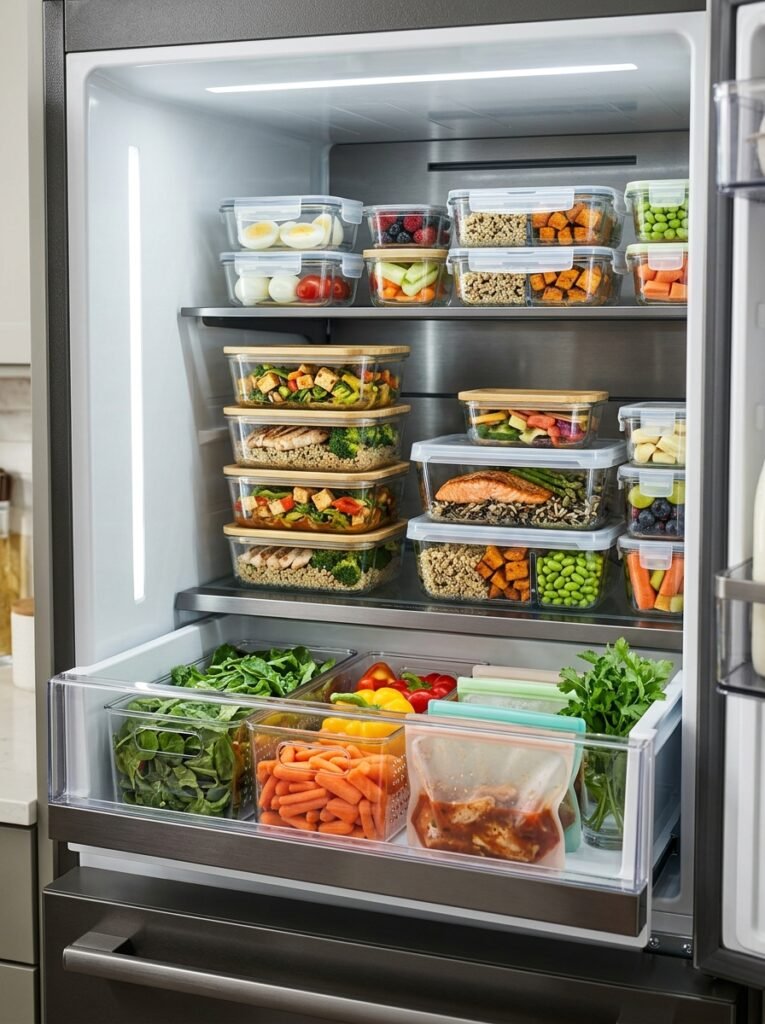
If you prepare meals in advance, dedicate one refrigerator area to ready-to-eat meals. Matching containers make portions easy to identify and stack, while a clear drawer or shelf prevents meal-prep boxes from spreading across the entire refrigerator. Organize them according to when you plan to eat them, placing the foods needed first toward the front so older prepared meals do not get forgotten.
8. Use the Door Shelves Strategically
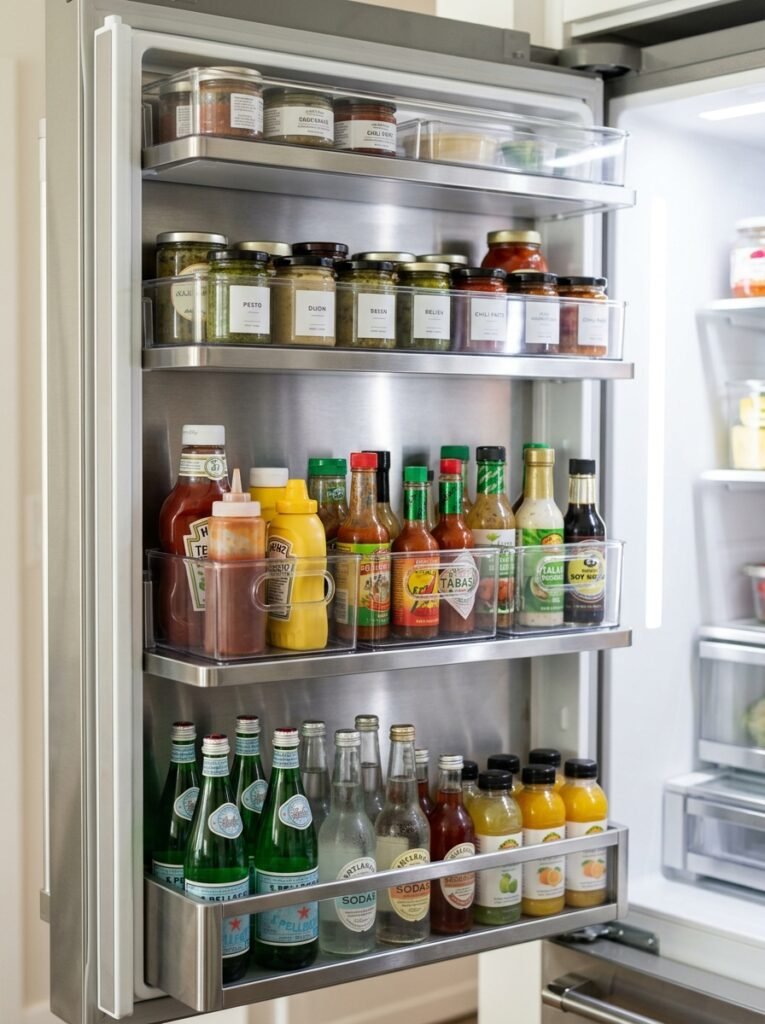
The refrigerator door is convenient, but it should not automatically become a dumping area. Use door shelves for products that are appropriate for that storage location and that you reach for often, such as condiments and suitable beverages. Group similar bottles together so you can quickly find what you need. Avoid filling every door shelf completely because overcrowding makes small items disappear behind larger bottles.
9. Make the Top Shelf Easy to Understand
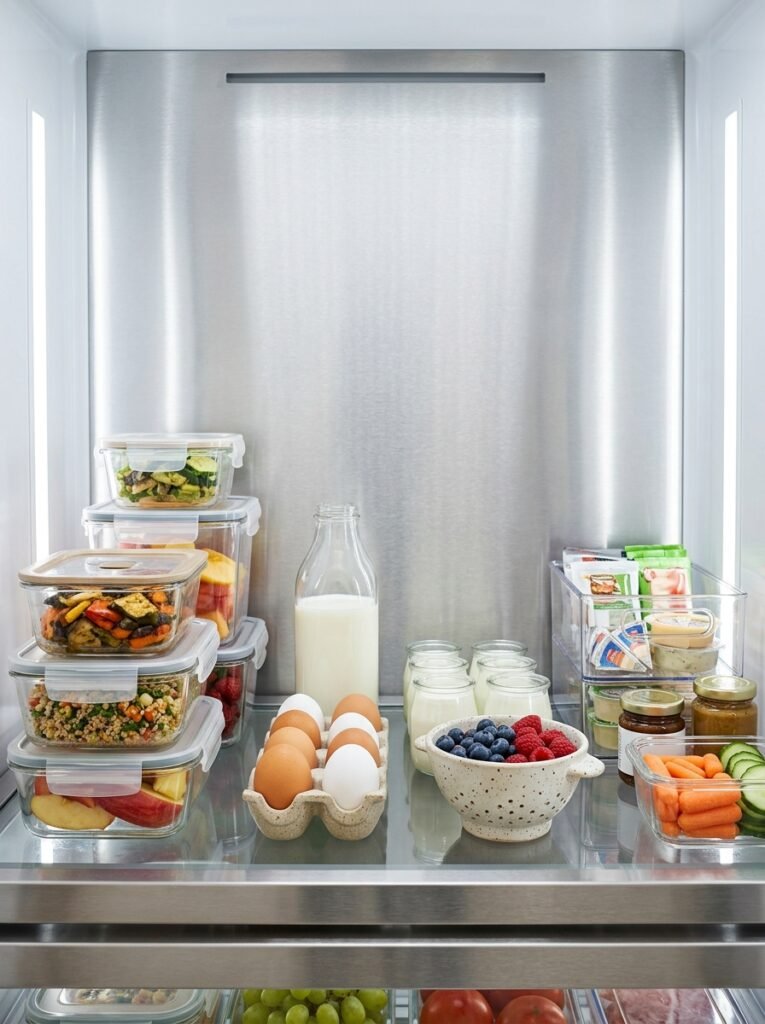
The top shelf often becomes a place where random items are pushed when there is nowhere else to put them. Instead, give it a clear purpose. Depending on your refrigerator design and food-storage needs, it can hold ready-to-eat foods, leftovers, breakfast ingredients, or other frequently accessed items. Keep containers arranged in a single visible layer whenever possible so nothing disappears behind something else.
10. Use Clear Bins for Small Items
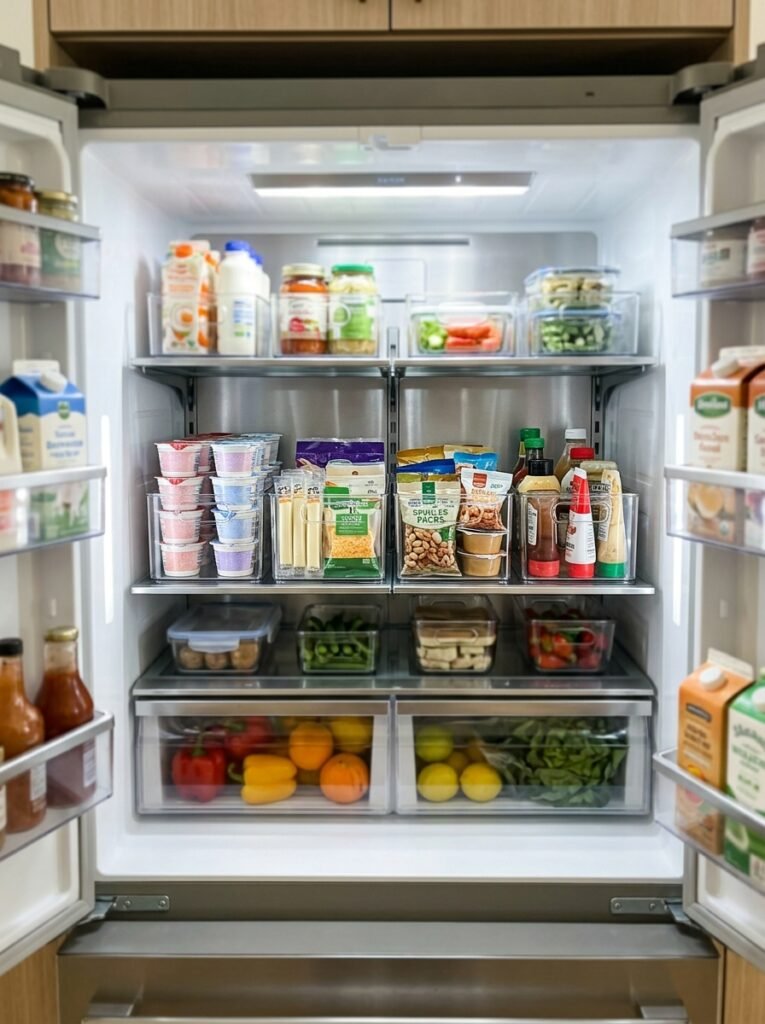
Small yogurt cups, cheese packets, snack packs, sauces, and individual ingredients can quickly create visual clutter. A few transparent bins can collect these products while keeping them visible. Choose bins that fit the shelf dimensions instead of buying a large set first. The best container is one that lets you pull out an entire category without disturbing everything else around it.
11. Try Dollar Store and Dollar Tree Storage Hacks
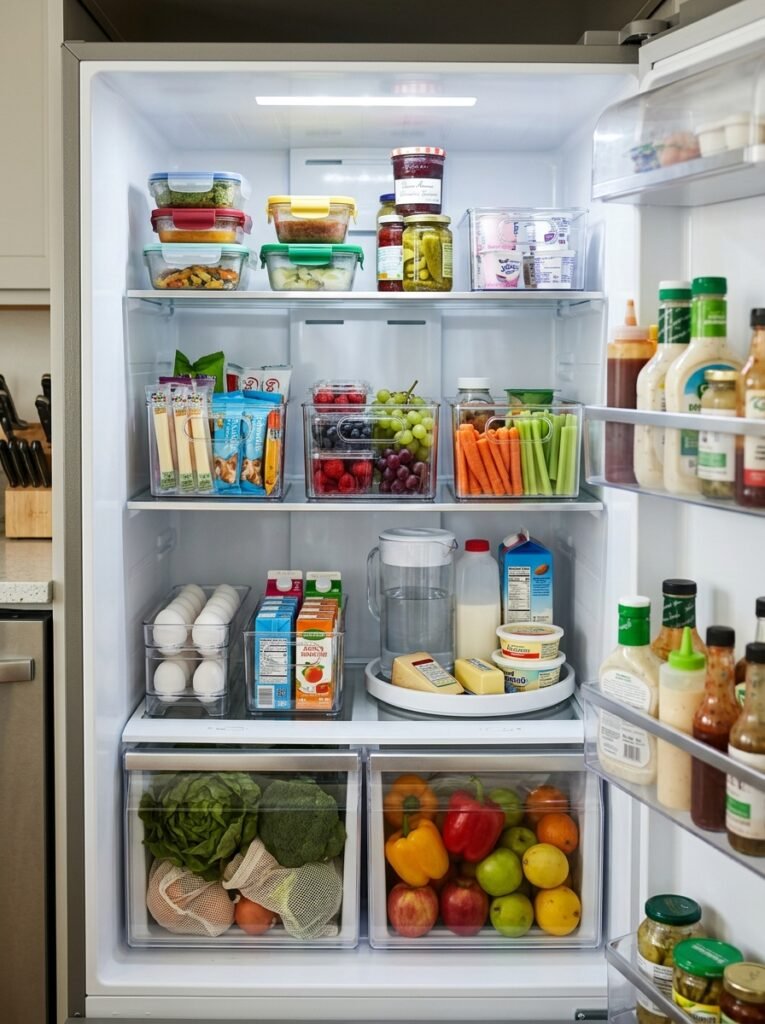
Budget-friendly storage pieces can be useful for testing an organization system before investing in more expensive containers. Small clear bins, simple trays, or stackable organizers can create categories without requiring a complete refrigerator makeover. The important part is to check that anything you use fits securely, can be cleaned easily, and does not interfere with the refrigerator door or shelves.
12. Keep a Dedicated Leftover Section
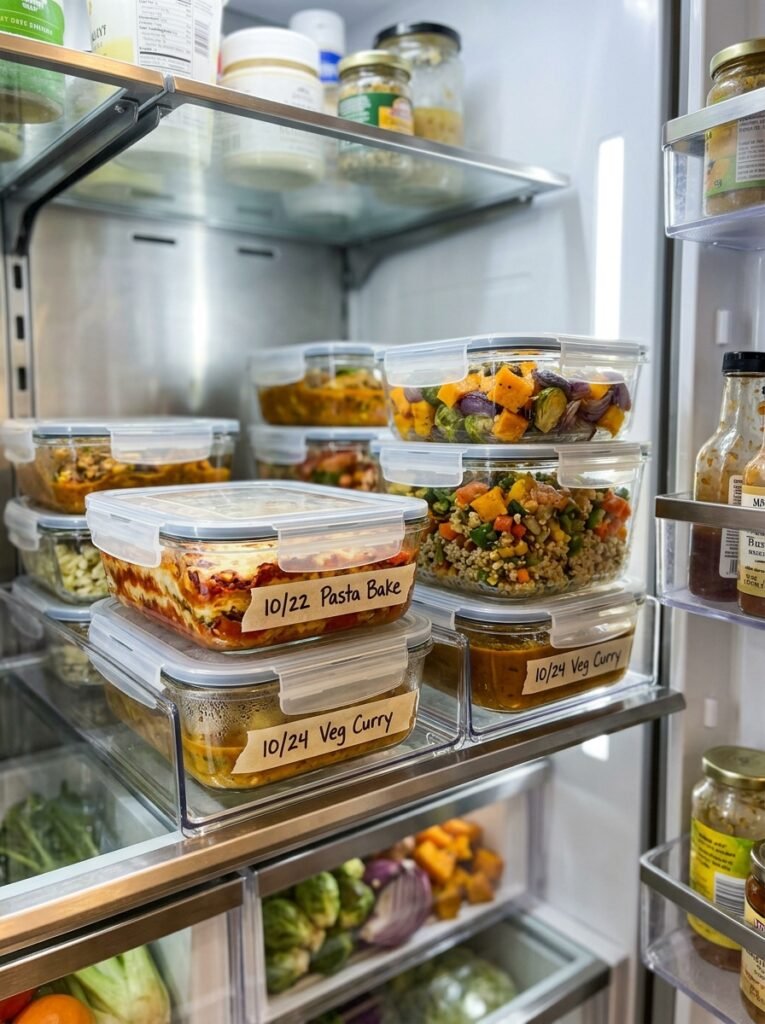
Leftovers are easy to forget when they are placed wherever an empty spot happens to be available. Give them a consistent shelf or container area so they remain visible. Use stackable food containers with secure lids and arrange newer meals behind older ones when practical. A dedicated leftover zone can also make dinner planning easier because you can quickly see what food is already available.
13. Organize a Double-Door Refrigerator by Family Needs
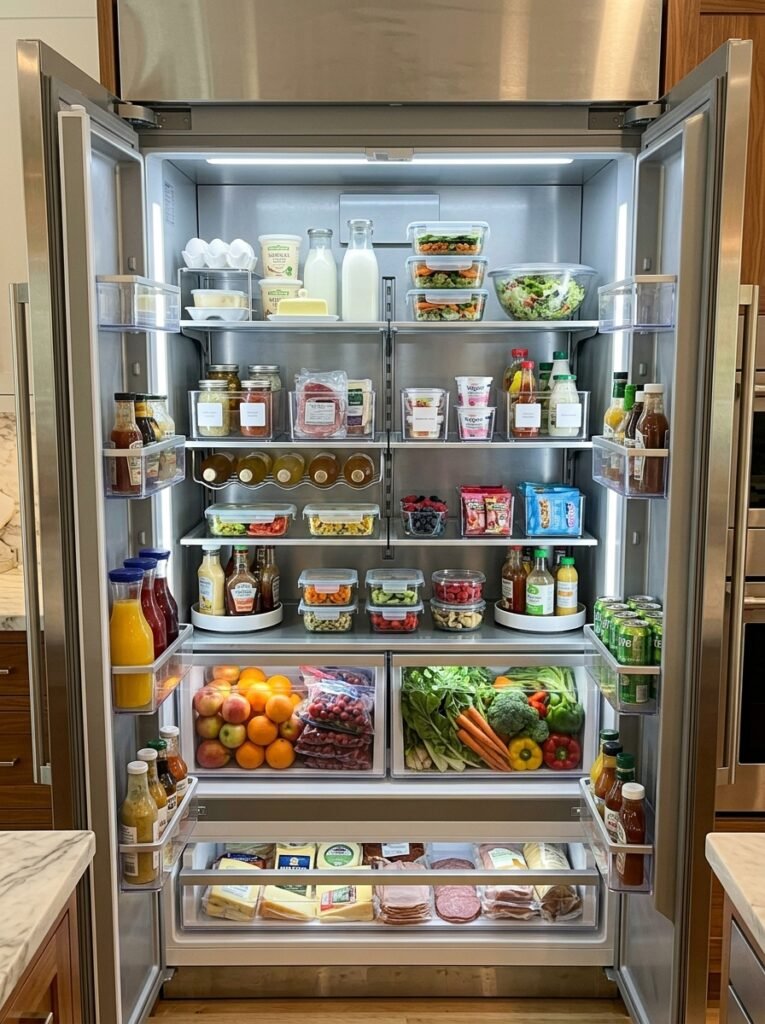
A double-door refrigerator can be organized according to how your household actually uses it. One area can focus on everyday family foods while another holds drinks, ingredients, or prepared meals. Large families may benefit from wider category zones, while smaller households can use the same principle on a reduced scale. The important part is creating predictable locations rather than constantly moving items around.
14. Make a Dorm Fridge Work Harder
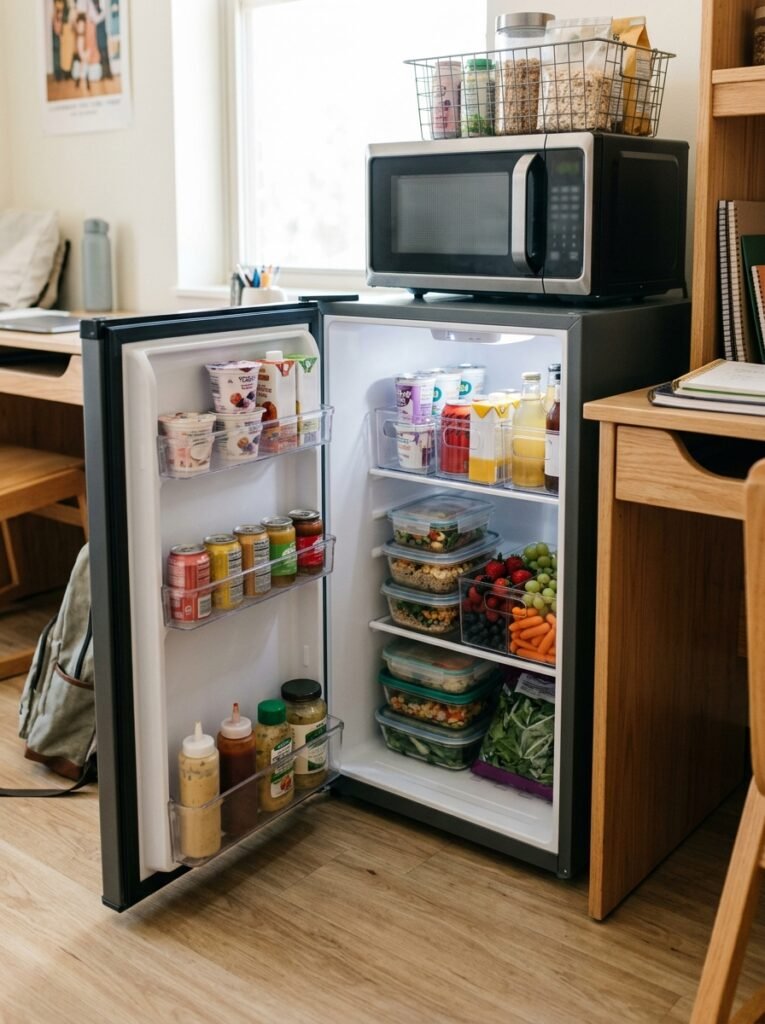
Dorm refrigerators require a different approach because space is extremely limited. Use compact stackable bins and small containers rather than oversized organizers. Keep drinks together, use the door for suitable smaller items, and reserve the main shelf for foods that need the most protection and visibility. A simple system can make a tiny fridge much easier to live with.
15. Use a Simple RV Refrigerator Layout
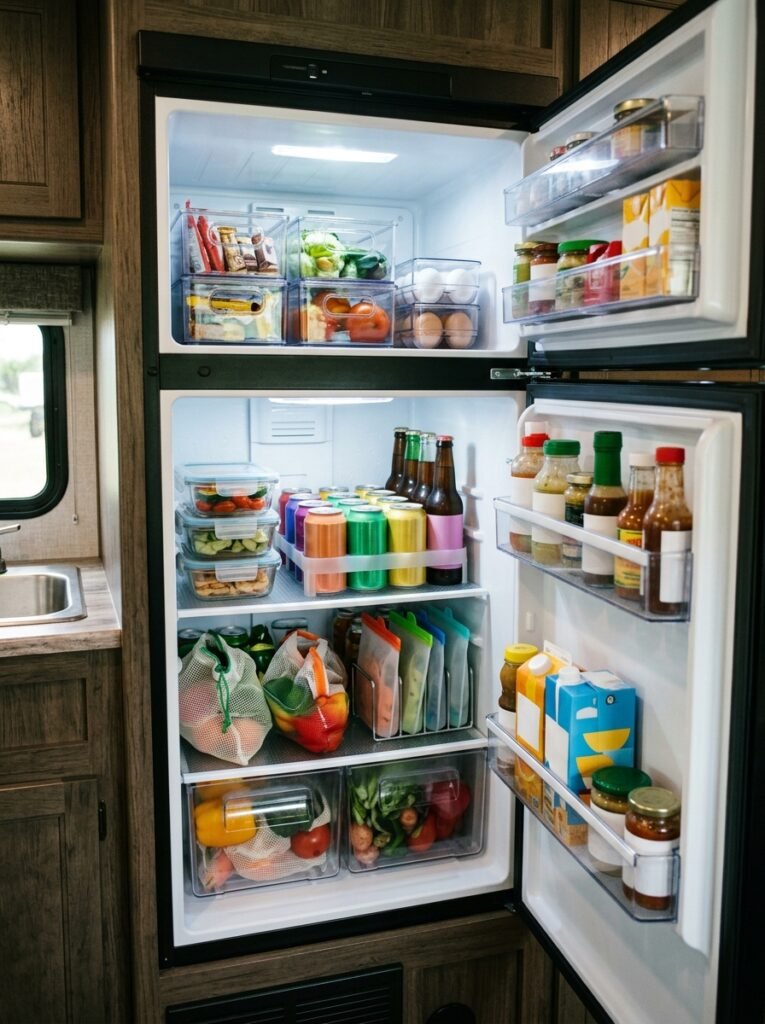
RV refrigerators have limited capacity, so organization needs to prioritize stability and easy access. Use compact containers that fit securely and avoid overfilling shelves. Keep commonly used foods toward the front while reserving harder-to-reach areas for less frequently used items. Before adding organizers, check that they will remain stable during travel and fit the refrigerator’s actual dimensions.
16. Give Every Food Category a Home
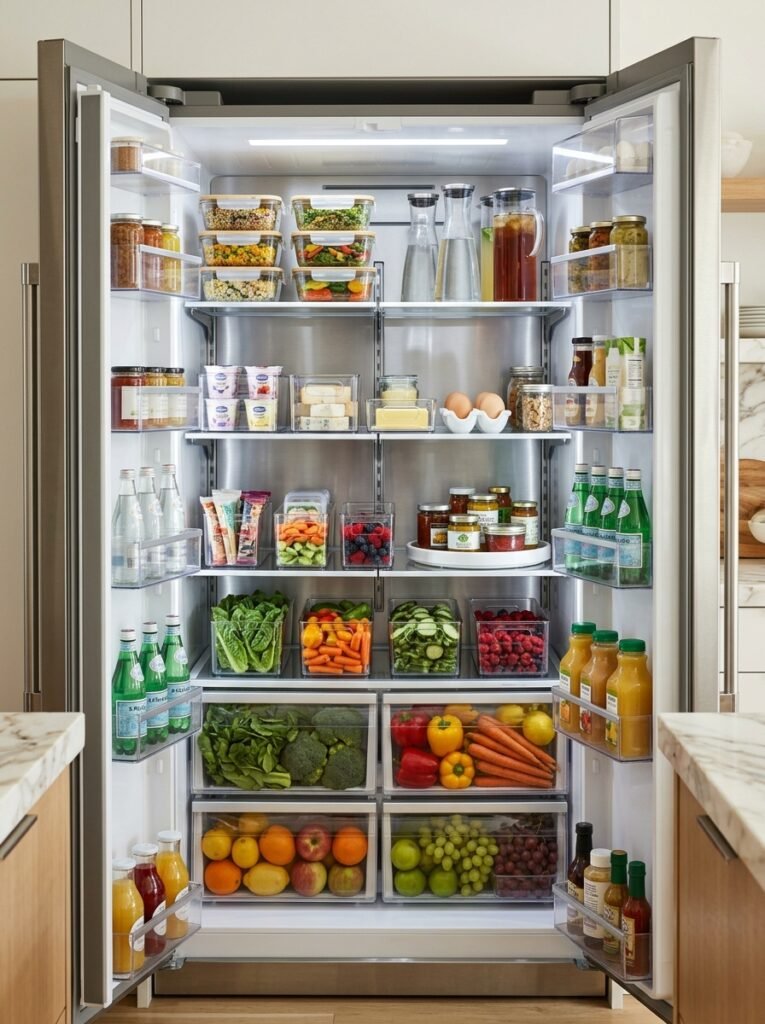
A refrigerator stays organized when everyone knows where items belong. Instead of creating a complicated system with too many labels and containers, use simple categories that make sense for your household. Produce, dairy, drinks, sauces, snacks, leftovers, and meal-prep foods can each have a predictable location. When groceries come home, putting them away becomes much faster because you already know where everything goes.
17. Create a System That Is Easy to Maintain
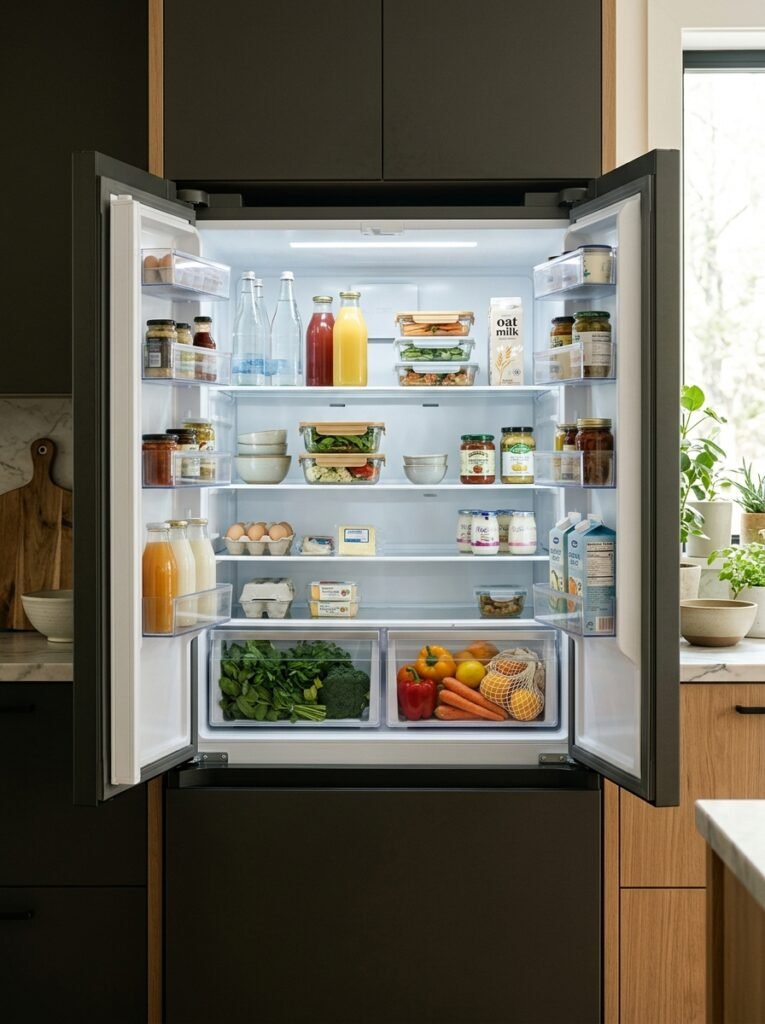
The best fridge organization system is one you can maintain after a busy grocery trip. Avoid filling every shelf to maximum capacity because you need room for new food and larger containers. Once a week, quickly check older leftovers and produce, wipe any spills, and return misplaced items to their zones. A few minutes of regular maintenance can prevent the refrigerator from becoming overwhelming again.
Final Thoughts
Good fridge organization should make your everyday routine easier, not create another complicated chore. Start by understanding how your household uses the refrigerator, then build simple zones around those habits. A French-door refrigerator may need a different layout from a side-by-side model, while a dorm or RV refrigerator requires even more careful use of limited space. You also do not need expensive containers to achieve a clean result. A few well-chosen bins, trays, and stackable containers can make a noticeable difference. Focus first on visibility and accessibility, then add aesthetic touches once the basic system works. The most successful refrigerator is not necessarily the one that looks perfect in a photograph. It is the one where you can quickly find your food, see what needs to be used, prepare meals efficiently, and put groceries away without creating another mess.