


This post may contain affiliate links. Please read my disclosure policy.
In This Article Show
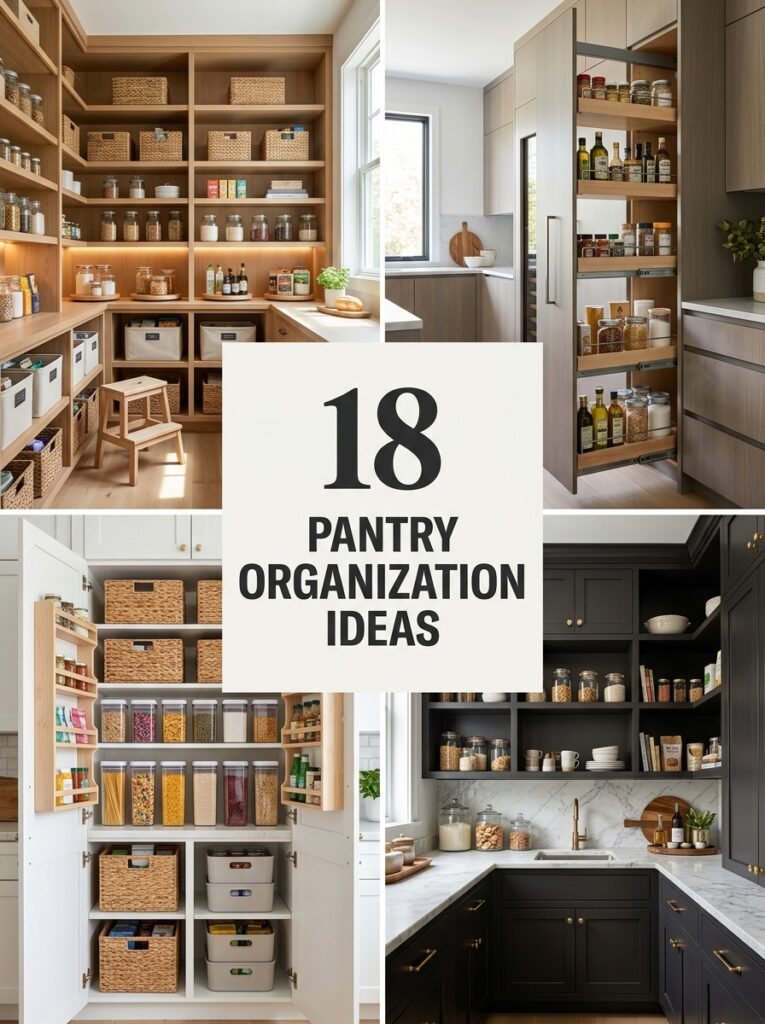
A well-organized pantry can make everyday cooking feel much easier. When food, snacks, baking supplies, and kitchen essentials have a clear place, you spend less time searching and more time enjoying your kitchen. Good organization is not only about making shelves look pretty; it is about creating a system that works with the way your household actually uses food. Whether you have a large walk-in pantry, a narrow closet, or a tiny cabinet beside the refrigerator, there are plenty of practical ways to improve the space. From pull-out storage and labeled baskets to open shelving and clever small-space hacks, these pantry organization ideas can help you create a kitchen storage system that looks clean while remaining easy to maintain.
1. Group Food Into Clear Categories
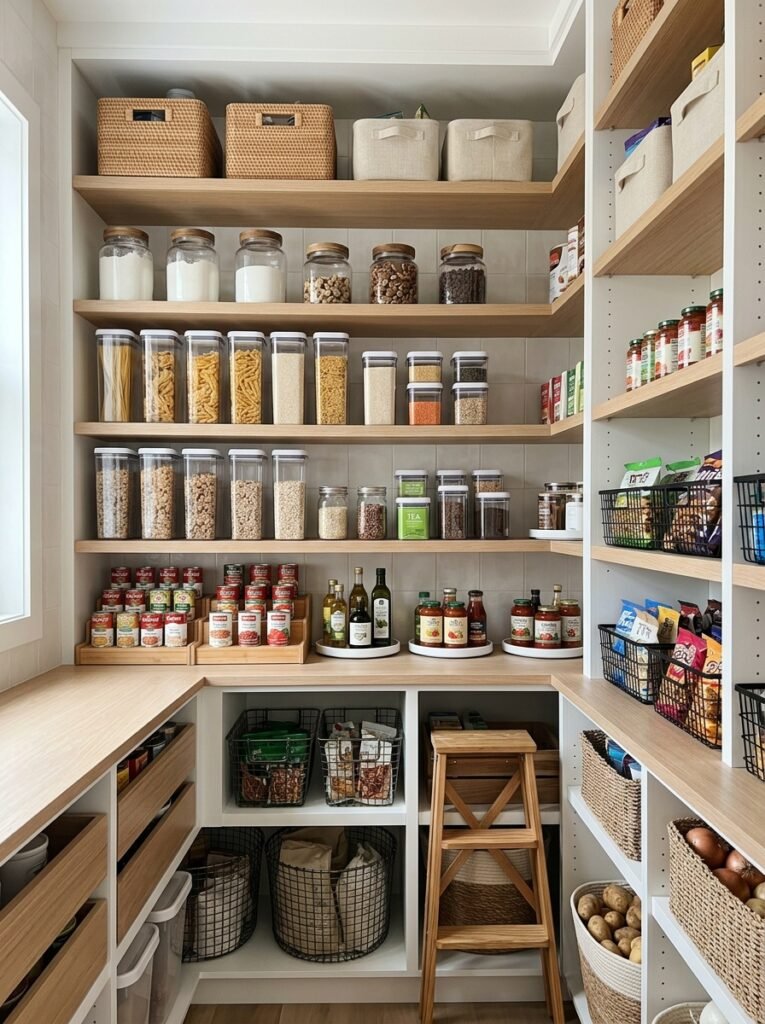
The easiest way to make a pantry functional is to group similar foods together. Keep breakfast items in one area, snacks in another, while canned goods, pasta, sauces, baking supplies, and cooking ingredients each have their own zones. This makes grocery restocking easier because you can immediately see which category is running low. It also prevents random items from being pushed toward the back and forgotten.
2. Make the Most of a Walk-In Pantry
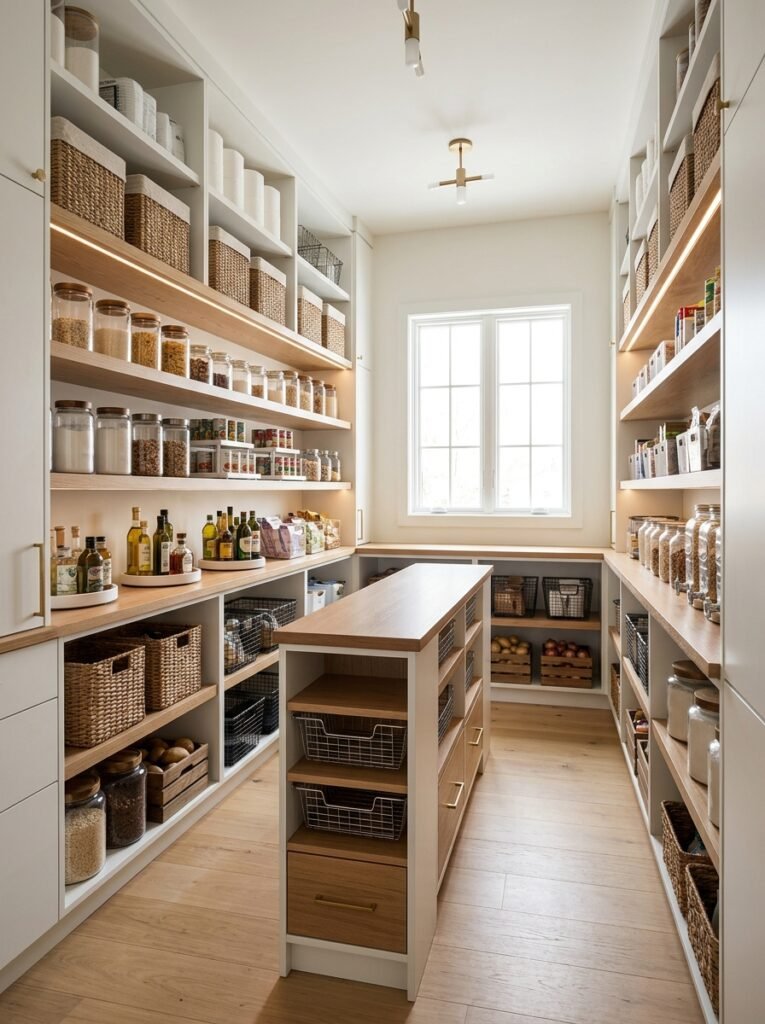
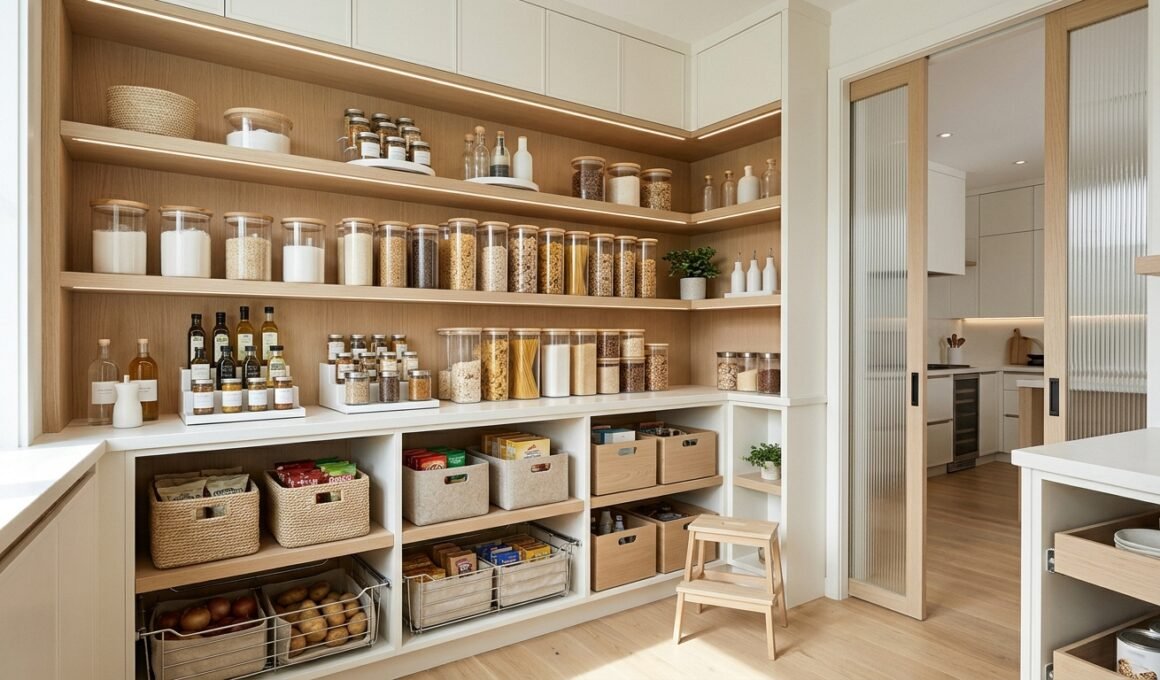
A walk-in pantry gives you more storage potential, but a large space can quickly become difficult to manage without zones. Use the lower shelves for heavy and frequently used food, eye-level shelves for everyday ingredients, and higher shelves for backup supplies. If there is enough floor space, a slim center cart or island can provide additional storage without blocking movement.
3. Use Pull-Out Shelves for Deep Cabinets
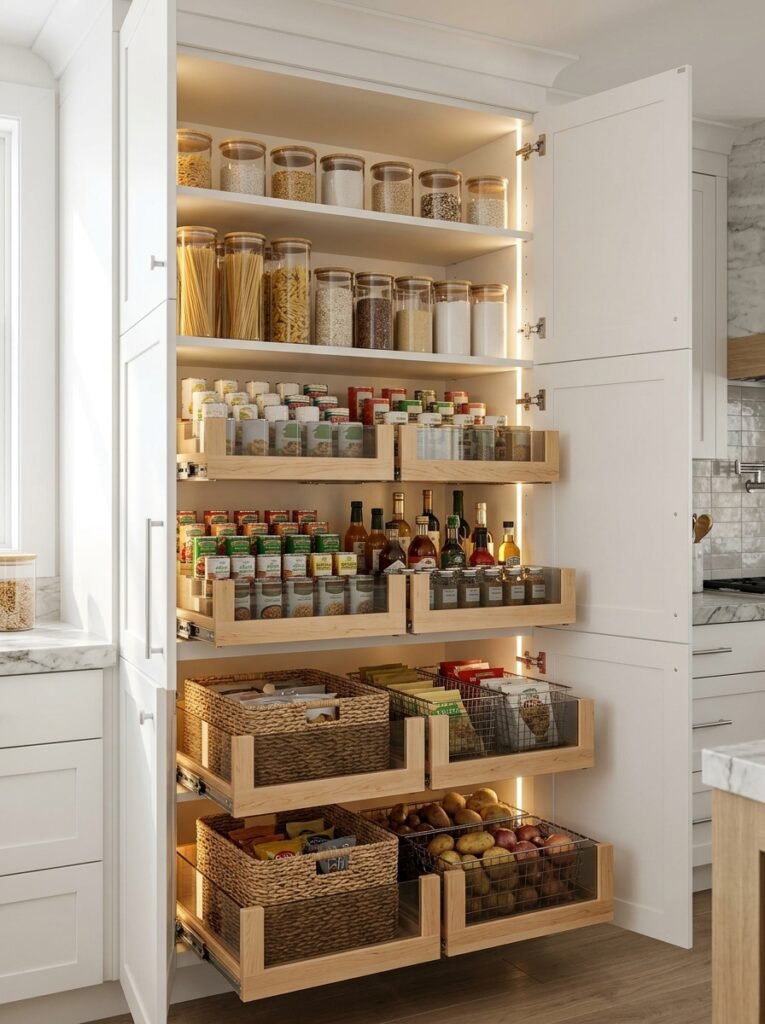
Deep pantry shelves often create wasted space because items at the back become difficult to reach. Pull-out shelves solve this problem by bringing the entire shelf toward you. They are especially useful for canned food, sauces, bottles, and heavy kitchen supplies. Instead of stacking everything in front of everything else, you can see the contents at once and quickly access what you need.
4. Choose Baskets for Flexible Storage
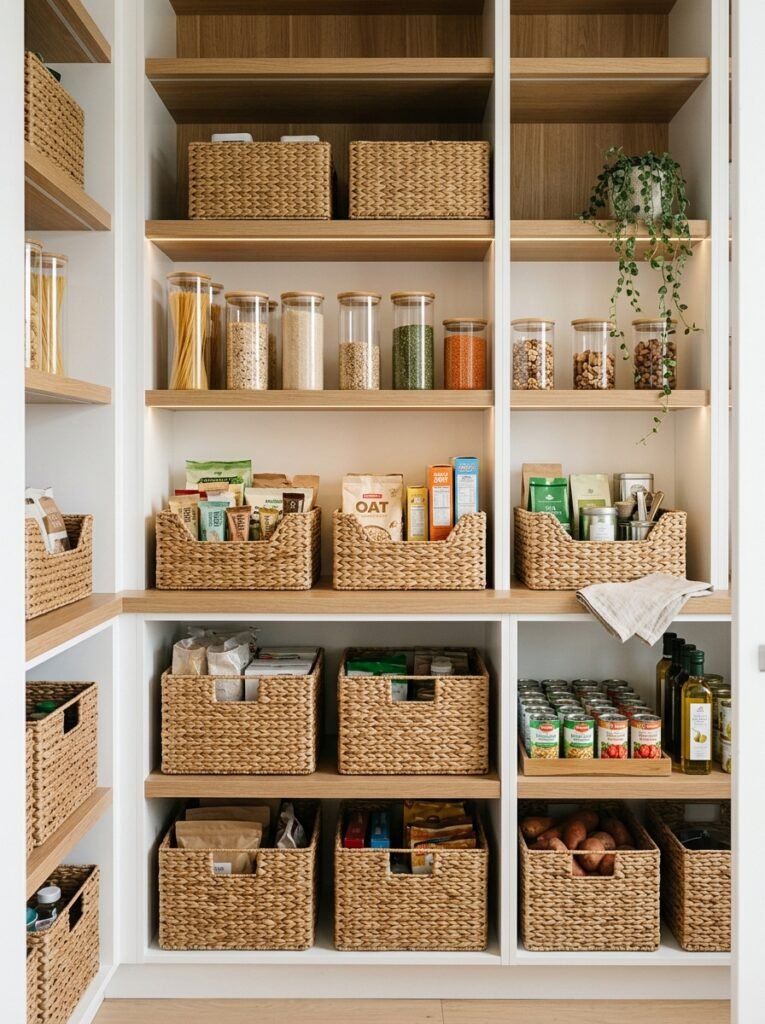
Baskets are useful when you want to collect several smaller items into one easy-to-move container. Use them for snack packets, breakfast products, tea, cooking extras, or unopened backup food. Open-front baskets work particularly well because you can see the contents without removing the entire basket. Choose a consistent style or color to make the shelves look more cohesive.
5. Create a Dedicated Snack Zone
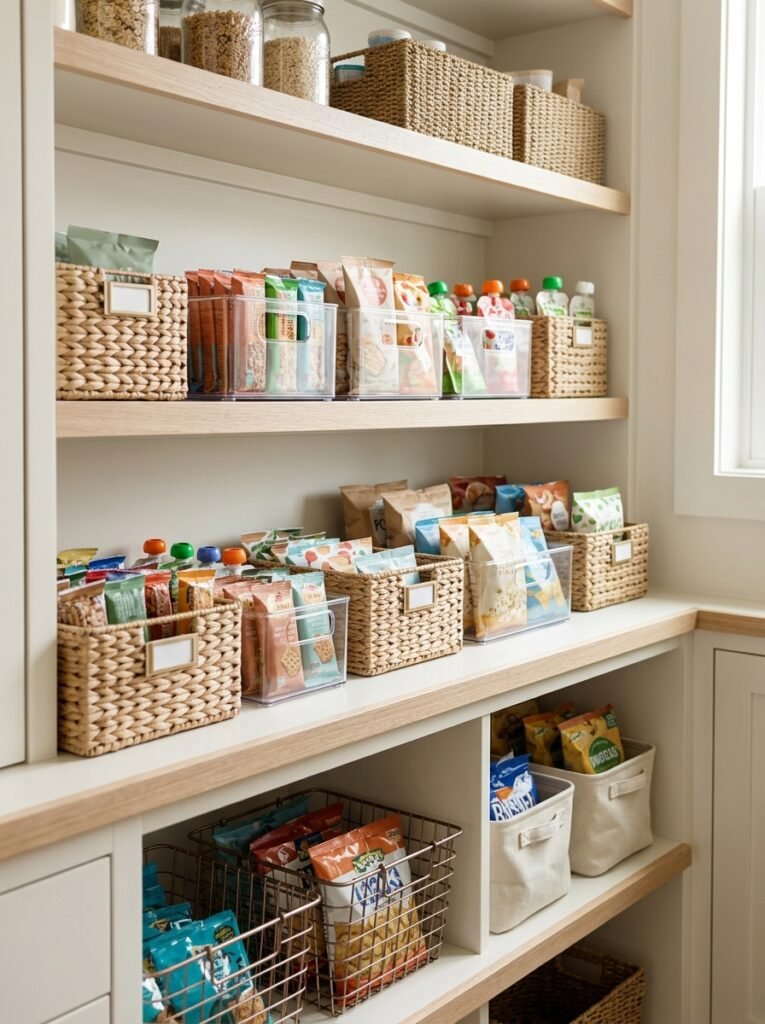
A snack zone can make a huge difference in busy households. Keep commonly eaten snacks together at an easy-to-reach height rather than scattering them throughout the pantry. Small bins or baskets can separate crackers, granola bars, chips, and other packaged snacks. This also makes it easier to see when popular items need to be replaced during your next grocery trip.
6. Arrange Baking Supplies Together
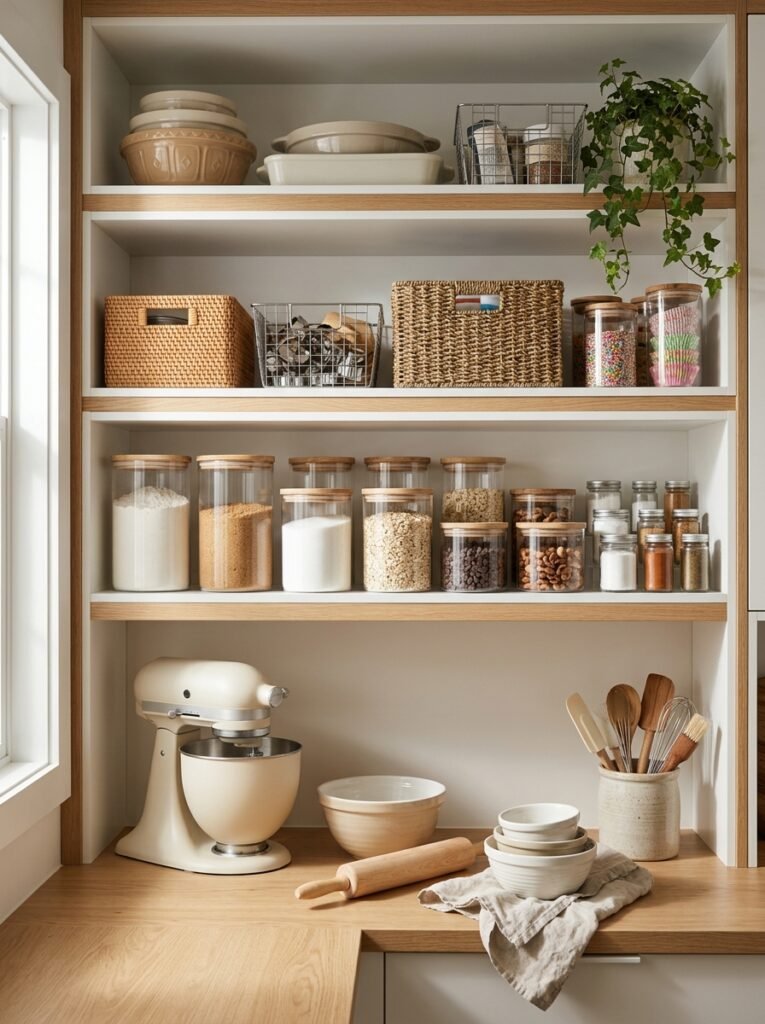
If you regularly bake, create a dedicated baking section instead of mixing flour, sugar, sprinkles, baking chocolate, and decorating supplies with everyday cooking ingredients. Clear airtight containers make frequently used dry ingredients easy to identify, while a small basket can hold smaller decorating items. Keeping everything together makes baking preparation faster and helps prevent duplicate purchases.
7. Use Open Shelves for Everyday Food
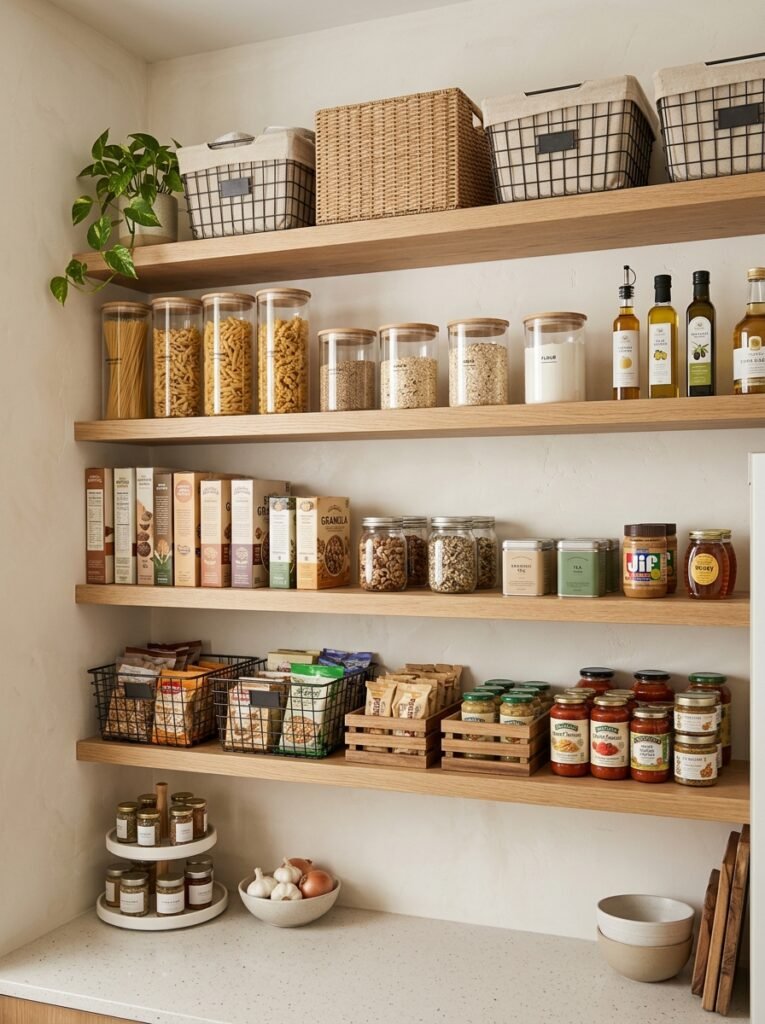
Open shelving works especially well for foods you reach for every day. Instead of opening several cabinet doors, you can quickly see breakfast ingredients, pasta, jars, and snacks. The key is to avoid overcrowding the shelves. Use a few matching containers and baskets to create visual order while keeping frequently used products easy to grab.
8. Turn a Small Closet Into a Pantry
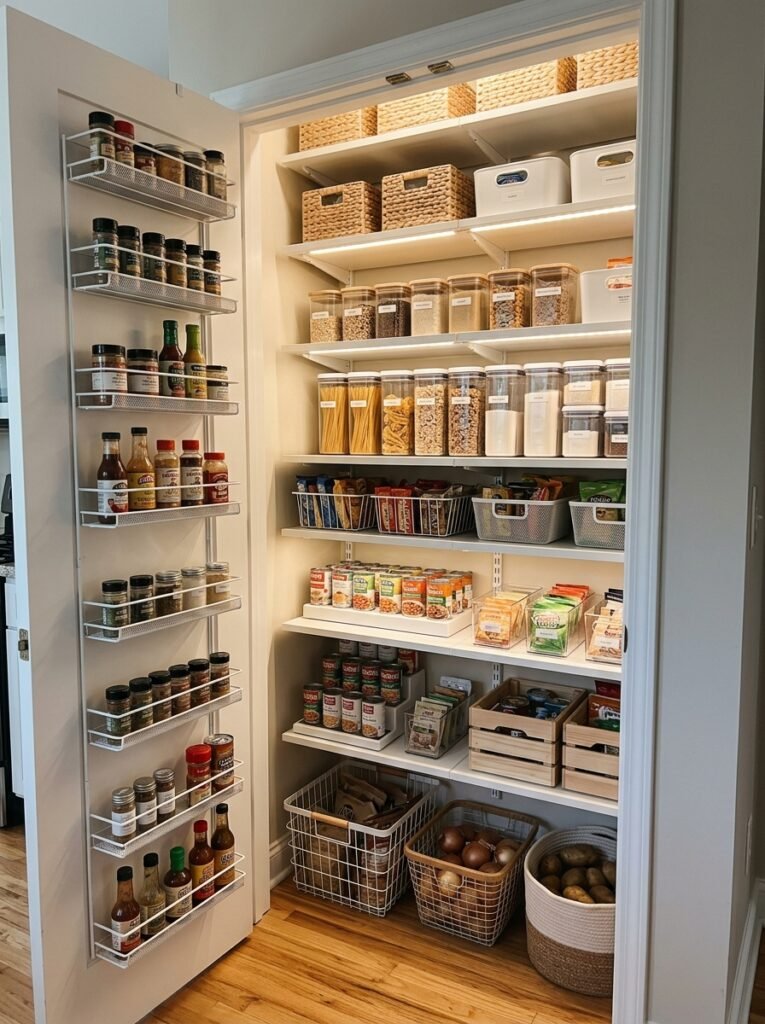
A small closet can become surprisingly useful pantry storage when every inch is planned carefully. Install adjustable shelving and keep the deepest areas for less frequently used supplies. Narrow baskets can fill awkward gaps, while the door can hold a slim organizer for smaller items. This is an excellent option for homes without a traditional pantry.
9. Maximize a Narrow Pantry
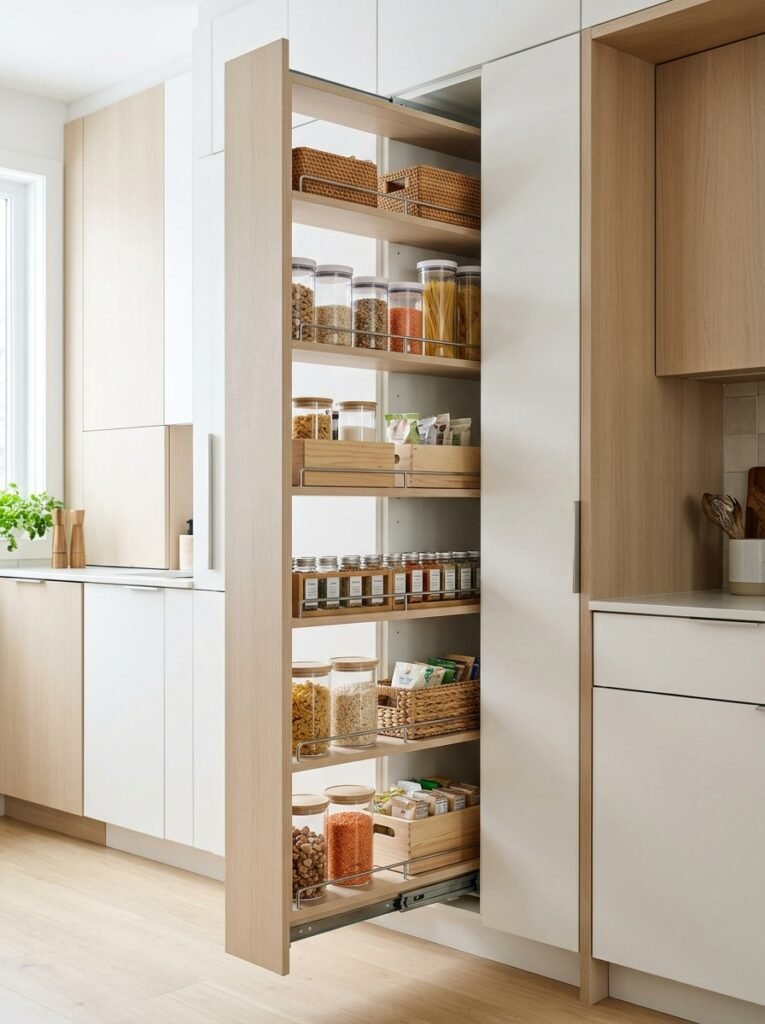
Narrow pantry spaces need careful planning because bulky containers can make the area feel cramped. Use slim shelves, vertical storage, and containers that fit the actual depth of the space. Keep frequently used foods toward the front and use the upper shelves for occasional items. A narrow pantry can feel surprisingly spacious when the shelves remain visible and uncluttered.
10. Add a Door Storage System
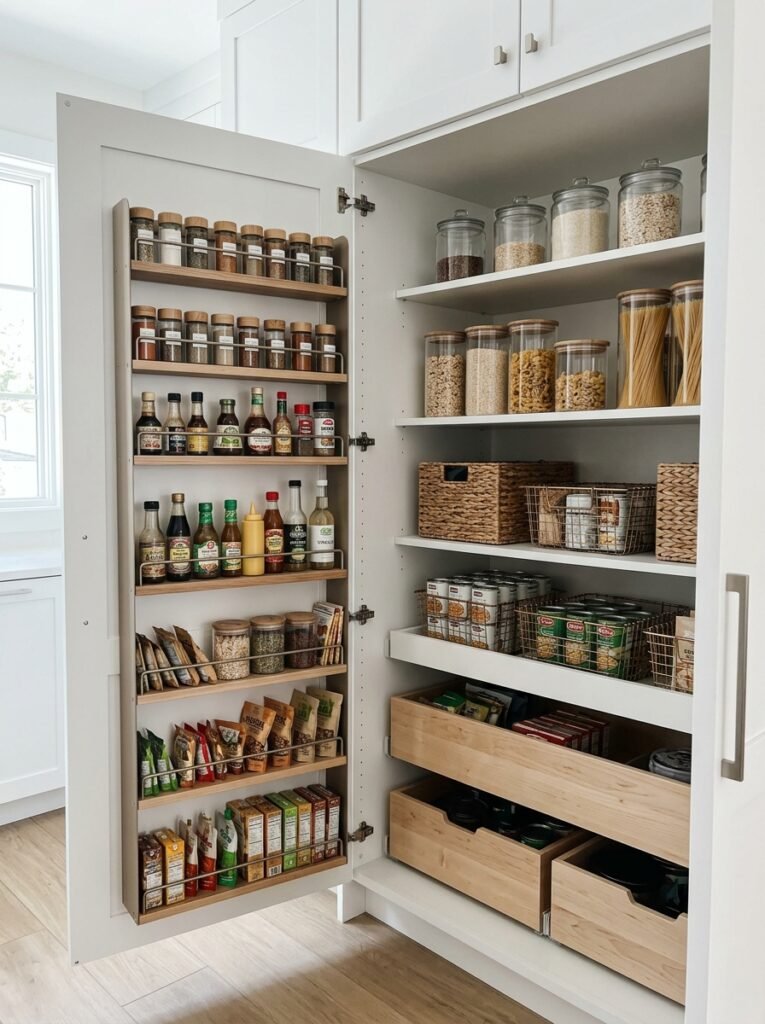
The pantry door is often one of the most overlooked storage surfaces. A slim door-mounted organizer can hold spices, sauces, small snack packages, packets, or other lightweight items. Keeping these smaller products on the door frees up shelf space for larger food containers and makes tiny items much easier to find.
11. Use Vertical Space From Floor to Ceiling
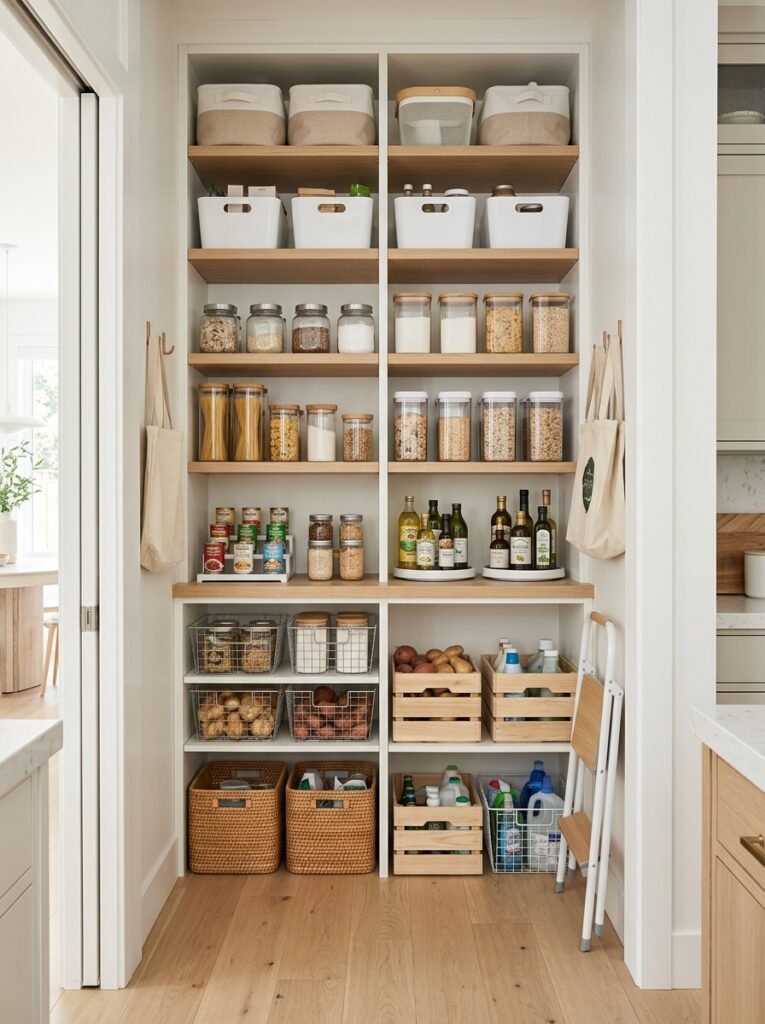
When floor space is limited, look upward. Tall shelving can provide several additional storage levels without making the room wider. Keep the middle shelves for everyday foods and reserve the highest areas for backup supplies or items used less often. A small step stool stored nearby can make higher shelves practical without wasting valuable cabinet space.
12. Use IKEA-Style Modular Storage
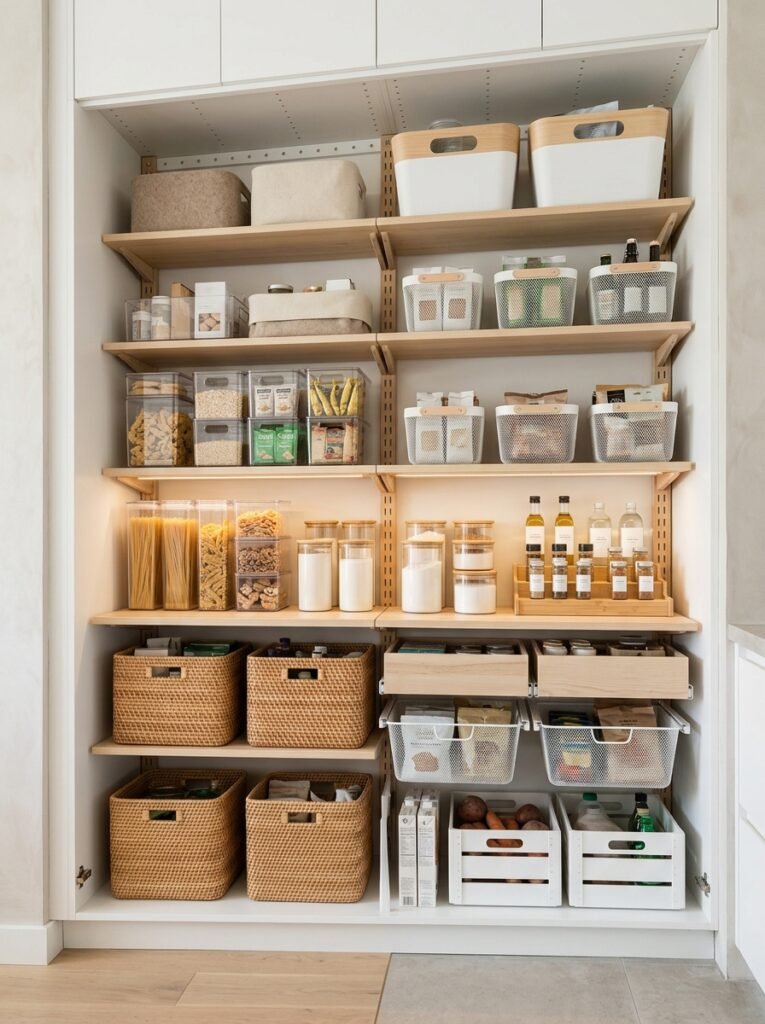
Modular storage can make it easier to adapt a pantry as your needs change. Simple cube units, adjustable shelves, clear bins, and stackable containers can be combined in different ways. You do not need an expensive custom installation to create a polished result. The important part is choosing pieces that fit your space and keeping each storage zone consistent.
13. Create a Butler’s Pantry That Works Hard
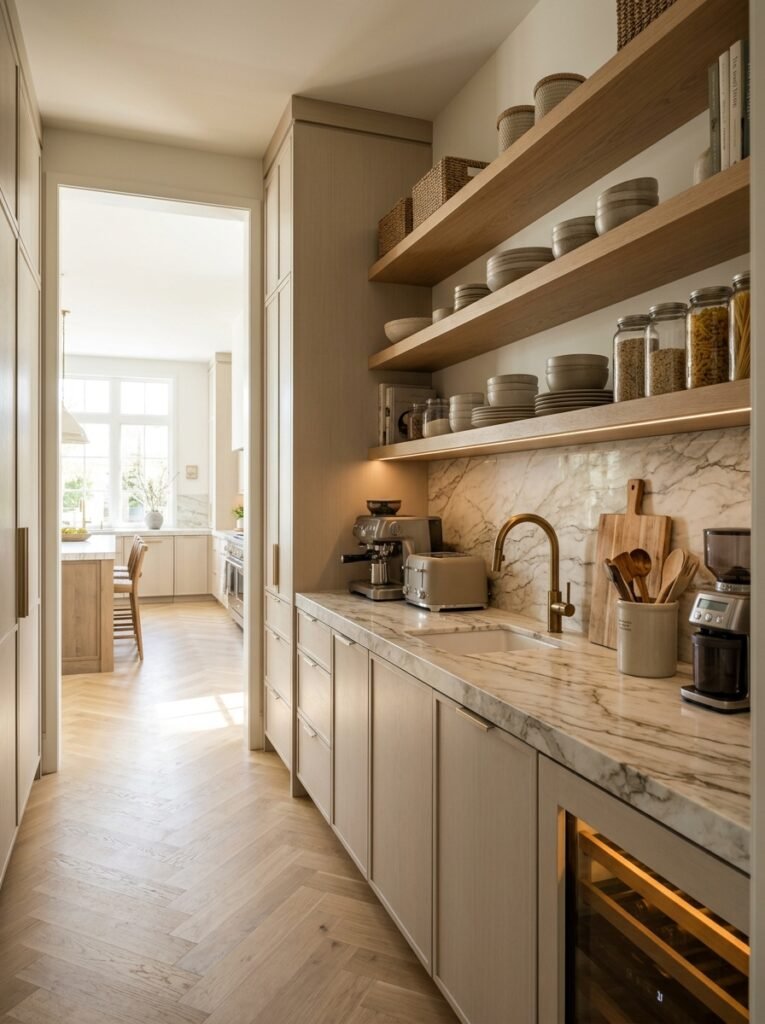
A butler’s pantry can serve as both food storage and a preparation area between the kitchen and dining space. Use lower cabinets for larger supplies, open shelving for frequently used items, and countertop space for small appliances. Keeping the main kitchen visually clean while storing extra supplies nearby can make entertaining much easier.
14. Store Backup Food Separately
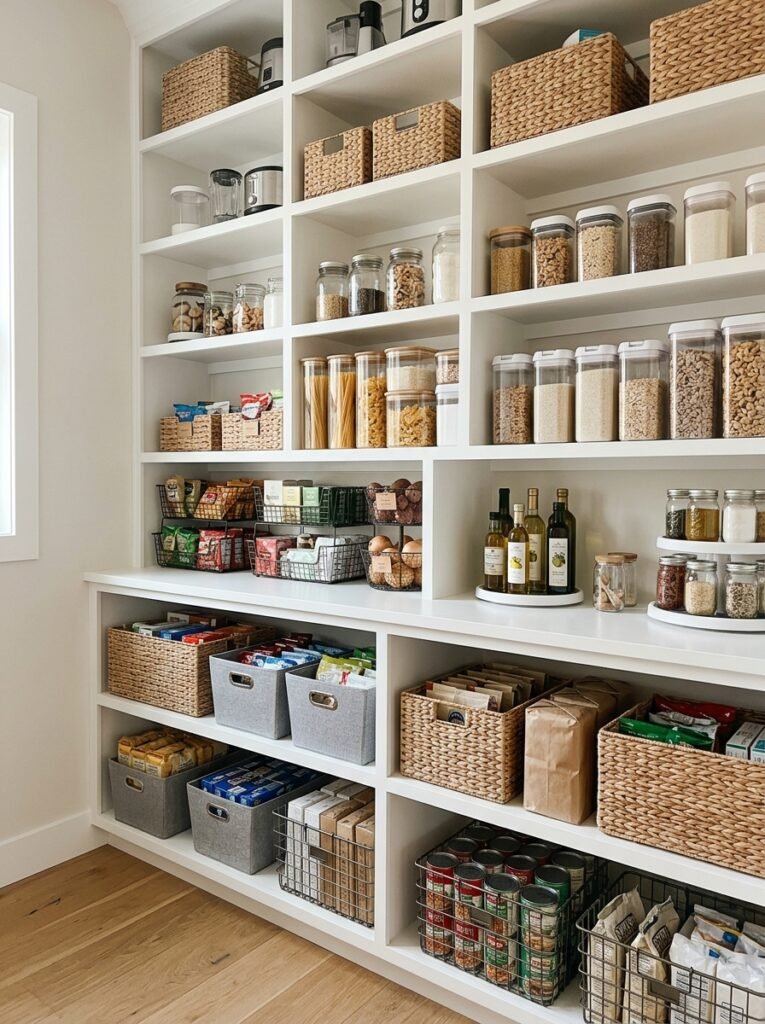
Buying food in larger quantities can save shopping trips, but backup products should not take over your everyday shelves. Create a dedicated section for unopened extras and keep only the currently used package in the main working area. This simple separation makes it much easier to understand what you actually have and reduces unnecessary duplicate purchases.
15. Add Clear Containers for Dry Goods
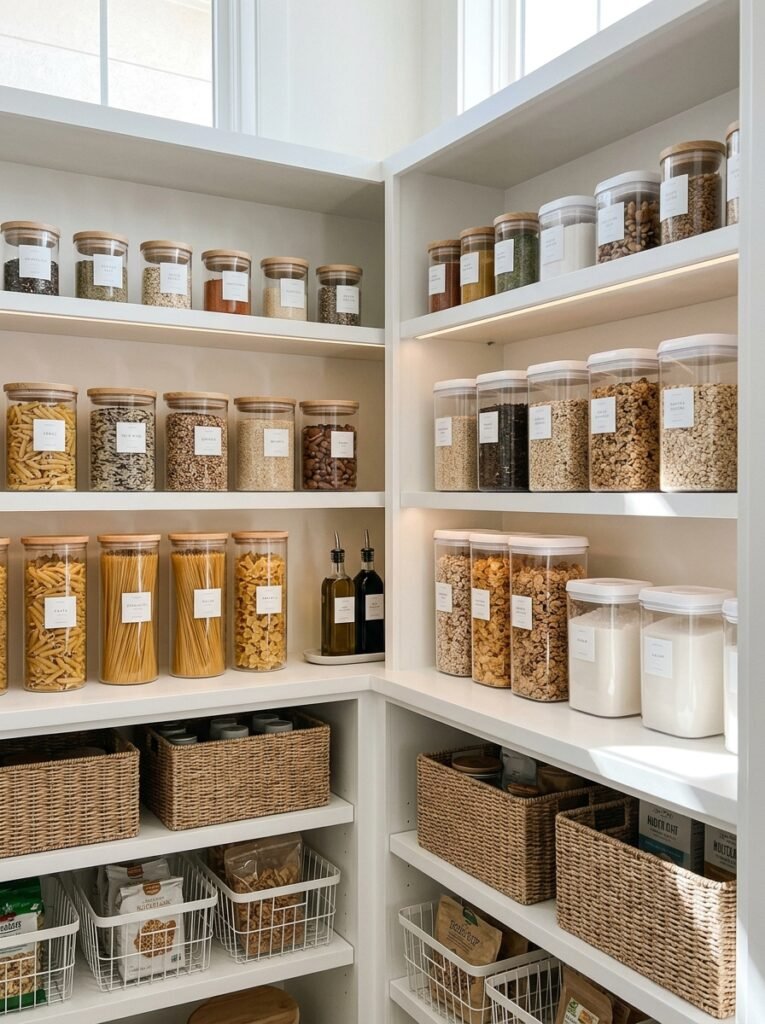
Clear containers are especially useful for pasta, rice, cereal, grains, flour, and other dry foods because you can see how much remains. Choose containers that stack securely and fit the shelf depth. A consistent container style creates a cleaner appearance, but practicality should come first—do not use containers that are difficult to refill or clean.
16. Try Practical DIY Storage Hacks
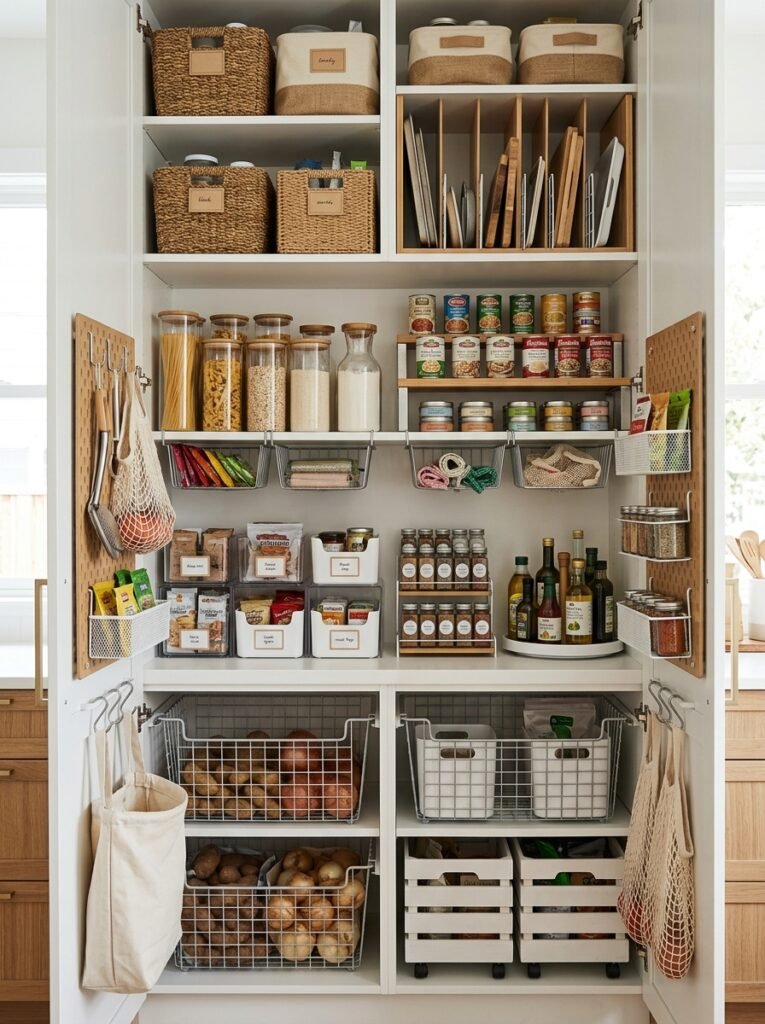
Simple DIY solutions can solve awkward storage problems without a major renovation. Add small shelf risers, removable bins, tension-style organizers, or labeled baskets where appropriate. Before adding anything, consider whether it improves access or simply adds another layer of storage. The best hacks make frequently used items easier to reach and keep the pantry visually calm.
17. Keep a Dedicated Food Prep Zone
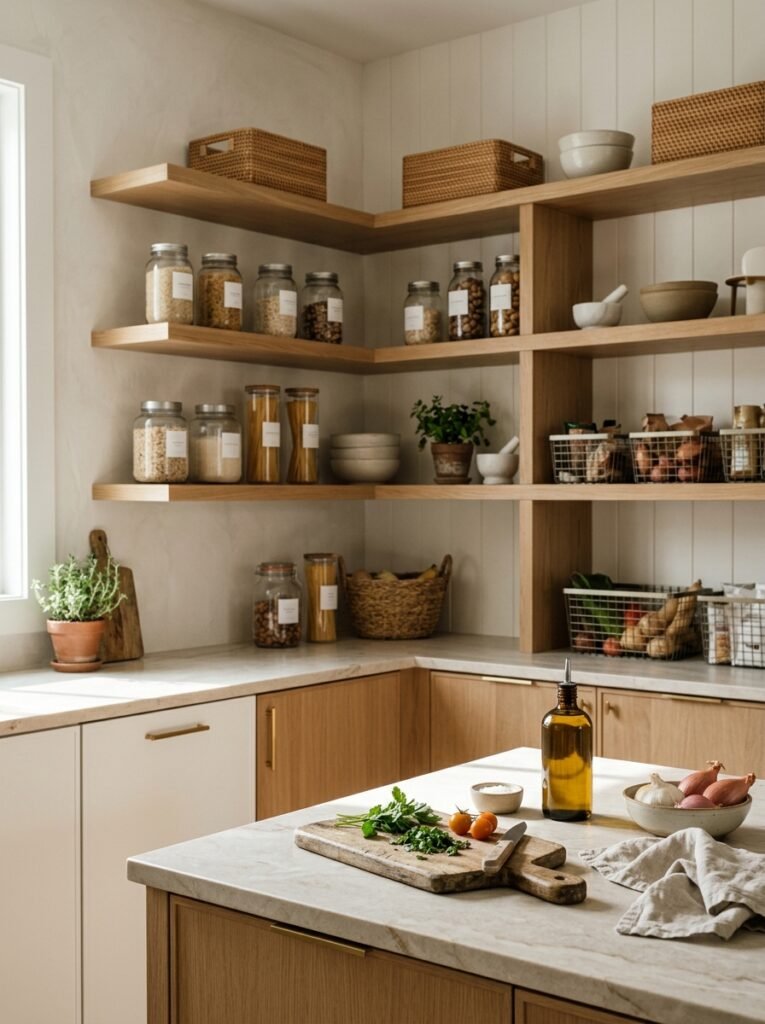
A food preparation zone can make a pantry more useful, especially if you regularly prepare lunches, snacks, or baking ingredients. Keep frequently used ingredients together with the tools needed to prepare them. If the pantry has a countertop, leave part of it clear instead of filling every surface with storage containers.
18. Make the System Easy to Maintain
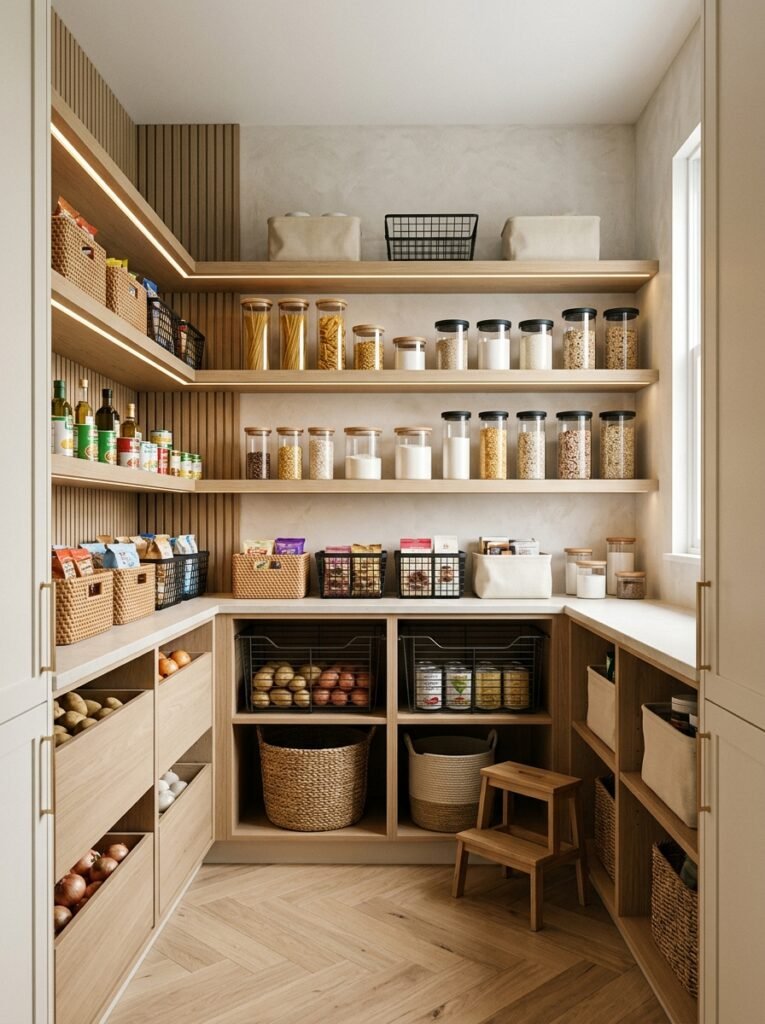
The most beautiful pantry will not stay organized if the system is difficult to maintain. Keep frequently used items within easy reach, avoid overcrowding, and return products to the same zones after shopping. Every few weeks, quickly check the shelves for expired food, nearly empty containers, and items that have drifted into the wrong category. Simple routines are what make organization last.
Final Thoughts
Good pantry organization is not about making every shelf look identical. It is about creating a system that matches the way you shop, cook, bake, and use food every day. A large walk-in pantry may need different solutions than a narrow kitchen closet, but both can work beautifully when storage is planned around accessibility. Start with categories, remove items you no longer need, and then decide where each group should live. Use baskets for flexible storage, clear containers for dry goods, pull-out shelves for deep cabinets, and vertical storage when floor space is limited. Most importantly, leave enough breathing room that the system remains easy to maintain.