





This post may contain affiliate links. Please read my disclosure policy.
In This Article Show
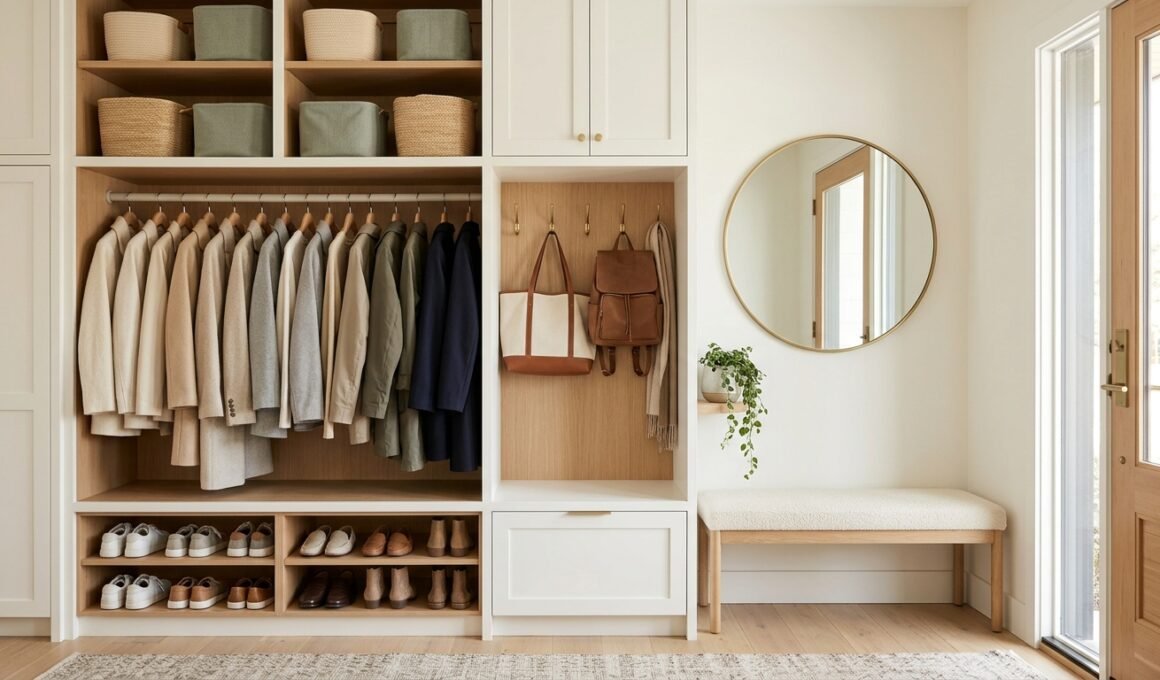
The coat closet is often the first storage space you use when leaving home and the first one you see when you return. That is why it can become messy so quickly. Coats get pushed onto the nearest hanger, shoes collect on the floor, bags end up on shelves, and seasonal accessories disappear behind everything else. Good coat closet organization makes this everyday space easier to use without requiring a huge renovation. Whether you have a tiny closet beside the front door, a narrow hallway cabinet, or a large walk-in storage area, the best solution is to give every category a clear place. Coats should be easy to reach, shoes should stay contained, and seasonal items should not compete with the things you use every day. These ideas focus on realistic homes and practical entryway storage that can stay organized throughout the year.

1. Create a Daily-Use Zone
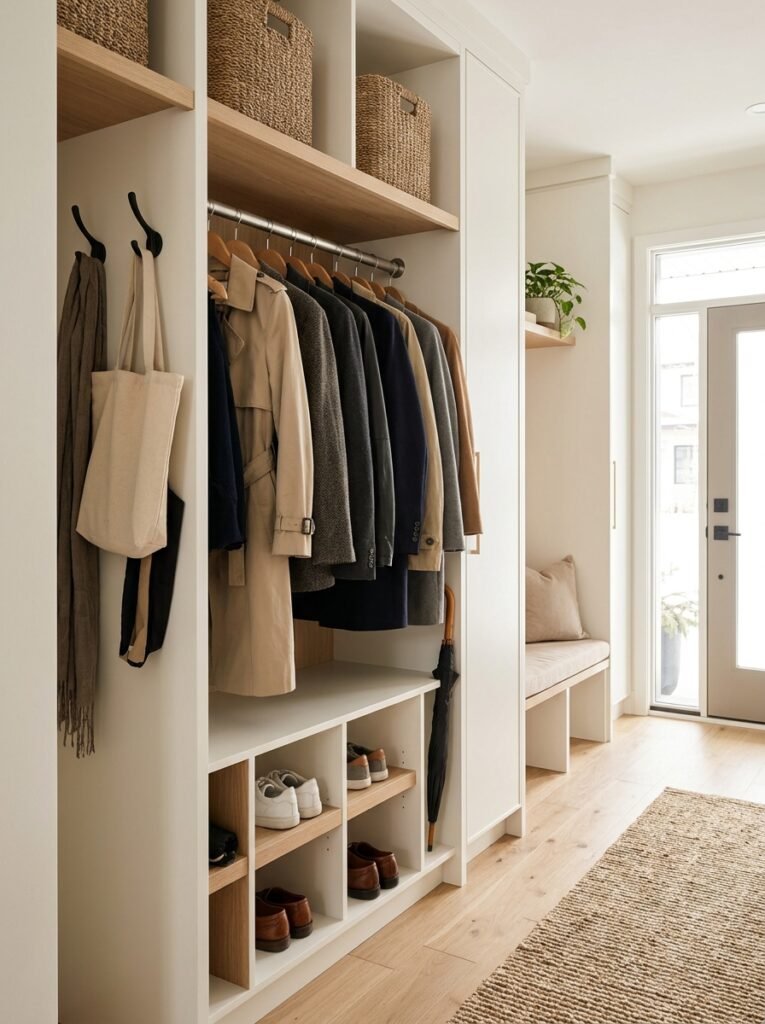
Start by identifying the things you reach for every day. Keep everyday coats, jackets, handbags, and frequently worn shoes in the easiest-to-reach section. Seasonal or occasional items can move higher or farther back. Creating this simple distinction makes the closet much easier to use because you are not searching through winter coats just to find the jacket you wear every morning.
2. Give Shoes Their Own Section
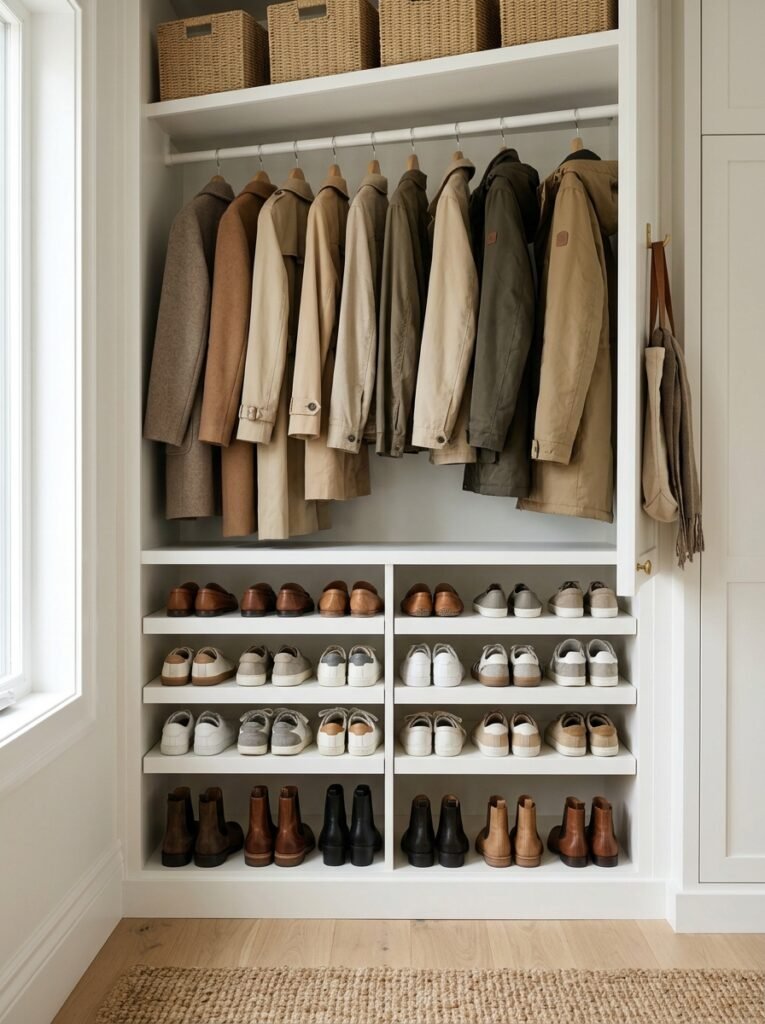
Shoes quickly take over the bottom of a coat closet when they do not have a defined home. Use a dedicated shelf, cubby, or low shoe rack for the pairs used most often. Keep everyday shoes toward the front and occasional footwear higher or farther back. This makes front entry small spaces shoe storage much easier to manage without filling the floor with loose pairs.
3. Use the Back of the Door
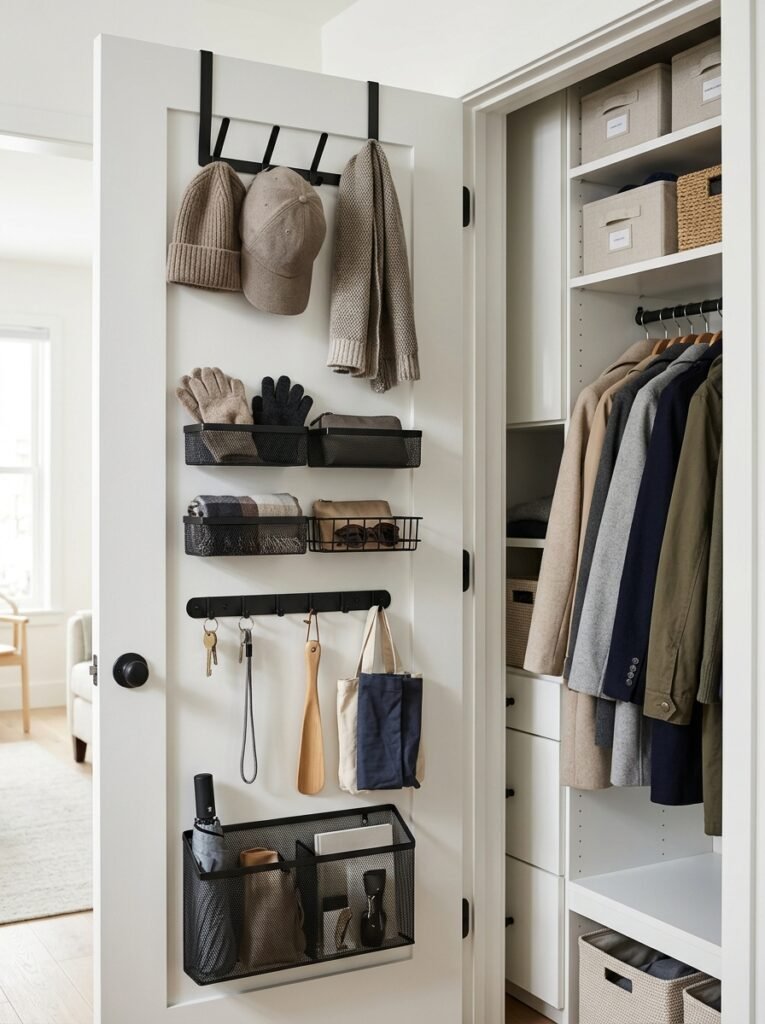
The inside of the closet door is often forgotten storage space. Add slim hooks, pockets, or a narrow organizer for scarves, gloves, caps, umbrellas, and small accessories. Keep heavier items off lightweight door organizers and choose a design that allows the door to close comfortably. This solution is particularly helpful in a narrow hallway where every inch matters.
4. Arrange Coats by Season
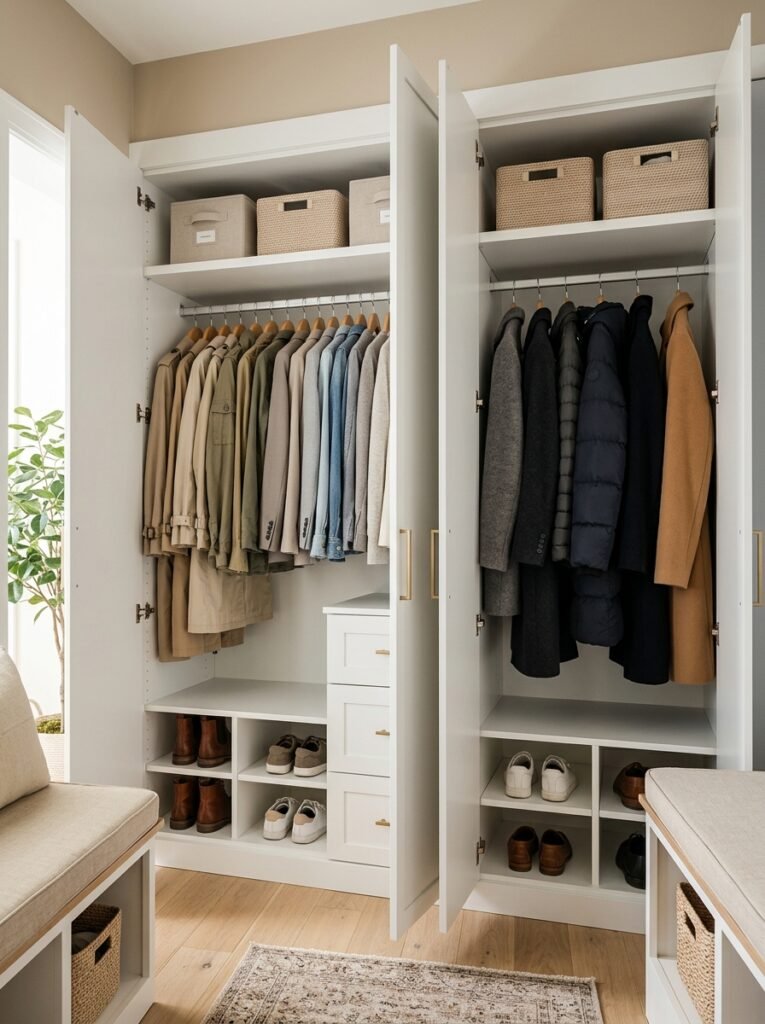
Seasonal rotation can dramatically reduce clutter. During warmer months, keep lightweight jackets and everyday layers accessible while storing heavy winter coats in a less prominent section. When winter arrives, switch the arrangement. This keeps the closet from becoming overloaded and makes it easier to see what you actually wear.
5. Add a Low Shoe Bench
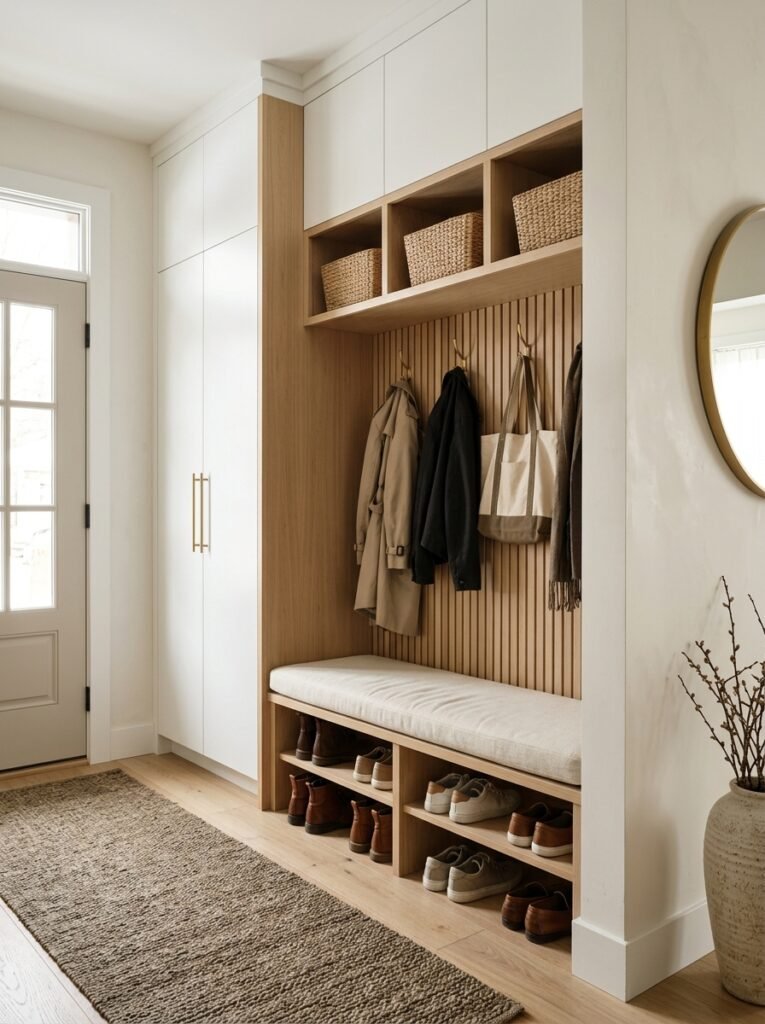
If your entry closet has enough width, a slim bench can make the space more practical. It provides a place to sit while putting on shoes and can also create hidden storage underneath. In a front entry, choose a bench that is shallow enough to preserve walking space. A simple upholstered or wood design can blend with the surrounding entryway.
6. Use Hooks for Bags and Everyday Accessories
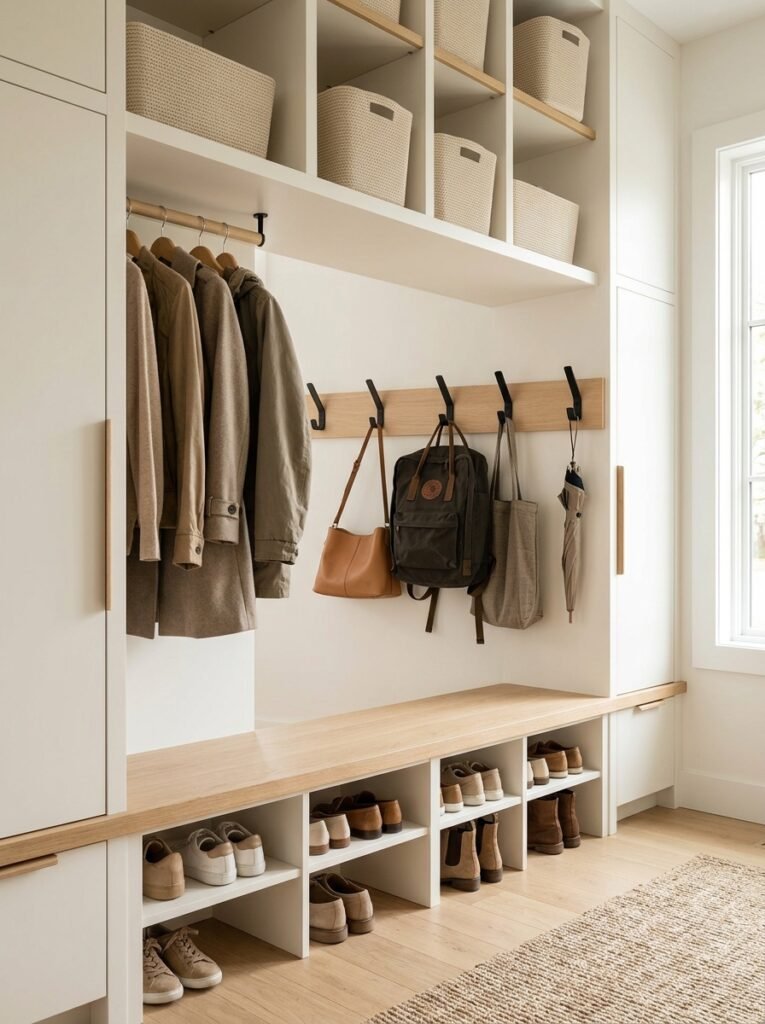
Not everything needs a hanger. Hooks are useful for handbags, backpacks, tote bags, dog leashes, umbrellas, and frequently used accessories. Place them at comfortable heights and avoid overcrowding one hook with several items. In a family home, separate hooks can also make it easier for each person to return their own belongings.
7. Make a Tiny Entry Closet Work Vertically
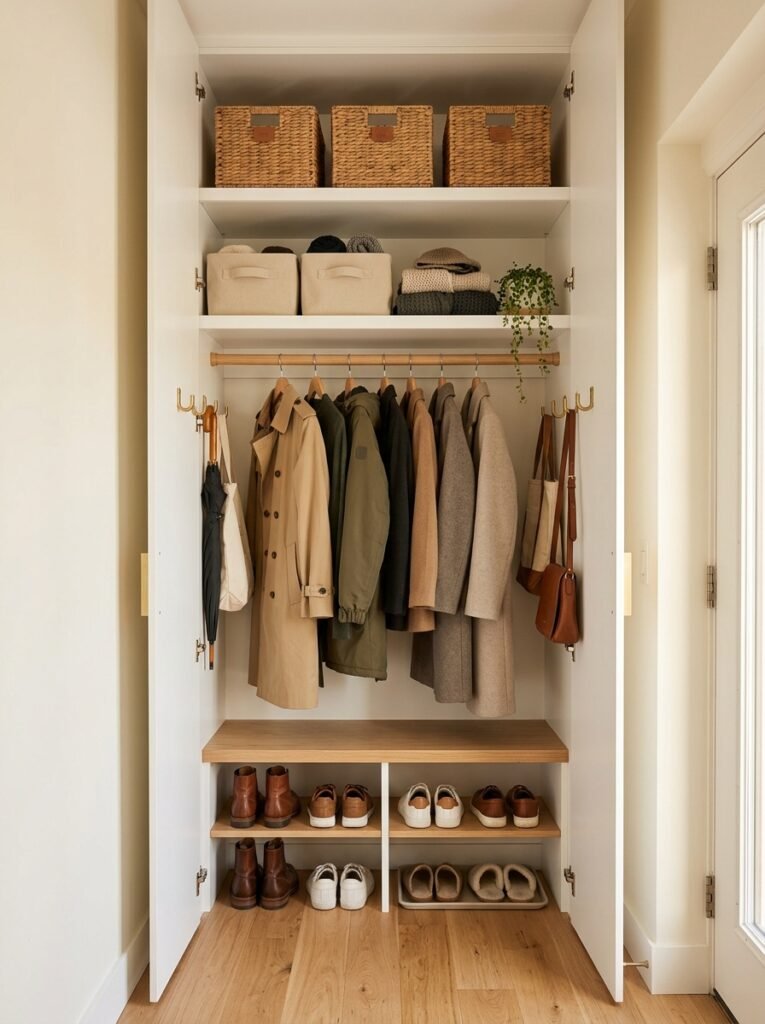
A tiny closet needs to use height carefully. Keep everyday coats around eye level, place shoes and heavier items lower, and use the upper shelf for seasonal accessories or rarely used bags. Avoid placing everything into one deep pile. Vertical organization makes a small entry feel more open because the floor remains available.
8. Create a Walk-In Coat and Shoe Zone
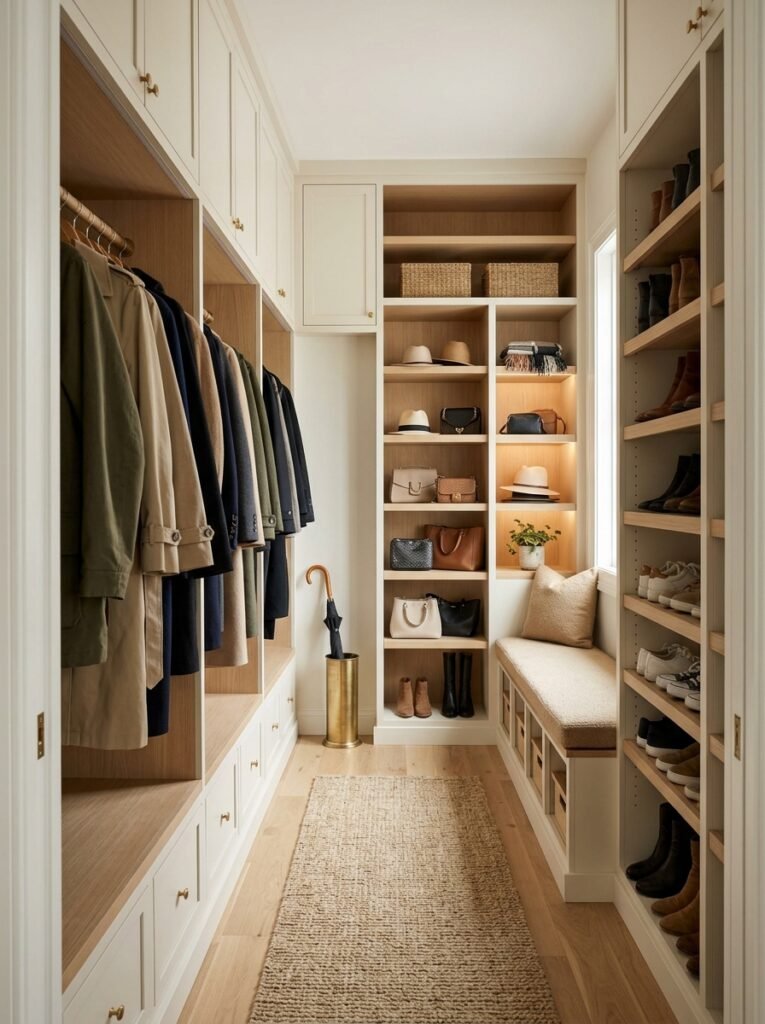
A walk in coat closet gives you more flexibility, but it can still become cluttered without zones. Use one wall for coats, another for shoes, and a smaller area for bags and accessories. Keeping categories separated makes the larger space easier to navigate. Open shelving can work well here because everything remains visible.
9. Create a Dedicated Winter Zone
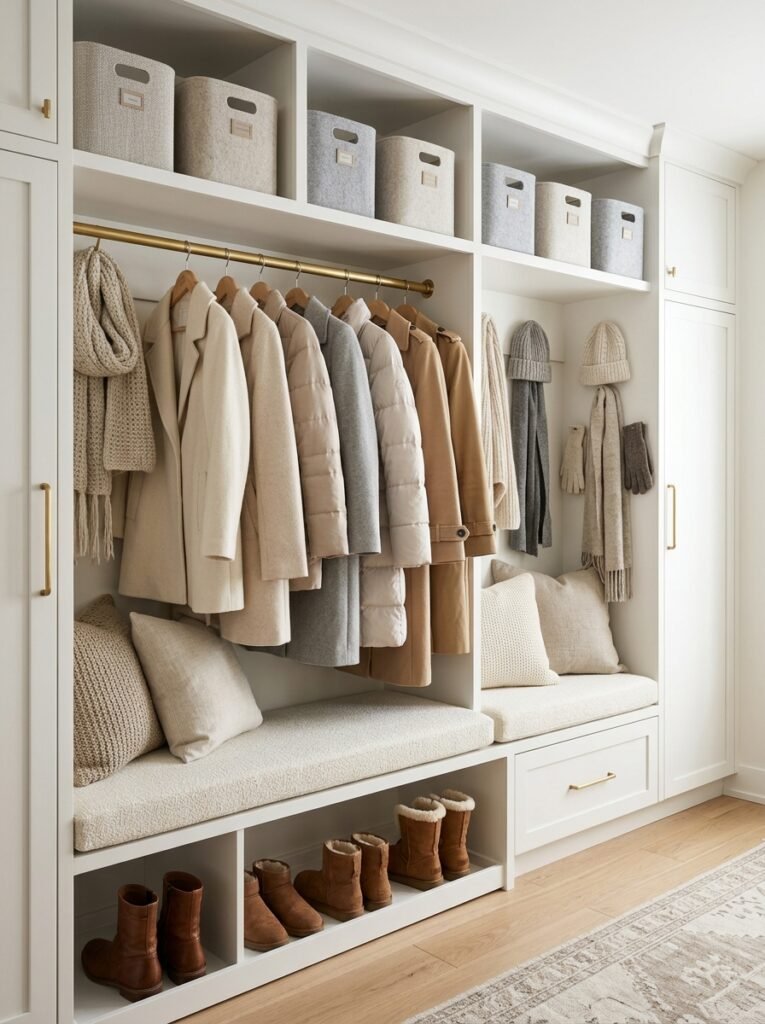
Winter accessories often create the most clutter because there are so many small pieces. Give scarves, gloves, hats, and heavier coats their own section during the colder months. Small bins can contain gloves and hats, while scarves can hang from hooks or slim organizers. When winter ends, move these items to a higher shelf or another storage area.
10. Use Matching Hangers
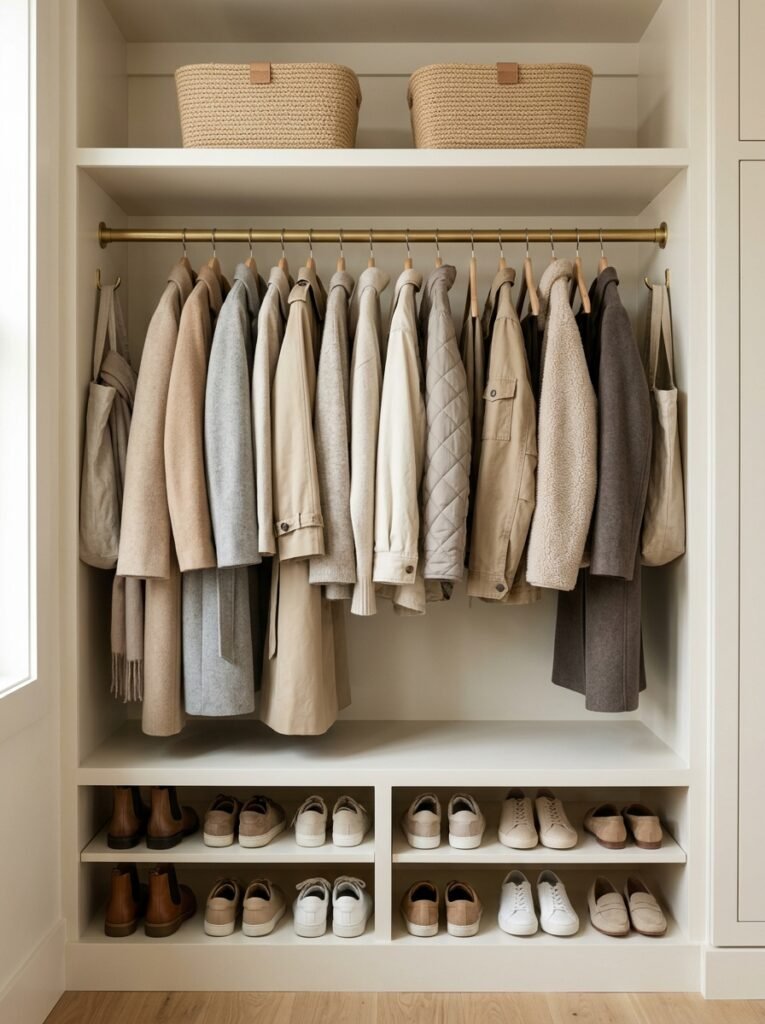
Different hanger shapes and colors can make even a clean closet look visually messy. Matching hangers create a simple, consistent line across the hanging area. Slim hangers can also leave more room between coats, although the most important factor is choosing hangers that can comfortably support the clothing being stored.
11. Add a Shelf Above the Hanging Rail
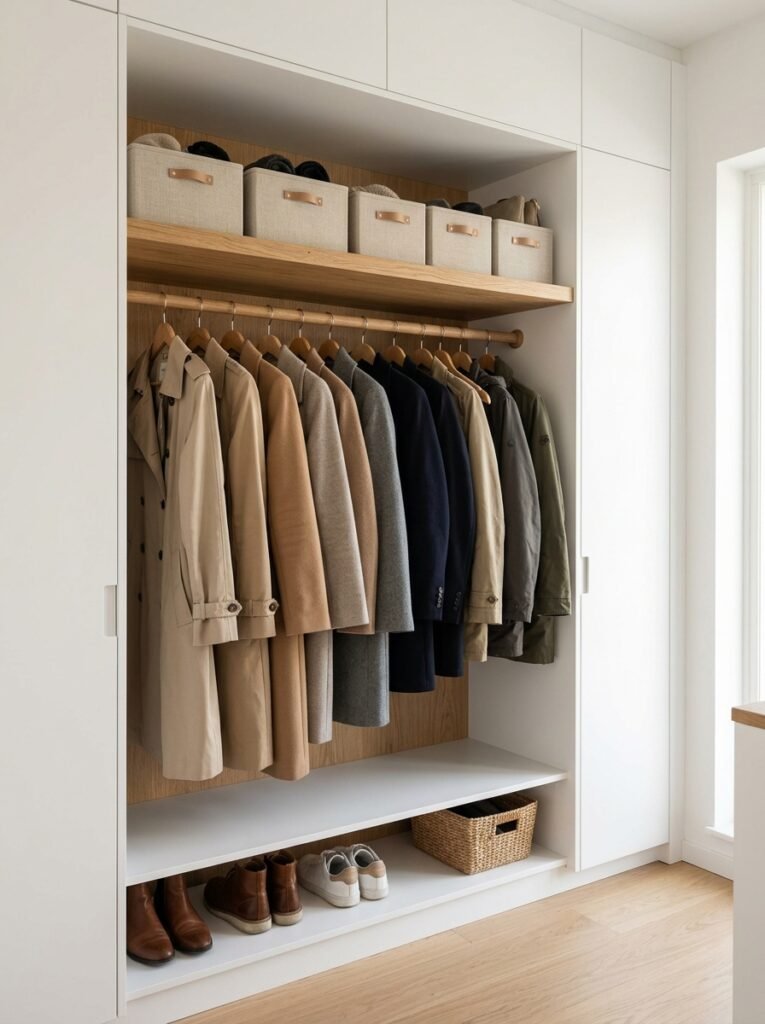
The space above a hanging rail often becomes wasted air. A shelf can provide useful storage for folded scarves, seasonal bags, hats, or small boxes. Use attractive matching containers so the upper shelf looks intentional. Keep frequently used accessories lower and reserve the highest area for items you only need occasionally.
12. Keep a Separate Guest Section
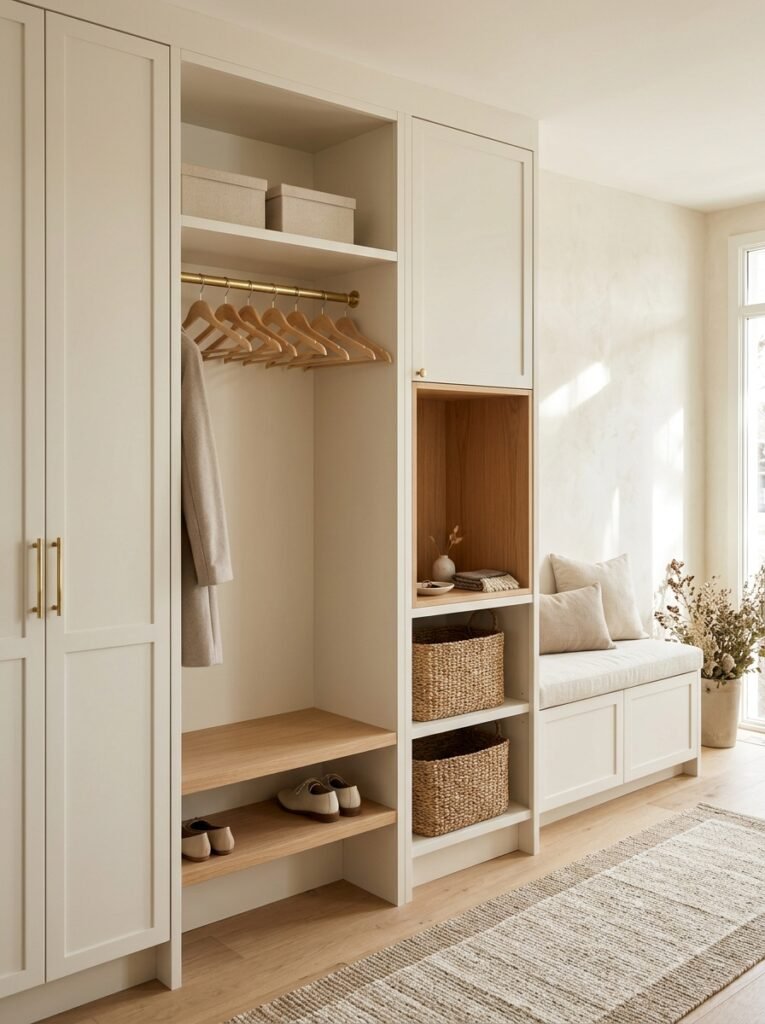
If your home frequently has visitors, reserve a small section for guest coats and shoes. This can be as simple as a few empty hangers and a clear shelf for footwear. Keeping this area available prevents visitors from having to pile their belongings on furniture or leave them scattered around the entry.
13. Use Clear Containers for Small Accessories
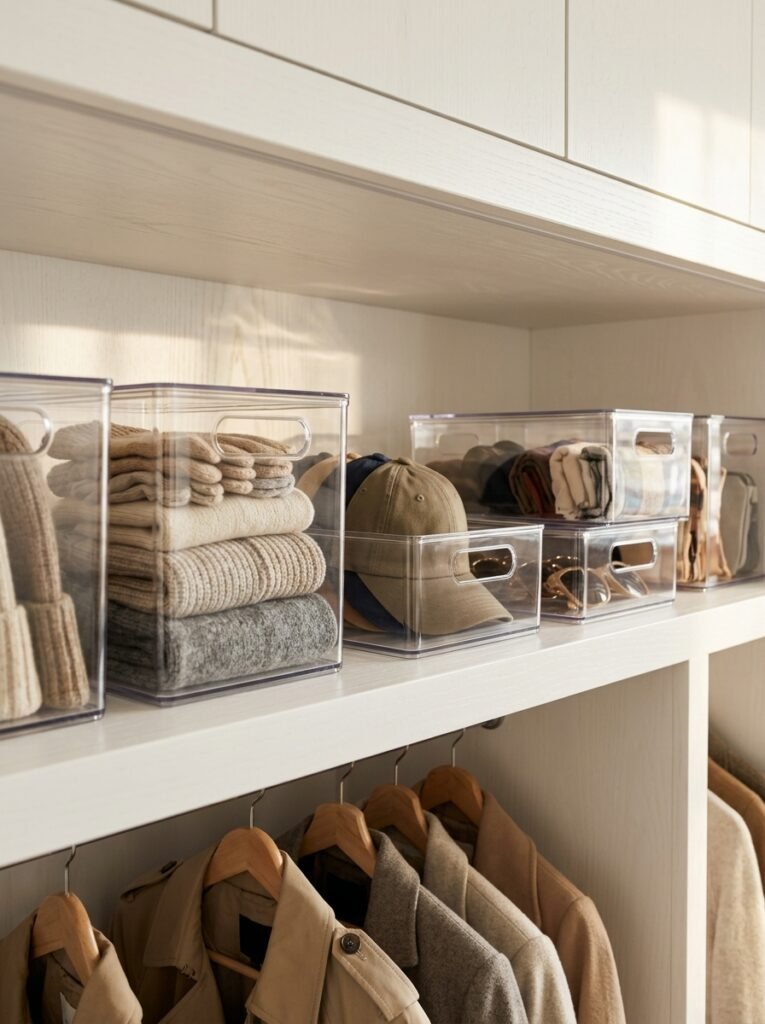
Small accessories are much easier to find when they are grouped together. Use clear containers for sunglasses, spare keys, winter gloves, hats, or other small entryway pieces. Transparent storage works especially well on upper shelves because you can see what is inside without pulling every container down.
14. Turn Hallway Space Into Extra Storage
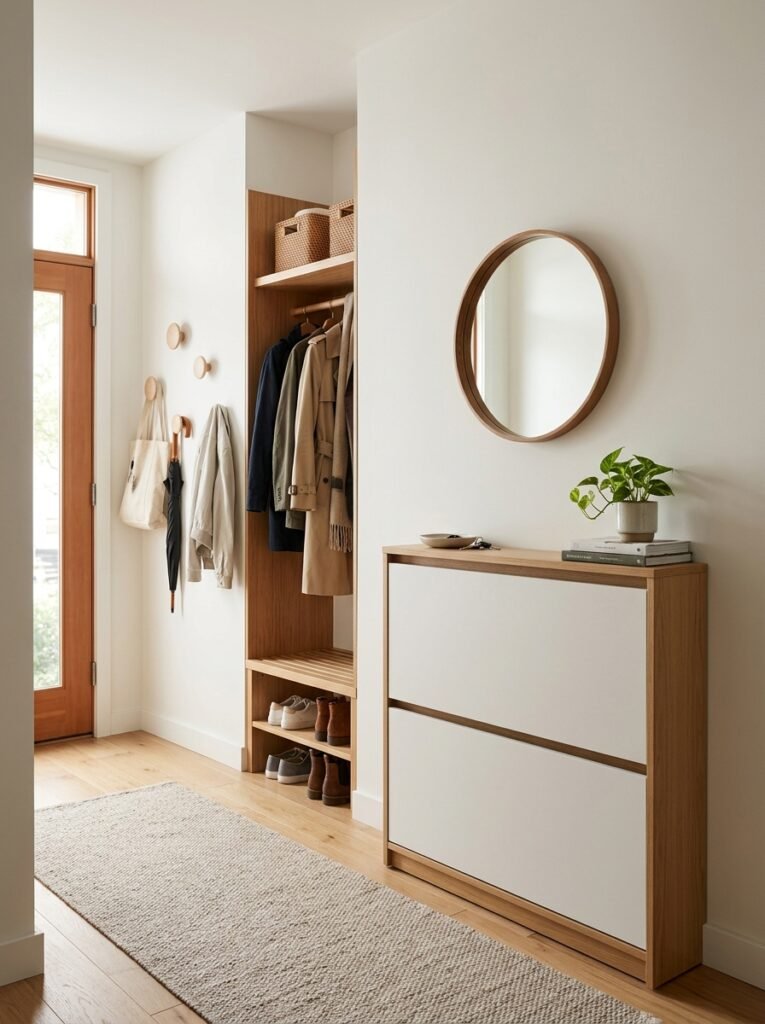
If the main coat closet is too small, look at the nearby hallway. A narrow console with concealed shoe storage, wall hooks, or a slim cabinet can provide extra capacity without requiring a full renovation. Keep the design consistent with the entry so the additional storage feels like part of the room rather than an afterthought.
15. Create a Front Entry Drop Zone
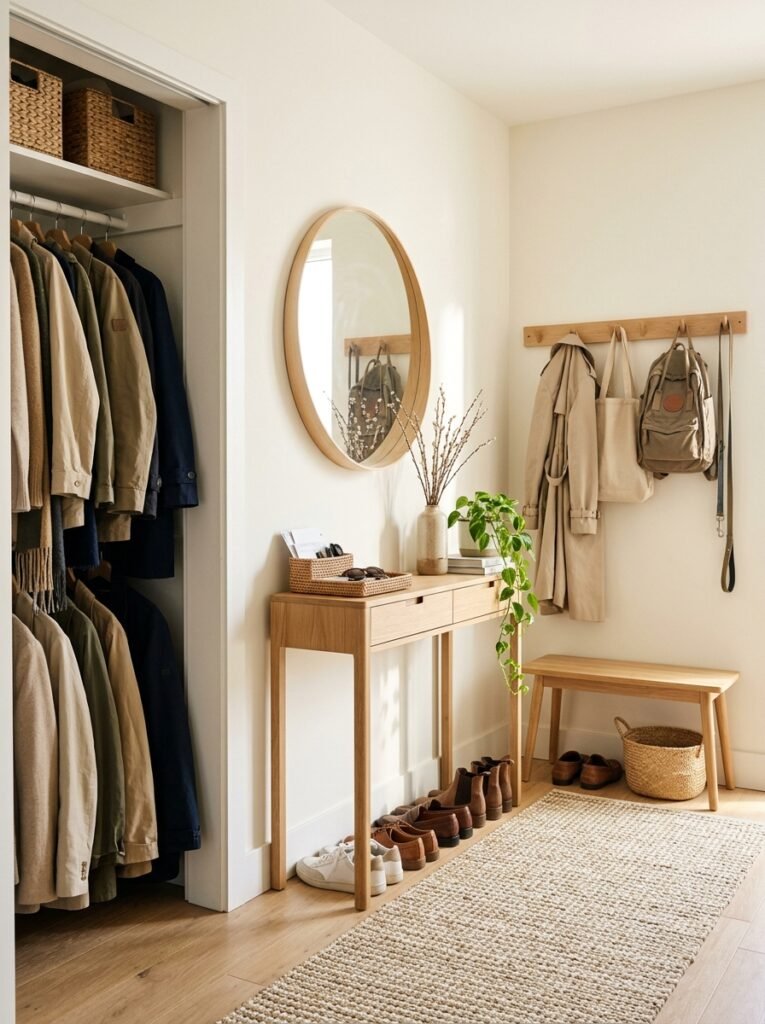
A small drop zone can prevent everyday clutter from reaching the rest of the house. Give keys, bags, shoes, jackets, and mail a defined place near the front door. The coat closet can handle the clothing while a nearby shelf or drawer handles smaller belongings. This is especially helpful in busy households where everyone enters and leaves at different times.
16. Keep Everyday Shoes at the Front
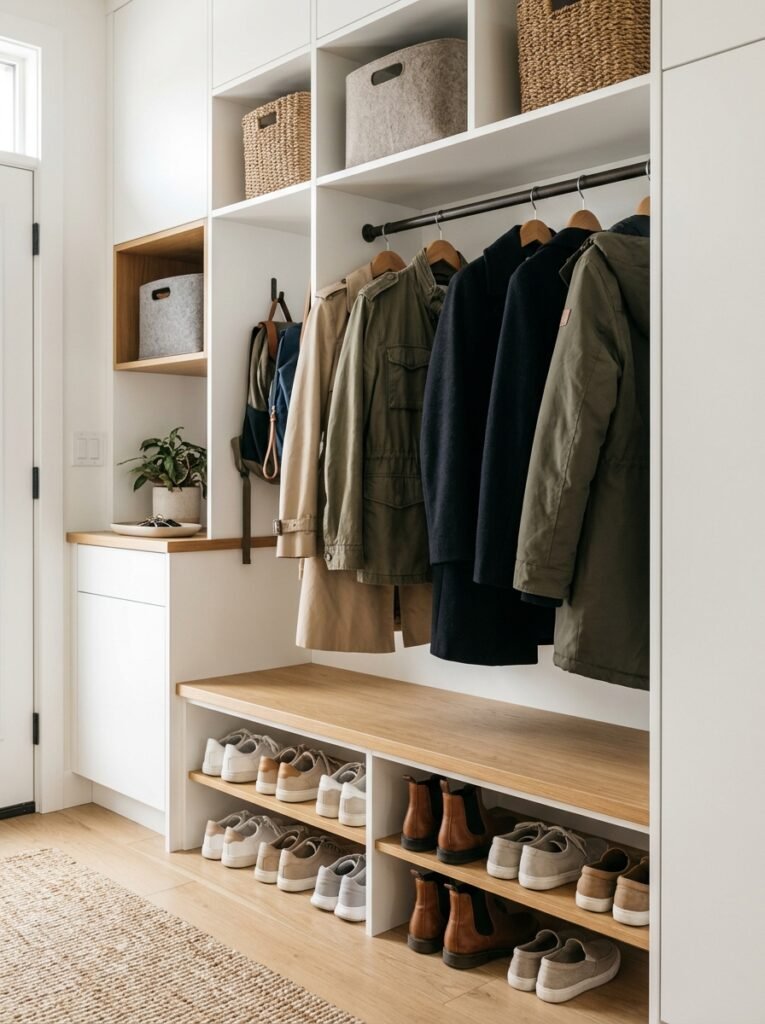
The shoes you wear most often should never be buried behind occasional footwear. Create a small front section for daily sneakers, flats, boots, or slippers and move less-used pairs farther back. This simple arrangement makes the closet feel easier to use and keeps shoes from spreading across the hallway floor.
17. Leave Room for the Next Season
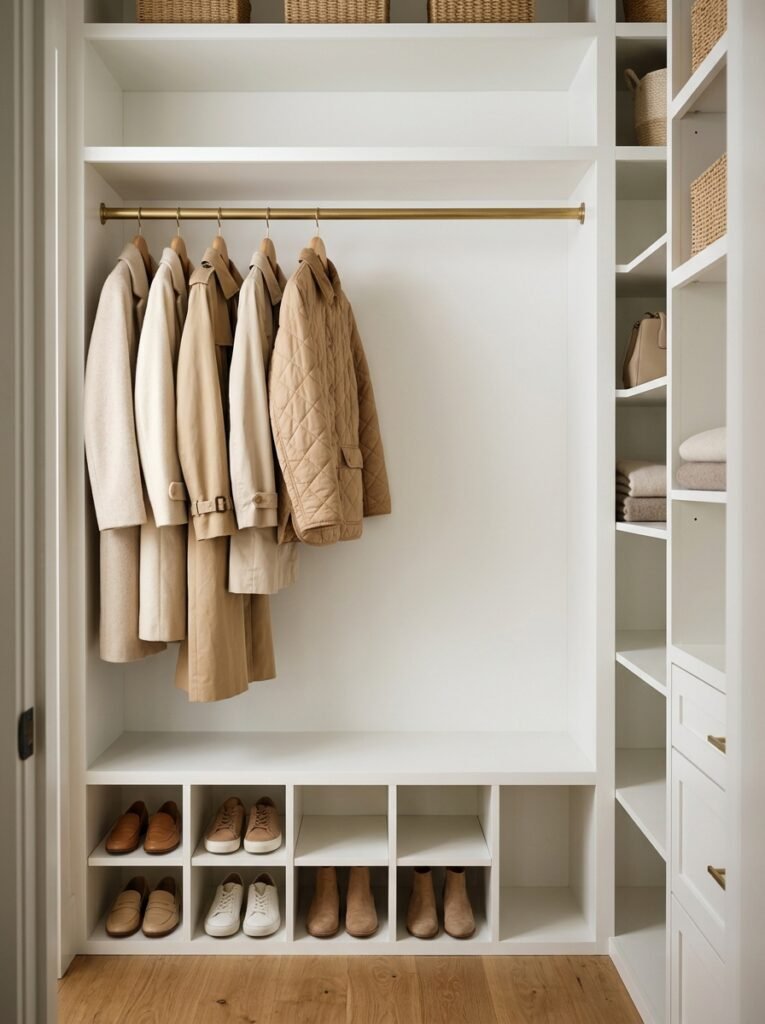
A closet should not be filled so tightly that there is nowhere to put something new. Leave a little open hanging and shelf space for seasonal changes, new coats, or visiting guests. When the closet has breathing room, it is easier to return items to their proper places. Good coat closet organization should make everyday life easier rather than forcing everything into an overpacked system.
How to Organize a Small Front Entry Closet
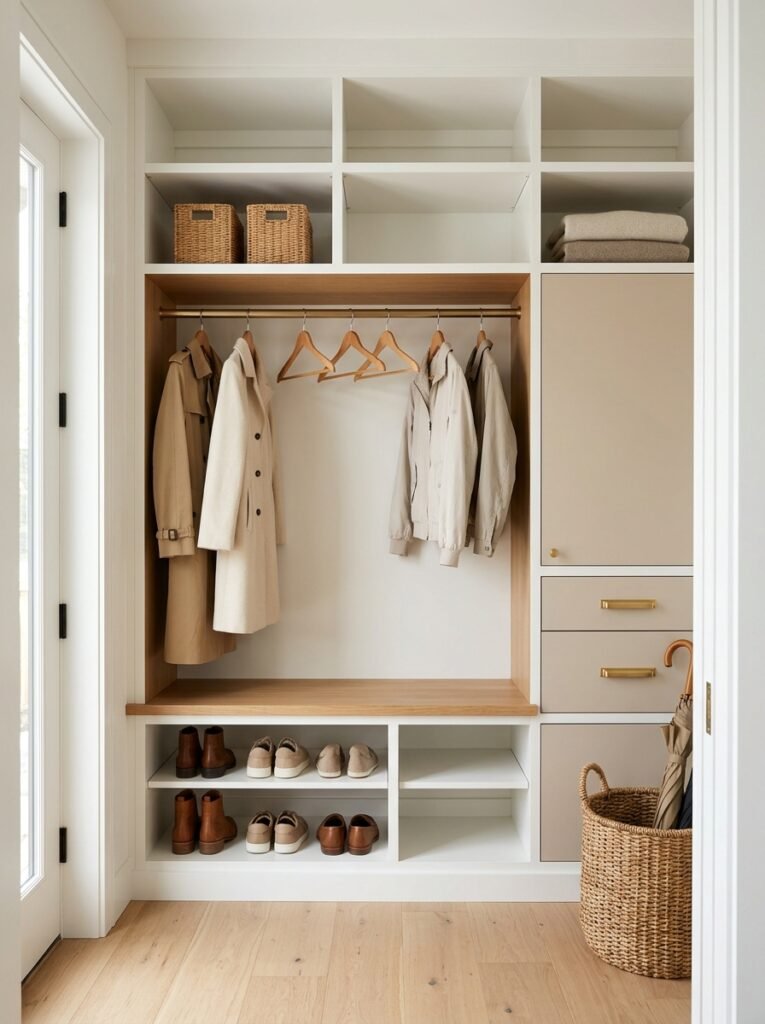
A small front entry closet needs to prioritize the things you use every day. Keep everyday coats and shoes within easy reach, use the upper shelf for seasonal items, and take advantage of the door for lightweight accessories. Avoid placing several categories into one deep pile because it will quickly become difficult to maintain. For effective coat closet organization, think about your daily routine from the moment you enter the house. Where do you naturally drop your shoes? Where does the coat go? Where do keys and bags end up? The best storage system puts those items close to where you already want to place them.
Hallway and Entryway Shoe Storage
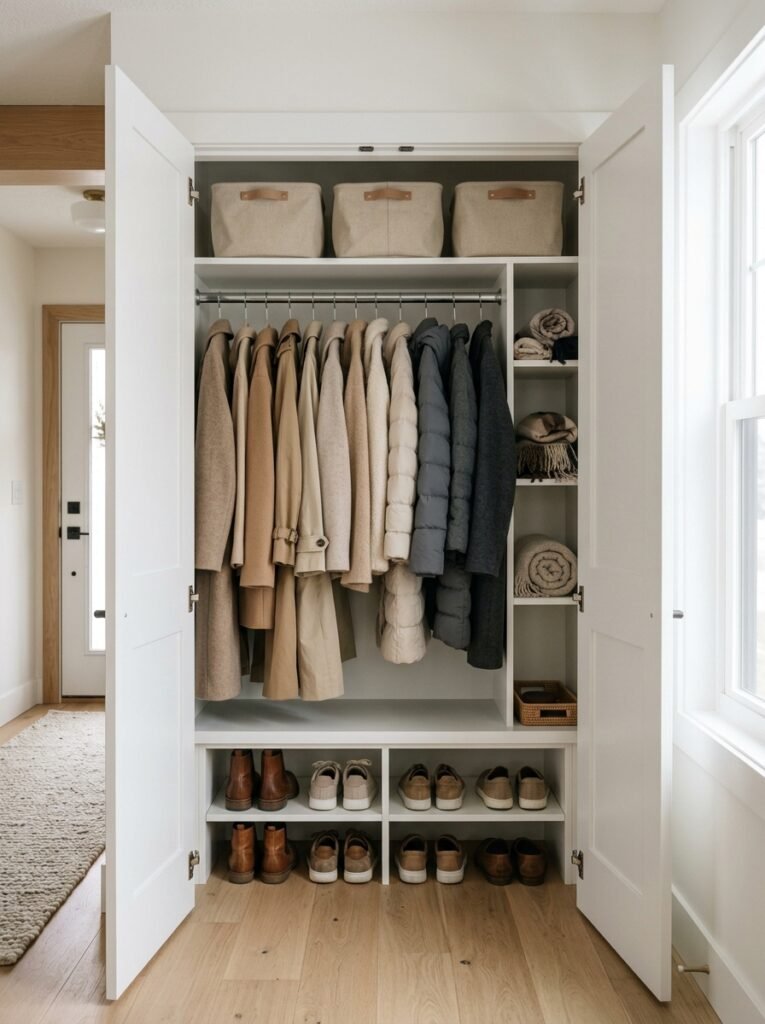
A hall or hallway can provide useful extra storage when the main closet is too small. A narrow shoe cabinet, wall hooks, or a slim bench can increase storage without taking up the entire walking path. These front entry entryway shoe storage solutions are especially helpful in smaller homes where the front door opens directly into a hallway. If you have a very small entry, avoid large furniture pieces that make the walkway feel cramped. A slim vertical cabinet can often hold more while using less floor space.
Large and Walk-In Coat Closet Ideas
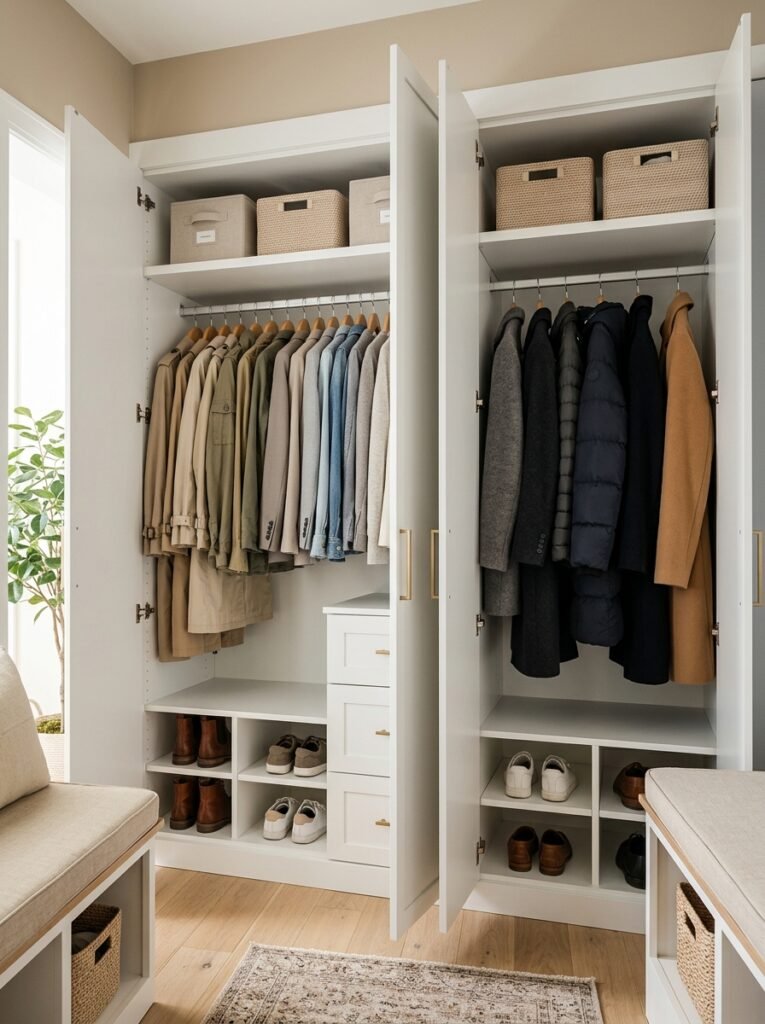
A large or walk in closet gives you more storage, but more space does not automatically mean better organization. Divide the closet into clear sections for coats, shoes, bags, accessories, and seasonal items. This prevents the extra space from becoming a place where everything gets pushed aside. Open shelving is useful for shoes and bags because it keeps frequently used items visible. Hanging sections can hold coats and jackets, while upper shelves can store winter accessories or less frequently worn clothing.
Winter Coat Storage
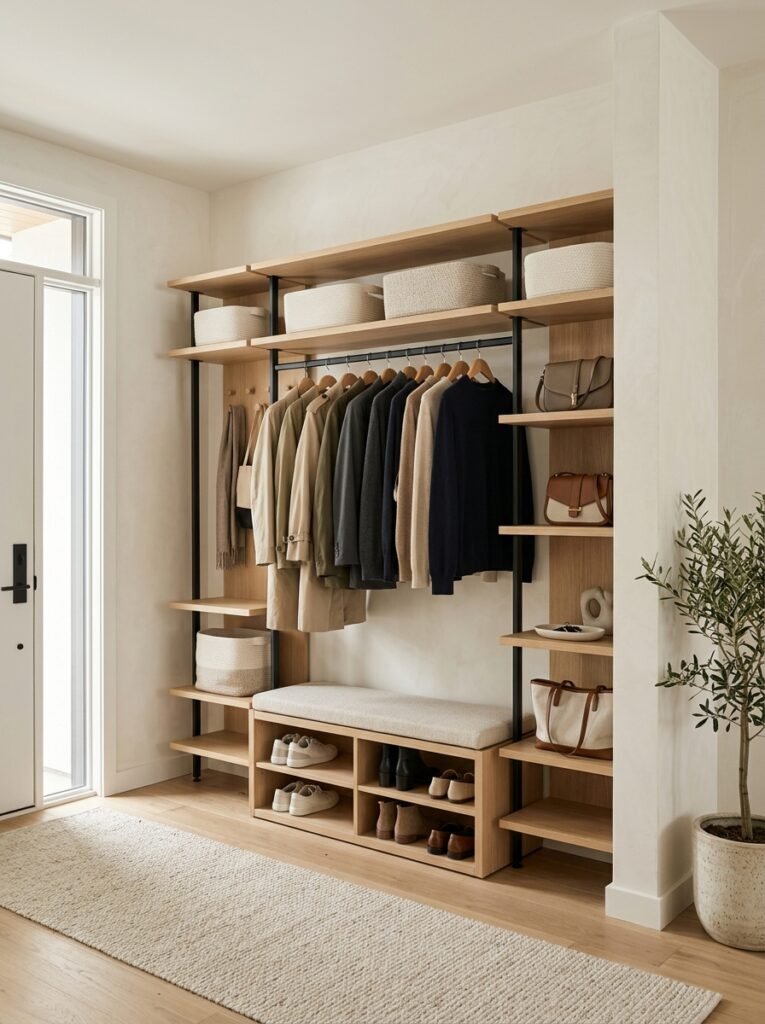
Winter clothing deserves special attention because coats, scarves, hats, and gloves take up considerably more room than lightweight summer layers. During winter, place these pieces in the easiest-to-reach areas. When the season ends, move heavy coats and accessories to upper shelves or another storage location. A simple seasonal rotation keeps your coat closet organization practical throughout the year and prevents your daily entryway from becoming overcrowded.
Simple Entryway Organization on a Budget
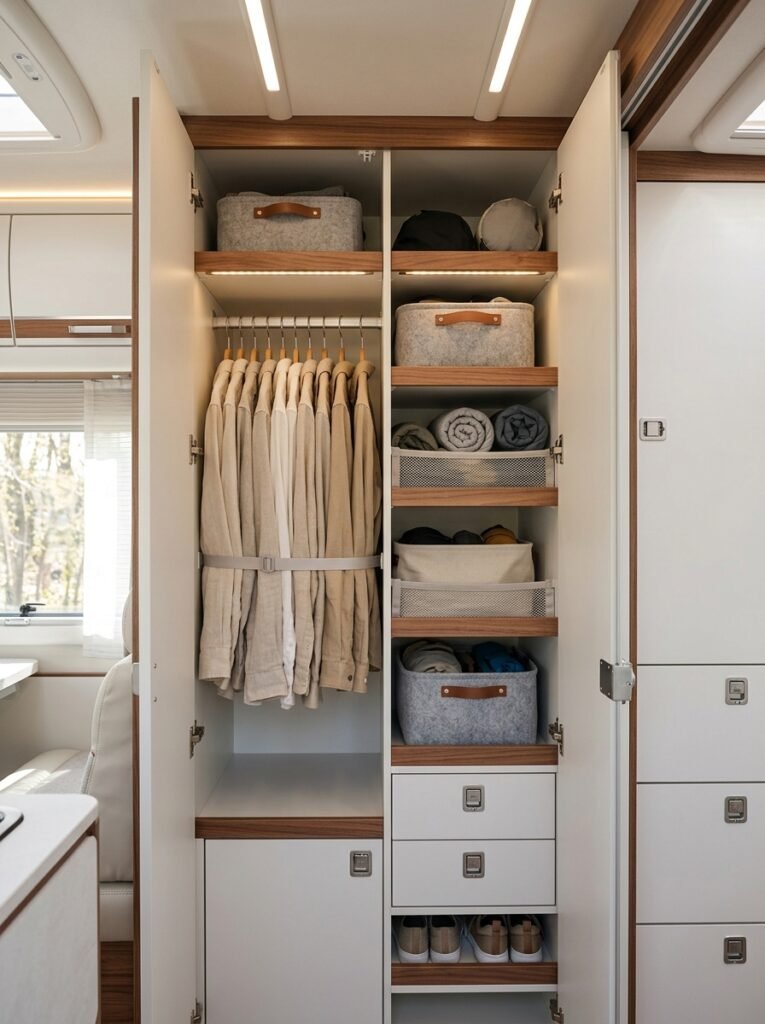
You do not need expensive built-ins to improve a coat closet. Matching hangers, slim hooks, shoe racks, clear containers, baskets, and simple shelves can solve many everyday problems. Start by sorting what you already own before buying new storage. For ideas entryway spaces, focus on pieces that have more than one purpose. A bench can provide seating and shoe storage, while a shelf can hold bags and seasonal accessories. The goal is to make the front entry easier to use without filling it with unnecessary furniture.
Final Thoughts
A well-organized coat closet can make the entire entrance of your home feel calmer. The key is to give everyday coats, shoes, bags, and accessories a clear home while moving seasonal items out of the way. Whether you are working with a tiny closet, a narrow hallway, a large walk-in space, or a simple front entry cabinet, thoughtful coat closet organization can make a noticeable difference. Start with the items your household uses most, create practical zones, and leave enough breathing room for the system to stay useful throughout the year.