

This post may contain affiliate links. Please read my disclosure policy.
In This Article Show
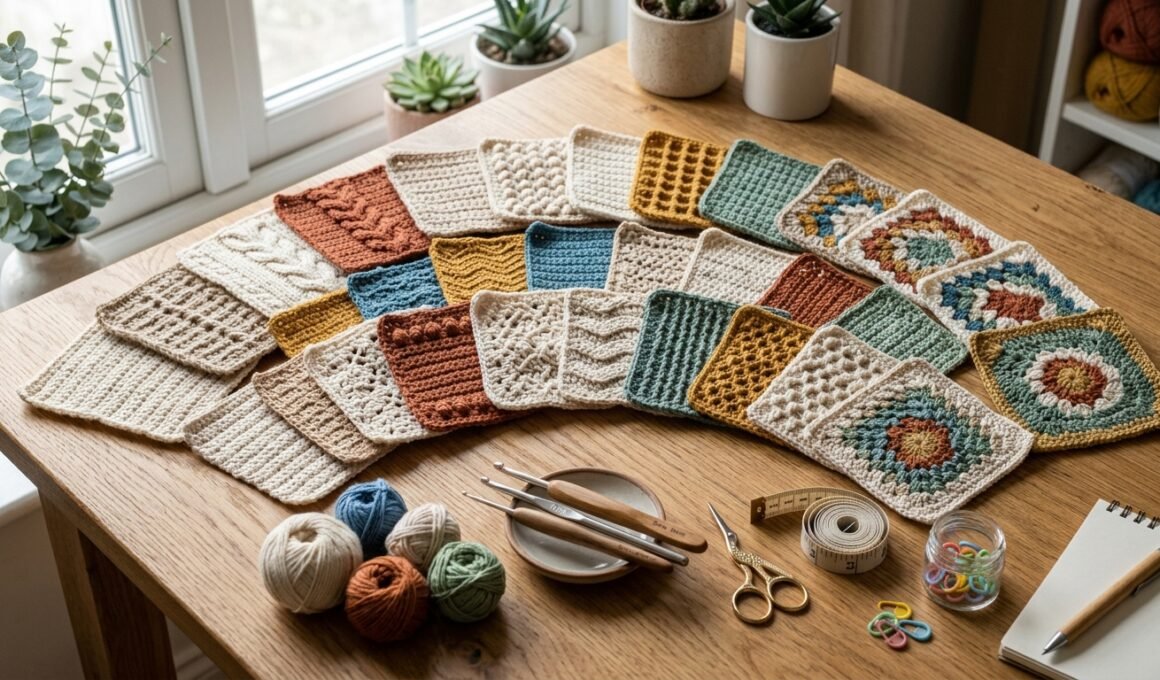
Crochet becomes much more exciting once you discover how many ways a simple loop of yarn can change the look of a project. One stitch can create a firm fabric. Another can make soft waves. A third can produce an airy lace effect. For beginners, crochet stitches are the foundation of almost every project. Blankets, scarves, bags, tops, hats, coasters, and home decor all depend on how stitches combine and repeat. You do not need to learn everything in one day. Start with basic stitches, practice your tension, and then explore patterns that match your skill level. The Craft Yarn Council classifies crochet projects from Basic and Easy to Intermediate and Complex, based on the techniques, shaping, colorwork, and stitch patterns involved.
Understanding Crochet Stitches Before You Start
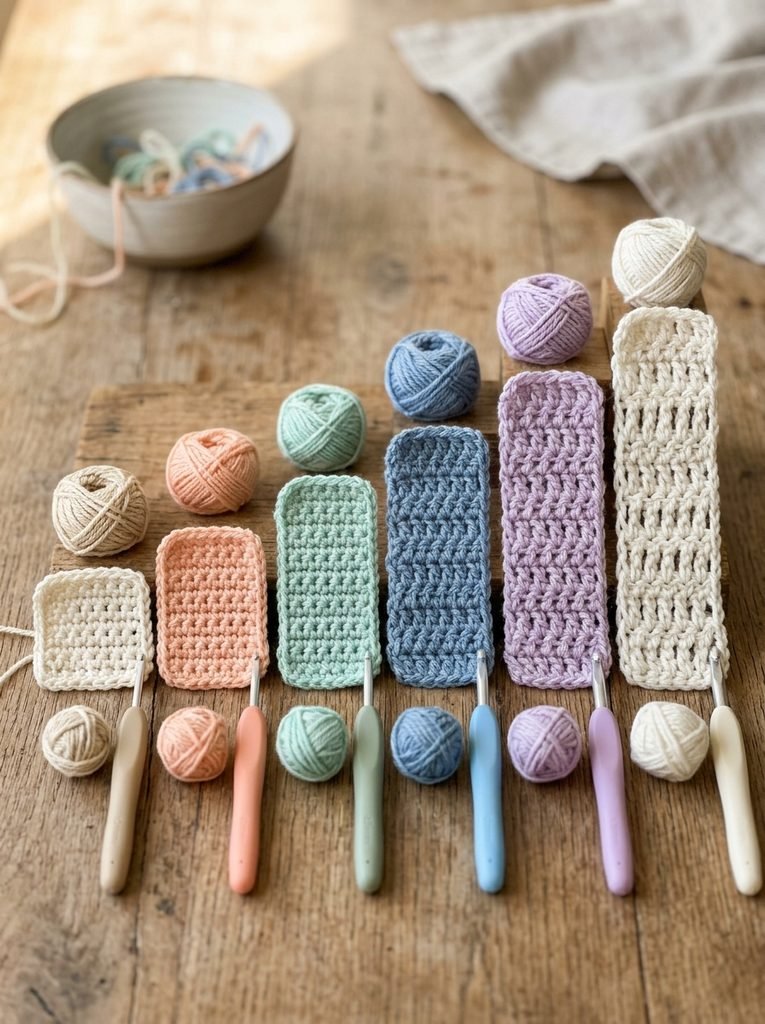
The first step is learning what each stitch does. Chain, slip stitch, single crochet, half double crochet, double crochet, and treble crochet form the basic language of crochet. Taller stitches generally create more height and openness, while shorter stitches create a denser fabric. The Craft Yarn Council lists standard abbreviations such as sc for single crochet, hdc for half double crochet, dc for double crochet, and tr for treble crochet. It also notes important differences between U.S. and U.K. terminology.
1–10: Basic Crochet Stitches for Beginners
These first ten options give beginners a strong starting point. Practice each one slowly and count your stitches at the end of every row.
- Chain Stitch — The foundation for many projects and patterns.
- Slip Stitch — Useful for joining rounds and moving across a row.
- Single Crochet — Firm, simple, and excellent for beginners.
- Half Double Crochet — A useful middle ground between short and tall stitches.
- Double Crochet — Taller and more open, making it useful for blankets and scarves.
- Treble Crochet — Creates extra height and a looser fabric.
- Double Treble Crochet — Adds even more height for dramatic designs.
- Extended Single Crochet — Gives a slightly taller version of single crochet.
- Extended Half Double Crochet — Adds extra height while keeping good structure.
- Extended Double Crochet — Creates a taller, flowing fabric.
11–20: Textured Crochet Stitches
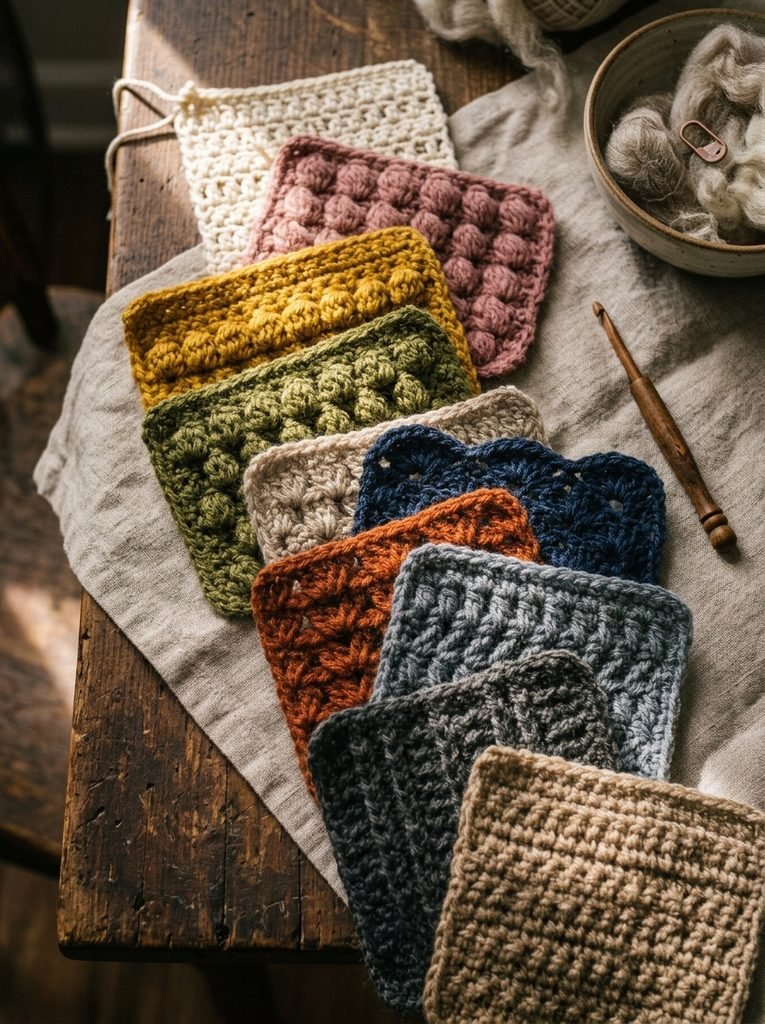
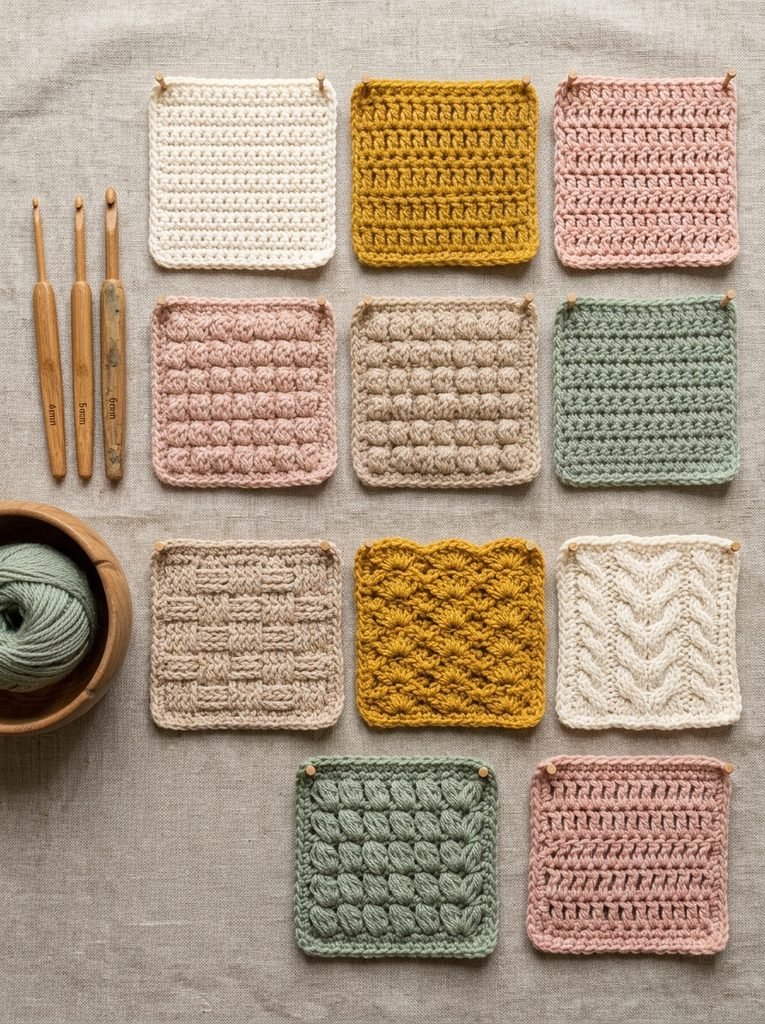
Once basic techniques feel comfortable, texture adds a completely different personality to your work. Raised stitches can make a blanket feel cozy, while bobbles and popcorns create decorative surfaces.
- Puff Stitch — Soft and rounded with a raised appearance.
- Bobble Stitch — Creates bold three-dimensional bumps.
- Popcorn Stitch — A fuller raised detail with strong texture.
- Cluster Stitch — Groups stitches together for a textured surface.
- Shell Stitch — Creates fan-shaped sections across a row.
- V-Stitch — Produces an open V-shaped pattern.
- Bean Stitch — Gives the fabric a soft, rounded texture.
- Lemon Peel Stitch — Alternates basic stitches for subtle texture.
- Alpine Stitch — Builds a rich raised surface with a repeating pattern.
- Wattle Stitch — Combines simple stitches into a soft, textured fabric.
The Craft Yarn Council’s standard chart symbols include cluster, puff, bobble, popcorn, shell, front-post, and back-post stitches, making these techniques easier to recognize in visual patterns.
21–30: Pretty and Easy Pattern Ideas
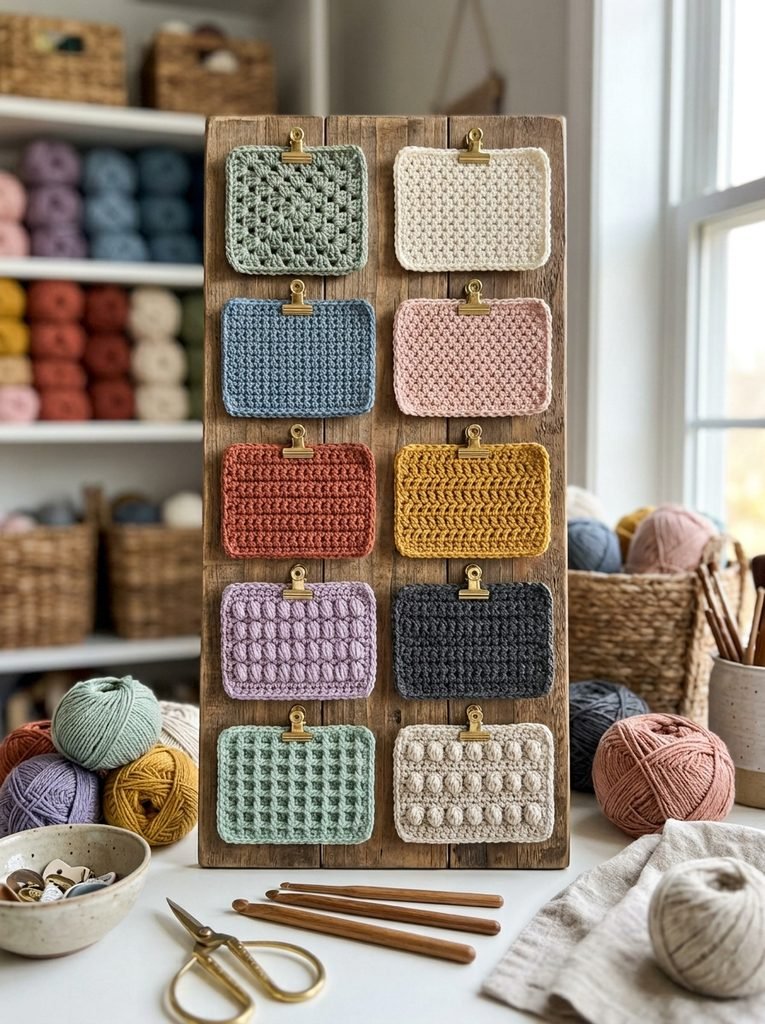
Not every interesting design needs complicated techniques. Many beautiful patterns come from repeating simple stitches in a smart way.
- Granny Stitch — A classic open cluster pattern.
- Moss Stitch — A neat combination of single crochet and chains.
- Granite Stitch — Another name often associated with moss-style texture.
- Suzette Stitch — A compact textured design with a lovely rhythm.
- Grit Stitch — Creates a sturdy, slightly raised surface.
- Seed Stitch — Adds small repeated texture across the fabric.
- Brick Stitch — Creates a stacked visual effect.
- Linen Stitch — Produces a woven-looking surface.
- Suzanne Stitch — A decorative variation useful for textured projects.
- Crossed Stitch — Crossed sections create visual movement.
These designs work especially well for scarves, blankets, bags, and smaller accessories. They are also useful when you want something more interesting than plain rows without making the project too difficult.
31–40: Open and Lacy Crochet Stitches
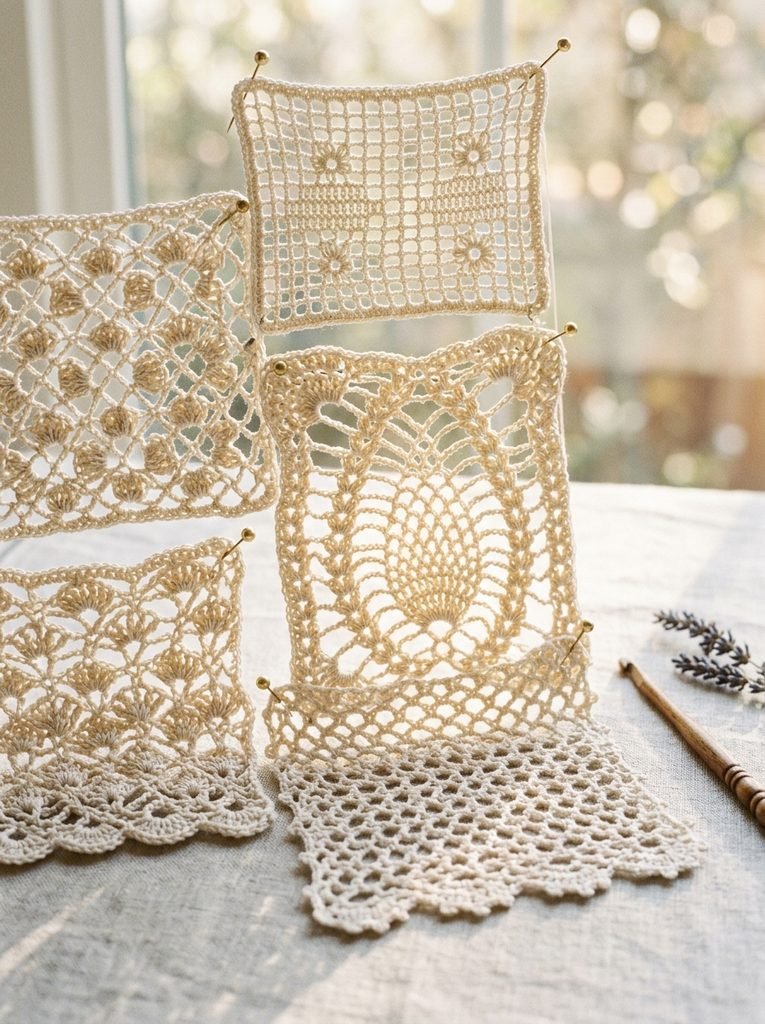
Open patterns create space between stitches. That makes them useful for lightweight shawls, summer tops, curtains, decorative panels, and airy scarves.
- Lace Stitch — Creates an open and delicate fabric.
- Open Shell Stitch — Combines fan shapes with larger spaces.
- Picot Lace — Adds tiny decorative points along an edge.
- Mesh Stitch — Uses chains and stitches to create open spaces.
- Diamond Lace — Forms repeating diamond-shaped openings.
- Fan Lace — Builds decorative fan motifs.
- Filet Crochet — Uses open and filled spaces to create pictures and patterns.
- V-Lace Stitch — Combines V-shaped openings with lace structure.
- Spider Stitch — Creates an airy repeating arrangement.
- Pineapple Lace — A classic decorative lace-inspired motif.
Filet crochet deserves special attention because charts can make its structure much easier to understand. The Craft Yarn Council maintains standardized crochet chart symbols, with each symbol representing a specific stitch or technique.
41–50: Raised and Decorative Patterns
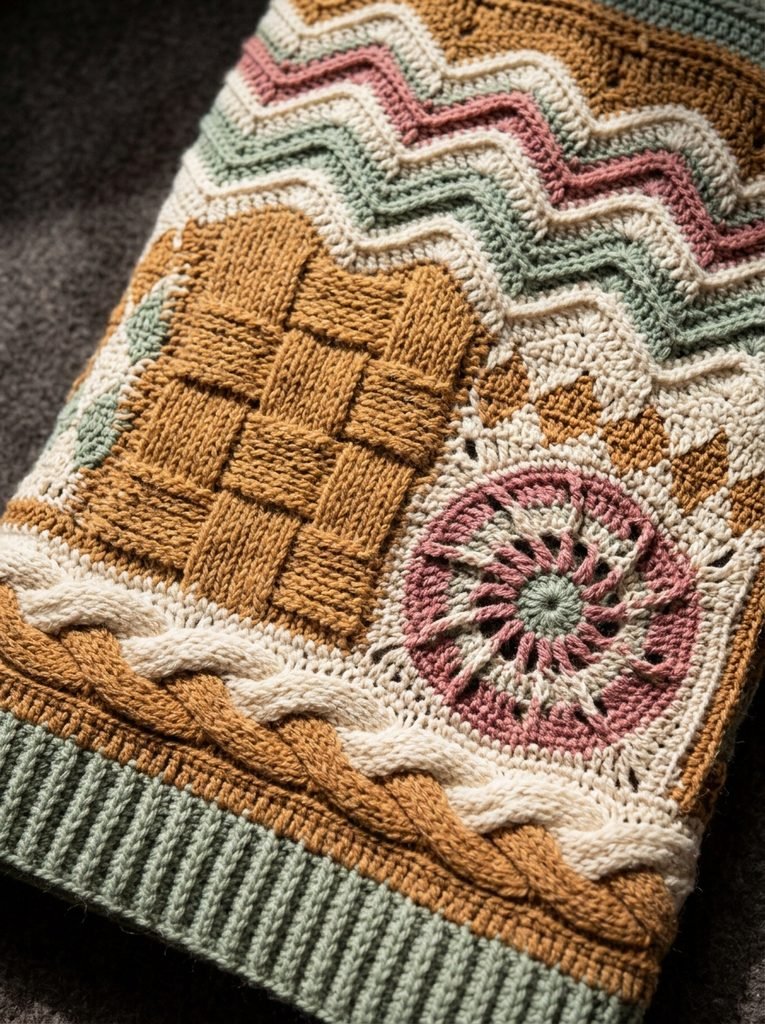
Raised designs are perfect when you want the fabric to have depth. They can make an ordinary blanket or scarf look much more detailed.
- Front Post Double Crochet — Creates raised vertical texture.
- Back Post Double Crochet — Adds recessed texture.
- Front Post Half Double Crochet — Gives a softer raised effect.
- Back Post Half Double Crochet — Adds depth without heavy bulk.
- Ribbed Stitch — Creates flexible vertical lines.
- Basketweave Stitch — Mimics woven basket texture.
- Cable Stitch — Creates twisted raised sections.
- Catherine Wheel — Forms colorful circular waves.
- Harlequin Stitch — Produces bold diamond-like sections.
- Ripple Stitch — Creates repeated peaks and valleys.
Post stitches are especially useful for texture because you work around the post of a previous stitch rather than simply into its top loops. The Craft Yarn Council includes front-post and back-post stitches in its standard chart system.
51–60: Unique Crochet Stitches to Explore
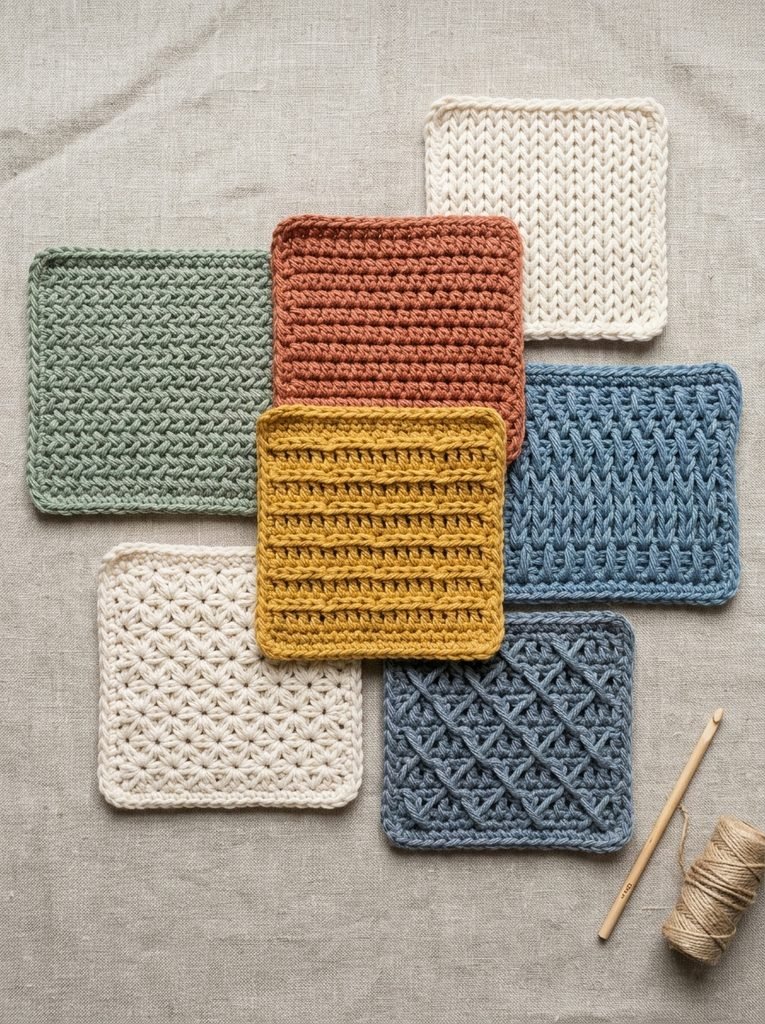
When you feel ready for something different, try patterns that combine multiple techniques. These designs can become the feature of a project.
- Herringbone Half Double Crochet — Creates a diagonal movement.
- Herringbone Double Crochet — Gives a strong angled texture.
- Waistcoat Stitch — Produces a knit-like appearance.
- Split Single Crochet — Creates a dense vertical structure.
- Linked Double Crochet — Reduces large gaps between tall stitches.
- Spike Stitch — Drops a stitch into a lower row for contrast.
- Long Single Crochet — Adds vertical detail.
- Crossed Double Crochet — Builds a decorative crossed pattern.
- Trinity Stitch — Creates a compact textured surface.
- Star Stitch — Produces a distinctive star-like texture.
Herringbone techniques are especially attractive for modern scarves, hats, bags, and blankets. Their diagonal movement gives even simple projects a more designed appearance.
61–70: Tunisian Crochet Stitches
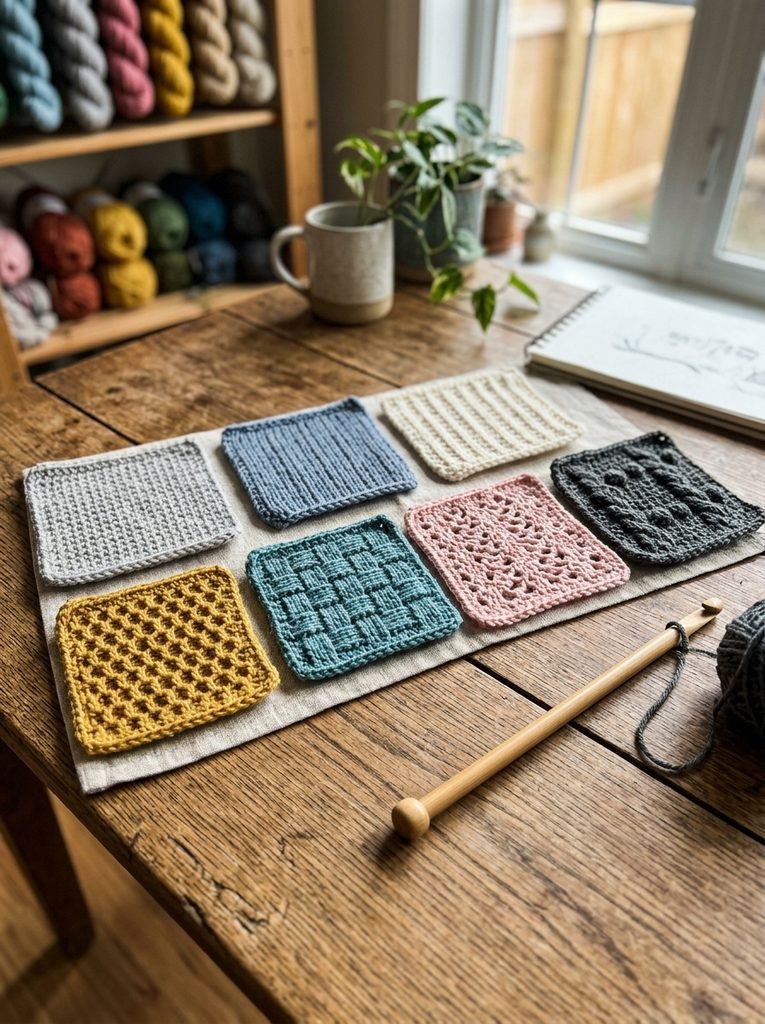
Tunisian crochet looks different from traditional crochet because many techniques create a fabric with a distinctive woven or knitted appearance. A longer Tunisian hook often helps hold multiple loops during the forward pass.
- Tunisian Simple Stitch — A classic starting point.
- Tunisian Knit Stitch — Creates a knit-like front surface.
- Tunisian Purl Stitch — Adds a different texture and reverse-like appearance.
- Tunisian Full Stitch — Creates a bold, dense structure.
- Tunisian Reverse Stitch — Adds texture from the opposite side.
- Tunisian Honeycomb Stitch — Combines different Tunisian techniques.
- Tunisian Basketweave — Builds a woven visual texture.
- Tunisian Lace Stitch — Creates a lighter open fabric.
- Tunisian Double Crochet — Adds height to Tunisian work.
- Tunisian Half Double Crochet — Creates a medium-height textured fabric.
The Craft Yarn Council’s abbreviation list includes several Tunisian terms, including Tunisian simple, knit, purl, full, reverse, half double, double, and treble techniques.
71–80: Crochet Stitches for Blankets
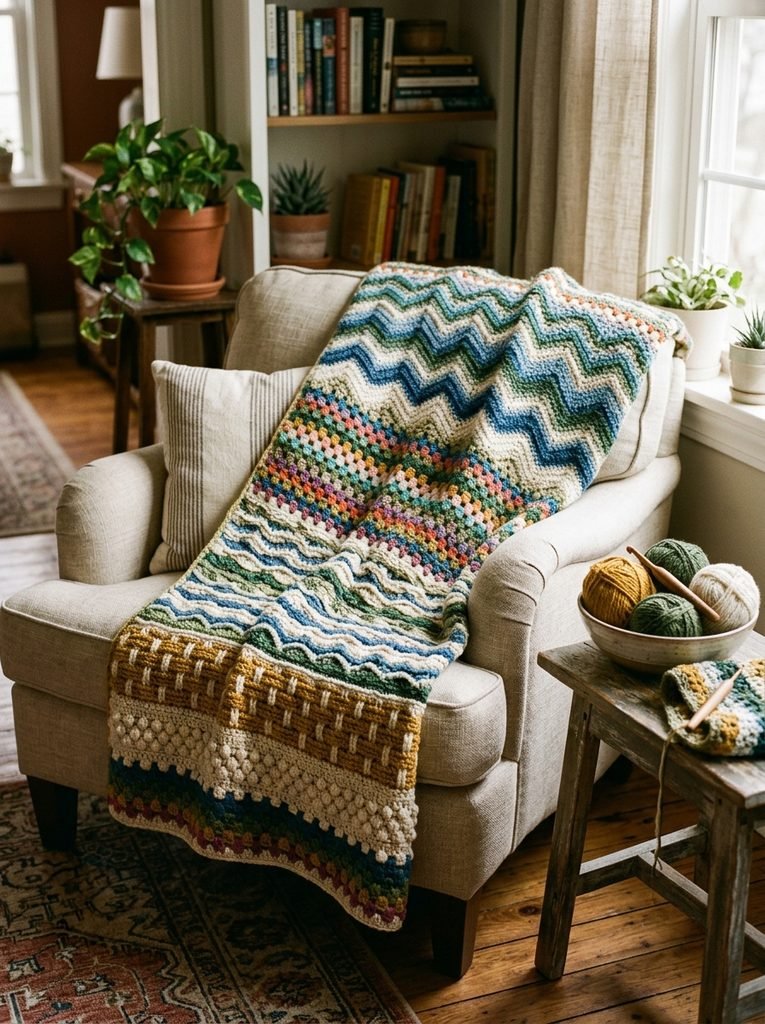
Blankets give you enough space to appreciate repeating patterns. Choose a design that feels comfortable to repeat because you may work the same sequence hundreds of times.
- Chevron Stitch — Creates strong zigzag movement.
- Ripple Stitch — Gives soft waves across the blanket.
- Granny Stripe — Simple clusters arranged in horizontal rows.
- Corner-to-Corner Stitch — Builds a diagonal fabric structure.
- Moss Stitch Blanket Pattern — Calm and evenly textured.
- Shell Blanket Stitch — Adds decorative fan shapes.
- V-Stitch Blanket — Creates an airy repeated structure.
- Basketweave Blanket Stitch — Produces thick, cozy texture.
- Corner Shell Pattern — Adds decorative movement.
- Textured Square Stitch — Works well for modular blankets.
For larger projects, make a small test swatch before committing to the full blanket. This lets you check stitch appearance, tension, yarn behavior, and approximate size.
81–90: Crochet Stitches for Modern Projects
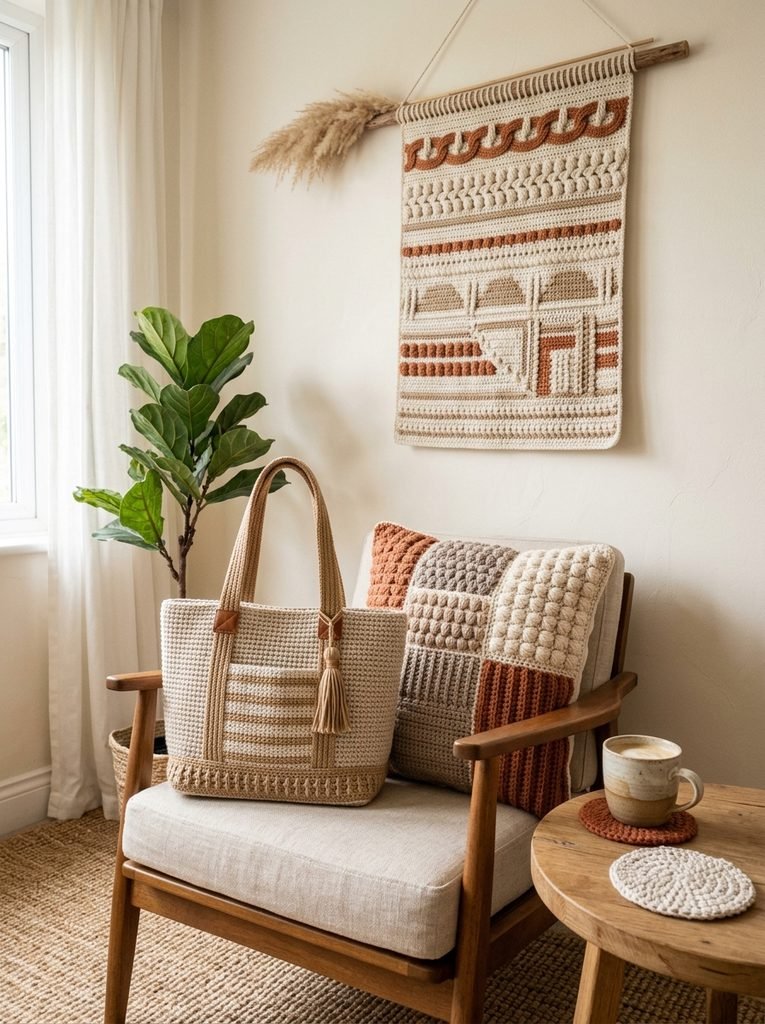
Some patterns look especially good on accessories and contemporary home decor. Their structure adds personality without making the finished piece feel old-fashioned.
- Linen Stitch — Great for bags and lightweight accessories.
- Granite Stitch — Creates a neat woven surface.
- Waistcoat Stitch — Useful for structured bags.
- Thermal Stitch — Creates a dense double-layer effect.
- Camel Stitch — Produces a ribbed horizontal appearance.
- Puff Texture — Adds soft decorative bumps.
- Cluster Texture — Gives a rich surface without complex shaping.
- Griddle Stitch — Creates small alternating texture.
- Aligned Cobble Stitch — Builds a structured raised pattern.
- Linked Stitch — Creates a tighter fabric with fewer gaps.
These options can work beautifully for a bag, top, coaster, cushion cover, or modern wall hanging. Match the stitch to the purpose. A dense design suits a structured bag, while an open design works better when you want airflow or drape.
91–100: Fun Stitch Patterns to Finish Your Collection
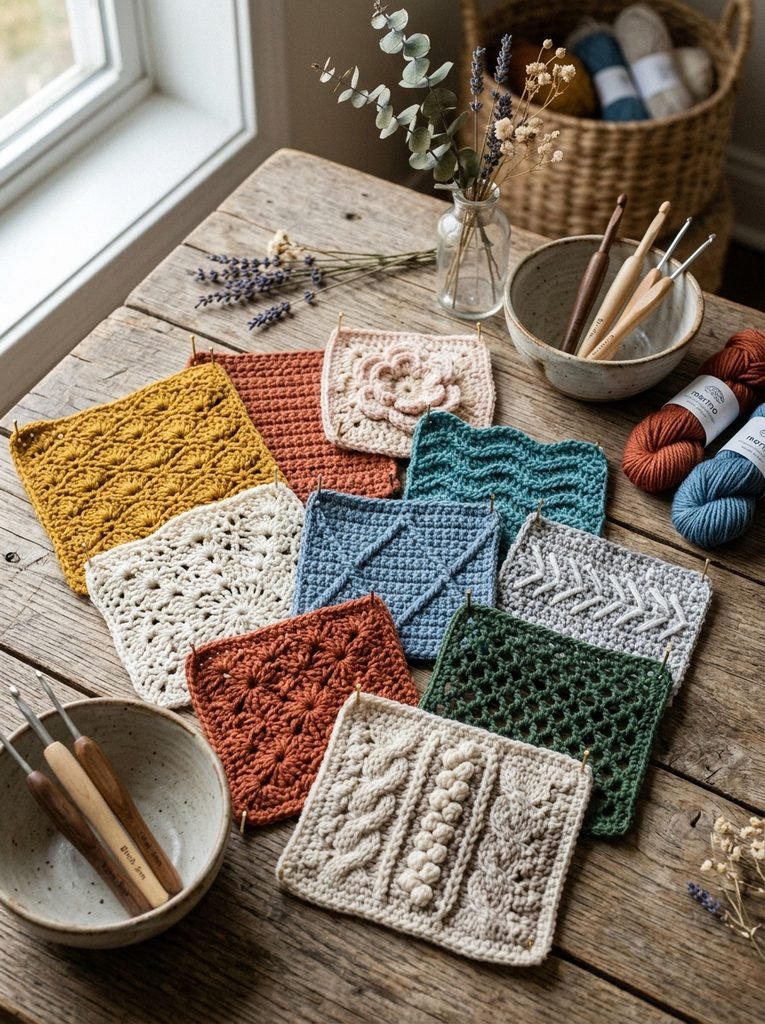
The final ten options bring together decorative shapes, openwork, texture, and movement. They are excellent choices when you want your next project to feel more creative.
- Shell and V-Stitch Combination — Mixes two classic structures.
- Granny Shell Stitch — Combines clusters with fan shapes.
- Flower Stitch — Creates floral-looking repeated motifs.
- Wave Stitch — Adds flowing movement.
- Lacy Fan Stitch — Gives an airy decorative finish.
- Diamond Stitch — Creates geometric shapes.
- Arrow Stitch — Adds directional visual movement.
- Starburst Stitch — Creates radiating decorative sections.
- Openwork Shell Stitch — Combines shells with generous spaces.
- Mixed Texture Stitch — Combines simple and raised techniques for a custom design.
You do not need to master every option. Pick three or four that match your current skill level and project goal. A beginner may enjoy moss, shell, or granny designs first, while an experienced maker may prefer Tunisian, filet, cable, or herringbone techniques.
How to Choose the Right Crochet Stitch
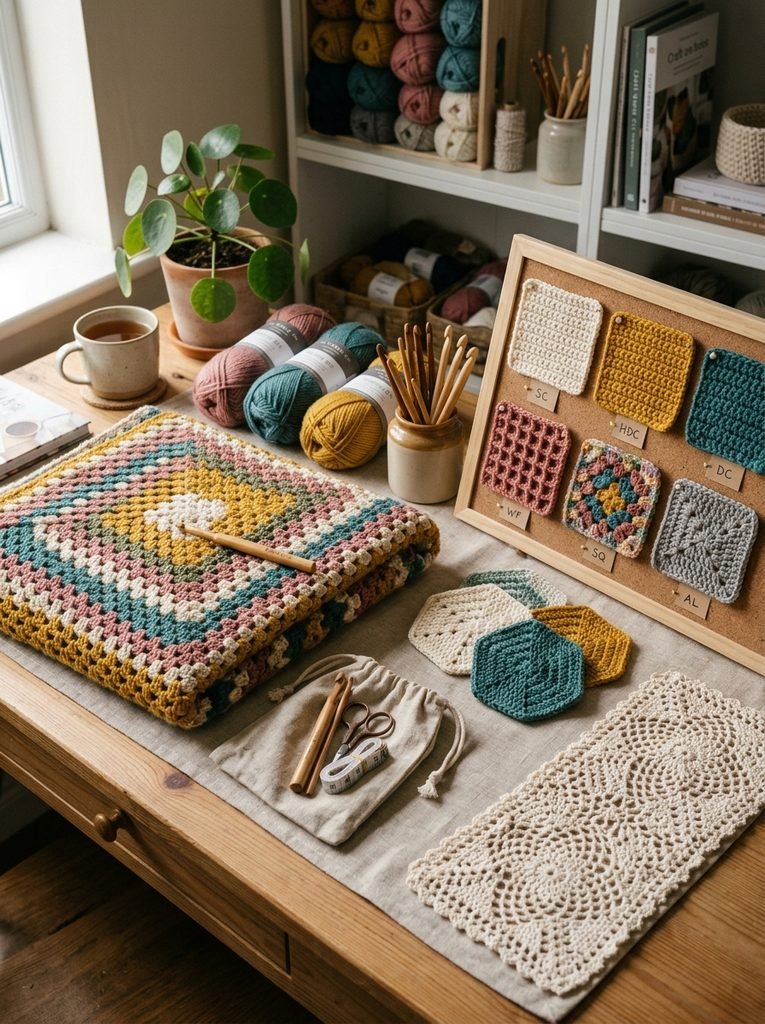
Think about the finished project before choosing a pattern. A blanket needs a repeat that you can enjoy making for many rows. A coaster needs structure. A summer top benefits from a lighter fabric. A bag may need a dense stitch that holds its shape. Also check the pattern difficulty. The Craft Yarn Council describes Basic projects as those using basic stitches with simple increases or decreases, while Easy projects may introduce simple stitch patterns, colorwork, or shaping.
How to Read a Crochet Pattern and Chart
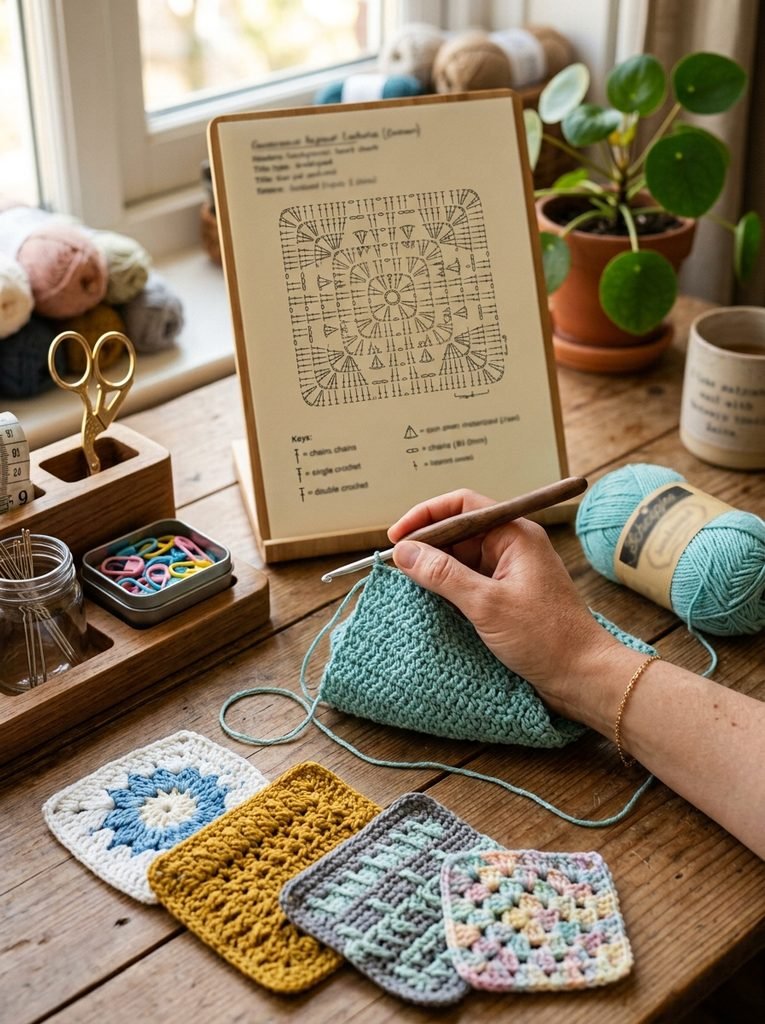
A pattern may look confusing at first because designers use abbreviations to keep instructions short. Learn common terms such as ch, sc, hdc, dc, sl st, rep, inc, and dec before starting. Charts offer another way to understand a design. The Craft Yarn Council explains that standardized symbols can represent individual stitches and techniques, while the pattern’s own key should always be checked because designers may use special definitions. One useful habit is to read the entire row before picking up your hook. Look for asterisks, brackets, and parentheses. These often indicate repeats or groups of stitches. Once you understand that structure, even a complicated pattern becomes a series of smaller steps.
Tips for Practicing Crochet Stitches
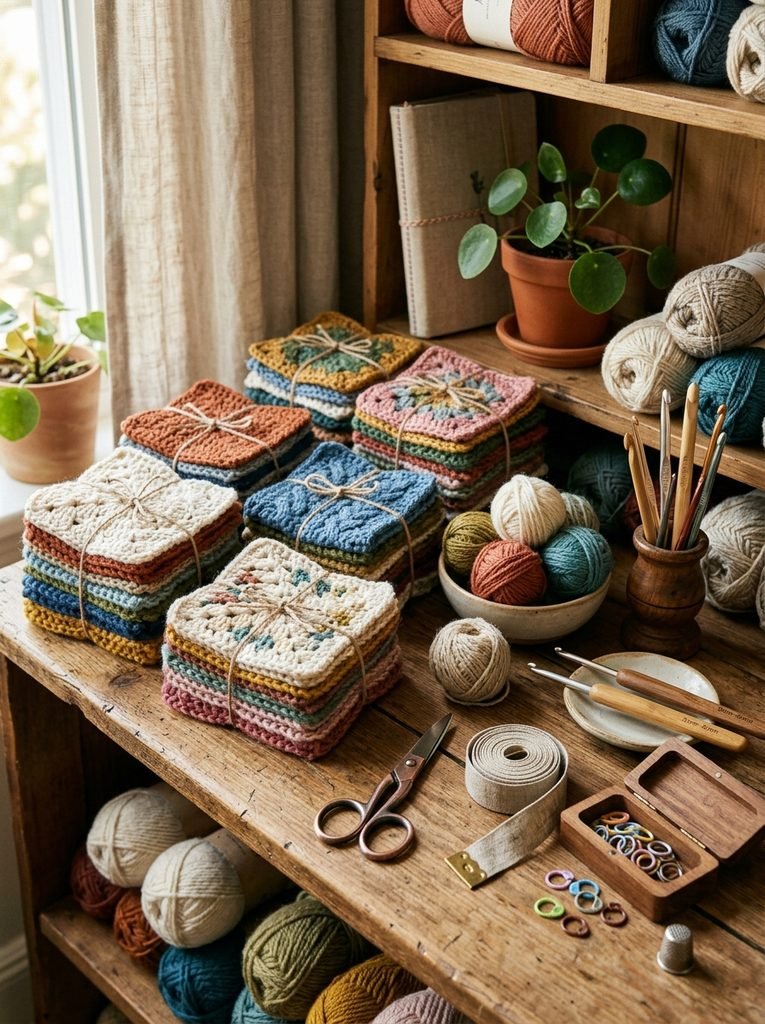
Practice does not need to take hours. A small ten-minute session can help your hands remember a new movement. Make a short foundation chain, work a few rows, and count your stitches. If the fabric looks uneven, check your tension before changing the pattern. Keep a small collection of practice swatches. Write the stitch name on separate physical labels if you want to remember what you made. Over time, these swatches become a personal reference library. They can help you decide which texture works best for a new blanket, scarf, bag, or top.
Final Thoughts
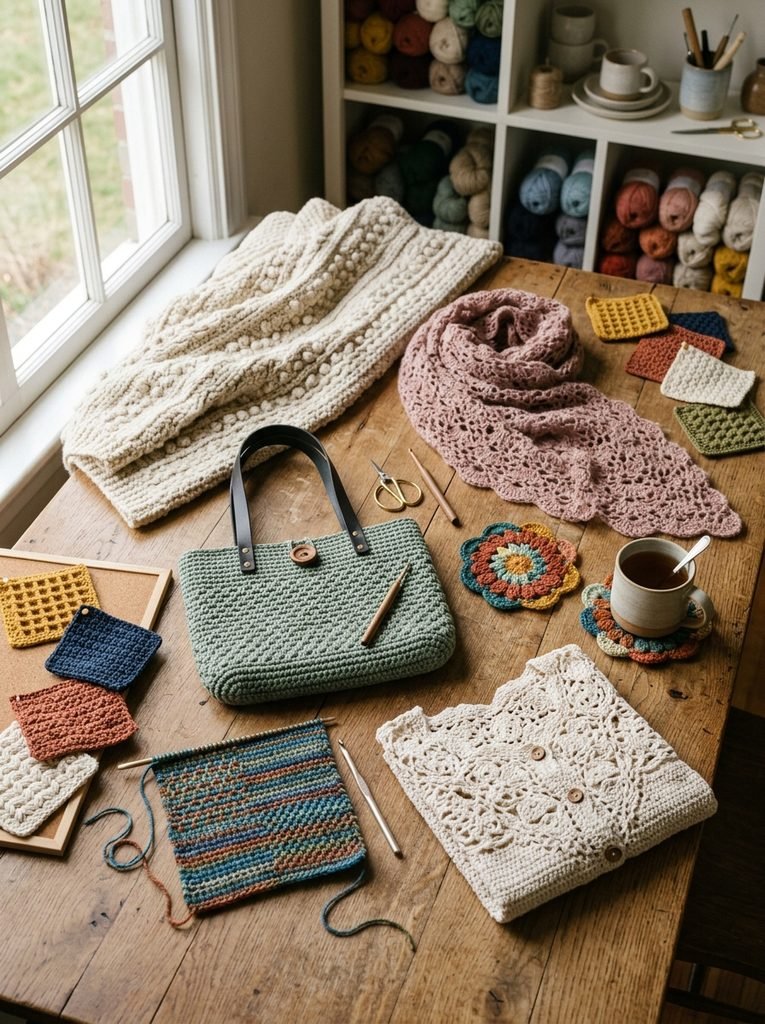
The beauty of crochet comes from experimentation. You can begin with one basic technique and slowly build a collection of patterns that feel completely different. Some will be dense. Others will be loose and lacy. Some will suit blankets, while others may look better on a top, bag, coaster, or decorative panel. The goal is not to memorize every stitch. It is to understand how different techniques change fabric, texture, movement, and style. Once you know that, choosing a pattern becomes much easier. Your next project can start with a simple idea, a favorite yarn, and one new technique you want to try.