


This post may contain affiliate links. Please read my disclosure policy.
In This Article Show
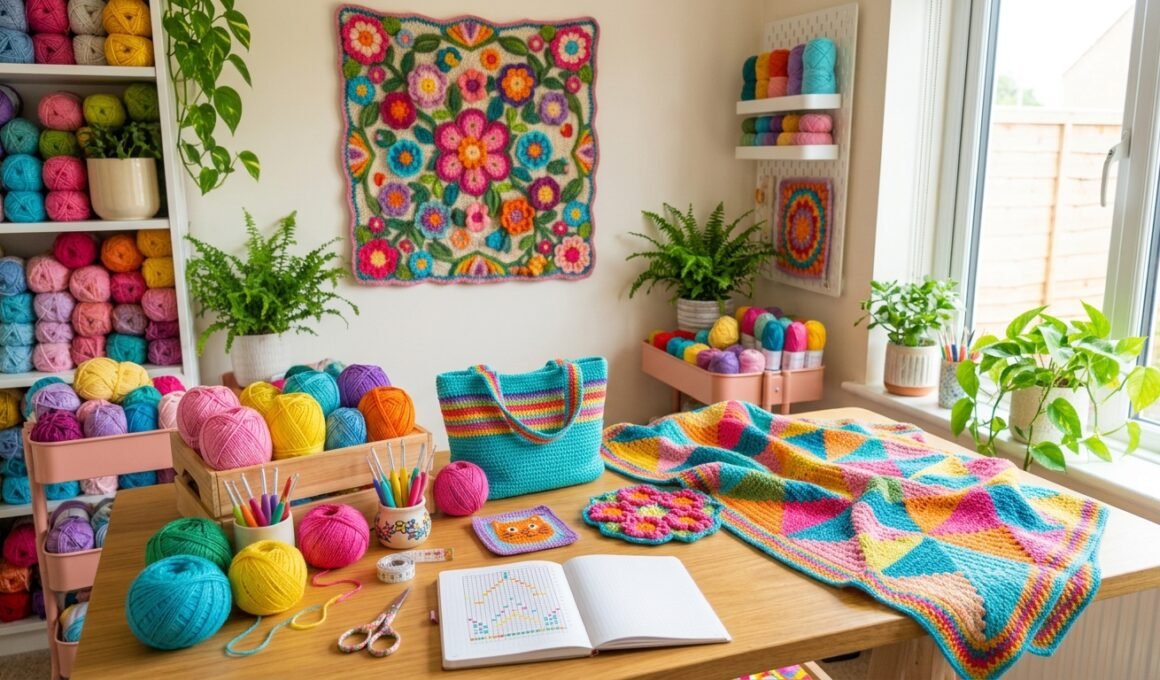
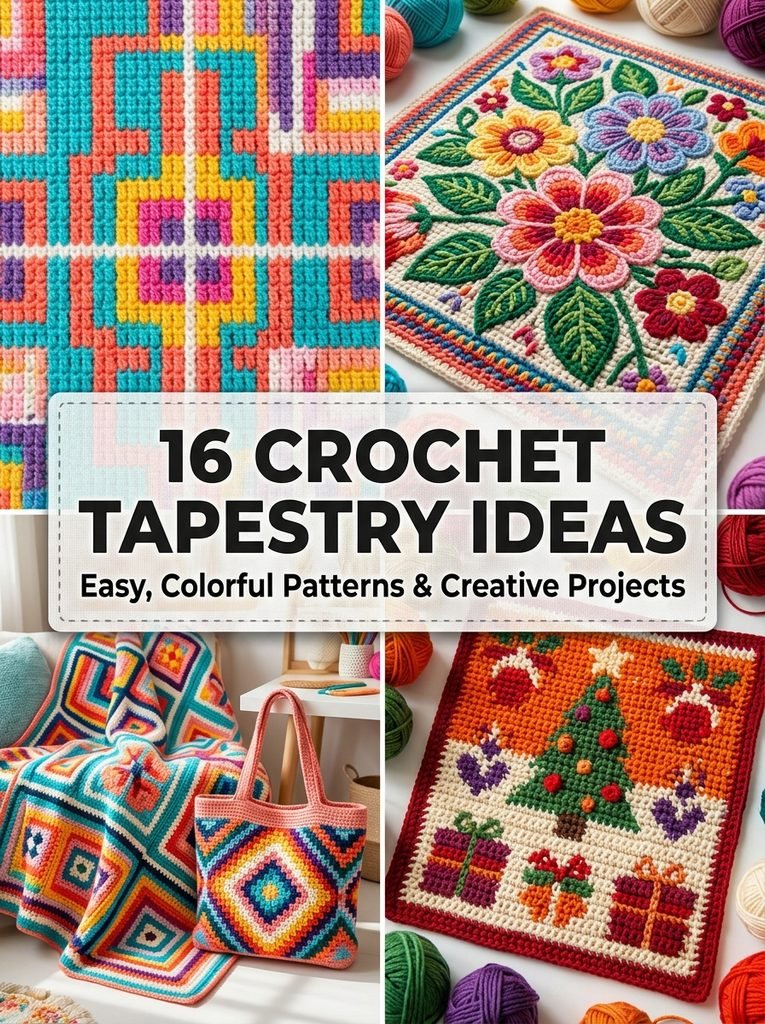
A plain crochet project can become something completely different when color enters the picture. One row might begin with blue yarn, shift into yellow, and suddenly reveal a flower, cat, heart, or geometric shape. That is what makes crochet tapestry so enjoyable. It turns simple stitches into colorful artwork while still keeping the project practical You do not need advanced skills to begin. A simple grid pattern, two yarn colors, and a little patience can take you surprisingly far. You can create a small wall hanging one weekend or spend several weeks building a large blanket. The choice is yours. The ideas below include easy projects, pattern-free inspiration, anime-style designs, seasonal pieces, bags, sweaters, flowers, and more. The goal is simple: help you find a design that feels exciting enough to pick up your hook today.
What Is Crochet Tapestry?
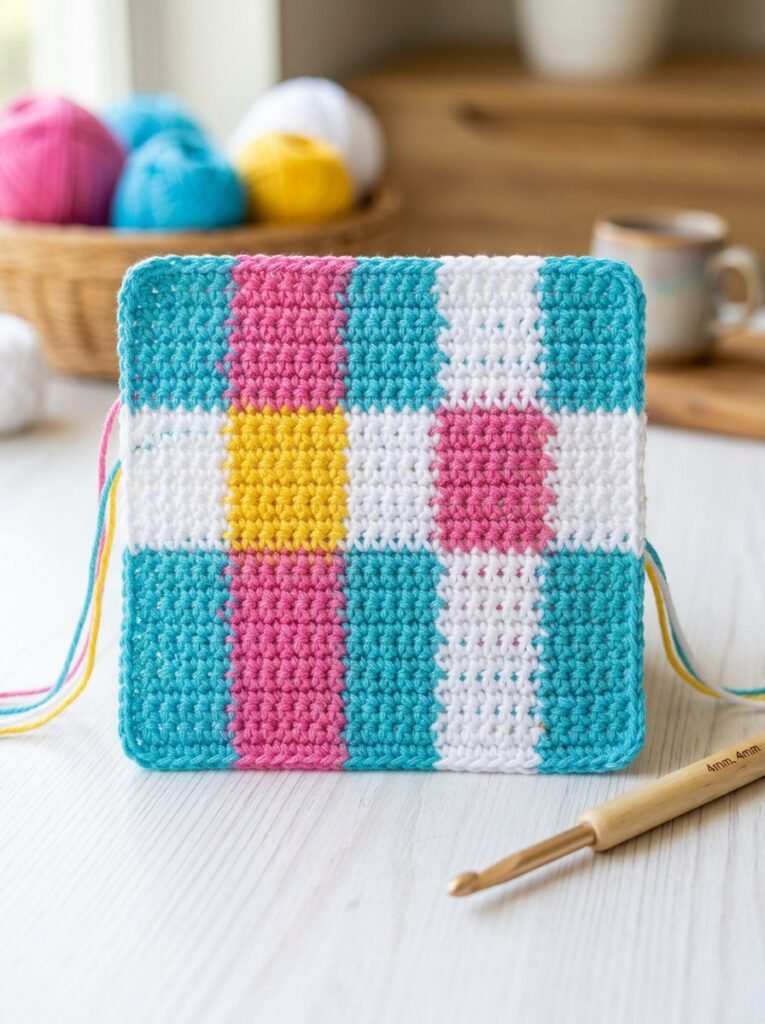
Crochet tapestry uses multiple yarn colors to create pictures, patterns, and color blocks within a crocheted fabric. The unused yarn often travels through the stitches while you work with the active color. This creates a denser fabric than many open crochet styles. The Craft Yarn Council describes tapestry crochet as a woven-yarn method in which the crocheter works over the colors that are not currently in use. It also notes that this technique can produce a reversible, heavier fabric. The basic idea is easier than it sounds. Think of a grid. Each square tells you which color belongs in that spot. Follow the grid row by row, change colors carefully, and the picture slowly appears.
1. Easy Grid Pattern
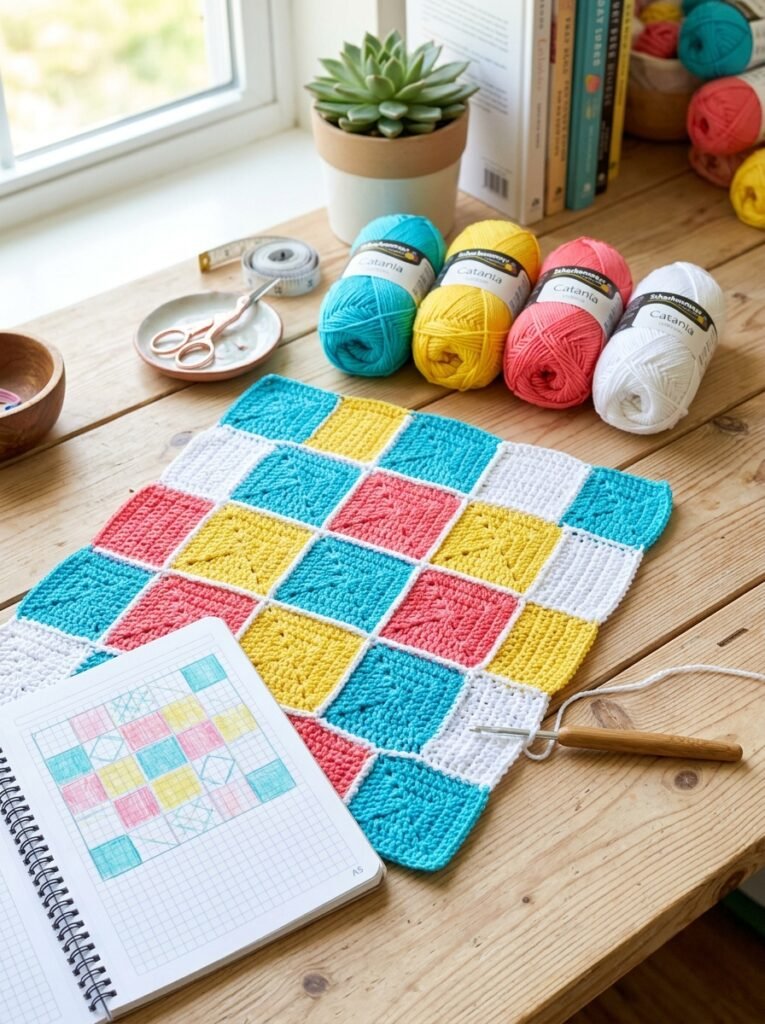
A simple grid pattern is the perfect starting point. Choose two contrasting colors and create stripes, diamonds, checkerboards, or small squares. Keep the first design small. You will learn how to carry the unused yarn, change colors, count stitches, and follow a chart without feeling overwhelmed. A strong color contrast also makes mistakes easier to spot.
2. Flower Pattern
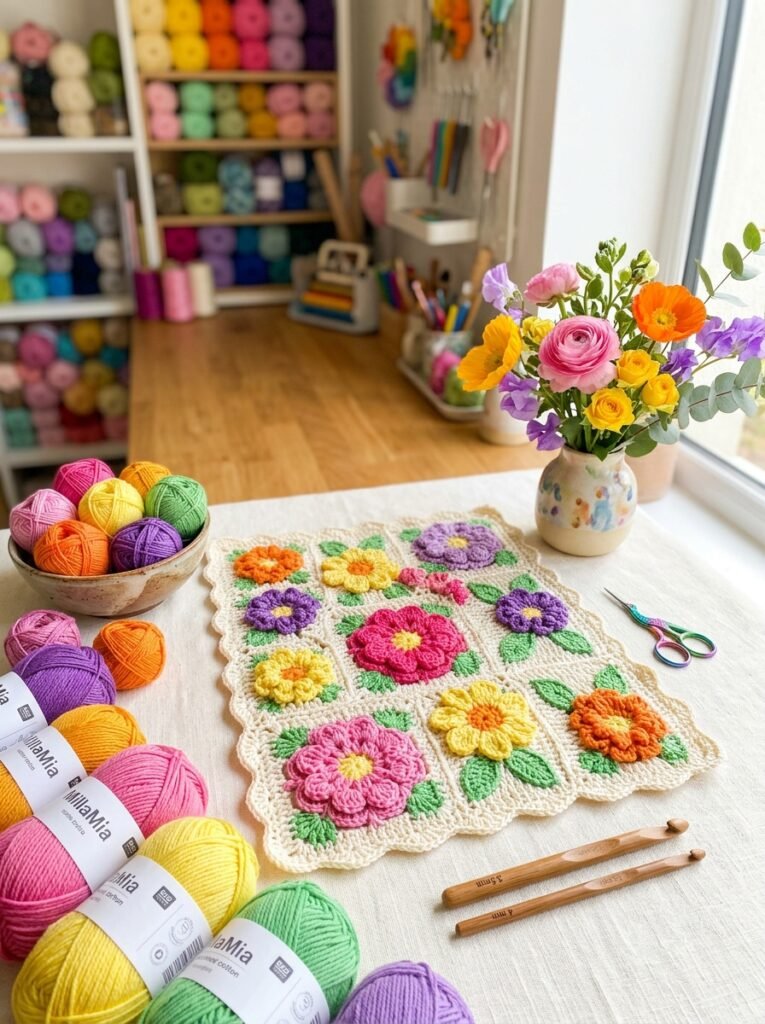
Flowers bring instant personality to a crochet project. Try a large central flower surrounded by leaves or create small flowers that repeat across the fabric. Pink, yellow, orange, purple, and green create a cheerful garden effect. For a softer look, combine cream with muted pastels. You can use the motif on a small panel, blanket, bag, or decorative wall piece.
3. Simple Crochet Blanket
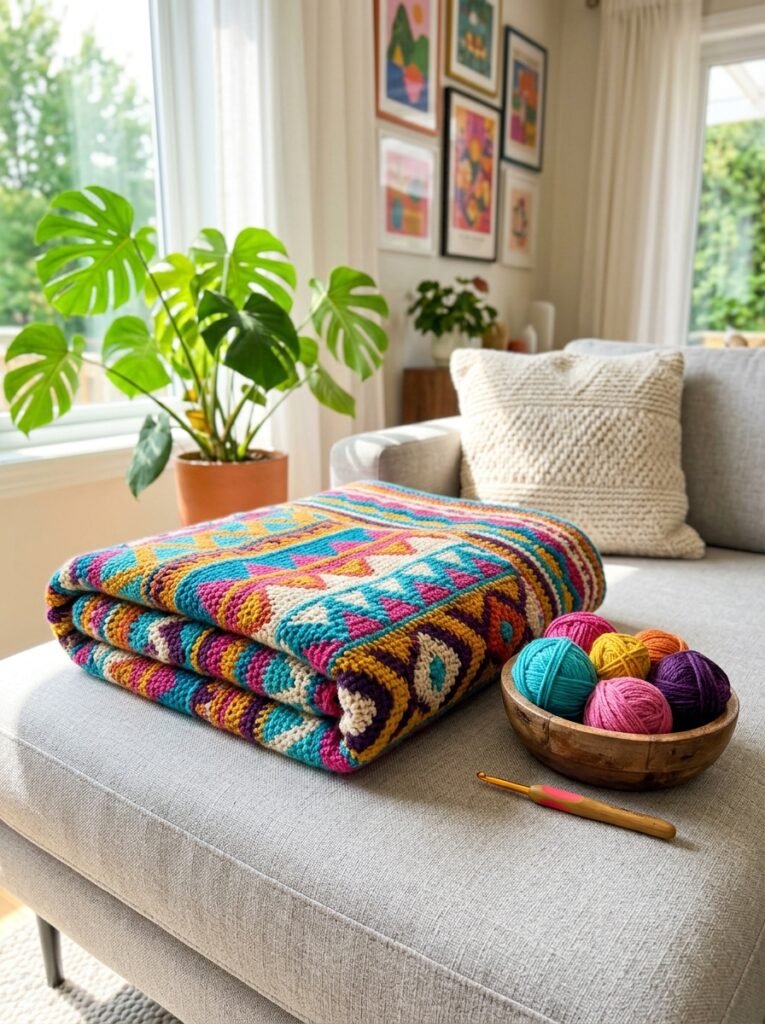
A blanket gives you plenty of room to experiment with color. Start with repeated geometric blocks, stripes, flowers, or simple motifs. If you want an easy first blanket, choose a limited palette of three or four colors. Too many shades can make a beginner project harder to manage. The Craft Yarn Council recommends checking gauge when working projects where finished dimensions matter. Its project examples also show how color charts can guide larger crochet designs.
4. Anime-Inspired Character Design
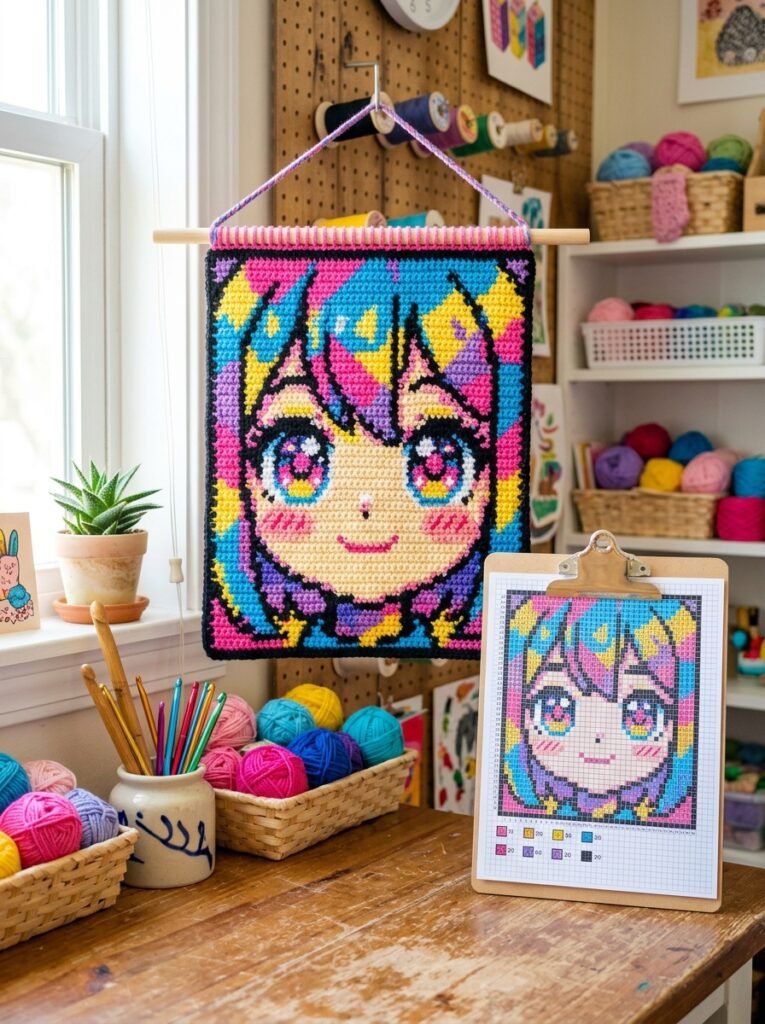
Character-inspired designs can make crochet feel like pixel art. Start with a simple face, symbol, hairstyle, or recognizable color combination rather than attempting a complicated full character. Sketch your idea on graph paper first. Each square can represent a stitch or color section. This makes it much easier to adjust the proportions before you begin. For original work, create your own character or use general anime-inspired shapes rather than copying protected artwork exactly.
5. Halloween Crochet Design
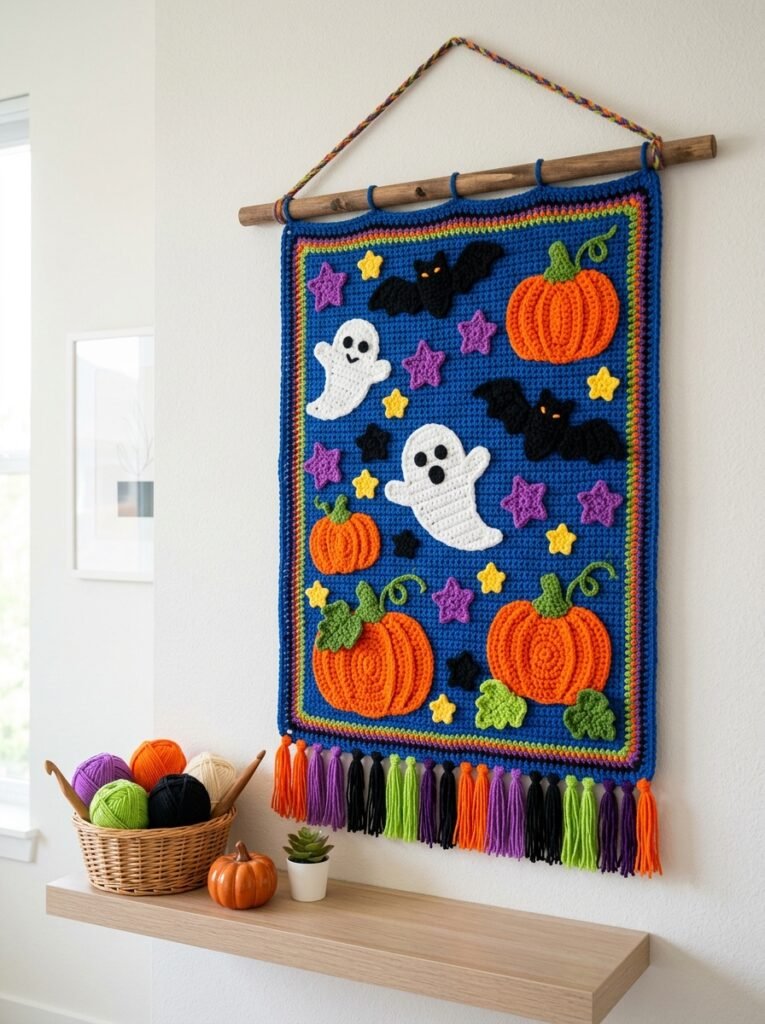
Halloween gives you endless color ideas. Try pumpkins, ghosts, bats, moons, stars, or spooky geometric faces. Black and orange create the classic look, but purple, lime green, white, and bright red can make the design much more playful. A small Halloween panel can become a wall hanging, pillow front, tote bag, or seasonal decoration.
6. Crochet Bag
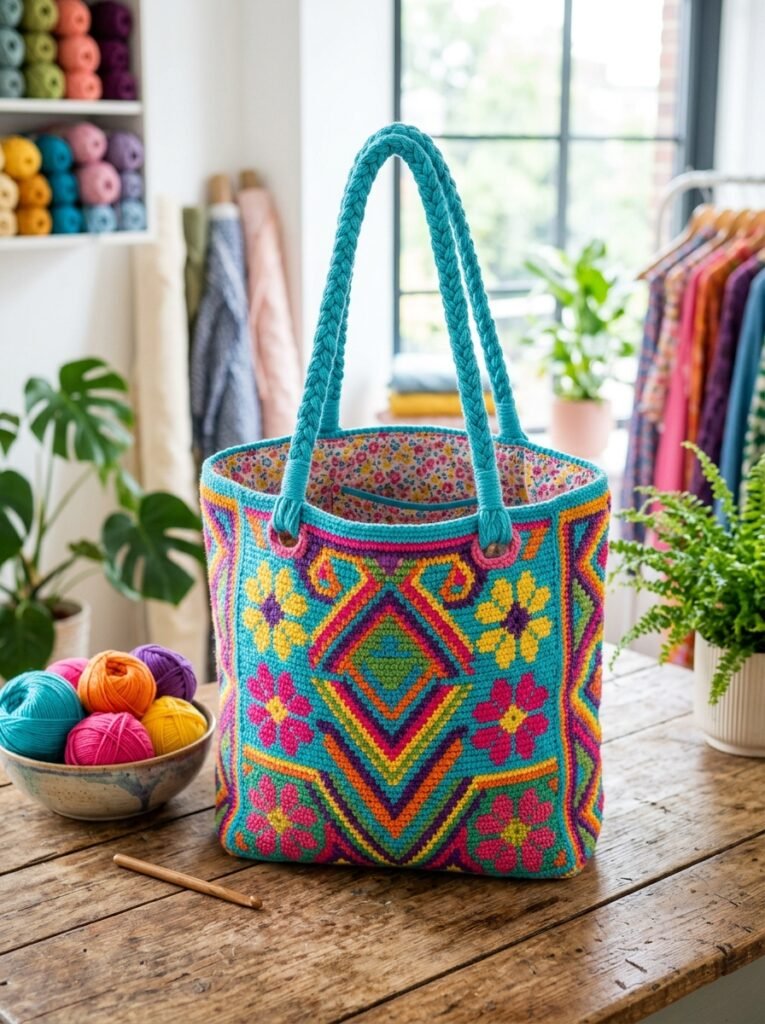
A colorful bag is one of the most useful projects for this technique. Create a bold front panel with flowers, geometric shapes, animals, or initials. Keep the sides simpler if the front design contains many color changes. Add a sturdy lining if you plan to carry small items. Color changes should remain neat because the front of a bag gets plenty of attention.
7. Cat Pattern
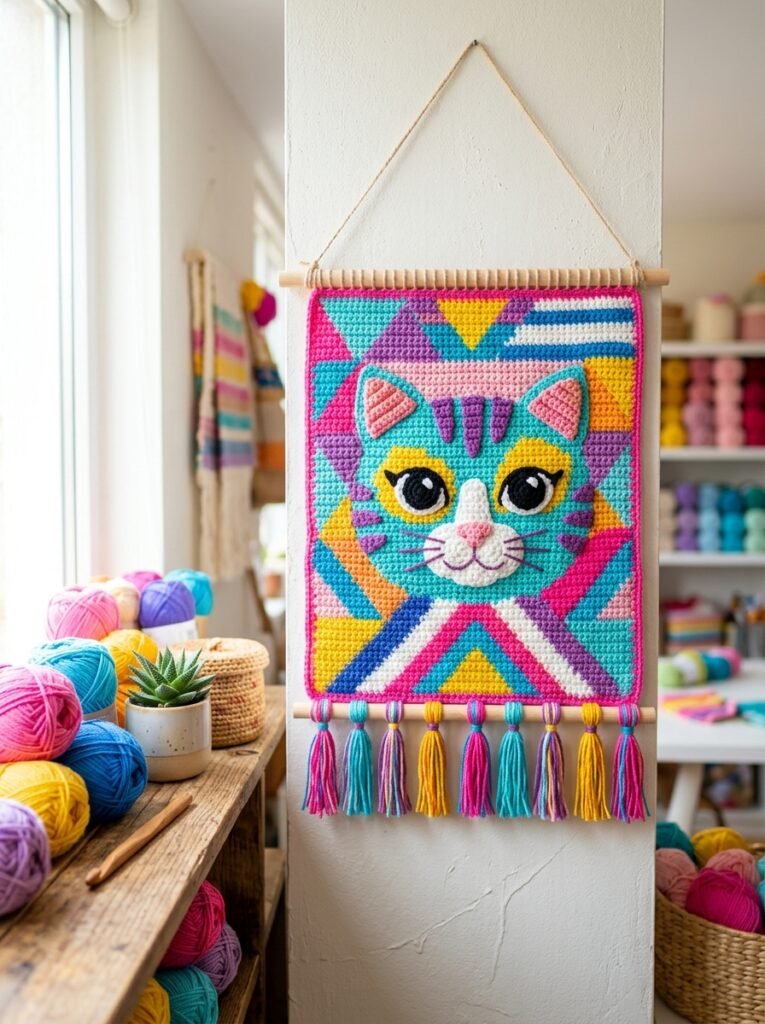
Cat designs work beautifully with a grid because their faces can use simple shapes. Try triangular ears, large eyes, whiskers, and a small nose. You can make a realistic-looking cat silhouette or a cute cartoon-style face. Keep the background simple so the main motif stands out. This idea works well for blankets, pillows, bags, and small wall pieces.
8. Small Easy Pattern
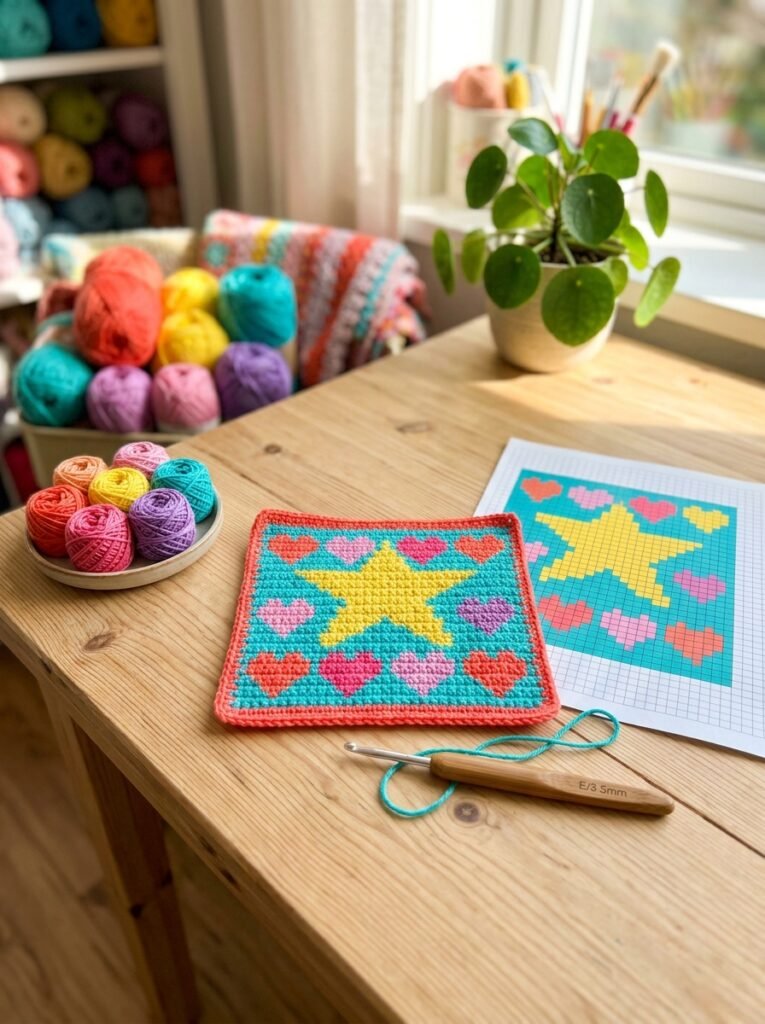
A small project helps you learn without committing to a large amount of yarn. Try a heart, star, flower, smiley face, diamond, or simple animal. A small pattern also makes a great test swatch. You can experiment with yarn weight, hook size, tension, and color combinations before starting a larger project.
9. Christmas Crochet Design
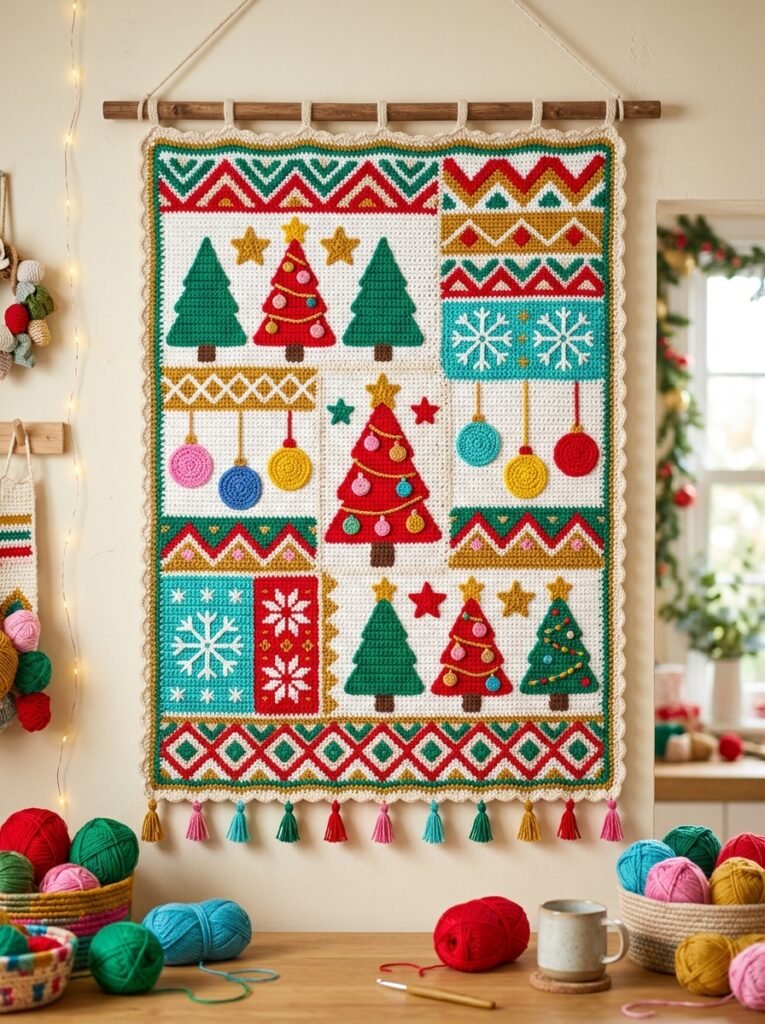
Christmas patterns are perfect for colorful crochet. Try trees, stars, ornaments, candy canes, snowflakes, stockings, or simple gift shapes. Traditional red, green, white, and gold create a classic holiday palette. For a modern design, add pink, turquoise, lavender, or bright blue. A small Christmas panel can become a seasonal wall hanging or gift.
10. Flower Wall Hanging
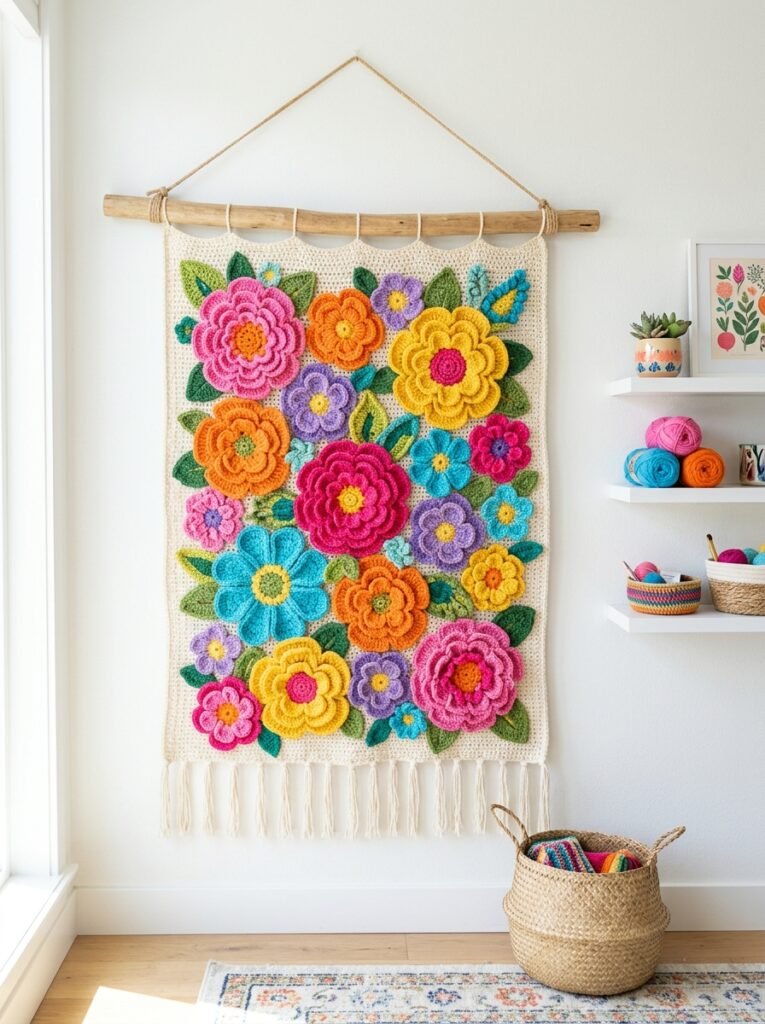
Turn a colorful crochet panel into wall art. A large flower, abstract garden, or repeating botanical pattern can look beautiful above a desk or craft table. Choose a wooden dowel and simple hanging cord for a clean finish. Keep the background lighter if your flower design uses several bold colors.
11. Sweater Design
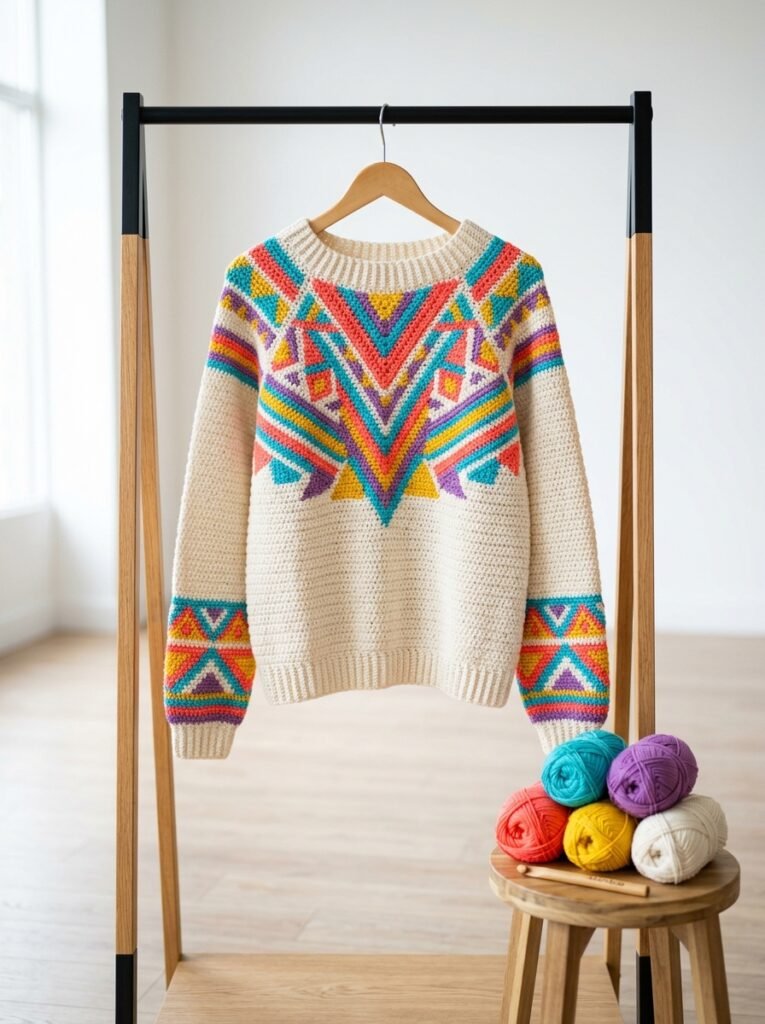
Colorwork can give a simple sweater a completely different personality. Use a band of geometric shapes around the chest, cuffs, or lower hem. Keep the motif fairly simple when working on clothing. A busy chart can become difficult to fit around sleeves and body shaping. Before starting the full sweater, make a gauge swatch and check how the colorwork affects the fabric’s stretch and thickness.
12. Snoopy-Inspired Style
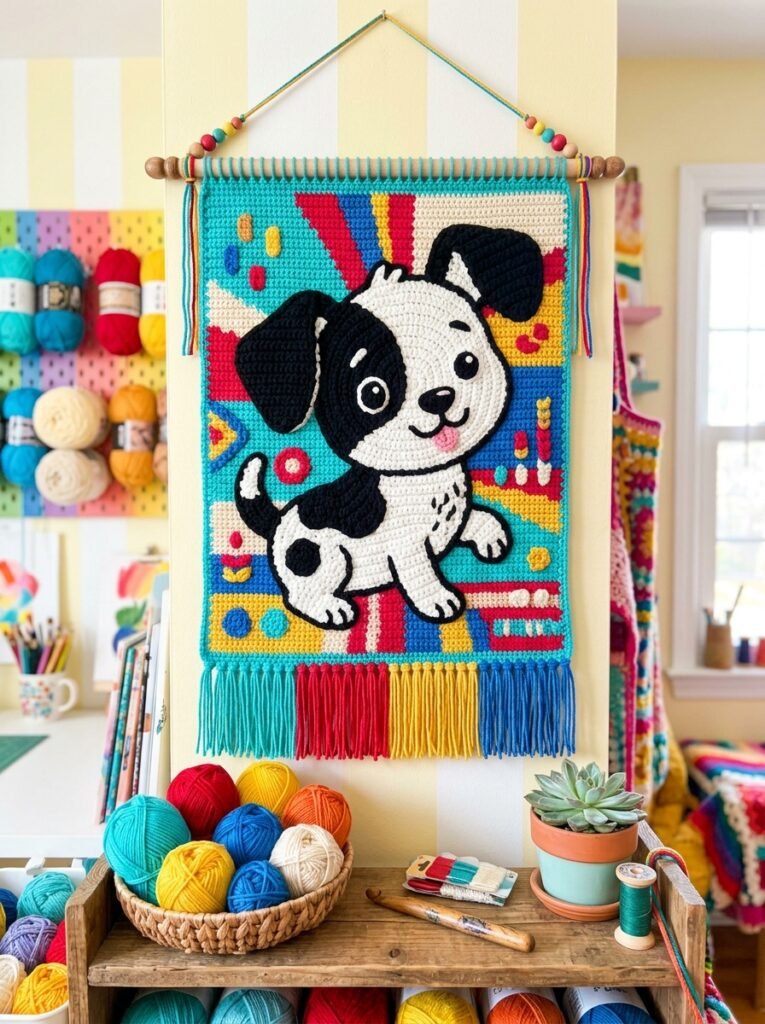
A simple dog character can make a fun crochet project. Instead of copying a character exactly, use the idea of a cheerful black-and-white cartoon dog to create your own original design. Focus on recognizable features such as floppy ears, a rounded head, and a simple expression. A bold background can make the character pop.
13. Colorful Geometric Piece
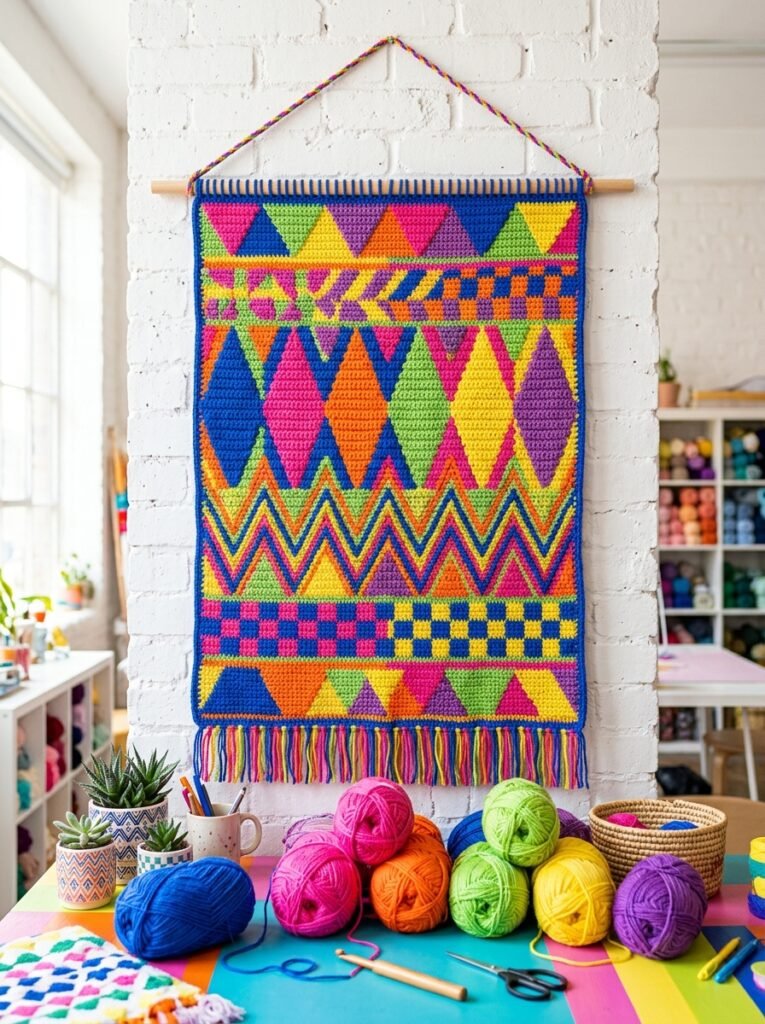
Geometric designs are excellent when you want a modern look. Diamonds, zigzags, checkerboards, waves, triangles, and repeating blocks all work well. Try unexpected combinations such as cobalt blue with orange or hot pink with lime green. Strong contrast makes the design feel energetic. You can turn the finished piece into a pillow cover, wall hanging, blanket panel, or bag.
14. Pattern-Free Custom Design
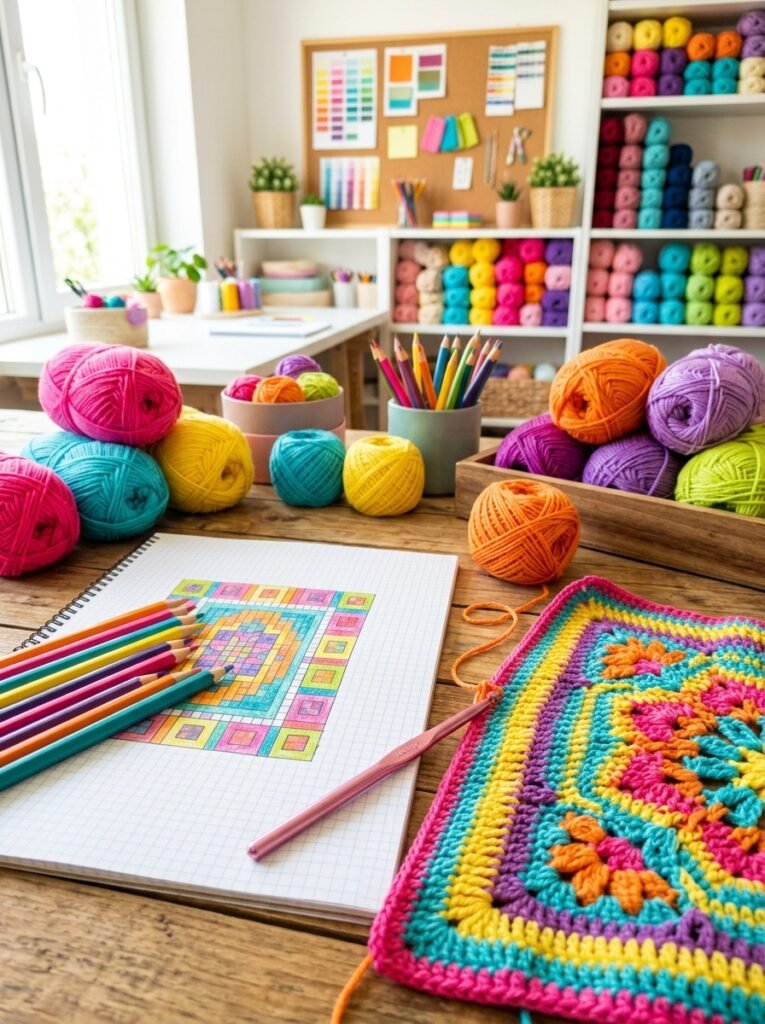
You do not always need a ready-made pattern. Once you understand the grid, you can design your own. Start with graph paper. Draw a simple shape, color each square, and decide where you want each yarn color. Then make a small sample to see how the design translates from paper to stitches. This approach gives you complete creative freedom.
15. Floral Bag or Pouch
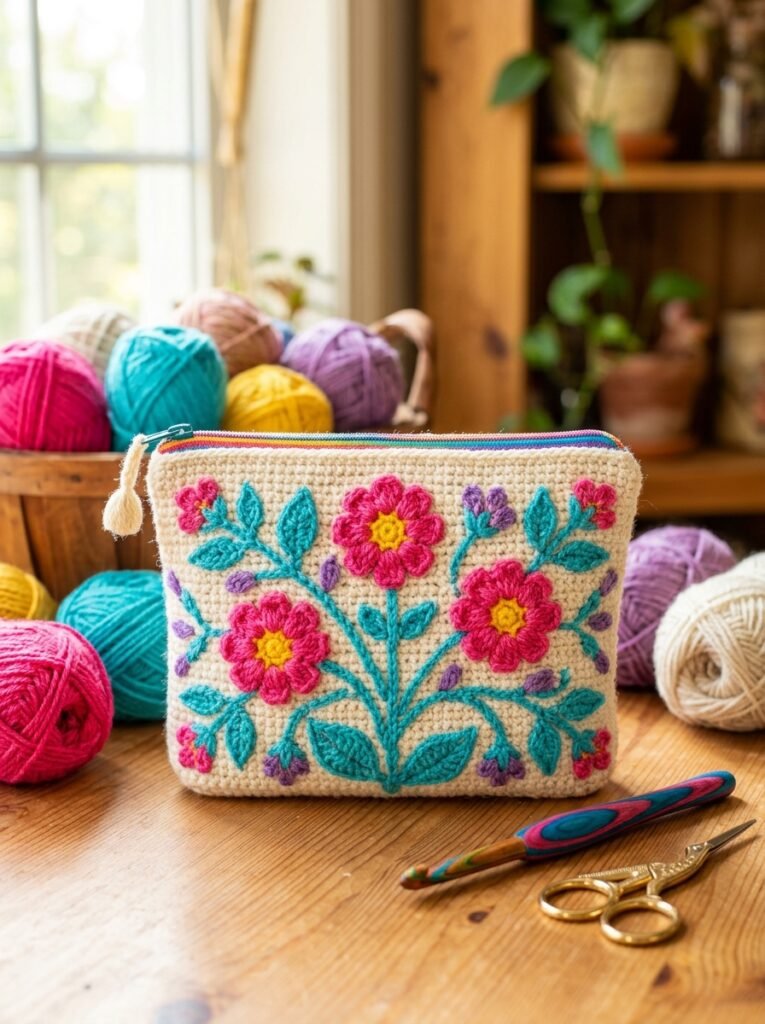
A smaller pouch can showcase detailed colorwork without requiring a large project. Use one central flower surrounded by leaves or simple geometric shapes. A zipper or button closure keeps the finished piece practical. Add a fabric lining if you want a cleaner interior. This is also a useful project when you want to practice before making a larger bag.
16. Seasonal or Personalized Piece
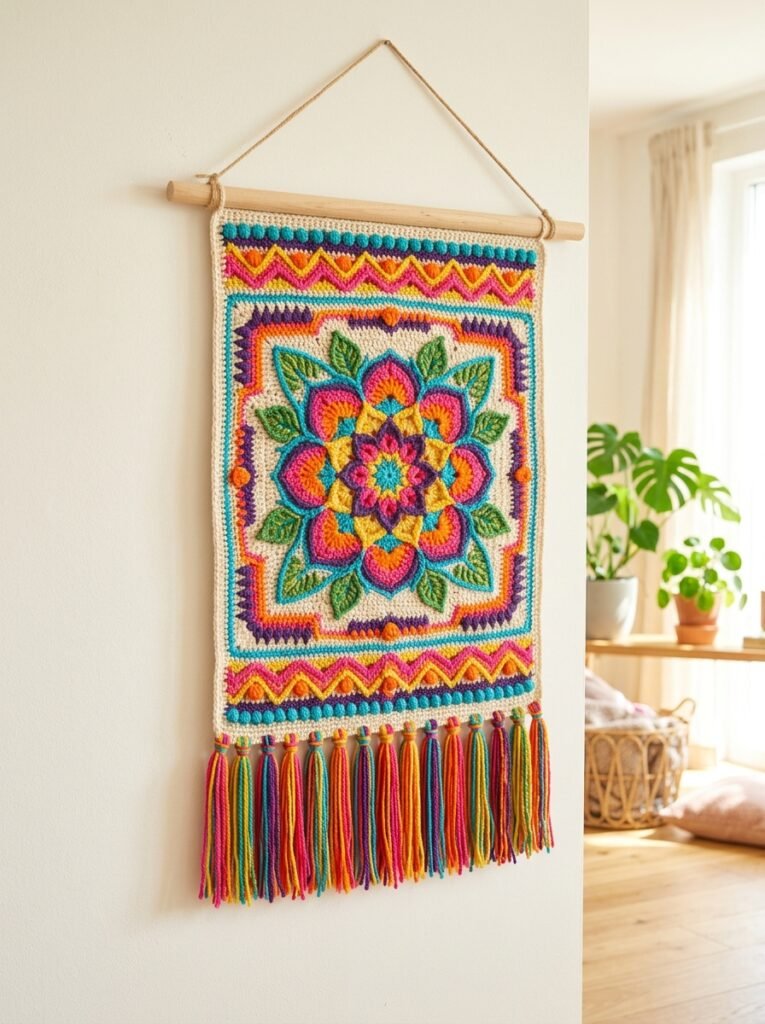
Your final project can combine several ideas. Create a name, birth month flower, favorite animal, seasonal symbol, or simple family motif. A personalized piece can become a thoughtful handmade gift. It can also become a permanent part of your home decor. Keep the main symbol large enough to recognize. Simple designs usually look stronger than charts filled with too many tiny details.
How to Read a Crochet Tapestry Grid Pattern
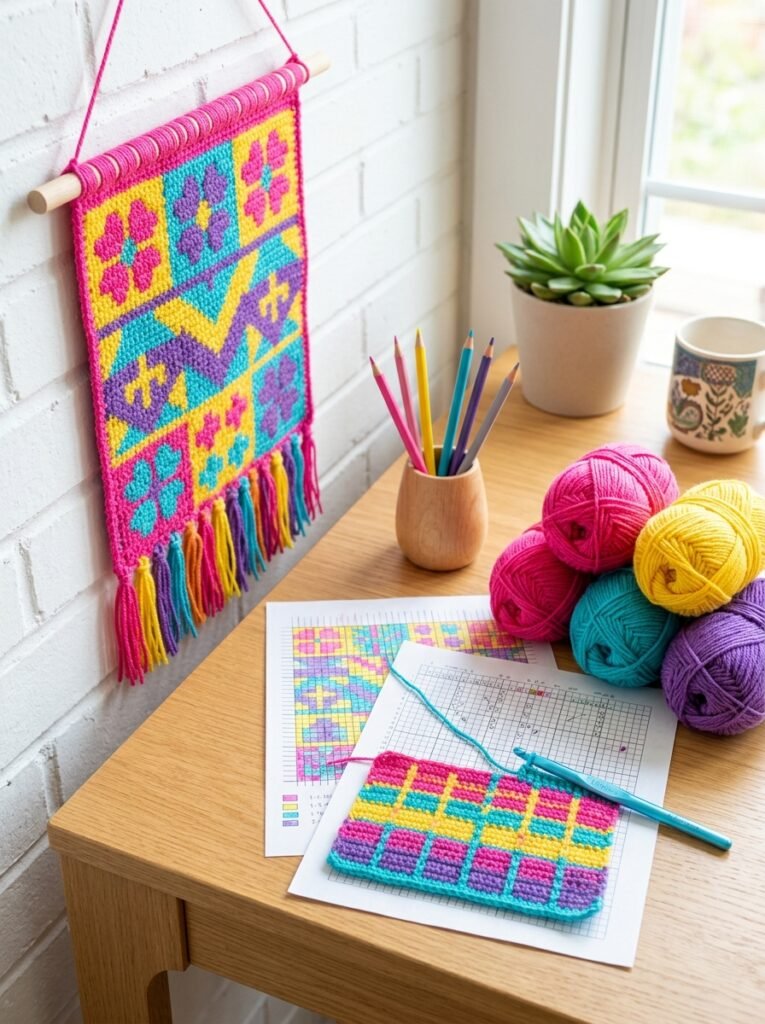
A grid pattern works like a tiny map. Each square tells you what color or stitch belongs in that position. Before you start, check the pattern key. Identify the colors, stitch type, starting point, and row direction. The Craft Yarn Council provides standardized crochet chart symbols and recommends checking the specific pattern key because designers may use additional symbols or definitions. Use a ruler or sticky note to track your row. This simple habit becomes especially helpful when the design contains many color changes.
How to Change Colors Cleanly
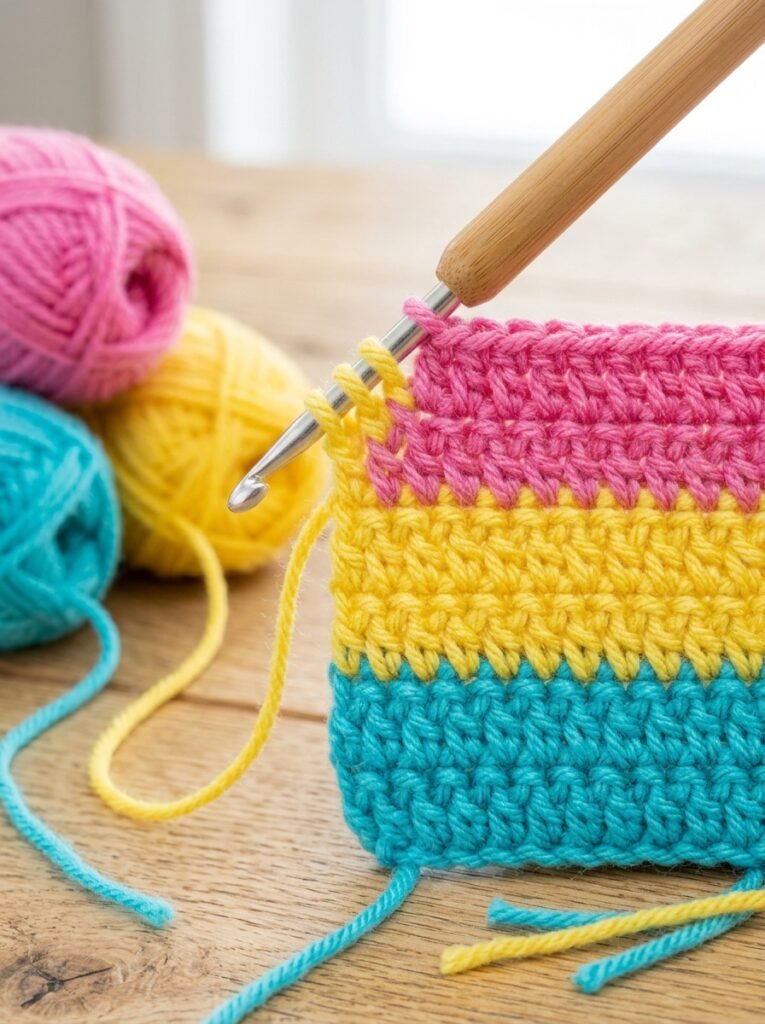
Color changes can make or break the finished look. For a clean change, work the current stitch until the final two loops remain on the hook. Then use the new color to complete the stitch. The Craft Yarn Council describes this method for color changes and explains that unused yarn can be carried through the work in tapestry crochet. Keep carried yarn loose enough that the fabric does not pucker. If you pull it too tightly, the project can shrink around the colorwork area.
Choosing Yarn for Crochet Tapestry
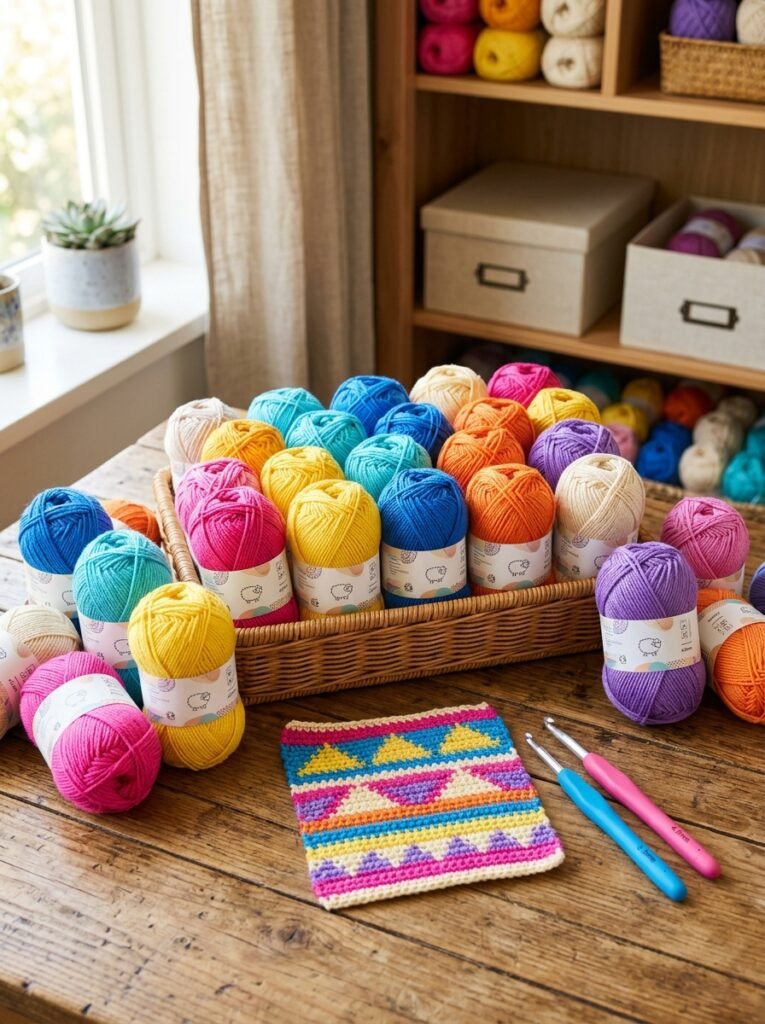
Yarn choice affects both the appearance and structure of your project. Smooth yarn makes color boundaries easier to see and helps grid designs look crisp. Check the yarn label for weight, fiber content, yardage, care instructions, and recommended hook size. The Craft Yarn Council uses a standard yarn weight system from 0 through 7, helping crocheters compare yarn thickness across products. For your first project, choose two or three colors with strong contrast. You can experiment with more colors once you feel comfortable managing several strands.
Tips for a Neater Finished Piece
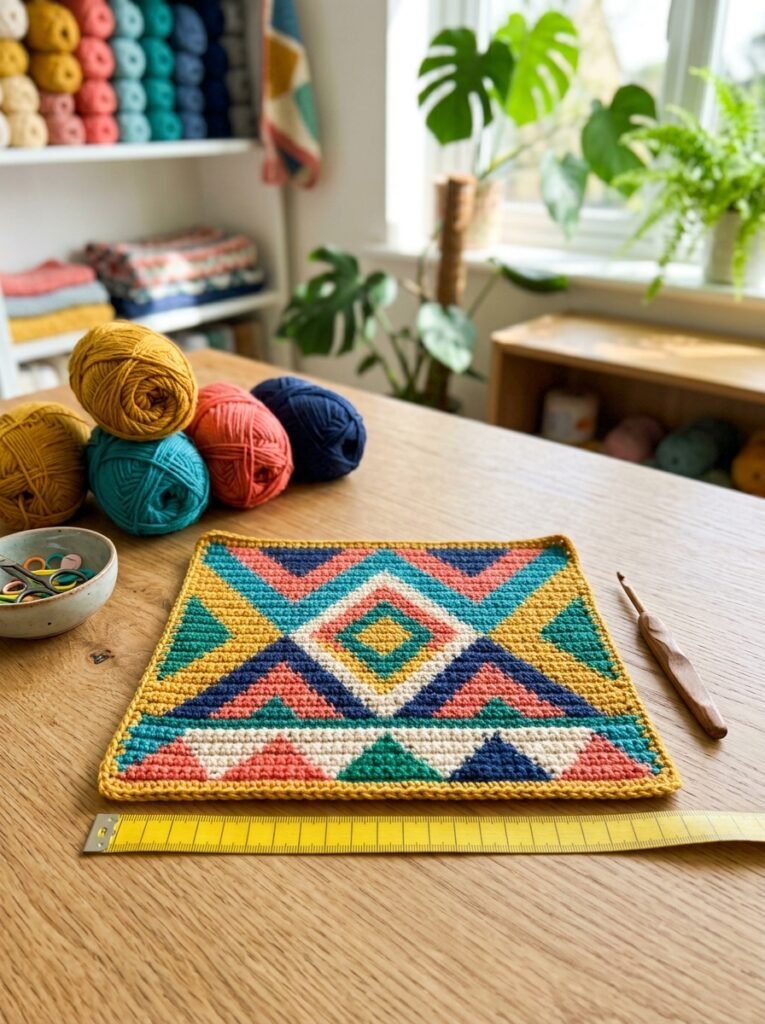
Count often. A single missed stitch can shift your entire picture. Keep your tension steady and avoid pulling carried yarn too tightly. If your design starts puckering, stop and check the tension before continuing. Weave in loose ends carefully when the project is finished. The Crochet Guild of America lists even stitches, consistent gauge, correct stitch counts, suitable hook choice, and secure finishing among the skills expected from advanced crocheters. Most importantly, make a small test piece first. It costs little time and can save you from restarting a large project.
Final Thoughts on Crochet Tapestry
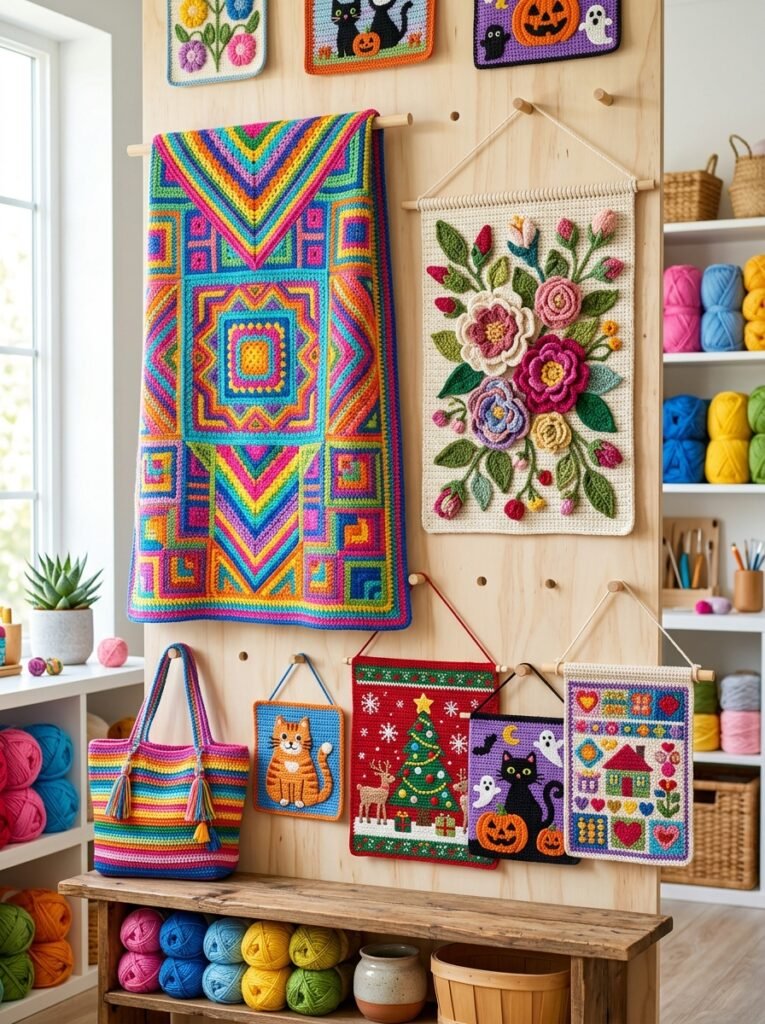
Crochet tapestry gives ordinary stitches a new purpose. A simple row can become a flower. A few color changes can create a cat, geometric pattern, holiday scene, or personalized design. Start small. Learn your grid. Practice color changes. Then let your ideas grow. The best projects do not always come from complicated patterns. Sometimes a simple shape and two bright colors create the most eye-catching result. Once you understand the basics, you can design your own charts and make pieces that feel completely personal. With patience and a little imagination, crochet tapestry can become one of the most creative techniques in your crochet collection.