



This post may contain affiliate links. Please read my disclosure policy.
In This Article Show
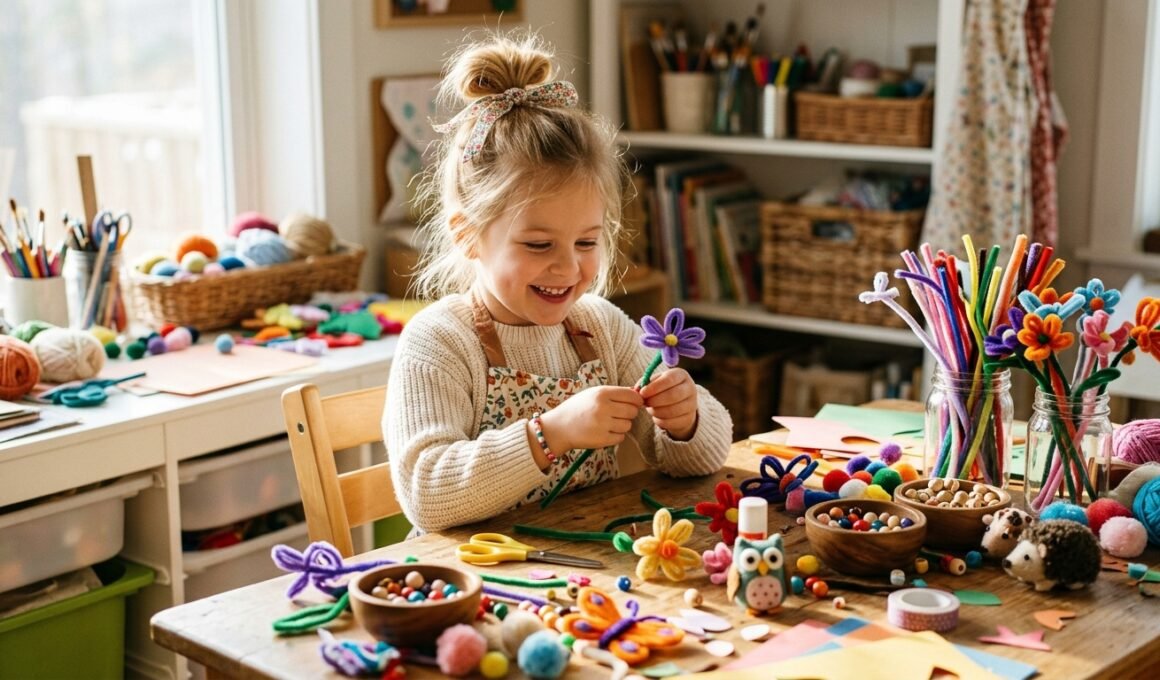
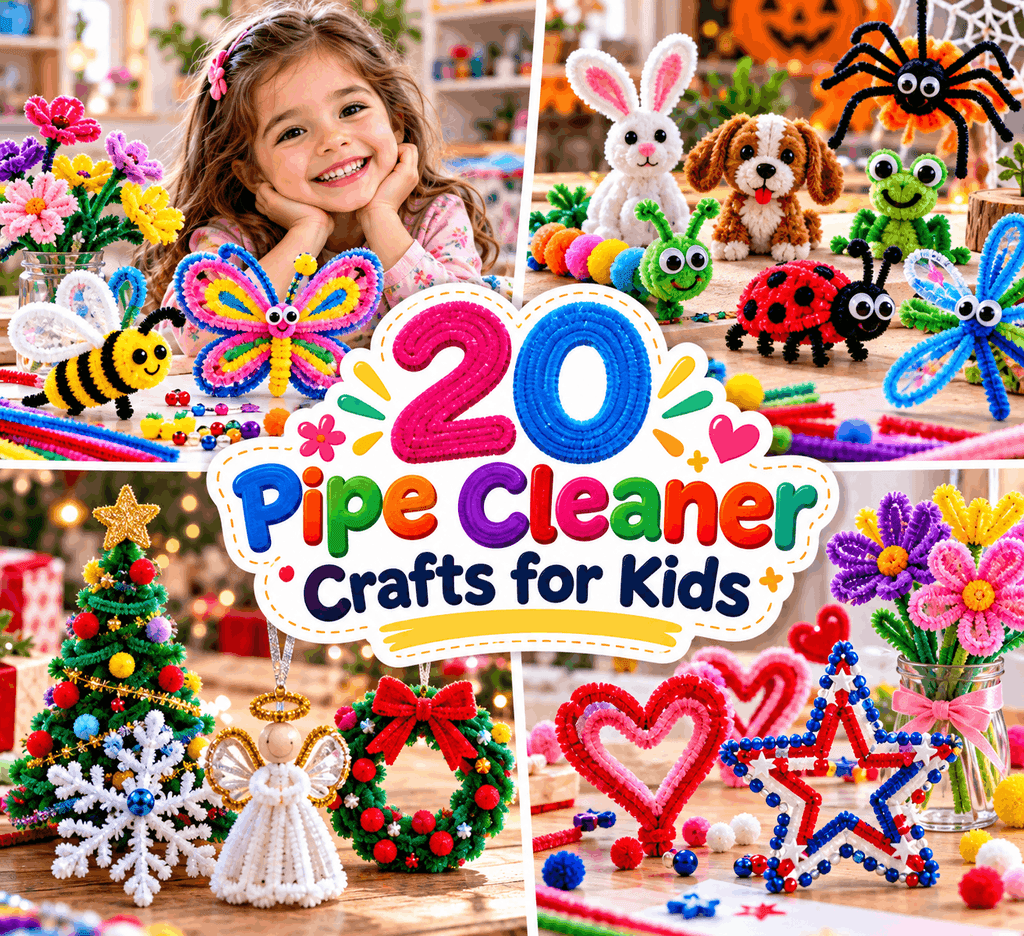
A small bundle of colorful pipe cleaners can turn a quiet afternoon into a creative adventure. A child bends one into a butterfly, twists another into a flower, and suddenly the craft table feels like a tiny garden. That is what makes pipe cleaner crafts for kids so useful: the supplies are simple, but the possibilities feel endless. Pipe cleaners work well with beads, pom poms, paper, glue, cardboard, and other basic craft materials. Children can bend, twist, connect, reshape, and try again. The American Academy of Pediatrics lists pipe cleaners, glue, yarn, paper, and other open-ended materials among supplies that can support creative play for preschoolers.
1. Easy Pipe Cleaner Butterfly
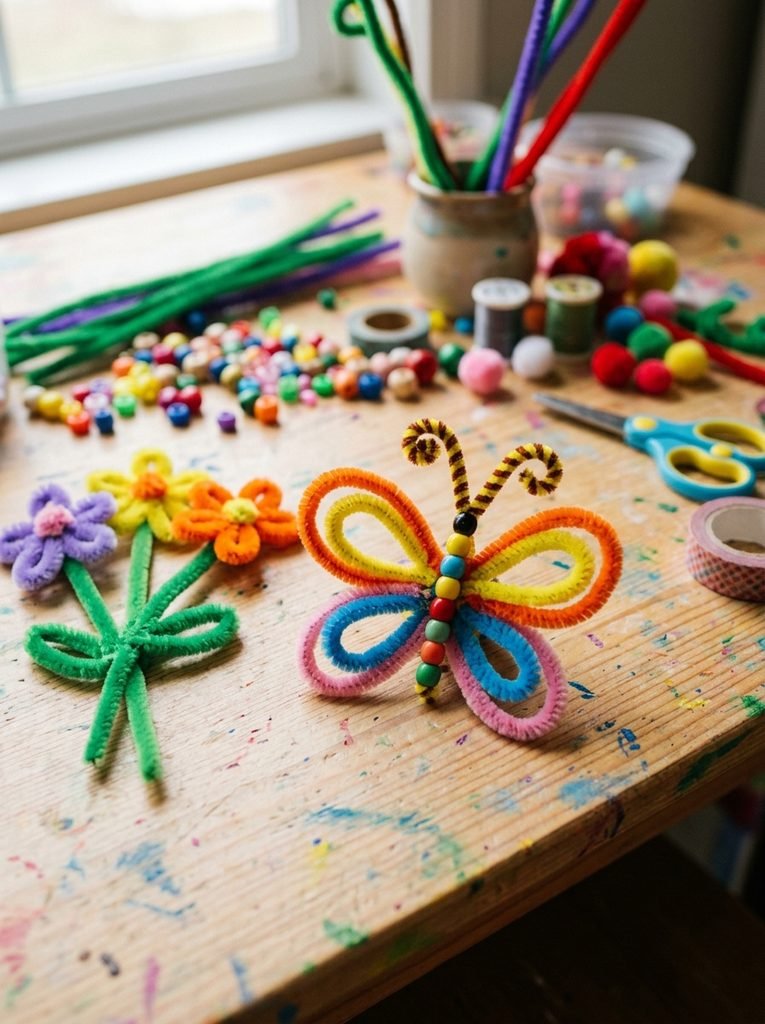
Start with one colorful pipe cleaner and fold it into two matching wings. Twist the center tightly enough to hold the shape, then curl the remaining ends upward to make antennae. Add a small bead or pom pom in the middle for the body. Children can experiment with different wing sizes and colors. Make several butterflies and place them around handmade flowers to create a tiny spring garden.
2. Simple Pipe Cleaner Flowers
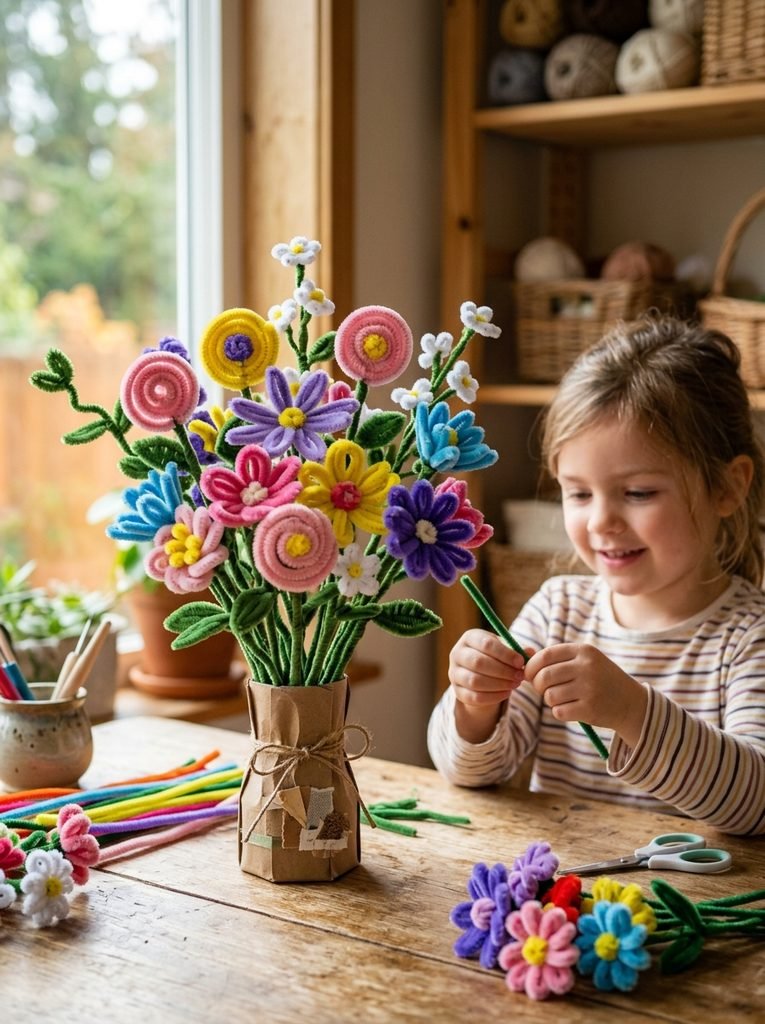
Flowers are one of the easiest shapes to make with flexible pipe cleaners. Bend one piece into several rounded petals and twist the center. Use a green pipe cleaner for the stem and leaves. Try pink, yellow, purple, blue, and white flowers. Children can make a full bouquet and place it inside a small paper or recycled cup. This step by step flowers project also introduces colors, shapes, and simple patterns.
3. Step by Step Easy Animals
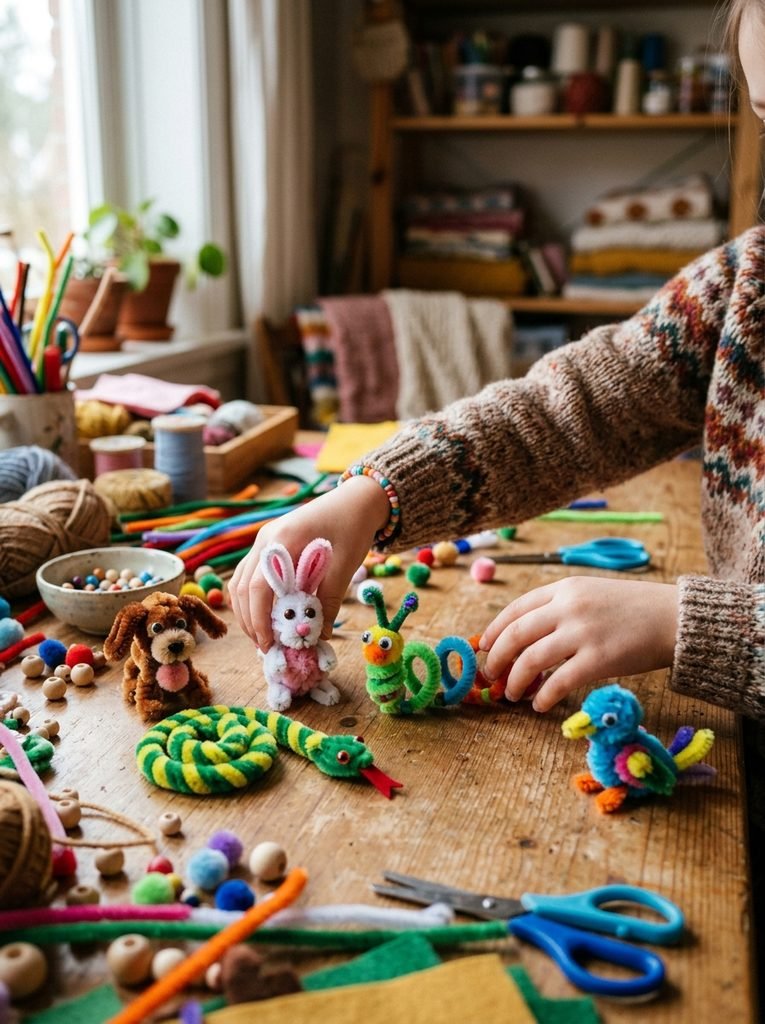
Pipe cleaners can become tiny animals with a few simple bends. Start with the body, then add ears, legs, tails, wings, or horns with smaller pieces. A bead or pom pom can become the face. Try a rabbit, snake, caterpillar, puppy, or bird first. Older children can invent their own animals and give them funny names. NAEYC explains that making activities help children explore how materials work while they test ideas and solve small problems.
4. Pipe Cleaner Christmas Tree
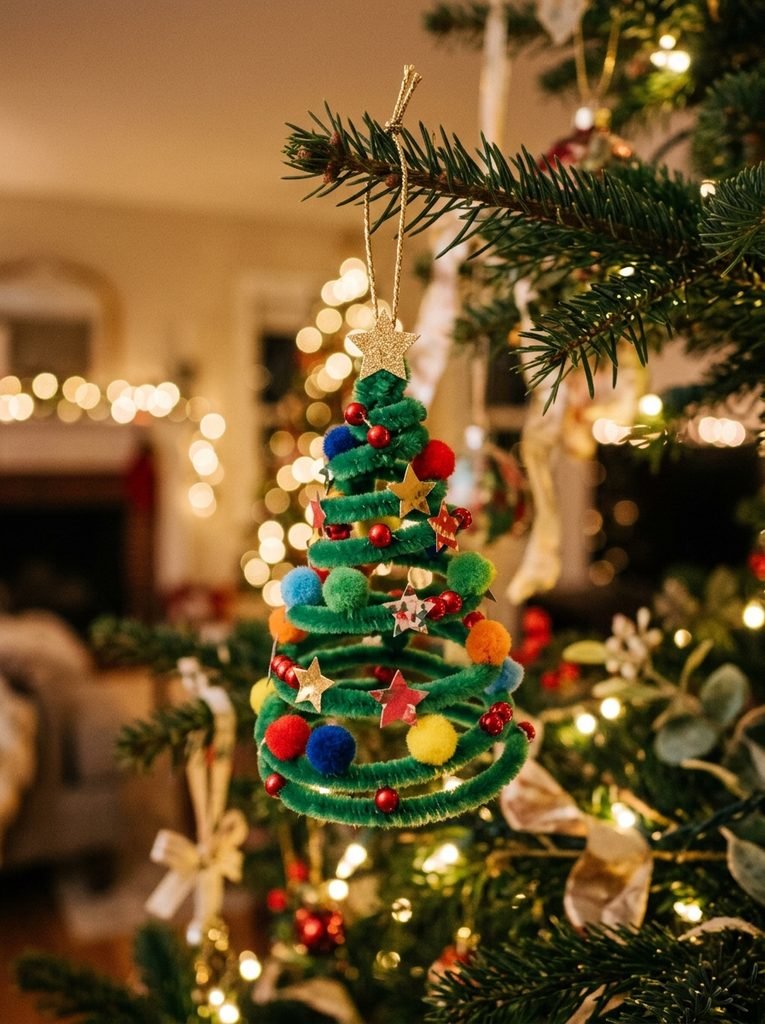
Create a tiny Christmas tree with a green pipe cleaner. Start wide at the bottom and make each layer slightly smaller as you move upward. Add red beads, colorful pom poms, or tiny paper stars as decorations. Add a small loop at the top and turn the project into a Christmas ornament. For younger children, adults should supervise closely around small decorative pieces.
5. Cute Pipe Cleaner Caterpillar
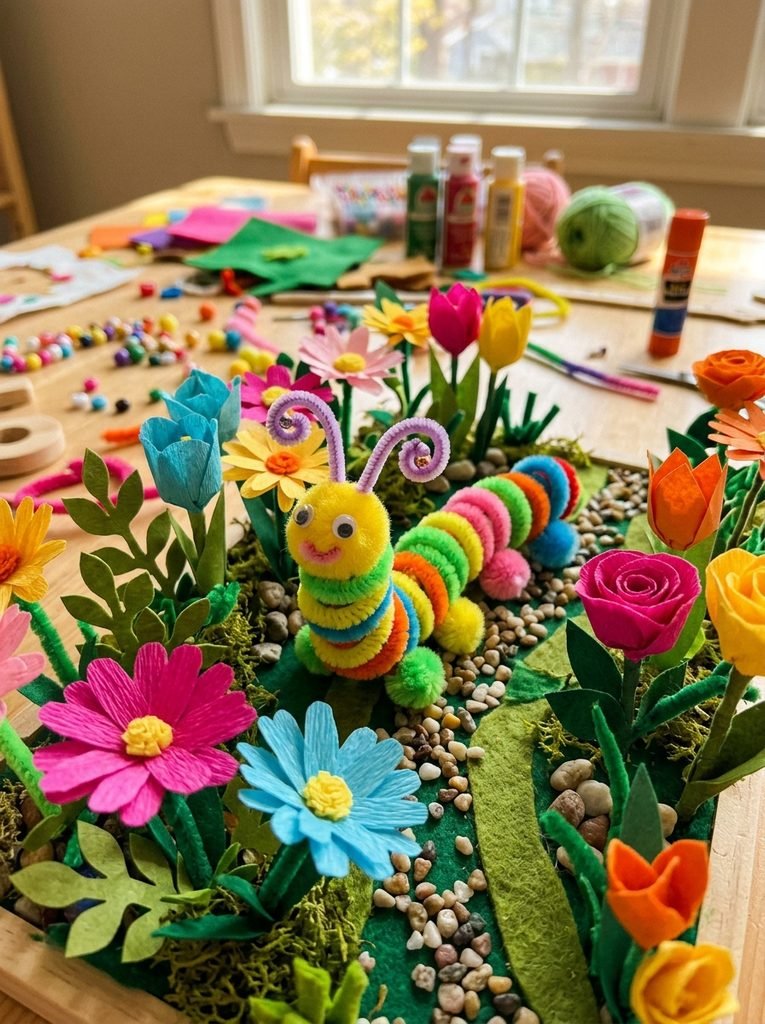
Take one bright pipe cleaner and bend it into several soft curves. Add colorful pom poms or beads along the body and curl two small antennae at the front. Place the caterpillar beside paper flowers or a cardboard garden. Children can create several caterpillars in different colors and turn them into characters for a small story.
6. Pipe Cleaner Rainbow
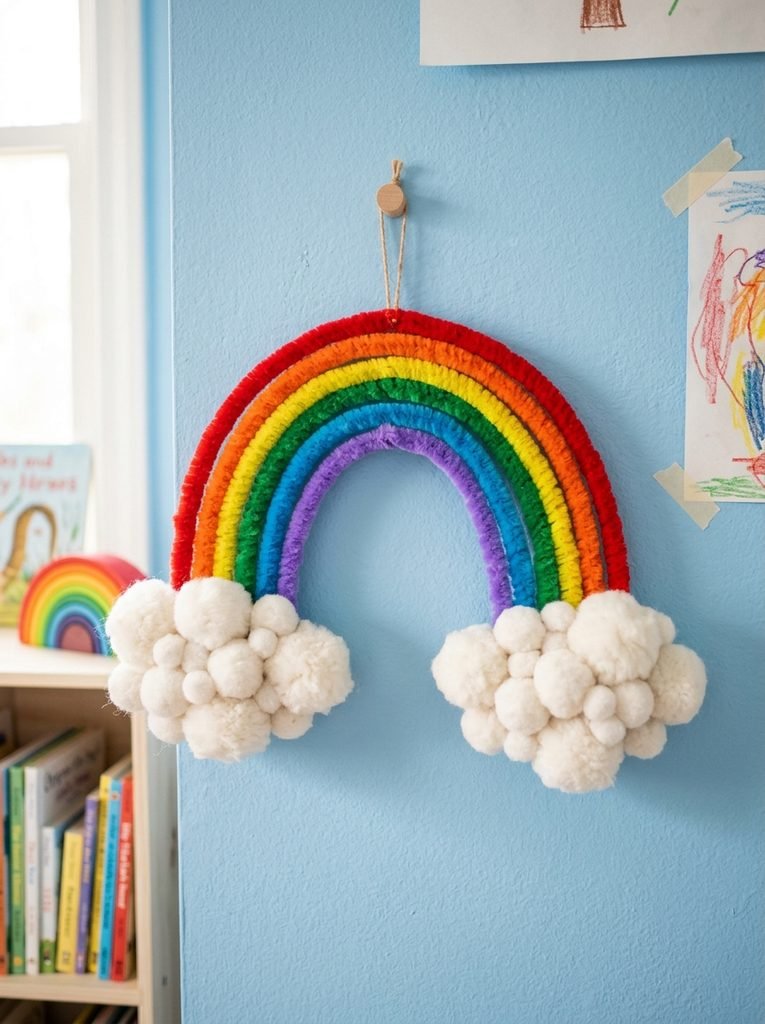
Make a rainbow by bending separate pipe cleaners into curved lines. Arrange red, orange, yellow, green, blue, and purple pieces from largest to smallest. Add white pom poms at both ends for clouds. This simple project works well for color learning and makes bright room decor when attached to cardboard.
7. Valentines Heart Craft
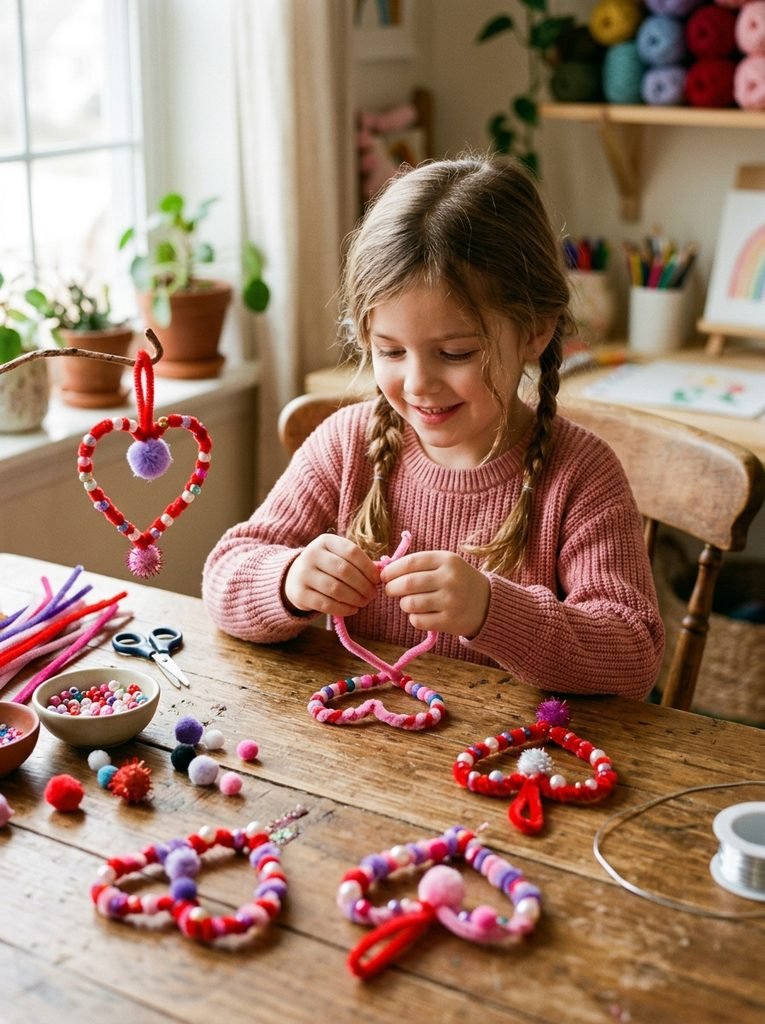
For Valentines, bend a red, pink, or purple pipe cleaner into a heart. Twist the ends together and add a tiny bead or pom pom to the center. Children can make several hearts and attach them to cards, gift bags, or paper garlands. The project takes only a few steps but gives a handmade gift a personal touch.
8. Halloween Spider
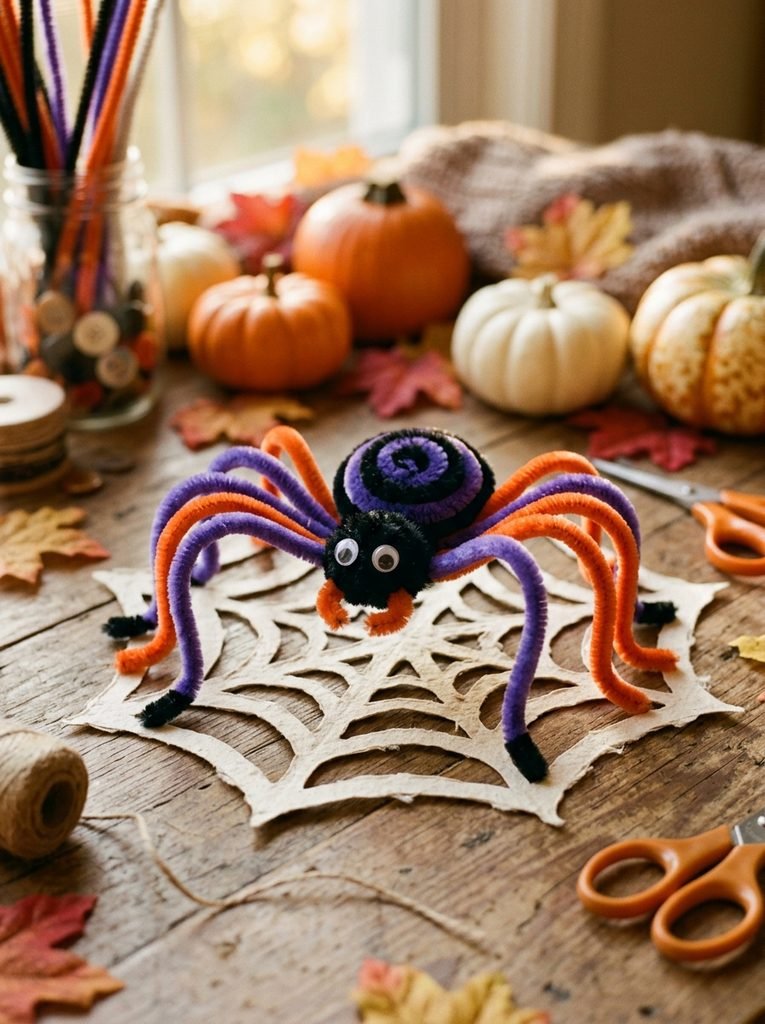
A spider makes a fun Halloween project because the basic shape is easy to recognize. Twist the center of a pipe cleaner into a small body and bend the remaining sections outward to create legs. Use black for a traditional spider or bright purple and orange for a playful version. Add small craft eyes if suitable for the child’s age and supervision level.
9. Pipe Cleaner Pumpkin
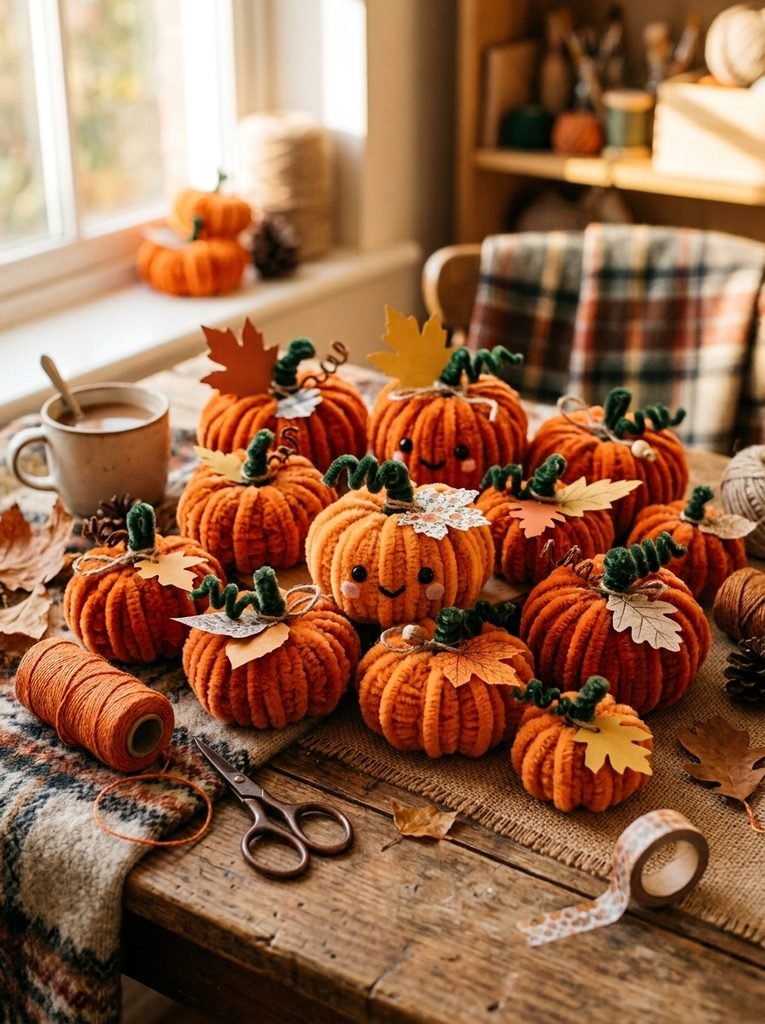
Use orange pipe cleaners to create a small pumpkin. Bend several loops and bring them together until they form a round shape. Add a green pipe cleaner at the top for the stem. Make pumpkins in different sizes and place them with paper leaves and friendly Halloween decorations. This is an easy seasonal craft for a classroom or home activity.
10. Pipe Cleaner Dragonfly
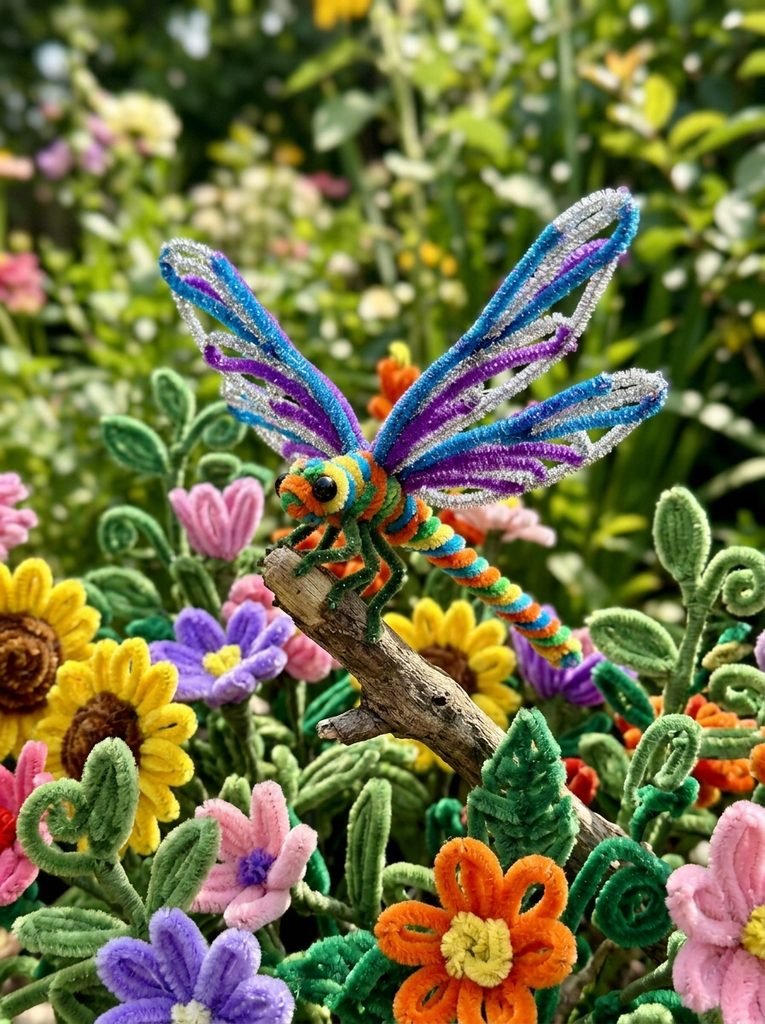
Create a small body from one pipe cleaner and shape two pairs of wings from colorful pieces. Blue, purple, green, and silver combinations look especially pretty. Place the finished dragonfly near handmade flowers. Children can make several dragonflies and turn them into a spring garden display.
11. Christmas Snowflake
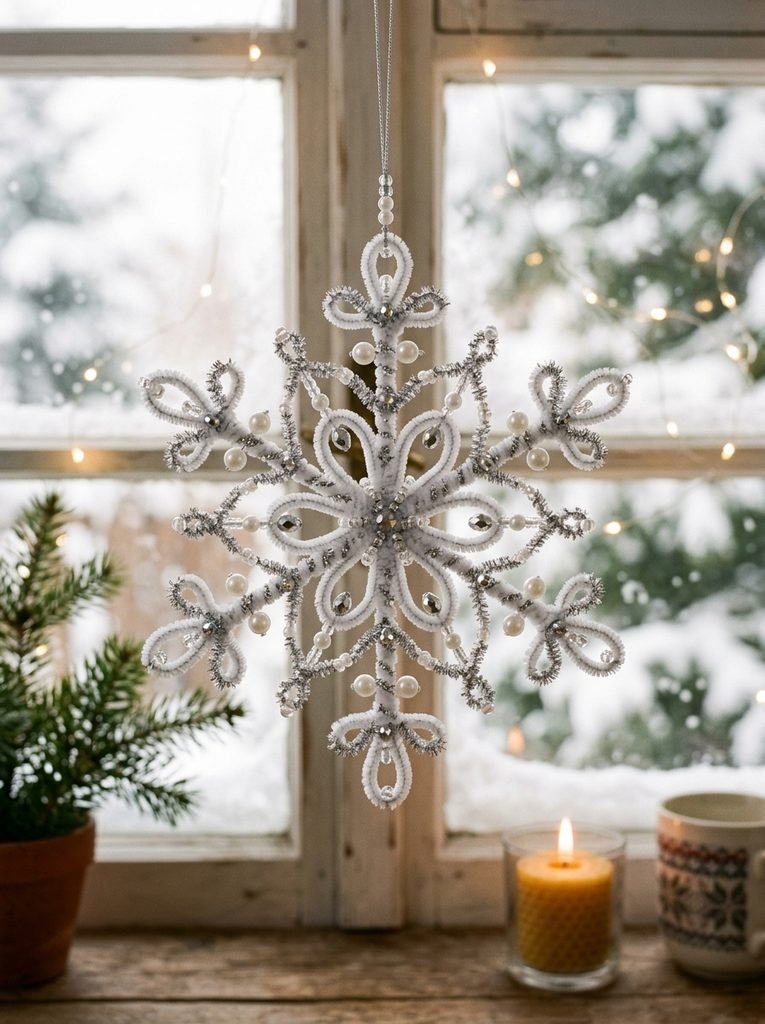
Cross several white or silver pipe cleaners at the center to create a snowflake. Bend each section into similar shapes and add small beads for extra detail. The repeated pattern gives children a simple introduction to symmetry. Hang finished snowflakes near a window, on a Christmas tree, or from a bedroom ceiling.
12. Pipe Cleaner Flower Ring
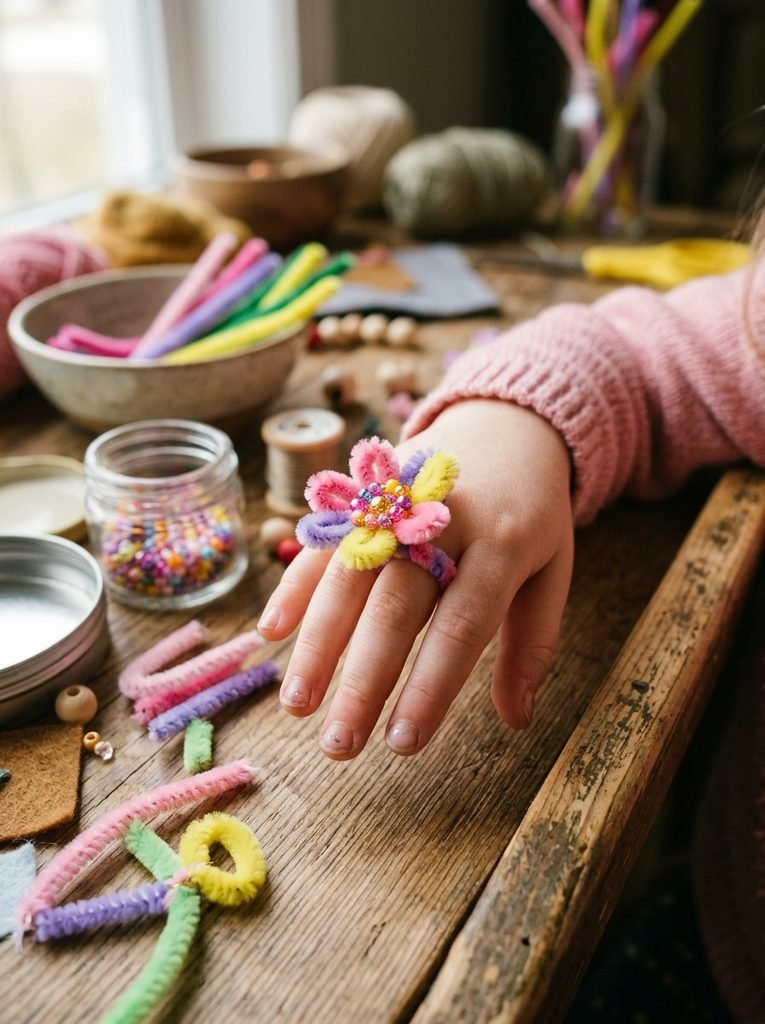
Create a tiny flower from one pipe cleaner and attach it to a simple ring shape. Choose bright colors such as pink, yellow, purple, or blue. A small bead can become the flower center. Children can make matching rings for siblings or friends and turn the activity into a simple DIY gift project.
13. Colorful Peacock
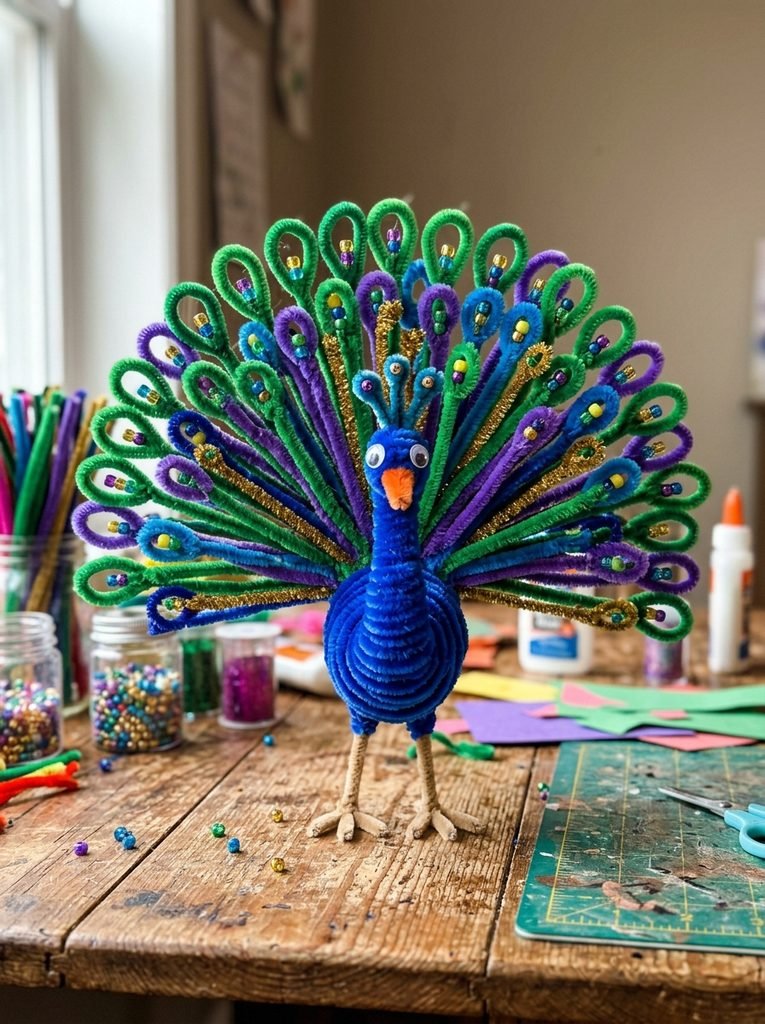
Make a small peacock body with blue or green pipe cleaners. Then create a wide tail using several colorful pieces arranged like feathers. Add tiny beads to the feather tips for extra detail. This project gives older children more room to explore patterns, colors, and animal shapes.
14. 4th of July Stars
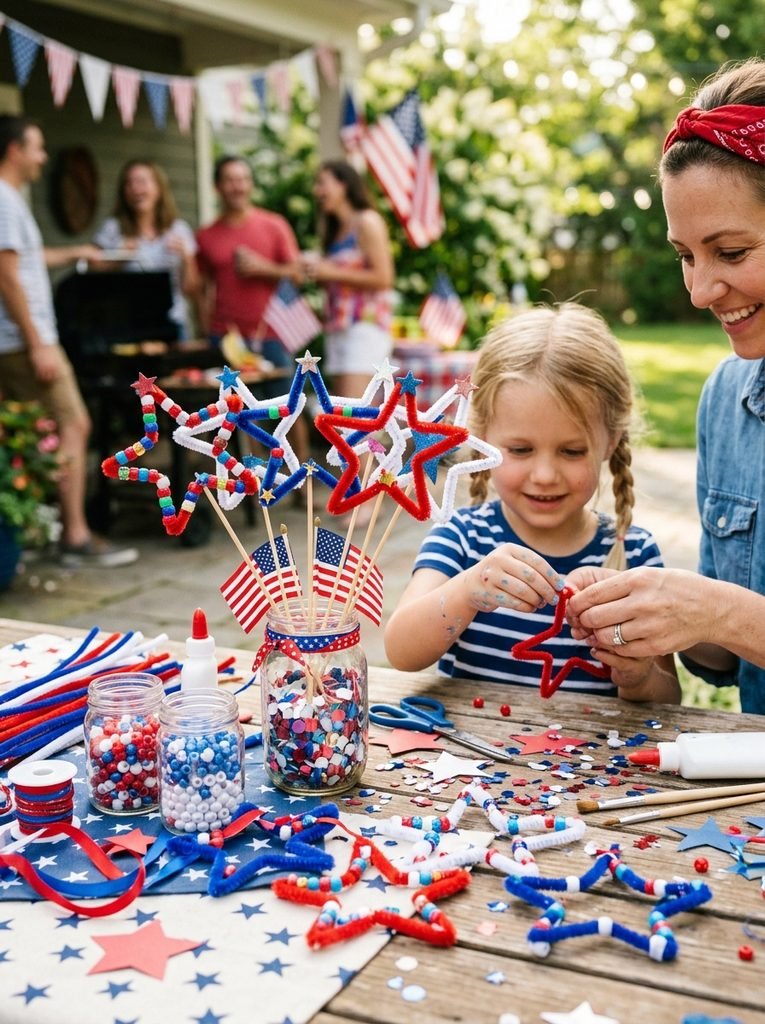
For a 4th of July activity, shape red, white, and blue pipe cleaners into stars. Twist several stars together to create a small hanging decoration. Children can also attach the stars to cards or paper flags. The project combines simple shapes, color recognition, and seasonal creativity.
15. Pipe Cleaner Bunny
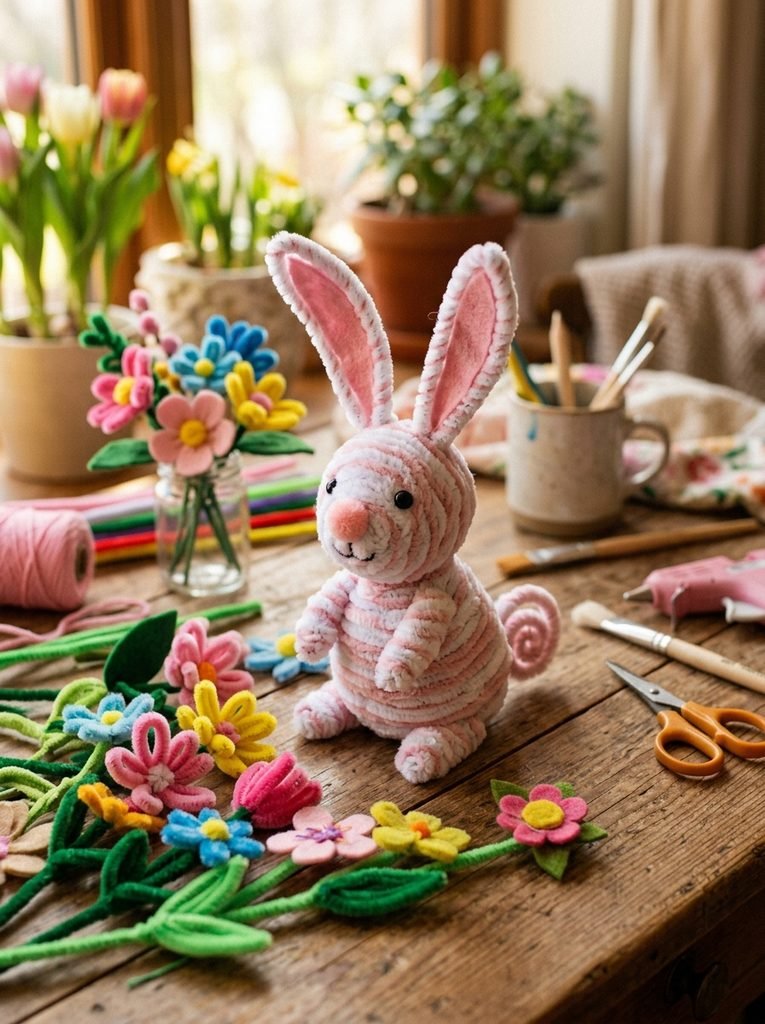
Create a bunny using white, gray, brown, or pink pipe cleaners. Shape the body first, then add two long ears and a curled tail. A tiny pom pom can become the nose. If the child’s age allows and an adult supervises, small craft eyes can add more character. Place the bunny beside flowers for a cute spring scene.
16. Christmas Wreath
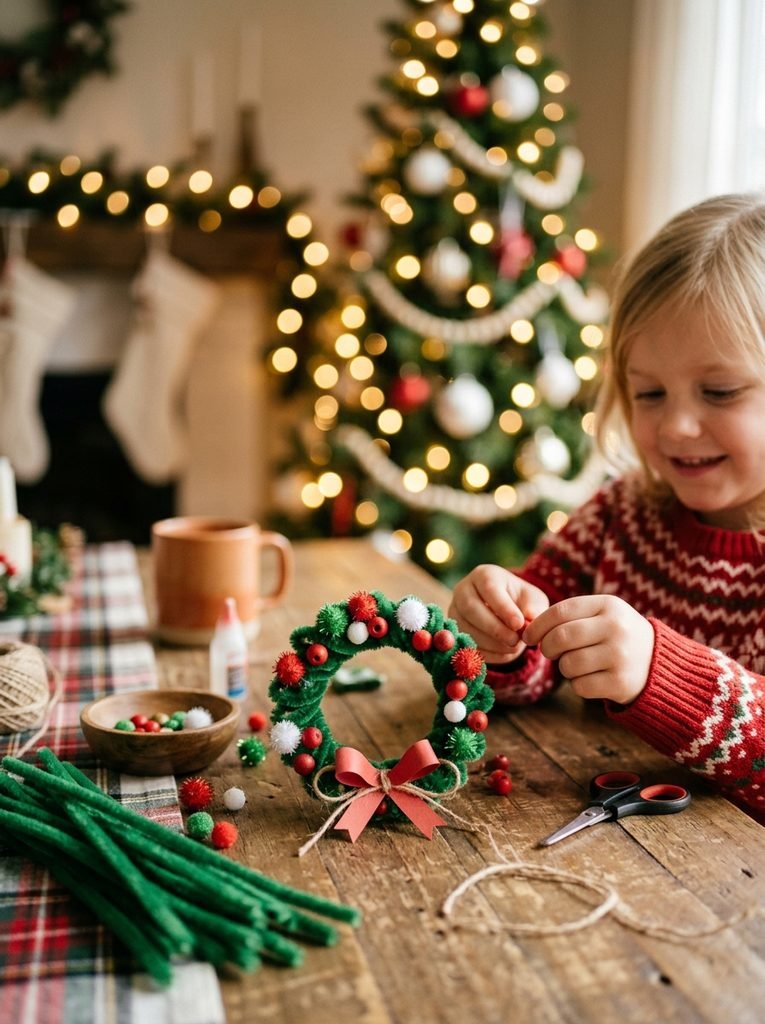
Connect green pipe cleaners into a circle to create a miniature Christmas wreath. Add red beads, tiny pom poms, and a small paper bow. Children can hang their wreath on a bedroom door, classroom board, or miniature dollhouse. It is a simple project that creates attractive seasonal decor without many supplies.
17. Mini Bug Garden
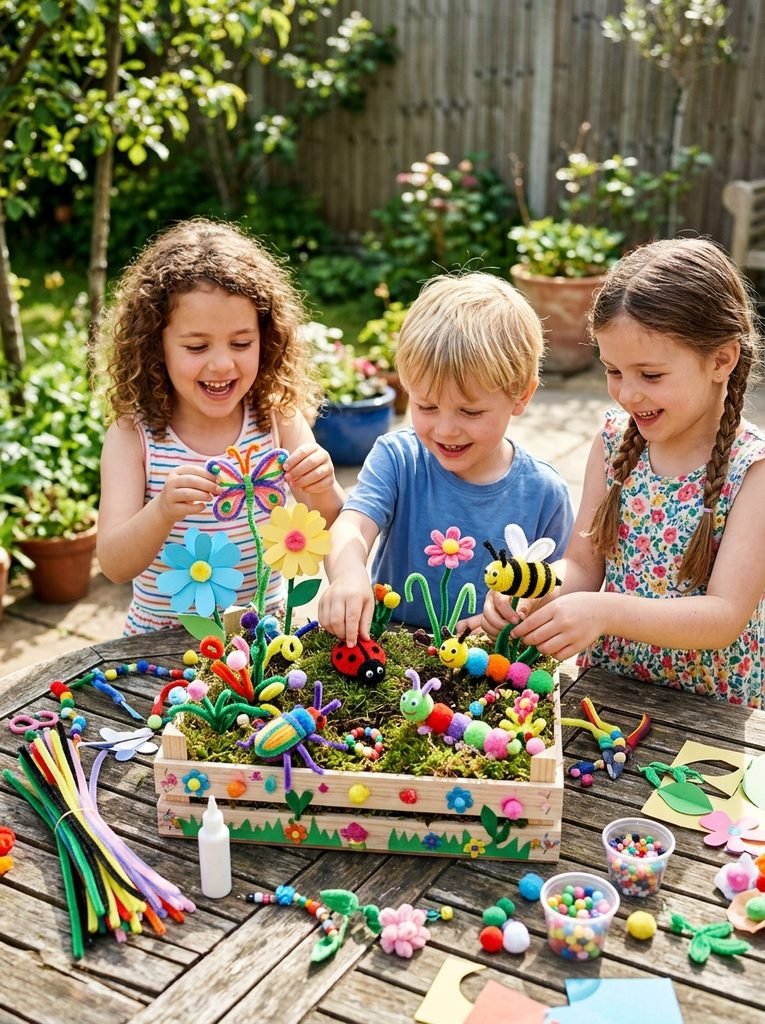
Create a collection of tiny bugs using different colors and shapes. Make a ladybug, bee, caterpillar, butterfly, and beetle, then place them together on a paper or cardboard garden. This activity works especially well as a group project. Each child can create one animal and then explain its colors, shape, and favorite place to live.
18. Animal Puppet
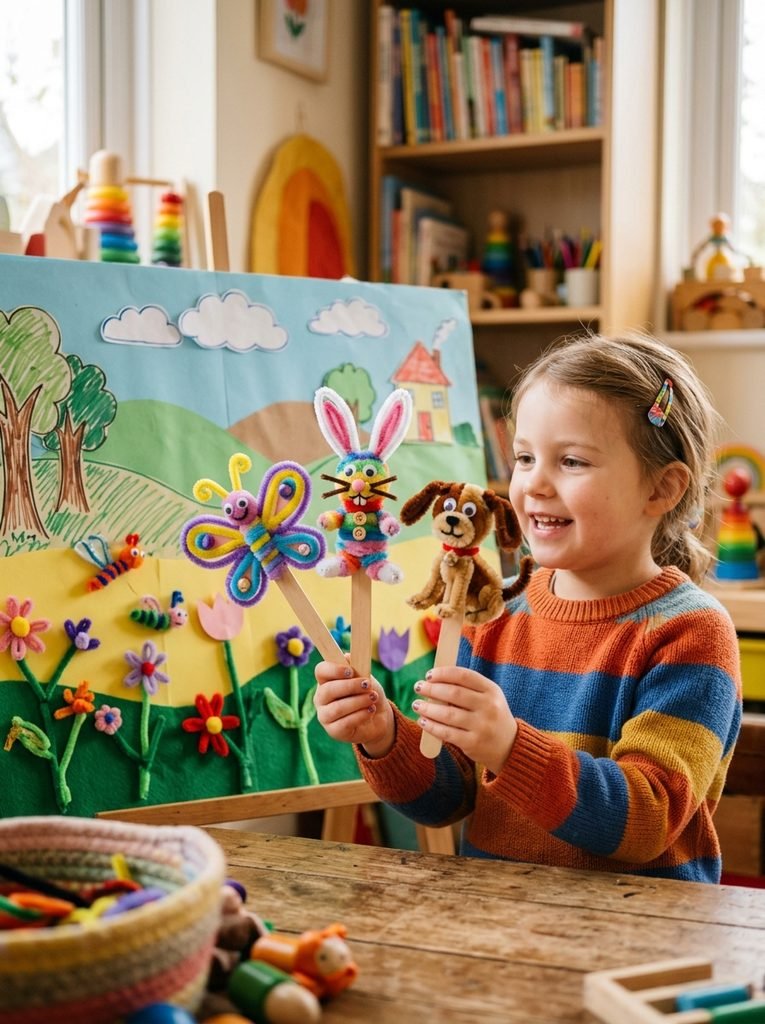
Turn a pipe cleaner animal into a simple puppet. Build the animal shape and attach it to a craft stick or another suitable handle. Now the craft becomes a storytelling activity. A child can make a rabbit searching for flowers, a butterfly exploring a garden, or a little animal getting ready for Christmas. NAEYC encourages adults to ask children what they plan to make and how they will make it, helping turn art into conversation and problem-solving.
19. Easy Pipe Cleaner Bee
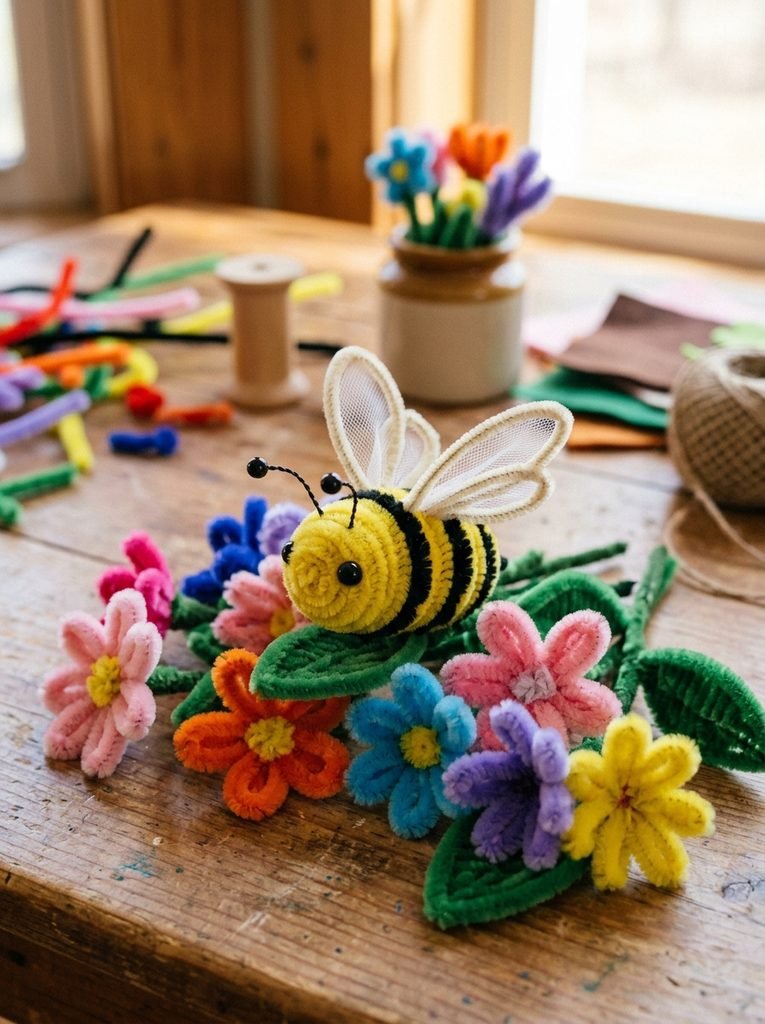
Make a tiny bee with a yellow and black pipe cleaner. Twist alternating sections to create stripes, then add two small wings from a white or light-colored piece. Place the bee near your handmade flowers and butterfly collection. Beads can create extra details, while a small pom pom can give the body a softer look. Children can also make several bees for a pretend garden.
20. Christmas Angel Ornament
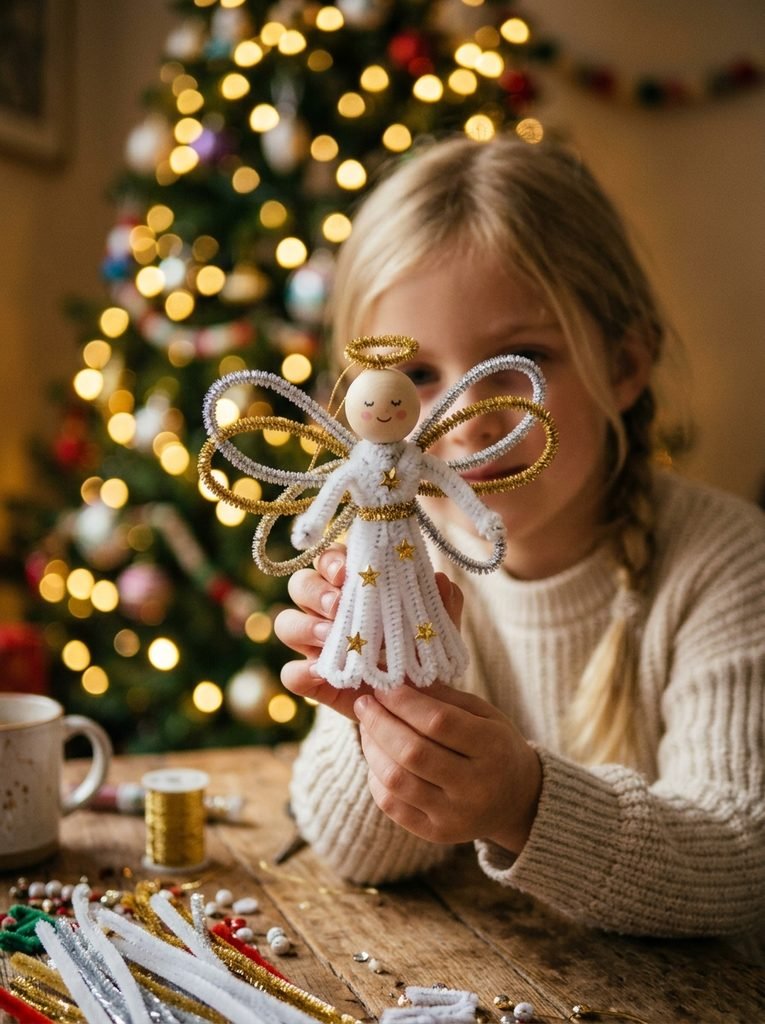
For the final project, make a simple Christmas angel using white, gold, or silver pipe cleaners. Shape the body first, then create wings by bending another piece into two loops. Add a small bead for the head and a simple loop at the top for hanging. This step by step easy project can become a sweet handmade Christmas decoration or a small gift for grandparents and family members.
Final Thoughts
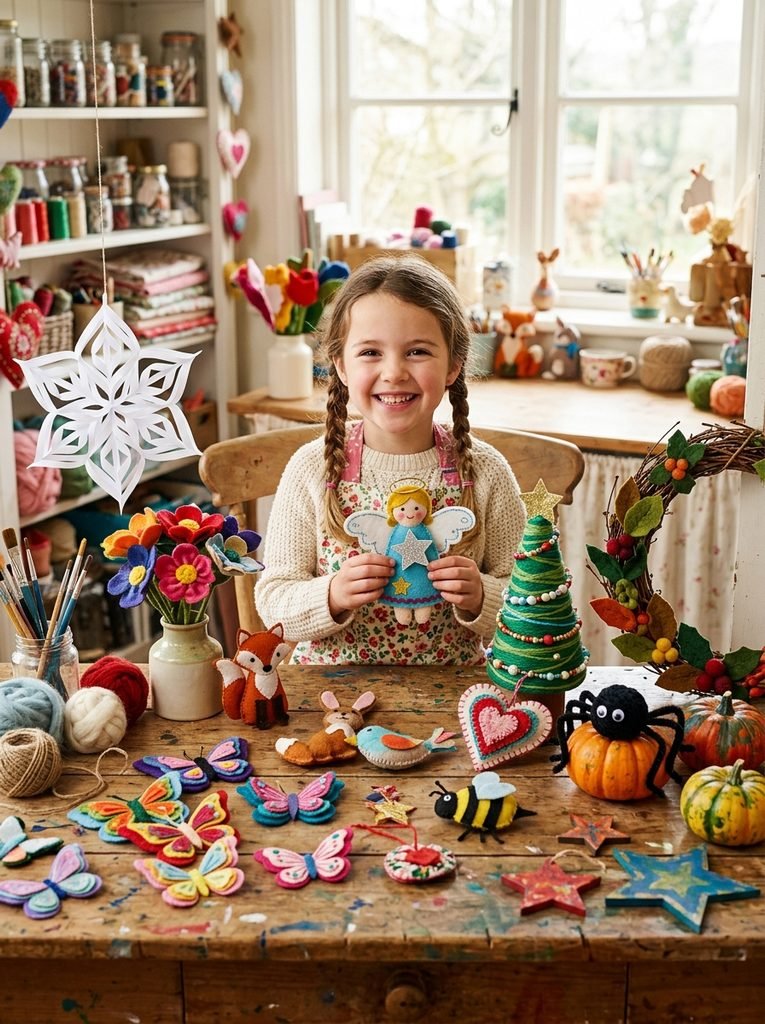
The best pipe cleaner crafts for kids do not need expensive supplies or complicated instructions. A few colorful pieces can become a butterfly, flower, animal, Christmas ornament, Halloween decoration, Valentines heart, or tiny puppet. More importantly, the process gives children a chance to make choices, experiment, solve small problems, and tell their own stories. NAEYC’s guidance on tinkering and making supports this kind of hands-on, open-ended exploration as children build curiosity, creativity, and problem-solving skills. Start with one simple idea. Let your child change it. Then see where their imagination takes the project. Very often, that unexpected little twist becomes the most memorable part of the craft.