
This post may contain affiliate links. Please read my disclosure policy.
In This Article Show
Have you ever looked at colorful pipe cleaners and wondered what adorable animals you could make with them? These soft, flexible craft materials can be transformed into tiny pets, fluffy creatures, fantasy dragons, playful bunnies, and many other handmade designs. With a few simple supplies and some creativity, you can make charming decorations, personalized keychains, little gifts, and fun projects for children. The best part is that most designs require only basic bending, twisting, and shaping skills. Pipe cleaner animals are especially enjoyable because you can experiment with different colors, sizes, and textures. Regular chenille stems are perfect for small animals, while jumbo pipe cleaners can help you create larger, extra-fluffy figures. You can also combine pipe cleaners with lightweight beads, felt, craft paper, or small pieces of tin foil to create interesting details. A little craft glue can help secure selected decorations when needed. In this guide, you will discover 19 creative animal craft ideas, including easy step-by-step dog, cat, bunny, and dragon designs. Each project includes practical instructions, useful tips, and a unique image prompt to help you visualize the finished creation. Whether you are looking for simple things to make at home, weekend activities for kids, or inspiration for your next DIY collection, these projects offer plenty of ways to get creative.
1. Easy Pipe Cleaner Dog
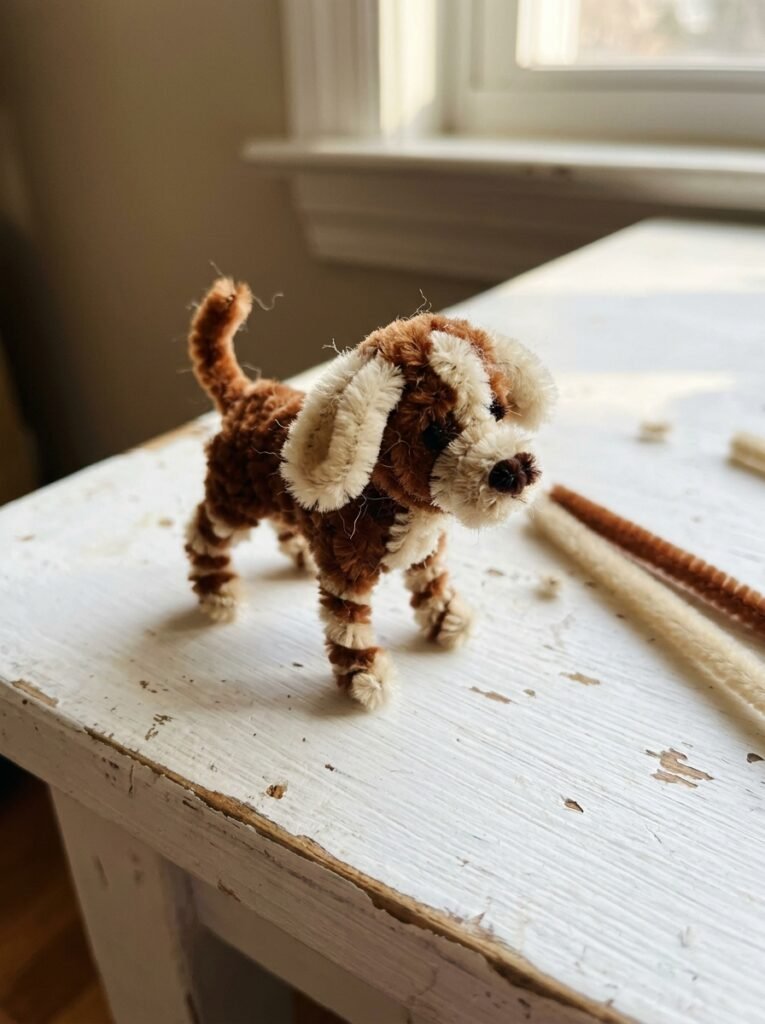
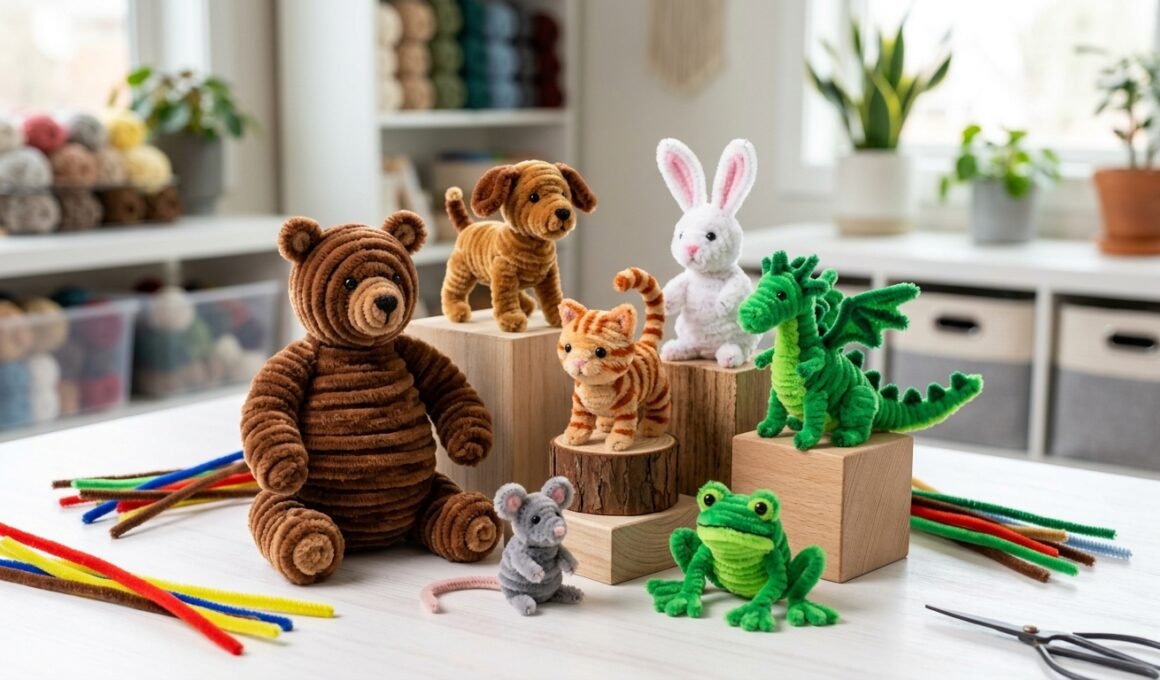
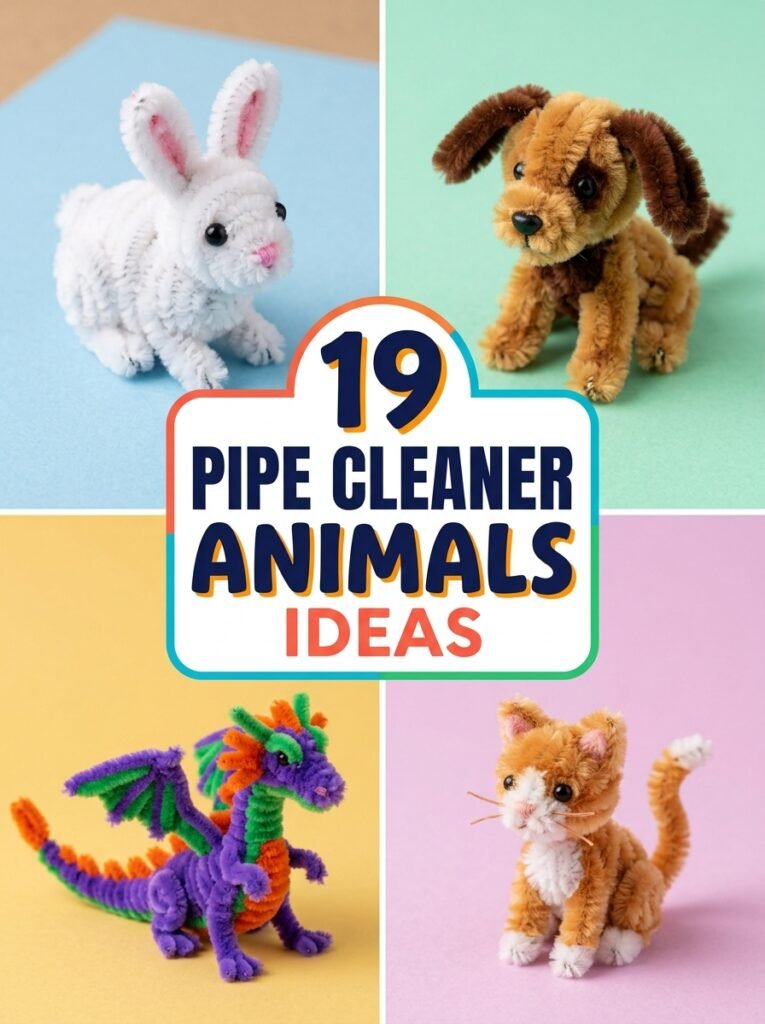
A tiny pipe cleaner dog is a wonderful first project because its basic shape can be created with just a few chenille stems. Choose brown, white, black, or golden-yellow stems to create your favorite dog-inspired look. Bend one stem into a rounded body and four short legs, then use another piece to shape the head, floppy ears, and tail. Twist the connecting sections firmly so the dog can stand without losing its shape. Add a small contrasting stem for the muzzle and use carefully secured details for the eyes. This simple design is ideal for beginners who want to follow a step by step dog craft tutorial. You can also personalize the colors to resemble a beloved pet.
2. Cute Pipe Cleaner Cat
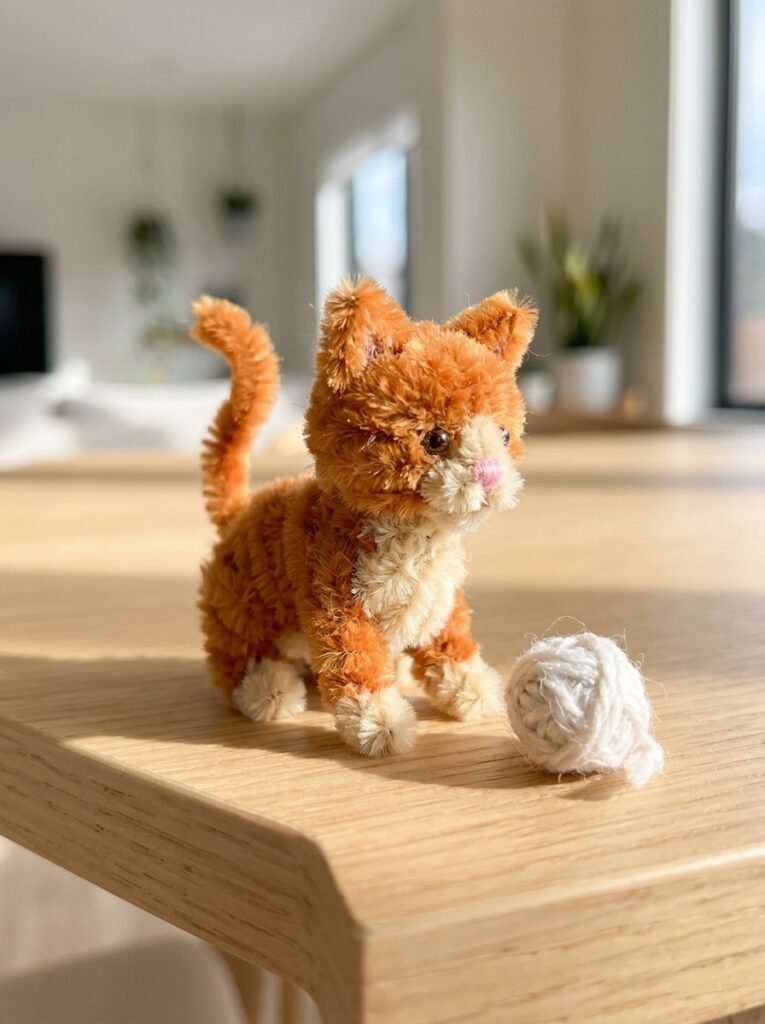
A pipe cleaner cat is perfect for anyone who enjoys making miniature pets. Start with a black, white, ginger, or gray chenille stem and form a small oval body. Create a separate rounded head with two pointed triangular ears, then twist the pieces together at the neck. Use four short sections to form the legs and a longer curved stem for the tail. You can bend the tail upward for a playful pose or curl it around the body for a sleeping cat. Small felt triangles or securely attached craft details can help create the face. This step by step cat project works well for desk decorations, handmade gifts, and pretend-play animal collections.
3. Fluffy Pipe Cleaner Bunny
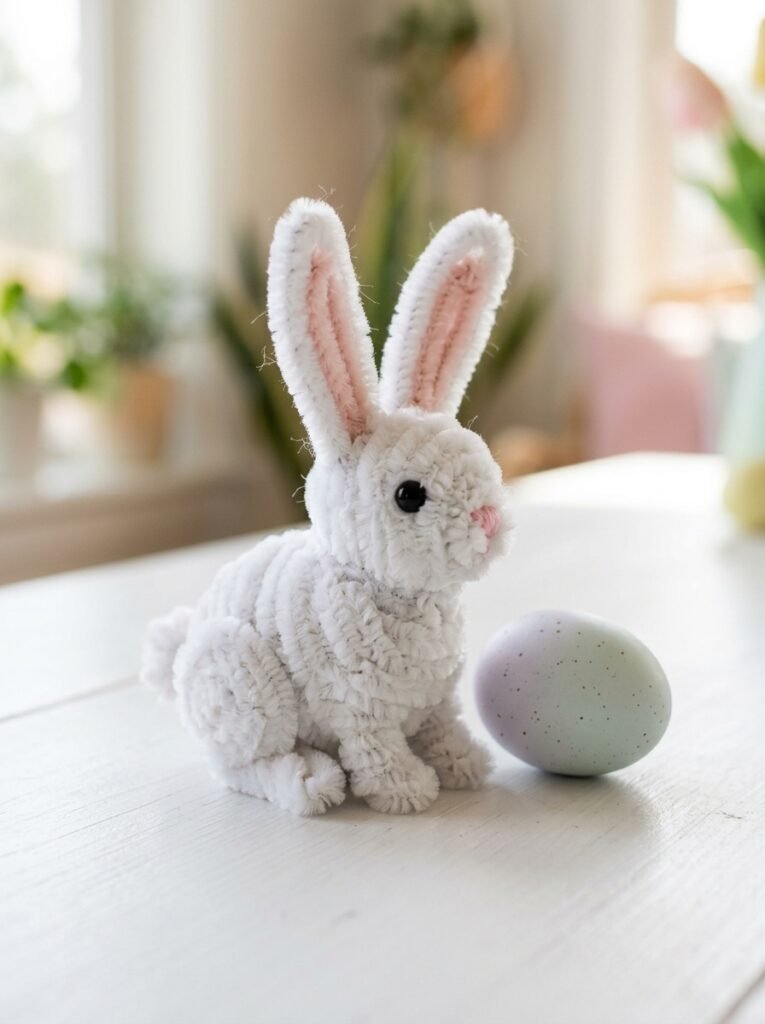
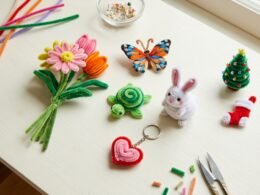
A fluffy bunny looks especially adorable when made with soft white, pale-pink, or light-gray pipe cleaners. Use a chenille stem to create a rounded body, then shape a smaller circle for the head. Form two long ears by bending separate stems into narrow loops and twisting their bases together. Add four short legs and a small rounded tail to complete the silhouette. For extra texture, layer two soft stems around the body without making the figure too heavy. A little pink material inside the ears can add contrast. This easy bunny is a lovely Easter decoration, spring craft, or small handmade gift. Keep loose embellishments away from very young children.
4. Colorful Pipe Cleaner Butterfly Animal Friend
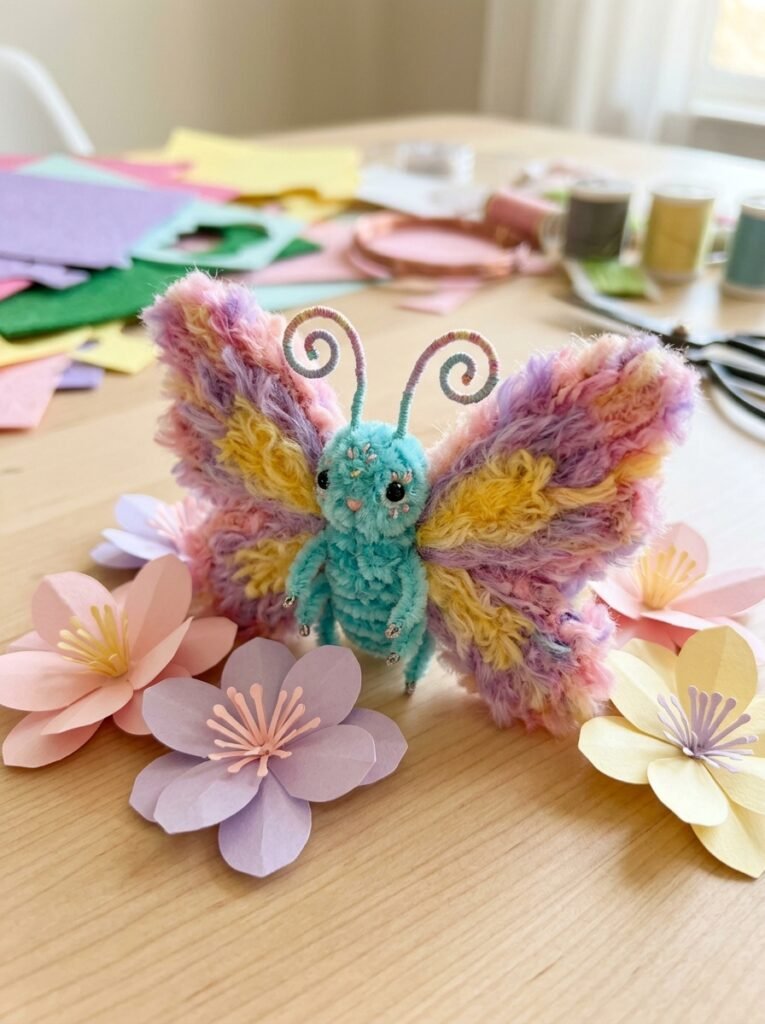
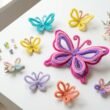
Create a playful butterfly-inspired creature with a tiny animal-like body and oversized colorful wings. Although butterflies are insects rather than animals in the everyday pet sense, they make a lovely addition to a mixed creature craft collection. Twist a short stem into a compact body, then shape two pairs of rounded wings using bright pink, purple, yellow, or turquoise chenille stems. Add two small antennae and adjust the loops until the wings look balanced. You can also create a tiny face using safe, age-appropriate craft materials. This colorful design is ideal for a nature-themed display or a collection of handmade creatures.
5. Tiny Pipe Cleaner Puppy Keychain
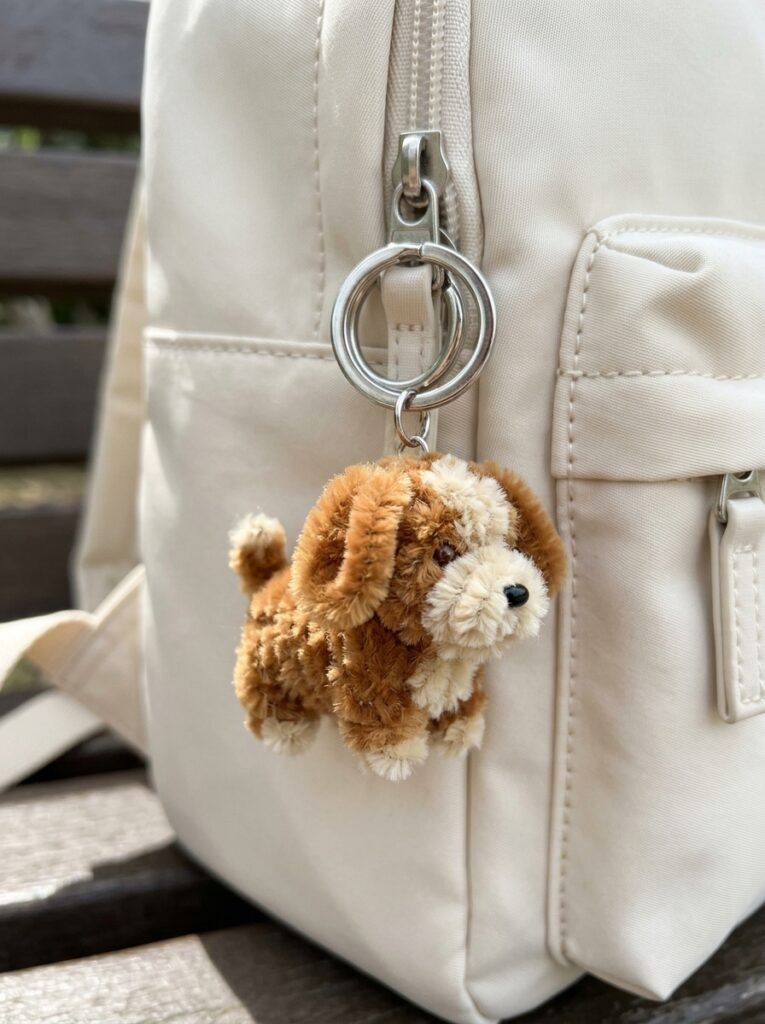
A miniature puppy keychain is a practical project that turns a cute animal craft into a personalized accessory. Create a compact dog with a rounded body, short legs, floppy ears, and a curved tail. Use tightly twisted chenille stems to keep the shape secure, then attach a small metal key ring or clasp through a strong loop. A tiny color contrast around the muzzle or ears can make the puppy more recognizable. Keep the finished figure lightweight so it does not pull on a bag or zipper. Test the connection gently before use. This pipe cleaner animals project makes a thoughtful handmade gift for dog lovers, friends, or classmates.
6. Easy Pipe Cleaner Snake
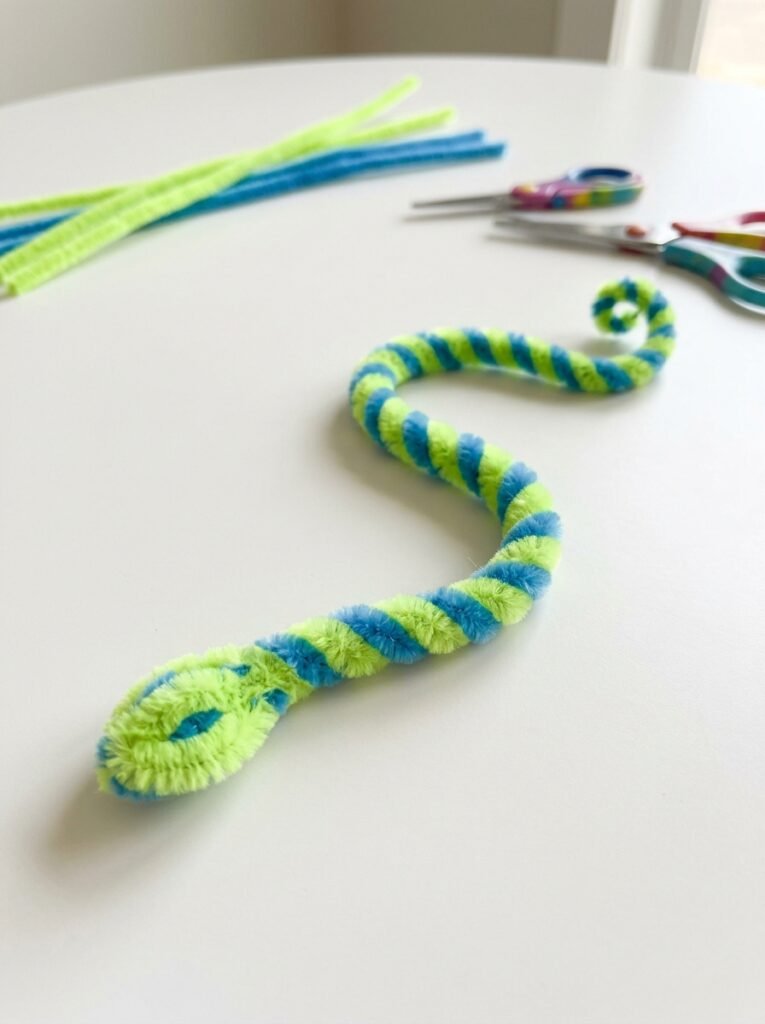
A pipe cleaner snake is one of the simplest animal crafts because its body can be shaped from a single long stem. Choose a bright green, blue, orange, or rainbow-colored pipe cleaner and bend it into a gentle S-shaped curve. Create a slightly wider head at one end and curl the tip of the tail at the other. A second stem can be twisted around the body to create stripes or contrasting patterns. You can make a tiny snake for a miniature animal collection or a longer version for a nature-themed display. This project is especially useful for beginners practicing controlled bending and simple shapes.
7. Magical Pipe Cleaner Dragon
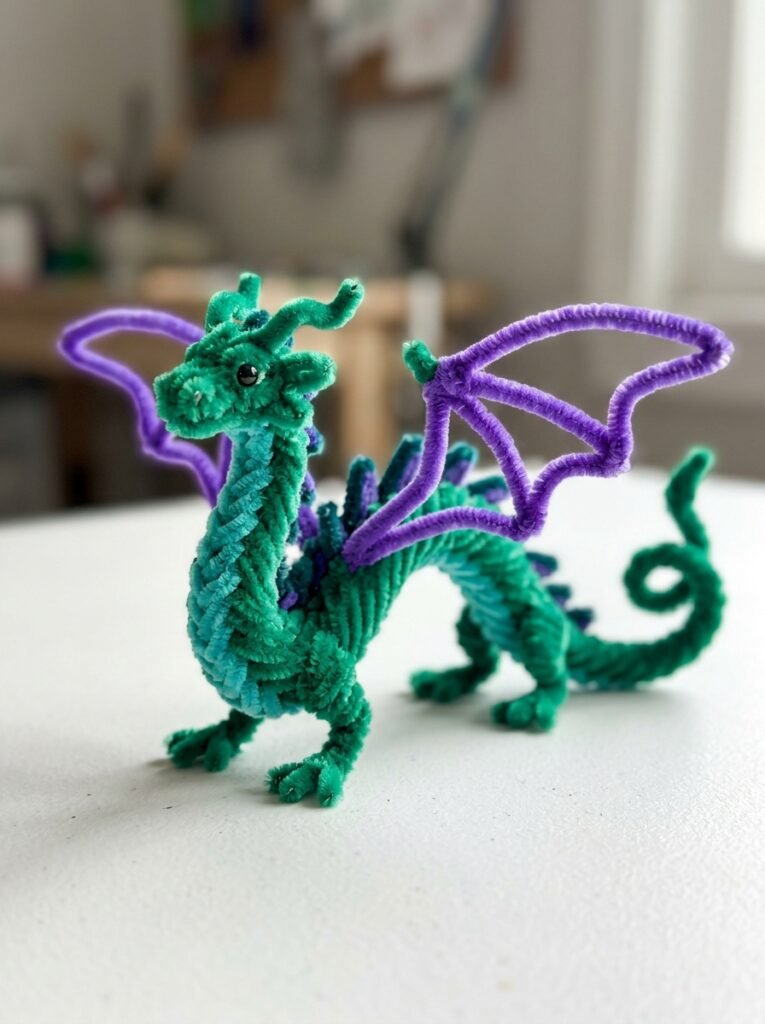
A fantasy dragon is a fun choice when you want a more imaginative craft. Use green, purple, or turquoise stems to create a long curved body, four legs, a pointed tail, and a raised head. Shape two wings from separate stems, using wide loops that resemble bat wings. A short contrasting stem can form small back spikes, while tiny paper details can help define the face. Twist the main joints securely so the dragon can hold a standing or flying pose. This step by step dragon craft is excellent for fantasy-themed decorations and storytelling activities. Keep the design friendly and colorful, or use darker jewel tones for a dramatic mythical creature.
8. Tiny Pipe Cleaner Mouse
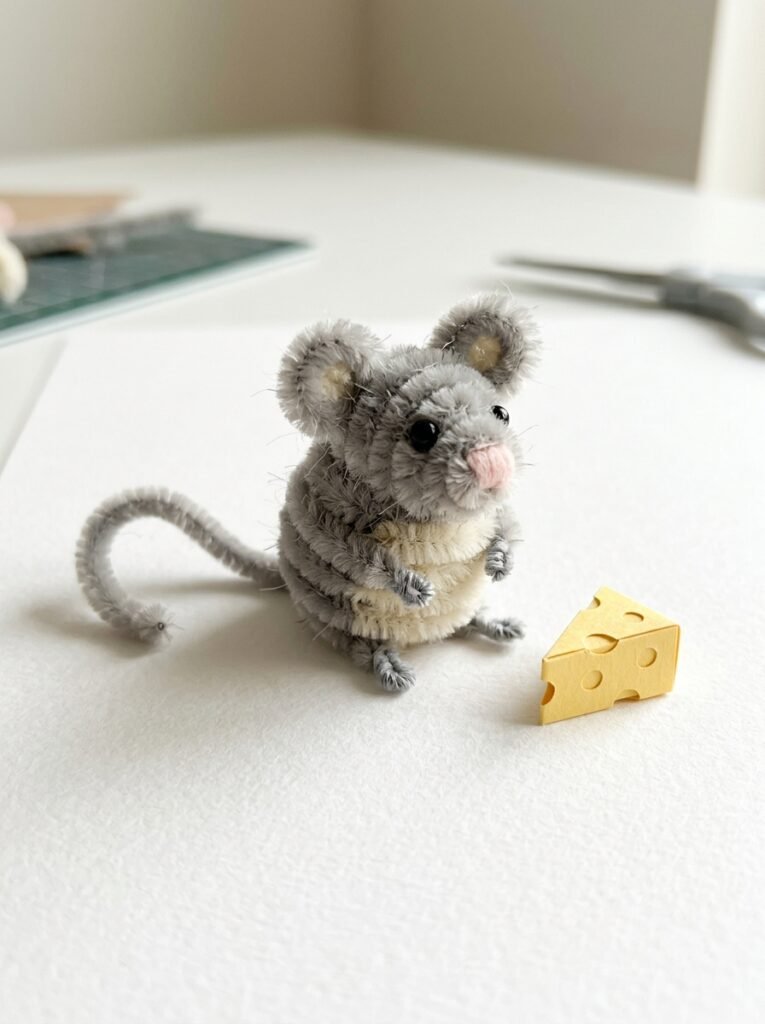
A miniature mouse is a charming addition to a handmade animal collection. Choose gray, cream, or soft-brown pipe cleaners and shape a small oval body. Make a rounded head with two circular ears, then twist a thin stem into a long tail. Use tiny pieces of contrasting chenille stem for the feet and muzzle. Keep the ears proportionate to the head so the mouse looks balanced rather than oversized. You can make a seated mouse holding a tiny paper cheese shape or a standing mouse with its tail curled behind it. This easy craft teaches basic shaping and is suitable for supervised creative sessions with children.
9. Pipe Cleaner Octopus
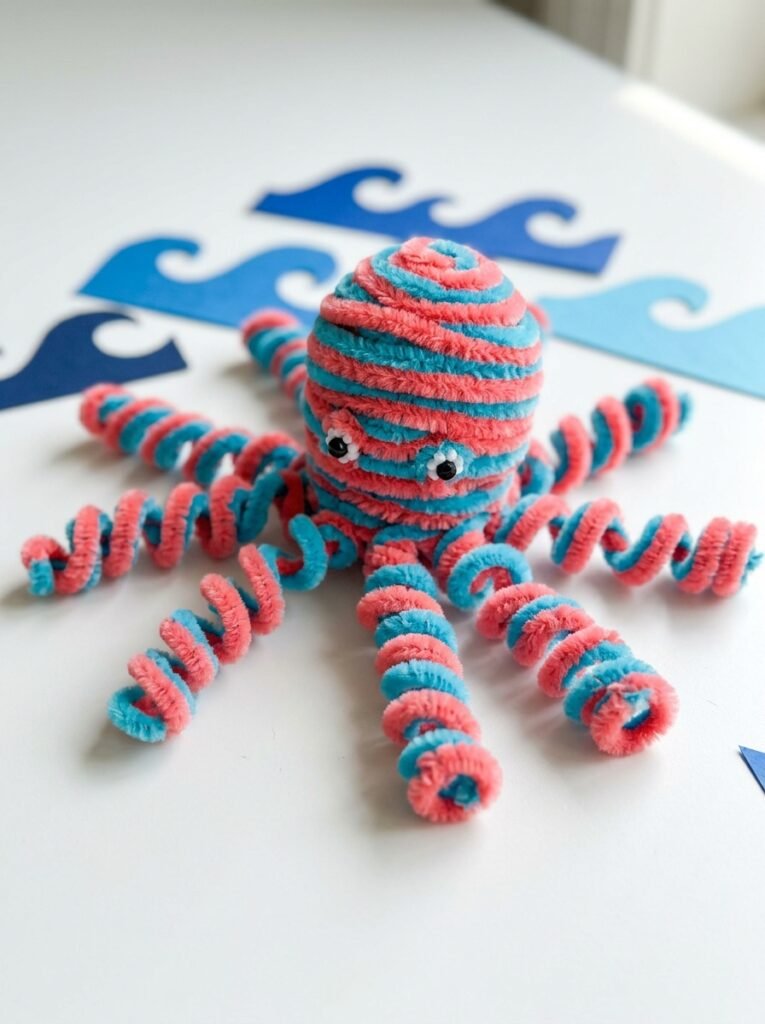
An octopus is a great craft for experimenting with multiple flexible legs. Select one bright chenille stem for the head and several additional stems for the tentacles. Bend the main stem into a rounded dome, then attach the tentacles underneath with secure twists. Curl each leg in a different direction to create a playful underwater pose. You can alternate colors between the legs or wrap thin contrasting stems around them for stripes. Keep the tentacles evenly spaced so the figure looks balanced when displayed. This ocean-themed project can be used for classroom displays, handmade decorations, or imaginative storytelling about sea creatures.
10. Jumbo Fluffy Pipe Cleaner Bear
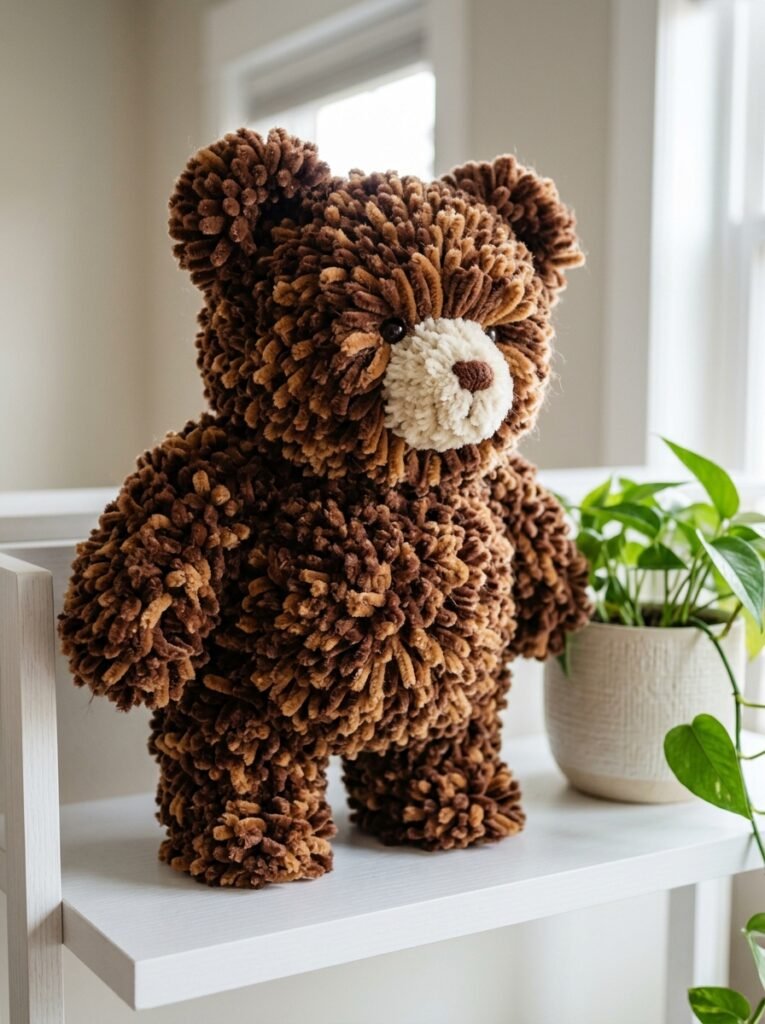
Jumbo pipe cleaners are ideal for making a larger, softer-looking bear. Choose thick brown or cream chenille stems and form a broad rounded body, sturdy legs, and a large head. Create two small circular ears and use a contrasting stem to define the muzzle. Wrap extra chenille around the body to create a fuller appearance, making sure the legs remain stable. Because jumbo stems are thicker, bend them slowly instead of forcing tight curves that may distort the shape. This bear can become a cute shelf decoration, a handmade gift, or the centerpiece of a larger animal collection. It will be more decorative than a toy for rough handling.
11. Pipe Cleaner Sheep with a Fluffy Coat
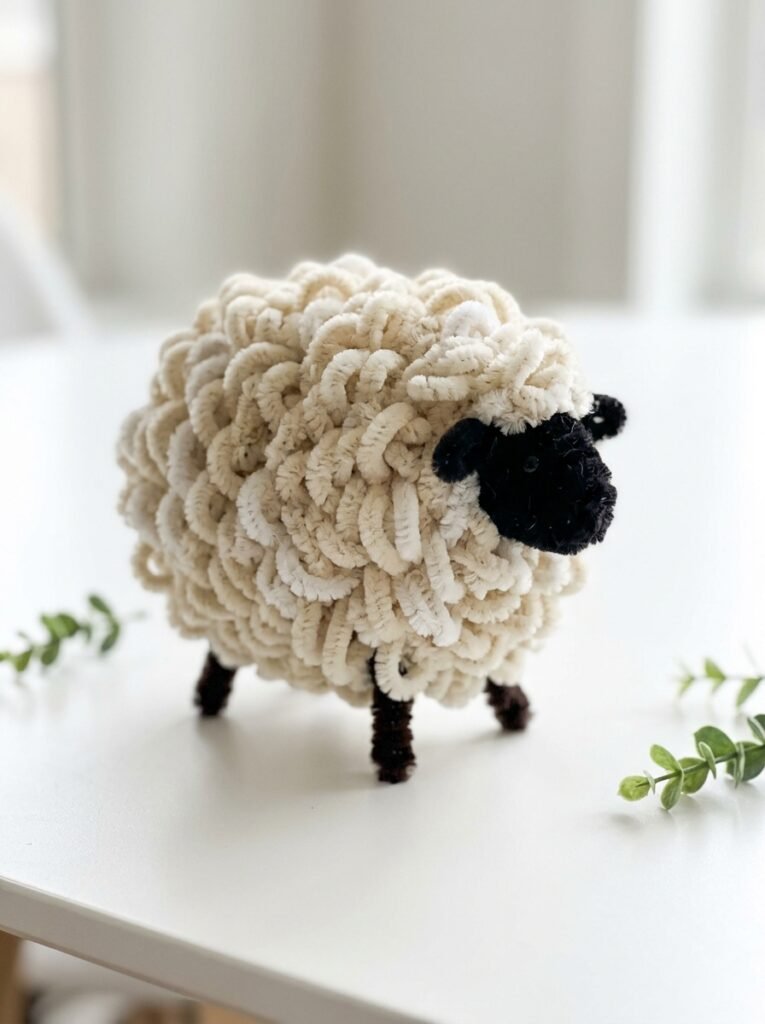
A handmade sheep looks especially charming with a thick, cloud-like coat. Start with a simple body and head made from white or cream pipe cleaners. Add short legs using black or brown stems, then wrap additional white chenille loops around the body to create a fluffy appearance. Keep the face relatively smooth so it stands out against the textured wool-like body. You can use small pieces of black felt for the ears and muzzle if desired, securing them carefully. This design works beautifully for farm-themed crafts, spring decorations, and animal displays. Try making a tiny lamb alongside a larger sheep for a coordinated pair.
12. Pipe Cleaner Giraffe
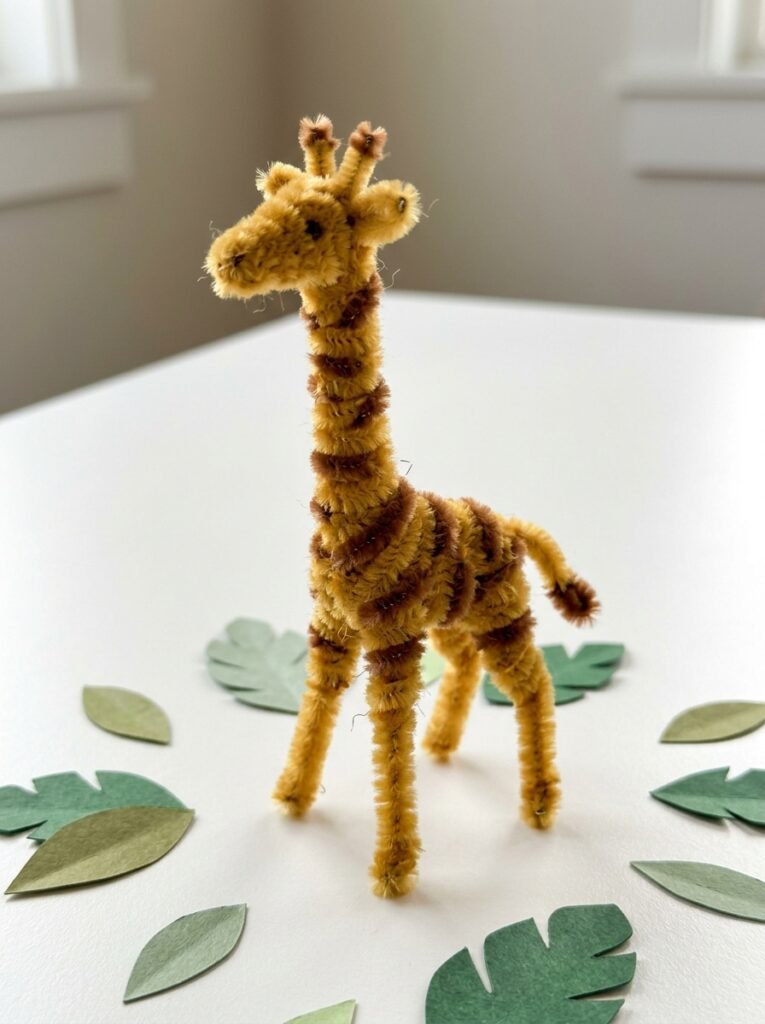
A giraffe is a fun project because its long neck and distinctive spots create an instantly recognizable silhouette. Use yellow or golden pipe cleaners to shape the body, long neck, four legs, and head. Make the neck firm enough to remain upright, and add two tiny horn-like shapes at the top of the head. Twist short brown stems around the body and neck to create spots. You can use a darker stem for the tail and a lighter color for the muzzle. This craft encourages children to observe animal shapes and patterns while practicing careful bending. A smaller giraffe can sit beside a handmade elephant or lion in a miniature safari collection.
13. Pipe Cleaner Elephant
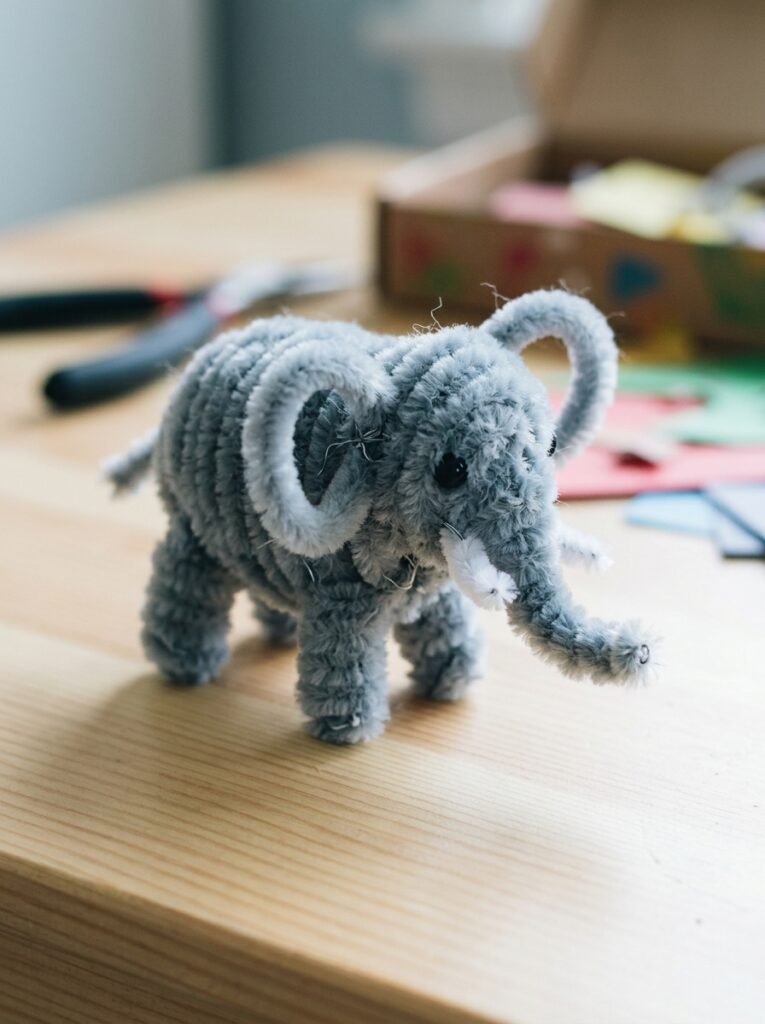
A tiny elephant can be created with a rounded body, four short legs, broad ears, and a curved trunk. Use gray or pale-blue chenille stems for the main shape. Form two large loops on either side of the head to represent the ears, then bend a separate stem into a downward-curving trunk. Twist the head and body together securely so the figure remains stable. A small contrasting stem can create the tail, while tiny white details may suggest tusks on a decorative version. Keep the tusks short and securely attached. This project is an enjoyable way to create a miniature zoo collection with several different animals.
14. Pipe Cleaner Lion with a Fluffy Mane
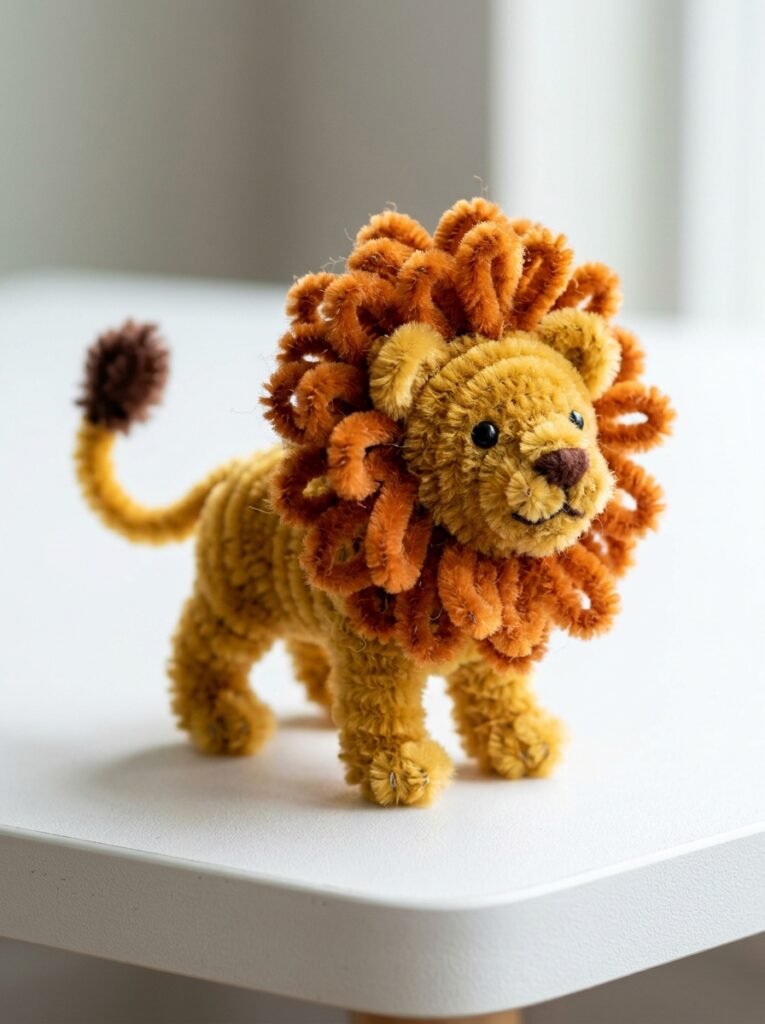
A lion is a striking addition to a handmade animal collection because its mane can be made from contrasting chenille colors. Use golden-yellow stems for the body, legs, and head. Wrap orange or warm-brown pipe cleaners in small loops around the face to create a fuller mane. Add a short curved tail with a darker tip and keep the muzzle simple so the mane remains the main feature. For a standing lion, position the legs evenly and twist them securely into the body. You can also make a seated lion for a more compact decoration. This project combines simple animal shapes with an interesting texture-building technique.
15. Pipe Cleaner Frog
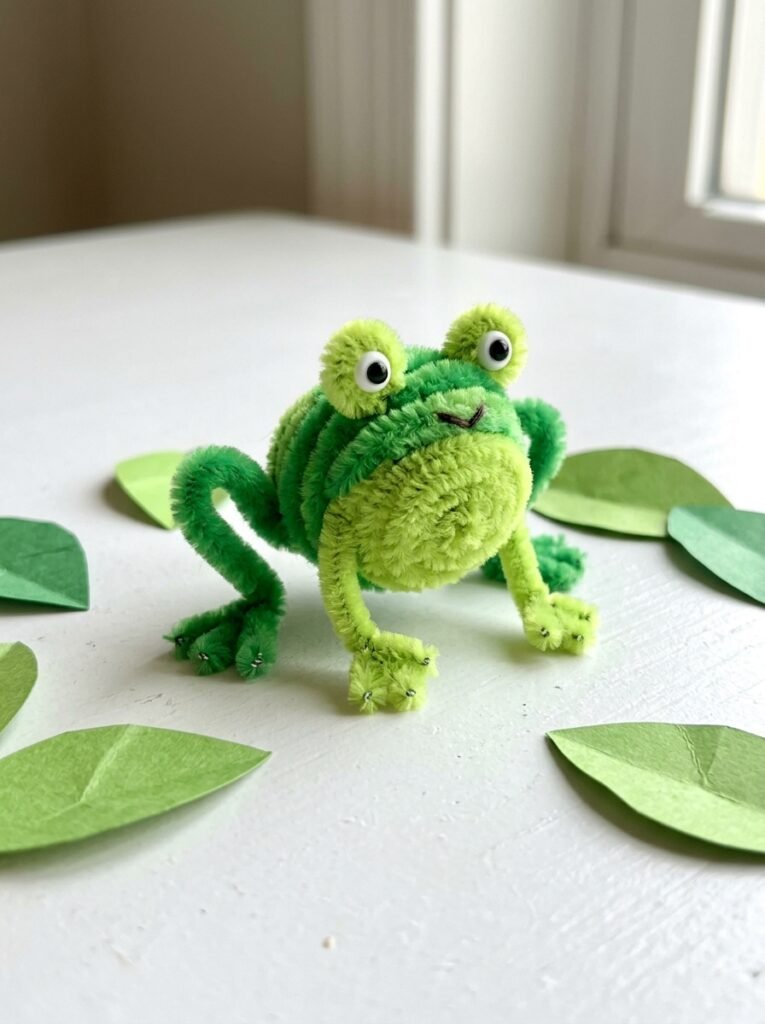
A little frog is easy to recognize by its wide head, rounded body, and long back legs. Choose bright green chenille stems and form a compact body with a slightly wider head. Add two raised eye stalks made from short stems, then bend the rear legs into broad loops to suggest a jumping pose. The front legs can be shorter and closer to the body. For extra personality, use a small contrasting stem to shape a smiling mouth. You can create several frogs in different shades of green or add yellow and blue accents. These frogs look lovely in a nature-themed display or as characters in children’s storytelling activities.
16. Pipe Cleaner Penguin
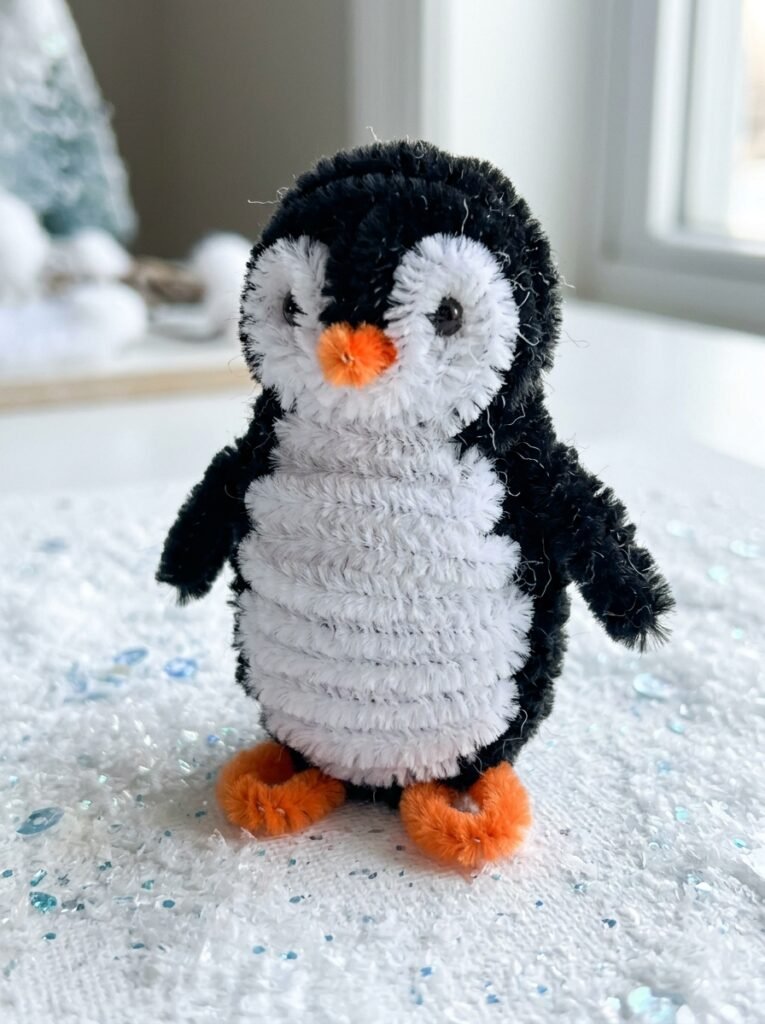
A penguin craft looks adorable when you combine black, white, and a small pop of orange. Form an upright oval body from black chenille stems, then create a white oval panel for the front. Add two short flippers along the sides and two orange feet at the bottom. A small orange triangle can represent the beak, while the head should remain rounded for a friendly appearance. Twist the parts together carefully so the penguin stands without tipping. This design is perfect for winter-themed decorations, classroom projects, or a handmade animal collection. Try making a smaller penguin chick with a light-gray body to create a matching pair.
17. Pipe Cleaner Fish
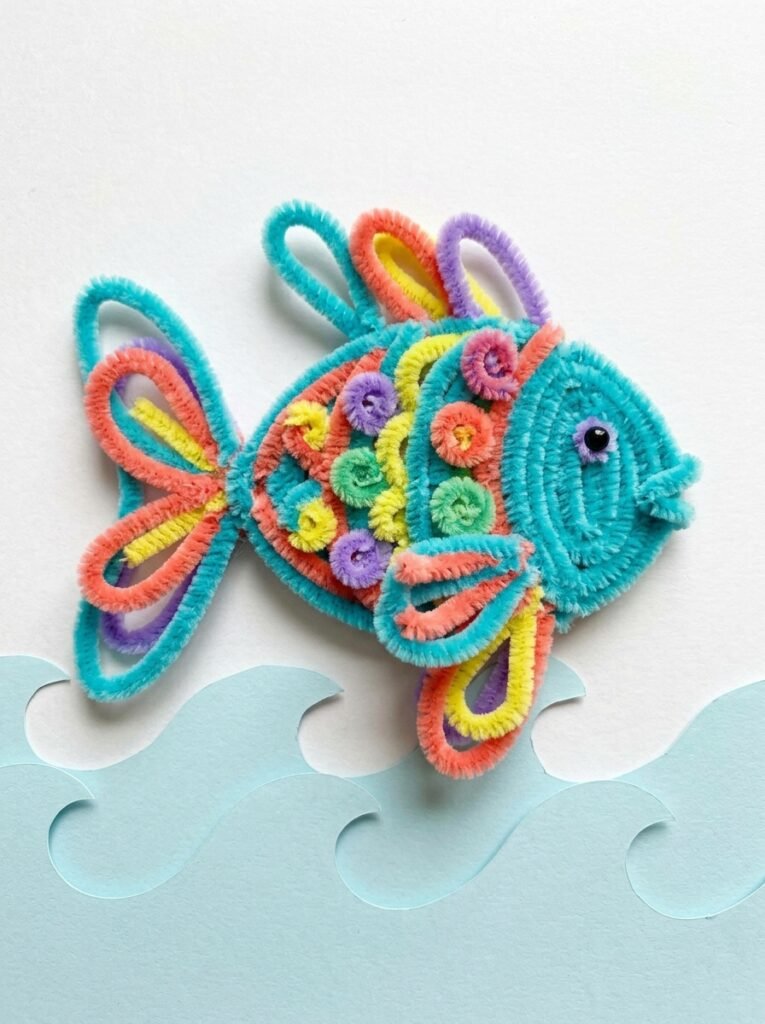
A colorful pipe cleaner fish is a simple way to bring an underwater theme into your craft collection. Shape a short stem into an oval body, leaving one end slightly open to form a tail. Use another stem to create two small fins and a triangular tail fin. Twist the sections securely and add contrasting colors to suggest scales or stripes. You can create a rainbow fish with several bright shades or use blue and silver for a calmer design. Keep the body symmetrical and the fins clearly visible. This project is suitable for ocean-themed decorations, handmade mobiles, or a collection of small sea creatures.
18. Pipe Cleaner Snail
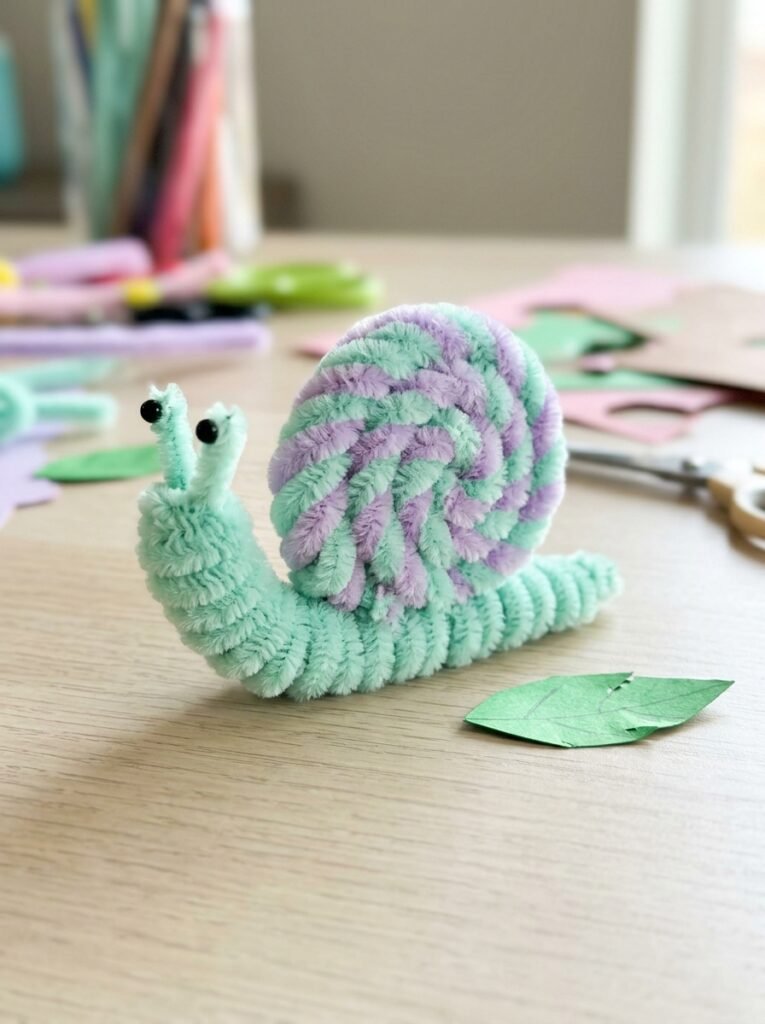
A snail is a lovely craft for learning how to make spirals. Use one stem to create the snail’s long body and a pair of short raised eye stalks. Roll another pipe cleaner into a tight spiral to create the shell, then twist it securely onto the back. Choose contrasting colors, such as mint green for the body and lavender for the shell, or use yellow and orange for a brighter design. Keep the base wide enough for the snail to sit without falling over. You can make the shell larger or smaller depending on the size of your figure. This simple design works well for nature displays and colorful miniature gardens.
19. Mini Pipe Cleaner Animal Bouquet
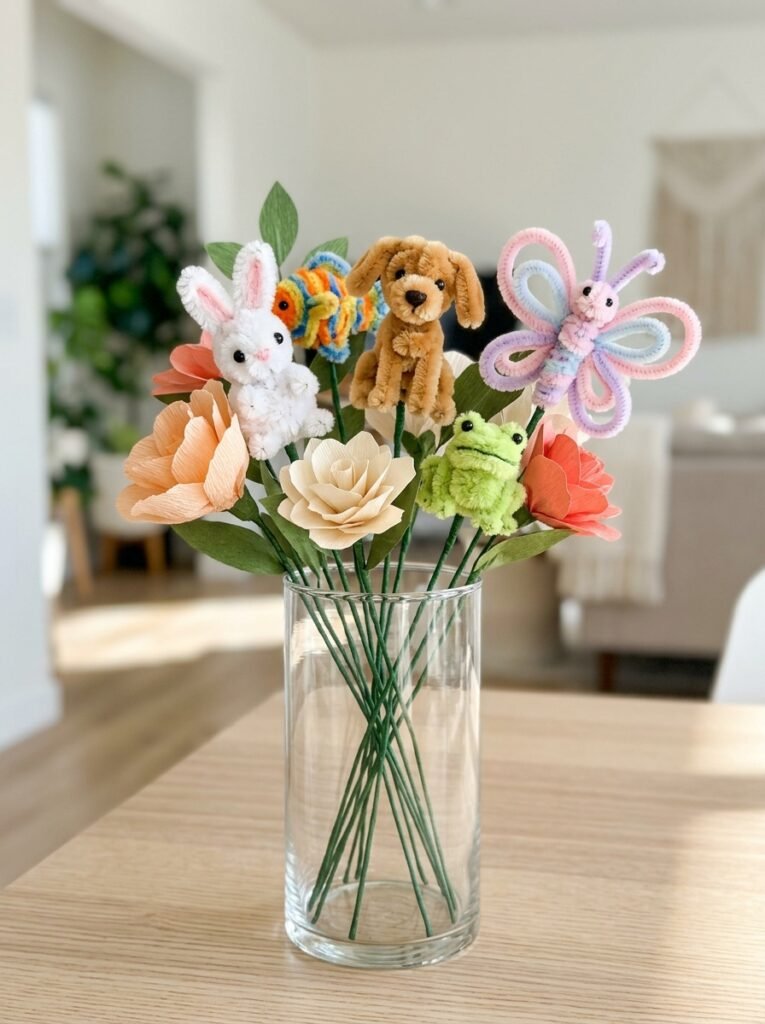
Instead of making a traditional flower bouquet, create a playful arrangement featuring tiny pipe cleaner animals attached to individual stems. Choose three to five designs, such as a bunny, puppy, butterfly-inspired creature, frog, and colorful fish. Attach each figure to a slim craft stem or suitable floral wire, ensuring that every connection is secure and the figures remain lightweight. Arrange the animals at different heights in a small vase, then add paper leaves or a few simple handmade flowers to fill the gaps. Choose a coordinated palette so the arrangement looks intentional rather than crowded. This unusual pipe cleaner animals bouquet makes a creative desk decoration or a personalized handmade gift.
How to Make Pipe Cleaner Animals Step by Step
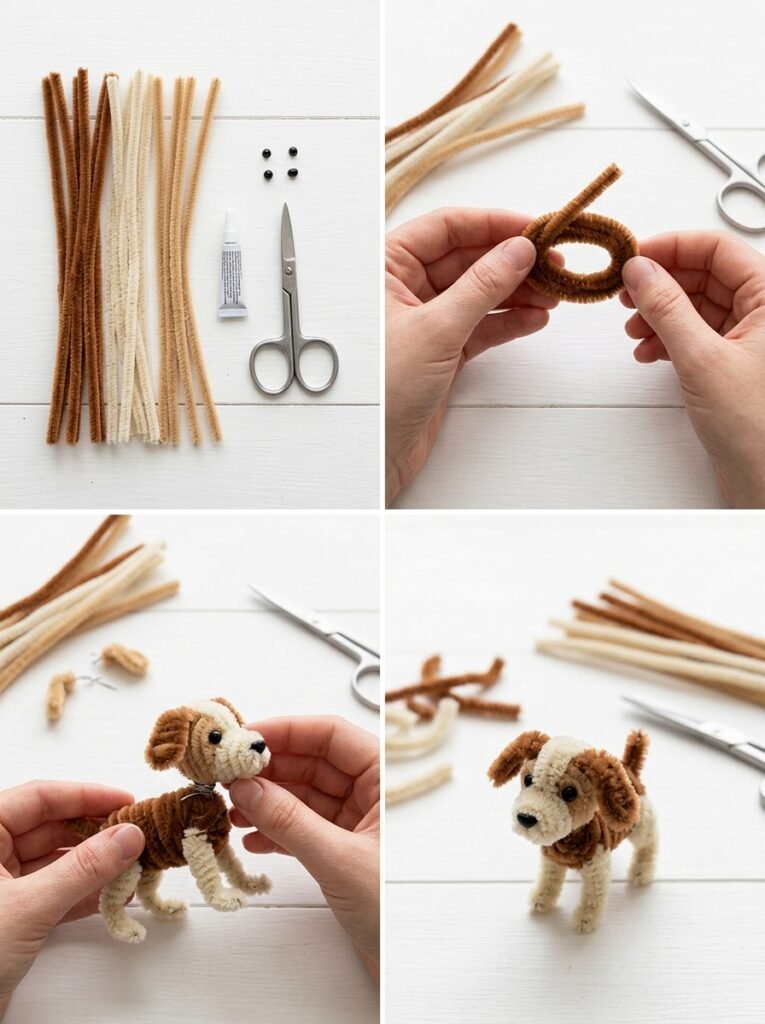
You can use this basic method for many of the designs in this guide. The exact shapes will change depending on the animal, but the same techniques—bending, twisting, and joining stems—will help you create a wide variety of figures.
Materials You Will Need
- Colorful pipe cleaners or chenille stems
- Scissors for cutting stems, used carefully
- Craft glue suitable for your chosen materials
- Small pieces of felt or craft paper for optional details
- Lightweight beads for suitable projects
- A ruler and a clean work surface
- Optional key rings, craft sticks, or decorative stems
Step 1: Choose the Animal and Colors
Decide which animal you want to make before selecting your materials. A dog may need brown and cream stems, while a frog might look best in two shades of green. Use a picture of the animal as a visual reference if you want to improve its proportions. Beginners should start with animals that have simple bodies, such as snakes, cats, or bunnies.
Step 2: Shape the Main Body
Bend a pipe cleaner into an oval, circle, or long curved shape, depending on the animal. For a dog, create a compact oval body; for a snake, use a long S-shaped curve; and for a penguin, make a taller oval. Twist the ends together firmly, but avoid bending the wire so sharply that the chenille covering becomes damaged.
Step 3: Add the Head and Legs
Make the head separately when the design requires a more detailed shape. Attach it to the body with a secure twist. Add short stems for the legs, keeping them similar in length if the animal needs to stand. Test the figure on a flat surface and adjust the legs until the weight is distributed evenly.
Step 4: Create Distinctive Animal Features
Add the features that make each animal recognizable. Use long ears for a bunny, pointed ears for a cat, a curved trunk for an elephant, or spiral wings for a dragon. Small contrasting pieces can represent spots, stripes, a muzzle, or a tail. Make these details proportionate to the main body.
Step 5: Secure and Finish Your Craft
Check every joint and gently adjust the shape. If you use craft glue for paper or felt details, follow the product instructions and let it dry fully. Avoid exposing sharp wire ends, and do not rely on glue alone for parts that will experience frequent pulling. For a keychain or wearable decoration, test the attachment before use.
Printable Instructions for Easy Pipe Cleaner Animal Crafts
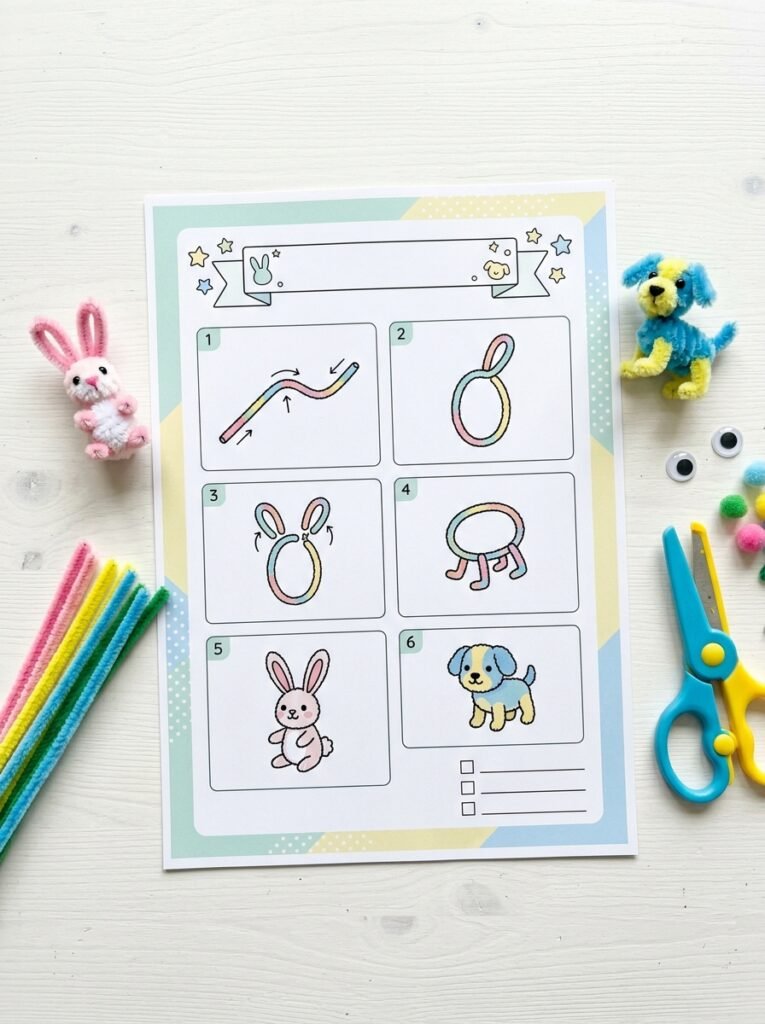
If you want to repeat these projects later, you can turn the following checklist into a simple printable instruction sheet. It is especially useful for parents, teachers, and anyone preparing a craft activity for a group.
Basic animal craft checklist
- Choose an animal and two or three matching colors.
- Gather pipe cleaners and optional decorative materials.
- Shape the main body into an oval, circle, or curved form.
- Twist on the head, legs, tail, wings, or ears.
- Add recognizable features using contrasting stems.
- Adjust the shape so the animal looks balanced.
- Secure suitable decorations and allow glue to dry.
- Check for sharp ends and loose small parts before displaying the craft.
Quick project planning guide
| Animal | Main technique | Suggested use |
|---|---|---|
| Dog | Oval body and floppy ears | Keychain or desk decoration |
| Cat | Rounded body and curved tail | Miniature pet collection |
| Bunny | Long looped ears | Spring decoration |
| Dragon | Long body and looped wings | Fantasy display |
| Snake | Long curved stem | Beginner craft |
| Octopus | Multiple curled tentacles | Ocean-themed decoration |
| Bear | Layered chenille loops | Shelf display |
| Snail | Spiral shell | Nature craft |
Helpful Tips for Better Pipe Cleaner Animal Crafts
Use the Right Pipe Cleaner Size
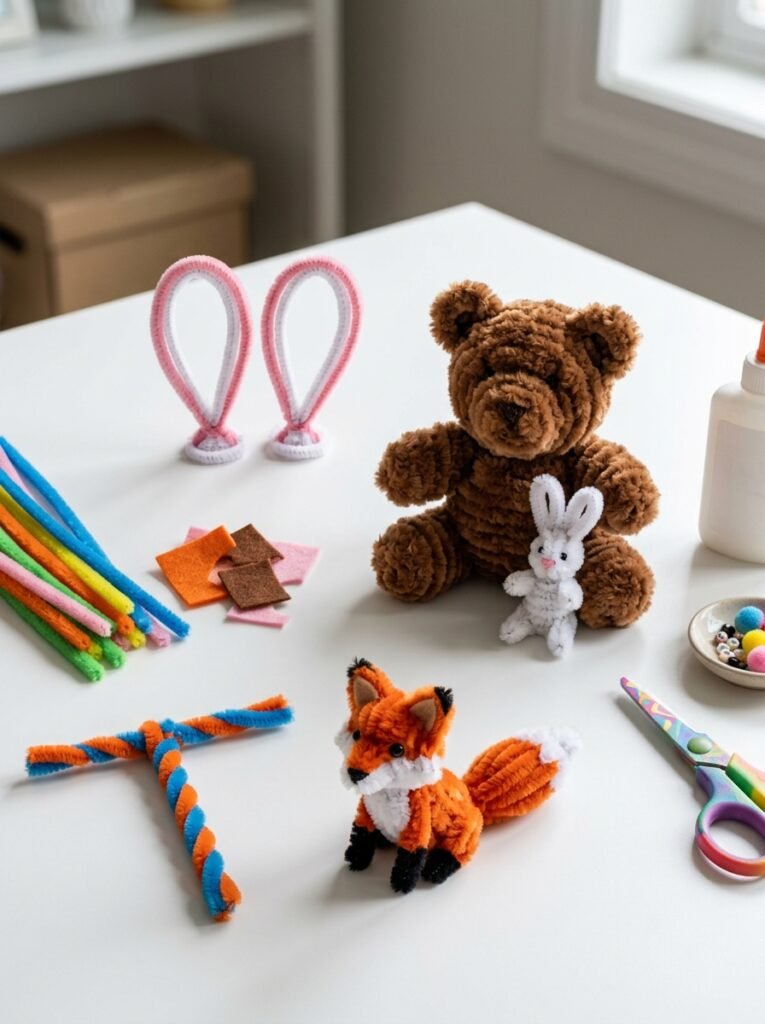
Regular chenille stems work well for small figures and detailed shapes. Jumbo stems are better for larger animals with fuller bodies, but their thickness can make small bends more difficult. Match the stem size to the finished animal instead of forcing one material to work for every design.
Make the Animals Fluffy
To create a fluffy appearance, layer additional chenille loops around the body or select thicker stems. Keep the face and important features visible so the animal remains recognizable. Avoid adding so much material that the figure becomes too heavy to stand.
Use Tin Foil for Selected Structural Shapes
A small amount of clean, tightly folded tin foil can be used as a lightweight inner core for a larger decorative body. Wrap the foil completely with pipe cleaners so no sharp edges remain exposed. Do not use loose foil pieces for young children, and avoid this method for projects intended for chewing, rough play, or close contact with the mouth.
Attach Decorations with Care
Craft glue can help attach felt ears, paper beaks, or small decorative pieces, but different materials may require different adhesives. Follow the product instructions and allow adequate drying time. Keep glue away from skin and eyes, and have an adult handle cutting or other tools when appropriate.
Make a Matching Animal Collection
Choose a theme such as farm animals, pets, ocean creatures, or fantasy dragons. Use a consistent color palette and similar sizes to make the collection look coordinated. You can arrange the finished figures on a shelf, place them in a display box, or create a handmade animal bouquet.
Turn the Activity into a Learning Experience
Children can compare animal shapes, count legs, identify colors, and practice following instructions. Encourage them to choose their own colors and make creative changes rather than expecting every animal to look identical. For younger children, use larger materials and avoid loose beads or other small parts that could pose a choking risk.
Final Thoughts
Making animals from chenille stems is a fun way to turn simple craft supplies into personalized decorations and imaginative creations. From an easy puppy and fluffy bunny to a colorful frog, a jumbo bear, and a fantasy dragon, every project offers a different opportunity to practice shaping, twisting, and adding details. The best pipe cleaner animals projects are the ones that match your skill level and let you experiment without worrying about perfection. Start with a simple design, follow the steps carefully, and gradually try more detailed animals as your confidence grows. You can also turn your favorite creations into keychains, gifts, themed displays, or a playful animal bouquet. Gather your favorite colors, choose your first animal, and enjoy creating something unique. With a little patience and imagination, even a handful of chenille stems can become an entire collection of handmade creatures.