

This post may contain affiliate links. Please read my disclosure policy.
In This Article Show
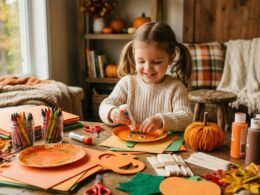
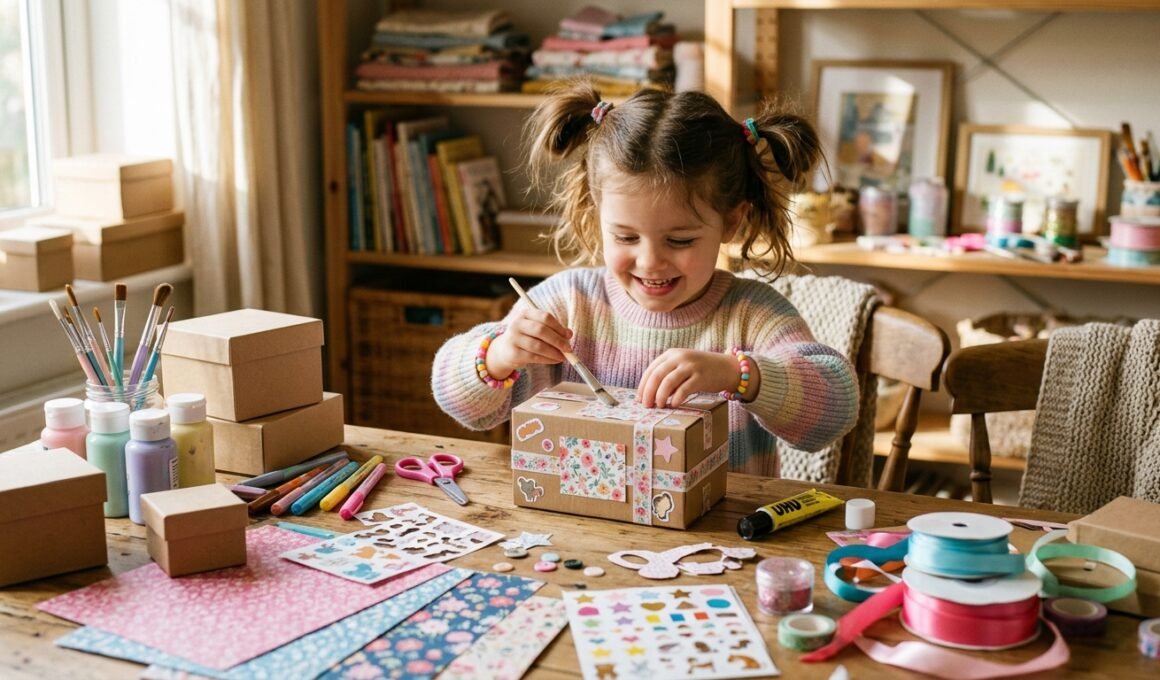
A cardboard box can become almost anything when a creative mind gets involved. One afternoon, it may become a tiny room. The next day, it may turn into a robot, animal, vending machine, or colorful shelf decoration. That simple transformation makes cute cardboard crafts exciting for children, teens, and creative adults. You do not need expensive supplies to begin. Clean cardboard, paper, glue, paint, markers, scissors, and a few decorative pieces can create impressive DIY projects. The best projects leave room for personal choices. A child can change the colors, add details, or invent a completely new design.
1. Aesthetic Cardboard Room Decor
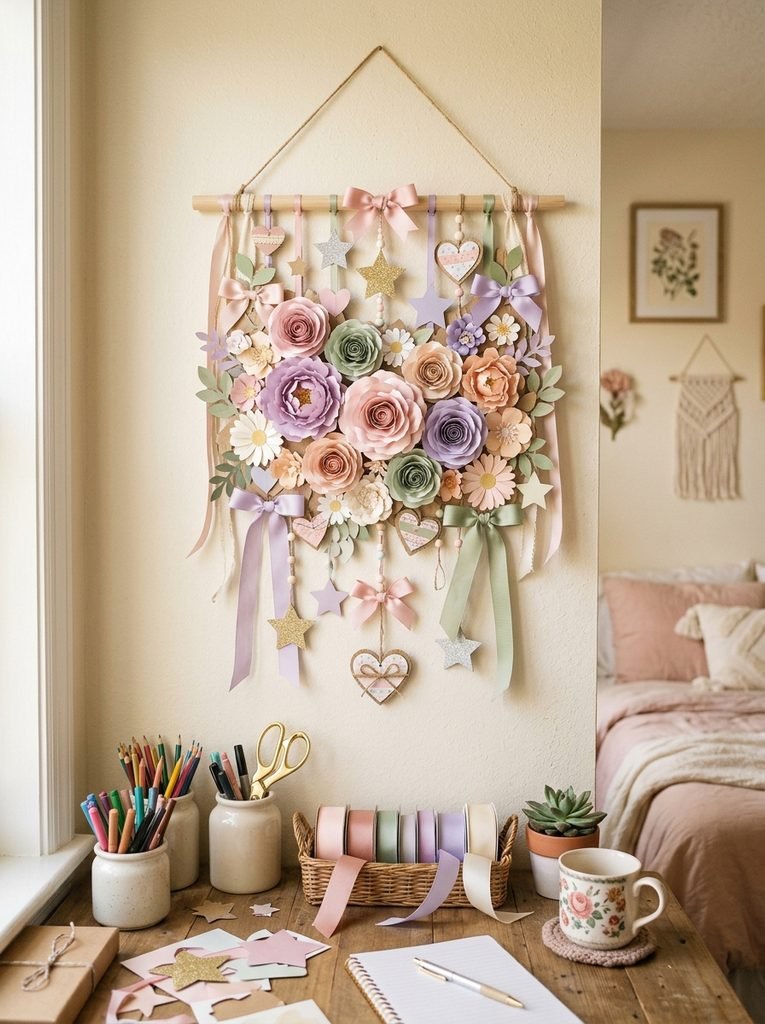
Create a small wall decoration from a flat piece of cardboard. Cover it with pastel paper, then add paper flowers, bows, stars, hearts, or simple patterns. Finish it with ribbon or twine. It can become a cute sign, photo frame, or decorative panel for your room. Soft colors such as cream, blush, lavender, and sage can give the finished project an aesthetic look.
2. Cardboard Mini Shelf
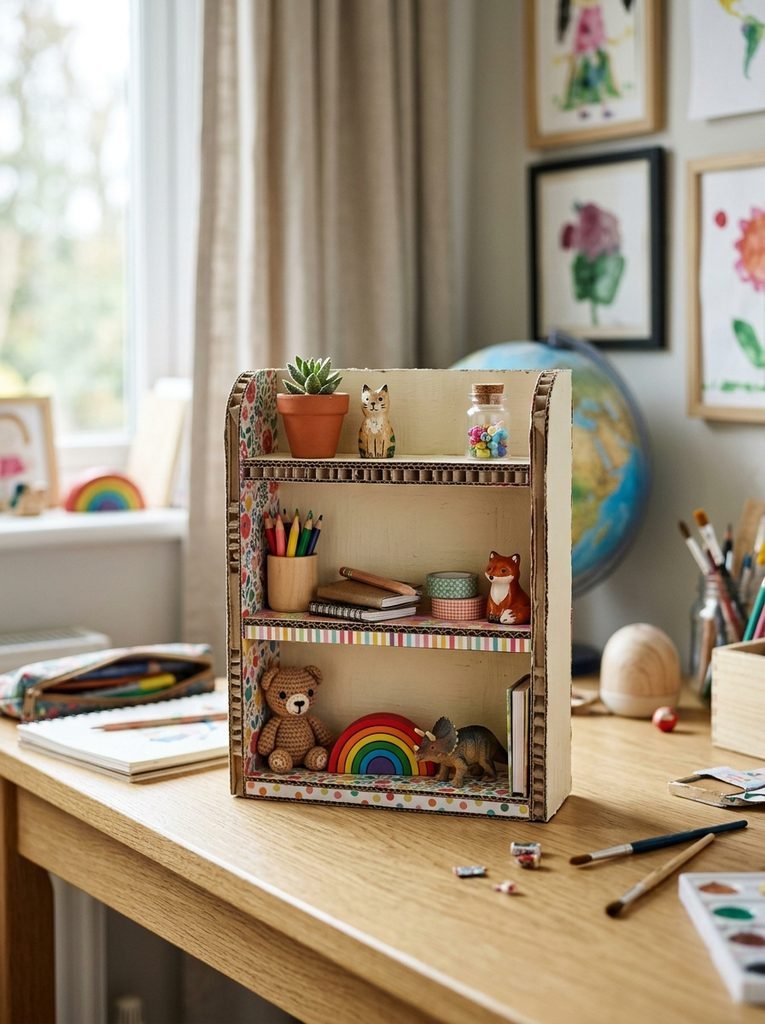
Build a small shelf from sturdy cardboard layers. Reinforce the corners with extra strips, then cover the outside with colored paper. Use it for lightweight toys, tiny figures, stationery, or small decorative pieces. This project also gives children a simple introduction to structure because they can see how folds, layers, and supports make a project stronger.
3. Cute Cardboard Crafts: Friendly Robot
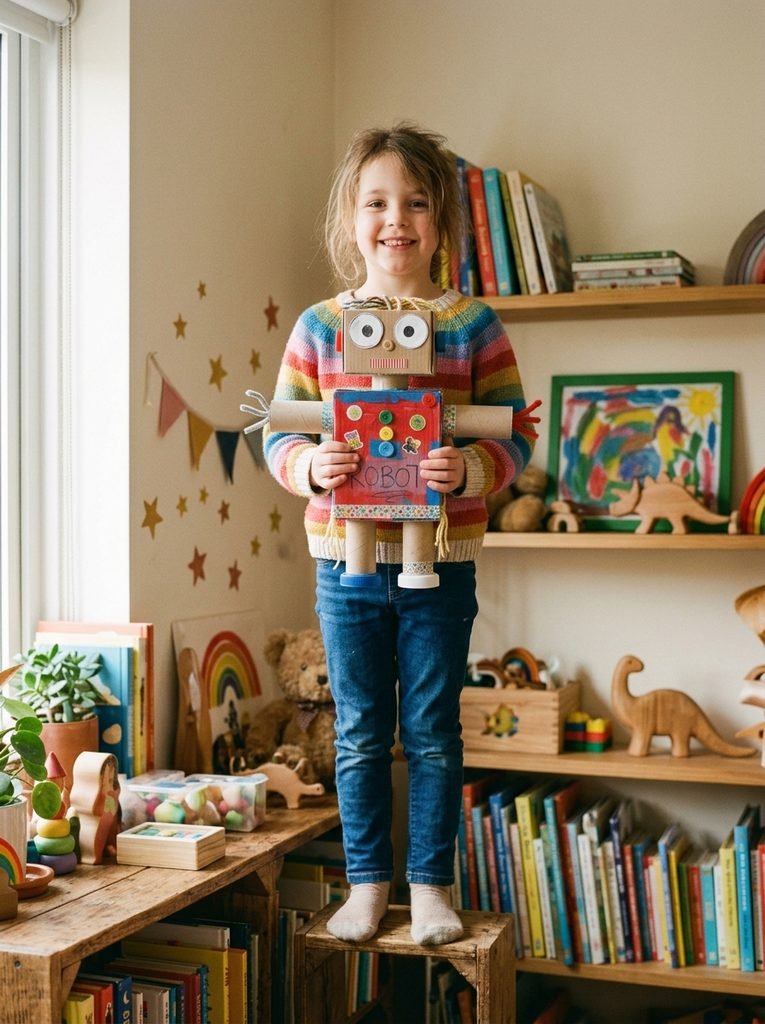
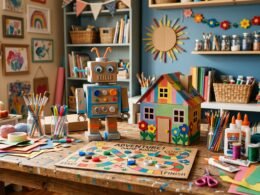
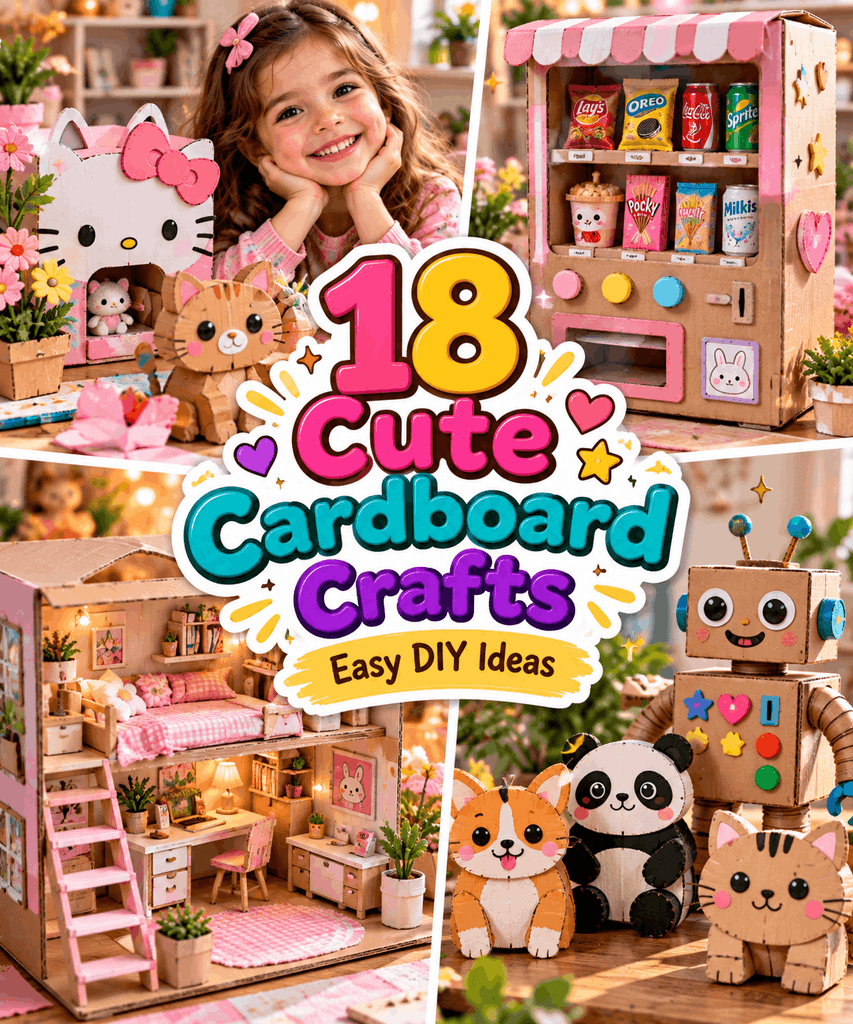
Turn boxes and cardboard tubes into a friendly robot. Add paper eyes, bottle-cap buttons, cardboard arms, and colorful details. Give the robot a name and personality. Older children can experiment with movable arms or simple joints. The project can become both a fun DIY activity and a playful decoration for a bedroom shelf.
4. Cardboard Vending Machine
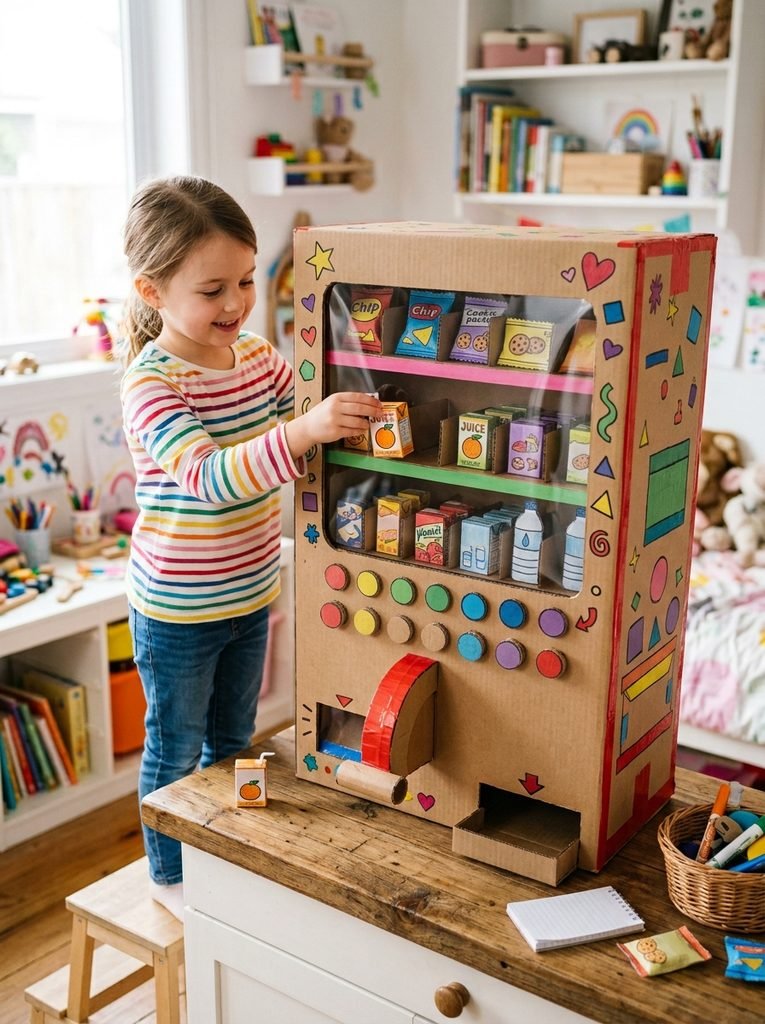
Make a pretend vending machine from a medium cardboard box. Cut a display window and create small cardboard buttons. Add paper snacks, drinks, candy, or colorful pretend food inside. Children can create price tags and play shopkeeper, customer, or designer. You can even add a simple cardboard lever that moves when pressed.
5. Cardboard Animal Friends
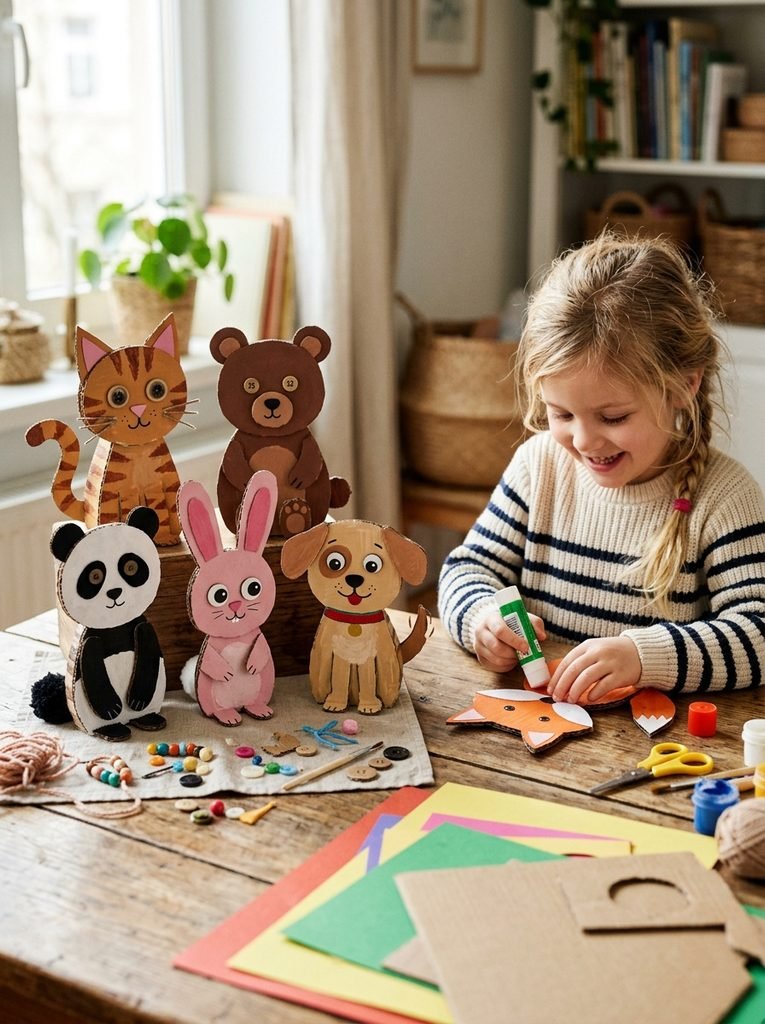
Create cats, dogs, pandas, bears, rabbits, or other animals from cardboard shapes. Paint the bodies and add ears, eyes, tails, and paper details. These animals can become toys, decorations, or characters in a homemade story. Children can make an entire animal family and give each character a different personality.
6. Cute Cardboard Crafts Inspired by Sanrio Style
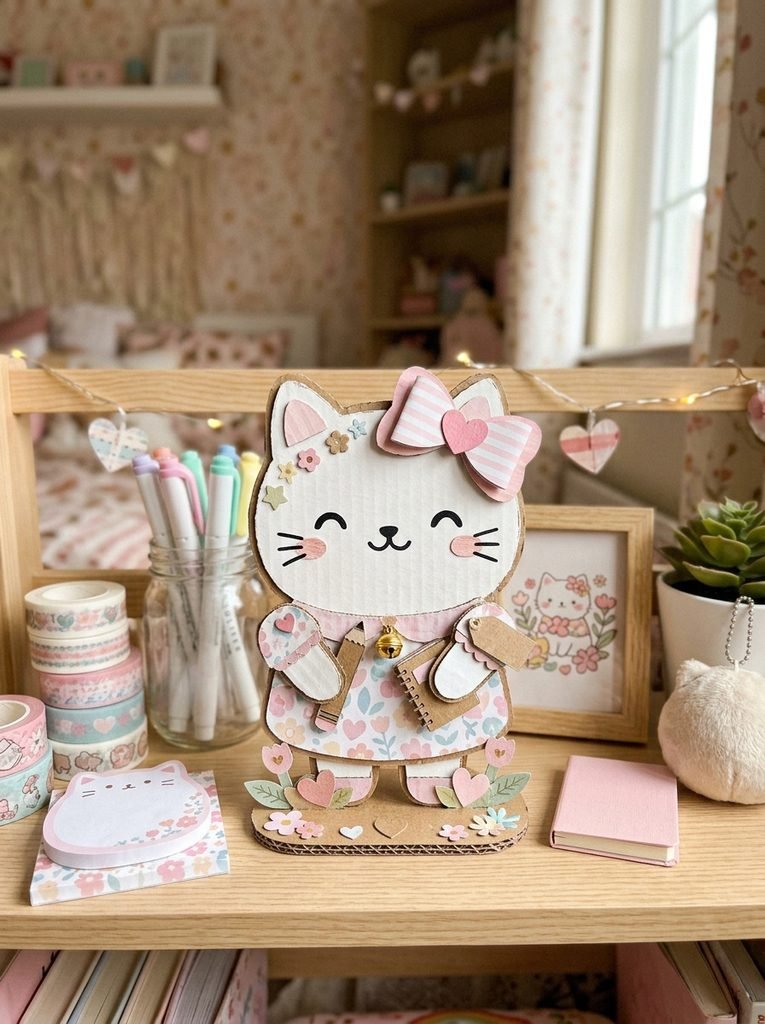
For fans of cute Japanese-inspired characters, make a simple character-inspired wall piece from cardboard. Use a rounded face shape, soft colors, a bow, and simple decorative details. A Hello Kitty-inspired color palette can work beautifully, but encourage children to create their own original character rather than copying a branded design exactly.
7. K-Pop Inspired Photo Display
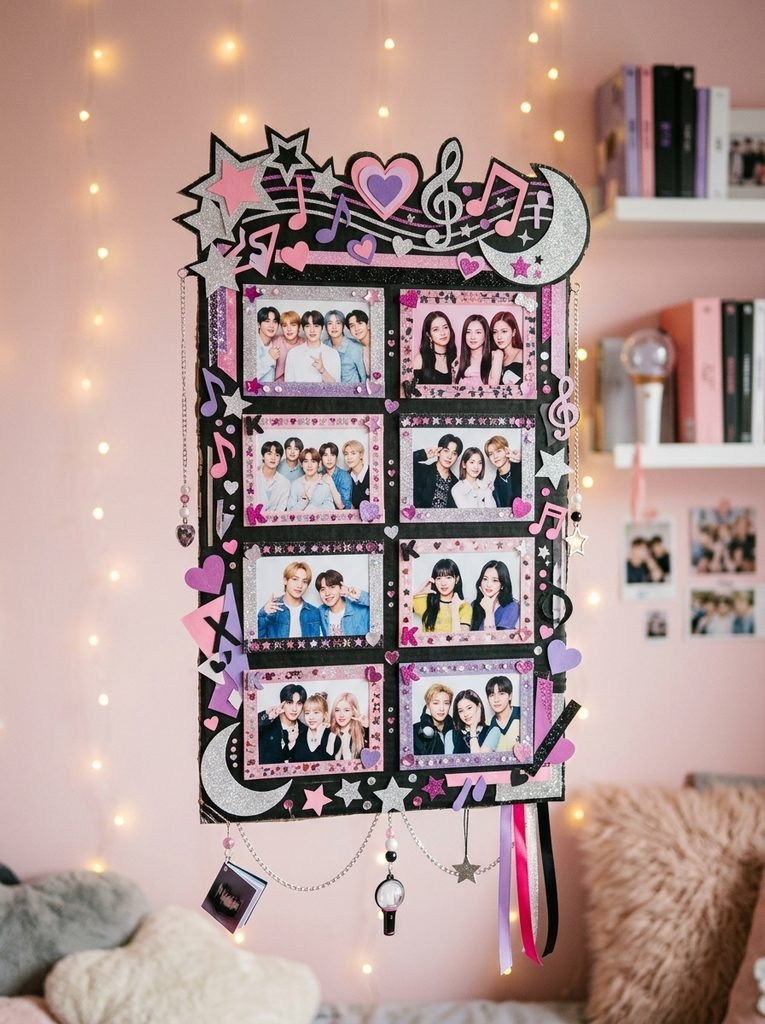
Create a cardboard photo display with a fun music-inspired theme. Cover the base with black, pink, purple, silver, or white paper. Add stars, hearts, tickets, lightning shapes, and decorative borders. Leave spaces for favorite photos or printed memories. This project can become a personalized wall piece for a teen’s room.
8. Cardboard Food Stand
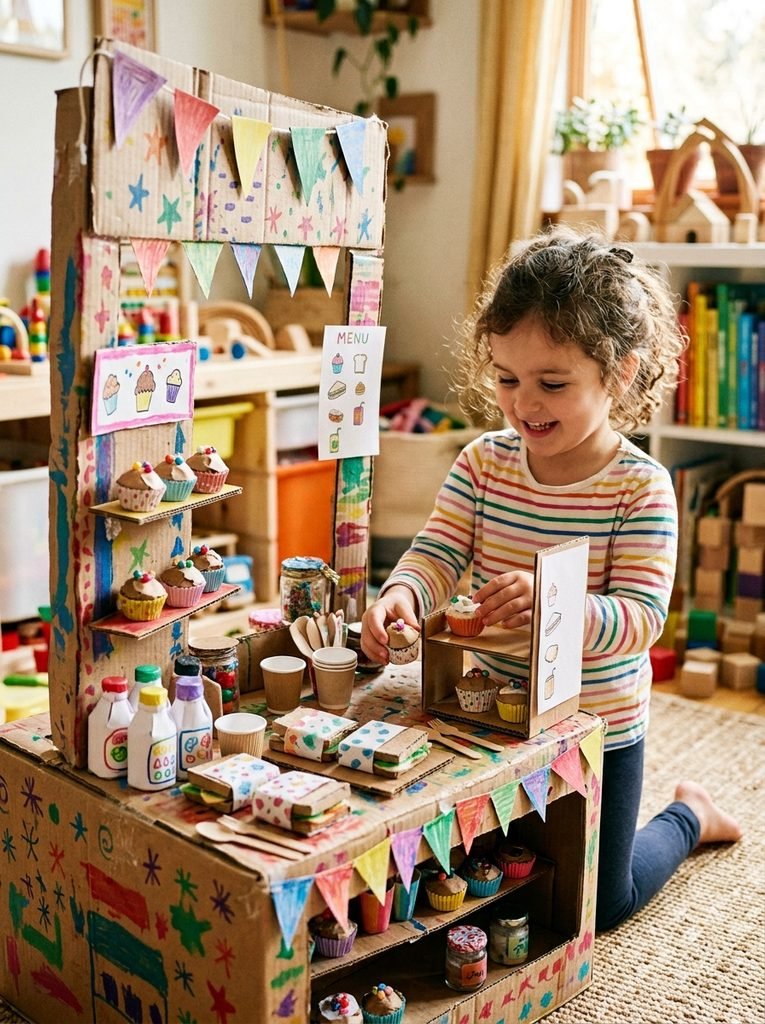
Build a tiny café or food stall from a cardboard box. Add a counter, menu board, paper cups, pretend food, and a small sign. Children can turn it into a bakery, ice cream shop, snack bar, or pretend restaurant. Add small cardboard shelves to display the food and create a more realistic play area.
9. Cardboard Gift Box
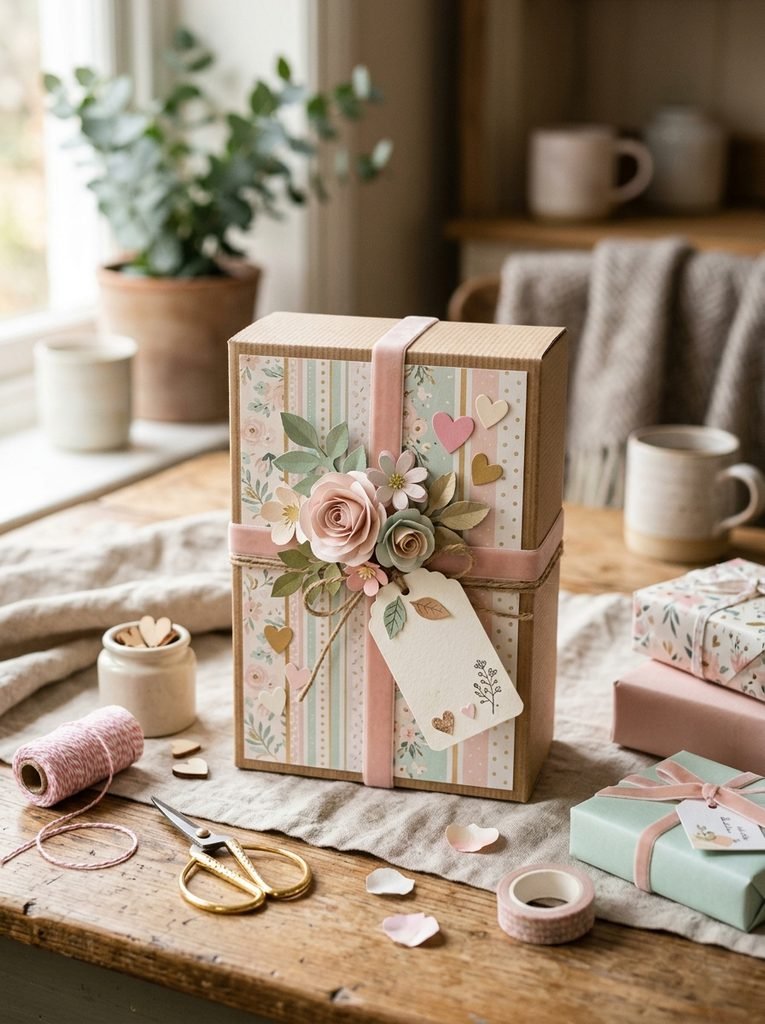
Make a decorative gift box from recycled cardboard. Cover it with patterned paper and add ribbon, a paper flower, or a handmade tag. It can hold small gifts, notes, jewelry, craft supplies, or keepsakes. Choose colors based on the person receiving it so the box feels personal rather than generic.
10. Cute Cardboard Crafts: Animal House
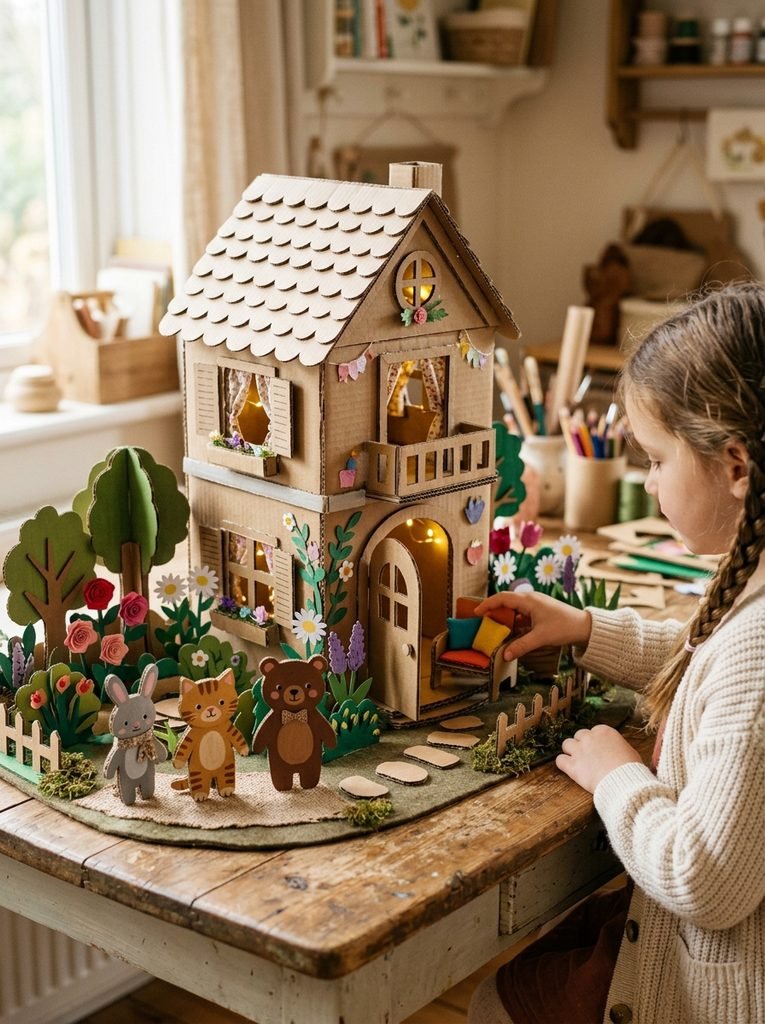
Build a tiny home for cardboard animals. Add a door, windows, roof, bed, food bowl, and miniature furniture. Children can decide who lives there and create stories around the little house. Add a garden made from green paper or small cardboard trees to turn it into a complete little world.
11. Cardboard Room Model
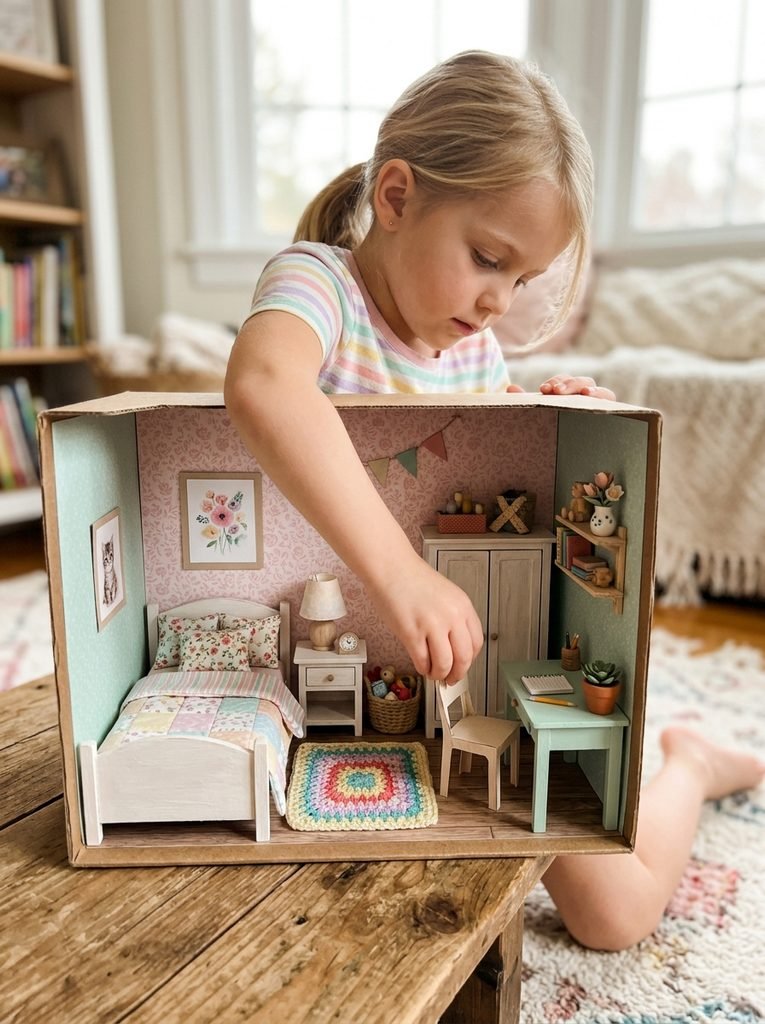
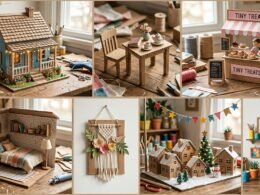
Create a miniature room using a shallow cardboard box. Add paper flooring, tiny furniture, a rug, wall art, and a little shelf. This project can become personalized room decor while also giving children a chance to plan space and scale. Let them choose the room’s color scheme and decide where every piece belongs.
12. Simple Cardboard Phone Stand
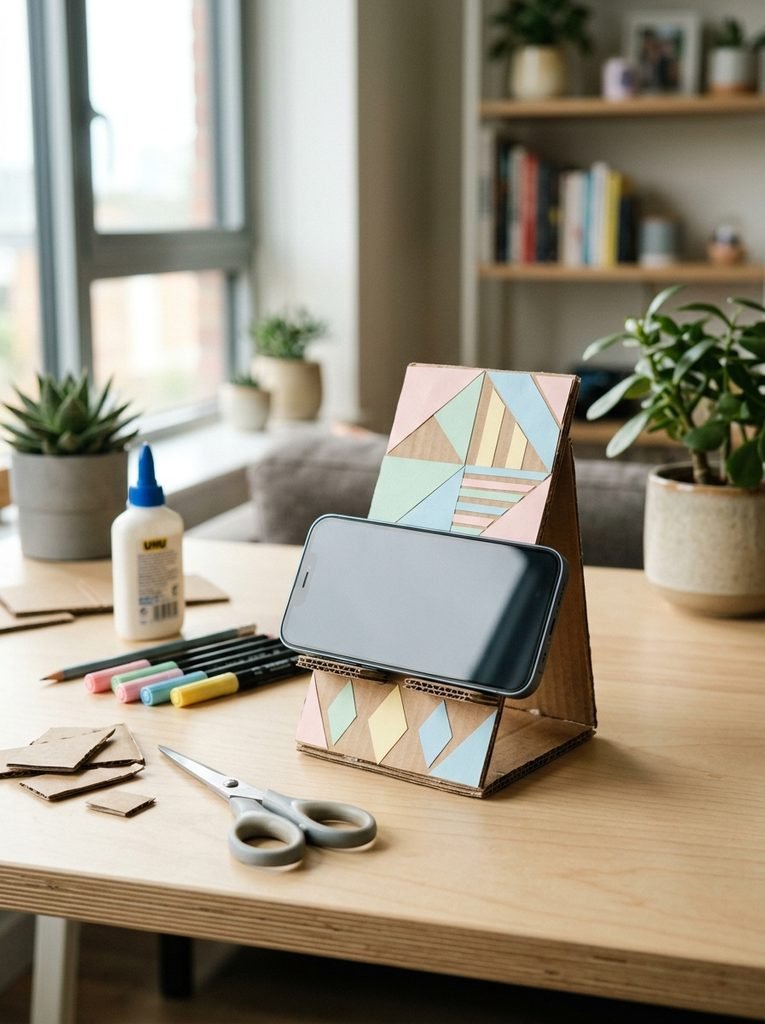
Cut and fold strong cardboard into a stable phone stand. Decorate it with paper, paint, stickers, or geometric patterns. Keep the design simple and test its balance before use. An adult should handle any difficult cutting. This small project works well when someone wants a useful DIY item instead of another decoration.
13. Cardboard Mirror Frame
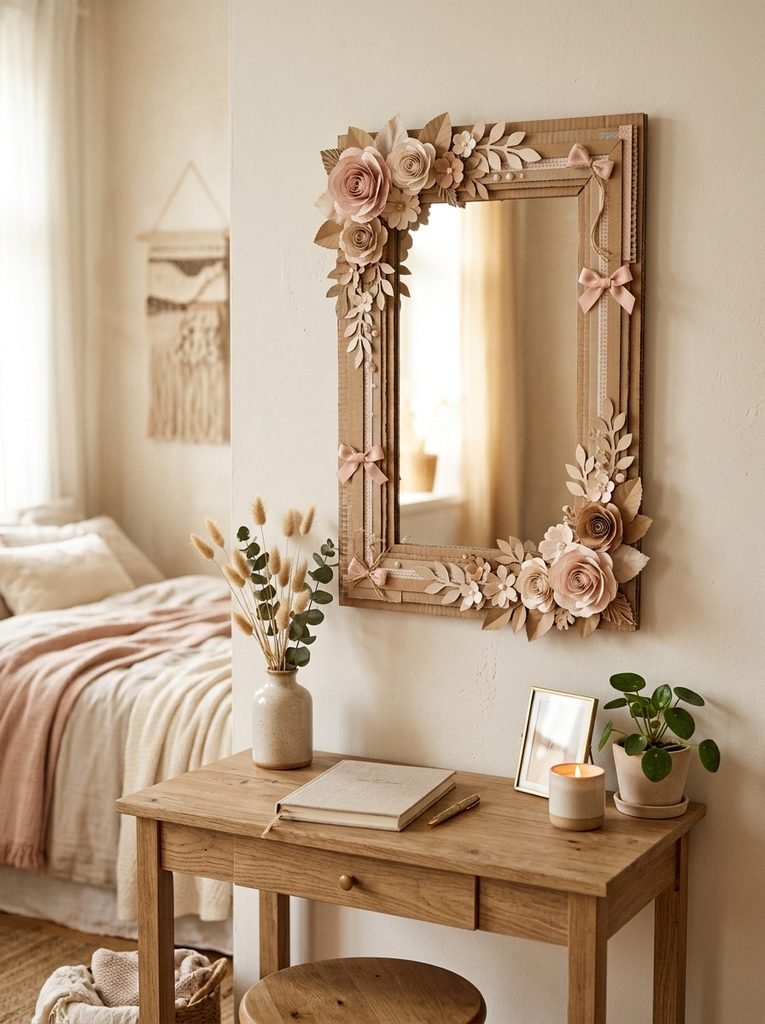
Transform a plain cardboard frame into aesthetic decor. Cut a frame shape, layer several cardboard strips around the edges, and cover them with paint or paper flowers. Add a lightweight mirror or reflective sheet only with adult help. A white, beige, pink, or natural kraft finish can suit a soft room theme.
14. Cardboard Storage Box
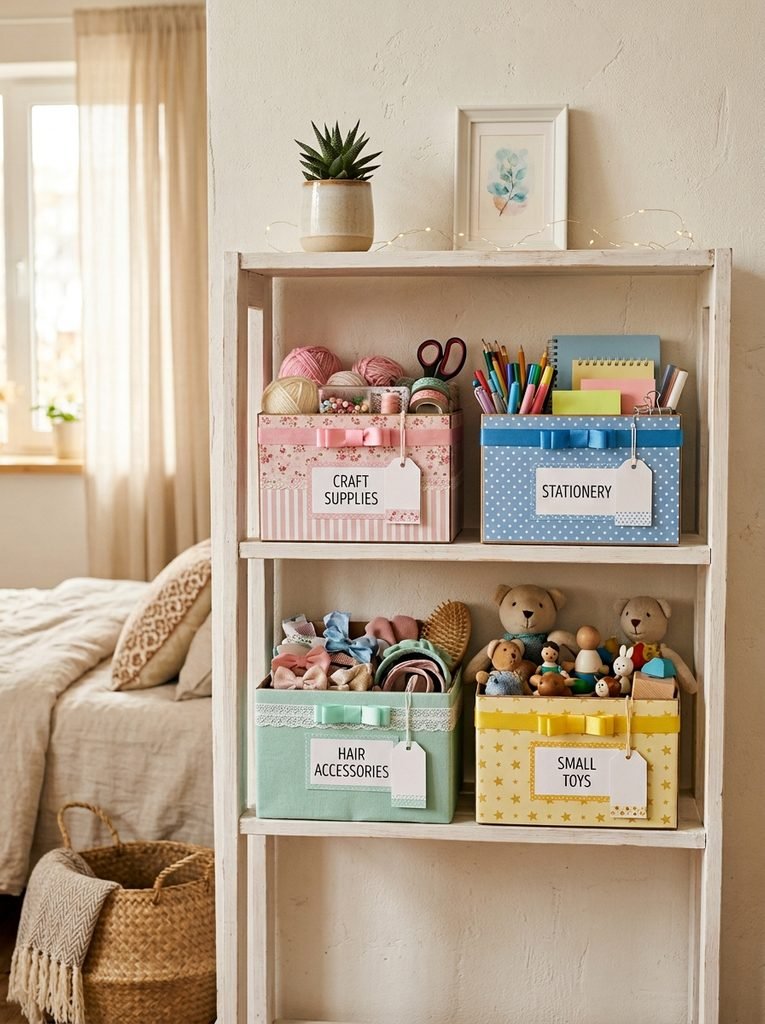
Turn a sturdy box into useful room storage. Cover it with fabric, paper, or paint and add a simple label. Use it for pencils, toys, hair accessories, craft supplies, or small collections. A practical project often becomes the most useful one because it gives the finished craft a real job in everyday life.
15. Cardboard Dollhouse
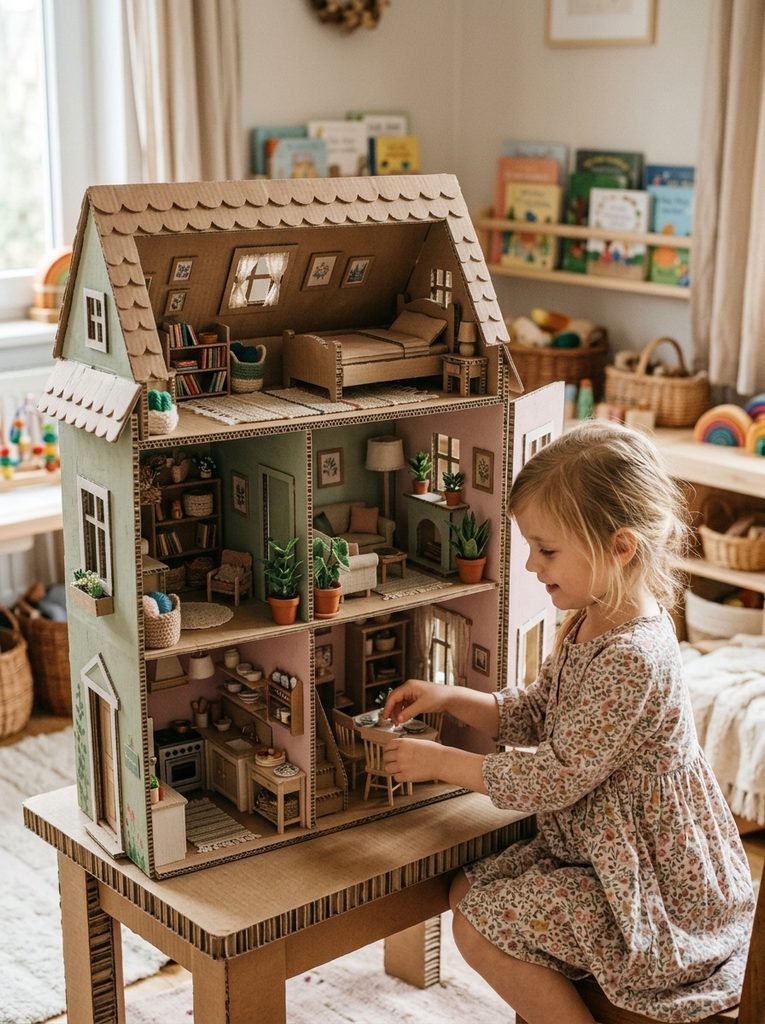
A large box can become a charming dollhouse. Divide it into rooms using cardboard panels, then add paper wallpaper, tiny beds, tables, rugs, shelves, and decorations. Children can redesign each room whenever they want. Adding removable furniture makes the house more flexible for pretend play.
16. Cute Cardboard Crafts as Personalized Gifts
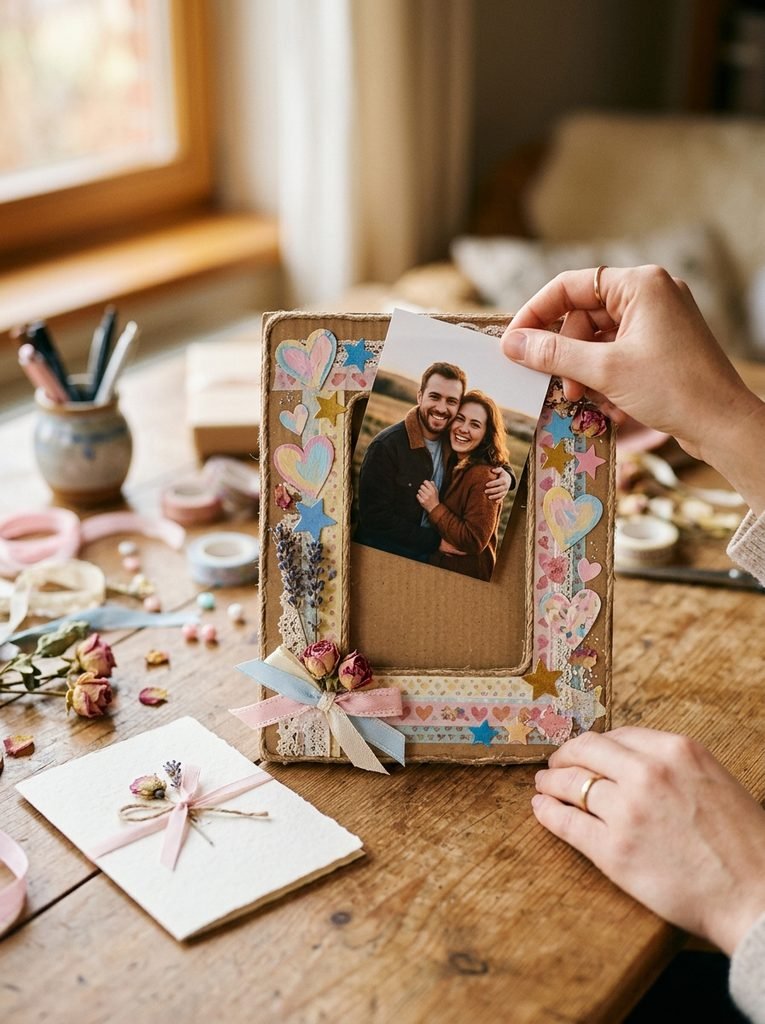
Make a personalized frame for a friend, parent, sibling, or girlfriend. Layer cardboard around the photo opening and decorate it with hearts, flowers, stars, or favorite colors. Handmade gifts feel special because the maker chooses details for one person. A short handwritten note can make the finished project even more meaningful.
17. Cardboard Craft Organizer
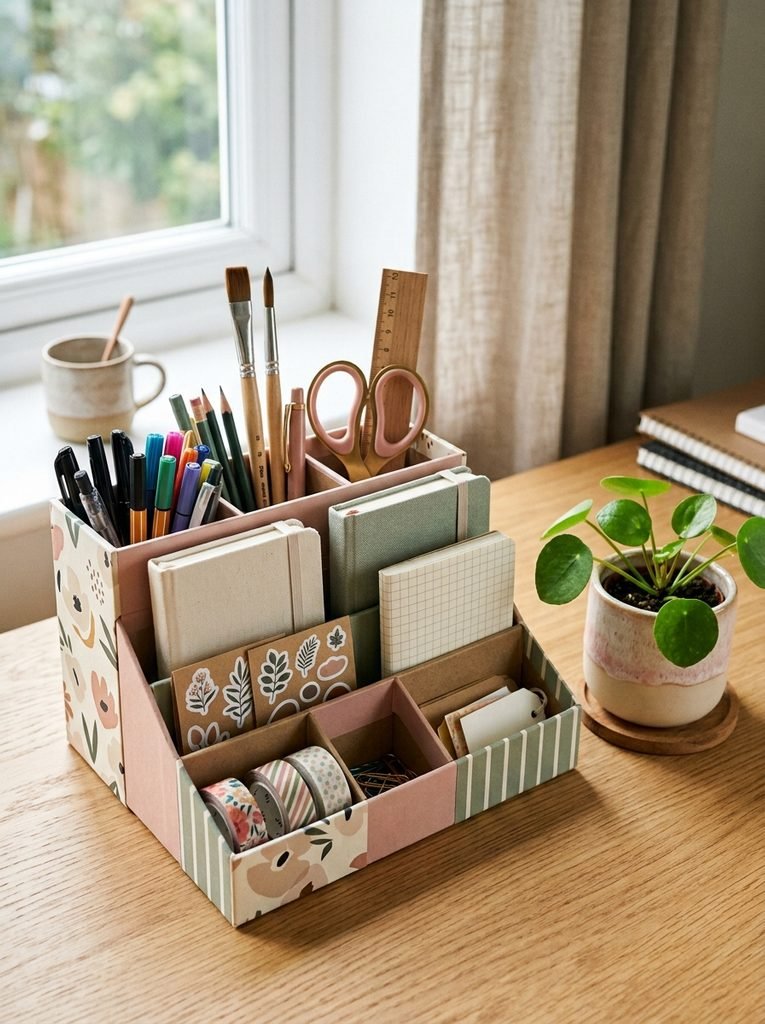
Create a desktop organizer from small boxes and cardboard tubes. Add sections for pens, brushes, scissors, notes, or stickers. Cover the pieces in matching paper for a clean aesthetic look that fits neatly on a shelf or desk. Different-sized compartments make the organizer more useful.
18. Cardboard Mini Shop
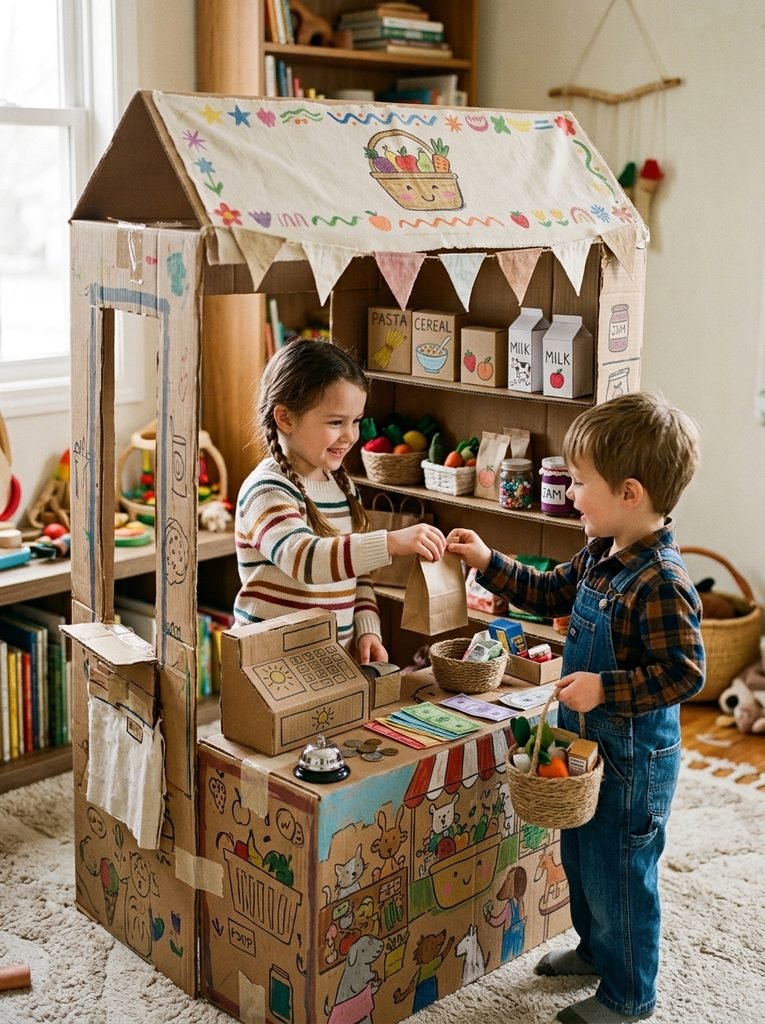
Finish with a small pretend shop. Build a counter, shelves, product boxes, and a simple checkout area. Add cardboard food, tiny signs, and reusable play money. Children can invent the shop’s theme and practice counting, conversation, and storytelling while they play. A bakery, toy shop, pet store, or craft shop can all start with one box.
How to Make Cute Cardboard Crafts More Creative
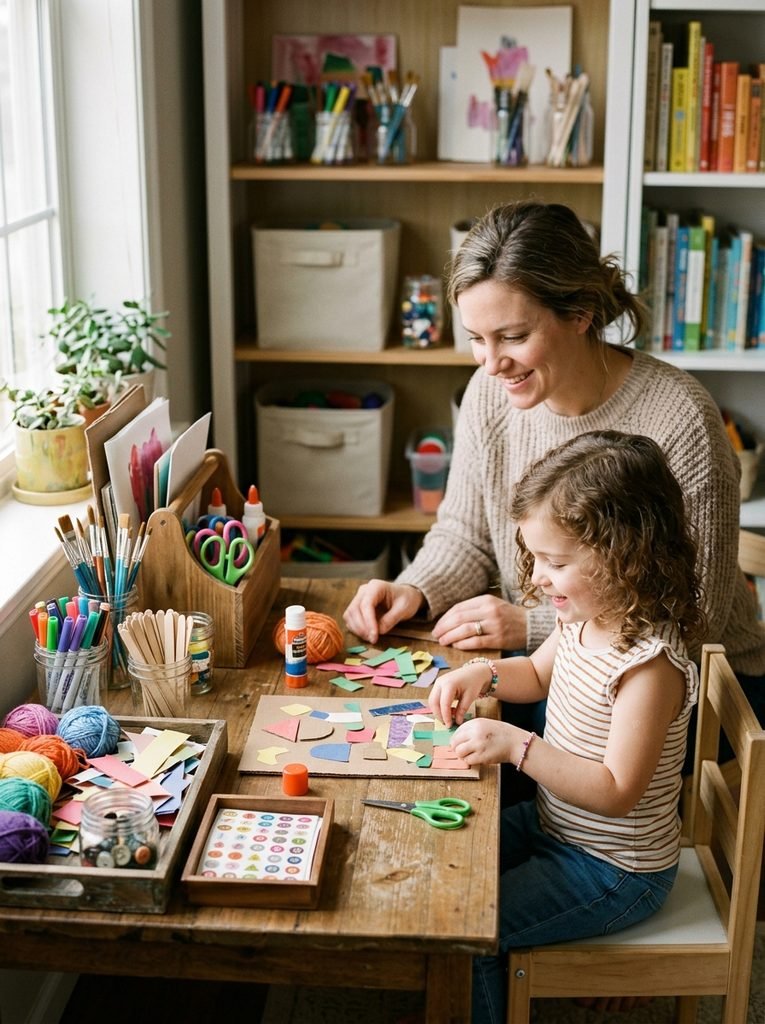
Give children materials rather than a strict model to copy. NAEYC recommends process-focused art because children can explore tools and materials, make choices, and create original work. Open-ended questions such as “What are you building?” and “How could you make that stronger?” can encourage children to explain their ideas and solve problems independently. Keep a craft box filled with clean cardboard, paper scraps, yarn, buttons, stickers, craft sticks, and safe tools. Choose materials that match the child’s age. Supervise scissors, hot glue, small pieces, and any cutting that requires force. Hot glue should stay with an adult. NAEYC also recommends using recycled and readily available materials for creative exploration instead of relying on expensive supplies..
Final Thoughts
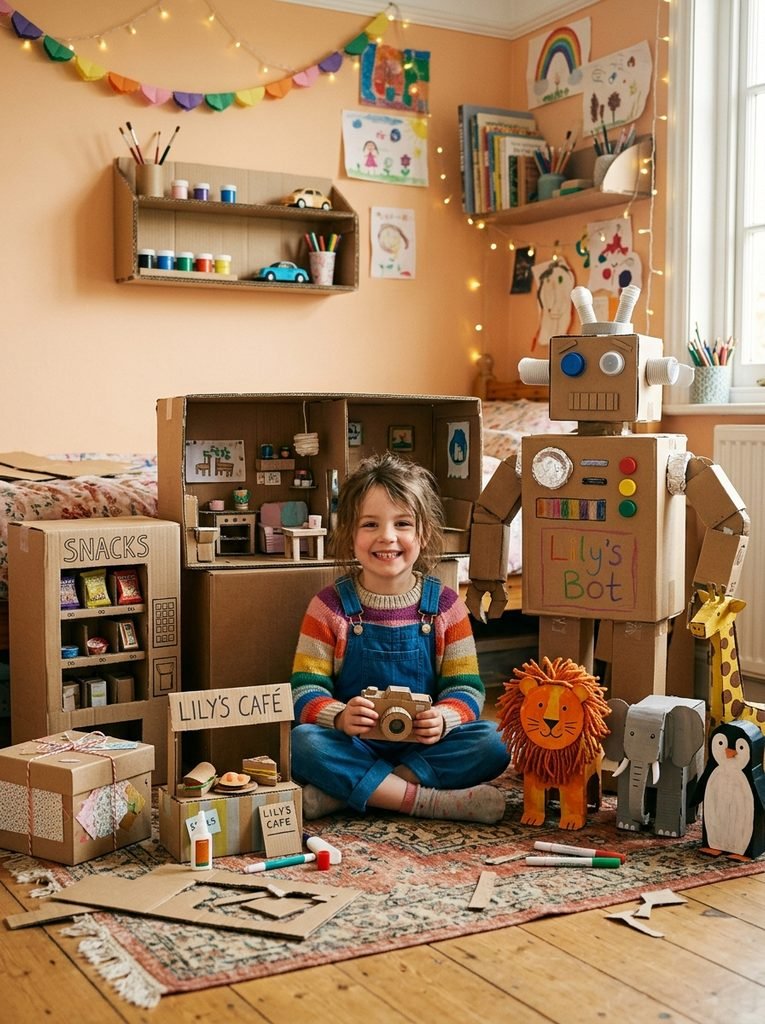
The best cute cardboard crafts start with a simple idea and leave plenty of room for imagination. A plain box can become room decor, a robot, an animal house, a vending machine, a gift, or a complete little world. Do not worry if the finished project looks different from the original plan. That difference is often where the most interesting creativity appears. Let children experiment, rebuild, decorate, and tell the story behind what they made. NAEYC notes that process-focused art values children’s exploration and original ideas rather than requiring every finished piece to match a predetermined example.