



This post may contain affiliate links. Please read my disclosure policy.
In This Article Show
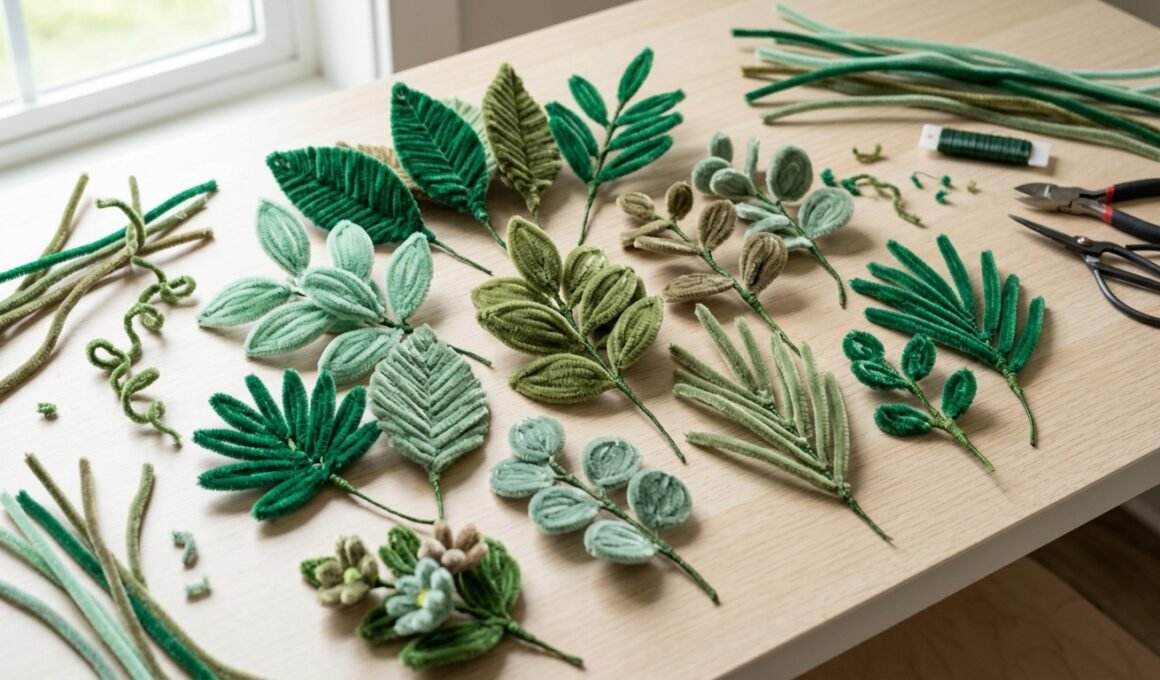
Leaves may look like a small detail in a flower arrangement, but they can completely change the appearance of a handmade design. They add color, texture, shape, and a natural finishing touch to flowers, bouquets, decorative pots, and miniature gardens. With flexible chenille stems, you can create leaves in different sizes and shades of green, from tiny rounded leaves to long, pointed shapes that resemble real foliage. You can also experiment with brown, olive, and lighter green tones to create unique seasonal decorations. The best thing about pipe cleaner leaves is that they are simple to customize. You can make individual leaves for a beginner-friendly craft, attach them to roses and sunflowers, or combine several stems to create decorative vines. They can also complement tulips, lilies, and hydrangeas, making your handmade flowers look fuller and more detailed. You do not need expensive materials or advanced crafting skills to get started. A few pipe cleaners, scissors, and a pencil for shaping curves are enough for many basic designs. In this guide, you will discover 18 creative ideas, including easy leaf tutorials, step-by-step shaping techniques, flower bouquet designs, decorative pots, and handmade vines. Each project includes a unique image prompt to help you visualize the finished creation. Whether you want to improve your flower-making skills or create beautiful DIY decorations for your home, these ideas will give you plenty of inspiration.

1. Simple Green Pipe Cleaner Leaves
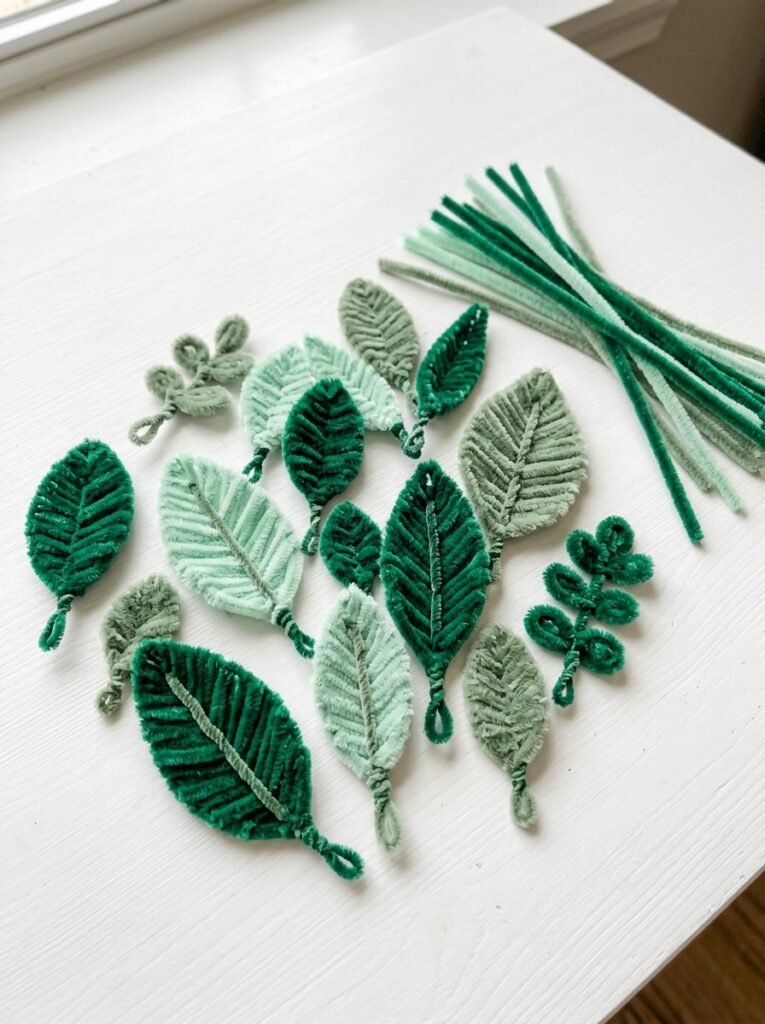
Simple green leaves are the perfect starting point for beginners because they require very little shaping. Take a green pipe cleaner, bend it into a narrow oval or pointed leaf outline, and twist the ends together to secure the shape. Gently pinch one end to create a tip, then curve the opposite end so it can attach to a flower stem. You can make several leaves in different sizes and use them to decorate roses, tulips, or small handmade plants. Light green creates a fresh appearance, while deeper green gives your finished project more contrast. This basic design is useful for almost every flower-making project.
2. Long Pipe Cleaner Leaves for Flower Stems
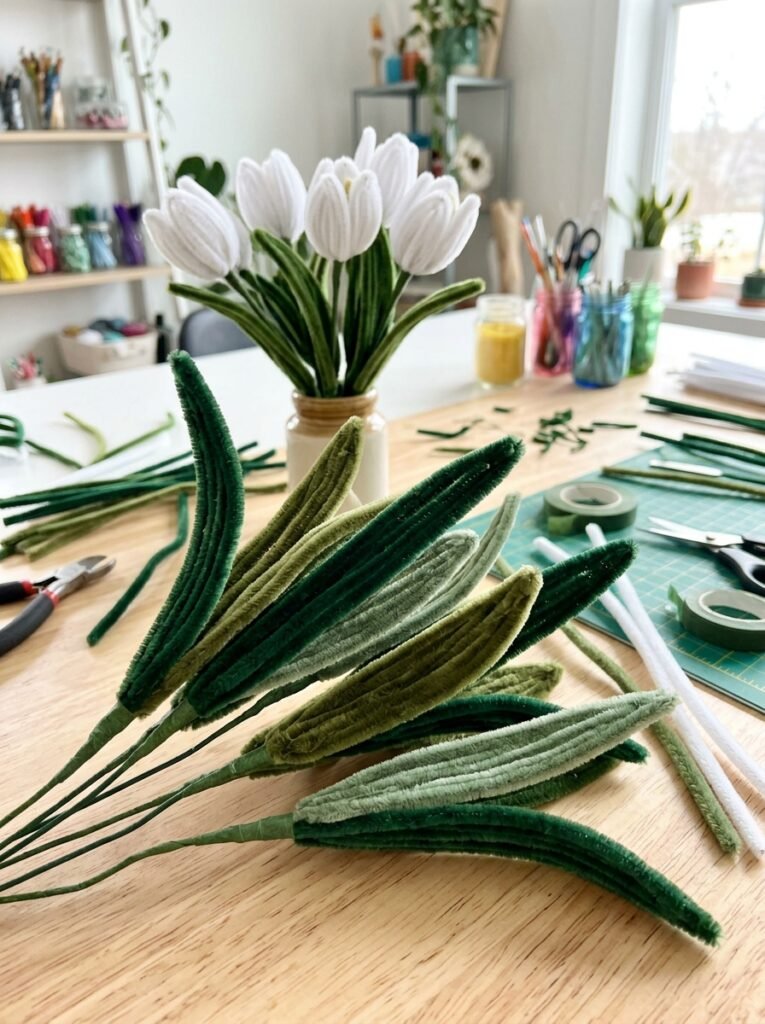
Long leaves are ideal for flowers with upright stems, such as tulips and lilies. To make them, bend a green pipe cleaner into an elongated shape with a pointed tip, keeping the middle slightly curved. Twist the lower end securely around the flower stem and angle the leaf outward. Making leaves in different lengths helps the flower arrangement look more natural. You can add one long leaf to a single flower or combine several leaves along a taller stem. This design is particularly useful when your handmade flowers look too bare and need additional greenery to balance their petals.
3. Pipe Cleaner Leaves for Roses
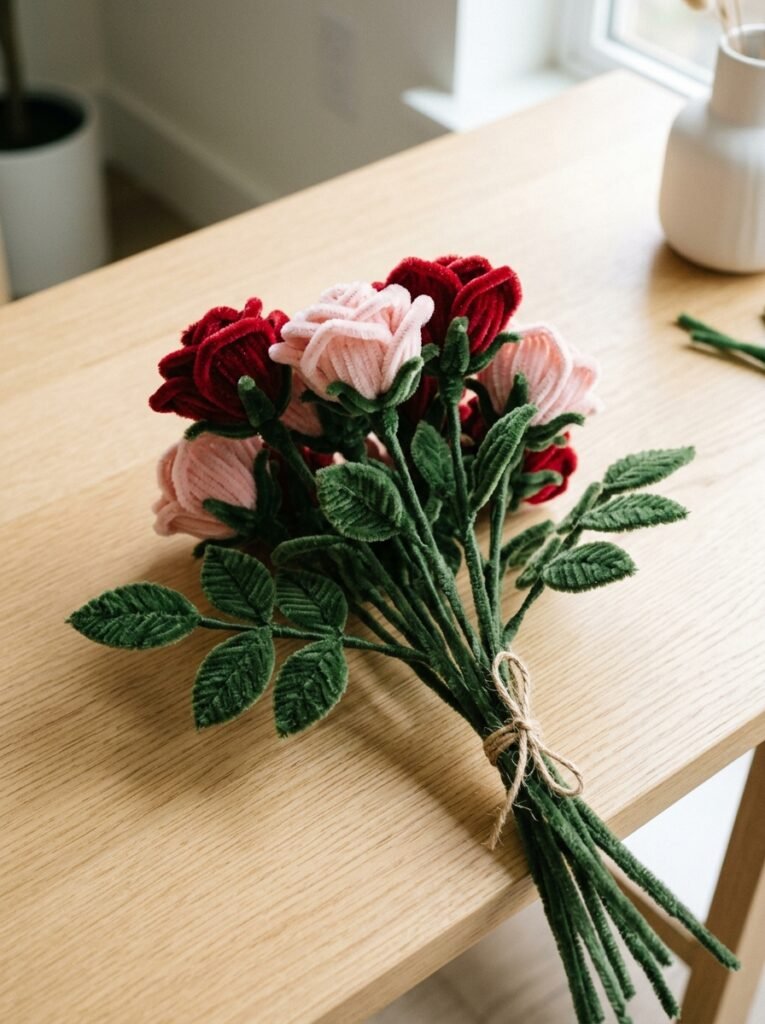
Roses look more complete when their stems include carefully shaped leaves. Use dark green pipe cleaners to create small pointed ovals, then gently pinch the ends to form recognizable leaf tips. Attach two or three leaves along each rose stem, varying their positions so they do not all face the same direction. You can also combine a darker green leaf with a lighter one to create visual depth. These leaves work especially well with red, pink, white, and purple roses. If you are making a rose bouquet, repeat the same basic leaf design across the flowers to create a coordinated and professional-looking arrangement.
4. Pipe Cleaner Sunflower Leaves
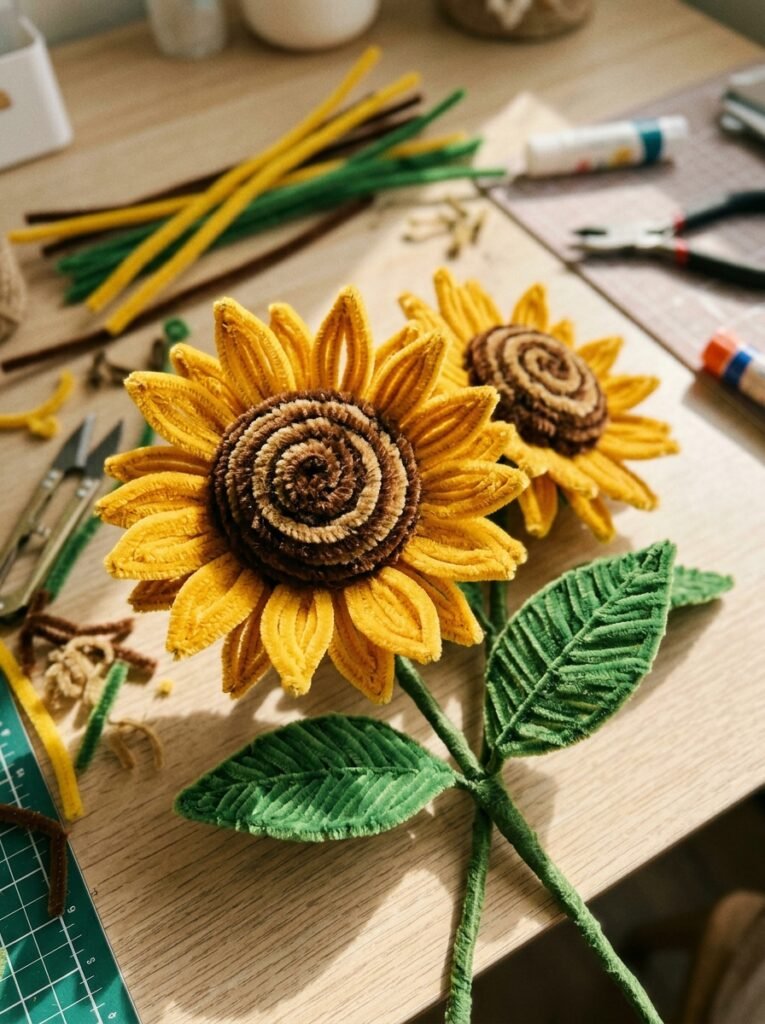
Sunflowers have broad green leaves that contrast beautifully with their bright yellow petals. For a handmade version, shape green pipe cleaners into slightly wider leaf forms with pointed ends. Gently bend the center of each leaf so it does not appear completely flat, then attach it below the sunflower head or along the stem. You can make two large leaves for a simple design or add smaller ones for a fuller appearance. Pairing these leaves with yellow petals and brown flower centers creates a recognizable sunflower. This project is ideal for summer decorations, flower bouquets, and cheerful handmade gifts.
5. Tulip Leaves Made from Pipe Cleaners
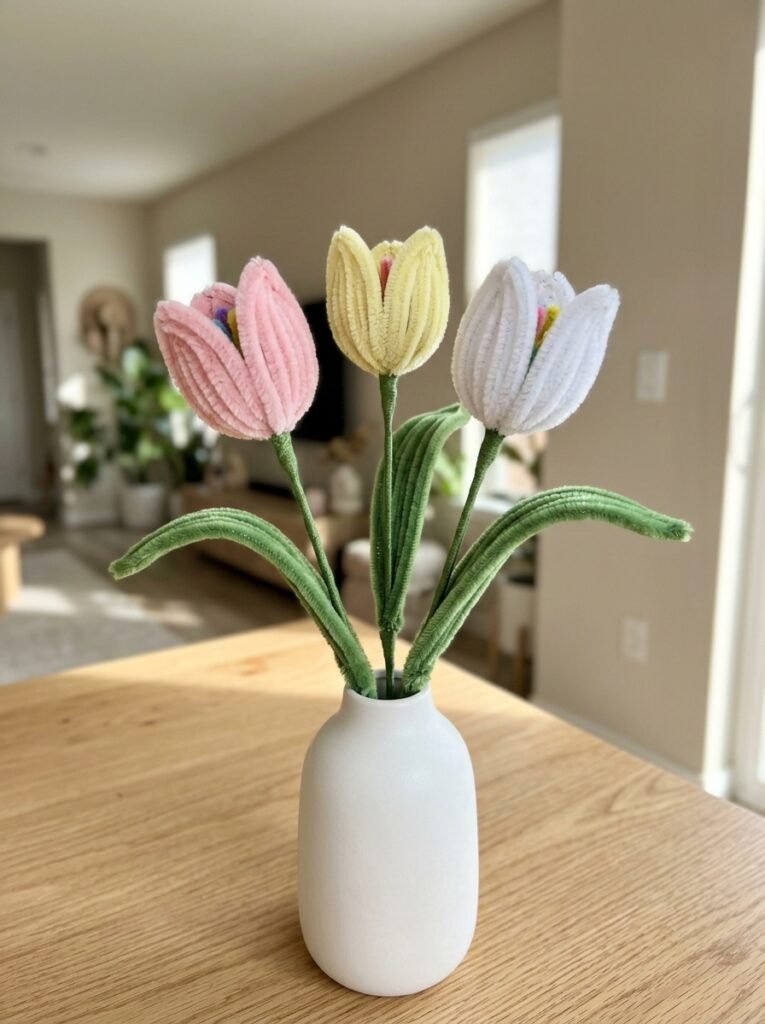
Tulip leaves are long, smooth, and slightly curved, making them different from the smaller leaves used on roses. To recreate this shape, bend a green pipe cleaner into a long, tapered form and curve it gently away from the stem. Attach the base securely, then adjust the tip so it points upward or outward. One or two leaves are usually enough for each handmade tulip because too much greenery can hide the flower. Try pairing white tulips with deep green leaves or pink tulips with softer green shades. These leaves are a useful detail for making individual tulips and complete tulip bouquets look more polished.
6. Lily Leaves with Long Green Shapes
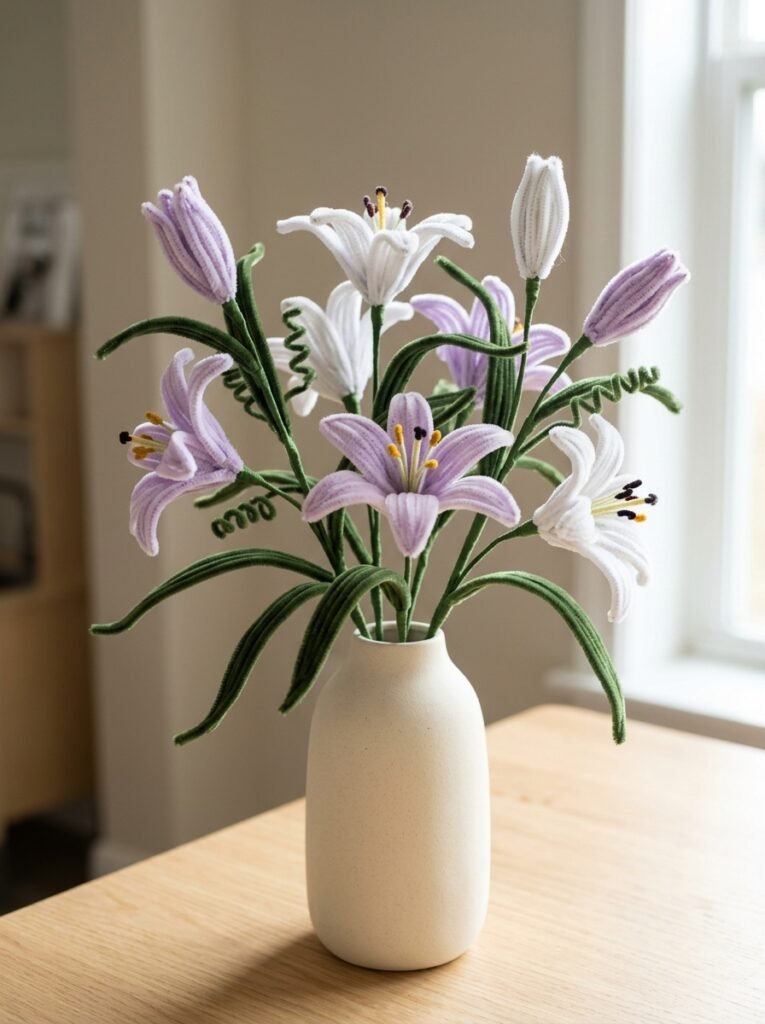
Lily-inspired leaves can give handmade flowers a graceful, elegant appearance. Instead of using short oval shapes, create long, narrow leaves that extend along the stem or spread outward from the base. Choose deep green pipe cleaners and bend them into gentle arcs, making sure the tips remain pointed. Attach the leaves at different heights so the flower does not look too symmetrical or stiff. These shapes complement white, pink, red, and purple lilies particularly well. When creating a bouquet, use a few long leaves between the flowers to add height and help the arrangement look fuller without overcrowding the petals.
7. Hydrangea Bouquet with Green Leaves
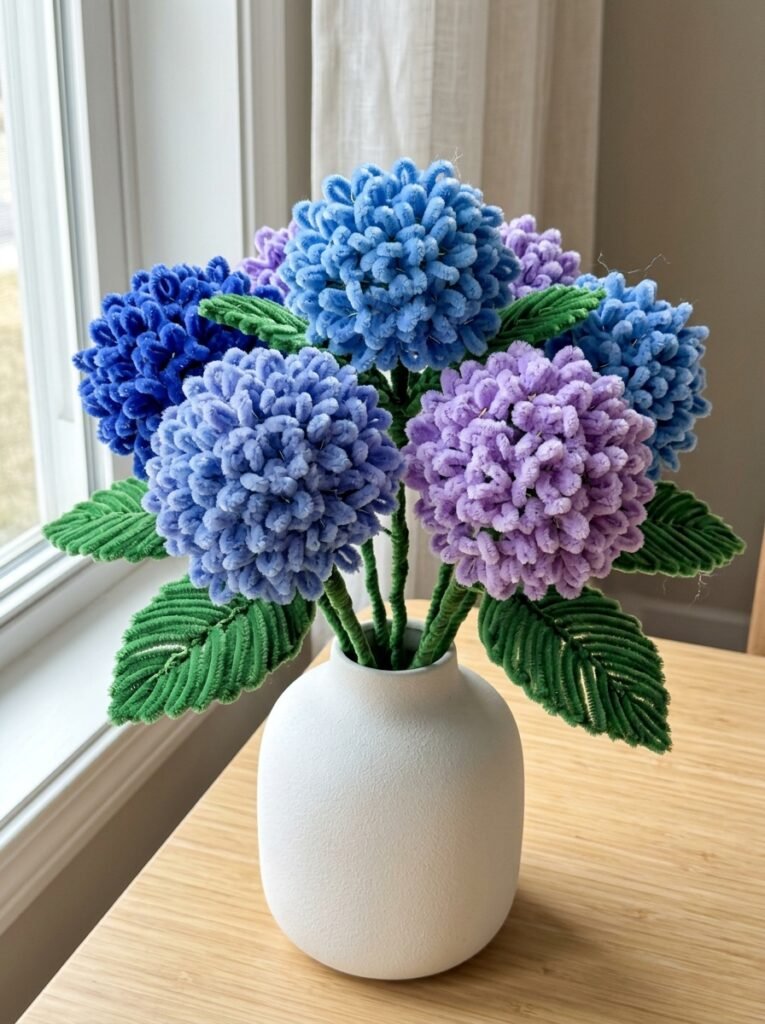
Hydrangeas have clusters of small flowers, so their leaves provide an important contrast to the rounded blooms. For a handmade hydrangea arrangement, create a cluster of tiny flowers in blue, lavender, pink, or white. Add several medium-sized green leaves around the cluster, using broad oval shapes with gently pointed ends. Place the leaves slightly below the flower heads so they frame the blooms without hiding them. You can make the foliage in different shades of green to create a fuller appearance. This design works well for decorative bouquets, handmade gifts, and modern flower arrangements.
8. Brown and Green Autumn Leaves
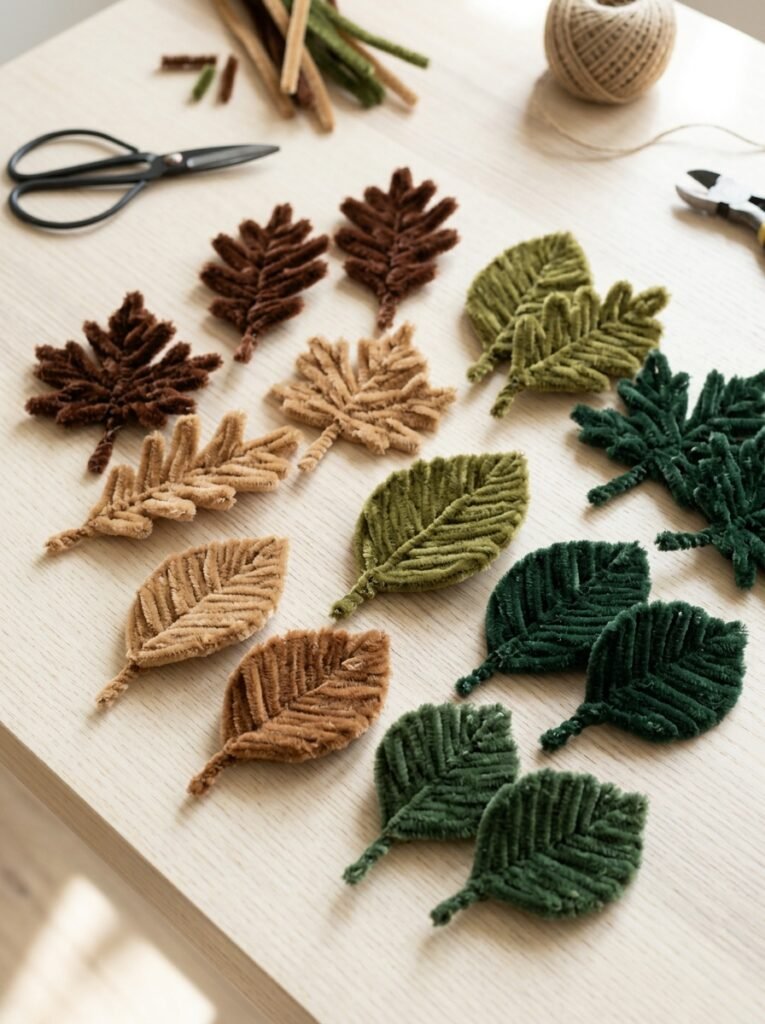
Brown and green leaves are a lovely option for autumn-inspired decorations and nature-themed crafts. Use brown pipe cleaners to create a few warm-toned leaves, then combine them with olive and dark green pieces for contrast. Shape the leaves into narrow ovals or pointed forms, and gently bend the edges to make each one slightly different. You can arrange them around handmade flowers, attach them to decorative vines, or place them in a small display pot. This design is especially useful when you want a seasonal palette without relying entirely on bright orange and yellow colors.
9. Pipe Cleaner Leaf Vines
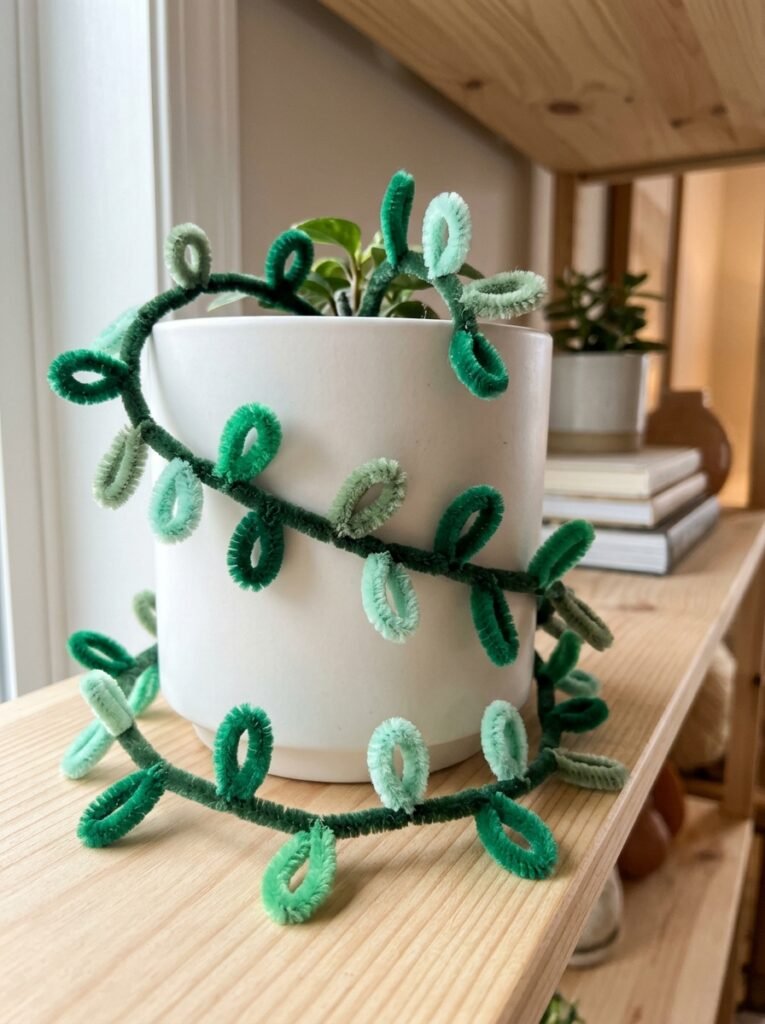
Decorative vines can bring a botanical touch to shelves, craft displays, and handmade floral arrangements. Start with a long green pipe cleaner or twist several pieces together to create a longer stem. Attach small leaves at regular intervals, alternating their directions so the vine looks more natural. You can make the leaves in different sizes and shades of green to add variety. Gently curve the finished vine around a decorative pot or along the edge of a display stand. If you plan to use it as room decor, keep it away from hot bulbs, electrical components, and anything that could damage the chenille material.
10. Pipe Cleaner Leaves for a Flower Bouquet
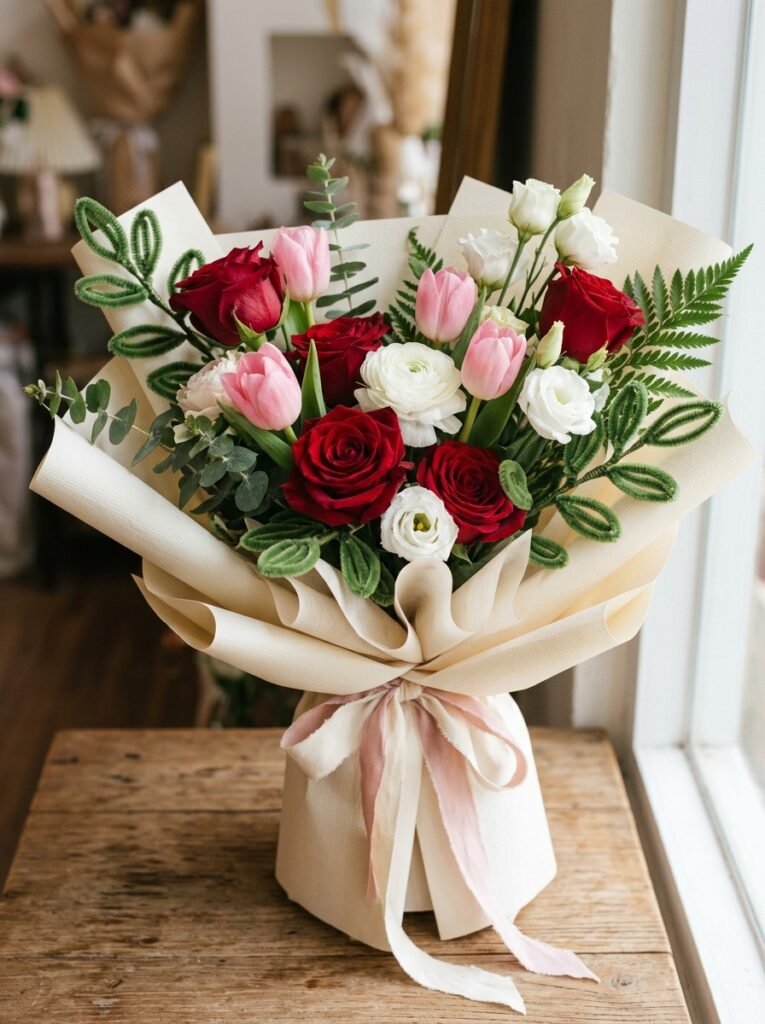
A bouquet can look sparse when the flowers are close together but have very little greenery. Adding handmade leaves between the stems helps fill the gaps and makes the arrangement look more balanced. Create leaves in two or three sizes, then attach them to the stems at different heights. Dark green works well with bright red or yellow flowers, while softer sage green complements pastel blooms. Arrange the leaves so they frame the flowers rather than cover their petals. This simple technique can improve the appearance of roses, tulips, lilies, and mixed flower bouquets without requiring additional flowers.
11. Mini Pipe Cleaner Leaves for Flower Pots
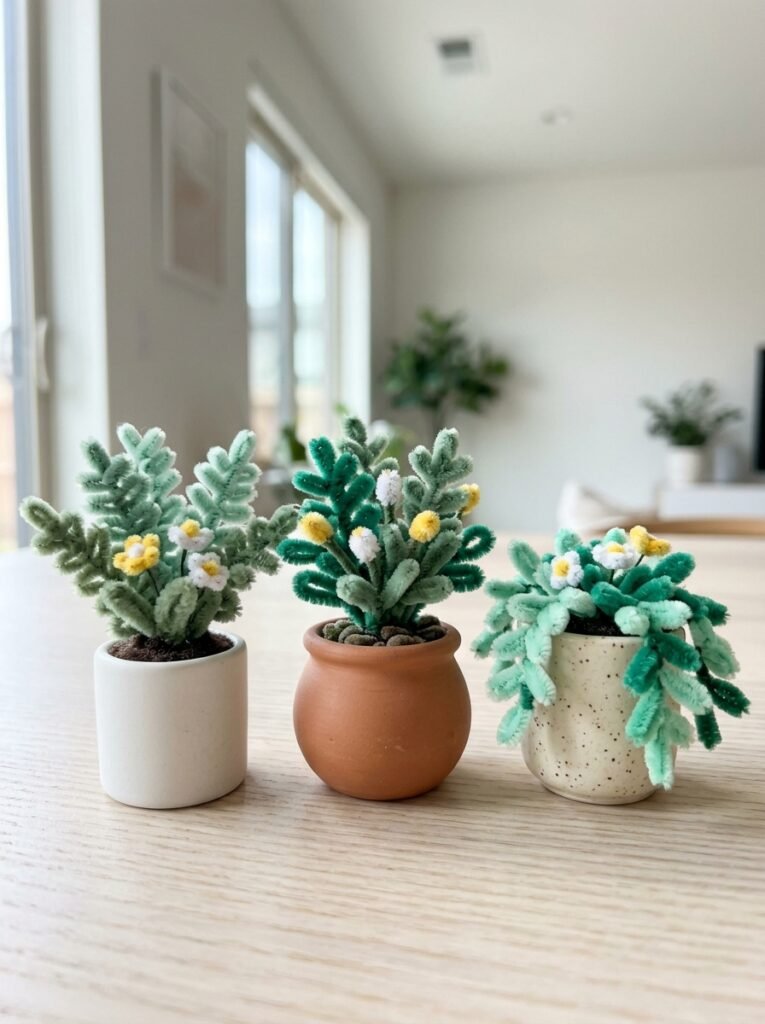
Small leaves are perfect for miniature plants and decorative flower pots. Create tiny oval or pointed shapes using short green pipe cleaner pieces, then attach them to small stems or combine several leaves around a central base. Use different green shades to make the arrangement more interesting while keeping the overall look coordinated. Place the finished pieces in a small pot with suitable filler to help them remain upright. You can use them on their own as miniature foliage or combine them with small handmade flowers. This is an easy way to create a decorative plant display for a desk, shelf, or craft corner.
12. Layered Pipe Cleaner Leaves
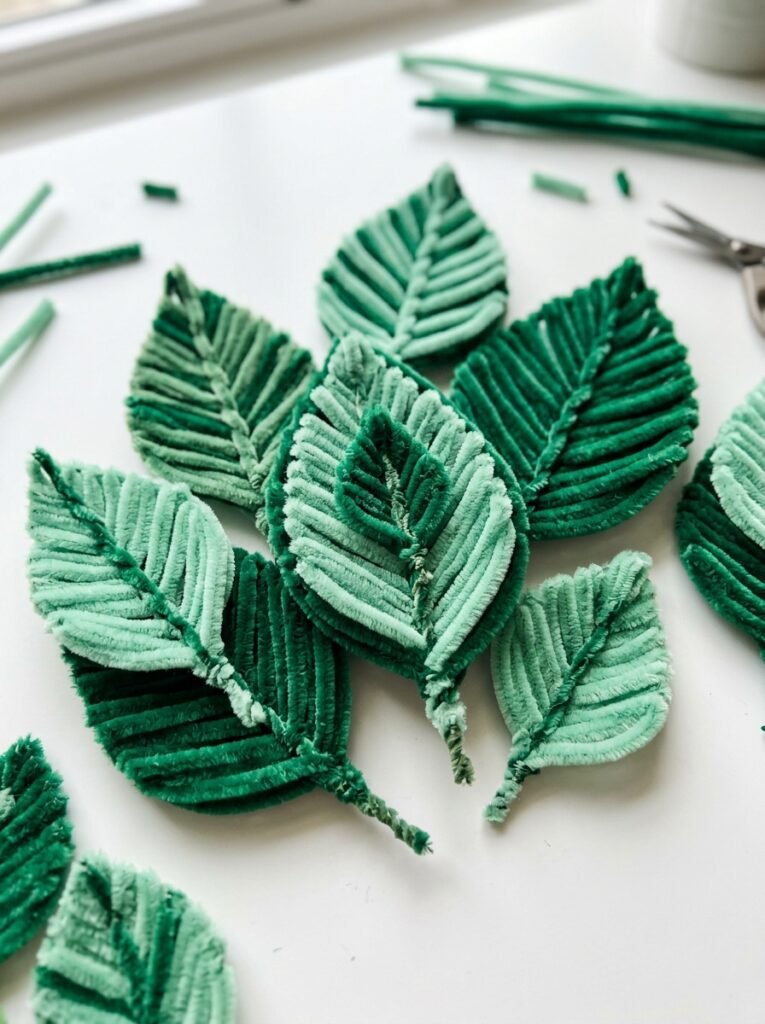
Layered leaves add more dimension than a simple flat outline. To make them, shape two green pipe cleaners into slightly different leaf sizes, then place the smaller leaf inside or alongside the larger one. Twist their bases together securely so the two shapes remain connected. You can use light green in the center and dark green around the outside, or reverse the colors for a different effect. These layered leaves work well on decorative plants, handmade flower stems, and larger bouquet designs. Because the shapes overlap, they create a fuller appearance without needing many extra materials.
13. Pipe Cleaner Leaves for a Pink Rose Bouquet
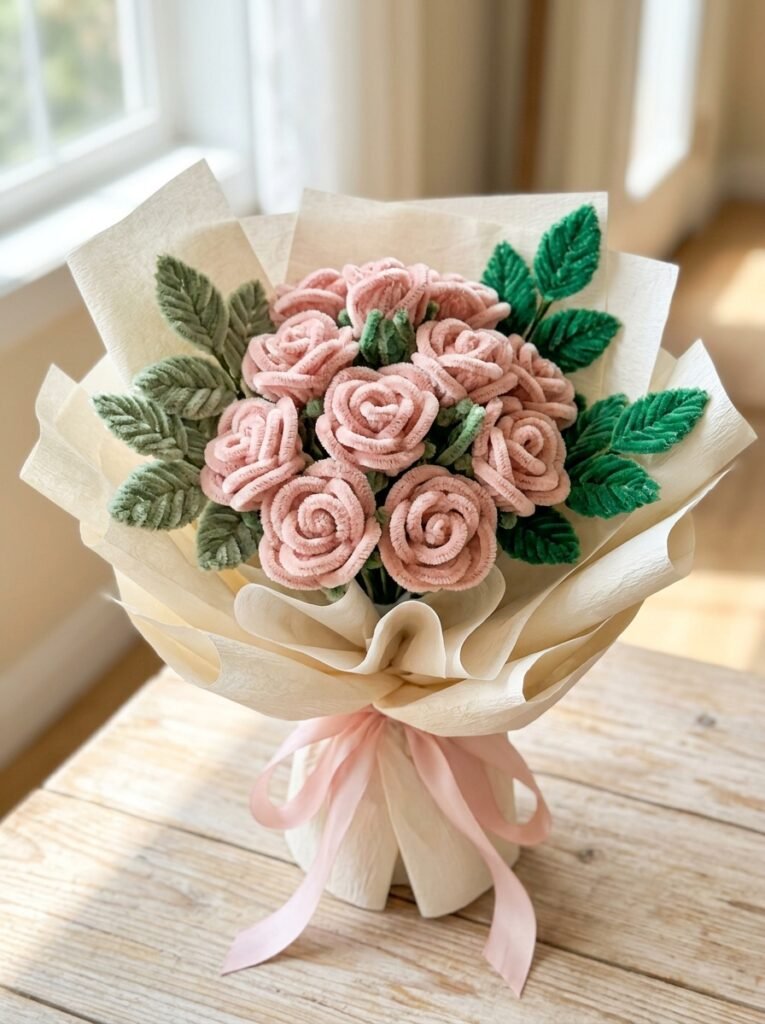
Pink roses look especially beautiful when paired with green foliage that creates a gentle contrast. Use medium and dark green pipe cleaners to make pointed leaves with slightly curved edges. Attach two or three leaves to each rose stem, placing some close to the flower head and others farther down. This creates a layered effect that helps the stems look more complete. For a soft bouquet aesthetic, combine blush pink roses with sage green leaves and cream wrapping paper. If you prefer a brighter design, choose vivid pink roses and emerald green foliage. Matching the leaf color to the bouquet style helps the entire arrangement feel intentional.
14. Easy Leaf Tutorial for Beginners
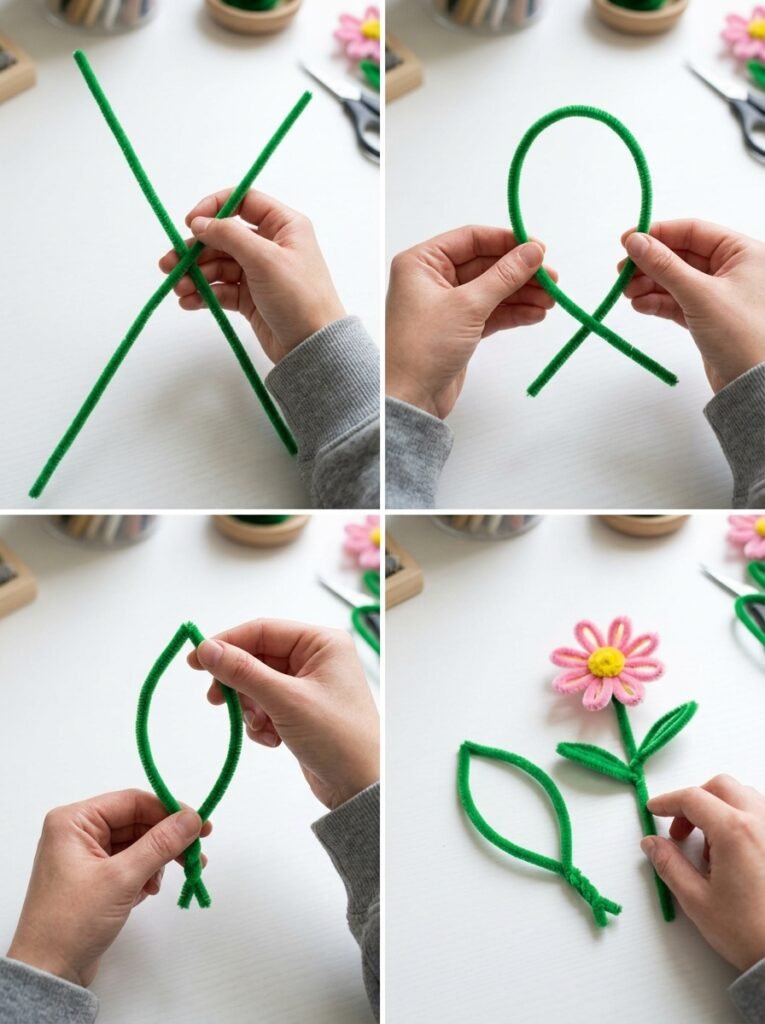
If you are new to making leaves, begin with a single green pipe cleaner and a simple pointed shape. Fold the material into a narrow loop, pinch one end into a tip, and twist the base together. Gently press the middle to create a slight curve rather than leaving the leaf completely flat. Attach the base to a flower stem or keep it separate for later use. Once you understand the basic shape, experiment with longer leaves, wider leaves, and different shades of green. Practicing a few simple shapes first makes it easier to create consistent foliage for larger bouquets.
15. Long Trailing Vines for Modern Decor
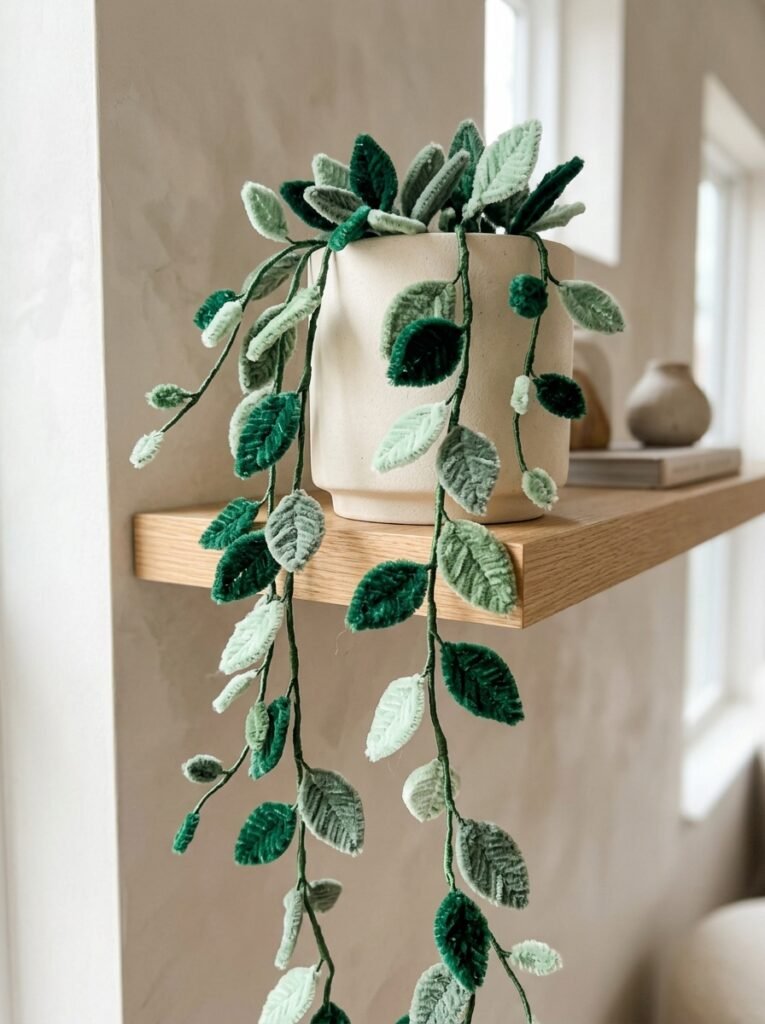
Long trailing vines can be used to decorate a craft display, shelf, or decorative plant arrangement. Twist several green pipe cleaners together to create a flexible main stem, then attach small leaves along its length. Alternate leaf directions and vary their spacing to avoid a repetitive appearance. You can gently curve the vine around the outside of a flower pot or let it trail along a display surface. For a more realistic look, combine dark and light green leaves rather than using a single shade throughout. Make sure the finished vine is supported properly and does not hang near heat sources or electrical equipment.
16. Sunflower and Green Leaf Arrangement
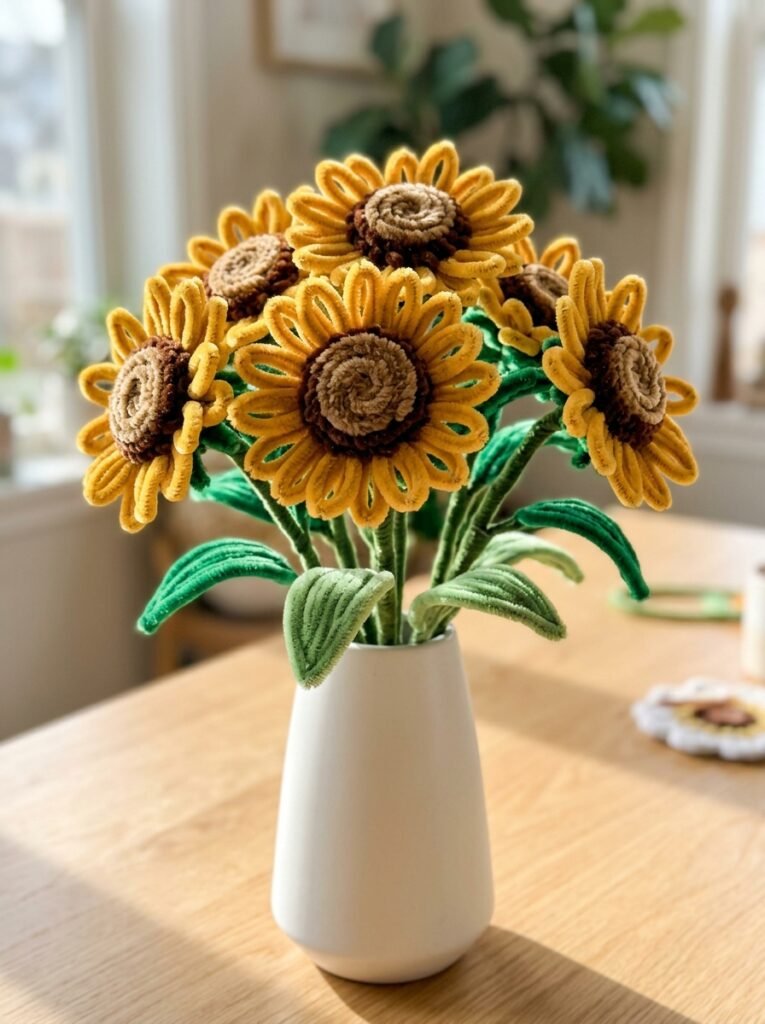
Sunflowers have large, bright petals, so the leaves should complement the flower rather than compete with it. Create several broad green leaves and attach them just below the flower head or farther down the stem. Use a darker green for contrast against yellow petals and a lighter shade for smaller leaves. If you are creating several sunflowers, keep the leaf style consistent but vary their positions slightly. Arrange the finished flowers in a modern vase or use them in a handmade bouquet. This combination is especially attractive for summer decor and cheerful DIY gifts.
17. Mixed Flower Leaves with Tulips and Lilies
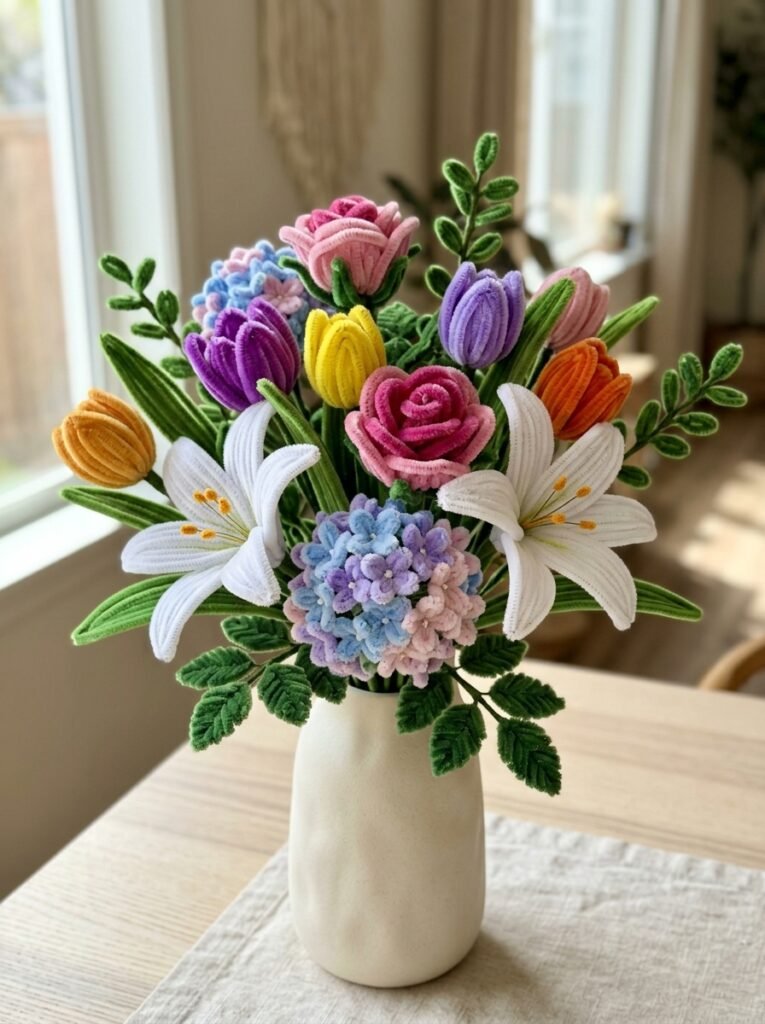
When a bouquet contains different flower types, the leaves help create a consistent visual style. Tulips usually pair well with long narrow leaves, while lilies look attractive with longer, outward-curving foliage. Roses often benefit from smaller pointed leaves, and hydrangeas work well with broader oval shapes. You can make these different leaf types from the same green pipe cleaners by changing the length and curve. Keep the green tones coordinated so the arrangement feels unified. This approach is especially useful when creating a mixed bouquet with several flower shapes and colors.
18. Decorative Leaf Branches
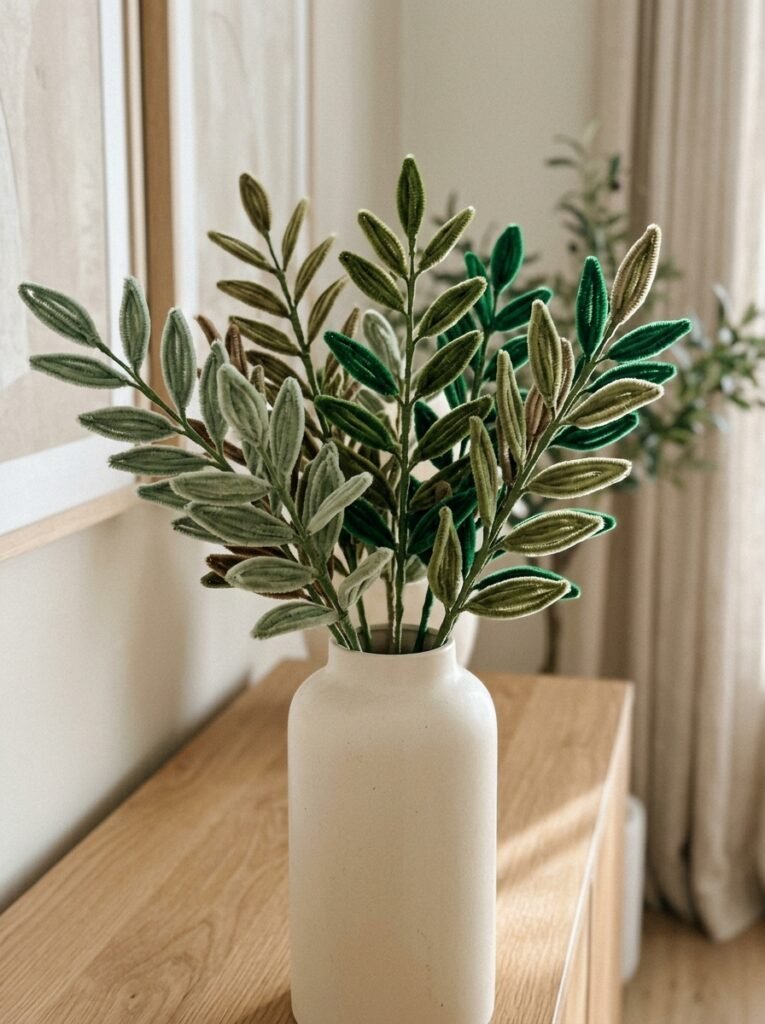
Leaf branches are a simple way to create greenery for vases, table arrangements, and modern handmade decor. Start with one long green pipe cleaner as the main branch, then attach smaller pieces along both sides to form individual leaves. Make some leaves slightly longer and others shorter so the branch looks natural. You can use a combination of sage, olive, and emerald green, or introduce a few brown leaves for a seasonal display. Place several branches in a tall vase on their own, or combine them with handmade flowers to add height and fullness to a bouquet.
How to Make Pipe Cleaner Leaves Step by Step
Making leaves is easier when you begin with a simple outline and then add the details. Once you understand the basic shape, you can change the length, width, and curve to create different types of foliage.
Materials You Will Need
- Green pipe cleaners in different shades
- Scissors suitable for the materials, used carefully
- A pencil or marker to help shape curves
- Finished flower stems or a decorative pot, if needed
- Optional brown pipe cleaners for seasonal leaves
Step 1: Choose the Leaf Shape
Decide whether you want a short oval leaf, a pointed leaf, or a long narrow leaf. Use a short piece for small decorative plants and a longer piece for tulips, lilies, and trailing vines.
Step 2: Bend the Pipe Cleaner
Fold the pipe cleaner into a loop that resembles your chosen leaf shape. Pinch one end to create a pointed tip and twist the base to keep the form secure.
Step 3: Add a Natural Curve
Gently bend the leaf so it is not completely flat. A slight curve gives the shape more dimension and makes it easier to position beside a flower stem.
Step 4: Attach the Leaf
Wrap the base around the flower stem or main vine and twist it securely. Check that the leaf stays in place and that the exposed wire ends are folded inward.
Step 5: Make Different Sizes
Repeat the process with shorter and longer pieces. Use small leaves for roses, long leaves for tulips and lilies, and a mix of shapes for decorative vines or mixed bouquets.
How to Make a Pipe Cleaner Leaf Bouquet
A leaf-only bouquet can create an attractive minimalist decoration, especially when you use several shades of green. Make a collection of long branches with different leaf shapes, then arrange the stems at varied heights in a modern vase. Place taller branches toward the center and shorter ones around the sides. Add a few brown or olive leaves if you want more color variation. For a fuller floral arrangement, combine the leaf branches with handmade roses, tulips, or sunflowers. Keep the overall color palette coordinated so the foliage adds texture without making the arrangement look crowded.
Tips for Better Results
- Use different greens: Emerald, sage, mint, and olive create more depth than a single shade.
- Vary leaf sizes: A mix of small and large leaves helps your handmade plants look more natural.
- Shape the tips carefully: Pointed ends work well for tulips and lilies, while rounded leaves suit other decorative plants.
- Secure every connection: Twist leaf bases firmly around the stem and check that they do not slide.
- Avoid overcrowding: Leave enough space between leaves so their individual shapes remain visible.
- Work safely: Supervise children, use scissors carefully, and tuck exposed wire ends inward.
Final Thoughts
Small details can make a major difference in handmade flower arrangements, and leaves are one of the easiest ways to add that finishing touch. From simple green shapes and long tulip leaves to sunflower foliage, rose leaves, and decorative vines, these ideas offer plenty of ways to customize your DIY projects. The beauty of pipe cleaner leaves is that you can use the same basic technique for many different designs. Start with a simple shape, practice making consistent leaves, and then experiment with different colors and sizes. Whether you are decorating a flower pot, improving a bouquet, or creating a miniature botanical display, a little patience can turn ordinary chenille stems into attractive handmade greenery.