

This post may contain affiliate links. Please read my disclosure policy.
In This Article Show
Mittens are the most gifted knit of the Christmas season, and for good reason. They are quick, they use one skein, everyone needs them, and a hand knitted pair in festive colors feels far more personal than anything from a shop.
This list has a pair for every hand on your gift list: colorwork mittens with Christmas trees and snowflakes, thrummed mittens for the coldest days, plain red classics for beginners and tiny fuzzy pairs for little hands. The first three are full spotlights with materials and original pattern notes.
Every photo shows a real finished pair, and several show the mittens mid knit, so you can see exactly how the cuff, thumb and shaping look before you start.
If you are new to mittens, do not be put off by the thumb. It is just a small gusset of increases and a few stitches held on waste yarn, and by your second pair you will wonder what the fuss was about.
Quick Picks
- Fastest: Idea 7, the classic plain red mittens in worsted wool, one pair in a weekend
- Warmest: Idea 3, the thrummed mittens with a fleecy inside for the coldest days
- Most festive: Idea 1, the Christmas tree mittens in green, red and cream colorwork
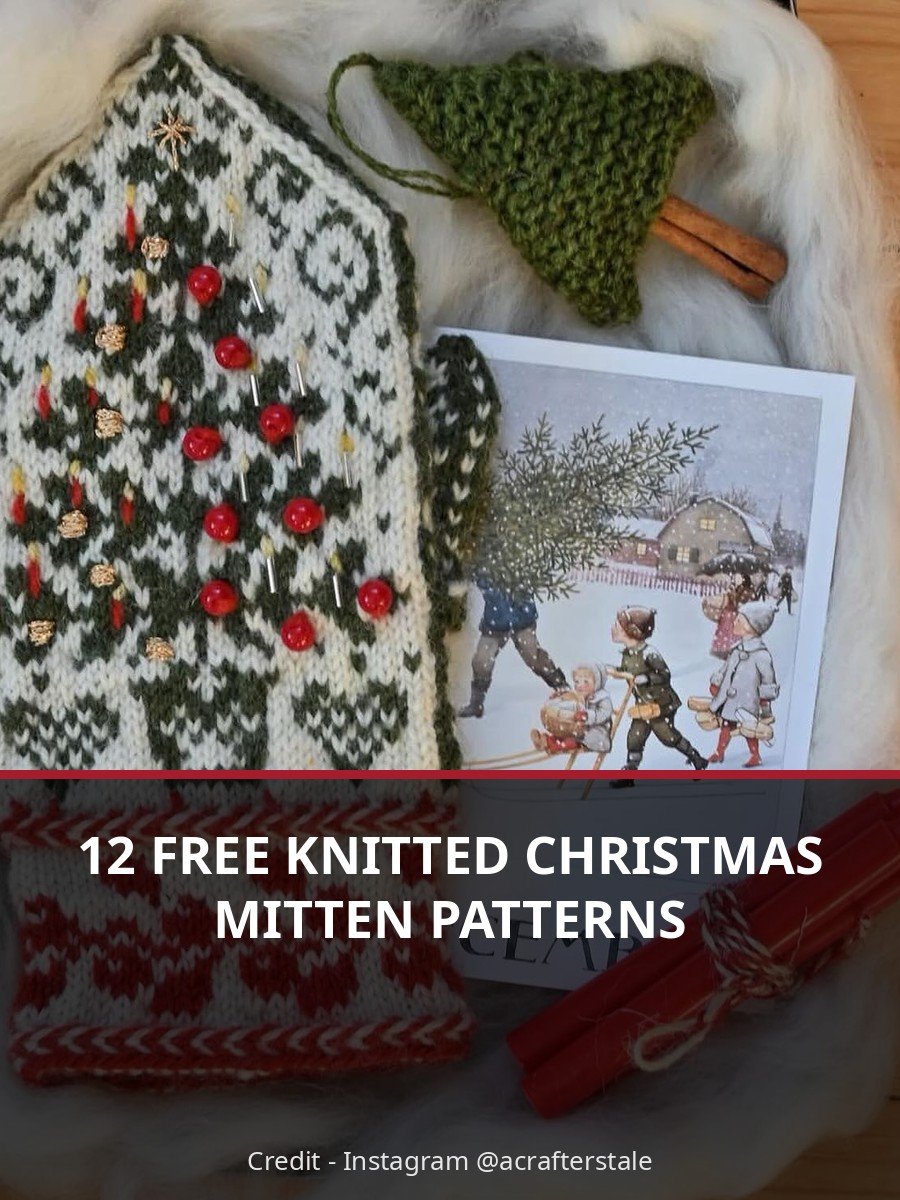
1. Christmas Tree Mittens in Aran Weight
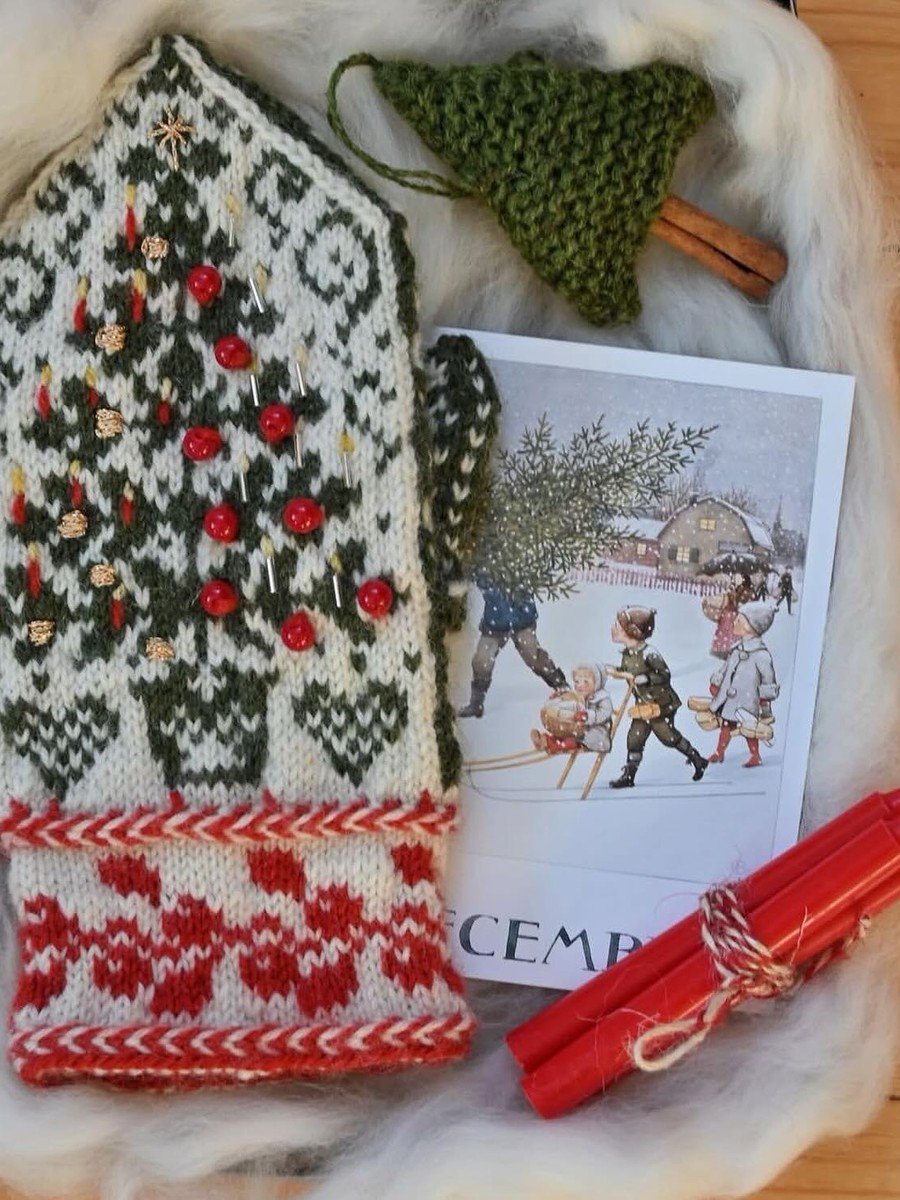
A whole decorated Christmas tree, knitted into the back of a mitten in green, red and cream, with a ribbed cuff banded in festive colorwork. The maker calls these her favorite Christmas pattern, and in aran weight they knit up faster than fine mittens, so a pair before Christmas Eve is very doable. A wool aran like Patons Classic Wool in Aran gives the crisp stitch definition colorwork needs.
⏱ 6 to 8 hours a pair💲 Low🛠 Medium
Materials Needed
- Aran weight wool in cream, green and red
- DPNs or a long circular for magic loop
- Waste yarn for the thumb stitches
- Tapestry needle and small scissors
Pattern Notes
- Cuff: cast on in cream and knit a 2×2 rib for about 6 cm, adding one short band of red and cream pattern stitches near the top of the cuff if you like the look in the photo.
- Hand: set up your tree chart centered on the back of the hand stitches, keeping the palm in plain cream so the floats never snag.
- Thumb gusset: increase 2 stitches every other round at one side of the palm until the gusset is wide enough, then slip those stitches onto waste yarn and keep knitting the hand.
- Top: when the mitten reaches the tip of the little finger, decrease at both sides every round for a rounded top, then graft or draw through the last stitches.
- Thumb: pick the held stitches back up, add a couple from the gap, and knit plain to the thumb’s length before decreasing and closing.
- Weave in the colorwork ends and block gently so the tree sits flat and proud.
Tip: Keep colorwork tension loose, even looser than feels right. Mittens need to stretch over a hand, and tight floats will stop them at the knuckles.
2. Simple Red Mittens for Gift Knitting
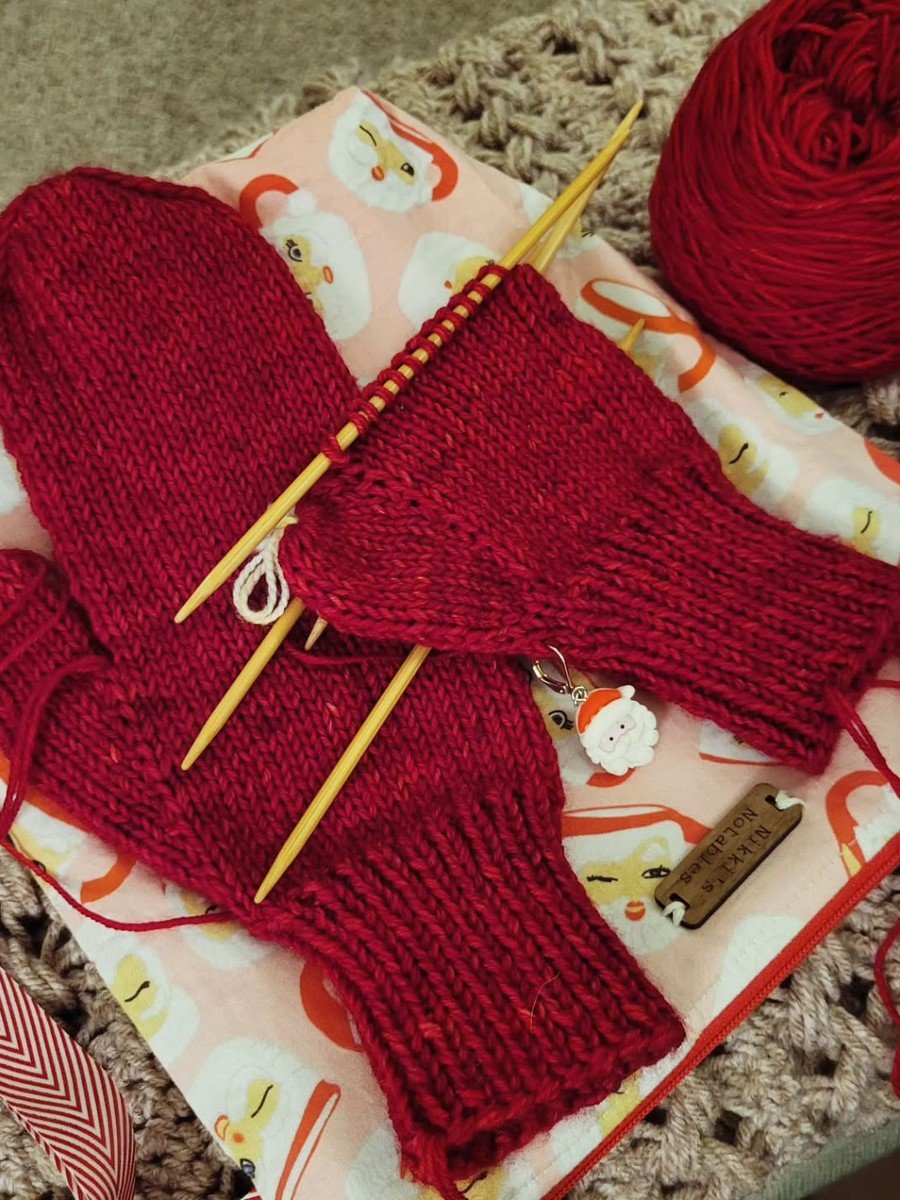
One mitten done, one on the needles and a mum at the top of the gift list: this is December knitting as it really happens. The pattern is the simple kind with a ribbed cuff, a thumb gusset and a rounded top, worked in the happiest poinsettia red. A straightforward mitten like this is the best first mitten a beginner can make, and the photo shows exactly where the thumb gusset stage looks mid knit.
⏱ 4 to 5 hours a pair💲 Low🛠 Easy
Materials Needed
- Worsted or aran yarn in a festive red, about 100 g
- Set of double pointed needles to match
- Waste yarn or a stitch holder
- A tape measure for the wearer’s hand
Pattern Notes
- Measure the hand around the knuckles and knit a small swatch; mittens want a firm fabric, so aim for a slightly tighter gauge than the ball band suggests.
- Knit the cuff in 2×2 rib for 6 to 7 cm, then stockinette until you reach the base of the thumb.
- Work the thumb gusset with paired increases every other round, hold those stitches, and finish the hand plain.
- Try the mitten on the real hand if you can. Length matters more than width: the top should clear the middle fingertip by a whisper.
- Knit the thumb last, picking up two extra stitches at the join so no hole opens.
Tip: Knit both mittens’ cuffs first, one after the other, before either hand. Second mitten syndrome is real, and matching cuffs keep the pair progressing together.
3. Thrummed Mittens, the Warmest Mittens You Can Knit
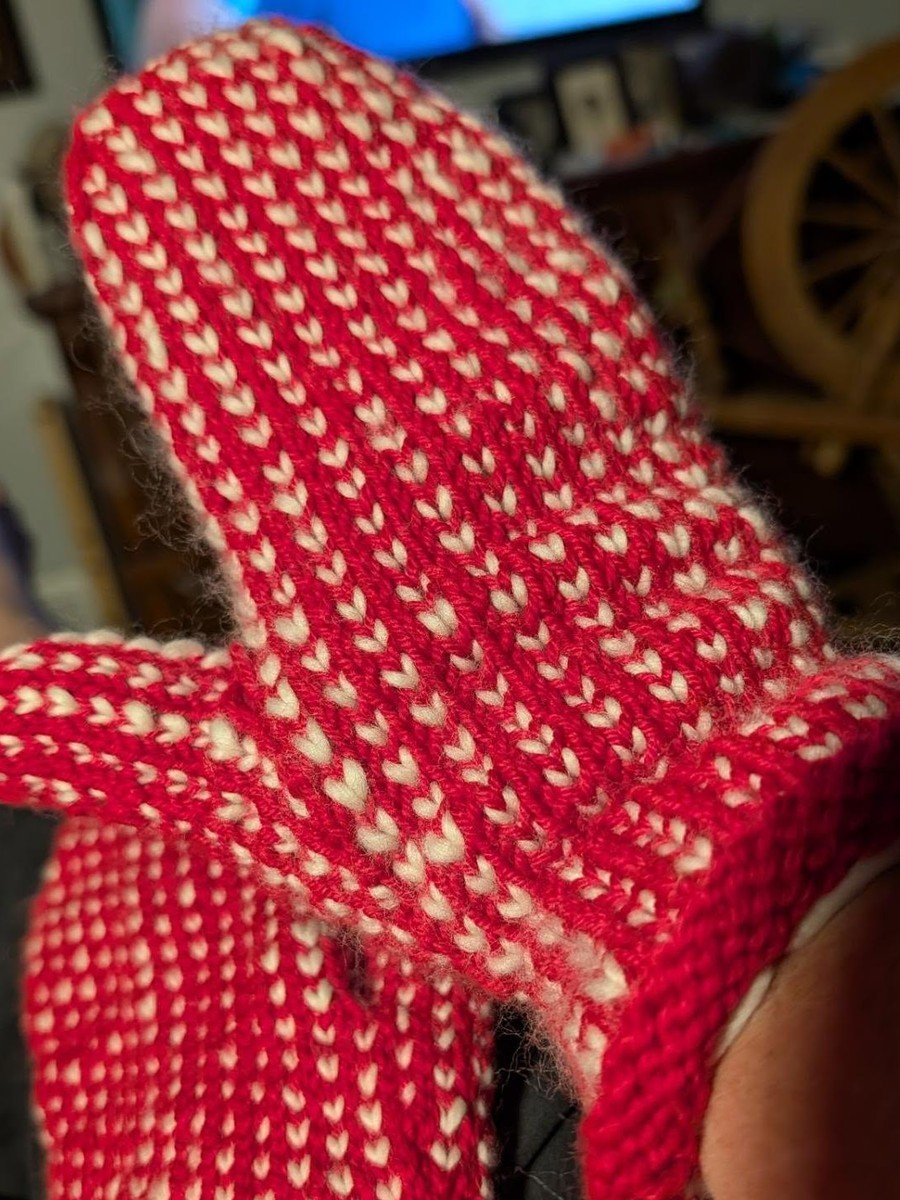
Look closely at the little cream flecks worked into this red mitten: those are thrums, short tufts of unspun wool roving knitted into the fabric, which fluff up inside into a fleecy lining. Thrummed mittens are the warmest hand knits there are, the pair you reach for in real cold, and these were finished as a handmade Christmas gift. Plain wool roving like Clover Natural Wool Roving is exactly what you need for the thrums.
⏱ 6 to 7 hours a pair💲 Medium🛠 Medium
Materials Needed
- Worsted wool yarn in red, plus white for a pattern if you like
- About 50 to 80 g of wool roving in a contrasting color
- DPNs to match the yarn
- Waste yarn for thumbs
Pattern Notes
- Prepare thrums first: pull the roving into pencil thin lengths, tear off pieces about 10 cm long, and twist each piece in the middle so it holds together.
- Knit the mitten plain until the hand section. On a thrum round, knit a stitch together with the middle of a thrum, laying the two ends inside the mitten.
- Space thrums every 3 to 4 stitches and every 4th row or so, staggered like bricks; here they are also arranged so the flecks form a heart on the back of the hand.
- On the round after a thrum round, knit the thrum stitch through the back loop to lock it in place.
- Shape cuff, gusset and top as for a plain mitten, keeping thrums out of the ribbing and the decreases.
Tip: Thrummed mittens feel tight and a little lumpy at first. Wear them for a day and the thrums felt into a smooth fleece that molds to the hand.
4. Red and White Mittens With Snowflakes and Reindeer
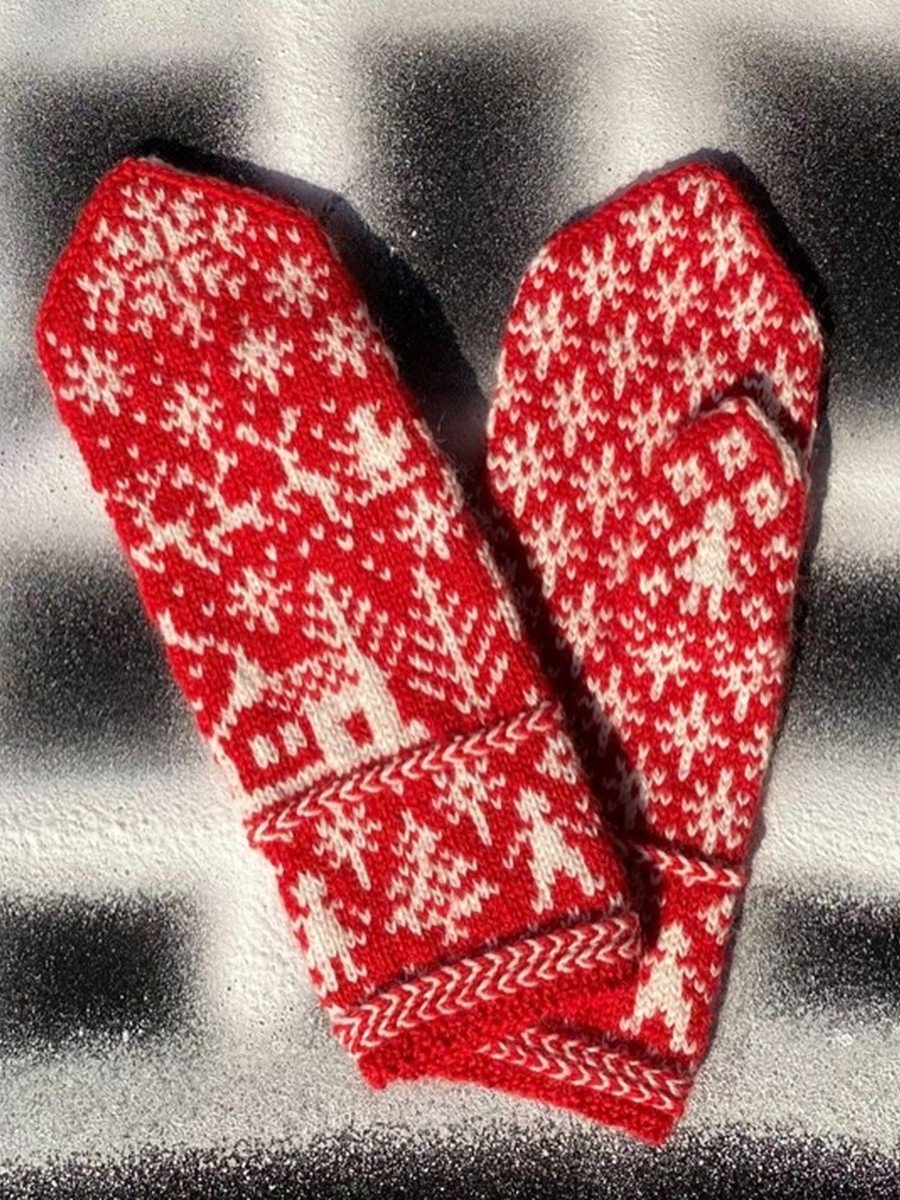
Snowflakes, a little house and reindeer all marching across one red and white pair: this is the full Christmas story in colorwork. Bands of pattern stack up the hand, so the knitting never gets dull, and the palette could not be more classic. If full colorwork feels like a lot, knit the same design with just the snowflake band and a plain hand.
You’ll need: Fingering or sport wool in red and white, and small needles.
Best for: Experienced colorwork knitters and showpiece gifts
5. Burgundy Mittens With a Big Cream Snowflake
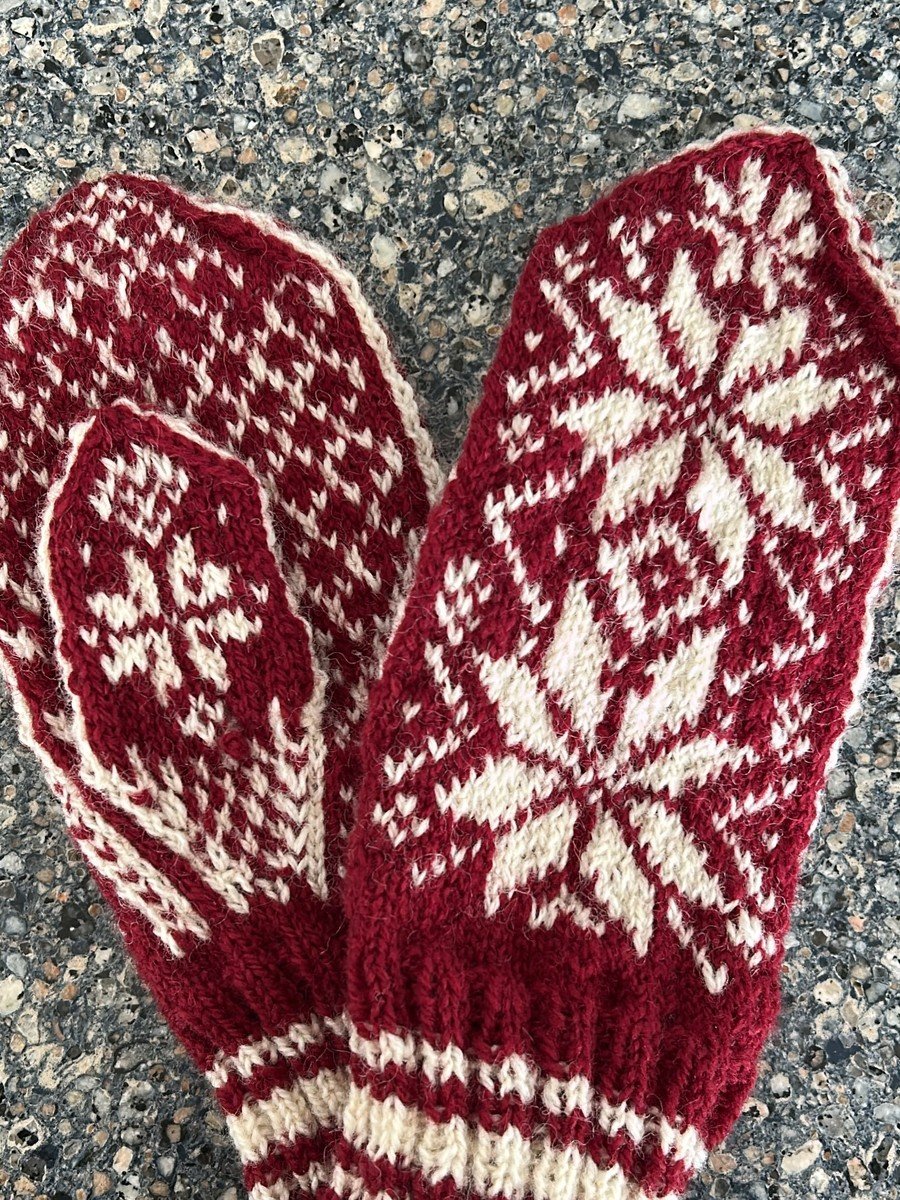
One big snowflake says Christmas without shouting. These burgundy mittens carry a large cream star snowflake across the back of each hand, with neat striped cuffs below. A single motif pair like this is a kind way to learn stranded knitting, because most of the mitten is one color.
You’ll need: Wool in burgundy and cream, and needles for stranded work.
Best for: First colorwork mittens and elegant gifts
6. Geometric Lattice Mittens in Fingering Weight
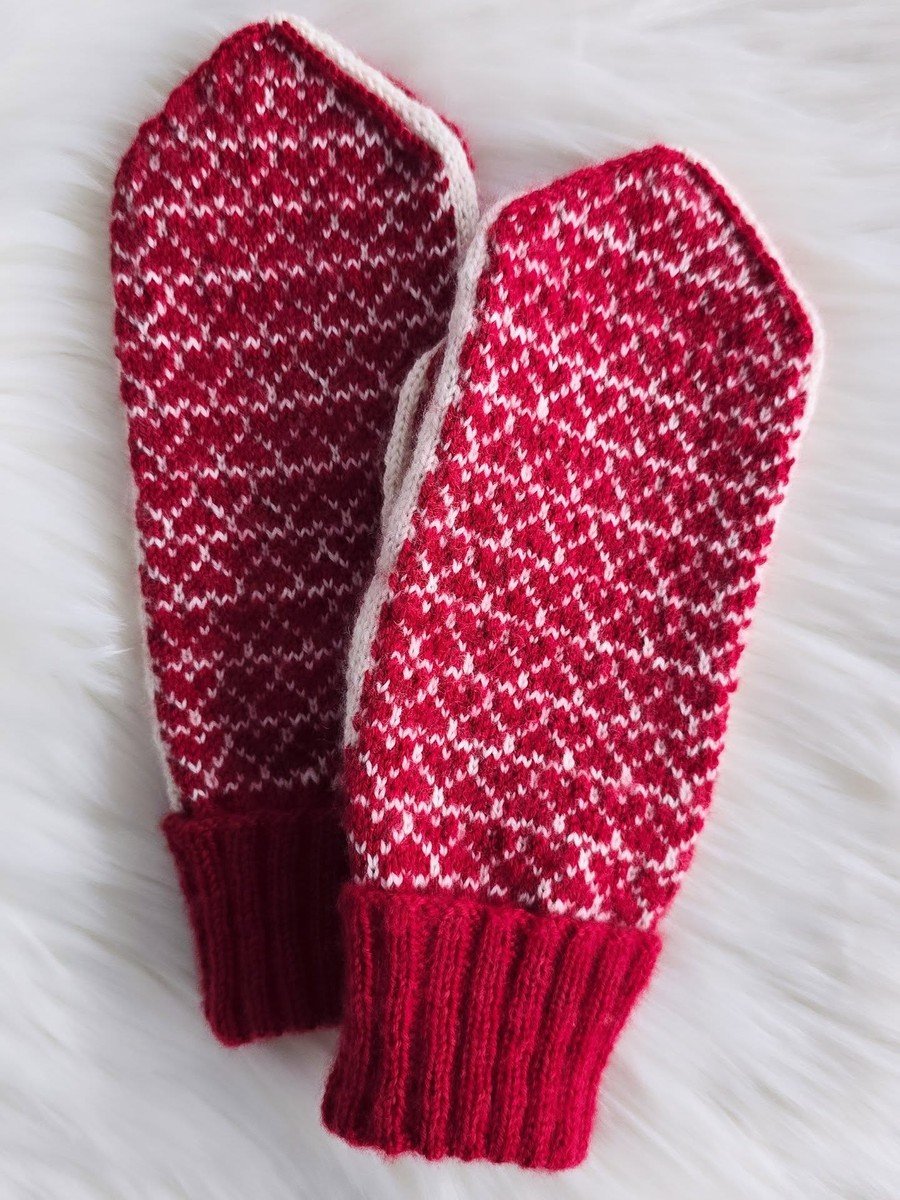
A fine white lattice over a rich pink red makes these mittens look almost woven. They are fingering weight, so they take longer, but the fabric is smooth, close fitting and surprisingly warm, with no long floats to catch thanks to the small repeating pattern. One size fits most hands, says the designer, which helps when the gift is a surprise.
You’ll need: Fingering yarn in two colors, about 50 g each, and fine DPNs.
Best for: Patient knitters and close fitting dressy mittens
7. Classic Plain Red Mittens in Worsted Wool
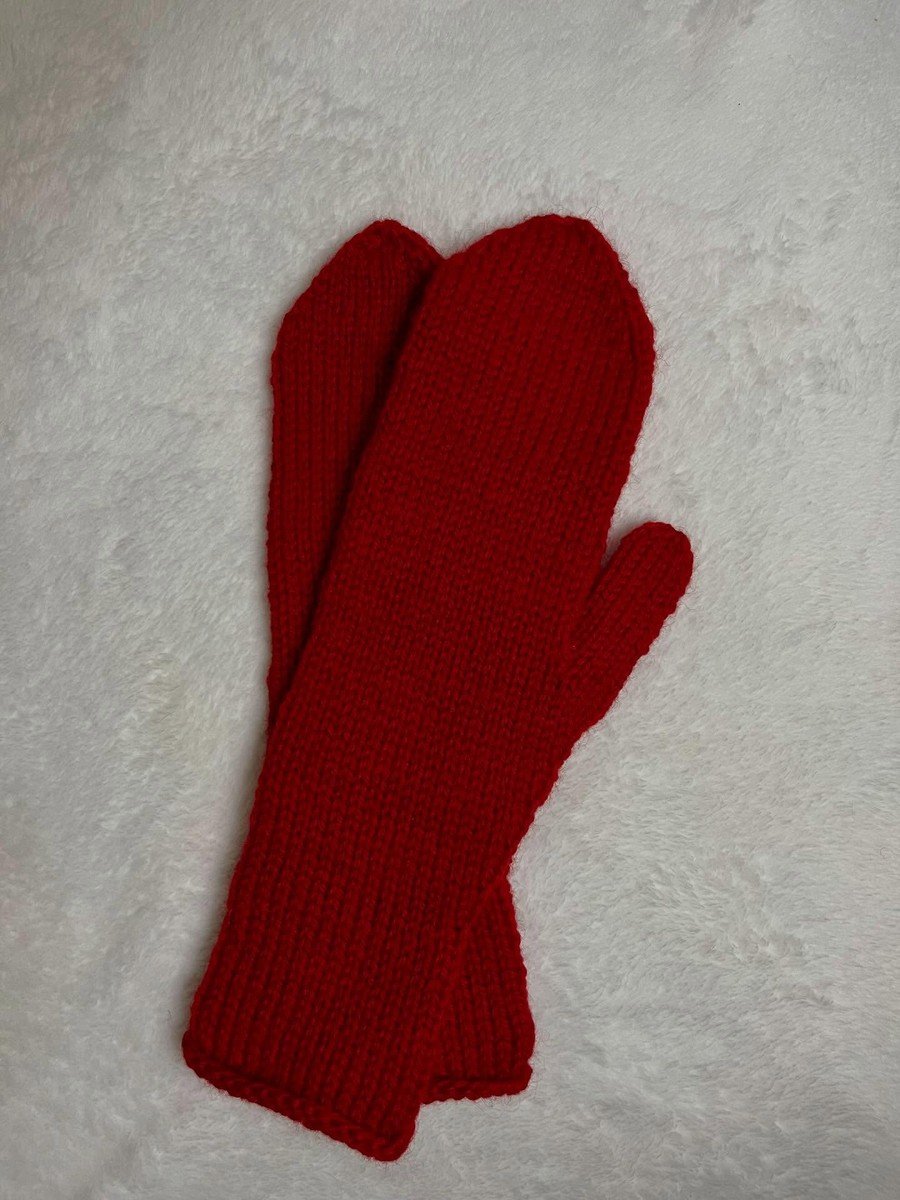
No pattern, no fuss: just a perfect plain red mitten in classic worsted wool. Every mitten knitter needs this recipe in their head, because it becomes gloves for the school run, spares for guests and the base for every decoration idea, from embroidered snowflakes to sewn on buttons.
You’ll need: One ball of worsted wool in the reddest red you can find.
Best for: Beginners, spares and last minute gifts
8. A Whole Drawer of Mittens: Twelve Pairs to Try
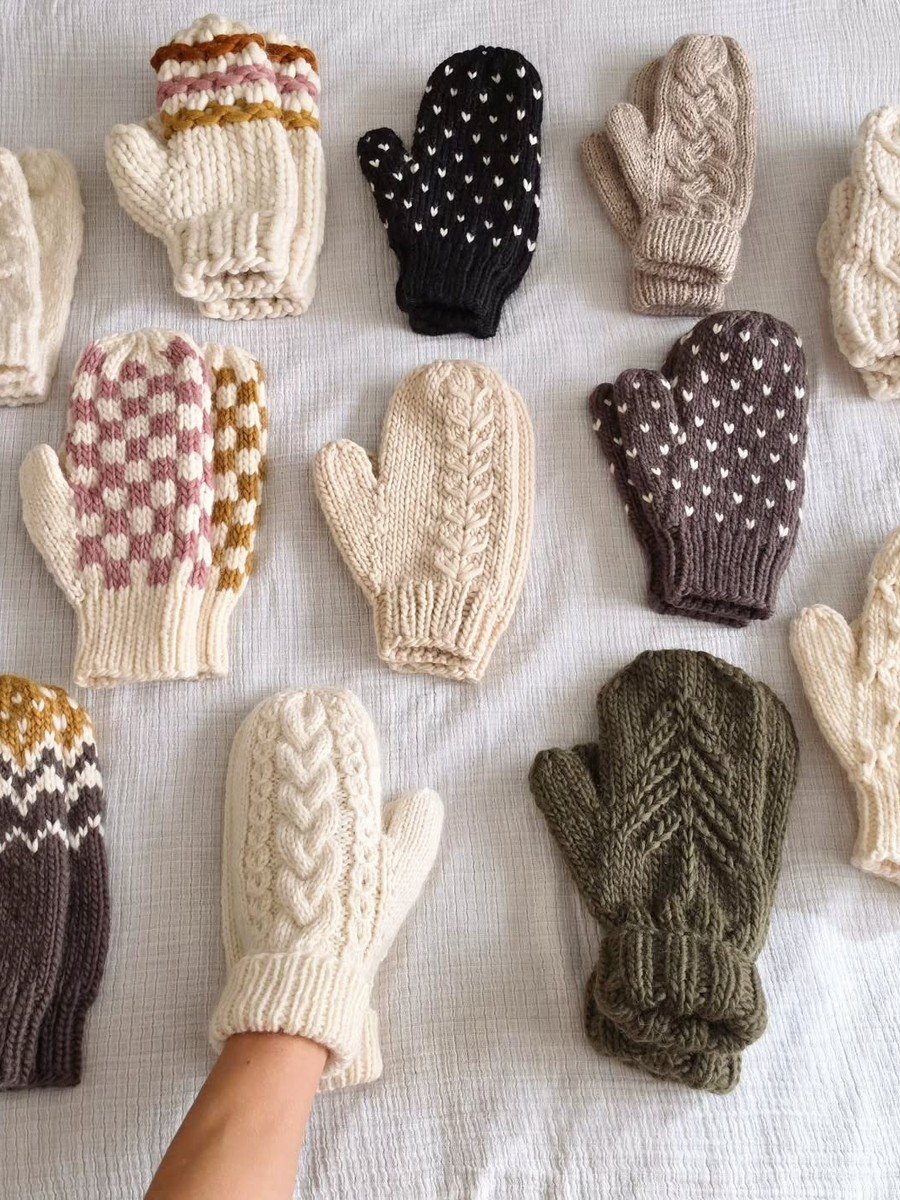
Twelve pairs from one designer, laid out like a mitten menu: bobble cuffs, striped cuffs, cable pairs, hearts and checks. If you knit mittens for a market stall or a big family, a spread like this is the way to plan it: one good base shape, then cuffs and patterns varied pair by pair so the knitting stays interesting.
You’ll need: Your favorite base mitten shape, plus lots of small color changes.
Best for: Market knitters and big gift lists
9. Fuzzy Pink Mittens for Little Hands
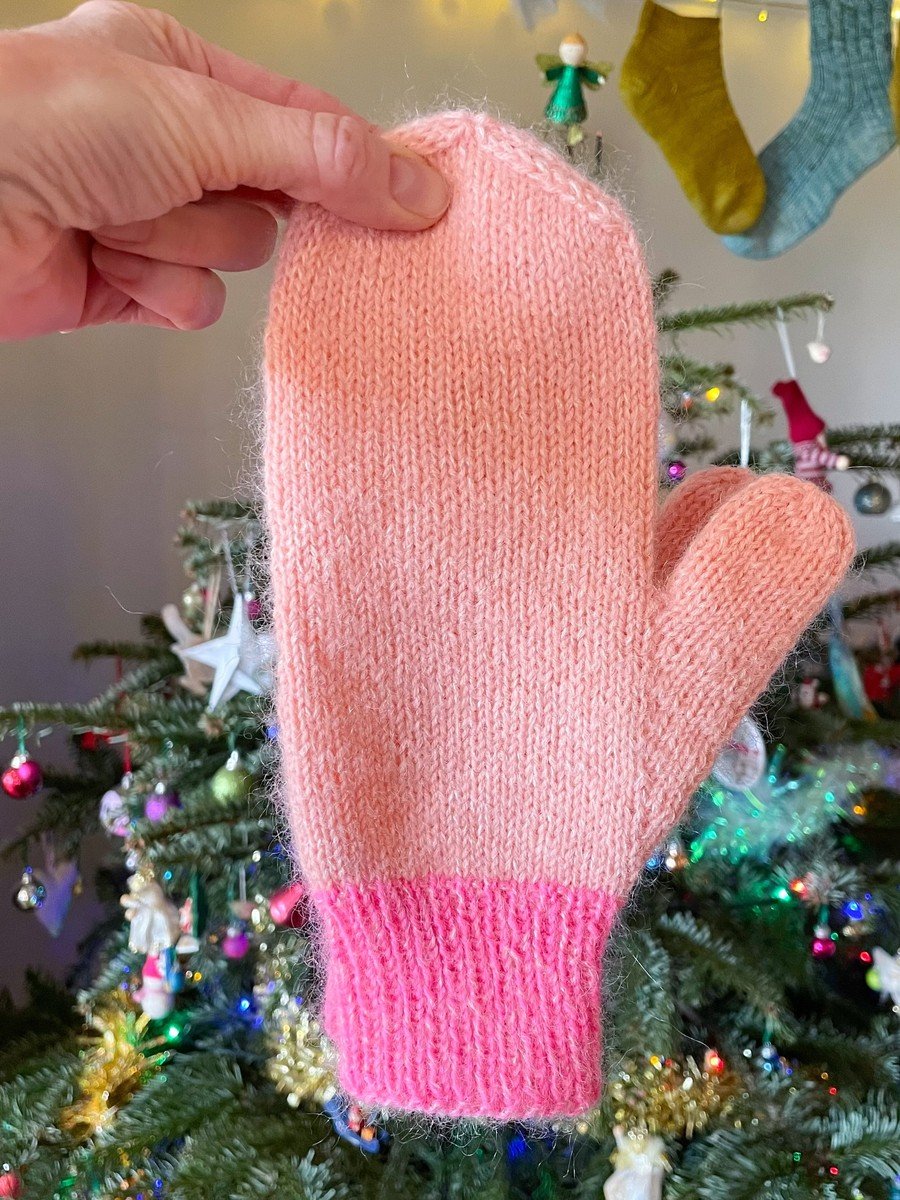
Fresh off the needles for one lucky small person, these fuzzy pink mittens were knitted to beat an Arctic blast. A brushed or mohair blend yarn makes the fabric extra warm for its weight, and small mittens are so quick you can match them to every coat a child owns. Add a knitted cord through the coat sleeves so the pair survives the season.
You’ll need: Soft fuzzy yarn in pink, and small DPNs.
Best for: Children’s mittens and very quick gifts
10. Cream Mittens With a Red Heart
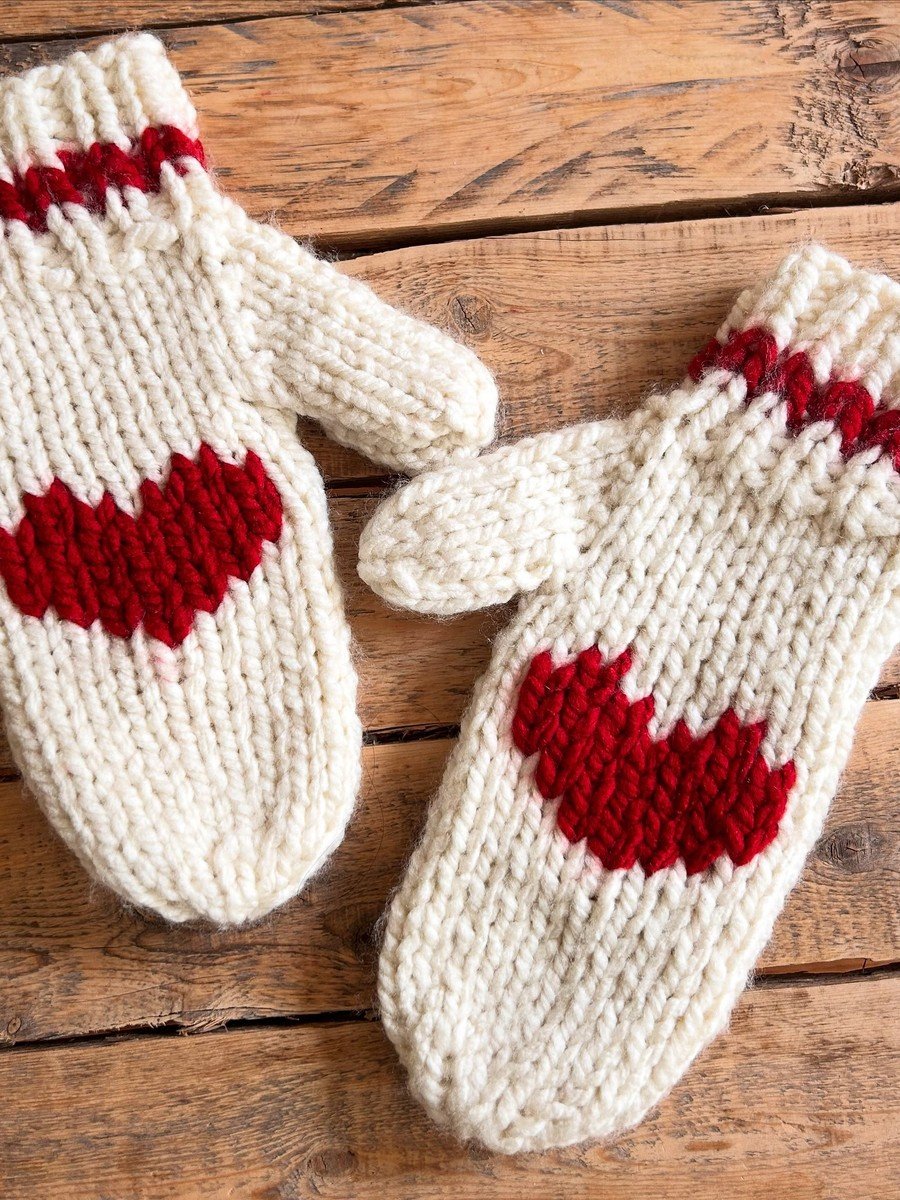
A cream mitten and one red intarsia heart, gifted to a favorite human: some of the best presents are this simple. The heart sits on the back of the hand where it shows with every wave. Intarsia on a mitten means a small separate ball of red yarn, twisted at the color changes so no holes open.
You’ll need: Chunky cream yarn and a small amount of red for the heart.
Best for: Valentine style Christmas gifts and sweethearts
11. Teal and White Diamond Mittens
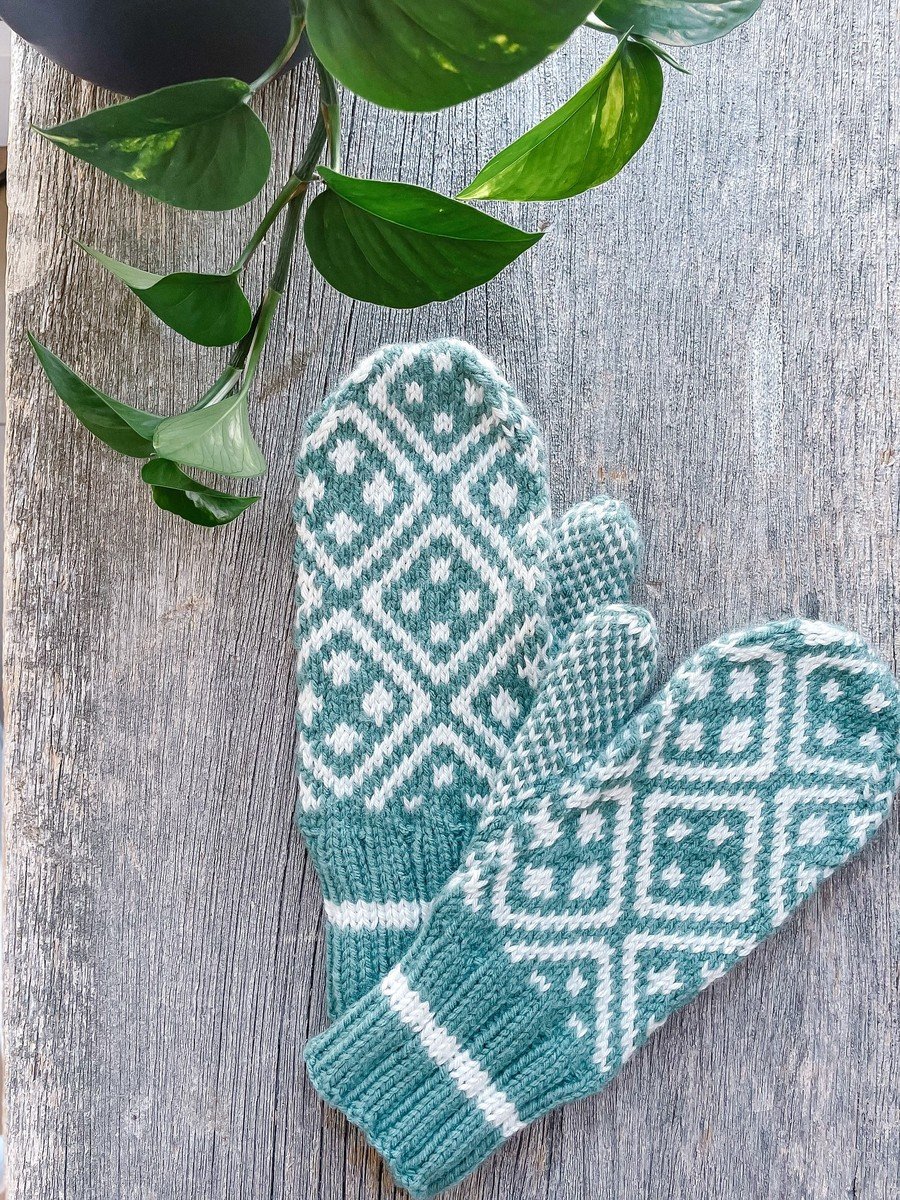
Not every Christmas mitten has to be red. This teal and white stranded pair has a crisp diamond pattern that reads wintry rather than festive, so it will be worn from November to March. A hardworking wool like Cascade 220 is the classic choice for stranded mittens that keep their shape.
You’ll need: Worsted wool in teal and white, and short circulars or DPNs.
Best for: All winter wear and knitters skipping red this year
12. Nordic Mittens in Olive and Cream
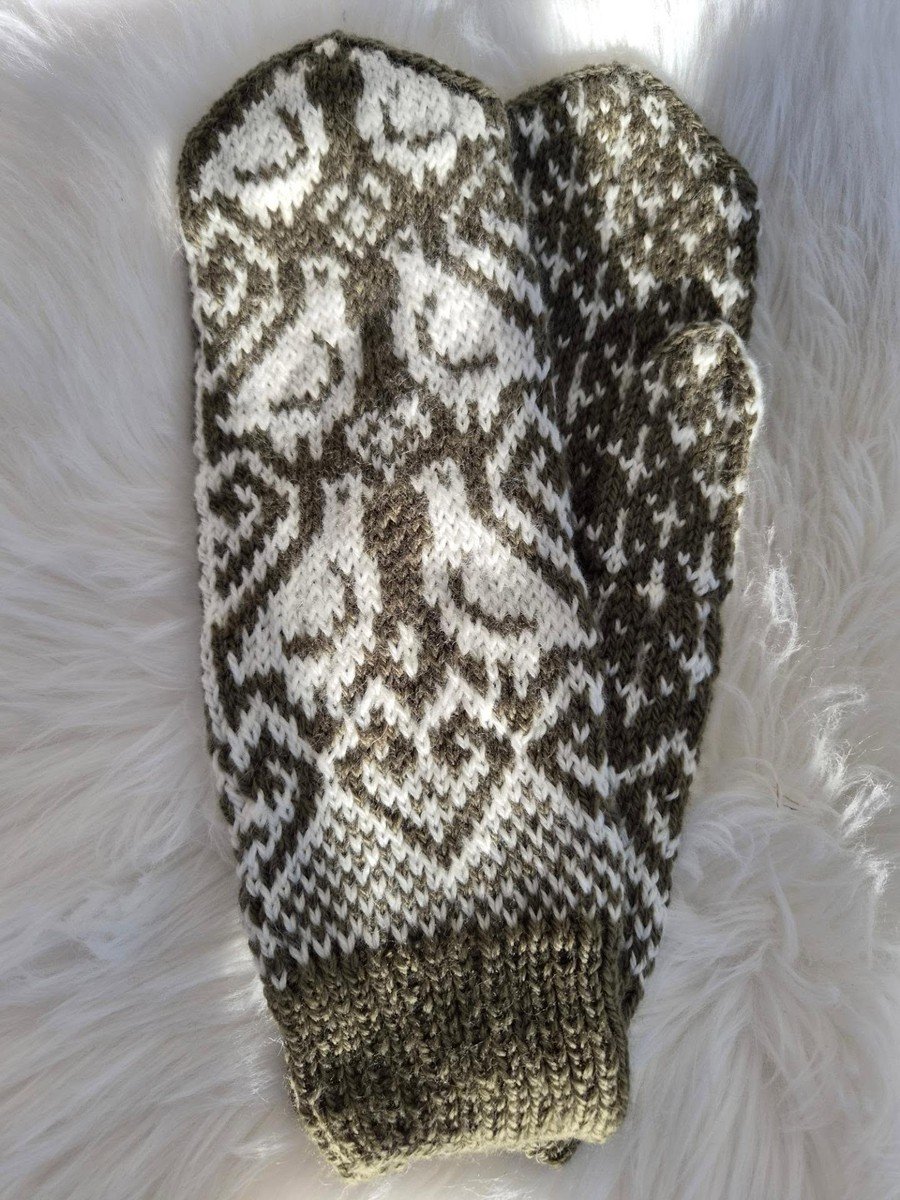
Traditional Nordic patterning in olive, grey and cream gives these mittens a heritage feel, the kind passed down and mended rather than replaced. Long patterned cuffs keep wrists warm under coat sleeves. Knit them in real wool and they will outlast many winters.
You’ll need: Wool in olive, grey and cream, and fine needles.
Best for: Heritage style gifts and serious winter warmth
Frequently Asked Questions
How much yarn do I need for a pair of mittens?
A plain adult pair in worsted or aran weight takes about 100 grams. Colorwork pairs take the same total but split across two or three colors, and thrummed mittens need an extra 50 to 80 grams of roving. Children’s pairs often come out of 50 grams.
Are mittens easier to knit on DPNs or magic loop?
Both work. DPNs suit knitters who like the rhythm of small needles in the hand, while magic loop on a long circular keeps all the stitches on one needle and travels better. Try both on a plain pair and keep the one that feels calmer at the thumb gusset.
How do I avoid a hole at the thumb join?
Pick up two or three extra stitches from the hand where the thumb joins, then decrease them away on the next rounds. A tiny hole that survives can be closed with the tail of yarn while you weave in ends, and no one will ever find it.
What makes thrummed mittens so warm?
The thrums are pieces of unspun wool roving knitted into the fabric. Inside the mitten they fluff and felt into a fleece layer that traps warm air around the hand. They feel bulky at first and mold to shape within a few wears.
How do I size mittens for a gift without asking?
Measure your own hand and adjust by common sense: most adult women’s hands are 7 to 8 inches around the knuckles, most men’s 8 to 9. When in doubt, size up slightly and knit a deeper ribbed cuff, which forgives both directions.
Can a beginner really knit mittens?
Yes. A plain pair in worsted weight, like idea 7, uses only knit, purl, simple increases and decreases. Knit the first pair for yourself so you can try them on as you go, then gift the second pair with confidence.
Final Thoughts on Free Knitted Christmas Mitten Patterns
One skein, one week of evenings, one very happy pair of hands: mittens are the Christmas knit that never misses. Start with a plain red pair, then let the colorwork, the thrums and the snowflakes pull you in from there.